Made by: Anam Khan
Class: VIII-A
Intensive farming or intensive agriculture is
an agricultural production system characterized by
a low fallow ratio and the high use of inputs such
as capital, labor, or heavy use of pesticides and
chemical fertilizers relative to land area.
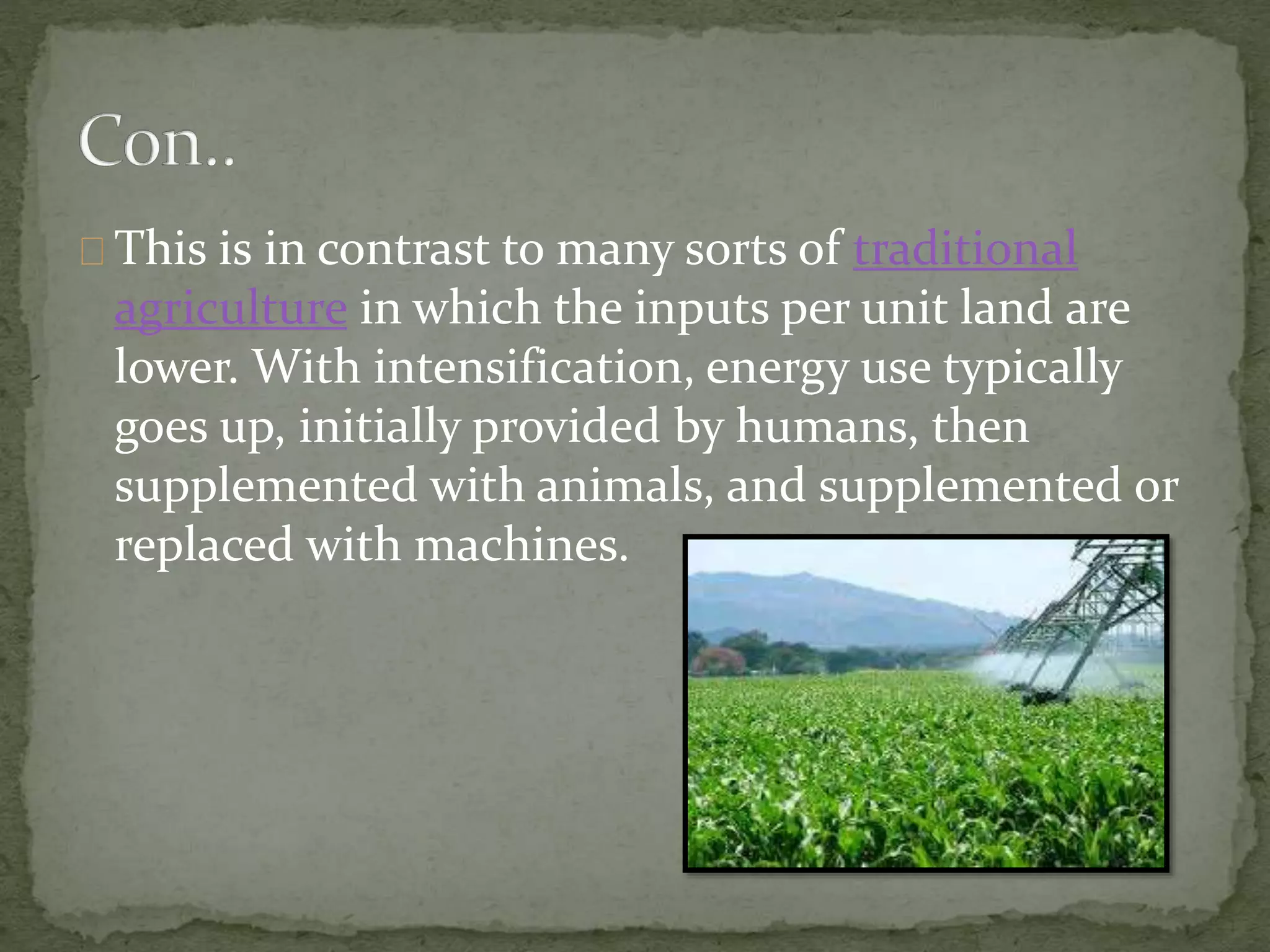
This is in contrast to many sorts of traditional
agriculture in which the inputs per unit land are
lower. With intensification, energy use typically
goes up, initially provided by humans, then
supplemented with animals, and supplemented or
replaced with machines.
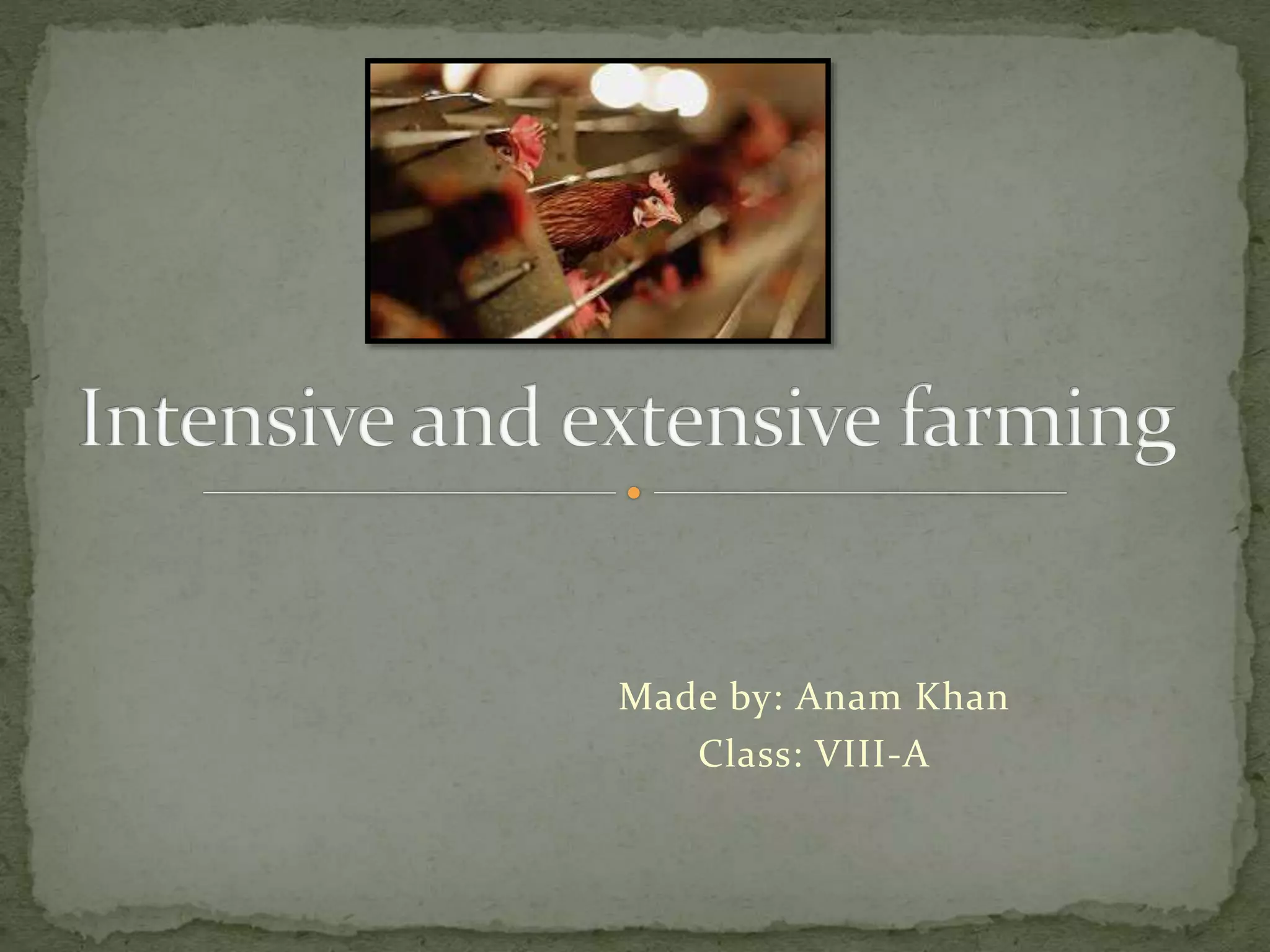
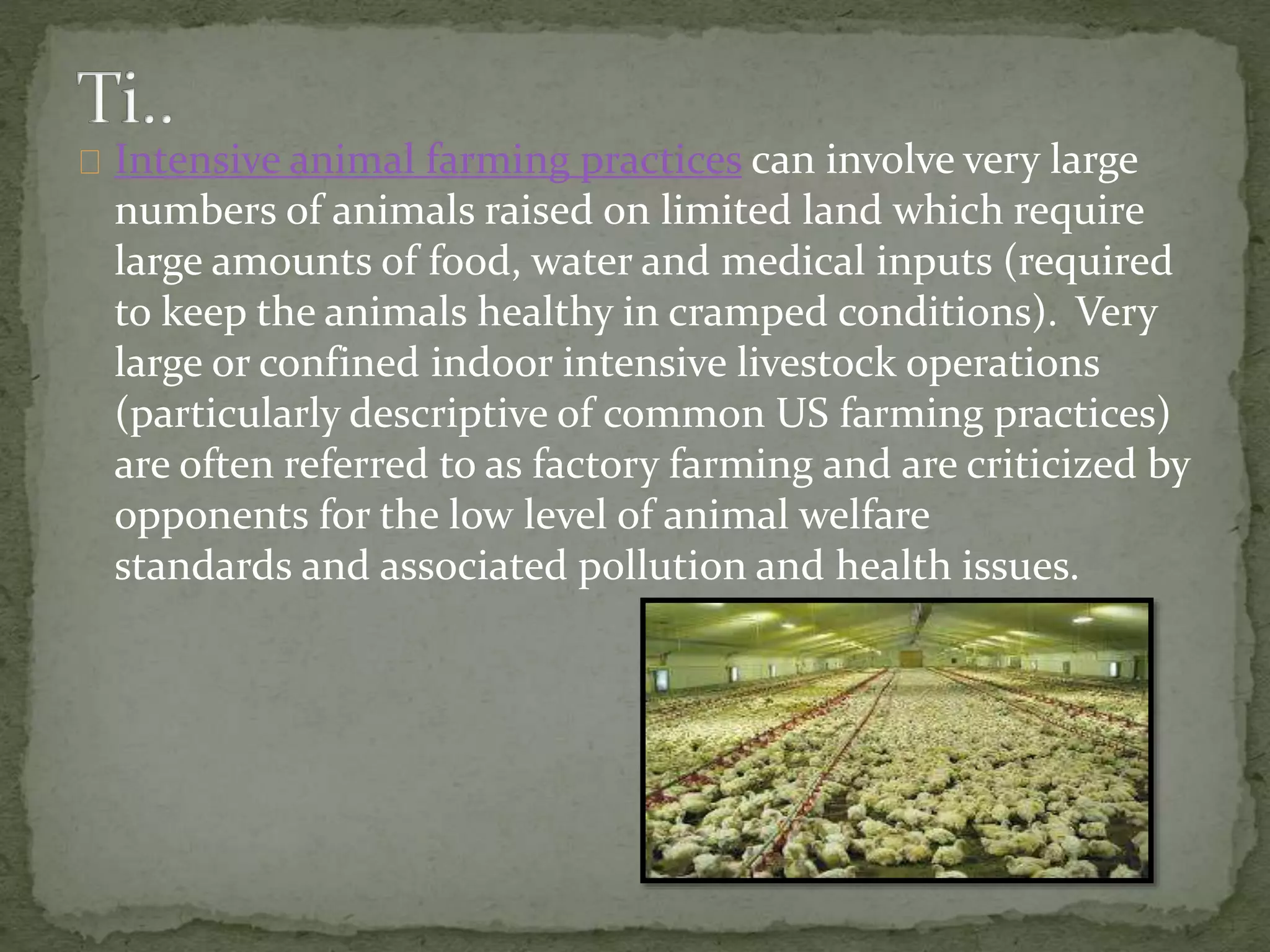
Intensive animal farming practices can involve very large
numbers of animals raised on limited land which require
large amounts of food, water and medical inputs (required
to keep the animals healthy in cramped conditions). Very
large or confined indoor intensive livestock operations
(particularly descriptive of common US farming practices)
are often referred to as factory farming and are criticized by
opponents for the low level of animal welfare
standards and associated pollution and health issues.
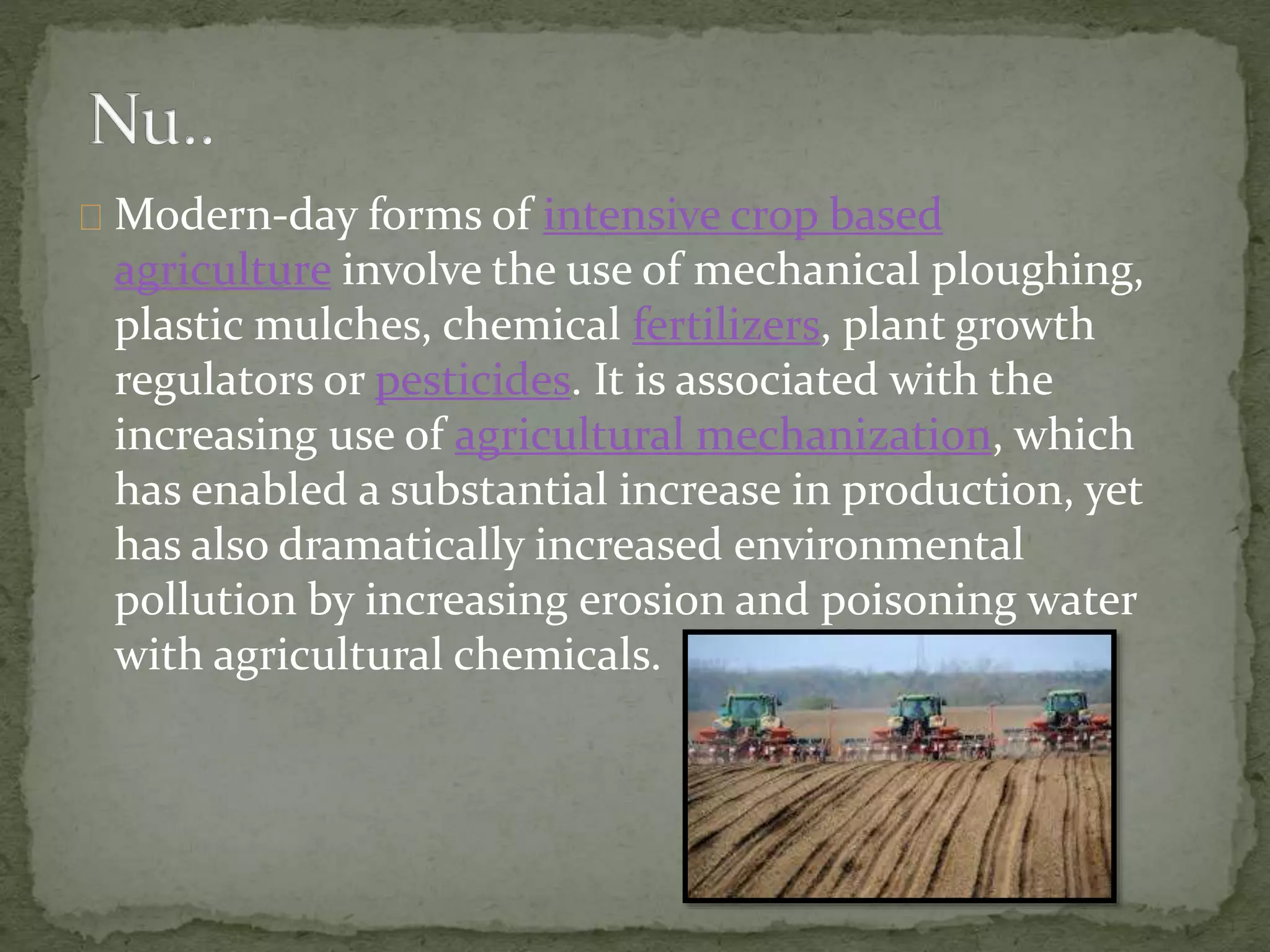
Modern-day forms of intensive crop based
agriculture involve the use of mechanical ploughing,
plastic mulches, chemical fertilizers, plant growth
regulators or pesticides. It is associated with the
increasing use of agricultural mechanization, which
has enabled a substantial increase in production, yet
has also dramatically increased environmental
pollution by increasing erosion and poisoning water
with agricultural chemicals.
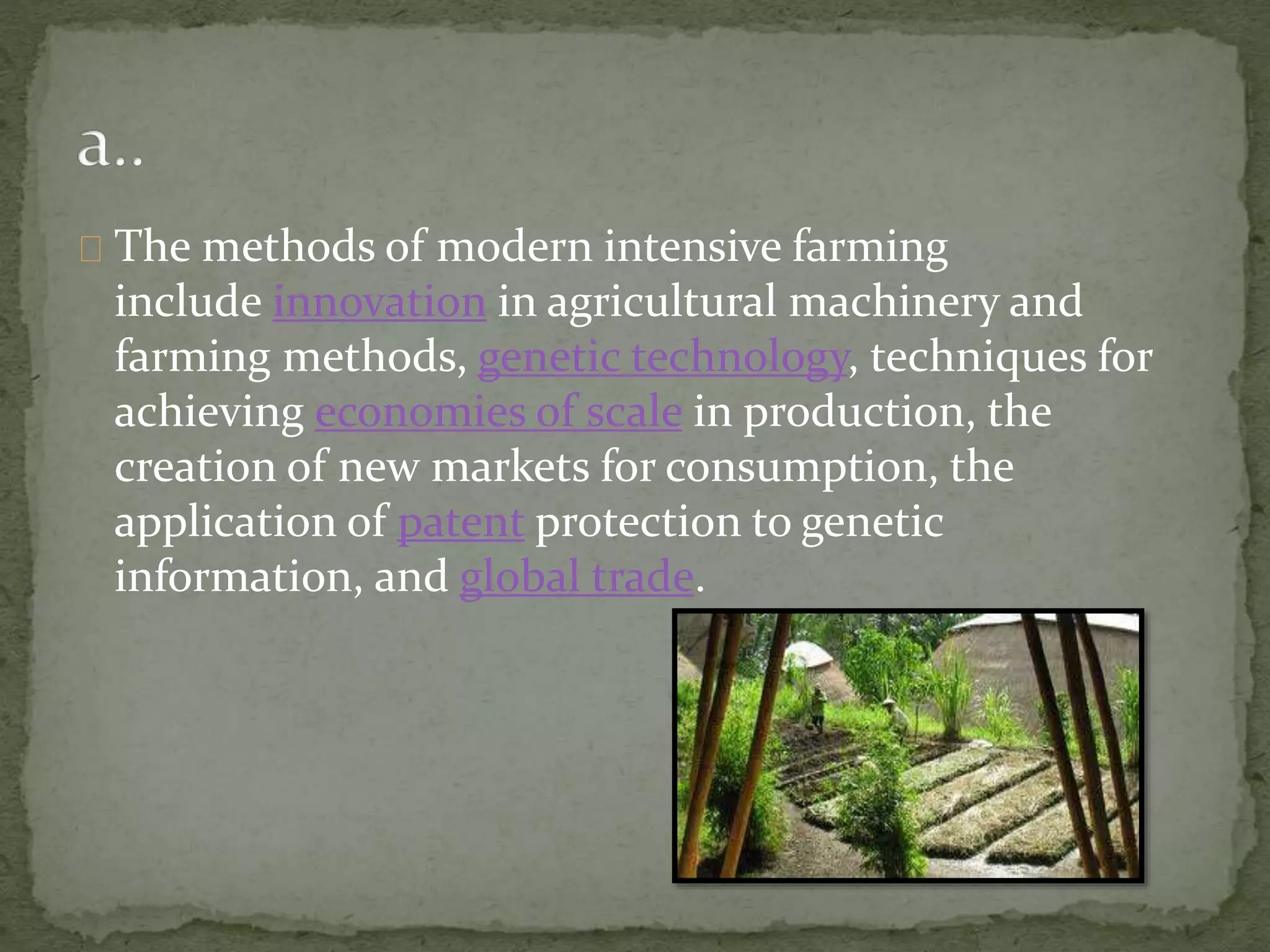
The methods of modern intensive farming
include innovation in agricultural machinery and
farming methods, genetic technology, techniques for
achieving economies of scale in production, the
creation of new markets for consumption, the
application of patent protection to genetic
information, and global trade.
These methods are widespread in developed
nations and increasingly prevalent worldwide.
Most the meat, dairy, eggs, fruits, and vegetables
available in supermarkets are produced using
these methods of industrial agriculture.
Extensive farming or extensive agriculture (as
opposed to intensive farming) is an agricultural
production system that uses small inputs of labor,
fertilizers, and capital, relative to the land area being
farmed.
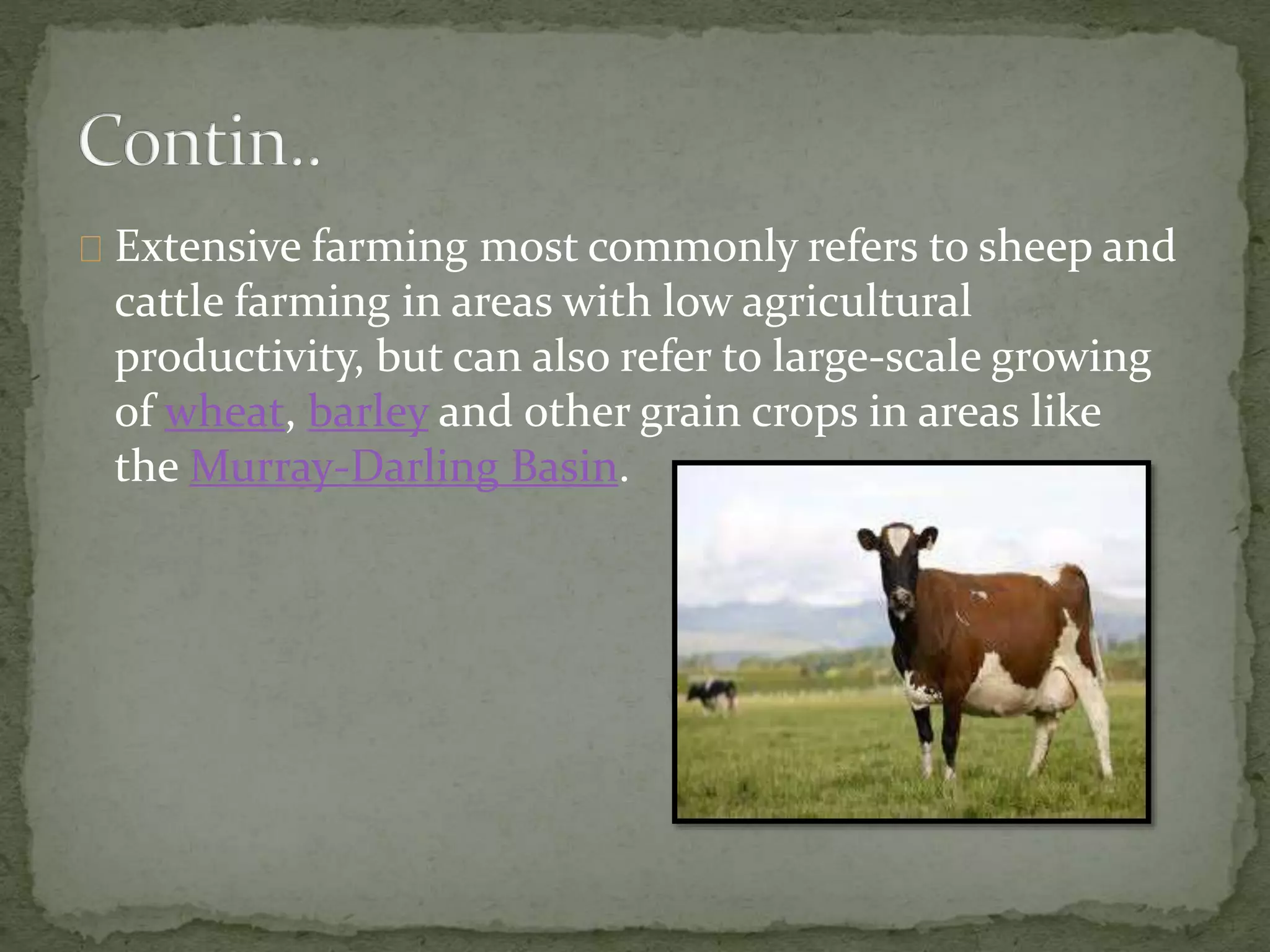
Extensive farming most commonly refers to sheep and
cattle farming in areas with low agricultural
productivity, but can also refer to large-scale growing
of wheat, barley and other grain crops in areas like
the Murray-Darling Basin.
Here, owing to the extreme age and poverty of the
soils, yields per hectare are very low, but the flat
terrain and very large farm sizes mean yields per unit
of labor are high . Nomadic herding is an extreme
example of extensive farming, where herders move
their animals to use feed from occasional rainfalls.
Thank you..

Intensive and extensive farming

  • 1.
    Made by: AnamKhan Class: VIII-A
  • 2.
    Intensive farming orintensive agriculture is an agricultural production system characterized by a low fallow ratio and the high use of inputs such as capital, labor, or heavy use of pesticides and chemical fertilizers relative to land area.
  • 3.
    This is incontrast to many sorts of traditional agriculture in which the inputs per unit land are lower. With intensification, energy use typically goes up, initially provided by humans, then supplemented with animals, and supplemented or replaced with machines.
  • 4.
    Intensive animal farmingpractices can involve very large numbers of animals raised on limited land which require large amounts of food, water and medical inputs (required to keep the animals healthy in cramped conditions). Very large or confined indoor intensive livestock operations (particularly descriptive of common US farming practices) are often referred to as factory farming and are criticized by opponents for the low level of animal welfare standards and associated pollution and health issues.
  • 5.
    Modern-day forms ofintensive crop based agriculture involve the use of mechanical ploughing, plastic mulches, chemical fertilizers, plant growth regulators or pesticides. It is associated with the increasing use of agricultural mechanization, which has enabled a substantial increase in production, yet has also dramatically increased environmental pollution by increasing erosion and poisoning water with agricultural chemicals.
  • 6.
    The methods ofmodern intensive farming include innovation in agricultural machinery and farming methods, genetic technology, techniques for achieving economies of scale in production, the creation of new markets for consumption, the application of patent protection to genetic information, and global trade.
  • 7.
    These methods arewidespread in developed nations and increasingly prevalent worldwide. Most the meat, dairy, eggs, fruits, and vegetables available in supermarkets are produced using these methods of industrial agriculture.
  • 9.
    Extensive farming orextensive agriculture (as opposed to intensive farming) is an agricultural production system that uses small inputs of labor, fertilizers, and capital, relative to the land area being farmed.
  • 10.
    Extensive farming mostcommonly refers to sheep and cattle farming in areas with low agricultural productivity, but can also refer to large-scale growing of wheat, barley and other grain crops in areas like the Murray-Darling Basin.
  • 11.
    Here, owing tothe extreme age and poverty of the soils, yields per hectare are very low, but the flat terrain and very large farm sizes mean yields per unit of labor are high . Nomadic herding is an extreme example of extensive farming, where herders move their animals to use feed from occasional rainfalls.
  • 13.