APPROACHES
LT. DR. B. AJANTHA PARTHASARATHI, ASSISTANT PROFESSOR OF ENGLISH,
SRI SRNM COLLEGE, SATTUR.
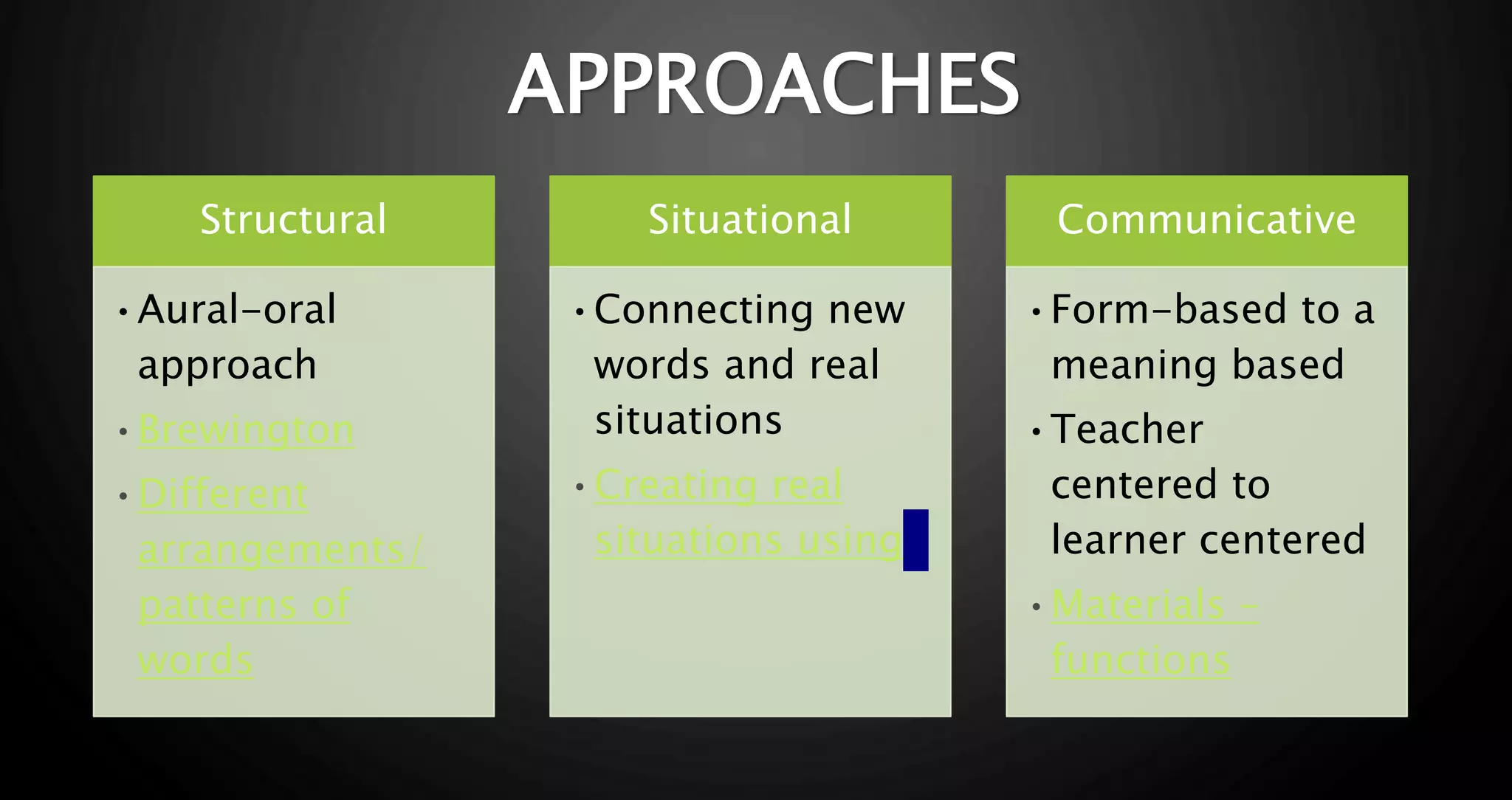
APPROACHES
Structural
•Aural-oral
approach
•Brewington
•Different
arrangements/
patterns of
words
Situational
•Connecting new
words and real
situations
•Creating real
situations using
Communicative
•Form-based to a
meaning based
•Teacher
centered to
learner centered
•Materials –
functions
BREWINGTON
“STRUCTURAL APPROACH IS A SCIENTIFIC STUDY
OF THE FUNDAMENTAL STRUCTURES OF THE
ENGLISH LANGUAGE, THEIR ANALYSIS AND
LOGICAL ARRANGEMENT.”
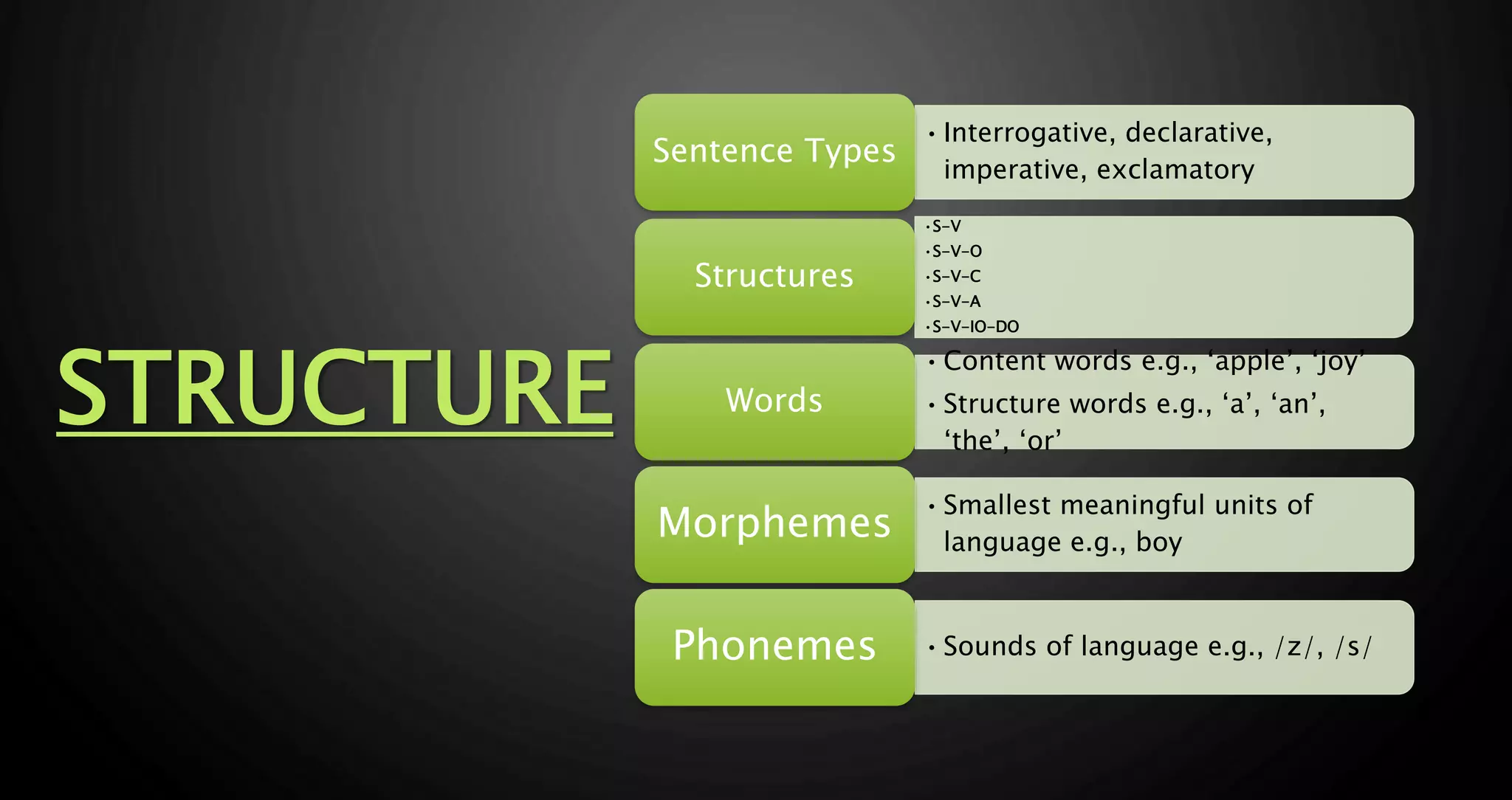
STRUCTURE
•Interrogative, declarative,
imperative, exclamatory
Sentence Types
•S-V
•S-V-O
•S-V-C
•S-V-A
•S-V-IO-DO
Structures
•Content words e.g., ‘apple’, ‘joy’
•Structure words e.g., ‘a’, ‘an’,
‘the’, ‘or’
Words
•Smallest meaningful units of
language e.g., boy
Morphemes
•Sounds of language e.g., /z/, /s/
Phonemes
SITUATIONAL APPROACH
A TEACHER CAN CREATE A REAL SITUATION
CREATED IN THE CLASSROOM AND OUTSIDE BY
THE USE OF OBJECTS, BY THE USE OF PICTURES,
BY DRAWING OR DISPLAYING MAPS AND
SKETCHES, BY GESTURES AND BY ACTION, ETC.
COMMUNICATIVE APPROACH
• REQUESTING
• INFORMING
• EXPRESSING LIKES AND
DISLIKES
• NOTIONS OF TIME, LOCATION
AND DURATION
• SOLVING PUZZLES
• DRAMATIZATION
• ROLE PLAY
APPROACHES –
PRINCIPLES
Structural Approach Situational Approach Communicative Approach
Importance is given to student’s
activity rather than the activity of
the teacher
Speech is the basis of language
teaching
Aim to make all the learner attain
communicative competence
Importance is given to speech work New language & vocabulary items –
graded according to their
usefulness, frequency and
teachability
Prime focus is on learner and
teacher is just a facilitator
Importance is given in developing
correct language habits among the
students, particularly the habits of
arranging words in English in order
to replace the sentence patterns of
pupil’s mother tongue
Language items – selected and
graded are presented & practiced
in meaningful situations
Based upon need analysis – how
language is used & which is
functional utility of language
Reading & writing – based on items
which have already been
introduced and practiced orally
Lays stress on grammar &
emphasis on language in use
rather than language as structure
Opportunities are provided to the
pupils to associate the meaning of
new words with the created
Provides the communicative
opportunities where the students
may be able to communicate their
APPROACHES – MERITS
Structural Approach Situational Approach Communicative Approach
Adopted for all stages of
education
Creates interest among
the students
Develop the speech
ability among the
students
Intensive drills – the
students cultivate the
habit of speaking the
English language
Emphasis is given on
learning by play - Action
chains make the
classroom atmosphere
lively
Teaches different ways of
expression
Provides enough
opportunities to the
students – express their
ideas and feelings –
psychologically sound
Lot of material &
examples is used to make
the learning stable and
interesting
Based on the practical
utility - Lays more stress
on the functional value of
language
More emphasis on speech Stress is given on Enables the students to
APPROACHES –
DEMERITS
Structural Approach Situational Approach Communicative Approach
Suitable only in lower classes Suitable only in the lower classes A new approach – to be used &
tested in schools for language
teaching
Well selected sentence patterns are
alone taught
Well selected sentence patterns
only can be taught
Not properly and scientifically
developed
Neglects reading of all types Prose, poetry, etc – cannot be
taught
Ignores grammar and structures
Needs specially planned text-
books and well trained teachers to
create appropriate environment for
learning the language
Text books cannot be taught by
this method
Practical utility of this approach is
yet to be confirmed
Each structure should be
repeatedly taught many times with
different words
Makes the classroom dull
Based on the assumption –
language learning is a matter of
Difficult to relate the statement of
the teacher with the created
Students do not get proper
environment for communication

Approaches in English Language Teaching

  • 1.
    APPROACHES LT. DR. B.AJANTHA PARTHASARATHI, ASSISTANT PROFESSOR OF ENGLISH, SRI SRNM COLLEGE, SATTUR.
  • 2.
    APPROACHES Structural •Aural-oral approach •Brewington •Different arrangements/ patterns of words Situational •Connecting new wordsand real situations •Creating real situations using Communicative •Form-based to a meaning based •Teacher centered to learner centered •Materials – functions
  • 3.
    BREWINGTON “STRUCTURAL APPROACH ISA SCIENTIFIC STUDY OF THE FUNDAMENTAL STRUCTURES OF THE ENGLISH LANGUAGE, THEIR ANALYSIS AND LOGICAL ARRANGEMENT.”
  • 4.
    STRUCTURE •Interrogative, declarative, imperative, exclamatory SentenceTypes •S-V •S-V-O •S-V-C •S-V-A •S-V-IO-DO Structures •Content words e.g., ‘apple’, ‘joy’ •Structure words e.g., ‘a’, ‘an’, ‘the’, ‘or’ Words •Smallest meaningful units of language e.g., boy Morphemes •Sounds of language e.g., /z/, /s/ Phonemes
  • 5.
    SITUATIONAL APPROACH A TEACHERCAN CREATE A REAL SITUATION CREATED IN THE CLASSROOM AND OUTSIDE BY THE USE OF OBJECTS, BY THE USE OF PICTURES, BY DRAWING OR DISPLAYING MAPS AND SKETCHES, BY GESTURES AND BY ACTION, ETC.
  • 6.
    COMMUNICATIVE APPROACH • REQUESTING •INFORMING • EXPRESSING LIKES AND DISLIKES • NOTIONS OF TIME, LOCATION AND DURATION • SOLVING PUZZLES • DRAMATIZATION • ROLE PLAY
  • 7.
    APPROACHES – PRINCIPLES Structural ApproachSituational Approach Communicative Approach Importance is given to student’s activity rather than the activity of the teacher Speech is the basis of language teaching Aim to make all the learner attain communicative competence Importance is given to speech work New language & vocabulary items – graded according to their usefulness, frequency and teachability Prime focus is on learner and teacher is just a facilitator Importance is given in developing correct language habits among the students, particularly the habits of arranging words in English in order to replace the sentence patterns of pupil’s mother tongue Language items – selected and graded are presented & practiced in meaningful situations Based upon need analysis – how language is used & which is functional utility of language Reading & writing – based on items which have already been introduced and practiced orally Lays stress on grammar & emphasis on language in use rather than language as structure Opportunities are provided to the pupils to associate the meaning of new words with the created Provides the communicative opportunities where the students may be able to communicate their
  • 8.
    APPROACHES – MERITS StructuralApproach Situational Approach Communicative Approach Adopted for all stages of education Creates interest among the students Develop the speech ability among the students Intensive drills – the students cultivate the habit of speaking the English language Emphasis is given on learning by play - Action chains make the classroom atmosphere lively Teaches different ways of expression Provides enough opportunities to the students – express their ideas and feelings – psychologically sound Lot of material & examples is used to make the learning stable and interesting Based on the practical utility - Lays more stress on the functional value of language More emphasis on speech Stress is given on Enables the students to
  • 9.
    APPROACHES – DEMERITS Structural ApproachSituational Approach Communicative Approach Suitable only in lower classes Suitable only in the lower classes A new approach – to be used & tested in schools for language teaching Well selected sentence patterns are alone taught Well selected sentence patterns only can be taught Not properly and scientifically developed Neglects reading of all types Prose, poetry, etc – cannot be taught Ignores grammar and structures Needs specially planned text- books and well trained teachers to create appropriate environment for learning the language Text books cannot be taught by this method Practical utility of this approach is yet to be confirmed Each structure should be repeatedly taught many times with different words Makes the classroom dull Based on the assumption – language learning is a matter of Difficult to relate the statement of the teacher with the created Students do not get proper environment for communication