Introduction to
Reinforcement Learning
Reinforcement learning is a type of machine learning that enables an agent
to learn from the environment through trial and error. By maximizing
cumulative rewards, the agent follows a specific strategy, making it
particularly useful in applications such as robotics, gaming, and
recommendation systems.
Basic Concepts and
Principles of
Reinforcement Learning
Reinforcement learning is a type of machine learning that allows an agent
to learn through trial and error. It involves the interaction between an agent
and its environment, where the agent learns to achieve a goal by taking
actions and receiving rewards or penalties. Key concepts include
exploration, exploitation, and the trade-off between immediate and long-
term rewards.
Applications of Reinforcement Learning in
Robotics
Robotic Movement
Reinforcement learning enables
precise and efficient motion
control for robotic arms and
manipulators.
Autonomous Systems
Robotic systems can learn to
navigate and make decisions
independently in dynamic
environments.
Object Recognition
Robots can adapt and optimize
their perception of objects using
reinforcement learning algorithms.
Reinforcement Learning in Autonomous
Vehicles
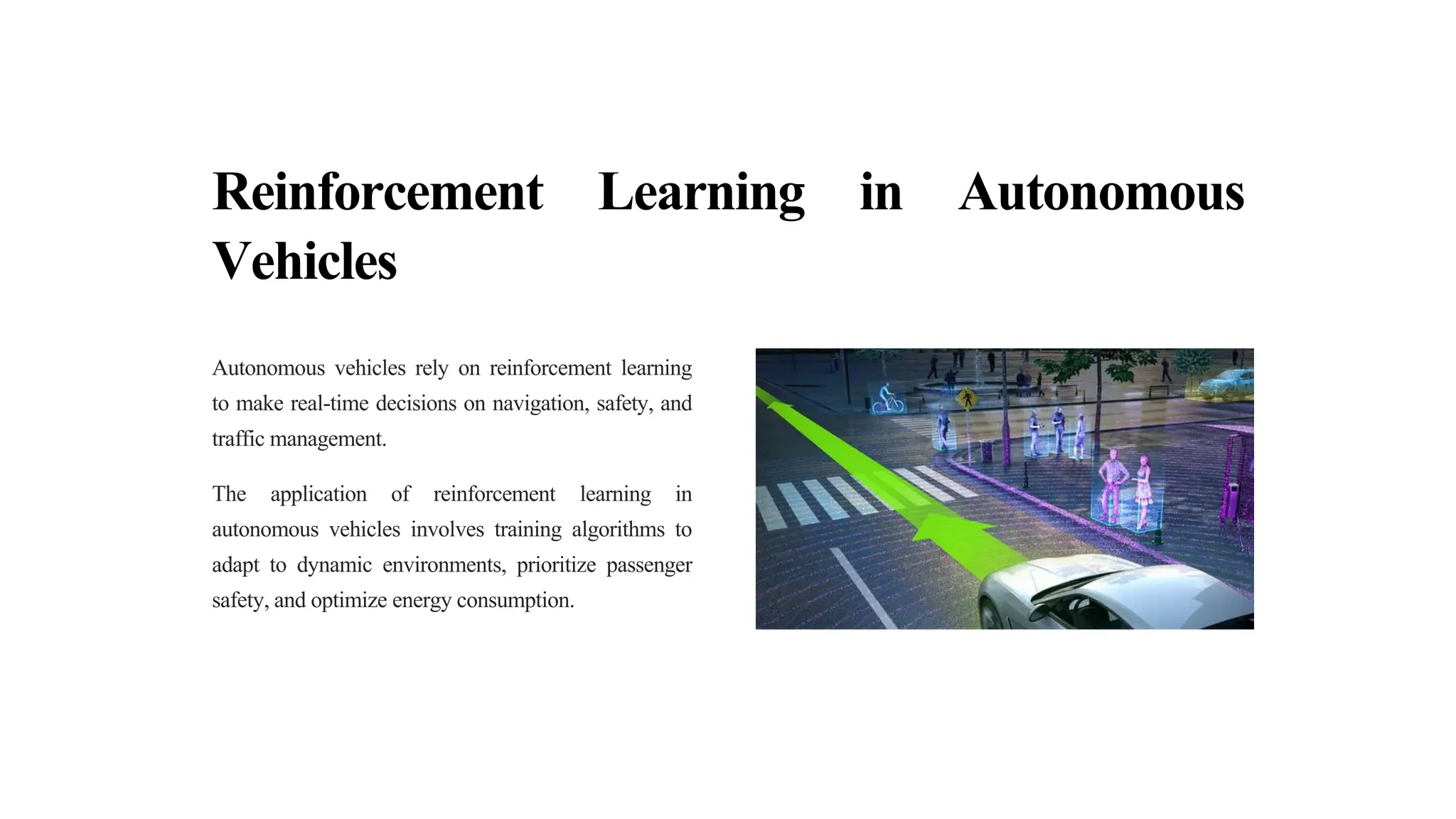
Autonomous vehicles rely on reinforcement learning
to make real-time decisions on navigation, safety, and
traffic management.
The application of reinforcement learning in
autonomous vehicles involves training algorithms to
adapt to dynamic environments, prioritize passenger
safety, and optimize energy consumption.
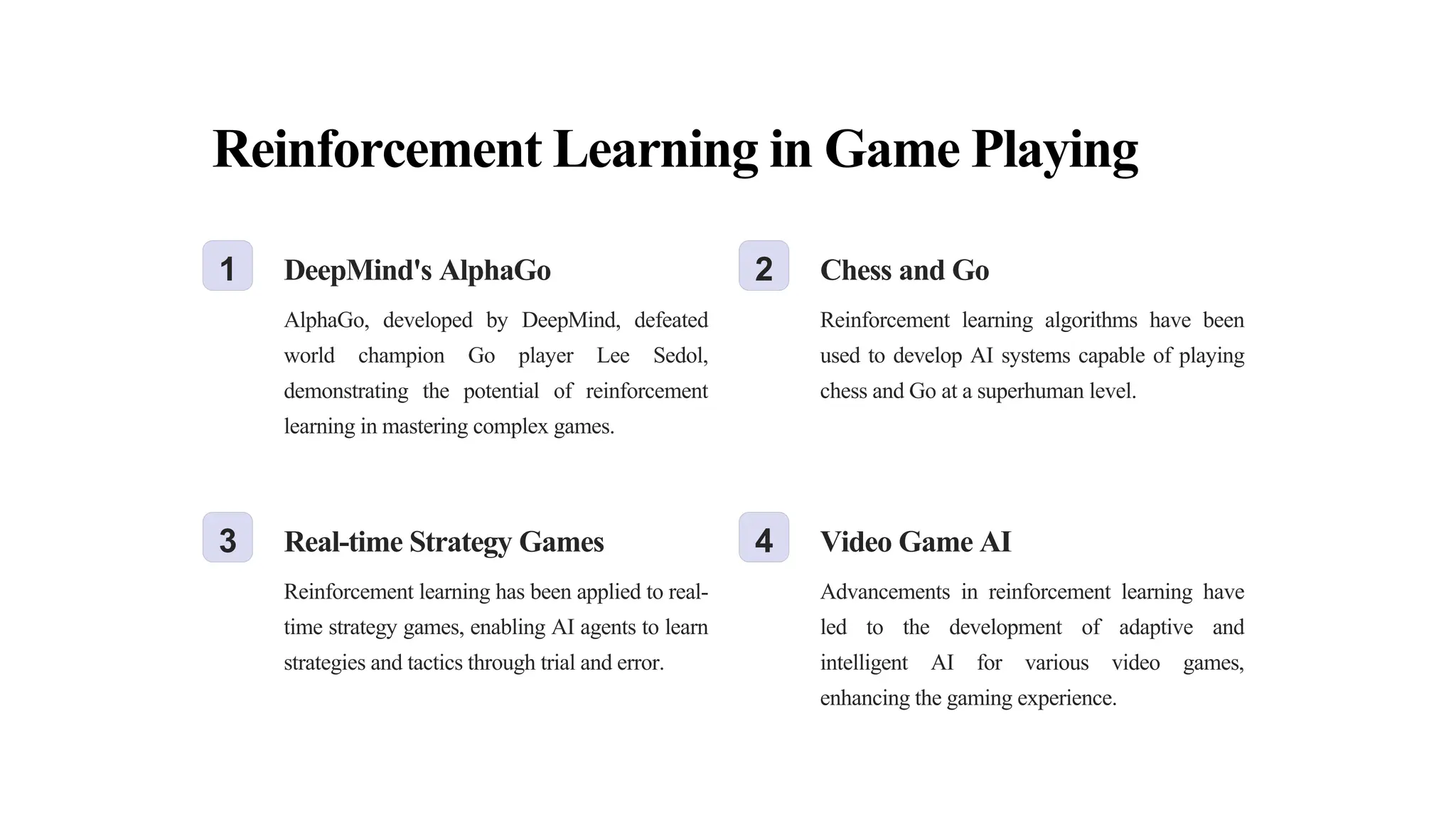
Reinforcement Learning in Game Playing
1 DeepMind's AlphaGo
AlphaGo, developed by DeepMind, defeated
world champion Go player Lee Sedol,
demonstrating the potential of reinforcement
learning in mastering complex games.
2 Chess and Go
Reinforcement learning algorithms have been
used to develop AI systems capable of playing
chess and Go at a superhuman level.
3 Real-time Strategy Games
Reinforcement learning has been applied to real-
time strategy games, enabling AI agents to learn
strategies and tactics through trial and error.
4 Video Game AI
Advancements in reinforcement learning have
led to the development of adaptive and
intelligent AI for various video games,
enhancing the gaming experience.
Reinforcement Learning in Finance and
Trading
Automated Trading
Reinforcement learning is used to
develop automated trading
algorithms that learn from
market data to make strategic
decisions.
Risk Management
Reinforcement learning models
assist in analyzing and managing
financial risks by understanding
complex market dynamics and
trends.
Portfolio Optimization
Reinforcement learning
techniques are applied to
optimize investment portfolios to
maximize returns and minimize
risks.
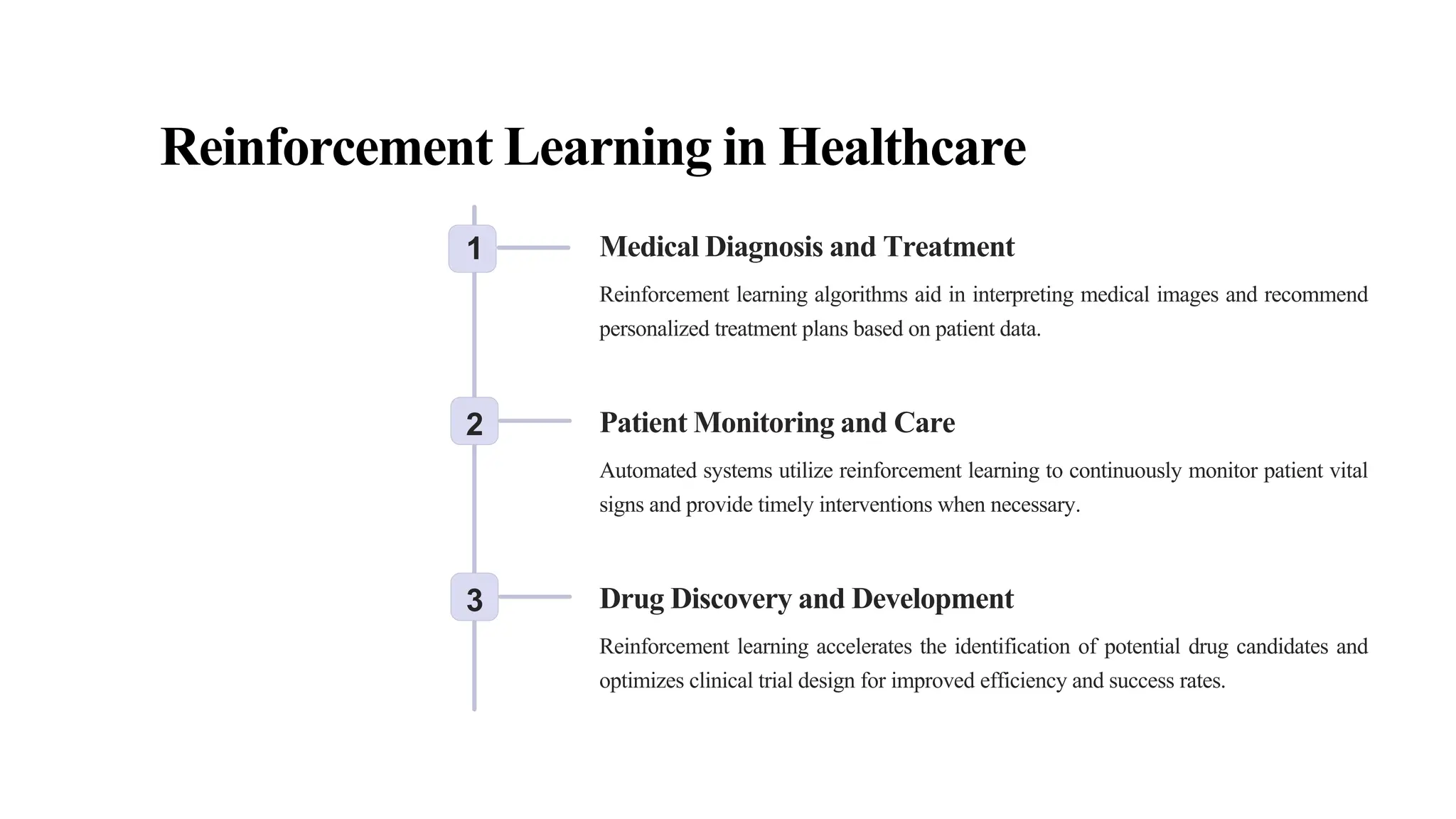
Reinforcement Learning in Healthcare
1 Medical Diagnosis and Treatment
Reinforcement learning algorithms aid in interpreting medical images and recommend
personalized treatment plans based on patient data.
2 Patient Monitoring and Care
Automated systems utilize reinforcement learning to continuously monitor patient vital
signs and provide timely interventions when necessary.
3 Drug Discovery and Development
Reinforcement learning accelerates the identification of potential drug candidates and
optimizes clinical trial design for improved efficiency and success rates.
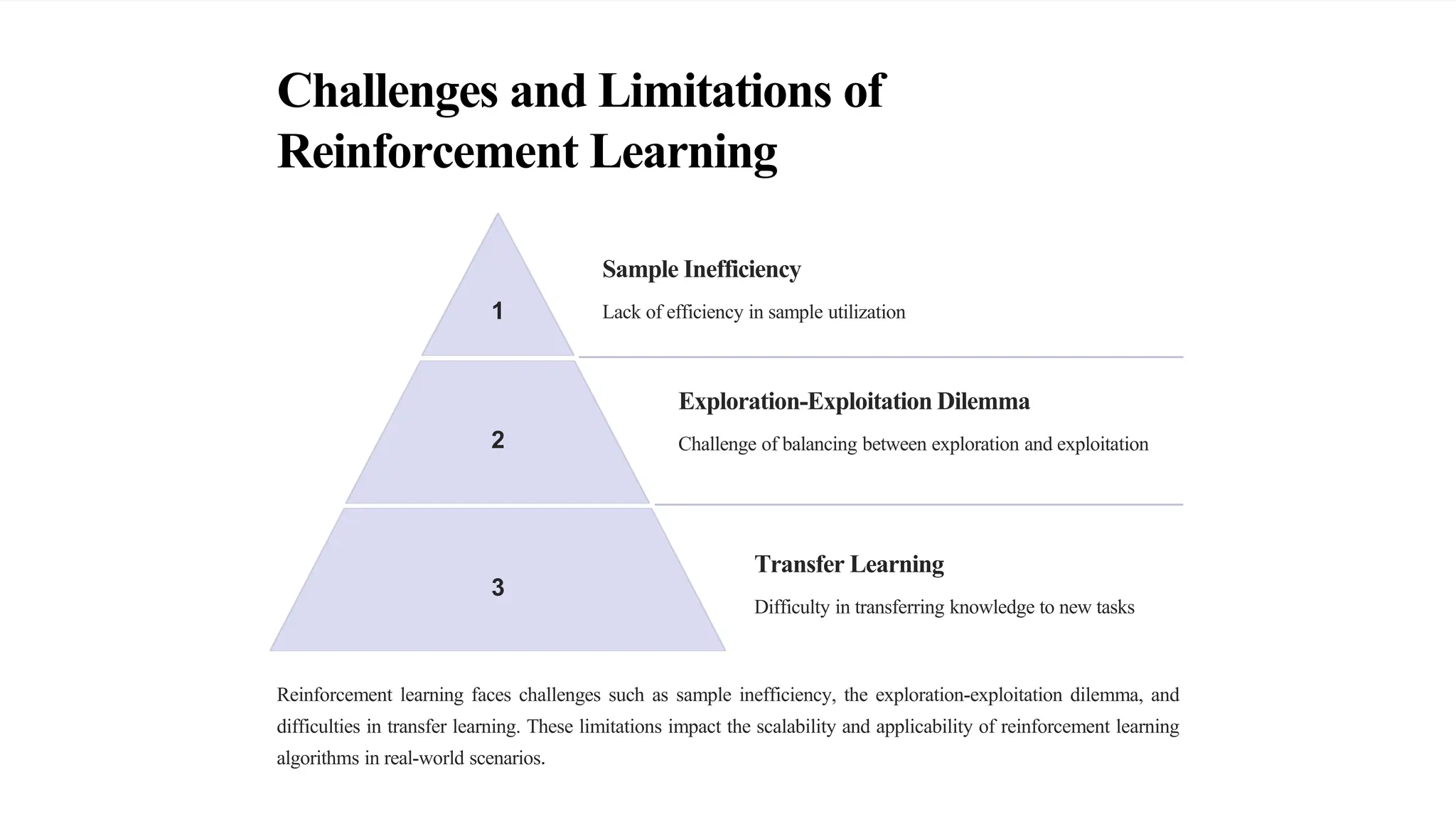
Challenges and Limitations of
Reinforcement Learning
1
Sample Inefficiency
Lack of efficiency in sample utilization
2
Exploration-Exploitation Dilemma
Challenge of balancing between exploration and exploitation
3
Transfer Learning
Difficulty in transferring knowledge to new tasks
Reinforcement learning faces challenges such as sample inefficiency, the exploration-exploitation dilemma, and
difficulties in transfer learning. These limitations impact the scalability and applicability of reinforcement learning
algorithms in real-world scenarios.
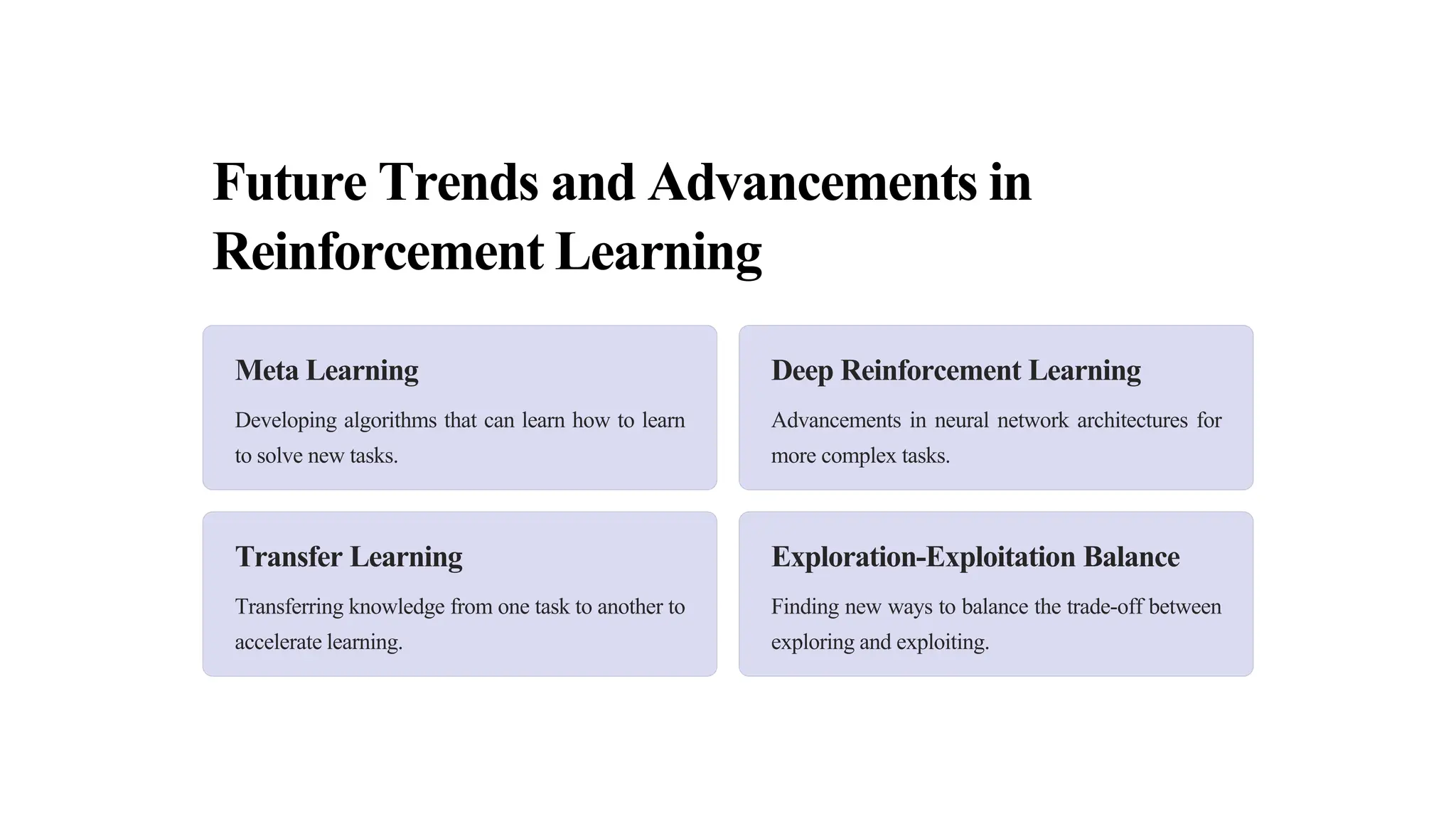
Future Trends and Advancements in
Reinforcement Learning
Meta Learning
Developing algorithms that can learn how to learn
to solve new tasks.
Deep Reinforcement Learning
Advancements in neural network architectures for
more complex tasks.
Transfer Learning
Transferring knowledge from one task to another to
accelerate learning.
Exploration-Exploitation Balance
Finding new ways to balance the trade-off between
exploring and exploiting.
Thank you

applications of reinforcement learning 1

  • 1.
    Introduction to Reinforcement Learning Reinforcementlearning is a type of machine learning that enables an agent to learn from the environment through trial and error. By maximizing cumulative rewards, the agent follows a specific strategy, making it particularly useful in applications such as robotics, gaming, and recommendation systems.
  • 2.
    Basic Concepts and Principlesof Reinforcement Learning Reinforcement learning is a type of machine learning that allows an agent to learn through trial and error. It involves the interaction between an agent and its environment, where the agent learns to achieve a goal by taking actions and receiving rewards or penalties. Key concepts include exploration, exploitation, and the trade-off between immediate and long- term rewards.
  • 3.
    Applications of ReinforcementLearning in Robotics Robotic Movement Reinforcement learning enables precise and efficient motion control for robotic arms and manipulators. Autonomous Systems Robotic systems can learn to navigate and make decisions independently in dynamic environments. Object Recognition Robots can adapt and optimize their perception of objects using reinforcement learning algorithms.
  • 4.
    Reinforcement Learning inAutonomous Vehicles Autonomous vehicles rely on reinforcement learning to make real-time decisions on navigation, safety, and traffic management. The application of reinforcement learning in autonomous vehicles involves training algorithms to adapt to dynamic environments, prioritize passenger safety, and optimize energy consumption.
  • 5.
    Reinforcement Learning inGame Playing 1 DeepMind's AlphaGo AlphaGo, developed by DeepMind, defeated world champion Go player Lee Sedol, demonstrating the potential of reinforcement learning in mastering complex games. 2 Chess and Go Reinforcement learning algorithms have been used to develop AI systems capable of playing chess and Go at a superhuman level. 3 Real-time Strategy Games Reinforcement learning has been applied to real- time strategy games, enabling AI agents to learn strategies and tactics through trial and error. 4 Video Game AI Advancements in reinforcement learning have led to the development of adaptive and intelligent AI for various video games, enhancing the gaming experience.
  • 6.
    Reinforcement Learning inFinance and Trading Automated Trading Reinforcement learning is used to develop automated trading algorithms that learn from market data to make strategic decisions. Risk Management Reinforcement learning models assist in analyzing and managing financial risks by understanding complex market dynamics and trends. Portfolio Optimization Reinforcement learning techniques are applied to optimize investment portfolios to maximize returns and minimize risks.
  • 7.
    Reinforcement Learning inHealthcare 1 Medical Diagnosis and Treatment Reinforcement learning algorithms aid in interpreting medical images and recommend personalized treatment plans based on patient data. 2 Patient Monitoring and Care Automated systems utilize reinforcement learning to continuously monitor patient vital signs and provide timely interventions when necessary. 3 Drug Discovery and Development Reinforcement learning accelerates the identification of potential drug candidates and optimizes clinical trial design for improved efficiency and success rates.
  • 8.
    Challenges and Limitationsof Reinforcement Learning 1 Sample Inefficiency Lack of efficiency in sample utilization 2 Exploration-Exploitation Dilemma Challenge of balancing between exploration and exploitation 3 Transfer Learning Difficulty in transferring knowledge to new tasks Reinforcement learning faces challenges such as sample inefficiency, the exploration-exploitation dilemma, and difficulties in transfer learning. These limitations impact the scalability and applicability of reinforcement learning algorithms in real-world scenarios.
  • 9.
    Future Trends andAdvancements in Reinforcement Learning Meta Learning Developing algorithms that can learn how to learn to solve new tasks. Deep Reinforcement Learning Advancements in neural network architectures for more complex tasks. Transfer Learning Transferring knowledge from one task to another to accelerate learning. Exploration-Exploitation Balance Finding new ways to balance the trade-off between exploring and exploiting.
  • 10.