7376212CB107
ARCHAYA R S
REINFORCEMENT
LEARNING
and its impact on the future.
It is important to understand
the utilities of artificial
intelligence
New future
01 - What is it?
02 - Introduction
03 - Elements of RL
04 - Types of RL
05 - Application of RL
06 - Compare RL & SL
07 - Challenges of RL
08 - Conclusion
Reinforcement learning is an area of Artificial
Intelligence; it has emerged as an effective tool
towards building artificially intelligent systems
and solving sequential decision-making
problems. Reinforcement Learning has
achieved many impressive breakthroughs in
recent years and it was able to surpass the
human level in many fields; it is able to play and
win various games. Historically, reinforcement
learning was efficient in solving some control
system problems. Nowadays, it has a
growing range of applications.
ABSTRACT
01 - What is it?
Artificial
Human Intelligence
INTRODUCTION
The upraise of Artificial Intelligence is associated with Deep
Learning achievements in recent years. Deep Learning is
basically a set of multiple layers of neural networks connected to
each other. Reinforcement learning is learning through
interaction with an environment by taking different actions and
experiencing many failures and successes while trying to
maximize the received rewards. It is close to human learning. The
algorithm learns a policy of how to act in the environment. It is a
problem faced by an agent that learns behavior through trail-
and-error interactions with a dynamic environment.
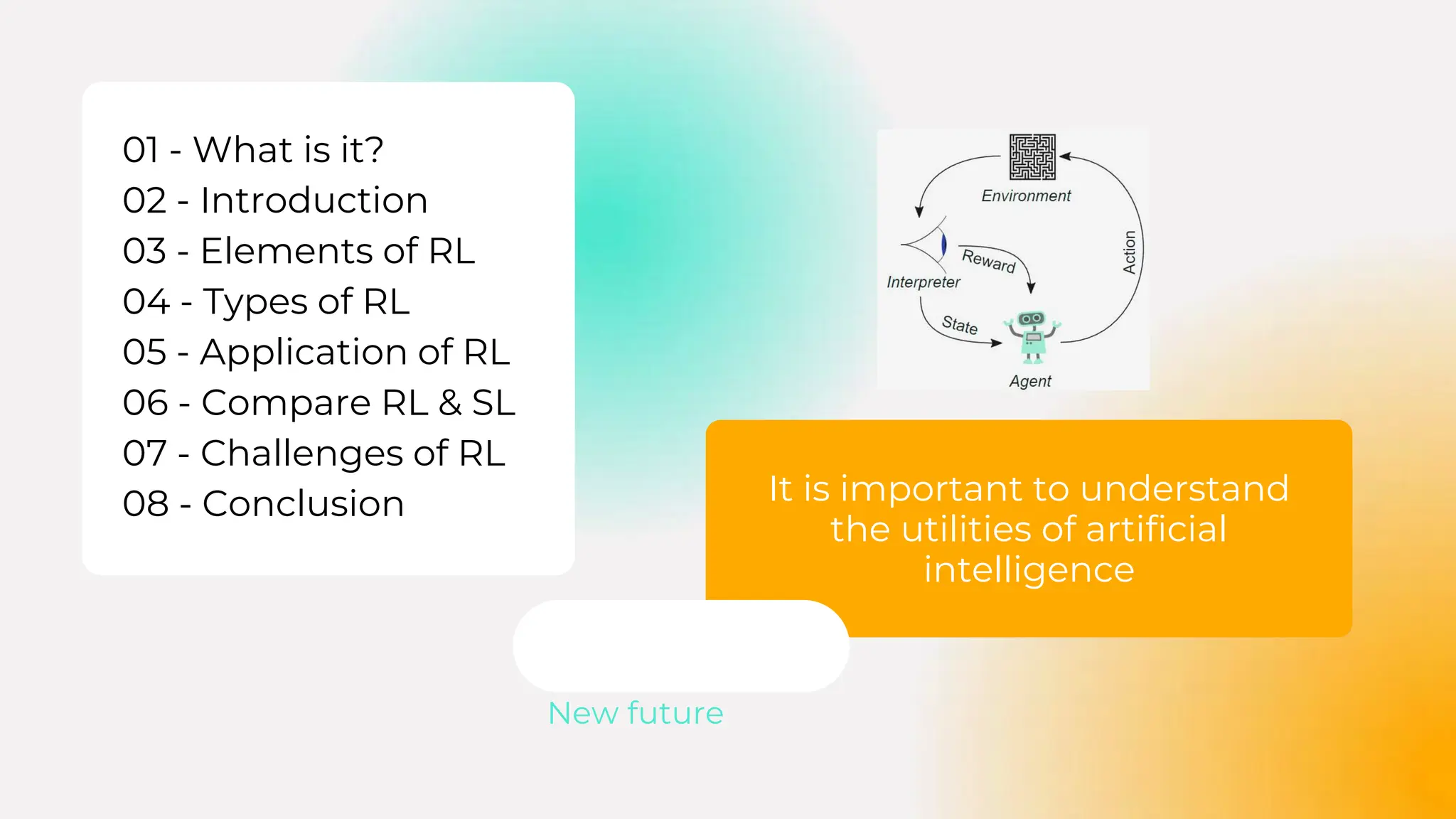
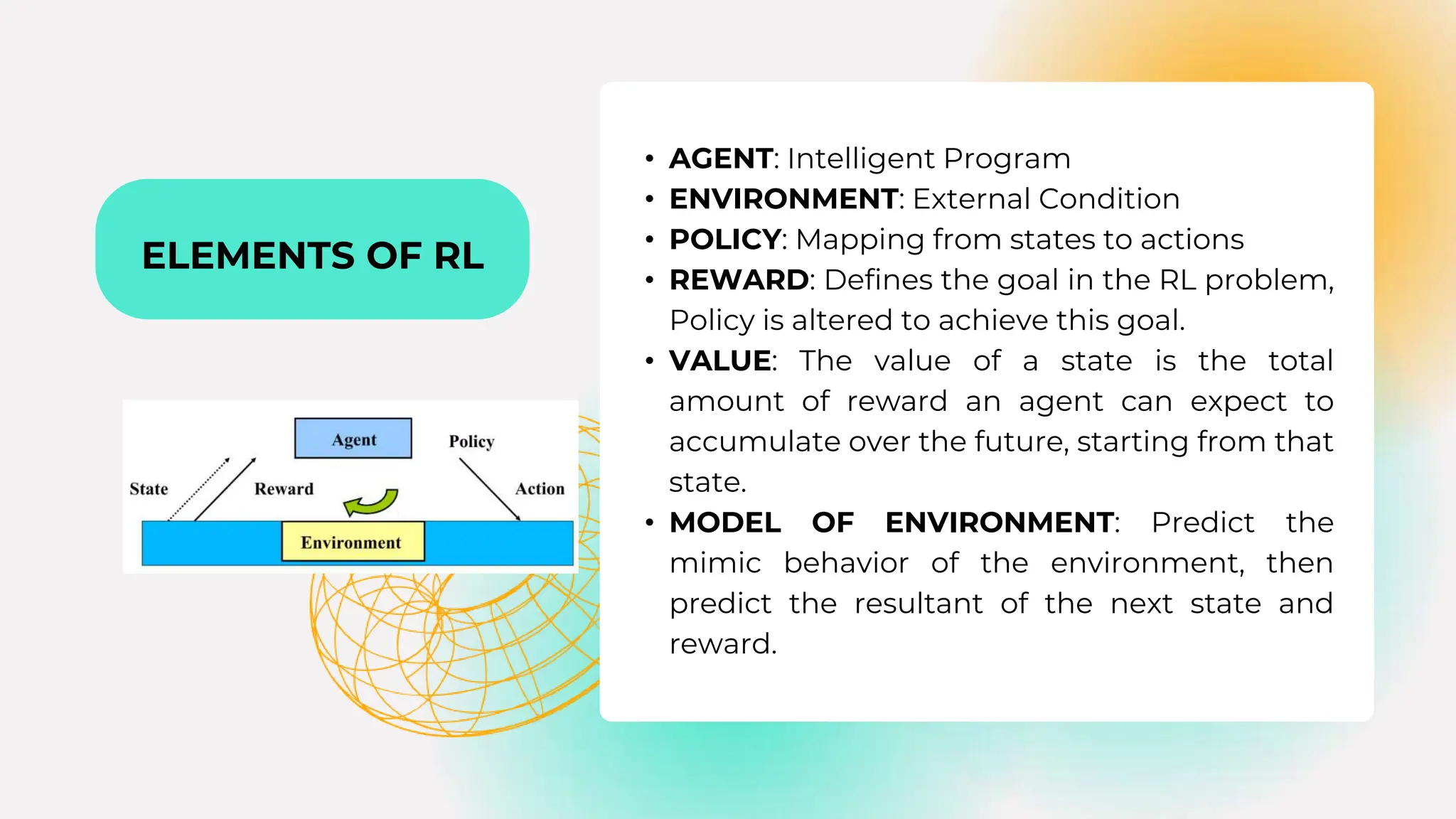
• AGENT: Intelligent Program
• ENVIRONMENT: External Condition
• POLICY: Mapping from states to actions
• REWARD: Defines the goal in the RL problem,
Policy is altered to achieve this goal.
• VALUE: The value of a state is the total
amount of reward an agent can expect to
accumulate over the future, starting from that
state.
• MODEL OF ENVIRONMENT: Predict the
mimic behavior of the environment, then
predict the resultant of the next state and
reward.
ELEMENTS OF RL
Positive: Positive Reinforcement is defined as when an event,
occurs due to a particular behavior, and increases the strength
and the frequency of the behavior.
• Maximizes Performance
• Sustain Change for a long period of time
Negative: Negative Reinforcement is defined as the
strengthening of behavior because a negative condition is
stopped or avoided.
• Increases Behavior
• Provide defiance to a minimum standard of performance
• It Only provides enough to meet up the minimum behavior
TYPES OF REINFORCEMENT LEARNING
refinery’s
operation in
real time.
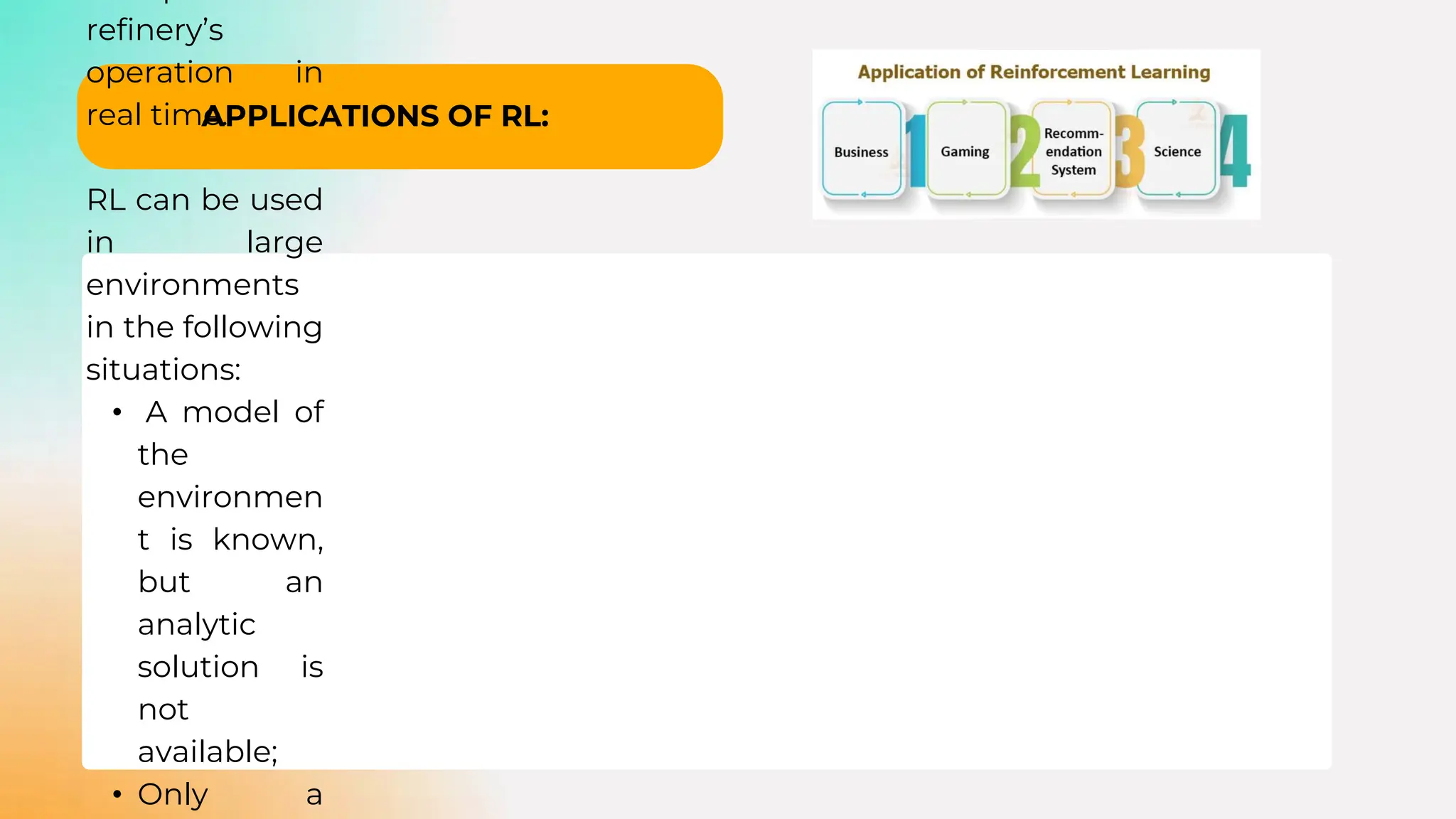
RL can be used
in large
environments
in the following
situations:
• A model of
the
environmen
t is known,
but an
analytic
solution is
not
available;
• Only a
APPLICATIONS OF RL:
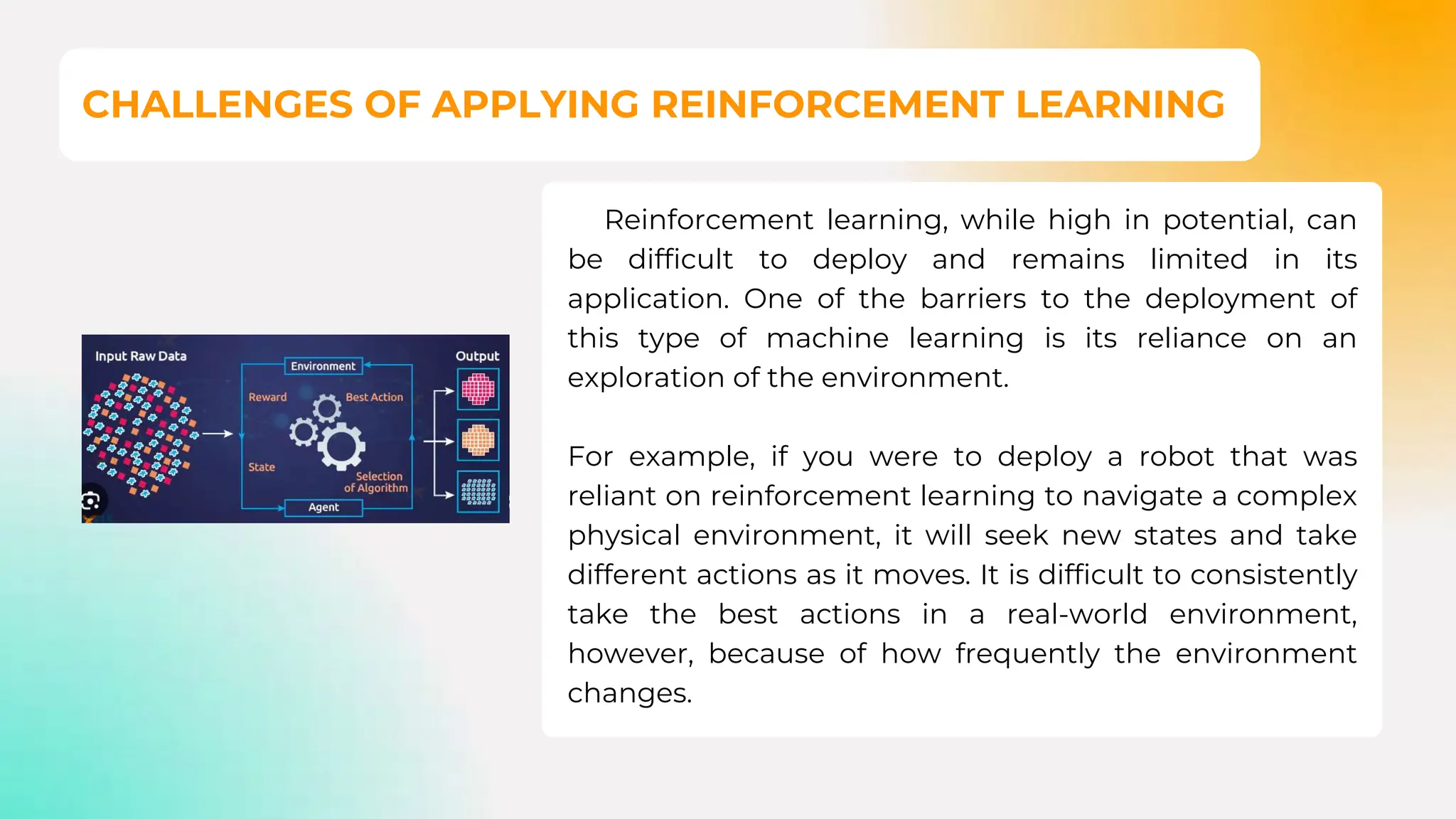
Reinforcement learning, while high in potential, can
be difficult to deploy and remains limited in its
application. One of the barriers to the deployment of
this type of machine learning is its reliance on an
exploration of the environment.
For example, if you were to deploy a robot that was
reliant on reinforcement learning to navigate a complex
physical environment, it will seek new states and take
different actions as it moves. It is difficult to consistently
take the best actions in a real-world environment,
however, because of how frequently the environment
changes.
CHALLENGES OF APPLYING REINFORCEMENT LEARNING
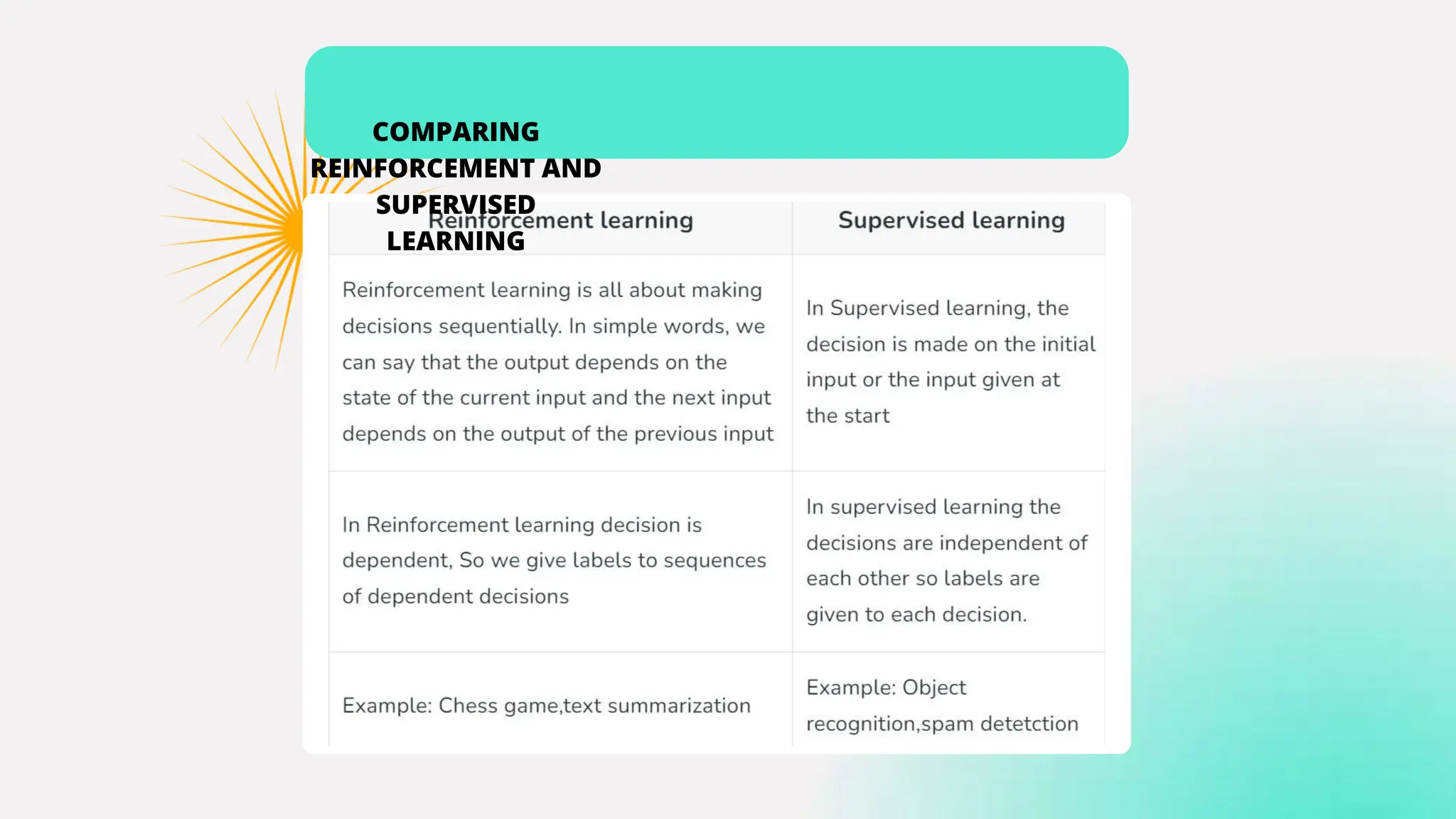
COMPARING
REINFORCEMENT AND
SUPERVISED
LEARNING
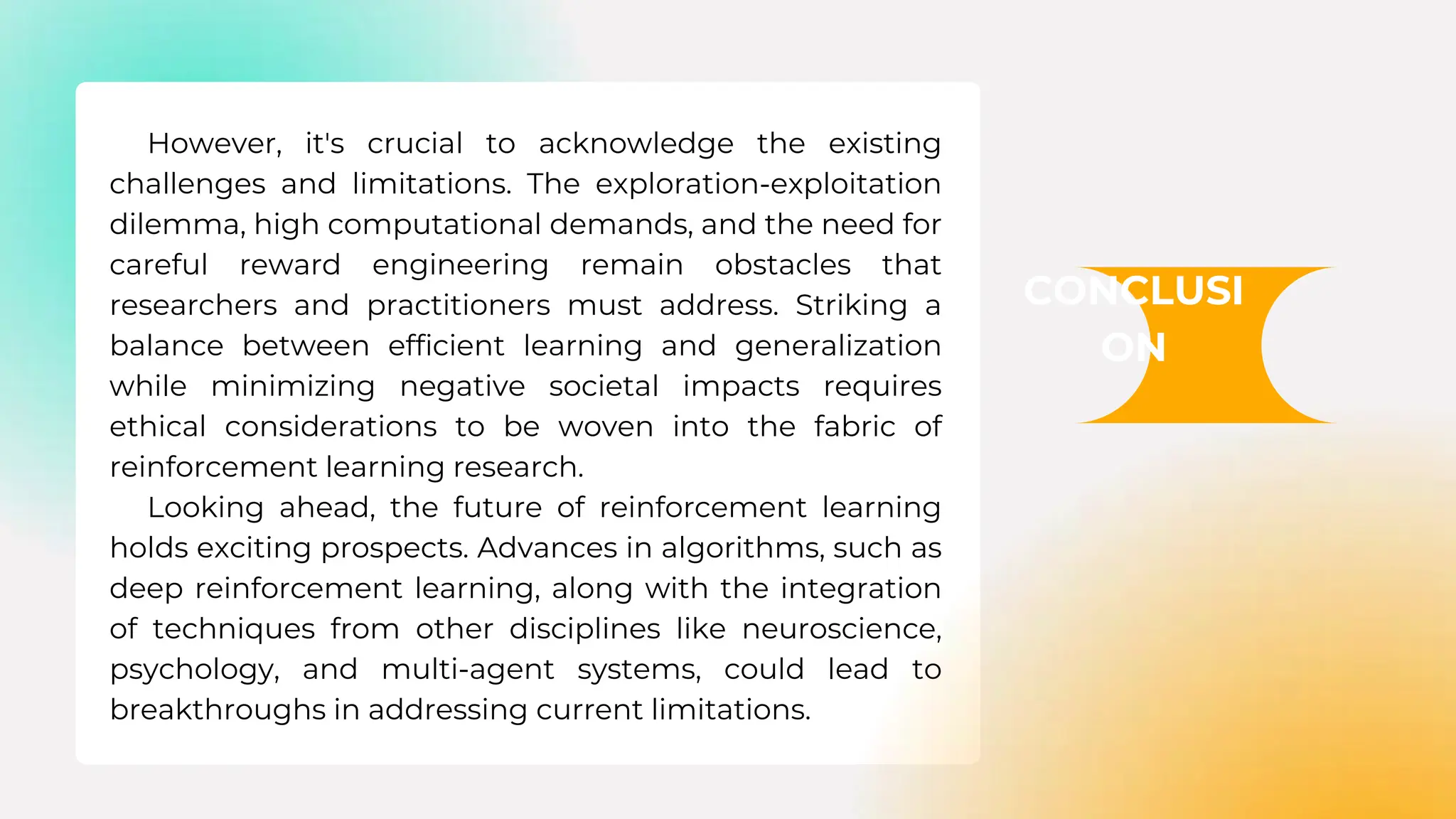
However, it's crucial to acknowledge the existing
challenges and limitations. The exploration-exploitation
dilemma, high computational demands, and the need for
careful reward engineering remain obstacles that
researchers and practitioners must address. Striking a
balance between efficient learning and generalization
while minimizing negative societal impacts requires
ethical considerations to be woven into the fabric of
reinforcement learning research.
Looking ahead, the future of reinforcement learning
holds exciting prospects. Advances in algorithms, such as
deep reinforcement learning, along with the integration
of techniques from other disciplines like neuroscience,
psychology, and multi-agent systems, could lead to
breakthroughs in addressing current limitations.
CONCLUSI
ON
THANK
YOU

REINFORCEMENT LEARNING (reinforced through trial and error).pptx

  • 1.
  • 2.
    It is importantto understand the utilities of artificial intelligence New future 01 - What is it? 02 - Introduction 03 - Elements of RL 04 - Types of RL 05 - Application of RL 06 - Compare RL & SL 07 - Challenges of RL 08 - Conclusion
  • 3.
    Reinforcement learning isan area of Artificial Intelligence; it has emerged as an effective tool towards building artificially intelligent systems and solving sequential decision-making problems. Reinforcement Learning has achieved many impressive breakthroughs in recent years and it was able to surpass the human level in many fields; it is able to play and win various games. Historically, reinforcement learning was efficient in solving some control system problems. Nowadays, it has a growing range of applications. ABSTRACT 01 - What is it?
  • 4.
    Artificial Human Intelligence INTRODUCTION The upraiseof Artificial Intelligence is associated with Deep Learning achievements in recent years. Deep Learning is basically a set of multiple layers of neural networks connected to each other. Reinforcement learning is learning through interaction with an environment by taking different actions and experiencing many failures and successes while trying to maximize the received rewards. It is close to human learning. The algorithm learns a policy of how to act in the environment. It is a problem faced by an agent that learns behavior through trail- and-error interactions with a dynamic environment.
  • 5.
    • AGENT: IntelligentProgram • ENVIRONMENT: External Condition • POLICY: Mapping from states to actions • REWARD: Defines the goal in the RL problem, Policy is altered to achieve this goal. • VALUE: The value of a state is the total amount of reward an agent can expect to accumulate over the future, starting from that state. • MODEL OF ENVIRONMENT: Predict the mimic behavior of the environment, then predict the resultant of the next state and reward. ELEMENTS OF RL
  • 6.
    Positive: Positive Reinforcementis defined as when an event, occurs due to a particular behavior, and increases the strength and the frequency of the behavior. • Maximizes Performance • Sustain Change for a long period of time Negative: Negative Reinforcement is defined as the strengthening of behavior because a negative condition is stopped or avoided. • Increases Behavior • Provide defiance to a minimum standard of performance • It Only provides enough to meet up the minimum behavior TYPES OF REINFORCEMENT LEARNING
  • 7.
    refinery’s operation in real time. RLcan be used in large environments in the following situations: • A model of the environmen t is known, but an analytic solution is not available; • Only a APPLICATIONS OF RL:
  • 8.
    Reinforcement learning, whilehigh in potential, can be difficult to deploy and remains limited in its application. One of the barriers to the deployment of this type of machine learning is its reliance on an exploration of the environment. For example, if you were to deploy a robot that was reliant on reinforcement learning to navigate a complex physical environment, it will seek new states and take different actions as it moves. It is difficult to consistently take the best actions in a real-world environment, however, because of how frequently the environment changes. CHALLENGES OF APPLYING REINFORCEMENT LEARNING
  • 9.
  • 10.
    However, it's crucialto acknowledge the existing challenges and limitations. The exploration-exploitation dilemma, high computational demands, and the need for careful reward engineering remain obstacles that researchers and practitioners must address. Striking a balance between efficient learning and generalization while minimizing negative societal impacts requires ethical considerations to be woven into the fabric of reinforcement learning research. Looking ahead, the future of reinforcement learning holds exciting prospects. Advances in algorithms, such as deep reinforcement learning, along with the integration of techniques from other disciplines like neuroscience, psychology, and multi-agent systems, could lead to breakthroughs in addressing current limitations. CONCLUSI ON
  • 11.