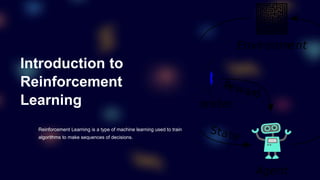
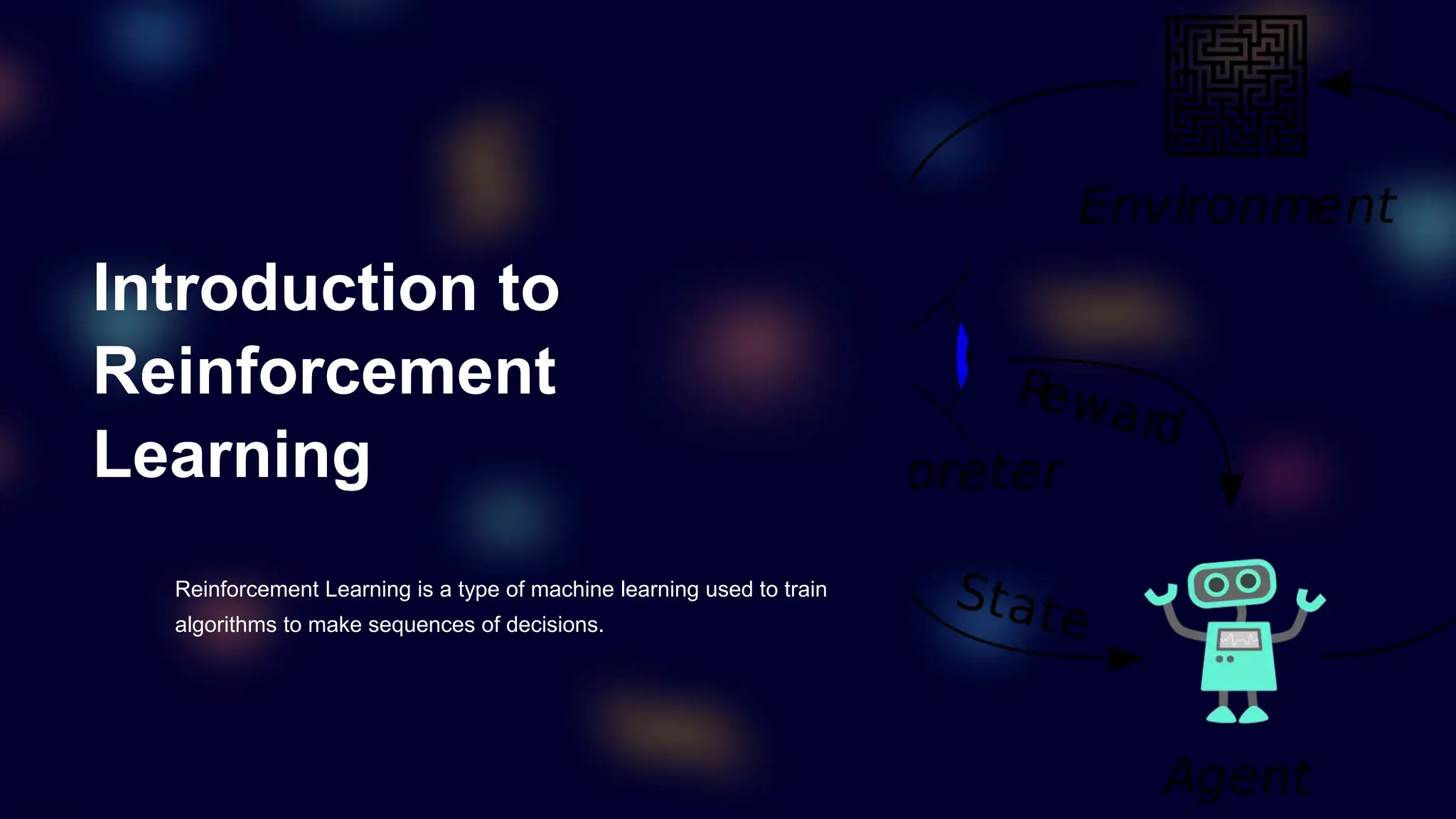
Introduction to
Reinforcement
Learning
Reinforcement Learning is a type of machine learning used to train
algorithms to make sequences of decisions.
What is Reinforcement Learning?
Agent
The learner and decision-
maker that interacts with
the environment.
Environment
Anything the agent can
interact with and act upon.
Rewards
A special signal that the
agent is trying to maximize
over time.
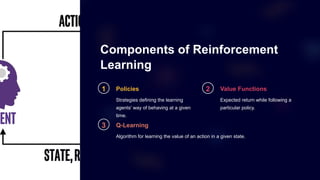
Components of Reinforcement
Learning
1 Policies
Strategies defining the learning
agents' way of behaving at a given
time.
2 Value Functions
Expected return while following a
particular policy.
3 Q-Learning
Algorithm for learning the value of an action in a given state.
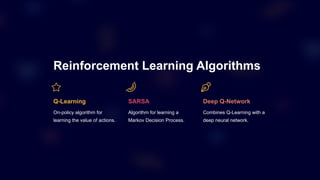
Reinforcement Learning Algorithms
Q-Learning
On-policy algorithm for
learning the value of actions.
SARSA
Algorithm for learning a
Markov Decision Process.
Deep Q-Network
Combines Q-Learning with a
deep neural network.
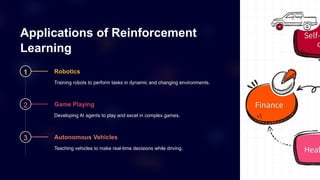
Applications of Reinforcement
Learning
1 Robotics
Training robots to perform tasks in dynamic and changing environments.
2 Game Playing
Developing AI agents to play and excel in complex games.
3 Autonomous Vehicles
Teaching vehicles to make real-time decisions while driving.
Challenges in Reinforcement
Learning
Sample-Efficiency
Learning from limited data efficiently.
Exploration vs. Exploitation
Finding a balance between exploring new actions and exploiting known good
actions.
Generalization
Applying knowledge from one set of states to another set of states.
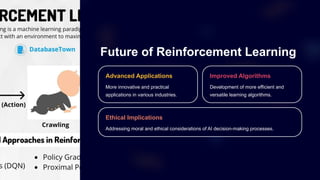
Future of Reinforcement Learning
Advanced Applications
More innovative and practical
applications in various industries.
Improved Algorithms
Development of more efficient and
versatile learning algorithms.
Ethical Implications
Addressing moral and ethical considerations of AI decision-making processes.
Conclusion and Q&A with Adesh
Mishra
In conclusion, reinforcement learning's potential in various domains makes it both exciting and
challenging. Join us for a live Q&A session with expert Adesh Mishra to delve deeper into this
fascinating field.

reinforcement learning in artificial intelligence

  • 1.
    Introduction to Reinforcement Learning Reinforcement Learningis a type of machine learning used to train algorithms to make sequences of decisions.
  • 2.
    What is ReinforcementLearning? Agent The learner and decision- maker that interacts with the environment. Environment Anything the agent can interact with and act upon. Rewards A special signal that the agent is trying to maximize over time.
  • 3.
    Components of Reinforcement Learning 1Policies Strategies defining the learning agents' way of behaving at a given time. 2 Value Functions Expected return while following a particular policy. 3 Q-Learning Algorithm for learning the value of an action in a given state.
  • 4.
    Reinforcement Learning Algorithms Q-Learning On-policyalgorithm for learning the value of actions. SARSA Algorithm for learning a Markov Decision Process. Deep Q-Network Combines Q-Learning with a deep neural network.
  • 5.
    Applications of Reinforcement Learning 1Robotics Training robots to perform tasks in dynamic and changing environments. 2 Game Playing Developing AI agents to play and excel in complex games. 3 Autonomous Vehicles Teaching vehicles to make real-time decisions while driving.
  • 6.
    Challenges in Reinforcement Learning Sample-Efficiency Learningfrom limited data efficiently. Exploration vs. Exploitation Finding a balance between exploring new actions and exploiting known good actions. Generalization Applying knowledge from one set of states to another set of states.
  • 7.
    Future of ReinforcementLearning Advanced Applications More innovative and practical applications in various industries. Improved Algorithms Development of more efficient and versatile learning algorithms. Ethical Implications Addressing moral and ethical considerations of AI decision-making processes.
  • 8.
    Conclusion and Q&Awith Adesh Mishra In conclusion, reinforcement learning's potential in various domains makes it both exciting and challenging. Join us for a live Q&A session with expert Adesh Mishra to delve deeper into this fascinating field.