Application Performance Management
for
CFML and ColdBox


Darren Pywell / Joel Watson
About Darren
● CTO at Intergral (The FusionReactor people…)
● 18 yrs CF experience (CF released 20 years ago!)
● Over 33 years in Software
● Worked in HP’s OpenView Network + System
Management Software Division before Intergral
● Background in Network and System Management
for banks
● Responsible for all Fusion(X) products
● Based in Stuttgart, Germany for last 25 years :-)
Overview
• The need for monitoring
• Gartner Application Performance Model
• Core APM
• Stability
• When things go wrong
• World Premier!
• Monitoring ProfileBox and FusionReactor
The Need for APM
Modern IT solutions need to be monitored and managed
in a complete, end-to-end manner
Detail remains important and has to be set into a well-
understood overall picture of system behavior
Five distinct dimensions of application performance
exist, each one complementary to the others
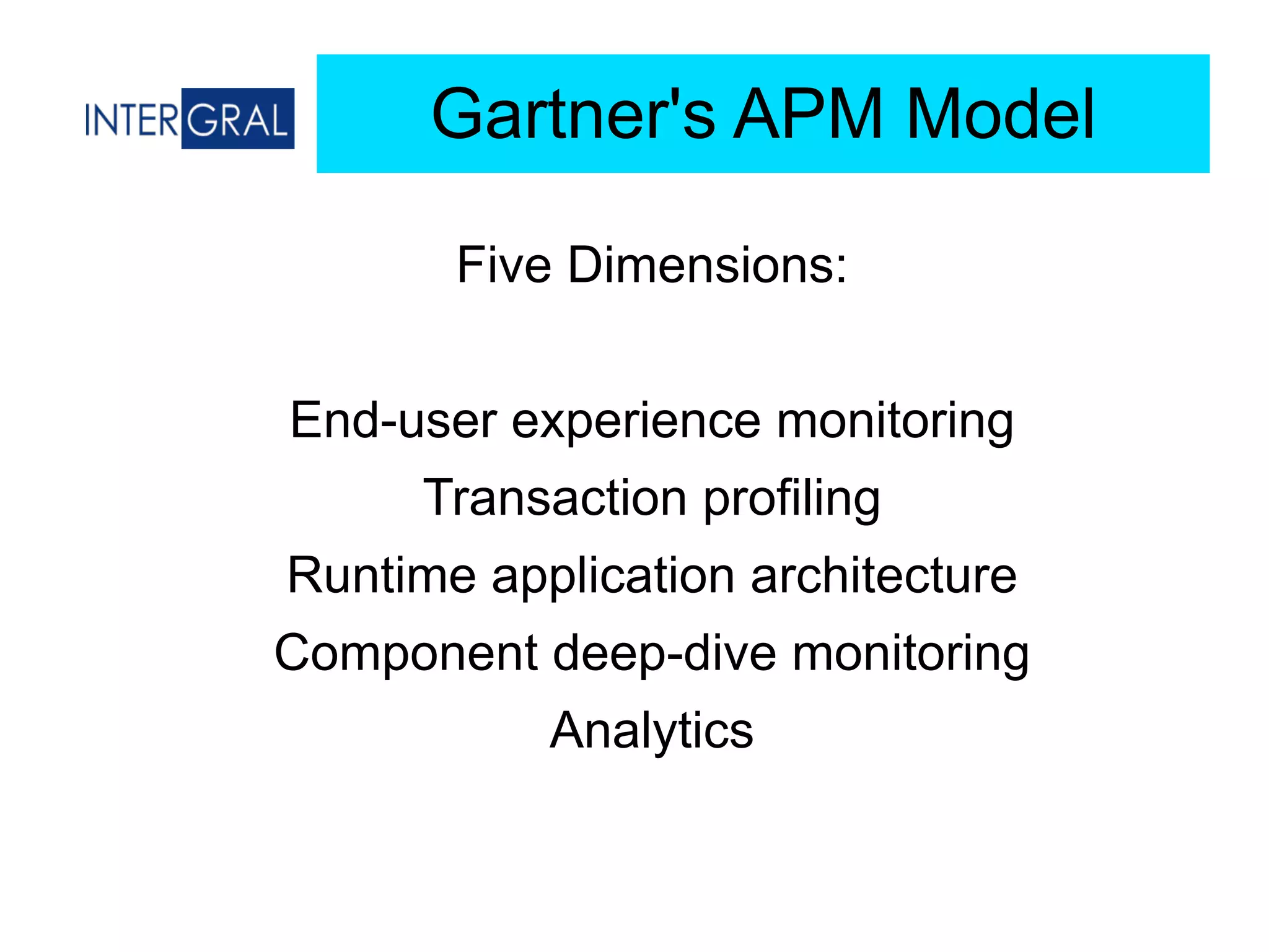
Gartner's APM Model
Five Dimensions:
End-user experience monitoring
Transaction profiling
Runtime application architecture
Component deep-dive monitoring
Analytics
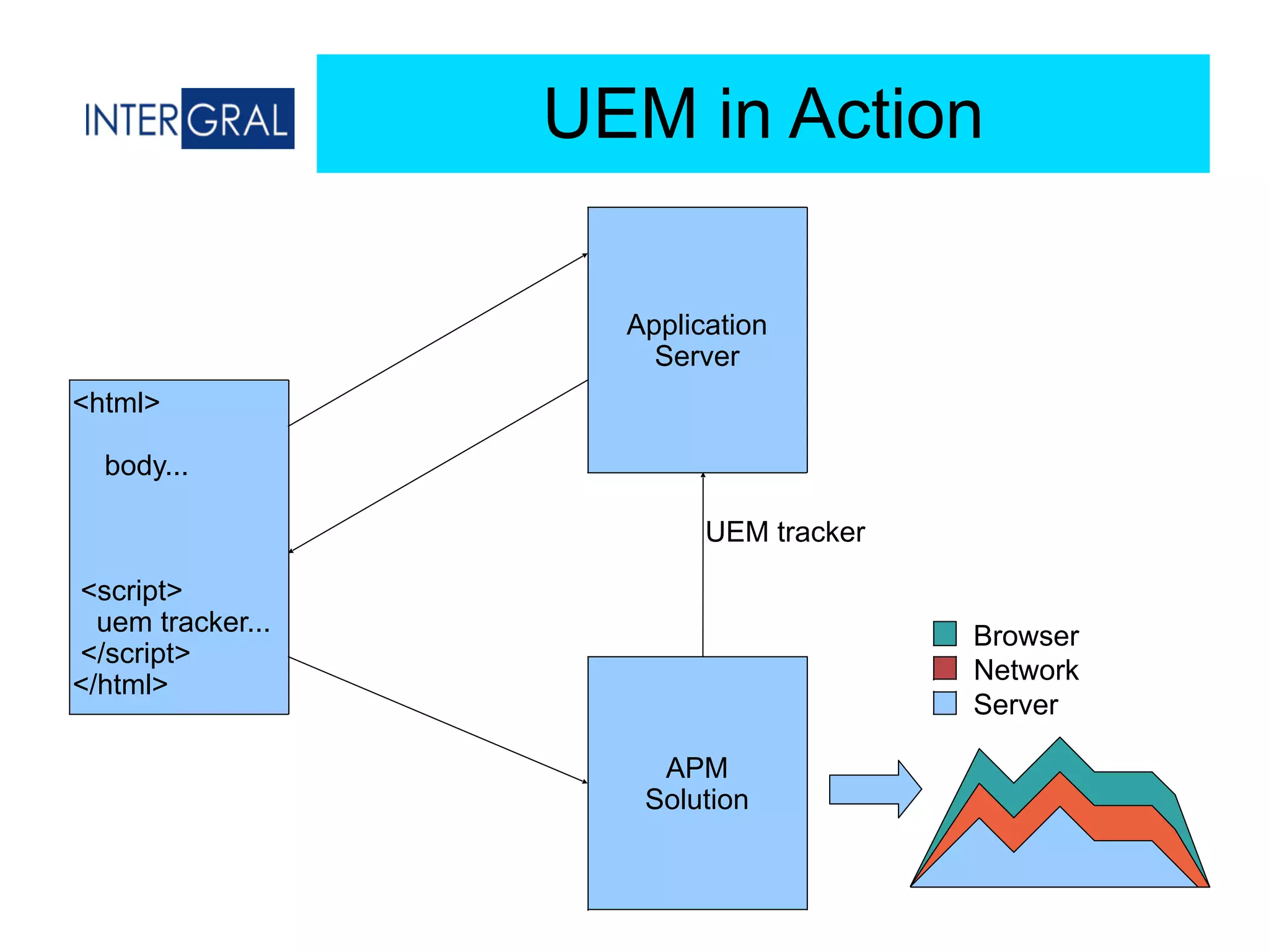
UEM in Action
Application
Server
APM
Solution
<html>
body...
<script>
uem tracker...
</script>
</html>
UEM tracker
Server
Network
Browser
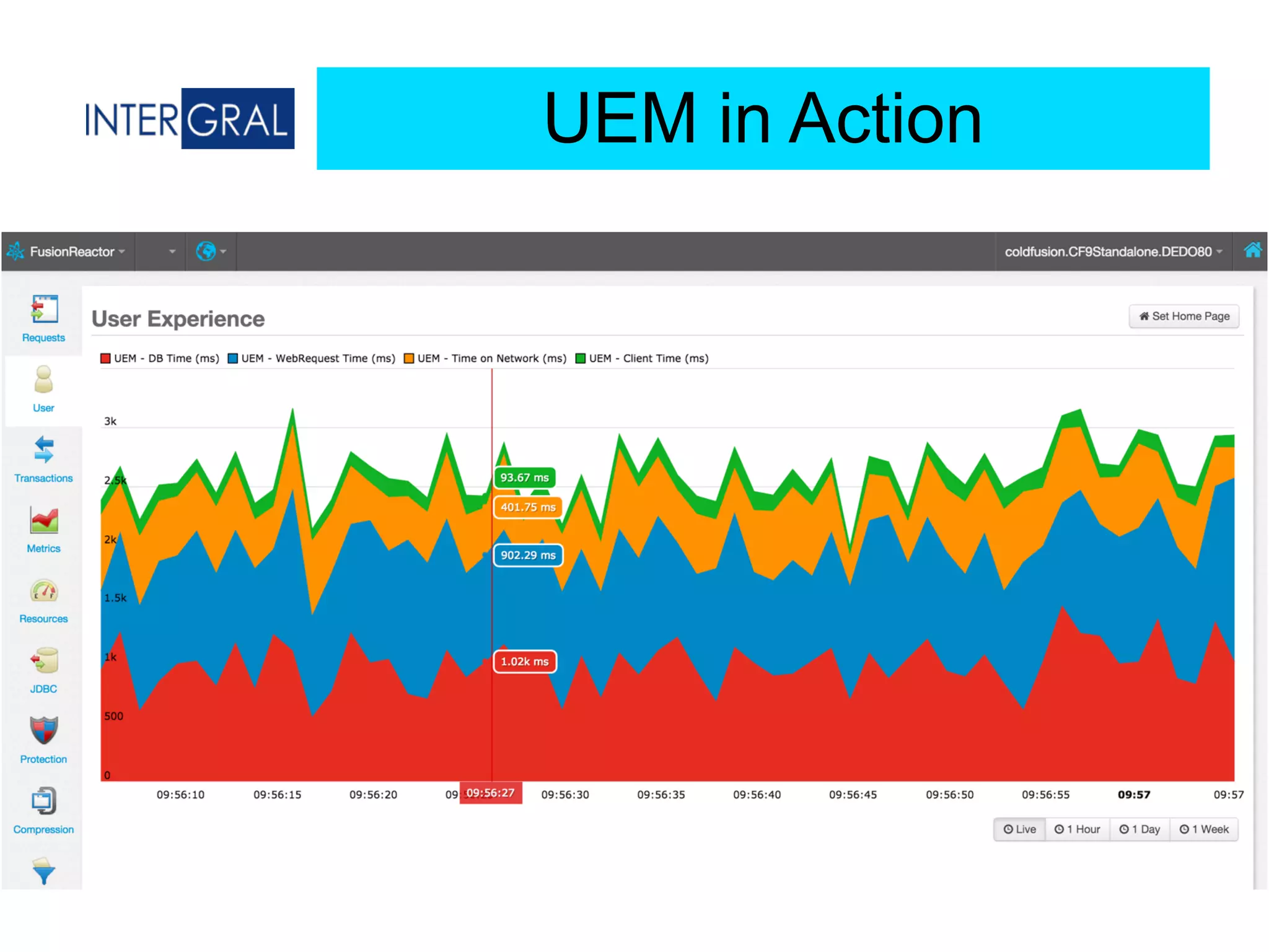
UEM in Action
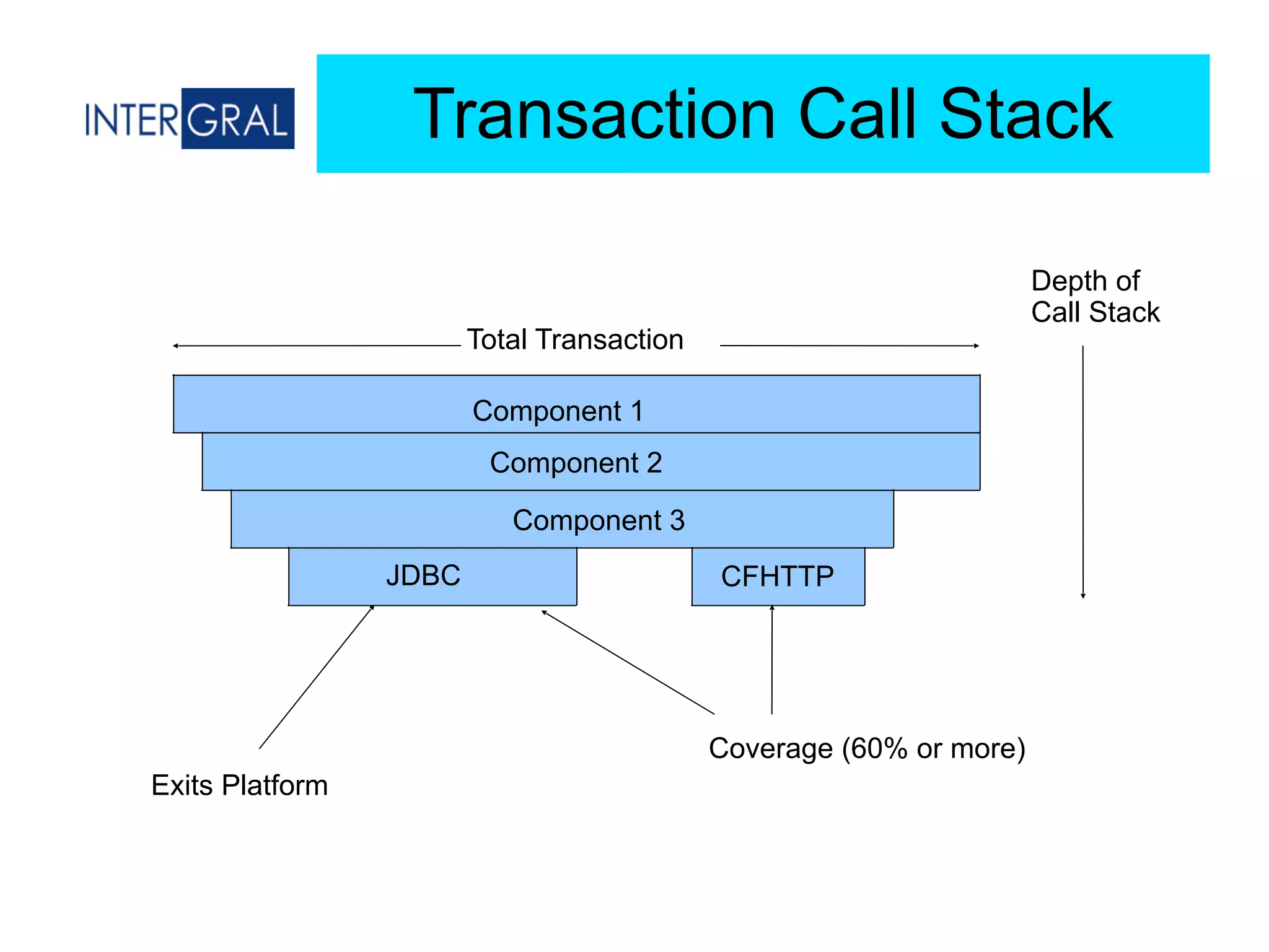
Transaction Call Stack
CFHTTP
Total Transaction
Exits Platform
Component 1
Component 2
Component 3
JDBC
Depth of
Call Stack
Coverage (60% or more)
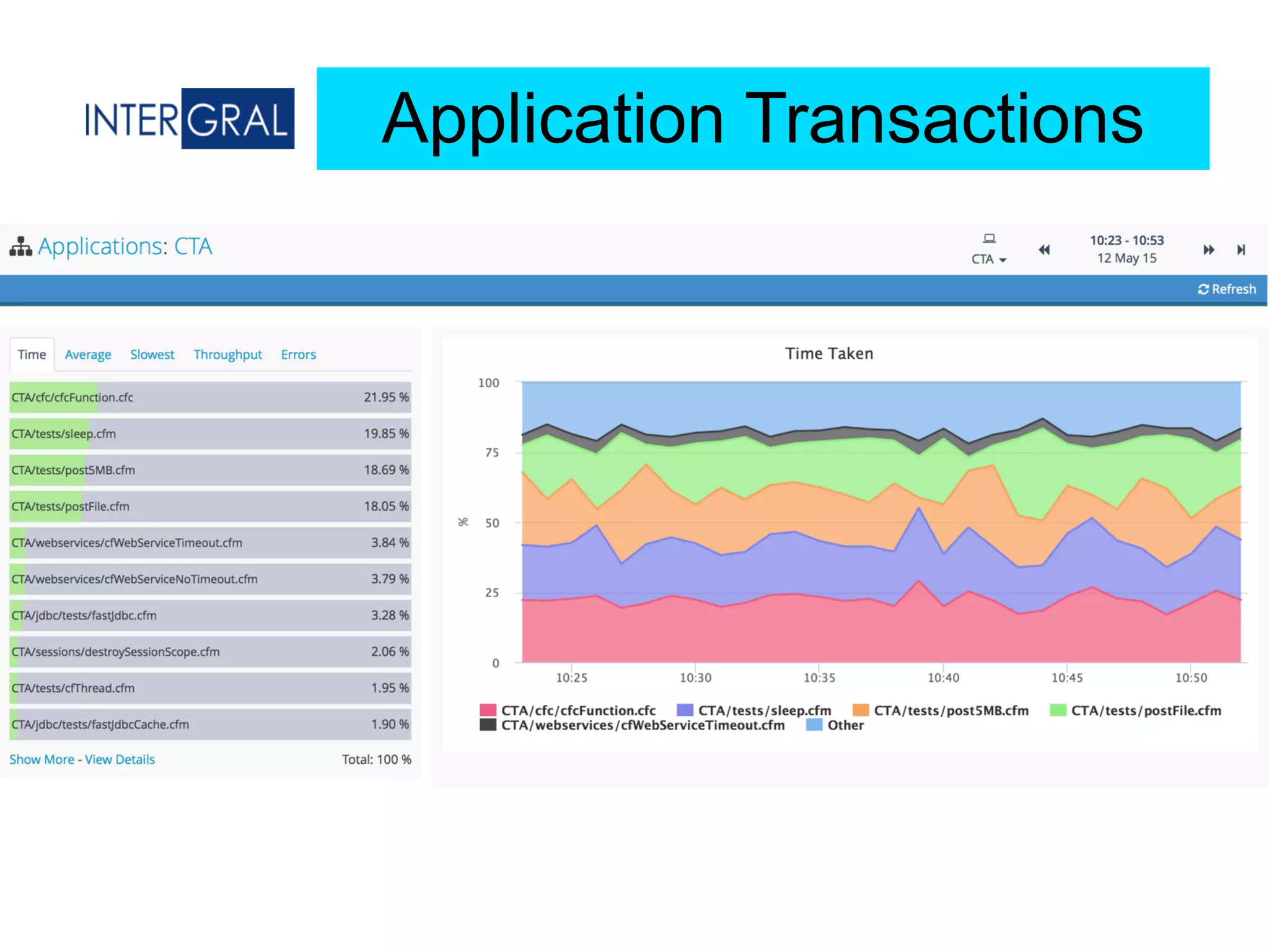
Application Transactions
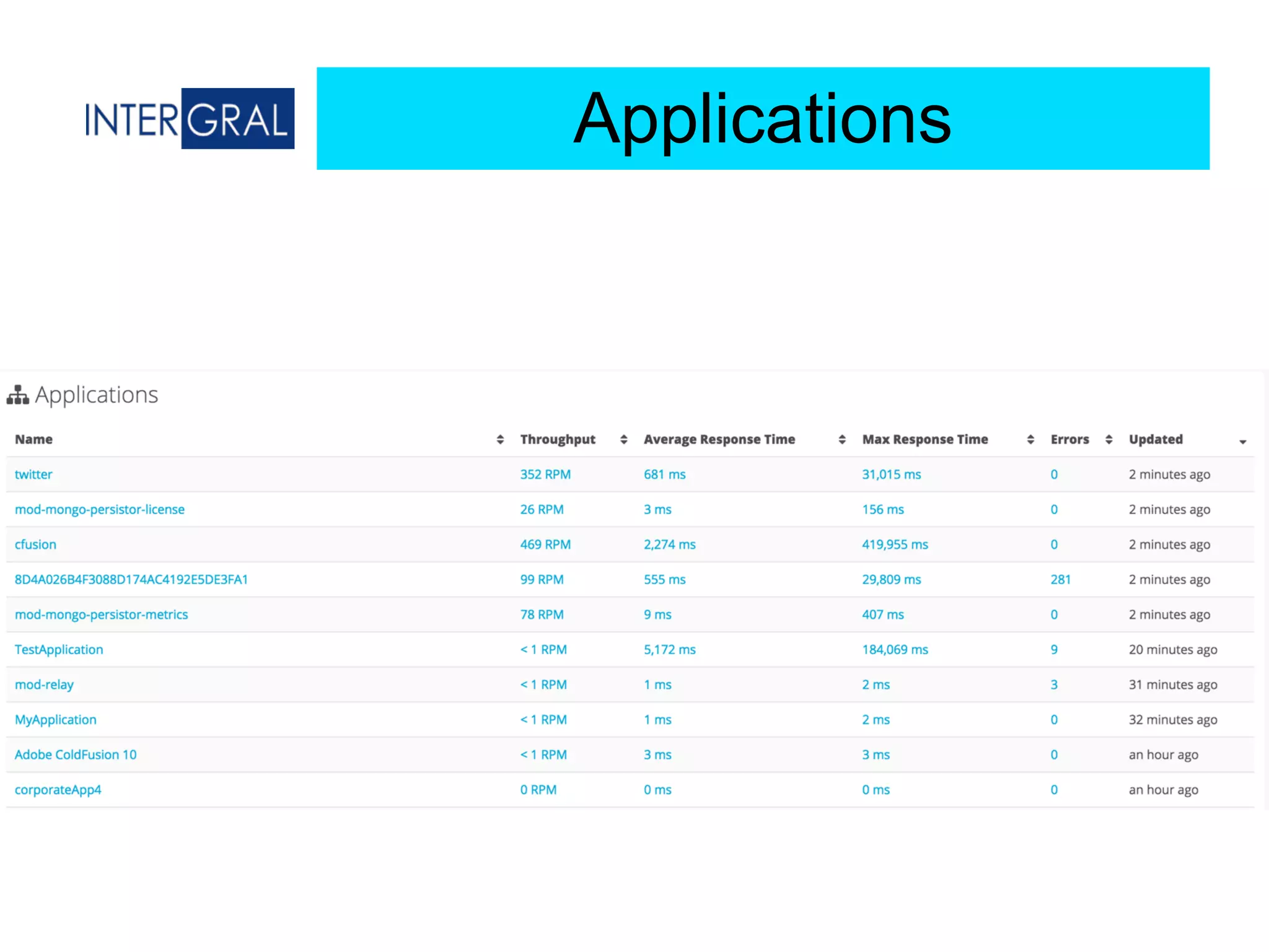
Applications
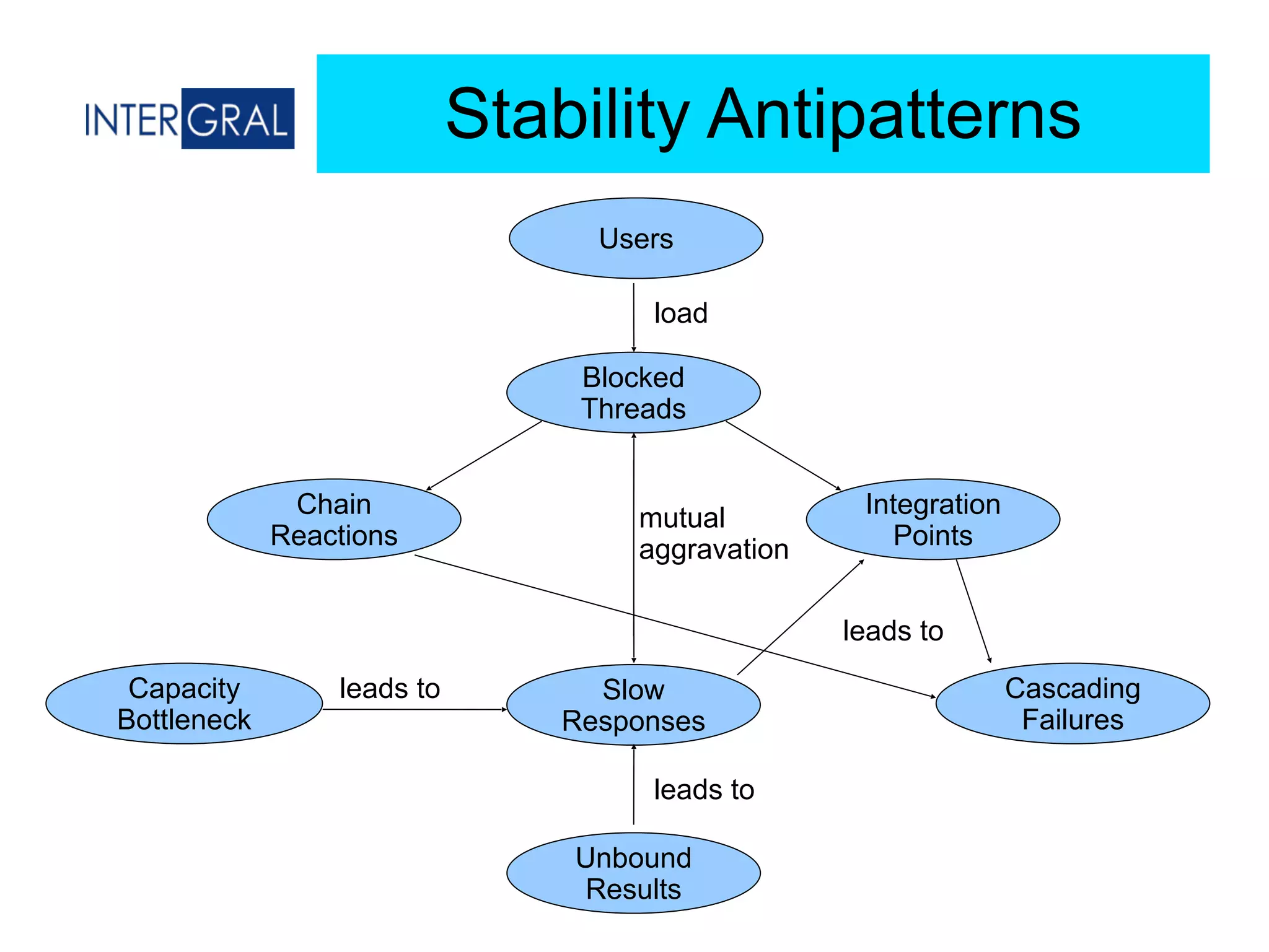
Stability Antipatterns
Integration
Points
Chain
Reactions
Slow
Responses
Unbound
Results
Capacity
Bottleneck
Cascading
Failures
load
leads to
leads to
leads to
mutual
aggravation
Blocked
Threads
Users
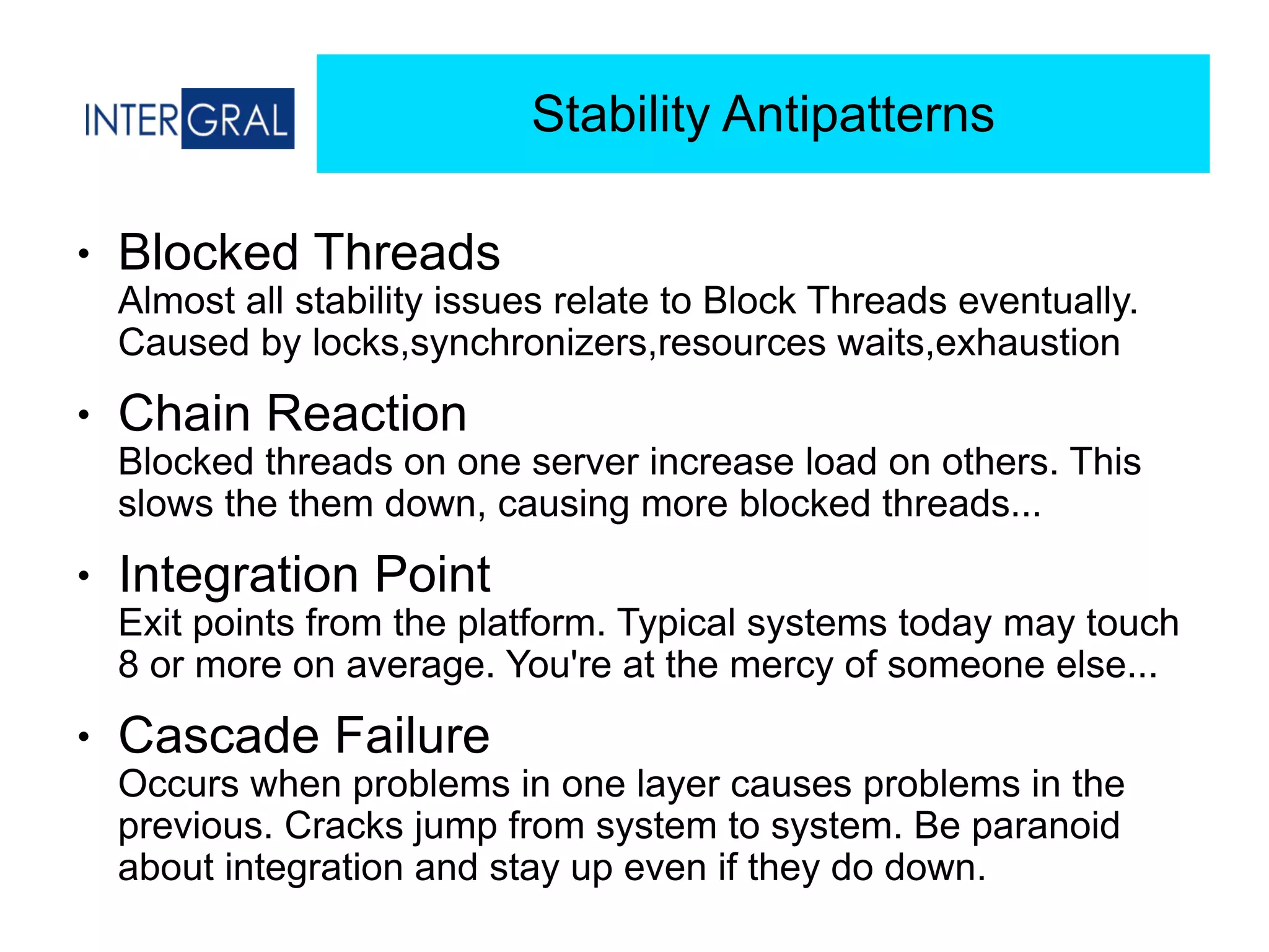
Stability Antipatterns
● Blocked Threads

Almost all stability issues relate to Block Threads eventually.
Caused by locks,synchronizers,resources waits,exhaustion
● Chain Reaction

Blocked threads on one server increase load on others. This
slows the them down, causing more blocked threads...
● Integration Point

Exit points from the platform. Typical systems today may touch
8 or more on average. You're at the mercy of someone else...
● Cascade Failure

Occurs when problems in one layer causes problems in the
previous. Cracks jump from system to system. Be paranoid
about integration and stay up even if they do down.
Stability Patterns
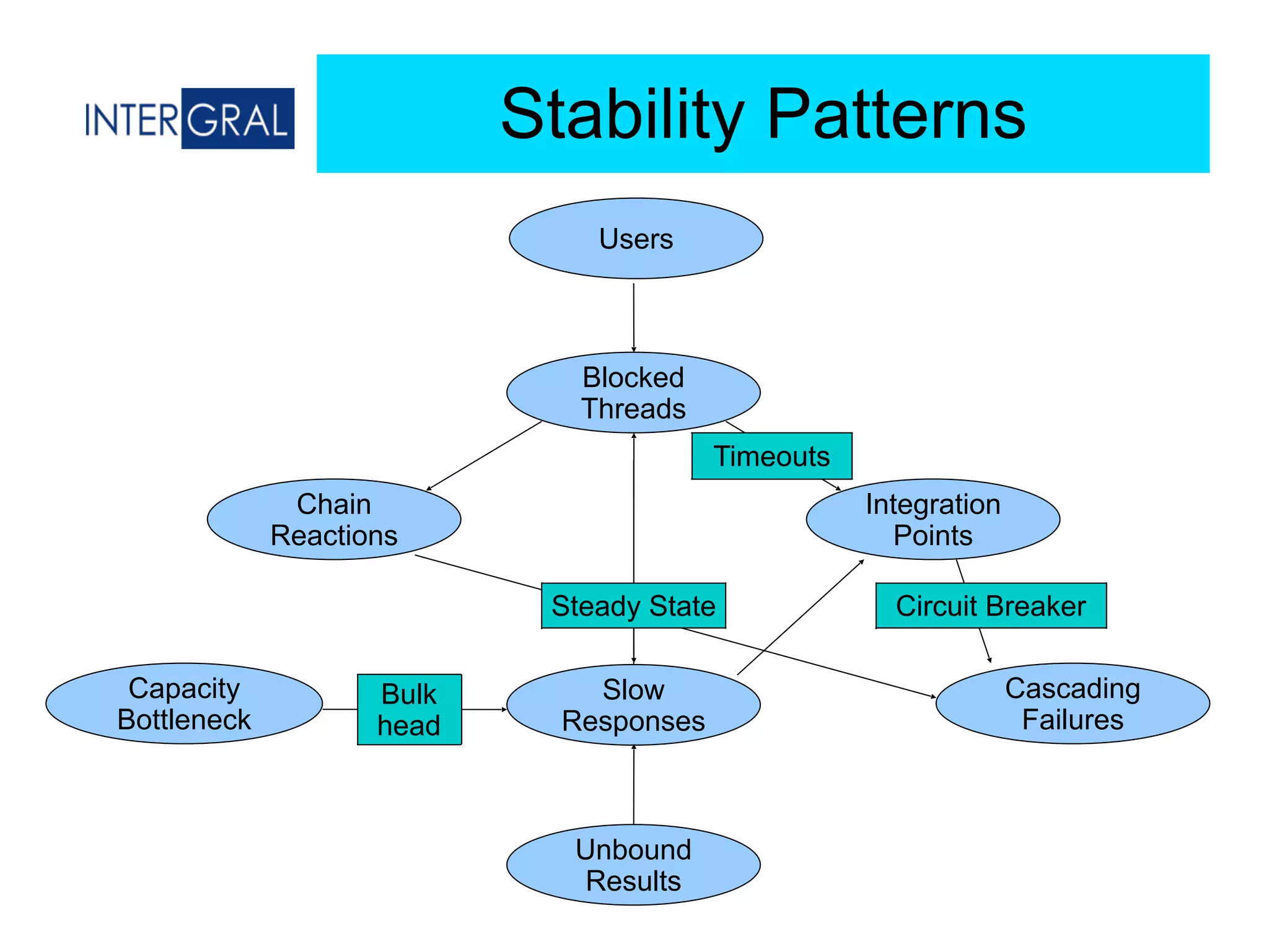
Blocked
Threads
Users
Integration
Points
Chain
Reactions
Slow
Responses
Unbound
Results
Capacity
Bottleneck
Cascading
Failures
Circuit BreakerSteady State
Bulk

head
Timeouts
Stability Patterns
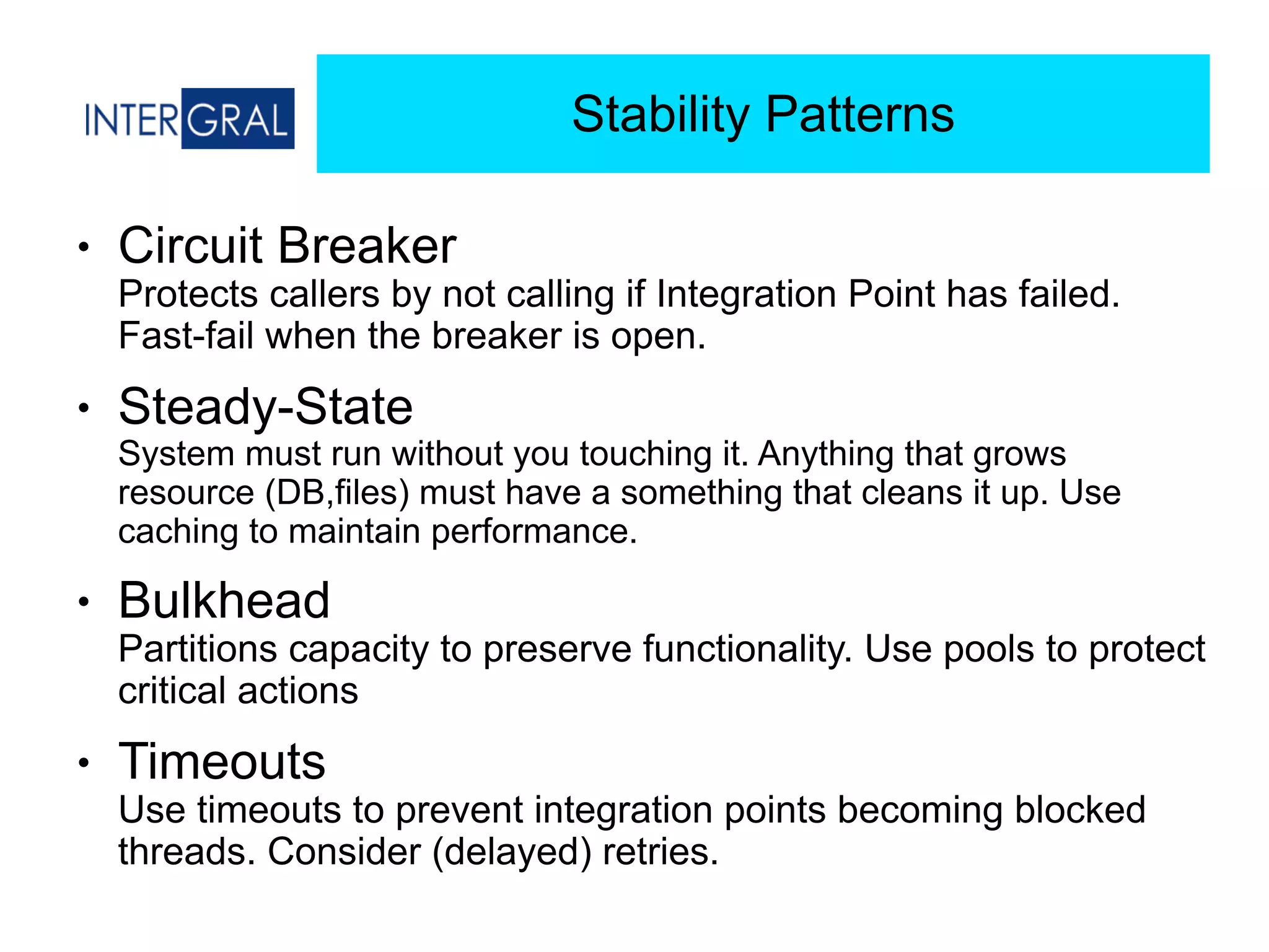
● Circuit Breaker

Protects callers by not calling if Integration Point has failed.
Fast-fail when the breaker is open.
● Steady-State

System must run without you touching it. Anything that grows
resource (DB,files) must have a something that cleans it up. Use
caching to maintain performance.
● Bulkhead

Partitions capacity to preserve functionality. Use pools to protect
critical actions
● Timeouts

Use timeouts to prevent integration points becoming blocked
threads. Consider (delayed) retries.
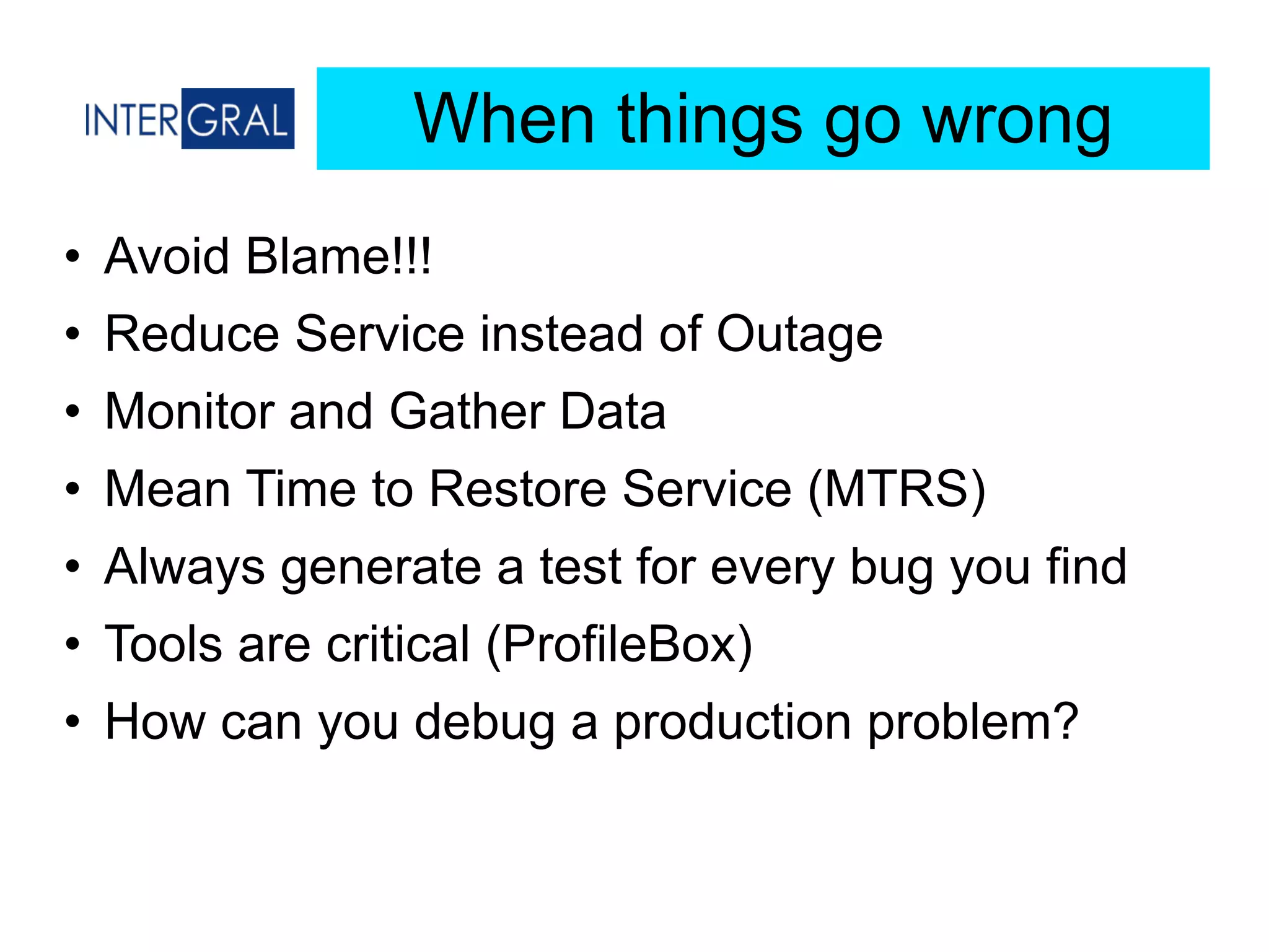
When things go wrong
• Avoid Blame!!!
• Reduce Service instead of Outage
• Monitor and Gather Data
• Mean Time to Restore Service (MTRS)
• Always generate a test for every bug you find
• Tools are critical (ProfileBox)
• How can you debug a production problem?
UPD
Unattended Production Debugging
World Premier!!!
UPD
What if you could…
debug when you’re not there?
safely debug a production system?
fix a problem without changing code?
Now you can!!!
Thanks for listening...
More information on:
http://www.fusion-reactor.com
Email: darren_pywell@intergral.com
Web: www.intergral.com

ITB2015 - Monitoring and Tracking Your Web Applications