
Applications
of
Heat Transfer
Objectives:
At the end of the class discussion, the
student must be able to:
a. list applications on heat transfer.
b. perform the activity on increasing the
insulators of heat.
c. relate the heat transfer on daily life by
giving additional applications.
Definition of Terms
1. insulators- substance which conducts heat
slowly.
2. conductors- substance which conducts heat
quickly.
3. absorption- the process by radiant energy is
taken up internally, or assimilated, by a
substance.
4. reflection- bouncing of radiant energy upon
striking a surface.
5.emission- release of energy. This means to give off
energy. The opposite of absorption of energy.
6. radiant energy- the energy which travels in the form
of electromagnetic waves.
 To keep heating and air conditioning
bills to a minimum, it pays to use good
thermal insulation in your home.
Insulation inhibits convection between
inner and outer walls and minimizes heat
transfer by conduction.
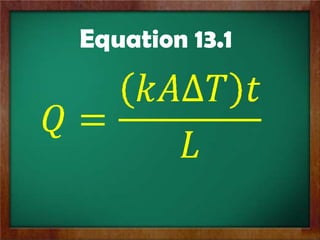
Equation 13.1
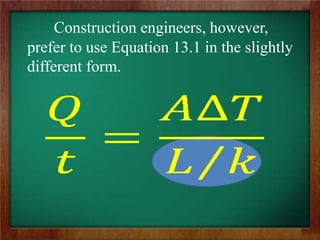
Construction engineers, however,
prefer to use Equation 13.1 in the slightly
different form.
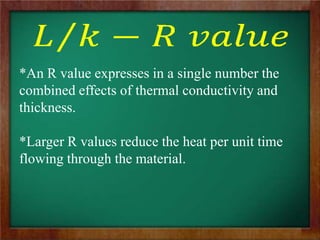
*An R value expresses in a single number the
combined effects of thermal conductivity and
thickness.
*Larger R values reduce the heat per unit time
flowing through the material.
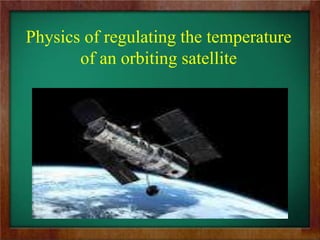
Physics of regulating the temperature
of an orbiting satellite
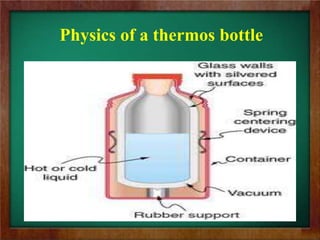
Physics of a thermos bottle
How thermos bottle
severely inhibited the
transfer of heat?
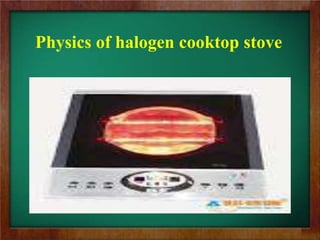
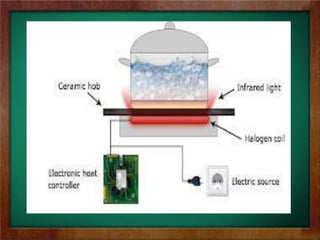
Physics of halogen cooktop stove
Absorption of
Radiant Energy
A good absorber of radiant energy
reflects very little radiant energy,
including visible light.
Hence, a surface that reflects very little
or no radiant energy looks dark.
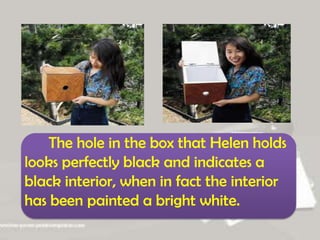
The hole in the box that Helen holds
looks perfectly black and indicates a
black interior, when in fact the interior
has been painted a bright white.
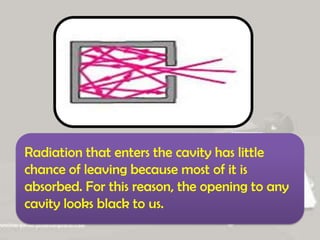
Radiation that enters the cavity has little
chance of leaving because most of it is
absorbed. For this reason, the opening to any
cavity looks black to us.
Reflection of
Radiant Energy
Good reflectors, on the other hand, are
poor absorbers. Clean snow is a good
reflector and therefore does not melt rapidly
in sunlight. If the snow is dirty, it absorbs
radiant energy from the sun and melts faster.
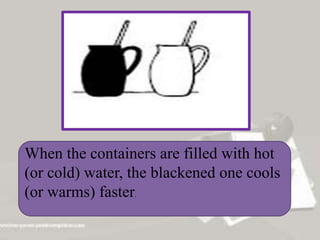
When the containers are filled with hot
(or cold) water, the blackened one cools
(or warms) faster.
Emission of
Radiant Energy
 If the surface is hotter than the
surroundings, for example, it will be a net
emitter and will cool. If the surface is
colder than the surroundings, it will be a
net absorber and will cool.
Cooling at
Night by
Radiation
Bodies that radiate more energy than they
receive become cooler. This happens at night
when solar radiation is absent.
An object left out in the open at night radiates
energy into space and, because of the absence of
any warmer bodies in the vicinity, receives very
little energy in return
Which is likely to be
colder; a night when the
stars are out or a night with
no stars?
Newton’s Law
of Cooling
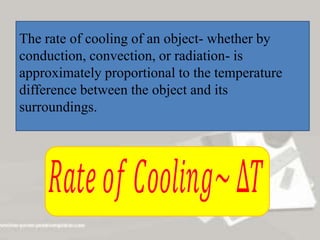
The rate of cooling of an object- whether by
conduction, convection, or radiation- is
approximately proportional to the temperature
difference between the object and its
surroundings.
Greenhouse
Effect
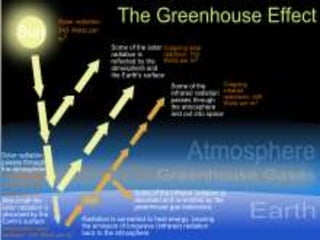
Greenhouse Effect- is the effect
of atmospheric gases on the balance
of terrestrial radiation and radiant
energy from the sun.
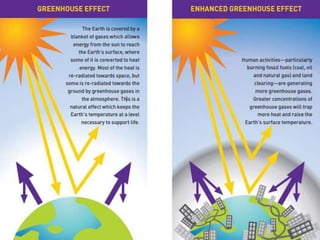
 The greenhouse effect is a natural
process that warms the Earth’s surface.
When the Sun’s energy reaches the Earth’s
atmosphere, some of it is reflected back to
space and the rest is absorbed and re-
radiated by greenhouse gases.
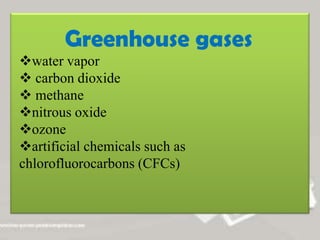
Greenhouse gases
water vapor
 carbon dioxide
 methane
nitrous oxide
ozone
artificial chemicals such as
chlorofluorocarbons (CFCs)
Real Greenhouses
Solar Power,
Energy, and
Resource
Conservation
Important Facts About the
Sun:
a. Diameter: 1,392,000 km
b. Temperature at Surface: 6000 degree
Celcius
c. Distance from the Earth: 150,000,000 km
Solar Constant- the amount of radiant
energy received each second over a
square meter that is at right angles to
the sun’s rays at the top of the
atmosphere.
Numerical Value= 1400 joules
Distribution System of Solar
Energy
a. active system- the distribution system
requires external energy to operate fans or
pumps.
b. passive system- the distribution is by
natural means ( conduction, convection, or
radiation)
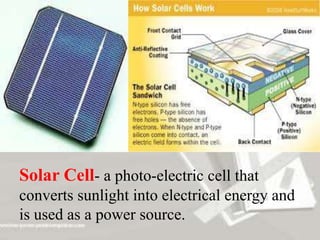
Solar Cell- a photo-electric cell that
converts sunlight into electrical energy and
is used as a power source.
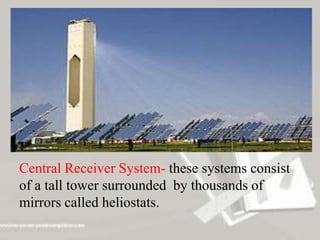
Central Receiver System- these systems consist
of a tall tower surrounded by thousands of
mirrors called heliostats.
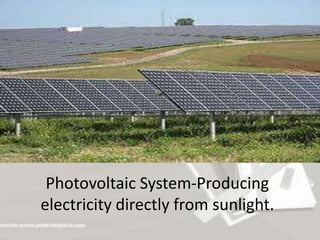
Photovoltaic System-Producing
electricity directly from sunlight.
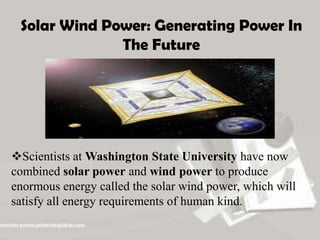
Solar Wind Power: Generating Power In
The Future
Scientists at Washington State University have now
combined solar power and wind power to produce
enormous energy called the solar wind power, which will
satisfy all energy requirements of human kind.
References:
1. Hewitt, Paul G. Conceptual Physics, 8th edition.
Beethoven Publishing. Philippines. 1998.
2. Jones, Mary. et al. Physics, 2nd edition. University
Press. United Kingdom. 2000.
3. Cutnell, John D., Kenneth W. Johnson. Introduction
to Physics, 8th edition. John Wiley & Sons Pte. Ltd.
Singapore. 2010.

Application of heat transfer

  • 1.
  • 2.
    Objectives: At the endof the class discussion, the student must be able to: a. list applications on heat transfer. b. perform the activity on increasing the insulators of heat. c. relate the heat transfer on daily life by giving additional applications.
  • 3.
    Definition of Terms 1.insulators- substance which conducts heat slowly. 2. conductors- substance which conducts heat quickly. 3. absorption- the process by radiant energy is taken up internally, or assimilated, by a substance.
  • 4.
    4. reflection- bouncingof radiant energy upon striking a surface. 5.emission- release of energy. This means to give off energy. The opposite of absorption of energy. 6. radiant energy- the energy which travels in the form of electromagnetic waves.
  • 5.
     To keepheating and air conditioning bills to a minimum, it pays to use good thermal insulation in your home. Insulation inhibits convection between inner and outer walls and minimizes heat transfer by conduction.
  • 6.
  • 7.
    Construction engineers, however, preferto use Equation 13.1 in the slightly different form.
  • 8.
    *An R valueexpresses in a single number the combined effects of thermal conductivity and thickness. *Larger R values reduce the heat per unit time flowing through the material.
  • 9.
    Physics of regulatingthe temperature of an orbiting satellite
  • 10.
    Physics of athermos bottle
  • 11.
    How thermos bottle severelyinhibited the transfer of heat?
  • 12.
    Physics of halogencooktop stove
  • 14.
  • 15.
    A good absorberof radiant energy reflects very little radiant energy, including visible light. Hence, a surface that reflects very little or no radiant energy looks dark.
  • 16.
    The hole inthe box that Helen holds looks perfectly black and indicates a black interior, when in fact the interior has been painted a bright white.
  • 17.
    Radiation that entersthe cavity has little chance of leaving because most of it is absorbed. For this reason, the opening to any cavity looks black to us.
  • 18.
  • 19.
    Good reflectors, onthe other hand, are poor absorbers. Clean snow is a good reflector and therefore does not melt rapidly in sunlight. If the snow is dirty, it absorbs radiant energy from the sun and melts faster.
  • 20.
    When the containersare filled with hot (or cold) water, the blackened one cools (or warms) faster.
  • 21.
  • 22.
     If thesurface is hotter than the surroundings, for example, it will be a net emitter and will cool. If the surface is colder than the surroundings, it will be a net absorber and will cool.
  • 23.
  • 24.
    Bodies that radiatemore energy than they receive become cooler. This happens at night when solar radiation is absent. An object left out in the open at night radiates energy into space and, because of the absence of any warmer bodies in the vicinity, receives very little energy in return
  • 25.
    Which is likelyto be colder; a night when the stars are out or a night with no stars?
  • 26.
  • 27.
    The rate ofcooling of an object- whether by conduction, convection, or radiation- is approximately proportional to the temperature difference between the object and its surroundings.
  • 28.
  • 29.
    Greenhouse Effect- isthe effect of atmospheric gases on the balance of terrestrial radiation and radiant energy from the sun.
  • 30.
     The greenhouseeffect is a natural process that warms the Earth’s surface. When the Sun’s energy reaches the Earth’s atmosphere, some of it is reflected back to space and the rest is absorbed and re- radiated by greenhouse gases.
  • 32.
    Greenhouse gases water vapor carbon dioxide  methane nitrous oxide ozone artificial chemicals such as chlorofluorocarbons (CFCs)
  • 34.
  • 35.
  • 36.
    Important Facts Aboutthe Sun: a. Diameter: 1,392,000 km b. Temperature at Surface: 6000 degree Celcius c. Distance from the Earth: 150,000,000 km
  • 37.
    Solar Constant- theamount of radiant energy received each second over a square meter that is at right angles to the sun’s rays at the top of the atmosphere. Numerical Value= 1400 joules
  • 38.
    Distribution System ofSolar Energy a. active system- the distribution system requires external energy to operate fans or pumps. b. passive system- the distribution is by natural means ( conduction, convection, or radiation)
  • 39.
    Solar Cell- aphoto-electric cell that converts sunlight into electrical energy and is used as a power source.
  • 40.
    Central Receiver System-these systems consist of a tall tower surrounded by thousands of mirrors called heliostats.
  • 41.
  • 42.
    Solar Wind Power:Generating Power In The Future Scientists at Washington State University have now combined solar power and wind power to produce enormous energy called the solar wind power, which will satisfy all energy requirements of human kind.
  • 43.
    References: 1. Hewitt, PaulG. Conceptual Physics, 8th edition. Beethoven Publishing. Philippines. 1998. 2. Jones, Mary. et al. Physics, 2nd edition. University Press. United Kingdom. 2000. 3. Cutnell, John D., Kenneth W. Johnson. Introduction to Physics, 8th edition. John Wiley & Sons Pte. Ltd. Singapore. 2010.