GROUP MEMBERS
 MAQSOOQ AHMED 2K13-CHE-58
 GULAM YASEEN 2K13-CHE-11
 WASEEM AKHTAR 2K13-CHE-120
WHAT IS ENGINEERING?
The branch of science and technology
concerned with the design, building
and use of engines , machines, and
structures.
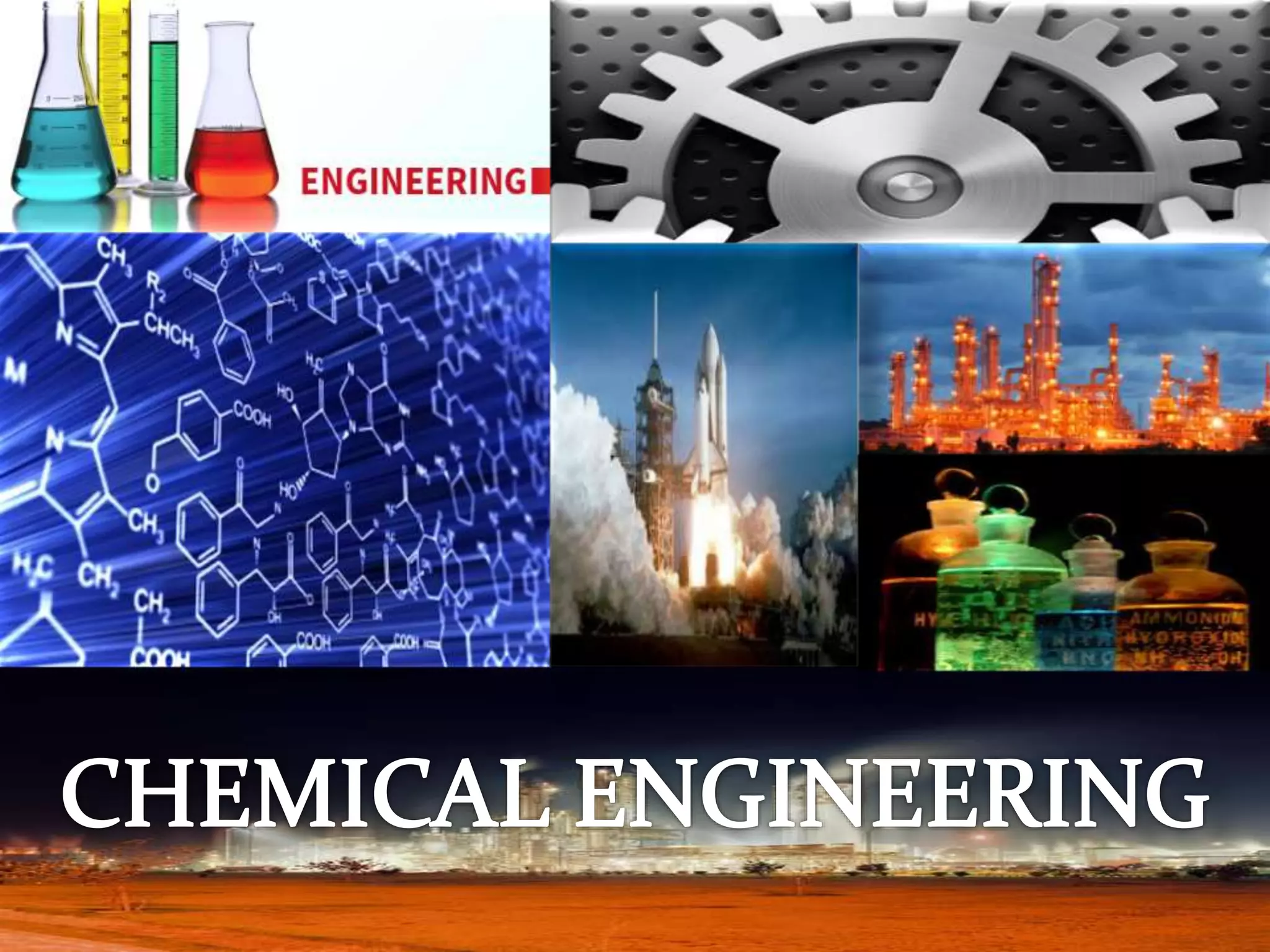
What is Chemical Engineering?
Chemical engineering is a branch of science that
applies physical sciences (physics and chemistry) and
life sciences (microbiology and Bio chemistry) together
with (applied mathematics and economics ) to produce,
transform, transport, and properly use chemicals,
materials and energy. Essentially, chemical
engineers design large-scale processes that convert
chemicals, raw materials, living cells,
microorganisms and energy into useful forms and
products.
Sub-Disciplines of Chemical
Engineering
 Ceramic Engineering
 Drilling Engineering
 Material Engineering
 Paper Engineering
 Petroleum Engineering
 Plastic Engineering
 Reservoir Engineering
 Mud Engineering
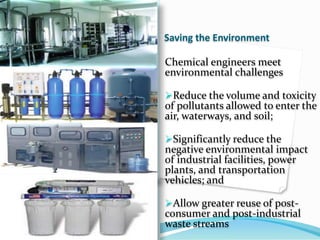
Saving the Environment
Chemical engineers meet
environmental challenges
Reduce the volume and toxicity
of pollutants allowed to enter the
air, waterways, and soil;
Significantly reduce the
negative environmental impact
of industrial facilities, power
plants, and transportation
vehicles; and
Allow greater reuse of post-
consumer and post-industrial
waste streams
What do chemical engineers do?
Chemical, process and biochemical engineers are involved in the
design, modification and operation of processes to produce the things
we rely on everyday - chocolate, petrol , cosmetics, electricity, cars,
aspirin, the list is endless...
They are employed across a huge variety of sectors including:
 Chemicals products
 Pharmaceuticals
 Energy
 Mining and minerals
 Oil & gas
CHEMICAL PRODUCTS
 House hold products
Example : Sugar, all kind of sodas , cosmetics, oil & ghee,
Textile, Lather , all kind of acids , cleaning products
exactas
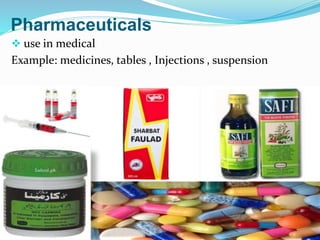
Pharmaceuticals
 use in medical
Example: medicines, tables , Injections , suspension
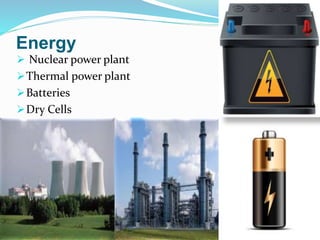
Energy
 Nuclear power plant
Thermal power plant
Batteries
Dry Cells
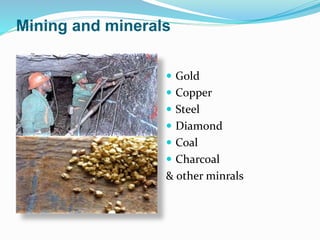
Mining and minerals
 Gold
 Copper
 Steel
 Diamond
 Coal
 Charcoal
& other minrals
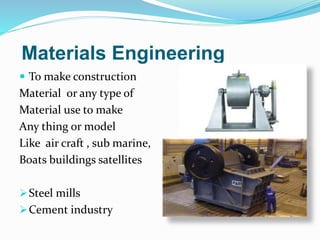
Materials Engineering
 To make construction
Material or any type of
Material use to make
Any thing or model
Like air craft , sub marine,
Boats buildings satellites
Steel mills
Cement industry
Oil & Gas
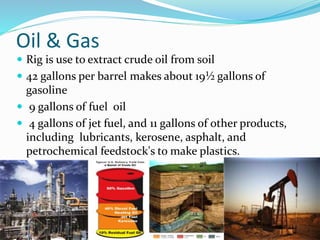
 Rig is use to extract crude oil from soil
 42 gallons per barrel makes about 19½ gallons of
gasoline
 9 gallons of fuel oil
 4 gallons of jet fuel, and 11 gallons of other products,
including lubricants, kerosene, asphalt, and
petrochemical feedstock's to make plastics.
Fertilizer
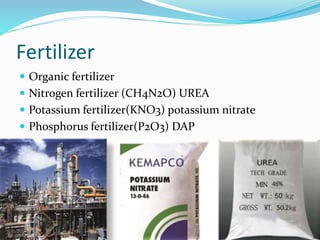
 Organic fertilizer
 Nitrogen fertilizer (CH4N2O) UREA
 Potassium fertilizer(KNO3) potassium nitrate
 Phosphorus fertilizer(P2O3) DAP
application of chemical engineering power point presentation

application of chemical engineering power point presentation

  • 2.
    GROUP MEMBERS  MAQSOOQAHMED 2K13-CHE-58  GULAM YASEEN 2K13-CHE-11  WASEEM AKHTAR 2K13-CHE-120
  • 3.
    WHAT IS ENGINEERING? Thebranch of science and technology concerned with the design, building and use of engines , machines, and structures.
  • 4.
    What is ChemicalEngineering? Chemical engineering is a branch of science that applies physical sciences (physics and chemistry) and life sciences (microbiology and Bio chemistry) together with (applied mathematics and economics ) to produce, transform, transport, and properly use chemicals, materials and energy. Essentially, chemical engineers design large-scale processes that convert chemicals, raw materials, living cells, microorganisms and energy into useful forms and products.
  • 5.
    Sub-Disciplines of Chemical Engineering Ceramic Engineering  Drilling Engineering  Material Engineering  Paper Engineering  Petroleum Engineering  Plastic Engineering  Reservoir Engineering  Mud Engineering
  • 6.
    Saving the Environment Chemicalengineers meet environmental challenges Reduce the volume and toxicity of pollutants allowed to enter the air, waterways, and soil; Significantly reduce the negative environmental impact of industrial facilities, power plants, and transportation vehicles; and Allow greater reuse of post- consumer and post-industrial waste streams
  • 7.
    What do chemicalengineers do? Chemical, process and biochemical engineers are involved in the design, modification and operation of processes to produce the things we rely on everyday - chocolate, petrol , cosmetics, electricity, cars, aspirin, the list is endless... They are employed across a huge variety of sectors including:  Chemicals products  Pharmaceuticals  Energy  Mining and minerals  Oil & gas
  • 8.
    CHEMICAL PRODUCTS  Household products Example : Sugar, all kind of sodas , cosmetics, oil & ghee, Textile, Lather , all kind of acids , cleaning products exactas
  • 9.
    Pharmaceuticals  use inmedical Example: medicines, tables , Injections , suspension
  • 10.
    Energy  Nuclear powerplant Thermal power plant Batteries Dry Cells
  • 11.
    Mining and minerals Gold  Copper  Steel  Diamond  Coal  Charcoal & other minrals
  • 12.
    Materials Engineering  Tomake construction Material or any type of Material use to make Any thing or model Like air craft , sub marine, Boats buildings satellites Steel mills Cement industry
  • 13.
    Oil & Gas Rig is use to extract crude oil from soil  42 gallons per barrel makes about 19½ gallons of gasoline  9 gallons of fuel oil  4 gallons of jet fuel, and 11 gallons of other products, including lubricants, kerosene, asphalt, and petrochemical feedstock's to make plastics.
  • 14.
    Fertilizer  Organic fertilizer Nitrogen fertilizer (CH4N2O) UREA  Potassium fertilizer(KNO3) potassium nitrate  Phosphorus fertilizer(P2O3) DAP