Hawler Medical University
College of Dentistry
4th Stage
Group C
Pedodontic lecture
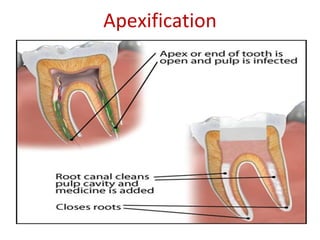
Apexification
Contents
• Definition
• Steps of the technique
Apexification
Definition:
Is a method of inducing a calcified
barrier at the apex of a non-vital tooth
with incomplete root formation.
Apexification
Apexification
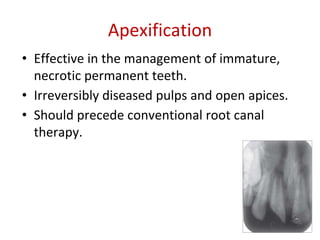
• Effective in the management of immature,
necrotic permanent teeth.
• Irreversibly diseased pulps and open apices.
• Should precede conventional root canal
therapy.
Apexification
• The procedure has been demonstrated to be
successful in repeated clinical trials
stimulating the process of root end
development, which was interrupted by
pulpal necrosis, so that it continues to the
point of apical closure.
• When the calcific “plug” is observed in the
apical portion ,routine endodontic procedures
may be completed.
Steps of the technique
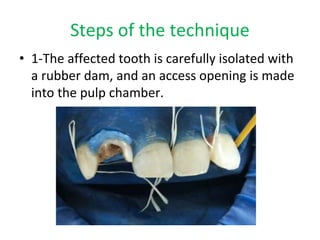
• 1-The affected tooth is carefully isolated with
a rubber dam, and an access opening is made
into the pulp chamber.
Steps of the technique
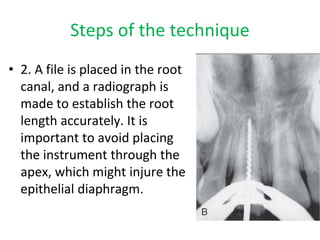
• 2. A file is placed in the root
canal, and a radiograph is
made to establish the root
length accurately. It is
important to avoid placing
the instrument through the
apex, which might injure the
epithelial diaphragm.
Steps of the technique
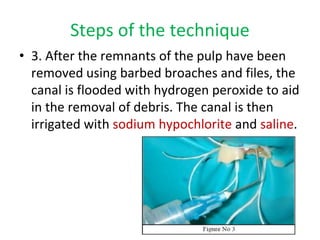
• 3. After the remnants of the pulp have been
removed using barbed broaches and files, the
canal is flooded with hydrogen peroxide to aid
in the removal of debris. The canal is then
irrigated with sodium hypochlorite and saline.
Steps of the technique
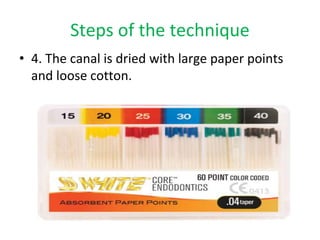
• 4. The canal is dried with large paper points
and loose cotton.
Steps of the technique
•Using Calcium Hydroxide
•Using mineral trioxide
aggregate (MTA)
Steps of the technique
• 5. A thick paste of calcium hydroxide is
transferred to the canal. An endodontic
plugger may be used to push the material to
the apical end, but excess material should not
be forced beyond the apex.
Using Calcium Hydroxide
Steps of the technique
• 6. A cotton pledget is placed over the calcium
hydroxide, and the seal is completed with a
layer of reinforced zinc oxide–eugenol
cement.
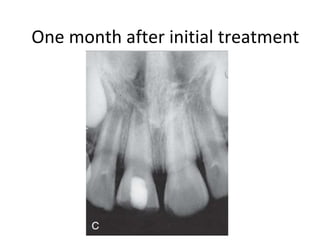
One month after initial treatment
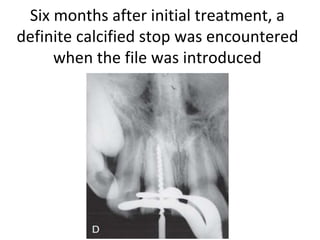
Six months after initial treatment, a
definite calcified stop was encountered
when the file was introduced
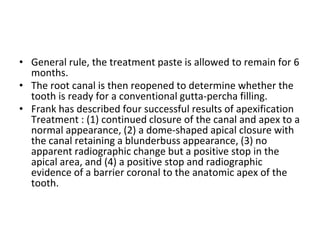
• General rule, the treatment paste is allowed to remain for 6
months.
• The root canal is then reopened to determine whether the
tooth is ready for a conventional gutta-percha filling.
• Frank has described four successful results of apexification
Treatment : (1) continued closure of the canal and apex to a
normal appearance, (2) a dome-shaped apical closure with
the canal retaining a blunderbuss appearance, (3) no
apparent radiographic change but a positive stop in the
apical area, and (4) a positive stop and radiographic
evidence of a barrier coronal to the anatomic apex of the
tooth.
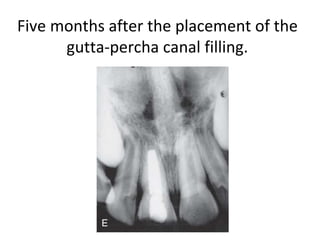
Five months after the placement of the
gutta-percha canal filling.
• If apical closure has not occurred in 6 months,
the root canal is retreated with the calcium
hydroxide paste. If weeping in the canal was
not controlled before the canal was filled,
retreatment is recommended 2 or 3 months
after the first treatment.
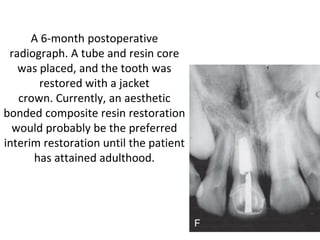
A 6-month postoperative
radiograph. A tube and resin core
was placed, and the tooth was
restored with a jacket
crown. Currently, an aesthetic
bonded composite resin restoration
would probably be the preferred
interim restoration until the patient
has attained adulthood.
Steps of the technique
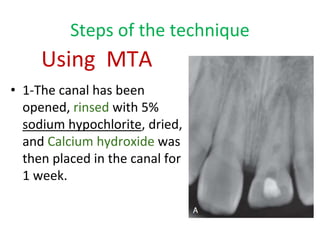
• 1-The canal has been
opened, rinsed with 5%
sodium hypochlorite, dried,
and Calcium hydroxide was
then placed in the canal for
1 week.
Using MTA
Using MTA
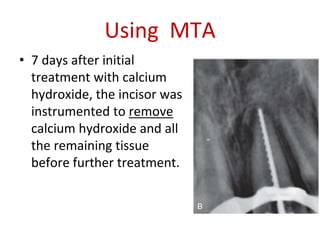
• 7 days after initial
treatment with calcium
hydroxide, the incisor was
instrumented to remove
calcium hydroxide and all
the remaining tissue
before further treatment.
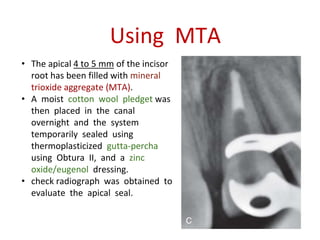
• The apical 4 to 5 mm of the incisor
root has been filled with mineral
trioxide aggregate (MTA).
• A moist cotton wool pledget was
then placed in the canal
overnight and the system
temporarily sealed using
thermoplasticized gutta-percha
using Obtura II, and a zinc
oxide/eugenol dressing.
• check radiograph was obtained to
evaluate the apical seal.
Using MTA
• The gutta-percha and cotton wool pledget
was removed the following day and a
definitive root-filling placed coronal to the
MTA using thermoplasticized gutta-percha.
Using MTA
• Te incisor has
completed initial
treatment with MTA.
A temporary
restoration has been
placed to seal the
canal opening. h
Using MTA
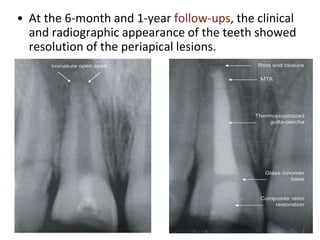
• At the 6-month and 1-year follow-ups, the clinical
and radiographic appearance of the teeth showed
resolution of the periapical lesions.
• Tooth treated by the apexification method are
susceptible to fracture because of the brittleness
that results from non-vitality and from the
relatively thin dentinal walls of the roots.
• The calcium hydroxide apexification technique is
the duration of therapy, which often lasts many
months.
Using MTA
Ararat Mountain/ Northern KURDISTAN
Apexification
Apexification

Apexification

  • 1.
    Hawler Medical University Collegeof Dentistry 4th Stage Group C Pedodontic lecture Apexification
  • 2.
  • 3.
    Apexification Definition: Is a methodof inducing a calcified barrier at the apex of a non-vital tooth with incomplete root formation.
  • 4.
  • 5.
    Apexification • Effective inthe management of immature, necrotic permanent teeth. • Irreversibly diseased pulps and open apices. • Should precede conventional root canal therapy.
  • 6.
    Apexification • The procedurehas been demonstrated to be successful in repeated clinical trials stimulating the process of root end development, which was interrupted by pulpal necrosis, so that it continues to the point of apical closure. • When the calcific “plug” is observed in the apical portion ,routine endodontic procedures may be completed.
  • 7.
    Steps of thetechnique • 1-The affected tooth is carefully isolated with a rubber dam, and an access opening is made into the pulp chamber.
  • 8.
    Steps of thetechnique • 2. A file is placed in the root canal, and a radiograph is made to establish the root length accurately. It is important to avoid placing the instrument through the apex, which might injure the epithelial diaphragm.
  • 9.
    Steps of thetechnique • 3. After the remnants of the pulp have been removed using barbed broaches and files, the canal is flooded with hydrogen peroxide to aid in the removal of debris. The canal is then irrigated with sodium hypochlorite and saline.
  • 10.
    Steps of thetechnique • 4. The canal is dried with large paper points and loose cotton.
  • 11.
    Steps of thetechnique •Using Calcium Hydroxide •Using mineral trioxide aggregate (MTA)
  • 12.
    Steps of thetechnique • 5. A thick paste of calcium hydroxide is transferred to the canal. An endodontic plugger may be used to push the material to the apical end, but excess material should not be forced beyond the apex. Using Calcium Hydroxide
  • 13.
    Steps of thetechnique • 6. A cotton pledget is placed over the calcium hydroxide, and the seal is completed with a layer of reinforced zinc oxide–eugenol cement.
  • 14.
    One month afterinitial treatment
  • 15.
    Six months afterinitial treatment, a definite calcified stop was encountered when the file was introduced
  • 16.
    • General rule,the treatment paste is allowed to remain for 6 months. • The root canal is then reopened to determine whether the tooth is ready for a conventional gutta-percha filling. • Frank has described four successful results of apexification Treatment : (1) continued closure of the canal and apex to a normal appearance, (2) a dome-shaped apical closure with the canal retaining a blunderbuss appearance, (3) no apparent radiographic change but a positive stop in the apical area, and (4) a positive stop and radiographic evidence of a barrier coronal to the anatomic apex of the tooth.
  • 17.
    Five months afterthe placement of the gutta-percha canal filling.
  • 18.
    • If apicalclosure has not occurred in 6 months, the root canal is retreated with the calcium hydroxide paste. If weeping in the canal was not controlled before the canal was filled, retreatment is recommended 2 or 3 months after the first treatment.
  • 19.
    A 6-month postoperative radiograph.A tube and resin core was placed, and the tooth was restored with a jacket crown. Currently, an aesthetic bonded composite resin restoration would probably be the preferred interim restoration until the patient has attained adulthood.
  • 20.
    Steps of thetechnique • 1-The canal has been opened, rinsed with 5% sodium hypochlorite, dried, and Calcium hydroxide was then placed in the canal for 1 week. Using MTA
  • 21.
    Using MTA • 7days after initial treatment with calcium hydroxide, the incisor was instrumented to remove calcium hydroxide and all the remaining tissue before further treatment.
  • 22.
    • The apical4 to 5 mm of the incisor root has been filled with mineral trioxide aggregate (MTA). • A moist cotton wool pledget was then placed in the canal overnight and the system temporarily sealed using thermoplasticized gutta-percha using Obtura II, and a zinc oxide/eugenol dressing. • check radiograph was obtained to evaluate the apical seal. Using MTA
  • 23.
    • The gutta-perchaand cotton wool pledget was removed the following day and a definitive root-filling placed coronal to the MTA using thermoplasticized gutta-percha. Using MTA
  • 24.
    • Te incisorhas completed initial treatment with MTA. A temporary restoration has been placed to seal the canal opening. h Using MTA
  • 25.
    • At the6-month and 1-year follow-ups, the clinical and radiographic appearance of the teeth showed resolution of the periapical lesions.
  • 26.
    • Tooth treatedby the apexification method are susceptible to fracture because of the brittleness that results from non-vitality and from the relatively thin dentinal walls of the roots. • The calcium hydroxide apexification technique is the duration of therapy, which often lasts many months. Using MTA
  • 27.