
Thrush: Also(Oropharyngeal candidiasis)
is a medical condition in which a fungus
called Candida overgrows in the mouth
and throat.
Thrush 2
 Small amounts of the candida fungus are
present in the mouth, digestive tract, and
skin of most healthy people.
 The immune system and the body's normal
bacteria and microorganisms usually
keep Candida in balance.
 certain illnesses, stress, or medications can
disturb the delicate balance, causing the
fungus candida to grow out of control,
causing thrush
Thrush 3
Thrush 4
 Medications:
Antibiotics,Corticosteroids,Chemotherapy, birth
control pills, Pregnancy(Hormonal change).
 Illnesses: Poorly controlled diabetes, HIV/ADIS
infection, Cancer, Dry mouth.
 Smoking
 Stress
 Having an organ transplant
 Having dentures that are poorly fitted
 In addition, babies can pass the infection to their
mothers during breast-feeding.
Thrush 5
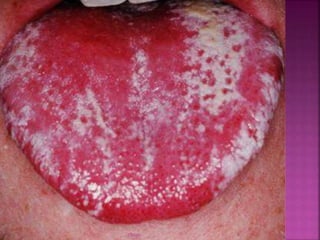
 Characteristic white patches.
 Cracking at the outer edges of the lips
(cheilosis).
 Dry mouth.
 Feeling of food stuck in the throat.
 Soreness in teeth.
 Strange or unpleasant taste in mouth.
 Bad breath.
 Fever, if the infection spreads beyond the
esophagus.
Thrush 6
 clinically diagnosed by a physician or
dentist when the characteristic-looking
white patches are found in the mouth or
throat
 The doctor or dentist can scrape off a
small amount of the white matter from the
mouth or throat and look at it under a
microscope.
 Thrush that is located farther down the
throat or in the esophagus is usually found
by doing a procedure called an endoscopy.
Thrush 7
 Treatment of thrush depends on the cause
and severity of the infection.
 If the thrush is caused by something that is
reversible, such as taking antibiotics,
smoking, ill-fitting dentures, or poorly
controlled diabetes, these factors must be
corrected as part of the treatment.
 antifungal mouthwash (nystatin).
 stronger systemic medications, such
as fluconazole (Diflucan) or itraconazole
(Sporanox).
Thrush 8
• Home remedies for thrush are aimed
at decreasing risk factors for thrush as
well as preventing overgrowth of the
normally found Candida yeast.
Thrush 9
 Brush your teeth with a soft toothbrush.
 Rinse your mouth with a diluted 3%
hydrogen peroxide solution.
 Rinse your mouth with warm saltwater.
 Avoid mouthwash as it can alter the
normal flora of your mouth.
 Keep your dentures clean and see a
dentist if they do not fit correctly.
 Eat unsweetened yogurt if you are
taking antibiotics.
Thrush 10
 Home remedies that can reduce the
discomfort of thrush are:
Thrush 11
Drink cold liquids, or eat frozen or
ice treats.
Eat soft, easy to swallow foods.
Drink from a straw if the patches are
painful.
Medicinenet.com
Webmd.com
Thrush 12

Thrush

  • 2.
    Thrush: Also(Oropharyngeal candidiasis) isa medical condition in which a fungus called Candida overgrows in the mouth and throat. Thrush 2
  • 3.
     Small amountsof the candida fungus are present in the mouth, digestive tract, and skin of most healthy people.  The immune system and the body's normal bacteria and microorganisms usually keep Candida in balance.  certain illnesses, stress, or medications can disturb the delicate balance, causing the fungus candida to grow out of control, causing thrush Thrush 3
  • 4.
  • 5.
     Medications: Antibiotics,Corticosteroids,Chemotherapy, birth controlpills, Pregnancy(Hormonal change).  Illnesses: Poorly controlled diabetes, HIV/ADIS infection, Cancer, Dry mouth.  Smoking  Stress  Having an organ transplant  Having dentures that are poorly fitted  In addition, babies can pass the infection to their mothers during breast-feeding. Thrush 5
  • 6.
     Characteristic whitepatches.  Cracking at the outer edges of the lips (cheilosis).  Dry mouth.  Feeling of food stuck in the throat.  Soreness in teeth.  Strange or unpleasant taste in mouth.  Bad breath.  Fever, if the infection spreads beyond the esophagus. Thrush 6
  • 7.
     clinically diagnosedby a physician or dentist when the characteristic-looking white patches are found in the mouth or throat  The doctor or dentist can scrape off a small amount of the white matter from the mouth or throat and look at it under a microscope.  Thrush that is located farther down the throat or in the esophagus is usually found by doing a procedure called an endoscopy. Thrush 7
  • 8.
     Treatment ofthrush depends on the cause and severity of the infection.  If the thrush is caused by something that is reversible, such as taking antibiotics, smoking, ill-fitting dentures, or poorly controlled diabetes, these factors must be corrected as part of the treatment.  antifungal mouthwash (nystatin).  stronger systemic medications, such as fluconazole (Diflucan) or itraconazole (Sporanox). Thrush 8
  • 9.
    • Home remediesfor thrush are aimed at decreasing risk factors for thrush as well as preventing overgrowth of the normally found Candida yeast. Thrush 9
  • 10.
     Brush yourteeth with a soft toothbrush.  Rinse your mouth with a diluted 3% hydrogen peroxide solution.  Rinse your mouth with warm saltwater.  Avoid mouthwash as it can alter the normal flora of your mouth.  Keep your dentures clean and see a dentist if they do not fit correctly.  Eat unsweetened yogurt if you are taking antibiotics. Thrush 10
  • 11.
     Home remediesthat can reduce the discomfort of thrush are: Thrush 11 Drink cold liquids, or eat frozen or ice treats. Eat soft, easy to swallow foods. Drink from a straw if the patches are painful.
  • 12.