French Language and CultureUnderstanding the Interpretive ModePresented byEd Weiss
2Workshop Guiding QuestionWhat instructional strategies can teachers use to ensure that, through the integration of listening and reading, students are successfully building proficiency in the Interpretive Communication mode?2
Three Modes of Communication3
4Themes for AP World Languages
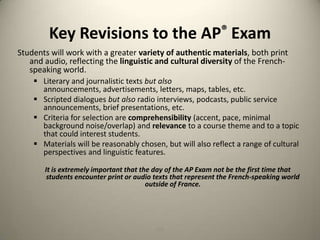
Key Revisions to the APÂŽ ExamStudents will work with a greater variety of authentic materials, both print and audio, reflecting the linguistic and cultural diversity of the French-speaking world.Literary and journalistic texts but also announcements, advertisements, letters, maps, tables, etc.
Scripted dialogues but also radio interviews, podcasts, public service announcements, brief presentations, etc.
Criteria for selection are comprehensibility (accent, pace, minimal background noise/overlap) and relevance to a course theme and to a topic that could interest students.
Materials will be reasonably chosen, but will also reflect a range of cultural perspectives and linguistic features.It is extremely important that the day of the AP Exam not be the first time that students encounter print or audio texts that represent the French-speaking world outside of France. ‹23›
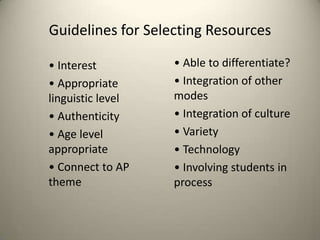
Guidelines for Selecting Resources Able to differentiate?
 Integration of other modes
 Integration of culture
 Variety
 Technology
 Involving students in process
 Interest
 Appropriate linguistic level
 Authenticity
 Age level appropriate
 Connect to AP theme6
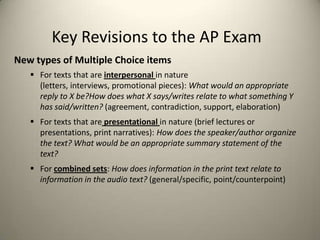
Key Revisions to the AP ExamNew types of Multiple Choice itemsFor texts that are interpersonal in nature (letters, interviews, promotional pieces): What would an appropriate reply to X be?How does what X says/writes relate to what something Y has said/written? (agreement, contradiction, support, elaboration)
For texts that are presentational in nature (brief lectures or presentations, print narratives): How does the speaker/author organize the text? What would be an appropriate summary statement of the text?
For combined sets: How does information in the print text relate to information in the audio text? (general/specific, point/counterpoint)Multiple-Choice QuestionsInterpretive CommunicationMix of factual and interpretive questionsVocabulary in contextPurpose of the text, point of view of speaker/writerAudience of the textInferences and conclusionsQuestions of a “cultural” or “interdisciplinary” nature that ask students to show understanding of information in the print or audio resources
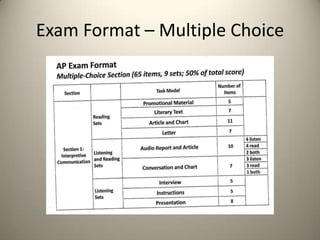
Exam Format – Multiple Choice
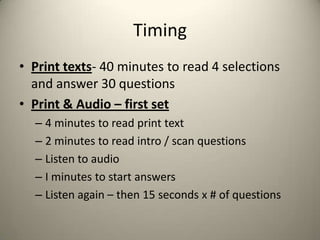
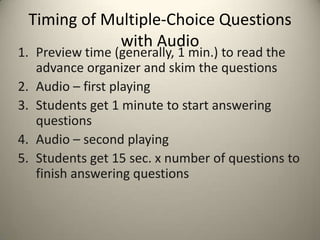
TimingPrint texts- 40 minutes to read 4 selections and answer 30 questionsPrint & Audio – first set4 minutes to read print text2 minutes to read intro / scan questionsListen to audioI minutes to start answersListen again – then 15 seconds x # of questions
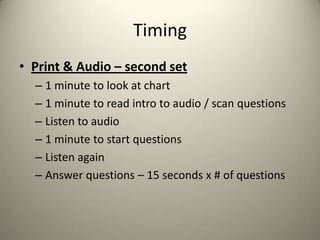
TimingPrint & Audio – second set1 minute to look at chart1 minute to read intro to audio / scan questionsListen to audio1 minute to start questionsListen againAnswer questions – 15 seconds x # of questions
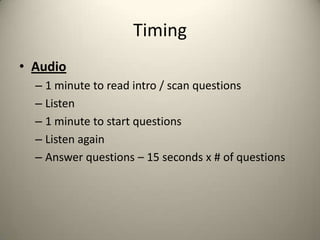
TimingAudio1 minute to read intro / scan questionsListen1 minute to start questionsListen againAnswer questions – 15 seconds x # of questions
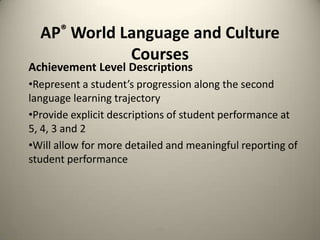
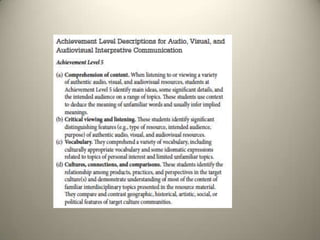
AP® World Language and Culture Courses Achievement Level DescriptionsRepresent a student’s progression along the second language learning trajectory
Provide explicit descriptions of student performance at 5, 4, 3 and 2
Will allow for more detailed and meaningful reporting of student performance‹15›
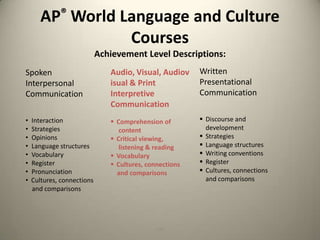
APÂŽ World Language and Culture Courses Achievement Level Descriptions:Written Presentational CommunicationDiscourse and development

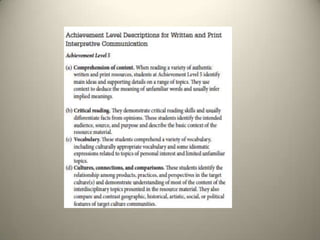
Apac interpretive

  • 1.
    French Language andCultureUnderstanding the Interpretive ModePresented byEd Weiss
  • 2.
    2Workshop Guiding QuestionWhatinstructional strategies can teachers use to ensure that, through the integration of listening and reading, students are successfully building proficiency in the Interpretive Communication mode?2
  • 3.
    Three Modes ofCommunication3
  • 4.
    4Themes for APWorld Languages
  • 5.
    Key Revisions tothe APÂŽ ExamStudents will work with a greater variety of authentic materials, both print and audio, reflecting the linguistic and cultural diversity of the French-speaking world.Literary and journalistic texts but also announcements, advertisements, letters, maps, tables, etc.
  • 6.
    Scripted dialogues butalso radio interviews, podcasts, public service announcements, brief presentations, etc.
  • 7.
    Criteria for selectionare comprehensibility (accent, pace, minimal background noise/overlap) and relevance to a course theme and to a topic that could interest students.
  • 8.
    Materials will bereasonably chosen, but will also reflect a range of cultural perspectives and linguistic features.It is extremely important that the day of the AP Exam not be the first time that students encounter print or audio texts that represent the French-speaking world outside of France. ‹23›
  • 9.
    Guidelines for SelectingResources Able to differentiate?
  • 10.
    Integration ofother modes
  • 11.
  • 12.
  • 13.
  • 14.
  • 15.
  • 16.
  • 17.
  • 18.
    Age levelappropriate
  • 19.
    Connect toAP theme6
  • 20.
    Key Revisions tothe AP ExamNew types of Multiple Choice itemsFor texts that are interpersonal in nature (letters, interviews, promotional pieces): What would an appropriate reply to X be?How does what X says/writes relate to what something Y has said/written? (agreement, contradiction, support, elaboration)
  • 21.
    For texts thatare presentational in nature (brief lectures or presentations, print narratives): How does the speaker/author organize the text? What would be an appropriate summary statement of the text?
  • 22.
    For combined sets:How does information in the print text relate to information in the audio text? (general/specific, point/counterpoint)Multiple-Choice QuestionsInterpretive CommunicationMix of factual and interpretive questionsVocabulary in contextPurpose of the text, point of view of speaker/writerAudience of the textInferences and conclusionsQuestions of a “cultural” or “interdisciplinary” nature that ask students to show understanding of information in the print or audio resources
  • 23.
    Exam Format –Multiple Choice
  • 24.
    TimingPrint texts- 40minutes to read 4 selections and answer 30 questionsPrint & Audio – first set4 minutes to read print text2 minutes to read intro / scan questionsListen to audioI minutes to start answersListen again – then 15 seconds x # of questions
  • 25.
    TimingPrint & Audio– second set1 minute to look at chart1 minute to read intro to audio / scan questionsListen to audio1 minute to start questionsListen againAnswer questions – 15 seconds x # of questions
  • 26.
    TimingAudio1 minute toread intro / scan questionsListen1 minute to start questionsListen againAnswer questions – 15 seconds x # of questions
  • 27.
    AP® World Languageand Culture Courses Achievement Level DescriptionsRepresent a student’s progression along the second language learning trajectory
  • 28.
    Provide explicit descriptionsof student performance at 5, 4, 3 and 2
  • 29.
    Will allow formore detailed and meaningful reporting of student performance‹15›
  • 30.
    APÂŽ World Languageand Culture Courses Achievement Level Descriptions:Written Presentational CommunicationDiscourse and development

Editor's Notes

  • #4 Content will always be about something in the French speaking world. Students would not, for example, read a standard news account of an American political happening in French. The material must highlight something happening in the French-speaking world. It is extremely important that the day of the exam not be the first time that students encounter print or audio texts that represent the linguistic and cultural diversity of French speakers.
  • #6 ALDS are divided into categories that describe different aspects of each Learning Objective area. For example, the ALD for Spoken Interpersonal Communication describes students’ ability to interact (maintain and close conversations using culturally appropriate expressions and gestures), their capacity for stating and supporting opinions, and their comprehension and use of a variety of vocabulary.“Cultures, connections and comparisons” is a thread through the ALDs. Students must demonstrate that they understand various elements of culture and interdisciplinary connections being described in source material. For example, if a student is reading or listening to a text that includes a description of a cultural festival or something similar, the student should demonstrate that they understand that a cultural product is being described that provides insight into a cultural perspective.