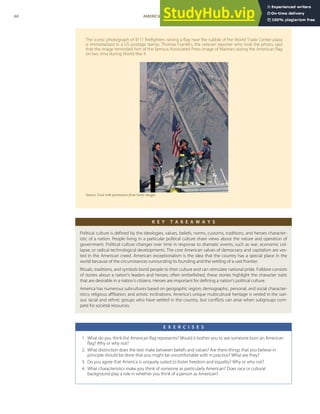
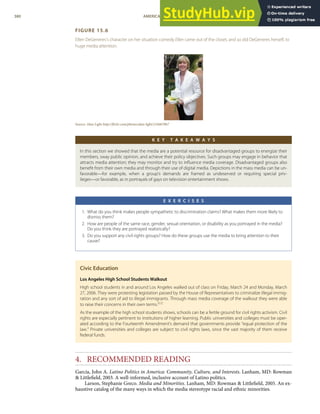
C H A P T E R 1
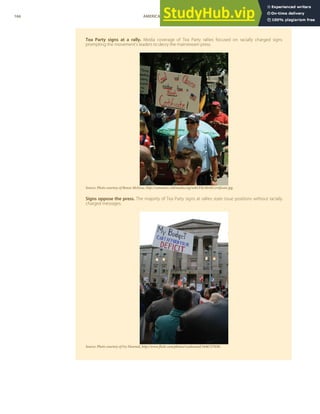
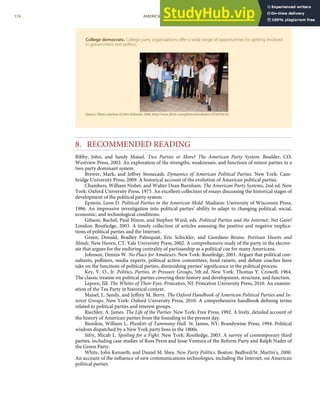
The Constitution and the
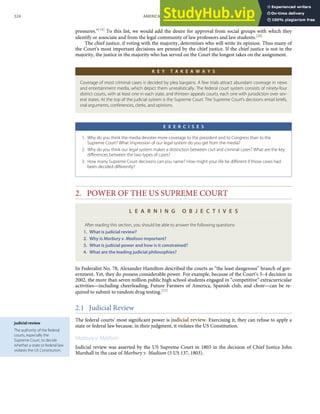
Structure of Government
Power
PREAMBLE
On the day after the presidential election of 2000, the news on ABC World News Tonight was anything but routine:
candidates George W. Bush and Al Gore disputed the election results. Victory addresses and concession speeches
were postponed, as the arduous process of challenging the vote in the pivotal state of Florida commenced.
As anchor Peter Jennings noted at the outset of the evening broadcast, “Uncertainty, intrigue and partisan
politics make for a volatile mix.” But he ended the broadcast with a reassuring note, much as anchors had done fol-
lowing previous elections: “Finally, this evening, a very brief personal note. A colleague and I who have covered the
transfer of power in many unfortunate parts of the world, very often at the point of a gun, agree today on the mar-
vel of this democracy. For all the turmoil last night and today and perhaps tomorrow, Americans, unlike so many
others, take the peaceful and orderly transition of power, ultimately, for granted. A gift from the founding fathers.”[1]
Jennings reiterated the conventional wisdom and reinforced public opinion about the wondrous design of
American government contained in the Constitution. Yet his praise of the founders was misleading: in fact, the
Constitution helped produce the “turmoil” of the 2000 presidential election. Presidents are selected by an Electoral
College, a process whereby the winner of the popular vote in a state usually takes all of its electoral votes. Bush was
able to win a scant majority in the Electoral College, even as more people voted for Gore nationwide.
The media have long been enthusiastic about the Constitution. They provided crucial assistance in the pro-
cesses leading up to its adoption in the 1780s. They continue to venerate it today.
1. THE FIRST AMERICAN POLITICAL SYSTEM
L E A R N I N G O B J E C T I V E S
After reading this section, you should be able to answer the following questions:
1. What was the Stamp Act Congress?
2. What was the Continental Congress?
3. What are the principles contained in the Declaration of Independence?
4. What were the Articles of Confederation?
We can understand what the Constitution was designed to accomplish by looking at the political sys-
tem it replaced: the Articles of Confederation, the United States’ first written constitution, which em-
bodied political ideals expressed by the Declaration of Independence.
FIGURE 1.1
Printing newspapers was a small, labor-
intensive business. Printers were often
identifiable around town, not only for being
ink stained, but also because the physical
strain of pulling their presses shut made one
shoulder rise considerably higher than the
other.
© Thinkstock
1.1 From Thirteen Colonies to United States
By the mid-eighteenth century, Britain’s thirteen colonies on North America’s east coast stretched
from Georgia to New Hampshire. Each colony had a governor appointed by the king and a legislature
elected by landholding voters. These colonial assemblies, standing for the colonialists’ right of self-gov-
ernment, clashed with the royal governors over issues of power and policies. Each colony, and the
newspapers published therein, dealt with the colonial power in London and largely ignored other
colonies.
The Stamp Act Congress
British policy eventually pushed politics and news across colonial boundaries. In 1763, the British ant-
agonized the colonialists in two important ways. A royal proclamation closed off the frontier to coloni-
al expansion. Second, the British sought to recoup expenses borne defending the colonies. They insti-
tuted the first ever direct internal taxes in North America. The most famous, the Stamp Act, required
the use of paper embossed with the royal seal to prove that taxes had been paid.
Such taxes on commerce alienated powerful interests, including well-off traders in the North and
prosperous planters in the South, who complained that the tax was enacted in England without the col-
onists’ input. Their slogan, “No taxation without representation,” shows a dual concern with political
ideals and material self-interest that persisted through the adoption of the Constitution.
Among the opponents of the Stamp Act were printers who produced newspapers and pamphlets.
The arduous technology of typesetting and hand-printing individual pages did not
permit sizable production.[2] Newspapers reached large audiences by being passed
around—“circulated”—or by being read aloud at taverns.[3] Printers’ precarious finan-
cial condition made them dependent on commissions from wealthy people and official
subsidies from government, and thus they were eager to please people in power. Cru-
sading journalism against government authorities was rare.[4] The Stamp Act, however,
was opposed by powerful interests and placed financial burdens on printers, so it was
easy for newspaper printers to oppose it vigorously with hostile stories.
During the Stamp Act crisis, news began to focus on events throughout the thir-
teen colonies. Benjamin Franklin, postmaster of the British government for the colon-
ies, developed a system of post roads linking the colonies. Printers now could send
newspapers to each other free of charge in the mail, providing content for each other to
copy. Colonial legislatures proposed a meeting of delegates from across the colonies to
address their grievances. This gathering, the Stamp Act Congress, met for two weeks in
1765. Delegates sent a petition to the king that convinced British authorities to annul
the taxes.
Link
Declaration of Rights
See the text of the Stamp Act Congress’s Declaration of Rights at http://www.constitution.org/
bcp/dor_sac.htm.
The Continental Congress
In 1773, the British government awarded the East India Company a monopoly on im-
porting and selling tea to the American colonies. This policy, too, hurt powerful in-
terests: colonial traders and merchants. Rebellious Bostonians ransacked the East India
Company’s ships and pushed cartons of tea overboard. The British reacted harshly to
this “Boston Tea Party”: they closed the port of Boston, deported rebels to England for
trial, and restricted settlement in and trade to the west of the country.
Once again, delegates from the various colonies met, this time in a gathering
known as the Continental Congress, to address the difficulties with Britain. But this
congress’s petitions, unlike those of the Stamp Act Congress, were rebuffed. Repressive
policies were kept in place. The Continental Congress launched a boycott of British
products, initiated the Revolutionary War, and passed the Declaration of Independence.[5]
10 AMERICAN GOVERNMENT AND POLITICS IN THE INFORMATION AGE VERSION 1.0.1
Declaration of
Independence
The document drafted by
Thomas Jefferson and
adopted by the Continental
Congress in revised form in
1776, which declared the
independence of the thirteen
colonies from Britain.
Articles of Confederation
The first American written
constitution, adopted by the
Continental Congress in 1777,
ratified in 1781, and
superseded when the
Constitution was ratified by
nine of the thirteen states in
1788.
confederation
A political system in which a
government acts as a unit
superior to the states but is
dependent on their consent.
1.2 The Declaration of Independence
The Declaration of Independence, issued on July 4, 1776, announced that the thirteen colonies were
independent of Britain. It was designed to be read aloud in public and to be sent to international audi-
ences. Its point-by-point charges against British rule give equal weight to how the king damaged Amer-
ica’s economic interests and how he ignored principles of self-government.
FIGURE 1.2
The soaring phrases of the Declaration were crafted in part to be declaimed in public. Indeed, one of the copies
owned by Jefferson himself—not a confident public speaker—shows where he marked the document to pause,
perhaps for laudatory huzzahs and applause.
© Thinkstock
The Declaration is a deeply democratic document.[6] It is democratic in what it did—asserting the right
of the people in American colonies to separate from Britain. And it is democratic in what it said: “We
hold these truths to be self-evident, that all men are created equal” and have inviolable rights to “life,
liberty, and the pursuit of happiness.” The Declaration concludes that the people are free to “alter or
abolish” repressive forms of government. Indeed, it assumes that the people are the best judges of the
quality of government and can act wisely on their own behalf.
Link
The Declaration of Independence
For more information on the Declaration of Independence, visit the National Archives online at
http://www.archives.gov/exhibits/charters/declaration.html.
1.3 The Articles of Confederation
Drafted in 1777, the Articles of Confederation were the first political constitution for the govern-
ment of the United States. They codified the Continental Congress’s practices and powers. The United
States of America was a confederation of states. Although the confederation was superior to the indi-
vidual states, it had no powers without their consent.
Link
The Articles of Confederation
For the text of the Articles of Confederation, see http://www.earlyamerica.com/earlyamerica/milestones/
articles/text.html.
Under the Articles, the Continental Congress took over the king’s powers to make war and peace, send
and receive ambassadors, enter into treaties and alliances, coin money, regulate Indian affairs, and run
a post office. But the confederation could not raise taxes and relied on revenues from each of the states.
There was no president to enforce the laws and no judiciary to hear disputes between and among the
states.
CHAPTER 1 THE CONSTITUTION AND THE STRUCTURE OF GOVERNMENT POWER 11
Each state delegation cast a single vote in the Continental Congress. Nine states were needed to en-
act legislation, so few laws were passed. States usually refused to fund policies that hampered their own
interests.[7] Changes in the Articles required an all-but-impossible unanimous vote of all thirteen deleg-
ations. The weakness of the Articles was no accident. The fights with Britain created widespread dis-
trust of central authority. By restricting the national government, Americans could rule themselves in
towns and states. Like many political thinkers dating back to ancient Greece, they assumed that self-
government worked best in small, face-to-face communities.
K E Y T A K E A W A Y S
The first American political system, as expressed in the Articles of Confederation, reflected a distrust of a na-
tional government. Its powers were deliberately limited in order to allow Americans to govern themselves in
their cities and states.
E X E R C I S E S
1. What was it about the Stamp Act and the decision to award a monopoly on the sale of tea to the East
India Company that helped bring the American colonies together? What were the motivations for forming
the first Congresses?
2. In what way is the Declaration of Independence’s idea that “all men are created equal” a democratic
principle? In what sense are people equal if, in practice, they are all different from one another?
3. What were the weaknesses of the Articles of Confederation? Do you think the American government
would be able to function if it were still a confederation? Why or why not?
2. CREATING AND RATIFYING THE CONSTITUTION
L E A R N I N G O B J E C T I V E S
After reading this section, you should be able to answer the following questions:
1. What was Shays’s Rebellion?
2. What was the Constitutional Convention?
3. What were the three cross-cutting divides at the Constitutional Convention?
4. What were the main compromises at the Constitutional Convention?
5. Who were the Federalists and the Anti-Federalists?
6. What factors explain ratification of the Constitution?
The Constitution was a reaction against the limitations of the Articles of Confederation and the demo-
cratic experiments begun by the Revolution and the Declaration of Independence.
2.1 The Case against the Articles of Confederation
The Articles could not address serious foreign threats. In the late 1780s, Britain denied American ships
access to British ports in a trade war. Spain threatened to close the Mississippi River to American ves-
sels. Pirates in the Mediterranean captured American ships and sailors and demanded ransom. The na-
tional government had few tools to carry out its assigned task of foreign policy.[8]
There was domestic ferment as well. Millions of dollars in paper money issued by state govern-
ments to fund the Revolutionary War lost their value after the war.[9] Financial interests were unable to
collect on debts they were owed. They appealed to state governments, where they faced resistance and
even brief armed rebellions.
Newspapers played up Shays’s Rebellion, an armed insurrection by debt-ridden farmers to prevent
county courts from foreclosing mortgages on their farms.[10] Led by Captain Daniel Shays, it began in
1786, culminated with a march on the federal arsenal in Springfield, Massachusetts, and wound down
in 1787.
The Continental Congress voted unanimously to raise an army to put down Shays’s Rebellion but
could not coax the states to provide the necessary funds. The army was never assembled.[11]
12 AMERICAN GOVERNMENT AND POLITICS IN THE INFORMATION AGE VERSION 1.0.1
Constitutional Convention
The gathering of delegates
from twelve of the thirteen
states who met in
Philadelphia from June to
September of 1787; originally
authorized by the
Continental Congress to
consider amendments to the
Articles of Confederation,
they ultimately drafted the
Constitution that replaced it.
Link
Shays’s Rebellion
To learn more about Shays’s Rebellion, visit the National Park Service online at http://www.nps.gov/spar/
historyculture/shays-rebellion.htm.
Leaders who supported national government portrayed Shays’s Rebellion as a vivid symbol of state
governments running wild and proof of the inability of the Articles of Confederation to protect finan-
cial interests. Ordinary Americans, who were experiencing a relatively prosperous time, were less con-
cerned and did not see a need to eliminate the Articles.
2.2 Calling a Constitutional Convention
The Constitutional Convention was convened in 1787 to propose limited reforms to the Articles of
Confederation. Instead, however, the Articles would be replaced by a new, far more powerful national
government.
Twelve state legislatures sent delegates to Philadelphia (Rhode Island did not attend). Each delega-
tion would cast a single vote.
Who Were the Delegates?
The delegates were not representative of the American people. They were well-educated property own-
ers, many of them wealthy, who came mainly from prosperous seaboard cities, including Boston and
New York. Most had served in the Continental Congress and were sensitive to the problems faced by
the United States. Few delegates had political careers in the states, and so they were free to break with
existing presumptions about how government should be organized in America.
Link
Constitutional Convention
To learn more about the delegates to the Constitutional Convention, visit http://www.archives.gov/exhibits/
charters/constitution_founding_fathers.html.
The Constitutional Convention was a mix of great and minor characters. Exalted figures and brilliant
intellects sat among nonentities, drunkards, and nincompoops. The convention’s driving force and
chief strategist was a young, bookish politician from Virginia named James Madison. He successfully
pressured revered figures to attend the convention, such as George Washington, the commanding
officer of the victorious American revolutionaries, and Benjamin Franklin, a man at the twilight of a re-
markable career as printer, scientist, inventor, postmaster, philosopher, and diplomat.
CHAPTER 1 THE CONSTITUTION AND THE STRUCTURE OF GOVERNMENT POWER 13
FIGURE 1.3
The unassuming and slight James Madison
made an unusual teammate for the dashing,
aristocratic ex-soldier Alexander Hamilton and
the august diplomat John Jay. But despite
these contrasts and some political divides, they
merged their voices in the Federalist papers,
published in New York newspapers under the
pseudonym “Publius.” Soon after the
ratification of the Constitution, The Federalist
was widely republished in book format.
Scholars now regard it as the fullest explication
of the logic underlying the Constitution.
Source: Photo courtesy of the White House Historical
Association, http://commons.wikimedia.org/wiki/
File:James_Madison.jpg.
factions
James Madison’s term for
groups that pursue their
self-interest or individual
preferences above the public
good.
constitution
A system of fundamental
laws and principles that
prescribe the structure and
functions of the government.
Madison drafted the first working proposal for a Constitution and took copious
notes at the convention. Published after his death in 1836, they are the best historical
source of the debates; they reveal the extraordinary political complexity of the delibera-
tions and provide remarkable insight into what the founders had in mind.[12]
Once the Constitution was drafted, Madison helped write and publish a series of
articles in a New York newspaper. These Federalist papers defend the political system
the Constitutional Convention had crafted.
Interests and the Constitution
In the early twentieth century, historian Charles Beard asserted that the Constitution
was “an economic document for economic ends,” pushed by investors and industrial-
ists who would profit more from a national economic and political system than from
one favoring small-scale agricultural interests.[13] Research has not upheld Beard’s stark
division of reaction to the Constitution into well-off supporters and poor, democratic
adversaries. Many local, well-to-do patriarchs opposed the Constitution; many small
merchants wanted a national government.
But Beard’s focus on economic and social interests is revealing. Paper money, debt
relief, and Shays’s Rebellion concerned those committed to existing economic and so-
cial orders. Consider Federalist No. 10, the most famous of Madison’s Federalist pa-
pers. In it, he decried the dangers of democracy; he started with “a rage for paper
money” and “an abolition of debts,” then the specter of “an equal division of property,”
all of which he found an “improper or wicked project.” Madison paid attention to the
right to acquire and maintain property, which the Declaration brushed aside. He
claimed that political systems were created to maintain liberty—including the liberty to
accumulate wealth. Political equality meant only that each person had a right to express
himself or herself.
Ideas and the Constitution
The Constitutional Convention responded to ideas, not just interests. Delegates
doubted that the people could wisely rule. They sought to replace democracy with a re-
public, in which officials would be chosen to act on the people’s behalf. Federalist No.
10 makes the case.
Madison was concerned with threats to order and stability from what he called
factions, groups pursuing their self-interest above the public good. For Madison, fac-
tions were inevitable. His worst nightmare was of a faction becoming a political major-
ity, trampling on the rights of its helpless opponents, and quickly enacting its program.
He favored a large republic, which, he believed, would discourage a faction’s rise to
power. Madison expected that in a republic, the number of locally oriented interests
would increase and diversify, which would make it harder for any one of them to dom-
inate. Minority factions could pass legislation by forming temporary majorities, Madison reasoned, but
these diverse majorities would not be able to agree on a single project long enough to be oppressive.
2.3 Drafting the Constitution
Delegates to the Constitutional Convention first gathered on May 25, 1787, in what is now called
Independence Hall in Philadelphia. Their goal was to devise a constitution, a system of fundamental
laws and principles outlining the nature and functions of the government. George Washington
presided. Delegates worked in an intimate setting without committees. The structure of power created
by the Constitution in Philadelphia resulted from a deeply political process.[14]
The Secrecy of the Constitutional Convention
Deliberations took place in secret, as delegates did not want the press and the public to know the details
of what they were considering ("Comparing Content"). Newspapers hardly mentioned the convention
at all, and when they did, it was in vague references praising the high caliber of the delegates.[15]
14 AMERICAN GOVERNMENT AND POLITICS IN THE INFORMATION AGE VERSION 1.0.1
Comparing Content
The Convention’s Gag Rule
Press coverage of the Constitutional Convention cannot be compared because one of the first decisions made
in the Constitutional Convention was that “nothing spoken in the House be printed, or otherwise published or
communicated.”[16]
The delegates feared that exposure through newspapers would complicate their work.
The delegate who is today regarded as the great defender of civil liberties, George Mason, wrote to his son ap-
provingly: “This I think myself a proper precaution to prevent mistakes and misrepresentation until the busi-
ness shall have been completed, when the whole may have a very different complexion from that in the sev-
eral crude and indigested parts might in their first shape appear if submitted to the public eye.”[17]
This gag rule was rigorously enforced. One day the presiding officer, George Washington, noticed that an inat-
tentive delegate had dropped his notes on the floor when leaving the hall. Washington broke his usual silence
and rebuked the unknown infractor: “I am sorry to find that some one Member of this Body, has been so neg-
lectful of the secrets of the convention as to drop in the State House a copy of their proceedings, which by ac-
cident was picked up and delivered to me this morning. I must entreat Gentlemen to be more careful, least
[sic] our transactions get into the News Papers, and disturb the public repose by premature speculations.”
Throwing the notes on the table, Washington exclaimed, “I know not whose Paper it is, but there it is, let him
who owns it take it.” Delegate William Pierce, who recorded this tale, noted that Washington “bowed, picked
up his Hat, and quitted the room with a dignity so severe that every Person seemed alarmed.”[18]
The founders were not unanimous about the threat posed by the press. Thomas Jefferson was in Paris as an
ambassador. In August 1787, he wrote to his counterpart in London, John Adams, that there was no news
from the convention: “I am sorry they began their deliberations by so abominable a precedent as that of tying
up the tongues of their members. Nothing can justify this example but the innocence of their intentions, & ig-
norance of the value of public discussions. I have no doubt that all their other measures will be good &
wise.”[19]
In 1787, the powers of the press were identified in ways we recognize in the twenty-first century. Washington
was concerned that news about the political process might produce rumors, confusion, worry, and public op-
position to worthwhile policies. But as Jefferson recognized, the news can also lead to productive public de-
bate, dialogue, and deliberation.
FIGURE 1.4
The membership of the Constitutional Convention was so small—never more than fifty on a given day—that they
could proceed largely in “a committee of the whole.” This size enabled them to continue their discussions in private
at their preferred boardinghouses and taverns—and to keep a tight lid on public discussion.
Source: Photo taken by Dan Smith, http://commons.wikimedia.org/wiki/File:Independence_Hall_Assembly_Room.jpg.
The Cross-Cutting Divides
The delegates immediately discarded the Continental Congress’s mandate that they recommend
amendments to the Articles of Confederation. They agreed to draft a new Constitution from scratch in
order to create a national government superior to and independent of the states.
This crucial decision was followed by disagreement about exactly how to create a national govern-
ment. The states varied widely in economic bases, population sizes, and numbers of slaves.
Three cross-cutting divides existed among the states:
1. Large states versus small states[20]
CHAPTER 1 THE CONSTITUTION AND THE STRUCTURE OF GOVERNMENT POWER 15
Virginia Plan
James Madison’s initial
working draft at the
Constitutional Convention,
containing strong national
powers, a popularly elected
bicameral legislature, and a
weak executive elected by
the legislature.
New Jersey Plan
The alternative to the Virginia
Plan, offered by William
Paterson of New Jersey, with
reduced national powers and
a single legislative body
representing the states.
Connecticut Compromise
(also known as the Great
Compromise)
The solution worked out by
delegates from Connecticut
to create a bicameral
legislature, with one chamber
(the Senate) representing
states, and the other (the
House of Representatives)
representing the people in
districts of equal population
size.
three-fifths clause
Constitutional provision that,
for purposes of
representation, only 60
percent of the enslaved
population would be
counted.
2. Cosmopolitan, centrally located states (Connecticut to Virginia) versus parochial states on the
northern and southern borders
3. Southern states, reliant on slavery in their economies, versus Northern states, which were not
The powers and structures of the Constitution resulted from a series of compromises designed to
bridge these three divides.
Large and Small States
The most threatening split in the convention emerged initially between large and small states.
Large states fired the first salvo. The Virginia Plan, drafted by Madison, foresaw a strong national
government that could veto any state laws it deemed contrary to the national interest. The central insti-
tution was a bicameral (two-chamber) legislature. The people would elect the lower house, which
would in turn select the members of the upper house; the two chambers together would then elect the
executive and judiciary. Breaking with the Articles of Confederation’s equal representation of states,
the Virginia Plan allotted seats to both chambers of the legislature by population size alone.[21]
Cosmopolitan, centrally located states, provided strong initial support for the Virginia Plan against
scattered opposition from border states. But Madison could not hold this coalition behind both a
strong national government and a legislature allocated by population. Delegates from the small states
of New Jersey, Delaware, and Maryland liked a strong national government, but they feared being over-
powered. Delegates from populous Massachusetts and three fast-growing Southern states joined the
two largest states, Virginia and Pennsylvania, to support legislative districts based on population, but
they disliked the Virginia Plan’s sweeping powers for the national government.
On June 15, the small states proposed an alternative. The New Jersey Plan enhanced the national
government’s powers to levy taxes and regulate commerce but left remaining powers to the states. The
plan had a federal executive, elected by the legislature, to enforce states’ compliance with national law,
and a federal judiciary to settle disputes among the states and between the states and the national gov-
ernment. Any national law would become “the supreme law of the respective States.” The New Jersey
Plan preserved the core of the Articles of Confederation—equal representation of states in a unicameral
(single-chamber) legislature.
Only three states voted for the New Jersey Plan, but the Virginia Plan’s vulnerability was exposed.
Facing an impasse, delegates from Connecticut suggested a compromise. Borrowing the Virginia Plan’s
idea of a bicameral legislature, they proposed that one chamber, the House of Representatives, be made
up of representatives from districts of equal population, while in the Senate each state would be equally
represented with two senators.
This Connecticut Compromise (also known as the Great Compromise) was adopted by
the convention with only Virginia and Pennsylvania in opposition. Thus the configuration of today’s
Congress emerged not so much from principled deliberations between the Constitution’s founders as
from the necessity for compromise between competing state interests. In essence, the founders decided
to split the difference.[22]
North and South
After this vote, North versus South displaced the divide between large and small states. The convention
became preoccupied by how the new government would be empowered to deal with slavery. Northern-
ers feared the South’s growth and room for expansion. Southerners worried that the North would
threaten the practice of slavery, which, although legal in all states, was a central part only of Southern
economies.
Northern interests in a strong national government acceded to Southern demands on slavery.
Southerners argued that slaves should be counted when allocating legislative seats. Eventually, the con-
vention settled on a three-fifths clause: 60 percent of the enslaved population would be counted for
purposes of representation. Northern delegates, convinced that the largest slave-holding states would
never have a majority in the Senate, gave in.
Link
The Three-Fifths Clause
Aaron Magruder’s comic strip The Boondocks ran this installment during the 2004 presidential campaign.
Showing a depressed black man talking about the three-fifths clause, it powerfully illustrates the Constitution’s
long-lasting affront to African Americans, almost all of whom were enslaved and thus, for the purpose of the
census (and of representation in Congress and the Electoral College), would be counted as three-fifths of a
person.
16 AMERICAN GOVERNMENT AND POLITICS IN THE INFORMATION AGE VERSION 1.0.1
Electoral College
The body of electors chosen
by states to select the
president and vice president
of the United States.
Read the comic at http://www.gocomics.com/boondocks/2004/10/21.
As the convention considered the national government’s powers, an alliance of delegates from New
England and the Deep South emerged to defend local control and their states’ economic self-interest.
Southerners sought to maintain slavery, while New Englanders wanted national tariffs to protect their
commerce. They struck a deal that resulted in New England delegates voting to require the return of
fugitive slaves and to prevent Congress from regulating the slave trade until 1808.
The delegates did not confront slavery head on (indeed, the word “slavery” is not directly men-
tioned in the Constitution). As a result, the issue of slavery would overshadow much of federal politics
until its bloody resolution in the Civil War of the 1860s.
The Executive
By now, the Constitutional Convention could not break down, because the document had something
for everybody. Small states liked the security of a national government and their equal representation
in the Senate. The Deep South and New England valued the protection of their economic bases.
Pennsylvania and Virginia—the two most populous, centrally located states—foresaw a national gov-
ernment that would extend the reach of their commerce and influence.
The convention’s final sticking point was the nature of the executive. The debate focused on how
many people would be president, the power of the office, the term of the office, how presidents would
be elected, and whether they could serve multiple terms.
To break the logjam on the presidency, the convention created the Electoral College as the meth-
od of electing the president, a political solution that gave something to each of the state-based interests.
The president would not be elected directly by the popular vote of citizens. Instead, electors chosen by
state legislatures would vote for president. Small states got more electoral votes than warranted by pop-
ulation, as the number of electors is equal to the total of representatives and senators. If the Electoral
College did not produce a majority result, the president would be chosen by the popularly elected
House, but with one vote per state delegation.[23] With all sides mollified, the convention agreed that
the office of president would be held by one person who could run for multiple terms.
Bargaining, Compromise, and Deal Making
The Constitutional Convention began with a principled consensus on establishing a stronger national
government; it ended with bargaining, compromise, and deal making. State delegations voted for their
political and economic self-interests, and often worked out deals enabling everyone to have something
to take home to constituents. Some complex matters, such as the structures of the executive and judi-
cial branches, were left up to the new congress. As one scholar writes, the Constitution is “a patch-work
sewn together under the pressure of both time and events by a group of extremely talen-
ted…politicians.”[24]
Link
The Constitution
To learn more about the Constitution, visit the National Constitution Center at http://constitutioncenter.org.
2.4 Ratifying the Constitution
The signing of the Constitution by the delegates on September 17, 1787, was just the beginning. The
Constitution would go into effect only after being approved by specially elected ratifying conventions
in nine states.
Ratification was not easy to win. In most states, property qualifications for voting had broadened
from landholding to taxpaying, thereby including most white men, many of whom benefited from the
public policies of the states. Popular opinion for and against ratification was evenly split. In key states
like Massachusetts and Virginia, observers thought the opposition was ahead.[25]
The Opposition to Ratification
The elections to the ratifying conventions revealed that opponents of the Constitution tended to come
from rural inland areas (not from cities and especially not from ports, where merchants held sway).
They held to the ideals of the Declaration of Independence, which favored a deliberately weak national
CHAPTER 1 THE CONSTITUTION AND THE STRUCTURE OF GOVERNMENT POWER 17
Bill of Rights
Constitutional sections
guaranteeing specific
liberties from infringement by
the new government; more
precisely, the first ten
amendments to the
Constitution, passed by
Congress in 1789 and ratified
by 1791 to fulfill the
Federalists’ campaign
promise during the state
conventions ratifying the
Constitution.
Federalists
The name adopted by those
favoring the ratification of the
Constitution.
Anti-Federalists
The name applied to those
who opposed ratification of
the Constitution.
government to enhance local and state self-government.[26] They thought that the national govern-
ment’s powers, the complex system of government, lengthy terms of office, and often indirect elections
in the new Constitution distanced government from the people unacceptably.
Opponents also feared that the strength of the proposed national government posed a threat to in-
dividual freedoms. They criticized the Constitution’s lack of a Bill of Rights—clauses to guarantee
specific liberties from infringement by the new government. A few delegates to the Constitutional Con-
vention, notably George Mason of Virginia and Elbridge Gerry of Massachusetts, had refused to sign
the document in the absence of a Bill of Rights.
The Campaign for Ratification
Despite such objections and obstacles, the campaign for ratification was successful in all thirteen
states.[27] The advocates of the national political system, benefiting from the secrecy of the Constitu-
tional Convention, were well prepared to take the initiative. They called themselves not nationalists but
Federalists. Opponents to the Constitution were saddled with the name of Anti-Federalists, though
they were actually the champions of a federation of independent states.
By asking conventions to ratify the Constitution, the Federalists evaded resistance from state legis-
latures. Federalists campaigned to elect sympathetic ratifiers and hoped that successive victories, publi-
cized in the press, would build momentum toward winning ratification by all thirteen states.
FIGURE 1.5
The Federalists’ media strategies included images, too. A famous woodcut at the start of the Revolution was of a
serpent cut into thirteen sections with the admonition “Join or Die.” Federalists provided a new twist on this theme.
They kept track of the ratification by an edifice of columns, elevated one by one as each state ratified. The next state
convention on the list would be represented by a hand lifting the column, often accompanied by the confident
motto “Rise It Will.”
Source: http://commons.wikimedia.org/wiki/File:Franklin_join_or_die.jpg.
Anti-Federalists did not decry the process by which the Constitution was drafted and ratified. Instead,
they participated in the ratification process, hoping to organize a new convention to remedy the Con-
stitution’s flaws.
Newspapers and Ratification
The US newspaper system boosted the Federalist cause. Of the approximately one hundred newspapers
being published during the ratification campaign of 1787–88, “not more than a dozen…could be
classed as avowedly antifederal.”[28] Anti-Federalist arguments were rarely printed and even less often
copied by other newspapers.[29] Printers followed the money trail to support the Federalists. Most
newspapers, especially those whose stories were reprinted by others, were based in port cities, if only
because arriving ships provided good sources of news. Such locales were dominated by merchants who
favored a national system to facilitate trade and commerce. Newspapers were less common in rural in-
terior locations where Anti-Federalist support was greatest.
18 AMERICAN GOVERNMENT AND POLITICS IN THE INFORMATION AGE VERSION 1.0.1
Federalist papers
A series of essays written by
Alexander Hamilton, John Jay,
and James Madison,
published in New York
newspapers during the
debate over the ratification of
the Constitution; they are
generally understood to offer
the fullest logic behind the
creation of the Constitution.
Federalists also pressured the few Anti-Federalist newspapers that existed. They wrote subscribers
and advertisers and urged them to cancel. Anti-Federalist printers often moved to other cities, went out
of business, or began reprinting Federalist articles. Federalists hailed such results as the voice of the
people. When an Anti-Federalist paper in Philadelphia halted publication, Federalists exulted, “There
cannot be a greater proof that the body of the people are federal, that the antifederal editors and print-
ers fail of support.”[30]
Today the most famous part of this newspaper campaign is the series of essays (referred to earlier)
written by Alexander Hamilton, John Jay, and James Madison, and published in New York newspapers
under the collective pseudonym “Publius.” The authors used their skills at legal argumentation to make
the strongest case they could for the document that emerged from the Constitutional Convention.
These Federalist papers, steeped in discussion of political theory and history, offer the fullest logic for
the workings of the Constitution. However, they were rarely reprinted outside New York and were a
minor part of the ratification campaign.
Link
The Federalist
Read The Federalist at the Library of Congress online at http://thomas.loc.gov/home/histdox/fedpapers.html.
Newspapers instead played on public sentiment, notably the adulation of George Washington, presid-
ing officer of the convention, and his support of the Constitution.[31] The most widely disseminated
story concerned his return trip from Philadelphia to Virginia. A bridge collapsed but Washington es-
caped unharmed. The tale implied that divine intervention had ensured Washington’s leadership by
“the providential preservation of the valuable life of this great and good man, on his way home from
the Convention.”[32]
Not all states were eager to ratify the Constitution, especially since it did not specify what the fed-
eral government could not do and did not include a Bill of Rights. Massachusetts narrowly voted in fa-
vor of ratification, with the provision that the first Congress take up recommendations for amending
the Constitution. New Hampshire, Virginia, and New York followed this same strategy. Once nine
states had ratified it, the Constitution was approved. Madison was elected to the first Congress and pro-
posed a Bill of Rights, the first ten amendments to the Constitution. Only after the Congress had ap-
proved the Bill of Rights did North Carolina and Rhode Island ratify the Constitution.
K E Y T A K E A W A Y S
We have shown that the Constitution was a political document, drafted for political purposes, by skillful politi-
cians who deployed shrewd media strategies. At the Constitutional Convention, they reconciled different
ideas and base self-interests. Through savvy compromises, they resolved cross-cutting divisions and achieved
agreement on such difficult issues as slavery and electing the executive. In obtaining ratification of the Consti-
tution, they adroitly outmaneuvered or placated their opponents. The eighteenth-century press was crucial to
the Constitution’s success by keeping its proceedings secret and supporting ratification.
E X E R C I S E S
1. From what James Madison says in Federalist No. 10, what economic interests was the Constitution
designed to protect? Do you agree that the liberty to accumulate wealth is an essential part of liberty?
2. What did James Madison mean by “factions,” and what danger did they pose? How did he hope to avoid
the problems factions could cause?
3. Why were the Constitutional Convention’s deliberations kept secret? Do you think it was a good idea to
keep them secret? Why or why not?
4. What were the main divisions that cut across the Constitutional Convention? What compromises bridged
each of these divisions?
CHAPTER 1 THE CONSTITUTION AND THE STRUCTURE OF GOVERNMENT POWER 19
separation of powers
The doctrine whereby
legislative, executive, and
judicial powers are placed in
distinct, at least partially
autonomous, institutions.
3. CONSTITUTIONAL PRINCIPLES AND PROVISIONS
L E A R N I N G O B J E C T I V E S
After reading this section, you should be able to answer the following questions:
1. What is the separation of powers?
2. What are checks and balances?
3. What is bicameralism?
4. What are the Articles of the Constitution?
5. What is the Bill of Rights?
3.1 The Principles Underlying the Constitution
While the Constitution established a national government that did not rely on the support of the states,
it limited the federal government’s powers by listing (“enumerating”) them. This practice of federalism
(as we explain in detail in Chapter 2) means that some policy areas are exclusive to the federal govern-
ment, some are exclusive to the states, and others are shared between the two levels.
Federalism aside, three key principles are the crux of the Constitution: separation of powers,
checks and balances, and bicameralism.
Separation of Powers
Separation of powers is the allocation of three domains of governmental action—law making, law
execution, and law adjudication—into three distinct branches of government: the legislature, the exec-
utive, and the judiciary. Each branch is assigned specific powers that only it can wield (see Table 1.1).
TABLE 1.1 The Separation of Powers and Bicameralism as Originally Established in the Constitution
Branch of
Government
Term How Selected Distinct Powers
Legislative
House of
Representatives
2 years Popular vote Initiate revenue legislation; bring articles of
impeachment
Senate 6 years; 3
classes
staggered
Election by state legislatures Confirm executive appointments; confirm
treaties; try impeachments
Executive
President 4 years Electoral College Commander-in-chief; nominate executive officers
and Supreme Court justices; veto; convene both
houses of Congress; issue reprieves and pardons
Judicial
Supreme Court Life
(during
good
behavior)
Presidential appointment and
Senate confirmation (stated
more or less directly in Federalist
No. 78)
Judicial review (implicitly in Constitution but
stated more or less directly in Federalist No. 78)
20 AMERICAN GOVERNMENT AND POLITICS IN THE INFORMATION AGE VERSION 1.0.1
checks and balances
The Constitution’s approach
whereby every branch is
equipped with powers at
least partially countervailing
those of the other two
branches.
judicial review
The power of the Supreme
Court to render acts of
Congress or decisions of the
executive null and void on
the basis that they violate the
Constitution.
FIGURE 1.6
In perhaps the most abiding indicator of the separation of powers, Pierre L’Enfant’s plan of Washington, DC, placed
the President’s House and the Capitol at opposite ends of Pennsylvania Avenue. The plan notes the importance of
the two branches being both geographically and politically distinct.
Source: http://commons.wikimedia.org/wiki/File:L'Enfant_plan_original.jpg.
This separation is in the Constitution itself, which divides powers and responsibilities of each branch in
three distinct articles: Article I for the legislature, Article II for the executive, and Article III for the
judiciary.
Checks and Balances
At the same time, each branch lacks full control over all the powers allotted to it. Political scientist
Richard Neustadt put it memorably: “The Constitutional Convention of 1787 is supposed to have cre-
ated a government of ‘separated powers.’ It did nothing of the sort. Rather, it created a government of
separated institutions sharing powers.”[33] No branch can act effectively without the cooperation—or
passive consent—of the other two.
Most governmental powers are shared among the various branches in a system of checks and
balances, whereby each branch has ways to respond to, and if necessary, block the actions of the oth-
ers. For example, only Congress can pass a law. But the president can veto it. Supreme Court justices
can declare an act of Congress unconstitutional through judicial review. Figure 1.7 shows the various
checks and balances between the three branches.
CHAPTER 1 THE CONSTITUTION AND THE STRUCTURE OF GOVERNMENT POWER 21
bicameralism
The practice of having two
separate chambers within the
legislature; in the
Constitution, this means that
Congress is made up of a
House of Representatives and
a Senate.
FIGURE 1.7 Checks and Balances
Source: Adapted from George C. Edwards, Martin P. Wattenberg, and Robert L. Lineberry, Government in America: People, Politics, and Policy (White Plains, NY: Pearson Longman, 2011), 46.
The logic of checks and balances echoes Madison’s skeptical view of human nature. In Federalist No.
10 he contends that all individuals, even officials, follow their own selfish interests. Expanding on this
point in Federalist No. 51, he claimed that officeholders in the three branches would seek influence and
defend the powers of their respective branches. Therefore, he wrote, the Constitution provides “to
those who administer each department the necessary constitutional means and personal motives to res-
ist encroachments of the others.”
Bicameralism
Government is made yet more complex by splitting the legislature into two separate and distinct cham-
bers—the House of Representatives and the Senate. Such bicameralism was common in state legis-
latures. One chamber was supposed to provide a close link to the people, the other to add wisdom.[34]
The Constitution makes the two chambers of Congress roughly equal in power, embedding checks and
balances inside the legislative branch itself.
Bicameralism recalls the founders’ doubts about majority rule. To check the House, directly elec-
ted by the people, they created a Senate. Senators, with six-year terms and election by state legislatures,
were expected to work slowly with a longer-range understanding of problems and to manage popular
22 AMERICAN GOVERNMENT AND POLITICS IN THE INFORMATION AGE VERSION 1.0.1
supremacy clause
Clause in Article VI of the
Constitution stating that the
Constitution and all federal
laws are “the supreme Law of
the Land.”
passions. A story, possibly fanciful, depicts the logic: Thomas Jefferson, back from France, sits down for
coffee with Washington. Jefferson inquires why Congress will have two chambers. Washington asks
Jefferson, “Why did you pour that coffee into your saucer?” Jefferson replies, “To cool it,” following the
custom of the time. Washington concludes, “Even so, we pour legislation into the senatorial saucer to
cool it.”[35]
The Bias of the System
The US political system is designed to prevent quick agreement within the legislature and between the
branches. Senators, representatives, presidents, and Supreme Court justices have varying terms of
offices, distinctive means of selection, and different constituencies. Prospects for disagreement and
conflict are high. Accomplishing any goal requires navigating a complex obstacle course. At any point
in the process, action can be stopped. Maintaining the status quo is more likely than enacting sig-
nificant changes. Exceptions occur in response to dire situations such as a financial crisis or external
attacks.
3.2 What the Constitution Says
The text of the Constitution consists of a preamble and seven sections known as “articles.” The pre-
amble is the opening rhetorical flourish. Its first words—“We the People of the United States”—rebuke
the “We the States” mentality of the Articles of Confederation. The preamble lists reasons for establish-
ing a national government.
The first three articles set up the branches of government. We briefly summarize them here, leav-
ing the details of the powers and responsibilities given to these branches to specific chapters.
Article I establishes a legislature that the founders believed would make up the heart of the new
government. By specifying many domains in which Congress is allowed to act, Article I also lays out
the powers of the national government that we examine in Chapter 2.
Article II takes up the cumbersome process of assembling an Electoral College and electing a pres-
ident and a vice president—a process that was later modified by the Twelfth Amendment. The presid-
ential duties listed here focus on war and management of the executive branch. The president’s powers
are far fewer than those enumerated for Congress.
The Constitutional Convention punted decisions on the structure of the judiciary below the Su-
preme Court to the first Congress to decide. Article III states that judges of all federal courts hold office
for life “during good Behaviour.” It authorizes the Supreme Court to decide all cases arising under fed-
eral law and in disputes involving states. Judicial review, the central power of the Supreme Court, is not
mentioned. Asserted in the 1804 case of Marbury v. Madison (discussed in Chapter 13, Section 2), it is
the ability of the Court to invalidate a law passed by Congress or a decision made by the executive on
the basis that it violates the Constitution.
Article IV lists rights and obligations among the states and between the states and the national
government (discussed in Chapter 2).
Article V specifies how to amend the Constitution. This shows that the framers intended to have a
Constitution that could be adapted to changing conditions. There are two ways to propose amend-
ments. States may call for a convention. (This has never been used due to fears it would reopen the en-
tire Constitution for revision.) The other way to propose amendments is for Congress to pass them by
a two-thirds majority in both the House and Senate.
Then there are two ways to approve an amendment. One is through ratification by three-fourths of
state legislatures. Alternatively, an amendment can be ratified by three-fourths of specially convoked
state conventions. This process has been used once. “Wets,” favoring the end of Prohibition, feared that
the Twenty-First Amendment—which would have repealed the Eighteenth Amendment prohibiting
the sale and consumption of alcohol—would be blocked by conservative (“dry”) state legislatures. The
wets asked for specially called state conventions and rapidly ratified repeal—on December 5, 1933.
Thus a constitutional amendment can be stopped by one-third of either chamber of Congress or
one-fourth of state legislatures—which explains why there have been only twenty-seven amendments
in over two centuries.
Article VI includes a crucial provision that endorses the move away from a loose confederation to
a national government superior to the states. Lifted from the New Jersey Plan, the supremacy clause
states that the Constitution and all federal laws are “the supreme Law of the Land.”
Article VII outlines how to ratify the new Constitution.
CHAPTER 1 THE CONSTITUTION AND THE STRUCTURE OF GOVERNMENT POWER 23
3.3 Constitutional Evolution
The Constitution has remained essentially intact over time. The basic structure of governmental power
is much the same in the twenty-first century as in the late eighteenth century. At the same time, the
Constitution has been transformed in the centuries since 1787. Amendments have greatly expanded
civil liberties and rights. Interpretations of its language by all three branches of government have taken
the Constitution into realms not imagined by the founders. New practices have been grafted onto the
Constitution’s ancient procedures. Intermediary institutions not mentioned in the Constitution have
developed important governmental roles.[36]
Amendments
Many crucial clauses of the Constitution today are in the amendments. The Bill of Rights, the first ten
amendments ratified by the states in 1791, defines civil liberties to which individuals are entitled. After
the slavery issue was resolved by a devastating civil war, equality entered the Constitution with the
Fourteenth Amendment, which specified that “No State shall…deny to any person within its jurisdic-
tion the equal protection of the laws.” This amendment provides the basis for civil rights, and further
democratization of the electorate was guaranteed in subsequent ones. The right to vote became
anchored in the Constitution with the addition of the Fifteenth, Nineteenth, Twenty-Fourth, and
Twenty-Sixth Amendments, which stated that such a right, granted to all citizens aged eighteen years
or more, could not be denied on the basis of race or sex, nor could it be dependent on the payment of a
poll tax.[37]
Link
The Full Text of the Constitution
Find the full text of the Constitution at the National Archives online at http://www.archives.gov/exhibits/
charters/constitution.html.
Constitutional Interpretation
The Constitution is sometimes silent or vague, making it flexible and adaptable to new circumstances.
Interpretations of constitutional provisions by the three branches of government have resulted in
changes in political organization and practice.[38]
For example, the Constitution is silent about the role, number, and jurisdictions of executive
officers, such as cabinet secretaries; the judicial system below the Supreme Court; and the number of
House members or Supreme Court justices. The first Congress had to fill in the blanks, often by alter-
ing the law.[39]
The Supreme Court is today at center stage in interpreting the Constitution. Before becoming
chief justice in 1910, Charles Evans Hughes proclaimed, “We are under a Constitution, but the Consti-
tution is what the Court says it is.”[40] By examining the Constitution’s clauses and applying them to
specific cases, the justices expand or limit the reach of constitutional rights and requirements.
However, the Supreme Court does not always have the last word, since state officials and members of
the national government’s legislative and executive branches have their own understanding of the Con-
stitution that they apply on a daily basis, responding to, challenging, and sometimes modifying what
the Court has held.[41]
New Practices
Specific sections of the Constitution have evolved greatly through new practices. Article II gives the
presidency few formal powers and responsibilities. During the first hundred years of the republic, pres-
idents acted in limited ways, except during war or massive social change, and they rarely campaigned
for a legislative agenda.[42] Article II’s brevity would be turned to the office’s advantage by President
Theodore Roosevelt at the dawn of the twentieth century. He argued that the president is “a steward of
the people…bound actively and affirmatively to do all he could for the people.” So the president is ob-
liged to do whatever is best for the nation as long as it is not specifically forbidden by the Constitu-
tion.[43]
24 AMERICAN GOVERNMENT AND POLITICS IN THE INFORMATION AGE VERSION 1.0.1
intermediary institutions
Institutions that have, largely
informally, arisen to bridge
the gap between the
government and the people
or the gaps among the three
branches.
sacred document
A revered manuscript given
exalted status; applied to the
Constitution.
Intermediary Institutions
The Constitution is silent about various intermediary institutions—political parties, interest groups,
and the media—that link government with the people and bridge gaps caused by a separation-of-
powers system. The political process might stall in their absence. For example, presidential elections
and the internal organization of Congress rely on the party system. Interest groups represent different
people and are actively involved in the policy process. The media are fundamental for conveying in-
formation to the public about government policies as well as for letting government officials know what
the public is thinking, a process that is essential in a democratic system.
K E Y T A K E A W A Y S
The Constitution established a national government distinguished by federalism, separation of powers, checks
and balances, and bicameralism. It divided power and created conflicting institutions—between three
branches of government, across two chambers of the legislature, and between national and state levels. While
the structure it created remains the same, the Constitution has been changed by amendments, interpretation,
new practices, and intermediary institutions. Thus the Constitution operates in a system that is democratic far
beyond the founders’ expectations.
E X E R C I S E S
1. Why was conflict between the different branches of government built into the Constitution? What are the
advantages and disadvantages of a system of checks and balances?
2. How is the Constitution different from the Articles of Confederation? How did the authors of the
Constitution address the concerns of those who worried that the new federal government would be too
strong?
3. What do you think is missing from the Constitution? Are there any constitutional amendments you would
propose?
4. THE CONSTITUTION IN THE INFORMATION AGE
L E A R N I N G O B J E C T I V E S
After reading this section, you should be able to answer the following questions:
1. How do the media portray the Constitution?
2. How do the media depict the politicians charged with fulfilling the Constitution’s vision of pub-
lic life?
3. What are the effects of the media’s depiction of the Constitution?
We have seen that the Constitution is a political document adopted for political reasons in a highly
political process. Yet the text of the Constitution, and the structure of power it created, are almost en-
tirely above political controversy. It is an object of pride for almost all Americans.
4.1 The Constitution as a Sacred Document
The official presentation of the Constitution in public buildings show it as a sacred document,
demonstrating its exalted status. The original document is ensconced in what is called a “Shrine” at the
National Archives.
CHAPTER 1 THE CONSTITUTION AND THE STRUCTURE OF GOVERNMENT POWER 25
FIGURE 1.8
Not far from the “Shrine” in the National
Archives, the twentieth-century re-creation by
Howard Chandler Christy hangs in the US
Capitol. The eye is carried toward the beatific
glow around the document itself, George
Washington standing proudly as its guardian.
The atmosphere is of nobility, grandeur, and
calm, not base self-interest and
conflict—though the latter characterized the
convention at least as much.
Source: Photo taken by Kelvin Kay,
http://commons.wikimedia.org/wiki/
File:ArchivesRotunda.jpg.
The media rarely show the Constitution or the structure of the political system as a
cause of political problems. However, media depictions of the politicians charged with
fulfilling the Constitution’s vision in public life are far less positive.
Let us return to our discussion at the beginning of this chapter. The news declared
a “constitutional crisis” during the aftermath of the 2000 presidential election. The cov-
ers of Time, Newsweek, and US News & World Report all displayed the manuscript of
the Constitution and its boldly emblazoned preamble, “We the People.” The stories re-
ported the 4–3 vote by the Florida Supreme Court, which ordered a statewide recount
of that state’s vote (the vote that would decide the national outcome), and the US Su-
preme Court’s 5–4 order to halt the recount and hear the Bush campaign’s appeal. Both
Newsweek and US News & World Report superimposed the word “CHAOS” on the
Constitution; Newsweek showed the word looming menacingly beneath the torn, seem-
ingly fragile document.
All three news magazines lamented that the Constitution was threatened by
unscrupulous, self-interested politicians intruding into the realm of dispassionate prin-
ciple. To quote Newsweek, “The endless election has not been a grand contest of famous
legal gladiators contesting broad constitutional principles…[but] a local fight, a highly
personal shoving match driven by old grudges and vendettas.”[44] Yet it was the com-
plex electoral and federal system devised in the Constitution itself that caused much of
the crisis.
Entertainment media occasionally present stories about the Constitution and the
structure of power it created. Consider the familiar tale of a lone individual bravely
fighting to restore a wayward political system to its virtuous roots. In the 1930s, Direct-
or Frank Capra perfected the genre in a series of Hollywood movies that reached its
height in the classic 1939 film Mr. Smith Goes to Washington ("Enduring Image").
Enduring Image
Mr. Smith Goes to Washington
James Madison’s portrayal in the Federalist papers of sacrosanct institutions and fallible politicians finds its
movie version in Frank Capra’s Mr. Smith Goes to Washington.[45] Upon its 1939 release, it was hugely popular
and a critical success, second only to Gone with the Wind in box-office receipts and Oscar nominations. The
title alone has recurred repeatedly in political talk across the decades ever since.
Mr. Smith begins when a senator dies. The governor, pushed to appoint either a party hack or a reformer, picks
instead his sons’ “Boy Ranger” leader, resonantly named Jefferson Smith (James Stewart). The naive Smith
heads to the capital under the wing of the state’s senior senator, Joseph Paine (Claude Rains), who entrusts
Smith to the dead senator’s cynical secretary, Clarissa Saunders (Jean Arthur). Paine is a onetime associate of
Smith’s father, a crusading editor, and has sold out to the state’s political boss. At Paine’s urging, Smith submits
a bill proposing a national boys’ camp but later learns that the site has been bought by the boss to sell at a
huge profit to the government for a dam Paine is proposing. Smith refuses to back down, and a fake corrup-
tion charge is launched against him with devastating results. About to resign in disgrace, Smith visits the Lin-
coln Memorial. Sustained by the love and political know-how of Saunders, Smith fights back by a filibuster on
the Senate floor. The Washington reporters who had earlier scorned his innocence are transformed into his
supporters by his idealism. But his home state hears little of this: the boss controls all radio stations and news-
papers and brutally quashes any support. Smith faints in exhaustion when confronted with baskets full of
trumped-up hate mail, but is saved when the guilt-ridden Paine tries to shoot himself and confesses to the
corrupt scheme. The movie ends in a blaze of jubilation as the Senate president, apparently satisfied with
Smith’s vindication, gives up gaveling for order.
Many observers see the message of Mr. Smith as reassuring: the system works, preserved by the idealist indi-
vidual American hero. The founders and their handiwork are viewed as above criticism. During the climactic
filibuster, Smith reads the Declaration of Independence and the Constitution, lecturing the senators, “Great
principles don’t get lost once they come to light—they’re right here.”
The film endures because it is richly challenging: Mr. Smith is both a celebration in theory and an indictment in
practice of the American political system.
26 AMERICAN GOVERNMENT AND POLITICS IN THE INFORMATION AGE VERSION 1.0.1
FIGURE 1.9 Mr. Smith (James Stewart)
Speaking in the Senate Chamber
Source: http://commons.wikimedia.org/wiki/
File:James_Stewart_in_Mr._Smith_Goes_to_Washington
_trailer_2.JPG.
Mr. Smith has been a template for media depictions of the American political system.
The Reese Witherspoon vehicle Legally Blonde 2: Red, White and Blonde (2003) follows
the same formula of an idealistic individual going to Capitol Hill and redeeming the
promise of the political system against crooked politicians.
4.2 Media Interactions: Why the Media Love the
Constitution
Why do the media today present a rosy picture of the Constitution and the political
system it created? One historic reason is that opposition to the Constitution collapsed
after the Bill of Rights was added to it in 1791. Within a few years, the Constitution was
no longer an object of political controversy. Even during the Civil War, the ultimate
“constitutional crisis,” both sides were faithful to the cherished principles of the Consti-
tution—at least as each side read them.
The Constitution is the essential framework for the work of reporters as well as
politicians. Reporters rely on order and regularity to perform their job day in, day out.
The procedures established by the Constitution—such as how presidents are elected;
how a bill becomes a law; how the president, Congress, and the Supreme Court vie for
power—are the basis for continuing sagas that reporters narrate across days, months, even years.[46]
The Constitution also gives the media an easy symbol with which they can display their idealism, a
perhaps unattainable (and un-Madisonian) political system in which officials work efficiently, cooper-
atively, and selflessly in the public interest.
4.3 Media Consequences
This positive media portrayal of the Constitution encourages reverence for the political system even
when there is much criticism of the officials in that system.[47] Typical are the results of a public opin-
ion poll conducted during 1992, a year marked by high public unhappiness with government. Not sur-
prisingly, the survey showed that the public was highly critical of how the president and members of
Congress were handling their jobs. But the public did not criticize the institutions of Congress and the
presidency themselves. Ninety-one percent said they approved of “the constitutional structure of gov-
ernment.”[48] Political scientists John Hibbing and Elizabeth Theiss-Morse who conducted the research
concluded, “People actually see two quite different political systems…Anything associated with the
constitutional system elicits a positive response…To the extent there are problems with the political
system it is because we have deviated from what was outlined in the Constitution, not because that out-
line was flawed.”[49]
Yet many of the media’s indictments against politicians are for behaviors encouraged by the Con-
stitution. Reporters and the mass media often criticize American politicians for “squabbling” and
“bickering.” But the separation of powers, as the founders designed it, is supposed to encourage conflict
within the legislature and between the three branches.
The Constitution is a remarkably terse document. Generations have worked to evolve its meanings
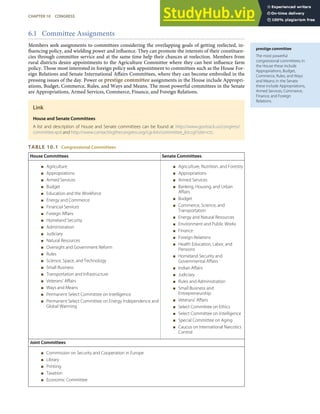
in over two centuries of politics and policies. Americans may rarely question the Constitution itself, but
they surely disagree and debate over how its principles should be applied. In the chapters to follow, we
will see many contemporary examples of politics around the Constitution in the information
age—from constitutional amendments, to disputes between the branches over the powers of each, to
the meanings of the Constitution’s clauses when applied in public policy.
K E Y T A K E A W A Y S
The media usually portray the Constitution and most of the institutions it established favorably and above
politics. Yet, the Constitution was—and remains—a political document created and developed in political
ways for political purposes. In part because of the media’s presentation, the public finds little to criticize in the
Constitution, even as it is quick to disparage public officials. Nonetheless, the Constitution continues to be the
object of political engagement in the twenty-first century.
CHAPTER 1 THE CONSTITUTION AND THE STRUCTURE OF GOVERNMENT POWER 27
E X E R C I S E S
1. Think about the movies you’ve seen. Do any of them present the Constitution in a negative light? What do
they see as the source of problems with the American political system, if not the Constitution?
2. Why do you think Americans tend to idealize the Constitution? Do you think there are disadvantages to
having an idealized view of the Constitution?
Civic Education
Gregory Watson and the Twenty-Seventh Amendment
The message of civic education is the relevance and importance of politics. If the workings of the American
political system are not what we like, there are ways to change structures, policies, and political practices.
An unusual example is provided by Gregory Watson.[50]
In 1982, as a sophomore at the University of Texas at
Austin, Watson found a stimulating topic for a government class essay: The Bill of Rights, as drafted by Madison
and passed by Congress, originally included twelve amendments. Only ten were ratified by the states and in-
cluded in the Constitution.
In 1982, congressional pay raises were controversial, and Watson concluded that this issue made one of the
two unratified amendments pertinent: “No law, varying the compensation for the services of the Senators and
Representatives, shall take effect, until an election of Representatives shall have intervened.” Only six of the
thirteen states had ratified this amendment by 1791. But Watson noticed that the amendment had no time
limit. In his essay, he laid out the history of the amendment and urged that it be ratified by thirty-two more
states. His instructor, dubious that a constitutional amendment could be revived after almost two hundred
years, gave Watson’s paper a C.
Undeterred, Watson launched a campaign to get state legislatures to pass this congressional compensation
amendment. His first successes were with Maine in 1983 and Colorado in 1984. The news media began paying
attention. The story of legislators voting themselves pay raises and news of scandals over congressional perks
of office resonated with the public; the momentum shifted in Watson’s favor. In 1992, Michigan became the
thirty-eighth state to ratify the amendment. Congress recognized Watson’s efforts in what became the
Twenty-Seventh Amendment to the Constitution—203 years after their congressional forebears had passed it.
5. RECOMMENDED READING
Belkin, Carol. A Brilliant Solution: Inventing the American Constitution. New York: Harcourt, 2002. An
astute, readable account of the creation of the Constitution.
Davis, Sue, and J. W. Peltason. Corwin and Peltason’s Understanding the Constitution, 16th ed. Bel-
mont, CA: Wadsworth, 2003. An indispensable clause-by-clause guide to the Constitution.
Devins, Neal, and Louis Fisher. The Democratic Constitution. New York: Oxford University Press,
2004. A sweeping, persuasive account of how everyone in American politics helps define the meaning
of the Constitution.
Riker, William H. The Strategy of Rhetoric: Campaigning for the American Constitution. New
Haven, CT: Yale University Press, 1996. A distinguished political scientist’s posthumously published
work recounting the many tactics of the ratification campaign.
Storing, Herbert. What the Anti-Federalists Were For. Chicago: University of Chicago Press, 1988.
A valuable appreciation of the Anti-Federalist approach to governance.
6. RECOMMENDED VIEWING
Founding Brothers (2002). This History Channel documentary based on Joseph Ellis’s best-selling ac-
count explores the policies and personalities of post-Revolutionary America.
The Great McGinty (1940). Preston Sturges’s first effort as director is a comedy about a hobo rising
through the ranks of a party machine to become governor and spoiling it all by going honest.
Mr. Smith Goes to Washington (1939). Frank Capra’s classic drama of a lone, idealistic individual
single-handedly (but with a woman’s love and help) fighting corrupt individuals within a sacrosanct
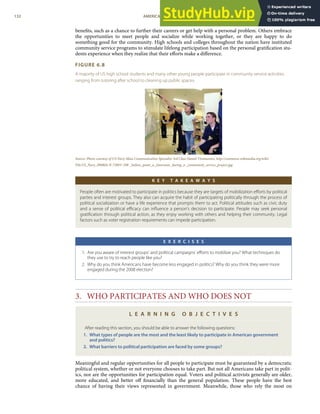
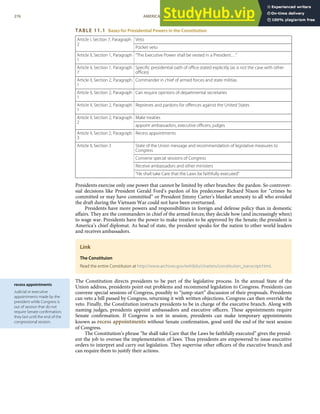
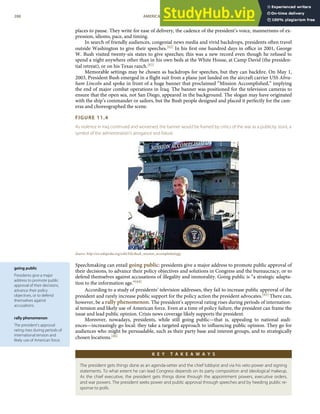
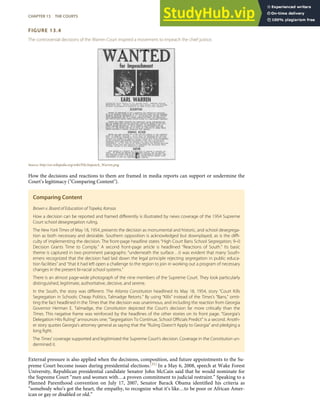
political system.
28 AMERICAN GOVERNMENT AND POLITICS IN THE INFORMATION AGE VERSION 1.0.1
The Patriot (2000). A South Carolina farmer and veteran of the wars with France (Mel Gibson) re-
luctantly takes up arms as a guerrilla fighter in the Revolution and struggles with his political identity
and the meaning of self-government.
Rebels and Redcoats (2003). A lively four-hour documentary featuring a British military historian’s
perspective of the Revolution as a bloody civil war.
1776 (1972). The movie adaptation of the Broadway musical comedy hit vividly portrays the high-
minded and self-interested political struggles leading to the Declaration of Independence.
CHAPTER 1 THE CONSTITUTION AND THE STRUCTURE OF GOVERNMENT POWER 29
1.
2.
3.
4.
5.
6.
7.
8.
9.
10.
11.
12.
13.
14.
15.
16.
17.
18.
19.
20.
21.
22.
23.
24.
25.
26.
27.
28.
29.
30.
31.
32.
33.
34.
35.
36.
37.
38.
39.
40.
41.
42.
43.
44.
45.
46.
47.
48.
49.
50.
ENDNOTES
“World News Tonight” transcript, November 8, 2000, quotations on pp. 1 and 9.
See Stephen Botein, “‘Meer Mechanics’ and an Open Press: The Business and Political
Strategies of Colonial American Printers,” Perspectives in American History 9 (1975):
127–225; and “Printers and the American Revolution,” in The Press and the American
Revolution, ed. Bernard Bailyn and John B. Hench (Worcester, MA: American Antiquar-
ian Society, 1980), 11–57. Also, Charles E. Clark, The Public Prints: The Newspaper in
Anglo-American Culture (New York: Oxford University Press, 1994), chap. 9; and “The
Press the Founders Knew,” in Freeing the Presses: The First Amendment in Action, ed.
Timothy E. Cook (Baton Rouge: Louisiana State University Press, 2005).
Thomas C. Leonard, News for All: America’s Coming-of-Age with the Press (New York:
Oxford University Press, 1995), chap. 1.
For amplification of this argument, Timothy E. Cook, Governing with the News: The
News Media as a Political Institution (Chicago: University of Chicago Press, 1998), chap.
2.
See Jack N. Rakove, The Beginnings of National Politics: An Interpretive History of the
Continental Congress (New York: Knopf, 1979).
Staughton Lynd, The Intellectual Origins of American Radicalism (New York: Vintage,
1969); Garry Wills, Inventing America: Jefferson’s Declaration of Independence (New
York: Vintage, 1979); and Pauline Maier, American Scripture: Making the Declaration of
Independence (New York: Knopf, 1997).
Keith L. Dougherty, Collective Action under the Articles of Confederation (New York:
Cambridge University Press, 2001), chaps. 4–5.
A synopsis is Jack N. Rakove, Original Meanings: Politics and Ideas in the Making of the
Constitution (New York: Knopf, 1996), 25–28. More generally, see Max M. Edling, A Re-
volution in Favor of Government: Origins of the U.S. Constitution and the Making of the
American State (New York: Oxford University Press, 2004).
Gordon S. Wood, “Interests and Disinterestedness in the Making of a Constitution,” in
Beyond Confederation: Origins of the Constitution and American National Identity, ed.
Richard Beeman, Stephen Botein, and Edward C. Carter II (Chapel Hill: University of
North Carolina Press, 1987), 69–109.
See Leonard A. Richards, Shays’s Rebellion: The American Revolution’s Final Battle
(Philadelphia: University of Pennsylvania Press, 2002).
See Keith L. Dougherty, Collective Action under the Articles of Confederation (New York:
Cambridge University Press, 2001), chap. 6.
The standard edition of Madison’s notes is in The Records of the Federal Convention of
1787, ed. Max Farrand, 3 vols. (New Haven, CT: Yale University Press, 1937).
Charles A. Beard, An Economic Interpretation of the Constitution of the United States
(New York: Macmillan, 1913).
Political scientists have revealed the degree to which the Constitutional Convention
and the ratification conventions can be understood to be the result of manipulation
of parliamentary rules, strategic voting, shifting coalitions, and the “agenda-setting”
and “framing” use of mass communication. Our analysis draws on these authors, es-
pecially John P. Roche, “The Founding Fathers: A Reform Caucus in Action,” American
Political Science Review 55 (December 1961): 799–816; Calvin C. Jillson, Constitution
Making: Conflict and Consensus in the Federal Convention of 1787 (New York: Agathon
Press, 1988); and William H. Riker, The Strategy of Rhetoric: Campaigning for the Americ-
an Constitution (New Haven, CT: Yale University Press, 1996).
See John K. Alexander, The Selling of the Constitutional Convention: A History of News
Coverage (Madison, WI: Madison House, 1990).
Max Farrand, ed., The Records of the Federal Convention of 1787 (New Haven, CT: Yale
University Press, 1937), vol. 1, 17.
Max Farrand, ed., The Records of the Federal Convention of 1787 (New Haven, CT: Yale
University Press, 1937), vol. 3, 28.
Max Farrand, ed., The Records of the Federal Convention of 1787 (New Haven, CT: Yale
University Press, 1937), vol. 3, 86–87.
Max Farrand, ed., The Records of the Federal Convention of 1787 (New Haven, CT: Yale
University Press, 1937), vol. 3, 76.
The terms “large state” and “small state” are misleading. Some small states had larger
populations than large states. The small states all shared economic vulnerability and
an inability to grow, usually because they were boxed in by other states on their
western edge, which made it impossible to hope for westward expansion.
The text of the Virginia Plan (and its main rival, the New Jersey Plan) can be found in
Clinton Rossiter, 1787: The Grand Convention (New York: Macmillan, 1966), 361–63
and 369–71.
David Brian Robertson, “Madison’s Opponents and Constitutional Design,” American
Political Science Review 99 (2005): 225–44.
The quoted phrase comes from John P. Roche, “The Founding Fathers: A Reform
Caucus in Action,” American Political Science Review 55 (December 1961): 810.
John P. Roche, “The Founding Fathers: A Reform Caucus in Action,” American Political
Science Review 55 (December 1961): 815; see also David Brian Robertson, “Madison’s
Opponents and Constitutional Design,” American Political Science Review 99 (2005):
225–44
Jackson Turner Main, The Antifederalists: Critics of the Constitution, 1781–1788 (Chapel
Hill: University of North Carolina Press, 1961), 249; Evelyn C. Fink and William H. Riker,
“The Strategy of Ratification” in The Federalist Papers and the New Institutionalism, ed.
Bernard Grofman and Donald Wittman (New York: Agathon Press, 1989), 220–55.
See Herbert Storing, What the Anti-Federalists Were For (Chicago: University of Chica-
go Press, 1988).
Pauline Maier, Ratification: The People Debate the Constitution, 1787–1788 (New York:
Simon & Schuster, 2010).
Robert Allen Rutland, The Ordeal of the Constitution: The Antifederalists and the Ratifica-
tion Struggle of 1787–1788 (Norman: University of Oklahoma Press, 1966), 38.
William H. Riker, The Strategy of Rhetoric: Campaigning for the American Constitution
(New Haven, CT: Yale University Press, 1996), 26–28.
More specifically, see Robert A. Rutland, “The First Great Newspaper Debate: The
Constitutional Crisis of 1787–88,” Proceedings of the American Antiquarian Society
(1987): 43–58. These examples come from Robert Allen Rutland, The Ordeal of the
Constitution: The Antifederalists and the Ratification Struggle of 1787–1788 (Norman:
University of Oklahoma Press, 1966), 73–74, 135–38, 265–66; and John P. Kaminski
and Gaspare J. Saladino, eds., Commentaries on the Constitution, Public and Private
(Madison, WI: State Historical Society of Wisconsin, 1981), vol. 1, xxxii–xxxix.
On the most commonly reprinted articles, see William H. Riker, The Strategy of Rhetor-
ic: Campaigning for the American Constitution (New Haven, CT: Yale University Press,
1996), chap. 6, esp. table 6.1.
John P. Kaminski and Gaspare J. Saladino, eds., Commentaries on the Constitution,
Public and Private (Madison, WI: State Historical Society of Wisconsin, 1981), vol. 1,
243.
Richard E. Neustadt, Presidential Power (New York: Wiley, 1960), 33. Of course, wheth-
er the founders intended this outcome is still open to dispute.
Gordon S. Wood, The Creation of the American Republic (Chapel Hill: University of
North Carolina Press, 1969), chap. 6.
This version comes from Richard F. Fenno Jr., The United States Senate: A Bicameral
Perspective (Washington, DC: American Enterprise Institute, 1982), 5.
Bruce Ackerman, The Failure of the Founding Fathers: Jefferson, Marshall and the Rise of
Presidential Democracy (Cambridge, MA.: Belknap Press of Harvard, 2005).
See Alexander Keyssar, The Right to Vote: The Contested History of Democracy in the Un-
ited States (New York: Basic Books, 2000).
The power of all three branches to develop the vague language of the Constitution
is well documented in Neal Devins and Louis Fisher, The Democratic Constitution
(New York: Oxford University Press, 2004).
David P. Currie, The Constitution in Congress: The Federalist Period, 1789–1801 (Chicago:
University of Chicago Press, 1997).
Hughes was then Governor of New York. Quoted in Edward S. Corwin, The Constitu-
tion and What It Means Today (Princeton, NJ: Princeton University Press, 1954), xiii.
See Neal Devins and Louis Fisher, The Democratic Constitution (New York: Oxford
University Press, 2004).
See Jeffrey Tulis, The Rhetorical Presidency (Princeton, NJ: Princeton University Press,
1987).
Jeffrey K. Tulis, “The Two Constitutional Presidencies,” in The Presidency and the Politic-
al System, 6th ed., ed. Michael Nelson (Washington, DC: CQ Press, 2000), 93–124.
Evan Thomas and Michael Isikoff, “Settling Old Scores in the Swamp,” Newsweek
(December 18, 2000), 36–44, quotations on 38.
Insightful analyses of the film include Brian Rose, An Examination of Narrative Struc-
ture in the Films of Frank Capra (New York: Arno Press, 1980), chap. 3; and Charles J.
Maland, Frank Capra (Boston: Twayne, 1980), chap. 4.
See Mark Fishman, Manufacturing the News (Austin: University of Texas Press, 1980).
See Samuel P. Huntington, American Politics: The Promise of Disharmony (Cambridge,
MA: Harvard University Press, 1981).
John R. Hibbing and Elizabeth Theiss-Morse, Congress as Public Enemy: Public Attitudes
toward American Political Institutions (New York: Cambridge University Press, 1995),
59.
John R. Hibbing and Elizabeth Theiss-Morse, Congress as Public Enemy: Public Attitudes
toward American Political Institutions (New York: Cambridge University Press, 1995),
87, 104.
This example is taken from Richard B. Bernstein and Jerome Abel, Amending America:
If We Love the Constitution So Much, Why Do We Keep Trying to Change It? (New York:
Times Books, 1993), chap. 13.
30 AMERICAN GOVERNMENT AND POLITICS IN THE INFORMATION AGE VERSION 1.0.1
C H A P T E R 2
Federalism
PREAMBLE
The war in Iraq was dragging on long past President George W. Bush’s declaration in May 2003 of the end of formal
hostilities. In 2004, the Defense Department, wary of the political pain of reviving the military draft, called up most
of the National Guard. The Guard consists of volunteers for state military units headed by the state’s governor but
answerable to the commander in chief, the president. Most Guard volunteers expect to serve and keep the peace
at home in their states, not fight in a war overseas.
State and local governments made it known that they were being adversely affected by the war. At the 2004
annual meeting of the National Governors Association, governors from both political parties fretted that the call-up
had slashed the numbers of the National Guard available for states’ needs by as much as 60 percent. Their concerns
made the front page of the New York Times. The story began, “Many of the nation’s governors complained…that
they were facing severe manpower shortages in guarding prisoners, fighting wildfires, preparing for hurricanes and
floods and policing the streets.”[1]
Governors mingling-speaking at the National Governors Association. The annual meeting of the National
Governors Association provides an opportunity for state officials to meet with each other, with national officials,
and with reporters.
Source: http://www.flickr.com/photos/taedc/4374097036/.
This involvement of state governors in foreign policy illustrates the complexity of American federalism. The national
government has an impact on state and local governments, which in turn influence each other and the national
government.
The story also shows how the news media’s depictions can connect and affect different levels of government
within the United States. The governors meet each year to exchange ideas and express common concerns. These
meetings give them an opportunity to try to use the news media to bring public attention to their concerns, lobby
the national government, and reap policy benefits for their states.
But the coverage the governors received in the Iraq case was exceptional. The news media seldom communic-
ate the dynamic complexity of government across national, state, and local levels. Online media are better at
federalism
The allocation of powers and
responsibilities among
national, state, and local
governments and the
intergovernmental relations
between them.
exclusive powers
Powers that the Constitution
grants to the national or state
governments and prevents
the other level from
exercising.
concurrent powers
Powers that the Constitution
specifies that either national
or state governments may
exercise.
commerce clause
The section in the
Constitution that gives
Congress the power to
“regulate Commerce with
foreign nations, and among
the several States and with
the Indian tribes.”
enabling people to negotiate the bewildering thicket of the federal system and communicate between levels of
government.
Federalism is the allocation of powers and responsibilities among national, state, and local governments and
the intergovernmental relations between them. The essence of federalism is that “all levels of government in the
United States significantly participate in all activities of government.”[2]
At the same time, each level of government
is partially autonomous from the rest.[3]
1. FEDERALISM AS A STRUCTURE FOR POWER
L E A R N I N G O B J E C T I V E S
After reading this section, you should be able to answer the following questions:
1. What is federalism?
2. What powers does the Constitution grant to the national government?
3. What powers does the Constitution grant to state governments?
The Constitution and its amendments outline distinct powers and tasks for national and state govern-
ments. Some of these constitutional provisions enhance the power of the national government; others
boost the power of the states. Checks and balances protect each level of government against encroach-
ment by the others.
1.1 National Powers
The Constitution gives the national government three types of power. In particular, Article I authorizes
Congress to act in certain enumerated domains.
Exclusive Powers
The Constitution gives exclusive powers to the national government that states may not exercise.
These are foreign relations, the military, war and peace, trade across national and state borders, and the
monetary system. States may not make treaties with other countries or with other states, issue money,
levy duties on imports or exports, maintain a standing army or navy, or make war.
Concurrent Powers
The Constitution accords some powers to the national government without barring them from the
states. These concurrent powers include regulating elections, taxing and borrowing money, and es-
tablishing courts.
National and state governments both regulate commercial activity. In its commerce clause, the
Constitution gives the national government broad power to “regulate Commerce with foreign Nations,
and among the several States and with the Indian tribes.” This clause allowed the federal government to
establish a national highway system that traverses the states. A state may regulate any and all commerce
that is entirely within its borders.
National and state governments alike make and enforce laws and choose their own leaders. They
have their own constitutions and court systems. A state’s Supreme Court decision may be appealed to
the US Supreme Court provided that it raises a “federal question,” such as an interpretation of the US
Constitution or of national law.
32 AMERICAN GOVERNMENT AND POLITICS IN THE INFORMATION AGE VERSION 1.0.1
necessary and proper
clause
Constitutional provision that
gives Congress vast power to
enact all laws it considers
“necessary and proper” to
carry out its enumerated
powers.
implied powers
Unlisted powers to the
national government that are
logical extensions from
powers expressly
enumerated in the
Constitution.
police powers
Inherent powers that states
hold to protect the public’s
health, safety, order, and
morals.
supremacy clause
The section in the
Constitution that specifies
that the Constitution and all
national laws are “the
supreme law of the land” and
supersede any conflicting
state or local laws.
Implied Powers
The Constitution authorizes Congress to enact all laws “necessary and proper” to execute its enumer-
ated powers. This necessary and proper clause allows the national government to claim implied
powers, logical extensions of the powers explicitly granted to it. For example, national laws can and do
outlaw discrimination in employment under Congress’s power to regulate interstate commerce.
1.2 States’ Powers
The states existed before the Constitution, so the founders said little about their powers until the Tenth
Amendment was added in 1791. It holds that “powers not delegated to the United States…nor prohib-
ited by it [the Constitution] to the States, are reserved to the States…or to the people.” States maintain
inherent powers that do not conflict with the Constitution. Notably, in the mid-nineteenth century, the
Supreme Court recognized that states could exercise police powers to protect the public’s health,
safety, order, and morals.[4]
Reserved Powers
Some powers are reserved to the states, such as ratifying proposed amendments to the Constitution
and deciding how to elect Congress and the president. National officials are chosen by state elections.
Congressional districts are drawn within states. Their boundaries are reset by state officials after
the decennial census. So the party that controls a state’s legislature and governorship is able to manipu-
late districts in its favor. Republicans, having taken over many state governments in the 2010 elections,
benefited from this opportunity.
National Government’s Responsibilities to the States
The Constitution lists responsibilities the national government has to the states. The Constitution can-
not be amended to deny the equal representation of each state in the Senate. A state’s borders cannot
be altered without its consent. The national government must guarantee each state “a republican form
of government” and defend any state, upon its request, from invasion or domestic upheaval.
1.3 States’ Responsibilities to Each Other
Article IV lists responsibilities states have to each other: each state must give “full faith and credit” to
acts of other states. For instance, a driver’s license issued by one state must be recognized as legal and
binding by another.
No state may deny “privileges and immunities” to citizens of other states by refusing their funda-
mental rights. States can, however, deny benefits to out-of-staters if they do not involve fundamental
rights. Courts have held that a state may require newly arrived residents to live in the state for a year
before being eligible for in-state (thus lower) tuition for public universities, but may not force them to
wait as long before being able to vote or receive medical care.
Officials of one state must extradite persons upon request to another state where they are suspec-
ted of a crime.
States dispute whether and how to meet these responsibilities. Conflicts sometimes are resolved by
national authority. In 2003, several states wanted to try John Muhammad, accused of being the sniper
who killed people in and around Washington, DC. The US attorney general, John Ashcroft, had to de-
cide which jurisdiction would be first to put him on trial. Ashcroft, a proponent of capital punishment,
chose the state with the toughest death-penalty law, Virginia.
1.4 “The Supreme Law of the Land” and Its Limits
Article VI’s supremacy clause holds that the Constitution and all national laws are “the supreme law
of the land.” State judges and officials pledge to abide by the US Constitution. In any clash between na-
tional laws and state laws, the latter must give way. However, as we shall see, boundaries are fuzzy
between the powers national and state governments may and may not wield. Implied powers of the na-
tional government, and those reserved to the states by the Tenth Amendment, are unclear and con-
tested. The Constitution leaves much about the relative powers of national and state governments to be
shaped by day-to-day politics in which both levels have a strong voice.
CHAPTER 2 FEDERALISM 33
1.5 A Land of Many Governments
“Disliking government, Americans nonetheless seem to like governments, for they have so many of
them.”[5] Table 2.1 catalogs the 87,576 distinct governments in the fifty states. They employ over eight-
een million full-time workers. These numbers would be higher if we included territories, Native Amer-
ican reservations, and private substitutes for local governments such as gated developments’ com-
munity associations.
TABLE 2.1 Governments in the United States
National government 1
States 50
Counties 3,034
Townships 16,504
Municipalities 19,429
Special districts 35,052
Independent school districts 13,506
Total governmental units in the United States 87,576
Source: US Bureau of the Census, categorizing those entities that are organized, usually chosen by election, with a governmental character and
substantial autonomy.
States
In one sense, all fifty states are equal: each has two votes in the US Senate. The states also have similar
governmental structures to the national government: three branches—executive, legislative, and judi-
cial (only Nebraska has a one chamber—unicameral—legislature). Otherwise, the states differ from
each other in numerous ways. These include size, diversity of inhabitants, economic development, and
levels of education. Differences in population are politically important as they are the basis of each
state’s number of seats in the House of Representatives, over and above the minimum of one seat per
state.
States get less attention in the news than national and local governments. Many state events in-
terest national news organizations only if they reflect national trends, such as a story about states
passing laws regulating or restricting abortions.[6]
A study of Philadelphia local television news in the early 1990s found that only 10 percent of the
news time concerned state occurrences, well behind the 18 percent accorded to suburbs, 21 percent to
the region, and 37 percent to the central city.[7] Since then, the commitment of local news outlets to
state news has waned further. A survey of state capitol news coverage in 2002 revealed that thirty-one
state capitols had fewer newspaper reporters than in 2000.[8]
Native American Reservations
In principle, Native American tribes enjoy more independence than states but less than foreign coun-
tries. Yet the Supreme Court, in 1831, rejected the Cherokee tribe’s claim that it had the right as a for-
eign country to sue the state of Georgia. The justices said that the tribe was a “domestic dependent na-
tion.”[9] As wards of the national government, the Cherokee were forcibly removed from land east of
the Mississippi in ensuing years.
Native Americans have slowly gained self-government. Starting in the 1850s, presidents’ executive
orders set aside public lands for reservations directly administered by the national Bureau of Indian
Affairs (BIA). During World War II, Native Americans working for the BIA organized to gain legal
autonomy for tribes. Buttressed by Supreme Court decisions recognizing tribal rights, national policy
now encourages Native American nations on reservations to draft constitutions and elect govern-
ments.[10]
34 AMERICAN GOVERNMENT AND POLITICS IN THE INFORMATION AGE VERSION 1.0.1
FIGURE 2.1 Foxwoods Advertisement
The image of glamour and prosperity at
casinos operated at American Indian
reservations, such as Foxwoods (the largest
such casino) in Connecticut, is a stark contrast
with the hard life and poverty of most
reservations.
© Thinkstock
Since the Constitution gives Congress and the national government exclusive
“power to regulate commerce…with the Indian tribes,” states have no automatic au-
thority over tribe members on reservations within state borders.[11] As a result, many
Native American tribes have built profitable casinos on reservations within states that
otherwise restrict most gambling.[12]
Local Governments
All but two states are divided into administrative units known as counties.[13] States
also contain municipalities, whether huge cities or tiny hamlets. They differ from
counties by being established by local residents, but their powers are determined by the
state. Cutting across these borders are thousands of school districts as well as special
districts for drainage and flood control, soil and water conservation, libraries, parks and
recreation, housing and community development, sewerage, water supply, cemeteries,
and fire protection.[14]
K E Y T A K E A W A Y S
Federalism is the American political system’s arrangement of powers and responsibilities among—and ensu-
ing relations between—national, state, and local governments. The US Constitution specifies exclusive and
concurrent powers for the national and state governments. Other powers are implied and determined by day-
to-day politics.
E X E R C I S E S
1. Consider the different powers that the Constitution grants exclusively to the national government. Explain
why it might make sense to reserve each of those powers for the national government.
2. Consider the different powers that the Constitution grants exclusively to the states. Explain why it might
make sense to reserve each of those powers to the states.
3. In your opinion, what is the value of the “necessary and proper” clause? Why might it be difficult to
enumerate all the powers of the national government in advance?
CHAPTER 2 FEDERALISM 35
states’ rights
An approach to federalism
that holds that each state
entered into a compact in
ratifying the Constitution and
can therefore decide whether
or not to obey a law it
considers unconstitutional.
dual federalism
An approach to federalism
that divides power between
national and state
governments into distinct,
clearly demarcated domains
of authority.
cooperative federalism
An approach to federalism
that sees national, state, and
local governments working
together to address problems
and implement public
policies in numerous
domains.
competitive federalism
An approach to federalism
that stresses the conflict and
compromise between
national, state, and local
governments.
2. THE MEANINGS OF FEDERALISM
L E A R N I N G O B J E C T I V E S
After reading this section, you should be able to answer the following questions:
1. How has the meaning of federalism changed over time?
2. Why has the meaning of federalism changed over time?
3. What are states’ rights and dual, cooperative, and competitive federalism?
The meaning of federalism has changed over time. During the first decades of the republic, many
politicians held that states’ rights allowed states to disobey any national government that in their view
exceeded its powers. Such a doctrine was largely discredited after the Civil War. Then dual federal-
ism, a clear division of labor between national and state government, became the dominant doctrine.
During the New Deal of the 1930s, cooperative federalism, whereby federal and state governments
work together to solve problems, emerged and held sway until the 1960s. Since then, the situation is
summarized by the term competitive federalism, whereby responsibilities are assigned based on
whether the national government or the state is thought to be best able to handle the task.
2.1 States’ Rights
The ink had barely dried on the Constitution when disputes arose over federalism. Treasury Secretary
Alexander Hamilton hoped to build a strong national economic system; Secretary of State Thomas
Jefferson favored a limited national government. Hamiltonian and Jeffersonian factions in President
George Washington’s cabinet led to the first political parties: respectively, the Federalists, who favored
national supremacy, and the Republicans, who supported states’ rights.
Compact Theory
In 1798, Federalists passed the Alien and Sedition Acts, outlawing malicious criticism of the govern-
ment and authorizing the president to deport enemy aliens. In response, the Republican Jefferson draf-
ted a resolution passed by Kentucky’s legislature, the first states’ rights manifesto. It set forth a compact
theory, claiming that states had voluntarily entered into a “compact” to ratify the Constitution. Con-
sequently, each state could engage in “nullification” and “judge for itself” if an act was constitutional
and refuse to enforce it.[15] However, Jefferson shelved states’ rights when, as president, he directed the
national government to purchase the enormous Louisiana Territory from France in 1803.
Links
Alien and Sedition Acts
Read more about the Alien and Sedition Acts online at http://www.loc.gov/rr/program/bib/ourdocs/
Alien.html.
Jefferson’s Role
Read more about Jefferson’s role online at http://www.loc.gov/exhibits/jefferson/jefffed.html.
Slavery and the Crisis of Federalism
After the Revolutionary War, slavery waned in the North, where slaves were domestic servants or lone
farmhands. In the South, labor-intensive crops on plantations were the basis of Southern prosperity,
which relied heavily on slaves.[16]
In 1850, Congress faced the prospect of new states carved from land captured in the Mexican War
and debated whether they would be slave or free states. In a compromise, Congress admitted California
as a free state but directed the national government to capture and return escaped slaves, even in free
states. Officials in Northern states decried such an exertion of national power favoring the South. They
passed state laws outlining rights for accused fugitive slaves and forbidding state officials from captur-
ing fugitives.[17] The Underground Railroad transporting escaped slaves northward grew. The saga of
hunted fugitives was at the heart of Harriet Beecher Stowe’s 1852 novel Uncle Tom’s Cabin, which sold
more copies proportional to the American population than any book before or since.
36 AMERICAN GOVERNMENT AND POLITICS IN THE INFORMATION AGE VERSION 1.0.1
FIGURE 2.2
Lithograph from Uncle
Tom’s Cabin
The plight of fugitive slaves,
vividly portrayed in the
mega best seller of the
1850s, Uncle Tom’s Cabin,
created a crisis in federalism
that led directly to the Civil
War.
Source: http://www.flickr.com/
photos/48734803@N00/252322873/.
In 1857, the Supreme Court stepped into the fray. Dred Scott, the slave of a deceased Missouri
army surgeon, sued for freedom, noting he had accompanied his master for extended stays in a free
state and a free territory.[18] The justices dismissed Scott’s claim. They stated that blacks, excluded from
the Constitution, could never be US citizens and could not sue in federal court. They added that any
national restriction on slavery in territories violated the Fifth Amendment, which bars the government
from taking property without due process of law. To many Northerners, the Dred Scott decision raised
doubts about whether any state could effectively ban slavery. In December 1860, a convention in South
Carolina repealed the state’s ratification of the Constitution and dissolved its union with the other
states. Ten other states followed suit. The eleven formed the Confederate States of America (see
"Enduring Image").
Links
The Underground Railroad
Learn more about the Underground Railroad online at http://www.pbs.org/wgbh/aia/part4/4p2944.html.
The Dred Scott Case
Learn more about the Dred Scott case from the Library of Congress at http://www.loc.gov/rr/program/bib/
ourdocs/DredScott.html.
Enduring Image
The Confederate Battle Flag
The American flag is an enduring image of the United States’ national unity. The Civil War battle flag of the
Confederate States of America is also an enduring image, but of states’ rights, of opposition to a national gov-
ernment, and of support for slavery. The blue cross studded with eleven stars for the states of the Confederacy
was not its official flag. Soldiers hastily pressed it into battle to avoid confusion between the Union’s Stars and
Stripes and the Confederacy’s Stars and Bars. After the South’s defeat, the battle flag, often lowered for mourn-
ing, was mainly a memento of gallant human loss.[19]
The flag’s meaning was transformed in the 1940s as the civil rights movement made gains against segregation
in the South. One after another Southern state flew the flag above its capitol or defiantly redesigned the state
flag to incorporate it. Over the last sixty years, a myriad of meanings arousing deep emotions have become at-
tached to the flag: states’ rights; Southern regional pride; a general defiance of big government; nostalgia for a
bygone era; racist support of segregation; or “equal rights for whites.”[20]
Confederate Flag
© Thinkstock
The battle flag appeals to politicians seeking resonant images. But its multiple meanings can backfire. In 2003,
former Vermont governor Howard Dean, a candidate for the Democratic presidential nomination, addressed
the Democratic National Committee and said, “White folks in the South who drive pickup trucks with Confed-
erate flag decals on the back ought to be voting with us, and not them [Republicans], because their kids don’t
have health insurance either, and their kids need better schools too.” Dean received a rousing ovation, so he
probably thought little of it when he told the Des Moines Register, “I still want to be the candidate for guys with
Confederate flags in their pickup trucks.”[21]
Dean, the Democratic front runner, was condemned by his rivals
who questioned his patriotism, judgment, and racial sensitivity. Dean apologized for his remark.[22]
CHAPTER 2 FEDERALISM 37
The South’s defeat in the Civil War discredited compact theory and nullification. Since then, state offi-
cials’ efforts to defy national orders have been futile. In 1963, Governor George Wallace stood in the
doorway of the University of Alabama to resist a court order to desegregate the all-white school. Even-
tually, he had no choice but to accede to federal marshals. In 1994, Pennsylvania governor Robert Ca-
sey, a pro-life Democrat, decreed he would not allow state officials to enforce a national order that
state-run Medicaid programs pay for abortions in cases of rape and incest. He lost in court.[23]
2.2 Dual Federalism
After the Civil War, the justices of the Supreme Court wrote, “The Constitution, in all its provisions,
looks to an indestructible Union, composed of indestructible States.”[24] They endorsed dual federal-
ism, a doctrine whereby national and state governments have clearly demarcated domains of power.
The national government is supreme, but only in the areas where the Constitution authorizes it to act.
The basis for dual federalism was a series of Supreme Court decisions early in the nineteenth cen-
tury. The key decision was McCulloch v. Maryland (1819). The Court struck down a Maryland state tax
on the Bank of the United States chartered by Congress. Chief Justice Marshall conceded that the Con-
stitution gave Congress no explicit power to charter a national bank,[25] but concluded that the Consti-
tution’s necessary-and-proper clause enabled Congress and the national government to do whatever it
deemed “convenient or useful” to exercise its powers. As for Maryland’s tax, he wrote, “the power to
tax involves the power to destroy.” Therefore, when a state’s laws interfere with the national govern-
ment’s operation, the latter takes precedence. From the 1780s to the Great Depression of the 1930s, the
size and reach of the national government were relatively limited. As late as 1932, local government
raised and spent more than the national government or the states.
Link
McCulloch v. Maryland
Read more about McCulloch v. Maryland (1819) online at http://www.pbs.org/wnet/supremecourt/
antebellum/landmark_mcculloch.html.
On two subjects, however, the national government increased its power in relationship to the states and
local governments: sin and economic regulation.
The Politics of Sin
National powers were expanded when Congress targeted obscenity, prostitution, and alcohol.[26] In
1872, reformers led by Anthony Comstock persuaded Congress to pass laws blocking obscene material
from being carried in the US mail. Comstock had a broad notion of sinful media: all writings about sex,
birth control, abortion, and childbearing, plus tabloid newspapers that allegedly corrupted innocent
youth.
38 AMERICAN GOVERNMENT AND POLITICS IN THE INFORMATION AGE VERSION 1.0.1
FIGURE 2.3
The first book by Anthony Comstock, who
headed the New York Society for the
Suppression of Vice, aimed at the supposedly
corrupting influence of the tabloid media of
the day on children and proposed increasing
the power of the national government to
combat them.
Source: Morone, James A., Hellfire Nation: The Politics of Sin
in American History, (New Haven, CT: Yale University
Press, 2003), 233.
As a result of these laws, the national government gained the power to exclude ma-
terial from the mail even if it was legal in individual states.
The power of the national government also increased when prostitution became a
focus of national policy. A 1910 exposé in McClure’s magazine roused President Willi-
am Howard Taft to warn Congress about prostitution rings operating across state lines.
The ensuing media frenzy depicted young white girls torn from rural homes and de-
graded by an urban “white slave trade.” Using the commerce clause, Congress passed
the Mann Act to prohibit the transportation “in interstate commerce…of any woman
or girl for the purpose of prostitution or debauchery, or for any other immoral pur-
pose.”[27] The bill turned enforcement over to a tiny agency concerned with antitrust
and postal violations, the Bureau of Investigations. The Bureau aggressively investig-
ated thousands of allegations of “immoral purpose,” including unmarried couples
crossing state lines to wed and interracial married couples.
The crusade to outlaw alcohol provided the most lasting expansion of national
power. Reformers persuaded Congress in 1917 to bar importation of alcohol into dry
states, and, in 1919, to amend the Constitution to allow for the nationwide prohibition
of alcohol. Pervasive attempts to evade the law boosted organized crime, a rationale for
the Bureau of Investigations to bloom into the Federal Bureau of Investigation (FBI),
the equivalent of a national police force, in the 1920s.
Prohibition was repealed in 1933. But the FBI under J. Edgar Hoover, its director
from the 1920s to the 1970s, continued to call attention through news and entertain-
ment media to the scourge of organized crime that justified its growth, political inde-
pendence, and Hoover’s power. The FBI supervised film depictions of the lives of crim-
inals like John Dillinger and long-running radio and television shows like The FBI. The
heroic image of federal law enforcement would not be challenged until the 1960s when
the classic film Bonnie and Clyde romanticized the tale of two small-time criminals into
a saga of rebellious outsiders crushed by the ominous rise of authority across state lines.
Economic Regulation
Other national reforms in the late nineteenth century that increased the power of the national govern-
ment were generated by reactions to industrialization, immigration, and urban growth. Crusading
journalists decried the power of big business. Upton Sinclair’s 1906 novel The Jungle exposed miser-
able, unsafe working conditions in America’s factories. These reformers feared that states lacked the
power or were reluctant to regulate railroads, inspect meat, or guarantee food and drug safety. They
prompted Congress to use its powers under the commerce clause for economic regulation, starting
with the Interstate Commerce Act in 1887 to regulate railroads and the Sherman Antitrust Act in 1890
to outlaw monopolies.
The Supreme Court, defending dual federalism, limited such regulation. It held in 1895 that the
national government could only regulate matters directly affecting interstate commerce.[28] In 1918, it
ruled that Congress could not use the commerce clause to deal with local matters like conditions of
work. The national government could regulate interstate commerce of harmful products such as lottery
tickets or impure food.[29]
2.3 Cooperative Federalism
The massive economic crises of the Great Depression tolled the death knell for dual federalism. In its
place, cooperative federalism emerged. Instead of a relatively clear separation of policy domains, na-
tional, state, and local governments would work together to try to respond to a wide range of problems.
The New Deal and the End of Dual Federalism
Elected in 1932, Democratic president Franklin Delano Roosevelt (FDR) sought to implement a “New
Deal” for Americans amid staggering unemployment. He argued that the national government could
restore the economy more effectively than states or localities. He persuaded Congress to enact sweep-
ing legislation. New Deal programs included boards enforcing wage and price guarantees; programs to
construct buildings and bridges, develop national parks, and create artworks; and payments to farmers
to reduce acreage of crops and stabilize prices.
CHAPTER 2 FEDERALISM 39
grants-in-aid
The national government’s
provision of funds to states or
localities to administer
particular programs.
categorical grants
Grants through which states
and localities spend national
funds on programs to meet
the precise purposes
Congress specified.
FIGURE 2.4 Dorothea Lange Photograph
The 1930s New Deal programs included commissioning photographers to document social conditions during the
Great Depression. The resultant photographs are both invaluable historical documents and lasting works of art.
Source: Photo courtesy of the US Farm Security Administration, http://commons.wikimedia.org/wiki/File:Dorothea_Lange,_Country_store_on_dirt
_road,_Gordonton,_North_Carolina,_1939.jpg.
By 1939, national government expenditures equaled state and local expenditures combined.[30] FDR
explained his programs to nationwide audiences in “fireside chats” on the relatively young medium of
radio. His policies were highly popular, and he was reelected by a landslide in 1936. As we describe in
Chapter 13, the Supreme Court, after rejecting several New Deal measures, eventually upheld national
authority over such once-forbidden terrain as labor-management relations, minimum wages, and sub-
sidies to farmers.[31] The Court thereby sealed the fate of dual federalism.
Links
The New Deal
Learn more about the New Deal online at http://www.archives.gov/research/alic/reference/new-deal.html.
Fireside Chats
Read the Fireside Chats online at http://docs.fdrlibrary.marist.edu/firesi90.html.
Grants-in-Aid
Cooperative federalism’s central mechanisms were grants-in-aid: the national government passes
funds to the states to administer programs. Starting in the 1940s and 1950s, national grants were awar-
ded for infrastructure (airport construction, interstate highways), health (mental health, cancer control,
hospital construction), and economic enhancement (agricultural marketing services, fish restora-
tion).[32]
Grants-in-aid were cooperative in three ways. First, they funded policies that states already over-
saw. Second, categorical grants required states to spend the funds for purposes specified by Congress
but gave them leeway on how to do so. Third, states’ and localities’ core functions of education and law
enforcement had little national government supervision.[33]
2.4 Competitive Federalism
During the 1960s, the national government moved increasingly into areas once reserved to the states.
As a result, the essence of federalism today is competition rather than cooperation.[34]
Judicial Nationalizing
Cooperative federalism was weakened when a series of Supreme Court decisions, starting in the 1950s,
caused states to face much closer supervision by national authorities. As we discuss in Chapter 14 and
Chapter 15, the Court extended requirements of the Bill of Rights and of “equal protection of the law”
to the states.
The Great Society
In 1963, President Lyndon Johnson proposed extending the New Deal policies of his hero, FDR. Seek-
40 AMERICAN GOVERNMENT AND POLITICS IN THE INFORMATION AGE VERSION 1.0.1
ing a “Great Society” and declaring a “War on Poverty,” Johnson inspired Congress to enact massive
mandates
Directives from the national
government to state and
local governments, either as
orders or as conditions on the
use of national funds.
new programs funded by the national government. Over two hundred new grants programs were en-
acted during Johnson’s five years in office. They included a Jobs Corps and Head Start, which provided
preschool education for poor children.
The Great Society undermined cooperative federalism. The new national policies to help the needy
dealt with problems that states and localities had been unable or reluctant to address. Many of them by-
passed states to go straight to local governments and nonprofit organizations.[35]
Link
The Great Society
Read more about the Great Society online at http://www.pbs.org/johngardner/chapters/4.html.
Obstacles and Opportunities
In competitive federalism, national, state, and local levels clash, even battle with each other.[36] Over-
lapping powers and responsibilities create friction, which is compounded by politicians’ desires to get
in the news and claim credit for programs responding to public problems.
Competition between levels of federalism is a recurring feature of films and television programs.
For instance, in the eternal television drama Law and Order and its offshoots, conflicts between local,
state, and national law enforcement generate narrative tension and drama. This media frame does not
consistently favor one side or the other. Sometimes, as in the film The Fugitive or stories about civil
rights like Mississippi Burning, national law enforcement agencies take over from corrupt local author-
ities. Elsewhere, as in the action film Die Hard, national law enforcement is less competent than local or
state police.
Mandates
Under competitive federalism, funds go from national to state and local governments with many con-
ditions—most notably, directives known as mandates.[37] State and local governments want national
funds but resent conditions. They especially dislike “unfunded mandates,” according to which the na-
tional government directs them what to do but gives them no funds to do it.
After the Republicans gained control of Congress in the 1994 elections, they passed a rule to bar
unfunded mandates. If a member objects to an unfunded mandate, a majority must vote to waive the
rule in order to pass it. This reform has had little impact: negative news attention to unfunded man-
dates is easily displaced by dramatic, personalized issues that cry out for action. For example, in 1996,
the story of Megan Kanka, a young New Jersey girl killed by a released sex offender living in her neigh-
borhood, gained huge news attention. The same Congress that outlawed unfunded mandates passed
“Megan’s Law”—including an unfunded mandate ordering state and local law enforcement officers to
compile lists of sex offenders and send them to a registry run by the national government.
K E Y T A K E A W A Y S
Federalism in the United States has changed over time from clear divisions of powers between national, state,
and local governments in the early years of the republic to greater intermingling and cooperation as well as
conflict and competition today. Causes of these changes include political actions, court decisions, responses
to economic problems (e.g., depression), and social concerns (e.g., sin).
E X E R C I S E S
1. What view of federalism allowed the Confederate states to justify seceding from the United States? How
might this view make it difficult for the federal government to function in the long run?
2. What are the differences between dual federalism and cooperative federalism? What social forces led to
the federal state governments working together in a new way?
3. How is federalism portrayed in the movies and television shows you’ve seen? Why do you think it is
portrayed that way?
CHAPTER 2 FEDERALISM 41
3. WHY FEDERALISM WORKS (MORE OR LESS)
L E A R N I N G O B J E C T I V E S
After reading this section, you should be able to answer the following questions:
1. How do national, state, and local governments interact to make federalism work more or less?
2. How are interest groups involved in federalism?
3. What are the ideological and political attitudes toward federalism of the Democratic and Re-
publican parties?
When Hurricane Katrina hit New Orleans and the surrounding areas on August 29, 2005, it exposed
federalism’s frailties. The state and local government were overwhelmed, yet there was uncertainty over
which level of government should be in charge of rescue attempts. Louisiana governor Kathleen Blanco
refused to sign an order turning over the disaster response to federal authorities. She did not want to
cede control of the National Guard and did not believe signing the order would hasten the arrival of the
troops she had requested. President Bush failed to realize the magnitude of the disaster, then believed
that the federal response was effective. In fact, as was obvious to anyone watching television, it was slow
and ineffective. New Orleans mayor C. Ray Nagin and state officials accused the Federal Emergency
Management Agency (FEMA) of failing to deliver urgently needed help and of thwarting other efforts
through red tape.
Hurricane Katrina was an exceptional challenge to federalism. Normally, competition between
levels of government does not careen out of control, and federalism works, more or less. We have
already discussed one reason: a legal hierarchy—in which national law is superior to state law, which in
turn dominates local law—dictates who wins in clashes in domains where each may constitutionally
act.
There are three other reasons.[38] First, state and local governments provide crucial assistance to
the national government. Second, national, state, and local levels have complementary capacities,
providing distinct services and resources. Third, the fragmentation of the system is bridged by interest
groups, notably the intergovernmental lobby that provides voices for state and local governments. We
discuss each reason.
3.1 Applying Policies Close to Home
State and local governments are essential parts of federalism because the federal government routinely
needs them to execute national policy. State and local governments adjust the policies as best they can
to meet their political preferences and their residents’ needs. Policies and the funds expended on them
thus vary dramatically from one state to the next, even in national programs such as unemployment
benefits.[39]
This division of labor, through which the national government sets goals and states and localities
administer policies, makes for incomplete coverage in the news. National news watches the national
government, covering more the political games and high-minded intentions of policies then the nitty-
gritty of implementation. Local news, stressing the local angle on national news, focuses on the local
impact of decisions in distant Washington (see "Comparing Content").
Comparing Content
Passage of No Child Left Behind Act
The No Child Left Behind (NCLB) Act vastly expanded the national government’s supervision of public educa-
tion with requirements for testing and accountability. Amid the final push toward enacting the law, Washing-
ton reporters for national newspapers were caught up in a remarkable story: the bipartisan coalition uniting
staunch opponents President George W. Bush and liberal senator Edward Kennedy (D-MA) civilly working to-
gether on a bold, historic piece of legislation. Dana Milbank’s Washington Post story was typical. Milbank
termed the bill “the broadest rewriting of federal education policy in decades,” and he admired “Washington’s
top bipartisan achievement of 2001.”[40]
The looming problems of funding and implementing the act were ob-
scured in the national media’s celebration of the lovefest.
42 AMERICAN GOVERNMENT AND POLITICS IN THE INFORMATION AGE VERSION 1.0.1
redistributive policies
Policies whereby those who
pay the taxes usually do not
receive the service paid by
the taxes.
By contrast, local newspapers across the country calculated the benefits and costs of the new legislation on
education in their states and localities—in particular, how much money the state would receive under NCLB
and whether or not the law’s requirements and deadlines were reasonable. On January 9, 2002, the Boston
Globe’s headline was “Mass. Welcomes Fed $$; Will Reap $117M for Schools, Testing,” and the Denver Post
noted, “Colorado to Get $500 million for Schools.”[41]
Local newspapers sought out comments of state and local education officials and leaders of local teachers’
unions, who were less smitten by the new law. The Sacramento Bee published a lengthy front-page story by re-
porter Erika Chavez on January 3, shortly before Bush signed the law. Chavez contrasted the bill’s supporters
who saw it as “the most meaningful education reform in decades” with opponents who found that “one cru-
cial aspect of the legislation is nothing more than a pipe dream.” Discussing the bill’s provision that all teach-
ers must be fully credentialed in four years, a staffer at the State Department of Education was quoted as say-
ing “The numbers don’t add up, no matter how you look at them.” The California Teachers’ Association’s pres-
ident called it “fantasy legislation,” adding, “It’s irresponsible to pass this kind of law and not provide the assist-
ance needed to make the goals attainable. I can’t understand the reason or logic that went into this legislation.
It’s almost a joke.”[42]
3.2 Complementary Capacities
The second reason federalism often works is because national, state, and local governments specialize
in different policy domains.[43] The main focus of local and state government policy is economic devel-
opment, broadly defined to include all policies that attract or keep businesses and enhance property
values. States have traditionally taken the lead in highways, welfare, health, natural resources, and pris-
ons.[44] Local governments dominate in education, fire protection, sewerage, sanitation, airports, and
parking.
The national government is central in policies to serve low-income and other needy persons. In
these redistributive policies, those paying for a service in taxes are not usually those receiving the
service.[45] These programs rarely get positive coverage in the local news, which often shows them as
“something-for-nothing” benefits that undeserving individuals receive, not as ways to address national
problems.[46]
States cannot effectively provide redistributive benefits. It is impossible to stop people from mov-
ing away because they think they are paying too much in taxes for services. Nor can states with gener-
ous benefits stop outsiders from moving there—a key reason why very few states enacted broad health
care coverage[47] —and why President Obama pressed for and obtained a national program. Note,
however, that, acknowledging federalism, it is the states’ insurance commissioners who are supposed to
interpret and enforce many of the provisions of the new federal health law
The three levels of government also rely on different sources of taxation to fund their activities and
policies. The national government depends most heavily on the national income tax, based on people’s
ability to pay. This enables it to shift funds away from the wealthier states (e.g., Connecticut, New Jer-
sey, New Hampshire) to poorer states (e.g., New Mexico, North Dakota, West Virginia).
Taxes of local and state governments are more closely connected to services provided. Local gov-
ernments depend mainly on property taxes, the more valuable the property the more people pay. State
governments collect state income taxes but rely most on sales taxes gathered during presumably neces-
sary or pleasurable consumer activity.
Link
Tax and Budget Information for Federal, State, and Local Governments
Find more information about government budgets and taxes.
Federal
http://www.census.gov/compendia/statab/cats/federal_govt_finances_employment.html
State
http://www.census.gov/compendia/statab/cats/state_local_govt_finances_employment/
state_government_finances.html
Local
http://www.census.gov/compendia/statab/cats/state_local_govt_finances_employment/
local_government_finances.html
CHAPTER 2 FEDERALISM 43
The language of “no new taxes” or “cutting taxes” is an easy slogan for politicians to feature in cam-
paign ads and the news. As a result, governments often increase revenues on the sly, by lotteries, cigar-
ette and alcohol taxes, toll roads, and sales taxes falling mostly on nonresidents (like hotel taxes or sur-
charges on car rentals).[48]
3.3 The Intergovernmental Lobby
A third reason federalism often works is because interest groups and professional associations focus
simultaneously on a variety of governments at the national, state, and local levels. With multiple points
of entry, policy changes can occur in many ways.[49]
In bottom-up change, a problem is first identified and addressed, but not resolved at a local level.
People, and often the media, then pressure state and national governments to become involved.
Bottom-up change can also take place through an interest group calling on Congress for help.[50] In
1996, pesticide manufacturers, fed up with different regulations from state to state, successfully pushed
Congress to set national standards to make for more uniform, and less rigorous, regulation.
In top-down change, breaking news events inspire simultaneous policy responses at various levels.
Huge publicity for the 1991 beating that motorist Rodney King received from Los Angeles police
officers propelled police brutality onto the agenda nationwide and inspired many state and local re-
forms.[51]
Policy diffusion is a horizontal form of change.[52] State and local officials watch what other state
and local governments are doing. States can be “laboratories of democracy,” experimenting with innov-
ative programs that spread to other states. They can also make problems worse with ineffective or mis-
directed policies.
These processes—bottom-up, top-down, and policy diffusion—are reinforced by the intergovern-
mental lobby. State and local governments lobby the president and Congress. Their officials band to-
gether in organizations, such as the National Governors Association, National Association of Counties,
the US Conference of Mayors, and the National Conference of State Legislatures. These associations
trade information and pass resolutions to express common concerns to the national government. Such
meetings are one-stop-shopping occasions for the news media to gauge nationwide trends in state and
local government.
3.4 Democrats, Republicans, and Federalism
The parties stand for different principles with regard to federalism. Democrats prefer policies to be set
by the national government. They opt for national standards for consistency across states and localities,
often through attaching stringent conditions to the use of national funds. Republicans decry such cent-
ralization and endorse devolution, giving (or, they say, “returning”) powers to the states—and seeking
to shrink funds for the national government.
Principled distinctions often evaporate in practice. Both parties have been known to give priority
to other principles over federalism and to pursue policy goals regardless of the impact on boundaries
between national, state, and local governments.[53]
So Republicans sometimes champion a national policy while Democrats look to the states. In 2004,
the Massachusetts Supreme Court ruled that the state could not deny marriage licenses to same-sex
couples, and officials in cities like San Francisco defied state laws and began marrying same-sex
couples. Led by President George W. Bush, Republicans drafted an amendment to the US Constitution
to define marriage as between a man and a woman. Bush charged that “activist judges and local officials
in some parts of the country are not letting up in their efforts to redefine marriage for the rest of Amer-
ica.”[54] Democrats, seeking to defuse the amendment’s appeal, argued that the matter should be left to
each of the states. Democrats’ appeal to federalism swayed several Republican senators to vote to kill
the amendment.
“The American Recovery and Reinvestment Act,” enacted in February 2009, is another example.
This was a dramatic response by Congress and the newly installed Obama administration to the coun-
try’s dire economic condition. It included many billions of dollars in a fiscal stabilization fund: aid to
the states and localities struggling with record budget deficits and layoffs. Most Democratic members
of Congress voted for the legislation even though it gave the funds unconditionally. Republicans op-
posed the legislation, preferring tax cuts over funding the states.
3.5 Economic Woes
The stimulus package was a stopgap measure. After spending or allocating most of the federal funds,
many states and localities still faced a dire financial situation. The federal government, running a huge
44 AMERICAN GOVERNMENT AND POLITICS IN THE INFORMATION AGE VERSION 1.0.1
budget deficit, was unlikely to give the states significant additional funding. As unemployment went up
and people’s incomes went down, states’ tax collections decreased and their expenditures for unem-
ployment benefits and health care increased. Many states had huge funding obligations, particularly for
pensions they owed and would owe to state workers.
State governors and legislators, particularly Republicans, had promised in their election campaigns
not to raise taxes. They relied on cutting costs. They reduced aid to local governments and cities. They
fired some state employees, reduced pay and benefits for others, slashed services and programs
(including welfare, recreation, and corrections), borrowed funds, and engaged in accounting man-
euvers to mask debt.
At the University of California, for example, staff were put on furlough, which cut their pay by
roughly 8 percent, teaching assistants were laid off, courses cut, library hours reduced, and recruitment
of new faculty curtailed. Undergraduate fees (tuition) were increased by over 30 percent, provoking
student protests and demonstrations.
At the local level, school districts’ budgets declined as they received less money from property
taxes and from the states (about one quarter of all state spending goes to public schools). They fired
teachers, hired few new ones (resulting in a horrendous job market for recent college graduates want-
ing to teach), enlarged classes, cut programs, shortened school hours, and closed schools.
K E Y T A K E A W A Y S
The federal system functions, more or less, because of the authority of national over state laws, which trump
local laws; crucial assistance provided by states and local governments to execute national policy; the comple-
mentary capacities of the three levels of government; and the intergovernmental lobby. The functioning of
the system is being challenged by the economic woes faced by government at all levels. The Democratic and
Republican parties differ ideologically about federalism, although these differences can be changed to achieve
political objectives.
E X E R C I S E S
1. How do the perspectives of national, state, and local governments complement one another? What are
the strengths of each perspective?
2. Why do you think Democrats are more likely to prefer to make policy at the national level? Why are
Republicans more likely to prefer to leave policymaking to state and local governments?
3. How did conflicts between the national government and state and local governments contribute to
damage caused by Hurricane Katrina? Why do you think federalism broke down in that case?
4. FEDERALISM IN THE INFORMATION AGE
L E A R N I N G O B J E C T I V E S
After reading this section, you should be able to answer the following questions:
1. What are the strengths and weaknesses of the media in covering federalism?
2. How are some public officials in the federal system able to use the media to advance their polit-
ical agendas?
3. What effects could the new media have on people’s knowledge of and commitment to
federalism?
Federalism gives the American political system additional complexity and dynamism. The number of
governments involved in a wide sweep of issues creates many ways for people in politics to be heard.
These processes are facilitated by a media system that resembles federalism by its own merging and
mingling of national, state, and local content and audiences.
4.1 Media Interactions
CHAPTER 2 FEDERALISM 45
National, state, and local news and entertainment outlets all depict federalism. Now they are joined by
new technologies that communicate across geographical boundaries.
parachute in
When national reporters
come from the networks to
cover a local event.
National News Outlets
News on network television, cable news channels, and public broadcasting is aimed at a national audi-
ence. A few newspapers are also national. Reporters for these national outlets are largely based in New
York and Washington, DC, and in a smattering of bureaus here and there across the country.
Local News Outlets
Local television stations transmit the news programs of the national networks to which they are affili-
ated. They broadcast local news on their own news shows. These shows are not devoid of substance, al-
though it is easy to make fun of them as vapid and delivered by airheads, like Will Ferrell’s character
Ron Burgundy in the 2004 comic film Anchorman. But they have only scattered national and interna-
tional coverage, and attention to local and state government policies and politics is overshadowed by
stories about isolated incidents such as crimes, car chases, and fires.
Almost all newspapers are local. Stories from the wire services enable them to include national and
international highlights and some state items in their news, but most of their news is local. As their staff
shrinks, they increasingly defer to powerful official sources in city hall or the police station for the sub-
stance of news. The news media serving smaller communities are even more vulnerable to pressure
from local officials for favorable coverage and from advertisers who want a “feel-good” context for their
paid messages.
From National to Local
Local newspapers and television stations sometimes have their own correspondents in Washington,
DC. They can add a local angle by soliciting information and quotes from home-state members of
Congress. Or, pooling of resources lets local television broadcasts make it look as though they have sent
a reporter to Washington; a single reporter can send a feed to many stations by ending with an an-
onymous, “Now back to you.”
From Local to National
Some local stories become prominent and gain saturation coverage in the national news. Examples are
the shootings at Columbine High School in Littleton, Colorado, in 1999; the murder of pregnant Laci
Peterson in California on Christmas Eve 2002; the kidnapping in Utah of Elizabeth Smart in 2003; and
the 2005 battle over the fate of the comatose Terri Schiavo in Florida. The cozy relationships of local
officials and local reporters are dislodged when national reporters from the networks parachute in to
cover the event.
In 2011, federalism took center stage with the efforts of Republican governor Scott Walker of Wis-
consin, and related steps by the Republican governors of Indiana and Ohio, to save funds by stripping
most of the collective bargaining power of the state’s public employee unions. Stories reported on the
proposed policies, Democratic legislators’ efforts to thwart them, and the workers’ and supporters’ sit-
ins and demonstrations.
Such stories expand amid attention from local and national news outlets and discussion about
their meaning and import. National, state, and local officials alike find they have to respond to the
problems evoked by the dramatic event.[55]
State News and State Politics
Except for certain governors and attorneys general, the local media give little space in their news to
state governments and their policies. One reason is that there are only a few truly statewide news out-
lets like New Hampshire’s Manchester UnionLeader or Iowa’s Des Moines Register. Another reason is
that most state capitals are far from the state’s main metropolitan area. Examples such as Boston and
Atlanta, where the state capital is the largest city, are unusual. The four largest states are more typical:
their capitals (Sacramento, Austin, Tallahassee, and Albany) are far (and in separate media markets)
from Los Angeles, Houston, Miami, and New York City.
Capital cities’ local news outlets do give emphasis to state government. But those cities are relat-
ively small, so that news about state government usually goes to people involved with state government
more than to the public in the state as a whole.
State officials do not always mind the lack of scrutiny of state government. It allows some of them
to get their views into the media. Governors, for example, have full-time press officers as key advisors
and routinely give interviews and hold news conferences. According to governors’ press secretaries,
their press releases are often printed word-for-word across the state; and the governors also gain posit-
ive coverage when they travel to other cities for press events such as signing legislation.[56]
46 AMERICAN GOVERNMENT AND POLITICS IN THE INFORMATION AGE VERSION 1.0.1
feeding frenzy
Often excessive coverage by
the media of every aspect of
a story.
4.2 Media Consequences
The variety and range of national and local media offer opportunities for people in politics to gain
leverage and influence. National policymakers, notably the president, use national news and entertain-
ment media to reach a national public. But because local news media serve as a more unfiltered and
thus less critical conduit to the public, they also seek and obtain positive publicity from them.
State governors and big-city mayors, especially when they have few formal powers or when they
face a state legislature or city council filled with opponents, can parlay favorable media attention into
political power.[57] At best, a governor (as one wrote in the 1960s) “sets the agenda for public debate;
frames the issues; decides the timing; and can blanket the state with good ideas by using access to the
mass media.”[58]
Some state attorneys general are particularly adept and adroit at attracting positive media coverage
through the causes they pursue, the (sometimes) outrageous accusations they announce, and the
people they prosecute. One result is to put intolerable pressure on their targets to settle before trial.
Another is reams of favorable publicity that they can parlay into a successful campaign for higher
office, as Eliot Spitzer did in becoming governor of New York in 2006, and Andrew Cuomo in 2010.
But to live by the media sword is sometimes to die by it, as Governor Spitzer discovered when the
media indulged in a feeding frenzy of stories about his engaging the services of prostitutes. He
resigned from office in disgrace in March 2008. (See the documentary Client 9, listed in our
“Recommended Viewing.”) Indeed, news attention can be unwanted and destructive. After he was ar-
rested in December 2008 for corruption, the widespread negative coverage Illinois governor Rod
Blagojevich received in the national, state, and local media contributed to his speedy impeachment and
removal from office by the state legislature the next month.
The media are also important because officials are news consumers in their own right. State legis-
lators value news exposure to communicate to other legislators, the governor, and interest groups and
to set the policy agenda.[59] Thus legislative staffers in Illinois conclude that news coverage is a better
indicator of public opinion than polls.[60] The news may more heavily and quickly influence officials’
views of problems and policy issues than the public’s.
4.3 New Media and Federalism
New technologies that enable far-flung individuals quickly to obtain news from many locales can help
people understand the many dimensions of federalism. People in politics in one state can, with a few
keystrokes, find out how an issue is being dealt with in all fifty states, thus providing a boost for ideas
and issues to travel more quickly than ever across state lines. The National Conference of State Legis-
latures, as part of its mission to “offer a variety of services to help lawmakers tailor policies that will
work for their state and their constituents,” maintains a website, http://www.ncsl.org, with a motto
“Where Policy Clicks!” allowing web surfers to search the latest information from a whole range of
states about “state and federal issues A to Z.”
But new media create a challenge for federalism. They erode the once-close connection of media to
geographically defined communities. Consumers can tune in to distant satellite and cable outlets as
easily as local television stations. Cell phones make it as convenient (and cheap) to call across the coun-
try as across the street. The Internet and the web, with their listservs, websites, weblogs, chat rooms,
and podcasts, permit ready and ongoing connections to groups and communities that can displace in-
dividuals’ commitment to and involvement in their physical surroundings.
In one sense, new technologies simply speed up a development launched in the 1960s, when, as
one scholar writes, “one type of group—the place-based group that federalism had honored—yielded to
groups otherwise defined, as by race, age, disability, or orientation to an issue or cause.”[61]
Yet the vitality of state and local governments, presenting so many opportunities for people in
politics to intervene, reminds us that federalism is not about to wither and die. In the end, the new
technologies may enable individuals and groups more efficiently to manage the potentially overwhelm-
ing amount of information about what is going on in policymaking—and to navigate quickly and
adroitly the dazzling and bemusing complexity of American federalism.
K E Y T A K E A W A Y S
The US media system blends national, state, and local outlets. Issues and stories move from one level to anoth-
er. This enables people in politics to gain influence but can undermine them. New media technologies, foster-
ing quick communication across vast expanses, allows people to learn and understand more about federalism
but challenge federalism’s geographical foundation. Federalism seems like a daunting obstacle course, but it
also opens up many opportunities for political action.
CHAPTER 2 FEDERALISM 47
E X E R C I S E S
1. How do the perspectives of the national and local media differ? Why is there relatively little coverage of
state politics in the national and local media?
2. Do you get any of your news from new media? How does such news differ from the news you get from
the traditional media?
Civic Education
Michael Barker versus the School Board
As Hamilton predicted in Federalist No. 28, if the people are frustrated at one level of government, they can
make their voice heard and win policy battles at another. Federalism looks like a daunting obstacle course, yet
it opens up a vast array of opportunities for political action.
Michael Barker did not set out to push the Louisiana state legislature for a new law. In 2003, Barker, a
seventeen-year-old high school junior from the town of Jena, had wondered if his school district might save
money on computer equipment by making smarter purchases. He sent four letters to the LaSalle Parish School
Board requesting information about computer expenditures. He was rebuffed by the superintendent of
schools, who notified him that a state law allowed public officials to deny requests for public records from
anyone under the age of eighteen.
Barker did not understand why minors—including student journalists—had no right to access public informa-
tion. Stymied locally, he aimed at the state government. He conducted an Internet search and discovered a
statewide nonprofit organization, the Public Affairs Research Council (PAR), that promotes public access. Bark-
er contacted PAR, which helped him develop a strategy to research the issue thoroughly and contact Jena’s
state representative, Democrat Thomas Wright. Wright agreed to introduce House Bill 492 to strike the “age of
majority” provision from the books. Barker testified in the state capital of Baton Rouge at legislative hearings
on behalf of the bill, saying, “Our education system strives daily to improve upon people’s involvement in the
democratic process. This bill would allow young people all over the state of Louisiana to be involved with the
day-to-day operations of our state government.”
But Barker’s crusade had just begun. A state senator who had a personal beef with Representative Wright tried
to block passage of the bill. Barker contacted a newspaper reporter who wrote a story about the controversy.
The ensuing media spotlight caused the opposition to back down. After the bill was passed and signed into
law by Governor Kathleen Blanco, Barker set up a website to share his experiences and to provide advice to
young people who want to influence government.[62]
5. RECOMMENDED READING
Berman, David R. Local Government and the States: Autonomy, Politics, and Policy. Armonk, NY: M. E.
Sharpe, 2003. An overview of the relationship between state and local governments.
Derthick, Martha. Keeping the Compound Republic: Essays on American Federalism. Washington,
DC: Brookings, 2001. A set of discerning essays on intergovernmental relations.
Kaniss, Phyllis. Making Local News. Chicago: University of Chicago Press, 1991. A pathbreaking
account of how politicians and journalists interact to produce local news.
Lawrence, Regina G. The Politics of Force: Media and the Construction of Police Brutality. Berkeley:
University of California Press, 2000. An eye-opening example of how local issues do and do not spread
to national news and politics.
Peterson, Paul E. The Price of Federalism. Washington, DC: Brookings, 1995. An astute assessment
of the contributions that national, state, and local levels can and do make to government.
Posner, Paul L. The Politics of Unfunded Mandates: Whither Federalism? Washington, DC: Geor-
getown University Press, 1998. A concise account of the ups and downs of unfunded mandates.
Shapiro, David L. Federalism: A Dialogue. Evanston, IL: Northwestern University Press, 1995. A
distinguished legal scholar debates with himself on the pros and cons of federalism.
6. RECOMMENDED VIEWING
Amistad (1997). This Steven Spielberg dramatization of the legal aftermath of a revolt on a slave ship
examines interactions between local, state, national, and international law.
48 AMERICAN GOVERNMENT AND POLITICS IN THE INFORMATION AGE VERSION 1.0.1
Anchorman (2004). This vehicle for comedian Will Ferrell, set in the 1970s, spoofs the vapidity of
local television news.
Bonnie and Clyde (1967). Small-time criminals become romanticized rebels in this famous revi-
sionist take on the expansion of national authority against crime in the 1930s.
Cadillac Desert (1997). A four-part documentary about the politics of water across state lines in the
American West.
Client 9: The Rise and Fall of Eliot Spitzer (2010). Alex Gibney’s interviews-based documentary
about the interweaving of hubris, politics, enemies, prostitution, the FBI, and the media.
The FBI Story (1959). James Stewart stars in a dramatized version of the Bureau’s authorized his-
tory, closely overseen by FBI director J. Edgar Hoover.
First Blood (1982). When Vietnam vet John Rambo clashes with a monomaniacal local sheriff in
this first “Rambo” movie, it takes everyone from the state troopers, the National Guard, and his old
special forces colonel to rein him in.
George Wallace: Settin’ the Woods on Fire (2000). A compelling documentary on the political
transformations of the Alabama governor who championed states’ rights in the 1960s.
Mystic River (2003). A state police officer investigating the murder of the daughter of a childhood
friend faces “the law of the street” in a working-class Boston neighborhood.
CHAPTER 2 FEDERALISM 49
1.
2.
3.
4.
5.
6.
7.
8.
9.
10.
11.
12.
13.
14.
15.
16.
17.
18.
19.
20.
21.
22.
23.
24.
25.
26.
27.
28.
29.
30.
31.
32.
33.
34.
35.
36.
37.
38.
39.
40.
41.
42.
43.
44.
45.
46.
47.
48.
49.
50.
51.
52.
53.
54.
55.
56.
57.
58.
59.
60.
61.
62.
ENDNOTES
Sarah Kershaw, “Governors Tell of War’s Impact on Local Needs,” New York Times, July
20, 2004, A1.
See Morton Grodzins’s classic book The American System: A New View of Government
in the United States (Chicago: Rand McNally, 1966), 13.
We follow the founders who reserved “national government” for the legislative, pres-
idential, and judicial branches at the national level, saving “federal government” for
the entity consisting of national, state, and local levels. See Paul E. Peterson, The Price
of Federalism (Washington, DC: Brookings, 1995), 13–14.
License Cases, 5 How. 504 (1847).
Martha Derthick, Keeping the Compound Republic: Essays on American Federalism
(Washington, DC: Brookings, 2001), 83.
John Leland, “Abortion Foes Advance Cause at State Level,” New York Times, June 3,
2010, A1, 16.
Phyllis Kaniss, Making Local News (Chicago: University of Chicago Press, 1991), table
4.4.
Charles Layton and Jennifer Dorroh, “Sad State,” American Journalism Review, June
2002, http://www.ajr.org/article_printable.asp?id=2562.
Cherokee Nation v. Georgia, 30 US 1 (1831).
See Charles F. Wilkinson, American Indians, Time, and the Law: Native Societies in a
Modern Constitutional Democracy (New Haven, CT: Yale University Press, 1987); Ge-
orge Pierre Castile, To Show Heart: Native American Self-Determination and Federal Indi-
an Policy, 1960–1975 (Tucson: University of Arizona Press, 1998); and Kenneth R. Philp,
Termination Revisited: American Indians on the Trail to Self-Determination, 1933–1953
(Lincoln: University of Nebraska Press, 1999).
Worcester v. Georgia, 31 US 515 (1832).
Montana v. Blackfeet Tribe of Indians, 471 US 759 (1985); California v. Cabazon Band of
Indians, 480 US 202 (1987); Seminole Tribe of Florida v. Florida, 517 US 44 (1996).
The two exceptions are Alaska, which has boroughs that do not cover the entire area
of the state, and Louisiana, where the equivalents of counties are parishes.
The US Bureau of the Census categorizes those entities that are organized (usually
chosen by election) with a governmental character and substantial autonomy. US
Census Bureau, Government Organization: 2002 Census of Governments 1, no. 1: 6,
http://www.census.gov/prod/2003pubs/gc021x1.pdf.
Forrest McDonald, States’ Rights and the Union: Imperium in Imperio, 1776–1876
(Lawrence: University Press of Kansas, 2000), 38–43.
This section draws on James M. McPherson, Battle Cry of Freedom: The Civil War Era
(New York: Oxford University Press, 1988).
Thomas D. Morris, Free Men All: The Personal Liberty Laws of the North, 1780–1861
(Baltimore, MD: Johns Hopkins University Press, 1974).
An encyclopedic account of this case is Don E. Fehrenbacher, The Dred Scott Case: Its
Significance in American Law and Politics (New York: Oxford University Press, 1978).
See especially Robert E. Bonner, Colors and Blood: Flag Passions of the Confederate
South (Princeton, NJ: Princeton University Press, 2002).
For overviews of these meanings see Tony Horwitz, Confederates in the Attic: Dis-
patches from the Unfinished Civil War (New York: Random House, 1998) and J. Michael
Martinez, William D. Richardson, and Ron McNinch-Su, eds., Confederate Symbols in
the Contemporary South (Gainesville: University of Florida Press, 2000).
All quotes come from “Dems Battle over Confederate Flag,” CNN, November 2, 2003,
http://www.cnn.com/2003/ALLPOLITICS/11/01/elec04.prez.dean.confederate.flag.
“Dean: ‘I Apologize’ for Flag Remark,” CNN, November 7, 2003, http://www.cnn.com/
2003/ALLPOLITICS/11/06/elec04.prez.dean.flag.
David L. Shapiro, Federalism: A Dialogue (Evanston, IL: Northwestern University Press,
1995), 98 n. 139.
Texas v. White, 7 Wall. 700 (1869).
McCulloch v. Maryland, 4 Wheat. 316 (1819).
This section draws on James A. Morone, Hellfire Nation: The Politics of Sin in American
History (New Haven, CT: Yale University Press, 2003), chaps. 8–11.
Quoted in James A. Morone, Hellfire Nation: The Politics of Sin in American History (New
Haven, CT: Yale University Press, 2003), 266.
United States v. E. C. Knight, 156 US 1 (1895).
Hammer v. Dagenhart, 247 US 251 (1918). A similar logic prevented the US govern-
ment from using taxation powers to the same end. Bailey v. Drexel Furniture Company,
259 US 20 (1922).
Thomas Anton, American Federalism & Public Policy: How the System Works
(Philadelphia, PA: Temple University Press, 1988), 41.
Respectively, National Labor Relations Board v. Jones & Laughlin Steel, 301 US 1 (1937);
United States v. Darby, 312 US 100 (1941); Wickard v. Filburn, 317 US 111 (1942).
David B. Walker, The Rebirth of Federalism: Slouching toward Washington (Washington,
DC: CQ Press, 1999), 99.
Martha Derthick, Keeping the Compound Republic: Essays on American Federalism
(Washington, DC: Brookings, 2001), 17.
Paul E. Peterson, Barry George Rabe, and Kenneth K. Wong, When Federalism Works
(Washington, DC: Brookings, 1986), especially chap. 5; Martha Derthick, Keeping the
Compound Republic: Essays on American Federalism (Washington, DC: Brookings,
2001), chap. 10.
David B. Walker, The Rebirth of Federalism: Slouching toward Washington (Washington,
DC: CQ Press, 1999), 123–25.
The term “competitive federalism” is developed in Thomas R. Dye, American Federal-
ism: Competition among Governments (Lexington, MA: Lexington Books, 1990).
This definition is drawn from Michael Fix and Daphne Kenyon, eds., Coping with Man-
dates: What Are the Alternatives? (Washington, DC: Urban Institute Press, 1988), 3–4.
See also John D. Nugent, Safeguarding Federalism: How States Protect Their Interests in
National Policymaking (Norman: University of Oklahoma Press, 2009).
Thomas R. Dye, American Federalism: Competition among Governments (Lexington,
MA: Lexington Books, 1990), chap. 2; Paul E. Peterson, The Price of Federalism
(Washington, DC: Brookings, 1995), chap. 4.
Dana Milbank, “With Fanfare, Bush Signs Education Bill,” Washington Post, January 9,
2002, A3.
Ed Hayward, “Mass. Welcomes Fed $$; Will Reap $117M for Schools, Testing,” Boston
Globe, January 9, 2002, 7; Monte Whaley, “Colorado to Get $500 Million for Schools,”
Denver Post, January 9, 2002, A6.
Erika Chavez, “Federal Teacher Goal is Blasted; Congress’ Mandate that Instructors
Get Credentials in 4 Years is Called Unrealistic,” Sacramento Bee, January 3, 2002, A1.
This section draws on Paul E. Peterson, The Price of Federalism (Washington, DC:
Brookings, 1995).
Thomas Anton, American Federalism & Public Policy: How the System Works
(Philadelphia, PA: Temple University Press, 1988), table 3.3.
This definition comes from Paul E. Peterson, Barry George Rabe, and Kenneth K.
Wong, When Federalism Works (Washington, DC: Brookings, 1986), 15.
Paul E. Peterson, Barry George Rabe, and Kenneth K. Wong, When Federalism Works
(Washington, DC: Brookings, 1986), 19.
Mark C. Rom and Paul E. Peterson, Welfare Magnets: A New Case for a New National
Standard (Washington, DC: Brookings, 1990).
Glenn R. Beamer, Creative Politics: Taxes and Public Goods in a Federal System (Ann Ar-
bor: University of Michigan Press, 1999), chap. 4.
Thomas Anton, American Federalism & Public Policy: How the System Works
(Philadelphia, PA: Temple University Press, 1988), chap. 5.
David R. Berman, Local Government and the States: Autonomy, Politics, and Policy
(Armonk, NY: M.E. Sharpe, 2003), 20.
Regina G. Lawrence, The Politics of Force: Media and the Construction of Police Brutality
(Berkeley: University of California Press, 2000).
Jack L. Walker, “Diffusion of Innovations among American States,” American Political
Science Review 63 (1969): 880–99.
Paul L. Posner, The Politics of Unfunded Mandates: Whither Federalism? (Washington,
DC: Georgetown University Press, 1998), 223.
Carl Hulse, “Senators Block Initiative to Ban Same-Sex Unions,” New York Times, July
15, 2004, A1.
Benjamin I. Page, Who Deliberates? (Chicago: University of Chicago Press, 1996).
Charles Layton and Jennifer Dorroh, “Sad State,” American Journalism Review, June
2002, http://www.ajr.org/article_printable.asp?id=2562.
This section draws from Thad L. Beyle and Lynn R. Muchmore, eds., “The Governor
and the Public,” in Being Governor: The View from the Office (Durham, NC: Duke
University Press, 1983), 52–66; Alan Rosenthal, Governors and Legislatures: Contending
Powers (Washington, DC: CQ Press, 1990), 24–27; and Phyllis Kaniss, Making Local
News (Chicago: University of Chicago Press, 1991), chap. 6.
Former governor of North Carolina, Terry Sanford, Storm over the States (New York:
McGraw-Hill, 1967), 184–85, quoted in Thad L. Beyle and Lynn R. Muchmore, eds.,
“The Governor and the Public,” in Being Governor: The View from the Office (Durham,
NC: Duke University Press, 1983), 52.
Christopher A. Cooper, “Media Tactics in the State Legislature,” State Politics and Policy
Quarterly 2 (2002): 353–71.
Susan Herbst, Reading Public Opinion: How Political Actors View the Democratic Process
(Chicago: University of Chicago Press, 1998), chap. 2.
Martha Derthick, Keeping the Compound Republic: Essays on American Federalism
(Washington, DC: Brookings, 2001), 152.
This information comes from Jan Moller, “Teen’s Curiosity Spurs Open-Records Bill,”
New Orleans Times-Picayune, April 14, 2004; and Wendy Scahetzel Lesko, “Teen
Changes Open-Records Law,” Youth Activism Project, E-News, July 2004,
http://www.youthactivism.com/newsletter-archives/YA-July04.html.
50 AMERICAN GOVERNMENT AND POLITICS IN THE INFORMATION AGE VERSION 1.0.1
C H A P T E R 3
Political Culture and
Socialization
PREAMBLE
Americans have strong positive feelings about the country’s flag. Government leaders and candidates giving
speeches often are flanked by the Stars and Stripes; flags appear in ceremonies honoring police officers, firefighters,
and military personnel; and American embassies, military bases, and ships abroad are depicted with flags flying. The
flag is displayed prominently in television, print, and online advertisements for many different products; car show-
rooms are draped with flags; clothing manufacturers present models wearing the latest fashions against American
flag backdrops; and flags appear in ads for food, furniture, toys, and electronic gadgets.
Immediately following the 9/11 terrorist attacks, there was a huge increase in the sale and display of the Amer-
ican flag. Nowhere was the trend more apparent than on television news broadcasts: news anchors wore
American-flag lapel pins, and background visuals featured themes such as “America Fights Back,” wrapped in the
flag’s color scheme of red, white, and blue.
Prior to a football game in September 2010, cadets from the US Air Force Academy unfurl a large American flag in
Falcon Stadium to commemorate the people who lost their lives in the 9/11 terrorist attacks.
Source: http://commons.wikimedia.org/wiki/File:BYU_at_Air_Force_2010-09-11.jpg.
The United States flag is the core icon of American political culture. Media representations associate the flag with
the two dominant values of the American creed: democracy and capitalism. News media connect the flag with as-
pects of democratic political culture, including elections, institutions, and national pride. People have more positive
reactions to politicians when they appear with the American flag. Advertisements send the message that to “buy
American,” and thereby support the free-market economic system, is to be patriotic.
People gain an understanding and acceptance of the political culture of their nation through a process called
political socialization. The term “political socialization” refers to the process by which people learn their roles as cit-
izens and develop an understanding of government and politics. This chapter explores the ways in which know-
ledge about politics; the attitudes about government, political processes, and leaders; and citizens’ political behavi-
or—all of which are elements of American political culture—are passed on from generation to generation.
political culture
Collective ideologies, values,
beliefs, norms, assumptions,
and patterns of behavior that
characterize a particular
country.
beliefs
Ideas that are considered to
be true by a society.
egalitarianism
Doctrine emphasizing the
natural equality of people in
society.
1. POLITICAL CULTURE
L E A R N I N G O B J E C T I V E S
After reading this section, you should be able to answer the following questions:
1. What is a nation’s political culture, and why is it important?
2. What are the characteristics of American political culture?
3. What are the values and beliefs that are most ingrained in American citizens?
4. What constitutes a political subculture, and why are subcultures important?
This section defines political culture and identifies the core qualities that distinguish American political
culture, including the country’s traditions, folklore, and heroes. The values that Americans embrace,
such as individualism and egalitarianism, will be examined as they relate to cultural ideals.
1.1 What Is Political Culture?
Political culture can be thought of as a nation’s political personality. It encompasses the deep-rooted,
well-established political traits that are characteristic of a society. Political culture takes into account
the attitudes, values, and beliefs that people in a society have about the political system, including
standard assumptions about the way that government works. As political scientist W. Lance Bennett
notes, the components of political culture can be difficult to analyze. “They are rather like the lenses in
a pair of glasses: they are not the things we see when we look at the world; they are the things we see
with.”[1] Political culture helps build community and facilitate communication because people share an
understanding of how and why political events, actions, and experiences occur in their country.
Political culture includes formal rules as well as customs and traditions, sometimes referred to as
“habits of the heart,” that are passed on generationally. People agree to abide by certain formal rules,
such as the country’s constitution and codified laws. They also live by unstated rules: for example, the
willingness in the United States to accept the outcomes of elections without resorting to violence. Polit-
ical culture sets the boundaries of acceptable political behavior in a society.[2]
While the civic culture in the United States has remained relatively stable over time, shifts have oc-
curred as a result of transforming experiences, such as war, economic crises, and other societal up-
heavals, that have reshaped attitudes and beliefs.[3] Key events, such as the Civil War, World War I,
World War II, the Great Depression, the Vietnam War, the civil rights movement, and the terrorist at-
tacks of 9/11 have influenced the political worldviews of American citizens, especially young people,
whose political values and attitudes are less well established.
1.2 American Political Culture
Political culture consists of a variety of different elements. Some aspects of culture are abstract, such as
political beliefs and values. Other elements are visible and readily identifiable, such as rituals, tradi-
tions, symbols, folklore, and heroes. These aspects of political culture can generate feelings of national
pride that form a bond between people and their country. Political culture is not monolithic. It consists
of diverse subcultures based on group characteristics such as race, ethnicity, and social circumstances,
including living in a particular place or in a certain part of the country. We will now examine these as-
pects of political culture in the American context.
Beliefs
Beliefs are ideas that are considered to be true by a society. Founders of the American republic en-
dorsed both equality, most notably in the Declaration of Independence, and liberty, most prominently
in the Constitution. These political theories have become incorporated into the political culture of the
United States in the central beliefs of egalitarianism and individualism.
Egalitarianism is the doctrine emphasizing the natural equality of humans, or at least the absence
of a preexisting superiority of one set of humans above another. This core American belief is found in
the preamble to the Declaration of Independence, which states that “all men are created equal” and that
people are endowed with the unalienable rights to “life, liberty, and the pursuit of happiness.” Americ-
ans endorse the intrinsic equal worth of all people. Survey data consistently indicate that between 80
52 AMERICAN GOVERNMENT AND POLITICS IN THE INFORMATION AGE VERSION 1.0.1
individualism
Principle emphasizing the
centrality and dignity of the
individual and her or his
capacity for free action.
equality of opportunity
The right of each individual
to the same chance to get
ahead in society.
values
A society’s shared convictions
about what is just and good.
American creed
Belief in the United States “as
a Government of the people,
by the people, for the people,
who powers are derived from
the consent of the governed.”
American exceptionalism
Conviction that America’s
vast frontier offered
boundless opportunities for
individuals to achieve their
goals.
patriotism
Love of one’s country and
respect for its symbols and
principles.
percent and 90 percent of Americans believe that it is essential to treat all people equally, regardless of
race or ethnic background.[4]
The principle of individualism stresses the centrality and dignity of individual people. It priv-
ileges free action and people’s ability to take the initiative in making their own lives as well as those of
others more prosperous and satisfying. In keeping with the Constitution’s preoccupation with liberty,
Americans feel that children should be taught to believe that individuals can better themselves through
self-reliance, hard work, and perseverance.[5]
The beliefs of egalitarianism and individualism are in tension with one another. For Americans
today, this contradiction tends to be resolved by an expectation of equality of opportunity, the belief
that each individual has the same chance to get ahead in society. Americans tend to feel that most
people who want to get ahead can make it if they’re willing to work hard.[6] Americans are more likely
to promote equal political rights, such as the Voting Rights Act’s stipulation of equal participation for
all qualified voters, than economic equality, which would redistribute income from the wealthy to the
poor.[7]
Values
Beliefs form the foundation for values, which represent a society’s shared convictions about what is
just and good. Americans claim to be committed to the core values of individualism and egalitarianism.
Yet there is sometimes a significant disconnect between what Americans are willing to uphold in prin-
ciple and how they behave in practice. People may say that they support the Constitutional right to free
speech but then balk when they are confronted with a political extremist or a racist speaking in public.
Core American political values are vested in what is often called the American creed. The creed,
which was composed by New York State Commissioner of Education Henry Sterling Chapin in 1918,
refers to the belief that the United States is a government “by the people, for the people, whose just
powers are derived from the consent of the governed.” The nation consists of sovereign states united as
“a perfect Union” based on “the principles of freedom, equality, justice, and humanity.” American ex-
ceptionalism is the view that America’s exceptional development as a nation has contributed to its
special place is the world. It is the conviction that the country’s vast frontier offered boundless and
equal opportunities for individuals to achieve their goals. Americans feel strongly that their nation is
destined to serve as an example to other countries.[8] They believe that the political and economic sys-
tems that have evolved in this country are perfectly suited in principle to permit both individualism
and egalitarianism.
Consequently, the American creed also includes patriotism: the love of one’s country and respect
for its symbols and principles. The events of 9/11 ignited Americans’ patriotic values, resulting in many
public displays of support for the country, its democratic form of government, and authority figures in
public-service jobs, such as police and firefighters. The press has scrutinized politicians for actions that
are perceived to indicate a lack of patriotism, and the perception that a political leader is not patriotic
can generate controversy. In the 2008 presidential election, a minor media frenzy developed over
Democratic presidential candidate Barack Obama’s “patriotism problem.” The news media debated the
significance of Obama’s not wearing a flag lapel pin on the campaign trail and his failure to place his
hand over his heart during the playing of the national anthem.
CHAPTER 3 POLITICAL CULTURE AND SOCIALIZATION 53
political tolerance
Willingness to allow groups
with whom one disagrees
fundamentally to exercise
their constitutionally
guaranteed freedoms.
rule of law
The premise that
government is based on a
body of law, agreed on by
the governed, this is applied
equally and justly.
capitalist economic values
Values that emphasize the
need for a free-enterprise
system, open business
competition, private
ownership of property, and
limited government
intervention in business
affairs.
Video Clip
Barack Obama's Patriotism
A steak fry in Iowa during the 2008 Democratic presidential primary sparked a debate over candidate Barack
Obama’s patriotism. Obama, standing with opponents Bill Richardson and Hillary Clinton, failed to place his
hand over his heart during the playing of the national anthem. In the background is Ruth Harkin, wife of
Senator Tom Harkin, who hosted the event.
Another core American value is political tolerance, the willingness to allow groups with whom one
disagrees to exercise their constitutionally guaranteed freedoms, such as free speech. While many
people strongly support the ideal of tolerance, they often are unwilling to extend political freedoms to
groups they dislike. People acknowledge the constitutional right of racist groups, such as skinheads, to
demonstrate in public, but will go to great lengths to prevent them from doing so.[9]
Democratic political values are among the cornerstones of the American creed. Americans believe
in the rule of law: the idea that government is based on a body of law, agreed on by the governed, that
is applied equally and justly. The Constitution is the foundation for the rule of law. The creed also en-
compasses the public’s high degree of respect for the American system of government and the structure
of its political institutions.
Capitalist economic values are embraced by the American creed. Capitalist economic systems
emphasize the need for a free-enterprise system that allows for open business competition, private
ownership of property, and limited government intervention in business affairs. Underlying these cap-
italist values is the belief that, through hard work and perseverance, anyone can be financially success-
ful.[10]
FIGURE 3.1
Tea Party supporters from across the country staged a “March on Washington” to demonstrate their opposition to
government spending and to show their patriotism.
Source: http://commons.wikimedia.org/wiki/File:9.12_tea_party_in_DC.jpg.
The primacy of individualism may undercut the status quo in politics and economics. The emphasis on
the lone, powerful person implies a distrust of collective action and of power structures such as big
government, big business, or big labor. The public is leery of having too much power concentrated in
the hands of a few large companies. The emergence of the Tea Party, a visible grassroots conservative
movement that gained momentum during the 2010 midterm elections, illustrates how some Americans
View the video online at: http://youtu.be/Fwog6E08CFU
54 AMERICAN GOVERNMENT AND POLITICS IN THE INFORMATION AGE VERSION 1.0.1
rituals
Ceremonial acts performed
by the people of a nation.
FIGURE 3.2
President Barack Obama gives the 2010 State
of the Union address. The ritual calls for the
president to be flanked by the Speaker of the
House of Representatives (Nancy Pelosi) and
the vice president (Joe Biden). Members of
Congress and distinguished guests fill the
House gallery.
Source: http://commons.wikimedia.org/wiki/
File:2010_State_of_the_Union.jpg.
traditions
Customs and festivities
passed on from generation to
generation.
symbols
Objects or emblems that
represent a nation.
folklore
Legends and stories shared
by a nation.
become mobilized in opposition to the “tax and spend” policies of big government.[11] While the Tea
Party shunned the mainstream media because of their view that the press had a liberal bias, they re-
ceived tremendous coverage of their rallies and conventions, as well as their candidates. Tea Party can-
didates relied heavily on social media, such as Facebook and Twitter, to get their anti–big government
message out to the public.
Rituals, Traditions, and Symbols
Rituals, traditions, and symbols are highly visible aspects of political culture, and they are important
characteristics of a nation’s identity. Rituals, such as singing the national anthem at sporting events
and saluting the flag before the start of a school day, are ceremonial acts that are performed by the
people of a nation. Some rituals have important symbolic and substantive purposes: Election Night fol-
lows a standard script that ends with the vanquished candidate congratulating the opponent on a well-
fought battle and urging support and unity behind the victor. Whether they have supported a winning
or losing candidate, voters feel better about the outcome as a result of this ritual.[12] The State of the
Union address that the president makes to Congress every January is a ritual that, in the modern era,
has become an opportunity for the president to set his policy agenda, to report on his administration’s
accomplishments, and to establish public trust. A more recent addition to the ritual is the practice of
having representatives from the president’s party and the opposition give formal, televised reactions to
the address.
Political traditions are customs and festivities that are passed on from generation
to generation, such as celebrating America’s founding on the Fourth of July with
parades, picnics, and fireworks. Symbols are objects or emblems that stand for a na-
tion. The flag is perhaps the most significant national symbol, especially as it can take
on enhanced meaning when a country experiences difficult times. The bald eagle was
officially adopted as the country’s emblem in 1787, as it is considered a symbol of
America’s “supreme power and authority.”
FIGURE 3.3
The Statue of Liberty stands in New York Harbor, an 1844 gift from France that is a symbol
welcoming people from foreign lands to America’s shores.
Source: Photo courtesy of Severin St. Martin, http://www.flickr.com/photos/severinstmartin/55840746/.
Folklore
Political folklore, the legends and stories that are shared by a nation, constitutes another element of
culture. Individualism and egalitarianism are central themes in American folklore that are used to rein-
force the country’s values. The “rags-to-riches” narratives of novelists—the late-nineteenth-century
writer Horatio Alger being the quintessential example—celebrate the possibilities of advancement
through hard work.
Much American folklore has grown up around the early presidents and figures from the American
Revolution. This folklore creates an image of men, and occasionally women, of character and strength.
Most folklore contains elements of truth, but these stories are usually greatly exaggerated.
CHAPTER 3 POLITICAL CULTURE AND SOCIALIZATION 55
FIGURE 3.4
There are many folktales
about young George
Washington, including that
he chopped down a cherry
tree and threw a silver dollar
across the Potomac River.
These stories were
popularized by engravings
like this one by John C.
Mccabe depicting
Washington working as a
land surveyor.
Source: Photo courtesy of the
National Park Service Historical
Handbook Series No. 26, frontispiece,
http://commons.wikimedia.org/wiki/
File:Young_George_Washington.jpg.
heroes
People who, in theory,
embody the best of what a
country has to offer and
thereby define a nation’s
political culture.
The first American president, George Washington, is the subject of folklore that has been passed
on to school children for more than two hundred years. Young children learn about Washington’s im-
peccable honesty and, thereby, the importance of telling the truth, from the legend of the cherry tree.
When asked by his father if he had chopped down a cherry tree with his new hatchet, Washington con-
fessed to committing the deed by replying, “Father, I cannot tell a lie.” This event never happened and
was fabricated by biographer Parson Mason Weems in the late 1700s.[13] Legend also has it that, as a
boy, Washington threw a silver dollar across the Potomac River, a story meant to illustrate his tre-
mendous physical strength. In fact, Washington was not a gifted athlete, and silver dollars did not exist
when he was a youth. The origin of this folklore is an episode related by his step-grandson, who wrote
that Washington had once thrown a piece of slate across a very narrow portion of the Rappahannock
River in Virginia.[14]
Heroes
Heroes embody the human characteristics most prized by a country. A nation’s political culture is in
part defined by its heroes who, in theory, embody the best of what that country has to offer. Tradition-
ally, heroes are people who are admired for their strength of character, beneficence, courage, and lead-
ership. People also can achieve hero status because of other factors, such as celebrity status, athletic ex-
cellence, and wealth.
Shifts in the people whom a nation identifies as heroes reflect changes in cultural values. Prior to
the twentieth century, political figures were preeminent among American heroes. These included patri-
otic leaders, such as American-flag designer Betsy Ross; prominent presidents, such as Abraham Lin-
coln; and military leaders, such as Civil War General Stonewall Jackson, a leader of the Confederate
army. People learned about these leaders from biographies, which provided information about the vali-
ant actions and patriotic attitudes that contributed to their success.
Today American heroes are more likely to come from the ranks of prominent entertainment,
sports, and business figures than from the world of politics. Popular culture became a powerful mech-
anism for elevating people to hero status beginning around the 1920s. As mass media, especially mo-
tion pictures, radio, and television, became an important part of American life, entertainment and
sports personalities who received a great deal of publicity became heroes to many people who were
awed by their celebrity.[15]
In the 1990s, business leaders, such as Microsoft’s Bill Gates and General Electric’s Jack Welch,
were considered to be heroes by some Americans who sought to achieve material success. The tenure
of business leaders as American heroes was short-lived, however, as media reports of the lavish life-
styles and widespread criminal misconduct of some corporation heads led people to become disillu-
sioned. The incarceration of Wall Street investment advisor Bernard Madoff made international head-
lines as he was alleged to have defrauded investors of billions of dollars.[16]
Sports figures feature prominently among American heroes, especially during their prime. Cyclist
Lance Armstrong is a hero to many Americans because of his unmatched accomplishment of winning
seven consecutive Tour de France titles after beating cancer. However, heroes can face opposition from
those who seek to discredit them: Armstrong, for example, has been accused of doping to win races, al-
though he has never failed a drug test.
56 AMERICAN GOVERNMENT AND POLITICS IN THE INFORMATION AGE VERSION 1.0.1
FIGURE 3.5
Cyclist Lance Armstrong is
considered by many to be
an American hero because
of his athletic
accomplishments and his
fight against cancer. He also
has been the subject of
unrelenting media reports
that attempt to deflate his
hero status.
Source:
http://commons.wikimedia.org/wiki/
File:Lance_Armstrong_Aviano.jpg.
subcultures
Distinct groups associated
with particular beliefs, values,
and behavior patterns and
existing within the overall
framework of the larger
political culture.
NBA basketball player Michael Jordan epitomizes the modern-day American hero. Jordan’s hero
status is vested in his ability to bridge the world of sports and business with unmatched success. The
media promoted Jordan’s hero image intensively, and he was marketed commercially by Nike, who
produced his “Air Jordans” shoes.[17] His unauthorized 1999 film biography is titled Michael Jordan:
An American Hero, and it focuses on how Jordan triumphed over obstacles, such as racial prejudice
and personal insecurities, to become a role model on and off the basketball court. Young filmgoers
watched Michael Jordan help Bugs Bunny defeat evil aliens in Space Jam. In the film Like Mike, pint-
sized rapper Lil’ Bow Wow plays an orphan who finds a pair of Michael Jordan’s basketball shoes and is
magically transformed into an NBA star. Lil’ Bow Wow’s story has a happy ending because he works
hard and plays by the rules.
The 9/11 terrorist attacks prompted Americans to make heroes of ordinary people who performed
in extraordinary ways in the face of adversity. Firefighters and police officers who gave their lives, re-
covered victims, and protected people from further threats were honored in numerous ceremonies.
Also treated as heroes were the passengers of Flight 93 who attempted to overtake the terrorists who
had hijacked their plane, which was believed to be headed for a target in Washington, DC. The plane
crashed in a Pennsylvania field.
1.3 Subcultures
Political subcultures are distinct groups, associated with particular beliefs, values, and behavior pat-
terns, that exist within the overall framework of the larger culture. They can develop around groups
with distinct interests, such as those based on age, sex, race, ethnicity, social class, religion, and sexual
preference. Subcultures also can be geographically based. Political scientist Daniel Elazar identified re-
gional political subcultures, rooted in American immigrant settlement patterns, that influenced the way
that government was constituted and practiced in different locations across the nation. The moral
political subculture, which is present in New England and the Midwest, promotes the common good
over individual values. The individual political subculture, which is evident in the middle Atlantic
states and the West, is more concerned with private enterprise than societal interests. The traditional
political subculture, which is found in the South, reflects a hierarchical societal structure in which so-
cial and familial ties are central to holding political power.[18] Political subcultures can also form
around social and artistic groups and their associated lifestyles, such as the heavy metal and hip-hop
music subcultures.
Media Frames
The Hip-Hop Subculture
A cohort of black Americans has been labeled the hip-hop generation by scholars and social observers. The
hip-hop generation is a subculture of generation X (people born between 1965 and 1984) that identifies
strongly with hip-hop music as a unifying force. Its heroes come from the ranks of prominent music artists, in-
cluding Grandmaster Flash, Chuck D, Run DMC, Ice Cube, Sister Souljah, Nikki D, and Queen Latifah. While a
small number of people who identify with this subculture advocate extreme politics, including violence
against political leaders, the vast majority are peaceful, law-abiding citizens.[19]
The hip-hop subculture emerged in the early 1970s in New York City. Hip-hop music began with party-ori-
ented themes, but by 1982 it was focusing heavily on political issues. Unlike the preceding civil rights genera-
tion—a black subculture of baby boomers (people born immediately after World War II) that concentrated on
achieving equal rights—the hip-hop subculture does not have an overarching political agenda. The messages
passed on to the subculture by the music are highly varied and often contradictory. Some lyrics express frus-
tration about the poverty, lack of educational and employment opportunities, and high crime rates that
plague segments of the black community. Other songs provide public service messages, such as those in-
cluded on the Stop the Violence album featuring Public Enemy and MC Lyte, and Salt-N-Pepa’s “Let’s Talk about
AIDS.” Music associated with the gangsta rap genre, which was the product of gang culture and street wars in
South Central Los Angeles, promotes violence, especially against women and authority figures, such as the po-
lice. It is from these lyrics that the mass media derive their most prominent frames when they cover the hip-
hop subculture.[20]
Media coverage of the hip-hop subculture focuses heavily on negative events and issues, while ignoring the
socially constructive messages of many musicians. The subculture receives most of its media attention in re-
sponse to the murder of prominent artists, such as Tupac Shakur and Notorious B.I.G., or the arrest of musicians
for violating the law, usually for a weapons- or drug-related charge. A prominent news frame is how violence
in the music’s lyrics translates into real-life violence. As hip-hop music became more popular with suburban
white youth in the 1990s, the news media stepped up its warnings about the dangers of this subculture.
CHAPTER 3 POLITICAL CULTURE AND SOCIALIZATION 57
melting pot
Metaphor used to describe
how immigrants from many
different backgrounds come
together in the United States
and that assumes that the
distinct habits, customs, and
traditions of particular groups
disappear as their members
assimilate into the larger
culture.
multiculturalism
An appreciation of the
unique cultural heritage of
racial and ethnic groups in
the United States, some of
whom seek to preserve their
native languages and
lifestyles.
Media reports of the hip-hop subculture also coincide with the release of successful albums. Since 1998, hip-
hop and rap have been the top-selling record formats. The dominant news frame is that the hip-hop subcul-
ture promotes selfish materialist values. This is illustrated by news reports about the cars, homes, jewelry, and
other commodities purchased by successful musicians and their promoters.[21]
Media coverage of hip-hop tends to downplay the positive aspects of the subculture.
Source: http://commons.wikimedia.org/wiki/File:Snoop_Dogg_Hawaii.jpg.
Although the definition of political culture emphasizes unifying, collective understandings, in reality,
cultures are multidimensional and often in conflict. When subcultural groups compete for societal re-
sources, such as access to government funding for programs that will benefit them, cultural cleavages
and clashes can result. As we will see in the section on multiculturalism, conflict between competing
subcultures is an ever-present fact of American life.
1.4 Multiculturalism
One of the hallmarks of American culture is its racial and ethnic diversity. In the early twentieth cen-
tury, the playwright Israel Zangwill coined the phrase “melting pot” to describe how immigrants from
many different backgrounds came together in the United States. The melting pot metaphor assumed
that over time the distinct habits, customs, and traditions associated with particular groups would dis-
appear as people assimilated into the larger culture. A uniquely American culture would emerge that
accommodated some elements of diverse immigrant cultures in a new context.[22] For example, Amer-
ican holiday celebrations incorporate traditions from other nations. Many common American words
originate from other languages. Still, the melting pot concept fails to recognize that immigrant groups
do not entirely abandon their distinct identities. Racial and ethnic groups maintain many of their basic
characteristics, but at the same time, their cultural orientations change through marriage and interac-
tions with others in society.
Over the past decade, there has been a trend toward greater acceptance of America’s cultural di-
versity. Multiculturalism celebrates the unique cultural heritage of racial and ethnic groups, some of
whom seek to preserve their native languages and lifestyles. The United States is home to many people
who were born in foreign countries and still maintain the cultural practices of their homelands.
Multiculturalism has been embraced by many Americans, and it has been promoted formally by
institutions. Elementary and secondary schools have adopted curricula to foster understanding of cul-
tural diversity by exposing students to the customs and traditions of racial and ethnic groups. As a res-
ult, young people today are more tolerant of diversity in society than any prior generation has been.
Government agencies advocate tolerance for diversity by sponsoring Hispanic and Asian American/Pa-
cific Islander heritage weeks. The US Postal Service has introduced stamps depicting prominent Amer-
icans from diverse backgrounds.
58 AMERICAN GOVERNMENT AND POLITICS IN THE INFORMATION AGE VERSION 1.0.1
FIGURE 3.6
Americans celebrate their multicultural heritage by maintaining traditions associated with their homelands.
Source: http://commons.wikimedia.org/wiki/File:US_Navy_061121-N-6159N-001_USS_John_F ._Kennedy_%28CV_67%29_Command_Master
_Chief,_Carl_L._Dassance_pounds_on_a_ceremonial _drum_during_the_Native_American_and_Alaskan_Heritage _celebration.jpg.
Despite these trends, America’s multiculturalism has been a source of societal tension. Support for the
melting pot assumptions about racial and ethnic assimilation still exists.[23] Some Americans believe
that too much effort and expense is directed at maintaining separate racial and ethnic practices, such as
bilingual education. Conflict can arise when people feel that society has gone too far in accommodating
multiculturalism in areas such as employment programs that encourage hiring people from varied ra-
cial and ethnic backgrounds.[24]
Enduring Images
The 9/11 Firefighters’ Statue
On 9/11 Thomas E. Franklin, a photographer for Bergen County, New Jersey’s Record, photographed three
firefighters, Billy Eisengrein, George Johnson, and Dan McWilliams, raising a flag amid the smoldering rubble of
the World Trade Center. Labeled by the press “the photo seen ‘round the world,” his image came to symbolize
the strength, resilience, and heroism of Americans in the face of a direct attack on their homeland.
Developer Bruce Ratner commissioned a nineteen-foot-tall, $180,000 bronze statue based on the photograph
to stand in front of the New York City Fire Department (FDNY) headquarters in Brooklyn. When the statue pro-
totype was unveiled, it revealed that the faces of two of the three white firefighters who had originally raised
the flag had been replaced with those of black and Hispanic firefighters. Ratner and the artist who designed
the statue claimed that the modification of the original image represented an effort to promote America’s
multicultural heritage and tolerance for diversity. The change had been authorized by the FDNY leadership.[25]
The modification of the famous photo raised the issue of whether it is valid to alter historical fact in order to
promote a cultural value. A heated controversy broke out over the statue. Supporters of the change believed
that the statue was designed to honor all firefighters, and that representing their diverse racial and ethnic
backgrounds was warranted. Black and Hispanic firefighters were among the 343 who had lost their lives at
the World Trade Center. Kevin James of the Vulcan Society, which represents black firefighters, defended the
decision by stating, “The symbolism is far more important than representing the actual people. I think the
artistic expression of diversity would supersede any concern over factual correctness.”[26]
Opponents claimed that since the statue was not meant to be a tribute to firefighters, but rather a depiction
of an actual event, the representation needed to be historically accurate. They drew a parallel to the famous
1945 Associated Press photograph of six Marines raising the flag on Iwo Jima during World War II and the his-
torically precise memorial that was erected in Arlington, Virginia. Opponents also felt that it was wrong to
politicize the statue by making it part of a dialogue on race. The proposed statue promoted an image of di-
versity within the FDNY that did not mirror reality. Of the FDNY’s 11,495 firefighters, 2.7 percent are black and
3.2 percent are Latino, percentages well below the percentage these groups represent in the overall
population.
Some people suggested a compromise—two statues. They proposed that the statue based on the Franklin
photo should reflect historical reality; a second statue, celebrating multiculturalism, should be erected in front
of another FDNY station and include depictions of rescue workers of diverse backgrounds at the World Trade
Center site. Plans for any type of statue were abandoned as a result of the controversy.
CHAPTER 3 POLITICAL CULTURE AND SOCIALIZATION 59
The iconic photograph of 9/11 firefighters raising a flag near the rubble of the World Trade Center plaza
is immortalized in a US postage stamp. Thomas Franklin, the veteran reporter who took the photo, said
that the image reminded him of the famous Associated Press image of Marines raising the American flag
on Iwo Jima during World War II.
Source: Used with permission from Getty Images.
K E Y T A K E A W A Y S
Political culture is defined by the ideologies, values, beliefs, norms, customs, traditions, and heroes character-
istic of a nation. People living in a particular political culture share views about the nature and operation of
government. Political culture changes over time in response to dramatic events, such as war, economic col-
lapse, or radical technological developments. The core American values of democracy and capitalism are ves-
ted in the American creed. American exceptionalism is the idea that the country has a special place in the
world because of the circumstances surrounding its founding and the settling of a vast frontier.
Rituals, traditions, and symbols bond people to their culture and can stimulate national pride. Folklore consists
of stories about a nation’s leaders and heroes; often embellished, these stories highlight the character traits
that are desirable in a nation’s citizens. Heroes are important for defining a nation’s political culture.
America has numerous subcultures based on geographic region; demographic, personal, and social character-
istics; religious affiliation, and artistic inclinations. America’s unique multicultural heritage is vested in the vari-
ous racial and ethnic groups who have settled in the country, but conflicts can arise when subgroups com-
pete for societal resources.
E X E R C I S E S
1. What do you think the American flag represents? Would it bother you to see someone burn an American
flag? Why or why not?
2. What distinction does the text make between beliefs and values? Are there things that you believe in
principle should be done that you might be uncomfortable with in practice? What are they?
3. Do you agree that America is uniquely suited to foster freedom and equality? Why or why not?
4. What characteristics make you think of someone as particularly American? Does race or cultural
background play a role in whether you think of a person as American?
60 AMERICAN GOVERNMENT AND POLITICS IN THE INFORMATION AGE VERSION 1.0.1
political learning
Active and passive, formal
and informal ways in which
people mature politically.
political self
Sense of personal
identification with the
political world, which
includes belonging to a
community and knowledge
of the shared beliefs and
values of the members of
that community.
political socialization
Process through which
people develop the attitudes,
values, beliefs, and opinions
conducive to becoming
good citizens in their country.
agents of socialization
Individuals and institutions,
including family, school, peer
group, and mass media,
responsible for imparting
political orientations through
the socialization process.
political legitimacy
Having faith in the integrity of
the political system and
processes.
2. POLITICAL SOCIALIZATION
L E A R N I N G O B J E C T I V E S
After reading this section, you should be able to answer the following questions:
1. How do people develop an understanding of their political culture?
2. What is political socialization, and why is it important?
3. What constitutes a political generation?
This section will define what is meant by political socialization and detail how the process of political
socialization occurs in the United States. It will outline the stages of political learning across an indi-
vidual’s life course. The agents that are responsible for political socialization, such as the family and the
media, and the types of information and orientations they convey will be discussed. Group differences
in political socialization will be examined. Finally, the section will address the ways that political gener-
ations develop through the political socialization process.
2.1 What Is Political Socialization?
People are inducted into the political culture of their nation through the political socialization pro-
cess.[27] Most often older members of society teach younger members the rules and norms of political
life. However, young people can and do actively promote their own political learning, and they can in-
fluence adults’ political behavior as well.[28]
Political scientists Gabriel Almond and James Coleman once observed that we “do not inherit our
political behavior, attitudes, values, and knowledge through our genes.”[29] Instead, we come to under-
stand our role and to “fit in” to our political culture through the political learning process.[30] Political
learning is a broad concept that encompasses both the active and passive and the formal and informal
ways in which people mature politically.[31] Individuals develop a political self, a sense of personal
identification with the political world. Developing a political self begins when children start to feel that
they are part of a political community. They acquire the knowledge, beliefs, and values that help them
comprehend government and politics.[32] The sense of being an American, which includes feeling that
one belongs to a unique nation in which people share a belief in democratic ideals, is conveyed through
the political learning process.
Political socialization is a particular type of political learning whereby people develop the atti-
tudes, values, beliefs, opinions, and behaviors that are conducive to becoming good citizens in their
country. Socialization is largely a one-way process through which young people gain an understanding
of the political world through their interaction with adults and the media. The process is represented
by the following model:[33]
who (subjects) → learns what (political values, beliefs, attitudes, behaviors) → from whom (agents) →
under what circumstances → with what effects.
Agents of socialization, which include parents, teachers, and the mass media, convey orientations to
subjects, who are mostly passive. For example, parents who take an active role in politics and vote in
every election often influence their children to do the same. Young people who see television coverage
of their peers volunteering in the community may take cues from these depictions and engage in com-
munity service themselves. The circumstances under which political socialization can take place are al-
most limitless. Young people can be socialized to politics through dinner conversations with family
members, watching television and movies, participating in a Facebook group, or texting with friends.
The effects of these experiences are highly variable, as people can accept, reject, or ignore political
messages.
People develop attitudes toward the political system through the socialization process. Political
legitimacy is a belief in the integrity of the political system and processes, such as elections. People
who believe strongly in the legitimacy of the political system have confidence that political institutions
will be responsive to the wants and needs of citizens and that abuses of governmental power will be
held in check. If political leaders engage in questionable behavior, there are mechanisms to hold them
accountable. The presidential impeachment process and congressional ethics hearings are two such
mechanisms.
CHAPTER 3 POLITICAL CULTURE AND SOCIALIZATION 61
political efficacy
Individuals’ feeling that they
can or cannot personally
influence government and
politics.
indoctrination
Process of instructing people
to conform to particular
doctrines, principles, and
ideologies.
Political efficacy refers to individuals’ perceptions about whether or not they can influence the
political process. People who have a strong sense of political efficacy feel that they have the skills and
resources to participate effectively in politics and that the government will be responsive to their
efforts. Those who believe in the legitimacy of the political system and are highly efficacious are more
likely to participate in politics and to take strong stands on public-policy issues.[34] Citizens who were
frustrated about the poor state of the economy and who felt they could influence the political process
identified with the Tea Party in the 2010 election and worked to elect candidates who promised to deal
with their concerns.
Much political socialization in the United States passes on norms, customs, beliefs, and values sup-
portive of democracy from one generation to the next. Americans are taught to respect the democratic
and capitalist values imbedded in the American creed. Young people are socialized to respect authorit-
ies, such as parents, teachers, police officers, and fire fighters, and to obey laws.
The goal of this type of socialization is deliberately intended to ensure that the democratic political
system survives even in times of political stress, such as economic crisis or war.[35] One indicator of a
stable political system is that elections take place regularly following established procedures and that
people recognize the outcomes as legitimate.[36] Most Americans quickly accepted George W. Bush as
president when the 2000 election deadlock ended with the Supreme Court decision that stopped the re-
counting of disputed votes in Florida. The country did not experience violent protests after the decision
was announced, but instead moved on with politics as usual.[37]
Video Clip
2000 Presidential Election Bush vs. Gore
This citizen-produced video shows peaceful protestors outside of the Supreme Court as the case of Bush v.
Gore was being considered to decide the outcome of the 2000 presidential election.
Some scholars argue that political socialization is akin to indoctrination, as it forces people to con-
form to the status quo and inhibits freedom and creativity.[38] However, socialization is not always
aimed at supporting democratic political orientations or institutions. Some groups socialize their mem-
bers to values and attitudes that are wildly at odds with the status quo. The Latin Kings, one of the
largest and oldest street gangs in the United States, has its own constitution and formal governing
structure. Leaders socialize members to follow gang rules that emphasize an “all for one” mentality; this
includes strict internal discipline that calls for physical assault against or death to members who violate
the rules. It also calls for violent retribution against rival gang members for actions such as trafficking
drugs in the Kings’s territory. The Kings have their own sign language, symbols (a five-point crown
and tear drop), colors (black and gold), and holidays (January 6, “King’s Holy Day”) that bond mem-
bers to the gang.[39]
2.2 Political Socialization over the Life Course
Political learning begins early in childhood and continues over a person’s lifetime. The development of
a political self begins when children realize that they belong to a particular town and eventually that
they are Americans. Awareness of politics as a distinct realm of experience begins to develop in the
preschool years.[40]
Younger children tend to personalize government. The first political objects recognized by chil-
dren are the president of the United States and the police officer. Children tend to idealize political
View the video online at: http://www.youtube.com/v/PDMpAAM24Z8
62 AMERICAN GOVERNMENT AND POLITICS IN THE INFORMATION AGE VERSION 1.0.1
FIGURE 3.7
Young people who participate in community
service projects can develop a long-term
commitment to volunteering and political
participation.
© Thinkstock
figures, although young people today have a less positive view of political actors than in the past. This
trend is partially a result of the media’s preoccupations with personal scandals surrounding politicians.
Young people often have warm feelings toward the political system. Children can develop patriotic
values through school rituals, such as singing the “Star Spangled Banner” at the start of each day. As
children mature, they become increasingly sophisticated in their perceptions about their place in the
political world and their potential for involvement: they learn to relate abstract concepts that they read
about in textbooks like this one to real-world actions, and they start to associate the requirements of
democracy and majority rule with the need to vote when they reach the age of twenty-one.
People are the most politically impressionable during the period from their
midteens through their midtwenties, when their views are not set and they are open to
new experiences. College allows students to encounter people with diverse views and
provides opportunities for political engagement.[41] Young people may join a cause be-
cause it hits close to home. After the media publicized the case of a student who com-
mitted suicide after his roommate allegedly posted highly personal videos of him on the
Internet, students around the country became involved in antibullying initiatives.[42]
Significant events in adults’ lives can radically alter their political perspectives, es-
pecially as they take on new roles, such as worker, spouse, parent, homeowner, and re-
tiree.[43] This type of transition is illustrated by 1960s student protestors against the Vi-
etnam War. Protestors held views different from their peers; they were less trusting of
government officials but more efficacious in that they believed they could change the
political system. However, the political views of some of the most strident activists
changed after they entered the job market and started families. Some became govern-
ment officials, lawyers, and business executives—the very types of people they had op-
posed when they were younger.[44]
FIGURE 3.8
Student activists in the 1960s protested against US involvement in the Vietnam War. Some
activists developed more favorable attitudes toward government as they matured, had families,
and became homeowners.
Source: Photo courtesy of UW Digital Collectionshttp://commons.wikimedia.org/wiki/File:Student_Vietnam_War_protesters.JPG.
Even people who have been politically inactive their entire lives can become motivated to participate as
senior citizens. They may find themselves in need of health care and other benefits, and they have more
time for involvement. Organizations such as the Gray Panthers provide a pathway for senior citizens to
get involved in politics.[45]
2.3 Agents of Political Socialization
People develop their political values, beliefs, and orientations through interactions with agents of so-
cialization. Agents include parents, teachers, friends, coworkers, military colleagues, church associates,
club members, sports-team competitors, and media.[46] The political socialization process in the United
CHAPTER 3 POLITICAL CULTURE AND SOCIALIZATION 63
States is mostly haphazard, informal, and random. There is no standard set of practices for parents or
teachers to follow when passing on the rites of politics to future generations. Instead, vague
ideals—such as the textbook concept of the “model citizen,” who keeps politically informed, votes, and
obeys the law—serve as unofficial guides for socializing agencies.[47]
Agents can convey knowledge and understanding of the political world and explain how it works.
They can influence people’s attitudes about political actors and institutions. They also can show people
how to get involved in politics and community work. No single agent is responsible for an individual’s
entire political learning experience. That experience is the culmination of interactions with a variety of
agents. Parents and teachers may work together to encourage students to take part in service learning
projects. Agents also may come into conflict and provide vastly different messages.
We focus here on four agents that are important to the socialization process—the family, the
school, the peer group, and the media. There are reasons why each of these agents is considered in-
fluential for political socialization; there are also factors that limit their effectiveness.
Family
Over forty years ago, pioneering political-socialization researcher Herbert Hyman proclaimed that
“foremost among agencies of socialization into politics is the family.”[48] Hyman had good reason for
making this assumption. The family has the primary responsibility for nurturing individuals and meet-
ing basic needs, such as food and shelter, during their formative years. A hierarchical power structure
exists within many families that stresses parental authority and obedience to the rules that parents es-
tablish. The strong emotional relationships that exist between family members may compel children to
adopt behaviors and attitudes that will please their parents or, conversely, to rebel against them.
Parents can teach their children about government institutions, political leaders, and current is-
sues, but this rarely happens. They can influence the development of political values and ideas, such as
respect for political symbols or belief in a particular cause. The family as an agent of political socializa-
tion is most successful in passing on basic political identities, especially an affiliation with the Republic-
an or Democratic Parties and liberal or conservative ideological leanings.[49]
Children can learn by example when parents act as role models. Young people who observe their
parents reading the newspaper and following political news on television may adopt the habit of keep-
ing informed. Adolescents who accompany parents when they attend public meetings, circulate peti-
tions, or engage in other political activities stand a better chance of becoming politically engaged
adults.[50] Children can sometimes socialize their parents to become active in politics; participants in
the Kids Voting USA program have encouraged their parents to discuss campaign issues and take them
to the polls on Election Day.
The home environment can either support or discourage young people’s involvement in political
affairs. Children whose parents discuss politics frequently and encourage the expression of strong opin-
ions, even if it means challenging others, are likely to become politically active adults. Young people
raised in this type of family will often initiate political discussion and encourage parents to become in-
volved. Alternatively, young people from homes where political conversations are rare, and airing con-
troversial viewpoints is discouraged, tend to abstain from politics as adults.[51] Politics was a central fo-
cus of family life for the Kennedys, a family that has produced generations of activists, including Pres-
ident John F. Kennedy and Senator Ted Kennedy.
64 AMERICAN GOVERNMENT AND POLITICS IN THE INFORMATION AGE VERSION 1.0.1
FIGURE 3.9
Members of the Kennedy family have been
prominently involved in politics for over a
century, illustrating how the desire to
participate in politics is passed on
generationally.
Source: http://commons.wikimedia.org/wiki/
File:John_F._Kennedy_Inaugural_Ball,_20_January_1961.jpg.
Bennington College study
Longitudinal study of women
who attended Bennington
College during the Great
Depression of the 1930s and
were politically socialized by
their teachers and student
colleagues.
There are limitations on the effectiveness of the family as an agent of political
learning and socialization. Most families are not like the Kennedys. For many families,
politics is not a priority, as they are more concerned with issues related to day-to-day
life. Few parents serve as political role models for their children. Many activities, such
as voting or attending town meetings, take place outside of the home.[52]
School
Some scholars consider the school, rather than the family, to be the most influential
agent of political socialization.[53] Schools can stimulate political learning through
formal classroom instruction via civics and history classes, the enactment of ceremon-
ies and rituals such as the flag salute, and extracurricular activities such as student gov-
ernment. Respect for authorities is emphasized, as teachers have the ability to reward
and punish students through grades.
The most important task of schools as agents of political socialization is the passing
on of knowledge about the fundamentals of American government, such as constitu-
tional principles and their implications for citizens’ engagement in politics. Students
who master these fundamentals feel competent to participate politically. They are likely
to develop the habit of following politics in the media and to become active in com-
munity affairs.[54]
The college classroom can be an environment for socializing young people to polit-
ics. Faculty and student exchanges can form, reinforce, or change evaluations of politics
and government. A famous study of women students who attended Bennington Col-
lege during the Great Depression of the 1930s illustrates how the college experience
can create long-lasting political attitudes. The Bennington women came predominantly
from wealthy families with conservative values. The faculty consisted of political pro-
gressives who supported the New Deal and other social programs. About one-third of
the Bennington women adopted the progressive ideals of their teachers. Many of these
women remained active in politics their entire lives. A number became leaders of the women’s rights
movement.[55]
FIGURE 3.10
Women at Bennington College in the 1930s became active in community affairs as a result of their political
socialization in college.
Source: Courtesy of Bennington College. Left photo by C.G. Scofield. Right photo by Rotzel.
While schools have great potential as agents of political socialization, they are not always successful in
teaching even basic facts about government to students. Schools devote far less time to civics and his-
tory than to other subjects that are considered to be basic skills, such as reading and math. The average
amount of classroom time spent on civics-related topics is less than forty-five minutes per week nation-
wide, although this figure varies widely based on the school. Students whose exposure to civics is ex-
clusively through lectures and readings generally memorize facts about government for tests but do not
remember them or make connections to real-world politics. The most effective civic education pro-
grams engage students in activities that prepare them for the real world of politics, such as mock elec-
tions and legislative hearings.[56]
CHAPTER 3 POLITICAL CULTURE AND SOCIALIZATION 65
Peer Group
Peers (a group of people who are linked by common interests, equal social position, and similar age)
can be influential in the political socialization process. Young people desire approval and are likely to
adopt the attitudes, viewpoints, and behavior patterns of groups to which they belong. Unlike the fam-
ily and school, which are structured hierarchically with adults exercising authority, the peer group
provides a forum for youth to interact with people who are at similar levels of maturity. Peers provide
role models for people who are trying to fit in or become popular in a social setting.[57]
Peer-group influence begins when children reach school age and spend less time at home. Middle-
childhood (elementary school) friendships are largely segregated by sex and age, as groups of boys and
girls will engage in social activities such as eating together in the lunchroom or going to the mall. Such
interactions reinforce sex-role distinctions, including those with political relevance, such as the percep-
tion that males are more suited to hold positions of authority. Peer relationships change later in child-
hood, adolescence, and young adulthood, when groups are more often based on athletic, social, aca-
demic, and job-related interests and abilities.[58]
The pressure to conform to group norms can have a powerful impact on young people’s political
development if group members are engaged in activities directly related to politics, such as student
government or working on a candidate’s campaign. Young people even will change their political view-
points to conform to those held by the most vocal members of their peer group rather than face being
ostracized. Still, individuals often gravitate toward groups that hold beliefs and values similar to their
own in order to minimize conflict and reinforce their personal views.[59] As in the case of families, the
influence of peer groups is mitigated by the fact that politics is not a high priority for most of them.
Media
As early as the 1930s, political scientist Charles Merriam observed that radio and film had tremendous
power to educate: “Millions of persons are reached daily through these agencies, and are profoundly in-
fluenced by the material and interpretations presented in impressive form, incessantly, and in mo-
ments when they are open to suggestion.”[60] The capacity of mass media to socialize people to politics
has grown massively as the number of media outlets has increased and as new technologies allow for
more interactive media experiences. Most people’s political experiences occur vicariously through the
media because they do not have personal access to government or politicians.
Since the advent of television, mass media have become prominent socialization agents. Young
people’s exposure to mass media has increased markedly since the 1960s. Studies indicate that the typ-
ical American aged two to eighteen spends almost forty hours a week consuming mass media, which is
roughly the equivalent of holding a full-time job. In one-third of homes, the television is on all day.
Young people’s mass-media experiences often occur in isolation. They spend much of their time
watching television, using a computer or cell phone, playing video games, or listening to music alone.
Personal contact with family members, teachers, and friends has declined. More than 60 percent of
people under the age of twenty have televisions in their bedrooms, which are multimedia sanctuar-
ies.[61]
The use of more personalized forms of media, such as text messaging and participation in social
networking sites, has expanded exponentially in recent years. Young people using these forms of media
have greater control over their own political socialization: they can choose to follow politics through a
Facebook group that consists largely of close friends and associates with similar viewpoints, or they
may decide to avoid political material altogether. Young people, even those who have not reached vot-
ing age, can become involved in election campaigns by using social media to contribute their own com-
mentary and videos online.
Media are rich sources of information about government, politics, and current affairs. People learn
about politics through news presented on television, in newspapers and magazines, on radio programs,
on Internet websites, and through social media. The press provides insights into the workings of gov-
ernment by showcasing political leaders in action, such as gavel-to-gavel coverage of Congress on C-
SPAN. People can witness politicians in action, including on the campaign trail, through videos posted
on YouTube and on online news sites such as CNN and MSNBC. Entertainment media, including tele-
vision comedies and dramas, music, film, and video games also contain much political content. Televi-
sion programs such as The West Wing and Law and Order offer viewers accounts of how government
functions that, although fictionalized, can appear realistic. Media also establish linkages between lead-
ers, institutions, and citizens. In contrast to typing and mailing a letter, it is easier than ever for people
to contact leaders directly using e-mail and Facebook.
Some factors work against the media as agents of political socialization. Media are first and
foremost profit-driven entities that are not mandated to be civic educators; they balance their public
service imperative against the desire to make money. Moreover, unlike teachers, journalists do not have
formal training in how to educate citizens about government and politics; as a result, the news often
can be more sensational than informative.
66 AMERICAN GOVERNMENT AND POLITICS IN THE INFORMATION AGE VERSION 1.0.1
FIGURE 3.11
Secretary of State Hillary Clinton is one of an
increasing number of women who has
achieved a highly visible political leadership
role.
Source: http://commons.wikimedia.org/wiki/
File:Secretary_of_State_Hillary_Rodham_Clinton.jpg.
political generation
Group of individuals similar in
age who share a general set
of socialization experiences
that leads to the
development of shared
political orientations that
distinguish them from other
age cohorts.
impressionable years
Period from late adolescence
to early adulthood when
people begin to think more
seriously about politics and
can take part in meaningful
ways, such as by voting.
2.4 Group Differences
Political learning and socialization experiences can differ vastly for people depending on the groups
with which they associate, such as those based on gender and racial and ethnic background. Certain
groups are socialized to a more active role in politics, while others are marginalized. Wealthier people
may have more resources for participating in politics, such as money and connections, than poorer
people.
There are significant differences in the way that males and females are socialized to
politics. Historically, men have occupied a more central position in American political
culture than women. This tradition was institutionalized at the time of the founding,
when women did not receive the right to vote in the Constitution. While strides have
been made over the past century to achieve political equality between the sexes, differ-
ences in sex-role socialization still exist. Traits associated with political leadership, such
as being powerful and showing authority, are more often associated with males than fe-
males. Girls have fewer opportunities to observe women taking political action, espe-
cially as few females hold the highly visible positions, such as member of Congress and
cabinet secretary, that are covered by mass media. This is starting to change as women
such as Madeleine Albright and now Hillary Clinton attract media attention in their
roles as secretary of state or as Nancy Pelosi did as Speaker of the House of Represent-
atives. Sarah Palin gained national attention as Republican John McCain’s vice presid-
ential running mate in 2008, and she has become a visible and outspoken political
figure in her own right. Despite these developments, women are still are socialized to
supporting political roles, such as volunteering in political campaigns, rather than lead-
ing roles, such as holding higher-level elected office. The result is that fewer women
than men seek careers in public office beyond the local level.[62]
2.5 Political Generations
A political generation is a group of individuals, similar in age, who share a general set of political so-
cialization experiences leading to the development of shared political orientations that distinguish
them from other age groups in society. People of a similar age tend to be exposed to shared historical,
social, and political stimuli. A shared generational outlook develops when an age group experiences a
decisive political event in its impressionable years—the period from late adolescence to early adult-
hood when people approach or attain voting age—and begins to think more seriously about politics. At
the same time, younger people have less clearly defined political beliefs, which makes them more likely
to be influenced by key societal events.[63]
The idea of American political generations dates back to the founding fathers. Thomas Jefferson
believed that new generations would emerge in response to changing social and political conditions
and that this would, in turn, influence public policy. Today people can be described as being part of the
Depression Era/GI generation, the silent generation, the baby boom generation, generation X, and the
millennial generation/generation Y. Depression Era/GIs, born between 1900 and 1924, were heavily in-
fluenced by World War I and the Great Depression. They tend to trust government to solve programs
because they perceived that Franklin Delano Roosevelt’s New Deal programs helped the country recov-
er from the Depression. The silent generation, born between 1922 and 1945, experienced World War II
and the 1950s during their impressionable years. Like their predecessors, they believe that government
can get things done, but they are less trusting of leaders. The Vietnam War and the civil rights and wo-
men’s rights movements left lasting impressions on the baby boomers, who were born between 1943
and 1960. The largest of the generations, this cohort protested against the government establishment in
its youth and still distrusts government. Generation Xers, born between 1965 and 1980, came of age
during a period without a major war or economic hardship. The seminal events they relate to are the
explosion of the Challenger spacecraft and the Iran-Contra hearings. This generation developed a
reputation for lacking both knowledge and interest in politics.[64] The political development of the mil-
lennials, those born between 1981 and 2000, is influenced by the terrorist attacks of 9/11 and its after-
math, as well as by the rise of digital technologies. This generation is more multicultural and has more
tolerance for racial and ethnic difference than older cohorts. Sociologists William Strauss and Neil
Howe have identified an emerging cohort born after 2000, which they label the homeland generation.
This generation is influenced by omnipresent technology, the war on terror, and parents who seek to
protect them from societal ills.[65]
Conflicts between generations have existed for centuries. Thomas Jefferson observed significant
differences in the political worldviews of younger and older people in the early days of the republic.
Younger government leaders were more willing to adapt to changing conditions and to experiment
with new ideas than older officials.[66] Today generation Xers and the millennials have been portrayed
CHAPTER 3 POLITICAL CULTURE AND SOCIALIZATION 67
as self-interested and lacking social responsibility by their elders from the baby boom generation. Gen-
erational conflicts of different periods have been depicted in landmark films including the 1950s-era
Rebel without a Cause and the 1960s-era Easy Rider. Generation X has been portrayed in films such as
Slacker, The Breakfast Club, and Reality Bites. Movies about the millennial generation include Easy A
and The Social Network.
K E Y T A K E A W A Y S
Political socialization is the process by which people learn about their government and acquire the beliefs, at-
titudes, values, and behaviors associated with good citizenship. The political socialization process in the United
States stresses the teaching of democratic and capitalist values. Agents, including parents, teachers, friends,
coworkers, church associates, club members, sports teams, mass media, and popular culture, pass on political
orientations.
Political socialization differs over the life course. Young children develop a basic sense of identification with a
country. College students can form opinions based on their experiences working for a cause. Older people can
become active because they see a need to influence public policy that will affect their lives. There are sub-
group differences in political socialization. Certain groups, such citizens with higher levels of education and in-
come, are socialized to take an active part in politics, while others are marginalized.
Political generations consist of individuals similar in age who develop a unique worldview as a result of living
through particular political experiences. These key events include war and economic depression.
E X E R C I S E S
1. Do you believe you have the power to make an impact on the political process?
2. What is the first political event you were aware of? What did you think about what was going on? Who
influenced how you thought about it?
3. How do members of your political generation feel about the government? How do your attitudes differ
from those of your parents?
3. POLITICAL CULTURE AND SOCIALIZATION IN THE
INFORMATION AGE
L E A R N I N G O B J E C T I V E S
After reading this section, you should be able to answer the following questions:
1. How do people’s interactions with media contribute to their political socialization?
2. How do media depict political socialization in the news and on entertainment channels?
New media are becoming important agents of political socialization because they host a great deal of
political content and require the active engagement of users. Both news media and entertainment me-
dia provide depictions that influence political socialization, such as models of government leaders and
citizen action.
3.1 Media Interactions
People’s interactions with media are increasingly important to the process of political socialization. The
explosion in communication technologies has resulted in people communicating less via face-to-face
interactions with family members and peers and more through technological intermediaries, such as
the Internet, cell phones, and personal digital devices. Even teachers find it increasingly difficult to
compete with the communications technologies that command their students’ attention.
The Internet is a potentially powerful agent of political socialization because of the vast amount of
political information available online and the fact that people actively engage with online platforms.
Not only do people get information about government from news sites and blogs, they can post
68 AMERICAN GOVERNMENT AND POLITICS IN THE INFORMATION AGE VERSION 1.0.1
responses to stories and debate others through discussion forums. They also can use online media to
actively take part in political processes, such as election campaigns.
Young people, in particular, use the Internet to learn about and participate in politics, although
older people are going online for politics at an increasing rate. Evidence suggests that young people are
developing their political identities online as they learn about the differences between candidates and
political parties and acquire information about issues and political events. They use social media to cre-
ate collaborative online communities that organize for political causes, lobby government, and cam-
paign for candidates. All of these activities contribute to the socialization of engaged citizens.
3.2 Media Depictions
Depictions of socialization and learning experiences abound in media. News and entertainment media
are especially powerful as they provide depictions that embody the beliefs and values that make up
American political culture. Core American values are crucial elements of a “good story,” as they reson-
ate with the public. Both egalitarianism and individualism are celebrated in stories in which lone, or-
dinary people are able to defeat powerful economic and political forces aligned against them.
News Media
News media provide frequent depictions of political role models, including government leaders and
citizens who are actively involved in community affairs. Politicians are often portrayed negatively,
which can cause people to distrust leaders and lose faith in government. A prominent media frame
portrays political leaders as constantly at odds and unable to reach civil agreement or compromise.
This media frame is reinforced during elections when candidates attack their opponents unrelentingly
in their stump speeches and ads.
Entertainment Media
Entertainment media provide depictions of core American values central to the political socialization
process. Individualism is portrayed frequently in television dramas and comedies that tell stories of av-
erage citizens taking on the political and economic systems. Politicians can use entertainment media to
convey an image of themselves embodying American values. Former Alaska governor Sarah Palin has
cultivated an image of rugged individualism and self-reliance. She reinforced this image through the
reality television program Sarah Palin’s Alaska.
Depictions can take the form of fictional dramas, such as Friday Night Lights’ portrayal of family
life and the politics of sports in rural Texas, and sitcoms, or the offbeat view of parent-child relation-
ships shown in Modern Family. Reality television programs such as Kate Plus 8 and Keeping Up with
the Kardashians offer insights into family socialization that can invite commentary and criticism from
viewers.
Children’s literature and movies feature many stoic, individualist characters. The classic film The
Wizard of Oz (1939) has been called a tale of self-reliance. Dorothy, dropped from Kansas into Oz by a
tornado, is advised that, to be able to return home, she should go to the Emerald City and appeal to the
superior power, the Wizard of Oz. On the way there, she meets up with a Scarecrow desiring a brain, a
Tin Man in search of a heart, and a Cowardly Lion in need of courage. The four meet a fearsome Wiz-
ard who orders them to bring back the broom of the Wicked Witch of the West. After a series of ad-
ventures, they return victorious to the Emerald City, only to find that the Wizard is nothing but a small
man behind a curtain who has created an illusion of the “great and powerful Oz.” It turns out, he ex-
plains, that he was merely a lost itinerant balloonist who, upon descending from the clouds, was de-
clared a Wizard by the credulous people. Dorothy and her friends learn that they each had the power
they sought all along.
Teachers seeking to instill democratic and character values in their students have capitalized on
the popularity of Harry Potter, the protagonist wizard in J. K. Rowling’s popular books. Harry has be-
come a hero to children (and adults) who have read about his exploits. He embodies values of individu-
alism and bravery tempered with humility. Young people can relate to Harry because in the world of
the Muggles (those without magical powers), he is average and imperfect. Even among the wizards, he
is not the smartest or the most talented. Yet he is able to handle extraordinary situations with bravery
and skill. Harry’s heroism provides a civics lesson for readers because it illustrates the balance between
the democratic values of individualism and egalitarianism. While Harry realizes that his magic powers
give him the ability to distinguish himself, he chooses to include others—Hermione Granger, Ron and
Ginny Weasley, and Neville Longbottom—as he fights against evil. Further, Harry does not seek public
recognition for his acts of heroism.[67]
MTV’s series The Real World, which first aired in 1991, provides an intriguing look at the socializ-
ation experiences of groups of twentysomething strangers who live together for a year. The program
CHAPTER 3 POLITICAL CULTURE AND SOCIALIZATION 69
provides insights into the effects of peers on the development of the housemates’ attitudes and
tweetup
An online or offline meeting
organized via the
microblogging platform
Twitter.
benevolent leader
A concept in which young
children consider the
president to be a personal
friend who will do good
things for the nation.
Payne Fund studies
Research conducted
between 1929 and 1933 that
demonstrated the influence
of movies on young people’s
attitudes about racial groups,
war, and crime.
behaviors. In the course of learning to adapt to new surroundings, live as a group, and find jobs, cast
members deal with political issues. The San Francisco season attracted national media attention be-
cause it featured the house members grappling with the issue of HIV/AIDS when roommate Pedro,
who worked as an AIDS educator and counselor, tested positive for the disease. Depictions related to
subgroup relations and multiculturalism abound on The Real World. Cast members come from a vari-
ety of racial and ethnic backgrounds, which is a source of tension in the house. Almost every season in-
volves a black male who stereotypically is alienated and confrontational. Most of the time, this charac-
ter is shown talking about the societal injustices he suffers and picking fights with other house mem-
bers. These confrontations force cast members to take sides and voice their opinions about race.
3.3 Media Consequences
Parents and educators express concerns that socialization of young people via mass media contributes
to a citizenry that is alienated from politics and distrusts government. Many of the media messages
young people receive about politics are negative. They spend little time discussing these messages with
other people or discovering the ways in which they can actively engage the political world. Alternat-
ively, young people today are exposed to much more political media content than any prior generation.
This exposure can contribute to greater awareness of government and opportunities for civic action.
Digital communication technologies offer people increased opportunities for taking part in politics via
media, such as posting to a blog or participating in a “tweetup,” using the microblogging platform
Twitter to inform people about a political event taking place online or offline.
Scandal Coverage
The influence of mass media on children’s attitudes toward leaders and government has become more
negative over time, as media messages focus more on personal scandals and institutional dysfunction.
For the most part, young children’s initial views of politics tend to be positive. Studies conducted in the
1960s showed that children idealized the president. They considered him a benevolent leader,
someone who did good things for the country and would help a child personally. Even during the
Watergate scandal of the 1970s, which involved a break-in at the Democratic National Committee
headquarters and a cover-up by President Richard Nixon, children held strong, positive feelings about
the office of the president. Children learned about President Nixon’s impeachment primarily from
their parents and teachers, and not from the mass media. Media accounts focused on the political as-
pects of the Nixon impeachment, which went over the heads of most children. Many parents felt it was
important to instill positive views of government in their children during this period of political
upheaval.
The situation was much different in the 1990s when children learned about President Bill Clinton’s
involvement with White House intern Monica Lewinsky, predominantly from nonstop, graphic televi-
sion coverage that focused on Clinton’s personal life. Young children became disillusioned with Presid-
ent Clinton because they felt he had not told the truth. For the first time, children’s views of the sitting
president, as well as their opinions about the institution of the presidency, were significantly more neg-
ative than those of their parents. Fewer children aspired to become president when they grew up.[68]
Hollywood and Washington
The Payne Fund studies of motion pictures and youth, conducted between 1929 and 1933, provide
early evidence that film can be a powerful agent of socialization. The studies found that people de-
veloped attitudes toward racial and ethnic groups, war, and crime based on their exposure to popular
films. Audience members who saw the controversial film Birth of a Nation believed that blacks in the
post–Civil War era were uncivilized and dangerous. Children who watched their favorite movie stars,
such as James Cagney and Humphrey Bogart, playing criminals on screen imitated their behavior pat-
terns by acting up in school.[69]
70 AMERICAN GOVERNMENT AND POLITICS IN THE INFORMATION AGE VERSION 1.0.1
FIGURE 3.12
Early research indicated that film could be an
influential agent of political socialization.
Negative attitudes toward African Americans
were transmitted to audiences through the
film Birth of a Nation.
Source: http://commons.wikimedia.org/wiki/File:Birth-of-a-
nation-klan-and-black-man.jpg.
Recognizing that film has the power to impart political messages to the public, offi-
cials in Washington have forged connections with the filmmaking community in Hol-
lywood. The Hollywood-Washington connection dates back to the 1930s when Presid-
ent Herbert Hoover befriended MGM mogul Louis B. Mayer, whose studio produced
many of the most popular films of the era. President Franklin D. Roosevelt realized that
films could influence public perceptions of the Great Depression and the United States’
involvement in World War II. Roosevelt encouraged filmmakers to make movies with
optimistic messages that would generate support for government action. The defeatist
ending of director John Ford’s Oscar-winning film The Grapes of Wrath (1940), based
on the John Steinbeck novel, was changed to depict the Joad family persevering despite
terrible hardship, due to their inner strength. In addition to prowar documentaries
such as Frank Capra’s Why We Fight series, Roosevelt requested that studio heads make
popular films in support of the war effort. Films such as Confessions of a Nazi Spy de-
picted Germany as a nation out to destroy the American Constitution and the Bill of
Rights. Anti-German messages were delivered in popular series films such as Tarzan
Triumphs (1943), in which Tarzan and Cheetah fight Nazis who parachute into their
jungle paradise.[70]
Immediately following the 9/11 terrorist attacks, representatives of Hollywood’s
major studios, television networks, trade organizations, and the creative community
met with senior White House officials to discuss how the entertainment community
could help in the war against terror by emphasizing that the 9/11 attacks were an
affront to civilization.[71] Hollywood sought to define its political role while at the same
time protecting its future at the box office. The first inclination was to feature comedy
and fantasy fare that would be uplifting and noncontroversial. Films featuring terrorist
themes—such as the Jennifer Lopez vehicle Tick Tock, which is about terrorists plant-
ing bombs in Los Angeles shopping malls, and Nose Bleed, a Jackie Chan movie about a
window washer who discovers a plan to blow up the World Trade Center—were shelved. Images of the
Twin Towers were removed from films set for release, such as Spiderman. However, video rentals of
films featuring dramatic action and terrorist plots increased by 30 percent in the months directly fol-
lowing the attacks, which gave Hollywood an indication that the public would be receptive to more vi-
olent offerings.[72] War films with a patriotic theme, such as Behind Enemy Lines and The Last Castle,
proved to be highly popular, and coincidentally, reinforced the messages suggested by the White House
delegation.
K E Y T A K E A W A Y S
Mass media have become compelling agencies of political learning, as young people spend a tremendous
amount of time being exposed to television, the Internet, video games, and other media rather than interact-
ing with other people. Media messages about politics are often negative, which may lead young people to be-
come alienated from the political process. Young people, in particular, may learn a good deal about politics
from entertainment and popular media.
E X E R C I S E S
1. Are there any fictional characters who seem heroic to you? What qualities make him or her seem heroic?
2. Where do you get most of your news about politics? Do you think that where you get your news might
affect your views about politics? In what ways?
Civic Education
Young people often have difficulty seeing the relevance of civic education to their immediate lives. Programs
tend to emphasize future participation such as voting in presidential elections, which is an activity that stu-
dents cannot engage in until they reach the age of eighteen. However, innovative curriculum projects can
stimulate students’ interest in elections through meaningful campaign-related activities.
Kids Voting USA is a program initiated in 1988 that allows grade school teachers to use a curriculum designed
around an election campaign. Students become involved by researching issues and preparing position pa-
pers, constructing informational websites, writing articles for newspapers, and serving as reporters on local
television stations. On Election Day, children accompany parents to the polls and cast ballots in a special
CHAPTER 3 POLITICAL CULTURE AND SOCIALIZATION 71
election. Children who participate are often motivated to turn out at elections when they reach voting age. In
addition, children’s participation in Kids Voting USA stimulates parents’ interest in the campaign and voter
turnout. Young people initiate discussions at home that are associated with their school projects. This enthusi-
asm for elections continues for some families after the program’s completion, especially among families of
lower socioeconomic status who previously had little incentive for participating in politics.[73]
4. RECOMMENDED READING
Calavita, Marco. Apprehending Politics. Albany: State University of New York Press, 2005. Looks at
how the news media influences the political beliefs and behavior of generation X.
Campbell, David E. Why We Vote. Princeton, NJ: Princeton University Press, 2006. Examines the
ways in which schools and communities socialize young people to politics.
Craig, Steven C., and Stephen Earl Bennet, eds. After the Boom. Lanham, MD: Rowman &
Littlefield, 1997. Explores the socializing experiences and political orientations of generation X, people
born between 1960 and 1980.
Delli Carpini, Michael X. Stability and Change in American Politics. New York: New York
University Press, 1986. A study of the baby boom generation using a political socialization framework.
Elazar, Daniel J. The American Mosaic. Boulder, CO: Westview Press, 1994. Examines the geo-
graphical underpinnings of American political culture across generations.
Hunter, James Davison. Culture Wars. New York: Basic Books, 1991. Discusses how subgroups
based on religious differences disagree on fundamental issues of American national identity.
Johnson, Thomas J., Carol E. Hays, and Scott P. Hays. Lanham, MD: Rowman & Littlefield, 1998.
A collection of articles discussing how the mass media can contribute to the political socialization pro-
cess and foster the development of democratic values and participation.
Kitwana, Bakari. The Hip-Hop Generation. New York: Basic Civitas Books, 2002. Discusses the so-
cialization experiences of young black Americans who find their political voice in hip-hop music.
McClosky, Herbert, and John Zaller. The American Ethos. Cambridge, MA: Harvard University
Press, 1984. Examines the nature of Americans’ commitment to democratic and capitalist values.
Niemi, Richard G., and Jane Junn. Civic Education. New Haven, CT: Yale University Press, 1998.
Explores how schools succeed and fail in teaching civics.
Schmermund, Kathleen. Charles Gibson vs. Jon Stewart. New York: Lambert Academic Publishing,
2010. Compares political socialization of young people via traditional and fake news media.
Strauss, William, and Neil Howe. Generations. New York: William Morrow and Company, 1992.
Provides an overview of American generations since the founding of America.
White, John Kenneth. The Values Divide. New York: Chatham House Publishers, 2003. An ac-
count of how changes in the demographic, racial, and ethnic makeup of the United States that have oc-
curred since the 1950s have resulted in a fundamental shift in cultural values.
Youniss, James, and Miranda Yates. Community Service and Social Responsibility in Youth. Chica-
go: University of Chicago Press, 1997. A study of high school community service programs and how
they work to promote future civic participation.
5. RECOMMENDED VIEWING
42: Forty Two Up (1999). The sixth and final installment of Michael Apted’s unprecedented document-
ary film chronicling the lives of fourteen British men and women in seven-year intervals. The subjects
represent a cross-section of British society, and their life stories depict a variety of socialization experi-
ences and political orientations. This series of documentaries, beginning with Seven Up, is the only film
depiction of socialization over the life course.
American Family (2002). A PBS dramatic series that examines the everyday lives of members of an
extended Latino family.
American History X (1998). An examination of two brothers who are drawn into a neo-Nazi skin-
head gang. The film examines family socialization as the initial source of one brother’s racism, which is
reinforced in prison and in a gang.
An American Family (1973), American Family Revisited (1983), Lance Loud!: A Death in an Amer-
ican Family (2003). A television documentary series capturing the life and times of the Loud family; the
series was one of the first forays into “reality TV” and became controversial as the family dealt publicly
with many difficult life situations, including issues of sexual orientation and divorce.
72 AMERICAN GOVERNMENT AND POLITICS IN THE INFORMATION AGE VERSION 1.0.1
The Breakfast Club (1985). This film explores diverse socialization experiences in the home,
school, and peer group of several high school students forced to do detention together in the school
library.
Dead End (1937). An examination of the problems, including cultural conflicts, faced by New York
City residents as they live through their impressionable years during the Great Depression.
Easy Rider (1969). This portrayal of two young societal dropouts who ride motorcycles across the
American southwest depicts various scenes of the late 1960s counterculture.
Rebel without a Cause (1955). James Dean portrays a troubled and misunderstood middle-class
1950s-era youth in this classic depiction of generational conflict.
River’s Edge (1987). A dark portrayal of 1980s youth culture based on a true story of friends who
do not report the murder of a woman in their group by her boyfriend. The film deals with issues, such
as family socialization in homes with absentee parents and peer-group influence. It was selected as the
“Film That Mattered” for the 1980s by the LA International Film Festival.
Slacker (1991). This documentary-style film of twentysomethings living on the edge of society in
Austin, Texas, contributed to the image of 1990s youth culture as aimless and bored.
CHAPTER 3 POLITICAL CULTURE AND SOCIALIZATION 73
1.
2.
3.
4.
5.
6.
7.
8.
9.
10.
11.
12.
13.
14.
15.
16.
17.
18.
19.
20.
21.
22.
23.
24.
25.
26.
27.
28.
29.
30.
31.
32.
33.
34.
35.
36.
37.
38.
39.
40.
41.
42.
43.
44.
45.
46.
47.
48.
49.
50.
51.
52.
53.
54.
55.
56.
57.
58.
59.
60.
61.
62.
63.
64.
65.
66.
67.
68.
69.
70.
71.
72.
73.
ENDNOTES
W. Lance Bennett, Public Opinion in American Politics (New York: Harcourt Brace
Jovanovich, 1980), 368.
Daniel J. Elazar, The American Mosaic (Boulder, CO: Westview Press, 1994).
Ronald Inglehart, Culture Shift in Advanced Industrial Society (Princeton, NJ: Princeton
University Press, 1990).
James Davison Hunter and Carl Bowman, The State of Disunion (Charlottesville, VA: In
Media Res Educational Foundation, 1996); Pew Research Center for the People and
the Press, Values Survey (Washington, DC: Pew Research Center, March 2009).
James Davison Hunter and Carl Bowman, The State of Disunion (Charlottesville, VA: In
Media Res Educational Foundation, 1996).
Pew Research Center for the People and the Press, Retro-Politics: The Political Typology
(Washington, DC: Pew Research Center, November 11, 1999).
Richard W. Wilson, “American Political Culture in Comparative Perspective,” Political
Psychology, 18, no. 2 (1997): 483–502.
James Davison Hunter and Carl Bowman, The State of Disunion (Charlottesville, VA: In
Media Res Educational Foundation, 1996).
John L. Sullivan, James Piereson, and George E. Marcus, Political Tolerance and Americ-
an Democracy (Chicago: University of Chicago Press, 1982).
Herbert McClosky and John Zaller, The American Ethos (Cambridge, MA: Harvard
University Press, 1987).
Pew Research Center for the People and the Press, Views of Business and Regulation
Remain Unchanged (Washington, DC: Pew Research Center, February 21, 2001).
Benjamin Ginsberg and Herbert Weissberg, “Elections and the Mobilization of Popu-
lar Support,” American Journal of Political Science 22, no.1 (1978): 31–55.
George Washington’s Mount Vernon, “Is it true that George Washington chopped
down a cherry tree when he was a boy?,” accessed February 3, 2011,
http://www.mountvernon.org/knowledge/index.cfm/fuseaction/view/
KnowledgeID/21.
George Washington’s Mount Vernon, “Did George Washington really throw a silver
dollar across the Potomac River?,” accessed February 3, 2011,
http://www.mountvernon.org/knowledge/index.cfm/fuseaction/view/
KnowledgeID/20.
Fred I. Greenstein, Children and Politics (New Haven, CT: Yale University Press, 1969).
Sandra Yin, “Shifting Careers,” American Demographics, 23, no. 12 (December 2001):
39–40.
Pat Walters, “Michael Jordan: The New American Hero” (Charlottesville VA: The Cross-
roads Project, 1997).
Daniel J. Elazar, American Federalism: A View From the States, 2nd ed. (New York: Tho-
mas Y. Crowell, 1972).
Bakari Kitwana, The Hip-Hop Generation (New York: Basic Civitas Books, 2002).
Manning Marable, “The Politics of Hip-Hop,” The Urban Think Tank, 2 (2002).
http://www.hartford-hwp.com/archives/45a/594.html.
Autumn Lewis, “Vilification of Black Youth Culture by the Media” (master’s thesis, Ge-
orgetown University, 2003).
Lawrence H. Fuchs, The American Kaleidoscope. (Middletown, CT: Wesleyan University
Press, 1990).
James Davidson Hunter and Carl Bowman, The State of Disunion (Charlottesville, VA:
In Media Res Education Foundation, 1996).
Pew Research Center for the People and the Press, Retro-Politics: The Political Typology
(Washington, DC: Pew Research Center, November 11, 1999).
Rod Dreher, “The Bravest Speak,” National Review Online, January 16, 2002.
“Ground Zero Statue Criticized for ‘Political Correctness,’” CNN, January 12, 2002, ht-
tp//www.cnn.com.
Fred I. Greenstein, Children and Politics (New Haven, CT: Yale University Press, 1969).
Michael McDevitt and Steven Chaffee, “From Top-Down to Trickle-Up Influence:
Revisiting the Assumptions about the Family in Political Socialization,” Political Com-
munication, November 2002, 281–301.
Gabriel A. Almond and James S. Coleman, eds., The Politics of the Developing Areas
(Princeton, NJ: Princeton University Press, 1960), 27.
Pamela Johnston Conover, “Political Socialization: Where’s the Politics?” in Political
Science: Looking to the Future, Volume III, Political Behavior, ed. William Crotty
(Evanston, IL: Northwestern University Press, 1991), 125–152.
Carole L. Hahn, Becoming Political (Albany: State University of New York Press, 1998).
Richard E. Dawson and Kenneth Prewitt, Political Socialization (Boston: Little Brown
and Company, 1969).
Fred I. Greenstein, Children and Politics (New Haven, CT: Yale University Press, 1969).
Stephen C. Craig, Malevolent Leaders (Boulder, CO: Westview, 1993).
Jack Dennis, David Easton, and Sylvia Easton, Children in the Political System (New
York: McGraw-Hill, 1969).
Jack Dennis, David Easton, and Sylvia Easton, Children in the Political System (New
York: McGraw-Hill, 1969).
Pamela Johnston Conover, “Political Socialization: Where’s the Politics?” in Political
Science: Looking to the Future, Volume III, Political Behavior, ed. William Crotty
(Evanston, IL: Northwestern University Press, 1991), 125–152.
Charles E. Lindblom, “Another Sate of Mind,” in Discipline and History, ed. James Farr
and Raymond Seidelman (Ann Arbor: University of Michigan Press, 1993), 327–43.
Felix Padilla, The Gang as American Enterprise (New Brunswick, NJ: Rutgers University
Press, 1992).
Jack Dennis, David Easton, and Sylvia Easton, Children in the Political System (New
York: McGraw-Hill, 1969).
Richard G. Niemi and Mary A. Hepburn, “The Rebirth of Political Socialization,” Per-
spectives on Political Science, 24 (1995): 7–16.
Virginia Sapiro, The Political Integration of Women (Urbana: University of Illinois Press,
1983).
Janie S. Steckenrider and Neal E. Cutler, “Aging and Adult Political Socialization,” in
Political Learning in Adulthood, ed. Roberta S. Sigel (Chicago: University of Chicago
Press, 1988), 56–88.
Paul Lyons, Class of ‘66 (Philadelphia: Temple University Press, 1994).
Anne Daugherty Miles, “A Multidimensional Approach to Distinguishing between
the Most and Least Politically Engaged Senior Citizens, Using Socialization and Parti-
cipation Variables” (PhD diss., Georgetown University, 1997).
Richard E. Dawson and Kenneth Prewitt, Political Socialization (Boston: Little, Brown,
1969).
Kenneth P. Langton, Political Socialization (New York: Oxford, 1969); Michael P. Ric-
cards, The Making of American Citizenry (New York: Chandler Press, 1973).
Herbert Hyman, Political Socialization (Glencoe, IL: Free Press, 1959), 69.
Jack Dennis and Diana Owen, “The Partisanship Puzzle: Identification and Attitudes
of Generation X,” in After the Boom, ed. Stephen C. Craig and Stephen Earl Bennet
(Lanham, MD: Rowman & Littlefield, 1997), 43–62.
Richard M. Merelman, Making Something of Ourselves (Berkeley: University of Califor-
nia Press, 1986).
M. N. Saphir and Steven H. Chaffee, “Adolescents’ Contribution to Family Communic-
ation Patterns,” Human Communication Research 28, no. 1 (2002): 86–108.
Richard M. Merelman, “The Family and Political Socialization: Toward a Theory of Ex-
change,” Journal of Politics, 42:461–86.
Robert Hess and Judith Torney, The Development of Political Attitudes in Children
(Chicago: Aldine, 1967).
Norman H. Nie, Jane Junn, and Kenneth Stehlik-Barry, Education and Democratic Cit-
izenship in America (Chicago: University of Chicago Press, 1996).
Duane F. Alwin, Ronald L. Cohen, and Theodore M. Newcomb, Political Attitudes Over
the Life Span (Madison: University of Wisconsin Press, 1991).
Richard G. Niemi and Jane Junn, Civic Education (New Haven, CT: Yale University
Press, 1998).
Lawrence J. Walker, Karl H. Hennig, and Tobias Krettenauer, “Parent and Peer Con-
texts for Children’s Moral Reasoning Development,” Child Development 71, no. 4
(August 2000): 1033–48.
Judith Rich Harris, “Where Is the Child’s Environment? A Group Socialization Theory
of Development,” Psychological Review 102, no. 3 (1995): 458–89.
Eric L. Dey, “Undergraduate Political Attitudes,” Journal of Higher Education, 68 (1997):
398–413.
Charles Edward Merriam, The Making of Citizens (Chicago: University of Chicago Press,
1931), 160–61.
Kaiser Family Foundation, The Media Family (Menlo Park, CA: Kaiser Family Founda-
tion, 2006).
Virginia Sapiro, Women in American Society (New York: Mayfair Publishing, 2002).
Michael X. Delli Carpini, Stability and Change in American Politics (New York: New York
University Press, 1986).
William Strauss and Neil Howe, Generations (New York: William Morrow, 1992).
William Strauss and Neil Howe, Millennials Rising (New York: Random House, 2000).
Daniel J. Elazar, The Generational Rhythm of American Politics (Philadelphia: Temple
University, Center for the Study of Federalism, 1976).
Jeffrey A. Becker, “Heroism and the Political Morality of Democracy in Harry Potter,”
paper delivered at the Annual Meeting of the American Political Science Association,
Boston, MA, August 29–September 1, 2002.
Diana Owen and Jack Dennis, “Kids and the Presidency: Assessing Clinton’s Legacy,”
The Public Perspective 10, no. 3 (April–May 1999): 41–44.
Garth Jowett, Ian C. Jarvic, and Kathy H. Fuller, Children and the Movies (New York:
Cambridge, 1996).
Clayton R. Koppes and Gregory D. Black, Hollywood Goes to War (New York: Free Press,
1987).
“Hollywood Considers Role in War Effort,” CNN, November 12, 2001,
http://www.cnn.com.
“Commercial Response to September 11,” NewsHour Online, October 24, 2001,
http://www.pbs.org/newshour.
Michael McDevitt and Steven H. Chaffee, “Second-Chance Political Socialization:
‘Trickle-Up’ Effects of Children on Parents,” in Engaging the Public, ed. Thomas J.
74 AMERICAN GOVERNMENT AND POLITICS IN THE INFORMATION AGE VERSION 1.0.1
Johnson, Carol E. Hays, and Scott P. Hays (Lanham, MD: Rowman & Littlefield, 1998),
57–66.
CHAPTER 3 POLITICAL CULTURE AND SOCIALIZATION 75
76 AMERICAN GOVERNMENT AND POLITICS IN THE INFORMATION AGE VERSION 1.0.1
C H A P T E R 4
Communication in the
Information Age
PREAMBLE
On the evening of April 2, 2003, the television networks’ nightly news aired a brief night-vision video, supplied by
the Defense Department, of US forces carrying Private Jessica Lynch to safety after rescuing her from behind enemy
lines in Iraq. The next day, in an exclusive on its front page that read like a Hollywood screenplay outline, the Wash-
ington Post reported her heroic story. Written from Washington, DC, and based on information supplied by un-
named officials, it told how, after “fighting to the death” and shooting several enemy soldiers, the young mainten-
ance clerk was seriously wounded, captured, and taken to an enemy hospital. A few days later she was daringly res-
cued by US commandos.[1]
The story echoed through the broadcasting and print news media in the United States,
throughout the world, and on the web. The television networks’ morning news shows sent reporters to West Vir-
ginia to interview Lynch’s family and friends. A website was established to receive and share tributes to her gal-
lantry and feats.[2]
Although the Post’s report mentioned that the story had yet to be confirmed, the Pentagon reaped favorable
publicity for the war with this tale of a Rambo-type exploit by an ordinary American girl in the battle against
tyranny. This frame, or point of view, was widely used in many accounts of the event. (We explain frames and fram-
ing in detail in the section “Media Influences on Politics, Government, and Public Policies” in Section 3).
Media companies bargained for the rights to Private Lynch’s story. Viacom offered her a package: a prime-time
news interview on its CBS television network; a book deal with its publishing house, Simon and Schuster; a music-
video host spot on its cable channel MTV2; and a movie contract.[3]
Eventually she signed with NBC, which had in-
dicated that it was going to make a TV movie about her whether it had the rights to her story or not. NBC aired its
made-for-TV movie Saving Jessica Lynch soon after the Veteran’s Day publication of a book about her ordeal written
by a former New York Times reporter with whom she split a $1 million advance.[4]
Promoting the book, Ms. Lynch
appeared on ABC’s Primetime Live for an interview with Diane Sawyer, NBC’s Today Show, the CBS Late Show with
David Letterman, and on CNN’s Larry King Live. She was the subject of a cover story in Time magazine and was fea-
tured in Glamour magazine as one of its women of the year.
Accounts in both mass and new media, statements by Private Lynch herself, and a commentary by the Post’s
ombudsman (the individual at the newspaper charged with evaluating its stories) almost three months after the
original story, indicated that the facts, to the extent they could be verified, were far less heroic.[5]
Lynch’s gun had
jammed and not been fired. She did not fight or shoot at any enemy soldiers. The rescue may not have been neces-
sary because the Iraqi army had fled from the hospital the previous day, although it probably still controlled the
town. Hospital staff had escorted the commandos to her ward. Blogs dissecting and arguing about the media’s re-
thinking mushroomed. Over two years after the initial event, a former deputy commander at the United States
communication
The process of transmitting
or exchanging information. It
can involve asserting,
arguing, debating,
deliberating, contacting,
pressuring, appealing to,
cajoling, and addressing.
information
Facts, knowledge, and views
that people communicate
about subjects and events. It
encompasses news, opinion
and commentary, and the
contents of entertainment.
mass media
Well-established
communication formats, such
as newspapers and
magazines, network
television and radio stations,
designed to reach large
audiences.
new media
Forms of electronic
communication made
possible by computer and
digital technologies.
Central Command wrote an op-ed column in the New York Times reminding people that Private Lynch had never
claimed to be a hero and denying that the military had played up her rescue for its publicity purposes.[6]
The Jessica Lynch story graphically reveals the interconnection of communication, information, and the media,
as well as their significance for government and politics. These are the subjects of this chapter.
1. COMMUNICATION, INFORMATION, AND THE
MEDIA
L E A R N I N G O B J E C T I V E S
After reading this section, you should be able to answer the following questions:
1. What are communication, information, and mass and new media?
2. How do economics, government and politics, and technology shape the media and their
contents?
3. What are the main criticisms directed at the media industry?
4. What are the types of mass media?
Communication is a central activity of everyone engaged in politics—people asserting, arguing, de-
liberating, and contacting public officials; candidates seeking to win votes; lobbyists pressuring policy-
makers; presidents appealing to the public, cajoling Congress, addressing the leaders and people of oth-
er countries. All this communication sparks more communication, actions, and reactions.
What people communicate is information about subjects and events, people and processes.[7] It
can be true or false, fiction or nonfiction, believable or not. We define it broadly to encompass enter-
tainment, news, opinion, and commentary.
The bulk of information that Americans obtain about politics and government comes through the
mass and new media. Mass media are well-established communication formats, such as newspapers
and magazines, network television and radio stations, designed to reach large audiences. Mass media
also encompass entertainment fare, such as studio films, best-selling books, and hit music.
New media are forms of electronic communication made possible by computer and digital tech-
nologies. They include the Internet, the World Wide Web, digital video cameras, cellular telephones,
and cable and satellite television and radio. They enable quick, interactive, targeted, and potentially
democratic communication, such as social media, blogs, podcasts, websites, wikis, instant messaging,
and e-mail.
The media, old and new, are central to American politics and government in three ways that we
highlight throughout this book. First, they depict the people, institutions, processes, issues, and policies
involved in politics and government. Second, the way in which participants in government and politics
interact with the media influences the way in which the media depict them. Third, the media’s depic-
tions can have effects.
1.1 Economics, Government and Politics, and Technology
Three interrelated factors are central to the development of the US media industry and its political con-
tents. They are economics, government and politics, and technology.
We start with economics. Journalist A. J. Liebling wrote, “The function of the press…is to inform,
but its role is to make money.”[8] Even when profit is not the motive, the media need financing to sur-
vive. The commercial media rely on advertising, sales, and subscriptions, and so the content of their di-
verse products is aimed at attracting audiences desirable to advertisers. Unlike other countries, the Un-
ited States has no media primarily financed by government.
Government is involved with the media as a regulator, censor, and enabler. Regulation often in-
volves decisions on technology: the Federal Communications Commission (FCC) has given away ap-
proximately $70 billion worth of digital spectrum, the wireless airwaves that carry television and radio
broadcasts, to major media companies. Government censors by restricting content it deems obscene or
by punishing media for producing such content. Government enables when, for example, it waives the
antitrust laws for media companies or subsidizes and thus lowers the postage costs for mailing newspa-
pers and magazines.
78 AMERICAN GOVERNMENT AND POLITICS IN THE INFORMATION AGE VERSION 1.0.1
Technological innovation can change media economics, relations with politicians and govern-
ment, and the media’s political contents. Thus the development of television made it easier for candid-
ates to communicate directly with voters and temporarily reduced the importance of political parties in
elections.
Economics, government, and technology interact. The degree to which a technology influences
politics depends on the way in which the technology is used. This in turn is shaped by the economic
realities of the marketplace and by government policies concerning who can use a medium and for
what purpose. Although the technology of television, even before cable, could have allowed for mul-
tiple and diverse channels, the economic search for a big audience to attract advertising revenue, paired
with government regulation that favored private for-profit ownership, created the “three-network sys-
tem” that endured until the 1980s. This system provided airtime for presidents to present their pro-
grams to a huge national audience. When cable television offered more alternatives for viewers, it be-
came harder for presidents to be heard above the clamor of competing programs—a difficulty furthered
by the emergence of new media.
1.2 The Media Industry
A few multinational conglomerates dominate the mass media; indeed, they are global media empires.
Between them, they own the main television networks and production companies, most of the popular
cable channels, the major movie studios, magazines, book publishers, and the top recording compan-
ies, and they have significant ownership interests in Internet media. Other large corporations own the
vast majority of newspapers, major magazines, television and radio stations, and cable systems. Many
people live in places that have one newspaper, one cable-system owner, few radio formats, and one
bookstore selling mainly best sellers.[9] Furthering consolidation, in January 2011 the Federal Commu-
nications Commission (FCC) approved the merger of Comcast, the nation’s largest cable and home In-
ternet provider, with NBC Universal, one of the major producers of television shows and movies and
the owner of several local stations as well as such lucrative cable channels as MSNBC, CNBC, USA,
Bravo, and SyFy.
Some scholars criticize the media industry for pursuing profits and focusing on the bottom line.
They accuse it of failing to cover government and public affairs in depth and of not presenting a wide
range of views on policy issues.[10]
The reliance of most of the mass media on advertising as their main source of revenue and profit
can discourage them from giving prominence to challenging social and political issues and critical
views. Advertisers usually want cheery contexts for their messages.
Nonetheless, the mass media contain abundant information about politics, government, and pub-
lic policies. Here is the essential information about the main types of mass media and their political
contents.
Newspapers
The core of the mass media of the departed twentieth century was the newspaper. Even now, newspa-
pers originate the overwhelming majority of domestic and foreign news.
During recent years, sales have plummeted as many people have given up or, as with the young,
never acquired the newspaper habit. Further cutting into sales are newspapers’ free online versions.
Revenue from advertising (automotive, employment, and real estate) has also drastically declined, with
classified ads moving to Craigslist and specialist job-search sites. As a result, newspapers have slashed
staff, closed foreign and domestic bureaus (including in Washington, DC), reduced reporting, and
shrunk in size.
Nonetheless, there are still around 1,400 daily newspapers in the United States with estimated
combined daily circulations of roughly forty million; many more millions read the news online. Chains
of newspapers owned by corporations account for over 80 percent of circulation.
A few newspapers, notably the Wall Street Journal (2.1 million), USA Today (1.8 million), and the
New York Times (877,000), are available nationwide.
The Wall Street Journal, although it has erected a pay wall around its Internet content, claims an
electronic readership of 450,000. Its success suggests that in the future some newspapers may go com-
pletely online—thus reducing much of their production and distribution costs.
Most newspapers, including thousands of weeklies, are aimed at local communities. But after los-
ing advertising revenue, their coverage is less comprehensive. They are being challenged by digital ver-
sions of local newspapers, such as AOL’s Patch.com.[11] It has seven hundred sites, each in an affluent
community, in nineteen states and the District of Columbia. AOL has hired journalists and equipped
each of them with a laptop computer, digital camera, cell phone, and police scanner to publish up to
five items of community news daily. Some of their stories have achieved prominence, as, for example, a
2009 report about the hazing of high school freshmen in Millburn, New Jersey. But the most popular
CHAPTER 4 COMMUNICATION IN THE INFORMATION AGE 79
posts are about the police, schools, and local sports; and “often the sites are like digital Yellow
Pages.”[12]
Magazines
There are roughly five thousand magazines published on every conceivable subject. Five publishers ac-
count for around one-third of the total revenue generated. Political and social issues are commonly
covered in news weeklies such as Time and also appear in popular magazines such as People and Vanity
Fair.
To survive, journals of political opinion usually depend on subsidies from wealthy individuals who
support their views. The Weekly Standard, the voice of Republican neoconservatives and one of the
most influential publications in Washington, with a circulation of approximately 75,000, loses around
$5 million annually. It was initially owned and funded by media mogul Rupert Murdoch’s News Cor-
poration, which makes big profits elsewhere through its diverse holdings, such as Fox News and the
Wall Street Journal. In 2009, it sold the Weekly Standard to the conservative Clarity Media Group.
Television
People watch an average of thirty-four hours of television weekly. Over one thousand commercial, for-
profit television stations in the United States broadcast over the airwaves; they also are carried, as re-
quired by federal law, by local cable providers. Most of them are affiliated with or, in fewer cases,
owned by one of the networks (ABC, CBS, NBC, and Fox), which provide the bulk of their program-
ming. These networks produce news, public affairs, and sports programs.
They commission and finance from production companies, many of which they own, the bulk of
the entertainment programming shown on their stations and affiliates. The most desired viewers are
between eighteen and forty-nine because advertisements are directed at them. So the shows often fol-
low standard formats with recurring characters: situation comedies, dramas about police officers and
investigators, and doctors and lawyers, as well as romance, dance, singing, and other competitions. So-
metimes they are spin-offs from programs that have done well in the audience ratings or copies of suc-
cessful shows from the United Kingdom. “Reality” programming, heavily edited and sometimes scrip-
ted, of real people put into staged situations or caught unaware, has become common because it draws
an audience and usually costs less to make than written shows. The highest-rated telecasts are usually
football games, exceeded only by the Academy Awards.
Unusual and risky programs are put on the air by networks and channels that may be doing poorly
in the ratings and are willing to try something out of the ordinary to attract viewers. Executives at the
relatively new Fox network commissioned The Simpsons. Matt Groening, its creator, has identified the
show’s political message this way: “Figures of authority might not always have your best interests at
heart.…Entertain and subvert, that’s my motto.”[13] The show, satirizing American family life, govern-
ment, politics, and the media, has become one of television’s longest running and most popular series
worldwide.
Cable is mainly a niche medium. Of the ninety or so ad-supported cable channels, ten (including
USA, TNT, Fox News, A&E, and ESPN) have almost a third of all the viewers. Other channels occa-
sionally attract audiences through programs that are notable (Mad Men on American Movie Classics)
or notorious (Jersey Shore on MTV). Cable channels thrive (or at least survive) financially because they
receive subscriber fees from cable companies such as Comcast and Time-Warner.
The networks still have the biggest audiences—the smallest of them (NBC) had more than twice as
many viewers as the largest basic cable channel, USA. The networks’ evening news programs have an
audience of 23 million per night compared with the 2.6 million of cable news.
Politics and government appear not only on television in news and public-affairs programs but
also in courtroom dramas and cop shows. In the long-running and top-rated television show (with an
audience of 21.93 million viewers on January 11, 2011), NCIS (Naval Criminal Investigative Service), a
team of attractive special agents conduct criminal investigations. The show features technology, sex,
villains, and suspense. The investigators and their institutions are usually portrayed positively.
Public Broadcasting
The Corporation for Public Broadcasting (CPB) was created by the federal government in 1967 as a
private, nonprofit corporation to oversee the development of public television and radio.[14] CPB re-
ceives an annual allocation from Congress. Most of the funds are funneled to the more than three hun-
dred public television stations of the Public Broadcasting Service (PBS) and to over six hundred public
radio stations, most affiliated with National Public Radio (NPR), to cover operating costs and the pro-
duction and purchase of programs.
CPB’s board members are appointed by the president, making public television and radio vulner-
able or at least sensitive to the expectations of the incumbent administration. Congress sometimes
80 AMERICAN GOVERNMENT AND POLITICS IN THE INFORMATION AGE VERSION 1.0.1
charges the CPB to review programs for objectivity, balance, or fairness and to fund additional
programs to correct alleged imbalances in views expressed.[15] Conservatives charge public broadcast-
ing with a liberal bias. In 2011 the Republican majority in the House of Representatives sought to with-
draw its federal government funding.
About half of public broadcasting stations’ budgets come from viewers and listeners, usually re-
sponding to unremitting on-air appeals. Other funding comes from state and local governments, from
state colleges and universities housing many of the stations, and from foundations.
Corporations and local businesses underwrite programs in return for on-air acknowledgments
akin to advertisements for their image and products. Their decisions on whether or not to underwrite a
show tend to favor politically innocuous over provocative programs. Public television and radio thus
face similar pressure from advertisers as their for-profit counterparts.
Public broadcasting delves into politics, particularly with its evening news programs and docu-
mentaries in its Frontline series. National Public Radio, with an audience of around twenty-seven mil-
lion listeners weekly, broadcasts lengthy news programs during the morning and evening with reports
from domestic and foreign bureaus. NPR has several call-in current-events programs, such as The
Diane Rehm Show. Guests from a spectrum of cultural life are interviewed by Terry Gross on her pro-
gram Fresh Air. On the Media analyzes the news business in all its aspects; and Ira Glass’s This Americ-
an Life features distinctive individuals delving into important issues and quirky subjects. Most of these
programs are available via podcast from iTunes. Public Radio Exchange, PRX.org, has an abundance of
programs from independent producers and local NPR stations.
Commercial Radio
Around ten thousand commercial FM and AM radio stations in the United States broadcast over the
airwaves. During the 1990s, Congress and the Federal Communications Commission (FCC) dropped
many restrictions on ownership and essentially abandoned the requirement that stations must serve
the “public interest.” This led to the demise of much public affairs programming and to a frenzy of
mergers and acquisitions. Clear Channel Communications, then the nation’s largest owner, bought the
second largest company, increasing its ownership to roughly 1,150 stations. The company was sold in
2008 to two private equity firms.
Most radio programming is aimed at an audience based on musical preference, racial or ethnic
background and language, and interests (e.g., sports). Much of the news programming is supplied by a
single company, Westwood One, a subsidiary of media conglomerate Viacom. Even on all-news sta-
tions, the reports are usually limited to headlines and brief details. Talk radio, dominated by conservat-
ive hosts, reaches large audiences. We discuss it in more detail in Section 3.
Music
Four major companies produce, package, publicize, advertise, promote, and merchandise roughly
5,000 singles and 2,500 compact discs (CDs) each year. A key to success is getting a music video on
MTV or similar stations. Around twelve million CDs used to be sold nationwide every week. This
number has significantly decreased. The companies and performers now make music that is cheaply
available online through services such as Apple’s iTunes store. Many people, especially students, down-
load music from the Internet or burn CDs for themselves and others.
Music often contains political content. Contrast Green Day’s scathing 2005 hit song “American
Idiot” and its lyric “One nation controlled by the media” with Lee Greenwood’s patriotic “God Bless
the USA.” Some rap lyrics celebrate capitalism and consumerism, promote violence against women,
and endorse—or even advocate—attacks on the police and other authority figures.
Films
The movie business is dominated by six major studios, which finance and distribute around 130 feature
films each year. Mass-market logic usually pushes them to seek stories that “are sufficiently original
that the audience will not feel it has already seen the movie, yet similar enough to past hits not to be too
far out.”[16] Superheroes, science fiction and fantasy, sophomoric comedies, and animation dominate.
Sequels are frequent. Special effects are common. In Robert Altman’s satire The Player, the protagonist
says that the “certain elements” he needs to market a film successfully are violence, suspense, laughter,
hope, heart, nudity, sex, and a happy ending.
It can cost well over $100 million to produce, advertise, and distribute a film to theaters. These
costs are more or less recouped by US and overseas box office sales, DVD sales (declining) and rentals,

revenue from selling broadcast rights to television, subscription cable, video on demand, and funds re-
ceived from promoting products in the films (product placement). Increasingly important are Netflix
and its competitors, which for a monthly charge make movies available by mail or streaming.
Many independent films are made, but few of them are distributed to theaters and even fewer seen
by audiences. This situation is being changed by companies, such as Snag Films, that specialize in digit-
CHAPTER 4 COMMUNICATION IN THE INFORMATION AGE 81
al distribution and video on demand (including over the iPad).[17]
It is said in Hollywood that “politics is box office poison.” The financial failure of films concerned
with US involvement in Iraq, such as In the Valley of Elah, appears to confirm this axiom. Nonetheless,
the major studios and independents do sometimes make politically relevant movies. We refer to many
of them in this book and provide a list at the end of each chapter. The five nominees for the 2005 Oscar
for best picture all contained political content—Brokeback Mountain (homosexuality), Capote (a fiction
writer’s complex relationship to two murderers he befriends and writes about), Crash (racial tension in
Los Angeles), Good Night and Good Luck (CBS’s response to the Red Scare of the early 1950s), and Mu-
nich (Israeli–Palestinian relations).
Books
Some 100,000 books are published annually. About “seventy percent of them will not earn back the
money that their authors have been advanced.”[18] There are literally hundreds of publishers, but six
produce 60 percent of all books sold in the United States. Publishers’ income comes mainly from sales.
A few famous authors command multimillion-dollar advances: President Bill Clinton received more
than $10 million and President Bush around $7 million to write their memoirs.
E-books are beginning to boom. The advantage for readers is obtaining the book cheaper and
quicker than by mail or from a bookstore. For publishers, there are no more costs for printing, ship-
ping, warehousing, and returns. But digital books could destroy bookstores if, for example, publishers
sold them directly to the iPad. Indeed, publishers themselves could be eliminated if authors sold their
rights to (say) Amazon.
Books featuring political revelations often receive widespread coverage in the rest of the media.
They are excerpted in magazines and newspapers. Their authors appear on television and radio pro-
grams. An example is President George W. Bush’s former press secretary Scott McClellan, who, while
praising the president in his memoir as authentic and sincere, also accused him of lacking in candor
and competence.[19]
K E Y T A K E A W A Y S
The subjects of this section are communication, information, and the media. We have explained how econom-
ics, government and politics, and technology shape the media and their contents. Market domination by a
few conglomerates limits competition and, arguably, the wide availability and range of media contents. The
main types of mass media are newspapers, magazines, television, public broadcasting, commercial radio, mu-
sic, films, and books. Their contents relevant to politics and government are entertainment, news, and opinion.
They are largely aimed at a vast, undifferentiated audience.
E X E R C I S E S
1. Where do you get most of your information? How do you think the type of media you consume affects
the kind of information you get?
2. How does the need to attract a large audience for advertisements influence media content?
82 AMERICAN GOVERNMENT AND POLITICS IN THE INFORMATION AGE VERSION 1.0.1
news
Reports by journalists of
selected events commonly
involving violence, conflict,
disasters, and scandals.
objectivity
In news reporting, impartiality
and fairness, and the
reporting of facts without
opinion and including
different sides of an issue.
2. NEWS
L E A R N I N G O B J E C T I V E S
After reading this section, you should be able to answer the following questions:
1. What is news?
2. What is objectivity?
3. How do journalists acquire the news?
4. How is the news presented?
5. How do people in public life try to influence their depictions by and in the media?
6. What are three common ways journalists cover people in public life?
Information about or relevant to politics, government, and public policies commonly appears in the
mass media in the form of news. News is a selective account of what happens in the world. Common
subjects are violence (wars), crime (school shootings), natural disasters (earthquakes, hurricanes), and
scandals (sexual, financial). The statements and actions of powerful or prominent people are news. So
are human interest stories, such as the rescue of Private Jessica Lynch.
News is timely, a breaking event, like an assassination attempt on a president. Or newly revealed
information, such as a presidential candidate’s drunk-driving conviction, even if it happened years ago.
Slow-moving processes that may be of vital importance (e.g., the spread of AIDS or global warming)
take time to become news, often requiring a “peg”—the release of an alarmist study, a congressional
hearing, or presidential speech—on which to hang the story.
2.1 Journalists
News is reported by journalists. They work under time pressure with tight deadlines to come up with
stories around the clock. This job has become more difficult in recent years as budget cuts have led
news organizations to demand more stories for more outlets from fewer reporters.
A majority of journalists are white, middle class, middle-aged, and male. Women now compose
about one-third of the press corps and racial minorities around one-tenth. In a survey, 36 percent
identified themselves as Democrats, 33 percent as Independents, and 18 percent as Republicans.[20] Re-
porters tend to be pro-choice, for gay rights, and in favor of protecting the environment. But they try to
refrain from showing their preferences in their stories.
Any influence of reporters’ characteristics and opinions on their stories is limited by the norms of
objectivity they learn in journalism school or on the job. Specified in the profession’s code of ethics,
these include reporting accurate information, not deliberately distorting or plagiarizing, and separating
reporting from advocacy.[21] Journalists are expected to report different sides of an issue, be impartial
and fair, and exclude their personal opinions.[22]
If they are found out, journalists who deliberately and blatantly violate the profession’s ethics are
punished. New York Times reporter Jayson Blair was dismissed after it was discovered that he had fab-
ricated or plagiarized around forty of the six hundred articles he had written for the paper; editors
resigned in the wake of the discoveries. Jack Kelly was the star foreign correspondent for USA Today
and had worked for the paper for over twenty years when he resigned in January 2004, accused of pla-
giarism and of inventing parts or all of some of his stories.
Comparing Content
Depictions of Journalists
Many of our impressions of journalists, their behavior, importance, and trustworthiness come from the me-
dia.[23]
Media depictions repeat two types best captured in the classic film His Girl Friday: reporter Hildy John-
son (Rosalind Russell) and her editor Walter Burns (Cary Grant).
The first type exemplified by Hildy is the journalist as intrepid seeker after truth and crusader for justice. The
most famous real-life equivalents are Bob Woodward and Carl Bernstein, the Washington Post reporters who
helped uncover the Watergate scandal and wrote a book about it, All the President’s Men, which was turned in-
to a popular Hollywood movie. Even some caustic satires of the news business contain versions of the
CHAPTER 4 COMMUNICATION IN THE INFORMATION AGE 83
beats
Institutions, organizations,
and subjects that a reporter is
assigned to cover regularly.
sources
People, often in government,
who, for one reason or
another, provide reporters
with information.
scoops
News obtained ahead of
other reporters.
journalist as noble loner. In Network, Peter Finch plays a television news anchor who begins to go insane on
camera, shouting “I’m mad as hell, and I’m not going to take it anymore.” In the movie, his pain and anguish
are exploited by amoral network executives. In real life, his battle cry became the theme of citizens’ tax revolts
in the late seventies and could be heard at Tea Party rallies thirty years later.
The second type of journalist, characterized by Walter Burns, is more common in the entertainment media. At
their worst, as in Billy Wilder’s classic Ace in the Hole, such reporters cynically and callously exploit the disasters
of the human condition. But even less bitter films show reporters as inevitably led astray from their devotion to
the truth to the point that they destroy lives and reputations in their reckless search for an exclusive story
ahead of other reporters (a scoop) that is dramatic and shocking. In Absence of Malice, Sally Field plays a re-
porter who ends up besmirching a good man’s (Paul Newman) reputation. In Broadcast News, William Hurt
and Albert Brooks compete to become a news anchor. Hurt—good-looking, smooth, unscrupulous, and none
too bright—wins out over the dumpier, knowledgeable, and dedicated Brooks.
A contemporary example of the second type is Rita Skeeter. Introduced by J. K. Rowling in her vastly popular
Harry Potter series, Skeeter writes for the Daily Prophet, Witch Weekly, and other publications. She is untrust-
worthy, unscrupulous, vindictive, and vile. She justifies her behavior with the motto “Our readers have a right
to the truth.” But her news stories are error-strewn and full of lies. They destroy friendships, inflict pain and
suffering, and deprive decent people of their jobs. Rita Skeeter gets scoops by turning herself into a bug. The
moral is that such journalists are nasty bugs.[24]
2.2 Acquiring the News
Journalists follow standard procedures to obtain the news. They go to the scene, especially of wars and
disasters. They talk to people who have participated in, witnessed, or claim to know what happened.
They dig into records. Easing their job, many events, such as press conferences, trials, and elections, are
scheduled ahead of time.
Beats
News organizations guarantee stories by assigning reporters to cover distinct beats such as the White
House or specific subjects such as environmental policy. Institutions and subjects not on reporters’
beats (off the beaten track, so to speak) generate few stories unless they do something to become news-
worthy. Sometimes events thrust them into prominence, as when the banking crisis of 2008 raised
questions about the regulatory effectiveness of the Securities and Exchange Commission.
Sources
Journalists interact with and rely extensively on sources—generally people in government and politics,
especially those in high positions of authority—to provide them with scoops and quotations. Other
sources are whistle-blowers, who reveal information they have about dubious activities, outrages, or
scandals. Depending on their motives, sources either provide information openly and unreservedly or
leak it subject to various conditions such as anonymity.[25]
Often the reporter-source relationship is symbiotic: they need each other. Reporters need sources
for news. Sources need reporters to get their views and information into the news, to obtain favorable
coverage.
Sometimes the relationship is adversarial, with reporters pressing a reluctant source for informa-
tion. Sources must often respond to reporters’ ideas of what is news. Information from one beat may
inspire a news story that another beat wants to keep quiet. Refusal to reveal information may result in
negative coverage and in sources becoming targets in reporters’ and columnists’ stories.
Government Reports
Legislative committees, regulatory agencies, and governmental departments and commissions conduct
investigations, hold hearings, and issue reports and press releases. Journalists sometimes draw on these
sources for their stories. Typical is a New York Times’s front page story headlined “Terror Suspects
Buying Firearms, Report Finds” (in the United States), based on an investigation by the Government
Accountability Office.[26]
84 AMERICAN GOVERNMENT AND POLITICS IN THE INFORMATION AGE VERSION 1.0.1
investigative reporting
Intensive research by
journalists usually into
subjects that those involved
don’t want exposed.
wire services
Agencies, particularly the
Associated Press (AP), that
cover and transmit news
stories from throughout the
world to their subscribers,
resulting in similar coverage
in many of the news media.
Investigative Reporting
Some journalists specialize in investigative reporting, pursuing information that may involve legal
or ethical wrongdoing and that is likely to be concealed.[27] This reporting requires detailed and thor-
ough digging into a story. It is often time consuming and expensive. The New York Times, Washington
Post, the New Yorker, Rolling Stone, and Mother Jones are some of the publications that still engage in
it, as do the nonprofit Center for Public Integrity, which in November 2010 absorbed the Huffington
Post’s “Investigative Fund,” Pro-Publica, and the Center for Investigative Reporting. Examples of
award-winning investigative stories include exposure of secret Central Intelligence Agency prisons in
Eastern Europe, the torture of Iraqi prisoners by US forces, appalling care in veterans’ hospitals, and
job-related deaths of Mexican workers in the United States.
News Services
The mass media rely on the wire services for much of their international and national news. Wire ser-
vices cover and transmit stories worldwide from their own staff and from reporters who work for the
many newspapers and other organizations that belong to the services. Prominent wire services are the
Associated Press (AP) and Reuters. The AP sends news to approximately 1,700 newspapers, 5,000 radio
and television stations, and 8,500 other media outlets in over 100 countries.
Video feeds supplied by the AP and Reuters are the source of much of the televised international
news. Subscribers are sent video accompanied by natural sound without narration and brief printed in-
formational scripts. Four of CBS’s eight foreign correspondents are based in London doing voice-overs
for these feeds for broadcast on the network’s news programs.
2.3 Prominence and Presentation
As a result of widely agreed-upon criteria of newsworthiness, the process of gathering the news, and
the use of news services, the news media often report many of the same stories. Only a few stories are
featured prominently due to limitations in broadcast prime time and front-page print space.
Nonetheless, there are some differences among the media in the range and type of news on which
they focus. For example, the New York Times, with its stable of reporters in Washington, DC, and for-
eign correspondents, emphasizes government and politics in the United States and abroad. Cable news
channels focus more on crimes and celebrities. Aside from a few stories, such as the war in Iraq and
natural disasters, they give short shrift to foreign stories. In fact, the Fox News Channel has a segment
titled “Around the World in 80 Seconds.”
The media also differ stylistically in how they present the news. The Times does it with relative
sobriety. Cable channels dramatize their reports by announcing “breaking news,” using graphic cap-
tions, accompanying stories with pulsating music, engaging in fast-paced editing, and repeatedly ad-
monishing viewers to “stay with us.”
Television news is picture driven: stories with appealing, dramatic, or even available camera foot-
age are more likely to be played prominently than those without. Viewers are unaware of what is not
shown, what happened before or after the picture was taken, and whether or not the shot was staged.
Camera angles, distance from the subject, especially close-ups, length of shot, camera movement, and
editing all influence viewers’ impressions. A picture may be worth a thousand words, but it can also
mislead, as "Enduring Image" reveals.
Enduring Image
The Overthrow of Saddam Hussein
The toppling of a dictator’s statue is an enduring image, symbolizing the literal collapse of a regime’s authority
and the massive uprising and joy of a population freed at last from tyranny. On April 9, 2003, a US mechanized
vehicle using a cable pulled down Saddam Hussein’s mammoth statue in Baghdad’s Firdos Square. The square
was sealed off by US marines. The few people in it were US soldiers, Iraqis from the United States, promoted
“Free Iraqi Forces Militia” (comprising exiles who had recently been returned to the country by the Pentagon),
and journalists.
On television the statue falls, the crowd cheers. On the front pages of newspapers in the United States and
around the world, the Reuters news-agency photograph shows the toppling of Saddam Hussein’s statue un-
der the watchful eye of an American soldier. The images symbolize the US defeat of the dictator and his re-
gime and the Iraqi people celebrating their newfound freedom. Wider shots of the square, revealing that only
a handful of people were in the plaza, were far less common.[28]
CHAPTER 4 COMMUNICATION IN THE INFORMATION AGE 85
spin
To interpret information to
support one’s point of view,
or at least to put the best face
on events.
sound bites
Brief phrases uttered by
candidates that are designed
to be compelling and fit into
news stories.
indexing
When journalists index the
news to the debate about an
issue and policy among
officials and politicians.
lap dogs
Journalists when the
government’s perspective
(overwhelmingly) dominates
their news stories.
News Reporting propaganda Baghdad Saddam Statue
The first photograph of the statue being pulled down reflects news values of vividness, drama, and conflict. It
spectacularly hearkens back to the removal of statues of Lenin and Stalin after the collapse of communism in
the Soviet Union. The alternative photos, showing much more of the relatively empty square, lacked dramatic
news values and thus their symbolic effects.
Because the news media found the dramatic image to be irresistible, they reinforced a frame, pushed by the
Bush administration, of a jubilant Iraqi population welcoming its liberators. But the meaning of an image can
change. Now, for many people, the falling statue represents the illusion of a US military success that turned in-
to a quagmire of frustration.
2.4 Interactions and Types of Coverage
As we document throughout our book, people involved in public life understand that their election and
reelection, their effectiveness in elected and appointed office, and their ability to achieve their policies
often depend on how they and their deliberations and debates, disagreements and conflicts, coopera-
tion and consensus, actions and inactions, and struggles for power, are portrayed by the media. They
know that media depictions can influence people’s opinions, understandings of policy problems and
notions of solutions, and can encourage or discourage participation in politics.
They know that information is power. The more of it they have before others the better. They have
aides who gather, synthesize, and summarize the news from newspapers and television, from talk
shows, political publications (Roll Call and The Hill), polls, websites, and blogs.[29] So they and their
staff interact with media personnel to try to manage and manipulate the news and influence journalists’
selection of stories and how they are framed. They present (spin) their behavior, activities, and actions,
and policies and decisions, as positively as possible; they conceal, minimize, or put the best gloss on
their mistakes and blunders.
They engage in public appearances, make speeches, hold press conferences, and stage newsworthy
events. They also deploy an arsenal of savvy techniques such as brief, pithy phrases known as sound
bites. Behind the scenes they bestow favors, such as giving access to sympathetic journalists; persuade;
apply pressure; and engage in intimidation.[30]
Despite these attempts at manipulation, the news media’s coverage of people in public life is not
necessarily favorable. Three common types of coverage are lap-dog, watch-dog, and attack-dog
journalism.
Lap Dogs
Journalists usually rely on policymakers as knowledgeable and convenient sources of information.
Much news, therefore, consists of the debates about issues and policies among officials and politicians.
Political scientist Lance Bennett and his colleagues call this indexing. The news media serve as lap
dogs when the government’s perspective dominates. This can take place when leaders of the opposi-
tion party and other politicians do not continually criticize and challenge the government’s policies or
do not articulate an alternative viewpoint to reporters to include in their stories.[31]
A notable example of the news media as lap dogs was their coverage of the Bush administration’s
claims in 2002–2003 that Iraq must be attacked because it possessed weapons of mass destruction.
Leaders of the Democratic Party did not forcefully challenge the White House’s official story, plans,
and rationale. Most of the news media then transmitted the administration’s arguments without sub-
View the video online at: http://www.youtube.com/v/k2W-7cmRhL0
86 AMERICAN GOVERNMENT AND POLITICS IN THE INFORMATION AGE VERSION 1.0.1
jecting them to sustained analysis and criticism.
watchdogs
Journalists when their news
stories hold people in power
accountable by scrutinizing
and reporting their
statements, activities, claimed
accomplishments, and
failures.
attack dogs
Journalists whose stories
about government and
politics are highly negative
and focus on blunders and
disasters, scandals and
corruption.
Watchdogs
The news media are sometimes watchdogs, holding people in government and other powerful institu-
tions accountable by scrutinizing and reporting their statements, activities, claimed accomplishments,
and failures. This type of coverage can be provoked by dramatic events, such as Hurricane Katrina, to
which the Bush administration responded unconvincingly. Journalists went to the scene, saw the dev-
astation and havoc for themselves, and showed it directly to viewers. Outraged reporters asked so many
impassioned questions of administration officials about their inadequate response to Katrina that the
Salon website compiled a “Reporters Gone Wild” video clip.[32]
Attack Dogs
The news media can be attack dogs. President Richard M. Nixon observed, based on his many years
in public life, that “for the press, progress is not news—trouble is news.”[33] The news about govern-
ment and politics is often negative, about blunders and disasters, scandals and corruption. This
“gotcha” journalism can provoke a feeding frenzy in which reporters, like a pack of dogs, search for,
uncover, and chew over every morsel of the story.[34] News coverage of President Clinton’s relationship
with White House intern Monica Lewinsky exemplified such a feeding frenzy.
K E Y T A K E A W A Y S
In this section, we have explained how journalists decide what is news, how they acquire news (through beats,
sources, investigative reporting, and other ways), and how they present news. We have described the tech-
niques that people in public life use to manage and manipulate the news media to obtain positive and avoid
negative depictions. And we have specified three ways that the news media can behave toward people in
government and politics: as lap dogs, watchdogs, or attack dogs.
E X E R C I S E S
1. What makes something news? How do journalists decide what to report as news?
2. Why was the close-up photograph of the statue of Saddam Hussein being pulled down so much more
widely used in the media than the wide-angle shot? How does the need to tell an interesting story affect
how the news gets reported?
3. What factors determine how journalists cover politics? When is their coverage of politicians more likely to
be favorable, and when is it more likely to be critical?
3. OPINION AND COMMENTARY
L E A R N I N G O B J E C T I V E S
After reading this section, you should be able to answer the following questions:
1. Where in the media can you find opinion and commentary?
2. What are the leading conservative and liberal cable news channels?
3. What are the leading comedy programs about the media and politics?
4. What are the four leading influences of the media on politics and government?
The media do far more than report the news. They are full of pundits, talking heads, and partisans who
are busy expressing opinions and commenting on the news. These reactions and responses can con-
tribute to a marketplace of ideas, informed public discussion, and greater understanding of politics,
government, and public policies. Often, however, they result in conflict and cacophony: topics are
broached too briefly in too little time, assertions dominate analysis, and shouting and squabbling
drown out thought.
CHAPTER 4 COMMUNICATION IN THE INFORMATION AGE 87
3.1 Location
In this section, we tell you where to find opinion and commentary in the media about politics, govern-
ment, and public policies.
Print
Most newspapers contain editorials expressing opinions about the events of the day. The New York
Times’s stance is liberal; the Wall Street Journal’s is conservative. They supplement their editorials with
opinion columns from regular contributors. A few newspapers add op-eds. These are opinions from
people unaffiliated with the paper. Some newspapers carry a range of opinions, others are ideologically
monolithic. Cartoons, when the newspaper features them, often comment critically on public officials,
policies, and current events. Comic strips are sometimes politically provocative, for example Gary
Trudeau’s sardonic Doonesbury and Aaron McGruder’s scathing The Boondocks. These strip writers
first published their work in their campus newspapers at Yale and the University of Maryland,
respectively.
The nonpartisan magazines National Journal and Congressional Quarterly Weekly Report cover
government and politics focusing on Washington, DC. Other magazines provide a spectrum of analysis
and opinion, ranging from the conservative National Review and Weekly Standard, through the New
Republic, to the liberal Nation and Progressive. All have relatively small readerships.
Television
After much debate among members of Congress, televised coverage of floor proceedings via the Cable
Satellite Public Affairs Network (C-SPAN) was established in the US House of Representatives in 1979
and in the Senate in 1986 (C-SPAN2) to transmit gavel-to-gavel coverage of floor action. These chan-
nels plus C-SPAN3 also air an array of political events, including election debates, political advertise-
ments, press conferences, discussion forums, and interviews with news makers, journalists, and
authors.
The television networks’ Sunday morning interview programs usually feature prominent policy-
makers, including government officials and well-known politicians. There is Meet the Press, Face the
Nation, and This Week. In the face of sometimes aggressive questioning by the host and interview pan-
elists, guests strive to set the news agenda and get their messages across to viewers. The programs,
which have small audiences, are influential because they are widely watched in Washington, DC, other-
wise known as “inside the beltway,” and by people interested in government and politics.
There are also shows featuring journalists discussing current events among themselves, whether
more combatively (The McLaughlin Group) or less (Washington Week).
Twenty-four-hour cable-television news channels report the news. For example, CNN has The
Situation Room with Wolf Blitzer. But they have a lot of time to fill and only a limited number of re-
porters and news-gathering resources. So they employ opinionated anchors and fill their news pro-
grams with commentary and opinion, often from pundits, political consultants, party strategists, and
people from interest groups and ideological think tanks. These guests, many of whom appear regularly
(no matter how wrong their past observations), disagree forcefully with each other, speak in sound
bites, and are adept at memorizing and delivering “spontaneous” quips.[35] Even though these shows
have relatively small audiences, the people watching “are the news junkies, the ones who get the buzz
going.”[36]
For a mainly conservative, pro-Republican, anti-Democrat perspective there is cable’s most popu-
lar news channel, Fox Cable News.[37] Despite its claims to separate news from opinion, the two often
blend together. The channel features partisan, opinionated talk-show hosts and commentators, notably
the combative Sean Hannity, the sophistic Glenn Beck, and the pugilistic populist Bill O’Reilly. Stating
his opinions bluntly and skewering some of his guests, O’Reilly has made his Fox show cable televi-
sion’s most popular public affairs program. All three use multiple media platforms in addition to the
Fox News Channel—radio talk shows, books, and websites—to spread their messages. Media Matters
for America attacks the programs and positions of Fox News, especially Glenn Beck, and is attacked in
return.
MSNBC is cable’s liberal opposition to the conservative Fox News. Its leading programs are Hard-
ball with the disputatious Chris Matthews and The Rachel Maddow Show.
Radio
Over two thousand radio stations employ a news-talk format. Hosts have ample time to vent their
opinions and cultivate, cajole, and castigate their callers and listeners.[38] The bulk of the talk-radio
audience listens to hosts who express conservative opinions, are pro-Republican and hostile to liberals,
Democrats, and feminists. The most conspicuous is Rush Limbaugh. This caustic conservative is the
88 AMERICAN GOVERNMENT AND POLITICS IN THE INFORMATION AGE VERSION 1.0.1
most widely heard (on more than six hundred stations with an estimated weekly audience of more than
13.5 million) and influential of all radio commentators. Promoting the conservative side, he castigates
liberals with humor, often sliding into insult, sneer, and exaggeration.[39]
From a countervailing, liberal-radical perspective, there is the Pacifica Network, particularly its
evening news program Democracy Now, hosted by Amy Goodman and Juan Gonzalez and heard on
approximately nine hundred stations. It reports stories and interviews people rarely hear on main-
stream, let alone conservative, media.
There are approximately 1,500 Christian programming stations. In addition to their inspirational
religious content and music, they broadcast programs on marriage and family issues and advice for the
troubled. Some of their content is relevant to politics and public policy, especially their espousal of and
support for traditional views and values.
Comedy
Comedy can venture where other entertainment forms fear to tread. Comedy has a point of view,
presents an argument, and often lacerates, usually from a liberal perspective (as, for example, Saturday
Night Live’s fake news segment).
Comedy Central’s The Daily Show with Jon Stewart satirizes the news media and the politics and
government they depict, especially the president. Jon Stewart, the acerbic yet charming host, confronts
and analyzes the dissembling pronouncements of people in government. The show’s fake correspond-
ents parody the behavior of real reporters to reveal the limitations of news formats and of objectivity.
The show’s effects are achieved through Stewart’s comments and interjections, the incisive writing, and
the clever editing of videos.[40]
On rare occasions, Stewart has tried to influence public policy. In December 2010, he effectively
pushed (embarrassed, shamed) congressional Republicans to pass a bill they had been blocking that
would approve funding for medical benefits to firefighters, police officers, and health workers who had
become sick from working at Ground Zero on and after 9/11. In one program he interviewed four of
the first responders who had become ill.
The most irreverent and cogent critique of newspapers appears in the weekly The Onion.[41] Janu-
ary 2011 saw the debut on the IFC cable channel of the television version titled Onion News Network.
Link
The Onion
As headlines from The Onion show, this fake newspaper can produce an audacious commentary on the news
media and American government and politics.
Learn more about The Onion and the Onion News Network at the following links:
http://www.theonion.com
http://feeds.theonion.com/onionnewsnetwork
Comedy focusing on government and politics also comes from The Colbert Report on Comedy Central
and Bill Maher’s Real Time on HBO. These two cable channels, although owned by a media conglom-
erate, are known for their edgy content. Bolstering these shows’ impact, as with The Daily Show, are
their appeal to young adults.
3.2 Media Influences on Politics, Government, and Public Policies
The media, old and new, influence politics, government, and public policies in five important ways, all
of which we will apply throughout our book. We now introduce them.
Agenda Setting
A series of experiments has demonstrated that when television news places more attention and em-
phasis on certain issues, such as crime, the public tends to see those issues as more important problems
requiring government action. The public then judges politicians according to how well they respond to
the issues.[42]
Consider the television show 24. It told its viewers that terrorists were a constant threat to the Un-
ited States and likely to strike with horrible destructiveness anywhere at any time. At its peak, the show
had a weekly audience of approximately fifteen million viewers and reached millions more through
DVD sales.
CHAPTER 4 COMMUNICATION IN THE INFORMATION AGE 89
agenda setting
The power of the media to
tell the public what subjects
and issues to think about.
framing
The central idea or theme
with which media personnel
organize a story and thus
give it a point of view.
priming
When media (news stories)
ascribe responsibility for a
problem to a person or
institution.
mobilize
To encourage, even inspire,
individuals to engage in
political behavior and action.
This agenda-setting power of the media, in effect, tells people what to think about. The flip side
of agenda setting is that when the media ignore issues or policy areas, so too does the public. Thus for
people involved in government or politics, getting an issue in the media, or keeping it out of the media,
is important; the agenda influences the public’s understandings of what should be done by
policymakers.
Framing
The media are not simply important in getting people to think about an issue; they influence how
people think about it. Scholars refer to this media power as framing.[43]
Journalists bring a perspective to bear on events, highlight certain aspects at the expense of others,
to create a coherent narrative.[44] Such a narrative names protagonists and antagonists, identifies some
of the causes of the event described, outlines moral judgments, and may suggest solutions. Framing is
inherent in the process of selecting, editing, organizing, and presenting stories. It is often expressed in
the television anchorperson’s introduction and in newspaper headlines and opening paragraphs.
The meaning of an event can change dramatically based on how it is framed by and in the media.
For example, the public understands a demonstration quite differently depending on whether the news
frames it as an exercise of freedom of speech or as a threat to law and order.
Of course, some frames are more convincing than others. A frame’s impact may depend on who is
promoting it, what other frames it is competing against, and how frequently it is repeated.
Often, though, news frames are predictable.[45] They express widely shared assumptions and val-
ues. The news media framed the events of 9/11 as terrorist attacks on the United States with a response
from Americans of national heroism, horror, and mourning.
Out of habit and to simplify complex subjects, journalists tend to cover government and politics
with a relatively small repertoire of familiar frames. Relations within and between the branches of gov-
ernment are typically framed as conflicts. Stories often frame politicians as motivated by partisanship
and the desire for reelection. Stories about government agencies are frequently framed around bureau-
cratic incompetence, waste, and corruption.
Framing influences politics by reinforcing or changing what people think of an issue. Different
frames call for different policy solutions. Thus 24 told its viewers that in the grim choice between secur-
ity and liberty, coercion must prevail, that torture is essential to extract information from terrorists to
forestall (usually just in time) their lethal schemes. According to Human Rights First, the number of
acts of torture on prime-time television increased from fewer than four before 9/11 to more than a
hundred. It used to be the villains who tortured, now it is the heroes.[46]
Priming
Media frames can provide criteria that audience members use to make judgments about government
institutions, public officials, and issues. This is called priming. It can occur when news stories identify
the person or institution to blame for an event, such as the damage wrought by Hurricane Katrina on
New Orleans. The president is often held responsible for the nation’s problems. Priming effects are
strongest “when the news frames a problem as if it were the president’s business, when viewers are pre-
pared to regard the problem as important, and when they see the problem as entangled in the duties
and obligation of the presidency.”[47]
Because of its intrinsic importance, reemphasized by the news and entertainment media, fighting
terrorism continues as a prominent issue. The president is seen as primarily responsible. Presidential
candidates’ competence to combat terrorism thus becomes an important criterion by which the elect-
orate judges them. Note, in this respect, that some of 24’s presidents could not be trusted to execute
that duty and obligation effectively.
Mobilizing
The media affect what people think about in politics and how they think about it. They also influence
what, if anything, people do about politics, problems, and policies.
Media contents can mobilize individuals to engage in political behavior, from contacting public
officials, to voting, to protesting, to committing violence. In the 1960s, television coverage increased
participation in the nonviolent protests of the civil rights movement against segregation in the
South.[48] Continuous coverage of the 2009 health care legislation contributed to generating a wide
range of participation by the public. Partisan media particularly foster citizen engagement in politics, as
Fox News did for the Tea Party.
The media can influence people in politics without the public being involved at all. Politicians are
far more voracious consumers of the news than is the average American. When issues are heavily
covered in the media, officials take such prominence as a sign that they may well be called to account
for their actions, even if the public has not yet spoken out. And they speak and behave differently than
90 AMERICAN GOVERNMENT AND POLITICS IN THE INFORMATION AGE VERSION 1.0.1
WikiLeaks.org
An organization that exposes
the secrets of governments,
corporations, and other
institutions.
they did when the issues were obscure. Media attention tends to encourage action and speed up the
policy process, if only for politicians to get the issue off the table.
K E Y T A K E A W A Y S
In this section, we have identified the incidence of opinion and commentary in the media. They are prevalent
in newspapers and magazines, on television and radio, and in comedy. We then described four leading in-
fluences of the media on politics, government, and public policies. These are agenda setting, framing, priming,
and mobilizing.
E X E R C I S E S
1. What is the value of having opinion and commentary in the media? Do you think it makes it easier or
harder for people to develop their own opinions about politics?
2. How do media set the political agenda by choosing what issues to focus on? What do you think the media
treat as the most important political issues right now?
3. How can humor be used to influence public opinion? Why might satire be more effective than straight
opinion in making political points?
4. NEW MEDIA
L E A R N I N G O B J E C T I V E S
After reading this section, you should be able to answer the following questions:
1. What are the four ways the new media are changing the relationship between communication
on the one hand and government and politics on the other?
2. What is WikiLeaks.org?
3. What limits the ability of the new media to improve citizen education and enhance public life?
4. What is the political potential of the new media?
The early 1980s saw the development of what we call the new media: new technologies and old techno-
logies in new combinations. They are muddying if not eliminating the differences between media. On
the iPad, newspapers, television, and radio stations look similar: they all have text, pictures, video, and
links.
Increasingly, Americans, particularly students, are obtaining information on tablets and from web-
sites, blogs, discussion boards, video-sharing sites, such as YouTube, and social networking sites, like
Facebook, podcasts, and Twitter. And of course, there is the marvel of Wikipedia, the free encyclopedia
to which so many people (four hundred million every month) go to for useful, if not always reliable,
information.
4.1 Changing Relationships
New media are changing the relationship between communication and government and politics in four
significant ways.
Making More Information Available and Accessible
Julian Paul Assange founded WikiLeaks.org in 2007 to expose the secrets of governments, corpora-
tions, and other institutions. In 2010 he released a classified video showing a US helicopter killing civil-
ians, including two journalists, in Baghdad—an edited version was viewed several million times on
YouTube.[49] He has since released thousands of intelligence and military field reports from the war in
Afghanistan and from the front lines of the conflict in Iraq.
Assange followed up in November 2010 with a dump of classified cables sent by US diplomats
from their embassies during the last three years. The cables detailed the diplomats’ dealings with and
honest assessments of both the foreign countries where they were stationed and their leaders, revealing
CHAPTER 4 COMMUNICATION IN THE INFORMATION AGE 91
the reality beneath the rhetoric: that Saudi Arabia has urged that Iran be bombed, that Shell dominates
the government of Nigeria, that China launched a cyber attack on Google, and that the US State De-
partment urged its employees to collect biometrical information on foreign diplomats serving at the
United Nations.
WikiLeaks released the material to selected leading newspapers in the United States (New York
Times), the United Kingdom (Guardian), and elsewhere, deferring to the journalists to decide which
ones were news, which could be made public, and whether to redact names from them. Nonetheless,
their release could damage the careers of some US diplomats and discloses the names of informants,
thereby endangering them. The cables could be subject to foreign governments’ and private companies’
data-mining and pattern-analysis programs. Consequently, the US Justice and Defense Departments
and other organizations tried to stop Assange, to avoid further leaks, and to punish the leakers.
News organizations, with their legitimacy and experienced journalists, have gone online. They of-
ten add details and links missing from their broadcast or published versions of their stories. Their
sophisticated technology keeps their sites fresh with the latest news, photos, and real-time audio and
video. In February 2011, Rupert Murdoch’s News Corporation announced the arrival of The Daily, a
general-interest publication for tablet computers. It will cost ninety-nine cents weekly or forty dollars
for a year.[50]
Journalists incorporate the Internet into their reporting. They read the sites of other news organiz-
ations, get story ideas, background information, check facts, search for and receive press releases, and
download data.
The nonprofit investigative site Pro-Publica—which has exposed the involvement of doctors in
torture, the contamination of drinking water through gas drilling, and other outrages—is generating
and sharing content with many print publications that have cut back their investigative reporting.
Talking Points Memo was primarily responsible for tenacious investigative journalism, pursuing
and publicizing the firing of eight US attorneys by the Bush administration’s Justice Department. The
result was a scandal that sparked interest by the mainstream media and led to the resignation of Presid-
ent Bush’s attorney general, Alberto Gonzales, in 2008. The ideologically conservative Drudge Report
came to fame when Matt Drudge used his web portal to spread the latest news and rumors about the
relationship between President Bill Clinton and Monica Lewinsky. The site is now looked to by televi-
sion producers, radio talk-show hosts, and reporters, for scoops, the latest leaks, gossip, and innuendo.
Andrew Breithbart, a former colleague of Matt Drudge, founded his site in 2005. It aggregates
news from the wire services and is viewed by an average of 2.4 million people monthly. He is also re-
sponsible for the websites Big Hollywood, Big Government, and Big Journalism, which provide some
original reporting and commentary from a conservative perspective by unpaid bloggers, as well as ref-
erences to articles on other sites.
Breithbart made a splash with videos posted on Big Government in September 2009 regarding
ACORN (Association of Community Organizations for Reform Now). Since 2006, conservatives had
attacked ACORN, accusing it of voter fraud. This became the dominant frame and set the agenda for
media coverage of the organization. Now the hidden-camera, heavily edited footage (the complete ori-
ginal video footage has never been fully disclosed) showed ACORN employees offering advice to a man
and woman, who were posing as a pimp and a prostitute, proposing to bring underage Salvadoran girls
into the United States to be sexually enslaved. The footage became a top story on the Glenn Beck Show,
the rest of Fox News, and conservative talk radio. In December 2009, the Congressional Research Ser-
vice issued a report exonerating ACORN of any wrongdoing. A few months later, ACORN went out of
business.[51]
Narrowcasting
The new media can aim at more discrete, specialized audiences, narrowcasting rather than broadcast-
ing. Often controlled by individual communicators, their content is usually aimed at smaller and more
socially, economically, and perhaps politically distinct audiences than the mass media. This fragmenta-
tion of the mass audience means that the old mass-media pursuit of lowest-common-denominator
content may no longer be financially necessary or viable.
There are cable channels devoted to women, African Americans, and Hispanics, as well as for buffs
of news, weather, history, and sports. DVDs and CDs enable the cheap reproduction of a wide range of
films and recordings that no longer have to find a mass market to break even. Although the recording
industry is selling fewer and fewer CDs and is phasing out music formats with small audiences (e.g.,
classical, jazz), artists can produce their own CDs and find a far-flung audience, particularly through
web-based commerce such as Amazon.
Satellite radio is the fastest growing radio market. It uses technology that broadcasts a clear signal
from space to receivers anywhere in the world. Providers XM and Sirius offer uninterrupted program-
ming for a subscription fee. Listeners have hundreds of program options. Broadcast radio stations are
no longer limited by the range of a signal across terrain but through the web can reach listeners who
92 AMERICAN GOVERNMENT AND POLITICS IN THE INFORMATION AGE VERSION 1.0.1
blogs
Online diaries whose authors
post information, including
ideas and opinions.
make up an audience that is less bounded by geography than by shared cultural, social, and political
interests.
For people interested in government, politics, and public affairs, there are web magazines such as
Slate, Salon, and Politico with its staff of established political reporters.
Creating Content
As major news organizations have gone online, they have hired technologically skilled young people.
At first, these people would primarily reprocess content. Now they create it, as they know how to take
advantage of the technology. Thanks to cell-phone cameras, webcams, and social networks, ordinary
people can create, store, sort, share, and show digital videos. YouTube is the go-to website for finding
obscure and topical streaming video clips. Home videos, remixes, and television excerpts are posted by
users (also by the television networks). YouTube has millions of videos and daily viewers.
People can use video clips to hold politicians accountable by revealing their gaffes, showing the
contradictions in their statements and behavior, and thereby exposing their dissembling, their exagger-
ations, and even their falsehoods. Democratic candidate Hillary Clinton had to say that she had misre-
membered when her claim that she had been under sniper fire at the airport during her 1996 visit to
Bosnia as First Lady was refuted by videos shown on YouTube that attained millions of views.
People can become citizen journalists and create contents by reporting on subjects usually ignored
by the news media. Examples include OneWorldTV’s human rights and development site and short
videos on subjects such as land expropriation in Kenya, gang reform in Ecuador, and LiveLeak’s cover-
age of executions in Saudi Arabia.
People can become citizen journalists as eyewitnesses to events. Examples of their reporting in-
clude the earthquake and tsunami that hit Japan in 2011, Hurricane Katrina that hit the US Gulf Coast
in 2005, and the massacre of students at Virginia Tech University in 2006. They showed some of what
happened and documented the effectiveness or ineffectiveness of the authorities’ responses. Main-
stream media have incorporated citizen journalism into their news products. CNN’s “iReport,” in
which “you take control of the news,” encourages average people to submit stories with accompanying
images. Reports span numerous topics, including candidates on the campaign and pet stories.
The Free Press now has a site called MediaFail where people can post egregious examples of media
derelictions and failures.
Blogging
Blogs are online diaries whose authors post information, including ideas and opinions. Blogs may per-
mit feedback from readers and provide hyperlinks to other online contents that may enrich the discus-
sion. Many people blog; the most popular political blog sites, Instapundit and DailyKos, claim over
75,000 visitors per day, but few are widely read. Nonetheless, there are thousands of political blogs on
the web: the Huffington Post, a news aggregator with some original material, claims more than eight-
een hundred bloggers—none of them paid.
Blogging can be seen as a new form of journalism without deadlines or broadcast schedules. But it
does not replace reporting. Most bloggers rely on material issued elsewhere for their information: do-
mestic and foreign newspapers, government documents, academic papers, and other media.
Nonetheless, the “blogosphere” can hold public officials accountable by amplifying and spreading
information, especially when many bloggers cover the same subject, a phenomenon known as
“blogswarm.” For example, Mississippi Republican senator Trent Lott, at a reception honoring his
South Carolina colleague Strom Thurmond’s hundredth birthday, spoke approvingly of the latter’s
prosegregationist 1948 presidential campaign: “When Strom Thurmond ran for president we voted for
him. We’re proud of it. And if the rest of the country had followed our lead we wouldn’t have had all
these problems over all of these years either.” The journalists in attendance little noted his comment.
Bloggers saw the quote in a story on ABC News’s daily online comment “The Note.” They highlighted
and linked it to previous statements on racial issues by Thurmond and Lott. The bloggers’ comments
were picked up by the news media. As a result, Lott subsequently resigned as Senate Majority Leader.
Bloggers can hold the news media accountable. One important way is by challenging the media’s
framing of a story. For example, conservative bloggers criticize reporters for framing stories about
abortion, gay rights, and religion from a liberal perspective.
Bloggers also challenge the media’s stories themselves. On the 60 Minutes Wednesday segment of
September 8, 2005, anchor Dan Rather presented documents purportedly showing that President Ge-
orge W. Bush had received preferential treatment in joining the Texas Air National Guard in the early
1970s and thus avoided military service in Vietnam. The report was a scoop that had been rushed onto
the air. Conservative Internet forums and bloggers immediately pointed out that, because of their
format and typography, the documents were forged. The accusation quickly gained national attention
by the news media and was soon corroborated. Rather’s long career at CBS was ended sooner than he
and the network had planned.
CHAPTER 4 COMMUNICATION IN THE INFORMATION AGE 93
Limitations
The ability of new media to realize their potential and promise for improving citizen education and en-
hancing public life is limited in five ways.
First, political websites and bloggers generally lack the resources of the news media and the know-
ledge and expertise of journalists to cover and investigate government, politics, and public policies in
depth. They react to rather than originate the news.
Second, the new media encourage people to expose themselves to contents (people and perspect-
ives) they already agree with. The audience for Fox News is overwhelmingly Republican, while Demo-
crats gravitate to MSNBC and Comedy Central. Liberals find stories that support their views on the
Huffington Post, conservatives on the National Review Online. Liberal blogs link to other liberal blogs,
conservative blogs to other conservative blogs.
Third, the new media are rife with muddle and nonsense, distortion and error. When the journal-
ist Hunter S. Thompson died, an Internet site reported President Nixon’s opinion that Thompson
“represented the dark, venal and incurably violent side of the American character.” In fact, Thompson
said that about Nixon.
Worse, the new media are a fount of rumor, innuendo, invective, and lies. The Indian wire service
Press Trust quoted an anonymous Indian provincial official stating that President Obama’s official state
visit to India would cost $2 billion ($200 million a day). The story was picked up by the Drudge Report,
other online sites, and conservative talk-radio hosts such as Rush Limbaugh and Michael Savage. Glenn
Beck presented the trip as a vacation accompanied by thirty-four warships and three thousand people.
Congresswoman Michele Bachmann (R-MN) repeated the claim to Anderson Cooper on his CNN pro-
gram. This inspired him to track it down, reveal its falsity, and show how it had been perpetuated.[52]
Even worse, the new media can promote and express anger, hatred, rage, and fanaticism. When
American journalist Daniel Pearl was beheaded by his Al Qaeda captors in Pakistan in May 2002, the
action was videotaped and distributed over the Internet on a grainy video titled “The Slaughter of the
Spy-Journalist, the Jew Daniel Pearl.”[53]
Fourth is the possibility of the new media falling increasingly under the control of media conglom-
erates and giant corporations. Google has purchased YouTube. This could eventually subject them to
the same demands placed on the mass media: how to finance the production of content and make a
profit. Indeed, advertising has become far more prevalent in and on the new media. Of course acquisi-
tions don’t always succeed: Rupert Murdoch’s News Corporation bought and then sold MySpace after
failing to make it a financial or social networking success.
Fifth, the new media are a threat to privacy. Google logs all the searches made on it and stores the
information indefinitely. Relatedly, the new media tend to defer to government. AOL, Microsoft, and
Yahoo, but not Google, have complied with requests from the US Justice Department for website ad-
dresses and search terms. Google in China omits links to sites that the Chinese government does not
want its citizens to see.
In the United States there are Gawker and its network, including the gossip sites Jezebel and Dead-
spin. They have no compunctions about breaching people’s privacy—even if it means violating journal-
istic norms by paying for information, as they did in the case of the sex diary written in the form of a
thesis of a recent Duke University graduate and also a story concerning quarterback Brett Favre’s sexu-
al behavior.
Political Potential
Relatively few Internet users attend to politics or government or public policies.[54] Nonetheless, the
new media are rife with political potential. They can convey a wide range of information and views.
There are sites for people of every political persuasion interested in any policy issue (e.g., drugs, educa-
tion, health, environment, immigration). These sites can encourage discussion and debate, stimulate
political participation, raise funds, mobilize voters, and inspire civic engagement.
The new media allow politicians, political parties, interest and advocacy groups, as well as indi-
viduals to bypass the traditional media and reach the public. They can try to control their image by de-
ciding what information to release and selecting congenial media through which to communicate
it—to their benefit but not necessarily our enlightenment. Sarah Palin, for example, uses Twitter, Face-
book, appearances on Fox News (the network paid for a television studio in her home), a reality televi-
sion show, newspaper columns, and two best-selling books to communicate her message. She usually
avoids appearing on shows whose hosts may be hostile to or even critical of her. (The belief that public
figures, including Palin, personally write everything issued in their names is questionable; President
Obama has admitted that he doesn’t write his Twitter feeds).
The new media offer people the potential opportunity to transcend the mass media. As newspaper
columnist Thomas L. Friedman wrote rather hyperbolically, “When everyone has a blog, a MySpace
page or Facebook entry, everyone is a publisher. When everyone has a cell phone with a camera in it,
94 AMERICAN GOVERNMENT AND POLITICS IN THE INFORMATION AGE VERSION 1.0.1
everyone is a paparazzo. When everyone can upload video on YouTube, everyone is a filmmaker.
When everyone is a publisher, paparazzo or filmmaker, everyone else is a public figure.”[55]
K E Y T A K E A W A Y S
In this section we have seen how the new media are changing the relationship between communication on
the one hand and government and politics on the other. They make more information than ever before ac-
cessible and available. They facilitate narrowcasting, the creation of content, and blogging. Despite limitations
on their ability to improve citizen education and enhance public life, the new media are rife with political po-
tential, particularly for civic education.[56]
E X E R C I S E S
1. How do new media make it difficult for governments to keep secrets? What effect do you think that will
have on politics?
2. How does blogging differ from traditional journalism? What are the advantages of blogging as a form of
journalism? What are the disadvantages?
3. In what sense do new media make everyone potentially a journalist? Do you agree that this also makes
everyone potentially a public figure?
Civic Education
You Can Be a Journalist
The emerging communications system in the United States, with its heady mix of traditional mass media and
new media, offers a startling array of opportunities for citizens to intervene and get something done in politics
and government. The opportunities are especially rich for young people who are well versed in new technolo-
gies, and they are charting new paths in political discourse.
Scoop08.com, the “first-ever daily national student newspaper,” was launched on November 4, 2007—a year
before the presidential election. The goal of the paper was to bring a youthful focus to campaign news and
political issues, as well as to cover topics and political personalities that escaped mainstream media attention.
There were almost fifty beats covering aspects of the 2008 election including major and minor political parties,
gender and sexuality, the environment, technology, and even sports.
Reporters and editors came from over four hundred high schools and colleges nationwide. Their backgrounds
were ethnically and socially diverse. All volunteers, students who wanted to become involved responded to an
open invitation on the website’s homepage: “This is your newsroom—Get involved.” Scoop08’s web-based
platform allowed its young reporters to file conventional stories as well as to post videos, blog entries, car-
toons, and instant polls.
The online newspaper was founded by coeditors Alexander Heffner, seventeen, a senior at Phillips Academy in
Andover, Massachusetts, and Andrew Mangino, twenty, a junior at Yale University. The two met when they
were interns on Senator Hillary Clinton’s Senate reelection campaign. With people aged eighteen to twenty-
nine making up 25 percent of the 2008 electorate, Heffner and Magino wanted to provide a mechanism for
generating student interest and activity during the election. “We noticed there was a void when it came to na-
tional, grassroots, student journalism that really could have an impact on issues of importance. This is an in-
creasingly politically engaged generation that is able to network online and to work professionally, academic-
ally, and socially in this venue,” stated Heffner.[57]
Contributors to Scoop08 found the experience fulfilling. Hadley Nagel, a correspondent from Nightengale-
Bamford School, stated, “If our generation is the future, we who write for Scoop08 will be shaping history.” A
comment by Zoe Baker from Kennebunk High School reflected the ideals expressed by many of the young re-
porters: “Scoop08 has the opportunity to reassert journalistic integrity.”
5. RECOMMENDED READING
Bennett, W. Lance. News: The Politics of Illusion, 8th ed. New York: Longman, 2008. A lively, wide-ran-
ging critique and explanation of the failure of the news media to serve democracy.
CHAPTER 4 COMMUNICATION IN THE INFORMATION AGE 95
Bimber, Bruce. Information and American Democracy: Technology in the Evolution of Political
Power. New York: Cambridge University Press, 2003. A sweeping overview of American politics in
different “information ages.”
Chadwick, Andrew. Internet Politics: States, Citizens, and New Communication Technologies. New
York: Oxford University Press, 2006. A thoughtful overview of the political implications, issues, and in-
fluence of the Internet.
Compaine, Benjamin M., and Douglas Gomery. Who Owns The Media? 3rd ed. Mahwah, NJ:
Lawrence Erlbaum, 2000. A detailed account of the organization and financing of the media.
Edelman, Murray. From Art to Politics: How Artistic Creations Shape Political Conceptions. Chica-
go: University of Chicago Press, 1995. A surprisingly upbeat account of political communication
through art and fiction.
Hamilton, James T. All the News That’s Fit to Sell: How the Market Transforms Information into
News. Princeton, NJ: Princeton University Press, 2003. A compelling and detailed application of eco-
nomic theory to explain the contents of news.
Schudson, Michael. Advertising, the Uneasy Persuasion: Its Dubious Impact on American Society.
New York: Basic Books, 1984. A distinctive discussion of the role of advertising in American society
and economy.
West, Darrell M. The Rise and Fall of the Media Establishment. Boston: Bedford/St. Martin’s, 2001.
A brief history of professional journalism from its inception to what the author claims is its current loss
of power.
6. RECOMMENDED VIEWING
All the President’s Men (1976). Through investigative journalism, two Washington Post reporters un-
cover the Watergate affair and bring down President Nixon’s men. Based on their book.
Battleship Potemkin (1925). Soviet director Sergei Eisenstein’s stirring tale of an incident in the
abortive 1905 Russian revolution, a brilliant illustration of how to make a film with collective protagon-
ists (notably, the people of Odessa).
Citizen Kane (1941). Orson Welles’s investigation of the life of a media mogul is matchless
moviemaking.
Duck Soup (1933). The Marx Brothers’ anarchic send-up of the incompetence and hypocrisy of
governments and of the folly of war. Groucho becomes leader of the country of Freedonia and leads it
into a comedic war.
Good Night and Good Luck (2005). Based on the real-life conflict in the 1950s in which television
newsman Edward R. Murrow defied corporate pressure and brought down demagogic senator Joseph
McCarthy.
His Girl Friday (1939). In this wise-cracking comedy, cynical editor (Cary Grant) uses his wiles to
keep his star reporter and ex-wife (Rosalind Russell) from leaving the newspaper.
The Man Who Shot Liberty Valance (1962). Director John Ford’s meditative western in which the
news makes the myth that establishes the wrong man as the hero and successful politician.
Network (1976). Television company executives exploit an anchorman’s madness on the air to
boost ratings.
The Player (1992). Robert Altman’s delightful satire of Hollywood, its filmmakers, and its films.
Rashomon (1950). Four versions of an ambush, rape, and murder are shown in Japanese director
Akira Kurosawa’s famous exploration of the elusive nature of truth.
Shattered Glass (2003). Fictionalized version of the true story of a journalist who is fired from The
New Republic magazine when it is discovered that he has fabricated many of his stories.
The Social Network (2010). A fascinating account, partly factual and partly fictional, of the found-
ing of Facebook.
Star Wars (1977). The first of the multipart saga applies themes from the American Revolution to
planetary political systems.
Sullivan’s Travels (1941). Director Preston Sturges’s tale of a director of mindless Hollywood stu-
dio films who wants to make films of social commentary but discovers the value of comedy.
Triumph of the Will (1935). Hitler’s favorite filmmaker, Leni Riefenstahl, made this propaganda
documentary of the 1934 Nazi party rally in Nuremberg, a celebration of the fascist state.
96 AMERICAN GOVERNMENT AND POLITICS IN THE INFORMATION AGE VERSION 1.0.1
1.
2.
3.
4.
5.
6.
7.
8.
9.
10.
11.
12.
13.
14.
15.
16.
17.
18.
19.
20.
21.
22.
23.
24.
25.
26.
27.
28.
29.
30.
31.
32.
33.
34.
35.
36.
37.
38.
39.
40.
41.
42.
43.
44.
45.
46.
47.
48.
49.
50.
51.
52.
53.
54.
55.
56.
57.
ENDNOTES
Susan Schmidt and Vernon Loeb, “‘She Was Fighting to the Death’; Details Emerging
of W. V. Soldier’s Capture and Rescue,” Washington Post, April 3, 2003, A1.
Scott Drake, webmaster of Jessica-Lynch.com, e-mail to Tim Cook, March 6, 2005.
Jim Rutenberg, “To Interview Former P.O.W., CBS Offers Stardom,” New York Times,
June 16, 2003, A1.
Rick Bragg, I Am a Soldier, Too: The Jessica Lynch Story (New York: Alfred A. Knopf,
2003).
Dana Priest, William Booth, and Susan Schmidt, “A Broken Body, a Broken Story,
Pieced Together…,” Washington Post, June 17, 2003, A1 and Michael Getler, “A Long,
and Incomplete, Correction,” Washington Post, June 29, 2003, B6.
Michael DeLong, “Politics During Wartime,” New York Times, April 27, 2007, A7.
This section draws on Bruce Bimber, Information and American Democracy: Techno-
logy in the Evolution of Political Power (New York: Cambridge University Press, 2003),
especially 9–12.
A. J. Liebling, The Press (New York: Ballantine, 1964), 7.
C. Edwin Baker argues for the importance of media diversity in Media Concentration
and Democracy: Why Ownership Matters (New York: Cambridge University Press,
2007).
Ben H. Bagdikian, The New Media Monopoly (Boston: Beacon Press, 2004).
Verne G. Kopytoff, “AOL Bets on Hyperlocal News, Finding Progress Where Many
Have Failed,” New York Times, January 17, 2011, B3.
Ken Auletta, “You’ve Got News,” The New Yorker, January 24, 2011, 33.
Quoted in Sanjiv Bhattacharya, “Homer’s Odyssey,” Observer Magazine, August 6,
2000, 19.
William Hoynes, Public Television for Sale (Boulder, CO: Westview Press, 1994); and
Marilyn Lashley, Public Television (New York: Greenwood, 1992).
Twentieth-Century Fund Task Force on Public Television, Quality Time (New York:
Twentieth-Century Fund Press, 1993), 36.
Mark Litwak, Reel Power (New York: Morrow, 1986), 74.
Michael Cieply, “A Digital Niche for Indie Film,” New York Times, January 17, 2011, B5.
Ken Auletta, “Publish or Perish,” The New Yorker, April 26, 2010, 24–31, is the source for
much of this discussion; the quotation is on p. 30.
Scott McClellan, What Happened: Inside the Bush White House and Washington’s Cul-
ture of Deception (New York: Public Affairs, 2008).
For journalists’ backgrounds, see David H. Weaver, Randal A. Beam, Bonnie J. Brown-
lee, Paul S. Voakes, and G. Cleveland Wilhoit, The American Journalist in the 21st Cen-
tury (Mahwah, NJ: Lawrence Erlbaum, 2007), 20.
Society of Professional Journalists, Code of Ethics, adopted September 1996.
David T. Z. Mindich, Just the Facts: How “Objectivity” Came to Define American Journal-
ism (New York: New York University Press, 1998).
For a study of movie depictions of American journalism, see Matthew C. Ehrlich,
Journalism in the Movies (Champaign: University of Illinois Press, 2004).
J. K. Rowling, Harry Potter and the Goblet of Fire (New York: Scholastic Press, 2000), es-
pecially 433–53, 511–15, 611–15, and 726–28; the quotation is on p. 450.
Stephen Hess, The Government/Press Connection: Press Officers and Their Offices
(Washington, DC: Brookings Institution, 1984), chap. 7.
Eric Lichtblau, “Terror Suspects Buying Firearms, Report Finds,” New York Times, March
8, 2005, A1.
James S. Ettema and Theodore L. Glasser, Custodians of Conscience: Investigative
Journalism and Public Virtue (New York: Columbia University Press, 1998).
The differences between the photographs was brought to our attention in the May/
June 2003 issue of Extra!, p. 8.
Ashley Parker, “Where News Is Power, a Fight to Be Well-Armed,” New York Times,
January 18, 2011, A14, 17.
Timothy E. Cook, Governing with the News: The News Media as a Political Institution,
2nd ed. (Chicago: University of Chicago Press, 2005), and David L. Paletz, The Media in
American Politics: Contents and Consequences, 3rd ed. (New York: Longman, 2012).
W. Lance Bennett, “An Introduction to Journalism Norms and Representations of
Politics,” Political Communication 13, no. 4 (October–December 1996): 373–84.
See W. Lance Bennett, Regina G. Lawrence, and Steven Livingston, When the Press
Fails: Political Power and the News Media from Iraq to Katrina (Chicago: University of
Chicago Press, 2007) for a thoughtful analysis of when and why the news media are
lap dogs and watchdogs (the “Gone Wild” example is on p. 167).
Quoted in William Safire, “The Press is the Enemy: Nixon and the Media,” New York,
January 27, 1975, 44.
Larry J. Sabato, Feeding Frenzy: How Attack Journalism Has Transformed American Polit-
ics (New York: Free Press, 1991).
David Brooks, “Live from 400,” The New Yorker, November 13, 2000, 122.
Marlin Fitzwater quoted in Martha Joynt Kumar, Managing the President’s Message:
The White House Communications Operation (Baltimore: Johns Hopkins University
Press, 2007), 197.
A documentary film exposing what it sees as the pro–Republican and Bush adminis-
tration coverage by the Fox News Channel is Outfoxed: Rupert Murdoch’s War on
Journalism.
Annie M. Brewer, Talk Shows & Hosts on Radio, 2nd ed. (Dearborn, MI: Whitefoord
Press, 1993).
For a study of the similarities and relationships of Limbaugh, Fox News and the Wall
Street Journal, see Kathleen Hall Jamieson and Joseph N. Cappella, Echo Chamber:
Rush Limbaugh and the Conservative Media Establishment (New York: Oxford
University Press, 2008).
For a thoughtful analysis, see Geoffrey Baym, “The Daily Show: Discursive Integration
and the Reinvention of Political Journalism,” Political Communication 22, no. 3
(July–September 2005): 259–76; and Jeffrey P. Jones, Entertaining Politics: New Politic-
al Television and Civic Culture (Lanham, MD: Rowman & Littlefield, 2005).
Susannah B. F. Paletz, “The Irreverent Onion,” Political Communication 21, no. 1
(January–March 2004): 131–34; and for a collection of headlines, see Scott Dickens,
ed., The Onion Presents Our Dumb Century (New York: Three Rivers Press, 1999).
Shanto Iyengar and Donald R. Kinder, News That Matters: Television and American
Opinion (Chicago: University of Chicago Press, 1987).
Brian F. Schaffner and Patrick J. Sellers, Winning with Words: The Origins and Impact of
Political Framing (New York: Routledge, 2010).
Stephen D. Reese, Oscar H. Gandy Jr., and August E. Grant, eds., Framing Public Life:
Perspectives on Media and Our Understanding of the Social World (Mahwah, NJ:
Lawrence Erlbaum, 2001).
Daniel C. Hallin, The Uncensored War: The Media and Vietnam (New York: Oxford
University Press, 1986), 116–17.
See Jane Mayer, “Whatever It Takes,” The New Yorker, February 19 & 26, 2007, 66–82,
esp. 66 and 68.
Shanto Iyengar and Donald R. Kinder, News That Matters: Television and American
Opinion (Chicago: University of Chicago Press, 1987), 97 and 110.
Taeku Lee, Mobilizing Public Opinion: Black Insurgency and Racial Attitudes in the Civil
Rights Era (Chicago: University of Chicago Press, 2002).
See Raffi Khatchadourian, “No Secrets,” The New Yorker, June 7, 2010, 40–51.
Jeremy W. Peters and Brian Stelter, “News Corp Heralds Debut of The Daily, an iPad-
Only Newspaper,” New York Times, February 3, 2011, B1 and 4.
Peter Dreier and Christopher R. Martin, “How ACORN Was Framed: Political Contro-
versy and Media Agenda Setting,” Perspectives on Politics 8, no. 3 (September 2010):
761–92; the statement that the complete original video has “never been fully dis-
closed” is on p. 780.
Reported by Thomas L. Friedman in “Too Good to Check,” his column in the New York
Times, October 17, 2010, A27.
Mariane Pearl’s memoir of her husband, A Mighty Heart (New York: Scribner, 2004),
was made into a film released in 2007.
For a critical view of the political effectiveness of the Internet, see Matthew Hindman,
The Myth of Digital Democracy (Princeton, NJ: Princeton University Press, 2008).
Thomas L. Friedman, “The World Is Watching,” International Herald Tribune, June 28,
2007, 6.
On the importance of civic education for young people, see Peter Levine, The Future
of Democracy: Developing the Next Generation of American Citizens (Medford, MA: Tufts
University Press, 2007).
Laura Smith-Spark, “Young US Voters May Get Scoop in 2008,” BBC News, November
4, 2007.
CHAPTER 4 COMMUNICATION IN THE INFORMATION AGE 97
98 AMERICAN GOVERNMENT AND POLITICS IN THE INFORMATION AGE VERSION 1.0.1
C H A P T E R 5
Public Opinion
PREAMBLE
It has become a ritual for Americans to spend the evening of presidential elections gathered in front of their televi-
sions, or more recently, their computer screens, to follow the voting returns as they are announced state by state.
Election Night 2000 began like any other since the late 1960s, when the television networks began using exit polls
of voters taken as they leave the polling place to predict the winner. Election Night coverage is driven by anchors
making projections about which candidate will win each state’s electoral votes. Typically, news organizations have
a good sense of who will be the next president of the United States based on exit polls by late afternoon, although
they hold off on making a prediction until later in the evening.[1]
The 2000 presidential election was the closest in many decades. There was much uncertainty about whether
Republican George W. Bush or Democrat Al Gore would emerge victorious. As Election Night unfolded, it became
clear that the outcome would be decided by Florida’s twenty-five electoral votes.[2]
Network and cable news anchors discussed the closeness of the election and told the public to anticipate a
long and interesting evening—a statement that proved prescient. By 8 p.m., exit polls indicated that Al Gore was
leading the state of Florida, prompting television news organizations to speculate that Gore would be headed to
the White House. CBS News anchor Dan Rather observed on air, “Now, remember, Florida is the state where Jeb
Bush, the brother of George Bush, is the governor, and you can bet that Governor Bush will be madder than a
rained-on rooster that his brother, the governor, wasn’t able to carry this state for him.”[3]
Three hours later, the networks began to rescind the call of Florida for Gore when it became evident that data
from exit polls conflicted with actual returns from voting precincts. Network anchors reported that Florida’s elector-
al votes were still up for grabs until Fox News called Florida for Bush at 2:16 a.m.; ABC, CBS, and NBC quickly fol-
lowed suit. With the media’s proclamation of Bush as the winner, Gore phoned Bush and conceded the election.
Gore then departed from his hotel suite in Nashville to make his concession speech in front of his supporters. While
Gore was en route, the press once again changed their position, stating that the election was too close to call. Gore
returned to his hotel, as the media’s Election Night prediction of a Bush victory lasted all of ninety minutes.
Television news was not the only media source to prematurely call the election. Print newspapers, including
the New York Post, the Miami Herald, and the San Francisco Chronicle, ran headlines declaring Bush the winner. The
New York Times released 100,000 newspapers stating that Bush “appears to have won.” For an hour, the New York
Times website proclaimed, “Bush Captures the White House.”[4]
The 2000 election was not decided on Election Night—November 7. Instead, a recount of the votes in Florida
was undertaken in an attempt to determine the winner. The recount was halted by the US Supreme Court on
December 12, 2000, and George W. Bush was sworn in as president on January 20, 2001.
public opinion
People’s collective
preferences on matters
related to government and
politics.
Exit polls misguide 2000 Election Night coverage. Misguided by exit poll data, television news organizations
prematurely called the 2000 presidential election contest in favor of Al Gore first and then George W. Bush. The
election was too close to call on election night and eventually was decided in favor of Bush.
Source: Used with permission from Getty Images.
The Election Night 2000 media debacle illustrates a number of points relevant to this chapter. Polling is an integral
element of American politics. Polls shape the way that news organizations frame their stories and convey informa-
tion to the public. In fact, many news organizations have in-house polling operations or collaborate with polling
firms to have public opinion data constantly available. Poll results allow the media to convey information to the
public in a concise and authoritative manner. Polls can provide guidance to decision makers about election out-
comes and policy debates. However, poll results are not always accurate, as was the case with the exit polls in the
2000 presidential election, and they can misrepresent public sentiment. Therefore, it is important for people to be
savvy consumers of opinion polls.
1. WHAT IS PUBLIC OPINION?
L E A R N I N G O B J E C T I V E S
After reading this section, you should be able to answer the following questions:
1. What is public opinion?
2. What are the different interpretations of public opinion?
3. How does an attitude differ from an opinion?
Public opinion is one of the most frequently evoked terms in American politics. At the most basic level,
public opinion represents people’s collective preferences on matters related to government and polit-
ics. However, public opinion is a complex phenomenon, and scholars have developed a variety of inter-
pretations of what public opinion means. One perspective holds that individual opinions matter; there-
fore, the opinions of the majority should be weighed more heavily than opinions of the minority when
leaders make decisions. A contrasting view maintains that public opinion is controlled by organized
groups, government leaders, and media elites. The opinions of those in positions of power or who have
access to those in power carry the most weight.
Public opinion is often made concrete through questions asked on polls. Politicians routinely cite
public opinion polls to justify their support of or opposition to public policies. Candidates use public
opinion strategically to establish themselves as front-runners or underdogs in campaigns. Interest
groups and political parties use public opinion polls to promote their causes. The mass media incor-
porate reports of public opinion into news story about government and politics.
1.1 Defining Public Opinion
What exactly is public opinion? Scholars do not agree on a single definition of public opinion. The
concept means different things depending on how one defines “the public” and assumptions about
whose opinion should or does count the most—individuals, groups, or elites.
100 AMERICAN GOVERNMENT AND POLITICS IN THE INFORMATION AGE VERSION 1.0.1
attentive public
People who pay close
attention to government and
politics in general.
issue publics
People who focus on
particular public policy
debates and ignore other
issues.
opinion
The position that a person
takes on a particular issue
policy, action, or leader.
attitudes
Persistent, general
orientations toward people,
groups, or institutions.
Most simply, the public can be thought of as people who share something in common, such as a
connection to a government and a society that is confronted by particular issues that form the bases of
public policies. Not all people have the same connection to issues. Some people are part of the attent-
ive public who pay close attention to government and politics in general. Other individuals are mem-
bers of issue publics who focus on particular public policy debates, such as abortion or defense spend-
ing, and ignore others.[5] They may focus on a policy that has personal relevance; a health-care activist,
for example, may have a close relative or friend who suffers from a prolonged medical problem. Some
members of the public have little interest in politics or issues, and their interests may not be
represented.
An opinion is the position—favorable, unfavorable, neutral, or undecided—people take on a par-
ticular issue, policy, action, or leader. Opinions are not facts; they are expressions of people’s feelings
about a specific political object. Pollsters seeking people’s opinions often say to respondents as they ad-
minister a survey, “there are no right or wrong answers; it’s your thoughts that count.” Opinions are re-
lated to but not the same as attitudes, or persistent, general orientations toward people, groups, or in-
stitutions. Attitudes often shape opinions. For example, people who hold attitudes strongly in favor of
racial equality support public policies designed to limit discrimination in housing and employment.
Public opinion can be defined most generically as the sum of many individual opinions. More spe-
cific notions of public opinion place greater weight on individual, majority, group, or elite opinion
when considering policy decisions.
Equality of Individual Opinions
Public opinion can be viewed as the collection of individual opinions, where all opinions deserve equal
treatment regardless of whether the individuals expressing them are knowledgeable about an issue or
not. Thus, public opinion is the aggregation of preferences of people from all segments of society. The
use of public opinion polls to gauge what people are thinking underlies this view.[6] By asking questions
of a sample of people who are representative of the US population, pollsters contend they can assess the
American public’s mood.[7] People who favor this perspective on public opinion believe that govern-
ment officials should take into account both majority and minority views when making policy.
Majority Opinion
Another perspective maintains that public opinion is the opinion held by the most people on an issue.
In a democracy, the opinions of the majority are the ones that should count the most and should guide
government leaders’ decision making. The opinions of the minority are less important than those of
the majority. This view of public opinion is consistent with the idea of popular election in that every
citizen is entitled to an opinion—in essence a vote—on a particular issue, policy, or leader. In the end,
the position that is taken by the most people—in other words, the position that receives the most
votes—is the one that should be adopted by policymakers.
Rarely, if ever, does the public hold a single unified opinion. There is often significant disagree-
ment in the public’s preferences, and clear majority opinions do not emerge. This situation poses a
challenge for leaders looking to translate these preferences into policies. In 2005, Congress was wrest-
ling with the issue of providing funding for stem cell research to seek new medical cures. Opinion polls
indicated that a majority of the public (56 percent) favored stem cell research. However, views differed
markedly among particular groups who formed important political constituencies for members. White
evangelical Protestants opposed stem cell research (58 percent), arguing the need to protect human
embryos, while mainline Protestants (69 percent) and Catholics supported research (63 percent).[8]
Public Debate among Groups
Some scholars contend that public opinion emerges from public debate among groups rather than
from individual opinions.[9] Political parties, interest groups, trade associations, nonprofit organiza-
tions, trade unions, and corporations will articulate positions and front public discussion of issues in
which they have a stake. Groups representing opposing viewpoints often find themselves in a position
to define social problems. While individuals often find it difficult to make their views known and have
them taken seriously, organized groups have the resources, such as lobbyists and funding to administer
polls and pay for advertising, as well as the ability to attract the attention of policymakers and the mass
media. Social media have made it easier for groups without significant resources to publicize their
opinions by using Facebook groups and other platforms.
Groups work hard to frame issue debates to their advantage. They often will gauge public prefer-
ences and use this information when devising media tactics to gain support for their positions.[10] Op-
posing groups will present competing public opinion poll data in an effort to influence decision makers
and the press. In 1997, the United States’ participation in a summit in Kyoto, Japan, where nations
signed a climate-control treaty, sparked a barrage of media stories on the issue of global warming and
CHAPTER 5 PUBLIC OPINION 101
the potential for deadly gasses to induce climate change. Most Americans believed then that global
warming existed and that steps should be taken to combat the problem.[11] Groups such as the Envir-
onmental Defense Fund, Greenpeace, and the Sierra Club who favor government-imposed regulations
on fossil-fuel companies and automobile manufacturers to curb pollution cited opinion poll data show-
ing that over 70 percent of the public agreed with these actions. Organizations representing industry
interests, such as the now-defunct Global Climate Coalition, used opinion polls indicating that the
public was reluctant to sacrifice jobs or curb their personal energy use to stop global warming.[12] The
debate in the media among competing groups influenced public opinion over the following decade.
There was a massive shift in opinion, as only 52 percent believed that global warming was a problem in
2010.[13]
FIGURE 5.1 Group Opinions on Social Media
Social media facilitate people’s ability to express their opinions through groups, such as those related to
environmental activism.
Source: http://twitter.com/#!/Greenversations.
Elite Opinion
Politicians, pollsters, policy specialists, activists, and journalists have assumed the position of opinion
leaders who shape, create, and interpret public opinion. These political elites are devoted to following
public affairs—it’s their job.[14] Noted journalist and social commentator Walter Lippmann observed
that average people have neither the time nor the inclination to handle the impossible task of keeping
up with the myriad issues that confront the nation. They do not have the opportunity to directly exper-
ience most political events and must rely on second-hand accounts conveyed by elites primarily
through mass media. In Lippmann’s view, public opinion is best managed by specialists who have the
knowledge and capabilities to promote policies. Thus, elite opinion, and not the views of average cit-
izens, should count the most.
The mass media rely heavily on the opinions of government elites, especially when covering for-
eign policy and domestic issues, such as the economy and employment. The breadth of news coverage
about foreign affairs is constrained to reflect the range of viewpoints expressed by officials such as
members of Congress who are debating the issues. The voices of average Americans are much less
prominent in news coverage.[15] As political scientist V. O. Key stated, “The voice of the people is but
an echo.”[16]
102 AMERICAN GOVERNMENT AND POLITICS IN THE INFORMATION AGE VERSION 1.0.1
pundits
People who offer their
opinion or commentary on
political issues through the
media.
FIGURE 5.2 Pundits Offer Opinions
“Talking heads,” who provide elite opinions about issues, events, and leaders, populate cable news.
Source: http://commons.wikimedia.org/wiki/File:Admiral_Mike_Mullen_interview_on_Fox_News_Sunday.jpg.
Elite opinion is increasingly articulated by pundits who offer their opinion or commentary on political
issues. College professors, business and labor leaders, lobbyists, public relations representatives, and
pollsters are typical pundits who provide expert opinion. Some pundits represent distinctly partisan or
ideological viewpoints and use public opinion data selectively to support these positions. Pundits can
establish their credentials as experts on governmental affairs and politics through their frequent media
appearances as “talking heads” on cable television programs such as CNN, MSNBC, and Fox News.
K E Y T A K E A W A Y S
Public opinion can be defined broadly as the collective views of people in a society. It is a complicated
concept that takes into account the opinions of individual citizens, groups, and elites. Public opinion is publi-
cized through the media, often by pundits who promulgate elite views.
E X E R C I S E S
1. Have you ever participated in an opinion poll? Did you feel that you were able to adequately convey your
feelings about the issues you were asked about?
2. What are the different ideas about what public opinion really is? What might the advantages of looking at
public opinion in each of those different ways be?
2. DEMOCRACY AND PUBLIC OPINION
L E A R N I N G O B J E C T I V E S
After reading this section, you should be able to answer the following questions:
1. Why is public opinion important in a democracy?
2. How does public opinion differ from public judgment?
3. What is deliberative polling?
Political scientist Harold Lasswell once noted, “The open interplay of opinion and policy is the distin-
guishing mark of popular rule.”[17] Public opinion plays a number of important roles in a representat-
ive democracy. Leaders can take public opinion into account when making laws and formulating
policy. Public opinion can act as a check on leadership, as the members of the public can express their
dissatisfaction with politicians who refuse to take their opinions into account and vote them out of
office.
CHAPTER 5 PUBLIC OPINION 103
public judgment
A type of public opinion
where people carefully
consider the range of
viewpoints and policy
consequences of issues.
deliberative polling
A technique that brings
people together to discuss
issues with experts and other
citizens in order to arrive at
more informed opinions.
2.1 Public Opinion and Public Policy
One purpose of public opinion in a democracy is to inform public policymaking. Opinion polls provide
a mechanism for succinctly presenting the views of the mass public to government leaders who are
making decisions that will affect society. Leaders often monitor the public pulse when making policy
decisions, especially when they face an election campaign.
Perspectives about the relationship of public opinion to policymaking differ vastly. On the one
hand, scholars and political practitioners believe that public policy should be guided by public opinion
so that the will of the people is respected. Public opinion polls are essential to ensuring democratic gov-
ernance. Political scientist Sidney Verba supports this view: “Surveys produce just what democracy is
supposed to produce—equal representation of all citizens. The sample survey is rigorously egalitarian;
it is designed so that each citizen has an equal chance to participate and an equal voice when participat-
ing.”[18] From this perspective, members of Congress, state legislators, and local officials should pay
close attention to the public’s views when making laws.
Others disagree with the notion that leaders should pay close attention to public opinion when
making decisions. They point out that many members of the public are uniformed about issues, and
the opinions they record on polls are not carefully reasoned. Journalist and scholar Walter Lippmann
noted that governing by popularity is not always best. Instead, public policy should be grounded in
sound principles supported by experts; decision making should not simply be the result of popular will.
This view is consistent with the belief that the country is being run by pollsters and their followers and
not by leaders with integrity and principle. As an editorial in the Wall Street Journal lamented, “Spend
too much time following polls and you simply forget how to lead, especially when it matters.”[19]
Some scholars take issue with Verba’s assessment of the egalitarian nature of polls in democracy
and argue that minority opinion is not given sufficient weight. Certain people, such as individuals with
few economic resources, have a difficult time getting their views recognized. Pollsters may not reach
these people because they do not have regular telephone or Internet service, or they do not have the
time or inclination to answer questionnaires.
2.2 Public Judgment
Public opinion, especially as measured by polls, is a quick take on the public pulse. It often does not re-
quire that members of the public have much knowledge about politicians, government, or policies; they
merely must be willing to state whatever views pop into their heads. Public opinion polls often deal
with issues and abstract ideas that people have not thought much about.
Public judgment, in contrast, is a special type of public opinion where people carefully consider
the important issues of the day, contemplate the range of viewpoints, and weigh the consequences of
policy prescriptions. Rather than stating positions off the top of their heads, public judgment requires
people to be knowledgeable about an issue and debate the merits of policies before arriving at an in-
formed opinion. For example, public opinion polls conducted by the Pew Research Center in 2011 in-
dicate that the public favors tougher immigration laws and better enforcement of border security.
However, when people exercise public judgment and consider the consequences of immigration policy,
such as the moral issues related to the welfare of children of illegal immigrants, they support more gen-
erous policies.[20] Public judgment is not easily achieved, but it offers an important counterbalance to
the domination of elite opinion in the policy sphere.
2.3 Deliberative Polling
Deliberative polling is a technique that provides members of the public with the opportunity to
think carefully about issues and their relationship to public policy. It attempts to deal with the fact that
many people know little about issues because they lack the time to acquire information. Deliberative
polling was pioneered in 1988 and has been used around the world to gauge opinion. The Center for
Deliberative Democracy at Stanford University applies and studies the use of deliberative polling.
Link
Deliberative Polling
Learn more about deliberative polling at http://cdd.stanford.edu/polls/.
104 AMERICAN GOVERNMENT AND POLITICS IN THE INFORMATION AGE VERSION 1.0.1
FIGURE 5.3
Deliberative Polling
Deliberative polling brings
people together to discuss
issues in detail with policy
experts so that they can
develop informed choices.
Source: Photo courtesy of Bernard
Pollack, http://www.flickr.com/
photos/labor2008/2587616688/.
A random, representative sample of people is first polled about their positions on targeted issues. They
are then brought together for a few days to discuss a particular issue in detail. The participants are
provided with briefing materials, engage in a dialogue with experts on specific topics, and discuss their
views in small groups led by trained moderators. The deliberations are shared with the general public
through television broadcasts. The participants are polled again after they have deliberated to determ-
ine if their opinions have changed. Scholars believe that deliberative polls represent the opinions the
public would hold on issues if they had the opportunity to exercise public judgment and carefully con-
sider their options. After deliberating on an issue, members of the public frequently shift positions.[21]
For example, people participating in a deliberative polling experiment in Texas shifted their views on
the use of wind power from 54 percent to 84 percent in favor. As a result, political leaders heeded the
views of Texas’s population, and the state went from last to first in the use of wind power.[22]
Political scientist James Fishkin, who pioneered deliberative polling, observes, “The Public is very
smart if you give it a chance. If people think their voice actually matters, they’ll do the hard work, really
study their briefing books, ask the experts smart questions and then make tough decisions.”
K E Y T A K E A W A Y S
Public opinion is important in a democracy, as it can guide policy decisions. There is disagreement about the
extent to which political leaders should take the public’s views into account compared with the advice of ex-
perts. Many people do not have a good understanding about issues and related policies. Deliberative polling
is an attempt to give people the opportunity to become more informed about issues and to contemplate
policy options.
E X E R C I S E S
1. How much do you think politicians should take public opinion polls into account when making policy?
When do you think they should disregard public opinion?
2. What does deliberative polling attempt to measure? What are the advantages of deliberative polling?
3. POLLING THE PUBLIC
L E A R N I N G O B J E C T I V E S
After reading this section, you should be able to answer the following questions:
1. How have public opinion polls developed historically?
2. What are the different types of public opinion polls?
Public opinion polling has a long history in the United States. Polls are ubiquitous in American politic-
al life. In 2007, there were nearly 5,500 polling organizations in the United States, an increase of over
1,500 organizations in ten years.[23] Every day the public is polled about topics ranging from their views
about taxes and the federal budget, their opinions about the environment and global warming, and
whether or not a principal has the right to prevent students from bringing their lunches to school.
Polls vary greatly in terms of their quality, content, and purpose. Reliable public opinion data are
gathered by reputable commercial polling organizations, nonpartisan think tanks, academic institu-
tions, government agencies, and news organizations. Misleading information about public opinion can
result from quick polls that do not employ appropriate data-gathering techniques.
CHAPTER 5 PUBLIC OPINION 105
straw poll
An informal poll, often used
to gauge opinions about
candidates, that is
administered haphazardly
and without attention to
proper sampling methods.
3.1 History of Opinion Polling
Public opinion polls date back to the early days of the American republic. From the outset, polls were
linked closely with newspapers. The Harrisburg Pennsylvanian conducted the first informal “straw
poll” in 1824 that incorrectly predicted Andrew Jackson as the winner over John Quincy Adams in the
presidential election.[24] Early straw polls were administered haphazardly and without concern for
drawing a proper sample, often right after people had cast their ballots in elections or even when they
were checking into a hotel. They were notoriously inaccurate, yet they became a popular feature of
newspapers and magazines, which treated poll data as a source of news much like today.
Straw polls were sponsored by publishers as a gimmick to attract readers who would fill out mail-
in ballots that included subscription offers. Over eighty straw polls were conducted during the 1924
presidential election, six of which were national polls. Newspapers also conducted polls on pressing is-
sues of the day, such as whether or not people favored Prohibition, the constitutional ban on alcohol.
Coverage of these polls in print publications generated thousands of column inches.[25]
By the 1920s, market researchers had begun to use scientific polls that employed samples repres-
entative of the population to ascertain consumer product preferences. They used polls to discover
everything from what kinds of magazine stories readers enjoyed most to what automobiles people pre-
ferred.[26] Commercial pollsters applied market research techniques to determine what candidates
voters favored, how satisfied the public was with the way the president was doing his job, and how
people felt about the pressing issues of the day.
Despite these advances, magazines and newspapers continued to use unscientific straw polls,
which were less expensive to administer and contributed to the profitability of the publication. The
problems associated with straw polls came to a head in the 1936 presidential election when the Literary
Digest, a popular magazine with a large circulation, incorrectly predicted the presidential election out-
come, prompting the public to lose faith in polls. For a time after the Literary Digest debacle, newspa-
pers shied away from highlighting polls in their coverage.
Enduring Image
The Literary Digest Poll
In polling, more subjects does not necessarily yield better results. This lesson was learned all too well by the
Literary Digest in 1936. Founded in 1890, the Literary Digest was a venerable general interest magazine that
catered to an educated, well-off clientele. In 1916, the magazine initiated a presidential election poll that be-
came a popular feature. Subscribers mailed in sample ballots indicating their preference in the election. The
poll correctly predicted that Woodrow Wilson would be the winner, and the magazine’s poll went on to suc-
cessfully call the next four elections. Newspapers gave substantial coverage to the poll, which drove up the
magazine’s readership. In 1932, James A. Farley, chairman of the Democratic National Committee, was widely
quoted as saying, “Any sane person cannot escape the implication of such a gigantic sampling of popular
opinion as is embraced in the Literary Digest straw vote.… It is a Poll fairly and correctly conducted.”
The magazine set out to launch its most ambitious poll ever in 1936. Over 10 million postcards were mailed to
Literary Digest subscribers, people on automobile registration lists, and names in telephone directories, of
which 2.4 million were returned. The Literary Digest issued its predictions in an article boasting that the figures
represented the opinions of “more than one in every five voters polled in our country” scattered throughout
the forty-eight states. The results indicated that Republican candidate Alfred Landon would defeat Franklin
Roosevelt, receive 57 percent of the popular vote, and carry thirty-two states in the Electoral College.
Roosevelt won by a landslide, commanding 61 percent of the popular vote and winning in all but two states.
While the magazine made no claims of infallibility, its methodology was heavily flawed. The sample was biased
toward Republican-leaning voters who could afford telephone service, cars, and magazine subscriptions. The
volunteers who tabulated the results were not carefully trained, which introduced additional error into the cal-
culations. The backlash from the errant results was monumental. The Literary Digest went bankrupt, and the
public’s faith in polls was shattered.
106 AMERICAN GOVERNMENT AND POLITICS IN THE INFORMATION AGE VERSION 1.0.1
quota sample
A method of selecting survey
participants that involves
choosing subjects on the
basis of their fitting into
particular demographic
categories, such as sex and
age groups.
probability sampling
A method of selecting survey
participants at random.
Literary Digest 1936 election issue. The 1936 Literary Digest straw poll that incorrectly predicted that Alf
Landon would defeat Franklin Roosevelt by almost 20 percentage points in the presidential election
marked the end of the era of straw polls and the beginning of the use of scientific polls in reporting.
Source: http://www.fromgrandpasattic.com/presta_gpa/product.php?id_product=130.
Commercial pollsters using scientific techniques correctly predicted that Roosevelt would defeat Lan-
don in the 1936 election. These pollsters conduct polls for clients for a profit. The Gallup Poll admin-
istered personal interviews with a quota sample of people who fit into particular demographic cat-
egories, such as sex and age groups. Gallup correctly predicted the winners of the 1940 and 1944 pres-
idential contests. However, during the 1948 election, three major pollsters—Gallup, Roper, and Cross-
ley all incorrectly predicted that Republican presidential candidate Thomas Dewey would defeat
Democratic candidate Harry Truman. The quota sampling method used by these pollsters was prob-
lematic and was replaced by probability sampling, in which subjects are randomly selected to take
part in a poll.[27]
Enduring Image
Dewey Defeats Truman
The 1948 presidential election did not start off well for Democratic candidate Harry S. Truman. As vice presid-
ent, Truman was sworn in as president when Franklin Roosevelt died less than three months into his fourth
term. Truman was forced to deal with a variety of controversial issues, including the decision to drop atomic
bombs on Hiroshima and Nagasaki, which he believed would end World War II in the Pacific. Newspapers
labeled Truman a “little man,” a tag that resonated with the public who contrasted him unfavorably to the
larger-than-life Roosevelt.
The Democrats were highly factionalized when they met in Philadelphia for their national nominating conven-
tion. They attempted unsuccessfully to recruit popular war hero Dwight D. Eisenhower to be their candidate.
When the convention adopted a strong civil rights platform, Southern delegations bolted and nominated
their own candidate, Strom Thurmond of South Carolina. Liberals who disapproved of Truman’s policies
formed the Progressive Party and nominated Henry Wallace of Iowa as their candidate. In the end, Truman be-
came the nominee with Senator Alben Barkeley of Kentucky as his running mate. The pair was faced with an
unenthusiastic constituency.
In contrast, the Republican Party united behind Thomas E. Dewey, the popular governor of New York. Dewey
had been the Republicans’ candidate in the 1944 presidential campaign, and had come close to Roosevelt in
the popular vote. California Governor Earl Warren, future chief justice of the Supreme Court, was the vice pres-
idential candidate.
CHAPTER 5 PUBLIC OPINION 107
Pollsters and the press anticipated that Dewey would win by a landslide. On September 9, 1948, nearly two
months prior to the election, noted pollster Elmo Roper declared that there would be no more Roper Polls
predicting the outcome: “My whole inclination is to predict the election of Thomas E. Dewey by a heavy mar-
gin and devote my time and efforts to other things.”[28]
Normally, incumbents such as President Truman run low-key campaigns, and challengers such as Governor
Dewey work hard to win. Dewey campaigned like a front-runner, remaining aloof and dignified while avoiding
discussions of controversial issues. Roles were reversed in the 1948 presidential campaign. Truman, realizing
he had nothing to lose, launched an aggressive “Whistle Stop” campaign. Traveling in a special Pullman rail-
road car nicknamed the Ferdinand Magellan, after the explorer who circumnavigated the world, Truman
covered 32,000 miles and gave 355 rousing speeches. At each stop, Truman would introduce his family to the
crowd, answer questions, and shake hands. As he fought his way through the campaign, he acquired the slo-
gan “Give ‘em hell, Harry!”
Even as Truman’s campaign picked up steam and polls showed the gap between the candidates was closing,
the press refused to concede that he could win. Newsweek polled fifty political journalists a month before the
campaign, and all of them stated that Dewey would win. Truman had the support of only 15 percent of the
nation’s newspapers.[29]
By Election Day, polls indicated that Truman might pull an upset, but journalists stuck
to their story that Dewey would win by a landslide. Reports filtered in throughout Election Night that Truman
was leading in the popular vote, but the press continued to report that he could not emerge victorious. The
Chicago Tribune was so certain that Truman would lose, the headline of the early edition proclaimed “DEWEY
DEFEATS TRUMAN.” The paper had already been delivered, and the Tribune dispatched employees to retrieve
the papers from newsstands and homes, but many remained in the hands of readers. Traveling by train from
his home state of Missouri to Washington, DC, Truman made a brief stop in St. Louis, where he was presented
with one of the papers bearing the infamous headline. Truman held up the paper and quipped, “This is for the
books.”[30]
“DEWEY DEFEATS TRUMAN.” Truman’s victory, as immortalized in this enduring image, is one of the
biggest comebacks in American elections.
Source: Photo courtesy of Dave Winer, http://www.flickr.com/photos/scriptingnews/2544447858/.
Survey research organizations associated with academic institutions emerged in the 1940s with the es-
tablishment of the National Opinion Research Center (NORC) at the University of Chicago and the
Survey Research Center (SRC) at the University of Michigan. These organizations and others like them,
such as the Roper Center at the University of Connecticut, field and archive detailed surveys that
provide researchers with a wealth of data to use in studies to gain a deeper understanding of the pub-
lic’s political attitudes and behavior. Nonpartisan survey research organizations, such as the Pew
Research Center and the Field Poll in California, provide data to news organizations and academics.
Commercial pollsters, including Gallup and IBOPE Zogby International, provide polling services to cli-
ents and also share their data with the press, scholars, and the public through their websites.
108 AMERICAN GOVERNMENT AND POLITICS IN THE INFORMATION AGE VERSION 1.0.1
quick poll
An online poll, usually
consisting of one or two
questions, that is asked of a
nonrepresentative,
self-selected sample of
respondents.
closed-ended questions
Items on a questionnaire that
provide respondents with a
fixed number of options
about a topic from which
they can choose the one that
best fits their position.
open-ended questions
Items on a questionnaire that
allow respondents to reply to
a question in their own
words.
public opinion poll
A short questionnaire
administered to a sample of
people to ascertain the views
of a larger population usually
conducted by a commercial
organization.
survey
A questionnaire typically
administered by academic or
government researchers to a
representative sample people
drawn from a larger
population.
3.2 Types of Polls
The amount of polling data available today from commercial polling firms, academic survey research
organizations, campaign organizations, trade associations, interest groups, media outlets, and online
sources is almost overwhelming. There are great variations in the type and quality of polling data. A
public opinion survey fielded by a reputable organization using proper social scientific techniques
differs greatly from a quick poll consisting of one or two questions administered online to whoever is
willing to take it.
Questionnaires used to measure public opinion include a variety of question types. Closed-ended
questions provide respondents with a fixed number of options about a topic from which they can
choose the one that best fits their position. A closed-ended question frequently asked to gauge people’s
feelings about the direction in which the country is headed is “Generally speaking, would you say
things in this country are heading in the right direction, or are they off on the wrong track?” Respond-
ents must select one of the options: the right direction or the wrong track. Closed-ended questions are
easier and less time-consuming to analyze, although they limit the respondent’s ability to express their
opinions to the choices offered by the researcher. Open-ended questions do not provide fixed op-
tions but instead allow respondents to reply to a question in their own words. This type of question eli-
cits more information from respondents and can be useful in gaining insight into sensitive topics. The
drawbacks of open-ended questions are that people may not want to take the time to answer them and
they are more time-consuming for pollsters to analyze. An open-ended question about the direction in
which the country is headed would ask people to express their own views in response to the question
“How do you think things are going in this country?”
Most polls provide snapshots of people’s opinions at a particular point in time. Other polls track
opinions over time in order to determine if people’s views remain stable or change. In rare cases, stud-
ies have tracked the opinions of the same groups of people over years, even decades. The views of the
women who attended Bennington College in the 1930s were tracked through the 1980s. The study re-
vealed that the college experience changed some of the women’s attitudes and that the views acquired
in college remained stable over time.[31]
Polls and Surveys
The terms “poll” and “survey” often are used interchangeably, yet there are distinctions between them.
A public opinion poll is typically conducted by a commercial organization working for a profit. A
poll generally consists of a short questionnaire administered over a brief period of time to a sample of
between six hundred and fifteen hundred people. A survey most often is conducted by academic or
government researchers. Surveys consist of longer questionnaires designed to examine the foundations
and consequences of opinions in some detail. Researchers may administer the survey to thousands of
subjects interviewed over an extended period of time.[32]
Scientific polls and surveys are considered to be the gold standard for measuring public opinion.
They adhere to established procedures that help ensure the accuracy of their results, which includes us-
ing proper techniques for drawing a sample and designing questions. Scientific polls and surveys are
administered to a sample of people who are representative of a larger population. The sample is drawn
using probability sampling, meaning that each person in the population has a chance of being included
in the sample. It is possible to get an accurate accounting of public opinion with a relatively small
sample. A representative sample of twelve hundred people can accurately reflect the public opinion of
the entire population of the United States. On the other hand, large samples that are not representative
may not reflect public opinion accurately at all. Question wording is another important consideration
when measuring public opinion. Questions need to be clearly stated, and they should not lead the re-
spondent to choose one answer over another. A poorly worded question can be misunderstood by the
respondent and ultimately can misrepresent the public’s viewpoints. Answer options that do not
provide the public with clear alternatives also are problematic.
Poll: Give Obama a Grade on the State of the Union
A Fox News poll taken after the 2011 State of the Union Address does not provide clear options for respond-
ents.[33]
The answers are double-barreled because people can agree with one part of the answer but not the
other. For option A, you may believe that President Obama gave a wonderful speech but not reconsider at
least one item on his agenda. Similarly, for option B, you may agree that President Obama gave a good
speech, but you may have changed your mind about his agenda.
CHAPTER 5 PUBLIC OPINION 109
exit polls
Face-to-face interviews with
voters taken as they leave the
voting booth to determine
their candidate preference in
the election and their
positions on issues.
Survey Question Wording
Source: Adapted from http://foxnewsinsider.com/2011/01/26/poll-give-obama-a-grade-on-the-state-of-the-union/.
There are many ways in which polls and surveys can be administered, including through face-to-face
interviews, telephone interviews, mail questionnaires, and online questionnaires. Each of these meth-
ods has pros and cons. Face-to-face interviews are advantageous for administering long, complicated
surveys, yet they are costly and subjects may be reluctant to talk to a stranger about their opinions.
Telephone interviews are relatively easy to administer, but getting a representative sample has become
more difficult as many polling organizations rely on landline telephone directories to recruit respond-
ents, and people increasingly are relying on cell phones. Young people are not well represented in land-
line polls.[34] Mail questionnaires are a low-cost method that allows subjects privacy when answering
questions, which can yield more accurate results. However, mail surveys often suffer from low response
rate, as people simply opt out because the questionnaire is self-administered.[35]
Online polls have become a more popular option in recent years as the majority of the public has
access to the Internet. According to the Pew Internet and American Life Project, 79 percent of Americ-
an adults were online in May 2010. Studies indicate that online polls are no less reliable than other
forms of polling. They have the advantage of being cost-effective, and allowing respondents privacy
when answering questions. Online polls also provide opportunities for innovation, such as getting reac-
tions to video clips of campaign ads. The limitation of online polls is that it is more difficult to get a
representative sample using the Internet than with some traditional methods, because not all of the
public is online. Also, online surveys are self-administered, and people can drop out before they are
completed, especially if the questionnaire is lengthy.[36]
Exit Polls
Exit polls are face-to-face interviews with voters taken as they leave the voting booth to determine
their candidate preference in the election and their positions on issues. They are fielded in a small
number of voting precincts with states with the goal of acquiring representative data. They are used to
predict the outcomes of elections and to determine the characteristics of voters who supported particu-
lar candidates. Exit poll data can reveal, for example, who female, Latino, Republican voters favored in
an election campaign.
Exit polls are a major component of the media’s Election Night coverage. Until 1992, each news
network had its own in-house exit polling operation. To cut costs, an exit poll consortium, Voter News
Service (VNS), was formed to provide data to all the major networks. VNS released the exit poll data
that prompted the networks to prematurely declare the results of the 2000 presidential election, and the
organization subsequently was disbanded. Exit poll data in the 2008 presidential election and 2010
midterm elections were provided to major television news organizations and the Associated Press by
the National Election Exit Polls conducted by Edison Research.
110 AMERICAN GOVERNMENT AND POLITICS IN THE INFORMATION AGE VERSION 1.0.1
robo-polling
Administering automated
polls by phone using a
recorded voice to ask the
question and requiring
respondents to answer by
pressing the touch pad on
their telephone.
convenience sample
Respondents to unscientific
polls who are self-selected.
Link
Exit Polling
Read more about exit polling at http://www.edisonresearch.com/us_exit_polling.php.
News organizations use exit polls to declare a winner, sometimes when few of the actual returns from
the voting precincts have been recorded. This practice has raised concerns, especially since the major
television networks all rely on exit poll data from the same source—the National Election Exit Poll.
While exit polls are often accurate, if the sample of voters is unrepresentative of the population, the
survey questions are poorly written, or interviewers are not trained to properly administer the poll, the
results can be wrong, as was the case in the 2000 presidential election.
Some scholars allege that media reports of exit polls can depress election turnout. When the media
declare the winner in a presidential election on the basis of exit polls before the voting booths have
closed across the country, people who have not yet voted may decide not turn out. Network television
newscasts declared Ronald Reagan the winner of the 1980 presidential election on the basis of exit polls
hours before the voting booths had closed on the West Coast. A controversy ensued around the allega-
tion that West Coast voters were discouraged from casting a ballot because they felt their vote was ir-
relevant. The networks agreed voluntarily to refrain from declaring a winner in elections until after all
the polls have closed nationwide—an agreement that has not always been followed.
Quick Polls
A quick poll usually consists of one or two questions that are posted to a website, blog, discussion
board, social media platform, or podcast. Quick polls have become standard features of websites of
news organizations, political leaders, issue advocacy groups, political parties, candidates, bloggers, and
even average citizens. They can be distributed through website sidebars, e-mail links, Facebook post-
ings, and Twitter feeds. There are many platforms available that make it easy for just about anyone to
field a quick poll. Quick polls also can be administered through robo-polling—administering auto-
mated polls by phone using a recorded voice to ask the question and requiring respondents to answer
by pressing the touch pad on their telephone.[37]
Quick polls do not conform to the established protocols for conducting scientific polls, and they
generally are not reliable indicators of public opinion. They often use an unscientific convenience
sample of people who may see the poll posted online or have the link sent to them through e-mail.
Most respondents to quick polls are self-selected, and they may have a strong interest in the topic.
Often it is possible for people to register their views more than once, which can bias the outcome of the
poll. Quick polls may generate many responses, but the results can be wildly inaccurate. In addition,
quick poll questions can be designed in a way that elicits a particular response that is then used to pro-
mote a particular position. For example, a quick poll might seek to find support for bike lanes in cities
by stating, “Seven out of ten Americans favor designating bike lanes in major cities. Do you favor or
oppose designating bike lanes in your city?”
Quick polls can be a fun way to generate interest in political affairs. People can express their views
easily, and they often get immediate feedback about where they stand compared to others. The results
of quick polls often are revealed in visually appealing graphics. Reporters and bloggers use the results of
quick polls to generate story lines and supplement the text of their pieces. However, quick polls can be
misused when the results are interpreted as if they truly reflect public opinion rather than the views of
the people who chose to take them.
CHAPTER 5 PUBLIC OPINION 111
push poll
Not a legitimate poll but a
marketing technique
disguised as a poll that is
designed to influence
respondents’ opinions about
candidates and issues
through leading questions.
FIGURE 5.4 Quick Polls
Quick polls provide snapshots of political opinion that are used by the media, interest groups, parties, and
candidates.
Source: Photo courtesy of Leader Nancy Pelosi, http://www.flickr.com/photos/speakerpelosi/4012966154/.
Push Polls
A push poll is a marketing technique used by political campaigns and issue advocacy groups to in-
fluence the opinions of respondents. Despite their name, push polls are not legitimate public opinion
polls. They are a form of advertising masquerading in the form of an opinion survey. No one collects or
analyzes data from a push poll. However, push polls can influence vote choice in campaigns by incor-
porating negative attacks on a candidate into the questions asked or associating a candidate with a par-
ticular issue position which may or may not be accurate.
Push polls were used against Republican candidate John McCain during the 2000 presidential
primary. Voters in South Carolina were asked questions like “Would you be more or less likely to vote
for John McCain for president if you knew he had fathered an illegitimate black child?” Push polls were
used to target Democratic candidate Barack Obama in the 2008 presidential campaign. Voters in Ohio
received phone calls from Opinion Access Corporation asking if they would be more or less likely to
vote for Barack Obama if they knew that he had voted to let convicted child sex offenders out early.[38]
While these allegations were untrue or taken out of context, the information was spread to voters. Push
polls have been outlawed in certain states and they have been condemned by the American Association
of Public Opinion Researchers (AAPOR), the organization that upholds standards for polling and sur-
vey research.
3.3 Other Ways of Measuring Public Opinion
There are a variety of ways of measuring public opinion aside from polls. The different sides of an ar-
gument expressed in public debates or at a community meeting reflect public opinion. The positions
taken in letters to the editor, blog and social media posts, and the comments in response to news stories
and editorials are all indicators of public sentiment. The commentary that people post in response to
news stories can provide a rich source of information about public opinion, especially when people
take the issue seriously and are respectful when expressing their views. This commentary also can be
careless and vitriolic, as people resort to personal attacks or post quick reactions to complex issues.
112 AMERICAN GOVERNMENT AND POLITICS IN THE INFORMATION AGE VERSION 1.0.1
focus groups
Facilitators convene a small
group of subjects to engage
in a structured discussion
about a topic.
Focus groups have been used for over eighty years to ascertain people’s attitudes, beliefs, and
opinions about politics within a group setting. A facilitator asks questions of a group of between eight
and twelve people who can engage in a conversation about the topic. Focus groups not only are useful
for gaining in-depth insights into what individuals think but also aid in understanding the group dy-
namics behind public opinion. Focus groups can reveal when people feel comfortable expressing their
beliefs, when they will confront others about their views, when they will withdraw from a discussion,
and when they are influenced by the opinions of others.[39] Focus groups have been used to allow col-
lege students to reveal their views about government and their role in a democratic polity. Talking with
students in a group setting, researchers discovered that young people are more interested and engaged
in politics than survey-based studies indicate, and that they are thinking creatively about ways to be-
come involved, especially using social media.[40] Focus groups are used extensively in election cam-
paigns to determine what voters are thinking about and which candidates they prefer.
FIGURE 5.5 Online Comments as Public Opinion
Online news stories provide comment sections where people can discuss issues and events. These comments are
an expression of public opinion.
Source: http://www.flickr.com/photos/landoni/4081475385/.
K E Y T A K E A W A Y S
Public opinion polling dates back to the early days of the republic. The abundance of poll data measuring
Americans’ opinions about government and politics available today is astounding. In this environment, it is im-
portant to differentiate between quality polling data generated through established scientific methods and
unreliable information produced by quick polls.
CHAPTER 5 PUBLIC OPINION 113
digital polls
Polls administered through
Internet platforms and
smartphones that run the
gamut from sophisticated
surveys to quick polls.
E X E R C I S E S
1. Why did newspapers begin running straw polls? What incentive did newspapers have to ensure their polls
were representative?
2. How was the 1936 Literary Digest presidential poll flawed? Why did most journalists fail to predict Truman’s
reelection in 1948?
3. What is the purpose of push polling? Why is it generally considered to be dishonest or manipulative?
4. PUBLIC OPINION IN THE INFORMATION AGE
L E A R N I N G O B J E C T I V E S
After reading this section, you should be able to answer the following questions:
1. How are public opinion polls depicted in the media?
2. What are opinion leaders, and how do they influence the views of opinion followers?
3. What is an echo chamber? What is the effect of echo chambers on democracy?
The media’s use of public opinion data has a long history. The press depends on polls as a source of in-
formation for its stories, and polling organizations need the media to publicize their results. For almost
two centuries, the press has commissioned polls from professional organizations or sponsored their
own in-house polling operations. Today, major news organizations join with well-established polling
firms to measure public opinion. USA Today and CNN work with the Gallup organization to field
opinion polls.
In the information age, the press’s use of opinion polls has flourished as it is easy and more cost-
effective to collect opinion information. Digital polls are a quick way to get people to express their
views and to exchange opinions with others. These polls can be taken online, on an electronic tablet, or
on a cell phone. The potential for polls to not only measure public opinion but also influence opinion
has increased.
4.1 Media Depictions
The results of public opinion polls are prominently depicted in all forms of media. News organizations
regularly include poll results in their stories about political issues, events, and leaders. Poll results re-
leased by the press, candidate organizations, and political parties feature prominently during elections
in news stories, commentary, and campaign media. Political websites and blogs offer quick polls where
people can record their views on myriad topics instantaneously. These poll results are depicted as col-
orful sidebars that attract audiences’ attention. Poll results frequently run on the ticker on cable televi-
sion news broadcasts and on media organization websites.
Poll results make headlines. They can be presented in the form of eye-catching visuals to highlight
their prominence. The headline for the lead story about the federal budget deficit in the April 20, 2011,
online version of the Washington Post proclaimed, “Poll finds little backing for debt remedies.” Directly
beneath the headline was a colorful graph citing the public’s approval of the way President Obama (39
percent approval) was handling the federal budget deficit compared to Republicans in Congress (33
percent approval). The story discussed the results of a Washington Post-ABC News poll that indicated
that most Americans want to keep government benefits, such as Medicare and Social Security, and
would oppose plans to cut these programs to reduce the national debt. Almost three thousand people
weighed in with their thoughts about this poll story within just a few hours of its posting. These com-
ments represent another expression of public opinion. The poll story became the most popular piece
on the Washington Post website for the day, and thousands of people recommended it to their friends
on Facebook.
Pundits and experts who appear in the media make extensive use of poll results when making their
case. They appear with charts and graphs depicting poll results to emphasize that the public shares
their views. They use opinion polls to speak on behalf of the public, whether or not they are truly rep-
resenting the views of the people.
114 AMERICAN GOVERNMENT AND POLITICS IN THE INFORMATION AGE VERSION 1.0.1
opinion leader
A broker who imparts
information about politics
and government to other
people.
two-step flow model
A communication model
where the media disseminate
information that is processed
by opinion leaders, who
simplify messages and pass
them on to opinion followers.
FIGURE 5.7 Celebrity Opinion Leaders
Celebrities can use their prominence in the
media to promote causes and influence public
opinion.
Source: Photo courtesy of Nando65,
http://commons.wikimedia.org/wiki/
File:George_Clooney_and_Fatma_Samoura.JPG.
4.2 Media Interactions
Elites and the mass public use public opinion polls in a variety of ways. Opinion leaders use poll results
to convey information to others who rely on their guidance when making political decisions. Digital
media have not only created more opportunities for the public to share their opinions but have also
made it possible for average citizens to field their own polls and collect opinion data.
Opinion Leaders
An opinion leader is a broker who imparts information about politics and government to other
people. Opinion leaders are attentive to media messages and pass on information in a simplified format
to people who pay less attention to politics. The two-step flow model of communication posits that
the media disseminate information that is received by opinion leaders, who interpret the information
and pass it on to opinion followers, who are less interested in and informed about political affairs.
Opinion leaders have the respect of opinion followers because of their status in a social group, their
role as a political expert, or their celebrity.[41]
FIGURE 5.6 Two-Step Flow Model of Communication
Source: Adapted from E. Katz and P. Lazarsfeld, Personal Influence, (New York, NY: The Free Press, 1955).
Opinion leaders may be members of the public who are especially attentive to political
matters. They follow the news religiously, pay attention to political leaders’ speeches,
and even may participate in governmental affairs by attending meetings or holding
office. People who are in the same social group will seek cues from opinion leaders who
share their interests and who can simplify their voting decisions or provide them with
shortcuts for taking positions on complicated issues. Pundits, political experts, and
public officials can be opinion leaders when they are held in esteem by citizens. Media
personalities, including television news anchors, talk show hosts, and prominent polit-
ical bloggers, increasingly have taken on the role of opinion leaders, especially when
they have ideological views similar to people who follow them.[42] Celebrities from the
entertainment industry can become opinion leaders. Actor George Clooney has used
his celebrity to bring attention to violence in the Sudan.
Digital Polls and Forums
The opportunities for the public to express their opinions through the media have
skyrocketed in the information age. The interactive features of digital media make it
easy for people to express their views and share their opinions with others. Quick polls
can be incorporated into just about any news or political site, and they can be shared
virally through social media and e-mail. Online forums allow people to post their views
and react to the opinions of others.
Digital polls, which use Internet platforms and smartphones to administer ques-
tions to members of the public, have proliferated in the information age. These polls
CHAPTER 5 PUBLIC OPINION 115
live polls
Polls that record people’s
opinions about an event as it
is unfolding; the results are
depicted simultaneously with
video of the event.
run the gamut from sophisticated survey instruments to one-question quick polls. Online polls are a
standard feature of news websites, political party and candidate sites, interest group and trade associ-
ation sites, blogs, social media sites, and Twitter feeds. The quality of online polls varies greatly as well.
Online polls administered by reputable organizations to a representative sample of the public yield reli-
able results. Quick polls taken by a convenience sample of people who come across the poll and decide
to take it are generally inaccurate.
Digital media have made it possible for members of the public to conduct their own informal polls
to solicit opinions about government and politics. There are online platforms, such as YouPolls.com
and SurveyMonkey.com, where average citizens, political activists, and bloggers can post a question
and solicit answers from interested members of the public. People can post a video clip of a news item
and gauge the public’s reaction. These informal poll results can be used to stimulate online discussions
about issues, leaders, government institutions, and political events. Some of these citizen-initiated polls
deal with serious debates facing the nation, such as taxes and immigration policy. Some opinion for-
ums are designed more to entertain than to elicit serious opinions. Comedian Stephen Colbert hosts
the Colbert Nation Forum on his website, where fans post often humorous statements and videos
about current issues and events.
Live Polls
Live polls record people’s reactions to a speech, debate, or event in real time. The results of live polls
are displayed below images of the event as it takes place, which allows viewers to see fluctuations in
opinion over time. In January 2011, live polling was used to gauge the public’s opinion of President
Obama’s State of the Union address as it was unfolding. The public was invited to participate in a na-
tionwide poll gathering reactions to the address using their smartphones and iPads. Reactions from
Democrats, Republicans, and independents were tracked and displayed on the bottom portion of the
television screen on cable news channels. While the sample was not representative, hundreds of thou-
sands of people took part.[43]
The satirical news source The Onion produced a parody of pundits adjusting their views in an at-
tempt to please the public as they watch a live poll tracking the audience’s opinion about their
discussion.
Video Clip
In The Know: New Live Poll Lets Pundits Pander to Viewers in Real Time
4.3 Media Consequences
A major issue confronting opinion researchers is whether or not polls released in the media actually in-
fluence opinion. It may be the case that polls not only reflect opinion but also can change people views
about candidates and issues. It is difficult to isolate poll effects, but there is some evidence to suggest
that the media’s dissemination of poll results can influence personal opinions.
The Echo Chamber
Public judgment, informed opinions about issues, requires that people be open to diverse viewpoints
and consider the outcomes when supporting policy positions. Some scholars believe that a democracy
requires media that provide a place where citizens can gain a broad perspective on political issues and
View the video online at: http://www.youtube.com/v/uFpK_r-jEXg
116 AMERICAN GOVERNMENT AND POLITICS IN THE INFORMATION AGE VERSION 1.0.1
echo chamber
The idea that people pay
attention to media that
conforms to their ideological
views to the exclusion of
media that offer alternative
perspectives.
events. However, in the current high-choice media environment that offers literally hundreds of op-
tions for getting information, people increasingly are exposed solely to viewpoints consistent with their
own beliefs.
The media landscape is populated by cable news programs, talk radio shows, online news sites, and
blogs that represent extreme liberal and extreme conservative positions on issues. Many people who
tune into these opinionated sources of information shield themselves from other perspectives, thus cut-
ting off the potential to meaningfully debate policy options. Communication scholars Kathleen Hall
Jamieson and Joseph Cappella label this phenomenon the echo chamber. They observe that some
people attend to media that are essentially “self protected enclaves hospitable to their own beliefs.”[44]
With more than three hundred cable channels alone to choose from, people gravitate toward niche me-
dia that often feature like-minded hosts. Fox News’s conservative talk show host Sean Hannity and
MSNBC’s liberal host Rachel Maddow reach their followers on television, radio, and online. Blog read-
ers visit sites that are in line with their views and avoid those that challenge their opinions.
Scholars have identified negative and positive consequences of the echo chamber effect. On one
hand, selective exposure to ideological media may have deleterious effects on democratic discourse as
people take extreme positions on issues and refuse to make compromises that are often necessary to
achieve workable public policies. At the same time, people who come to feel strongly about their polit-
ical beliefs are more likely to participate in politics.[45]
K E Y T A K E A W A Y S
The relationship between the media and public opinion has grown increasingly complicated. Poll results and
opinion forums have proliferated in all forms of media. The vast number of political media sources has made it
possible for people to expose themselves only to news and information that conforms to their personal ideo-
logical and partisan perspectives. The implications for democratic politics are both negative and positive.
E X E R C I S E S
1. In what sense is the relationship between the media and polling organizations mutually beneficial?
2. What makes someone an opinion leader? What makes you personally pay attention to a public figure’s
opinion?
3. Why do some scholars argue that the current media environment has become like an echo chamber? Do
you think you regularly consume any media that challenges your political views?
Civic Education
Increasing Issue Understanding
In the information age, a wealth of material about issues, as well as the stands Americans take on these issues,
is available from the media, government agencies, and nonprofit organizations. Accessing and sorting
through the often complicated and conflicting material on issues can be a daunting task, especially when not
all available information is reliable or of high quality. Only a small segment of the population has the motiva-
tion or the opportunity to become informed about most issues, especially when the costs in terms of time and
effort are high. As a result, there is a knowledge gap among the public about issues. Highly educated people
from upper-income brackets have a greater command of issues and thus more influence on policies that
effect society than people from lower socioeconomic backgrounds.
Creative civic education initiatives can help alleviate the knowledge gap on issues and assist people in devel-
oping informed opinions. Deliberative forums can help young people develop informed views on issues and
even take action. Knowledgeable opinion leaders and subject-area experts can meet with people in classes,
clubs and organizations, private homes, or online to share information about issues.
Forums have been held across the country on the topic of climate change, which is a highly contested issue
with much conflicting evidence. Experts provide information followed by discussions that are facilitated by cit-
izen participants. Effective forums have a clear focus, such as the effect of climate change on the local area.
Specific examples can be provided in order to make the issue resonate with the participants. Communities of
people who are interested in climate change can form offline and continue to interact online through discus-
sion boards and social media.[46]
CHAPTER 5 PUBLIC OPINION 117
5. RECOMMENDED READING
Althaus, Scott L. 2003. Collective Preferences in Democratic Politics. New York: Cambridge University
Press, 2003. A study examining the ways in which public opinion surveys influence democratic deliber-
ation in ways that favor particular groups in society.
Asher, Herbert B. Polling and the Public: What Every Citizen Should Know, 7th ed. Washington,
DC: CQ Press, 2007. A valuable guidebook providing insight into how polls are designed and reported.
Bennett, W. Lance, and David L. Paletz, eds. Taken By Storm: The Media, Public Opinion, and U.S.
Foreign Policy in the Gulf War. Chicago: University of Chicago Press, 1994. A comprehensive study of
public opinion, media, and foreign policy focusing on the Gulf War period.
Brooker, Russell, and Todd Schaefer. Public Opinion in the 21st Century. New York: Wadsworth,
2005. An introductory text examining the ways in which Americans make their opinions known to
political leaders.
Donsbach, Wolfgang, and Michael W. Traugott. The Sage Handbook of Public Opinion Research.
Thousand Oaks, CA: Sage Publications, 2008. A handbook covering topics in public opinion ranging
from the development of public opinion research, methods for ascertaining opinion, and uses of public
opinion data.
Erikson, Robert S., and Kent L. Tedin, American Public Opinion, 8th ed. New York: Longman,
2011. A text covering key topics in public opinion, including the history of polling, methodological is-
sues, and the role of public opinion in a democracy.
Glynn, Carroll J., Susan Herbst, Garrett J. O’Keefe, and Robert Y. Shapiro, Public Opinion.
Boulder, CO: Westview Press, 1999. A comprehensive overview of public opinion in scholarship and
practice.
Goidel, Kirby, ed. Political Polling in the Digital Age. Baton Rouge: Louisiana State University
Press, 2011. A collection of essays about the challenges of public opinion polling in the new media era.
Herbst, Susan, Numbered Voices. Chicago: University of Chicago Press, 1993. An insightful study
of the development of consequences of public opinion polling that questions the extent to which polls
truly represent the voices of the mass public.
Lippmann, Walter, Public Opinion. New York: Free Press, 1922. A classic work that explores the
relationship between the press and public opinion, arguing that the media make events known to the
public that they cannot directly experience, thereby influencing opinion.
Stroud, Natalie Jomini, Niche News. New York: Oxford University Press, 2011. A detailed explora-
tion of Americans’ growing preference for highly partisan news sources and its implications.
Warren, Kenneth F., In Defense of Public Opinion Polling. Boulder, CO: Westview Press, 2003. An
account of Americans’ love-hate relationship with polls, which includes a brief history of polling and a
discussion of the use of polling in a democracy.
Zaller, John, The Nature and Origins of Mass Opinion. New York: Cambridge, 1992. A study ex-
amining the ways in which the public acquires information from elites and the mass media and trans-
lates it into opinions.
6. RECOMMENDED VIEWING
Ask a Silly Question (1998). A respected Canadian journalist employs humor to raise important issues
about the power of public opinion polls to shape policy.
Atomic Café (1982). A lively documentary consisting entirely of government materials that were
used to influence public opinion about the atomic bomb during the Cold War.
Constructing Public Opinion (2001). A scholarly and engaging examination of the ways in which
politicians and the media use polling data to construct public opinion.
Gentleman’s Agreement (1947). Originally titled Public Opinion, this Academy Award winner stars
Gregory Peck as a reporter who pretends to be Jewish to uncover opinions about racial and religious
prejudice.
Magic Town (1947). When the small Midwestern town of Grandview is found to replicate Gallup
poll results for the entire nation, a pollster (Jimmy Stewart) uses the town to gauge public opinion,
causing its citizens to change their behavior while shouldering this great responsibility.
North Carolina Voices (2005). A series of documentaries—“The State of Aging,” “Looking for
Work,” and “Touched by War,”—that examines trends in public opinion about issues. The series in-
corporates historical footage, interviews, and public opinion polls.
Recount (2008). A chronicle of the recount of Florida votes as the results of the 2000 presidential
election hang in the balance.
What America Needs: From Sea to Shining Sea (2003). Documentary filmmaker Mark Wojahn
traveled the country by train, asked more than five hundred people from all walks of life the question
118 AMERICAN GOVERNMENT AND POLITICS IN THE INFORMATION AGE VERSION 1.0.1
“What do you think America needs?” and recorded a plethora of opinions.
1.
2.
3.
4.
5.
6.
7.
8.
9.
10.
11.
12.
13.
14.
15.
16.
17.
18.
19.
20.
21.
22.
23.
24.
25.
26.
27.
28.
29.
30.
31.
32.
33.
34.
35.
36.
37.
38.
39.
40.
41.
42.
43.
44.
45.
46.
ENDNOTES
Robert S. Erikson and Kent L. Tedin, American Public Opinion, 8th ed. (New York: Long-
man, 2011).
James W. Ceaser and Andrew E. Busch, The Perfect Tie (Lanham, MD: Rowman &
Littlefield, 2001).
Dan Rather, CBS Evening News, Election Night Coverage, November 7, 2000, 8:15
p.m.
Diana Owen, “Media Mayhem,” in Overtime!, ed. Larry J. Sabato (New York: Longman,
2002), 123–56.
James A. Stimson, Public Opinion in America, 2nd ed. (Boulder, CO: Westview, 1999).
Carroll J. Glynn, Susan Herbst, Garrett J. O’Keefe, and Robert Y. Shapiro, Public Opinion
(Boulder, CO: Westview, 1999).
Susan Herbst, Numbered Voices (Chicago: University of Chicago Press, 1993).
Pew Research Center for the People & the Press, “More See Benefits of Stem Cell Re-
search” (Washington, DC: Pew Research Center, May 23, 2005).
Carroll J. Glynn, Susan Herbst, Garrett J. O’Keefe, and Robert Y. Shapiro, Public Opinion
(Boulder, CO: Westview, 1999).
Ken Kollman, Outside Lobbying (Princeton, NJ: Princeton University Press, 1999).
Jon A. Krosnick, Penny S. Visser, and Allyson L. Holbrook, “American Opinion on Glob-
al Warming,” Resources no. 133 (Fall 1998): 5–9.
Glynn R. Wilson, “Global Warming: Competing Ideas and Interest Groups,” Public
Opinion Project, May 2, 1998, accessed June 19, 2005, http://www.southerner.net/
fast/pocompet.html.
Christopher R. Borick, Erick Lachapelle, and Barry G. Rabe, “Climate Compared: Public
Opinion on Climate Change in the United States and Canada,” Issues in Governance
Studies, no. 39, April 2011, accessed April 11, 2011, http://www.brookings.edu/~/
media/Files/rc/papers/2011/04_climate_change_opinion/
04_climate_change_opinion.pdf.
John Zaller, The Nature and Origins of Mass Opinion (New York: Cambridge, 1992).
W. Lance Bennett, Regina C. Lawrence, and Steven Livingston, When the Press Fails
(Chicago, IL: University of Chicago Press, 2007).
V. O. Key Jr., Public Opinion and American Democracy (New York: Alfred A. Knopf,
1961).
Harold D. Lasswell, Democracy through Public Opinion (Menasha, WI: George Banta
Publishing Company, 1941), 15.
As cited in Scott Keeter, “Public Opinion Polling and Its Problems,” in Political Polling
in the Digital Age, ed. Kirby Goidel (Baton Rouge: Louisiana State University Press,
2011), 28.
Kenneth F. Warren, In Defense of Public Opinion Polling (Boulder, CO: Westview Press,
2004), 6.
Daniel Yankelovich, Coming to Public Judgment (Syracuse, NY: Syracuse University
Press, 1991).
James S. Fishkin, When the People Speak (New York: Oxford University Press, 2009).
Joe Klein, “How Can a Democracy Solve Tough Problems?,” Time, September 2, 2010,
accessed June 6, 2011, http://www.time.com/time/politics/article/
0,8599,2015481,00.html.
Kirby Goidel, “Public Opinion Polling in a Digital Age: Meaning and Measurement,” in
Political Polling in the Digital Age, ed. Kirby Goidel (Baton Rouge: Louisiana State
University, 2011), 11–27.
Robert S. Erikson and Kent L. Tedin, American Public Opinion, 8th ed. (New York: Long-
man, 2011).
Robert S. Erikson and Ken L. Tedin, American Public Opinion, 8th ed. (New York: Long-
man, 2011).
Kathleen Morgan Drowne, The 1920s (Westport, CT: Greenwood Press, 2004).
Barbara A. Bardes and Robert W. Oldendick, Public Opinion: Measuring the American
Mind (Belmont, CA: Wadsworth/Thompson Learning, 2006).
Elmo Roper as quoted in David McCullough, Truman (New York: Simon & Schuster,
1992), 657.
American Treasures of the Library of Congress, “Dewey Defeats Truman”
(Washington, DC: Library of Congress, American Memory Collection, 2003).
David McCullough, Truman (New York: Simon & Schuster, 1992).
Duane F. Alwin, Ronald L. Cohen, and Theodore M. Newcomb, Political Attitudes over
the Life Span: The Bennington Women after Fifty Years (Madison: University of Wiscon-
sin Press, 1991).
Michael W. Traugott and Paul J. Lavrakas, The Voter’s Guide to Election Polls, 2nd ed.
(New York: Chatham House, 2000).
“Fox News Poll: Give Obama a Grade on the State of the Union,” Fox News, January
26, 2011, accessed April 5, 2011, http://foxnewsinsider.com/2011/01/26/
poll-give-obama-a-grade-on-the-state-of-the-union.
Scott Keeter, “Public Opinion Polling and Its Problems,” in Political Polling in the Digital
Age, ed. Kirby Goidel (Baton Rouge: Louisiana State University Press, 2011), 28–53.
Michael W. Traugott and Paul J. Lavrakas, The Voter’s Guide to Election Polls, 2nd ed.
(New York: Chatham House, 2000).
Scott Keeter, “Public Opinion Polling and Its Problems,” in Political Polling in the Digital
Age, ed. Kirby Goidel (Baton Rouge: Louisiana State University Press, 2011), 28–53.
Mark Blumenthal, “The Case for Robo-Pollsters,” National Journal, September 14,
2009, accessed April 10, 2011, http://www.nationaljournal.com/njonline/
the-case-for-robo-pollsters-20090914.
Sam Stein, “Nasty Anti-Obama Push Poll Launched in Ohio,” Huffington Post, Septem-
ber 11, 2008, accessed June 6, 2011, http://www.huffingtonpost.com/2008/09/11/
nasty-anti-obama-push-pol_n_125607.html.
David W. Stewart, Prem N. Shamdasani, and Dennis W. Rook, Focus Groups: Theory
and Practice, 2nd ed. (Thousand Oaks, CA: Sage Publications, 2007).
Nicholas V. Longo and Ross P. Meyer, College Students and Politics: A Literature Review,
Circle Working Paper 46 (College Park, MD: Center for Information and Research on
Civic Learning and Engagement, May, 2006).
Paul F. Lazarsfeld, Bernard R. Berelson, and Hazel Gaudet, The People’s Choice (New
York: Duell, Sloan, and Pierce, 1944).
Ronald S. Burt, “The Social Capital of Opinion Leaders,” Annals of the American
Academy of Political and Social Science, November 1999, 1–22.
David Baker, “Live-Polling the State of the Union,” Huffington Post, January 25, 2011,
accessed May 20, 2011, http://www.fightsforjobs.com/2011/01/
live-polling-the-state-of-the-union.
Kathleen Hall Jamieson and Joseph N. Cappella, Echo Chamber (New York: Oxford
University Press, 2008), 87.
Natalie Jomini Stroud, Niche News (New York: Oxford University Press, 2011).
Matthew C. Nisbet, “Civic Education about Climate Change: Opinion-Leaders, Com-
munication Infrastructure, and Participatory Culture,” White Paper (Washington, DC:
Climate Change Education Roundtable, National Academies, December 6, 2010).
CHAPTER 5 PUBLIC OPINION 119
120 AMERICAN GOVERNMENT AND POLITICS IN THE INFORMATION AGE VERSION 1.0.1
C H A P T E R 6
Participation, Voting, and
Social Movements
PREAMBLE
The night of the 2004 presidential election, the Associated Press (AP) released a story under the headline “2004 Not
the Breakout Year for Youth Vote After All.” According to the story, “Fewer than one in 10 voters Tuesday were 18 to
24, about the same proportion of the electorate as in 2000.…A vigorous push on college campuses by both parties
and national mobilization drives had raised expectations that 2004 would be the year of the youth vote.”[1]
The AP
story implied that young voters had not turned out in the large numbers that many observers had predicted. It
cited early exit polls, which are notoriously unreliable, as the basis for its conclusion. The article was reprinted in
many newspapers, and it formed the basis of numerous television, radio, and online reports.
The article, however, was incorrect. In fact, turnout among eighteen- to twenty-four-year-olds had risen sig-
nificantly from 36 percent in the 2000 presidential election to 47 percent in 2004.[2]
Youth-vote activists and schol-
ars acted quickly to correct the inaccuracies through the media, but it was too late. This single article had a tre-
mendous influence on opinion leaders and political operatives. Candidates, campaign consultants, and political
party leaders cited the AP article as evidence that young voters are not a constituency that is worth targeting in
elections.[3]
The AP story was the first to come out on the youth vote following the election, which gave it particular prom-
inence. More importantly, the article reinforced existing stereotypes of young voters held by elites and journalists. It
employed the standard “apathetic youth voter” frame that journalists have used for decades when covering young
voters. This frame reflects conventional beliefs that young voters are less likely to turn out in campaigns than older
voters.
The “apathetic youth voter” frame is so entrenched in political and journalistic lore that it is difficult to refute,
even when evidence is to the contrary. The assumptions underlying this media frame were challenged again dur-
ing the 2008 presidential campaign, as young people were a visible and active force in the election, and turnout in-
creased from 2004. Still, postelection stories in 2008 perpetuated the myth of the “apathetic youth voter.” The Flor-
ida Sentinel proclaimed, “Young people are turning out in disproportionately low numbers.” Even the Daily Tar Heel,
a college newspaper, reported, “The expected youth surge didn’t exactly pan out.”
The “apathetic youth voter” frame focuses on elections, but it typifies the media’s dominant image of the
American public, which is portrayed as politically disengaged, alienated, disinterested, and uninformed. Media im-
ages of the general public’s political involvement are unflattering, but depictions of young people are worse. Main-
stream media portray young people as irresponsible, self-centered, and lacking the motivation to become involved
in government and politics.
New England town
meeting
A form of direct democratic
participation as characterized
by meetings of entire
communities in New England
during the colonial period.
social movements
Large groups of people with
common concerns who have
mobilized to actively pursue
political objectives.
Young people participate in different ways. Media often depict young people as being disinterested in voting,
but this portrayal does not reflect the fact that many young voters engage actively in elections.
© Thinkstock
Media representations of the public’s political disengagement contain elements of truth. Americans do not meet
the ideal of involved and fully informed citizens that derives from the concept of the New England town meet-
ing of the colonial period where the entire community took part in civic affairs. Media coverage focuses on the par-
ticular aspects of political participation that typically have low rates of civic engagement—especially political party
work and campaign activity—or on the aspects that are expected to have higher rates of engagement, such as
voting.
The public is more politically active and aware than much press coverage would suggest. Over 50 percent of
adults have joined political organizations and more than 70 percent of young people have done community ser-
vice.[4] Still, the “engaged public” remains a largely untold news story.
Americans participate in politics in many different ways, such as voting, contacting leaders, holding public
office, and protesting. Social movements that mobilize large numbers of people on behalf of a cause are an im-
portant dimension of American political involvement. This chapter examines the origins, development, and in-
fluence of social movements. The media’s depiction of citizens’ political participation is complex and even
contradictory.
1. WHAT IS POLITICAL PARTICIPATION?
L E A R N I N G O B J E C T I V E S
After reading this section, you should be able to answer the following questions:
1. What are the ways in which Americans participate in politics?
2. What factors influence voter turnout in elections?
3. How do Americans participate in groups?
122 AMERICAN GOVERNMENT AND POLITICS IN THE INFORMATION AGE VERSION 1.0.1
Americans have many options for taking part in politics, including voting, contacting public officials,
campaigning, running for and holding office, protesting, and volunteering. Voting is the most
political participation
Actions directed explicitly
toward influencing the
distribution of social goods
and values.
support activities
Passive forms of politics
involvement, such as
attending a concert on behalf
of a cause.
symbolic participation
Routine or habitual acts that
show support for or
dissatisfaction with the
political system.
prominent form of political participation. Voter registration and turnout is influenced by legal and
structural factors, voter qualifications, the type of election, and voters’ enthusiasm about a particular
campaign.
1.1 Types of Political Participation
Political participation is action that influences the distribution of social goods and values.[5] People
can vote for representatives, who make policies that will determine how much they have to pay in taxes
and who will benefit from social programs. They can take part in organizations that work to directly in-
fluence policies made by government officials. They can communicate their interests, preferences, and
needs to government by engaging in public debate.[6] Such political activities can support government
officials, institutions, and policies, or aim to change them.
Far more people participate in politics by voting than by any other means. Yet there are many oth-
er ways to take part in politics that involve varying amounts of skill, time, and resources. People can
work in an election campaign, contact public officials, circulate a petition, join a political organization,
and donate money to a candidate or a cause. Serving on a local governing or school board, volunteer-
ing in the community, and running for office are forms of participation that require significant time
and energy. Organizing a demonstration, protesting, and even rioting are other forms of participa-
tion.[7]
People also can take part in support activities, more passive forms of political involvement. They
may attend concerts or participate in sporting events associated with causes, such as the “Race for the
Cure” for breast cancer. These events are designed to raise money and awareness of societal problems,
such as poverty and health care. However, most participants are not activists for these causes. Support
activities can lead to active participation, as people learn about issues through these events and decide
to become involved.
FIGURE 6.1
People take part in support activities on behalf of a cause, which can lead to greater involvement.
© Thinkstock
People also can engage in symbolic participation, routine or habitual acts that show support for the
political system. People salute the flag and recite the pledge of allegiance at the beginning of a school
day, and they sing the national anthem at sporting events. Symbolic acts are not always supportive of
the political system. Some people may refuse to say the pledge of allegiance to express their dissatisfac-
tion with government. Citizens can show their unhappiness with leadership choices by the symbolic act
of not voting.
1.2 Voting
For many people, voting is the primary means of taking part in politics. A unique and special political
act, voting allows for the views of more people to be represented than any other activity. Every citizen
gets one vote that counts equally. Over 90 percent of Americans agree with the principle that citizens
have a duty to vote.[8] Still, many people do not vote regularly.
Voter Qualifications
Registered voters meet eligibility requirements and have filed the necessary paperwork that permits
them to vote in a given locality. In addition to the requirement that voters must be eighteen years of
age, states can enforce residency requirements that mandate the number of years a person must live in
CHAPTER 6 PARTICIPATION, VOTING, AND SOCIAL MOVEMENTS 123
National Voter Registration
Act
A law that allows citizens to
register to vote at motor
vehicle and social services
offices; also known as the
“motor voter” law.
FIGURE 6.2
Organizations conducting voter registration
drives register as many voters as government
voter registration sites.
© Copyright 2011, Rock the Vote
a place before being eligible to vote. A large majority of people who have registered to vote participate
in presidential elections.
The composition of the electorate has changed radically throughout American history. The pool of
eligible voters has expanded from primarily white, male property owners at the founding to include
black men after the Civil War, women after 1920, and eighteen- to twenty-year-olds after 1971. The eli-
gible electorate in the 1800s, when voter turnout consistently exceeded 70 percent, was far different
than the diverse pool of eligible voters today.
Barriers to Voting
Social, cultural, and economic factors can keep people from voting. Some barriers to voting are inform-
al. The United States holds a large number of elections, and each is governed by specific rules and
schedules. With so many elections, people can become overwhelmed, confused, or just plain tired of
voting.
Other barriers are structural. Voter registration laws were implemented in the 1860s by states and
big cities to ensure that only citizens who met legal requirements could vote. Residency requirements
limited access to registration offices. Closing voting rosters weeks or months in advance of elections
effectively disenfranchised voters. Over time, residency requirements were relaxed. Beginning in the
1980s, some states, including Maine, Minnesota, and Wisconsin, made it possible for people to register
on Election Day. Turnout in states that have Election Day registration averages ten points higher than
in the rest of the country.[9]
The United States is one of the few democracies that requires citizens to register themselves rather
than having the government take responsibility for automatically registering them. Significant steps
have been taken to make registration easier. In 1993, Congress passed the National Voter Registra-
tion Act, also known as the “motor voter” law, allowing citizens to register at motor vehicle and social
service offices. “Motor voter’s” success in increasing the ranks of registered voters differs by state de-
pending on how well the program is publicized and executed.
Voter registration also has been assisted by online registration. In most cases, indi-
viduals must download the form, sign it, and mail it in. Rock the Vote (RTV), a non-
partisan youth mobilization organization, established the first online voter registration
initiative in 1992 with official backing from the Congressional Internet Caucus. RTV
registered over 2 million new voters in 1992, 80 percent of whom cast a ballot, and
signed up over 2.5 million voters in 2008.[10] Following the 2008 election, RTV lobbied
the Obama administration to institute fully automated online voter registration
nationally.
Disenfranchisement of Felons
In all states except Maine, Vermont, and Massachusetts, inmates serving time for com-
mitting felonies lose their right to vote. At least ten states prohibit former felons from
voting even after they have served their time. States argue that their legal authority to
deny convicted felons voting rights derives from the Fourteenth Amendment, which
stipulates that voting rights of individuals guilty of “participation in rebellion, or other
crime” can be denied. This practice excludes almost 4 million people from the voting
rolls.[11]
Opinions are divided on this issue. Some people believe that individuals who have
committed a serious crime should be deprived of the privileges enjoyed by law-abiding
people. Others contend that the integrity of the democratic process is at stake and that
individuals should not be denied a fundamental right once they have served their time.
Turnout
Voter turnout depends on the type of election. A large number of elections are held in the United
States every year, including local elections, elections for county and statewide offices, primaries, and
general elections. Only a small number of people, generally under one-quarter of those eligible, parti-
cipate in local, county, and state elections. Midterm elections, in which members of Congress run for
office in nonpresidential-election years, normally draw about one-third of eligible voters.[12] Voter
turnout in presidential elections is generally higher than for lower-level contests; usually more than
half the eligible voters cast a ballot.
Much is made about low levels of voter turnout for presidential elections in the current era.
However, there have not been great fluctuations in turnout since the institution of universal suffrage in
1920. Forty-nine percent of the voting-age public cast a ballot in the 1924 presidential contest, the same
percentage as in 1996. Turnout in presidential elections in the 1960s was over 60 percent. More voters
were mobilized during this period of political upheaval in which people focused on issues of race
124 AMERICAN GOVERNMENT AND POLITICS IN THE INFORMATION AGE VERSION 1.0.1
civil disobedience
Deliberate, nonviolent
violation of laws that people
consider to be unjust,
committed in order to draw
attention to a cause.
relations, social welfare, and the Vietnam War.[13] Turnout was lower in the 1980s and 1990s, when the
political climate was less tumultuous. There has been a steady increase in turnout since the 2000 pres-
idential election, in which 51 percent of the voting-age public cast a ballot. Turnout was 55 percent in
2004 and 57 percent in 2008, when 132,618,580 people went to the polls.[14]
Turnout varies significantly across localities. Some regions have an established culture of political
participation. Local elections in small towns in New England draw up to 80 percent of qualified voters.
Over 70 percent of Minnesota voters cast ballots in the 2008 presidential election compared with 51
percent in Hawaii and West Virginia.[15]
Turnout figures can be skewed by undercounting the vote. This problem gained attention during
the 2000 election. The contested vote in the Florida presidential race resulted in a recount in several
counties. Ballots can be invalidated if they are not properly marked by voters or are not read by anti-
quated voting machines. Political scientists have determined that presidential election turnout is un-
derestimated on average by 4 percent, which translates into hundreds of thousands of votes.[16]
Voters in midterm elections choose all the members of the US House of Representatives and one-
third of the Senate, along with office holders at the state and local levels. Voter turnout levels have
hovered around 40 percent in the past three midterm elections. Turnout for the 2010 midterm election
was 41.6 percent, compared with 41.4 percent in 2006 and 40.5 percent in 2002.[17] Young voters are
less likely to turn out in midterm elections than older citizens. In 2010, only about 23 percent of eligible
eighteen- to twenty-nine-year-olds cast a ballot.[18] The United States Election Project provides inform-
ation about voter turnout in presidential campaigns.
1.3 Democratic Participation
People have many options for engaging in politics. People can act alone by writing letters to members
of Congress or staging acts of civil disobedience. Some political activities, such as boycotts and
protest movements, involve many people working together to attract the attention of public officials.
Increasingly people are participating in politics via the media, especially the Internet.
Contacting Public Officials
Expressing opinions about leaders, issues, and policies has become one of the most prominent forms of
political participation. The number of people contacting public officials at all levels of government has
risen markedly over the past three decades. Seventeen percent of Americans contacted a public official
in 1976. By 2008, 44 percent of the public had contacted their member of Congress about an issue or
concern.[19] E-mail has made contacting public officials cheaper and easier than the traditional method
of mailing a letter.
FIGURE 6.3
The directive to “write your member of Congress” is taken seriously by increasing numbers of citizens: legislators’ e-
mail boxes are filled daily, and millions of letters are processed by the Capitol Hill post offices.
Source: © Thinkstock and http://www.congress.org/.
Students interning for public officials soon learn that answering constituent mail is one of the most
time-consuming staff jobs. Every day, millions of people voice their opinions to members of Congress.
The Senate alone receives an average of over four million e-mail messages per week and more than two
hundred million e-mail messages per year.[20] Still, e-mail may not be the most effective way of getting
CHAPTER 6 PARTICIPATION, VOTING, AND SOCIAL MOVEMENTS 125
FIGURE 6.4
Direct mail appeals by
single-issue groups for
contributions aimed
especially at more affluent
Americans are targeted
methods of mobilizing
people.
© Thinkstock
a message across because office holders believe that an e-mail message takes less time, effort, and
thought than a traditional letter. Leaders frequently are “spammed” with mass e-mails that are not
from their constituents. Letters and phone calls almost always receive some kind of a response from
members of Congress.
Contributing Money
The number of people who give money to a candidate, party, or political organization has increased
substantially since the 1960s. Over 25 percent of the public gave money to a cause and 17 percent con-
tributed to a presidential candidate in 2008.[21] Direct mail and e-mail solicitations make fundraising
easier, especially when donors can contribute through candidate and political-party websites. A posit-
ive side effect of fundraising campaigns is that people are made aware of candidates and issues through
appeals for money.[22]
Americans are more likely to make a financial contribution to a cause or a candidate than to
donate their time. As one would expect, those with higher levels of education and income are the most
likely to contribute. Those who give money are more likely to gain access to candidates when they are
in office.
Campaign Activity
In addition to voting, people engage in a range of activities during campaigns. They work for political
parties or candidates, organize campaign events, and discuss issues with family and friends. Generally,
about 15 percent of Americans participate in these types of campaign activities in an election year.[23]
New media offer additional opportunities for people to engage in campaigns. People can blog or
participate in discussion groups related to an election. They can create and post videos on behalf of or
opposed to candidates. They can use social networking sites, like Facebook, to recruit supporters, enlist
volunteers for campaign events, or encourage friends to donate money to a candidate.
FIGURE 6.5
Participation in the 2008 presidential election was greater than usual, as people were motivated by the open race
and the candidate choices.
Source: Photo courtesy of the White House Photo (Pete Souza), http://commons.wikimedia.org/wiki/
File:Obama_greets_students_following_a_town_hall _meeting_at_St._Xavier_College.jpg.
The 2008 presidential election sparked high levels of public interest and engagement. The race was
open, as there was no incumbent candidate, and voters felt they had an opportunity to make a differ-
ence. Democrat Barack Obama, the first African American to be nominated by a major party, gener-
ated enthusiasm, especially among young people. In addition to traditional forms of campaign activity,
like attending campaign rallies and displaying yard signs, the Internet provided a gateway to involve-
ment for 55 percent of Americans.[24] Young people, in particular, used social media, like Facebook, to
organize online on behalf of candidates. Students advertised campus election events on social media
sites, such as candidate rallies and voter registration drives, which drew large crowds.
Running for and Holding Public Office
Being a public official requires a great deal of dedication, time, energy, and money. About 3 percent of
the adult population holds an elected or appointed public office.[25] Although the percentage of people
running for and holding public office appears small, there are many opportunities to serve in
government.
Potential candidates for public office must gather signatures on a petition before their names can
appear on the ballot. Some people may be discouraged from running because the signature
126 AMERICAN GOVERNMENT AND POLITICS IN THE INFORMATION AGE VERSION 1.0.1
civil rights movement
A social movement begun in
the 1950s to combat
discrimination against African
Americans.
FIGURE 6.6
The Watts Riots
The Watts riots in 1965 were
the first of a number of civil
disturbances in American
cities. Although its
participants thought of them
as political protests, the
news media presentation
rarely gave that point of
view.
Source: Photo courtesy of New York
World-Telegram,
http://commons.wikimedia.org/wiki/
File:Wattsriots-policearrest-loc.jpg.
requirement seems daunting. For example, running for mayor of New York City requires 7,500 signa-
tures and addresses on a petition. Once a candidate gets on the ballot, she must organize a campaign,
solicit volunteers, raise funds, and garner press coverage.
Protest Activity
Protests involve unconventional, and sometimes unlawful, political actions that are undertaken in or-
der to gain rewards from the political and economic system. Protest behavior can take many forms.
People can engage in nonviolent acts of civil disobedience where they deliberately break a law that they
consider to be unjust.[26] This tactic was used effectively during the 1960s civil rights movement
when African Americans sat in whites-only sections of public busses. Other forms of protest behavior
include marking public spaces with graffiti, demonstrating, and boycotting. Extreme forms of protest
behavior include acts that cause harm, such as when environmental activists place spikes in trees that
can seriously injure loggers, terrorist acts, like bombing a building, and civil war.
Extreme discontent with a particular societal condition can lead to rioting. Riots are frequently
spontaneous and are sparked by an incident that brings to a head deep-seated frustrations and emo-
tions. Members of social movements may resort to rioting when they perceive that there are no con-
ventional alternatives for getting their message across. Riots can result in destruction of property, loot-
ing, physical harm, and even death. Racial tensions sparked by a video of police beating Rodney King
in 1991 and the subsequent acquittal of the officers at trial resulted in the worst riots ever experienced
in Los Angeles.
Comparing Coverage
The Rodney King Video
In March 1991, KTLA News at Ten in Los Angeles interrupted programming to broadcast an eighty-one-second
amateur videotape of several police officers savagely beating black motorist Rodney King as he stood next to
his vehicle. A nineteen-second edit of the tape depicted the most brutal police actions and became one of the
most heavily broadcast images in television news history. The original and the edited tape tell two different
stories of the same event.
Viewing the entire tape, one would have seen a belligerent and violent Rodney King who was difficult for po-
lice to constrain. Not filmed at all was an intoxicated King driving erratically, leading police on an eight-mile,
high-speed chase through crowded streets.
The edited video showing the beating of King told a different story of police brutality and was the basis of
much controversy. Race relations in Los Angeles in 1991 were strained. The tape enraged blacks in Los
Angeles who saw the police actions as being widespread within the Los Angeles Police Department and not
an isolated incident.
Four white officers were tried in criminal court for the use of excessive force, and they were acquitted of all but
one charge. Jurors were shown the entire tape, not just the famous nineteen-second clip. Soon after the ver-
dict was announced, riots broke out. Demonstrators burned buildings and assaulted bystanders. Fifty-four
people were killed and two thousand were wounded. Property damage was in the millions of dollars.
CHAPTER 6 PARTICIPATION, VOTING, AND SOCIAL MOVEMENTS 127
The video of the beating of Rodney King in Los Angeles in 1991 sparked riots.
Source: Used with permission from AP Photo/Mark J. Terill (top) and AP Photo/Nick Ut (bottom).
Link
CBS News Report on the Rodney King Incident
The CBS News report on the Rodney King incident included the following controversial video.
http://www.cbsnews.com/video/watch/?id=1344797n.
Video Clip
LA Riots of 1992: Rodney King Speaks
The following video is the CNN News Report on the Los Angeles Riots, including Rodney King’s appeal to stop
the violence.
College students in the 1960s used demonstrations to voice their opposition to the Vietnam War.
Today, students demonstrate to draw attention to causes. They make use of new communications tech-
nologies to organize protests by forming groups on the Internet. Online strategies have been used to
organize demonstrations against the globalization policies of the World Trade Organization and the
World Bank. Over two hundred websites were established to rally support for protests in Seattle, Wash-
ington; Washington, DC; Quebec City, Canada; and other locations. Protest participants received on-
line instructions at the protest site about travel and housing, where to assemble, and how to behave if
View the video online at: http://www.youtube.com/v/tgiR04ey7-M
128 AMERICAN GOVERNMENT AND POLITICS IN THE INFORMATION AGE VERSION 1.0.1
single-issue groups
Organizations with the goal
of promoting action on
behalf of particular causes.
civil society
The community of individuals
who volunteer and work
cooperatively outside of
formal governmental
institutions.
social networks
Associations of friends and
acquaintances, based on trust
and goodwill, that are able to
work together to achieve
common goals.
arrested. Extensive e-mail listservs keep protestors and sympathizers in contact between demonstra-
tions. Twitter, a social messaging platform that allows people to provide short updates in real time, has
been used to convey eyewitness reports of protests worldwide. Americans followed the riots surround-
ing the contested presidential election in Iran in 2009 on Twitter, as observers posted unfiltered, graph-
ic details as the violent event unfolded.
Participation in Groups
About half the population takes part in national and community political affairs by joining an interest
group, issue-based organization, civic organization, or political party. Organizations with the goal of
promoting civic action on behalf of particular causes, or single-issue groups, have proliferated. These
groups are as diverse as the People for the Ethical Treatment of Animals (PETA), which supports an-
imal rights, the Concord Coalition, which seeks to protect Social Security benefits, and the Aryan Na-
tion, which promotes white supremacy.
There are many ways to advocate for a cause. Members may engage in lobbying efforts and take
part in demonstrations to publicize their concerns. They can post their views on blogs and energize
their supporters using Facebook groups that provide information about how to get involved. Up to 70
percent of members of single-issue groups show their support solely by making monetary contribu-
tions.[27]
Volunteering
Even activities that on the surface do not seem to have much to do with politics can be a form of polit-
ical participation. Many people take part in neighborhood, school, and religious associations. They act
to benefit their communities without monetary compensation.
Maybe you coach a little league team, visit seniors at a nursing home, or work at a homeless shel-
ter. If so, you are taking part in civil society, the community of individuals who volunteer and work
cooperatively outside of formal governmental institutions.[28] Civil society depends on social net-
works, based on trust and goodwill, that form between friends and associates and allow them to work
together to achieve common goals. Community activism is thriving among young people who realize
the importance of service that directly assists others. Almost 70 percent of high school students and
young adults aged eighteen to thirty report that they have been involved in community activities.[29]
K E Y T A K E A W A Y S
There are many different ways that Americans can participate in politics, including voting, joining political
parties, volunteering, contacting public officials, contributing money, working in campaigns, holding public
office, protesting, and rioting. Voting is the most prevalent form of political participation, although many eli-
gible voters do not turn out in elections. People can take part in social movements in which large groups of in-
dividuals with shared goals work together to influence government policies. New media provide novel oppor-
tunities for political participation, such as using Facebook to campaign for a candidate and Twitter to keep
people abreast of a protest movement.
E X E R C I S E S
1. What are some of the ways you have participated in politics? What motivated you to get involved?
2. What political causes do you care the most about? What do you think is the best way for you to advance
those causes?
3. Do you think people who have committed serious crimes should be allowed to vote? How do you think
not letting them vote might affect what kind of policy is made?
CHAPTER 6 PARTICIPATION, VOTING, AND SOCIAL MOVEMENTS 129
microtarget
To use a marketing strategy
in which potential political
activists are identified and
solicited on the basis of their
demographic characteristics
and consumer behavior.
FIGURE 6.7
Religious convictions can influence people to
participate in politics.
Source: Photo courtesy of
dbkinghttp://commons.wikimedia.org/wiki/
File:Christian_protester_-_Tea_Party_march.jpg.
2. WHY PEOPLE PARTICIPATE
L E A R N I N G O B J E C T I V E S
After reading this section, you should be able to answer the following questions:
1. How do people become politically mobilized?
2. How interested are Americans in taking part in politics?
People get involved in politics for a variety of reasons. They may be personally motivated because of an
event that changed their lives. They may receive invitations to participate from friends, organizations,
political parties, or a candidate’s campaign. A person’s socialization, life experience, and attitudes to-
ward politics can influence participation. Some people have a strong sense of civic duty and a belief that
they can influence government, which compels them to act. Barriers, such as legal obstacles, may pre-
clude some people from engaging politically.
2.1 Mobilization Efforts
Most people do not wake up one morning and decide that they are going to engage in politics. They
must be motivated to participate, often by people or organizations reaching out to them and asking
them to get involved. Increasingly people received digital invitations to participate through Facebook
groups formed by friends, e-mail solicitations from campaigns and interest groups, and podcasts from
political organizations.
Traditionally, political parties helped mobilize people by recruiting volunteers for campaigns and
other political events. Parties provided a training ground for candidates and leaders and rallied people
around issues. Today, parties’ role in directly mobilizing people to participate in politics has dimin-
ished. People are more inclined to support a candidate who represents their interests than a political
party.[30]
Interest groups and candidates’ campaigns can encourage people to take part in politics. They use
marketing strategies to target potential activists based on demographic characteristics and political ori-
entations. Organizations acquire lists of prospects from political parties and market research firms, and
they use these lists to contact people by mail, telephone, and e-mail.[31] They can microtarget sup-
porters based on specific characteristics, such as voters who are in their twenties, drink Starbucks
coffee, enjoy Judd Apatow films, and work in the legal field.
Trade unions mobilize blue-collar workers, especially on behalf of the Democratic
Party. Black churches are instrumental in organizing political action in the African
American community, fundamentalist congregations provide a base for the Christian
Right, and the Catholic Church helps mobilize the pro-life movement against abortion
and anti–death-penalty activists.
130 AMERICAN GOVERNMENT AND POLITICS IN THE INFORMATION AGE VERSION 1.0.1
political socialization
The process by which people
acquire their political beliefs,
attitudes, and behaviors.
civic duty
The responsibility of a citizen
to take part in community
life.
political efficacy
An individual’s perception
that she can make a
difference in politics and
governmental affairs.
2.2 Socialization and Life Experience
People can establish the habit of participating in politics through political socialization, the process
by which people acquire their political beliefs, attitudes, and actions. Political experiences with families,
schools, friendship groups, churches, community organizations, and mass media can motivate people
to become lifelong political participants. If your parents are community activists there is a good chance
that you also will be active at some point in your life.[32] People can be socialized to participation
through civic education when they learn in school how democracy works and how they can take part.
Students can gain experience by participating in extracurricular activities, student government, or
community volunteer programs. These activities place young people in social and political networks
with others who have a strong sense of civic duty, the belief that one has a responsibility to take part
in community life.
People’s integration into their communities is strongly related to their level of political activity.
Those who are mobile and have not established community roots find it more difficult to participate in
politics because they are not part of a social network. It takes about three to five years to develop
friendship networks, learn about the problems facing a community, and identify which people are the
key players.[33]
Difficult life experiences can cause people to act who never thought they would become involved.
President Bill Clinton pardoned Dorothy Gaines and Kemba Smith, who had received long mandatory
prison sentences on drug charges with no hope of parole. They were not involved with drugs but had
boyfriends who were dealers. It is a crime under federal law to associate with known drug dealers. Ms.
Gaines lobbied for her freedom from her jail cell, working with civil rights organizations, and she drew
media attention to her problem, including a widely read article in People magazine. Kemba Smith’s
father, Gus, an accountant who had never been politically active, worked to secure his daughter’s re-
lease. A cover story in Ebony magazine rallied support for her case, and a film was made about her life.
Since the pardons, Dorothy Gaines, her father, and Kemba Smith have continued to lobby for changes
in the sentencing laws. Kemba Smith has established a foundation to educate young people about mak-
ing proper decisions.
Link
Kemba Smith Foundation
Learn more about Kemba Smith’s foundation at http://www.kembasmithfoundation.org.
2.3 Attitudinal Factors
People’s attitudes about government and politics can influence their decision to participate. People
who have a strong sense of political efficacy, are interested in politics, and have a sense of civic duty
are more likely to participate. Political efficacy is the belief that you personally can make a difference in
governmental affairs.[34] During the 2008 presidential election, people who believed that their vote
could make a difference were more likely to cast a ballot than those who felt that their vote didn’t
matter.
Americans’ interest in politics had declined for about two decades beginning in the 1980s. Only
about one-quarter of the public in 2000 expressed much interest in the presidential campaign, and
there was even less interest in other aspects of politics. Only about 40 percent of citizens felt strongly
that voting was an important civic duty. The 2008 presidential campaign bucked this trend: around 80
percent of the public expressed interest in the election and over 60 percent considered voting to be
their civic duty. Americans are typically less interested in nonpresidential elections. Forty-three percent
of the public claimed to be interested in the 2010 congressional midterm elections.[35]
Political interest has been bolstered by the ability of people to take part in politics and express their
opinions more easily through digital media. People feel like they have a greater say in government and
can reach out to leaders through e-mail and online discussion forums. Political leaders have established
social media accounts on Facebook and Twitter in order to share information and to enable greater in-
teraction with their constituents. “U.S. Politics on Facebook” provides a gateway to the pages of politi-
cians, elected officials, and political campaigns.
2.4 Personal Gratification
CHAPTER 6 PARTICIPATION, VOTING, AND SOCIAL MOVEMENTS 131
The expectation that political participation will be rewarding can spark people to become active. Some
people are motivated by the belief that they will be connected to powerful leaders and receive material
benefits, such as a chance to further their careers or get help with a personal problem. Others embrace
the opportunities to meet people and socialize while working together, or they are happy to do
something good for the community. High schools and colleges throughout the nation have instituted
community service programs to stimulate lifelong participation based on the personal gratification stu-
dents experience when they realize that their efforts make a difference.
FIGURE 6.8
A majority of US high school students and many other young people participate in community service activities
ranging from tutoring after school to cleaning up public spaces.
Source: Photo courtesy of US Navy Mass Communication Specialist 3rd Class Daniel Viramontes, http://commons.wikimedia.org/wiki/
File:US_Navy_090804-N-7280V-398 _Sailors_paint_a_classroom_during_a _community_service_project.jpg.
K E Y T A K E A W A Y S
People often are motivated to participate in politics because they are targets of mobilization efforts by political
parties and interest groups. They also can acquire the habit of participating politically through the process of
political socialization or have a life experience that prompts them to act. Political attitudes such as civic duty
and a sense of political efficacy can influence a person’s decision to participate. People may seek personal
gratification through political action, as they enjoy working with others and helping their community. Legal
factors such as voter registration requirements can impede participation.
E X E R C I S E S
1. Are you aware of interest groups’ and political campaigns’ efforts to mobilize you? What techniques do
they use to try to reach people like you?
2. Why do you think Americans have become less engaged in politics? Why do you think they were more
engaged during the 2008 election?
3. WHO PARTICIPATES AND WHO DOES NOT
L E A R N I N G O B J E C T I V E S
After reading this section, you should be able to answer the following questions:
1. What types of people are the most and the least likely to participate in American government
and politics?
2. What barriers to political participation are faced by some groups?
Meaningful and regular opportunities for all people to participate must be guaranteed by a democratic
political system, whether or not everyone chooses to take part. But not all Americans take part in polit-
ics, nor are the opportunities for participation equal. Voters and political activists generally are older,
more educated, and better off financially than the general population. These people have the best
chance of having their views represented in government. Meanwhile, those who rely the most on
132 AMERICAN GOVERNMENT AND POLITICS IN THE INFORMATION AGE VERSION 1.0.1
socioeconomic status
People’s levels of education,
income, and occupation,
which are strongly linked to
patterns of political
participation.
FIGURE 6.9
Young people have brought issues to the
attention of public officials and worked
effectively for positive change.
Source: Photo courtesy of the US Department of State,
http://www.flickr.com/photos/statephotos/5085000843/.
government programs and policies, such as recipients of public assistance, often have fewer opportun-
ities to participate and are less engaged.
3.1 Socioeconomic Status
Socioeconomic status (SES) is determined by people’s levels of education, income, and occupation.
Wealthier and better educated people tend to vote more often, participate more in political activities,
and donate more money to causes than poorer or less educated people. They also have greater access to
the resources that facilitate political activity, including contacts with people in powerful positions.
People’s occupations also are related to their participation, as people in managerial and professional
positions are the most politically active, followed by craftspersons, service workers, and laborers. Many
managers and professionals follow politics as part of their jobs. The unemployed are the least inclined
to take part.
Education has the strongest impact on participation, as it provides people with background know-
ledge of how the political system works. Educated people develop the skills that allow them to follow
and understand events through the mass media. They are likely to form opinions about political issues
and engage in discussions. The political blogs with the most readers, such as Daily Kos and Huffington
Post, are written and read by well-educated people.[36] Education prepares people to deal with the bur-
eaucratic aspects of participation, such as registering to vote or organizing a petition drive. Eighty-
three percent of people with graduate school education voted in the 2008 presidential election com-
pared with 39 percent of those without a high school diploma.[37] The 2010 midterm elections were de-
cided primarily by people with at least some college experience. Less than 5 percent of voters had no
high school education, 16 percent were high school graduates, 29 percent had some college, and 50 per-
cent were college graduates.[38]
3.2 Age
Political participation differs notably by age. People between the ages of thirty-five and sixty-five are
the most politically active. At this stage in life, people are more likely than younger people to have es-
tablished homes, hold steady jobs, and be settled into communities. Those with stable community roots
often have strong incentives and greater resources for becoming involved in politics.
While younger people turn out in elections less often than older people, youth voting has been on
the rise in presidential elections since 2004. Turnout among eighteen- to twenty-four-year-olds
dropped from 50 percent in 1972, the first presidential election year after the voting age was lowered to
eighteen, to 36 percent in 2000. Turnout among senior citizens, people sixty-five and older, increased
to nearly 70 percent in that same time period.[39] Young voter turnout rose to 47 percent in 2004 and
51 percent in 2008, partly as a result of voter registration and mobilization efforts by groups like Rock
the Vote. The youth vote contributed to the success of Democratic presidential candidate Barack
Obama in 2008, as young volunteers provided countless hours of campaign support.[40] Information
about young voters can be obtained from the Center for Information & Research on Civic Learning
and Engagement.
People under the age of thirty are among the least involved in mainstream forms of
participation. Young people often lack the money and time to participate. Still, many
young people realize that participation matters. Reacting to problems they see in their
hometowns, youth have formed groups to work for change. They have successfully lob-
bied government officials, spoken out at public meetings, and provided formal testi-
mony at hearings. Young people have established safety policies in schools, protested
against increases in college tuition rates, and prompted the creation of recreational fa-
cilities for biking, skateboarding, and ice hockey.
CHAPTER 6 PARTICIPATION, VOTING, AND SOCIAL MOVEMENTS 133
gender gap
The difference that exists
between men’s and women’s
political participation.
FIGURE 6.10
An increasing number of women are running
for national office.
Source: Photo courtesy of the Office of the Speaker,
http://commons.wikimedia.org/wiki/
File:Speaker_Nancy_Pelosi.jpg and
http://commons.wikimedia.org/wiki/
File:Linda_McMahon_Grilling_--_Sgt._R.K._Blue.jpg.
3.3 Gender
Political scientists and journalists often talk about the gender gap in participation, which assumes wo-
men lag behind men in their rates of political engagement. The gender gap is closing for some forms of
participation, such as voting, but still exists for activities such as running for office.
Women turn out to vote more frequently than men. Since 1986, women have exceeded men’s
turnout rate in presidential elections. Sixty-six percent of women cast a ballot in 2008 compared with
62 percent of men. Women have a strong sense of civic duty and believe that voting is a citizen’s oblig-
ation. The prominence in campaigns of issues of importance to women, such as abortion, education,
and child welfare, also encourages women to vote.[41]
Since the 1990s, women have been as likely as men to contact members of congress, sign and cir-
culate petitions, attend local political meetings, and donate their time to political causes. They take part
in local and state political activities more than in the national realm, where most media attention is fo-
cused. However, women are somewhat less inclined than men to use new media, such as online news
sites and blogs, for politics.
A significant gender gap in participation exists for running for and holding political office. While
women make up more than half the population, they constitute far less than half of the elected office-
holders, especially at the national level. A total of 274 women have served in Congress since 1917, when
Jeannette Rankin (R-MT) was the first woman elected to Congress. A record number of women—over
270—ran in the congressional primaries in 2010, although many were not successful in their bids.
There are 75 female House members in the 112th Congress, constituting 17 percent of the 435-member
body, which is a historical high. Eighteen of the one hundred senators are women.[42]
Link
Women in Congress
The Women in Congress website of the Office of the Clerk of the US Capitol provides historical information
and data on women members of Congress.
There is little evidence today that female candidates have a harder time attracting fair
news coverage, raising money, or getting votes than male candidates running as chal-
lengers or for open seats. In the 2010 midterm elections, some of the best-funded can-
didates were women. However, women candidates often face male incumbents, candid-
ates already in office, who are difficult to defeat.[43] Motherhood becomes an issue for
women who seek or hold public office. The 2008 Republican vice presidential candid-
ate, Sarah Palin, faced scrutiny by the press and voters because she was the mother of
five children, including a four-month-old baby with Down syndrome.
3.4 Race and Ethnicity
Participation differs among members of racial and ethnic groups. Specific patterns of
participation are associated with blacks, Latinos, and Asian Americans and Pacific
Islanders.
134 AMERICAN GOVERNMENT AND POLITICS IN THE INFORMATION AGE VERSION 1.0.1
poll taxes
Fees that had to be paid
before a citizen could register
to vote; this requirement
disenfranchised the poor,
including black citizens.
literacy tests
Tests requiring people to
demonstrate their ability to
read, write, and interpret
documents before being
allowed to register to vote
and that were used to deny
blacks voting rights.
white primary
Democratic Party primary
elections in certain Southern
states that permitted only
whites to vote.
FIGURE 6.11
Candidates routinely aim campaign ads at the
fast-growing Latino and Asian American
populations.
Source: Photo courtesy of (Brian),
http://commons.wikimedia.org/wiki/
File:Si_se_puede,_Tejas_Obama.jpg.
Blacks
Discriminatory practices kept black voter turnout low until after the passage of the Voting Rights Act
of 1965. Poll taxes, fees that had to be paid before a citizen could register to vote, disenfranchised the
poor, many of whom were black. Literacy tests, which required people to demonstrate their ability to
read, write, and interpret documents prior to voting, were applied unfairly to blacks. The “white
primary” restricted voting in Democratic primaries to whites in certain Southern states. The Southern
Democratic party was so dominant that winning the primary was tantamount to election to office. In-
timidation and violence by groups such as the Ku Klux Klan kept black voters from the polls. Eventu-
ally, civil rights protests and litigation resulted in the elimination of formal barriers to voting. Today,
black citizens vote at least as often as white citizens who share the same socioeconomic status. Sixty-
five percent of black voters turned out in the 2008 presidential election compared with 66 percent of
white voters. Over 90 percent of black voters supported African American candidate Barack Obama.[44]
Black and white Americans are about equal in how much time and effort they devote to activities
other than voting. However, they differ in the types of activities in which they engage. Whites are more
likely to contact public officials and join political organizations. Black citizens are active in election
campaigns and social movements.
Latinos
The Latino population in the United States is well established and has grown to over 47 million people
from diverse countries of origin. Although they form a substantial political bloc, only 49 percent of eli-
gible Latino voters turned out in the 2008 presidential election. Latinos tend to participate in other
forms of political activity with less frequency than either white or black citizens. In 2010, however,
three Latino candidates were elected to top offices, including two governors and one senator, for the
first time in history. The Pew Hispanic Center provides information and data on Latino American
politics.
Language is one barrier to Latino participation. Candidates recognize that Latinos
constitute a large and growing voting bloc and have begun campaigning in Spanish.
During the 2000 presidential election campaign, candidate George W. Bush ran nearly
as many ads in Spanish as in English.[45] The 2008 presidential candidates’ websites fea-
tured extensive Spanish-language content, as did the websites of a good number of con-
gressional candidates in 2010.
Asian Americans and Pacific Islanders
According to the US Census, Asian Americans and Pacific Islanders are the fastest
growing and most diverse ethnic group. Yet their rates of participation are lower than
for other groups. In 2008, 48 percent of Asian Americans turned out to vote.[46] Cultur-
al factors contribute to the lower levels of Asian American and Pacific Islander voting.
Some are recent immigrants who still maintain strong ties to their ethnic culture. Asian
Americans who have been victims of hate crimes or consider themselves to be part of a
deprived group find their way to the polls in greater numbers.[47]
K E Y T A K E A W A Y S
Who participates in politics depends on a variety of factors, including socioeconomic status, age, gender, and
race and ethnicity. Those with the most money, time, and skills are more likely to participate. Older people
with higher education and income are the most likely to vote and take part in politics. People who have the
least in society, and who are most in need of government assistance, are often the most poorly equipped to
take action to improve their lot.
CHAPTER 6 PARTICIPATION, VOTING, AND SOCIAL MOVEMENTS 135
collective action
Cooperative activities by
groups in pursuit of a
common goal.
abolitionist movement
A social movement in the
mid-1800s that sought to end
slavery.
temperance movement
A movement that prompted
Congress to pass the
Eighteenth Amendment in
1919, instituting Prohibition,
which forbade the sale or
transportation of alcohol.
Prohibition was repealed in
1935.
E X E R C I S E S
1. Which groups are the least likely to participate in politics? What are the obstacles to participation that
these groups face?
2. What effect do you think it has on politics that some groups participate more than others? What effect do
you think it has that there are relatively few women in Congress?
4. SOCIAL MOVEMENTS
L E A R N I N G O B J E C T I V E S
After reading this section, you should be able to answer the following questions:
1. What is a social movement?
2. Why did the civil rights movement form, and how did it work toward its objectives?
3. What were the goals of the women’s movement, and how were they achieved?
Thus far our discussion has focused primarily on how and why individuals decide to participate in
politics by engaging in activities such as voting or running for office. There are times when groups of
people who are concerned about a particular issue or idea join forces to demand government action. A
social movement is formed when large numbers of people organize and mobilize to actively pursue
common political objectives.[48]
A social movement has a formal and enduring organizational structure as well as recognized lead-
ers. Movements begin with people who share concerns about long-standing societal problems and be-
lieve that their rights and interests are not being adequately represented. They can evolve from grass-
roots groups into national organizations and even become interest groups that lobby government offi-
cials. Social movements can last for months, years, or even decades. The farmworkers’ movement was
founded in the 1960s by César E. Chávez and still exists today. Its national organization, the United
Farm Workers, seeks congressional legislation to guarantee fair wages and treatment of undocumented
workers.[49]
Movement participants assume that collective action, cooperative activities by groups in pursuit
of a common goal, will be more effective in gaining the attention of media and government officials to
instigate change than individuals acting on their own. Establishing a communications network to ener-
gize participants and mobilize them for action is a key component of a social movement. The digital
media have become important organizing tools for social movements. They can use websites, Twitter
feed, social media, text messages, and other platforms to publicize their cause, recruit members, fun-
draise, and organize events.
4.1 A Brief History of Social Movements
The United States has a long tradition of social movements that have sparked major changes in politic-
al processes and government policies. The abolitionist movement of the mid-1800s sought to end
slavery, an issue that contributed to the outbreak of the Civil War. The temperance movement, led
by the Anti-Saloon League and the Women’s Christian Temperance Union, prompted Congress to pass
the Eighteenth Amendment in 1919 prohibiting the sale or transportation of alcohol. Prohibition was
repealed in 1935.
136 AMERICAN GOVERNMENT AND POLITICS IN THE INFORMATION AGE VERSION 1.0.1
FIGURE 6.12
People, including many women, were involved
in the abolitionist movement against slavery in
the mid-1800s.
Source: http://commons.wikimedia.org/wiki/
File:1851_Antislavery_BostonCommon_Gleason.png.
Civil Rights Act of 1964
Legislation passed by the US
Congress with the goal of
guaranteeing African
Americans equal rights under
the law.
Guaranteeing the right to vote to all citizens has been the focus of some of the most
important social movements. The Constitution at the time of the founding guaranteed
suffrage only to white, male landowners. States placed restrictions on voting based on
race, age, sex, religion, and even personal character. All states had dropped the require-
ment for land ownership by 1844, but constitutional restrictions based on race re-
mained until 1870 and sex until 1920.
The Civil Rights Movement
The Fifteenth Amendment to the Constitution formally ended race-based limitations
on voting in 1870. However, minority citizens were not truly enfranchised until the
passage of the Civil Rights Act of 1964 and the Voting Rights Act of 1965. This legis-
lation was the result of pressure on the government by the civil rights movement.
The civil rights movement emerged in the 1950s in reaction to discrimination
against African Americans in Southern states. Segregationist policies placed restrictions
on black citizens’ right to vote and violated their basic civil rights in other ways. African
Americans were forced to use facilities separate from whites, such as restrooms and wa-
ter fountains, and to sit at the back of public buses. Black students attended schools that
were usually inferior to schools for whites.
United under the Southern Christian Leadership Conference, black churches
formed one foundation of the civil rights movement. Dr. Martin Luther King Jr., one of
the movement’s leaders, emphasized that nonviolent direct action would be used to ex-
pose racial injustices. Civil rights activists boycotted businesses that employed discrim-
inatory practices. They engaged in acts of civil disobedience that disrupted established patterns of daily
life. Blacks ate at white lunch counters, were arrested, and jailed. Southern blacks mounted large-scale
voter registration drives. In the summer of 1963 alone, over fourteen hundred demonstrations and
marches were staged to protest disenfranchisement and other forms of discrimination.
These tactics were designed to attract media attention that would help to galvanize the movement
and force political leaders to take notice, and they worked. Politicians perceived that black voters were
becoming powerful and listened to their demands. President John F. Kennedy agreed to sponsor legis-
lation that would ensure black civil and voting rights, which Congress passed and President Lyndon
Johnson signed into law after Kennedy’s assassination.
Enduring Image
“I Have a Dream”
One of the most enduring, indeed revered, images of the civil rights movement is of Dr. Martin Luther King Jr.
addressing a crowd of more than 250,000 people on the Washington Mall from the steps of the Lincoln Me-
morial. King was joined by thousands of protesters from across the nation participating in the March on Wash-
ington for Jobs and Freedom in August 1963.
King delivered the stirring keynote speech extemporaneously. The backdrop of the Lincoln Memorial dramat-
ized the fact that a century after the Emancipation Proclamation had been signed, freeing the slaves, blacks
were still crippled by segregation and discrimination. King uttered the famous words, “I have a dream that one
day this nation will rise up and live out the true meaning of its creed: ‘We hold these truths to be self-evident,
that all men are created equal.’”
The speech was covered on television in its entirety and received widespread attention in newspapers and
magazines. The image of King, arm extended and head held high, addressing the crowd marks a memorable
moment in our nation’s history and has come to symbolize the civil rights movement and its leaders. It has
been replicated in history books and popular films, like Forrest Gump.
CHAPTER 6 PARTICIPATION, VOTING, AND SOCIAL MOVEMENTS 137
women’s movement
A social movement that
began with the goal of
seeking women’s suffrage
and extended to other
aspects of women’s equality.
Dr. Martin Luther King Jr. giving the “I Have a Dream” speech. The image of Dr. Martin Luther King
Jr. addressing the crowd on the National Mall endures as a symbol of the civil rights movement.
Source: Used with permission from AP Photo.
Video Clip
Martin Luther King Jr. “I Have a Dream”
Video of the “I Have a Dream Speech” delivered by Dr. Martin Luther King Jr. in August 1963.
The Women’s Movement
Throughout much of American history, a woman was considered to be an extension of her husband
and, as such, did not need her own vote. Women were not granted the constitutional right to vote until
1920, but they were politically involved. Women formed charitable institutions to fight poverty and
were active in reform movements, such as protecting children working in factories and textile mills.
They participated in abolitionist groups that formed in the 1830s to achieve suffrage for slaves. Lucretia
Mott and Elizabeth Cady Stanton were denied voting rights as delegates to a worldwide antislavery
convention in London. This event compelled them to organize the women’s movement in the Un-
ited States with the primary goal of gaining the fundamental right to vote.
Women acquired organizing skills that were central to their movement from their involvement
with other causes. They lobbied Congress and state legislatures, spoke passionately in public forums,
held rallies, circulated petitions, and even went to jail for their beliefs. The Nineteenth Amendment,
ratified in 1920, granted woman suffrage.
View the video online at: http://www.youtube.com/v/PbUtL_0vAJk
138 AMERICAN GOVERNMENT AND POLITICS IN THE INFORMATION AGE VERSION 1.0.1
FIGURE 6.13 Suffragettes Fighting for
the Right to Vote
Women who had been active in the
movement to abolish slavery had thought that
demands for women’s equality would be next
on the agenda. As it turned out, they had to
pressure for another fifty years before the
Nineteenth Amendment guaranteed the right
of women to vote.
Source: Photo courtesy of the US Library of Congress,
http://commons.wikimedia.org/wiki/File:Suffrage_parade-
New_York_City-May_6_1912.jpg.
Women’s Educational
Equity Act
Legislation passed by the US
Congress to guarantee
women the same educational
opportunities as men and
that includes Title IX, which
requires schools to remove
barriers to females’ full
participation in sports.
Americans with Disabilities
Act
Legislation passed by the US
Congress guaranteeing that
no individual will be excluded
from the benefits of any
program or activity that
received public funding
because of a handicap.
Christian Right
A loose coalition of
evangelical Protestants who
share common ideological
beliefs, such as support for
traditional marriage and a
pro-life position on abortion.
Even as women won the legal right to vote, barriers to their participation re-
mained. States made registration difficult. Some women were discouraged from voting
by their husbands and friends.[50] From the 1960s to the 1980s, the women’s movement
was revitalized around the basic goals of achieving equal rights for women in politics,
business, organized religion, and sports. Women fought for equal work for equal pay,
for women to be ordained as clergy, and for girls to have the same opportunities to
compete in school sports as boys. They were successful in achieving many of their
goals. Congress passed the Women’s Educational Equity Act in 1974, which in-
cluded Title IX, requiring schools to remove barriers to females’ full participation in
sports.
Today, there is no longer a single mass women’s movement. Instead, there are
many organizations working on a wide range of issues related to women, such as health
care, social justice, and domestic violence.[51] They make use of digital communication
to reach out to the public and to support one another. The National Organization for
Women (NOW), which takes action on issues of women’s equality, provides informa-
tion and opportunities for participation online. Through its website, “Take Back The
Night” promotes action against domestic violence by providing an online guide to or-
ganizing events, making T-shirts and posters available, and offering access to legal as-
sistance.[52]
A Society of Many Movements
Following in the footsteps of the civil rights movement and the women’s movement,
other movements have formed in reaction to policies that disadvantage particular seg-
ments of society. The gay rights movement has succeeded in having policies enacted to
fight discrimination in the workplace, increase access to medical benefits, and stop bul-
lying in schools. Disabled Americans formed a movement that resulted in the passage
of the Americans with Disabilities Act of 1990 guaranteeing that no individual will
be excluded from the benefits of any program or activity receiving public funding because of a
handicap.
Some social movements have become a force in the political mainstream. The Christian Right
emerged in the 1980s as groups of evangelical Protestants found common ground in shared ideological
beliefs, including support for marriage and traditional two-parent families, a pro-life position on abor-
tion, local control of education and home schooling, and the protection of young people from porno-
graphy. It has become aligned with the conservative wing of the Republican Party.[53]
Social movements can employ tactics to reverse the law or to challenge outcomes using extralegal,
illegal, and even violent means. Antiabortion activists who seek legislation making abortions illegal
have bombed clinics and attacked and even killed doctors who perform abortions. Self-described
“ecoterrorists” have set fire to housing developments that they see as contributing to suburban sprawl.
Some movements invoke the Constitution as a justification for violent action against the govern-
ment. The militia movement believes it must preserve the Constitution’s Second Amendment right to
keep and bear arms. Members conduct regular drills in military dress during which they fire high-
powered weapons. The movement uses an elaborate system of websites and independent radio stations
to present their position and communicate with one another.
4.2 Social Movements and the Media
Social movements rely on media attention to gain public support, recruit members, and present their
agendas to political leaders. The media can shape the public’s views about particular movements and
the causes they represent. Movement leaders attempt to gain control over their message through inter-
views and staged events.
The press can influence a movement’s success or failure. The 1960s student movement provides an
illustration. At first the student movement was virtually ignored by the media. As the Vietnam War es-
calated, students expressed their opposition through demonstrations and sit-ins on college campuses.
Media coverage was abundant and favorable. News stories about student activists along with graphic
televised images of the war helped attract new members to the antiwar effort. Press coverage became
more negative as government officials who opposed the antiwar movement emerged and were featured
in media reports. Negative coverage galvanized the movement, as supporters rallied to defend the
cause. It also radicalized the movement, as members pursued more militant tactics to ensure coverage.
The bombing of a building at the University of Wisconsin, which killed a graduate student, caused
people to lose sympathy with the activists. Journalists grew tired of the story and portrayed the move-
ment as factionalized into different groups with rival leaders. The student movement eventually fell
apart.[54]
CHAPTER 6 PARTICIPATION, VOTING, AND SOCIAL MOVEMENTS 139
The Tea Party is a loosely organized grassroots political movement formed in February 2009,
whose members advocate reduced government spending, lower taxes, and a strict interpretation of the
US Constitution. The organization borrows its name from the Boston Tea Party, an incident in 1773 in
which colonists protested against the British government tax on tea by throwing tea imported by ships
into the Boston Harbor. The Tea Party lacks a clear leader or centralized organization and is composed
of more than fourteen hundred localized groups. The media have made it possible for the Tea Party to
gain national attention and develop a sizable following that contributed to Tea Party candidates’ win-
ning elections in 2010. Major news outlets publicized Tea Party protests against taxes and health care
reform, especially as their lively rallies and colorful front persons, including former Alaska governor
Sarah Palin, made for good copy. The Tea Party Patriots website provides an online community organ-
ization for the movement.
K E Y T A K E A W A Y S
America has a long tradition of social movements wherein people work collectively for a cause. Movements
have sought equal rights for women, members of racial and ethnic groups, and lesbian and gay citizens. They
have worked to create better opportunities for people with disabilities and senior citizens. Social movements
rely on collective action that brings individuals together to work toward a joint goal. The media are important
for attracting attention to these efforts, which can increase participation in the movement and force political
leaders to take notice.
E X E R C I S E S
1. What were the goals of the civil rights movement? How did civil rights activists work to achieve them?
2. What were the original goals of the women’s movement? How has the women’s movement evolved since
then?
3. What are the most important social movements today? How are these different movements portrayed in
the media?
5. PARTICIPATION, VOTING, AND SOCIAL
MOVEMENTS IN THE INFORMATION AGE
L E A R N I N G O B J E C T I V E S
After reading this section, you should be able to answer the following questions:
1. In what ways can people participate through the media?
2. What influence do the media have on political participation?
The media are central to political participation and mobilization. The public uses all forms of media to
express opinions, contact leaders, and engage in politics. Journalists, pollsters, and political consultants
create media depictions of peoples’ participation and inactivity. These depictions shape the public’s
perceptions about political participation. Individuals may be prompted to engage in public affairs when
they view media accounts of people like themselves taking part. The public can participate in politics
through media, especially via the Internet and digital platforms.
5.1 Media Interactions
The interaction between media and political participation is complicated. Media can encourage or dis-
courage participation by drawing attention to political leaders, events, and issues. New media, in par-
ticular, not only allow people to monitor politics but also provide them with options for active
engagement.
140 AMERICAN GOVERNMENT AND POLITICS IN THE INFORMATION AGE VERSION 1.0.1
FIGURE 6.14
Students were mobilized to advocate for gun
control and school safety after the 1999
shooting deaths at Columbine High School in
Colorado and met with politicians, including
President George W. Bush.
Source: Photo courtesy of the White House (Kimberlee
Hewitt), http://commons.wikimedia.org/wiki/
File:20061010-8_p101006kh-0240-515h.jpg.
Participation through Media
Americans rely on newspapers, television, radio, and online media to stay informed about politics. Me-
dia connect people to political events, such as election campaigns and rallies on the National Mall in
Washington, DC, to which they may have limited direct, personal contact.
People also can actively take part in politics through media. Television and radio call-in talk shows
and Internet chat rooms accommodate political discussion between the public, political activists, gov-
ernment leaders, and the press. Right-wing talk-show host Rush Limbaugh not only encourages his
listeners to sound off on air but also urges them to contact government officials, circulate political
newsletters in their towns, and hold rallies and bake sales to raise funds for conservative causes. Many
television and radio call-in shows accommodate predominantly callers who agree with the host. Rush
Limbaugh, Glenn Beck, and Sean Hannity host programs that appeal to conservative audiences. Fewer
call-in programs are hosted by political liberals.
Televised town meetings allow the public to ask questions directly of politicians and journalists. In
June 2009, ABC programmed a day of news about health care, culminating in a “town-hall meeting”
with President Barack Obama titled “Prescription for America,” in which he took questions from con-
cerned citizens. During election campaigns, televised presidential debates that allow voters, rather than
journalists, to ask questions draw the largest audiences. People see others like themselves taking part in
political life through media depictions, which can make them more likely to become engaged. In 2007,
candidates running for the Democratic and Republican Party nominations participated in YouTube
debates, in which citizens submitted their questions via video.
Link
The CNN YouTube Debates: The Democrats
The CNN/YouTube Democratic Debates, July 23, 2007.
http://www.youtube.com/democraticdebate
Link
The CNN YouTube Debates: The Republicans
The CNN/YouTube Republican Debates, November 28, 2007.
http://www.youtube.com/republicandebate
Media Events and Civic Action
Devastating events extensively reported in the media can spark people to organize and
lobby for policy change. National media attention can prompt leaders to take activists
seriously. Coverage of the 1999 shootings at Colorado’s Columbine High School, which
left fifteen people dead, rallied support for tougher gun-control legislation. In the wake
of the Columbine shootings, students from across the state formed SAFE—Sane Al-
ternatives to the Firearms Epidemic. A ninety-person SAFE delegation traveled in
August 1999 to Washington, DC, where they met with President Bill Clinton, Vice
President Al Gore, and House Minority Leader Richard Gephardt (D-MO) who
pledged support for the group’s position advocating tougher gun-control laws. In a
made-for-media moment on the steps of Capitol Hill, the students grilled members of
Congress who opposed tough gun-control legislation.[55]
e-Activism
New information technologies provide additional options for people who wish to take
part in acts of civil disobedience and protest. Digital tools, such as websites, blogs, e-
mail lists, and social network sites, can be used to organize people online. These tools
can be used to spread information, recruit participants, and provide logistical informa-
tion about events. People who are geographically dispersed can share stories and
strategies that provide incentives for engagement.
CHAPTER 6 PARTICIPATION, VOTING, AND SOCIAL MOVEMENTS 141
smart mobs
Acts of civic disobedience or
protest organized through
digital communication
technology.
FIGURE 6.15
The news media often try to identify a swing
voter group that will be key to an election
campaign. Sometimes, their choices say more
about the demographics of their audiences (or
even of their reporters) than about the impact
on the election.
virtuous circle
Political interest and
engagement stimulated by
the media.
spiral of cynicism
A cycle of distrust of
government and politics
created by the media’s
scandal-ridden coverage of
government and politics.
Smart mobs are groups of people who are organized through networks facilitated by computers
and smartphones. Smart mobs are more spontaneous, have less structure, and exist for a shorter time
period than social movements. Antiglobalization and environmental activists protesting the World
Trade Organization Ministerial Conference in Seattle in 1999 used smart mob tactics to coordinate
their efforts.
5.2 Media Depictions
This chapter opened with an anecdote that illustrates a dominant theme of media coverage—that the
public does not participate very much in politics, especially voting. While such depictions are not en-
tirely inaccurate, the media’s emphasis on the disengaged public is misleading. Voter turnout in presid-
ential elections has been on the rise. Americans are contacting public officials in record numbers, join-
ing issue organizations, and participating in community service activities. Reporting that emphasizes
the public’s disengagement can discourage people from taking part in politics. On the other hand, re-
ports that highlight the ways that people participate can spark political interest and engagement.
Media Stereotypes and Political Participation
The media employ a number of stock frames in their stories about political participation. These frames
generate stereotypes of the public’s participation that are at best partially accurate. Stereotypes assume
that all members of the group share the same political orientations, but often this is not the case.
The media use stereotypes in their campaign reporting to characterize groups of
voters. Media attention focused on the “angry voter” for almost two decades beginning
in the 1980s. At first, it was “angry white males” who emerged in response to political
correctness. By the 1990s, the focus had shifted to “soccer moms” who were portrayed
as being disgusted with politics. Yet studies showed that most white males and soccer
moms were not upset about politics and that they did not vote as a bloc. During the
2008 campaign, the press highlighted McCain and Obama’s outreach to “NASCAR
dads,” who were portrayed as a rowdy, beer guzzling crowd with lower levels of educa-
tion and income than other voters. In fact, NASCAR fans’ socioeconomic status mir-
rors that of the general population, and they hail from all walks of life.[56]
Stereotyping has implications for political participation and policymaking. Stereo-
types can form the basis of campaign and policy agendas. The media give the impres-
sion that the votes and opinions of “angry white males” who saw taxes and defense as
priority issues, and “soccer moms” who were concerned about child care and educa-
tion, count more than those of other people. As a result, candidates and political leaders
may direct more of their attention toward this issue. Media stereotypes legitimate the
ideas and causes of particular groups, while discounting those of others.[57]
5.3 Media Consequences
Scholars disagree about the effects of mass media on political participation. Some argue
that the media serve the public by providing information that stimulates political in-
terest, furthers information gathering, and encourages participation. The result is a
“virtuous circle” that promotes political engagement.[58] During the 2008 presidential
election, the media stimulated public interest with its campaign coverage that incorporated voters’
voices through innovated new media, such as blogs and amateur video reports. Others contend that the
media’s scandal-ridden and negative coverage of government and politics creates a “spiral of cyn-
icism” by generating public distrust, discouraging interest, eroding attention to the news, and ulti-
mately hindering participation.[59] Public opinion about government fell in the wake of the nonstop
coverage of President Bill Clinton’s affair with White House intern Monica Lewinsky. Neither of these
perspectives alone tells the full story, as both positive and negative media effects can result depending
on coverage.
The media, in some instances, may have no effect on participation. People may not pay attention
to political media or take media messages seriously. They assess politics on the basis of their own per-
sonal experiences or those of their families and friends. The decision to participate is related to their
membership in groups and social networks, being contacted by a political party or interest group, or a
sense of civic duty and efficacy. Thus some individuals’ participation or inaction is influenced by their
personal realities rather than mediated realities.
142 AMERICAN GOVERNMENT AND POLITICS IN THE INFORMATION AGE VERSION 1.0.1
bowl alone
The idea, put forward by
political scientist Robert
Putnam, that television is
making Americans a nation of
watchers rather than doers.
Some scholars contend that the media create a situation wherein passive monitoring of politics
substitutes for real action.[60] People spend time watching television instead of participating in com-
munity activities, such as holding local office or volunteering at a homeless shelter. Political scientist
Robert Putnam argues that television may be making the United States a nation of watchers rather than
doers who are more likely to “bowl alone” than to work with others. [61]
K E Y T A K E A W A Y S
The media offer opportunities for political participation. People can engage using the Internet to express their
opinions, share information, organize political events, support candidates, and encourage others to get
involved.
The media’s relationship to political participation is complex. The press can stimulate or depress political activ-
ity, or it may have no effect on it. Media stereotypes of groups and their political participation can influence
the amount of attention these groups get from political leaders. While some of the traditional institutions that
mobilize people, such as political parties, have become less of a force, the mass media’s potential to have an
impact on political action has grown.
E X E R C I S E S
1. How do people use the media to get involved in politics and make their opinions heard? What
opportunities do new media create for people to become involved?
2. In your opinion, is the way the media covers politics more likely to encourage people to become involved
in politics or more likely to turn them off from politics? Why do you think that is?
Civic Education and Participation
A New Generation of Civil Rights Activists
The historic election of an African American president, Barack Obama, has energized a new generation of civil
rights activists. Young people have become active in organizations whose membership was aging and their
ranks dwindling. They have sought to keep the momentum of the election alive by organizing around issues,
taking part in community affairs, and seeking positions in government and public affairs.
The National Association for the Advancement of Colored People (NAACP) was founded in 1909 and is the na-
tion’s largest grassroots civil rights organization. The average age of NAACP members is fifty-five years old. The
NAACP sought to revitalize its mission and membership on the coattails of the Obama election by ramping up
its youth movement. The organization has seen a rise in the number of chapters on college campuses
throughout the country. Young people also have activated more than six hundred “youth units” to carry out a
campaign to increase college access and affordability.
Demar Lamont Roberts, a recent graduate of South Carolina State University in his twenties, became active in
the NAACP to experience “the camaraderie, seeing civil rights persons that have come before me and paved
the way for me.” He attended the 2009 NAACP national convention in Las Vegas so that he could interact with
young people like himself who are passionate about social justice issues. He joined the leadership of the
NAACP National Youth Work Committee, which is mobilizing around voting rights and other issues. Roberts
used the social messaging platform Twitter to keep friends and associates informed about the convention. The
NAACP website provides information about the organization’s history, current news, and ways to become
involved.
CHAPTER 6 PARTICIPATION, VOTING, AND SOCIAL MOVEMENTS 143
The 2009 NAACP convention offered young people the opportunity to learn about issues related to civil
rights.
Source: Used with permission from AP Photo/Seth Wenig.
6. RECOMMENDED READING
Conway, M. Margaret. Political Participation in the United States, 3rd ed. Washington, DC: CQ Press,
2000. An overview of trends in political participation.
Foot, Kirsten A, and Steven M. Schneider. Web Campaigning. Cambridge, MA: MIT Press, 2006.
An examination of the evolution of the use of the Internet in election campaigns.
Frantzich, Stephen E. Citizen Democracy. Lanham, MD: Rowman & Littlefield, 1999. A series of
compelling stories of how average people have made a difference through political participation.
Freeman, Jo, and Victoria Johnson, eds. Waves of Protest. Lanham, MD: Rowman & Littlefield,
1999. A collection of articles on a variety of protest movements, including AIDS activism, the fight for
the rights of the disabled, and the women’s movement of the 1990s.
Hindman, Matthew. The Myth of Digital Democracy. Princeton, NJ: Princeton University Press,
2008. Hindman discusses the common contention that the Internet has made political participation
more accessible to the general public and finds instead that online politics is dominated by a new, tech-
nologically savvy elite.
Jacobs, Lawrence R., Fay Lomax Cook, and Michael X. Delli Carpini. Talking Together: Public
Deliberation and Political Participation in America. Chicago: University of Chicago Press, 2009. The
authors examine how and why citizens engage in political conversations that can contribute to political
participation.
Johnson, Thomas J., Carol E. Hays, and Scott P. Hays, eds. Engaging the Public. Lanham, MD:
Rowman & Littlefield, 1998. Scholars and journalists discuss ways in which government and the mass
media can stimulate political activity.
Piven, Frances Fox, and Richard A. Cloward. Why Americans Still Don’t Vote. Boston: Beacon
Press, 2000. Discusses historical trends in voter turnout, and provides explanations for nonvoting.
Schier, Stephen E. By Invitation Only: The Rise of Exclusive Politics in the United States. Pittsburgh,
PA: University of Pittsburgh Press, 2000. Contends that American political participation falls short of
democratic ideals because political parties, interest groups, and campaigns target small exclusive seg-
ments of the population with their activation strategies. The importance of money for successful mobil-
ization efforts is emphasized.
Schudson, Michael. The Good Citizen. New York: Free Press, 1998. Schudson provides a historical
overview of civic participation in the United States, including a discussion of the part played by mass
media at each stage of development.
Skocpol, Theda, and Morris P. Fiorina, eds. Civic Engagement in American Democracy. Washing-
ton, DC: Brookings, 1999. A collection of essays that attempts to sort out the reasons for and implica-
tions of Americans’ disappointing levels of political participation.
7. RECOMMENDED VIEWING
Election (1999). A dark comedy, starring Reese Witherspoon and Matthew Broderick, about a high
school election that goes awry.
Eyes on the Prize (1988). An award-winning documentary about the civil rights movement.
Forrest Gump (1994). Tom Hanks stars in this film about a simple man who witnesses historical
144 AMERICAN GOVERNMENT AND POLITICS IN THE INFORMATION AGE VERSION 1.0.1
events between the 1950s and the 1980s, including social movements and protests.
Seeing Red (1984). A documentary film about the political dedication, activities, lives, and fates of
American communists.
This Is What Democracy Looks Like (1999). A documentary covering the World Trade Organiza-
tion (WTO) protests in 1999.
Unfinished Symphony (2001). A documentary film that focuses on a three-day protest march in
1971 tracing the path of Paul Revere’s 1775 ride by newly returned veterans of the Vietnam War, in-
cluding a young John Kerry, who became a US Senator.
The War at Home (1980). This documentary film chronicles the evolution of the Vietnam protest
movement focusing on the college town of Madison, Wisconsin in 1969.
CHAPTER 6 PARTICIPATION, VOTING, AND SOCIAL MOVEMENTS 145
1.
2.
3.
4.
5.
6.
7.
8.
9.
10.
11.
12.
13.
14.
15.
16.
17.
18.
19.
20.
21.
22.
23.
24.
25.
26.
27.
28.
29.
30.
31.
32.
33.
34.
35.
36.
37.
38.
39.
40.
41.
42.
43.
44.
45.
46.
47.
48.
49.
50.
51.
52.
53.
54.
55.
56.
57.
58.
59.
60.
61.
ENDNOTES
Siobahn McDonough, “2004 Not the Breakout Year for Youth Vote After All,” Associ-
ated Press, November 2, 2004.
Center for Information & Research on Civic Learning and Engagement (CIRCLE),
“Youth Voting,” http://www.civicyouth.org/?page_id=241#1.
Diana Owen, Youth Voting and the Media (Washington, DC: George Washington
University Graduate School of Political Management, 2006).
Michael Schudson, The Good Citizen (New York: Free Press, 1998).
Steven J. Rosenstone and John Mark Hansen, Mobilization, Participation, and Demo-
cracy in America (New York: Macmillan, 1993), 4.
Sidney Verba, Kay Lehman Schlozman, and Henry E. Brady, Voice and Equality: Civic
Voluntarism in American Politics (Cambridge, MA: Harvard University Press, 1995).
Lester W. Milbrath and M. L. Goel, Political Participation, 2nd ed. (Chicago: Rand
McNally, 1977).
William H. Flanigan and Nancy H. Zingale, Political Behavior of the American Electorate,
9th ed. (Washington, DC: CQ Press, 1999).
Raymond E. Wolfinger and Steven J. Rosenstone, Who Votes? (New Haven, CT: Yale
University Press, 1980).
“The Campaign: Rockers and Rappers,” The Economist, June 20, 1993, 25.
Human Rights Watch and the Sentencing Project, Losing the Vote: The Impact of
Felony Disenfranchisement Laws (New York: Human Rights Watch, 2000).
Steven J. Rosenstone and John Mark Hansen, Mobilization, Participation, and Demo-
cracy in America (New York: Macmillan Publishing Company, 1993), 1.
Frances Fox Piven and Richard A. Cloward, Why Americans Still Don’t Vote (Boston:
Beacon Press, 2000).
Michael McDonald, “Voter Turnout,” United States Election Project,
http://elections.gmu.edu/voter_turnout.htm.
Michael McDonald, “Voter Turnout,” United States Election Project,
http://elections.gmu.edu/voter_turnout.htm.
William H. Flanigan and Nancy H. Zingale, Political Behavior of the American Electorate,
9th ed. (Washington, DC: CQ Press, 1999).
Michael McDonald, “Voter Turnout,” United States Election Project,
http://elections.gmu.edu/voter_turnout.htm.
Center for Information & Research on Civic Learning and Engagement (CIRCLE),
“Young Voters in the 2010 Elections,” http://www.civicyouth.org/wp-content/
uploads/2010/11/2010-Exit-Poll-FS-Nov-17-Update.pdf.
Congressional Management Foundation, Communicating with Congress: How the In-
ternet Has Changed Citizen Engagement (Washington, DC: Congressional Manage-
ment Foundation, 2008).
Congressional Management Foundation, Communicating With Congress: How the In-
ternet Has Changed Citizen Engagement (Washington, DC: Congressional Manage-
ment Foundation, 2008).
Pew Research Center for the People and the Press, “Pew Research Center for the
People & the Press Re-Interview Poll, Nov, 2008,” Poll Database,
http://people-press.org/questions/?qid=1720790&pid=51&ccid=51#top.
Gary C. Jacobson, The Politics of Congressional Elections (New York: HarperCollins,
1997).
Sidney Verba, Kay Lehman Schlozman, and Henry E. Brady, Voice and Equality: Civic
Voluntarism in American Politics (Cambridge, MA: Harvard University Press, 1995), 70.
Diana Owen, “The Campaign and the Media,” in The American Elections of 2008, ed.
Janet M. Box-Steffensmeier and Steven E. Schier (Lanham, MD: Rowman & Littlefield,
2009), 9–32.
Sidney Verba, Kay Lehman Schlozman, and Henry E. Brady, Voice and Equality: Civic
Voluntarism in American Politics (Cambridge, MA: Harvard University Press, 1995),
51–52.
Michael Lipsky, “Protest as a Political Resource,” American Political Science Review,
December 1968, 1145.
Robert D. Putnam, Bowling Alone: America’s Declining Social Capital (New York: Simon
& Schuster, 2000).
Don E. Eberly, America’s Promise: Civil Society and the Renewal of American Culture
(Lanham, MD: Rowman & Littlefield, 1998).
Peter D. Hart Research Associates, New Leadership for a New Century (Washington, DC:
Public Allies, August 28, 1998).
Jack Dennis and Diana Owen, “The Partisanship Puzzle,” in After the Boom: The Politics
of Generation X, ed. Stephen C. Craig, and Stephen Earl Bennett (Lanham, MD: Row-
man & Littlefield, 1997), 43–61.
Steven E. Schier, By Invitation Only: The Rise of Exclusive Politics in the United States
(Pittsburgh, PA: University of Pittsburgh Press, 2000).
Richard M. Merelman, Making Something of Ourselves (Berkeley: University of Califor-
nia Press, 1984).
M. Margaret Conway, Political Participation in the United States, 3rd ed. (Washington,
DC: CQ Press, 2000).
Sidney Verba and Norman H. Nie, Participation in America: Political Democracy and So-
cial Equality (New York: Harper & Row, 1972).
Pew Research Center for the People and the Press, “Pew Weekly News Interest Index
Poll, Oct, 2010,” Poll Database, http://people-press.org/questions/
?qid=1772828&pid=51&ccid=51#top: “Thinking about this year’s (2010) Congression-
al elections, would you say that you are interested in what’s happening in elections
around the country?”
Matthew Hindman, The Myth of Digital Democracy (Princeton, NJ: Princeton University
Press, 2008).
Michael McDonald, “Current Population Survey Voting and Registration Supple-
ment,” United States Election Project, http://elections.gmu.edu/CPS_2008.html.
Ezra Klein, “Who Graduates, Who Votes and Who’s Unemployed—in the 2010
Midterm Elections,” washingtonpost.com, http://voices.washingtonpost.com/
ezra-klein/2010/12/who_graduates_who_votes_and_wh.html.
Project Vote-Smart, Democracy Inclusion Project, http://www.vote-smart.org/yip.
Center for Information & Research on Civic Learning and Engagement (CIRCLE),
“Youth Voting,” http://www.civicyouth.org/?page_id=241#1.
Richard Seltzer, Jody Newman, Melissa Vorhees Leighton, Sex as a Political Variable
(Boulder, CO: Lynne Reinner, 1997).
Office of the Clerk, US Capitol, Women in Congress website,
http://womenincongress.house.gov.
R. Darcy, Susan Welch, and Janet Clark, Women, Elections, and Representation (Lincoln:
University of Nebraska Press, 1994).
Michael McDonald, “Current Population Survey Voting and Registration Supple-
ment,” United States Election Project, http://elections.gmu.edu/CPS_2008.html.
Rush Schriefer, Bush campaign media consultant, interview by Owen, May 22, 2001.
Douglas R. Hess, “Analysis of the 2008 Current Population Survey (CPS) Voter and Re-
gistration Supplement,” http://www.projectvote.org/images/publications/
Reports%20on%20the%20Electorate/
Analysis%20of%20the%202008%20CPS%20Voting%20Supplement.pdf.
The White House Commission on Asian Americans and Pacific Islanders, A People
Looking Forward (Washington, DC: US Government, 2001).
Jo Freeman and Victoria Johnson, eds., Waves of Protest (Lanham, MD: Rowman &
Littlefield, 1999).
United Farm Workers of America, “Action Alert! Urge Congress to Support UFW-
Sponsored Bills Allowing an Undocumented Farm Worker to Earn Legalization,” 2001,
http://www.ufw.org/gallowact.htm.
M. Margaret Conway, Political Participation in the United States (Washington, DC: CQ
Press, 1991), 98–107.
Barbara Epstein, “What Happened to the Women’s Movement,” Monthly Review, April
2000, 1–13.
“Take Back The Night” website http://www.takebackthenight.org.
Christian Coalition of America, “Our Mission,” http://www.cc.org.
Todd Gitlin, The Whole World Is Watching (Berkeley: University of California Press,
1980).
Michael Grunwald, “At Capitol, Young Friends and Foe of Gun Control Test Each Oth-
er, Washington Post, July 19, 1999, A10.
Liz Clarke, One Helluva Ride (New York: Villard, 2008).
Barbara L. Poole and Melinda A. Mueller, “Alienation and the ‘Soccer Mom’: A Media
Creation or a New Trend in Voting Behavior,” in Engaging the Public, ed. Thomas J.
Johnson, Carol E. Hays, and Scott P. Hays (Boulder, CO: Rowman & Littlefield, 1998),
29–40; Susan J. Carroll, “The Disempowerment of the Gender Gap: Soccer Moms and
the 1996 Elections,” PS Online, March, 1999, http://www.apsanet.org.
Pippa Norris, A Virtuous Circle: Political Communications in Postindustrial Societies (New
York: Cambridge University Press, 2003).
Joseph Cappella and Kathleen Hall Jamieson, Spiral of Cynicism: The Press and the
Public Good (New York: Oxford University Press, 1997).
Roderick P. Hart, Seducing America: How Television Charms the Modern Voter (New
York: Oxford University Press, 1994).
Robert Putnam, Bowling Alone: America’s Declining Social Capital (New York: Simon &
Schuster, 2000).
146 AMERICAN GOVERNMENT AND POLITICS IN THE INFORMATION AGE VERSION 1.0.1
C H A P T E R 7
Political Parties
PREAMBLE
A favorite pastime of political journalists is periodically assessing the state of political parties, usually in conjunction
with national elections. Journalists are rarely optimistic or complimentary when describing parties’ present status or
forecasting their future. However, history has shown that the Democratic and Republican parties are amazingly en-
during institutions, even when the mass media have sold them short.
Reporters routinely take stock of the parties, and their prognosis is typically bleak and filled with foreboding. In
2003, New York Times political reporter Adam Clymer took stock of the Democratic and Republican parties in a series
of front-page articles. “With the Congress thinly divided along partisan lines, another presidential election taking
shape, and the rules of campaign finance in limbo, the two national political parties are at crucial turning points,” he
wrote. Clymer described a revitalized Republican Party that was looking forward to an era of political dominance
after having had “one foot in the grave” for more than twenty years since the Watergate scandal in 1974. His pro-
gnosis for the Democratic Party was more pessimistic. Clymer quoted a Democratic Party leader as saying, “God
knows we need help” and another who observed that his party had “run out of gas.”[1]
He argued that the Demo-
crats lacked a unified message or a clear leader, and quoted a party activist: “Our party has so many disparate points
of influence that we can never focus enough to achieve our programs.”[2]
In hindsight, Clymer’s predictions are not entirely accurate, especially after the victory of Democratic president
Barack Obama in 2008, and illustrate the pitfalls of speculating about the future of political parties. However, his ob-
servations raise important ideas about American parties. Political parties are enduring and adaptive institutions
whose organization and functions change in response to different political and historical circumstances.[3]
The two
major American political parties, the Republicans and the Democrats, each have gone through periods of popular-
ity, decline, and resurgence.
political parties
An enduring organization
under whose label
candidates seek and hold
office.
Michelle Obama addresses delegates. Political parties are important mechanisms for citizen involvement at the
grassroots level.
Source: Photo courtesy of QQQQQQhttp://commons.wikimedia.org/wiki/File:Michelle_Obama_DNC_2008.jpg.
The Democratic and Republican parties have dominated for over 150 years because of their ability to adapt to
changing political and cultural circumstances. In the early decades of the republic, when voting rights were limited
to male landowners, parties formed around charismatic leaders such as Thomas Jefferson and John Adams. When
voting rights were extended, parties changed to accommodate the public. As immigrants came to the United
States and settled in urban areas, party machines emerged and socialized the immigrants to politics.
Parties also have adapted to changes in the media environment. When radio and television were new techno-
logies, parties incorporated them into their strategies for reaching voters, including through advertising. More re-
cently, the Republican and Democratic parties have advanced their use of the Internet and digital media for cam-
paigning, fundraising, and issue advocacy.
1. HISTORY OF AMERICAN POLITICAL PARTIES
L E A R N I N G O B J E C T I V E S
After reading this section, you should be able to answer the following questions:
1. What is a political party?
2. What were James Madison’s fears about political factions?
3. How did American political parties develop?
4. How did political machines function?
Political parties are enduring organizations under whose labels candidates seek and hold elective
offices.[4] Parties develop and implement rules governing elections. They help organize government
leadership.[5] Political parties have been likened to public utilities, such as water and power companies,
because they provide vital services for a democracy.
The endurance and adaptability of American political parties is best understood by examining
their colorful historical development. Parties evolved from factions in the eighteenth century to politic-
al machines in the nineteenth century. In the twentieth century, parties underwent waves of reform
that some argue initiated a period of decline. The renewed parties of today are service-oriented organ-
izations dispensing assistance and resources to candidates and politicians.[6]
148 AMERICAN GOVERNMENT AND POLITICS IN THE INFORMATION AGE VERSION 1.0.1
Federalist No. 10
James Madison’s essay in the
Federalist Papers that deals
with the need to guard
against the danger of factions
whose interests might be at
odds with those of the wider
community.
FIGURE 7.1
Newspaper cartoons depicted conflicts that
arose between the Federalists and
Republicans, who sought to control
government.
Source: http://www.vermonthistory.org/freedom_and_unity/
new_frontier/images/cartoon.gif.
Link
The Development of Political Parties
A timeline of the development of political parties can be accessed at http://www.edgate.com/elections/
inactive/the_parties.
1.1 Fear of Faction
The founders of the Constitution were fearful of the rise of factions, groups in society that organize to
advance a political agenda. They designed a government of checks and balances that would prevent any
one group from becoming too influential. James Madison famously warned in Federalist No. 10 of
the “mischiefs of faction,” particularly a large majority that could seize control of government.[7] The
suspicion of parties persisted among political leaders for more than a half century after the founding.
President James Monroe opined in 1822, “Surely our government may go on and prosper without the
existence of parties. I have always considered their existence as the curse of the country.”[8]
Despite the ambiguous feelings expressed by the founders, the first modern politic-
al party, the Federalists, appeared in the United States in 1789, more than three decades
before parties developed in Great Britain and other western nations.[9] Since 1798, the
United States has only experienced one brief period without national parties, from 1816
to 1827, when infighting following the War of 1812 tore apart the Federalists and the
Republicans.[10]
1.2 Parties as Factions
The first American party system had its origins in the period following the Revolution-
ary War. Despite Madison’s warning in Federalist No. 10, the first parties began as
political factions. Upon taking office in 1789, President George Washington sought to
create an “enlightened administration” devoid of political parties.[11] He appointed two
political adversaries to his cabinet, Alexander Hamilton as treasury secretary and Tho-
mas Jefferson as secretary of state, hoping that the two great minds could work together
in the national interest. Washington’s vision of a government without parties, however,
was short-lived.
Hamilton and Jefferson differed radically in their approaches to rectifying the eco-
nomic crisis that threatened the new nation.[12] Hamilton proposed a series of meas-
ures, including a controversial tax on whiskey and the establishment of a national bank.
He aimed to have the federal government assume the entire burden of the debts in-
curred by the states during the Revolutionary War. Jefferson, a Virginian who sided
with local farmers, fought this proposition. He believed that moneyed business interests
in the New England states stood to benefit from Hamilton’s plan. Hamilton assembled
a group of powerful supporters to promote his plan, a group that eventually became the Federalist
Party.[13]
The Federalists and the Republicans
The Federalist Party originated at the national level but soon extended to the states, counties, and
towns. Hamilton used business and military connections to build the party at the grassroots level,
primarily in the Northeast. Because voting rights had been expanded during the Revolutionary War,
the Federalists sought to attract voters to their party. They used their newfound organization for propa-
gandizing and campaigning for candidates. They established several big-city newspapers to promote
their cause, including the Gazette of the United States, the Columbian Centinel, and the American Min-
erva, which were supplemented by broadsheets in smaller locales. This partisan press initiated one of
the key functions of political parties—articulating positions on issues and influencing public opin-
ion.[14]
CHAPTER 7 POLITICAL PARTIES 149
FIGURE 7.2 The Whiskey Rebellion
Farmers protested against a tax on whiskey
imposed by the federal government. President
George Washington established the power of
the federal government to suppress rebellions
by sending the militia to stop the uprising in
western Pennsylvania. Washington himself led
the troops to establish his presidential
authority.
Source: http://commons.wikimedia.org/wiki/
File:WhiskeyRebellion.jpg.
Whiskey Rebellion
In 1794, farmers on the
western frontier protested
against a tax on whiskey that
was part of Treasury Secretary
Alexander Hamilton’s plan to
eliminate the national debt;
the rebellion was suppressed
by an army dispatched by the
newly formed national
government.
Jacksonian Democracy
A period lasting from the
election of President Andrew
Jackson in 1828 until the
outbreak of the Civil War,
which featured the rise of
mass-based party politics.
spoils system
Also known as patronage, a
system in which voters were
rewarded for their party
loyalty and votes with jobs
and favors dispensed by party
leaders.
Disillusioned with Washington’s administration, especially its foreign policy,
Jefferson left the cabinet in 1794. Jefferson urged his friend James Madison to take on
Hamilton in the press, stating, “For God’s sake, my Dear Sir, take up your pen, select
your most striking heresies, and cut him to pieces in the face of the public.”[15] Madison
did just that under the pen name of Helvidius. His writings helped fuel an anti-Federal-
ist opposition movement, which provided the foundation for the Republican Party.
This early Republican Party differs from the present-day party of the same name. Op-
position newspapers, the National Gazette and the Aurora, communicated the Repub-
licans’ views and actions, and inspired local groups and leaders to align themselves with
the emerging party.[16] The Whiskey Rebellion in 1794, staged by farmers angered by
Hamilton’s tax on whiskey, reignited the founders’ fears that violent factions could
overthrow the government.[17]
First Parties in a Presidential Election
Political parties were first evident in presidential elections in 1796, when Federalist
John Adams was barely victorious over Republican Thomas Jefferson. During the elec-
tion of 1800, Republican and Federalist members of Congress met formally to nomin-
ate presidential candidates, a practice that was a precursor to the nominating conven-
tions used today. As the head of state and leader of the Republicans, Jefferson estab-
lished the American tradition of political parties as grassroots organizations that band
together smaller groups representing various interests, run slates of candidates for
office, and present issue platforms.[18]
The early Federalist and Republican parties consisted largely of political officehold-
ers. The Federalists not only lacked a mass membership base but also were unable to
expand their reach beyond the monied classes. As a result, the Federalists ceased to be a
force after the 1816 presidential election, when they received few votes. The Republican Party,
bolstered by successful presidential candidates Thomas Jefferson, James Madison, and James Monroe,
was the sole surviving national party by 1820. Infighting soon caused the Republicans to cleave into
warring factions: the National Republicans and the Democratic-Republicans.[19]
1.3 Establishment of a Party System
A true political party system with two durable institutions associated with specific ideological positions
and plans for running the government did not begin to develop until 1828. The Democratic-Republic-
ans, which became the Democratic Party, elected their presidential candidate, Andrew Jackson. The
Whig Party, an offshoot of the National Republicans, formed in opposition to the Democrats in
1834.[20]
The era of Jacksonian Democracy, which lasted until the outbreak of the Civil War, featured the
rise of mass-based party politics. Both parties initiated the practice of grassroots campaigning,
including door-to-door canvassing of voters and party-sponsored picnics and rallies. Citizens voted in
record numbers, with turnouts as high as 96 percent in some states.[21] Campaign buttons publically
displaying partisan affiliation came into vogue. The spoils system, also known as patronage, where
voters’ party loyalty was rewarded with jobs and favors dispensed by party elites, originated during this
era.
The two-party system consisting of the Democrats and Republicans was in place by 1860. The
Whig Party had disintegrated as a result of internal conflicts over patronage and disputes over the issue
of slavery. The Democratic Party, while divided over slavery, remained basically intact.[22] The Repub-
lican Party was formed in 1854 during a gathering of former Whigs, disillusioned Democrats, and
members of the Free-Soil Party, a minor antislavery party. The Republicans came to prominence with
the election of Abraham Lincoln.
150 AMERICAN GOVERNMENT AND POLITICS IN THE INFORMATION AGE VERSION 1.0.1
party machines
Partisan command structures
headed by bosses who
exacted loyalty and services
from underlings in return for
jobs and favors; machines
were found primarily in cities.
FIGURE 7.3 Thomas Nast Cartoon of the Republican Elephant
The donkey and the elephant have been symbols of the two major parties since cartoonist Thomas Nast
popularized these images in the 1860s.
Source: Photo courtesy of Harper’s Weekly, http://commons.wikimedia.org/wiki/File:NastRepublicanElephant.jpg.
1.4 Parties as Machines
Parties were especially powerful in the post–Civil War period through the Great Depression, when
more than 15 million people immigrated to the United States from Europe, many of whom resided in
urban areas. Party machines, cohesive, authoritarian command structures headed by bosses who ex-
acted loyalty and services from underlings in return for jobs and favors, dominated political life in cit-
ies. Machines helped immigrants obtain jobs, learn the laws of the land, gain citizenship, and take part
in politics.
Machine politics was not based on ideology, but on loyalty and group identity. The Curley ma-
chine in Boston was made up largely of Irish constituents who sought to elect their own.[23] Machines
also brought different groups together. The tradition of parties as ideologically ambiguous umbrella or-
ganizations stems from Chicago-style machines that were run by the Daley family. The Chicago ma-
chine was described as a “hydra-headed monster” that “encompasses elements of every major political,
economic, racial, ethnic, governmental, and paramilitary power group in the city.”[24] The idea of a
“balanced ticket” consisting of representatives of different groups developed during the machine-polit-
ics era.[25]
Because party machines controlled the government, they were able to sponsor public works pro-
grams, such as roads, sewers, and construction projects, as well as social welfare initiatives, which en-
deared them to their followers. The ability of party bosses to organize voters made them a force to be
reckoned with, even as their tactics were questionable and corruption was rampant.[26] Bosses such as
William Tweed in New York were larger-than-life figures who used their powerful positions for per-
sonal gain. Tammany Hall boss George Washington Plunkitt describes what he called “honest graft”:
My party’s in power in the city, and its goin’ to undertake a lot of public improvements. Well, I’m
tipped off, say, that they’re going to lay out a new park at a certain place. I see my opportunity and
I take it. I go to that place and I buy up all the land I can in the neighborhood. Then the board of
this or that makes the plan public, and there is a rush to get my land, which nobody cared
particular for before. Ain’t it perfectly honest to charge a good price and make a profit on my
investment and foresight? Of course, it is. Well, that’s honest graft.[27]
CHAPTER 7 POLITICAL PARTIES 151
Enduring Image
Boss Tweed Meets His Match
The lasting image of the political party boss as a corrupt and greedy fat cat was the product of a relentless
campaign by American political cartoonist Thomas Nast in Harper’s Weekly from 1868 to 1871. Nast’s target
was William “Boss” Tweed, leader of the New York Tammany Hall party machine, who controlled the local
Democratic Party for nearly a decade.
Nast established the political cartoon as a powerful force in shaping public opinion and the press as a mech-
anism for “throwing the rascals” out of government. His cartoons ingrained themselves in American memories
because they were among the rare printed images available to a wide audience in a period when photo-
graphs had not yet appeared in newspapers or magazines, and when literacy rates were much lower than
today. Nast’s skill at capturing political messages in pictures presented a legacy not just for today’s cartoonists
but for photographers and television journalists. His skill also led to the undoing of Boss Tweed.
Tweed and his gang of New York City politicians gained control of the local Democratic Party by utilizing the
Society of Tammany (Tammany Hall), a fraternal organization, as a base. Through an extensive system of pat-
ronage whereby the city’s growing Irish immigrant population was assured employment in return for votes,
the Tweed Ring was able to influence the outcome of elections and profit personally from contracts with the
city. Tweed controlled all New York state and city Democratic Party nominations from 1860 to 1870. He used il-
legal means to force the election of a governor, a mayor, and the speaker of the assembly.
The New York Times, Harper’s Weekly, reform groups, and disgruntled Democrats campaigned vigorously
against Tweed and his cronies in editorials and opinion pieces, but none was as successful as Nast’s cartoons
in conveying the corrupt and greedy nature of the regime. Tweed reacted to Nast’s cartoon, “Who Stole the
People’s Money,” by demanding of his supporters, “Stop them damned pictures. I don’t care what the papers
write about me. My constituents can’t read. But, damn it, they can see pictures.”[28]
“Who Stole the People’s Money.” Thomas Nast’s cartoon, “Who Stole the People’s Money,” implicating
the Tweed Ring appeared in Harper’s Weekly on August 19, 1871.
Source: Photo courtesy of Harper’s Weekly, http://www.harpweek.com/09cartoon/BrowseByDateCartoon-
Large.asp?Month=August&Date=19.
The Tweed Ring was voted out in 1871, and Tweed was ultimately jailed for corruption. He escaped and was
arrested in Spain by a customs official who didn’t read English, but who recognized him from the Harper’s
Weekly political cartoons. He died in jail in New York.
1.5 Parties Reformed
Not everyone benefited from political machines. There were some problems that machines either could
not or would not deal with. Industrialization and the rise of corporate giants created great disparities in
wealth. Dangerous working conditions existed in urban factories and rural coal mines. Farmers faced
falling prices for their products. Reformers blamed these conditions on party corruption and
152 AMERICAN GOVERNMENT AND POLITICS IN THE INFORMATION AGE VERSION 1.0.1
Progressive Movement
Reformers who came
together in the 1880s to fight
party corruption and
inefficiency that they felt was
the legacy of party machines.
primary election
An election that decides who
will be a political party’s
nominee for an office in the
general election.
caucuses
Meetings held by party
members to select
candidates who will run for
office.
civil service
Government employment
that would be awarded on
the basis of qualifications
rather than party loyalty.
New Deal
The program instituted by
President Franklin Roosevelt
to lead the country out of the
Great Depression; it included
the creation of jobs and
executive agencies to
oversee the economic
recovery.
inefficiency. They alleged that party bosses were diverting funds that should be used to improve social
conditions into their own pockets and keeping their incompetent friends in positions of power.
The Progressive Era
The mugwumps, reformers who declared their independence from political parties, banded together in
the 1880s and provided the foundation for the Progressive Movement. The Progressives initiated re-
forms that lessened the parties’ hold over the electoral system. Voters had been required to cast color-
coded ballots provided by the parties, which meant that their vote choice was not confidential. The
Progressives succeeded by 1896 in having most states implement the secret ballot. The secret ballot is
issued by the state and lists all parties and candidates. This system allows people to split their ticket
when voting rather than requiring them to vote the party line. The Progressives also hoped to lessen
machines’ control over the candidate selection process. They advocated a system of direct primary
elections in which the public could participate rather than caucuses, or meetings of party elites. The
direct primary had been instituted in only a small number of states, such as Wisconsin, by the early
years of the twentieth century. The widespread use of direct primaries to select presidential candidates
did not occur until the 1970s.
The Progressives sought to end party machine dominance by eliminating the patronage system.
Instead, employment would be awarded on the basis of qualifications rather than party loyalty. The
merit system, now called the civil service, was instituted in 1883 with the passage of the Pendleton
Act. The merit system wounded political machines, although it did not eliminate them.[29]
Progressive reformers ran for president under party labels. Former president Theodore Roosevelt
split from the Republicans and ran as the Bull Moose Party candidate in 1912, and Robert LaFollette
ran as the Progressive Party candidate in 1924. Republican William Howard Taft defeated Roosevelt,
and LaFollette lost to Republican Calvin Coolidge.
FIGURE 7.4 Progressive Reformers Political Cartoon
The Progressive Reformers’ goal of more open and representative parties resonate today.
Source: Photo courtesy of E W Kemble, http://commons.wikimedia.org/wiki/File:Theodore_Roosevelt_Progressive_Party_Cartoon,_1912_copy.jpg.
New Deal and Cold War Eras
Democratic President Franklin Delano Roosevelt’s New Deal program for leading the United States
out of the Great Depression in the 1930s had dramatic effects on political parties. The New Deal placed
the federal government in the pivotal role of ensuring the economic welfare of citizens. Both major
political parties recognized the importance of being close to the power center of government and estab-
lished national headquarters in Washington, DC.
An era of executive-centered government also began in the 1930s, as the power of the president
was expanded. Roosevelt became the symbolic leader of the Democratic Party.[30] Locating parties’ con-
trol centers in the national capital eventually weakened them organizationally, as the basis of their sup-
port was at the local grassroots level. National party leaders began to lose touch with their local affili-
ates and constituents. Executive-centered government weakened parties’ ability to control the policy
agenda.[31]
CHAPTER 7 POLITICAL PARTIES 153
national party nominating
convention
A convention held by
political parties to select their
presidential candidate and
develop the party’s platform.
candidate-centered politics
Rather than relying heavily on
party support, candidates
form their own campaign
organizations when running
for office.
The Cold War period that began in the late 1940s was marked by concerns over the United States’
relations with Communist countries, especially the Soviet Union. Following in the footsteps of the ex-
tremely popular president Franklin Roosevelt, presidential candidates began to advertise their inde-
pendence from parties and emphasized their own issue agendas even as they ran for office under the
Democratic and Republican labels. Presidents, such as Dwight D. Eisenhower, Ronald Reagan, and Ge-
orge H. W. Bush, won elections based on personal, rather than partisan, appeals.[32]
Candidate-Centered Politics
Political parties instituted a series of reforms beginning in the late 1960s amid concerns that party elites
were not responsive to the public and operated secretively in so-called smoke-filled rooms. The Demo-
crats were the first to act, forming the McGovern-Fraser Commission to revamp the presidential nom-
inating system. The commission’s reforms, adopted in 1972, allowed more average voters to serve as
delegates to the national party nominating convention, where the presidential candidate is chosen.
The result was that many state Democratic parties switched from caucuses, where convention delegates
are selected primarily by party leaders, to primary elections, which make it easier for the public to take
part. The Republican Party soon followed with its own reforms that resulted in states adopting primar-
ies.[33]
FIGURE 7.5 Jimmy Carter Campaigning in the 1980 Presidential Campaign
Democrat Jimmy Carter, a little-known Georgia governor and party outsider, was one of the first presidential
candidates to run a successful campaign by appealing to voters directly through the media. After Carter’s victory,
candidate-centered presidential campaigns became the norm.
Source: Used with permission from AP Photo/Wilson.
The unintended consequence of reform was to diminish the influence of political parties in the elector-
al process and to promote the candidate-centered politics that exists today. Candidates build per-
sonal campaign organizations rather than rely on party support. The media have contributed to the rise
of candidate-centered politics. Candidates can appeal directly to the public through television rather
than working their way through the party apparatus when running for election.[34] Candidates use so-
cial media, such as Facebook and Twitter, to connect with voters. Campaign professionals and media
consultants assume many of the responsibilities previously held by parties, such as developing election
strategies and getting voters to the polls.
K E Y T A K E A W A Y S
Political parties are enduring organizations that run candidates for office. American parties developed quickly
in the early years of the republic despite concerns about factions expressed by the founders. A true, enduring
party system developed in 1828. The two-party system of Democrats and Republicans was in place before the
election of President Abraham Lincoln in 1860.
Party machines became powerful in the period following the Civil War when an influx of immigrants brought
new constituents to the country. The Progressive Movement initiated reforms that fundamentally changed
party operations. Party organizations were weakened during the period of executive-centered government
that began during the New Deal.
Reforms of the party nominating system resulted in the rise of candidate-centered politics beginning in the
1970s. The media contributes to candidate-centered politics by allowing candidates to take their message to
the public directly without the intervention of parties.
154 AMERICAN GOVERNMENT AND POLITICS IN THE INFORMATION AGE VERSION 1.0.1
two-party system
A party system like that in the
United States, where nearly
all elected offices are held by
candidates associated with
the two parties that are able
to garner the vast majority of
votes.
E X E R C I S E S
1. What did James Madison mean by “the mischiefs of faction?” What is a faction? What are the dangers of
factions in politics?
2. What role do political parties play in the US political system? What are the advantages and disadvantages
of the party system?
3. How do contemporary political parties differ from parties during the era of machine politics? Why did they
begin to change?
2. POLITICAL PARTIES TODAY
L E A R N I N G O B J E C T I V E S
After reading this section, you should be able to answer the following questions:
1. What are the characteristics of modern-day American political parties?
2. What are political party platforms?
Political parties play an important role in politics today. Whereas observers like the Washington Post’s
David Broder could write a book in 1972 with the title The Party’s Over, such eulogies were premature.
Compared to the 1970s, party organizations today are larger, farther reaching, and better financed.
Relations among party officials in Washington and the states have improved dramatically. Voters are
still more likely to cast their votes along partisan lines than independently.
American political parties have a number of distinctive characteristics. The two major political
parties have been dominant for a long period of time. The parties are permeable, meaning that people
are able to join or leave the party ranks freely. The two major parties are ideologically ambiguous in
that they are umbrella organizations that can accommodate people representing a broad spectrum of
interests.
2.1 Two-Party Domination
A two-party system is one in which nearly all elected offices are held by candidates associated with
the two parties that are able to garner the vast majority of votes. The Republican Party and the Demo-
cratic Party are the major parties that have monopolized American politics since the early 1850s.[35] A
major party runs candidates for local, state, and federal offices in a majority of states and holds one of
the two largest blocs of seats in the US Congress.[36]
Many people consider the two-party system as a uniquely American phenomenon. Some scholars
argue that this acceptance of the two-party norm is a result of Americans’ aversion to radical politics
and their desire to maintain a stable democratic political system.[37] Having too many parties can
destabilize the system by confusing voters and allowing parties who take extreme ideological positions
to become prominent in government, much like Madison feared at the founding.
2.2 Ideological Ambiguity
Rather than assuming strong, polarizing ideological alignments, the two major parties represent the
core values of American culture that favor centrist positions inherent in the liberal tradition of liberty,
democracy, and equal opportunity.[38] These values appeal to the majority of Americans, and political
parties can advocate them without losing followers.
Former Democratic Speaker of the House Thomas P. “Tip” O’Neill was fond of saying, “In any
other country, the Democratic Party would be five parties.”[39] O’Neill was referring to the fact that the
Democratic Party has no clear ideological identity and instead accommodates interests from across the
liberal-conservative spectrum. Groups who both favor and oppose gun control can find a home in the
Democratic Party. The Democratic Party is loosely associated with a liberal attitude toward politics,
which proposes that government should take a more active role in regulating the economy, provide a
social safety net, and ensure equality in society through programs like affirmative action.
Similar things have been said about the Republican Party,[40] although the Republicans have a
more unified message than the Democrats. The Republican agenda favors capitalism and limited
CHAPTER 7 POLITICAL PARTIES 155
policy platforms
Plans outlining political party
positions on issues and the
actions that leaders will take
to implement them if elected
to office.
mass membership
organizations
Political parties that require
people to pay dues to
belong, which is not the case
for American parties.
umbrella organizations
Party organizations that
accommodate a wide range
of groups and interests.
government intervention in people’s lives. The Republican Party’s base includes fewer disparate groups
than the Democratic base. The Republican Party is associated with a conservative outlook that advoc-
ates limited government intervention in society and a free-market economic system.
Party Platforms
Rather than developing distinct ideological positions, parties develop policy platforms. Policy plat-
forms are plans outlining party positions on issues and the actions leaders will take to implement them
if elected.[41] Parties frequently assume middle-of-the-road positions or waffle on issues to avoid alien-
ating potential supporters.[42] For example, party platforms may oppose abortion—except in cases of
rape or incest.[43]
Some scholars contend that American parties have become more ideologically distinct over the last
three decades. Party leaders are expressing polarized opinions on issues, especially at the national level.
These differences can be seen in the highly partisan debate over the health-care system. Democrats in
Congress support government involvement in the health-care system and worked to pass the Patient
Protection and Affordable Care Act endorsed by President Obama in 2010. Republicans sought to re-
peal the act in 2011, arguing that it would cost people their jobs.
2.3 Permeability
Political parties in the United States are porous, decentralized institutions that can be joined readily by
people who choose to adopt the party label, usually Democrat or Republican.[44] American parties are
not mass membership organizations that require people to pay dues if they want to belong, which
is the case in many European democracies. Instead, party membership is very loosely defined often by
state laws that are highly variable. In some states, citizens declare a party affiliation when registering to
vote. People also can join a state or local party organization, or work for a candidate associated with a
particular party.
Parties are umbrella organizations that accommodate labor and business federations, interest
groups, racial and ethnic constituencies, and religious organizations. Traditionally, the Democratic
Party has been home to labor unions, and the Republican Party has accommodated business interests,
although these relationships are not set in stone.
The fact that groups seeking to achieve similar political goals are found in both parties is evidence
of their permeability. Pro-choice and antiabortion forces exist within the two major parties, although
the Democratic Party is far more accommodating to the pro-choice position while the Republican
Party is overwhelmingly pro-life. The WISH List is a group supporting pro-choice Republican candid-
ates. The Democratic counterpart supporting pro-choice women candidates is Emily’s List. Democrats
for Life of America and Republican National Coalition for Life represent antiabortion constituencies.
Parties compete for the allegiances of the same groups in an effort to increase their bases of sup-
port. As the Latino population has swelled to over 35 million people, the Democratic and Republican
parties have stepped up their efforts to attract Latino voters and organizations. Both parties have
produced Spanish-language television ads and websites, tailored their messages about health care and
education to appeal to this group, and recruited Latino candidates.[45] The parties also have increased
their appeals to Asian American voters.
K E Y T A K E A W A Y S
Political parties today are experiencing a period of renewal. They have strengthened their organizations, im-
proved their fundraising techniques, and enhanced the services they offer to candidates and officeholders.
American parties have three major characteristics. Two parties, the Republicans and the Democrats, have
dominated for over 150 years. These major parties are ideologically ambiguous in that they take middle-of-
the-road rather than extreme positions on issues. Parties are permeable institutions that allow people and
groups to move easily in and out of their ranks. Rather than having strong ideological predispositions, Americ-
an parties devise broad platforms to outline their stances on issues.
156 AMERICAN GOVERNMENT AND POLITICS IN THE INFORMATION AGE VERSION 1.0.1
national party committees
The central authority in the
organizational hierarchy of
American political parties.
legislative campaign
committees
Party committees that
finance and manage
congressional elections.
E X E R C I S E S
1. How does the two-party system differ from other party systems? What are the advantages of a two-party
system? What are its disadvantages?
2. What do you think explains the enduring appeal of the two major parties? How are they able to adapt to
the changing ideas of the electorate?
3. PARTY ORGANIZATION
L E A R N I N G O B J E C T I V E S
After reading this section, you should be able to answer the following questions:
1. What is the organizational structure of American political parties?
2. How do national party organizations differ from state and local party organizations?
3. What functions do political parties perform?
The organizational structure of political parties consists of the machinery, procedures, and rituals party
leaders and professionals employ so that parties operate effectively in the electoral and governing pro-
cesses.[46] Party organizations establish connections between leaders and followers so that they can
build and maintain a base of supportive voters they can count on during elections. Parties maintain
permanent offices to assist their constituencies. They engage in party-building activities, including
voter registration and get-out-the-vote drives. They provide candidate support, such as collecting
polling data and running ads.[47]
Party organizations take many forms. National and state parties are large and complex organiza-
tions. They have permanent headquarters, chairpersons, boards of directors, and full-time employees
with specialized responsibilities. They maintain lists of officers and members, operate under established
bylaws and rules, and hold scheduled meetings and conventions. Local parties range from highly active,
well-organized, professional structures to haphazard, amateur operations.[48]
3.1 National Parties
National party committees today are the power centers of the Republican and Democratic parties.
They are the ultimate authority in the parties’ organizational hierarchy. The Democratic National
Committee (DNC) and the Republican National Committee (RNC) are located in Washington, DC.
The DNC and RNC chairs are the leaders of the party organization and are visible representatives of
the parties in the press.
National organizations are responsible for putting on the nominating conventions where presiden-
tial candidates are selected every four years. Nominating conventions provide an opportunity to rally
the troops and reward the party faithful by having them participate as delegates. They also provide an
opportunity for parties to showcase their leaders and policies in front of a national television audience.
National parties adapted to the era of candidate-centered politics by becoming service-oriented or-
ganizations, providing resources for candidates and officeholders. They stepped up their fundraising
activities, expanded their staffs, and established stronger linkages with state, local, and candidate cam-
paign organizations. The DNC and the RNC have established multimedia strategies that include tradi-
tional mass media appeals through press releases and staged events. They also get their message out us-
ing sophisticated websites, Facebook pages, Twitter feeds, and YouTube channels. Party websites are a
one-stop shop for information about candidates and officeholders, issue positions, and voting logistics.
They also provide a gateway for people to become involved in politics by providing information about
volunteer activities and offering opportunities to contribute to the party.
Legislative Campaign Committees
Legislative campaign committees finance and manage legislative elections. Members of Congress
officially oversee the committee staffs. The National Republican Congressional Committee, National
Republican Senatorial Committee, Democratic Congressional Campaign Committee, and the
Democratic Senatorial Campaign Committee help candidates for the House and Senate meet the de-
mands of modern campaigning. They provide survey research to determine voters’ candidate
CHAPTER 7 POLITICAL PARTIES 157
preferences and stands on issues. They recruit volunteers and raise funds for campaigns. These com-
mittees organize media appeals to promote the party’s leaders and agenda through television advert-
ising, press briefings, direct mail, e-mail solicitations, and social media.[49]
3.2 State Parties
State party organizations operate in vastly different environments because of the political culture of in-
dividual states. There is fierce competition between parties in some states, while other states lean more
favorably toward one party. Party competition, however, exists in every state. According to Gallup, the
two parties were competitive in a majority of states in 2011. Only fourteen states were solidly Demo-
cratic and five states were solidly Republican.[50]
Party and election laws vary greatly among states. In Maryland, voters must register and declare
their party identification twenty-nine days before a primary election in order to participate. In Mas-
sachusetts, independents can register with a party to vote in that party’s primary on Election Day. In
Wisconsin, party preference is part of the secret ballot.
Like their national counterparts, state parties provide candidates with services, such as volunteer
recruitment and polling. They offer citizens access to government leaders and information about is-
sues. State parties have become multimillion-dollar organizations, most of which own their headquar-
ters, employ full-time staffs, and have operating budgets of over a half-million dollars. State legislative
campaign committees assist in campaigns by dispensing funds to candidates.[51]
3.3 Local Parties
Local party organizations exist at the legislative district, county, city, ward, and precinct levels. Some
local parties are extremely vital, providing the link between average people and parties. In addition to
fulfilling the basic election functions, they sponsor public affairs programs, provide services to senior
citizens and young people, and organize community events. Some local parties are less active because
many community-level positions, like town council seats, are nonpartisan.
K E Y T A K E A W A Y S
Party organization refers to the officials, activists, and members who set up the administration, make the rules,
and carry out the collective goals and activities of the party. The Democratic and Republican national party
committees are the central authorities for the two major American parties. Party organizations at the state and
local level are influenced by the political environment in which they are situated.
E X E R C I S E S
1. What kinds of services do contemporary parties provide? Why does it make sense for them to provide
these kinds of services?
2. How do national, state, and local party organizations differ from one another? What are the main functions
of each level of party organization?
158 AMERICAN GOVERNMENT AND POLITICS IN THE INFORMATION AGE VERSION 1.0.1
party in government
The organized party
members who serve in office,
such as members of the
Democratic and Republican
parties in Congress.
4. PARTY IN GOVERNMENT
L E A R N I N G O B J E C T I V E S
After reading this section, you should be able to answer the following questions:
1. What constitutes the party in government?
2. How do presidents use their position as symbolic leader of their political party?
3. What are legislative parties?
4. What is divided government, and what challenges does it pose for presidential leadership?
The party in government constitutes the organized partisans who serve in office, such as members of
the Democratic and Republican parties in Congress. Parties provide an organizational structure for
leaders in office, develop policy agendas, and ensure that majority and minority party opinions are
voiced. The party in government seeks to represent its supporters, achieve policy objectives, and en-
hance the prospects for reelection. It is the center of democratic action. Party coalitions of many office-
holders can be more powerful mechanisms for voicing opinions than individual leaders acting on their
own. Coalitions from opposing parties spar openly by taking different positions on issues.[52]
4.1 Presidential Leadership
The president is the official and symbolic leader of his party. Presidents can use this position to rally
members of Congress to push their agendas as President Franklin Roosevelt did to get his New Deal
programs passed quickly with the help of congressional Democrats. President Ronald Reagan mobil-
ized congressional Republicans to enact the so-called Reagan revolution of conservative policies, such
as cutting taxes and increasing defense spending. Other presidents prefer to adopt a policy of triangula-
tion, where they work both sides of the congressional aisle.[53] President Barack Obama successfully en-
couraged Democrats and Republicans in Congress to pass a bill extending tax cuts to citizens.
FIGURE 7.6 Organizing for America
President Barack Obama’s campaign organization, Organizing for America, continued to raise funds through its
website following the 2008 election in anticipation of his reelection bid in 2012.
Source: http://www.barackobama.com/index.php.
Since the 1990s, presidents have assumed a major responsibility for party fundraising. President Bill
Clinton made fundraising a priority for the Democratic Party. He was the headliner at major events
that drew big crowds and raised millions of dollars. President George W. Bush became the top fun-
draiser for the Republican Party, raising a record $84 million in six months en route to achieving a
$170 million goal by the 2004 presidential election.[54] During his campaign for the presidency, Barack
CHAPTER 7 POLITICAL PARTIES 159
legislative parties
The internal party
organizations within each
house of Congress.
divided government
A situation in which the chief
executive is of a different
political party from the
majority in the legislature.
Obama raised over $600 million mostly through online appeals. Once in office, President Obama con-
tinued to raise funds for Democratic Party candidates through appearances at dinners and events as
well as through his campaign organization’s website, Organizing for America.[55]
4.2 Legislative Parties
Legislative parties are the internal party organizations within each house of Congress. The Speaker of
the House and the Senate Majority Leader, the highest ranking leaders in Congress, are members of the
majority party. They work closely with the majority leader, whip, chair of the policy committee, and
chair of campaign committee in each body. The House and Senate minority leaders head a similar cast
on the opposite side of the partisan fence. The Democratic Caucus and the Republican Conference,
consisting of all members elected from a party, are the internal party organizations within each house
of Congress. They oversee committee assignments and encourage party discipline by asking members
to vote along party lines.
Party discipline can be difficult to enforce given the diversity of constituency interests and person-
alities in Congress. The extent to which party members are willing to vote in a block varies over time.
Party unity in congressional voting rose from 40 percent in the early 1970s to 90 percent or more since
2000.
Link
Congressional Voting Patterns
Congressional Quarterly, a Washington, DC–based publisher, has analyzed the voting patterns of members of
Congress since 1953 and presents them in an interactive graphic.
http://boagworld.com/blogImages/Obama-20090122-133646.jpg
Members of the same party in Congress are more similar ideologically in recent years than in the past.
The Democratic Party in Congress contains few conservatives compared to the period before 1980,
when conservative southern Democrats often disagreed with the liberal and moderate members of their
party. Republicans in Congress today are more united in taking conservative positions than in the
past.[56]
Legislative parties like those in Congress are found in forty-nine of the fifty state legislatures. Neb-
raska, which has a nonpartisan, unicameral legislature, is the exception.
4.3 Divided Government
The American system of separation of powers and checks and balances devised by the framers presents
some obstacles to elected officials using their party connections to wield power. Divided govern-
ment, which occurs when the chief executive is of a different party from the majority in the legislature,
is a common occurrence in American government. Divided government can get in the way of cooper-
ative policymaking. Presidential vetoes of legislation passed by Congress can be more frequent during
periods of divided government.[57]
President Clinton faced the challenges of divided government beginning in 1994, when the Repub-
licans took control of the House and Senate. Clinton did not use the veto power once when his Demo-
cratic Party controlled Congress between 1993 and 1994. After the Democrats lost fifty-two seats in
Congress to Republicans as a result of the 1994 midterm elections, President Clinton used the veto to
block legislation his party opposed, including tax bills that were central to the Republican Party’s plat-
form. From 1995 to 2000, he vetoed thirty-six bills.[58] Democratic President Barack Obama was faced
with divided government in 2010 when the Republican Party won the majority in the House of Repres-
entatives while the Democrats held the Senate by a small margin. Obama used the State of the Union
address to call for the parties to work together on key issues, especially health care and the economy.[59]
160 AMERICAN GOVERNMENT AND POLITICS IN THE INFORMATION AGE VERSION 1.0.1
partisan identification
A person’s long-term
attachment to a particular
political party.
K E Y T A K E A W A Y S
The party in government constitutes the organized partisans who serve in office, such as members of the
Democratic and Republican parties in Congress. The president is the symbolic leader of his political party and
can use this position to urge party members to achieve policy goals. Legislative parties seek to impose discip-
line on party members in Congress, which is not always easily accomplished because members represent
vastly different constituencies with particular needs. Divided government—periods when the president is of a
different party from the majority in Congress—can create challenges for presidents seeking to enact their
policy agendas.
E X E R C I S E S
1. What role does the president play in party politics? What role do legislative parties play?
2. What might the advantages and disadvantages of divided government be? Would you prefer the
executive and legislative branches be controlled by the same party or by different parties?
5. PARTY IDENTIFICATION
L E A R N I N G O B J E C T I V E S
After reading this section, you should be able to answer the following questions:
1. How do Americans affiliate with a political party?
2. What are partisan coalitions?
3. What happens during a partisan realignment or dealignment?
People who identify with a political party either declare their allegiance by joining the party or show
their support through regular party-line voting at the polls. People can easily switch their party affili-
ation or distance themselves from parties entirely. However, people who do not declare a partisan affili-
ation when they register to vote lose the opportunity to participate in primary election campaigns in
many states.
5.1 Partisan Identification
A person’s partisan identification is defined as a long-term attachment to a particular party.[60]
Americans are not required to formally join party organizations as is the case in other democracies. In-
stead people self-identify as Republicans, Democrats, or members of minor parties. They also can de-
clare themselves independent and not aligned with any political party.[61]
Since the 1960s there has been a gradual decline in identification with political parties and a rise in
the number of independents. In 2000, more people identified as independents (40 percent of the voting
population) than affiliated with either the Democratic (34 percent) or Republican (24 percent) parties
for the first time in history.[62] The proportion of people registering as independents increased 57 per-
cent between 1990 and 1998, while those registering as Democrats declined by 14 percent and as Re-
publicans by 5 percent. In 2011, 31 percent of the population identified as Democrats, 29 percent as Re-
publican, and 38 percent as independents.[63]
Link
Trends in Party Identification
Trends in party identification from 1932 to the present have been compiled by the Pew Research Center in
this interactive graph found at http://people-press.org/party-identification-trend.
As voter identification with political parties has declined, so has dedication to the two-party system.
According to a national survey, citizens have more trust in product brands, such as Nike, Levis, Honda,
and Clorox, than in the Democrats and Republicans.[64] Since the 1980s, Americans have become
CHAPTER 7 POLITICAL PARTIES 161
party coalitions
Groups that have long-term
allegiances to a particular
political party and whose
members vote for that party
consistently in elections.
realignment
A major, enduring shift in
party coalition loyalties that
results in a change in the
balance of power between
the two major parties.
critical elections
An election where a minority
party becomes the majority
party following electoral
victory and remains
dominant for an extended
period of time.
dealignment
A decline in party strength
that occurs when party
loyalty decreases and voters
base their decisions on
short-term, election-specific
factors.
skeptical about the two major parties’ ability to represent the public interest and to handle major issues
facing the country, such as crime, the environment, and saving Social Security. At the same time, sup-
port for third parties, like the Tea Party, has increased over the last decade.[65] Still, the two-party sys-
tem continues to dominate the political process as a viable multiparty alternative has not emerged.
5.2 Party Coalitions
Party coalitions consist of groups that have long-term allegiances to a particular political party. Re-
gions of the country establish loyalties to a specific party as a result of the party’s handling of a war, a
major social problem, or an economic crisis. Social, economic, ethnic, and racial groups also become
aligned with particular parties. Catholics and labor union members in the Northeast form a part of the
Democratic coalition. White fundamentalist Protestants are a component of the Republican coali-
tion.[66] Parties count on coalition members to vote for them consistently in elections.
A major, enduring shift in coalition loyalties that results in a change in the balance of power
between the two major parties is called a realignment.[67] Realignments can be sparked by critical
elections, where a minority party wins and becomes the majority party in government following an
election, and remains dominant for an extended period of time. American parties realign about once
every thirty or forty years. A critical election in 1932 brought the Democrats and President Franklin
Roosevelt to power after a period of Republican domination dating from the 1890s. This New Deal co-
alition was based on an alliance of white Southerners and liberal Northerners who benefited from the
social welfare policies of the Democratic administration during the Great Depression. The election of
Ronald Reagan in 1980 marked the beginning of a realignment favoring the Republicans. In this coali-
tion, white Southerners moved away from the Democratic Party as they favored the more conservative
values espoused by the Republicans.[68]
Partisan dealignment occurs when party loyalty declines and voters base their decisions on short-
term, election-specific factors, such as the leadership qualities of a candidate.[69] The inclination of
people to identify as independents rather than as partisans is evidence that a dealignment is occur-
ring.[70] A partisan dealignment may be occurring today, as more people are identifying as independ-
ents and more voters select their candidates on the basis of personal traits, such as honesty. Mass media
can contribute to partisan realignment by focusing attention on candidates’ personalities and scandals,
which are short-term factors that can influence vote choice.
K E Y T A K E A W A Y S
People indicate their identification with a political party either by declaring their allegiance to a particular party
or by regularly supporting that party at the polls. Societal groups that gravitate toward particular political
parties can form partisan coalitions. These coalitions can shift during critical elections, which result in a minor-
ity party becoming the majority party in government.
E X E R C I S E S
1. Do you consider yourself either a Republican or a Democrat? What makes you identify with one party
rather than the other?
2. Why do parties go through realignment? How does realignment allow parties to adapt to a changing
electorate?
162 AMERICAN GOVERNMENT AND POLITICS IN THE INFORMATION AGE VERSION 1.0.1
minor party
Also known as a third party, it
is an organization that is not
affiliated with the Democrats
or Republicans, contests in a
limited number of elections,
and does not receive large
pluralities of votes.
Tea Party
A loosely organized,
conservative-leaning
grassroots movement that
qualifies as a political party as
candidates run for office
under its label.
6. MINOR PARTIES
L E A R N I N G O B J E C T I V E S
After reading this section, you should be able to answer the following questions:
1. What is a minor party, also known as a third party?
2. What are the types of minor parties in American politics?
3. What difficulties do minor parties face in winning elections?
A minor party, or third party, is an organization that is not affiliated with the two major American
parties—the Democrats or Republicans. Minor parties run candidates in a limited number of elections
and they do not receive large pluralities of votes. They arise when the two major parties fail to represent
citizens’ demands or provide the opportunity to express opposition to existing policies. Citizens often
form a minor party by uniting behind a leader who represents their interests.
6.1 Functions of Minor Parties
Minor parties raise issues that the Democrats and Republicans ignore because of their tendency to take
middle-of-the road positions. As a result, minor parties can be catalysts for change.[71] The Progressive
Party backed the women’s suffrage movement in the early twentieth century, which led to the passage
of the Nineteenth Amendment. Child labor laws, the direct election of US senators, federal farm aid,
and unemployment insurance are policies enacted as a result of third-party initiatives.[72]
More recently, the Tea Party has raised issues related to the national debate, government bailouts
to failing industries, and the health care system overhaul. The Tea Party is a conservative-leaning grass-
roots political movement that emerged in 2009 when the Young Americans for Liberty in the state of
New York organized a protest against state government “tax and spend” policies. The Tea
Party–themed protest recalled events in 1773, when colonists dumped tea into Boston Harbor to
demonstrate their opposition to paying a mandatory tax on tea to the British government. Subsequent
Tea Party protests took place in states across the country. Tea Party supporters participated in national
protests in Washington, DC, which drew thousands of supporters.
Video Clip
CNBC’s Rick Santelli’s Chicago Tea Party
The national protests were prompted by a video of a rant by CNBC editor Rick Santelli opposing government
subsidies of mortgages that went viral after being posted on the Drudge Report.
Santelli called for a “Chicago Tea Party” protest, which ignited the movement. The Tea Party’s efforts
were publicized through new media, including websites such as Tea Party Patriots, Facebook pages,
blogs, and Twitter feeds.
Minor parties can invigorate voter interest by promoting a unique or flamboyant candidate and by
focusing attention on a contentious issue.[73] Voter turnout increased in the 1992 presidential contest
View the video online at: http://www.youtube.com/v/zp-Jw-5Kx8k
CHAPTER 7 POLITICAL PARTIES 163
for the first time in over two decades in part because of minor-party candidate Ross Perot.[74] Perot, a
FIGURE 7.7 Ross Perot and Ralph
Nader Campaigning
Minor-party candidates Ross Perot and Ralph
Nader did not come close to winning the
presidency, but they did bring media attention
to issues during the elections in which they
ran.
Source: Photo (left) used with permission from AP/Eric Gay.
Photo (right) courtesy of Sage Ross,
http://commons.wikimedia.org/wiki/
File:Ralph_Nader_and_crowd,_October_4,_2008.jpg.
spoilers
A minor-party candidate who
takes away enough votes
from a major-party candidate
to influence the outcome of
the election while not
winning the election himself.
enduring minor party
A minor party that has existed
for a long time and regularly
runs candidates for office.
single-issue minor parties
A minor party that exists to
promote a particular policy
agenda.
candidate-centered minor
parties
A minor party formed around
a candidate who is able to
rally support based on her
own message.
wealthy businessman, was a candidate for president in 1992 for the minor party, United We Stand
America, receiving nearly twenty million votes. He ran again in 1996 as a member of the Reform Party
and earned nearly eight million votes.[75] Perot supporters were united in their distrust of professional
politicians and opposition to government funding of social welfare programs.
Minor party candidates can be spoilers in elections by taking away enough votes
from a major party candidate to influence the outcome without winning. Minor parties
collectively have captured over 5 percent of the popular vote in every presidential elec-
tion since 1840, although individual minor parties may win only a small percentage of
votes.[76] Green Party candidate Ralph Nader was considered by some analysts to be a
spoiler in the 2000 presidential campaign by taking votes away from Democratic con-
tender Al Gore in Florida. George W. Bush received 2,912,790 votes in Florida com-
pared to Al Gore’s 2,912,253 votes.[77] If 540 of Nader’s 96,837 votes had gone to Gore,
Gore might have ended up in the White House.[78]
6.2 Types of Minor Parties
Minor parties can be classified as enduring, single-issue, candidate-centered, and fusion
parties.
Enduring Minor Parties
Some minor parties have existed for a long time and resemble major parties in that they
run candidates for local, state, and national offices. They differ from major parties be-
cause they are less successful in getting their candidates elected.[79]
The Libertarian Party, founded in 1971, is an enduring minor party, which is a
type of minor party that has existed for a long time and regularly fields candidates for president and
state legislatures. The Libertarians are unable to compete with the two major parties because they lack a
strong organizational foundation and the financial resources to run effective campaigns. The party also
holds an extreme ideological position, which can alienate voters. Libertarians take personal freedoms to
the extreme and oppose government intervention in the lives of individuals, support the right to own
and bear arms without restriction, and endorse a free and competitive economic market.[80]
Single-Issue Minor Parties
Sometimes called ideological parties, single-issue minor parties exist to promote a particular policy
agenda. The Green Party is a product of the environmental movement of the 1980s. It advocates envir-
onmental issues, such as mandatory recycling and strong regulations on toxic waste.[81]
Candidate-Centered Minor Parties
Candidate-centered minor parties form around candidates who are able to rally support based on
their own charisma or message. Former World Wrestling Federation star Jesse “The Body” Ventura
was elected governor of Minnesota in 1998 under the Independence Party label, an offshoot of the Re-
form Party. The plainspoken, media savvy Ventura made the need for an alternative to two-party dom-
ination a core theme of his campaign: “It’s high time for a third party. Let’s look at Washington. I’m
embarrassed. We’ve got a lot of problems that the government should be dealing with, but instead, for
the next nine months, the focus of this nation will be on despicable behavior by career politicians. If
this isn’t the right time for a third party, then when?”[82]
164 AMERICAN GOVERNMENT AND POLITICS IN THE INFORMATION AGE VERSION 1.0.1
fusion minor parties
Also known as alliance
parties, they are enduring or
single-issue minor parties
that engage in the practice of
cross endorsement, backing
candidates who appear on a
ballot under more than one
party label.
cross endorsement
The minor party practice of
backing candidates who
appear on a ballot under
more than one party label.
Fusion Minor Parties
Fusion minor parties, also known as alliance parties, are enduring or single-issue minor parties that
engage in the practice of cross endorsement, backing candidates who appear on a ballot under more
than one party label. Fusion parties routinely endorse candidates who have been nominated by the two
major parties and support their causes. Cross endorsement allows minor parties to contribute to the
election of a major-party candidate and thus gain access to officeholders. In addition to giving a major-
party candidate an additional ballot position, fusion parties provide funding and volunteers.
Only eight states permit the practice of cross endorsement. The most active fusion parties are in
New York. The Liberal Party and the Democratic Party cross endorsed Mario Cuomo in the 1990 New
York governor’s race, leading him to defeat his Republican Party and Conservative Party opponents
handily. The Conservative Party and the Republican Party cross endorsed George Pataki in the 2000
governor’s race, leading him to victory.[83] During the 2010 midterm elections, the Tea Party cross en-
dorsed several successful candidates running in the primary under the Republican Party label, upset-
ting mainstream Republican candidates. Some of the Tea Party–endorsed candidates, such as US Sen-
ate candidate Rand Paul in Kentucky, went on to win the general election.
Comparing Content
The Tea Party
There has been almost as much discussion about media coverage of the Tea Party as there has been about
the organization’s issue positions, candidate endorsements, and protest activities. Tea Party activists, such as
former Alaska governor and Republican vice presidential candidate Sarah Palin, have lambasted the traditional
news media for being tied to special interests and irrelevant for average Americans. Instead, Tea Party leaders
have embraced social media, preferring to communicate with their supporters through Facebook and Twitter.
Early Tea Party protests against government economic policies received little mainstream press attention. Me-
dia coverage increased as the Tea Party staged rowdy protests against government health care reform, and
public interest in the movement grew. Stories by major news organizations focused on the evolution of the
Tea Party, its positions on issues, its membership, and its most vocal spokespersons. Tea Party rallies garnered
extensive attention from mainstream media as well as political bloggers. The Tea Party received the lion’s
share of media coverage on election night in 2010, as the mainstream press framed the election results in
terms of public dissatisfaction with the political status quo as evidenced by victories by Tea Party–backed can-
didates.[84]
Coverage of the Tea Party differs widely by media outlet. CNN reports of a Tea Party protest in Chicago
featured on-site reporters aggressively interviewing average citizens who were participating in the event, chal-
lenging them to defend the Tea Party’s positions on issues. CNN and network news outlets reported that
members of Congress had accused Tea Party protestors of anti-Obama racism based on racially charged state-
ments and signs held by some protestors. Fox News, on the other hand, assumed the role of Tea Party cheer-
leader. Fox analyst Tobin Smith took the stage at a Tea Party rally in Washington, DC, and encouraged the
protestors. Reporting live from a Boston Tea Party protest, Fox Business anchor Cody Willard encouraged
people to join the movement, stating, “Guys, when are we going to wake up and start fighting the fascism that
seems to be permeating this country?”[85]
CHAPTER 7 POLITICAL PARTIES 165
Tea Party signs at a rally. Media coverage of Tea Party rallies focused on racially charged signs
prompting the movement’s leaders to decry the mainstream press.
Source: Photo courtesy of Bonzo McGrue, http://commons.wikimedia.org/wiki/File:BirthCertificate.jpg.
Signs oppose the press. The majority of Tea Party signs at rallies state issue positions without racially
charged messages.
Source: Photo courtesy of Ivy Dawned, http://www.flickr.com/photos/ivydawned/3446727838/.
166 AMERICAN GOVERNMENT AND POLITICS IN THE INFORMATION AGE VERSION 1.0.1
single-member district
plurality system
Also known as
first-past-the-post or
winner-take all, the system in
which the highest vote getter
in a district in federal and
most state legislative
elections gains a seat in
office.
proportional
representation (PR)
systems
Elections are held for multiple
seats in a district, allowing
seats to be distributed
according to the proportion
of the vote won by particular
political parties.
Rally Signs Depict Issue Positions
Source: Photo courtesy of Sage Ross, http://www.flickr.com/photos/ragesoss/3445951311/.
Studies of mainstream press coverage of the Tea Party also vary markedly depending on the source. A 2010 re-
port by the conservative Media Research Center found that the press first ignored and then disparaged the
Tea Party. The report alleged that ABC, CBS, NBC, and CNN framed the Tea Party as a fringe or extreme racist
movement.[86]
Conversely, a 2010 survey conducted by the mainstream newspaper the Washington Post found
that 67 percent of local Tea Party organizers felt that traditional news media coverage of their groups was fair,
compared to 23 percent who considered it to be unfair. Local organizers also believed that news coverage im-
proved over time as reporters interviewed Tea Party activists and supporters and gained firsthand knowledge
of the group and its goals.[87] Both reports were debated widely in the press.
6.3 Challenges Facing Minor Parties
A minor-party candidate has never been elected president. In the past five decades, minor parties have
held few seats in Congress or high-level state offices. Few minor party candidates have won against
major-party candidates for governor, state representative, or county commissioner in the past two
decades. Minor-party candidates have better luck in the approximately 65,000 nonpartisan contests for
city and town offices and school boards in which no party labels appear on the ballot. Hundreds of
these positions have been filled by minor-party representatives.[88]
A majority of the public favors having viable minor-party alternatives in elections.[89] Why, then,
are minor parties unable to be a more formidable presence in American politics?
Winner-Take-All Elections
One major reason for two-party dominance in the United States is the prominence of the single-
member district plurality system of elections,[90] also known as winner-take-all elections. Only the
highest vote getter in a district in federal and most state legislative elections gains a seat in office. Can-
didates who have a realistic chance of winning under such a system are almost always associated with
the Democratic and Republican parties, which have a strong following among voters and necessary re-
sources, such as funding and volunteers to work in campaigns.
In contrast, proportional representation (PR) systems, such as those used in most European
democracies, allow multiple parties to flourish. PR systems employ larger, multimember districts where
five or more members of a legislature may be selected in a single election district. Seats are distributed
according to the proportion of the vote won by particular political parties. For example, in a district
comprising ten seats, if the Democratic Party got 50 percent of the vote, it would be awarded five seats;
if the Republican Party earned 30 percent of the vote, it would gain three seats; and if the Green Party
earned 20 percent of the vote, it would be granted two seats.[91] PR was used for a short time in New
York City council elections in the 1940s but was abandoned after several communists and other minor-
party candidates threatened the Democratic Party’s stronghold.[92]
Legal Obstacles
Minor parties are hindered by laws that limit their ability to compete with major parties. Democrats
and Republicans in office have created procedures and requirements that make it difficult for minor
parties to be listed on ballots in many states. In Montana, Oklahoma, and several other states, a candid-
ate must obtain the signatures of least 5 percent of registered voters to appear on the ballot. A presiden-
tial candidate must collect over one million signatures to be listed on the ballot in every state. This is an
insurmountable barrier for most minor parties that lack established organizations in many states.[93]
CHAPTER 7 POLITICAL PARTIES 167
Campaign finance laws work against minor parties. The 1974 Federal Election Campaign Act and
its amendments provide for public financing of presidential campaigns. Rarely has a minor-party can-
didate been able to qualify for federal campaign funds as the party’s candidates must receive 5 percent
or more of the popular vote in the general election. Similar barriers hinder state-level minor-party can-
didates from receiving public funding for taxpayer-financed campaigns, although some states, such as
Connecticut, are debating plans to rectify this situation.
Lack of Resources
The financial disadvantage of minor parties impedes their ability to amass resources that are vital to
mounting a serious challenge to the two major parties. They lack funds to establish and equip perman-
ent headquarters. They cannot hire staff and experienced consultants to conduct polls, gather political
intelligence, court the press, generate new media outreach, or manage campaigns.[94]
Lack of Media Coverage
Minor parties rarely receive significant media coverage except when they field a dynamic or outlandish
candidate, such as Jesse Ventura, or when they are associated with a movement that taps into public
concerns, such as the Tea Party. The dominant horserace frame employed by the media focuses on who
is ahead and behind in an election and usually tags minor-party candidates as losers early in the pro-
cess. Media treat minor parties as distractions and their candidates as novelty acts that divert attention
from the main two-party attractions.
Minor parties often are unable to air televised campaign ads because they lack funds. Even in the
digital era, television advertising is an essential part of campaigns because it allows candidates to con-
trol their own message and reach large numbers of voters. Minor-party candidates have difficulty gain-
ing publicity and gaining recognition among voters when they cannot advertise.
Minor-party candidates routinely are excluded from televised debates in which major-party can-
didates participate.[95] By being allowed to participate in the 1992 presidential debates, Reform Party
candidate Ross Perot achieved national visibility and symbolic equality with incumbent president Ge-
orge W. Bush and Democratic candidate Bill Clinton.
Video Clip
Giant Sucking Sound: Ross Perot 1992 Presidential Debate
Perot received significant press coverage from his debate performance.
View the video online at: http://www.youtube.com/v/Rkgx1C_S6ls
168 AMERICAN GOVERNMENT AND POLITICS IN THE INFORMATION AGE VERSION 1.0.1
FIGURE 7.8 Ross Perot Participating in
the 1992 Presidential Debate
Minor-party candidates rarely have the
opportunity to participate in televised
presidential debates. An exception was Reform
Party candidate Ross Perot, whose campaign
was bolstered by his inclusion in the 1992
presidential debate with Republican George
W. Bush and Democrat Bill Clinton.
Source: Used with permission from AP Photo/Greg Gibson.
These benefits were denied Ralph Nader when he was excluded from the presidential
debates in 2000 because the Commission on Presidential Debates ruled that Nader did
not have enough voter support to warrant inclusion.
Absorption by Major Parties
When a minor-party movement gains momentum, the Republican and Democratic
parties move quickly to absorb the minor party by offering enticements to their mem-
bers, such as support for policies that are favored by the minor party. Major-party can-
didates appeal to minor-party supporters by arguing that votes for minor-party candid-
ates are wasted.[96] Major parties are often successful in attracting minor-party voters
because major parties are permeable and ambiguous ideologically.[97]
After the Democrats in Congress were instrumental in passing the Voting Rights
Act in 1964, the Republican Party absorbed the southern Dixiecrats, a Democratic
Party faction opposed to the legislation. The two major parties tried to attract Ross
Perot’s Reform Party supporters after his 1992 presidential bid, with the Republican
Party succeeding in attracting the lion’s share of votes. The Republican Party’s position
against big government appealed to Perot supporters.[98] Even though the Tea Party
gravitates toward the Republican Party, Republicans have not universally accepted it.
K E Y T A K E A W A Y S
Minor parties offer an alternative to the dominant Republican and Democratic parties, but they have difficulty
surviving. They arise to challenge the two major parties when people feel that their interests are not being
met. There are four major types of minor parties: enduring, single-issue, candidate-centered, and fusion
parties. Minor parties have difficulty winning high-level office but are able to fill seats at the county and local
level. There are numerous challenges faced by minor parties in American politics, including winner-take-all
elections, legal obstacles, lack of resources, and limited media coverage.
E X E R C I S E S
1. When do minor parties tend to arise? How can minor parties have an impact on national politics if they
cannot usually compete in national elections?
2. What minor parties are you familiar with? How are minor parties generally portrayed in the media?
3. What makes it difficult for minor parties to win state and local elections?
7. POLITICAL PARTIES IN THE INFORMATION AGE
L E A R N I N G O B J E C T I V E S
After reading this section, you should be able to answer the following questions:
1. How do political parties publicize their leaders, candidates, and causes?
2. How do the media depict political parties?
3. In what ways has the relationship of the media and political parties changed over time?
Political parties thrive when they are able to manage the media and effectively promote their candid-
ates, leaders, and causes. Their goal is to use the media to publicize policy positions, activities, and lead-
ers. Party organizations launch media blitzes and provide technical communications assistance to cam-
paigns and government officials so that they can attract media attention. They also use media to inform
and mobilize their loyalists. Media depictions tend to be dramatic, emphasizing infighting among party
members as well as conflicts between different parties.
CHAPTER 7 POLITICAL PARTIES 169
spin
The practice of providing an
interpretation of events or
issues that favors a particular
side, such as the Democratic
or Republican party.
issue advocacy
Advertising campaigns that
focus on legislative policies.
7.1 Media Interactions
Political parties are obsessed with keeping their names and representatives in the public eye. Publicity
gives the impression that the party is active and influential. A party with a strong media presence can
attract volunteers and financial contributors. Parties use a variety of tactics in their efforts to control
the media agenda and get their message out to the public and to journalists. They employ many of the
same tactics as interest groups, such as holding news conferences, issuing press releases, giving inter-
views to journalists, and appearing on television and radio talk shows. Democratic and Republican offi-
cials provide competing commentary about issues. Party leaders participate in “spin sessions” to get
their views heard. Parties engage in aggressive advertising campaigns. Finally, they maintain significant
web and digital media presences to reach their supporters and to court the press.
Partisan Spin
Political parties seek to influence political debate on a daily basis by confronting the opposition in the
media. They engage in spin, the practice of providing an interpretation of events or issues that favors
their side. High-profile partisans make the rounds of political talk programs such as Meet the Press, and
news shows and give interviews to print journalists to spin their views. Partisan spin doctors routinely
appear on television immediately following candidate debates or major speeches to interpret what has
been said and to recast any misstatements.[99] Spin doctors can be elected leaders, party officials, or in-
terest group leaders. In 2011, Republican Congressman Paul Ryan and Washington Governor Gary
Locke provide opposing commentary on the State of the Union address by President Barack Obama.
Minnesota Congresswoman Michele Bachmann gave the Tea Party spin on the address via webcast.
Specific media outlets are associated with spin doctors who favor a specific party. Conservative talk
radio host Rush Limbaugh favors the Republican Party and draws a large audience. Liberal talk show
hosts such as MSNBC’s Rachel Maddow tend to support Democrats. The Fox News Network hosts spin
doctors such as Bill O’Reilly, who calls his program a “no-spin zone” despite its constant promotion of
Republican and conservative causes.
Advertising
Political advertising is a way for parties to disseminate messages without having them filtered by journ-
alists. Parties engaged extensively in issue advocacy, advertising campaigns that focus on legislative
policies. They also develop ads supportive of their candidates and leaders and critical of the opposition.
Online video is a cost-effective alternative to television advertising, although many more people are
reached through TV ads than via online ads.
Link
The Democratic and Republican parties feature online ads on their YouTube channels, which makes them
readily available to supporters as well as journalists.
Next to You: The Ihle Family
http://www.youtube.com/user/DemocraticVideo
RNC Launches YouTube Contest
http://www.youtube.com/user/rnc
Websites
Party websites offer a vast amount of information to average citizens, political activists, and journalists
who take the initiative to visit them. Websites provide an effective mechanism for communicating in-
formation to citizens and can lessen the administrative burden on party organizations. They reach a
large number of people instantaneously and have become more effective mechanisms for raising funds
than the earlier method of direct mail. The sites include general political information, such as facts
about American democracy and party history. Press releases, platforms, and position papers give the
lowdown on issues and candidates. Party sites also host discussion boards and blogs where party elites,
including candidates, interact with rank-and-file members.[100] Websites hype symbols that create a
sense of identity as well as a party brand. The technical delivery of this content is an important aspect
of outreach, so developing e-mail lists of party members, especially visitors to the website, is a priority.
170 AMERICAN GOVERNMENT AND POLITICS IN THE INFORMATION AGE VERSION 1.0.1
FIGURE 7.9 Democratic Party’s New
Logo and Slogan
The Democratic Party uses its website to
promote its logo and Obama-era slogan,
“Democrats: Change that Matters.”
Source: Photo courtesy of Cliff, http://www.flickr.com/photos/
nostri-imago/4994523865/.
FIGURE 7.10 Rebulican Party’s Logo
The Republican Party logo features the historic
elephant icon that has represented the party
since the 1860s.
Source: Used with permission from Getty Images.
The Democratic Party’s and Republican Party’s websites have become sophisticated. In
addition to the sites’ content, visitors are offered the opportunity to connect with the
party through Facebook, Twitter, YouTube, Flickr, and other social media. Some of the
material on Democratic and Republican websites consists of negative, at times vicious,
attacks on the opposing party. In 2011, the Republican Party used its website to gain
momentum for its quest to win the White House in 2012. Clicking on the link to the
Republican National Committee site led directly to page featuring a negative ad against
the Obama administration and the opportunity to “Help Fight Back” by donating
money. The Democratic National Committee website, which represents the party of the
sitting president, focuses heavily on the accomplishments of the Obama
administration.
7.2 Media Depictions of Political Parties
In depicting political parties, the media highlight conflicts between the two major
parties and divisions within each party. The press also focuses on the strategies parties
employ in their pursuit of political power.
Partisan Conflict
Parties as adversaries is an accurate characterization of one of their primary functions,
representing opposing viewpoints and providing platforms for debate. The modern
party has been called “a fighting organization.”[101] Indeed, parties actively promote this
image. Reporters consulting party websites and reading partisan blogs get their fill of
negative hyperbole about the opposition.
The press coverage can exaggerate the conflicts between parties by employing
sports and war metaphors. Parties often are described as attacking, battling, fighting,
jousting, beating, and pummeling one another. This type of media coverage becomes a
problem when parties genuinely try to work together while the press continues to frame
their relations in conflict terms. When the Republican congressional leadership held a
meeting at the White House in 1995 and agreed to work with Democratic President Bill
Clinton on public policy, Republican House Speaker Newt Gingrich told reporters that
the meeting was “great.” When the press immediately speculated about when the cordi-
al relations would break down, Gingrich reacted by dressing down reporters: “[Y]ou
just heard the leaders of the Republican Party say that the Democratic President today
had a wonderful meeting on behalf of America; we’re trying to work together. Couldn’t
you try for twenty-four hours to have a positive, optimistic message as though it might
work?”[102]
Party Strategies
Media depictions often focus on the strategies parties use to win elections and control
government. The press is obsessed with how the Republicans and Democrats manage
their messages to attract or lose supporters.
One strategy typically portrayed by mass media is that parties routinely comprom-
ise the public good to achieve self-interested goals. The Democratic Party is continually
criticized for catering to organized labor, Hollywood liberals such as Barbara Streisand
and Alec Baldwin, and feminists. The Republican Party is chided for favoring conser-
vatives and corporate interests. The press argues that both parties support these priv-
ileged groups because they make large financial donations to party organizations and
campaigns.
Media depictions suggest that parties fail to live up to campaign promises about policies they will
enact if their candidates are elected. A recurring media theme during President Obama’s presidency is
that Obama has not represented his party’s interests, such as on the issue of tax cuts. However, press
coverage is not consistent with research demonstrating that party leaders keep campaign promises at
least two-thirds of the time.[103]
CHAPTER 7 POLITICAL PARTIES 171
“Checkers” speech
A speech delivered by vice
presidential candidate
Richard Nixon during the
1952 presidential campaign.
The speech was a defense
against media reports that he
had misused funds given to
him by supporters.
7.3 Media Consequences
Political parties have had to adapt to a dynamic mass media environment that at times has weakened
their position in the political process. The introduction of television in the 1950s allowed candidates
and government officials to circumvent parties and take their appeals directly to the public. An ex-
ample is Nixon’s “Checkers” speech. Richard Nixon, who was running on a ticket headed by Repub-
lican presidential candidate General Dwight D. Eisenhower, had been accused of taking money from
campaign supporters. The Republican Party was unhappy with Nixon and considered dropping him
from the ticket. To save his political career, Nixon went on television to make his case to the American
people by detailing his personal finances and denying any wrongdoing. With his wife, Pat, by his side,
Nixon declared that there was one gift from supporters he would not return, a dog named Checkers
that had become a beloved family pet. The tactic worked as the public bought into Nixon’s impas-
sioned television appeal. Eisenhower and Nixon went on to win the election.
Video Clip
Nixon’s “Checkers Speech”
A defining moment was the “Checkers” speech delivered by vice presidential candidate Richard Nixon on
September 23, 1952.
By the 1980s, party elites had less influence on public opinion than media elites, especially journal-
ists.[104] The press had assumed parties’ responsibility for recruiting candidates, organizing the issue
agenda, and informing and mobilizing voters.[105] Journalists controlled the amount of publicity parties
and candidates received, which contributes to their recognition among voters.
Consultants work directly with candidates to develop media strategies, often leaving parties out of
the loop. In his bid for the 2004 Democratic presidential nomination, former governor of Vermont
Howard Dean worked with consultants to develop an innovative campaign strategy centered on using
the Internet to build a base of online supporters through sites including Meetup.com and MoveOn.org,
and to raise funds. The Democratic Party expressed concerns about Dean’s tactics because he ignored
the traditional bases of the party’s support, such as environmental activists and other liberal interest
groups.[106] Dean was successful in raising funds on the Internet but was unable to secure the presiden-
tial nomination.
View the video online at: http://www.youtube.com/v/S4UEv_jjPL0
View the video online at: http://www.youtube.com/v/XhQD2UFCIbY
172 AMERICAN GOVERNMENT AND POLITICS IN THE INFORMATION AGE VERSION 1.0.1
Parties responded in the 1990s by developing media strategies to enhance their proficiency as ser-
vice providers to candidates, officeholders, and voters. They engaged in aggressive fundraising schemes
so that they could afford to hire the services of consultants and purchase expensive advertising time on
television and space in print publications. Parties have facilities where politicians do on-air television
and radio interviews and tape messages for local media markets. They invest heavily in advertising dur-
ing and between election cycles.
Today, major parties are at the forefront of innovation with communications technology as they
seek ways of making the Internet and digital media more effective and exciting for party members.
These media efforts have been paying off. Seventy-seven percent of the public believes that political
parties are important to them for providing political information.[107] Party advertisements can in-
fluence the opinions of up to 4 percent of voters, enough to sway an election, although this does not
happen in every contest.[108]
K E Y T A K E A W A Y S
Political parties have a double-edged relationship with the media. On the one hand, the press is important for
political parties because it publicizes the activities and positions of party organizations, leaders, and candid-
ates, which can build a base of support. On the other hand, media coverage of parties emphasizes conflict and
the failure of parties to make good on promises they make about policies. Thus parties are continually revising
their strategies as they attempt to garner as much positive coverage and publicity as possible.
Parties need to manage the media and attract sufficient attention to remain viable in the public eye and in-
form and mobilize their constituents. They interact with journalists by engaging in spin, producing and airing
advertisements, hosting websites, and populating social media. Media depictions highlight the conflicts
between parties and the strategies they employ to attract voters. Parties have adapted to a changing media
environment by developing in-house media facilities to allow candidates and officeholders to communicate
with constituents.
E X E R C I S E S
1. Why is publicity important to political parties? What are the different strategies parties employ to stay in
the public eye and get their messages across?
2. Why does media coverage of political parties tend to exaggerate the conflicts between them? What
incentive do the media have to portray politics as conflictual?
Civic Education
Youth Engagement in Political Parties
Political parties provide a gateway to involvement in public affairs. Parties offer opportunities for taking part in
political campaigns, advocating on behalf of a policy issue, and even running for office. The experience of in-
volvement with a political party can help people hone their organizational skills, develop as public speakers,
and learn how to use media for outreach.
Young people traditionally have been somewhat resistant to participation in political parties. They often feel
that political parties are targeted more toward older citizens. Yet active party organizations aimed at young
people exist at the national, state, and local levels. The College Democrats and College Republicans have na-
tional organizations with local affiliates on campuses. These organizations are integral to the parties’ voter re-
gistration and campaign efforts. They host conferences to give young people a voice in the party. They
provide training in campaign techniques, including the use of social media, that instructs young people in
reaching out to their peers so that they can make a difference in elections.
CHAPTER 7 POLITICAL PARTIES 173
College democrats. College party organizations offer a wide range of opportunities for getting involved
in government and politics.
Source: Photo courtesy of John Edwards 2008, http://www.flickr.com/photos/forallofus/1254455614/.
8. RECOMMENDED READING
Bibby, John, and Sandy Maisel. Two Parties or More? The American Party System. Boulder, CO:
Westview Press, 2002. An exploration of the strengths, weaknesses, and functions of minor parties in a
two-party dominant system.
Brewer, Mark, and Jeffrey Stonecash. Dynamics of American Political Parties. New York: Cam-
bridge University Press, 2009. A historical account of the evolution of American political parties.
Chambers, William Nisbet, and Walter Dean Burnham. The American Party Systems, 2nd ed. New
York: Oxford University Press, 1975. An excellent collection of essays discussing the historical stages of
development of the political party system.
Epstein, Leon D. Political Parties in the American Mold. Madison: University of Wisconsin Press,
1986. An impressive investigation into political parties’ ability to adapt to changing political, social,
economic, and technological conditions.
Gibson, Rachel, Paul Nixon, and Stephen Ward, eds. Political Parties and the Internet: Net Gain?
London: Routledge, 2003. A timely collection of articles assessing the positive and negative implica-
tions of political parties and the Internet.
Green, Donald, Bradley Palmquist, Eric Schickler, and Giordano Bruno. Partisan Hearts and
Minds. New Haven, CT: Yale University Press, 2002. A comprehensive study of the party in the elector-
ate that argues for the enduring centrality of partisanship as a political cue for many Americans.
Johnson, Dennis W. No Place for Amateurs. New York: Routledge, 2001. Argues that political con-
sultants, pollsters, media experts, political action committees, fund raisers, and debate coaches have
take on the functions of political parties, diminishing parties’ significance in the political process.
Key, V. O., Jr. Politics, Parties, & Pressure Groups, 5th ed. New York: Thomas Y. Crowell, 1964.
The classic treatise on political parties covering their history and development, structure, and function.
Lepore, Jill. The Whites of Their Eyes. Princeton, NJ: Princeton University Press, 2010. An examin-
ation of the Tea Party in historical context.
Maisel, L. Sandy, and Jeffrey M. Berry. The Oxford Handbook of American Political Parties and In-
terest Groups. New York: Oxford University Press, 2010. A comprehensive handbook defining terms
related to political parties and interest groups.
Riechley, A. James. The Life of the Parties. New York: Free Press, 1992. A lively, detailed account of
the history of American parties from the founding to the present day.
Riordon, William L. Plunkitt of Tammany Hall. St. James, NY: Brandywine Press, 1994. Political
wisdom dispatched by a New York party boss in the 1800s.
Sifry, Micah L. Spoiling for a Fight. New York: Routledge, 2003. A survey of contemporary third
parties, including case studies of Ross Perot and Jesse Ventura of the Reform Party and Ralph Nader of
the Green Party.
White, John Kenneth, and Daniel M. Shea. New Party Politics. Boston: Bedford/St. Martin’s, 2000.
An account of the influence of new communications technologies, including the Internet, on American
political parties.
174 AMERICAN GOVERNMENT AND POLITICS IN THE INFORMATION AGE VERSION 1.0.1
9. RECOMMENDED VIEWING
Advise and Consent (1962). This political thriller depicts hardcore partisan politics when a president
seeks Senate confirmation of a candidate for secretary of state in the Cold War era.
America’s Political Parties: The Democratic Party, 1960–1992 (1992). Documentary beginning with
the swearing in of President John F. Kennedy and following developments in the Democratic Party
through the years of reform to the election of President Bill Clinton.
America’s Political Parties: The Republican Party, 1960–1992 (1992). Documentary tracing the
evolution of the Republican Party and its various constituent groups from the candidacy of conservat-
ive Barry Goldwater through the Nixon, Reagan, and first Bush presidencies.
Daley: The Last Boss (1995). Award-winning documentary of mayor of Chicago Richard J. Daley,
who reigned from 1955 to 1976 and was considered to be the last of the big-city bosses affiliated with
the Democratic machine.
Gangs of New York (2002). Director Martin Scorsese’s depiction of the Five Points section of New
York during the reign of Boss Tweed.
Head of State (2003). Chris Rock stars as a Washington, DC, alderman who is recruited to run for
president by party leaders who want to gain support from minority groups.
Perot: The Rise and Fall of a Presidential Contender (1992). A CNN-produced film that explores
the third-party presidential bid of millionaire businessman Ross Perot in 1992; the film includes com-
pelling interviews and news footage.
Power, Politics and Latinos (1992). A documentary focusing on efforts by Latinos to promote polit-
ical awareness and participation in the United States; the film includes an examination of the develop-
ment of the La Raza Unida party.
The Last Hurrah (1958). The last stand of a venerable political boss in a northeastern city is ex-
plored in this classic film based loosely on the last race run by famous Boston mayor James Michael
Curley.
The People and the Power Game—the Elected: The Presidency and Congress (1996). Author Hedrick
Smith’s production focuses on the difficulties faced by President Bill Clinton and the Democrats in en-
acting their policy agenda after the Republican takeover of the House of Representatives in 1995.
Tea Party: The Documentary Film (2010). A pro–Tea Party film investigating the grassroots bases
of Tea Party support.
A Third Choice (1996). A documentary exploring minor parties over the course of over two hun-
dred years.
The Time of the Lincolns (2001). A documentary based on biographies of Abraham and Mary
Todd Lincoln that spends significant time exploring the evolution of the political party system from
1836 to 1864.
CHAPTER 7 POLITICAL PARTIES 175
1.
2.
3.
4.
5.
6.
7.
8.
9.
10.
11.
12.
13.
14.
15.
16.
17.
18.
19.
20.
21.
22.
23.
24.
25.
26.
27.
28.
29.
30.
31.
32.
33.
34.
35.
36.
37.
38.
39.
40.
41.
42.
43.
44.
45.
46.
47.
48.
49.
50.
51.
52.
53.
54.
55.
56.
57.
58.
59.
60.
61.
62.
63.
64.
65.
66.
67.
68.
69.
ENDNOTES
Adam Clymer, “Buoyed by Resurgence, G.O.P. Strives for an Era of Dominance,” New
York Times, May 25, 2003, accessed March 23, 2011, http://query.nytimes.com/gst/
fullpage.html?res=950CE1D91531F936A15756C0A9659C8B63&pagewanted=all.
Adam Clymer, “Democrats Seek a Stronger Focus, and Money” New York Times, May
26, 2003, accessed March 23, 2011, http://www.nytimes.com/2003/05/26/us/
democrats-seek-a-stronger-focus-and-money.html.
Leon D. Epstein, Political Parties in the American Mold (Madison: University of Wiscon-
sin Press, 1986).
Leon D. Epstein, Political Parties in the American Mold (Madison: University of Wiscon-
sin Press, 1986), 3.
V. O. Key Jr., Politics, Parties, & Pressure Groups, 5th ed. (New York: Thomas Y. Crowell
Company, 1964).
John H. Aldrich, Why Parties? The Origin and Transformation of Party Politics in America
(Chicago: University of Chicago Press, 1995); Samuel J. Eldersveld and Hanes Walton
Jr., Political Parties in American Society, 2nd ed. (Boston: Bedford/St. Martin’s, 2000).
Publius (James Madison), “The Federalist No. 10,” in The Federalist, ed. Robert Scigli-
ano (New York: The Modern Library Classics, 2001), 53–61.
Richard Hofstadter, The Idea of a Party System (Berkeley: University of California Press,
1969), 200.
William Nisbet Chambers and Walter Dean Burnham, The American Party Systems
(New York, Oxford University Press, 1975).
William Nisbet Chambers, Political Parties in a New Nation (New York: Oxford
University Press, 1963).
John Kenneth White and Daniel M. Shea, New Party Politics (Boston: Bedford/St.
Martin’s, 2000).
Joseph Charles, The Origins of the American Party System (New York: Harper & Row,
1956).
Richard Hofstadter, The Idea of a Party System (Berkeley: University of California Press,
1969).
See William Nisbet Chambers, Political Parties in a New Nation (New York: Oxford
University Press, 1963).
William Nisbet Chambers, Political Parties in a New Nation (New York: Oxford
University Press, 1963), 58.
See William Nisbet Chambers, Political Parties in a New Nation (New York: Oxford
University Press, 1963).
Michael Schudson, The Good Citizen (New York: Free Press, 1998).
John Kenneth White and Daniel M. Shea, New Party Politics (Boston: Bedford/St.
Martin’s, 2000).
Ronald P. Formisano, “Federalists and Republicans: Parties, Yes—System, No,” in The
Evolution of the American Electoral Systems, ed. Paul Kleppner, Walter Dean Burnham,
Ronald P. Formisano, Samuel P. Hays, Richard Jensen, and William G. Shade
(Westport, CT: Greenwood Press, 1981), 37–76.
Michael F. Holt, The Rise and Fall of the American Whig Party (New York: Oxford
University Press, 2003).
Michael F. Holt, The Rise and Fall of the American Whig Party (New York: Oxford
University Press, 2003).
Michael F. Holt, The Rise and Fall of the American Whig Party (New York: Oxford
University Press, 2003).
John Kenneth White and Daniel M. Shea, New Party Politics (Boston: Bedford/St.
Martin’s, 2000).
Milton Rakove, Don’t Make No Waves, Don’t Back No Losers: An Insider’s Analysis of the
Daley Machine (Bloomington: Indiana University Press, 1975), 3.
Gerald M. Pomper, Passions and Interests (Lawrence: University Press of Kansas, 1992).
A. James Riechley, The Life of the Parties (New York: Free Press, 1992).
William L. Riordon, Plunkitt of Tammany Hall (St. James, NY: Brandywine Press, 1994),
3.
Jonathan Kandall, “Boss,” Smithsonian Magazine, February 2002, accessed March 23,
2011, http://www.smithsonianmag.com/people-places/boss.html.
Charles Merriam and Harold F. Gosnell, The American Party System (New York: MacMil-
lan, 1922).
A. James Riechley, The Life of the Parties (New York: Free Press, 1992).
John Kenneth White and Daniel M. Shea, New Party Politics (Boston: Bedford/St.
Martin’s, 2000).
James W. Caeser, Presidential Selection (Princeton, NJ: Princeton University Press,
1979).
William Crotty, American Parties in Decline (Boston: Little, Brown, 1984).
Diana Owen, Media Messages in American Presidential Elections (Westport, CT: Green-
wood Press, 1991).
William Nisbet Chambers and Walter Dean Burnham, eds., The American Party Systems
(New York: Oxford University Press, 1975).
Steven J. Rosenstone, Roy L. Behr, and Edward H. Lazarus, Third Parties in America, 2nd
ed. (Princeton, NJ: Princeton University Press, 2000), 9.
Clinton Rossiter, Parties and Politics in America (Ithaca, NY: Cornell University Press,
1960).
John Gerring, Party Ideologies in America, 1828–1996 (New York: Cambridge, 1998).
Adam Clymer, “Buoyed by Resurgence, G.O.P. Strives for an Era of Dominance,” New
York Times, May 25, 2003, accessed March 23, 2011, http://query.nytimes.com/gst/
fullpage.html?res=950CE1D91531F936A15756C0A9659C8B63&pagewanted=all.
Gerald M. Pomper, Passions and Interests (Lawrence: University Press of Kansas, 1992).
Leon D. Epstein, Political Parties in the American Mold (Madison: University of Wiscon-
sin Press, 1986); Gerald M. Pomper, Passions and Interests (Lawrence: University Press
of Kansas, 1992).
Anthony Downs, An Economic Theory of Democracy (New York: Harper, 1957).
John C. Green and Paul S. Herrnson, eds., Responsible Partisanship? (Lawrence:
University Press of Kansas, 2002).
Leon D. Epstein, Political Parties in the American Mold (Madison: University of Wiscon-
sin Press, 1986).
Susan Milligan, “Midterms May Hinge on Votes of Latinos: Both Major Parties Tailor-
ing Messages to Growing Minority,” Boston Globe, October 31, 2002.
V. O. Key Jr., Politics, Parties, & Pressure Groups, 5th ed. (New York: Thomas Y. Crowell
Company, 1964).
Samuel J. Eldersveld, and Hanes Walton Jr., Political Parties in American Society, 2nd
ed. (Boston: Bedford/St. Martin’s, 2000).
Stephen E. Frantzich, Political Parties in the Technological Age (New York: Longman,
1989).
John Kenneth White and Daniel M. Shea, New Party Politics (Boston: Bedford/St.
Martin’s, 2000).
Jeffrey M. Jones, “Number of Solidly Democratic States Cut in Half from ‘08 to ‘10,”
Gallup, February 21, 2011, accessed March 26, 2011, http://www.gallup.com/poll/
146234/Number-Solidly-Democratic-States-Cut-Half.aspx?utm_source=
tagrss&utm_medium=rss&utm_campaign=syndication&utm_term=
State%20Politics.
Sarah M. Morehouse and Malcolm E. Jewell, “State Parties: Independent Partners in
the Money Relationship,” in The State of the Parties, ed. John C. Green and Rick Farmer
(Lanham, MD: Rowman & Littlefield), 151–68.
Samuel J. Eldersveld and Hanes Walton Jr., Political Parties in American Society, 2nd ed.
(Boston: Bedford/St. Martin’s, 2000).
John Kenneth White and Daniel M. Shea, New Party Politics (Boston: Bedford/St.
Martin’s, 2000).
“Bush Campaign Has Raised Nearly $84 Million Since Last Spring,” Washington Post,
October 14, 2003.
Jose Antonio Vargas, “Obama Raised Half a Billion Online,” Washington Post, Novem-
ber 20, 2008, accessed March 26, 2011, http://voices.washingtonpost.com/44/2008/
11/obama-raised-half-a-billion-on.html.
Larry Schwab, “The Unprecedented Senate: Political Parties in the Senate after the
2000 Election,” in The State of the Parties, ed. John C. Green and Rick Farmer (Lanham,
MD: Rowman & Littlefield), 241–53.
Gary W. Cox and Samuel Kernell, The Politics of Divided Government (Boulder, CO:
Westview Press, 1991).
Samuel B. Hoff, “Evaluating the Clinton Veto Record 1993–2001,” unpublished paper,
Delaware State University, 2003.
Mike Dorning, “Obama Ushers in Era of Divided Government with Appeal for Unity,
Progress,” Bloomberg, January 26, 2011, accessed March 26, 2011,
http://www.bloomberg.com/news/2011-01-26/obama-ushers-in-era-of-divided-
government-with-appeal-for-unity-progress.html.
Angus Campbell, Philip E. Converse, Warren E. Miller, and Donald E. Stokes, The Amer-
ican Voter (New York: John Wiley and Sons, 1960).
Donald Green, Bradley Palmquist, and Eric Schickler, Partisan Hearts and Minds (New
Haven, CT: Yale University Press, 2002).
Data computed using the American National Election Studies,
http://www.electionstudies.org. Two percent of the sample consider themselves
“apolitical.”
Jeffrey M. Jones, “Democratic Party ID Drops in 2010, Tying 22-Year Low,” Gallup,
January 5, 2011, accessed March 26, 2011, http://www.gallup.com/poll/145463/
democratic-party-drops-2010-tying-year-low.aspx.
Patricia Winters Lauro, “According to a Survey, the Democratic and Republican
Parties Have Brand-Name Problems,” New York Times, November 17, 2000.
Diana Owen and Jack Dennis, “Antipartyism in the USA and Support for Ross Perot,”
European Journal of Political Research 29: 383–400.
Paul Allen Beck, “A Tale of Two Electorates: The Changing American Party Coalitions,
1952–2000,” in The State of the Parties, 4th ed., ed. John C. Green and Rick Farmer
(Lanham, MD: Rowman & Littlefield, 2003), 38–53.
V. O. Key Jr., “A Theory of Critical Elections,” Journal of Politics 21: 198–210.
Walter Dean Burnham, “Realignment Lives: The 1994 Earthquake and Its Implica-
tions,” in The Clinton Presidency: First Appraisals, ed. Colin Campbell and Bert A. Rock-
man (Chatham, NJ: Chatham House, 1996), 363–95.
Walter Dean Burnham, Critical Elections and the Mainsprings of American Politics (New
York: Norton, 1970).
176 AMERICAN GOVERNMENT AND POLITICS IN THE INFORMATION AGE VERSION 1.0.1
70.
71.
72.
73.
74.
75.
76.
77.
78.
79.
80.
81.
82.
83.
84.
85.
86.
87.
88.
89.
90.
91.
92.
93.
94.
95.
96.
97.
98.
99.
100.
101.
102.
103.
104.
105.
106.
107.
108.
Paul Allen Beck, “A Tale of Two Electorates: The Changing American Party Coalitions,
1952–2000,” in The State of the Parties, 4th ed., ed. John C. Green and Rick Farmer
(Lanham, MD: Rowman & Littlefield, 2003), 38–53.
Daniel A. Mazmanian, Third Parties in Presidential Elections (Washington, DC: Brookings
Institution, 1974).
Micah L. Sifry, Spoiling for a Fight (New York: Routledge, 2003).
Daniel A. Mazmanian, Third Parties in Presidential Elections (Washington, DC: Brookings
Institution, 1974).
Diana Owen and Jack Dennis, “Antipartyism in the USA and Support for Ross Perot,”
European Journal of Political Research 29 (1996): 383–400.
John C. Green and William Binning, “Surviving Perot: The Origins and Future of the
Reform Party,” in Multiparty Politics in America, ed. Paul S. Herrnson and John C. Green
(Lanham, MD: Rowman & Littlefield, 1997), 87–102.
Steven J. Rosenstone, Roy L. Behr, and Edward H. Lazarus, Third Parties in America, 2nd
ed. (Princeton, NJ: Princeton University Press, 2000).
Committee for the Study of the American Electorate, “Votes Cast for Presidential Can-
didates,” accessed March 26, 2011, http://www.fairvote.org/turnout/
prrevote2000.htm.
Micah L. Sifry, Spoiling for a Fight (New York: Routledge, 2003).
Steven J. Rosenstone, Roy L. Behr, and Edward H. Lazarus, Third Parties in America, 2nd
ed. (Princeton, NJ: Princeton University Press, 2000).
Terry Savage, “The Libertarian Party: A Pragmatic Approach to Party Building,” in Mul-
tiparty Politics in America, ed. Paul S. Herrnson and John C. Green (Lanham, MD: Row-
man & Littlefield, 1997), 141–45.
Greg Jan, “The Green Party: Global Politics at the Grassroots,” in Multiparty Politics in
America, ed. Paul S. Herrnson and John C. Green (Lanham, MD: Rowman & Littlefield,
1997), 153–57.
Micah L. Sifry, Spoiling for a Fight (New York: Routledge, 2003).
J. David Gillespie, Politics at the Periphery (Columbia: University of South Carolina
Press, 1993).
Brian Stelter, “In News Coverage, Tea Party and Its ‘New Personalities’ Hold the Spot-
light,” New York Times, November 3, 2010.
Tony Rogers, “Both Fox News and CNN Made Mistakes in Tea Party Protest Cover-
age,” About.com Journalism, accessed March 26, 2011, http://journalism.about.com/
od/ethicsprofessionalism/a/teaparty.htm.
Rich Noyes, “TV’s Tea Party Travesty,” Media Research Center, April 15, 2010, accessed
March 26, 2011, http://www.mrc.org/specialreports/uploads/teapartytravesty.pdf.
Amy Gardner, “Tea Party Groups Say Media Have Been Fair, Survey Finds,” Washing-
ton Post, October 26, 2010, accessed March 26, 2011,
http://www.washingtonpost.com/wp-dyn/content/article/2010/10/26/
AR2010102602796.html.
Micah L. Sifry, Spoiling for a Fight (New York: Routledge, 2003), 45.
Maurice Duverger, Party Politics and Pressure Groups (New York: Thomas Y. Crowell,
1972).
Douglas J. Amy, Real Choices/New Voices (New York: Columbia University Press, 1993).
Clinton Rossiter, Parties and Politics in America (Ithaca, NY: Cornell University Press,
1960).
Steven J. Rosenstone, Roy L. Behr, and Edward H. Lazarus, Third Parties in America, 2nd
ed. (Princeton, NJ: Princeton University Press, 2000).
Steven J. Rosenstone, Roy L. Behr, and Edward H. Lazarus, Third Parties in America, 2nd
ed. (Princeton, NJ: Princeton University Press, 2000).
Steven J. Rosenstone, Roy L. Behr, and Edward H. Lazarus, Third Parties in America, 2nd
ed. (Princeton, NJ: Princeton University Press, 2000).
Clinton Rossiter, Parties and Politics in America (Ithaca, NY: Cornell University Press,
1960).
J. David Gillespie, Politics at the Periphery (Columbia: University of South Carolina
Press, 1993).
Ronald B. Rapoport and Walter J. Stone, “Ross Perot Is Alive and Well and Living in
the Republican Party: Major Party Co-optation of the Perot Movement and the Re-
form Party,” in The State of the Parties, 2nd ed., ed. John C. Green and Rick Farmer
(Lanham, MD: Rowman & Littlefield, 2003), 337–53.
Stephen Bates, The Future of Presidential Debates (Boston: Joan Shorenstein Barone
Center on the Press, Politics and Public Policy, 1993).
Rachael Gibson and Stephen Ward, “A Proposed Methodology for Studying the
Function and Effectiveness of Party and Candidate Web Sites,” Social Science Com-
puter Review 18: 301–19.
Robert Michels, Political Parties, ed. Seymour Martin Lipset (1915; New York: Collier
Books, 1962), 78.
Joseph N. Cappella and Kathleen Hall Jamieson, Spiral of Cynicism (New York: Oxford
University Press, 1997).
Joseph N. Cappella and Kathleen Hall Jamieson, Spiral of Cynicism (New York: Oxford
University Press, 1997).
Nelson Polsby, The Consequences of Party Reform (New York: Oxford University Press,
1983).
Thomas E. Patterson, Out of Order (New York: Knopf, 1994).
Thomas B. Edsall, “Dean Sparks Debate on His Potential to Remold Party,” Washington
Post, October 20, 2003.
James A. Thurber, Erin O’Brien, and David A. Dulio, “Where Do Voters Get Their Politic-
al Information,” Campaigns and Elections, April, 2001, 9.
Will Lester, “About $1B Spent on Televised Midterm Ads,” Associated Press, December
5, 2002.
CHAPTER 7 POLITICAL PARTIES 177
178 AMERICAN GOVERNMENT AND POLITICS IN THE INFORMATION AGE VERSION 1.0.1
C H A P T E R 8
Campaigns and Elections
PREAMBLE
It has become commonplace for reality programs to hold elections. The American Idol winner is chosen in an elim-
ination contest by receiving the most votes from viewers who, just like voters in regular elections, make decisions
based on any number of reasons: voice, song selections, looks, gender, race, even hometown. True, in American Idol,
people vote as often as they want by telephone and text message. On Dancing with the Stars, a voting controversy
was set off when Bristol Palin survived poor performances and unfavorable ratings from the judges because partis-
an supporters of her mother, former Republican Alaska governor Sarah Palin, allegedly stuffed the electronic ballot
box. Multiple voting, although illegal, has not been unknown in American elections; and distance voting may be a
way of the future, freeing voters from traveling to the polling booth.
Americans are accustomed to voting to choose everything from reality-program winners to government
officeholders.
Source: Used with permission from AP Photo/Chris Pizzello.
It is no surprise that the winner of an entertainment contest would be chosen by the voting public because elec-
tions are the heart and voting is the voice of American democracy. Elections legitimize the winners and the political
system. They enable Americans to influence the decisions of their elected leaders.
primary election
An election that decides who
will be a political party’s
nominee for an office in the
general election.
general election
An election, typically held
after the political parties have
chosen their nominees
through caucuses or
primaries, that decides who
will hold an office, such as a
congressional representative
or president.
social media
Digital media platforms that
allow users to create and
share content easily and that
have been used in elections
to share candidate
information and videos,
organize events, and collect
campaign donations.
FIGURE 8.1
Voter Poll
Outside the polls, some
voters answer questions on
exit polls that are used in
media reports.
Source: Photo courtesy of RadioFan,
http://en.wikipedia.org/wiki/
File:Voter_poll.jpg.
1. ELECTION CAMPAIGNS
L E A R N I N G O B J E C T I V E S
After reading this section, you should be able to answer the following questions:
1. How are American election campaigns organized?
2. How are campaigns funded? What are the regulations that guide campaign fundraising and
spending?
3. What strategies do candidates use when pursuing elected office?
This section covers campaign organization, funding, and strategy. Getting elected often requires defeat-
ing opponents from the same political party in a primary election in order to become that party’s
nominee. One party’s nominee must defeat the candidates from other parties in the general election.
Election campaigns require organization, funding, and strategy. Legal guidelines, especially for cam-
paign finance, influence the environment within which elections take place.
1.1 Campaign Organization
It takes the coordinated effort of a staff to run a successful campaign for office. The staff is headed by
the campaign manager who oversees personnel, allocates expenditures, and develops strategy. The
political director deals with other politicians, interest groups, and organizations supporting the candid-
ate. The finance director helps the candidate raise funds directly and through a finance committee. The
research director is responsible for information supporting the candidate’s position on issues and for
research on the opponents’ statements, voting record, and behavior, including any vulnerabilities that
can be attacked.
The press secretary promotes the candidate to the news media and at the same time works to
deflect negative publicity. This entails briefing journalists, issuing press releases, responding to report-
ers’ questions and requests, and meeting informally with journalists. As online media have proliferated,
the campaign press secretary’s job has become more complicated, as it entails managing the informa-
tion that is disseminated on news websites, such as blogs like the Huffington Post, and social media,
such as Facebook. Campaigns also have consultants responsible for media strategy, specialists on polit-
ical advertising, and speech writers.
Pollsters are essential because campaigning without polls is like “flying without the benefit of
radar.”[1] Polls conducted by campaigns, not to be confused with the media’s polls, can identify the
types of people who support or oppose the candidate and those who are undecided. They can reveal
what people know and feel about the candidates, the issues that concern them, and the most effective
appeals to win their votes. Tracking polls measure shifts in public opinion, sometimes daily, in re-
sponse to news stories and events. They test the effectiveness of the campaign’s messages, including
candidates’ advertisements.
FIGURE 8.2 People Taking Part in a Campaign Focus Group
Campaigns convene focus groups consisting of voters who share their views about candidates and the election in
order to guide strategic decisions.
© Thinkstock
180 AMERICAN GOVERNMENT AND POLITICS IN THE INFORMATION AGE VERSION 1.0.1
Federal Election Campaign
Act (FECA)
A federal law originally
passed in 1971 that limited
the amount of money that
individuals, political parties,
and political groups could
contribute to campaigns.
Federal Election
Commission (FEC)
The institution that oversees
campaign finance, including
campaign contributions and
candidate expenditures.
“hard money”
Funds, contributed directly to
candidate campaigns, that
are subject to government
regulation.
“soft money”
Funds contributed to political
parties for get-out-the-vote
drives, party-building
activities, and issue
advertising that was not
subject to contribution or
expenditure limitations as
long as it was not used
directly for candidate
advertising.
Relatedly, focus groups bring together a few people representative of the general public or of particular
groups, such as undecided voters, to find out their reactions to such things as the candidate’s stump
speech delivered at campaign rallies, debate performance, and campaign ads.
1.2 Funding Campaigns
“Money is the mother’s milk of politics,” observed the longtime and powerful California politician Jesse
Unruh. The cost of organizing and running campaigns has risen precipitously. The 2008 presidential
and congressional elections cost $5.3 billion dollars, a 25 percent increase over 2004.[2] Around 60 per-
cent of this money goes for media costs, especially television advertising. The Campaign Finance
Institute has a wealth of information about funding of American election campaigns.
Limiting Contributions and Expenditures
In an episode of The Simpsons, Homer’s boss tells him, “Do you realize how much it costs to run for
office? More than any honest man could afford.”[3] Spurred by media criticisms and embarrassed by
news stories of fund-raising scandals, Congress periodically passes, and the president signs, laws to reg-
ulate money in federal elections.
The Federal Election Campaign Act (FECA) of 1971, amended in 1974, limited the amount of
money that individuals, political parties, and political groups could contribute to campaigns and
provided guidelines for how campaign funds could be spent. The FECA also provided a system of pub-
lic financing for presidential campaigns. It required that campaigns report their financial information
to a newly established enforcement institution, the Federal Elections Commission (FEC), which
would make it public.
Opponents challenged the constitutionality of these laws in the federal courts, arguing that they re-
strict political expression.[4] In the 1976 case of Buckley v. Valeo, the Supreme Court upheld the limits
on contributions and the reporting requirement but overturned all limits on campaign spending except
for candidates who accept public funding for presidential election campaigns.[5] The Supreme Court
argued that campaign spending was the equivalent of free speech, so it should not be constrained.
This situation lasted for around twenty years. “Hard money” that was contributed directly to
campaigns was regulated through the FECA. However, campaign advisors were able to exploit the fact
that “soft money” given to the political parties for get-out-the-vote drives, party-building activities,
and issue advertising was not subject to contribution limits. Soft money could be spent for political ad-
vertising as long as the ads did not ask viewers to vote for or against specific candidates. Nonparty or-
ganizations, such as interest groups, also could run issue ads as long as they were independent of can-
didate campaigns. The Democratic and Republican parties raised more than $262 million in soft
money in 1996, much of which was spent on advertising that came close to violating the law.[6]
FIGURE 8.3 Republican National Committee Ad Featuring Presidential Candidate Bob Dole
The Republican National Committee used “soft money” to produce an ad that devoted fifty-six seconds to
presidential candidate Bob Dole’s biography and only four seconds to issues. Similarly, the Democratic National
Committee used “soft money” on ads that promoted candidate Bill Clinton. These ads pushed the limits of
campaign finance laws, prompting a call for reform.
Source: Photo courtesy of the US Department of Defense by Samantha Quigley, http://commons.wikimedia.org/wiki/
File:Bob_Dole_VE_Day_60th_Anniversery.jpg.
CHAPTER 8 CAMPAIGNS AND ELECTIONS 181
Bipartisan Campaign
Reform Act (BCRA)
Also known as
McCain-Feingold, this federal
law placed limitations on
soft-money contributions by
political committees and
prohibited corporations and
labor unions from advocating
for or against a candidate via
broadcast, cable or satellite
prior to presidential primaries
and the general election.
political action committee
(PAC)
Funds associated with
business or labor
organizations or with
politicians and created in
order to finance candidates’
campaigns.
Congress responded with the Bipartisan Campaign Reform Act (BCRA) of 2002, better known by
the names of its sponsoring senators as McCain-Feingold. It banned soft-money contributions by polit-
ical committees and prohibited corporations and labor unions from advocating for or against a candid-
ate via broadcast, cable, or satellite prior to presidential primaries and the general election. A constitu-
tional challenge to the law was mounted by Senate Majority Whip Mitch McConnell, who believed that
the ban on advertising violated First Amendment free-speech rights. The law was upheld by a vote of
5–4 by the Supreme Court.[7] This decision was overruled in 2010 when the Supreme Court ruled that
restricting independent spending by corporations in elections violated free speech.[8] The case con-
cerned the rights of Citizens United, a conservative political group, to run a caustic ninety-minute film,
Hillary: The Movie, on cable television to challenge Democratic candidate Hillary Rodham Clinton as
she ran in the 2008 primary election campaign. The 5–4 decision divided the Supreme Court, as
justices weighed the interests of large corporations against the Constitutional guarantee of free
speech.[9]
Video Clip
Hillary: The Movie Trailer
YouTube trailer for Hillary: The Movie.
In April 2011 comedic news anchor Stephen Colbert announced his intention to form a “super PAC”
to expose loopholes in the campaign finance laws that allow corporations to form political actions com-
mittees, which can spend unlimited amounts of money in elections on advertising. Colbert testified in
front of the FEC and was granted permission to form his PAC, which would be funded by Viacom, the
media corporation that owns Comedy Central, which hosts The Colbert Report. The decision sparked
concern that media organizations would be free to spend unlimited amounts of money in campaigns;
however, the FEC’s decision imposed the strict limitation that Colbert could only show the ads on his
program. Colbert announced the FEC’s decision to allow him to form a PAC to raise and spend funds
in the 2012 election in this video: http://www.colbertnation.com/the-colbert-report-videos/391146/
june-30-2011/colbert-super-pac---i-can-haz-super-pac-.
Sources of Funding
There are six main sources of funding for federal elections. These sources include individuals, political
action committees, public funding, candidates’ contributions to their own campaigns, political party
committees, and advocacy organizations or “527 committees.” Individuals contribute the most to elec-
tion campaigns. Individual donations amounted to $1,330,861,724[10] for the 2008 presidential election
cycle. People can give up to $2,300 to candidates for each primary, runoff, and general election; $28,500
annually to national political parties and $10,000 to each state party; $2,300 to a legal compliance fund;
and as much as they want to a political action committee (PAC) and advocacy organizations. PACs
were developed by business and labor to fund candidates. Politicians have also created PACs. They can
give up to $5,000 per candidate per election. In 2008, they gave the second-largest amount: $5,221,500.
Presidential candidates can opt for public funding of their election campaigns. The funds come
from an income tax check-off, where people can check a box to contribute $3 to a public funding ac-
count. To qualify for public funding, candidates must have raised $100,000 in amounts of $250 or less,
with at least $5,000 from each of twenty states. The first $250 of every individual contribution is
matched with public funds starting January 1 of the election year. However, candidates who take public
funds must adhere to spending limits.
View the video online at: http://www.youtube.com/v/BOYcM1z5fTs
182 AMERICAN GOVERNMENT AND POLITICS IN THE INFORMATION AGE VERSION 1.0.1
“527 committees”
Advocacy groups that can
receive and spend unlimited
amounts of money in
elections as long as they do
not coordinate with
candidates’ campaign
organizations or political
parties in support of or
opposition to a candidate.
retail politics
Campaign activity, also
known as field operations, in
which candidates engage in
person-to-person encounters
with potential voters.
microtargeting
Use of computers and
mathematical models to
identify people’s vote
preferences based on a
variety of factors ranging
from their partisan
preferences to their
purchasing history.
party identification
A person’s affiliation with a
political party that can be a
strong predictor of his vote
choice in an election.
FIGURE 8.4 Presidential Candidate John McCain on the Campaign Trail in 2008
In 2008, Republican candidate John McCain criticized his Democratic opponent, Barack Obama, for failing to use
public financing for his presidential bid, as he had promised. McCain felt disadvantaged by taking public funds
because the law limits the amount of money he could raise and spend, while Obama was not subject to these
restrictions.
Source: Photo courtesy of Matthew Reichbach, http://commons.wikimedia.org/wiki/File:Sarah_Palin_and_John_McCain_in_Albuquerque.jpg.
Party committees at the national, state, and local level, as well as the parties’ Senate and House cam-
paign committees, can give a Senate candidate a total of $35,000 for the primary and then general elec-
tion and $5,000 to each House candidate. There is no limit on how much of their own money candid-
ates can spend on their campaigns. Neither John McCain nor Barack Obama used personal funds for
their own campaigns in 2008. Self-financed presidential candidates do not receive public funds.
Known as “527 committees” after the Internal Revenue Service regulation authorizing them, ad-
vocacy groups, such as the pro-Democratic MoveOn.org and the pro-Republican Progress for America,
can receive and spend unlimited amounts of money in federal elections as long as they do not coordin-
ate with the candidates or parties they support and do not advocate the election or defeat of a candid-
ate. They spent approximately $400 million in all races in the 2008 election cycle. In the wake of the Su-
preme Court decision supporting the rights of Citizens United to air Hillary: The Movie, spending by
independent committees grew tremendously. The 527 committees spent $280 million in 2010, an in-
crease of 130 percent from 2008.[11]
1.3 Campaign Strategy
Most campaigns have a strategy to win an election by raising funds, recruiting volunteers, and gaining
votes. Campaign strategies take into account voters’ party identification, the candidate’s image, and is-
sues. Candidates carry out their strategy through retail politics and the media.
In retail politics, also known as field operations, candidates engage in person-to-person cam-
paigning. They speak at rallies, visit voters in their homes, and put in appearances at schools, religious
institutions, and senior-citizen centers. They greet workers outside factories and in eateries and hold
town-hall meetings. The campaign distributes posters, lawn signs, T-shirts, baseball caps, and buttons.
If the campaign has sufficient funds, retail politics involves microtargeting, using computers and
mathematical models to identify people’s vote preferences on the bases of the magazines they read,
credit card purchases, and the cars they own.[12] This information is used to woo undecided voters and
ensure that supporters are registered and cast their ballot. Microtargeting has become more common
and efficient in the information age.
Party Identification
Candidates have a base of support, usually from people who are registered with and consistently vote
for the candidate’s party. For a candidate whose party has a majority of the people registered to vote in
an electoral district, all it takes to win the election is getting enough of them out to vote. This may be
easier said than done.
Party identification seldom decides elections alone, although it is a strong predictor of a per-
son’s vote choice. A candidate’s image and her position on issues are also important, particularly when
independents and undecided voters hold the balance. It does not apply in a primary when all the can-
didates are of the same party.
CHAPTER 8 CAMPAIGNS AND ELECTIONS 183
candidate image
Those aspects of a
candidate’s background,
experience, and personal
qualities that are presented
to the public in order to
influence people’s voting
decisions.
wedge issues
Issues that cut across party
lines and that can be used by
candidates to attract voters
who affiliate with the
opposition party.
Candidate Image
Candidate image consists of the background, experiences, and personal qualities of people running
for elected office. Campaigns strive to present an image of their candidate that fits the public’s expecta-
tions of the office sought, especially in comparison with the opponent, who is portrayed as less
qualified. Voters expect the president to have leadership skills and to be principled, decisive, and hon-
est. Other qualities, such as military service and compassion, may be deemed by the public and the me-
dia to be important as well.
FIGURE 8.5 George W. Bush and Al Gore in the 2000 Presidential Election
The media’s depictions of presidential candidates Republican George W. Bush and Democrat Al Gore during the
2000 presidential election influenced public perceptions. Bush was depicted as being unintelligent by news
organizations that compiled lists of his gaffes and malapropisms. Gore was construed as being dishonest for
allegedly claiming that he invented the Internet.
Source: Photo (left) courtesy of the White House by Eric Draper, http://commons.wikimedia.org/wiki/File:George-W-Bush.jpeg. Photo (right) courtesy
of the World Resources Institute Staff, http://commons.wikimedia.org/wiki/File:Al_Gore.jpg.
Images are not entirely malleable. Age, gender, race, and military service cannot be changed willy-nilly.
But they can be manipulated by selective accounting and shrewd presentation of the facts. Images are
easiest to create early in a campaign when many people may not know much about a candidate. Which
of a candidate’s possible images the public accepts often depends on the media’s depictions.
Issues
Issues, subjects, and public-policy positions on matters of concern are central to campaigns. Candid-
ates take positions on issues that are designed to increase their chances of election. Issues raised during
campaigns are often based on voters’ concerns that are identified by polls. The media can make issues a
prominent part of the election agenda, which can work for or against a candidate.
Many candidates have past records indicating their stands on issues, leaving them little choice
about how to manage some issues. Incumbents claim credit for their accomplishments. Challengers
blame the incumbent for the country’s problems. Moreover, each party is associated with certain issues.
Democrats are seen as the party to protect social security, improve the economy by creating jobs, in-
crease the minimum wage, and expand health care coverage. Republicans are viewed as the party to
strengthen national defense, cut taxes, and be tough on crime.
Wedge issues are issues that cut across party lines. A candidate can increase her vote by splitting
off some of the people who usually support the other party and its candidates.[13] Republicans have em-
ployed affirmative action as a wedge issue in order to siphon off from the Democrat’s base working-
class white men who oppose it. Democrats have used abortion rights to appeal to some conservative
Republican women.
Staying on Message
Implementing strategy effectively requires staying on message. Candidates are like barkers at a fair-
ground, each promoting his or her own show. At every opportunity they repeat their message, which is
sometimes abbreviated into a slogan. In 1992 the main message of Bill Clinton’s presidential campaign
was “It’s the economy, stupid,” which was aimed at blaming President George H. W. Bush for the
country’s economic problems. Barack Obama’s campaign slogan in 2008, “Change we can believe in,”
was a fresh take on a familiar call for change in American politics.
184 AMERICAN GOVERNMENT AND POLITICS IN THE INFORMATION AGE VERSION 1.0.1
FIGURE 8.6 Barack Obama’s Campaign Slogan
Presidential candidate Barack Obama reinforced his campaign slogan, “Change we can believe in,” during his
campaign trail appearances in 2008.
Source: Photo courtesy of Bbsrock, http://commons.wikimedia.org/wiki/File:ObamaAbingtonPA.JPG.
Staying on message is not easy. Campaigns constantly have to react to unexpected events and to the
other side’s statements and actions—all in a twenty-four-hour news cycle. They usually respond rapidly
to new subjects and issues, deflecting, reframing, or exploiting them.
K E Y T A K E A W A Y S
Elections are crucial in a representative democracy like the United States. They enable people to choose their
leaders and thereby influence public policy. They endow elected officials with legitimacy. There are two main
types of elections: primary and general elections. Candidates from the same political party contest for the
party’s nomination in primary elections. Candidates from different parties run in the general election, which
decides who will take office.
Campaign finance is an integral element of American elections. Individuals, PACs, public funds, political
parties, candidates themselves, and 527 committees fund campaigns. Campaign finance laws have shaped
the way that candidates raise and spend money in elections, especially presidential candidates who accept
public funding.
Candidates engage in retail politics by meeting with voters on the campaign trail. Campaigns employ
strategies that take into account party identification, candidate image, issues, and message cohesion.
E X E R C I S E S
1. How do you think the fact that it takes so much money to run for political office affects what politicians do
in office? Why might we want to limit the role money plays in politics?
2. Do you think it makes sense to treat money spent on campaign advertising as a form free speech? How is
campaign spending like other forms of self-expression? How is it different?
3. What do you think the most important factors in choosing leaders should be? How effective do you think
political campaigning is in influencing your opinion?
CHAPTER 8 CAMPAIGNS AND ELECTIONS 185
attack ads
Campaign ads that disparage
the opposing candidate’s
qualifications, character,
image, record, and issue
positions.
Daisy ad
A famous ad, produced by
Democratic presidential
candidate Lyndon Johnson’ s
campaign against Republican
Barry Goldwater in 1964, that
appealed to voters’ fear of a
nuclear attack.
2. MEDIA AND ELECTION CAMPAIGNS
L E A R N I N G O B J E C T I V E S
After reading this section, you should be able to answer the following questions:
1. How do candidates present and use political advertising in their campaigns?
2. How do candidates manage campaign debates? How do media influence debates?
3. What is the nature of campaign media coverage? How do campaigns attempt to influence elec-
tion coverage?
Campaigns want to influence media coverage in their candidate’s favor. They seek to dominate the
election agenda, frame and prime issues, and have the media transmit their message of the day. The
proliferation and diversity of modes of communication makes this complicated. Campaigns attempt to
control their political advertisements and influence debates. They try to set the news-media agenda, but
the relationship is uncertain at best.[14]
2.1 Political Advertisements
Television and radio advertisements are essential elements of election campaigns.[15] Ads capitalize on
people’s beliefs and values. They are often designed to arouse emotions, such as anxiety and fear, hope
and enthusiasm.[16] They attract attention with dramatic visuals, sounds, and slogans. They sometimes
exaggerate, even distort, information.
Candidate advertising in the information age has become more complex as campaigns seek to dis-
seminate their ads through multiple platforms. Candidates release ads on candidate and political-party
websites and on video-sharing platforms, such as YouTube and Hulu. Ads also are posted or linked on
news sites and blogs.
Ad Formats
Ads come in many formats, but even now when glitzy techniques are available, the talking head, in
which the candidate speaks directly to the audience, is common. Other formats are testimonials from
people enthusiastically supporting the candidate and documentary ads utilizing footage of the candid-
ate campaigning. Ads that utilize a “self-incrimination” of the opponent can be devastating. In 1992,
the Clinton campaign ran an effective ad juxtaposing President George H. W. Bush’s positive com-
ments about the economy with data showing its decline.
Ads can use a panoply of visual and sound techniques. Distance (tight close-ups can be unflatter-
ing), angles (camera shots that look up make an individual seem more powerful), movement (slow mo-
tion suggests criminality), editing (people looking at a candidate with adoration or disgust)—all these
techniques influence viewers’ reactions. Color also influences perceptions: blue reassures, red threatens.
Candidates often are shown in flattering color while the opponent is depicted in sinister black and
white. Morphing, electronically changing and blending photographs and other visuals, can identify
candidates with unpopular figures, such as Adolf Hitler.
Attack Ads
Attack ads denounce elements of the opponent’s record, image, and issue positions.[17] They have
been criticized as “the crack cocaine of politics” and for being demeaning and misleading. They also
have been praised as “political multivitamins,” providing voters with pertinent and substantial
evidence-backed information about policies they would otherwise not encounter. Attack ads can allow
voters to contrast candidate’s qualifications and issue stance.[18] They can mark memorable moments
in campaigns, such as the “Daisy Ad” attacking Republican presidential candidate Senator Barry
Goldwater in 1964.
Attack ads employ a number of techniques to convey their points. They can point out “flip-flops,”
exposing apparent contradictions in the opponent’s voting record and public statements. They can
chastise the opponent for “not being on the job” and missing votes. Ads can convey “guilt by associ-
ation,” linking the opponent to unpopular individuals and organizations. Candidates can attempt to re-
fute attack ads with denials, explanations, rebuttals, and apologies. However, many attack ads are
effective in generating negative impressions of candidates. Rebuttals tend to repeat the original charge
and prolong the ad’s visibility.[19] The Wisconsin Advertising Project provides information and re-
186 AMERICAN GOVERNMENT AND POLITICS IN THE INFORMATION AGE VERSION 1.0.1
search about candidate, political-party, and interest-group advertising.
ad watches
Media and academic efforts
to analyze campaign ads and
point out their inaccuracies.
Enduring Image
The Daisy Ad
The Daisy ad, an enduring attack ad, was designed for the 1964 election campaign of Democratic president
Lyndon Johnson. It exploited the fear that Johnson’s Republican opponent, Senator Barry M. Goldwater of Ari-
zona, was willing to use nuclear weapons.
The ad shows a little girl plucking the petals from a daisy as she counts down out of order from ten. A
doomsday-sounding male voice takes over the countdown. At zero, there is a nuclear explosion, and the girl’s
face turns into a mushroom cloud that fills the screen.
Over the roar of the cloud, President Johnson intones, “These are the stakes. To make a world in which all of
God’s children can live, or to go into the dark.” The word stakes, with its suggestion of being burnt at the stake,
fits the Johnson campaign slogan, which ends the ad: “Vote for President Johnson on November 3. The stakes
are too high for you to stay home.”
The ad, which only ran once on television, never mentions Goldwater’s name. It was not necessary. People
were soon informed by the news media that it referred to him. Outraged Republican leaders unintentionally
publicized the ad, which only was aired once by the Johnson campaign. The news media replayed the ad, in-
creasing its visibility and the negative effect it had on the Goldwater candidacy.
View the ad in its entirety at http://www.livingroomcandidate.org/commercials/1964/peace-little-girl-daisy.
Video Clip
The Daisy Ad
The classic attack ad from President Lyndon Johnson’s 1964 campaign in which it is implied that Republican
challenger Senator Barry Goldwater, whose name is never mentioned, is prepared to use nuclear weapons.
The Daisy ad ran only once on television, but it gained tremendous notoriety through media coverage that
proved detrimental to Goldwater.
Link
Political Advertising Archives
The Living Room Candidate at http://www.livingroomcandidate.org is a rich archive of campaign advertising
dating back to the 1952 presidential election.
The Wisconsin Advertising Project at http://wiscadproject.wisc.edu provides data and research on ads in addi-
tion to copies of historic ads.
Ad Watches
Some newspapers, a few television stations, and websites, such as FactCheck.org, analyze ads and point
out their inaccuracies. These ad watches may limit the deceptiveness of ads in an election. But they
may boomerang by showing the ads to people who might not otherwise have seen them.
View the video online at: http://www.youtube.com/v/AtYpnGZr6TA
CHAPTER 8 CAMPAIGNS AND ELECTIONS 187
debates
Formal meetings between
candidates running for office,
typically moderated by an
impartial party, that allow
candidates discuss issues and
policy positions.
Kennedy-Nixon debate
The first-ever televised
presidential debate between
Vice President Richard Nixon
and Senator John F. Kennedy
in 1960.
Toward the end of a campaign, ad checks have trouble standing out amid the clutter of so many
ads for so many candidates. People also can ignore them, skip over them with remotes, and delete them
with a keyboard stroke.
Link
Ensuring Accuracy
FactCheck.org is a project of the Annenberg Public Policy Center, which checks ads and news stories for inac-
curacies on a continuing basis.
Learn more about FactCheck.org at http://www.FactCheck.org.
2.2 Debates
Debates between candidates running for office have become a campaign ritual. They allow voters to
assess how candidates respond to questions and think on their feet. Debates also provide an opportun-
ity for voters to directly compare candidates’ stands on issues. While television is the most popular me-
dium, voters can tune into debates via a wide range of platforms, including radio and Internet sites.
YouTube debates have been held where candidates answer questions that are submitted on video by av-
erage citizens.
Candidates seek to influence their debates by negotiating with the sponsoring organization and
their opponents.[20] They negotiate over who will participate, the number and timing of debates, the
subjects that will be addressed, and who will be the moderators and questioners. No detail is left out,
including whether questions can be followed-up, the type of audience involvement, the length of an-
swers, the height of the podia behind which the candidates will stand, whether and how much the can-
didates can move about the stage, and whether the camera can cut away from the speaker to an
opponent.
FIGURE 8.7 The Televised Kennedy-Nixon Debate
Vice President Richard Nixon, confident about his debating skills, underestimated the importance of appearance.
He was wan and sweating in contrast to his assured opponent, Senator John F. Kennedy, during the first televised
debate of the 1960 presidential election.
Source: Photo courtesy of the National Parks Service, http://commons.wikimedia.org/wiki/File:Kennedy_Nixon_Debat_%281960%29.jpg.
In the first-ever televised presidential debate, the Kennedy-Nixon debate in 1960, the camera cut
away to show Vice President Richard Nixon, who was recovering from the flu and wearing heavy pan-
cake makeup, sweating while his opponent, Senator John F. Kennedy (D-MA), coolly answered ques-
tions. Viewers who saw the debate on television declared Kennedy the debate winner. However, people
who listened to the debate on radio were turned off by Kennedy’s heavy Boston accent and felt that
Nixon had won the debate.
Link
1960 Kennedy-Nixon Debate (Part I) (1960)
Watch video of the Kennedy-Nixon Debate, 1960 at http://www.archive.org/details/1960_kennedy-nixon_1.
188 AMERICAN GOVERNMENT AND POLITICS IN THE INFORMATION AGE VERSION 1.0.1
FIGURE 8.8
George H. W. Bush at a
1992 Town Hall Debate
Small things can loom large
in a debate: President Bush
checking his watch was seen
by some reporters and
viewers as his lack of interest
in the debate, a hope that it
would soon end, and a sign
of his struggling candidacy
in 1992.
Source: Used with permission from
AP Photo/stf/Ron Edmonds.
Candidates are coached for debates. They prepare answers to anticipated questions that can be de-
signed to catch them off guard, which might result in a gaffe. They memorize words and phrases from
their campaign strategists that have been tested in focus groups and polls. They try to project leader-
ship, appear likeable and sincere, stay on message, emphasize issues that favor them, be critical of, but
not nasty toward, their opponent, and avoid gaffes.
Video Clip
Clinton vs. Bush in 1992 Debate
President Bush checks his watch during a presidential debate in 1992.
The campaigns spin the media before and after the debates. Predebate, they lower expectations about
the debating skill of the candidate and raise them for the opponent. Campaign supporters try to con-
vince journalists that their candidate won the debate. This spin is essential because journalists’ judg-
ments, more than the substance of the debate, influence public opinion.[21] Journalists and pundits, in
their instant analysis and polls of viewers, frame debates in terms of who won or lost. They focus on
“defining moments,” identifying memorable lines and gaffes. In his debate with Jimmy Carter in 1976,
President Gerald Ford, trying to make a statement about the spirit of the East Europeans, said that the
Soviet Union did not dominate Eastern Europe. Although people watching the debate registered little
reaction, reporters picked up on this apparent blunder and hounded Ford for days. Public opinion
swung from seeing the debate as essentially a tie to seeing it as a crippling loss for Ford.
View the video online at: http://www.youtube.com/v/7ffbFvKlWqE
CHAPTER 8 CAMPAIGNS AND ELECTIONS 189
sound bites
Brief phrases uttered by
candidates that are designed
to be compelling and fit into
news stories.
photo ops
Staged events designed to
depict a candidate favorably
in the media.
horse race coverage
News-media election
coverage that emphasizes
who is winning and losing
the race.
2.3 News Media
The speed of the twenty-four-hour news cycle and the range of media outlets make it difficult for cam-
paigns to control what the news media report. Still, they try to stick to one message each day, embel-
lishing it with sound bites to appeal to the attending reporters. They stage events and photo oppor-
tunities, or photo ops, with carefully selected locations, backdrops, and crowds. Staging can backfire.
To show that he was strong on defense, Democratic presidential candidate Michael Dukakis appeared
in a tank during the 1988 campaign. The press reported that his helmet made him look like the comic
book character Snoopy.
FIGURE 8.9 Michael Dukakis in a Tank during the 1988 Presidential Election
Democratic presidential candidate Michael Dukakis’s campaign advisors felt that depicting him in a tank would
prove that he was not weak on defense. Provoking mockery from the press corps, cartoonists, and late-night
comedians, the photo op had the reverse effect.
Source: Used with permission from AP Photo/Michael E. Samojeden.
Reporters and editors have the final say over the subjects and frames of campaign news. Bill Clinton’s
campaign manager, James Carville, described the power of the news media as “staggering” and said
that his staff dubbed them “The Beast.”[22]
Horse race coverage focuses on which candidate is leading and which is trailing based on their
standing in the polls, and it dominates campaign news. Coverage also focuses heavily on the campaign
process and strategies, including the actions, decisions, and conflicts of the candidate’s staff. The press
highlights candidates’ attacks on one another, as well as conflicts, controversies, blunders, and gaffes.
Scandal, such as misconduct in office and illegal drug use, sometimes brought to reporters’ attention by
a candidate’s opponents and spread on the Internet’s rumor mills, is a news staple.[23]
Coverage of policy issues in the news is slight, even in presidential elections. Candidates focus on
only a few policy positions, which they repeat throughout the campaign. Journalists have little reason
to report them frequently. Besides, policies lack the excitement and drama of the horse race.
K E Y T A K E A W A Y S
Candidates attempt to control their image, establish their campaign theme, and set the issue agenda through
their campaign advertising. They design ads that will appeal to their supporters and reach out to undecided
voters. Negative ads are prevalent in campaigns, as they can be effective in creating negative views of oppon-
ents and allowing voters to compare candidates.
Debates allow voters to assess candidates one-on-one. Candidates seek to control debates by negotiating the
logistics and engaging in intense preparation. Media engage in postdebate assessments of the candidates’
performances.
News media focus heavily on the horse race and strategy elements of campaigns, especially who’s ahead and
who’s behind in the polls. Candidate’s messages are conveyed in short sound bites. Journalists pay more at-
tention to a candidate’s image, gaffes, and scandals than to issues.
190 AMERICAN GOVERNMENT AND POLITICS IN THE INFORMATION AGE VERSION 1.0.1
convention delegates
Party regulars who attend the
national nominating
conventions and choose the
presidential nominee.
E X E R C I S E S
1. What kind of political ads are you personally most likely to see? Do you think you are more likely to be
influenced by direct mailers, television and radio ads, or online ads?
2. How do you think having televised debates changes how people evaluate political candidates? Does
actually seeing candidates debate help people evaluate their qualifications for office?
3. Why do you think candidates try to stick with just one message every day? What do you think the
advantage of “staying on message” is?
3. PRESIDENTIAL ELECTIONS
L E A R N I N G O B J E C T I V E S
After reading this section, you should be able to answer the following questions:
1. How are political party nominees for president selected?
2. What is the purpose of presidential nominating conventions?
3. What is the Electoral College, and how does it work?
The presidential election gets the most prominent American campaign. It lasts the longest and receives
far more attention from the media than any other election. The Constitution requires the president to
be a natural-born US citizen, at least thirty-five years old when taking office, and a resident of the Un-
ited States for at least fourteen years. It imposed no limits on the number of presidential terms, but the
first president, George Washington, established a precedent by leaving office after two terms. This
stood until President Franklin D. Roosevelt won a third term in 1940 and a fourth in 1944. Congress
then proposed, and the states ratified, the Twenty-Second Amendment to the Constitution, which lim-
ited the president’s term of office to two terms.
3.1 Caucuses and Primaries
Becoming a political party’s presidential nominee requires obtaining a majority of the delegates at the
party’s national nominating convention. Delegates are party regulars, both average citizens who are
active in party organizations and officeholders, who attend the national nominating conventions and
choose the presidential nominee. The parties allocate convention delegates to the states, the District
of Columbia, and to US foreign territories based mainly on their total populations and past records of
electing the party’s candidates. The Republican and Democratic nominating conventions are the most
important, as third-party candidates rarely are serious contenders in presidential elections.
Most candidates begin building a campaign organization, raising money, soliciting support, and
courting the media months, even years, before the first vote is cast. Soon after the president is inaugur-
ated, the press begins speculating about who might run in the next presidential election. Potential can-
didates test the waters to see if their campaign is viable and if they have a chance to make a serious bid
for the presidency.
CHAPTER 8 CAMPAIGNS AND ELECTIONS 191
caucuses
Meetings of party members
at which delegates to the
nominating convention are
selected; these delegates
then decide on the party’s
nominee, who will run in the
general election.
primaries
Elections in which party
members vote for delegates
to the nominating
convention; these delegates
then choose the party’s
nominee, who will enter the
general election.
front-load primaries
Primaries that states hold
early in the process in order
to increase their influence
over who secures the
presidential nomination.
super delegates
Delegates to the Democratic
National Convention who are
party luminaries, members of
the Democratic National
Committee, governors, and
members of Congress. These
delegates do not have to run
for delegate in caucuses or
primaries.
national nominating
conventions
Meetings held by political
parties to formalize the
selection of their candidates
for president and vice
president and to establish a
party platform
Delegates to the party nominating conventions are selected through caucuses and primaries.
Some states hold caucuses, often lengthy meetings of the party faithful who choose delegates to the
party’s nominating convention. The first delegates are selected in the Iowa caucuses in January. Most
convention delegates are chosen in primary elections in states. Delegates are allocated proportionally to
the candidates who receive the most votes in the state. New Hampshire holds the first primary in Janu-
ary, ten months before the general election. More and more states front-load primaries—hold them
early in the process—to increase their influence on the presidential nomination. Candidates and the
media focus on the early primaries because winning them gives a campaign momentum.
The Democrats also have super delegates who attend their nominating convention. Super deleg-
ates are party luminaries, members of the National Committee, governors, and members of Congress.
At the 2008 Democratic convention they made up approximately 18 percent of the delegates.
3.2 The National Party Conventions
The Democratic and Republican parties hold their national nominating conventions toward the
end of the summer of every presidential election year to formally select the presidential and vice presid-
ential candidates. The party of the incumbent president holds its convention last. Conventions are de-
signed to inspire, unify, and mobilize the party faithful as well as to encourage people who are unde-
cided, independent, or supporting the other party to vote for its candidates.[24] Conventions also ap-
prove the party’s platform containing its policy positions, proposals, and promises.
Selecting the party’s nominees for president and vice president is potentially the most important
and exciting function of national conventions. But today, conventions are coronations as the results are
already determined by the caucuses and primaries. The last presidential candidate not victorious on the
first ballot was Democrat Adlai Stevenson in 1952. The last nominee who almost lacked enough deleg-
ates to win on the first ballot was President Gerald Ford at the 1976 Republican National Convention.
Presidential candidates choose the vice presidential candidate, who is approved by the convention.
The vice presidential candidate is selected based on a number of criteria. He or she might have experi-
ence that compliments that of the presidential nominee, such as being an expert on foreign affairs while
the presidential nominee concentrates on domestic issues. The vice presidential nominee might bal-
ance the ticket ideologically or come from a battleground state with many electoral votes. The choice
for a vice presidential candidate can sometimes be met with dissent from party members.
FIGURE 8.10 John McCain and Barack Obama Accepting Their Nominations
Republican John McCain and his running mate, former Alaska governor Sarah Palin, and Democrat Barack Obama
and his running mate, former Delaware senator Joe Biden, accept their party’s nominations for president in 2008 to
great fanfare.
Source: Used with permission from Getty Images.
192 AMERICAN GOVERNMENT AND POLITICS IN THE INFORMATION AGE VERSION 1.0.1
postconvention “bounce”
A temporary increase in
opinion-poll standings
experienced by presidential
nominees immediately
following the national
nominating convention.
Electoral College
The 538 electors who choose
the president and vice
president by majority vote.
Modern-day conventions are carefully orchestrated by the parties to display the candidates at their best
and to demonstrate enthusiasm for the nominee. The media provide gavel-to-gavel coverage of con-
ventions and replay highlights. As a result, candidates receive a postconvention “bounce” as their
standing in the polls goes up temporarily just as the general election begins.
3.3 The Electoral College
The president and vice president are chosen by the Electoral College as specified in the Constitution.
Voters do not directly elect the president but choose electors—representatives from their state who
meet in December to select the president and vice president. To win the presidency, a candidate must
obtain a majority of the electors, at least 270 out of the 538 total. The statewide winner-take-all by state
system obliges them to put much of their time and money into swing states where the contest is close.
Except for Maine and Nebraska, states operate under a winner-take-all system: the candidate with the
most votes cast in the state, even if fewer than a majority, receives all its electoral votes.
Link
Electoral College Information
The US National Archives and Records Administration has a resource for the Electoral College at
http://www.archives.gov/federal-register/electoral-college.
It is possible to win the election without winning the popular vote, as George W. Bush did in 2000 with
about half a million fewer votes than Democrat Al Gore. The Electoral College decision depended on
who won the popular vote in Florida, where voting was contested due to problems with ballots and vot-
ing machines. The voting in Florida was so close that the almost two hundred thousand ballots thrown
out far exceeded Bush’s margin of victory of a few hundred votes.
K E Y T A K E A W A Y S
Presidential elections involve caucuses, primaries, the national party convention, the general election, and the
Electoral College. Presidential hopefuls vie to be their party’s nominee by collecting delegates through state
caucuses and primaries. Delegates attend their party’s national nominating convention to select the presiden-
tial nominee. The presidential candidate selects his vice presidential running mate who is approved at the
convention. Voters in the general election select electors to the Electoral College who select the president and
vice president. It is possible for a candidate to win the popular vote and lose the general election.
E X E R C I S E S
1. What is the difference between a caucus and a primary? Why might caucuses and primaries produce
different results?
2. What is the purpose of national party conventions, if presidential nominees are no longer really chosen at
them?
3. How does the Electoral College system differ from a system in which voters choose the president directly?
CHAPTER 8 CAMPAIGNS AND ELECTIONS 193
4. GEORGE W. BUSH REELECTED IN 2004
L E A R N I N G O B J E C T I V E S
After reading this section, you should be able to answer the following questions:
1. What were the key issues in the 2004 presidential election?
2. How did the media depict the candidates during the campaign?
Republican president George W. Bush ran for reelection against Democratic candidate Senator John
Kerry (MA) and won. The campaign hinged on the candidates’ performance in battleground states
where the race was close. Terrorism and the war in Iraq were key campaign issues.
4.1 The Nominating Campaign
FIGURE 8.11 Howard Dean Speaking at a DNC Event
The candidacy of Governor Howard Dean, who was vying for the Democratic presidential nomination in 2004, was
derailed after a video of the scream he let out when addressing his supporters at the Iowa caucuses ignited an
unfavorable media blitz.
Source: Photo courtesy of Matt Wright, http://commons.wikimedia.org/wiki/File:HowardDeanDNC.jpg.
In 2003, Governor Howard Dean (VT) was the Democratic presidential candidate most vociferously
opposing the Iraq War. His stance and forceful rhetoric gave his campaign unprecedented success in
obtaining funds and volunteers through the web.[25] This accomplishment surprised the news media,
generated reams of favorable coverage for him, helped him to raise funds, and transformed him from a
marginal candidate to the front runner—all before a single vote was cast. But in the Iowa caucus,
Governor Dean came in third behind Senators John Kerry of Massachusetts and John Edwards of
North Carolina. That night, shouting over the din of his supporters, he committed to continuing his
campaign and then let out a loud scream. The networks and cable news replayed the visual and shout,
now described as “the scream heard around the political world,” hundreds of times, but without the
loud audience noise over which he was attempting to be heard. He seemed a bit unbalanced and cer-
tainly not presidential. Parodies of “the scream” proliferated online.
194 AMERICAN GOVERNMENT AND POLITICS IN THE INFORMATION AGE VERSION 1.0.1
battleground states
States that are highly
contested where either
candidate could win in a
presidential election.
Video Clip
Howard Dean’s Scream
The media endlessly replayed Democrat Howard Dean’s scream after the Iowa caucuses in 2004.
After the Iowa caucuses the news media reported that Senator Kerry was likely to be nominated. Dean
received less coverage than before, most of it negative. His support shrank by 50 percent in the polls,
while Kerry’s popularity in the polls grew. Kerry won New Hampshire and other primaries, locking up
the nomination on Super Tuesday, March 2.
The theme of the Democratic convention and John Kerry’s acceptance speech centered on Kerry’s
status as a Vietnam war hero with the strength and determination to be president, commander in chief,
and to wage the war on terrorism. Missing from the convention were a vision and program for the fu-
ture of the country. There were few attacks on President George W. Bush or his record. For these reas-
ons, Kerry did not experience much of a postconvention bounce.
The Republicans renominated the incumbents, President George W. Bush and Vice President
Dick Cheney, who were unchallenged in their party’s caucuses and primaries. Their convention was
held in New York City around the anniversary of the 9/11 terrorist attack on the World Trade Center
and within staging distance of the ground zero site. The convention portrayed President Bush as a
strong and decisive leader. Convention speakers attacked Kerry as weak, a waffler, and unqualified to
be president. In his acceptance speech, President Bush laid out programs and policies he would pursue
if reelected, which included security and defense in order to ensure that America “is safer.” In polls, his
postconvention bounce ranged from 4 to 11 percent.
The Iraq War was an issue that posed problems for both candidates. For Bush, it was the contin-
ued insurgency against the US occupation and the failure to find weapons of mass destruction. He tried
to finesse this by equating the war in Iraq with the war on terrorism. Kerry offered few alternatives to
existing policy. He compounded his problem by saying in a speech at Marshall University about his
vote for funding the war, “I actually did vote for the $87 billion before I voted against it.” This state-
ment, at best confusing, at worst contradictory, was a major news story the next day and was pounced
on by the Bush camp.
The Republicans had a wedge issue in same-sex marriage. For many months this subject had been
prominent in the news. Eleven states had propositions on their ballots amending their constitutions to
limit marriage to one man and one woman. An ad supporting this position used the sound of wedding
bells to remind people that the amendment would protect traditional marriage. The issue primed
people’s vote when evaluating the presidential candidates, attracting some Democratic voters to choose
the Republican candidate. Nine of the eleven states went for President Bush.
4.2 The General Election
Campaigning focused on eighteen battleground states that either candidate could win, a number re-
duced as Election Day neared to Florida, Iowa, Ohio, and Wisconsin.[26] Candidates used their ads stra-
tegically in these states. Bush’s ads were more memorable and effective than Kerry’s. One “documents”
Kerry’s supposed flip-flops by editing scenes of the senator wind surfing so that he goes one way then
another to the accompaniment of Strauss’s “Blue Danube” waltz, while the voice-over states his differ-
ent (contradictory) positions. The ad ends with this voice-over: “John Kerry: Whichever way the wind
blows.”
View the video online at: http://www.youtube.com/v/D5FzCeV0ZFc
CHAPTER 8 CAMPAIGNS AND ELECTIONS 195
FIGURE 8.12 John Kerry Windsurfing
in Nantucket
The image of Democratic candidate John Kerry
windsurfing off Nantucket, Massachusetts, was
featured in an ad by his opponent, Republican
George W. Bush, as well as in major news
stories and blog posts.
Source: Used with permission from AP Photo/Gerald
Herbert.
Swift Boat ad
An ad produced by the Swift
Boat Veterans for Truth,
challenging Democratic
presidential candidate John
Kerry’s Vietnam War record,
that aired during the 2004
election.
The most damaging ads attacking Kerry were made by Swift Boat Veterans for
Truth. As a 527 organization, they relieved the Bush campaign of any responsibility for
the ads and from having to justify or defend them. The first Swift Boat ad opens with
Kerry’s running mate, Senator John Edwards (NC), saying that the best way to under-
stand Kerry is to “spend three minutes with the men who served with him.” The ad
spliced together short interviews with veterans who accused Kerry of lying about his
Vietnam War record and betraying his comrades by later opposing the war. The ad ap-
peared in only a few states, but its incendiary charges dominated election-news cover-
age where the ad was shown repeatedly. Senator Kerry’s campaign waited two weeks
before showing an ad responding to the accusations. In that time, the attack stuck, cast-
ing doubts about Kerry’s heroism, integrity, and fitness to lead the fight against
terrorism.
Kerry revived his election prospects through his performance in televised presid-
ential debates. Polls showed that Kerry won the first debate, as he appeared presidential
and seemed to be more certain than his opponent in answering the questions.
However, President Bush improved in the two subsequent debates. People do not ne-
cessarily equate winning a debate with deserving their vote.
In 2004, the news media overwhelmingly emphasized the horse race. Only 18 per-
cent of the stories on network news discussed candidates’ stands on policy issues, their
qualifications, or previous records.[27] Two events given prominent media coverage be-
nefited the president: Chechen terrorists killed teachers and children in a school-host-
age massacre in Beslan, Russia, and Osama bin Laden released a videotaped statement
the weekend before the election. These events made the Republicans’ issue of the ter-
rorism threat resonate with voters.
President Bush won the Electoral College 286 to 252. He gained 50.7 percent of the
popular vote compared to 48.3 percent for John Kerry. Bush held all the states he had
won in 2000 except for New Hampshire, and he picked up Iowa and New Mexico. The key state was
Ohio with twenty electoral votes, which President Bush won with 51 percent of the vote.
Link
Party Voting in Presidential Elections by State
Maps depicting presidential-election voting by party from 1960 to 2008, produced by Robert Vanderbei, of
Princeton University can be found at http://www.princeton.edu/~rvdb/JAVA/election2004.
K E Y T A K E A W A Y S
Republican president George W. Bush was reelected in the 2004 presidential election against Democratic can-
didate John Kerry. Media coverage focused on the horse race between the candidates, especially in battle-
ground states where the race was tight. Kerry faced opposition from a 527 organization, Swift Boat Veterans
for Truth, which ran ads that cast aspersions on Kerry’s service in the Vietnam War.
E X E R C I S E S
1. How did the issue of the Iraq War pose problems for George Bush in 2004? In what ways did he manage to
turn the issue to his advantage?
2. How did John Kerry try to present himself in the 2004 presidential campaign? How did he end up coming
across in the media?
196 AMERICAN GOVERNMENT AND POLITICS IN THE INFORMATION AGE VERSION 1.0.1
podcasts
Digital audio or video pieces
distributed by political
campaigns, parties, and
interest groups about a
candidate, issue, or event that
can be accessed conveniently
on a computer or handheld
digital device.
Super Tuesday
A Tuesday, usually in
February or March, when a
large number of states hold
their presidential primary
elections.
5. BARACK OBAMA ELECTED IN 2008
L E A R N I N G O B J E C T I V E S
After reading this section, you should be able to answer the following questions:
1. In what ways did the 2008 election campaign stand out from other American presidential
elections?
2. What were the key issues in the 2008 campaign?
3. What part did media play in the election?
The year 2008 marked the first time since 1952 that no incumbent president or incumbent vice presid-
ent was a candidate in the presidential election. Media speculation about the possible Democratic and
Republican nominees started earlier than ever before. The field of candidates seeking the nomination
for both parties was large. Senator John McCain became the Republican nominee, and Senator Barack
Obama clinched the Democratic nomination. The 2008 election witnessed unprecedented use of social
media, such as Facebook, and video-sharing media, like YouTube, by candidates, journalists, and
voters.
5.1 The Nominating Campaign
Eleven men competed for the Republican nomination. The leading candidates were former Massachu-
setts governor Mitt Romney, former New York mayor Rudolph Giuliani, former Arkansas governor
Mike Huckabee, and Senator John McCain of Arizona. McCain had been written off by pundits the
previous summer when his campaign was in disarray and out of money. He placed fourth in the Iowa
caucuses but continued to campaign, winning the New Hampshire and South Carolina primaries. Both
Giuliani and Romney withdrew after disappointing primary performances, leaving Huckabee to run
against McCain. The Arizona senator swept the four primaries on March 5, giving him a majority of
the total number of delegates for the nomination.
Senator McCain surprised pundits and politicians by choosing little-known Alaska governor Sarah
Palin as his vice presidential candidate. During the primaries, the senator had been attacked by
conservative talk-radio host Rush Limbaugh and other right-wing commentators as being too liberal.
Putting Palin on the ticket aimed to placate conservatives and appeal to women.
Eight men and one woman competed for the Democratic nomination. Bias against women seeking
elective office by party elites, fund-raisers, the media, and voters has greatly diminished, but obstacles
remain for women aspiring to be president. Women face gender stereotyping that calls into question
their ability to lead the country, and they must overcome the fact that the president has always been
male.[28] Hillary Clinton sought to overcome these odds. She had name recognition and fund-raising
prowess from her eight years as First Lady and her election as senator from New York. Her most for-
midable challenger was Barack Obama, a first-term senator from Illinois and an African American
(more accurately, he is of mixed race, from a Kenyan father and white American mother). The Demo-
cratic primary was a landmark contest between the first female candidate and first African American
candidate to make a serious bid for the presidency.
The campaign for the Democratic nomination was hotly contested. Hillary Clinton’s campaign
made several strategic mistakes and lacked a coherent message. Obama ran the more effective cam-
paign and was able to make his call for “change” resonate with voters. Both campaigns had sophistic-
ated websites that not only included the usual biographical and issue information but also featured
videos, ads, and interactive features that allowed users to participate in the campaign by donating, vo-
lunteering, posting messages and videos, and recruiting supporters. The Obama campaign also made
extensive use of microtargeting, designing specialized messages delivered through e-mail and podcasts
that appealed to particular voters, such as young professionals who frequent Starbucks and use Black-
berries to communicate.
Clinton lost to Obama in the first contest, the Iowa caucus. She recovered by winning the New
Hampshire primary. On Super Tuesday, a date when a large number of states hold their primaries,
Clinton won nine of twenty-two primaries, including California, New York, and New Jersey. Obama
won the other thirteen and subsequently went on to take twelve straight caucus and primary states.
Clinton won primaries in Texas, Ohio, and Pennsylvania, while Obama gained North Carolina and In-
diana and picked up most of the delegates in the remaining caucus states. Clinton stayed in the race
until June 7, 2008, when she withdrew and endorsed him. With 2,118 delegates needed to win the nom-
ination, she had 1,923, and he had 2,154. Obama also had the support of 463 of the nonelected super
CHAPTER 8 CAMPAIGNS AND ELECTIONS 197
delegates compared to 257 who backed Clinton. As his running mate, Obama chose longtime Delaware
senator Joseph Biden, who possessed the Washington and foreign-policy experience he lacked.
5.2 Images and Issues
Media images of the candidates varied widely. On the one hand, Barack Obama was portrayed posit-
ively as an American success story. Abandoned by his father when he was two, he was raised by a single
mother who struggled financially, he worked his way through law school, and he was elected to the Un-
ited States Senate. Alternately, he was depicted as a black man with a strange name and as an elitist
with a Harvard law degree and radical ideas. Depictions of John McCain also were greatly at odds.
McCain was shown to be an experienced leader, wise in the ways of national security, and as a maver-
ick not wedded to Republican orthodoxy. On the other hand, he was portrayed as a tired, old Washing-
ton politician and as a conventional conservative averse to change.
The Democrats were able to capitalize on campaign issues that worked against the Republicans,
the party of the incumbent president, George W. Bush, whose popularity was low. The fading economy
took precedence over terrorism. The Iraq war was increasingly seen as a mistake to be ended. Obama
denounced the Bush administration and attacked his opponent, stating, “I am not going to be Bush but
McCain will.” He promised to respond to the problems of energy, education, and health care. He stated
that taxes would be raised, but only for the wealthy.
5.3 The General Election
One of the hallmarks of the Obama campaign was its superior use of new media. His website was more
sophisticated that McCain’s, despite the fact that McCain was one of the first candidates to use the In-
ternet for fundraising when he had previously sought the Republican presidential nomination in 2000.
His website included “My Neighborhood” profiles of voters in the same zip code; “Take Action Now”
e-mail alerts; and “National Voter Protection Center,” a space for reporting voting irregularities.[29]
The Obama campaign had its own media channel, where viewers could tune in to campaign events.
The campaign used digital tools to develop an e-mail list and collect millions of cell phone numbers of
potential voters. The campaign also harvested cell phone numbers of millions of potential voters.
Obama opted out of the public financing system and raised nearly $750 million. McCain took pub-
lic financing and received $84 million to spend from his party convention to Election Day. Obama out-
spent McCain in battleground states by more than four to one. Obama had funds to air a half-hour
prime-time “infomercial” on network and cable television just before the election.
During the campaign, uncertainty about Sarah Palin’s qualifications for the vice presidency were
raised. Her performance in the vice presidential debate showed weaknesses in her command of foreign-
policy issues. In addition, the news media reported that the Republican National Committee had spent
$150,000 at upscale department stores for her campaign wardrobe. Palin was further undermined by
Tina Fey’s imitations of her on “Saturday Night Live,” which became popular online videos that were
downloaded millions of times.
FIGURE 8.13 Tina Fey as Sarah Palin
Comedian Tina Fey’s parody of Republican vice presidential candidate Sarah Palin was the subject of much media
discussion. Almost 25 percent of voters attributed to Palin statements that Fey had fabricated, including, “I can see
Russia from my house.”
Source: Used with permission from Dana Edelson/NBC/NBCU Photo Bank via AP Images.
198 AMERICAN GOVERNMENT AND POLITICS IN THE INFORMATION AGE VERSION 1.0.1
Link
Governor Palin Cold Open
The real Sarah Palin appeared on “Saturday Night Live” alongside Tina Fey, who parodied her throughout the
campaign.
Watch the opening skit at http://www.nbc.com/saturday-night-live/video/gov-palin- cold-open/773761.
About 62 percent of the public turned out to vote in the 2008 presidential election. Barack Obama ob-
tained 53 percent of the popular vote and 365 Electoral College votes, including 112 from nine states
that had gone for Bush in 2004. John McCain received 46 percent of the popular vote and 173 electoral
votes.
Link
2008 Presidential Election and Exit Poll Results
The results of the 2008 general election are available at http://www.cnn.com/ELECTION/2008/results/
president.
K E Y T A K E A W A Y S
Senator Barack Obama was the first African American elected to the position of US president. He faced a
strong challenge for the Democratic nomination from Senator Hillary Rodham Clinton and won the general
election against Republican senator John McCain. Social media were used to inform and mobilize voters in the
election.
E X E R C I S E S
1. In what ways to you think it might be harder for a woman or an African American man to win the
presidency than it would be for a white man? Are there ways in which being a woman or an African
American might be an advantage?
2. What were the key issues in the 2008 campaign? Why did they present problems for a Republican
candidate?
3. How did the Obama campaign use the media to mobilize voters in a way that was different than the way
previous campaigns had?
6. CONGRESSIONAL AND OTHER ELECTIONS
L E A R N I N G O B J E C T I V E S
After reading this section, you should be able to answer the following questions:
1. What are the differences between House and Senate elections?
2. What is the significance of midterm elections?
3. What is gerrymandering, and how can it influence the outcomes of campaigns?
4. What are ballot measures?
Every two years the entire House of Representatives and one-third of the Senate face election. Congres-
sional elections command far less attention from the media and voters than do presidential campaigns.
However, their outcomes can determine the partisan composition of Congress, which can influence the
course of public policy for decades to come. Americans can have a direct say in state policy proposals,
laws, and constitutional amendments through ballot measures. They also can remove an elected official
from office through a recall election.
CHAPTER 8 CAMPAIGNS AND ELECTIONS 199
midterm elections
Elections held in
nonpresidential election
years that often are viewed as
a referendum on the
performance of the sitting
president or the party
controlling the House or
Senate.
FIGURE 8.14 Rand Paul at His Victory
Celebration in 2010
Republican Rand Paul, an ophthalmologist,
won the Senate race in Kentucky against
Democrat Jack Conway, the state’s attorney
general, with the backing of the Tea Party.
Source: Photo courtesy of Gage Skidmore,
http://commons.wikimedia.org/wiki/
File:Will,_Rand_%26_Ron_Paul.jpg.
Tea Party
A grassroots movement with
conservative leanings that
emerged in 2009 to protest
government taxing and
spending policies.
6.1 Congressional Elections
Congressional elections, in which all 435 House seats and one-third of Senate seats are contested, take
place every two years, including years when there is a presidential election. Midterm elections occur
in years when there is no presidential contest. Frequently, midterm elections are treated as referenda
on the performance of the sitting president and can determine the balance of power in Congress. Na-
tional issues, such as the economy and unemployment, can become prominent factors in midterm
campaigns.
Since 1926, the president’s party has lost an average of thirty seats in the House and four seats in
the Senate during midterm elections. The 2010 midterm election resulted in a sixty-three-seat swing
and a shift in power in the House of Representatives. The Democrats lost control, as their membership
dropped from 256 to 193 members, and the Republicans gained the majority, moving from 179 to 242
members. The Democrats, with fifty-three seats, maintained control of the Senate, although they lost
six seats to the Republicans, who have forty-six seats. One seat is held by an Independent.[30]
Link
Party Voting in Congressional Elections by State
Maps depicting congressional election results from 2010 and earlier can be found at Politico.com and Wash-
ingtonPost.com.
Go to http://www.politico.com/2010/maps and http://www.washingtonpost.com/wp-srv/special/politics/
election-results-2010.
Local and regional media are in the best position to cover congressional elections, and
they can set the agenda for national media. Typically, there is less media coverage of
midterm elections compared with presidential campaigns. The 2010 midterm election
received more coverage than usual, as voters expressed frustration with incumbent
president Barack Obama’s performance in office. The Tea Party—a grassroots,
conservative-leaning movement that opposed the government’s taxing and spending
policies—staged protests that brought media attention to the election. Some Tea
Party–backed candidates garnered significant national press attention.
The Senate
There are one hundred senators in the US Congress, two elected from each state, who
serve six-year terms. One-third of Senate seats are up for election every two years. Sen-
ators are constitutionally required to be at least thirty years old and to have been a US
citizen for at least nine years when they take office.
Many Senate elections are competitive in both the primary and the general elec-
tion. Having been in office for six or more years, incumbents have records, controver-
sial votes, and may have upset some of their constituents. Their opponents may have
name recognition, ample funding, and run an effective campaign using the new media
and political advertising. Especially when the election is close, challengers receive al-
most as much visibility as incumbents. They are able to publicize their images, get some
of their issues on the campaign agenda, and have attention paid to their attacks on their
opponent.
Senate races in the 2010 midterm election were hotly contested. The majority of incumbents won,
but many faced tough competition. Thirteen Democratic incumbents ran for reelection and three lost,
while all eleven Republican incumbents seeking reelection won. Candidates spent record amounts of
money contesting in Senate campaigns. Sharron Angle, who won the Nevada Republican Senate nom-
ination with the backing of the grassroots Tea Party movement, spent ninety-seven dollars per vote in
the general election, which she lost to Democrat Harry Reid, the majority leader of the Senate, who
spent sixty-nine dollars per vote.[31]
The House of Representatives
There are 435 voting members of the House of Representatives elected in separate districts within
states for two-year terms. Candidates must be at least twenty-five years old and need to have been a cit-
izen for at least seven years.
Members of the House who are seeking reelection in districts designed to favor their party have an
advantage. They usually have better organized campaigns, greater name recognition, far more funds,
200 AMERICAN GOVERNMENT AND POLITICS IN THE INFORMATION AGE VERSION 1.0.1
and more support from interest groups than their opponents. Since 1954, 93 percent of House
incumbency advantage
The advantage generally
enjoyed by sitting members
of the House of
Representatives in getting
reelected to office due to
better organized campaigns,
greater name recognition,
more funding, and support
from interest groups.
gerrymander
To draw congressional
districts in such as way as to
give one political party the
advantage in electing its
candidates.
incumbents have been elected. This rate dropped slightly in 2010, as 87 percent of incumbents were
reelected, which is the lowest percentage since 1964.[32]
The media contribute to this incumbency advantage. Challengers often lack the funds to air
political ads. News coverage of House elections favors incumbents. Local television coverage pays little
attention to even to the most competitive House elections.[33] Indeed, four thousand local television
newscasts, in eleven major markets during the four weeks before the 2004 election, gave eight times as
much air time to car crashes and other accidents than to House campaigns.[34] The use of social media,
such as Facebook and Twitter, can benefit challengers, especially if their messages are picked up by the
mainstream press. However, many voters get most of the campaign information from television. De-
bates can sometimes improve a challenger’s chances if they are televised and widely seen. But nearly 70
percent of debates held by House candidates are not televised.[35]
Redistricting
Each state is awarded a number of seats in the House of Representatives based on its population as de-
termined by the national census, which is taken every ten years as required by the Constitution. If the
census reveals shifts in the size of the population within districts, state legislators redraw the district
lines to equalize the number of people within each district.
FIGURE 8.15 Gerrymander (Gerry-Mander)
In 1812, Massachusetts governor Elbridge Gerry pushed through electoral redistricting that ensured his Republican
party’s majority in the township of Marblehead would outweigh the Federal majority in eleven other townships.
Artist Elkanah Tisdale drew a cartoon map of the salamander-shaped district for the Boston Gazette and coined the
term “Gerry-mander” (now “gerrymander”) that became a staple of political language. The visual and the term are
therefore both media creations.
Source: http://commons.wikimedia.org/wiki/File:The_Gerry-Mander.png.
Redistricting is often a highly partisan and contentious activity because it can change the number of
House seats each party wins in a state. The party in control of the state legislature can design districts
so as to protect its incumbents and increase its House seats. The party in power can obtain more seats
by having small but usually safe majorities in several districts and cramming large numbers of the other
party’s voters into just a few districts. This is achieved through a gerrymander, drawing congressional
district lines to give one party the advantage in electing its candidates to the House of Representat-
ives.[36] Incumbents in gerrymandered districts are usually reelected.
CHAPTER 8 CAMPAIGNS AND ELECTIONS 201
referendum
A process whereby the state
legislature refers a proposal
to citizens who vote to either
approve or reject the
measure.
initiative
A process whereby voters
propose and pass laws to
amend the state constitution
or place a proposal on an
election ballot.
Comparing Content
Candidates in Fiction and Documentary Films
There are two types of film about candidates: Hollywood fiction seen by millions of people and documentaries
seen by far fewer.[37]
In Hollywood films the candidates are glamorous and charismatic. They run for high
office, usually the presidency or Senate. The focus is on their character. Either they are cynical and hypocritical
from the start (the presidential candidate played by John Travolta in Primary Colors, 1998), or they become cyn-
ical and compromise their ideals and principles over the course of their campaigns (the senatorial candidate
played by Robert Redford in The Candidate, 1972), or they are disillusioned career politicians trying but failing
to change a corrupt campaign process (Warren Beatty as the senator up for reelection in Bulworth, 1998). Their
campaign consultants use whatever tactics and techniques will win the election. The candidates have an ad-
versarial relationship with the news media.
Documentaries offer a wider range of candidates and circumstances. The Perfect Candidate (1996) covers Re-
publican Oliver North’s 1994 senatorial campaign in Virginia from the perspective of the candidate, his cam-
paign manager, and a Washington Post reporter. The subject of Taking on the Kennedys (1996) is a Republican
doctor running against Senator Edward Kennedy’s son Patrick for an open House of Representatives’ seat in
Rhode Island. In I’m a Candidate (2001), two young men, one a black Republican in Georgia and the other a
white Democrat in Cincinnati, challenge incumbent members of the House.
The candidates in the documentaries are idealists, even a bit naive. They have principles and policy prefer-
ences. Campaigning is an all-consuming activity requiring perseverance and the sacrifice of personal life.
Money is crucial for their campaigns, and they spend a lot of time trying to raise it. They engage in retail polit-
ics: shaking hands, meeting people, visiting senior-citizen centers, and marching in parades. They struggle to
break through to an indifferent electorate; yet, even after they have campaigned for several months, many
people remain unaware of them. They are vulnerable to the news media, which defines and depicts them.
Hollywood movies and documentaries convey the drama and conflict of elections, the demands on the can-
didates, and the strategies required to have a chance of winning. But for the lived experience of a political
campaign, watch the documentaries.
6.2 Ballot Measures
Many states offer people the opportunity to vote on ballot measures on proposed laws, ordinances, or
constitutional amendments. Two types of ballot measures are the initiative and the referendum. In the
2010 midterm election, a total of 160 questions were considered on ballots in 37 states. Another type of
ballot measure is the recall election, whereby voters can remove an elected official from office.
The Referendum
In a referendum, the state legislature refers a proposal to citizens who vote to either approve or reject
the measure. In every state except Delaware, amendments to the state’s constitution passed by the legis-
lature go on the ballot automatically.[38] State legislatures put other measures on the ballot to let voters
make a choice or to avoid deciding a controversial issue. Referenda also can work as an end run around
decisions made by a state governor.
The Initiative
The initiative is similar to the referendum except that voters propose and pass laws and present them
to the state legislature. Citizens also can propose an amendment to the state constitution. In some
states, the legislature can adopt the proposal outright. In most cases, registered voters can place a pro-
posal on the ballot, sometimes with a counterproposal from the state legislature. If the initiative wins a
majority of the votes in an election, it goes into effect.
In recent years, initiatives have been passed to cap property taxes, curtail illegal immigration, and
allow medicinal marijuana and euthanasia. California had sixteen initiatives on the ballot in 2004, in-
cluding a proposal to spend $3 billion for research on human embryonic stem cells, which passed with
59 percent of the vote. In six states, citizens’ groups put on the ballot for a vote to an amendment to the
state constitution that recognized marriage as between one man and one woman. In 2010, initiatives
related to fiscal policy and taxes were most prevalent. The proposals differed vastly from lowering
property taxes in Indiana to overturning a tax on soda in Washington.[39]
202 AMERICAN GOVERNMENT AND POLITICS IN THE INFORMATION AGE VERSION 1.0.1
recall
An election that allows voters
to remove an elected
officeholder.
Link
State Ballot Measures in the 2010 Elections
Voters in states considered over 160 ballot initiatives in the 2010 midterm elections, which are described on
Stateline’s website at http://www.stateline.org/live/details/story?contentId=479649.
The initiative was originally designed to combat powerful interests such as those controlling the rail-
roads in the nineteenth century.[40] Today, initiatives are sometimes a way for wealthy individuals or
interest groups to put policies into effect while bypassing the state legislature. Consulting firms special-
izing in initiative campaigns are paid to collect the signatures required to put a measure on the bal-
lot.[41]
Critics attack initiatives for congesting ballots and confusing voters, and for their sometimes de-
ceptive titles and descriptions. “Keep California Green” was the slogan for a proposition to keep taxes
low on private golf courses. However, research shows that “the initiative has a significant impact on
state and local government and in doing so pushes policy in the direction a majority of people say they
want to go.”[42]
The Recall
Originally intended to root out corruption among elected officials, the recall allows voters to remove
public officials from office through a direct election. A recall is initiated when a designated number of
voters sign a petition requesting a special election. Fourteen state constitutions provide for recall elec-
tions for state officials, and many localities have provisions for the recall of lower-level elected officials.
FIGURE 8.16 Governor Arnold Schwarzenegger
Movie action hero Arnold Schwarzenegger is elected governor of California in the recall election of 2003. This is a
stellar example of how prominence in the entertainment media can be translated into visibility in the news media
and victory in politics.
Source: Photo courtesy of the Federal Emergency Management Agency, http://commons.wikimedia.org/wiki/
File:FEMA_-_33305_-_Community_Relations_workers _in_California.jpg.
Until 2003, only one governor, North Dakota’s Lynn J. Frazier in 1921, had been successfully recalled.
In 2003, a California Republican congressmen initiated and mainly funded the recall of California’s
Democratic governor Gray Davis for his alleged policy failings. Spurred by conservative talk-radio
hosts, websites run by Republican operatives, disenchanted Democrats, and antitax organizations, and
coordinated by e-mail, more than 900,000 eligible voters signed the petition to put the recall on the bal-
lot. The ballot asked voters two questions: if the governor should be removed from office and who they
would select from a list of candidates to replace him if the governor were recalled. The voters selected
Republican Arnold Schwarzenegger to replace Governor Davis.
CHAPTER 8 CAMPAIGNS AND ELECTIONS 203
meetups and tweetups
Meetings of voters during
campaigns that are organized
through social media.
K E Y T A K E A W A Y S
Congressional candidates run for either the Senate or the House of Representatives. There are no limits on the
number of terms a member of Congress can serve. Senators are elected in states and Representatives in con-
gressional districts in states. Congressional districts are based on the US census and are reconfigured periodic-
ally. Elections for the Senate tend to be more competitive than for the House, where incumbent officeholders
have an advantage.
Ballot measures, consisting of the initiative and the referendum, are mechanisms that allow voters to have a
more direct say in state laws, government proposals, and constitutional amendments. In certain states, voters
can remove elected officials from office through a recall election.
E X E R C I S E S
1. Why do you think the president’s party tends to lose seats in Congress in midterm elections? Why might
holding the presidency be a disadvantage in elections?
2. What advantages do incumbents have in running for office? What advantages do challengers have?
3. What are the advantages of using ballot measures to let people vote on legislative issues directly, rather
than letting elected representatives decide them? What might be the disadvantages of using ballot
measures?
7. CAMPAIGNS AND ELECTIONS IN THE INFORMATION
AGE
L E A R N I N G O B J E C T I V E S
After reading this section, you should be able to answer the following questions:
1. How do campaigns use new media?
2. How has social media created new opportunities for campaign engagement?
3. How are candidates depicted in campaigns?
Candidates in the information age not only have to manage traditional news media, such as newspaper
and television news coverage; they also must contend with an ever-increasing number of new media
platforms. New media enable candidates, voters, and journalists to engage in elections in novel ways.
Entertainment media provide candidates with the opportunity to present their human side to voters.
Candidates can attempt to exert control over political commentary, but they are not always successful.
7.1 Media Interactions
Campaigns use new media, such as websites, e-mail, text messages, social networking sites, Twitter, and
blogs, in three overlapping ways.[43] New media can be used to inform voters about the candidate, in-
cluding her biography, speeches and press releases, policy record, issue positions, endorsements, and
attacks on the opponent. Candidates also can employ new media to get people involved in the election.
New media can be used to recruit supporters and volunteers, raise funds, register voters, and get people
to the polls on Election Day.[44] Finally, new media can connect voters by enabling people to exchange
information on behalf of the campaign, promote the candidate to others, and interact with others who
share their views. In the 2010 midterm election, voters participated in meetups and tweetups, offline
meetings that were organized through social media, such as Twitter feeds.
Social Media
The importance of social media in elections has grown in recent election campaigns. Candidates regu-
larly establish Facebook pages to communicate with supporters, especially younger voters. In 2010, 74
percent of House candidates and 81 percent of Senate candidates with the most Facebook friends won
their elections.
204 AMERICAN GOVERNMENT AND POLITICS IN THE INFORMATION AGE VERSION 1.0.1
video-sharing platforms
Digital media that allow
people to post
campaign-related videos and
share them with others
through links, e-mail, and
social media.
mashup
A digital presentation that
combines material from a
variety of sources, such as
voter-produced campaign
videos that combine existing
footage of candidates with
original content.
People use digital media to participate in new ways, often outside the context of campaign organiz-
ations. Facebook, Delicious, LiveJournal, Foursquare, Twitter, and Tumblr are used for political ex-
pression and networking. These platforms are versatile, and allow users to post their support for a can-
didate, link to outside content, such as a candidate’s website, share photos and videos, express opin-
ions, and share comments. In 2008, 5.4 million people used the “I voted” button on Facebook to let
their friends know that they had taken part in the election. More than 12 million people clicked on this
button in the 2010 midterm campaign.
The mainstream media have incorporated social media into their election coverage. News organiz-
ation websites feature social media applications, such as Facebook links. In 2010, the Washington Post
sponsored a promoted trend, #Election, on the Twitter.com homepage to allow users to view election
coverage. The New York Times and CNN analyzed voter tweets as part of their campaign reporting.
Video Sharing
Campaigns make use of video-sharing platforms in order to make their ads, speeches, and appear-
ances available to voters and journalists. Videos are posted on candidate and political-party websites as
well as on public video-sharing platforms, such as YouTube and Hulu. Online videos have become a
popular source of information for voters. In 2008, videos produced by the Obama campaign were ac-
cessed 37 million times during the primary.[45]
People posted campaign videos on YouTube that were circulated virally through e-mail messages,
blog posts, and Facebook messages. While most videos posted by voters were selections from media
broadcasts, such as debates, and clips of live events, such as candidate rallies, some original user-gener-
ated videos attracted extensive mainstream press coverage.
“Vote Different” was first aired in March 2007 and featured a mashup of Hillary Clinton speeches
with an Apple commercial that depicted Clinton in the fearful role of “Big Brother.” The video was the
creation of a producer with tenuous ties to the Obama campaign, who had placed the ad on YouTube
without authorization. This video was viewed millions of times and generated thousands of comments.
It sparked a tidal wave of user-produced campaign videos.
Video Clip
Vote Different
“Vote Different” was a user-produced video attacking Hillary Clinton that aired during the 2008 presidential
primary campaign.
Comedic videos are popular with voters and can garner mainstream media publicity. Perhaps the most
popular video of the 2008 campaign was “Obama Girl…Cause I got a crush on Obama.” The video,
which first aired in November 2007, starred aspiring actress-model Amber Lee Ettinger wearing a
bikini and lip-synching a song about her love for Obama. “Obama Girl” prompted copycat videos for
other candidates, including the “Fabulous McCain Girl,” who turns into the Incredible Hulk as she de-
fends her candidate.
View the video online at: http://www.youtube.com/v/6h3G-lMZxjo
CHAPTER 8 CAMPAIGNS AND ELECTIONS 205
Video Clip
Best of Obama Girl: Crush on Obama
“Obama Girl” video from the 2008 presidential campaign.
Video Clip
Incredible McCain Girl—Hulk Spoof
“Fabulous McCain Girl” video from the 2008 presidential campaign.
Another prominent video featured a mashup of clips from Barack Obama’s concession speech after he
failed to win the New Hampshire primary, along with clips of actors and musicians stating, “Yes, We
Can,” a line from Obama’s speech. The video, produced by Will.i.am of the rock group Black Eyed
Peas, was posted on dipdive.com and YouTube. The video received over 16 million views during the
campaign and helped to mobilize voters after Obama’s New Hampshire primary defeat.
View the video online at: http://www.youtube.com/v/wKsoXHYICqU
View the video online at: http://www.youtube.com/v/x3dy6myWxg8
206 AMERICAN GOVERNMENT AND POLITICS IN THE INFORMATION AGE VERSION 1.0.1
Video Clip
Yes We Can—Barack Obama Music Video
“Yes, We Can” video from the 2008 presidential election.
7.2 Media Depictions
Media depictions of candidates often focus on candidates’ personalities, personal lives, flaws, and
faults. For this reason, candidates seek to convey a positive personal image through entertainment me-
dia. Presidential candidates are as likely to grace the cover of the entertainment weekly People
magazine as they are to be depicted on the front of newsmagazines, such as Time and Newsweek.
Link
John McCain and His Family on the Cover of People
The only photo of John McCain with his entire family appeared in People magazine, which was given an ex-
clusive to photograph the family during the Republican National Convention.
View the image at http://www.people.com/people/article/0,,20224638,00.html
Entertainment Media
Candidates and their spouses participate in popular culture and go on entertainment shows to display
their human touch, identify with ordinary folk, and connect with members of an audience that is oth-
erwise hard to reach. Their ability to influence the contents of these shows varies.
Easiest are shows with hosts such as Oprah and Larry King because they usually ask softball ques-
tions easy to anticipate and answer. Oprah endorsed Obama for president, and his slogan “Yes we can”
evoked her theme of helping people help themselves.
Candidates go on late-night talk shows, engaging in conversation with hosts Jay Leno and David
Letterman. They also appear on Saturday Night Live and participate in its sketch comedy. They are in-
terviewed by Jon Stewart on The Daily Show, which is popular with young voters.
In these appearances they try to come across as people rather than politicians, and by jesting with
the hosts, they dissipate the negative effects of the jokes previously made about them. Some of these in-
terchanges may be less spontaneous and more controlled by the candidates than it appears. According
to Jay Leno, “Plenty of times when politicians are here, we write jokes for them. We try to make it com-
fortable.”[46]
Commentary
Campaigns have some influence over the contents of the cable television shows that generate com-
mentary through the legions of candidates’ representatives and party strategists ushered in and out of
the studios. However, they often are granted insufficient time to make their cases, which can result in
argument and conflict rather than constructive discussion.
Campaigns’ influence with commentators also varies. These editorialists, columnists, and pundits
are paid to have opinions and express them. Some of them are open to argument and persuasion. Oth-
ers—such as staunch conservatives Rush Limbaugh on radio and Sean Hannity and Bill O’Reilly on
View the video online at: http://www.youtube.com/v/jjXyqcx-mYY
CHAPTER 8 CAMPAIGNS AND ELECTIONS 207
Fox TV, and liberal Rachel Maddow on MSNBC—are impervious to the efforts of candidates and cam-
paign media advisors they disagree with to change their minds. They are more inclined to transmit the
message of the day or talking points (perspectives and arguments) of a candidate with whom they agree
and promote.
7.3 Media Consequences
The election media environment is fast paced and saturated with information. The Internet enables
campaigns to send journalists a barrage of e-mails containing endorsements, policy pronouncements,
negative information about the opponent, and instant responses to news stories. Campaigns can post
ads and videos of candidates for journalists to use in their reports. The new media make available
reams of election-related content—an endless swirl of poll data, commentary, speculation on sites such
as RealClearPolitics.com, Politico.com, and HuffingtonPost.com. Partisan argument abounds on blogs
such as Daily Kos and Instapundit, providing insights, passion, humor, and rambling screeds.
The electoral environment, with its plethora of traditional and new media sources, can overwhelm
voters with information. Despite this abundance, voters are not well informed about issues, which take
a backseat to the horse race in campaign reporting.
Journalists check the accuracy of candidates’ statements, compare past votes and positions with
current assertions, and analyze political advertisements. The media themselves are watched, checked,
and corrected by sites like campaigndesk.org, mediamatters.org, and daily-howler.com. Yet, it is chal-
lenging for reporters to fact-check carefully and meet the demands of the twenty-four-hour news cycle.
Bloggers and other commentators who are not schooled in journalistic practices and ethics can dissem-
inate information without checking its veracity. As a result, voters increasingly encounter misleading
information during elections. Forty-two percent of voters believed that Barack Obama was not born in
the United States, a fallacy that was widely circulated in all types of media.[47]
Candidates must be more guarded than ever. Any careless or provocative comment can be caught
on camera and immediately distributed around the world. Incidents from the past, preserved on tape,
can haunt candidates. A media feeding frenzy developed around Delaware Republican Senate candid-
ate Christine O’Donnell, who was backed by the Tea Party, as a result of statements that she had made
on “Politically Incorrect” with Bill Maher in 1999 that she had “dabbled in witchcraft” when she was in
high school. The clip was circulated through social media and made national news. O’Donnell lost the
election.
FIGURE 8.17 Christine O’Donnell Campaigning in 2010
Delaware Republican Senate candidate Christine O’Donnell made headlines when a ten-year-old video clip in
which she professed dabbling in witchcraft surfaced during the 2010 election.
Source: Used with permission from AP Photo/Rob Carr.
K E Y T A K E A W A Y S
The campaign media environment in the information age is complex and fast paced. Candidates, voters, and
journalists must contend with a wide array of old and new media platforms. While traditional media primarily
serve to inform voters, new media also involve voters in campaigns and help them to interact with others.
Candidates’ appearances in entertainment media as well as discussions on commentary programs can in-
fluence voters’ perceptions. Today, candidates face intensive scrutiny not only from journalists but also from
average people who report their actions using new media.
208 AMERICAN GOVERNMENT AND POLITICS IN THE INFORMATION AGE VERSION 1.0.1
E X E R C I S E S
1. What social media platforms do you use? How does the way people use social media differ from the way
they use newspapers and broadcast media?
2. How do candidates use the media to control their image? If you could give advice to candidates trying to
improve their image, what would it be?
Civic Education
Young People Taking Part in Campaigns and Elections
One of the primary goals of American civic education is to prepare young people to take part in election cam-
paigns. Traditionally, this involves studying the democratic principles underlying elections, learning how the
electoral process works, registering to vote and locating a polling place, and acquiring the basic skills neces-
sary to follow campaigns through mainstream media. All of these things are fundamental precursors to exer-
cising the right to vote.
In the current era, civic education also needs to take into account the new ways that people are engaging in
elections. The next generation of voters should be schooled in how social media and other digital tools can be
used in campaigns. Young people have been effective in developing new media election applications. They
have innovated with established formats, such as campaign websites and blogs, to produce content that is
more appealing to younger voters. Online versions of college newspapers have featured first-person accounts
of campaign events using streaming video and interviews with candidates from dorm rooms. Young people
were among the first to use Facebook, YouTube, and Twitter for campaign participation. As the number of
platforms continues to evolve, such as microblogging sites like Tumblr, young voters will surely be among the
first to develop them for campaign use.
Young people are ahead of the curve in using new media, compelling candidates to catch up. While candid-
ates have incorporated social media into their campaigns, they have not always made good use of these plat-
forms. Young citizens can be essential to campaign organizations in getting candidates up to speed with new
media.
Link
Rock the Vote
The Rock the Vote website offers a gateway to participation in elections. It includes a feature “Democracy
Class” that provides interactive lesson plans for teaching about civics and the voting process, including new
media use.
Learn more about Rock the Vote’s mission at http://www.rockthevote.org.
8. RECOMMENDED READING
Bartels, Larry, and Lynn Vavreck, eds. Campaign Reform. Ann Arbor: University of Michigan Press,
2000. Thoughtful proposals to reform all aspects of the campaign process.
Box-Steffensmeier, Janet M., and Steven E. Schier, eds. The American Elections of 2008. Lanham,
MD: Rowman & Littlefield, 2009.
Cornog, Evan (text), and Richard Whelan (illustrations selected and captioned), Hats in the Ring:
An Illustrated History of American Presidential Campaigns. New York: Random House, 2000. Instruct-
ive summaries accompanied by well-chosen illustrations of presidential campaigns.
Foot, Kirsten A., and Steven M. Schneider. Web Campaigning. Cambridge, MA: MIT Press, 2006.
A study of web practices based on numerous sites.
Hart, Roderick P. Campaign Talk: Why Elections Are Good for Us. Princeton, NJ: Princeton
University Press, 2000. An unusual appraisal of election campaigns as a means to sustain democracy
through the dialogue among candidates, the media, and the public.
Hollihan, Thomas A. Uncivil Wars: Political Campaigns in a Media Age, 2nd ed. Boston: Bedford/
St. Martins, 2009. A text covering all aspects of the campaign process.
Jacobson, Gary C. The Politics of Congressional Elections, 5th ed. New York: Longman, 2001. A
comprehensive and systematic text.
CHAPTER 8 CAMPAIGNS AND ELECTIONS 209
Just, Marion R., Ann N. Crigler, Dean E. Alger, Timothy E. Cook, Montague Kern, and Darrell M.
West. Crosstalk: Citizens, Candidates, and the Media in a Presidential Campaign. Chicago: University
of Chicago Press, 1996. Award-winning, comprehensive study of the interactions of candidates, the
public, and all forms of media in the 1992 presidential election.
Schroeder, Alan. Presidential Debates: Fifty Years of High-Risk TV, 2nd ed. New York: Columbia
University Press, 2008. An exhaustive survey of and discussion of all aspects of debates.
West, Darrell M. Air Wars: Television Advertising In Election Campaigns 1952–2004, 4th ed.
Washington, DC: CQ Press, 2005. A major study of the contents and effects of political advertising.
9. RECOMMENDED VIEWING
The Best Man (1964). Film version of Gore Vidal’s mordant portrayal of the candidates’ machinations
at a convention to become their party’s presidential nominee.
Bob Roberts (1992). A fake documentary about a folksinging conservative candidate (Tim Rob-
bins) that shows elections reduced by the media to easy entertainment.
Boogie Man: The Lee Atwater Story (2008). A documentary chronicling the career of the Republic-
an mastermind of contemporary slash-and-burn election campaigns.
The Candidate (1972). The classic “authentic” campaign movie in which a candidate (Robert Red-
ford) increasingly compromises his ideals as he is seduced by the prospects of victory.
Journeys with George (2001). A network television producer’s droll video diary of herself and the
press covering George W. Bush’s 2000 presidential campaign.
The Last Hurrah (1958). In John Ford’s film, a machine-politics, big-city mayor (Spencer Tracy)
seeks reelection at a time when television media image making is taking over campaigns.
Medium Cool (1969). Radical in content and form: the clashes between police and demonstrators
at the 1968 Democratic national convention as seen from the perspective of a news cameraman.
Primary (1960). The first documentary on a campaign focuses on candidates Senators John F.
Kennedy and Hubert H. Humphrey in Wisconsin’s 1960 presidential primary.
Unprecedented: The 2000 US Presidential Election (2003). A corrosive documentary about the con-
test between Governor George W. Bush and Vice President Al Gore for Florida.
The War Room (1993). A riveting documentary about the people, particularly James Carville, run-
ning Bill Clinton’s 1992 presidential campaign.
210 AMERICAN GOVERNMENT AND POLITICS IN THE INFORMATION AGE VERSION 1.0.1
1.
2.
3.
4.
5.
6.
7.
8.
9.
10.
11.
12.
13.
14.
15.
16.
17.
18.
19.
20.
21.
22.
23.
24.
25.
26.
27.
28.
29.
30.
31.
32.
33.
34.
35.
36.
37.
38.
39.
40.
41.
42.
43.
44.
45.
46.
47.
ENDNOTES
Paul S. Herrnson, Congressional Elections: Campaigning at Home and in Washington,
5th ed. (Washington, DC: CQ Press, 2007), 75.
Brody Mullins, “Cost of 2008 Election Cycle: $5.3 Billion,” Wall Street Journal, October
23, 2008.
“Two Cars in Every Garage, Three Eyes on Every Fish,” The Simpsons, November 1990.
See Bradley A. Smith, Unfree Speech: The Folly of Campaign Finance Reform (Princeton,
NJ: Princeton University Press, 2001); and John Samples, The Fallacy of Campaign Fin-
ance Reform (Chicago: University of Chicago Press, 2006).
Buckley v. Valeo, 424 US 1 (1976).
Dan Froomkin, “Special Report: Campaign Finance: Overview Part 4, Soft Money—A
Look at the Loopholes,” Washington Post, September 4, 1998.
McConnell v. Federal Election Commission, 540 US 93 (2003).
Citizens United v. Federal Election Commission, 130 S.Ct. 876 (2010).
Adam Liptak, “Justices 5–4, Reject Corporate Spending Limit,” New York Times, Janu-
ary 21, 2010.
Campaign finance data for the 2008 campaign are available at the Federal Election
Commission, “Presidential Campaign Finance: Contributions to All Candidates by
State,” http://www.fec.gov/DisclosureSearch/mapApp.do.
Campaign Finance Institute, “Non-Party Spending Doubled in 2010 But Did Not
Dictate the Results” press release, November 5, 2010.
Leslie Wayne, “Democrats Take Page from Their Rival’s Playbook,” New York Times,
October 31, 2008.
D. Sunshine Hillygus and Todd G. Shields, The Persuadable Voter: Wedge Issues in Pres-
idential Campaigns (Princeton, NJ: Princeton University Press, 2008).
For an award-winning study of media in the 1992 presidential election, see Marion R.
Just, Ann N. Crigler, Dean E. Alger, Timothy E. Cook, Montague Kern, and Darrell M.
West, Crosstalk: Citizens, Candidates, and the Media in a Presidential Campaign
(Chicago: University of Chicago Press, 1996).
See Edwin Diamond and Stephen Bates, The Spot (Cambridge, MA: MIT Press, 1992);
and Kathleen Hall Jamieson, Packaging the Presidency, 3rd ed. (New York: Oxford
University Press, 1996).
Ted Brader, Campaigning for Hearts and Minds (Chicago: University of Chicago Press,
2006).
For a discussion of how candidates go negative as circumstances warrant or allow,
see Emmett H. Buell Jr. and Lee Sigelman, Attack Politics: Negativity in Presidential
Campaigns since 1960 (Lawrence: University Press of Kansas, 2008).
See Michael M. Franz, Paul B. Freedman, Kenneth M. Goldstein, and Travis N. Ridout,
Campaign Advertising and American Democracy (Philadelphia, PA: Temple University
Press, 2008); and John G. Geer, In Defense of Negativity: Attack Ads in Presidential Cam-
paigns (Chicago: University of Chicago Press, 2006). “Multivitamin” quote is from Mi-
chael M. Franz, Paul B. Freedman, Kenneth M. Goldstein, and Travis N. Ridout, Cam-
paign Advertising and American Democracy (Philadelphia: Temple University Press,
2008), 143 and “crack” quote by Senator Tom Daschle is from John G. Geer, In Defense
of Negativity: Attack Ads in Presidential Campaigns (Chicago: University of Chicago
Press, 2006), 1.
Michael Pfau and Henry C. Kenski, Attack Politics (New York: Praeger, 1990), 53.
On debates, see Alan Schroeder, Presidential Debates: Fifty Years of High-Risk TV, 2nd
ed. (New York: Columbia University Press, 2008); and Newton N. Minow and Craig L.
LaMay, Inside the Presidential Debates: Their Improbable Past and Promising Future
(Chicago: University of Chicago Press, 2008).
Diana Owen, “The Debate Challenge,” in Presidential Campaign Discourse, ed. Kath-
leen E. Kendall (Albany: State University of New York Press, 1995), 135–55.
Mary Matalin and James Carville, with Peter Knobler, All’s Fair: Love, War, and Running
for President (New York: Random House, 1994), 185.
See Stephen J. Farnsworth and S. Robert Lichter, The Nightly News Nightmare: Televi-
sion’s Coverage of U.S. Presidential Elections, 1988–2004, 2nd ed. (Lanham, MD: Row-
man & Littlefield, 2007) for an analysis and denunciation of the television news net-
works’ coverage of presidential elections.
Costas Panagopoulos, ed., Rewiring Politics: Presidential Nominating Conventions in the
Media Age (Baton Rouge: Louisiana State University Press, 2007).
Zephyr Teachout and Thomas Streeter, eds., Mousepads, Shoe Leather, and Hope
(Boulder, CO: Paradigm, 2008).
For the campaign from the consultants’ perspectives, see Kathleen Hall Jamieson,
ed., Electing the President, 2004: The Insider’s View (Philadelphia: University of
Pennsylvania Press, 2005).
Content analysis provided by Media Tenor.
Lori Cox Han and Caroline Heldman, eds., Rethinking Madam President: Are We Ready
for a Woman in the White House? (Boulder, CO: Lynne Rienner Publishes, 2007); also
Jennifer Lawless and Richard L. Fox, It Takes a Candidate: Why Women Don’t Run for
Office (New York: Cambridge University Press, 2005).
Matthew R. Kerbel, Netroots (Boulder, CO: Paradigm Press, 2009).
Post Politics, “Election 2010: Live Results,” Washington Post, December 28, 2010,
http://www.washingtonpost.com/wp-srv/special/politics/election-results-2010.
T. W. Famam, “Angle, McMahon Led Way Spending $97 Per Vote—and Lost,” Wash-
ington Post, November 9, 2010.
Benjamin Knoll, “Incumbent Losses in the 2010 Midterms,” Information Knoll, Novem-
ber 4, 2010, http://informationknoll.wordpress.com/2010/11/04/
incumbent-losses-in-the-2010-midterms.
Darrell M. West and L. Sandy Maisel, “Conclusion: Discourse and Beyond,” in Running
on Empty? Political Discourse in Congressional Elections (Lanham, MD: Rowman &
Littlefield, 2004), 237.
“Local TV News Largely Ignores Local Political Races, New Lear Study Finds,” Lear
Center Local News Archive, USC Annenberg School for Communication, February 15,
2005, http://www.localnewsarchive.org/pdf/LCLNARelease2005.pdf.
Committee for the Study of the American Electorate, press release, May 16, 2001.
Mark S. Monmonier, Bushmanders and Bullwinkles: How Politicians Manipulate Electron-
ic Maps and Census Data to Win Elections (Chicago: University of Chicago Press, 2001).
Relevant is Bradley Hunt, “On the Campaign Trail: Depictions of Political Campaigns
in Films,” paper submitted to Paletz’s “Politics and Media” seminar, April 16, 2001.
Matthew Mendelsohn and Andrew Parkin, eds., Referendum Democracy: Citizens, Elites
and Deliberation in Referendum Campaigns (New York: Palgrave, 2001).
Pamela M. Prah, “Guide to State Ballot Measures for 2010,” Stateline.org, November
12, 2010, http://www.stateline.org/live/details/story?contentId=479649.
For its history and an evaluation of the arguments for and against the initiative, see
Joseph F. Zimmerman, The Initiative: Citizen Law-Making (Westport, CT: Praeger,
1999).
For criticisms of the initiative see Richard J. Ellis, Democratic Delusions: The Initiative
Process in America (Lawrence: University Press of Kansas, 2002).
John G. Matsusaka, For the Many or the Few (Chicago: University of Chicago Press,
2004), xi.
Adapted from Kirsten A. Foot and Steven M. Schneider, Web Campaigning
(Cambridge, MA: The MIT Press, 2006).
Bruce Bimber and Richard Davis, Campaigning Online: The Internet in U.S. Elections
(New York: Oxford University Press, 2003).
Ron Brownstein, “The First 21st Century Campaign,” National Journal, April 26, 2008,
26–32.
Marshall Sella, “The Stiff Guy vs. the Dumb Guy,” New York Times Magazine, Septem-
ber 24, 2000, 75.
Clay Ramsay, Steven Kull, and Evan Lewis, “Misinformation and the 2010 Election: A
Study of the U.S. Electorate,” WorldPublicOpinion.org, Program on International Policy
Attitudes, University of Maryland, College Park, MD, December 10, 2010.
http://www.worldpublicopinion.org/pipa/pdf/dec10/Misinformation_
Dec10_rpt.pdf.
CHAPTER 8 CAMPAIGNS AND ELECTIONS 211
212 AMERICAN GOVERNMENT AND POLITICS IN THE INFORMATION AGE VERSION 1.0.1
interest groups
Organizations that, on behalf
of an interest or ideal, try to
influence politics and public
policies.
C H A P T E R 9
Interest Groups
PREAMBLE
The media often depict interest group lobbyists negatively in the news and in entertainment. One particular epis-
ode of The Simpsons provides an extreme example. Lisa Simpson writes an essay titled “The Roots of Democracy”
that wins her a trip to Washington, DC, to compete for the best essay on patriotism award. She writes, “When Amer-
ica was born on that hot July day in 1776, the trees in Springfield Forest were tiny saplings…and as they were nour-
ished by Mother Earth, so too did our fledgling nation find strength in the simple ideals of equality and justice.”
In Senator Bob Arnold’s office a lobbyist proposes to raze the Springfield National Forest. Arnold responds,
“Well, Jerry, you’re a whale of a lobbyist, and I’d like to give you a logging permit, I would. But this isn’t like burying
toxic waste. People are going to notice those trees are gone.” The lobbyist offers a bribe, which Arnold accepts.
Lisa sees it happen and tears up her essay. She sits on the steps of the Capitol and envisions politicians as cats
scratching each other’s backs and lobbyists as pigs feeding from a trough. Called to the microphone at the “Patriots
of Tomorrow” awards banquet, Lisa reads her revised essay, now titled “Cesspool on the Potomac.” A whirlwind of
reform-minded zeal follows. Congressman Arnold is caught accepting a bribe to allow oil drilling on Mount Rush-
more and is arrested and removed from office. Lisa does not win the essay contest.[1]
Congressman Arnold is corrupt, but the cartoon’s unpunished instrument of corruption is the lobbyist.
1. THE INTEREST GROUP SYSTEM
L E A R N I N G O B J E C T I V E S
After reading this section, you should be able to answer the following questions:
1. What are interest groups?
2. What are the main types of interest groups?
3. What are the most important elements of interest groups?
4. What incentives encourage interest group membership?
5. How do interest groups recruit members?
6. How do the media portray unions and union activity?
7. How do interest groups influence elections?
Interest groups are intermediaries linking people to government, and lobbyists work for them. These
groups make demands on government and try to influence public policies in their favor. Their most
important difference from political parties is that they do not seek elective office. Interest groups can be
single entities, join associations, and have individual members. The University of Texas at Austin is an
educational institution. Its main purposes are teaching and research. Like other educational institu-
tions, it is an interest group when it tries to influence government policies. These policies include gov-
ernment funding for facilities and student grants, loans, and work study. It may also try to influence
laws and court decisions applying to research, admissions, gender equality in intercollegiate sports, and
student records. It may ask members of Congress to earmark funds for some of its projects, thereby by-
passing the normal competition with other universities for funds based on merit.[2]
FIGURE 9.1 University of Texas Logo
(“Disciplina Praesidium Civitatis,”
translated as “The cultivated mind is the
guardian genius of democracy”)
Devoted to education (and sports), universities
try to influence government policies that affect
their interests.
Source: http://www.flickr.com/photos/ostraconlist/
5261743505/.
public interest groups
Organizations that work for
the common good as they
define it, such as, for
consumers, the environment,
or the family or reform of
government.
Single entities often join forces in associations. Associations represent their in-
terests and make demands on government on their behalf. The University of Texas be-
longs to the Association of American Universities. General Electric (GE) belongs to
over eighty trade associations, each representing a different industry such as mining,
aerospace, and home appliances.[3]
Many interest groups have individuals as members. People join labor unions and
professional organizations (e.g., associations for lawyers or political scientists) that
claim to represent their interests.
1.1 Types of Interest Groups
Interest groups can be divided into five types: economic, societal, ideological, public in-
terest, and governmental.
Economic Interest Groups
The major economic interest groups represent businesses, labor unions, and profes-
sions. Business interest groups consist of industries, corporations, and trade associ-
ations. Unions usually represent individual trades, such as the International Brother-
hood of Teamsters. Most unions belong to an association, the American Federation of
Labor-Congress of Industrial Organizations (AFL-CIO).
Economic interest groups represent every aspect of our economy, including agri-
culture, the arts, automobiles, banking, beverages, construction, defense, education, en-
ergy, finance, food, health, housing, insurance, law, media, medicine, pharmaceuticals,
sports, telecommunications, transportation, travel, and utilities. These groups cover
from head (i.e., the Headwear Institute of America) to toe (i.e., the American Podiatric
Medical Association) and from soup (i.e., the Campbell Soup Company) to nuts (i.e.,
the Peanut Butter and Nut Processors Association).[4]
Societal Interest Groups
Societal interest groups focus on interests based on people’s characteristics, such as age, gender, race,
and ethnicity, as well as religion and sexual preference. The National Association for the Advancement
of Colored People (NAACP) is one of the oldest societal interest groups in the United States.
Ideological Interest Groups
Ideological interest groups promote a reactionary, conservative, liberal, or radical political philosophy
through research and advocacy. Interest groups that take stands on such controversial issues as abor-
tion and gun control are considered ideological, although some might argue that they are actually pub-
lic interest groups.
Public Interest Groups
Public interest groups work for widely accepted concepts of the common good, such as the family,
human rights, and consumers. Although their goals are usually popular, some of their specific positions
(e.g., environmental groups opposing offshore drilling for oil) may be controversial and challenged.
Government Interest Groups
Government interest groups consist of local, state, and foreign governments. They seek to influence the
relevant policies and expenditures of the federal government.
1.2 Life Stages of Interest Groups
Interest groups commonly experience a life cycle of creation (or birth), growth and change (or evolu-
tion), and sometimes death.
Creation
As the United States has become more complex with new technologies, products, services, businesses,
and professions, the US government has become more involved in the economy and society. People
with common interests organize to solicit support and solutions to their problems from government.
214 AMERICAN GOVERNMENT AND POLITICS IN THE INFORMATION AGE VERSION 1.0.1
interest group
entrepreneurs
People who see the need for
and create an interest group.
latent interests
Shared goals that an interest
group can organize people to
pursue.
Policies enacted in response to the efforts of these groups affect other people, who then form groups to
seek government intervention for themselves. These groups may give rise to additional groups.[5]
Some interest groups are created in reaction to an event or a perceived grievance. The National
Right to Life Committee (NRLC) was founded in 1973 in response to the US Supreme Court’s Roe v.
Wade decision earlier that year legalizing abortion. However, groups may form long after the reasons
for establishing them are obvious. The NAACP was not founded until 1909 even though segregation of
and discrimination against black people had existed for many years.
Link
Oral Arguments in Roe v. Wade
Listen to oral arguments in the Roe v. Wade at http://www.oyez.org/cases/1970-1979/1971/1971_70_18/
arguments.
Interest group entrepreneurs usually are important in the creation of groups. Often they are re-
sponding to events in their lives. After a drunk driver killed one of her daughters, Candy Lightner
founded Mothers Against Drunk Driving (MADD) in 1980. She thereby identified latent interests:
people who could be grouped together and organized to pursue what she made them realize was a
shared goal, punishing and getting drunk drivers off the road. She was helped by widespread media
coverage that brought public attention to her loss and cause.
Evolution and Demise
Interest groups can change over time. The National Rifle Association (NRA) started out as a sports or-
ganization in the late nineteenth century dedicated to improving its members’ marksmanship. It be-
came an advocate for law and order in the 1960s, until its official support for the 1968 Gun Control Act
brought dissension in its ranks. Since the election of new leaders in 1977, the NRA has focused on the
Second Amendment right to bear arms, opposing legislation restricting the sale or distribution of guns
and ammunition.[6]
Interest groups can also die. They may run out of funds. Their issues may lose popularity or be-
come irrelevant. Slavery no longer exists in the United States and thus neither does the American Anti-
Slavery Society.
1.3 How Interest Groups Are Organized
Interest groups have leaders and staff. They control the group, decide its policy objectives, and recruit
and represent members.
Leaders and Staff
Leaders and top staff usually run the interest group. They do so because they command its resources
and information flow and have the experience and expertise to deal with public policies that are often
complex and technical. Almost a century ago, Robert Michels identified this control by an organiza-
tion’s leaders and staff and called it “the iron law of oligarchy.”[7]
This oligarchy, or rule by the few, applies to single-entity interest groups and to most associations.
Their leaders are appointed or elected and select the staff. Even in many membership organizations, the
people who belong do not elect the leaders and have little input when the leaders decide policy object-
ives.[8] Their participation is limited to sending in dues, expressing opinions and, if membership is vol-
untary, leaving when dissatisfied.
Voluntary Membership
People join membership interest groups voluntarily or because they have no choice.
When membership is voluntary, interest groups must recruit and try to retain members. Members
help fund the group’s activities, legitimize its objectives, and add credibility with the media.
Some people may not realize or accept that they have shared interests with others on a particular
issue. For example, many young adults download music from the Internet, but few of them have joined
the Future of Music Coalition, which is developing ways to do this legally. Others may be unwilling to
court conflict by joining a group representing oppressed minorities or espousing controversial or un-
popular views even when they agree with the group’s views.[9]
People do not need to join an interest group voluntarily when they can benefit from its activities
without becoming a member. This is the problem of collective goods. Laws successfully lobbied for by
CHAPTER 9 INTEREST GROUPS 215
free-rider problem
A situation in which people
can benefit from an interest
group’s accomplishments
without joining it.
purposive incentive
When people join a group to
accomplish its goals.
solidary incentive
When people join a group for
friendship and belonging.
material incentives
When people join a group for
the goods and services it
provides.
environmental organizations that lead to cleaner air and water benefit members and nonmembers
alike. However, the latter get a free ride.[10]
There are three types of incentives that, alone or in combination, may overcome this free-rider
problem. A purposive incentive leads people voluntarily to join and contribute money to a group
because they want to help the group achieve its goals. Membership in the American Civil Liberties
Union (ACLU) increased by one hundred thousand in the eighteen months following the 9/11 attacks
as the group raised concerns that the government’s antiterrorism campaign was harming civil liber-
ties.[11] In addition, people may join groups, such as the Union of Concerned Scientists, because of a
solidary incentive. The motivation to join the group stems from the pleasure of interacting with like-
minded individuals and the gratification of publicly expressing one’s beliefs.
People may also join groups to obtain material incentives available only to members. AARP,
formerly the American Association of Retired Persons, has around thirty-five million members. It ob-
tains this huge number by charging a nominal annual membership fee and offering such material in-
centives as health insurance and reduced prices for prescription drugs. The group’s magazine is sent to
members and includes tax advice, travel and vacation information, and discounts.
Recruitment
One way interest groups recruit members is through media coverage. The appealingly named Center
for Science in the Public Interest (CSPI) is a consumer organization that focuses on food and nutrition
issues, produces quality research, and has media savvy. It is a valuable source of expertise and informa-
tion for journalists. The frequent and favorable news coverage it receives brings the group and its activ-
ities to the public’s attention and encourages people to support and join it.
News coverage of an interest group does not always have to be favorable to attract members.
Oftentimes, stories about the NRA in major newspapers are negative. Presenting this negative coverage
as bias and hostility against and attacks on gun owners, the group’s leaders transform it into purposive
and solidary incentives. They use e-mail “to power membership mobilization, fund raising, single-issue
voting and the other actions-in-solidarity that contribute to [their] success.”[12]
Groups also make personalized appeals to recruit members and solicit financial contributions.
Names of people who might be sympathetic to a group are obtained by purchasing mailing lists from
magazines, other groups, and political parties. Recruitment letters and e-mails often feature scare state-
ments, such as a claim that Social Security is in jeopardy.
Interest groups recruit members, publicize their activities, and pursue their policy objectives
through the new media. The Save Our Environment Action Center consists of twenty national envir-
onmental groups pooling their databases of supporters and establishing a website. Through this net-
work, people can receive informational newsletters via e-mail, sign petitions, and contact their
representatives.
Required Membership
Employment in most automobile plants requires that workers are members of the International Union,
United Automobile, Aerospace and Agricultural Implement Workers of America (UAW). Workers
fought to establish unions to improve their wages, working conditions, and job opportunities. One way
of achieving these objectives was to require all workers at a plant to be union members. But union
membership has plummeted as the United States has moved from a manufacturing to a service eco-
nomy and employers have effectively discouraged unionization. Many jobs do not have unions for
workers to join whether they want to or not. Today only about 12 percent of workers belong to a union
compared to a high of 35.5 percent in 1945. Only 7 percent of private sector workers belong to a union.
A majority of union members now work for the government.
Media Depictions of Unions
One reason for the decline of unions is their mainly negative portrayal in the mass media.[13] There are
hardly any labor-beat reporters in the news media, so union officials are infrequently used as sources
and are consequently unable to frame union news to their advantage.
Strikes are the union action most often shown in the news. These are usually framed not as legit-
imate collective tactics to improve wages and working conditions, but as hurting or inconveniencing
consumers by disrupting services (e.g., suspending classes in elementary and high schools) and causing
the cancellation of events (e.g., professional sporting games).[14]
Unions are rare in movies. Norma Rae (1979), Matewan (1987), and the documentary Harlan
County, USA (1977), favorably portray workers’ struggles to organize and strike for better working
conditions, wages, and security, against exploiting employers. But in the classic union film, the
Academy Award–winning On the Waterfront (1954), the union is corrupt, violent, and linked to organ-
ized crime; the union leaders exploit members to enrich themselves.
216 AMERICAN GOVERNMENT AND POLITICS IN THE INFORMATION AGE VERSION 1.0.1
political action committees
(PACs)
Organizations for raising and
contributing campaign funds.
Representation
Groups claim to represent the interests of their members or constituents, but these interests may con-
flict. In an extensive study, Dara Z. Strolovitch found that civil rights organizations prioritized the in-
terests of their middle-class members over the interests of the poor and working class. For example,
they pushed for affirmative action rather than welfare and antipoverty policies.[15]
A problem for AARP is that, aside from being fifty or over, its members may have little in com-
mon. In 1988, AARP supported legislation setting up a catastrophic health insurance plan in Medicare
to provide insurance for elderly people faced with huge medical bills for major illnesses. After the plan
went into effect, many seniors objected to the increase in their Medicare premiums and an annual sur-
tax of as high as $800. Their complaints were widely covered in the media. Congress repealed the pro-
gram the next year.
Even when members share a group’s general goals they may reject some of its policy proposals or
tactics. In 2009, Apple quit the US Chamber of Commerce because the chamber opposed global-warm-
ing legislation.
1.4 Interest Groups and Elections
Interest groups become involved in elections to influence policymakers. They may contribute funds,
make independent expenditures, advocate issues, and mobilize voters. Wealthy groups help pay for the
presidential nominating conventions and the presidential inauguration. They give funds to political
parties because “by helping party leaders retain or regain control of the House or Senate, policymaking
rewards…follow.”[16]
Endorsing Candidates
Interest groups may endorse candidates for office and, if they have the resources, mobilize members
and sympathizers to work and vote for them. President Bill Clinton blamed the NRA for Al Gore losing
the 2000 presidential election because it influenced voters in several states, including Arkansas, West
Virginia, and Gore’s home state of Tennessee. Had any of these states gone for Gore, he would have
won the election.
Interest groups can promote candidates through television and radio advertisements. During the
2004 presidential election, the NRA ran a thirty-minute infomercial in battleground states favoring
President George W. Bush and calling his opponent “the most anti-gun presidential nominee in United
States history.” In 2008, the NRA issued ads endorsing Republican presidential candidate John McCain
and his running mate, Sarah Palin.
Endorsements do carry risks. If the endorsed candidate loses, the unendorsed winner is likely to be
unsympathetic to the group. Thus relatively few interest groups endorse presidential candidates and
most endorsements are based on ideology.
Funding Candidates
Made possible by the 1971 Federal Election Campaign Act (FECA), political action committees
(PACs) are a means for organizations, including interest groups, to raise funds and contribute to can-
didates in federal elections. Approximately one-third of the funds received by candidates for the House
of Representatives and one-fifth of funds for Senate candidates come from PACs. The details of elec-
tion funding are discussed further in Chapter 8.
However, in January 2010 the Supreme Court ruled that the government cannot ban political
spending by corporations in candidate elections. The court majority justified the decision on the
grounds of the First Amendment’s free speech clause. The dissenters argued that allowing unlimited
spending by corporations on political advertising would corrupt democracy.[17]
Many interest groups value candidates’ power above their ideology or voting record. Most PAC
funds, especially from corporations, go to incumbents. Chairs and members of congressional commit-
tees and subcommittees who make policies relevant to the group are particularly favored. The case of
Enron, although extreme, graphically reveals such funding. Of the 248 members of Congress on com-
mittees that investigated the 2002 accounting scandals and collapse of the giant corporation, 212 had
received campaign contributions from Enron or its accounting firm, Arthur Andersen.[18]
Some interest groups do fund candidates on the basis of ideology and policy preference. Ideologic-
al and public interest groups base support on candidates’ views even if their defeat is likely. Pro-life or-
ganizations mainly support Republicans; pro-choice organizations mainly support Democrats.
The interest group–candidate relationship is a two-way street. Many candidates actively solicit
support from interest groups on the basis of an existing or the promise of a future relationship. Can-
didates obtain some of the funds necessary for their campaigns from interest groups; the groups who
give them money get the opportunity to make their case to sympathetic legislators. A businessman
CHAPTER 9 INTEREST GROUPS 217
lobbyists
Representatives of interest
groups who try to influence
public officials.
lobbying
Activities that lobbyists
perform, such as informing,
persuading, and pressuring in
order to influence
policymakers to support a
group’s interests.
defending his company’s PAC is quoted as saying, “Talking to politicians is fine, but with a little money
they hear you better.”[19]
Much better. The Center for Responsive Politics shows correlations between campaign contribu-
tions and congressional voting. After the House of Representatives voted 220–215 in 2003 to pass the
Medicare drug bill, the organization reported that “lawmakers who voted to approve the legislation
have raised an average of roughly twice as much since 1999 from individuals and PACs associated with
health insurers, HMOs [Health Maintenance Organizations] and pharmaceutical manufacturers as
those who voted against the bill.”[20]
K E Y T A K E A W A Y S
Interest groups are diverse in membership and purpose. They are created, may evolve in composition and
goals, and sometimes die out. Interest group entrepreneurs may be integral to the creation of interest groups.
Different types of incentives encourage interest group membership, and organizations use various methods
to recruit new members. The media are particularly critical of labor unions. Interest groups try to influence
elections in order to advance their policy objectives.
E X E R C I S E S
1. Why do you think some interest groups have a bad reputation? What social purpose do interest groups
serve?
2. Do you support any interest groups? What made you decide to support them?
3. What are the different ways interest groups can influence policies? Do you think interest groups should be
allowed to contribute as much as they want to political campaigns?
2. LOBBYING: THE ART OF INFLUENCE
L E A R N I N G O B J E C T I V E S
After reading this section, you should be able to answer the following questions:
1. What is lobbying?
2. How do lobbyists gain access to public officials?
3. What is grassroots lobbying?
4. How do lobbyists attempt to influence Congress, the president, the bureaucracy, and the
courts?
5. How is lobbying regulated?
Interest groups employ lobbyists to protect and advance their interests. Lobbyists do this through
lobbying: informing, persuading, and pressuring policymakers to support the group’s objectives.
The more policies the government proposes, the more lobbyists become involved. In response to
the greatest financial crisis since the Great Depression of the 1930s, the Obama administration pro-
posed to overhaul the regulation and increase oversight of the financial system. This generated a bon-
anza of business for lobbyists. Lobbyists represented banks, mutual funds, hedge funds, and credit card
companies as well as companies in manufacturing, retail, and service who could be affected by changes
in the laws.
2.1 The Lobbyists
There are as many as eighty thousand lobbyists in Washington, DC.[21] Some of them go through a re-
volving door between government service and lobbying. Former presidential aides are prominent and
powerful among them. More than two hundred lobbyists are former members of Congress. Others
have worked for congressional committees or the agencies they now lobby. These former public ser-
vants have expertise, access, and contacts among policymakers.
218 AMERICAN GOVERNMENT AND POLITICS IN THE INFORMATION AGE VERSION 1.0.1
This move from public service to private enrichment, cashing in on connections, is grist for the
news media. The New York Times reported that Wall Street’s financial firms had more than 125 former
access
The opportunity to meet with
and communicate with
policymakers.
grassroots lobbying
A strategy pursued by
interest groups to influence
elected officials by having
their constituents contact
them.
members of Congress and congressional aides working to limit the policies proposed by the Obama ad-
ministration and the Democratic majority in Congress to overhaul and intensify regulation of the in-
dustry. They included Richard H. Baker, a former chairman of a subcommittee of the House Financial
Services Committee. As president of the hedge funds’ Managed Funds Association, Baker led the fight
to prevent government oversight of hedge funds. The association spent $3.7 million in 2009 lobbying
federal officials.[22]
The Times later reported that the government agencies (such as the Securities and Exchange Com-
mission, the Commodity Futures Trading Commission, the Office of Thrift Supervision, and the Feder-
al Reserve) that were deciding on the at least 243 regulations to implement the new, 2,300-page bank-
ing law were being lobbied by 148 of their former employees, who had recently been hired away from
the agencies. Asked by the Times’ reporter if he had an edge in lobbying, one of them replied, “The an-
swer is yes, it does. If it didn’t, I wouldn’t be able to justify getting out of bed in the morning and char-
ging the outrageous fees that we charge our clients, which they willingly pay.”[23]
Lobbyists also take positions in the federal government. They bring expertise from their jobs and
usually take a pay cut. They are familiar with and may be sympathetic to their industry’s policy agenda.
Before he became President George W. Bush’s chief of staff, Andrew Card was General Motors’ chief
lobbyist in Washington, DC.
2.2 What Lobbyists Do
Lobbying is done by members of the group’s or association’s staff, a law or lobbying firm that special-
izes in representing clients before government, or both. In addition to lobbying, firms may offer such
services as public relations, research, polling, direct-mail, and grassroots campaigns.[24]
Gaining Access
Lobbyists need access to policymakers in order to make their cases. But public officials are not obliged
to meet with lobbyists, take their telephone calls, or look at their e-mail messages. Access is granted
when the policymaker has received campaign contributions from the group, is sympathetic to its in-
terests, or the group’s policy objectives are important to constituents back home.
Ensuring access often involves building relationships. Lobbyists attend elected officials’ fund-
raisers and receptions and hand over campaign checks from their groups. They meet policymakers in-
formally at dinners, golf games, sporting events, parties, and weddings. They enable lawmakers to fly
on corporate jets at discounted rates and then join them for the ride. However, legislation has limited
some of these benefits.
Providing Information
After being granted access, lobbyists try to convince public officials to support or accept or, at least, not
oppose the interest group’s policy positions. They provide three types of information. First, they
provide information about current or proposed laws and regulations that are relevant to the group’s in-
terests. Second, they supply political information about whether the policymakers’ constituents would
be affected by a new policy and whether public opinion would support or oppose a policy change.
Third, they offer technical information about the implications and possible effects of policy proposals.
2.3 Lobbying Congress
Some interest groups encourage their members and others to contact their legislators on behalf of a
policy position the group advocates. This is called grassroots lobbying. Hired firms use data banks,
telephone banks, and direct mail to contact people likely to be responsive to the group. Messages are
crafted through focus groups and surveys. All this costs money. So grassroots lobbying is mainly done
by amply funded interest groups on major public policy issues like the minimum wage.
Lobbyists may have extensive involvement with members of Congress and their staff in personal,
committee, and leadership offices. Some lobbyists intervene from the start of the congressional policy-
making process, encourage or discourage the introduction of proposed legislation, and try to influence
its contents. They may draft a bill and work with congressional staff to sign up cosponsors. They may
help organize congressional hearings, decide on the timing of the hearings, identify people to testify,
write testimony for some of them, and provide questions for legislators to ask witnesses.[25]
Lobbyists may be involved with the subcommittee or committee markup of a bill. They may at-
tempt to modify its language, add amendments, and work to have the bill approved or defeated by sub-
committee or committee vote. They try to persuade members to vote for or against the bill on the floor.
CHAPTER 9 INTEREST GROUPS 219
These activities take place in both the House of Representatives and the Senate, as well as the
House-Senate conference committee held to reconcile and resolve differences between bills passed by
each chamber, and in the final House and Senate votes.
Lobbyists can also try to influence the amount of money Congress appropriates for agencies and
programs. After the US Department of Justice brought an antitrust lawsuit against Microsoft in Octo-
ber 1997, the company called upon lawmakers to approve the lowest possible budget for the depart-
ment. Its objectives were to punish the Justice Department and reduce its enforcement funds.
2.4 Lobbying the President
Depending on personal preferences, ideological inclinations, and political needs, the president may be
in contact with business, industry, labor, and other interest group leaders. Normally, however, commu-
nications with interest groups are made on the president’s behalf by individual members of the White
House staff and by the White House Office of Public Engagement and, on occasion, Office of Manage-
ment and Budget (OMB).
Presidents can cater to interest groups they favor or that have supported them or whose support
they seek by pushing policies the interest groups desire. Usually, these are policies the president favors
anyway. For example, President George W. Bush imposed restrictions on stem cell research, while
President Barack Obama removed these restrictions shortly after taking office.
Interest groups supporting a presidential proposal can try to convince members of Congress with
whom they have influence to vote in its favor. The White House may solicit such support as the George
W. Bush administration did to gain the endorsement of AARP (formerly the American Association of
Retired Persons) and an expensive advertising campaign in support of the bill adding drug coverage to
Medicare. But interest groups may not be permanent or even reliable allies. For example, in 2005
AARP opposed President Bush’s proposal to “reform” Social Security.
2.5 Lobbying Governmental Agencies
Bureaucrats are important to interest groups because they usually have leeway to decide what laws
mean and how to administer and implement them. For example, the guidelines bureaucrats issued to
carry out the Medicare drug benefit determined which drugs and medical devices would be covered.
Lobbyists for doctors, hospitals, insurers, drug companies, pharmacies, and medical equipment manu-
facturers contacted bureaucrats directly about these decisions.[26]
In a dramatic example of the importance of regulators’ discretion and the influence of groups,
Toyota saved roughly $100 million by negotiating with regulators at the National Highway Traffic
Safety Administration (NHTSA) to limit the recall of 2007 Toyota Camry and Lexus ES models for
sudden acceleration. Toyota was allowed to recall the floor mats it claimed could become lodged under
the accelerator pedal.[27]
2.6 Lobbying the Courts
Interest groups are affected by court decisions. It matters to them who the judges are in terms of their
legal philosophy, policy preferences, and partisan affiliation. Interest groups who have the attention of
the White House seek to influence the president’s selection of federal judges by suggesting candidates
and screening those on the short list.
Groups for or against nominees lobby senators to approve, delay, or reject confirmation. Media-
oriented tactics include testifying at hearings of the Senate Judiciary Committee, feeding negative or
positive information about nominees to senators and reporters, sponsoring radio and television advert-
isements, and organizing grassroots campaigns.[28]
Interest groups pursue their goals in court.[29] They may challenge a policy, appeal adverse de-
cisions by other branches of government, and file suits against public officials to require them to take or
refrain from taking some action. The US Chamber of Commerce’s National Chamber Litigation Center
represents the interests of business before the courts.
Certain interest groups use the courts as the main way to try to achieve their objectives. For ex-
ample, the American Civil Liberties Union (ACLU) often brings cases before the courts to assert and
protect constitutional rights. During the 1970s the ACLU’s Women’s Rights Project, headed by Ruth
Bader Ginsburg (later to be appointed to the Court by President Clinton), filed the majority of cases
that challenged discrimination against women and were heard by the Supreme Court.
Interest groups may also go to court when they lack influence in the legislative and executive
branches. The National Association for the Advancement of Colored People (NAACP) mounted a
220 AMERICAN GOVERNMENT AND POLITICS IN THE INFORMATION AGE VERSION 1.0.1
litigation campaign against segregation laws, culminating in its notable victory in the Supreme Court’s
1954 unanimous school desegregation decision of Brown v. Board of Education.
Link
Brown v. Board of Education
For more information on Brown v. Board of Education, see http://www.oyez.org/cases/1950-1959/1952/1952_1.
2.7 Regulation of Lobbying
As the opening anecdote from The Simpsons illustrates, interest groups in general and lobbyists in par-
ticular receive bad press. The media send out a drumbeat of criticism featuring stories of corruption
and scandals in the relations of policymakers and lobbyists.
The media’s negative depictions of lobbying and the concern of members of Congress to refute ac-
cusations of being beholden to “special interest groups” (a derogatory term) have produced proposals
to regulate lobbyists and lobbying. These are designed to correct abuses, placate the media, and reas-
sure the public. They increase the amount of information about and the visibility of lobbying, eliminate
the appearance of corruption, and may reduce lobbyists’ influence over the policymaking process.
Comparing Coverage
Jack Abramoff
Jack Abramoff’s meteoric rise began in 1995, soon after the Republicans took over Congress and interest
groups and lobbying firms hired lobbyists connected to Republican legislators and conservative organizations.
His lobbying successes started with keeping the government of the Northern Mariana Islands, an American
territory in the Pacific, exempt from American labor laws; the islands’ factories could pay their workers a pit-
tance yet still label their products “Made in America.” Then he saved a Native American tribe, the Mississippi
Band of Choctaws, hundreds of millions in possible taxes by helping defeat a proposal to tax casino revenues.
Other Native American tribes hired him, as he worked to defeat legislation to subject them to state taxes.
Initial media coverage of Abramoff was favorable. On July 3, 2000, the Wall Street Journal published a front-
page story describing his “money, methods and results” as “exceptional.”[30]
On April 2002 the New York Times
published a similar front-page story, with quotes such as “‘I call Jack Abramoff, and I get results’” and, from the
lobbyist himself, “‘All of my political work…is driven by philosophical interests, not by a desire to gain
wealth.’”[31] Both stories included criticisms of the lobbyist but depicted the man and his power and accom-
plishments positively overall.
On February 22, 2004, a front-page story in the Washington Post exposed Abramoff in the first of a series of in-
vestigative reports that would continue over three years.[32]
According to an article in Vanity Fair, “Abramoff
believes the media’s negative coverage, leading to his downfall, began with competing Republican lobbyists
who coveted his clientele and fed damaging information about him to the newspaper.”[33]
The stories revealed that Abramoff had exploited the Native American tribes. Casino-rich tribes had paid him
and a public relations firm more than $45 million over three years. Abramoff had used some of the money to
bribe members of Congress, make campaign contributions, hold fundraising events, and provide lavish trips,
seats in sports boxes, and dinners for members of Congress as well as jobs for their relatives.
Adding to Abramoff’s woes, Republican Senator John McCain held several days of media-covered hearings in
2004 and 2005 exposing his activities. According to Abramoff, McCain’s aides heightened the negative media
coverage by doling out embarrassing e-mails to the press in which the lobbyist ridiculed his Native American
clients as “morons” and “monkeys” and threatened to crush rival lobbyists like bugs.[34]
On January 3, 2006, Abramoff pled guilty to fraud, tax evasion, and conspiracy to bribe public officials.
The first comprehensive lobbying regulation was enacted in 1946. The Legislative Reorganization Act
required lobbyists to register their affiliation and record their finances.[35] Later, the 1995 Lobbying
Disclosure Act required lobbying firms and lobbyists to register with Congress and file reports twice
per year listing their compensation, clients, lobbying expenses, and issues they are following for each of
their clients.[36] Only trivial gifts from lobbyists to legislators are allowed.[37]
In 2006, a series of corruption scandals contributed to the Republicans losing control of Congress.
During the election Democrats pledged to reform the culture of Washington, DC. In 2007, the
Democrat-controlled Congress passed and President George W. Bush signed a law establishing new
ethics and lobbying rules for Congress. Its main provisions bar members from accepting gifts, meals, or
CHAPTER 9 INTEREST GROUPS 221
trips from lobbyists or the organizations that employ them, requires the filing of lobbying reports on
the Internet, and increases the civil and criminal penalties for failing to comply with lobbying laws.
When Barack Obama became president in 2009, he issued an executive order forbidding ap-
pointees in every executive agency from accepting gifts, participating for two years on any matter they
had worked on in prior employment, lobbying Congress for two years after leaving the administration,
and ever lobbying the Obama administration.[38] However, the manipulation of legal loopholes and a
lack of stringent enforcement can undermine the effectiveness of any lobbying regulations.
K E Y T A K E A W A Y S
Interests groups use lobbyists to influence public officials. Lobbyists seek access to public officials in all gov-
ernment branches. Lobbyists try to influence government officials by providing information regarding their
group’s interests and through grassroots lobbying. Many lobbyists are former public officials. The media are of-
ten critical of lobbying, and various attempts have been made to regulate lobbyists and lobbying. The manip-
ulation of legal loopholes and the lack of stringent enforcement sometimes undermine lobbying regulations.
E X E R C I S E S
1. Do you think it matters that so many government servants become lobbyists and vice versa? What are the
advantages and disadvantages of having a “revolving door” between lobbying and government service?
2. What makes lobbyists valuable to their clients? What can lobbyists do for groups seeking to influence
politics?
3. How are lobbyists regulated? What can lobbyists still legally do under lobbying regulations?
3. INTEREST GROUPS AND THE POLITICAL SYSTEM
L E A R N I N G O B J E C T I V E S
After reading this section, you should be able to answer the following questions:
1. What factors determine an interest group’s success?
2. What are the levels of influence that interest groups can possess in their relations with
policymakers?
3. What is pluralism?
4. What are the strengths and weaknesses of business interest groups?
In the book The Israel Lobby and U.S. Foreign Policy, John J. Mearsheimer and Stephen M. Walt argue
that the activities of interest groups, notably the American Israel Public Affairs Committee, are one
reason why, since World War II, the United States has provided more direct economic and military
support to Israel than any other ally and pursues a policy of preserving and enhancing Israel’s secur-
ity.[39] This raises the question of why interest groups succeed or fail to achieve their policy objectives.
3.1 Why Interest Groups Are (or Are Not) Successful
The main factors determining an interest group’s effectiveness are its assets, objectives, alliances, the
visibility of its involvement in policy decisions, and its responses to political change and crises, plus, of
course, the media’s depiction of it.
Assets
Successful interest groups have prestige, respected leadership, political skills, and ample finances. The
Business Roundtable, composed of the chief executives of the two hundred leading corporations, has
them all and thus has access to and influence on policymakers. Monetary assets allow groups to con-
tribute to political campaigns through their political action committees (PACs).
The status and distribution of an interest group’s members also contribute to its success. Auto-
mobile dealers are influential and live, as do their employees, in congressional districts across the
222 AMERICAN GOVERNMENT AND POLITICS IN THE INFORMATION AGE VERSION 1.0.1
iron triangles
Congressional committees or
subcommittees, bureaucratic
agencies, and interest groups
that together dominate
policymaking in a policy area
oftentimes with little visibility.
country. After President Barack Obama proposed putting automobile loans under the oversight of a
new federal consumer authority aimed at protecting borrowers from abusive lender, the dealers’ lobby-
ing arm, the National Automobile Dealers Association, organized opposition, including trips to Wash-
ington for some of the eighteen thousand dealers to meet and plead their case with their legislators.[40]
Congress exempted auto dealers from the regulation.
Objectives
The ease or difficulty of achieving a group’s goals can determine its success. Preventing legislation from
being enacted is usually easier than passing it. In a comprehensive study of interest group activities
during the last two years of the Clinton administration and the first two years of the George W. Bush
administration, researchers found that although some advocates succeed eventually in changing policy,
“[t]he vast bulk of lobbying in Washington has to do not with the creation of new programs, but rather
with the adjustment of existing programs or with the maintenance of programs just as they are.”[41]
Moreover, legislation enacted over the opposition of powerful interest groups, tends to be watered
down. Or the political costs of its passage are so heavy that its proponents in the presidential adminis-
tration and Congress are discouraged from challenging the groups again.
Alliances
Interest groups sometimes cooperate with other groups to help them achieve a policy objective they
could not accomplish alone. A coalition expands resources, broadens expertise, and adds to the credib-
ility of the policy objectives. Alliances are often of natural allies such as the National Restaurant
Association, the American Nursery and Landscape Association, and the National Council of
Agricultural Employers, who united to oppose restrictions on immigration and penalties on businesses
that employ illegal immigrants. But they can be made up of strange bedfellows, as when the American
Civil Liberties Union (ACLU) and the National Rifle Association (NRA) allied to oppose the US De-
partment of Justice putting raw, unsubstantiated data into a national computer network. For the
ACLU, it was a violation of people’s right to privacy; for the NRA, it was a move toward denying
people the right to bear arms.[42]
Visibility of Policy Involvement
Interest groups are often most successful when their activities are unreported by the media, unscrutin-
ized by most policymakers, and hidden from the public. Opposition to a group’s activities is difficult
when they are not visible. As one lobbyist observed, “A lobby is like a night flower, it thrives in the dark
and dies in the sun.”[43]
In what are called iron triangles, or subgovernments, policy on a subject is often made by a relat-
ively few people from Congress, the bureaucracy, and interest groups. A classic iron triangle has been
veterans’ affairs policy. Members of Congress chairing the relevant committees and subcommittees and
their aides, key agency administrators from the US Department of Veterans Affairs, and representatives
from interest groups such as the American Legion and the Veterans of Foreign Wars (VFW) have in-
teracted and dominated policymaking.[44] This policymaking has taken place with low visibility and
very little opposition to the benefits provided for veterans. In general, the news media pay little atten-
tion to iron triangles in the absence of conflict and controversy, and interest groups are likely to
achieve many of their objectives.
Political Change and Crises
Whether interest groups defend what they have or go on the offense to gain new benefits often depends
on who is in control of the government. Some interest groups’ goals are supported or opposed far more
by one political party than another. A new president or a change in party control of Congress usually
benefits some groups while putting others at a disadvantage. The Republican takeover of the House of
Representatives in the 2010 election put a brake on new regulation of business by Congress, reduced
funds for regulators to hire staff and enforce regulation, and limited investigations of industry
practices.
Crises, especially ones extensively depicted by the media, often involve politicians and interest
groups trying to achieve or prevent policy changes. Looking to exploit the horrific BP (British Petro-
leum) oil spill of 2010 in the Gulf of Mexico (which was widely covered in the media and replete with
images of the oil-infested waters and oil-coated beaches and wildlife), environmentalists and their con-
gressional allies worked for “measures to extend bans on new offshore drilling, strengthen safety and
environmental safeguards, and raise to $10 billion or more the cap on civil liability for an oil producer
in a spill.”[45] Opposing them were the oil and gas industry, which, according to the Center for Re-
sponsive Politics, spent $174.8 million on lobbying in 2009, and its allies in Congress from such oil
states as Texas and Louisiana.
CHAPTER 9 INTEREST GROUPS 223
pluralism
The theory that interest
groups’ competition leads to
policy balance through
compromise and negotiation.
overlapping membership
The theory that when people
belong to several interest
groups, they encourage
negotiation and compromise
and thereby limit any one
group from dominating areas
in which its interests are
paramount.
3.2 Relations between Interest Groups and Policymakers
When viewed overall, there is a hierarchy in the influence of relations between interest groups and
policymakers.[46]
< At the top, the interest group makes policy. This is uncommon.
< More common, the group maintains close political relations with policymakers.
< The group has an unchallengeable veto status over some governmental decisions, for example,
over a presidential appointment.
< The group receives some attention from policymakers but mainly has a pressure relationship
with them.
< The group has only a potential reprisal relationship with policymakers; it can threaten to oppose
a member of Congress at the next election.
< At the bottom of the ladder, rejected by policymakers, the group is left to agitate and resist; its
public demonstrations usually signify its inability to achieve its objectives by less visible means.
The relationships between interest groups and policymakers vary depending on the administration in
power. Energy companies had a close political support and referral relationship with the George W.
Bush administration but primarily a pressure relationship with the Obama administration. Relation-
ships also vary by subject. For example, a Democratic president’s choice to head the US Department of
Labor may have to be acceptable to the American Federation of Labor and Congress of Industrial
Organizations (AFL-CIO), but the union organization has little influence over other cabinet
appointments.
3.3 Who Benefits from Interest Groups?
In Federalist No. 10, James Madison warns of the dangers of factions: “[A] number of citizens, whether
amounting to a majority or minority of the whole, who are united and actuated by some common im-
pulse of passion, or of interest, adverse to the rights of other citizens, or to the permanent and aggreg-
ate interests of the community.”[47] Madison believed that factions were inevitable, because their causes
were “sown in the nature of man.”[48]
Madison’s factions are not exactly today’s interest groups. Indeed, interest groups, by representing
diverse segments of society, offset one of Madison’s concerns—the domination of the majority. Non-
etheless, his warning raises important questions about the effects of interest groups.
Pluralism: Competition among Groups
Briefly stated, pluralism is the theory that competition among interest groups produces compromise
and balance among competing policy preferences. For pluralists, the abundance of interest groups, the
competition between them, and their representation of interests in society are inherent in American
democracy. Bargaining between groups and ever-changing group alliances achieve a desirable disper-
sion of power or at least an acceptable balancing of the various interests in society.[49]
Pluralists acknowledge that some groups might dominate areas where their interests are para-
mount. But they believe two factors rectify this situation. In overlapping membership, people be-
longing to several interest groups encourage negotiation and compromise. And underrepresented
people will in time establish groups to assert their interests.
The Advantage of Business
An argument against pluralism is that business has an advantage over other segments of society, partic-
ularly the poor and the working class. These Americans lack the disposable income and political skills
to organize. The issues that concern them are often absent from the policy agenda.[50] Business spon-
sors political advertisements, gives campaign contributions through PACs, donates to political parties,
hires law and public relations firms, and funds research advocacy groups promoting free-market eco-
nomics. A corporation can deploy multiple lobbyists and obtain access to various policymakers by join-
ing several trade groups, belonging to business associations such as the US Chamber of Commerce, and
using its CEO and other personnel from headquarters to lobby.[51]
Business and trade associations make up approximately 70 percent of the organizations with rep-
resentation in Washington, DC.[52] Add interest groups representing professionals, and they account
for approximately 85 percent of total spending on lobbying.[53]
224 AMERICAN GOVERNMENT AND POLITICS IN THE INFORMATION AGE VERSION 1.0.1
Quite often a policy appears only to affect specific corporations or industries and therefore does
not receive much media or public attention.[54] The Walt Disney Company’s copyright on Mickey
Mouse was due to expire in 2003 and those on Pluto, Goofy, and Donald Duck would expire soon after.
In 2000, after lobbying and well-placed campaign contributions by Disney, Congress extended all copy-
rights for twenty more years.[55]
Business is not monolithic. Interests conflict between and among industries, individual corpora-
tions, and organizations representing professionals. Large businesses can have different objectives than
small businesses. The interests of manufacturers, distributors, and retailers can clash. Moreover, even
when business is united, its demands are not necessarily gratified immediately and absolutely, espe-
cially when the issue is visible and the demands provoke opposition.
Negative Depictions of Business
The media often depict business interest groups negatively, which can limit the groups’ influence. Wit-
ness, for example, stories about the dubious dealings and bankruptcy of corporations such as Enron,
the trials of corporate leaders who have pillaged their companies, and the huge salaries and bonuses
paid in financial and related business sectors.
Corporations and their executives are commonly the villains in popular films including RoboCop
(1987), Wall Street (1987), The Naked Gun 2 and ½: The Smell of Fear (1991), and the documentaries of
Michael Moore, particularly Roger and Me (1989). Television news stories oftentimes portray the big
business sector as buying access and favors with lavish campaign contributions and other indulgences,
wielding undue influence on the policy process, and pursuing its interests at the expense of the national
interest.[56] Newspapers similarly frame business interest groups and their lobbyists as involved in du-
bious activities and exercising power for private greed. Typical is the New York Times’ headline:
“Vague Law and Hard Lobbying Add Up to Billions for Big Oil.”[57]
These stories could frame business interest groups more positively. They could point out that busi-
ness lobbyists favor essential and deserving objectives, present information and valid arguments to
policymakers, and make their proposals in a political arena (i.e., Congress) in competition with other
groups. However, the negative view of business is incarnated in the enduring image of the chairman of
the seven leading tobacco companies testifying before Congress ("Enduring Image").
Enduring Image
Big Tobacco Testifies Before Congress
On April 14, 1994, the chief executives of the leading tobacco companies stood up, raised their right hands,
and swore before members of the subcommittee on Health and the Environment of the House of Represent-
atives’ Committee on Energy and Commerce that nicotine was not addictive. The photograph of this moment,
prominently featured in the US and foreign media, has become an enduring image of business executives
who place the interests and profits of their corporations above the public interest even if it requires them to
engage in self-deception, defy common sense about the dangers of their products, and give deceptive testi-
mony under oath.
The chairmen of the seven leading tobacco companies swear that nicotine is not addictive.
Source: Used with permission from AP Photo/John Duricka.
Had one sat through the several hours of hearings, watched them on television, or read the transcript, the ex-
ecutives would have come across as less defiant and more reasonable. They agreed to give Congress unpub-
lished research documents, acknowledged that cigarettes may cause various health problems including can-
cer and heart disease, and admitted that they would prefer that their children not smoke.[58]
But the photo
and its brief explanatory caption, not the complicated hearings, are the enduring image.
CHAPTER 9 INTEREST GROUPS 225
Why does this image of venal, almost criminal, tobacco executives endure? Simply put, television news’ con-
tinuing coverage of the litigation by state attorneys general against the tobacco companies required vivid
video to illustrate and dramatize an otherwise bland story. What better choice than the footage of the seven
tobacco executives? Thus the image circulated over and over again on the nightly news and is widely avail-
able on the Internet years later.
K E Y T A K E A W A Y S
Numerous factors determine the success or failure of interest groups in achieving their policy objectives. These
include their assets, objectives, alliances, visibility of their involvement in policy decisions, responses to politic-
al change and crises, and depictions in the media. Relatedly, there is a hierarchy of interest groups’ relations
with policymakers. Pluralists regard interest groups as essential to American democracy; critics, however, be-
lieve that business interest groups are too dominant. Business interest groups have several advantages en-
abling them to achieve their policy objectives but also several disadvantages, including negative media
depictions.
E X E R C I S E S
1. What makes an interest group effective? What do you think are the most effective interest groups in the
United States?
2. Why might interest groups be more effective when their activities are not widely known? Why might
publicity make lobbying less effective?
3. What advantages do business interest groups have in influencing politics? What factors limit the
effectiveness of business interest lobbying?
4. INTEREST GROUPS IN THE INFORMATION AGE
L E A R N I N G O B J E C T I V E S
After reading this section, you should be able to answer the following questions:
1. How do interest groups interact with the media?
2. How do the media depict interest groups?
3. What are the consequences of these depictions?
4.1 Media Interactions
Many business interest groups try not to interact with the news media at all. They avoid media atten-
tion, particularly when it is likely to be negative. They prefer to pursue their policy preferences out of
the media’s and the public’s sight and scrutiny.
Public Relations
Other interest groups have the need or the resources to strive for a favorable image and promote them-
selves and their policy preferences. One way is through advertising. They place advertisements on the
television networks’ evening news shows in policymakers’ constituencies, such as Washington, DC,
and New York, where opinion leaders will see them and in prominent newspapers, such as the New
York Times, Washington Post, and Wall Street Journal. Even media outlets with tiny audiences may be
suitable for advertisements. The Lockheed Martin Corporation has advertised in the policy-oriented
National Journal in order to reach Washington insiders and policymakers.
226 AMERICAN GOVERNMENT AND POLITICS IN THE INFORMATION AGE VERSION 1.0.1
public relations
Techniques designed to
promote an interest group’s
activities, image, and policy
preferences positively.
Some interest groups engage in public relations campaigns. Walmart paid $10 million annually
in order to counter lobbying groups that were funded by two unions. These unions were critical of the
retail giant’s low wages, inadequate health care, and discrimination against women. The public rela-
tions campaign promoted the company’s positive activities and responded to criticisms.[59]
Public relations is not confined to American interest groups. Approximately 160 foreign govern-
ments have US public relations consultants or lobbyists representing them in communicating with the
US media, policymakers, and the public. The firms instruct their clients on how to deal with the media,
arrange meetings for them with journalists, set up editorial briefings, pitch stories to reporters and edit-
ors, and try to create newsworthy events. These tactics usually succeed in increasing and improving the
countries’ news coverage and images.[60]
Occasionally, the media expose this public relations activity. The New York Times revealed that, in
part because fifteen of the nineteen terrorists involved with the attacks on 9/11 were Saudi Arabian, the
Saudi “government has spent millions of dollars on well-connected lobbyists and national television
advertisements since 9-11 in a drive to improve its image among Americans.”[61]
Advocacy Campaigns
A few interest groups engage in advocacy campaigns through the media. A notable example took place
during the 1994 attempt by the Clinton administration to change the US health-care system. Some $60
million was spent on advertising, with opponents outspending supporters two to one.
The Health Insurance Association of America (now named America’s Health Insurance Plans),
representing small to medium-sized insurance companies, waged the most effective public campaign.
Under the appealing name of the Coalition for Health Insurance Choices, it spent around $14 million
creating and showing television ads in which a woman (Louise) and her spouse (Harry) critically com-
ment on alleged defects in the president’s health-care proposal. “Having choices we don’t like is no
choice at all,” says Louise in one ad. No direct reference was made to the health insurance industry be-
hind the ad.
The ads were aimed at members of Congress and thus aired mostly in Washington, DC, and on
CNN. They attracted news coverage, which amplified awareness about, attributed influence to, and en-
hanced their effects. This attention increased even more when the Clintons made a parody version of
the ad. By framing the administration’s proposal in terms of high cost and big government, the ads
contributed to its defeat in Congress. It would not be until 2010 that reform of health care would be
achieved, as discussed in Chapter 16.
Attracting Media Attention
Most interest groups do not engage in advocacy campaigns. Indeed, they lack sufficient funds to ad-
vertise at all. Yet coverage in the news media is essential, especially for many public interest groups, if
they are to recruit members, raise funds, improve their access to policymakers, and obtain public sup-
port for their objectives.[62] So they hold news conferences, issue press releases, release research studies,
give interviews to journalists, and try to have their spokespeople appear on talk radio and television
public affairs shows. Their problem is that there are far more groups seeking news coverage than the
media can or do accommodate.
Interest groups deploy several techniques to attract media coverage. Among them are the catchy
phrase, the telling statistic, the scorecard, and the poll. Charlton Heston embodied the catchy phrase.
While he was president and spokesperson of the National Rifle Association (NRA), he held up a mus-
ket during its annual meeting and told members that the only way he would give up his gun is when
they pry it “from my cold dead hands.”
CHAPTER 9 INTEREST GROUPS 227
FIGURE 9.2 Charlton Heston
As its president, this hero of some of Hollywood’s greatest epics brought the NRA even more prominence,
especially when he uttered his defiant phrase.
Source: Used with permission from AP Photo/Ric Feld.
This media-attention-getting phrase became his trademark, which he repeated with other guns at sub-
sequent conventions. They were the last words he uttered before he officially stepped down from the
NRA’s presidency in 2003.
Another technique is the telling statistic. A report titled City Slickers: How Farm Subsidy Checks
End Up in Big Cities from the Environmental Working Group achieved widespread and prominent
publicity when it revealed that $1.2 million per year in agricultural subsidies was going to people living
in the 90210 zip code, which is, as most Americans know from the television show of the same name,
urban and affluent Beverly Hills.[63] Because farm subsidies are traditionally justified as preserving and
protecting family farms, the report persuasively reframed the issue as government subsidies of wealthy
corporate farm interests.[64]
Link
The City Slickers Report
Read City Slickers: How Farm Subsidy Checks End Up in Big Cities in its entirety at http://www.ewg.org/reports/
slickers.
Some interest groups issue scorecards that enable journalists easily to report how policymakers have
voted on issues of concern to the group’s members and the public. The League of Conservation Voters
has released a list to the press during election years of the “Dirty Dozen” members of Congress with the
supposedly worst records on the environment. The legislators targeted are usually in close races and
some 60 percent of them have been defeated.
Interest groups also pay for or conduct public opinion polls, sometimes with questions that frame
the issue to push the public toward their point of view. During the California water shortage of 2001,
the California Farm Bureau released a poll showing that 71 percent of those polled believed “that the
federal government has a financial responsibility to help keep California’s farmers in agriculture pro-
duction.” The actual question asked about “California family farmers” (the word “family” encouraged a
positive response), the phrase “financial responsibility” is quite vague, and the 71 percent figure was
achieved by adding the 44 percent “definite yes” response to the 27 percent “probably yes” response.[65]
Disproportionate Coverage
Most news coverage of societal and public interest groups goes only to a few. According to an article by
Lucig H. Danielian and Benjamin Page, “The media seize upon a few prominent individuals or groups
to speak for broad sets of interests.”[66]
Witness a study of 244 interest groups in fourteen major newspapers, two news magazines, and the
top three television networks.[67] The single most-covered group in each of four policy areas received
around 40 percent of all the coverage in that area. These were the Sierra Club on the environment, the
Council on Foreign Relations on national security and foreign policy, the American Civil Liberties
Union (ACLU) for civil rights, and the Christian Coalition of America on broad matters of public
policy. The figure reaches approximately 68 percent when the number of groups is raised to twelve (5
percent of the total number) to include the National Association for the Advancement of Colored
People (NAACP), Greenpeace, and a few others. In contrast, 34 percent of the interest groups did not
appear in a single story.
228 AMERICAN GOVERNMENT AND POLITICS IN THE INFORMATION AGE VERSION 1.0.1
political action committees
(PACs)
Organizations for raising and
contributing campaign funds.
The larger a group’s budget, the more likely it is to be covered. These groups have staff to commu-
nicate with the media, hold regular press conferences, provide the press with dependable information,
stage events with dramatic visuals and symbolism, and make news by suing the government. They also
are covered because reporters return repeatedly to sources that are familiar to them and their
audiences.
Most news organizations are not inclined to incur the expense of investigating interest groups’ or-
ganization and claims of accomplishments. Nor are they able to obtain easy access to the groups’ re-
cords. For ten years, the Christian Coalition was the most prominent interest group of the religious
right. Journalists took the claims of its leaders at face value. Only later did former national leaders who
had left the group reveal to the press that the number of members had been inflated.[68]
4.2 Media Consequences
Media depictions matter. Favorable coverage of public interest groups seeking to protect the environ-
ment and consumers has helped get their issues on the policy agenda and some of their proposals en-
acted.[69] The breast cancer lobby is far more successful at shaping media coverage and thus influencing
public opinion and determining public policy (including government funding) than the prostate cancer
lobby, even though the diseases have almost identical morbidity and mortality rates.[70]
Disproportionate coverage of a few societal and public interest groups enhances their importance
and the impression that each one represents a policy area. Instead, there is often a spectrum of interest
groups across areas. Sparse or nonexistent coverage of these interest groups means that the media do
not bring their demands, activities, and policy perspectives to the attention of policymakers and the
public.
Unfavorable media depictions of labor unions reinforce their negative stereotypes. This coverage
reduces public support for unions’ organizing efforts and discourages people from voluntarily joining
unions. It discredits striking as a desirable or even appropriate way for unions to achieve their
objectives.
Media coverage of business interest groups conveys their power. It limits this power by framing it
as excessive and adverse to the public interest and by exposing some of it as greed and exploitation.
This coverage affects public opinion. Of the people polled about “the power of different groups in in-
fluencing government policy, politicians, and policymakers in Washington” and which groups had
“too much” influence, 86 percent selected “big companies,” 83 percent chose “political action commit-
tees which give money to political candidates,” and 71 percent picked “political lobbyists.”[71] Over-
whelmingly, people have the impression that government is run by a few big interests.[72] In November
2005, 90 percent of respondents to a Harris poll (up from 83 percent the previous year) said big com-
panies had too much influence on government.
No wonder interest groups become issues in elections. Each party accuses the other of being be-
holden to “special interests” and of unsavory relationships with lobbyists. The media pursue stories
about interest group contributions and of lobbyists holding prominent staff positions in candidates’
campaigns. Democratic presidential candidate Barack Obama refused in the 2008 presidential election
to accept contributions from registered lobbyists and political action committees (PACs). Repub-
lican nominee John McCain established a conflict-of-interest policy that resulted in the resignation or
dismissal of several members of his campaign staff who were registered as lobbyists.
K E Y T A K E A W A Y S
Interest groups use a variety of techniques to interact with the news media and obtain favorable coverage.
These include advertising, public relations, and advocacy. Despite the vast number of interest groups in exist-
ence, the news media tend to cover the activities of only a few leading organizations. Media depictions of in-
terest groups can have a significant impact on public opinion about them and support for or opposition to
their policy preferences. The media often depict big business groups negatively, while they usually portray
other groups such as environmental organizations more positively. The overall effect of the media’s depictions
of interest groups is to give people the impression that government is run by a few big interests.
CHAPTER 9 INTEREST GROUPS 229
E X E R C I S E S
1. Why do you think some interest groups avoid media exposure? Why do others try to use the media to
achieve their objectives?
2. Which interest groups do you view negatively? Which do you view positively? What do you think made
you view those groups that way?
Civic Education
SAVE
Forming an interest group and keeping it going takes a strong commitment, but many young people have
done just that. They recognize that there is power in numbers and that having a group of people unite behind
a cause can be more effective than acting alone. Enterprising young people have established interest groups
representing a wide range of causes and issues.
An example of a youth-focused interest group is the Student Association for Voter Empowerment (SAVE), a na-
tional organization of college students whose mission is to promote civic education in order to increase voter
participation and help young people navigate the public policy process and interact with government. In ad-
dition to voter advocacy, SAVE lobbies government officials to pass legislation promoting jobs, health insur-
ance, and college financial aid for young people. SAVE was founded by Kenyon College graduates Matthew
Segal and Anna Salzberg and has over ten thousand members on campuses in fifteen states. The organization
makes use of online media to facilitate its operations. Students wishing to start a chapter of SAVE on their cam-
pus can access on online tool kit with directions for creating a constitution, building an organization, and be-
coming active. The organization provides information about key issues, advertises its activities, including con-
ferences and outreach projects, facilitates communication among its members, and fundraises through its
website. Group leaders also publish a blog on the Huffington Post. SAVE was instrumental in getting the House
of Representatives to introduce the bipartisan Student Voter Opportunity to Encourage Registration (VOTER)
Act of 2008, which requires colleges to take measures to register students to vote.
5. RECOMMENDED READING
Ainsworth, Scott H. Analyzing Interest Groups: Group Influence on People and Policies. New York: W.
W. Norton, 2002. An analysis of interest groups and their activities using a theoretical approach.
Baumgartner, Frank R., Jeffrey M. Berry, Marie Hojnacki, David C. Kimball, and Beth L. Leech.
Lobbying and Policy Change: Who Wins, Who Loses, and Why. Chicago: University of Chicago Press,
2009. An account showing that because the entrenched Washington system favors the status quo, 60
percent of lobbying campaigns fail to change policy.
Berry, Jeffrey M., and Clyde Wilcox. The Interest Group Society. New York: Longman, 2008. A
leading text providing basic information about most aspects of interest groups.
Cigler, Allan J., and Burdett A. Loomis, eds. Interest Group Politics, 7th ed. Washington, DC: CQ
Press, 2006. An informative and wide-ranging collection of research on interest groups in American
politics.
Dahl, Robert A. A Preface to Democratic Theory. Chicago: University of Chicago Press, 1956. The
leading statement of the pluralist position and the democratic role of interest groups.
Olson, Mancur, Jr. The Logic of Collective Action: Public Goods and the Theory of Groups. Cam-
bridge, MA: Harvard University Press, 1965. An influential study using an economic approach to
groups’ organization, membership, and effectiveness.
Schattschneider, Elmer E. The Semi-Sovereign People. New York: Holt, Rinehart, and Winston,
1960. A powerful critique of pluralism and American democracy.
Schlozman, Kay Lehman, and John T. Tierney. Organized Interests and American Democracy. New
York: Harper & Row, 1986. A comprehensive account of Washington-based interest groups in the early
1980s.
Truman, David B. The Governmental Process: Political Interests and Public Opinion, 2nd ed. New
York: Alfred A. Knopf, 1971 (originally published 1951). This book revived the study of interest groups
as central to US politics and raised many subjects, concepts, and questions that are still important.
230 AMERICAN GOVERNMENT AND POLITICS IN THE INFORMATION AGE VERSION 1.0.1
6. RECOMMENDED VIEWING
Casino Jack and the United States of Money (2010). Droll documentary about Jack Abramoff, his con-
federates, and his victims.
Citizen Ruth (1996). A satire in which a delinquent, pregnant girl (Laura Dern) is exploited and
then exploits the pro-life and pro-choice movements battling over her.
Harlan County, U.S.A. (1977). Powerful documentary about the strike of Kentucky mine workers
against a mining company.
The Naked Gun 2 and ½: The Smell of Fear (1991). In one of the plots, oil, coal, and nuclear in-
terests kidnap and replace the president’s proenvironment energy policy appointee.
Norma Rae (1979). Southern mill worker becomes an independent woman as she protests working
conditions and strives to organize a union.
On the Waterfront (1954). Marlon Brando is memorable as a man who accepts then fights against
union corruption.
The People and the Power Game: The Lobbies (1996). A television program that analyzes the rela-
tionship between members of Congress and the lobbyists who seek to influence them.
Roger & Me (1989). A docucomedy in which Michael Moore pursues General Motors’ president to
show him how the closing of automobile plants and firing of workers affected Flint, Michigan.
Thank You for Smoking (2005). Comedy about the tribulations and triumphs of a public relations
operative for big tobacco.
CHAPTER 9 INTEREST GROUPS 231
1.
2.
3.
4.
5.
6.
7.
8.
9.
10.
11.
12.
13.
14.
15.
16.
17.
18.
19.
20.
21.
22.
23.
24.
25.
26.
27.
28.
29.
30.
31.
32.
33.
34.
35.
36.
37.
38.
39.
40.
41.
42.
43.
44.
45.
46.
47.
48.
49.
50.
51.
52.
53.
54.
55.
56.
57.
ENDNOTES
Matt Groening, James L. Brooks, Sam Simon, and George Meyer, “Mr. Lisa Goes to
Washington,” The Simpsons, Season 3, Episode 2, originally aired September 26, 1991.
This episode is loosely based on the movie Mr. Smith Goes to Washington.
James D. Savage, Funding Science in America: Congress, Universities, and the Politics of
the Academic Pork Barrel (New York: Cambridge University Press, 1999); and Jeffrey
Brainard and J. J. Hermes, “Colleges’ Earmarks Grow, Amid Criticism,” Chronicle of
Higher Education, March 28, 2008.
Kay Lehman Schlozman and John T. Tierney, Organized Interests and American Demo-
cracy (New York: Harper & Row, 1986), 72–73.
Jeffrey H. Birnbaum, The Lobbyists: How Influence Peddlers Work Their Way in Washing-
ton (New York: Times Books, 1993), 36.
This is known as disturbance theory. It was developed by David B. Truman in The
Governmental Process: Political Interests and Public Opinion, 2nd ed. (New York: Alfred
A. Knopf, 1971), chap. 4; and it was amplified by Robert H. Salisbury in “An Exchange
Theory of Interest Groups,” Midwest Journal of Political Science 13 (1969): 1–32.
Scott H. Ainsworth, Analyzing Interest Groups: Group Influence on People and Policies
(New York: W. W. Norton, 2002), 87–88.
Robert Michels, Political Parties: A Sociological Study of the Oligarchical Tendencies of
Modern Democracy (New York: Dover Publications, 1959; first published 1915 by Free
Press).
Scott H. Ainsworth, Analyzing Interest Groups: Group Influence on People and Policies
(New York: W. W. Norton, 2002), 114–15.
Scott Sigmund Gartner and Gary M. Segura, “Appearances Can Be Deceiving: Self
Selection, Social Group Identification, and Political Mobilization,” Rationality and Soci-
ety 9 (1977): 132–33.
See Mancur Olson Jr., The Logic of Collective Action: Public Goods and the Theory of
Groups (Cambridge, MA: Harvard University Press, 1965).
Eric Lichtblau, “F.B.I. Leader Wins a Few at Meeting of A.C.L.U.,” New York Times, June
14, 2003, accessed March 23, 2011, http://www.nytimes.com/2003/06/14/us/
fbi-leader-wins-a-few-at-meeting-of-aclu.html?ref=ericlichtblau.
Brian Anse Patrick, The National Rifle Association and the Media: The Motivating Force of
Negative Coverage (New York: Peter Lang, 2002), 9.
William J. Puette, Through Jaundiced Eyes: How the Media View Organized Labor (Ithaca,
NY: ILR Press, 1992).
For an exception, see Deepa Kumar, Outside The Box: Corporate Media, Globalization,
and the UPS Strike (Urbana: University of Illinois Press, 2007).
Affirmative Advocacy: Race, Class, and Gender in Interest Group Politics (Chicago:
University of Chicago Press, 2007).
Michael M. Franz, Choices and Changes: Interest Groups in the Electoral Process
(Philadelphia, PA: Temple University Press, 2008), 7.
The case is Citizens United v. Federal Election Commission, No. 08–205. See also Adam
Liptak, “Justices, 5-4, Reject Corporate Spending Limit,” New York Times, January 21,
2010, accessed March 23, 2011, http://www.nytimes.com/2010/01/22/us/politics/
22scotus.html.
Don Van Natta Jr., “Enron’s Collapse: Campaign Finance; Enron or Andersen Made
Donations to Almost All Their Congressional Investigators,” New York Times, January
25, 2002, accessed March 23, 2011, http://www.nytimes.com/2002/01/25/business/
enron-s-collapse-campaign-finance-enron-andersen-made-donations-almost-all-
their.html.
Mark Green, “Political PAC-Man,” New Republic 187, no. 24 (December 13, 1982): 18.
Center for Responsive Politics, “Money and Medicare: Campaign Contributions Cor-
relate with Vote,” OpenSecrets Blog, November 24, 2003,
http://www.opensecrets.org/capital_eye/inside.php?ID=113.
John R. Wright, Interest Groups and Congress (Boston: Allyn and Bacon, 1996), 9–10.
Eric Lichtblau, “Lawmakers Regulate Banks, Then Flock to Them,” New York Times,
April 13, 2010, accessed March 23, 2011, http://www.nytimes.com/2010/04/14/
business/14lobby.html.
Eric Lichtblau, “Ex-Regulators Get Set to Lobby on New Financial Rules,” New York
Times, July 27, 2010, accessed on March 23, 2011, http://www.nytimes.com/2010/07/
28/business/28lobby.html.
The Center for Responsive Politics has compiled a comprehensive database of lobby-
ist activities. “Lobbying Database,” Center for Responsive Politics, accessed March 23,
2011, http://www.opensecrets.org/lobbyists/index.php.
Rogan Kersh, “Corporate Lobbyists as Political Actors: A View from the Field,” in In-
terest Group Politics, 6th ed., ed. Allan J. Cigler and Burdett A. Loomis (Washington,
DC: CQ Press, 2002), 227.
Robert Pear, “Medicare Law Prompts a Rush for Lobbyists,” New York Times, August
23, 2005, accessed March 23, 2011, http://www.nytimes.com/2005/08/23/politics/
23health.html.
Micheline Maynard, “House Panel Says Toyota Misled Public on Safety,” New York
Times, February 23, 2010, accessed March 23, 2011, http://www.nytimes.com/2010/
02/23/business/global/23toyota.html?ref=michelinemaynard.
Lauren Cohen Bell, Warring Factions: Interest Groups, Money, and the New Politics of
Senate Confirmation (Columbus: Ohio State University Press, 2002).
For the advantages and disadvantages of going to the courts, see Julianna S. Gonen,
Litigation as Lobbying (Columbus: Ohio State University Press, 2003).
Jim VandeHei, “Rain Dance: Mississippi Choctaw Find an Unlikely Ally In a GOP Stal-
wart…,” Wall Street Journal, July 3, 2000.
David E. Rosenbaum, “At $500 an Hour, Lobbyist’s Influence Rises with G.O.P.,” New
York Times, April 3, 2002, accessed March 23, 2011, http://query.nytimes.com/gst/
fullpage.html?res=9A01E6DC103AF930A35757C0A9649C8B63.
Susan Schmidt, “A Jackpot from Indian Gaming Tribes,” Washington Post, February 22,
2004, accessed March 23, 2011, http://www.washingtonpost.com/ac2/wp-dyn/
A60906-2004Feb21?language=printer.
David Margolick,”Washington’s Invisible Man,” Vanity Fair, April 2006, 247.
David Margolick,”Washington’s Invisible Man,” Vanity Fair, April 2006, 200.
US Government Printing Office, “Legislative Reorganization Acts: Provisions of the Le-
gislative Reorganization Acts of 1946 and 1970 Applicable to Both Houses,” accessed
April 4, 2011, http://www.gpo.gov/congress/house/hd106-320/pdf/hrm85.pdf.
US House of Representatives, Office of the Law Revision Counsel, “2 USC Chapter 26:
Disclosure of Lobbying Activities,” accessed April 4, 2011, http://uscode.house.gov/
download/pls/02C26.txt.
Lobbying Disclosure Act of 1995, Pub. L. No. 104-65, 109 Stat. 691–706 (December
19, 1995).
“Executive Order—Ethics Commitments by Executive Branch Personnel,” January 21,
2009, http://www.whitehouse.gov/the_press_office/Executive Order-Ethics
Commitments.
John J. Mearsheimer and Stephen M. Walt, The Israel Lobby and U.S. Foreign Policy
(New York: Farrar, Straus & Giroux, 2007). See also the critique by Robert C. Lieber-
man, “The ‘Israel Lobby’ and American Politics,” Perspectives on Politics 7, no. 2 (June
2009): 235–57; the rebuttal by John J. Mearsheimer and Stephen M. Walt, “The Blind
and the Elephant in the Room: Robert Lieberman and the Israel Lobby,” Perspectives
on Politics 7, no. 2 (June 2009): 259–73; and the rejoinder by Robert Lieberman,
“Rejoinder to Mearsheimer and Walt,” Perspectives on Politics 7, no. 2 (June 2009):
275–81.
Eric Lichtblau, “Auto Dealers Campaign to Fend Off Regulation,” New York Times, May
16, 2010, accessed March 23, 2011, http://www.nytimes.com/2010/05/17/business/
17dealers.html.
Frank R. Baumgartner, Jeffrey M. Berry, Marje Hojnacki, David C. Kimball, and Beth L.
Leech, Lobbying and Policy Change: Who Wins, Who Loses, and Why (Chicago:
University of Chicago Press, 2009), 240. See also R. Kenneth Godwin and Barry J. Sel-
don, “What Corporations Really Want from Government: The Public Provision of Priv-
ate Goods,” in Interest Group Politics, 6th ed., ed. Allan J. Cigler and Burdett A. Loomis
(Washington, DC: CQ Press, 2002), 205–224.
Jeffrey M. Berry, and Clyde Wilcox, The Interest Group Society, 3rd. ed. (New York: Long-
man, 2008), 188–190.
Jeffrey Goldberg, “Real Insiders,” New Yorker, July 4, 2005, accessed March 23, 2011,
http://www.newyorker.com/archive/2005/07/04/050704fa_fact.
J. Leiper Freeman, The Political Process: Bureau-Legislative Committee Relations, rev. ed.
(New York: Random House, 1965).
Eric Lichtblau and Jad Mouaward, “Oil Companies Weigh Strategies to Fend Off
Tougher Regulations,” New York Times, June 2, 2010, accessed March 23, 2011,
http://www.nytimes.com/2010/06/03/us/03lobby.html.
These categories come from Samuel J. Eldersveld, “American Interest Groups,” in In-
terest Groups on Four Continents, ed. Henry W. Ehrmann (Pittsburgh, PA: University of
Pittsburgh Press, 1958), 187.
James Madison, “Federalist #10,” in Clinton Rossiter, ed., The Federalist Papers (New
York: New American Library, 1961), 78; see also Library of Congress, THOMAS,
“Federalist No. 10,” accessed April 4, 2011, http://thomas.loc.gov/home/histdox/
fed_10.html.
James Madison, “Federalist #10,” in The Federalist Papers, ed. Clinton Rossiter (New
York: New American Library, 1961), 79.
See Robert A. Dahl, A Preface to Democratic Theory (Chicago: University of Chicago
Press, 1956); also Arthur F. Bentley, The Process of Government: A Study of Social Pres-
sures (Chicago: University of Chicago Press, 1908); and William P. Browne, Groups, In-
terests, and U.S. Public Policy (Washington, DC: Georgetown University Press, 1998).
Frank R. Baumgartner, Jeffrey M. Berry, Marje Hojnacki, David C. Kimball, and Beth L.
Leech, Lobbying and Policy Change: Who Wins, Who Loses, and Why (Chicago:
University of Chicago Press, 2009), 254–55.
Jeffrey M. Berry, and Clyde Wilcox, The Interest Group Society, 3rd. ed. (New York: Long-
man, 2008), 221.
Kay Lehman Schlozman and John T. Tierney, Organized Interests and American Demo-
cracy (New York: Harper & Row, 1986), 67.
Frank R. Baumgartner and Beth L. Leech, “Interest Niches and Policy Bandwagons:
Patterns of Interest Group Involvement in National Politics,” Journal of Politics 63, no.
4 (November 2001): 1197. The figure is for 1996.
Mark A. Smith, American Business and Political Power: Public Opinion, Elections, and
Democracy (Chicago: University of Chicago Press, 2000).
James Surowiecki, “Righting Copywrongs,” New Yorker, January 21, 2002, accessed
March 23, 2011, http://www.newyorker.com/archive/2002/01/21/
020121ta_talk_surowiecki.
Lucig H. Danielian and Benjamin Page, “The Heavenly Chorus: Interest Group Voices
on TV News,” American Journal of Political Science 38, no. 4 (November 1994): 1056.
Edmund L. Andrews, “Vague Law and Hard Lobbying Add Up to Billions for Big Oil,”
New York Times, March 27, 2006, accessed March 23, 2011, http://www.nytimes.com/
2006/03/27/business/27royalties.html.
232 AMERICAN GOVERNMENT AND POLITICS IN THE INFORMATION AGE VERSION 1.0.1
58.
59.
60.
61.
62.
63.
64.
65.
66.
67.
68.
69.
70.
71.
72.
For an account of the hearing, see Philip J. Hilts, “Tobacco Chiefs Say Cigarettes
Aren’t Addictive,” New York Times, April 15, 1994, accessed on March 23, 2011,
http://www.nytimes.com/1994/04/15/us/tobacco-chiefs-say-cigarettes-
aren-t-addictive.html.
Jeffrey Goldberg, “Selling Wal-Mart,” New Yorker, April 2, 2007, accessed March 23,
2011, http://www.newyorker.com/reporting/2007/04/02/070402fa_fact_goldberg.
Jarol B. Manheim, Strategic Public Diplomacy and American Foreign Policy (New York:
Oxford University Press, 1994); also Jarol B. Manheim and Robert B. Albritton,
“Changing National Images: International Public Relations and Media Agenda Set-
ting,” American Political Science Review 78, no. 3 (September 1984): 641–57; and Pat
Choate, Agents of Influence: How Japan’s Lobbyists in the United States Manipulate
America’s Political and Economic System (New York: Knopf, 1990).
Christopher Marquis, “Worried Saudis Pay Millions to Improve Image in the U.S.,” New
York Times, August 29, 2002, accessed March 23, 2011, http://www.nytimes.com/
2002/08/29/world/worried-saudis-pay-millions-to-improve-image-in-the-us.html.
Kay Lehman Schlozman and John T. Tierney, Organized Interests and American Demo-
cracy (New York: Harper & Row, 1986), chap. 10; also Ken Kollman, Outside Lobbying:
Public Opinion & Interest Group Strategies (Princeton, NJ: Princeton University Press,
1998).
Ken Cook, Clark Williams, Andrew Art, and Chris Campbell, City Slickers: How Farm
Subsidy Checks End Up in Big Cities, March 1995, accessed April 4, 2011,
http://www.ewg.org/reports/slickers.
Jeffrey M. Berry and Clyde Wilcox, The Interest Group Society, 3rd. ed. (New York: Long-
man, 2008), 235–36.
California Farm Bureau Federation, “Farm leader calls for Federal action on farm
crisis,” May 8, 2001.
Lucig H. Danielian and Benjamin Page, “The Heavenly Chorus: Interest Group Voices
on TV News,” American Journal of Political Science 38, no. 4 (November 1994): 1069.
A. Trevor Thrall, “The Myth of the Outside Strategy: Mass Media News Coverage of In-
terest Groups,” Political Communication 23, no. 4 (2006): 407–20.
Laurie Goodstein, “Debt and Leadership Turmoil Sap Christian Coalition’s Political
Strengths,” International Herald Tribune, August 3, 1999, 3.
Jeffrey M. Berry, The New Liberalism: The Rising Power of Citizen Groups (Washington,
DC: Brookings Institution Press, 2000).
Karen M. Kedrowski and Marilyn Stine Sarow, Cancer Activism: Gender, Media, and
Public Policy (Urbana: University of Illinois Press, 2007).
The Harris Poll, April 26–May 5, 2001.
1995 poll cited in Jeffrey M. Berry and Clyde Wilcox, The Interest Group Society, 3rd. ed.
(New York: Longman, 2008), 19.
CHAPTER 9 INTEREST GROUPS 233
234 AMERICAN GOVERNMENT AND POLITICS IN THE INFORMATION AGE VERSION 1.0.1
C H A P T E R 1 0
Congress
PREAMBLE
On July 30, 2010, Congressman Anthony Weiner, a Democrat from Brooklyn, New York, made an impassioned plea
on the House floor blasting Republican members who were blocking a bill allocating $7 billion to monitor the
health of first responders to the 9/11 attacks on the World Trade Center. He begged members to vote their con-
science and to do what is right rather than to adhere to party lines. He refused to yield the floor when he was called
out of order, shouting and gesticulating to emphasize his point.
Weiner’s angry and emotional two-minute outburst might well have gone the way of most congressional
speechmaking, and been ignored by the press and the public. Few speeches, especially those made by little-known
congressmen, receive media coverage other than on the Cable Satellite Public Affairs Network (C-SPAN), which
routinely reports congressional proceedings. Instead, videos of Weiner’s remarks were posted on YouTube and oth-
er websites and quickly went viral. Within forty-eight hours, the YouTube video had been viewed over half a million
times. The speech caught the attention of news producers and received coverage on morning and evening nation-
al network newscasts, cable news, radio, newspapers, and online publications. The YouTube video sparked numer-
ous remixes, including one where Weiner is featured singing his rant to a dance tune.
Video Clip
Raw Video: NY Rep Weiner’s Anti-GOP Rant
Congressman Anthony Weiner (D-NY) captured media attention with an emotional speech on the floor of the
House of Representatives; the speech sparked a YouTube video that went viral.
View the video online at: http://www.youtube.com/v/_O_GRkMZJn4
Video Clip
Anthony Weiner Sings His Rant
Weiner’s speech brings to light a number of points about Congress and the media. Congress receives significantly
less media attention than the president. Yet members rely on the media to publicize their actions, rally support for
their positions, and run for reelection. It takes extraordinary efforts and publicity-seeking strategies for even promin-
ent members to get press attention. In the current era, these strategies include making use of digital media, such as
Twitter feeds and YouTube videos, to drive media coverage. Political leaders must be responsible in their use of di-
gital media, as Weiner learned the hard way. In May 2011, the media reported that Weiner had sent inappropriate
photos of himself via Twitter to women who were not his wife. The resulting scandal forced his resignation.
The media’s relationship with Congress maintains the distinction between the national institution of Congress
and its locally elected members. Congress as an institution commands national media attention, while members of
Congress are covered extensively in their local press.[1]
The fact that Weiner’s speech dealing with an issue of partic-
ular concern to his constituents in New York gained national media attention was atypical. It was made possible be-
cause his rant conformed to the dramatic expectations of modern-day political media.
Congress is a national institution composed of locally elected politicians who represent distinct constituencies.
Members rely on the support of voters in their home districts to keep their job in Congress. Members of Congress
must work together to consider policy issues and make laws. Yet getting one hundred senators and 435 members
of the House of Representatives to work collectively is a gargantuan task. The cumbersome legislative procedure
outlined by the Constitution favors inaction. Members seeking to represent the interests of people back home can
come into conflict with prevailing sentiments in Washington, creating obstacles to lawmaking.
The institution of Congress is slow to change. A large body with an intricate organizational structure, Congress
operates under a complex system of rules and traditions (e.g., the filibuster in the Senate), some of which are byz-
antine. Congress adapts to innovations, including developments in communications media (e.g., television and the
Internet), at a snail’s pace.
This chapter begins with discussions of the powers of Congress and the institution’s bicameral structure. It ex-
amines the party and leadership organizations as well as committees and their work. This chapter details the legis-
lative process—how a bill becomes law—as well as the process of establishing the nation’s budget. It also covers
the characteristics of members of Congress, their job description, and their staffs. Finally, Congress’s interactions
View the video online at: http://www.youtube.com/v/EzDbh8YF1is
236 AMERICAN GOVERNMENT AND POLITICS IN THE INFORMATION AGE VERSION 1.0.1
Article I of the Constitution
The article that enumerates
the powers of Congress.
with the media in the information age are investigated. The Center on Congress at Indiana University is a good
source of information about Congress, including its relationship with the media.
1. THE POWERS OF CONGRESS
L E A R N I N G O B J E C T I V E S
After reading this section, you should be able to answer the following questions:
1. What are the powers of Congress as enumerated in the US Constitution?
2. What powers are reserved specifically for the House of Representatives, and what powers are
held by the Senate alone?
3. What is the Constitution’s elastic clause, and how is it used to expand the powers of Congress?
The institution of Congress is responsible for carrying out the legislative duties of the federal govern-
ment. The powers of Congress are enumerated in Article I of the Constitution. The founders estab-
lished Congress in Article I, Section 1, which states, “All legislative Powers herein granted shall be ves-
ted in a Congress of the United States, which shall consist of a Senate and House of Representatives.”
By instituting Congress in the first article of the Constitution the founders asserted their belief that the
legislative branch should be the chief policymaking body. They preferred a government with power
vested in the legislature, which they considered most representative of the people, rather than one
where the executive was preeminent. They associated the executive branch with the British monarchy,
which they had fought against in the Revolutionary War, so they relegated the presidency to the second
article of the Constitution. As James Madison wrote in Federalist No. 51, “In a republican government,
the legislative authority necessarily predominates.”[2]
1.1 Constitutional Powers
Congress was granted tremendous political power by the founders. These powers are listed primarily in
Article I, Section 8, of the Constitution, which states that Congress has broad discretion to “provide for
the common defense and general welfare of the United States.” To achieve this end, Congress has the
authority to make and implement laws.
The Constitution lists a number of specific powers entrusted to Congress. These include respons-
ibility for the nation’s budget and commerce, such as the power to lay and collect taxes, to pay the
debts, to regulate commerce with foreign nations and among the states, to coin money, and to establish
post offices. Congress is assigned the power to declare war and to raise an army and navy. Congress has
the right to propose amendments to the Constitution and to create new states.
CHAPTER 10 CONGRESS 237
FIGURE 10.1 Constitutional Powers of Congress
Certain powers are granted specifically to the House, such as the power to initiate all tax and spending
bills. While the Senate cannot propose such bills, it can accept, reject, or amend them. The Senate has
certain authority not vested in the House. High-level presidential nominees, such as cabinet officers,
Supreme Court justices, and ambassadors, must gain Senate approval. The Senate also must concur in
treaties with foreign countries.
238 AMERICAN GOVERNMENT AND POLITICS IN THE INFORMATION AGE VERSION 1.0.1
elastic clause
The constitutional provision
that Congress shall make all
laws that are “necessary and
proper” for executing their
powers, which has been used
to expand its authority; also
known as the “necessary and
proper” clause.
bicameral legislature
Congress consists of two
bodies: (1) the House of
Representatives whose
membership is based on
proportional representation
and (2) the Senate, whose
membership is based on
equal representation.
The final paragraph of Article I, Section 8, grants to Congress the power “to make all laws which
shall be necessary and proper for carrying into execution the foregoing powers.” This provision is
known as the elastic clause because it is used to expand the powers of Congress, especially when na-
tional laws come into conflict with state laws. Legislation making it a federal crime to transport a kid-
napped person across state lines was justified on the basis that the elastic clause allowed Congress to
apply its power to regulate commerce in this situation. The reach of congressional power is explored on
the website of the University of Missouri–Kansas City Law School.
K E Y T A K E A W A Y S
Article I of the Constitution establishes Congress as the legislative branch of government with broad powers
to provide for the “common defense and general welfare of the United States,” along with specific powers in
important areas of domestic and foreign affairs. Certain powers, such as the ability to initiate taxing and spend-
ing bills, rest exclusively with the House of Representatives. Other powers, including the approval of presiden-
tial appointments, lie solely with the Senate. The powers of Congress have been extended through the elastic
clause of the Constitution, which states that Congress can make all laws that are “necessary and proper” for
carrying out its duties.
E X E R C I S E S
1. What are the advantages of making Congress the chief policymaking body? What might the
disadvantages be?
2. What are the limits of congressional power? How do the powers of the House and Senate differ?
2. A BICAMERAL LEGISLATIVE BRANCH
L E A R N I N G O B J E C T I V E S
After reading this section, you should be able to answer the following questions:
1. What is a bicameral legislative structure, and why was it established in Congress?
2. What are the different characteristics of the House and Senate?
The bicameral structure of the US Congress was established by the founders to minimize the possibility
of any one governmental body becoming too powerful. The House was meant to be the most demo-
cratic of the national institutions, as its members are subject to reelection every two years. The Senate
was designed by the framers as an elite body that would act as a check on the House. The two bodies
differ in terms of characteristics and norms as well as in the way they operate.
2.1 Bicameral Legislative Structure
The founders established Congress as a bicameral legislature as a check against tyranny. They feared
having any one governmental body become too strong. This bicameral system distributes power within
two houses that check and balance one another rather than concentrating authority in a single body.
The House of Representatives is the larger body with membership based on each state’s population.
The Senate is the smaller body with each state having two delegates. With one hundred members, the
Senate is a more intimate, less formal legislative body than the House, which has 435 members elected
from districts that are roughly the same size in population.
CHAPTER 10 CONGRESS 239
carpetbagger
A politician who runs for
office from an area where he
or she has lived for only a
short time and has few
community ties; stems from a
derogatory term coined after
the Civil War referring to
Northerners who went South
to profit from the
Reconstruction, carrying
“carpet bags” for luggage.
FIGURE 10.2
Members of Congress engage in a permanent
campaign for reelection that begins the
minute they take office.
Source: Source: Photo courtesy of IowaPolitics.com,
http://www.flickr.com/photos/iowapolitics/4984484879/in/
photostream/.
Members of Congress must reside in the district or state that elects them, although the Constitu-
tion does not specify for how long. Residency can become a campaign issue, as it did when former first
lady and current secretary of state, Hillary Rodham Clinton, ran for a Senate seat from New York soon
after leaving the White House, despite having never lived in the state. She was successful despite having
to fend off criticism that as a carpetbagger she was not suited to represent New York’s interests in
Congress. The term “carpetbagger” refers to a politician who runs for office from an area where he or
she has lived for only a short time and has few community ties. It derives from a derogatory term
coined after the Civil War referring to Northerners who went south to profit from the Reconstruction,
carrying “carpet bags” for luggage.
Members of Congress are elected locally to serve nationally. All aspects of members’ jobs, whether
it be making laws or providing service to people in their home districts, are influenced by this dual con-
cern with representing local constituencies while dealing with national policy.
2.2 The Electoral Connection
The Constitution anticipated that the House would be more attentive to the people than the Senate.
The House is designed to be the most democratic institutional body in the US government because
each member represents a particular district within a state rather than the entire state, which is the case
for the Senate. House members stand for election every two years to ensure that they keep in close
touch with the opinions and interests of the people they represent or face defeat at the polls. There are
no limits on the number of terms a member can serve. Consequently, many members are constantly
campaigning to keep their seats in office.
Congress establishes the number of House members by enacting legislation. In
1787, there were 65 members, and the founders anticipated that House members would
never represent more than 30,000 people. In 1910, the current number of 435 repres-
entatives was reached. The number of people represented by a single member has in-
creased from 210,583 in 1910 to 646,947 in 2000 and 710,767 in 2010. The US Census
Bureau calculates these apportionment figures, which can be viewed on an interactive
map on its website. This number of people per congressional district is projected to top
900,000 in 2050.[3] Some observers question if the democratic character of the House
will be compromised if constituencies grow even larger, while others oppose enlarging
an institution that is already difficult to manage.
House members are elected in districts whose lines are drawn by state legislatures
after the census, which takes place every ten years. States can gain or lose representat-
ives if there are population shifts. Redistricting can be controversial as legislators seek
to draw district lines that advantage their own political parties. In 2003, the process of
redrawing congressional district lines in Texas attracted national media attention.
Democratic state legislators twice fled to neighboring states to prevent a vote on a re-
districting plan that they felt favored Republicans. The media depicted the fugitive
Democratic legislators hanging out on the balcony of a cheap hotel in New Mexico as
the infuriated Republicans threatened to call out the Texas Rangers to forcibly return
them to the state. The media attention did not stop the redistricting plan.[4] This
strategy of lawmakers fleeing to another state to stop the legislative process was used in
Wisconsin in 2011, when Democratic senators left the state to prevent having a quor-
um to pass a budget bill supported by the Republican governor that would cut workers’ benefits in or-
der to improve the state budget.
240 AMERICAN GOVERNMENT AND POLITICS IN THE INFORMATION AGE VERSION 1.0.1
FIGURE 10.3
Democratic members of the Texas state
assembly garnered national press attention by
fleeing to a neighboring state to avoid having
to vote on a redistricting plan they felt would
give seats to Republicans.
Source: Used with permission from AP Photo/Sue Ogrocki.
seniority
Long-standing members of
Congress, especially in the
Senate, hold leadership
positions and have more
influence over decision
making than their junior
colleagues.
The framers felt that the Senate should be constituted as an elite body that would
act as a check on the House, the branch closest to the mass public. Senators serve six-
year terms of office, and like the House, there are no limits on the number of terms they
can serve. Senators, in theory, should have more time than House members to think
about something besides reelection. However, as the cost of elections has grown and
Senate elections have become more competitive, fundraising has become a constant
concern for many senators.[5] The founders’ expectations that the House would be close
to the people and the Senate would be more distant have not been realized. House
members often hold safe seats and do not face serious challenges to reelection, so they
often hold office for years.
House members are chosen in districts whose boundaries can cut across media
markets and other political jurisdictions, such as county or city lines. Some parts of
Maryland and Virginia receive most of their news from the District of Columbia, and
their House members are given limited coverage. As a result, it can be difficult for local
television news to cover House members and their reelection challengers. Senators,
having won statewide races, receive more attention. Their opponents also are likely to
receive significant media coverage, which often makes for hotly contested elections.
2.3 House and Senate Comparisons
The House and Senate are institutions that have decidedly different characters. Because
of its large size and more frequent turnover in membership, the House is an impersonal institution.
House members may not recognize their colleagues, and some have staff members assigned as
“spotters,” who whisper names into their ears to avoid embarrassment. The House operates under
formal rules. It is hierarchical, and seniority is important. Members serve for a long time before they
become leaders. Senior members have more influence over decision making than their junior
colleagues.
The Senate does not rely as heavily on hierarchy as the House. It is less rule-bound and operates
more loosely and unpredictably than the House, especially as it requires unanimous consent for any bill
to be taken up. This means that a lone senator has the power to stop legislative action, a power that
House members do not possess. Senators serve long terms and get to know their colleagues. Seniority is
less meaningful, as junior senators have considerable power to make decisions along with their senior
colleagues. The smaller size of the chamber allows members to pursue a fast track to leadership and in-
creased public visibility early in their careers.
The differences between the House and Senate are reflected in their respective chambers. The
House meets in the largest parliamentary room in the world. Members do not have assigned seats and
take any available place on padded benches. Few members spend time in the chamber other than when
they are speaking or voting. The Senate chamber is smaller and more ornate. Senators are assigned
desks and chairs, many of which have been held by distinguished members. Since the introduction of
television to the Senate chamber in 1986, senior senators have taken back-row seats, which provide fa-
vorable camera angles against a flattering blue backdrop and have space for displaying charts and
graphs.
The distinctions between the chambers extend to their ability to attract media coverage. The Sen-
ate routinely garners greater press attention than the House because it is easier for journalists to cover
the smaller chamber and establish long-term relationships with its members. The hierarchical structure
of the House makes it easy for leaders to become national media headliners, while other members must
compete for attention.[6] The proliferation of digital media outlets has made it somewhat easier for
media-savvy members to get their message out through websites, blogs, Twitter feeds, and online
videos.
K E Y T A K E A W A Y S
The framers provided for a bicameral legislative branch with equal representation in the Senate and propor-
tional representation based on state population in the House. The two bodies differ in a number of important
ways that influence the way that they operate. The House is a more formal institution, where hierarchy and
seniority are important factors. The Senate, as a smaller, more intimate body, is less bound by formal rules than
the House. Senators typically garner more media attention than House members because they serve
statewide constituencies and serve longer terms of office.
CHAPTER 10 CONGRESS 241
caucuses
Democratic and Republican
organizations in the House
and Senate that include all
members and provide a
forum for selecting leaders,
approving committee
assignments, and studying
and debating issues.
majority party
The party in Congress
holding a majority of the
seats in the House or Senate;
the majority party also
controls top leadership
positions.
minority party
The party in Congress
holding a minority of the
seats in the House or Senate;
the minority party forms an
organized opposition to the
majority party.
E X E R C I S E S
1. How is the design of the House intended to make its members particularly responsive to their
constituents?
2. What makes the House and Senate differ in character? How do the media portray the two bodies?
3. PARTIES IN CONGRESS
L E A R N I N G O B J E C T I V E S
After reading this section, you should be able to answer the following questions:
1. How are political parties in Congress organized?
2. What role do political party organizations play in Congress?
3. How do factional organizations function in Congress?
Maintaining order in an institution consisting of hundreds of individuals with often competing agen-
das is about as easy as herding cats. Political parties and the House and Senate leadership help mem-
bers work together to perform their duties effectively. The Constitution says little about how Congress
should be organized. Most of the functions of parties and congressional leaders have developed as
members have sought to shape the institution over time.
3.1 Party Organization
Political parties provide Congress with organizational structure and discipline. The Democratic and
Republican parties are a robust presence in Congress. Almost all members of Congress are either Re-
publicans or Democrats. Party organizations have permanent offices and staffs on the Hill. Parties facil-
itate lawmaking and are the basis for the most stable coalitions in Congress. They unite individuals
who share ideological orientations and policy goals and help them work together to pass legislation.
Congressional campaign committees help party members get elected to Congress.
Formal party organizations consist of caucuses and committees. The majority party controls the
top leadership positions. The minority party forms an organized opposition to the majority party.
Party Caucuses
All members of the House and Senate belonging to a political party form that party’s caucus or confer-
ence. Caucuses elect leaders, approve committee assignments, and appoint task forces to study specific
issues. They provide a forum for debating policies and developing strategies for passing legislation.
Party staffers serve members by supplying reports on pending legislation and assisting them with me-
dia relations by producing radio and television interviews, webcasts, and podcasts in studios on Capitol
Hill.
Caucuses promote party loyalty by granting rewards to members, such as prestige committee as-
signments. For this reason, few members switch parties, with only twenty-seven instances in the Senate
and fewer than ninety in the House since the 1880s.[7] In May 2001, Senator Jim Jeffords (I-VT) left the
Republican Conference and became an Independent. His defection caused the Republicans to lose their
majority position in the Senate. Jeffords was appointed to a committee chair by the Democratic Party,
but his prestige was short-lived. When the Republicans became the majority party after winning addi-
tional seats in the 2002 election, Jeffords lost his chair. Senator Arlen Specter of Pennsylvania, a Repub-
lican senator since 1980, became a Democrat in 2009 due to his support of an economic stimulus pack-
age that was opposed by Republicans. Specter faced a difficult reelection bid as a Democrat in 2010 and
lost to Joe Sestak in the primary, ending over four decades in Congress.[8]
In the aftermath of the 2010 midterm elections, party switching in the House became an issue
when Congress was considering major taxing, spending, and health-care bills. Democratic House
member Parker Griffith switched to the Republican Party as votes on these issues were pending, caus-
ing great distress within the House Democratic caucus.
242 AMERICAN GOVERNMENT AND POLITICS IN THE INFORMATION AGE VERSION 1.0.1
party committees
Committees established by
the two major parties to
perform specific tasks, such
as recommending members
to serve on committees and
conducting issue research.
pork barrel spending
Legislation that provides
funding for projects that
benefit a member of
Congress’s district.
Party Committees
The two major parties have established party committees that perform specific tasks. In the House,
steering committees consisting of party leaders recommend members to serve on legislative commit-
tees. Each party’s House and Senate policy committee conducts research and advises members about
legislative proposals. The campaign committees raise funds, conduct election research, organize volun-
teers, and develop campaign publicity to promote the election of party members to Congress. House
Democrats’ Organization, Study, and Review Committee recommends changes in party organization
and rules.
Party Voting
Congressional parties promote party voting on bills. Party votes occur when a majority of members of
one party votes against a majority of members of the opposing party on major legislation.[9] The per-
centage of party votes over the past twenty years has averaged around 50 percent, which is high consid-
ering that many votes are routine and nondivisive and therefore do not precipitate a party vote. In re-
cent Congresses, 70 percent to 80 percent of members have voted consistently with their party.[10]
Link
Party Votes
The Washington Post has compiled an interactive database of party votes in the US Congress from the 102nd
Congress to the present at http://projects.washingtonpost.com/congress/112/senate/members/#.
Political parties’ influence on members’ decisions and actions has been on the rise since the 1970s, es-
pecially in the House. One explanation for this increase in partisanship is that members come from dis-
tricts where constituents are strongly affiliated with the Democratic or Republican Party.[11] Another
explanation is that reforms instituted when Republicans took control of the House in 1994 have given
more power to congressional leaders to handle procedural matters. When policy preferences among
majority party members are consistent, members will delegate responsibility to the Speaker of the
House and committee chairs to advance the party’s legislative program.[12] Some scholars argue that
this results in the majority party promoting policy goals that are closer to the ideals of the leadership
than those of rank-and-file members and the general public.[13]
The tension between the institution of Congress and individual members is evident in party vot-
ing. The primary source of conflict within party ranks stems from members’ disagreement with a
party’s policy position because it deviates from their commitment to the voters back home. Party vot-
ing usually declines in election years, as members are less willing to face criticism in their districts for
supporting unpopular positions.
Media reports on Congress commonly emphasize conflicts between the Republican and Demo-
cratic parties. The partisan conflict frame is prevalent when high-profile legislative issues are being de-
bated. Journalists find it easier to focus on partisan dynamics, which are a legitimate part of the story,
than to cover the often complicated details of the legislation itself.
Media coverage of the congressional debate over health care in recent years illustrates the use of
the conflict frame, which often excludes coverage of the substance of policy issues. The media focused
heavily on the strategies employed by President Barack Obama and Democratic members of Congress
on the one hand and Republican members on the other to advance their positions on health care. Law-
makers on each side of the debate conducted extensive research and issued reports detailing the policy
issues involved, yet news organizations focused primarily on fights between members and parties. Ac-
cording to the Pew Research Center, over 70 percent of the public felt that news organizations provided
only fair or poor coverage of the details of various health-care proposals and their effect on people des-
pite the health-care debate dominating the news agenda.[14]
Members have very different legislative experiences depending on whether or not their party is in
power. Majority party members profit from pork barrel spending on projects that benefit their dis-
tricts. Earmarks are legislative provisions that provide funding for pork barrel projects. Pork barrel
projects include federally funded parks, community centers, theaters, military bases, and building pro-
jects that benefit particular areas. These projects can help members curry favor with their constituents
and help their reelection prospects. However, opponents of pork barrel spending argue that these pro-
jects should be funded by state and local budgets in the places they benefit rather than the federal treas-
ury. A proposal calling for a moratorium on earmarks in the 112th Congress was introduced by the Re-
publican leadership in the House.[15]
CHAPTER 10 CONGRESS 243
policy group (faction)
Specialized coalitions in
Congress that promote a
particular agenda.
3.2 Factions and Policy Groups
Outside of parties, like-minded members can form factions or specialized coalitions to promote a par-
ticular agenda. Some factions are long-standing groups with pronounced ideological leanings. They
form coalitions to support or oppose legislation.[16] Some factions are based on members’ identification
with a group. These include the Congressional Black Caucus and the Congressional Hispanic Caucus.
In addition to the major party caucuses of the Democrats and Republicans, there also are caucuses
representing offshoots of the major parties. The Tea Party caucus consists of Republicans who gained
office with the backing of the Tea Party grassroots movement. While more than forty Tea Party–backed
candidates were elected to the House during the 2010 midterm contests, only around a dozen, or less
than 10 percent of Republican members, joined the Tea Party caucus for the 112th Congress.[17]
FIGURE 10.4
Congressional causes can form around surprising issues. The Congressional Soccer Caucus encourages legislation,
activities, and events that promote soccer, including improvement of fields and use of soccer for building
communities.
© Thinkstock
Policy groups (factions) also unite members interested in a particular policy area and include both
Republicans and Democrats. The Congressional Wine Caucus consists of 250 House and Senate mem-
bers who share a concern with the wine industry’s cultural and financial significance. In addition to
sponsoring wine seminars and tastings, and legislative briefings, the Wine Caucus holds fundraisers for
charities.
K E Y T A K E A W A Y S
Political parties are central to the organizational structure of Congress. Parties provide a measure of discipline
that helps the House and Senate to function more efficiently. Members who switch parties often lose the be-
nefits of seniority, such as committee chair positions, and face an uncertain future when they seek reelection.
E X E R C I S E S
1. What is a caucus? What are some of the different caucuses in Congress?
2. How do political parties help organize Congress? Why does media coverage tend to focus on party
conflicts?
244 AMERICAN GOVERNMENT AND POLITICS IN THE INFORMATION AGE VERSION 1.0.1
floor leaders
Leaders from each party who
coordinate legislative
initiatives.
whips
Members who promote party
unity in voting.
Speaker of the House
The top-ranking member and
presiding officer of the House
of Representatives.
4. HOUSE LEADERSHIP
L E A R N I N G O B J E C T I V E S
After reading this section, you should be able to answer the following questions:
1. What criteria do House members use when selecting their leadership?
2. What roles do the Speaker, floor leaders, and whips play in the House?
The House leadership consists of the Speaker, floor leaders, and whips. Committee chairs also are
part of the House leadership, and they will be discussed in Section 6, which is about committees. The
rules of the House give extensive power to leaders to direct the legislative process.
4.1 Leadership Criteria
House members consider a number of factors when choosing leaders. A member’s personal reputation,
interactions with other members, legislative skills, expertise, experience, length of service, and know-
ledge of the institution are taken into account. Members tend to choose leaders who are in the ideolo-
gical mainstream of their party and represent diverse regions of the country. The positions that a mem-
ber has held in Congress, such as service on important committees, are evaluated. Fundraising ability,
media prowess, and communications skills are increasingly important criteria for leadership. The abil-
ity to forge winning coalitions and the connections that a member has to leaders in the Senate or the
executive branch are factored into the decision.[18]
Holding a congressional leadership position is challenging, especially as most members think of
themselves as leaders rather than followers. Revolts can occur when members feel leaders are wielding
too much power or promoting personal agendas at the expense of institutional goals. At times, a lead-
er’s style or personality may rub members the wrong way and contribute to their being ousted from
office.[19]
4.2 Speaker of the House
The Speaker of the House is at the top of the leadership hierarchy. The Speaker is second in succes-
sion to the presidency and is the only officer of the House mentioned specifically in the Constitution.
The Speaker’s official duties include referring bills to committees, appointing members to select and
conference committees, counting and announcing all votes on legislation, and signing all bills passed
by the House. He rarely participates in floor debates or votes on bills. The Speaker also is the leader of
his or her political party in the House. In this capacity, the Speaker oversees the party’s committee as-
signments, sets the agenda of activities in the House, and bestows rewards on faithful party members,
such as committee leadership positions.[20]
In addition to these formal responsibilities, the Speaker has significant power to control the legis-
lative agenda in the House. The Rules Committee, through which all bills must pass, functions as an
arm of the Speaker. The Speaker appoints members of the Rules Committee who can be relied on to do
his or her bidding. He or she exercises control over which bills make it to the floor for consideration
and the procedures that will be followed during debate. Special rules, such as setting limits on amend-
ments or establishing complex time allocations for debate, can influence the contents of a bill and help
or hinder its passage.[21]
Speakers’ personal styles have influenced the evolution of the position. Speaker Joe Cannon (R-IL)
became the most powerful Speaker of the House by using strong-arm tactics to control members of
both parties. “Czar” Cannon’s style so angered his colleagues that he was forced to step down as chair-
man of the Rules Committee during the St. Patrick’s Day Revolt of 1910, which stripped him of his
ability to control appointments and legislation. The position lost prestige and power until Speaker Sam
Rayburn (D-TX) took office in 1940. Rayburn was able to use his popularity and political acumen to
reestablish the Speakership as a powerful position.[22]
CHAPTER 10 CONGRESS 245
FIGURE 10.5
Strong Speakers of the House, such as Joe
Cannon (left) and Sam Rayburn (right), were
able to exert influence over other members.
Strong speakers are no longer prominent in
the House.
Source: Photo (left) courtesy of Hartsook Photo,
http://en.wikipedia.org/wiki/File:JGCannon.jpg. Photo (right)
courtesy of and Harris & Ewing, Inc.,
http://commons.wikimedia.org/wiki/File:Sam_Rayburn3.jpg.
FIGURE 10.6
Republican John Boehner of Ohio became
Speaker of the House after the Republicans
took control following the 2010 elections. He
replaced Democrat Nancy Pelosi, the first
woman Speaker.
Source: Photo courtesy of the House GOP Leader,
http://www.flickr.com/photos/gopleader/4331119670/.
House majority leader
Second in the majority party
hierarchy, the majority leader
works with the Speaker of the
House to set the legislative
agenda, coordinate
committee activity, and
schedule legislation for
consideration.
A Speaker’s personal style can influence the amount of media coverage the position
commands. The Speaker can become the public face of the House by appearing fre-
quently in the press. A charismatic speaker can rival the president in grabbing media
attention and setting the nation’s issue agenda. On April 7, 1995, Speaker Newt
Gingrich (R-GA) made an unprecedented prime-time television “State of the Congress”
address on CBS indicating that the House has passed the Contract With America, a
plan that proposed extensive changes to the social welfare system and tax policy. Des-
pite the fact that the Contract with America died in the Senate, Gingrich became a
“multimedia Whirling Dervish of books, writings, lectures, tapes, and television, spew-
ing out ideas.”[23] He was a constant presence on the television and radio talk show cir-
cuit, which kept attention focused on his party’s issue platform. This strategy worked at
the outset, as the Republicans were able to push through some of their proposals. Gin-
grich’s aggressive personal style and media blitz eventually backfired by alienating
members of both parties. This experience illustrates that the media can have a boomer-
ang effect—publicity can make a political leader and just as quickly can bring him
down.
In contrast, Speaker Dennis Hastert (R-IL), who took office in 1999, exhibited an
accommodating leadership style and was considered a “nice guy” by most members. He
worked behind the scenes to build coalitions and achieve his policy initiatives. After the
election of President George W. Bush, Hastert coordinated a communications strategy
with the executive branch to promote a Republican policy agenda. He shared the media
spotlight, which other members appreciated. His cooperative approach was effective in
getting important budget legislation passed.[24]
Speaker Nancy Pelosi (D-CA) was the first woman Speaker of the House, serving
from 2006 to 2010. Media coverage of Pelosi frequently included references to her
gender, clothing, emotions, and personal style. Pelosi’s choice of Armani suits was
much noted in the press following her selection. Syndicated New York Times columnist
Maureen Dowd wrote a piece on November 6, 2006, titled “Squeaker of the House.”
Dowd alleged that Pelosi’s first act after becoming Speaker was to “throw like a girl”
and that she was “making her first move based on relationships and past slights rather
than strategy.” “Squeaker of the House” became a moniker that stuck with Pelosi
throughout her tenure as Speaker and was the subject of a YouTube parody. Pelosi was
replaced by Rep. John Boehner (R-OH) when the Republicans took control of the
House following the 2010 midterm elections.
4.3 Floor Leaders
The Republicans and Democrats elect floor leaders who coordinate legislative initiat-
ives and serve as the chief spokespersons for their parties on the House floor. These po-
sitions are held by experienced legislators who have earned the respect of their col-
leagues. Floor leaders actively work at attracting media coverage to promote their
party’s agenda. The leadership offices all have their own press secretaries.
The House majority leader is second to the Speaker in the majority party hier-
archy. Working with the Speaker, he is responsible for setting the annual legislative
agenda, scheduling legislation for consideration, and coordinating committee activity.
He operates behind the scenes to ensure that the party gets the votes it needs to pass le-
gislation. He consults with members and urges them to support the majority party and
works with congressional leaders and the president, when the two are of the same party, to build coali-
tions. The majority leader monitors the floor carefully when bills are debated to keep his party mem-
bers abreast of any key developments.[25]
246 AMERICAN GOVERNMENT AND POLITICS IN THE INFORMATION AGE VERSION 1.0.1
House minority leader
The head of the party with
the fewest members in the
House who conveys the
minority party’s positions on
issues and courts the press.
FIGURE 10.7
Rep. Eric Cantor (R-VA) became House Majority Leader following the 2010 midterm elections. Cantor’s web page
features multiple means of reaching out to citizens, including links to Facebook and a TwitterBuzz feed.
Source: Photo courtesy of the US Congress, http://commons.wikimedia.org/wiki/File:Eric_Cantor,_official _portrait,_112th_Congress.jpg.
Link
House Majority Leader
See Eric Cantor’s web page at http://majorityleader.house.gov/.
The House minority leader is the party with the fewest members’ nominee for Speaker. She is the
head of her party in the House and receives significant media coverage. She articulates the minority
party’s policies and rallies members to court the media and publicly take on the policies of the majority
party. She devises tactics that will place the minority party in the best position for influencing legisla-
tion by developing alternatives to legislative proposals supported by the majority. During periods of di-
vided government, when the president is a member of the minority party, the minority leader serves as
the president’s chief spokesperson in the House.[26]
FIGURE 10.8
Rep. Nancy Pelosi (D-CA) became House Minority Leader after she was replaced as Speaker of the House by
Republican Rep. John Boehner (R-OH) following the 2010 midterm elections. Pelosi’s website does not mention her
status as minority leader.
Source: http://commons.wikimedia.org/wiki/File:Nancy_Pelosi_0009_3.jpg.
4.4 Whips
Members of Congress from the Republican and Democratic parties elect whips who are responsible for
encouraging party loyalty and discipline in the House. Aided by extensive networks of deputies and as-
sistants, whips make sure that the lines of communication between leaders and members remain open.
In 2002, whip Steny Hoyer (D-MD) greatly expanded his organization to include forty senior whips
and thirty assistant whips to enforce a “strategy of inclusion,” which gives more members the oppor-
tunity to work closely with party leaders and become vested in party decisions. This strategy made
more party leaders with expertise available to the press in the hopes of increasing coverage of the
Democratic Party’s positions. Whips keep track of members’ voting intentions on key bills and try per-
suade wayward members to toe the party line.[27]
CHAPTER 10 CONGRESS 247
presiding officer
The Constitution designates
the vice president as the
president of the Senate;
when the vice president is
absent, the majority leader of
the Senate becomes the
president pro tempore and
presides over the Senate.
president pro tempore
The second-highest ranking
member of the Senate after
the vice president who
presides over the Senate in
the absence of the vice
president.
K E Y T A K E A W A Y S
An extensive leadership structure provides an organizational framework that helps House members work
effectively if not efficiently. At the top of the leadership hierarchy is the Speaker of the House, who is the
body’s presiding officer. Majority and minority leaders help set their party’s agenda on issues. The whips en-
courage party unity on House votes.
E X E R C I S E S
1. What is the House Rules Committee? What makes it important to controlling what legislation gets
through the House?
2. How do the roles of Speaker of the House and majority leader differ? What do party whips do?
5. SENATE LEADERSHIP
L E A R N I N G O B J E C T I V E S
After reading this section, you should be able to answer the following questions:
1. Who makes up the Senate leadership?
2. What roles do the presiding officer, floor leaders, and whips play in the Senate?
The Senate leadership structure is similar to that in the House. The smaller chamber lacks the extensive
formal rules of the House and thus requires its leaders to use their political and personal relations skills
to move legislation through the institution.
5.1 Presiding Officer
The presiding officer convenes floor action in the Senate. Unlike the Speaker of the House, the Sen-
ate’s presiding officer is not the most visible or powerful member. The Senate majority leader has this
distinction.
The Constitution designates the vice president as president of the Senate, although he rarely
presides and can vote only to break a tie. Republican senators made sure that Vice President Dick
Cheney was on hand for close votes during the 107th Congress, when the number of Democrats and
Republican Senators was nearly equal.
In the absence of the vice president, the Constitution provides for the president pro tempore to
preside. The president pro tempore is the second-highest ranking member of the Senate behind the
vice president. By convention, the president pro tempore is the majority party senator with the longest
continuous service. The president pro tempore shares presiding officer duties with a handful of junior
senators from both parties, who take half-hour shifts in the position.
248 AMERICAN GOVERNMENT AND POLITICS IN THE INFORMATION AGE VERSION 1.0.1
Senate majority leader
The most influential member
of the Senate, who is
responsible for managing the
Senate’s business and
managing the floor.
right of first recognition
The right of the Senate
majority leader to speak on
the floor before all other
Senators.
Senate minority leader
The head of the opposing
party in the Senate, who
works closely with the
majority leader on scheduling
business while also
developing strategies for his
party to promote its policy
objectives.
Senate whips (assistant
floor leaders)
Senators who work to devise
party strategies on policy
issues and to ensure party
unity on Senate votes.
5.2 Floor Leaders
The Senate majority leader, who is elected by the majority party, is the most influential member of
the Senate. He is responsible for managing the business of the Senate by setting the schedule and over-
seeing floor activity. He is entitled to the right of first recognition, whereby the presiding officer al-
lows him to speak on the floor before other senators. This right gives him a strategic advantage when
trying to pass or defeat legislation, as he can seek to limit debate and amendments.
FIGURE 10.9
Senator Harry Reid, a Democrat from Nevada, is the Senate majority leader.
Source: Photo courtesy of the US Congress, http://commons.wikimedia.org/wiki/File:Harry_Reid_official_portrait_2009.jpg.
The Senate minority leader is the head of the opposing party. He works closely with the majority
leader on scheduling. He confers regularly with members of his party to develop tactics for promoting
their interests in the Senate.
FIGURE 10.10
Senator Mitch McConnell, a Republican from Kentucky, is the Senate minority leader.
Source: Photo courtesy of the US Senate, http://commons.wikimedia.org/wiki/File:Sen_Mitch_McConnell_official.jpg.
5.3 Whips
Senate whips (assistant floor leaders) are referred to as assistant floor leaders, as they fill in when
the majority and minority leaders are absent from the floor. Like their House counterparts, Senate
whips are charged with devising a party strategy for passing legislation, keeping their party unified on
votes, and building coalitions. The Senate whip network is not as extensive as its House counterpart.
The greater intimacy of relationships in the Senate makes it easier for floor leaders to know how mem-
bers will vote without relying on whip counts.
CHAPTER 10 CONGRESS 249
standing committees
Permanent legislative
committees in the House and
Senate.
select committees
Special congressional
committees that are formed
to deal with particular issues
or policies.
special committees
Committees that investigate
problems and issue reports.
joint committees
Committees composed of
members of the House and
Senate who handle matters
that require the attention of
both bodies.
subcommittees
Committees under the
standing committees that
handle specific aspects of
legislation and policy.
K E Y T A K E A W A Y S
The Senate leadership consists of the presiding officer, majority leader, minority leader, and whips. Unlike in
the House, where the Speaker wields considerable power, the presiding officer is not the most visible member
of the Senate and can only vote in case of a tie. The majority and minority leaders work together to schedule
and manage Senate business. Whips are less important in the Senate than in the House because the closer
personal relationships that develop in the smaller body make it easier to know how members will vote
without a formal whip count.
E X E R C I S E S
1. What formal power does the vice president wield in the Senate? Who presides over the Senate when the
vice president is absent?
2. What is the right of first recognition? How does it give the Senate majority leader an advantage in
legislative battles?
6. COMMITTEES
L E A R N I N G O B J E C T I V E S
After reading this section, you should be able to answer the following questions:
1. What criteria do members use when seeking congressional committee assignments?
2. What are the prestige committees in the House and Senate?
3. What is the function of investigative committees?
In 1885, Woodrow Wilson famously observed, “Congress in session is Congress on public exhibition,
whilst Congress in its committee-rooms is Congress at work.”[28] This statement is no less true today.
Committees are the lifeblood of Congress. They develop legislation, oversee executive agencies and
programs, and conduct investigations.
There are different types of committees that are responsible for particular aspects of congressional
work. Standing committees are permanent legislative committees. Select committees are special
committees that are formed to deal with a particular issue or policy. Special committees can investig-
ate problems and issue reports. Joint committees are composed of members of the House and Senate
and handle matters that require joint jurisdiction, such as the Postal Service and the Government
Printing Office. Subcommittees handle specialized aspects of legislation and policy.
250 AMERICAN GOVERNMENT AND POLITICS IN THE INFORMATION AGE VERSION 1.0.1
prestige committee
The most powerful
congressional committees; in
the House these include
Appropriations, Budget,
Commerce, Rules, and Ways
and Means; in the Senate
these include Appropriations,
Armed Services, Commerce,
Finance, and Foreign
Relations.
6.1 Committee Assignments
Members seek assignments to committees considering the overlapping goals of getting reelected, in-
fluencing policy, and wielding power and influence. They can promote the interests of their constituen-
cies through committee service and at the same time help their chances at reelection. Members from
rural districts desire appointments to the Agriculture Committee where they can best influence farm
policy. Those most interested in foreign policy seek appointment to committees such as the House For-
eign Relations and Senate International Affairs Committees, where they can become embroiled in the
pressing issues of the day. Power or prestige committee assignments in the House include Appropri-
ations, Budget, Commerce, Rules, and Ways and Means. The most powerful committees in the Senate
are Appropriations, Armed Services, Commerce, Finance, and Foreign Relations.
Link
House and Senate Committees
A list and description of House and Senate committees can be found at http://www.govtrack.us/congress/
committee.xpd and http://www.contactingthecongress.org/cgi-bin/committee_list.cgi?site=ctc.
TABLE 10.1 Congressional Committees
House Committees Senate Committees
< Agriculture
< Appropriations
< Armed Services
< Budget
< Education and the Workforce
< Energy and Commerce
< Financial Services
< Foreign Affairs
< Homeland Security
< Administration
< Judiciary
< Natural Resources
< Oversight and Government Reform
< Rules
< Science, Space, and Technology
< Small Business
< Transportation and Infrastructure
< Veterans’ Affairs
< Ways and Means
< Permanent Select Committee on Intelligence
< Permanent Select Committee on Energy Independence and
Global Warming
< Agriculture, Nutrition, and Forestry
< Appropriations
< Armed Services
< Banking, Housing, and Urban
Affairs
< Budget
< Commerce, Science, and
Transportation
< Energy and Natural Resources
< Environment and Public Works
< Finance
< Foreign Relations
< Health Education, Labor, and
Pensions
< Homeland Security and
Governmental Affairs
< Indian Affairs
< Judiciary
< Rules and Administration
< Small Business and
Entrepreneurship
< Veterans’ Affairs
< Select Committee on Ethics
< Select Committee on Intelligence
< Special Committee on Aging
< Caucus on International Narcotics
Control
Joint Committees
< Commission on Security and Cooperation in Europe
< Library
< Printing
< Taxation
< Economic Committee
CHAPTER 10 CONGRESS 251
FIGURE 10.11
In the 1950s, Senator Estes Kefauver used
controversial comics like “Frisco Mary” to
generate press attention for his hearings on
juvenile delinquency. This practice of using
powerful exhibits to attract media attention to
issues continues today.
Source: http://www.crimeboss.com/history03-1.html.
muckraking journalists
Reporters in the late 1800s to
early 1900s who employed
an aggressive and dramatic
style to expose corruption
through newspaper exposés.
Watergate hearings
Senate investigation in 1973
into the burglaries at the
Democratic National
Committee headquarters that
led to the resignation of
President Richard Nixon.
Most House members end up getting assigned to at least one committee that they request. In the
House, committee assignments can be a ticket to visibility and influence. Committees provide House
members with a platform for attracting media attention as journalists will seek them out as policy spe-
cialists. Senate committee assignments are not as strongly linked to press visibility as virtually every
senator is appointed to at least one powerful committee. The average senator serves on eleven commit-
tees and subcommittees, while the average House member serves on five.
Service on powerful subcommittees can provide a platform for attracting media at-
tention. In 1955, the Senate Subcommittee on Juvenile Delinquency staged three days
of hearings in New York City as part of its investigation into allegations brought by
Senator Estes Kefauver (D-TN), a subcommittee member, that violent comic books
could turn children into criminals. The press-friendly hearings featured controversial
speakers and slides of comic strips depicting a machine gun–toting woman character
named “Frisco Mary” blowing away law enforcement officials without remorse that
were circulated widely in the media. Kefauver anticipated that the press generated by
these hearings would help him gain publicity for a bid to get on the 1956 Democratic
presidential ticket. He lost the presidential nomination battle but ended up the vice
presidential candidate for the losing side.[29]
6.2 Committee Work
Committees are powerful gatekeepers. They decide the fate of bills by determining
which ones will move forward and be considered by the full House and Senate. Com-
mittee members have tremendous influence over the drafting and rewriting of legisla-
tion. They have access to experts and information, which gives them an advantage
when debating bills on the floor.[30]
Committee chairs are especially influential, as they are able to employ tactics that
can make or break bills. Powerful chairs master the committee’s subject matter, get to
know committee members well, and form coalitions to back their positions. Chairs can
reward cooperative members and punish those who oppose them by granting or with-
holding favors, such as supporting pork barrel legislation that will benefit a member’s
district.[31]
Most committee work receives limited media coverage. Investigative hearings are
the exception, as they can provide opportunities for high drama.
6.3 Committee Investigations
Conducting investigations is one of the most public activities in which congressional committees en-
gage. During the Progressive Era of the 1890s through 1920s, members could gain the attention of
muckraking journalists by holding investigative hearings to expose corruption in business and gov-
ernment. The first of these was the 1913 “Pujo hearings,” in which Rep. Arsene Pujo (D-LA) headed a
probe of Wall Street financiers. High-profile investigations in the 1920s included an inquiry into the
mismanagement of the Teapot Dome oil reserves. During the Great Depression of the 1930s, Congress
conducted an investigation of the stock market, targeting Wall Street once again. Newspapers were
willing to devote much front-page ink to these hearings, as reports on the hearings increased newspa-
per readership. In 1950, Senator Kefauver held hearings investigating organized crime that drew 30
million television viewers at a time when the medium was new to American homes.[32]
The Senate convened a special committee to investigate the Watergate burglaries and cover-up in
1973. The burglars had been directed by President Richard Nixon’s reelection committee to break into
and wiretap the Democratic National Committee headquarters at the Watergate building complex. The
Watergate hearings became a national television event as 319 hours of the hearings were broadcast
and watched by 85 percent of American households. Gavel-to-gavel coverage of the hearings was
broadcast on National Public Radio. The senators who conducted the investigation, especially Chair-
man Sam Ervin (D-NC) and Senator Howard Baker (R-TN), became household names. The hearings
resulted in the conviction of several of President Nixon’s aides for obstruction of justice and ultimately
led to Nixon’s resignation.[33]
252 AMERICAN GOVERNMENT AND POLITICS IN THE INFORMATION AGE VERSION 1.0.1
FIGURE 10.12
The Senate Watergate
hearings in 1973 were a
major television and radio
event that brought Congress
to the attention of the entire
nation. Film clips of
highlights from the
Watergate hearings are
available on the Watergate
Files website of the Gerald R.
Ford Library & Museum.
Source: Photo courtesy of the US
Senate,
http://commons.wikimedia.org/wiki/
File:ThompsonWatergate.jpg.
In 2002, the House Financial Services Committee held thirteen hearings to uncover how Enron
Corporation was able to swindle investors and drive up electricity rates in California while its execut-
ives lived the high life. Prior to the hearings, which made “Enron” a household word, there was little
press coverage of Enron’s questionable operating procedures.
Video Clip
Enron’s Skilling Answers Markey at Hearing; Eyes Roll
A clip of the Enron hearings before the House illustrates how Congress exercises its investigative power.
Enduring Image
The House Un-American Activities Committee and Hollywood
Following World War II, chilly relations existed between the United States and the Communist Soviet Union, a
nation that had emerged as a strong power and had exploded an atomic bomb.[34]
The House Un-American
Activities Committee (HUAC), which was established in 1939 to investigate subversive activities, decided to
look into allegations that Communists were threatening to overthrow American democracy using force and
violence. People in government, the labor movement, and the motion picture industry were accused of being
communists. Especially sensational were hearings where Hollywood actors, directors, and writers were called
before the HUAC. It was not uncommon for people in Hollywood to have joined the Communist Party during
the Great Depression of the 1930s, although many were inactive at the time of the hearings. HUAC alleged
that film “was the principle medium through which Communists have sought to inject their propaganda.”[35]
Those accused of being communists, nicknamed “reds,” were called before the HUAC. They were subject to in-
tense questioning by members of Congress and the committee’s counsel. In 1947, HUAC held hearings to in-
vestigate the influence of Communists in Hollywood. The “Hollywood Ten,” a group of nine screenwriters, in-
cluding Ring Lardner, Jr. and Dalton Trumbo, and director Edward Dmytryk, were paraded before the commit-
tee. Members of Congress shouted to the witnesses, “Are you now or have you ever been a member of the
Communist Party?” They were commanded to provide the names of people they knew to be Communists or
face incarceration. Some of the Hollywood Ten responded aggressively to the committee, not answering
questions and making statements asserting their First Amendment right to free expression. Blinding flashbulbs
provided a constant backdrop to the hearings, as photographers documented images of dramatic face-offs
between committee members and the witnesses. Images of the hearings were disseminated widely in front-
page photos in newspapers and magazines and on television.
View the video online at: http://www.youtube.com/v/hPqH3DrWEEU
CHAPTER 10 CONGRESS 253
The HUAC hearings immortalized the dramatic image of the congressional investigation featuring direct
confrontations between committee members and witnesses.
Source: Photo courtesy of the Harris and Ewing Collection, http://commons.wikimedia.org/wiki/
File:Agnes_Reynolds_and_Joseph_P_Lash_1939.jpg.
The Hollywood Ten refused to cooperate with HUAC, were cited for contempt of Congress, and sent to pris-
on.[36]
They were blacklisted by the leaders of the film industry, along with two hundred other admitted or sus-
pected communists, and were unable to work in the motion picture industry. Pressured by personal and finan-
cial ruin, Edward Dmytryk eventually gave in to HUAC’s demands.
Commercial films have perpetuated the dramatic image of congressional hearings made popular by the
HUAC investigations. Films released around the time of the hearings tended to justify the actions the HUAC,
including Big Jim McClain (1952) and On the Waterfront (1954). The few films made later are more critical.
Woody Allen plays a small-time bookie who fronts for blacklisted writers in The Front (1976), a film depicting
the personal toll exacted by the HUAC and blacklisting. In Guilty by Suspicion (1991), Robert DeNiro’s character
refuses to name names and jeopardizes his career as a director. One of the Hollywood Ten (2000), graphically
depicts film director Herbert Biberman’s experience in front of the HUAC before he is jailed for not
cooperating.
K E Y T A K E A W A Y S
Much of the important work in Congress is accomplished through committees. The fate of legislation—which
bills will make it to the floor of the House and Senate—is determined in committees. Members seek commit-
tee assignments considering their desire to influence policy, exert influence, and get reelected. Most commit-
tee work receives little, if any, media coverage. Investigative committees are the exception when they are cov-
ering hearings on high-profile matters.
E X E R C I S E S
1. What is the role of congressional committees? What determines which committees members of Congress
seek to be on?
2. What are generally considered to be the most powerful and prestigious committees in Congress? What do
you think makes those committees so influential?
254 AMERICAN GOVERNMENT AND POLITICS IN THE INFORMATION AGE VERSION 1.0.1
Jefferson’s Manual
The rule book developed by
Vice President Thomas
Jefferson in 1799 to help
carry out his responsibilities
as president of the Senate
that also was adopted by the
House.
7. THE LEGISLATIVE PROCESS
L E A R N I N G O B J E C T I V E S
After reading this section, you should be able to answer the following questions:
1. How does a bill become law?
2. How do members of Congress develop and draft legislation?
3. How does the congressional budget process work?
The primary responsibility of Congress is making laws. Lawmaking is no easy task. Political scientists
have characterized Congress as “a procedural obstacle course that favors opponents of legislation and
hinders proponents.”[37] It often takes years before a bill is passed. Only a small number of bills that are
introduced, formally proposed by members of the House and Senate, become law. On average, close to
eleven thousand bills are introduced in the House and Senate during a two-year legislative session and
fewer than four hundred become laws.[38]
The process of making laws involves complex written rules and procedures, some of which date
back to 1797, when Vice President Thomas Jefferson prepared a rule book to help him carry out his re-
sponsibilities as president of the Senate. Jefferson’s Manual was adopted by the House and remains
the authoritative statement of rules except where it has been superseded by provisions passed by mem-
bers. In addition, there are fifteen volumes of parliamentary procedures and supplementary manuals of
notes specifying current rules that pertain to lawmaking in the House. Similar reams of codes exist in
the Senate.[39]
7.1 Making Laws
The textbook legislative process begins when a member of the House or Senate introduces a bill, which
then is referred to appropriate committees within each body. Committees decide whether or not a bill
is recommended for floor action, where it will be debated and voted on. The House and Senate must
pass identical versions of a bill before it can be sent to the president to be signed into law.
FIGURE 10.13 How a Bill Becomes a Law
Source: Adapted from http://www.cybertelecom.org/images/howlaw.gif.
Few bills are passed via the organized, step-by-step, textbook process. Since the 1970s, “unorthodox
lawmaking” has become the norm. Most bills wend their way through a circuitous path filled with
political and procedural roadblocks.[40] Individual members, especially those seeking reelection, weigh
in on bills, resulting in an often contentious atmosphere for lawmaking.
Developing Legislation
Members develop ideas for legislation from myriad sources. Most often, proposals stem from campaign
promises and issues germane to members’ districts brought to their attention by constituents and lob-
bying groups.[41] Senator Warren Magnuson (D-WA) initiated a spate of legislation that led to the
CHAPTER 10 CONGRESS 255
executive communication
A message from the
president, a Cabinet member,
or an agency head to the
Speaker of the House or
president of the Senate
recommending that
Congress address a policy or
budgetary issue.
docket
The schedule outlining the
congressional workload.
authorization bills
Bills that establish the level of
funding for a program.
appropriations bills
Bills that provide the funding
for a department or agency
program.
sponsor
The member of Congress
who introduces a bill.
establishment of the Consumer Product Safety Commission in the 1970s after being shown an X ray of
shrapnel embedded in a constituent’s skull resulting from an accident involving a power lawn
mower.[42] Political parties may encourage members to develop legislative initiatives that support their
agendas. Members may see a need to revise or repeal an existing law. They also can be motivated by
personal experiences. The late Senator Strom Thurmond (R-SC), in an action that contradicted his
fierce opposition to government regulation, sponsored a bill requiring warnings about the dangers of
alcohol in all advertising after his daughter was killed by a drunk driver.[43] National emergencies can
prompt members to take action. Congress enacted the Homeland Security Act of 2002 in the aftermath
of the 9/11 terrorist attacks on America. This act created the Department of Homeland Security, a new
government agency for emergency preparedness.
Legislation can originate as a result of executive communication, a message or letter from the
president, a cabinet member, or an agency head to the Speaker of the House or president of the Senate
recommending that Congress address a policy or budgetary issue. These requests often follow the pres-
ident’s State of the Union address. Presidents also can make their agendas known to Congress by mak-
ing speeches that are publicized through the media. Executive communications are referred to appro-
priate congressional committees, which decide whether or not to act on them. The president uses an
executive communication to submit his proposed budget to the House Committee on Appropriations,
which uses it as a basis for drafting federal funding legislation.[44]
Every year, the docket—the schedule outlining Congress’s workload—accommodates a significant
amount of legislation that is required to keep existing programs and services going. Most required le-
gislation takes the form of authorization bills, which establish a suggested level of funding for a pro-
gram, and appropriations bills, which actually provide the money for a department or agency to run
the program.[45]
Drafting Legislation
If it is to have much chance of becoming law, a bill must be drafted into a proposal that will generate
support in Congress as well as among the public, interest groups, and the executive branch. Bills are
drafted by members with the assistance of their staffs and experts in the House and Senate legislative
counsel offices.
A bill’s language can be instrumental in generating media publicity and subsequently support for
or opposition to it. The title can position the bill in the public debate, as it captures the ideas and im-
ages proponents wish to convey. Megan’s Law, which requires communities to publicize the where-
abouts of convicted sex offenders, is named after Megan Kanka, a New Jersey girl who was murdered
by a sex offender after his release from prison. Politically charged shorthand often is used to character-
ize bills. The health-care reform legislation passed by Congress and signed into law by President Barack
Obama in 2010 has been labeled “Obamacare” by opponents seeking to repeal the legislation.
Introducing Legislation
Members from either the House or Senate can introduce legislation. The member who introduces a bill
is its sponsor. Other members can sign on as cosponsors, or supporters, of the bill. Having a large
number of cosponsors or having congressional leaders sign onto a bill can boost its chances of success.
Bills are the most typical form of legislation. They can originate in either the House or Senate, with
the exception of bills for raising revenue, which must be initiated in the House.[46] The same bill must
pass through all the formal procedural hurdles in the House and Senate before it can be sent to the
president to be signed into law.
256 AMERICAN GOVERNMENT AND POLITICS IN THE INFORMATION AGE VERSION 1.0.1
FIGURE 10.15
Sesame Street’s Elmo testified
in front of the House
Education Appropriations
Subcommittee in 2002 in
support of funding for
school music programs.
Source: Used with permission from
Getty Images.
mark-up
Process of revising a bill.
FIGURE 10.14
Members of the House or Senate introduce bills and open the floor to debate.
Source: Photo courtesy of Leader Nancy Pelosi, http://www.flickr.com/photos/speakerpelosi/3721370691/.
Committee Consideration
After a bill is introduced, it is referred to the standing committee having jurisdiction over its subject
matter, such as energy or homeland security, by the presiding officers in each chamber. Having a bill
referred to a friendly committee is a key to its potential for success. In the House, but not the Senate, a
bill may be considered by more than one committee.[47] Committees in both chambers frequently pass
a bill on to a subcommittee that deals with a specialized area of policy contained in the legislation. As
more people work on a bill, the less likely it is they will reach consensus and that the bill will move bey-
ond the committee stage.[48]
Committees sometimes request input about a bill from government departments and agencies and
hold public hearings where expert witnesses testify. When members seek media coverage of committee
hearings, they sometimes will bring in celebrities as witnesses. In 2010, comedian Stephen Colbert
testified in front of the House Judiciary Committee in order to bring attention to immigration reform
and treatment of farm workers. The performance received mixed reviews from both members of Con-
gress and political commentators.
The full committee votes to determine if the bill will be reported, meaning it will be sent to the
floor for debate. If the vote is successful, the committee holds a mark-up session to revise the bill. The
committee prepares a report documenting why it supports the bill. The report is sent to the whole
chamber, and the bill is placed on the calendar to await floor debate.
CHAPTER 10 CONGRESS 257
Rules Committee
The committee that sets the
procedure under which bills
will be considered on the
House floor.
amendments
Proposed changes to a bill.
Committee of the Whole
The entire House when it
meets to consider a bill.
filibuster
Extended debate in the
Senate that blocks or delays
the passage of legislation.
unanimous consent
agreements
Negotiated agreements that
set time limits on debate in
the Senate.
cloture
A motion to limit
consideration of a bill and
close debate.
conference committee
A committee that works out
differences between House
and Senate versions of a bill.
In the House, bills must go the Rules Committee before reaching the floor. The Rules Commit-
tee assigns a bill a rule that sets the procedures under which the bill will be considered on the floor. The
rule establishes the parameters of debate and specifies if amendments, proposed changes to the bill,
will be permitted or not. A bill can become stalled if the Rules Committee does not assign it a rule at all
or in a timely manner. Rules must be approved by a majority of the members of the House before floor
action can begin. There is no Rules Committee in the Senate, where the process of bringing a bill to the
floor is simpler and less formal. The Senate majority leader makes a motion to proceed with floor
debate.
FIGURE 10.16
Stephen Colbert’s highly publicized testimony before Congress on behalf of immigration reform was both praised
and criticized.
Source: Used with permission from AP Photo/Alex Brandon.
Floor Action
Once a bill reaches the House or Senate floor, it is debated, amended, and voted on. Many of the bills
that make it to the floor are minor bills—noncontroversial measures that have symbolic value, such as
naming a post office.[49] Floor consideration of most minor bills is brief, and they are approved by voice
vote. Major bills focusing on divisive issues, such as budgetary proposals, health care, and national se-
curity, will prompt lengthy debate and amendment proposals before coming to a vote. A bill dies if
either chamber fails to pass it.
In the House, bills are considered by the full House meeting in the chamber, which is referred to as
the Committee of the Whole. The Speaker of the House chooses a chairperson to oversee floor ac-
tion. Speakers for and against the bill have an equal amount of time. A general debate of the bill is fol-
lowed by debate of amendments. A quorum of 218 members is required for a vote on the bill. Yeas and
nays are recorded using a computerized system.
Senate floor action is less structured and more unpredictable than the House procedure. Senators
are free to speak as long as they like. The filibuster can be used by skillful senators to defeat a bill by
“talking it to death.” To avoid lengthy and unproductive floor sessions, the Senate can employ unan-
imous consent agreements, negotiated agreements that set time limitations on debate.[50] Debate
also can be restricted if three-fifths of the senators vote to invoke cloture, a motion to limit considera-
tion of a bill. Getting sixty senators to agree to close debate is not easy, especially on controversial is-
sues. Senators vote on the bill using a traditional call of the roll, with each voice vote recorded
manually.
Conference Committee
If House and Senate versions of a bill are not the same, a conference committee is formed to work
out the differences. Conference committees consist of members of both houses. In 1934, Senator Ge-
orge Norris (R-NE) characterized conference committees as the “third house of Congress” because of
the power they wield in the legislative process.[51] They are the last places in which big changes in legis-
lation can be made. Major changes in the provisions and language of bills are negotiated in conference
committees. Up to 80 percent of important bills during a session of Congress end up in conference
committees.[52]
During conference committee negotiations, conferees meet informally with party leaders and
members who have an interest in the bill. Representatives of the executive branch work with conferees
to devise a final bill that the president will be likely to sign. Once an agreement has been reached, the
conference committee issues a report that must be passed by the House and Senate before the bill
moves forward to be signed into law by the president.[53]
258 AMERICAN GOVERNMENT AND POLITICS IN THE INFORMATION AGE VERSION 1.0.1
FIGURE 10.17
After passing through both houses of
Congress, a bill does not become a law until it
is signed by the president.
Source: Photo courtesy of Pete Souza,
http://commons.wikimedia.org/wiki/
File:WASP_Congressional_Gold_Medal.jpg.
veto
The president’s power to
reject a bill by not signing it
into law.
Congressional Budget
Office
Provides expert budgetary
advice to Congress.
C-SPAN
The cable network that
provides gavel-to-gavel
coverage of congressional
floor proceedings, committee
hearings, and special events.
Presidential Approval
A bill becomes law when it is signed by the president. A president can veto, or reject, a
bill by sending it back to Congress with a memorandum indicating his objections. Con-
gress can override a veto with a two-thirds vote in each chamber, enabling the bill to
become a law over the president’s objections.[54]
7.2 The Budget Process
One of the most arduous tasks faced by Congress is passing legislation authorizing the
nation’s annual budget. House and Senate members, their staffs, and congressional
committees in conjunction with the president and the executive branch are responsible
for preparing the budget. The president submits a detailed budget proposal to Con-
gress, which serves as a starting point. The House and Senate Budget Committees hold
hearings on the budget to get advice about how funds should be spent.
The nonpartisan Congressional Budget Office (CBO) with a staff of over 230
economists and policy analysts, provides expert budgetary advice to Congress. It re-
views the president’s budget plan, projects the actual costs of budget items, and devel-
ops options for changes in taxing and spending. CBO staffers prepare detailed reports
on the budget and testify before Congress.[55]
A two-step authorization and appropriations process is required to establish and
fund specific programs within the guidelines set by the annual budget. Congress must first pass laws
authorizing or recommending that federal programs receive funding at a particular level. The appro-
priations process, where funds are actually allocated to programs for spending, is the second step. The
House Appropriations Committee initiates all bills to fund programs, and its counterpart in the Senate
must approve funding bills. The budget resolution that ultimately passes the House and Senate Budget
Committees is usually markedly different from the president’s budget proposal.
The budget process rarely goes smoothly. The process can stall, as was the case in 2011 when the
inability of Congress to reach an agreement on the budget threatened to result in a government shut-
down. Media coverage highlighting partisan bickering over what to fund and what to cut from the
budget added to the drama surrounding the budget process.
7.3 C-SPAN
Members of the public can follow congressional action live on television. After much debate, televised
coverage of floor proceedings via the Cable Satellite Public Affairs Network (C-SPAN) was established
in the House in 1979 and in the Senate in 1986. C-SPAN transmits gavel-to-gavel coverage of floor ac-
tion. It covers committee hearings and broadcasts educational panels and events.
C-SPAN affirmed Congress as a media-conscious institution.[56] A top Rules Committee staffer ex-
plained that Congress had tired of losing the battle with the president for media attention: “President
Richard Nixon was dominating the airwaves with defenses of his Vietnam War policies, while Congres-
sional opponents were not being given equal access by the networks.”[57]
C-SPAN’s cameras show Congress at its best and worst, at its most dramatic and most mundane.
They showcase members’ elegant floor speeches and capture them joking and looking bored during
hearings. C-SPAN is monitored continuously in most congressional offices and is a source of informa-
tion and images for other mass media.
C-SPAN has expanded its operation beyond cable television and provides extensive radio and on-
line coverage of Congress, the White House, and national politics. In addition to live streams of televi-
sion and radio feeds from Capitol Hill, the C-SPAN website includes news stories, opinion pieces, his-
tory, educational materials, and event coverage.
Link
C-SPAN’s Channel on YouTube
People can follow C-SPAN via Twitter, Facebook, and Foursquare. C-SPAN has its own YouTube channel that
hosts an extensive political video library.
http://www.youtube.com/user/CSPAN
CHAPTER 10 CONGRESS 259
Link
C-SPAN Bus
The C-SPAN bus travels the country, providing information about public affairs to communities and gathering
local stories that they publicize online.
C-SPAN has expanded beyond its original television coverage of Congress to provide information about
government and politics through a range of media.
Source: Photo courtesy of IowaPolitics.com, http://www.flickr.com/photos/iowapolitics/1094329886/.
K E Y T A K E A W A Y S
Making laws is a complex process guided by volumes of rules and influenced by politics. While many bills are
proposed each congressional session, few make it all the way through the process to be signed by the presid-
ent and made law. Congress is responsible for passing legislation enacting the nation’s annual budget, which
is frequently a difficult task. The activities of Congress are reported by C-SPAN, which began as a cable network
providing gavel-to-gavel coverage of floor proceedings and has expanded to become an extensive resource
for information about government and politics.
E X E R C I S E S
1. Who can introduce legislation? What are the various different stages at which bills face votes as they move
through Congress?
2. What are the two steps of the budget process? Which committee has the power to initiate funding bills?
8. MEMBERS OF CONGRESS
L E A R N I N G O B J E C T I V E S
After reading this section, you should be able to answer the following questions:
1. What kinds of people are elected to Congress?
2. How do members make news and generate publicity for themselves?
3. What jobs are performed by congressional staff members?
Members of Congress are local politicians serving in a national institution. They spend their days mov-
ing between two worlds—their home districts and Washington. While many come from the ranks of
the social and economic elite, to be successful they must be true to their local roots.
260 AMERICAN GOVERNMENT AND POLITICS IN THE INFORMATION AGE VERSION 1.0.1
FIGURE 10.18
Congresswoman Gabrielle Giffords (D-AZ) was
shot outside a grocery store where she was
holding a “Congress on Your Corner” event to
meet personally with constituents in her
district in 2011. Six people were killed,
including a nine-year-old girl, in the incident,
which raised issues about the safety of
members of Congress.
Source: Photo courtesy of Wayno Guerrini,
http://commons.wikimedia.org/wiki/
File:Memorial_in_front_of_office_of_Gabrielle_Giffords.jpg.
constituent service
Members of Congress help
people in their home districts
deal with problems and
negotiate government
bureaucracy.
Members tailor the job to their personalities, interests, objectives, and constituent
needs.[58] They engage in activities that better their chances for reelection. This strategy
works, as the reelection rate for incumbents is over 90 percent.[59] They promote them-
selves and reach out to constituents by participating in events and public forums in
their home districts. More recently, outreach has come to include using social media to
connect with the public. Members of Congress take positions on issues that will be re-
ceived favorably. They claim success for legislative activity that helps the district—and
voters believe them.[60] Successful members excel at constituent service, helping
people in the district deal with problems and negotiate the government bureaucracy.
8.1 Profile of Members
The vast majority of members of Congress are white males from middle- to upper-in-
come groups. A majority are baby boomers, born between 1946 and 1964. The 111th
Congress—which coincided with the administration of President Barack Obama, one
of the nation’s youngest presidents, who took office at age forty-seven—was the oldest
in history. In the 112th Congress, the average age of House members is fifty-seven and
the average of senators is sixty-two. Most have a college education, and many have ad-
vanced degrees.[61]
Gender and Race
Since the 1980s, more women and members of diverse ethnic and racial groups have
been elected, but they still are massively underrepresented. Ninety-one of the seats in
the 112th Congress, or 16 percent, were held by women. These included seventy-four
women in the House and seventeen in the Senate. A record number of forty-four Afric-
an Americans served in the House, but there were none in the Senate. There were
twenty-eight Hispanics in Congress—twenty-six in the House and two in the Senate.
Thirteen Asian Americans and Pacific Islanders and a single Native American were members of
Congress.
Women and minority group representation in Congress can make a difference in the types of
policy issues that are debated. Women members are more likely to focus on issues related to health
care, poverty, and education. They have brought media attention to domestic violence and child cus-
tody. Members of minority groups raise issues pertinent to their constituents, such as special cancer
risks experienced by Hispanics. The small number of women and minorities serving can hinder their
ability to get legislation passed.[62]
Wealth
Members of Congress are a wealthy group. More than half of all members in 2009 were millionaires.
More than fifty had net worths of over $10 million.[63] Members earn a salary of $174,000; leaders are
compensated slightly more.[64] While this may seem like a lot of money, most members must maintain
residences in Washington, DC, and their districts and must pay for trips back home. Some members
take tremendous pay cuts to serve in Congress. Senator Maria Cantwell (D-WA) amassed a fortune of
over $40 million as an executive for a Seattle software company before being elected in 2000.[65]
Occupations
For many members, serving in Congress is a career. Members of the House serve an average of nine
years, or almost five terms. Senators average nearly eleven years, or almost two terms. Almost 75 per-
cent of members seek reelection each cycle.[66] Members leave office because they seek more lucrative
careers, such as in lobbying offices, or because they are ready to retire or are defeated.
Many members come from backgrounds other than politics, such as medicine, and bring experi-
ence from these fields to the lawmaking process. Business, law, and public service have been the dom-
inant professions of members of Congress for decades.[67] Members who have come from nontradi-
tional occupations include an astronaut, a magician, a musician, a professional baseball player, and a
major league football player. Members also come from media backgrounds, including television re-
porters and an occasional sportscaster. Previous legislative experience is a useful qualification for mem-
bers. Many were congressional staffers or state legislators in earlier careers.[68]
CHAPTER 10 CONGRESS 261
show horse
A member of Congress who
actively seeks press attention.
work horse
A member of Congress who
works behind the scenes to
carry out the business of the
institution and get legislation
passed.
8.2 Members Making News
Because disseminating information and generating publicity are keys to governing, gaining reelection,
and moving careers forward, many members of Congress hungrily seek media attention. They use pub-
licity to rally public opinion behind their legislative proposals and to keep constituents abreast of their
accomplishments. Media attention is especially important when constituents are deciding whether to
retain or replace their member during elections or scandals.[69]
Members of Congress toe a thin line in their relations with the media. While garnering press atten-
tion and staying in the public eye may be a useful strategy, grabbing too much of the media spotlight
can backfire, earning members a reputation for being more “show horse” than “work horse” and
raising the ire of their colleagues.
Attracting national media attention is easier said than done for most members.[70] Members en-
gage a variety of promotional tactics to court the press. They distribute press releases and hold press
conferences. They use the Capitol’s studio facilities to tape television and radio clips that are distrib-
uted to journalists via the Internet. Rank-and-file members can increase their visibility by participating
in events with prominent leaders. They can stage events or hold joint press conferences and photo ops.
Testimony
Senator Chuck Schumer Meets the Press
One member of Congress who continually flirts with being overexposed in the media is Senator Charles
“Chuck” Schumer (D-NY). Known as the consummate “show horse,” Schumer has been in public life and the
media spotlight since being elected to the New York State Assembly at the age of twenty-three and then to
the House of Representatives at twenty-nine. He became a US Senator in 1998 and has declared himself to be
a “senator for life,” who does not have presidential aspirations. This claim gives him greater liberty to speak his
mind in a manner that appeals to his New York constituency without worrying about pleasing a national audi-
ence. Schumer comes from modest means—his family owned a small pest extermination business—and has
relied heavily on unpaid publicity to ensure his Senate seat. Over the years, the prolifically outspoken Schumer
has earned a reputation for being one of the most notorious media hounds on Capitol Hill as well as one of
the hardest working senators.
Schumer hails from Brooklyn, to which he attributes his affinity for speaking his mind. “That’s one of the be-
nefits of being a Brooklynite. You’re a straight shooter with people, and people are back with you. And some-
times you offend people.”[71]
While his Brooklynese may offend some, it generates headlines and plays well in
New York, where he easily wins reelection campaigns.
Schumer’s communications staff is one of the busiest on Capitol Hill. Numerous press releases on a variety of
issues affecting his home state and national policy might be issued in a single day. On the same day he an-
nounced legislation that would reverse plans to require passports at the Canadian border, called for the sus-
pension of President Bush’s advisor Karl Rove’s security clearance for allegedly revealing the identity of CIA op-
erative Valerie Plame, and publicized a list of twenty-five questions that should be asked of a Supreme Court
nominee. This aggressive press strategy prompted his opponent in the 2004 election to pledge that he would
“plant 25 trees to replace the trees killed last year to print Chuck Schumer’s press releases.”[72]
Schumer’s penchant for the media has made him the punch line for numerous jokes by fellow members of
Congress. Former senator Bob Dole coined one of Capitol Hill’s favorite quips, “The most dangerous place in
Washington is between Chuck Schumer and a microphone.”[73]
262 AMERICAN GOVERNMENT AND POLITICS IN THE INFORMATION AGE VERSION 1.0.1
franking privilege
The ability of Congress
members to post mail
without cost.
Senator Chuck Schumer is a high-profile member of Congress who regularly courts the media.
Source: Photo courtesy of Zoe, http://www.flickr.com/photos/_lovenothing/3851657362/.
Members of Congress use new media strategies to inform the public, court the media, and gain publicity. All
members have websites that publicize their activities and achievements. Some members make their views
know through blog posts, including in online publications like TheHill.com and the Huffington Post. More than
300 members of Congress use Twitter to post brief announcements ranging from alerts about pending legisla-
tion to shout-outs to constituents who are celebrating anniversaries to Bible verses.
8.3 Congressional Staff
Members have personal staffs to help them manage their work load. They also work with committee
staff who specialize in particular policy areas. Most Hill staffers are young, white, male, and ambitious.
Most members maintain a staff in their home districts to handle constituent service.
Congressional staff has grown substantially since the 1970s as the number of policy issues and bills
considered by Congress increased. Today, House personal staffs consist of an average of fourteen
people. Senate staffs range in size from thirteen to seventy-one and average about thirty-four people.[74]
As a result of staff expansion, each member has become the head of an enterprise—an organization of
subordinates who form their own community that reflects the personality and strengths of the mem-
ber.[75]
Congressional staffers have specialized responsibilities. Some staffers have administrative respons-
ibilities, such as running the office and handling the member’s schedule. Others are responsible for as-
sisting members with policy matters. Personal staffers work in conjunction with committee staffers to
research and prepare legislation. They write speeches and position papers. Some act as brokers for
members, negotiating support for bills and dealing with lobbyists. Staff influence over the legislative
process can be significant, as staffers become experts on policies and take the lead on issues behind the
scenes.[76]
Some staff members focus on constituent service. They spend a tremendous amount of time care-
fully crafting answers to the mountains of correspondence from constituents that arrives every day via
snail mail, e-mail, fax, and phone. People write to express their views on legislation, to seek informa-
tion about policies, and to express their pleasure or dissatisfaction about a member’s actions. They also
contact members to ask for help with personal matters, such as immigration issues, or to alert members
of potential public health menaces, such as faulty wiring in a large apartment building in the district.
Members of Congress resisted using e-mail to communicate until recent years. Members were not
assigned e-mail addresses until 1995. Despite the daunting flood of messages, e-mail has helped con-
gressional offices communicate with constituents efficiently. While the franking privilege, members’
ability to post mail without cost, is still important, e-mail has reduced the significance of this perk.
All members of Congress have press secretaries to coordinate their interactions with the media.
They bring a journalistic perspective to congressional offices, acting as consultants in devising media
strategies. In recent years, the press secretary’s job has expanded to include using social media to publi-
cize the member’s actions and positions. A press secretary for a publicity-seeking member who faces
tough reelection bids constantly courts the media, making personal contacts, writing press releases, sta-
ging photo ops and events, and helping the member prepare video and audio interviews. The press sec-
retary constantly updates the member’s Facebook and Twitter messages and YouTube videos. A press
CHAPTER 10 CONGRESS 263
sunshine laws
Laws passed by Congress to
open hearings to the public
and the press.
secretary for a member in a secure seat who prefers a low-key media presence concentrates on main-
taining contact with constituents through newsletters and the member’s website.
K E Y T A K E A W A Y S
In recent years, the membership of Congress has become increasingly diverse, as more women and minority
group members have been elected. Still, the dominant profile of the member of Congress is an older, white
male. In addition to their constitutional duties, members of Congress engage in a host of other activities, many
of which are related to getting reelected. Members strive to maintain close connections with their constitu-
ents while serving in Washington. They seek to publicize their activities through the mainstream press as well
as social media. Congressional staffers aid members in keeping abreast of policy issues, performing constitu-
ent service, and dealing with the press.
E X E R C I S E S
1. Who represents you in Congress? How do they compare with the typical member of Congress?
2. How can members of Congress attract media attention? What are the dangers of trying too hard for media
attention?
9. CONGRESS IN THE INFORMATION AGE
L E A R N I N G O B J E C T I V E S
After reading this section, you should be able to answer the following questions:
1. How has Congress’s relationship to the media differed from that of the president?
2. How do members communicate with their constituents and the press?
3. How are members depicted by news media and popular media?
4. What are the effects of media coverage of Congress on public perceptions of the institution?
Congressional media relations in the information age are as complex as the 535 members of the House
and Senate are unique. The size, convoluted organization, and many rules governing Congress do not
make for a media-friendly institution. The media environment has become more complicated to nego-
tiate, as members must contend with both traditional news media and new media, which provide a
two-way flow of information between legislators and their constituents.
9.1 Media Interactions
When asked by a Time magazine reporter to identify the most underplayed story of our times, former
news anchor Walter Cronkite replied, “Congress. This is where our laws are made, where our laws are
debated, and we don’t cover Congress the way it ought to be.”[77]
Cronkite’s observation speaks to the changing relations between the national press and Congress
over time. For the first century of the republic, Congress and its members were far more visible in
newspapers than presidents, who felt it was beneath the dignity of the office to speak on public issues.
Debates on Capitol Hill were widely reprinted in partisan papers. The profit-minded penny press of the
1830s found Washington news attractive but often focused on members’ personal escapades, which
raised the ire and suspicion of congressmen. Congress adopted the practice of reviewing reporters’ cre-
dentials, granting them permission to sit in the drafty public gallery on a case-by-case basis. When the
Capitol was rebuilt in the 1850s, the construction included press galleries, separate areas to which re-
porters were automatically admitted on the recommendation of their editors.
By the 1920s, the president made most of the news; Congress was relegated to a distant second
place, and the Supreme Court received the least press.[78] The modern relationship between the media
and Congress took shape in the 1970s, when Washington Post reporters Bob Woodward and Carl Bern-
stein broke the story about the break-in at the Democratic National Committee headquarters at the be-
hest of the Nixon White House to uncover Democrats’ campaign strategies. Hundreds of reporters
264 AMERICAN GOVERNMENT AND POLITICS IN THE INFORMATION AGE VERSION 1.0.1
were sent to Washington to cover the Watergate scandal, and many stayed after discovering that the
town was ripe with stories. The Watergate scandal prompted Congress to pass sunshine laws, which
opened most hearings to the public and the press. Many members welcomed the opportunity offered
by the invigorated Washington press corps to promote themselves to their constituents.
Congress versus the President
There are a number of reasons why the president is the newsmaker-in-chief while Congress remains in
his shadow. The president is a media magnet because he is a single individual at the hub of the execut-
ive branch. It is more difficult for reporters to cover Capitol Hill. Congress has many potential news-
makers and story lines that take journalists time and energy to track down. Congress also has been res-
istant to new communications technologies that might elevate its profile but at the same time subject
members to greater public criticism. Radio journalists were not admitted to the press gallery until 1939.
Television cameras filmed the opening session of the House in 1947; they would not be allowed back
for almost thirty-five years. The institution did not begin to embrace the Internet until 1995, when
websites for the House and Senate were established but used by only a handful of members. Only re-
cently have members begun to embrace social media.
9.2 Congress Online
The tradition-bound Congress embraced the Internet slowly. Political scientist Stephen Frantzich de-
scribes the situation: “One can almost hear the crunch of metal as one ancient institution and one new
technology collide. For all the promises of cyberdemocracy and enhanced political linkages, in some
ways the interface of Congress and the Internet is a match made in Hell. Divorce is not possible, but
tensions are inevitable.”[79]
Members were reluctant to change the way they conducted business and were wary of receiving a
barrage of e-mail messages that would create more work for their overtaxed staffs. This attitude
changed as members used the Internet to get elected, staff members became tech savvy, and constitu-
ents became Internet users. Today, all members communicate through online media, although some
members are more sophisticated in their digital communication strategies than others.
Websites are an important resource for members’ public relations efforts. They provide a platform
for publicizing members’ views and accomplishments that can be readily accessed by reporters. Mem-
bers use websites to present their image to the public without journalistic filters. Websites can promote
grassroots support for members through tools, such as printable brochures and buttons. Websites have
improved constituent service. They are “virtual offices” open twenty-four hours a day, providing in-
formation and opportunities for interaction. Members can solicit opinions from constituents quickly
through online polls, message boards, and social media.[80]
The websites for the House, Senate, and committees provide the public with a wealth of informa-
tion about hearings and legislative action. The complete text of bills, the Congressional Record, which
provides transcripts of floor debate, committee action, and institutional history, is available through
the THOMAS website.
9.3 Media Depictions
Media depictions of Congress are a mixed bag. National news coverage focuses on the institution of
Congress and tends to highlight conflict and partisan bickering. Local news covers individual members
and is more positive. Depictions of Congress in television and film often exaggerate stereotypes, such as
the corrupt senator or the crusading House representative.
News Coverage
The distinction between the institution of Congress and individual members is evident in media cover-
age. There are distinct differences in the tone, content, and scope of news reports on Congress in the
national compared to local press. National news reports focus more on the institution than individual
members. Stories emphasize the investigative side of reporting in that they seek the “smoking gun,” a
problem, or a scandal. Reports convey the impression that Congress is populated by power brokers
who are in the pocket of political insiders such as interest groups; reports often portray members of
Congress as being ignorant of public concerns.
Local media coverage focuses on members more than the institution. Journalists value the access
they have to members when they come home to their districts. Few local media organizations have
Washington bureaus, so they rely heavily on press releases, wire feeds, canned video, members’ web-
sites, blogs, and social media. Members spend much more time courting the local press than national
media. The local press serves as an intermediary between members and their constituents by focusing
on the congressional stories most relevant to the district.
CHAPTER 10 CONGRESS 265
insider strategies
Tactics used by members to
work behind the scenes in
Congress to forge coalitions
while avoiding press scrutiny.
Local stories generally are more positive than national news reports. Journalists even may become
unofficial cheerleaders for members. This does not mean that members never receive bad press from
local news sources. During reelection bids, especially, local journalists emphasize their watchdog role,
and reporting can become more critical of members.[81]
When the media uncover evidence of a member of Congress misbehaving, the result is frenzied
scandal coverage. In 2001, the press revealed that Rep. Gary Condit (D-CA) had been having an affair
with Chandra Levy, an intern who had disappeared and whose remains were later found in Washing-
ton, DC. Representative Condit was dogged by journalists from both respectable and tabloid organiza-
tions, whose stories implied that he had something to do with Levy’s fate. Representative Condit lost
his reelection bid. The story was headline news for months until the 9/11 terrorist attacks put it on the
back burner. In 2011, a jury convicted another man in Levy’s murder.
Congress on Television and in Film
Congress has been the subject of numerous television programs and movies. Like media coverage in
general, television and film treatment of Congress pales in comparison to that of the presidency.
There has been a stream of television sitcoms and dramas set in Congress, most of which have
been short-lived. Programs exaggerate images of the institution that are predicated in reality. Others
reinforce unflattering stereotypes of members as criminals or buffoons.[82] The television version of
Congress is even more of a male bastion than the institution itself. Women primarily serve as support
staff or love interests of male members. Mister Sterling, the congressional counterpart to The West
Wing that survived one season, is typical. It featured an idealistic but all-too-serious young congress-
man who uses his intelligence to outsmart his older, white, male colleagues. Women members on the
show were few, and none held leadership positions. Sterling used talk radio, which is dominated by
male hosts and listeners, as his primary means of communicating to the public.[83] Another quickly
cancelled program was Women of the House, in which a scatterbrained Southern belle inherits the Sen-
ate seat of her deceased fifth husband and schemes her way through her congressional duties.
Congress has been depicted in more than a dozen feature films since the 1930s, far fewer than the
more than one hundred films that have focused on the presidency. Many of them overdramatize legis-
lative processes and committee actions and oversimplify the workings of the institution. Floor action
and committee hearings are ridden with conflict and full of surprises. In reality, floor action almost in-
variably proceeds by the rules with great decorum. The work of congressional committees is deliberate
and complicated. On film, members of Congress are often pitted against one another. In fact, members
rarely engage in direct confrontation.[84]
In Legally Blonde 2: Red, White & Blonde (2003), pink-clad Harvard Law School graduate Elle
Woods goes to Washington with the aim of passing an animal rights bill to save the mother of her pet
Chihuahua, Bruiser. To promote “Bruiser’s Bill,” Elle barges into a congressional hearing, interrupting
the proceedings in a way that, in real life, would have guaranteed her an escort out by security. Instead,
she gains enough support to get the bill passed. A clip of Mr. Smith Goes to Washington (1939) is clev-
erly inserted into the film to position it in the tradition of films in which the young, idealistic underdog
takes on the corrupt lifelong politician.
Films depict members of Congress as politically and morally flawed. Blinded by ambition, they
compromise their beliefs and values to achieve position and power.[85] In The Seduction of Joe Tynan
(1979), a well-intentioned senator has an extramarital affair, even as he considers but ultimately resists
caving in to powerful members to advance his career.
9.4 Media Consequences
The media can influence the behavior of members of Congress, the public’s perception of the institu-
tion, and constituents’ feelings about their members.
Legislative Behavior
Perspectives on the influence on the news media on Congress’ legislative activities differ. Some scholars
contend that because the media do not cover much of what goes on in Congress, members are largely
able to do their jobs without interference. Members with high public visibility can get into trouble as
they are subject to scrutiny and criticism. Therefore, members who pursue insider
strategies—working behind the scenes to forge coalitions—can avoid press interference.[86]
266 AMERICAN GOVERNMENT AND POLITICS IN THE INFORMATION AGE VERSION 1.0.1
outsider strategies
Members court media
publicity in order to achieve
their legislative goals.
FIGURE 10.19
The close connection that many members of
Congress have with constituents in their home
districts is reflected in positive media coverage.
Source: Photo courtesy of Medill DC, http://www.flickr.com/
photos/medilldc/5389481016/.
Another perspective argues that the media have dramatically changed Congress by promoting
outsider strategies for governing. To be successful, members must court media publicity rather than
forge congressional relationships that are essential for building consensus. The result is that legislative
actions can be held up as members seek to influence public opinion.[87]
A third, more realistic perspective posits that both the insider and outsider strategies are essential
for lawmaking. It is important for members to publicize their views via the media in order to rally pub-
lic opinion and at the same time work to build cooperation within the institution.[88]
Public Trust
Public confidence in Congress has declined over the past three decades. Congress has the lowest ap-
proval ratings of the three national institutions. In 2010, Congress received its lowest approval rating in
the history of the Gallup poll, with 83 percent of the public disapproving of the way the institution is
handling its job.
Link
Congressional Approval over Time
A graph and explanation of congressional approval over time is available on the Gallup website at
http://www.gallup.com/poll/145238/congress-job-approval-rating-worst-gallup-history.aspx.
Scholars offer competing views about whether or not the media contribute to this trend of declining
approval of Congress. Some suggest that the image of an institution characterized by conflict and deal
making that pervades media coverage has a negative impact on public perceptions. Most Americans
abhor the squabbling between members and acrimonious interactions between Congress and the pres-
idency that they see in the media. They feel that congressional leaders have lost touch with average
people and that the institution is dominated by special interests.[89] Other researchers disagree and be-
lieve that evidence of a direct connection between media coverage and declining public opinion about
Congress is lacking. People’s low opinion of Congress is based on the public’s holding the institution
accountable for negative societal conditions, such as a bad economy.[90]
National versus Local Coverage
The more critical national coverage of the institution compared to the more favorable local press accor-
ded to members may account for differences in public opinion. People dislike the institution even as
they hold favorable views of their own congressmen. Citizens claim to be unhappy with the “pork bar-
rel” politics of the institution but are pleased when the media report that their own member has
brought home the bacon.[91]
There may be a connection between positive local coverage of members and the
large number of incumbents who win reelection. The public does not think that most
members of the House should be reelected but are more supportive of returning their
own member to Congress.[92]
Internet Effects
Online communication has influenced how citizens view Congress. On the one hand,
Congress’s online presence fosters positive attitudes toward the institution and its
members. Congressional websites have been successful in facilitating the flow of in-
formation to the public. People feel that members’ websites convey a sense of account-
ability and transparency when they report voting records, rationales for policy de-
cisions, schedules, and issue information. Websites create trust, as people feel that
members are not “hiding something.”[93]
At the same time, blogs, discussion boards, and video-sharing sites have placed
Congress and its members under a microscope. While mainstream media coverage of
Congress is less prevalent than it is for the presidency, bloggers generate a continual
barrage of commentary and criticism of congressional action, often taking aim at par-
ticular members. Citizens armed with cell phones and flip cameras can capture a mem-
ber at her or his worst moment, post an embarrassing photo or video online, and have
it go viral within a short period of time. These negative depictions can play into the un-
popular view of Congress that citizens frequently hold and contribute to declining trust in the
institution.
CHAPTER 10 CONGRESS 267
K E Y T A K E A W A Y S
Congress historically has been slow to adapt to new media technologies such as radio, television, and the In-
ternet. More recently, members have integrated new media into their communications strategies. Members
use websites, social media, and e-mail to communicate efficiently with constituents.
Media reports may have a negative influence on the public’s perceptions of the institution and a favorable im-
pact on feelings about individual members. Online media, including blogs and video-sharing sites, place the
institution and its members under increased scrutiny.
E X E R C I S E S
1. What makes Congress difficult for the media to cover? What do the media tend to focus on when
covering Congress?
2. How do the insider and outsider strategies for having influence in Congress differ in the way they use the
media?
3. Why do you think public approval of Congress has declined? To what extent are Congress’s low approval
ratings a result of the way media cover the institution?
Congress and Civic Education
Testifying before Congress is not just for celebrities and policy wonks. Average citizens can make a powerful
case for a cause in front of congressional committees, an act that is frequently covered by the press. Young
people have testified on behalf of research for illnesses (e.g., diabetes and cancer), educational reform, credit
card company practices, and a variety of other issues.
Vicky Flamand was a young single mother in Florida working a double shift and attending college part time.
With an annual income of $13,500, she relied on government-subsidized child-care benefits to keep her tenu-
ous lifestyle going. When the benefits expired, she reapplied, only to be turned down because the county had
run out of funds. A hard worker who did not want to go on welfare, she bombarded public officials, including
members of Congress, with letters and e-mails describing her plight and those of more than forty-six thousand
families who were denied child care in Florida alone. As a result, she was asked to testify in front of the Senate
Finance Committee in support of the Child Care and Development Block Grant, which funds transitional child-
care benefits. She worked with the Children’s Defense Fund to prepare her testimony.
Flamand felt that the senators were attentive to her testimony and sympathetic to her story. She had a power-
ful ally in Senator Christopher Dodd (D-CT), a cosponsor of the bill, who mentioned her testimony in his official
statement at the Senate Finance Committee hearing. “I was a little person who could put a face on a problem
that was hurting many, many families,” Flamand said. “Testifying before Congress gave me confidence that I
had the power to make a difference. You must make an effort to be heard. Someone, somewhere, will listen
and hear you.” Flamand’s child-care benefits were restored, and she enrolled full time in college with the goal
of attending law school.
Meeting face-to-face with political leaders is one of the best ways to present your concerns about a policy and
to learn about how legislative institutions work. Despite their rigorous schedules, arranging for members or
former members of Congress and their staffs to speak at your school or club is not as hard as it may seem.
Members of Congress and their staffs often welcome the chance to meet with young people in their districts.
Internships with members of Congress are an excellent way to get a real sense of how government works.
There are many congressional internship opportunities available both in members’ personal offices on Capitol
Hill and in state district offices and with congressional committees. Interns have a range of duties, including
answering constituent mail, researching issues, preparing press releases, and helping with constituent service.
They also do their fair share of grunt work—making photocopies, answering the phones, and running errands.
Committee internships tend to offer greater opportunity for research and issue-related work than those in per-
sonal offices.
10. RECOMMENDED READING
Arnold, R. Douglas. Congress, the Press, and Political Accountability. Princeton, NJ: Princeton
University Press, 2004. A comprehensive account of national and local media coverage of congress and
its influence on citizens.
268 AMERICAN GOVERNMENT AND POLITICS IN THE INFORMATION AGE VERSION 1.0.1
Bader, John B. Taking the Initiative. Washington, DC: Georgetown University Press, 1999. Study
of leadership agendas and the “Contract with America” during the era when Newt Gingrich was Speak-
er of the House.
Baker, Ross K. House and Senate, 3rd ed. New York: W. W. Norton, 2001. A comprehensive com-
parison of the two houses of Congress that relies on hundreds of interviews with members and their
staffs, journalists, and lobbyists.
Casey, Chris. The Hill on the Net. Boston: AP Professional, 1996. An overview of Congress and the
Internet covering the background history, uses, and challenges faced when legislative offices go online.
Cook, Timothy E. Making Laws & Making News. Washington, DC: The Brookings Institution,
1989. An exploration of the interactive relationship between the press and the House of Representat-
ives that illustrates how media strategies influence lawmaking.
Davidson, Roger H., and Walter J. Oleszek. Congress and Its Members, 12th ed. Washington, DC:
CQ Press, 2009. A comprehensive guide covering the formal and informal aspects of the institution of
Congress and its members.
Fenno, Richard F., Jr. Home Style. New York: Longman, 2003. A landmark ethnographic study of
members of Congress and their relationship to their constituents.
Jacobson, Gary C. The Politics of Congressional Elections, 7th ed. New York: Longman, 2007. Ex-
amines the connection between legislating and running for reelection.
Kedrowski, Karen M. Media Entrepreneurs and the Media Enterprise in the U.S. Congress.
Cresskill, NJ: Hampton Press, 1996. Examines the growing trend of members of Congress who are
proficient at courting media attention as well as legislating effectively.
Mayer, Kenneth R., and David T. Canon. The Dysfunctional Congress? Boulder, CO: Westview
Press, 1999. A study of the dilemma faced by members of Congress who need to satisfy both the needs
of the institution and their interests of their constituents.
Mayhew, David. Congress: The Electoral Connection. New Haven, CT: Yale University Press, 1971.
Classic study arguing that members make policy decisions with the single-minded goal of getting
reelected.
Rhode, David W. Parties and Leaders in the Postreform House. Chicago: University of Chicago
Press, 1991. Argues that majority party control of the legislative agenda has increased since the 1970s.
Richie, Donald A. The U.S. Congress: A Very Short Introduction. New York: Oxford University
Press, 2010. A good overview of the institution of Congress and how it works.
Sellers, Patrick. Cycles of Spin. New York: Cambridge University Press, 2009. Discusses the com-
munication strategies of members of Congress.
Sinclair, Barbara. Unorthodox Lawmaking, 3rd ed. Washington, DC: CQ Press, 2007. An account-
ing of changes in the legislative process that deviate from the textbook notion of how a bill becomes a
law.
Vinson, Danielle C. Local Media Coverage of Congress and Its Members. Cresskill, NJ: Hampton
Press, 2002. A study of patterns in local media coverage of Congress focusing on the amount and sub-
stance of coverage.
11. RECOMMENDED VIEWING
Advise and Consent (1962). This political thriller depicts hardcore partisan politics when a president
seeks Senate confirmation of a candidate for secretary of state in the Cold War era.
Big Jim McClain (1952). A film starring John Wayne that celebrates the House Un-American
Activities Committee.
Born Yesterday (1950). A journalist uncovers corruption when a wealthy businessman attempts to
buy influence in Congress.
Committee on Un-American Activities (1962). The first film made by a private citizen to question
the legitimacy of a governmental agency, this documentary views the congressional investigation into
alleged members of the Communist Party from the perspective of an average person seeking to under-
stand the proceedings.
The Congress: History and Promise of Executive Government (1988). A Ken Burns documentary
that examines the history and functions of Congress as well as some of the colorful characters who have
been members.
The Distinguished Gentleman (1992). This Eddie Murphy comedy provides some insights into the
ways in which interest groups and their associated political action committees interact with Congress.
The Front (1976). Woody Allen stars as a small-time bookie who lends his name to blacklisted en-
tertainment industry writers in this landmark film whose credits include six Hollywood artists blacklis-
ted in the 1950s.
Guilty by Suspicion (1991). A prominent film director (Robert De Niro) is falsely accused of being
a communist and must appear before a congressional committee in the first major Hollywood film to
CHAPTER 10 CONGRESS 269
portray the 1950s House Un-American Activities Committee hearings.
H.R. 6161: An Act of Congress (1979). An award-winning documentary about the conception,
committee action, and passage of an amendment to the Clean Air Act featuring an unprecedented look
at the behind-the-scenes workings of Congress.
I’m Just a Bill (1973). A popular “Schoolhouse Rock!” cartoon featuring an animated bill named
Bill who goes through the steps of becoming law, which are recounted in a catchy song.
Legally Blonde 2: Red, White & Blonde (2003). A comedy following the escapades of a debutante-
turned-lawyer who fights for animal rights on Capitol Hill, which provides a somewhat accurate view
of office politics on congressional staffs.
A Member of the Hollywood Ten (1999). Documents the life of director Herbert Biberman during
the period of the HUAC hearings.
Mr. Smith Goes to Washington (1939). Jimmy Stewart stars in this Frank Capra classic about an
idealistic small-town youth-group leader who is appointed to the Senate, where he fights against polit-
ical bosses.
On the Waterfront (1954). A film by director Elia Kazan, who cooperated with the HUAC, in
which the protagonist testifies in front of a state investigative committee to expose corrupt union
practices.
Taxes Behind Closed Doors (1986). An examination of the relationship between lobbyists and
members of Congress, depicting strategy sessions and meetings as real estate interests fight a major tax
bill.
The Seduction of Joe Tynan (1979). A drama focusing on the political dilemma faced by a young,
liberal senator who holds a deciding vote in a US Supreme Court confirmation hearing.
That Delicate Balance 1—The President versus Congress: Executive Privilege and Delegation of
Powers (1984). This documentary examines the extent to which the executive branch is bound by limit-
ations imposed by Congress.
True Colors (1991). Two law school graduates take divergent political paths, as one becomes an
aide to an influential senator and is involved in political maneuvering while the other works for the
Justice Department prosecuting criminals in government.
270 AMERICAN GOVERNMENT AND POLITICS IN THE INFORMATION AGE VERSION 1.0.1
1.
2.
3.
4.
5.
6.
7.
8.
9.
10.
11.
12.
13.
14.
15.
16.
17.
18.
19.
20.
21.
22.
23.
24.
25.
26.
27.
28.
29.
30.
31.
32.
33.
34.
35.
36.
37.
38.
39.
40.
41.
42.
43.
44.
45.
46.
47.
48.
49.
50.
51.
52.
53.
54.
55.
56.
57.
58.
59.
60.
61.
62.
63.
64.
65.
66.
67.
68.
69.
70.
ENDNOTES
Wendy J. Schiller, Partners and Rivals (Princeton, NJ: Princeton University Press, 2000).
Clinton Rossiter, ed., “Federalist 51,” in The Federalist, Alexander Hamilton, James
Madison, and John Jay (New York: Mentor, 1961), 322.
Roger H. Davidson and Walter J. Oleszek, Congress and Its Members, 8th ed.
(Washington, DC: CQ Press, 2002), 27.
“Texas District Fight Goes to Court,” CBSNews.com, October 15, 2003, accessed
February 15, 2011, cbsnews.com/stories/2003/10/09/politics/main577340.shtml.
Quoted in Roger H. Davidson and Walter J. Oleszek, Congress and Its Members, 8th ed.
(Washington, DC: CQ Press, 2002), 25.
Patrick J. Sellers, “Winning Media Coverage in the U.S. Congress,” in U.S. Senate Excep-
tionalism, ed. Bruce I. Oppenheimer (Columbus, OH: Ohio State University Press,
2002), 132–53.
Steven S. Smith, Jason Roberts, and Ryan Vander Wielen, The American Congress, 3rd
ed. (New York: Houghton Mifflin Company, 2003).
Paul Kane, “Arlen Specter’s Party Switch Haunts Him in Primary Campaign,” Washing-
ton Post, May 12, 2010, accessed February 12, 2011,
http://www.washingtonpost.com/wp-dyn/content/article/2010/05/11/
AR2010051105084.html.
Keith T. Poole and Howard Rosenthal, Congress: A Political-Economic History of Roll Call
Voting (New York: Oxford, 2000).
Gary W. Cox and Matthew D. McCubbins, Legislative Leviathan (Berkeley: University of
California Press, 1993).
Keith Krehbiel, Pivotal Politics (Chicago: University of Chicago Press, 1998).
David W. Rohde, Parties and Leaders in the Postreform House (Chicago: University of
Chicago Press, 1991); Nicol C. Rae and Colton C. Campbell, eds., New Majority or Old
Minority? (Lanham, MD: Rowman & Littlefield, 1999).
John H. Aldrich, David W. Rohde, and Michael W. Tofias, “One D Is Not Enough: Meas-
uring Conditional Party Government, 1887–2002,” Paper presented at the History of
Congress Conference, Stanford University, Palo Alto, CA, April 9–10, 2004, accessed
January 29, 2011, http://www.duke.edu/nmwt/papers/ART3.pdf.
Pew Research Center for the People & the Press, “Many Faulty Media Coverage of
Health Care Debate,” August 6, 2009, accessed June 6, 2011, http://people-press.org/
report/533/many-fault-media-coverage-of-health-care.
“Tea Party’s First Legislative Victory: McConnell Backs Earmark Ban,” Newsweek,
November 15, 2010, accessed December 16, 2010, http://www.newsweek.com/
blogs/the-gaggle/2010/11/15/tea-party-s-first-legislative-victory-
mcconnell-backs-earmark-ban.html.
Steven S. Smith, Jason Roberts, and Ryan Vander Wielen, The American Congress, 3rd
ed. (New York: Houghton Mifflin Company, 2003).
David M. Herszenhorn, “Senate Tea Party Caucus Holds First Meeting,” New York
Times, January 27, 2011, accessed February 18, 2011,
http://thecaucus.blogs.nytimes.com/2011/01/27/senate-tea-party-caucus-
holds-first-meeting.
Robert L. Peabody, Leadership in Congress (Boston: Little, Brown, 1976).
Joseph Cooper and David W. Brady, “Institutional Context and Leadership Style: The
House from Cannon to Rayburn,” American Political Science Review 75, no. 2 (June
1981): 411–25.
Thomas P. Carr, “Party Leaders in the House: Election, Duties, and Responsibilities,”
CRS Report for Congress, October 5, 2001, order code RS20881.
Nicol C. Rae and Colton C. Campbell, eds. New Majority or Old Minority? (Lanham, MD:
Rowman & Littlefield, 1999).
Ronald M. Peters, Jr., The American Speakership (Baltimore: Johns Hopkins University
Press, 1997).
Dan Balz and Ronald Brownstein, Storming the Gates (Boston: Little Brown, 1996), 143.
Roger H. Davidson and Walter J. Oleszek, Congress and Its Members, 8th ed.
(Washington, DC: CQ Press, 2002).
Richard C. Sachs, “Leadership in the U.S. House of Representatives,” CRS Report for
Congress, September 19, 1996, order code 96-784GOV.
Thomas P. Carr, “Party Leaders in the House: Election, Duties, and Responsibilities,”
CRS Report for Congress, October 5, 2001, order code RS20881.
Roger H. Davidson and Walter J. Oleszek, Congress and Its Members, 8th ed.
(Washington, DC: CQ Press, 2002).
Woodrow Wilson, Congressional Government (New York: Houghton Mifflin, 1885), 69.
Amy Kiste Nyberg, Seal of Approval (Oxford: University of Mississippi Press, 1998).
Kenneth A. Shepsle and Barry R. Weingast, “The Institutional Foundations of Commit-
tee Power,” American Political Science Review 81: 85–104.
Richard Fenno, Congressmen in Committees (Boston: Little, Brown, 1973).
David R. Mayhew, America’s Congress (New Haven, CT: Yale University Press, 2000).
Ronald Gray, Congressional Television: A Legislative History (Westport, CT: Greenwood
Press, 1984).
Ernest Giglio, Here’s Looking at You (New York: Peter Lang, 2000).
Phillip L. Gianos, Politics and Politicians in American Film (Westport, CT: Praeger, 1998),
65.
Larry Ceplair, “The Hollywood Blacklist,” in The Political Companion to American Film,
ed. Gary Crowdus (Chicago: Lakeview Press, 1994), 193–99.
“Structure and Powers of Congress,” in Congress A to Z, ed. David R. Tarr and Ann
O’Connor, 4th ed. (Washington, DC: CQ Press), 428.
John V. Sullivan, How Our Laws Are Made, research report (Washington, DC: Thomas
Online, 2008), accessed May 21, 2011, http://thomas.loc.gov/home/lawsmade.bysec/
foreword.html.
Charles W. Johnson, How Our Laws Are Made (Washington, DC: US Government Print-
ing Office, January 31, 2000).
Barbara Sinclair, Unorthodox Lawmaking (Washington, DC: Congressional Quarterly
Press, 1997).
John V. Sullivan, How Our Laws Are Made, research report (Washington, DC: Thomas
Online, 2008), accessed May 21, 2011, http://thomas.loc.gov/home/lawsmade.bysec/
foreword.html.
Eric Redman, The Dance of Legislation (Seattle, WA: University of Washington Press,
2001).
Roger H. Davidson and Walter J. Oleszek, Congress and Its Members, 8th ed.
(Washington, DC: CQ Press, 2002).
Charles W. Johnson, How Our Laws Are Made (Washington, DC: US Government Print-
ing Office, January 31, 2000).
Lawrence D. Longley and Walter J. Oleszek, Bicameral Politics (New Haven, CT: Yale
University Press, 1989).
John V. Sullivan, How Our Laws Are Made, research report (Washington, DC: Thomas
Online, 2008), accessed May 21, 2011, http://thomas.loc.gov/home/lawsmade.bysec/
foreword.html.
John V. Sullivan, How Our Laws Are Made, research report (Washington, DC: Thomas
Online, 2008), accessed May 21, 2011, http://thomas.loc.gov/home/lawsmade.bysec/
foreword.html.
Barbara Sinclair, Unorthodox Lawmaking (Washington, DC: Congressional Quarterly
Press, 1997).
Brent Kendall, “Capitol Hill’s Odd Bills,” The American Observer, April 17, 2002.
Roger H. Davidson and Walter J. Oleszek, Congress and Its Members, 8th ed.
(Washington, DC: CQ Press, 2002).
David J. Vogler, The Third House (Evanston, IL: Northwestern University Press, 1971).
Stephen D. Van Beek, Post-Passage Politics (Pittsburgh, PA: University of Pittsburgh
Press, 1995).
Lawrence D. Longley and Walter J. Oleszek, Bicameral Politics (New Haven, CT: Yale
University Press, 1989), 6.
Roger H. Davidson and Walter J. Oleszek, Congress and Its Members, 8th ed.
(Washington, DC: CQ Press, 2002).
“CBO’s Role in the Budget Office” (Washington, DC: Congressional Budget Office,
2005), accessed February 16, 2011, http://www.cbo.gov/visitorsgallery/
budgetprocess.shtml.
Timothy E. Cook, Making Laws & Making News (Washington, DC: Brookings, 1989).
Walter J. Oleszek, “The Internet and Congressional Decisionmaking,” report prepared
for the Chairman of the House Rules Committee, September 19, 2001.
Richard Fenno, Home Style (New York: Longman Classics, 2003)
Gary Jacobson, The Politics of Congressional Elections, 5th ed. (Boston: Allyn and Ba-
con, 2002).
Alan I. Abramowitz, “Name Familiarity, Reputation, and the Incumbency Effect in a
Congressional Election,” Western Political Quarterly 28 (September 1975): 668–84;
Morris P. Fiorina, Congress: Keystone of the Washington Establishment (New Haven, CT:
Yale, 1977); David R. Mayhew, Congress: The Electoral Connection (New Haven, CT: Yale
University Press, 1974).
Jennifer E. Manning, “Membership of the 112th Congress: A Profile,” CRS Report for
Congress (Washington, DC: Congressional Research Service, March 1, 2011).
Michele L. Swers, The Difference Women Make (Chicago: University of Chicago Press,
2002).
Albert Bozzo, “Members of U.S. Congress Get Richer Despite Sour Economy,” CNBC,
November 17, 2010, accessed December 12, 2010, http://www.cnbc.com/id/
40233691/Members_of_US_Congress_Get_Richer_Despite_Sour_Economy.
Ida Brudnick and Eric Peterson, Congressional Pay and Perks (Alexandria, VA: TheCapit-
olNet.com), 2010.
Amy Keller, “The Roll Call 50 Richest,” Roll Call, September 8, 2003.
Gary Jacobson, The Politics of Congressional Elections, 5th ed. (Boston: Allyn and Ba-
con, 2002).
David T. Canon, Actors, Athletes, and Astronauts (Chicago: University of Chicago Press,
1990).
Mildred L. Amer, “Membership of the 108th Congress: A Profile,” CRS Report for Con-
gress, May, 2003.
R. Douglas Arnold, Congress, the Press, and Political Accountability (Princeton, NJ: Prin-
ceton University Press, 2004).
Timothy E. Cook, Making Laws & Making News (Washington, DC: Brookings, 1989).
CHAPTER 10 CONGRESS 271
71.
72.
73.
74.
75.
76.
77.
78.
79.
80.
81.
82.
83.
84.
85.
86.
87.
88.
89.
90.
91.
92.
93.
Mark Leibovich, “The Senator Has the Floor,” Washington Post, August 15, 2005: C01.
Miranda, Manuel, “Behind Schumer’s Ill Humor,” The Wall Street Journal, August 3,
2005, Editorial Page.
Roger H. Davidson and Walter J. Oleszek, Congress and Its Members, 8th ed.
(Washington, DC: CQ Press, 2002).
Robert H. Salisbury and Kenneth A. Shepsle, “U.S. Congressman as Enterprise,” Legis-
lative Studies Quarterly 6, no. 4 (November 1981): 559–76.
Susan Webb Hammond, “Recent Research on Legislative Staffs,” Legislative Studies
Quarterly 21, no. 4 (November 1996): 543–76.
“10 Questions for Walter Cronkite,” Time, November 3, 2003, 8.
Timothy E. Cook, Making Laws & Making News (Washington, DC: Brookings, 1989).
Stephen E. Frantzich, “RepresNETation: Congress and the Internet,” paper presented
at the American University Center on Congress and the Presidency conference on
“Congress, the Internet, and Deliberative Democracy,” May 4, 2001.
Congress Online Project, Nine Benefits of a Good Website, research report
(Washington, DC: George Washington University, 2003).
Danielle Vinson, Local Media Coverage of Congress and Its Members (Cresskill, NJ:
Hampton Press, 2002).
Tracey L. Gladstone-Sovell, “Criminals and Buffoons: The Portrayal of Elected Officials
on Entertainment Television,” in It’s Show Time!, ed. David A. Schultz (New York: Peter
Lang, 2000), 119–32.
Garrett Epps, “Sterling Character,” The American Prospect, January 17, 2003.
David L. Paletz and Daniel Lapinski, “Movies on Congress,” in The Encyclopedia of the
United States Congress, ed. Donald C. Bacon, Roger H. Davidson, and Morton Keller
(New York: Simon and Schuster, 1995).
Gary Crowdus, “Politicians in the American Cinema,” The Political Companion to Amer-
ican Film (Chicago: Lakeview Press, 1994), 322–30.
Stephen Hess, The Ultimate Insiders (Washington, DC: Brookings, 1986).
Todd Gitlin, Media Unlimited (New York: Metropolitan Books, 2002).
Timothy E. Cook, Governing with the News (Chicago: University of Chicago Press,
1998).
John Hibbing and Elizabeth Theiss-Morse, Congress as Public Enemy (New York: Cam-
bridge, 1995).
Pippa Norris, “The News Media and Democracy,” in Political Communication Trans-
formed, ed. John Bartle and Dylan Griffiths (Basingstoke: Palgrave Macmillan, 2001),
163–80.
John Hibbing and Elizabeth Theiss-Morse, Congress as Public Enemy (New York: Cam-
bridge, 1995).
CNN/USA Today/Gallup Poll, October 10–12, 2003, http://pollingreport.com/
cong2004.htm.
Congress Online Project, Nine Benefits of a Good Website, research report
(Washington, DC: George Washington University, 2003).
272 AMERICAN GOVERNMENT AND POLITICS IN THE INFORMATION AGE VERSION 1.0.1
C H A P T E R 1 1
The Presidency
PREAMBLE
On May 21, 2009, President Obama gave a speech explaining and justifying his decision to close the Guantánamo
Bay detention center (prison). The facility had been established in 2002 by the Bush administration to hold detain-
ees from the war in Afghanistan and later Iraq. President Obama spoke at the National Archives, in front of portraits
of the founding fathers, pages of the Constitution open at his side. He thereby identified himself and his decision
with the founding fathers, the treasured Constitution, and the rule of law.
Presidents can connect their policy proposals to revered American forebears and documents, but this does not
guarantee success.
Source: Photo courtesy of the White House (Pete Souza), http://www.flickr.com/photos/whitehouse/3583575606/.
Yet, years later, the prison remained open. The president had failed to offer a practical alternative or present one to
Congress. Lawmakers had proved unwilling to approve funds to close it. The Republican National Committee had
conducted a television advertising campaign implying that terrorists were going to be dumped onto the US main-
land, presenting a major terrorist threat.
Video Clip
President Obama: Our Security, Our Values
View the video online at: http://www.youtube.com/v/ic6Sh3zjUF0
FIGURE 11.1
Whether swaggering
protagonists of hit movies
Independence Day and Air
Force One in the 1990s or
more down-to-earth heroes
of the hit television series
The West Wing, presidents
are commonly portrayed in
the media as bold, decisive,
and principled.
Source: Photo courtesy of US Navy
Chief Journalist Daniel Ross,
http://commons.wikimedia.org/wiki/
File:Martinsheennavy.jpg.
1. THE POWERS OF THE PRESIDENCY
L E A R N I N G O B J E C T I V E S
After reading this section, you should be able to answer the following questions:
1. How is the presidency personalized?
2. What powers does the Constitution grant to the president?
3. How can Congress and the judiciary limit the president’s powers?
4. How is the presidency organized?
5. What is the bureaucratizing of the presidency?
The presidency is seen as the heart of the political system. It is personalized in the president as advocate
of the national interest, chief agenda-setter, and chief legislator.[1] Scholars evaluate presidents accord-
ing to such abilities as “public communication,” “organizational capacity,” “political skill,” “policy vis-
ion,” and “cognitive skill.”[2] The media too personalize the office and push the ideal of the bold, decis-
ive, active, public-minded president who altruistically governs the country.[3]
Two big summer movie hits, Independence Day (1996) and Air Force One (1997) are typical: ex-
soldier presidents use physical rather than legal powers against (respectively) aliens and Russian terror-
ists. The president’s tie comes off and heroism comes out, aided by fighter planes and machine guns.
The television hit series The West Wing recycled, with a bit more realism, the image of a patriarchal
president boldly putting principle ahead of expedience.[4]
Presidents are even presented as redeemers.[5] There are exceptions: presidents depicted as
“sleazeballs” or “simpletons.”[6]
Enduring Image
Mount Rushmore
Carved into the granite rock of South Dakota’s Mount Rushmore, seven thousand feet above sea level, are the
faces of Presidents George Washington, Thomas Jefferson, Abraham Lincoln, and Theodore Roosevelt. Sculp-
ted between 1927 and 1941, this awe-inspiring monument achieved even greater worldwide celebrity as the
setting for the hero and heroine to overcome the bad guys at the climax of Alfred Hitchcock’s classic and ever-
popular film North by Northwest (1959).
This national monument did not start out devoted to American presidents. It was initially proposed to ac-
knowledge regional heroes: General Custer, Buffalo Bill, the explorers Lewis and Clark. The sculptor, Gutzon
Borglum, successfully argued that “a nation’s memorial should…have a serenity, a nobility, a power that
reflects the gods who inspired them and suggests the gods they have become.”[7]
The Mount Rushmore monument is an enduring image of the American presidency by celebrating the great-
ness of four American presidents. The successors to Washington, Jefferson, Lincoln, and Roosevelt do their
part by trying to associate themselves with the office’s magnificence and project an image of consensus rather
than conflict, sometimes by giving speeches at the monument itself. A George W. Bush event placed the pres-
idential podium at such an angle that the television camera could not help but put the incumbent in the
same frame as his glorious predecessors.
274 AMERICAN GOVERNMENT AND POLITICS IN THE INFORMATION AGE VERSION 1.0.1
George W. Bush Speaking in Front of Mt. Rushmore
Source: Photo courtesy of the Executive Office of the President of the United States, http://commons.wikimedia.org/wiki/
File:Bush_at_Mount_Rushmore.jpg.
The enduring image of Mount Rushmore highlights and exaggerates the importance of presidents as the de-
cision makers in the American political system. It elevates the president over the presidency, the occupant
over the office. All depends on the greatness of the individual president—which means that the enduring im-
age often contrasts the divinity of past presidents against the fallibility of the current incumbent.
News depictions of the White House also focus on the person of the president. They portray a “single
executive image” with visibility no other political participant can boast. Presidents usually get positive
coverage during crises foreign or domestic. The news media depict them speaking for and symbolically
embodying the nation: giving a State of the Union address, welcoming foreign leaders, traveling
abroad, representing the United States at an international conference. Ceremonial events produce
laudatory coverage even during intense political controversy.
The media are fascinated with the personality and style of individual presidents. They attempt to
pin them down. Sometimes, the analyses are contradictory. In one best-selling book, Bob Woodward
depicted President George W. Bush as, in the words of reviewer Michiko Kakutani, “a judicious, resol-
ute leader…firmly in control of the ship of state.” In a subsequent book, Woodward described Bush as
“passive, impatient, sophomoric and intellectual incurious…given to an almost religious certainty that
makes him disinclined to rethink or re-evaluate decisions.”[8]
This media focus tells only part of the story.[9] The president’s independence and ability to act are
constrained in several ways, most notably by the Constitution.
1.1 The Presidency in the Constitution
Article II of the Constitution outlines the office of president. Specific powers are few; almost all are ex-
ercised in conjunction with other branches of the federal government.
CHAPTER 11 THE PRESIDENCY 275
recess appointments
Judicial or executive
appointments made by the
president while Congress is
out of session that do not
require Senate confirmation;
they last until the end of the
congressional session.
TABLE 11.1 Bases for Presidential Powers in the Constitution
Veto
Article I, Section 7, Paragraph
2
Pocket veto
Article II, Section 1, Paragraph
1
“The Executive Power shall be vested in a President…”
Article II, Section 1, Paragraph
7
Specific presidential oath of office stated explicitly (as is not the case with other
offices)
Article II, Section 2, Paragraph
1
Commander in chief of armed forces and state militias
Article II, Section 2, Paragraph
1
Can require opinions of departmental secretaries
Article II, Section 2, Paragraph
1
Reprieves and pardons for offences against the United States
Make treaties
Article II, Section 2, Paragraph
2
appoint ambassadors, executive officers, judges
Article II, Section 2, Paragraph
3
Recess appointments
State of the Union message and recommendation of legislative measures to
Congress
Convene special sessions of Congress
Receive ambassadors and other ministers
Article II, Section 3
“He shall take Care that the Laws be faithfully executed”
Presidents exercise only one power that cannot be limited by other branches: the pardon. So controver-
sial decisions like President Gerald Ford’s pardon of his predecessor Richard Nixon for “crimes he
committed or may have committed” or President Jimmy Carter’s blanket amnesty to all who avoided
the draft during the Vietnam War could not have been overturned.
Presidents have more powers and responsibilities in foreign and defense policy than in domestic
affairs. They are the commanders in chief of the armed forces; they decide how (and increasingly when)
to wage war. Presidents have the power to make treaties to be approved by the Senate; the president is
America’s chief diplomat. As head of state, the president speaks for the nation to other world leaders
and receives ambassadors.
Link
The Constituion
Read the entire Constituion at http://www.archives.gov/exhibits/charters/constitution_transcript.html.
The Constitution directs presidents to be part of the legislative process. In the annual State of the
Union address, presidents point out problems and recommend legislation to Congress. Presidents can
convene special sessions of Congress, possibly to “jump-start” discussion of their proposals. Presidents
can veto a bill passed by Congress, returning it with written objections. Congress can then override the
veto. Finally, the Constitution instructs presidents to be in charge of the executive branch. Along with
naming judges, presidents appoint ambassadors and executive officers. These appointments require
Senate confirmation. If Congress is not in session, presidents can make temporary appointments
known as recess appointments without Senate confirmation, good until the end of the next session
of Congress.
The Constitution’s phrase “he shall take Care that the Laws be faithfully executed” gives the presid-
ent the job to oversee the implementation of laws. Thus presidents are empowered to issue executive
orders to interpret and carry out legislation. They supervise other officers of the executive branch and
can require them to justify their actions.
276 AMERICAN GOVERNMENT AND POLITICS IN THE INFORMATION AGE VERSION 1.0.1
delegated powers
Presidential prerogatives
accorded by legislation,
where Congress gives
authority under the powers
given to it by the
Constitution.
impeachment
Congress’s power to remove
executive officers and judges
from office for “treason,
bribery and high crimes and
misdemeanors.”
Congressional Limitations on Presidential Power
Almost all presidential powers rely on what Congress does (or does not do). Presidential executive or-
ders implement the law but Congress can overrule such orders by changing the law. And many presid-
ential powers are delegated powers that Congress has accorded presidents to exercise on its be-
half—and that it can cut back or rescind.
Congress can challenge presidential powers single-handedly. One way is to amend the Constitu-
tion. The Twenty-Second Amendment was enacted in the wake of the only president to serve more
than two terms, the powerful Franklin D. Roosevelt (FDR). Presidents now may serve no more than
two terms. The last presidents to serve eight years, Ronald Reagan, Bill Clinton, and George W. Bush,
quickly became “lame ducks” after their reelection and lost momentum toward the ends of their second
terms, when attention switched to contests over their successors.
Impeachment gives Congress “sole power” to remove presidents (among others) from office.[10]
It works in two stages. The House decides whether or not to accuse the president of wrongdoing. If a
simple majority in the House votes to impeach the president, the Senate acts as jury, House members
are prosecutors, and the chief justice presides. A two-thirds vote by the Senate is necessary for convic-
tion, the punishment for which is removal and disqualification from office.
Prior to the 1970s, presidential impeachment was deemed the founders’ “rusted blunderbuss that
will probably never be taken in hand again.”[11] Only one president (Andrew Johnson in 1868) had
been impeached—over policy disagreements with Congress on the Reconstruction of the South after
the Civil War. Johnson avoided removal by a single senator’s vote.
Links
Presidential Impeachment
Read about the impeachment trial of President Johnson at http://www.senate.gov/artandhistory/history/
minute/The_Senate_Votes_on_a_Presidential_Impeachment.htm.
Read about the impeachment trial of President Clinton at http://www.lib.auburn.edu/madd/docs/
impeach.html.
Since the 1970s, the blunderbuss has been dusted off. A bipartisan majority of the House Judiciary
Committee recommended the impeachment of President Nixon in 1974. Nixon surely would have
been impeached and convicted had he not resigned first. President Clinton was impeached by the
House in 1998, though acquitted by the Senate in 1999, for perjury and obstruction of justice in the
Monica Lewinsky scandal.
FIGURE 11.2
Bill Clinton was only the second US president to be impeached for “high crimes and misdemeanors” and stand trial
in the Senate. Not surprisingly, in this day of huge media attention to court proceedings, the presidential
impeachment trial was covered live by television and became endless fodder for twenty-four-hour-news channels.
Chief Justice William Rehnquist presided over the trial. The House “managers” (i.e., prosecutors) of the case are on
the left, the president’s lawyers on the right.
Source: http://en.wikipedia.org/wiki/File:Senate_in_session.jpg.
Much of the public finds impeachment a standard part of the political system. For example, a June 2005
Zogby poll found that 42 percent of the public agreed with the statement “If President Bush did not tell
the truth about his reasons for going to war with Iraq, Congress should consider holding him account-
able through impeachment.”[12]
CHAPTER 11 THE PRESIDENCY 277
inherent powers
Presidential prerogatives
claimed by presidents as
implied by either the office of
the president itself or the
provisions of the
Constitution.
Impeachment can be a threat to presidents who chafe at congressional opposition or restrictions.
All three impeached presidents had been accused by members of Congress of abuse of power well be-
fore allegations of law-breaking. Impeachment is handy because it refers only vaguely to official mis-
conduct: “treason, bribery, or other high crimes and misdemeanors.”
From Congress’s perspective, impeachment can work. Nixon resigned because he knew he would
be removed from office. Even presidential acquittals help Congress out. Impeachment forced Johnson
to pledge good behavior and thus “succeeded in its primary goal: to safeguard Reconstruction from
presidential obstruction.”[13] Clinton had to go out of his way to assuage congressional Democrats, who
had been far from content with a number of his initiatives; by the time the impeachment trial was con-
cluded, the president was an all-but-lame duck.
Judicial Limitations on Presidential Power
Presidents claim inherent powers not explicitly stated but that are intrinsic to the office or implied by
the language of the Constitution. They rely on three key phrases. First, in contrast to Article I’s detailed
powers of Congress, Article II states that “The Executive Power shall be vested in a President.” Second,
the presidential oath of office is spelled out, implying a special guardianship of the Constitution. Third,
the job of ensuring that “the Laws be faithfully executed” can denote a duty to protect the country and
political system as a whole.
Ultimately, the Supreme Court can and does rule on whether presidents have inherent powers. Its
rulings have both expanded and limited presidential power. For instance, the justices concluded in
1936 that the president, the embodiment of the United States outside its borders, can act on its behalf
in foreign policy.
But the court usually looks to congressional action (or inaction) to define when a president can in-
voke inherent powers. In 1952, President Harry Truman claimed inherent emergency powers during
the Korean War. Facing a steel strike he said would interrupt defense production, Truman ordered his
secretary of commerce to seize the major steel mills and keep production going. The Supreme Court
rejected this move: “the President’s power, if any, to issue the order must stem either from an act of
Congress or from the Constitution itself.”[14]
The Vice Presidency
Only two positions in the presidency are elected: the president and vice president. With ratification of
the Twenty-Fifth Amendment in 1967, a vacancy in the latter office may be filled by the president, who
appoints a vice president subject to majority votes in both the House and the Senate. This process was
used twice in the 1970s. Vice President Spiro Agnew resigned amid allegations of corruption; President
Nixon named House Minority Leader Gerald Ford to the post. When Nixon resigned during the
Watergate scandal, Ford became president—the only person to hold the office without an elec-
tion—and named former New York Governor Nelson Rockefeller vice president.
The vice president’s sole duties in the Constitution are to preside over the Senate and cast tie-
breaking votes, and to be ready to assume the presidency in the event of a vacancy or disability. Eight of
the forty-three presidents had been vice presidents who succeeded a dead president (four times from
assassinations). Otherwise, vice presidents have few official tasks. The first vice president, John Adams,
told the Senate, “I am Vice President. In this I am nothing, but I may be everything.” More earthily,
FDR’s first vice president, John Nance Garner, called the office “not worth a bucket of warm piss.”
In recent years, vice presidents are more publicly visible and have taken on more tasks and re-
sponsibilities. Ford and Rockefeller began this trend in the 1970s, demanding enhanced day-to-day re-
sponsibilities and staff as conditions for taking the job. Vice presidents now have a West Wing office,
are given prominent assignments, and receive distinct funds for a staff under their control parallel to
the president’s staff.[15]
Arguably the most powerful occupant of the office ever was Dick Cheney. This former doctoral
candidate in political science (at the University of Wisconsin) had been a White House chief of staff,
member of Congress, and cabinet secretary. He possessed an unrivaled knowledge of the power rela-
tions within government and of how to accumulate and exercise power. As George W. Bush’s vice
president, he had access to every cabinet and subcabinet meeting he wanted to attend, chaired the
board charged with reviewing the budget, took on important issues (security, energy, economy), ran
task forces, was involved in nominations and appointments, and lobbied Congress.[16]
1.2 Organizing the Presidency
The presidency is organized around two offices. They enhance but also constrain the president’s power.
278 AMERICAN GOVERNMENT AND POLITICS IN THE INFORMATION AGE VERSION 1.0.1
Executive Office of the
President (EOP)
An umbrella organization
started in 1939 by Franklin D.
Roosevelt for various
presidential staff agencies,
many established by law.
White House Office (WHO)
An organization within the
EOP that contains the
president’s personal advisors
and staffers.
The Executive Office of the President
The Executive Office of the President (EOP) is an umbrella organization encompassing all presid-
ential staff agencies. Most offices in the EOP, such as the Office of the Vice President, the National Se-
curity Council, and the Office of Management and Budget, are established by law; some positions re-
quire Senate confirmation.
Link
The EOP
Learn about the EOP at http://www.whitehouse.gov/administration/eop.
Inside the EOP is the White House Office (WHO). It contains the president’s personal staff of as-
sistants and advisors; most are exempt from Congress’s purview. Though presidents have a free hand
with the personnel and structure of the WHO, its organization has been the same for decades. Starting
with Nixon in 1969, each president has named a chief of staff to head and supervise the White House
staff, a press secretary to interact with the news media, and a director of communication to oversee the
White House message. The national security advisor is well placed to become the most powerful archi-
tect of foreign policy, rivaling or surpassing the secretary of state. New offices, such as President Bush’s
creation of an office for faith-based initiatives, are rare; such positions get placed on top of or alongside
old arrangements.
Even activities of a highly informal role such as the first lady, the president’s spouse, are standard-
ized. It is no longer enough for them to host White House social events. They are brought out to travel
and campaign. They are presidents’ intimate confidantes, have staffers of their own, and advocate pop-
ular policies (e.g., Lady Bird Johnson’s highway beautification, Nancy Reagan’s antidrug crusade, and
Barbara Bush’s literacy programs). Hillary Rodham Clinton faced controversy as first lady by defying
expectations of being above the policy fray; she was appointed by her husband to head the task force to
draft a legislative bill for a national health-care system. Clinton’s successor, Laura Bush, returned the
first ladyship to a more social, less policy-minded role. Michelle Obama’s cause is healthy eating. She
has gone beyond advocacy to having Walmart lower prices on the fruit and vegetables it sells and redu-
cing the amount of fat, sugar, and salt in its foods.
Bureaucratizing the Presidency
The media and the public expect presidents to put their marks on the office and on history. But “the in-
stitution makes presidents as much if not more than presidents make the institution.”[17]
The presidency became a complex institution starting with FDR, who was elected to four terms
during the Great Depression and World War II. Prior to FDR, presidents’ staffs were small. As presid-
ents took on responsibilities and jobs, often at Congress’s initiative, the presidency grew and expanded.
Not only is the presidency bigger since FDR, but the division of labor within an administration is
far more complex. Fiction and nonfiction media depict generalist staffers reporting to the president,
who makes the real decisions. But the WHO is now a miniature bureaucracy. The WHO’s first staff in
1939 consisted of eight generalists: three secretaries to the president, three administrative assistants, a
personal secretary, an executive clerk. Since the 1980s, the WHO has consisted of around eighty
staffers; almost all either have a substantive specialty (e.g., national security, women’s initiatives, envir-
onment, health policy) or emphasize specific activities (e.g., White House legal counsel, director of
press advance, public liaison, legislative liaison, chief speechwriter, director of scheduling). The White
House Office adds another organization for presidents to direct—or lose track of.
The large staff in the White House, and the Old Executive Office Building next door, is no guaran-
tee of a president’s power. These staffers “make a great many decisions themselves, acting in the name
of the president. In fact, the majority of White House decisions—all but the most crucial—are made by
presidential assistants.”[18]
Most of these labor in anonymity unless they make impolitic remarks. For example, two of Presid-
ent Bush’s otherwise obscure chief economic advisors got into hot water, one for (accurately) predict-
ing that the cost of war in Iraq might top $200 billion, another for praising the outsourcing of jobs.[19]
Relatively few White House staffers—the chief of staff, the national security advisor, the press secret-
ary—become household names in the news, and even they are quick to be quoted saying, “as the pres-
ident has said” or “the president decided.” But often what presidents say or do is what staffers told or
wrote for them to say or do (see "Comparing Content").
CHAPTER 11 THE PRESIDENCY 279
Comparing Content
Days in the Life of the White House
On April 25, 2001, President George W. Bush was celebrating his first one hundred days in office. He sought to
avoid the misstep of his father who ignored the media frame of the first one hundred days as the make-or-
break period for a presidency and who thus seemed confused and aimless.
As part of this campaign, Bush invited Stephen Crowley, a New York Times photographer, to follow him and
present, as Crowley wrote in his accompanying text, “an unusual behind-the-scenes view of how he conducts
business.”[20]
Naturally, the photos implied that the White House revolves completely around the president. At
6:45 a.m., “the White House came to life”—when a light came on in the president’s upstairs residence. The sole
task shown for Bush’s personal assistant was peering through a peephole to monitor the president’s national
security briefing. Crowley wrote “the workday ended 15 hours after it began,” after meetings, interviews, a sta-
dium speech, and a fund-raiser.
We get a different understanding of how the White House works from following not the president but some
other denizen of the West Wing around for a day or so. That is what filmmaker Theodore Bogosian did: he
shadowed Clinton’s then press secretary Joe Lockhart for a few days in mid-2000 with a high-definition televi-
sion camera. In the revealing one-hour video, The Press Secretary, activities of the White House are shown to re-
volve around Lockhart as much as Crowley’s photographic essay showed they did around Bush. Even with the
hands-on Bill Clinton, the video raises questions about who works for whom. Lockhart is shown devising
taglines, even policy with his associates in the press office. He instructs the president what to say as much as
the other way around. He confides to the camera he is nervous about letting Clinton speak off
AP US Government Textbook.pdf

AP US Government Textbook.pdf

  • 1.
    C H AP T E R 1 The Constitution and the Structure of Government Power PREAMBLE On the day after the presidential election of 2000, the news on ABC World News Tonight was anything but routine: candidates George W. Bush and Al Gore disputed the election results. Victory addresses and concession speeches were postponed, as the arduous process of challenging the vote in the pivotal state of Florida commenced. As anchor Peter Jennings noted at the outset of the evening broadcast, “Uncertainty, intrigue and partisan politics make for a volatile mix.” But he ended the broadcast with a reassuring note, much as anchors had done fol- lowing previous elections: “Finally, this evening, a very brief personal note. A colleague and I who have covered the transfer of power in many unfortunate parts of the world, very often at the point of a gun, agree today on the mar- vel of this democracy. For all the turmoil last night and today and perhaps tomorrow, Americans, unlike so many others, take the peaceful and orderly transition of power, ultimately, for granted. A gift from the founding fathers.”[1] Jennings reiterated the conventional wisdom and reinforced public opinion about the wondrous design of American government contained in the Constitution. Yet his praise of the founders was misleading: in fact, the Constitution helped produce the “turmoil” of the 2000 presidential election. Presidents are selected by an Electoral College, a process whereby the winner of the popular vote in a state usually takes all of its electoral votes. Bush was able to win a scant majority in the Electoral College, even as more people voted for Gore nationwide. The media have long been enthusiastic about the Constitution. They provided crucial assistance in the pro- cesses leading up to its adoption in the 1780s. They continue to venerate it today. 1. THE FIRST AMERICAN POLITICAL SYSTEM L E A R N I N G O B J E C T I V E S After reading this section, you should be able to answer the following questions: 1. What was the Stamp Act Congress? 2. What was the Continental Congress? 3. What are the principles contained in the Declaration of Independence? 4. What were the Articles of Confederation? We can understand what the Constitution was designed to accomplish by looking at the political sys- tem it replaced: the Articles of Confederation, the United States’ first written constitution, which em- bodied political ideals expressed by the Declaration of Independence.
  • 2.
    FIGURE 1.1 Printing newspaperswas a small, labor- intensive business. Printers were often identifiable around town, not only for being ink stained, but also because the physical strain of pulling their presses shut made one shoulder rise considerably higher than the other. © Thinkstock 1.1 From Thirteen Colonies to United States By the mid-eighteenth century, Britain’s thirteen colonies on North America’s east coast stretched from Georgia to New Hampshire. Each colony had a governor appointed by the king and a legislature elected by landholding voters. These colonial assemblies, standing for the colonialists’ right of self-gov- ernment, clashed with the royal governors over issues of power and policies. Each colony, and the newspapers published therein, dealt with the colonial power in London and largely ignored other colonies. The Stamp Act Congress British policy eventually pushed politics and news across colonial boundaries. In 1763, the British ant- agonized the colonialists in two important ways. A royal proclamation closed off the frontier to coloni- al expansion. Second, the British sought to recoup expenses borne defending the colonies. They insti- tuted the first ever direct internal taxes in North America. The most famous, the Stamp Act, required the use of paper embossed with the royal seal to prove that taxes had been paid. Such taxes on commerce alienated powerful interests, including well-off traders in the North and prosperous planters in the South, who complained that the tax was enacted in England without the col- onists’ input. Their slogan, “No taxation without representation,” shows a dual concern with political ideals and material self-interest that persisted through the adoption of the Constitution. Among the opponents of the Stamp Act were printers who produced newspapers and pamphlets. The arduous technology of typesetting and hand-printing individual pages did not permit sizable production.[2] Newspapers reached large audiences by being passed around—“circulated”—or by being read aloud at taverns.[3] Printers’ precarious finan- cial condition made them dependent on commissions from wealthy people and official subsidies from government, and thus they were eager to please people in power. Cru- sading journalism against government authorities was rare.[4] The Stamp Act, however, was opposed by powerful interests and placed financial burdens on printers, so it was easy for newspaper printers to oppose it vigorously with hostile stories. During the Stamp Act crisis, news began to focus on events throughout the thir- teen colonies. Benjamin Franklin, postmaster of the British government for the colon- ies, developed a system of post roads linking the colonies. Printers now could send newspapers to each other free of charge in the mail, providing content for each other to copy. Colonial legislatures proposed a meeting of delegates from across the colonies to address their grievances. This gathering, the Stamp Act Congress, met for two weeks in 1765. Delegates sent a petition to the king that convinced British authorities to annul the taxes. Link Declaration of Rights See the text of the Stamp Act Congress’s Declaration of Rights at http://www.constitution.org/ bcp/dor_sac.htm. The Continental Congress In 1773, the British government awarded the East India Company a monopoly on im- porting and selling tea to the American colonies. This policy, too, hurt powerful in- terests: colonial traders and merchants. Rebellious Bostonians ransacked the East India Company’s ships and pushed cartons of tea overboard. The British reacted harshly to this “Boston Tea Party”: they closed the port of Boston, deported rebels to England for trial, and restricted settlement in and trade to the west of the country. Once again, delegates from the various colonies met, this time in a gathering known as the Continental Congress, to address the difficulties with Britain. But this congress’s petitions, unlike those of the Stamp Act Congress, were rebuffed. Repressive policies were kept in place. The Continental Congress launched a boycott of British products, initiated the Revolutionary War, and passed the Declaration of Independence.[5] 10 AMERICAN GOVERNMENT AND POLITICS IN THE INFORMATION AGE VERSION 1.0.1
  • 3.
    Declaration of Independence The documentdrafted by Thomas Jefferson and adopted by the Continental Congress in revised form in 1776, which declared the independence of the thirteen colonies from Britain. Articles of Confederation The first American written constitution, adopted by the Continental Congress in 1777, ratified in 1781, and superseded when the Constitution was ratified by nine of the thirteen states in 1788. confederation A political system in which a government acts as a unit superior to the states but is dependent on their consent. 1.2 The Declaration of Independence The Declaration of Independence, issued on July 4, 1776, announced that the thirteen colonies were independent of Britain. It was designed to be read aloud in public and to be sent to international audi- ences. Its point-by-point charges against British rule give equal weight to how the king damaged Amer- ica’s economic interests and how he ignored principles of self-government. FIGURE 1.2 The soaring phrases of the Declaration were crafted in part to be declaimed in public. Indeed, one of the copies owned by Jefferson himself—not a confident public speaker—shows where he marked the document to pause, perhaps for laudatory huzzahs and applause. © Thinkstock The Declaration is a deeply democratic document.[6] It is democratic in what it did—asserting the right of the people in American colonies to separate from Britain. And it is democratic in what it said: “We hold these truths to be self-evident, that all men are created equal” and have inviolable rights to “life, liberty, and the pursuit of happiness.” The Declaration concludes that the people are free to “alter or abolish” repressive forms of government. Indeed, it assumes that the people are the best judges of the quality of government and can act wisely on their own behalf. Link The Declaration of Independence For more information on the Declaration of Independence, visit the National Archives online at http://www.archives.gov/exhibits/charters/declaration.html. 1.3 The Articles of Confederation Drafted in 1777, the Articles of Confederation were the first political constitution for the govern- ment of the United States. They codified the Continental Congress’s practices and powers. The United States of America was a confederation of states. Although the confederation was superior to the indi- vidual states, it had no powers without their consent. Link The Articles of Confederation For the text of the Articles of Confederation, see http://www.earlyamerica.com/earlyamerica/milestones/ articles/text.html. Under the Articles, the Continental Congress took over the king’s powers to make war and peace, send and receive ambassadors, enter into treaties and alliances, coin money, regulate Indian affairs, and run a post office. But the confederation could not raise taxes and relied on revenues from each of the states. There was no president to enforce the laws and no judiciary to hear disputes between and among the states. CHAPTER 1 THE CONSTITUTION AND THE STRUCTURE OF GOVERNMENT POWER 11 Each state delegation cast a single vote in the Continental Congress. Nine states were needed to en- act legislation, so few laws were passed. States usually refused to fund policies that hampered their own
  • 4.
    interests.[7] Changes inthe Articles required an all-but-impossible unanimous vote of all thirteen deleg- ations. The weakness of the Articles was no accident. The fights with Britain created widespread dis- trust of central authority. By restricting the national government, Americans could rule themselves in towns and states. Like many political thinkers dating back to ancient Greece, they assumed that self- government worked best in small, face-to-face communities. K E Y T A K E A W A Y S The first American political system, as expressed in the Articles of Confederation, reflected a distrust of a na- tional government. Its powers were deliberately limited in order to allow Americans to govern themselves in their cities and states. E X E R C I S E S 1. What was it about the Stamp Act and the decision to award a monopoly on the sale of tea to the East India Company that helped bring the American colonies together? What were the motivations for forming the first Congresses? 2. In what way is the Declaration of Independence’s idea that “all men are created equal” a democratic principle? In what sense are people equal if, in practice, they are all different from one another? 3. What were the weaknesses of the Articles of Confederation? Do you think the American government would be able to function if it were still a confederation? Why or why not? 2. CREATING AND RATIFYING THE CONSTITUTION L E A R N I N G O B J E C T I V E S After reading this section, you should be able to answer the following questions: 1. What was Shays’s Rebellion? 2. What was the Constitutional Convention? 3. What were the three cross-cutting divides at the Constitutional Convention? 4. What were the main compromises at the Constitutional Convention? 5. Who were the Federalists and the Anti-Federalists? 6. What factors explain ratification of the Constitution? The Constitution was a reaction against the limitations of the Articles of Confederation and the demo- cratic experiments begun by the Revolution and the Declaration of Independence. 2.1 The Case against the Articles of Confederation The Articles could not address serious foreign threats. In the late 1780s, Britain denied American ships access to British ports in a trade war. Spain threatened to close the Mississippi River to American ves- sels. Pirates in the Mediterranean captured American ships and sailors and demanded ransom. The na- tional government had few tools to carry out its assigned task of foreign policy.[8] There was domestic ferment as well. Millions of dollars in paper money issued by state govern- ments to fund the Revolutionary War lost their value after the war.[9] Financial interests were unable to collect on debts they were owed. They appealed to state governments, where they faced resistance and even brief armed rebellions. Newspapers played up Shays’s Rebellion, an armed insurrection by debt-ridden farmers to prevent county courts from foreclosing mortgages on their farms.[10] Led by Captain Daniel Shays, it began in 1786, culminated with a march on the federal arsenal in Springfield, Massachusetts, and wound down in 1787. The Continental Congress voted unanimously to raise an army to put down Shays’s Rebellion but could not coax the states to provide the necessary funds. The army was never assembled.[11] 12 AMERICAN GOVERNMENT AND POLITICS IN THE INFORMATION AGE VERSION 1.0.1
  • 5.
    Constitutional Convention The gatheringof delegates from twelve of the thirteen states who met in Philadelphia from June to September of 1787; originally authorized by the Continental Congress to consider amendments to the Articles of Confederation, they ultimately drafted the Constitution that replaced it. Link Shays’s Rebellion To learn more about Shays’s Rebellion, visit the National Park Service online at http://www.nps.gov/spar/ historyculture/shays-rebellion.htm. Leaders who supported national government portrayed Shays’s Rebellion as a vivid symbol of state governments running wild and proof of the inability of the Articles of Confederation to protect finan- cial interests. Ordinary Americans, who were experiencing a relatively prosperous time, were less con- cerned and did not see a need to eliminate the Articles. 2.2 Calling a Constitutional Convention The Constitutional Convention was convened in 1787 to propose limited reforms to the Articles of Confederation. Instead, however, the Articles would be replaced by a new, far more powerful national government. Twelve state legislatures sent delegates to Philadelphia (Rhode Island did not attend). Each delega- tion would cast a single vote. Who Were the Delegates? The delegates were not representative of the American people. They were well-educated property own- ers, many of them wealthy, who came mainly from prosperous seaboard cities, including Boston and New York. Most had served in the Continental Congress and were sensitive to the problems faced by the United States. Few delegates had political careers in the states, and so they were free to break with existing presumptions about how government should be organized in America. Link Constitutional Convention To learn more about the delegates to the Constitutional Convention, visit http://www.archives.gov/exhibits/ charters/constitution_founding_fathers.html. The Constitutional Convention was a mix of great and minor characters. Exalted figures and brilliant intellects sat among nonentities, drunkards, and nincompoops. The convention’s driving force and chief strategist was a young, bookish politician from Virginia named James Madison. He successfully pressured revered figures to attend the convention, such as George Washington, the commanding officer of the victorious American revolutionaries, and Benjamin Franklin, a man at the twilight of a re- markable career as printer, scientist, inventor, postmaster, philosopher, and diplomat. CHAPTER 1 THE CONSTITUTION AND THE STRUCTURE OF GOVERNMENT POWER 13
  • 6.
    FIGURE 1.3 The unassumingand slight James Madison made an unusual teammate for the dashing, aristocratic ex-soldier Alexander Hamilton and the august diplomat John Jay. But despite these contrasts and some political divides, they merged their voices in the Federalist papers, published in New York newspapers under the pseudonym “Publius.” Soon after the ratification of the Constitution, The Federalist was widely republished in book format. Scholars now regard it as the fullest explication of the logic underlying the Constitution. Source: Photo courtesy of the White House Historical Association, http://commons.wikimedia.org/wiki/ File:James_Madison.jpg. factions James Madison’s term for groups that pursue their self-interest or individual preferences above the public good. constitution A system of fundamental laws and principles that prescribe the structure and functions of the government. Madison drafted the first working proposal for a Constitution and took copious notes at the convention. Published after his death in 1836, they are the best historical source of the debates; they reveal the extraordinary political complexity of the delibera- tions and provide remarkable insight into what the founders had in mind.[12] Once the Constitution was drafted, Madison helped write and publish a series of articles in a New York newspaper. These Federalist papers defend the political system the Constitutional Convention had crafted. Interests and the Constitution In the early twentieth century, historian Charles Beard asserted that the Constitution was “an economic document for economic ends,” pushed by investors and industrial- ists who would profit more from a national economic and political system than from one favoring small-scale agricultural interests.[13] Research has not upheld Beard’s stark division of reaction to the Constitution into well-off supporters and poor, democratic adversaries. Many local, well-to-do patriarchs opposed the Constitution; many small merchants wanted a national government. But Beard’s focus on economic and social interests is revealing. Paper money, debt relief, and Shays’s Rebellion concerned those committed to existing economic and so- cial orders. Consider Federalist No. 10, the most famous of Madison’s Federalist pa- pers. In it, he decried the dangers of democracy; he started with “a rage for paper money” and “an abolition of debts,” then the specter of “an equal division of property,” all of which he found an “improper or wicked project.” Madison paid attention to the right to acquire and maintain property, which the Declaration brushed aside. He claimed that political systems were created to maintain liberty—including the liberty to accumulate wealth. Political equality meant only that each person had a right to express himself or herself. Ideas and the Constitution The Constitutional Convention responded to ideas, not just interests. Delegates doubted that the people could wisely rule. They sought to replace democracy with a re- public, in which officials would be chosen to act on the people’s behalf. Federalist No. 10 makes the case. Madison was concerned with threats to order and stability from what he called factions, groups pursuing their self-interest above the public good. For Madison, fac- tions were inevitable. His worst nightmare was of a faction becoming a political major- ity, trampling on the rights of its helpless opponents, and quickly enacting its program. He favored a large republic, which, he believed, would discourage a faction’s rise to power. Madison expected that in a republic, the number of locally oriented interests would increase and diversify, which would make it harder for any one of them to dom- inate. Minority factions could pass legislation by forming temporary majorities, Madison reasoned, but these diverse majorities would not be able to agree on a single project long enough to be oppressive. 2.3 Drafting the Constitution Delegates to the Constitutional Convention first gathered on May 25, 1787, in what is now called Independence Hall in Philadelphia. Their goal was to devise a constitution, a system of fundamental laws and principles outlining the nature and functions of the government. George Washington presided. Delegates worked in an intimate setting without committees. The structure of power created by the Constitution in Philadelphia resulted from a deeply political process.[14] The Secrecy of the Constitutional Convention Deliberations took place in secret, as delegates did not want the press and the public to know the details of what they were considering ("Comparing Content"). Newspapers hardly mentioned the convention at all, and when they did, it was in vague references praising the high caliber of the delegates.[15] 14 AMERICAN GOVERNMENT AND POLITICS IN THE INFORMATION AGE VERSION 1.0.1
  • 7.
    Comparing Content The Convention’sGag Rule Press coverage of the Constitutional Convention cannot be compared because one of the first decisions made in the Constitutional Convention was that “nothing spoken in the House be printed, or otherwise published or communicated.”[16] The delegates feared that exposure through newspapers would complicate their work. The delegate who is today regarded as the great defender of civil liberties, George Mason, wrote to his son ap- provingly: “This I think myself a proper precaution to prevent mistakes and misrepresentation until the busi- ness shall have been completed, when the whole may have a very different complexion from that in the sev- eral crude and indigested parts might in their first shape appear if submitted to the public eye.”[17] This gag rule was rigorously enforced. One day the presiding officer, George Washington, noticed that an inat- tentive delegate had dropped his notes on the floor when leaving the hall. Washington broke his usual silence and rebuked the unknown infractor: “I am sorry to find that some one Member of this Body, has been so neg- lectful of the secrets of the convention as to drop in the State House a copy of their proceedings, which by ac- cident was picked up and delivered to me this morning. I must entreat Gentlemen to be more careful, least [sic] our transactions get into the News Papers, and disturb the public repose by premature speculations.” Throwing the notes on the table, Washington exclaimed, “I know not whose Paper it is, but there it is, let him who owns it take it.” Delegate William Pierce, who recorded this tale, noted that Washington “bowed, picked up his Hat, and quitted the room with a dignity so severe that every Person seemed alarmed.”[18] The founders were not unanimous about the threat posed by the press. Thomas Jefferson was in Paris as an ambassador. In August 1787, he wrote to his counterpart in London, John Adams, that there was no news from the convention: “I am sorry they began their deliberations by so abominable a precedent as that of tying up the tongues of their members. Nothing can justify this example but the innocence of their intentions, & ig- norance of the value of public discussions. I have no doubt that all their other measures will be good & wise.”[19] In 1787, the powers of the press were identified in ways we recognize in the twenty-first century. Washington was concerned that news about the political process might produce rumors, confusion, worry, and public op- position to worthwhile policies. But as Jefferson recognized, the news can also lead to productive public de- bate, dialogue, and deliberation. FIGURE 1.4 The membership of the Constitutional Convention was so small—never more than fifty on a given day—that they could proceed largely in “a committee of the whole.” This size enabled them to continue their discussions in private at their preferred boardinghouses and taverns—and to keep a tight lid on public discussion. Source: Photo taken by Dan Smith, http://commons.wikimedia.org/wiki/File:Independence_Hall_Assembly_Room.jpg. The Cross-Cutting Divides The delegates immediately discarded the Continental Congress’s mandate that they recommend amendments to the Articles of Confederation. They agreed to draft a new Constitution from scratch in order to create a national government superior to and independent of the states. This crucial decision was followed by disagreement about exactly how to create a national govern- ment. The states varied widely in economic bases, population sizes, and numbers of slaves. Three cross-cutting divides existed among the states: 1. Large states versus small states[20] CHAPTER 1 THE CONSTITUTION AND THE STRUCTURE OF GOVERNMENT POWER 15
  • 8.
    Virginia Plan James Madison’sinitial working draft at the Constitutional Convention, containing strong national powers, a popularly elected bicameral legislature, and a weak executive elected by the legislature. New Jersey Plan The alternative to the Virginia Plan, offered by William Paterson of New Jersey, with reduced national powers and a single legislative body representing the states. Connecticut Compromise (also known as the Great Compromise) The solution worked out by delegates from Connecticut to create a bicameral legislature, with one chamber (the Senate) representing states, and the other (the House of Representatives) representing the people in districts of equal population size. three-fifths clause Constitutional provision that, for purposes of representation, only 60 percent of the enslaved population would be counted. 2. Cosmopolitan, centrally located states (Connecticut to Virginia) versus parochial states on the northern and southern borders 3. Southern states, reliant on slavery in their economies, versus Northern states, which were not The powers and structures of the Constitution resulted from a series of compromises designed to bridge these three divides. Large and Small States The most threatening split in the convention emerged initially between large and small states. Large states fired the first salvo. The Virginia Plan, drafted by Madison, foresaw a strong national government that could veto any state laws it deemed contrary to the national interest. The central insti- tution was a bicameral (two-chamber) legislature. The people would elect the lower house, which would in turn select the members of the upper house; the two chambers together would then elect the executive and judiciary. Breaking with the Articles of Confederation’s equal representation of states, the Virginia Plan allotted seats to both chambers of the legislature by population size alone.[21] Cosmopolitan, centrally located states, provided strong initial support for the Virginia Plan against scattered opposition from border states. But Madison could not hold this coalition behind both a strong national government and a legislature allocated by population. Delegates from the small states of New Jersey, Delaware, and Maryland liked a strong national government, but they feared being over- powered. Delegates from populous Massachusetts and three fast-growing Southern states joined the two largest states, Virginia and Pennsylvania, to support legislative districts based on population, but they disliked the Virginia Plan’s sweeping powers for the national government. On June 15, the small states proposed an alternative. The New Jersey Plan enhanced the national government’s powers to levy taxes and regulate commerce but left remaining powers to the states. The plan had a federal executive, elected by the legislature, to enforce states’ compliance with national law, and a federal judiciary to settle disputes among the states and between the states and the national gov- ernment. Any national law would become “the supreme law of the respective States.” The New Jersey Plan preserved the core of the Articles of Confederation—equal representation of states in a unicameral (single-chamber) legislature. Only three states voted for the New Jersey Plan, but the Virginia Plan’s vulnerability was exposed. Facing an impasse, delegates from Connecticut suggested a compromise. Borrowing the Virginia Plan’s idea of a bicameral legislature, they proposed that one chamber, the House of Representatives, be made up of representatives from districts of equal population, while in the Senate each state would be equally represented with two senators. This Connecticut Compromise (also known as the Great Compromise) was adopted by the convention with only Virginia and Pennsylvania in opposition. Thus the configuration of today’s Congress emerged not so much from principled deliberations between the Constitution’s founders as from the necessity for compromise between competing state interests. In essence, the founders decided to split the difference.[22] North and South After this vote, North versus South displaced the divide between large and small states. The convention became preoccupied by how the new government would be empowered to deal with slavery. Northern- ers feared the South’s growth and room for expansion. Southerners worried that the North would threaten the practice of slavery, which, although legal in all states, was a central part only of Southern economies. Northern interests in a strong national government acceded to Southern demands on slavery. Southerners argued that slaves should be counted when allocating legislative seats. Eventually, the con- vention settled on a three-fifths clause: 60 percent of the enslaved population would be counted for purposes of representation. Northern delegates, convinced that the largest slave-holding states would never have a majority in the Senate, gave in. Link The Three-Fifths Clause Aaron Magruder’s comic strip The Boondocks ran this installment during the 2004 presidential campaign. Showing a depressed black man talking about the three-fifths clause, it powerfully illustrates the Constitution’s long-lasting affront to African Americans, almost all of whom were enslaved and thus, for the purpose of the census (and of representation in Congress and the Electoral College), would be counted as three-fifths of a person. 16 AMERICAN GOVERNMENT AND POLITICS IN THE INFORMATION AGE VERSION 1.0.1
  • 9.
    Electoral College The bodyof electors chosen by states to select the president and vice president of the United States. Read the comic at http://www.gocomics.com/boondocks/2004/10/21. As the convention considered the national government’s powers, an alliance of delegates from New England and the Deep South emerged to defend local control and their states’ economic self-interest. Southerners sought to maintain slavery, while New Englanders wanted national tariffs to protect their commerce. They struck a deal that resulted in New England delegates voting to require the return of fugitive slaves and to prevent Congress from regulating the slave trade until 1808. The delegates did not confront slavery head on (indeed, the word “slavery” is not directly men- tioned in the Constitution). As a result, the issue of slavery would overshadow much of federal politics until its bloody resolution in the Civil War of the 1860s. The Executive By now, the Constitutional Convention could not break down, because the document had something for everybody. Small states liked the security of a national government and their equal representation in the Senate. The Deep South and New England valued the protection of their economic bases. Pennsylvania and Virginia—the two most populous, centrally located states—foresaw a national gov- ernment that would extend the reach of their commerce and influence. The convention’s final sticking point was the nature of the executive. The debate focused on how many people would be president, the power of the office, the term of the office, how presidents would be elected, and whether they could serve multiple terms. To break the logjam on the presidency, the convention created the Electoral College as the meth- od of electing the president, a political solution that gave something to each of the state-based interests. The president would not be elected directly by the popular vote of citizens. Instead, electors chosen by state legislatures would vote for president. Small states got more electoral votes than warranted by pop- ulation, as the number of electors is equal to the total of representatives and senators. If the Electoral College did not produce a majority result, the president would be chosen by the popularly elected House, but with one vote per state delegation.[23] With all sides mollified, the convention agreed that the office of president would be held by one person who could run for multiple terms. Bargaining, Compromise, and Deal Making The Constitutional Convention began with a principled consensus on establishing a stronger national government; it ended with bargaining, compromise, and deal making. State delegations voted for their political and economic self-interests, and often worked out deals enabling everyone to have something to take home to constituents. Some complex matters, such as the structures of the executive and judi- cial branches, were left up to the new congress. As one scholar writes, the Constitution is “a patch-work sewn together under the pressure of both time and events by a group of extremely talen- ted…politicians.”[24] Link The Constitution To learn more about the Constitution, visit the National Constitution Center at http://constitutioncenter.org. 2.4 Ratifying the Constitution The signing of the Constitution by the delegates on September 17, 1787, was just the beginning. The Constitution would go into effect only after being approved by specially elected ratifying conventions in nine states. Ratification was not easy to win. In most states, property qualifications for voting had broadened from landholding to taxpaying, thereby including most white men, many of whom benefited from the public policies of the states. Popular opinion for and against ratification was evenly split. In key states like Massachusetts and Virginia, observers thought the opposition was ahead.[25] The Opposition to Ratification The elections to the ratifying conventions revealed that opponents of the Constitution tended to come from rural inland areas (not from cities and especially not from ports, where merchants held sway). They held to the ideals of the Declaration of Independence, which favored a deliberately weak national CHAPTER 1 THE CONSTITUTION AND THE STRUCTURE OF GOVERNMENT POWER 17
  • 10.
    Bill of Rights Constitutionalsections guaranteeing specific liberties from infringement by the new government; more precisely, the first ten amendments to the Constitution, passed by Congress in 1789 and ratified by 1791 to fulfill the Federalists’ campaign promise during the state conventions ratifying the Constitution. Federalists The name adopted by those favoring the ratification of the Constitution. Anti-Federalists The name applied to those who opposed ratification of the Constitution. government to enhance local and state self-government.[26] They thought that the national govern- ment’s powers, the complex system of government, lengthy terms of office, and often indirect elections in the new Constitution distanced government from the people unacceptably. Opponents also feared that the strength of the proposed national government posed a threat to in- dividual freedoms. They criticized the Constitution’s lack of a Bill of Rights—clauses to guarantee specific liberties from infringement by the new government. A few delegates to the Constitutional Con- vention, notably George Mason of Virginia and Elbridge Gerry of Massachusetts, had refused to sign the document in the absence of a Bill of Rights. The Campaign for Ratification Despite such objections and obstacles, the campaign for ratification was successful in all thirteen states.[27] The advocates of the national political system, benefiting from the secrecy of the Constitu- tional Convention, were well prepared to take the initiative. They called themselves not nationalists but Federalists. Opponents to the Constitution were saddled with the name of Anti-Federalists, though they were actually the champions of a federation of independent states. By asking conventions to ratify the Constitution, the Federalists evaded resistance from state legis- latures. Federalists campaigned to elect sympathetic ratifiers and hoped that successive victories, publi- cized in the press, would build momentum toward winning ratification by all thirteen states. FIGURE 1.5 The Federalists’ media strategies included images, too. A famous woodcut at the start of the Revolution was of a serpent cut into thirteen sections with the admonition “Join or Die.” Federalists provided a new twist on this theme. They kept track of the ratification by an edifice of columns, elevated one by one as each state ratified. The next state convention on the list would be represented by a hand lifting the column, often accompanied by the confident motto “Rise It Will.” Source: http://commons.wikimedia.org/wiki/File:Franklin_join_or_die.jpg. Anti-Federalists did not decry the process by which the Constitution was drafted and ratified. Instead, they participated in the ratification process, hoping to organize a new convention to remedy the Con- stitution’s flaws. Newspapers and Ratification The US newspaper system boosted the Federalist cause. Of the approximately one hundred newspapers being published during the ratification campaign of 1787–88, “not more than a dozen…could be classed as avowedly antifederal.”[28] Anti-Federalist arguments were rarely printed and even less often copied by other newspapers.[29] Printers followed the money trail to support the Federalists. Most newspapers, especially those whose stories were reprinted by others, were based in port cities, if only because arriving ships provided good sources of news. Such locales were dominated by merchants who favored a national system to facilitate trade and commerce. Newspapers were less common in rural in- terior locations where Anti-Federalist support was greatest. 18 AMERICAN GOVERNMENT AND POLITICS IN THE INFORMATION AGE VERSION 1.0.1
  • 11.
    Federalist papers A seriesof essays written by Alexander Hamilton, John Jay, and James Madison, published in New York newspapers during the debate over the ratification of the Constitution; they are generally understood to offer the fullest logic behind the creation of the Constitution. Federalists also pressured the few Anti-Federalist newspapers that existed. They wrote subscribers and advertisers and urged them to cancel. Anti-Federalist printers often moved to other cities, went out of business, or began reprinting Federalist articles. Federalists hailed such results as the voice of the people. When an Anti-Federalist paper in Philadelphia halted publication, Federalists exulted, “There cannot be a greater proof that the body of the people are federal, that the antifederal editors and print- ers fail of support.”[30] Today the most famous part of this newspaper campaign is the series of essays (referred to earlier) written by Alexander Hamilton, John Jay, and James Madison, and published in New York newspapers under the collective pseudonym “Publius.” The authors used their skills at legal argumentation to make the strongest case they could for the document that emerged from the Constitutional Convention. These Federalist papers, steeped in discussion of political theory and history, offer the fullest logic for the workings of the Constitution. However, they were rarely reprinted outside New York and were a minor part of the ratification campaign. Link The Federalist Read The Federalist at the Library of Congress online at http://thomas.loc.gov/home/histdox/fedpapers.html. Newspapers instead played on public sentiment, notably the adulation of George Washington, presid- ing officer of the convention, and his support of the Constitution.[31] The most widely disseminated story concerned his return trip from Philadelphia to Virginia. A bridge collapsed but Washington es- caped unharmed. The tale implied that divine intervention had ensured Washington’s leadership by “the providential preservation of the valuable life of this great and good man, on his way home from the Convention.”[32] Not all states were eager to ratify the Constitution, especially since it did not specify what the fed- eral government could not do and did not include a Bill of Rights. Massachusetts narrowly voted in fa- vor of ratification, with the provision that the first Congress take up recommendations for amending the Constitution. New Hampshire, Virginia, and New York followed this same strategy. Once nine states had ratified it, the Constitution was approved. Madison was elected to the first Congress and pro- posed a Bill of Rights, the first ten amendments to the Constitution. Only after the Congress had ap- proved the Bill of Rights did North Carolina and Rhode Island ratify the Constitution. K E Y T A K E A W A Y S We have shown that the Constitution was a political document, drafted for political purposes, by skillful politi- cians who deployed shrewd media strategies. At the Constitutional Convention, they reconciled different ideas and base self-interests. Through savvy compromises, they resolved cross-cutting divisions and achieved agreement on such difficult issues as slavery and electing the executive. In obtaining ratification of the Consti- tution, they adroitly outmaneuvered or placated their opponents. The eighteenth-century press was crucial to the Constitution’s success by keeping its proceedings secret and supporting ratification. E X E R C I S E S 1. From what James Madison says in Federalist No. 10, what economic interests was the Constitution designed to protect? Do you agree that the liberty to accumulate wealth is an essential part of liberty? 2. What did James Madison mean by “factions,” and what danger did they pose? How did he hope to avoid the problems factions could cause? 3. Why were the Constitutional Convention’s deliberations kept secret? Do you think it was a good idea to keep them secret? Why or why not? 4. What were the main divisions that cut across the Constitutional Convention? What compromises bridged each of these divisions? CHAPTER 1 THE CONSTITUTION AND THE STRUCTURE OF GOVERNMENT POWER 19
  • 12.
    separation of powers Thedoctrine whereby legislative, executive, and judicial powers are placed in distinct, at least partially autonomous, institutions. 3. CONSTITUTIONAL PRINCIPLES AND PROVISIONS L E A R N I N G O B J E C T I V E S After reading this section, you should be able to answer the following questions: 1. What is the separation of powers? 2. What are checks and balances? 3. What is bicameralism? 4. What are the Articles of the Constitution? 5. What is the Bill of Rights? 3.1 The Principles Underlying the Constitution While the Constitution established a national government that did not rely on the support of the states, it limited the federal government’s powers by listing (“enumerating”) them. This practice of federalism (as we explain in detail in Chapter 2) means that some policy areas are exclusive to the federal govern- ment, some are exclusive to the states, and others are shared between the two levels. Federalism aside, three key principles are the crux of the Constitution: separation of powers, checks and balances, and bicameralism. Separation of Powers Separation of powers is the allocation of three domains of governmental action—law making, law execution, and law adjudication—into three distinct branches of government: the legislature, the exec- utive, and the judiciary. Each branch is assigned specific powers that only it can wield (see Table 1.1). TABLE 1.1 The Separation of Powers and Bicameralism as Originally Established in the Constitution Branch of Government Term How Selected Distinct Powers Legislative House of Representatives 2 years Popular vote Initiate revenue legislation; bring articles of impeachment Senate 6 years; 3 classes staggered Election by state legislatures Confirm executive appointments; confirm treaties; try impeachments Executive President 4 years Electoral College Commander-in-chief; nominate executive officers and Supreme Court justices; veto; convene both houses of Congress; issue reprieves and pardons Judicial Supreme Court Life (during good behavior) Presidential appointment and Senate confirmation (stated more or less directly in Federalist No. 78) Judicial review (implicitly in Constitution but stated more or less directly in Federalist No. 78) 20 AMERICAN GOVERNMENT AND POLITICS IN THE INFORMATION AGE VERSION 1.0.1
  • 13.
    checks and balances TheConstitution’s approach whereby every branch is equipped with powers at least partially countervailing those of the other two branches. judicial review The power of the Supreme Court to render acts of Congress or decisions of the executive null and void on the basis that they violate the Constitution. FIGURE 1.6 In perhaps the most abiding indicator of the separation of powers, Pierre L’Enfant’s plan of Washington, DC, placed the President’s House and the Capitol at opposite ends of Pennsylvania Avenue. The plan notes the importance of the two branches being both geographically and politically distinct. Source: http://commons.wikimedia.org/wiki/File:L'Enfant_plan_original.jpg. This separation is in the Constitution itself, which divides powers and responsibilities of each branch in three distinct articles: Article I for the legislature, Article II for the executive, and Article III for the judiciary. Checks and Balances At the same time, each branch lacks full control over all the powers allotted to it. Political scientist Richard Neustadt put it memorably: “The Constitutional Convention of 1787 is supposed to have cre- ated a government of ‘separated powers.’ It did nothing of the sort. Rather, it created a government of separated institutions sharing powers.”[33] No branch can act effectively without the cooperation—or passive consent—of the other two. Most governmental powers are shared among the various branches in a system of checks and balances, whereby each branch has ways to respond to, and if necessary, block the actions of the oth- ers. For example, only Congress can pass a law. But the president can veto it. Supreme Court justices can declare an act of Congress unconstitutional through judicial review. Figure 1.7 shows the various checks and balances between the three branches. CHAPTER 1 THE CONSTITUTION AND THE STRUCTURE OF GOVERNMENT POWER 21
  • 14.
    bicameralism The practice ofhaving two separate chambers within the legislature; in the Constitution, this means that Congress is made up of a House of Representatives and a Senate. FIGURE 1.7 Checks and Balances Source: Adapted from George C. Edwards, Martin P. Wattenberg, and Robert L. Lineberry, Government in America: People, Politics, and Policy (White Plains, NY: Pearson Longman, 2011), 46. The logic of checks and balances echoes Madison’s skeptical view of human nature. In Federalist No. 10 he contends that all individuals, even officials, follow their own selfish interests. Expanding on this point in Federalist No. 51, he claimed that officeholders in the three branches would seek influence and defend the powers of their respective branches. Therefore, he wrote, the Constitution provides “to those who administer each department the necessary constitutional means and personal motives to res- ist encroachments of the others.” Bicameralism Government is made yet more complex by splitting the legislature into two separate and distinct cham- bers—the House of Representatives and the Senate. Such bicameralism was common in state legis- latures. One chamber was supposed to provide a close link to the people, the other to add wisdom.[34] The Constitution makes the two chambers of Congress roughly equal in power, embedding checks and balances inside the legislative branch itself. Bicameralism recalls the founders’ doubts about majority rule. To check the House, directly elec- ted by the people, they created a Senate. Senators, with six-year terms and election by state legislatures, were expected to work slowly with a longer-range understanding of problems and to manage popular 22 AMERICAN GOVERNMENT AND POLITICS IN THE INFORMATION AGE VERSION 1.0.1
  • 15.
    supremacy clause Clause inArticle VI of the Constitution stating that the Constitution and all federal laws are “the supreme Law of the Land.” passions. A story, possibly fanciful, depicts the logic: Thomas Jefferson, back from France, sits down for coffee with Washington. Jefferson inquires why Congress will have two chambers. Washington asks Jefferson, “Why did you pour that coffee into your saucer?” Jefferson replies, “To cool it,” following the custom of the time. Washington concludes, “Even so, we pour legislation into the senatorial saucer to cool it.”[35] The Bias of the System The US political system is designed to prevent quick agreement within the legislature and between the branches. Senators, representatives, presidents, and Supreme Court justices have varying terms of offices, distinctive means of selection, and different constituencies. Prospects for disagreement and conflict are high. Accomplishing any goal requires navigating a complex obstacle course. At any point in the process, action can be stopped. Maintaining the status quo is more likely than enacting sig- nificant changes. Exceptions occur in response to dire situations such as a financial crisis or external attacks. 3.2 What the Constitution Says The text of the Constitution consists of a preamble and seven sections known as “articles.” The pre- amble is the opening rhetorical flourish. Its first words—“We the People of the United States”—rebuke the “We the States” mentality of the Articles of Confederation. The preamble lists reasons for establish- ing a national government. The first three articles set up the branches of government. We briefly summarize them here, leav- ing the details of the powers and responsibilities given to these branches to specific chapters. Article I establishes a legislature that the founders believed would make up the heart of the new government. By specifying many domains in which Congress is allowed to act, Article I also lays out the powers of the national government that we examine in Chapter 2. Article II takes up the cumbersome process of assembling an Electoral College and electing a pres- ident and a vice president—a process that was later modified by the Twelfth Amendment. The presid- ential duties listed here focus on war and management of the executive branch. The president’s powers are far fewer than those enumerated for Congress. The Constitutional Convention punted decisions on the structure of the judiciary below the Su- preme Court to the first Congress to decide. Article III states that judges of all federal courts hold office for life “during good Behaviour.” It authorizes the Supreme Court to decide all cases arising under fed- eral law and in disputes involving states. Judicial review, the central power of the Supreme Court, is not mentioned. Asserted in the 1804 case of Marbury v. Madison (discussed in Chapter 13, Section 2), it is the ability of the Court to invalidate a law passed by Congress or a decision made by the executive on the basis that it violates the Constitution. Article IV lists rights and obligations among the states and between the states and the national government (discussed in Chapter 2). Article V specifies how to amend the Constitution. This shows that the framers intended to have a Constitution that could be adapted to changing conditions. There are two ways to propose amend- ments. States may call for a convention. (This has never been used due to fears it would reopen the en- tire Constitution for revision.) The other way to propose amendments is for Congress to pass them by a two-thirds majority in both the House and Senate. Then there are two ways to approve an amendment. One is through ratification by three-fourths of state legislatures. Alternatively, an amendment can be ratified by three-fourths of specially convoked state conventions. This process has been used once. “Wets,” favoring the end of Prohibition, feared that the Twenty-First Amendment—which would have repealed the Eighteenth Amendment prohibiting the sale and consumption of alcohol—would be blocked by conservative (“dry”) state legislatures. The wets asked for specially called state conventions and rapidly ratified repeal—on December 5, 1933. Thus a constitutional amendment can be stopped by one-third of either chamber of Congress or one-fourth of state legislatures—which explains why there have been only twenty-seven amendments in over two centuries. Article VI includes a crucial provision that endorses the move away from a loose confederation to a national government superior to the states. Lifted from the New Jersey Plan, the supremacy clause states that the Constitution and all federal laws are “the supreme Law of the Land.” Article VII outlines how to ratify the new Constitution. CHAPTER 1 THE CONSTITUTION AND THE STRUCTURE OF GOVERNMENT POWER 23
  • 16.
    3.3 Constitutional Evolution TheConstitution has remained essentially intact over time. The basic structure of governmental power is much the same in the twenty-first century as in the late eighteenth century. At the same time, the Constitution has been transformed in the centuries since 1787. Amendments have greatly expanded civil liberties and rights. Interpretations of its language by all three branches of government have taken the Constitution into realms not imagined by the founders. New practices have been grafted onto the Constitution’s ancient procedures. Intermediary institutions not mentioned in the Constitution have developed important governmental roles.[36] Amendments Many crucial clauses of the Constitution today are in the amendments. The Bill of Rights, the first ten amendments ratified by the states in 1791, defines civil liberties to which individuals are entitled. After the slavery issue was resolved by a devastating civil war, equality entered the Constitution with the Fourteenth Amendment, which specified that “No State shall…deny to any person within its jurisdic- tion the equal protection of the laws.” This amendment provides the basis for civil rights, and further democratization of the electorate was guaranteed in subsequent ones. The right to vote became anchored in the Constitution with the addition of the Fifteenth, Nineteenth, Twenty-Fourth, and Twenty-Sixth Amendments, which stated that such a right, granted to all citizens aged eighteen years or more, could not be denied on the basis of race or sex, nor could it be dependent on the payment of a poll tax.[37] Link The Full Text of the Constitution Find the full text of the Constitution at the National Archives online at http://www.archives.gov/exhibits/ charters/constitution.html. Constitutional Interpretation The Constitution is sometimes silent or vague, making it flexible and adaptable to new circumstances. Interpretations of constitutional provisions by the three branches of government have resulted in changes in political organization and practice.[38] For example, the Constitution is silent about the role, number, and jurisdictions of executive officers, such as cabinet secretaries; the judicial system below the Supreme Court; and the number of House members or Supreme Court justices. The first Congress had to fill in the blanks, often by alter- ing the law.[39] The Supreme Court is today at center stage in interpreting the Constitution. Before becoming chief justice in 1910, Charles Evans Hughes proclaimed, “We are under a Constitution, but the Consti- tution is what the Court says it is.”[40] By examining the Constitution’s clauses and applying them to specific cases, the justices expand or limit the reach of constitutional rights and requirements. However, the Supreme Court does not always have the last word, since state officials and members of the national government’s legislative and executive branches have their own understanding of the Con- stitution that they apply on a daily basis, responding to, challenging, and sometimes modifying what the Court has held.[41] New Practices Specific sections of the Constitution have evolved greatly through new practices. Article II gives the presidency few formal powers and responsibilities. During the first hundred years of the republic, pres- idents acted in limited ways, except during war or massive social change, and they rarely campaigned for a legislative agenda.[42] Article II’s brevity would be turned to the office’s advantage by President Theodore Roosevelt at the dawn of the twentieth century. He argued that the president is “a steward of the people…bound actively and affirmatively to do all he could for the people.” So the president is ob- liged to do whatever is best for the nation as long as it is not specifically forbidden by the Constitu- tion.[43] 24 AMERICAN GOVERNMENT AND POLITICS IN THE INFORMATION AGE VERSION 1.0.1
  • 17.
    intermediary institutions Institutions thathave, largely informally, arisen to bridge the gap between the government and the people or the gaps among the three branches. sacred document A revered manuscript given exalted status; applied to the Constitution. Intermediary Institutions The Constitution is silent about various intermediary institutions—political parties, interest groups, and the media—that link government with the people and bridge gaps caused by a separation-of- powers system. The political process might stall in their absence. For example, presidential elections and the internal organization of Congress rely on the party system. Interest groups represent different people and are actively involved in the policy process. The media are fundamental for conveying in- formation to the public about government policies as well as for letting government officials know what the public is thinking, a process that is essential in a democratic system. K E Y T A K E A W A Y S The Constitution established a national government distinguished by federalism, separation of powers, checks and balances, and bicameralism. It divided power and created conflicting institutions—between three branches of government, across two chambers of the legislature, and between national and state levels. While the structure it created remains the same, the Constitution has been changed by amendments, interpretation, new practices, and intermediary institutions. Thus the Constitution operates in a system that is democratic far beyond the founders’ expectations. E X E R C I S E S 1. Why was conflict between the different branches of government built into the Constitution? What are the advantages and disadvantages of a system of checks and balances? 2. How is the Constitution different from the Articles of Confederation? How did the authors of the Constitution address the concerns of those who worried that the new federal government would be too strong? 3. What do you think is missing from the Constitution? Are there any constitutional amendments you would propose? 4. THE CONSTITUTION IN THE INFORMATION AGE L E A R N I N G O B J E C T I V E S After reading this section, you should be able to answer the following questions: 1. How do the media portray the Constitution? 2. How do the media depict the politicians charged with fulfilling the Constitution’s vision of pub- lic life? 3. What are the effects of the media’s depiction of the Constitution? We have seen that the Constitution is a political document adopted for political reasons in a highly political process. Yet the text of the Constitution, and the structure of power it created, are almost en- tirely above political controversy. It is an object of pride for almost all Americans. 4.1 The Constitution as a Sacred Document The official presentation of the Constitution in public buildings show it as a sacred document, demonstrating its exalted status. The original document is ensconced in what is called a “Shrine” at the National Archives. CHAPTER 1 THE CONSTITUTION AND THE STRUCTURE OF GOVERNMENT POWER 25
  • 18.
    FIGURE 1.8 Not farfrom the “Shrine” in the National Archives, the twentieth-century re-creation by Howard Chandler Christy hangs in the US Capitol. The eye is carried toward the beatific glow around the document itself, George Washington standing proudly as its guardian. The atmosphere is of nobility, grandeur, and calm, not base self-interest and conflict—though the latter characterized the convention at least as much. Source: Photo taken by Kelvin Kay, http://commons.wikimedia.org/wiki/ File:ArchivesRotunda.jpg. The media rarely show the Constitution or the structure of the political system as a cause of political problems. However, media depictions of the politicians charged with fulfilling the Constitution’s vision in public life are far less positive. Let us return to our discussion at the beginning of this chapter. The news declared a “constitutional crisis” during the aftermath of the 2000 presidential election. The cov- ers of Time, Newsweek, and US News & World Report all displayed the manuscript of the Constitution and its boldly emblazoned preamble, “We the People.” The stories re- ported the 4–3 vote by the Florida Supreme Court, which ordered a statewide recount of that state’s vote (the vote that would decide the national outcome), and the US Su- preme Court’s 5–4 order to halt the recount and hear the Bush campaign’s appeal. Both Newsweek and US News & World Report superimposed the word “CHAOS” on the Constitution; Newsweek showed the word looming menacingly beneath the torn, seem- ingly fragile document. All three news magazines lamented that the Constitution was threatened by unscrupulous, self-interested politicians intruding into the realm of dispassionate prin- ciple. To quote Newsweek, “The endless election has not been a grand contest of famous legal gladiators contesting broad constitutional principles…[but] a local fight, a highly personal shoving match driven by old grudges and vendettas.”[44] Yet it was the com- plex electoral and federal system devised in the Constitution itself that caused much of the crisis. Entertainment media occasionally present stories about the Constitution and the structure of power it created. Consider the familiar tale of a lone individual bravely fighting to restore a wayward political system to its virtuous roots. In the 1930s, Direct- or Frank Capra perfected the genre in a series of Hollywood movies that reached its height in the classic 1939 film Mr. Smith Goes to Washington ("Enduring Image"). Enduring Image Mr. Smith Goes to Washington James Madison’s portrayal in the Federalist papers of sacrosanct institutions and fallible politicians finds its movie version in Frank Capra’s Mr. Smith Goes to Washington.[45] Upon its 1939 release, it was hugely popular and a critical success, second only to Gone with the Wind in box-office receipts and Oscar nominations. The title alone has recurred repeatedly in political talk across the decades ever since. Mr. Smith begins when a senator dies. The governor, pushed to appoint either a party hack or a reformer, picks instead his sons’ “Boy Ranger” leader, resonantly named Jefferson Smith (James Stewart). The naive Smith heads to the capital under the wing of the state’s senior senator, Joseph Paine (Claude Rains), who entrusts Smith to the dead senator’s cynical secretary, Clarissa Saunders (Jean Arthur). Paine is a onetime associate of Smith’s father, a crusading editor, and has sold out to the state’s political boss. At Paine’s urging, Smith submits a bill proposing a national boys’ camp but later learns that the site has been bought by the boss to sell at a huge profit to the government for a dam Paine is proposing. Smith refuses to back down, and a fake corrup- tion charge is launched against him with devastating results. About to resign in disgrace, Smith visits the Lin- coln Memorial. Sustained by the love and political know-how of Saunders, Smith fights back by a filibuster on the Senate floor. The Washington reporters who had earlier scorned his innocence are transformed into his supporters by his idealism. But his home state hears little of this: the boss controls all radio stations and news- papers and brutally quashes any support. Smith faints in exhaustion when confronted with baskets full of trumped-up hate mail, but is saved when the guilt-ridden Paine tries to shoot himself and confesses to the corrupt scheme. The movie ends in a blaze of jubilation as the Senate president, apparently satisfied with Smith’s vindication, gives up gaveling for order. Many observers see the message of Mr. Smith as reassuring: the system works, preserved by the idealist indi- vidual American hero. The founders and their handiwork are viewed as above criticism. During the climactic filibuster, Smith reads the Declaration of Independence and the Constitution, lecturing the senators, “Great principles don’t get lost once they come to light—they’re right here.” The film endures because it is richly challenging: Mr. Smith is both a celebration in theory and an indictment in practice of the American political system. 26 AMERICAN GOVERNMENT AND POLITICS IN THE INFORMATION AGE VERSION 1.0.1
  • 19.
    FIGURE 1.9 Mr.Smith (James Stewart) Speaking in the Senate Chamber Source: http://commons.wikimedia.org/wiki/ File:James_Stewart_in_Mr._Smith_Goes_to_Washington _trailer_2.JPG. Mr. Smith has been a template for media depictions of the American political system. The Reese Witherspoon vehicle Legally Blonde 2: Red, White and Blonde (2003) follows the same formula of an idealistic individual going to Capitol Hill and redeeming the promise of the political system against crooked politicians. 4.2 Media Interactions: Why the Media Love the Constitution Why do the media today present a rosy picture of the Constitution and the political system it created? One historic reason is that opposition to the Constitution collapsed after the Bill of Rights was added to it in 1791. Within a few years, the Constitution was no longer an object of political controversy. Even during the Civil War, the ultimate “constitutional crisis,” both sides were faithful to the cherished principles of the Consti- tution—at least as each side read them. The Constitution is the essential framework for the work of reporters as well as politicians. Reporters rely on order and regularity to perform their job day in, day out. The procedures established by the Constitution—such as how presidents are elected; how a bill becomes a law; how the president, Congress, and the Supreme Court vie for power—are the basis for continuing sagas that reporters narrate across days, months, even years.[46] The Constitution also gives the media an easy symbol with which they can display their idealism, a perhaps unattainable (and un-Madisonian) political system in which officials work efficiently, cooper- atively, and selflessly in the public interest. 4.3 Media Consequences This positive media portrayal of the Constitution encourages reverence for the political system even when there is much criticism of the officials in that system.[47] Typical are the results of a public opin- ion poll conducted during 1992, a year marked by high public unhappiness with government. Not sur- prisingly, the survey showed that the public was highly critical of how the president and members of Congress were handling their jobs. But the public did not criticize the institutions of Congress and the presidency themselves. Ninety-one percent said they approved of “the constitutional structure of gov- ernment.”[48] Political scientists John Hibbing and Elizabeth Theiss-Morse who conducted the research concluded, “People actually see two quite different political systems…Anything associated with the constitutional system elicits a positive response…To the extent there are problems with the political system it is because we have deviated from what was outlined in the Constitution, not because that out- line was flawed.”[49] Yet many of the media’s indictments against politicians are for behaviors encouraged by the Con- stitution. Reporters and the mass media often criticize American politicians for “squabbling” and “bickering.” But the separation of powers, as the founders designed it, is supposed to encourage conflict within the legislature and between the three branches. The Constitution is a remarkably terse document. Generations have worked to evolve its meanings in over two centuries of politics and policies. Americans may rarely question the Constitution itself, but they surely disagree and debate over how its principles should be applied. In the chapters to follow, we will see many contemporary examples of politics around the Constitution in the information age—from constitutional amendments, to disputes between the branches over the powers of each, to the meanings of the Constitution’s clauses when applied in public policy. K E Y T A K E A W A Y S The media usually portray the Constitution and most of the institutions it established favorably and above politics. Yet, the Constitution was—and remains—a political document created and developed in political ways for political purposes. In part because of the media’s presentation, the public finds little to criticize in the Constitution, even as it is quick to disparage public officials. Nonetheless, the Constitution continues to be the object of political engagement in the twenty-first century. CHAPTER 1 THE CONSTITUTION AND THE STRUCTURE OF GOVERNMENT POWER 27
  • 20.
    E X ER C I S E S 1. Think about the movies you’ve seen. Do any of them present the Constitution in a negative light? What do they see as the source of problems with the American political system, if not the Constitution? 2. Why do you think Americans tend to idealize the Constitution? Do you think there are disadvantages to having an idealized view of the Constitution? Civic Education Gregory Watson and the Twenty-Seventh Amendment The message of civic education is the relevance and importance of politics. If the workings of the American political system are not what we like, there are ways to change structures, policies, and political practices. An unusual example is provided by Gregory Watson.[50] In 1982, as a sophomore at the University of Texas at Austin, Watson found a stimulating topic for a government class essay: The Bill of Rights, as drafted by Madison and passed by Congress, originally included twelve amendments. Only ten were ratified by the states and in- cluded in the Constitution. In 1982, congressional pay raises were controversial, and Watson concluded that this issue made one of the two unratified amendments pertinent: “No law, varying the compensation for the services of the Senators and Representatives, shall take effect, until an election of Representatives shall have intervened.” Only six of the thirteen states had ratified this amendment by 1791. But Watson noticed that the amendment had no time limit. In his essay, he laid out the history of the amendment and urged that it be ratified by thirty-two more states. His instructor, dubious that a constitutional amendment could be revived after almost two hundred years, gave Watson’s paper a C. Undeterred, Watson launched a campaign to get state legislatures to pass this congressional compensation amendment. His first successes were with Maine in 1983 and Colorado in 1984. The news media began paying attention. The story of legislators voting themselves pay raises and news of scandals over congressional perks of office resonated with the public; the momentum shifted in Watson’s favor. In 1992, Michigan became the thirty-eighth state to ratify the amendment. Congress recognized Watson’s efforts in what became the Twenty-Seventh Amendment to the Constitution—203 years after their congressional forebears had passed it. 5. RECOMMENDED READING Belkin, Carol. A Brilliant Solution: Inventing the American Constitution. New York: Harcourt, 2002. An astute, readable account of the creation of the Constitution. Davis, Sue, and J. W. Peltason. Corwin and Peltason’s Understanding the Constitution, 16th ed. Bel- mont, CA: Wadsworth, 2003. An indispensable clause-by-clause guide to the Constitution. Devins, Neal, and Louis Fisher. The Democratic Constitution. New York: Oxford University Press, 2004. A sweeping, persuasive account of how everyone in American politics helps define the meaning of the Constitution. Riker, William H. The Strategy of Rhetoric: Campaigning for the American Constitution. New Haven, CT: Yale University Press, 1996. A distinguished political scientist’s posthumously published work recounting the many tactics of the ratification campaign. Storing, Herbert. What the Anti-Federalists Were For. Chicago: University of Chicago Press, 1988. A valuable appreciation of the Anti-Federalist approach to governance. 6. RECOMMENDED VIEWING Founding Brothers (2002). This History Channel documentary based on Joseph Ellis’s best-selling ac- count explores the policies and personalities of post-Revolutionary America. The Great McGinty (1940). Preston Sturges’s first effort as director is a comedy about a hobo rising through the ranks of a party machine to become governor and spoiling it all by going honest. Mr. Smith Goes to Washington (1939). Frank Capra’s classic drama of a lone, idealistic individual single-handedly (but with a woman’s love and help) fighting corrupt individuals within a sacrosanct political system. 28 AMERICAN GOVERNMENT AND POLITICS IN THE INFORMATION AGE VERSION 1.0.1
  • 21.
    The Patriot (2000).A South Carolina farmer and veteran of the wars with France (Mel Gibson) re- luctantly takes up arms as a guerrilla fighter in the Revolution and struggles with his political identity and the meaning of self-government. Rebels and Redcoats (2003). A lively four-hour documentary featuring a British military historian’s perspective of the Revolution as a bloody civil war. 1776 (1972). The movie adaptation of the Broadway musical comedy hit vividly portrays the high- minded and self-interested political struggles leading to the Declaration of Independence. CHAPTER 1 THE CONSTITUTION AND THE STRUCTURE OF GOVERNMENT POWER 29
  • 22.
    1. 2. 3. 4. 5. 6. 7. 8. 9. 10. 11. 12. 13. 14. 15. 16. 17. 18. 19. 20. 21. 22. 23. 24. 25. 26. 27. 28. 29. 30. 31. 32. 33. 34. 35. 36. 37. 38. 39. 40. 41. 42. 43. 44. 45. 46. 47. 48. 49. 50. ENDNOTES “World News Tonight”transcript, November 8, 2000, quotations on pp. 1 and 9. See Stephen Botein, “‘Meer Mechanics’ and an Open Press: The Business and Political Strategies of Colonial American Printers,” Perspectives in American History 9 (1975): 127–225; and “Printers and the American Revolution,” in The Press and the American Revolution, ed. Bernard Bailyn and John B. Hench (Worcester, MA: American Antiquar- ian Society, 1980), 11–57. Also, Charles E. Clark, The Public Prints: The Newspaper in Anglo-American Culture (New York: Oxford University Press, 1994), chap. 9; and “The Press the Founders Knew,” in Freeing the Presses: The First Amendment in Action, ed. Timothy E. Cook (Baton Rouge: Louisiana State University Press, 2005). Thomas C. Leonard, News for All: America’s Coming-of-Age with the Press (New York: Oxford University Press, 1995), chap. 1. For amplification of this argument, Timothy E. Cook, Governing with the News: The News Media as a Political Institution (Chicago: University of Chicago Press, 1998), chap. 2. See Jack N. Rakove, The Beginnings of National Politics: An Interpretive History of the Continental Congress (New York: Knopf, 1979). Staughton Lynd, The Intellectual Origins of American Radicalism (New York: Vintage, 1969); Garry Wills, Inventing America: Jefferson’s Declaration of Independence (New York: Vintage, 1979); and Pauline Maier, American Scripture: Making the Declaration of Independence (New York: Knopf, 1997). Keith L. Dougherty, Collective Action under the Articles of Confederation (New York: Cambridge University Press, 2001), chaps. 4–5. A synopsis is Jack N. Rakove, Original Meanings: Politics and Ideas in the Making of the Constitution (New York: Knopf, 1996), 25–28. More generally, see Max M. Edling, A Re- volution in Favor of Government: Origins of the U.S. Constitution and the Making of the American State (New York: Oxford University Press, 2004). Gordon S. Wood, “Interests and Disinterestedness in the Making of a Constitution,” in Beyond Confederation: Origins of the Constitution and American National Identity, ed. Richard Beeman, Stephen Botein, and Edward C. Carter II (Chapel Hill: University of North Carolina Press, 1987), 69–109. See Leonard A. Richards, Shays’s Rebellion: The American Revolution’s Final Battle (Philadelphia: University of Pennsylvania Press, 2002). See Keith L. Dougherty, Collective Action under the Articles of Confederation (New York: Cambridge University Press, 2001), chap. 6. The standard edition of Madison’s notes is in The Records of the Federal Convention of 1787, ed. Max Farrand, 3 vols. (New Haven, CT: Yale University Press, 1937). Charles A. Beard, An Economic Interpretation of the Constitution of the United States (New York: Macmillan, 1913). Political scientists have revealed the degree to which the Constitutional Convention and the ratification conventions can be understood to be the result of manipulation of parliamentary rules, strategic voting, shifting coalitions, and the “agenda-setting” and “framing” use of mass communication. Our analysis draws on these authors, es- pecially John P. Roche, “The Founding Fathers: A Reform Caucus in Action,” American Political Science Review 55 (December 1961): 799–816; Calvin C. Jillson, Constitution Making: Conflict and Consensus in the Federal Convention of 1787 (New York: Agathon Press, 1988); and William H. Riker, The Strategy of Rhetoric: Campaigning for the Americ- an Constitution (New Haven, CT: Yale University Press, 1996). See John K. Alexander, The Selling of the Constitutional Convention: A History of News Coverage (Madison, WI: Madison House, 1990). Max Farrand, ed., The Records of the Federal Convention of 1787 (New Haven, CT: Yale University Press, 1937), vol. 1, 17. Max Farrand, ed., The Records of the Federal Convention of 1787 (New Haven, CT: Yale University Press, 1937), vol. 3, 28. Max Farrand, ed., The Records of the Federal Convention of 1787 (New Haven, CT: Yale University Press, 1937), vol. 3, 86–87. Max Farrand, ed., The Records of the Federal Convention of 1787 (New Haven, CT: Yale University Press, 1937), vol. 3, 76. The terms “large state” and “small state” are misleading. Some small states had larger populations than large states. The small states all shared economic vulnerability and an inability to grow, usually because they were boxed in by other states on their western edge, which made it impossible to hope for westward expansion. The text of the Virginia Plan (and its main rival, the New Jersey Plan) can be found in Clinton Rossiter, 1787: The Grand Convention (New York: Macmillan, 1966), 361–63 and 369–71. David Brian Robertson, “Madison’s Opponents and Constitutional Design,” American Political Science Review 99 (2005): 225–44. The quoted phrase comes from John P. Roche, “The Founding Fathers: A Reform Caucus in Action,” American Political Science Review 55 (December 1961): 810. John P. Roche, “The Founding Fathers: A Reform Caucus in Action,” American Political Science Review 55 (December 1961): 815; see also David Brian Robertson, “Madison’s Opponents and Constitutional Design,” American Political Science Review 99 (2005): 225–44 Jackson Turner Main, The Antifederalists: Critics of the Constitution, 1781–1788 (Chapel Hill: University of North Carolina Press, 1961), 249; Evelyn C. Fink and William H. Riker, “The Strategy of Ratification” in The Federalist Papers and the New Institutionalism, ed. Bernard Grofman and Donald Wittman (New York: Agathon Press, 1989), 220–55. See Herbert Storing, What the Anti-Federalists Were For (Chicago: University of Chica- go Press, 1988). Pauline Maier, Ratification: The People Debate the Constitution, 1787–1788 (New York: Simon & Schuster, 2010). Robert Allen Rutland, The Ordeal of the Constitution: The Antifederalists and the Ratifica- tion Struggle of 1787–1788 (Norman: University of Oklahoma Press, 1966), 38. William H. Riker, The Strategy of Rhetoric: Campaigning for the American Constitution (New Haven, CT: Yale University Press, 1996), 26–28. More specifically, see Robert A. Rutland, “The First Great Newspaper Debate: The Constitutional Crisis of 1787–88,” Proceedings of the American Antiquarian Society (1987): 43–58. These examples come from Robert Allen Rutland, The Ordeal of the Constitution: The Antifederalists and the Ratification Struggle of 1787–1788 (Norman: University of Oklahoma Press, 1966), 73–74, 135–38, 265–66; and John P. Kaminski and Gaspare J. Saladino, eds., Commentaries on the Constitution, Public and Private (Madison, WI: State Historical Society of Wisconsin, 1981), vol. 1, xxxii–xxxix. On the most commonly reprinted articles, see William H. Riker, The Strategy of Rhetor- ic: Campaigning for the American Constitution (New Haven, CT: Yale University Press, 1996), chap. 6, esp. table 6.1. John P. Kaminski and Gaspare J. Saladino, eds., Commentaries on the Constitution, Public and Private (Madison, WI: State Historical Society of Wisconsin, 1981), vol. 1, 243. Richard E. Neustadt, Presidential Power (New York: Wiley, 1960), 33. Of course, wheth- er the founders intended this outcome is still open to dispute. Gordon S. Wood, The Creation of the American Republic (Chapel Hill: University of North Carolina Press, 1969), chap. 6. This version comes from Richard F. Fenno Jr., The United States Senate: A Bicameral Perspective (Washington, DC: American Enterprise Institute, 1982), 5. Bruce Ackerman, The Failure of the Founding Fathers: Jefferson, Marshall and the Rise of Presidential Democracy (Cambridge, MA.: Belknap Press of Harvard, 2005). See Alexander Keyssar, The Right to Vote: The Contested History of Democracy in the Un- ited States (New York: Basic Books, 2000). The power of all three branches to develop the vague language of the Constitution is well documented in Neal Devins and Louis Fisher, The Democratic Constitution (New York: Oxford University Press, 2004). David P. Currie, The Constitution in Congress: The Federalist Period, 1789–1801 (Chicago: University of Chicago Press, 1997). Hughes was then Governor of New York. Quoted in Edward S. Corwin, The Constitu- tion and What It Means Today (Princeton, NJ: Princeton University Press, 1954), xiii. See Neal Devins and Louis Fisher, The Democratic Constitution (New York: Oxford University Press, 2004). See Jeffrey Tulis, The Rhetorical Presidency (Princeton, NJ: Princeton University Press, 1987). Jeffrey K. Tulis, “The Two Constitutional Presidencies,” in The Presidency and the Politic- al System, 6th ed., ed. Michael Nelson (Washington, DC: CQ Press, 2000), 93–124. Evan Thomas and Michael Isikoff, “Settling Old Scores in the Swamp,” Newsweek (December 18, 2000), 36–44, quotations on 38. Insightful analyses of the film include Brian Rose, An Examination of Narrative Struc- ture in the Films of Frank Capra (New York: Arno Press, 1980), chap. 3; and Charles J. Maland, Frank Capra (Boston: Twayne, 1980), chap. 4. See Mark Fishman, Manufacturing the News (Austin: University of Texas Press, 1980). See Samuel P. Huntington, American Politics: The Promise of Disharmony (Cambridge, MA: Harvard University Press, 1981). John R. Hibbing and Elizabeth Theiss-Morse, Congress as Public Enemy: Public Attitudes toward American Political Institutions (New York: Cambridge University Press, 1995), 59. John R. Hibbing and Elizabeth Theiss-Morse, Congress as Public Enemy: Public Attitudes toward American Political Institutions (New York: Cambridge University Press, 1995), 87, 104. This example is taken from Richard B. Bernstein and Jerome Abel, Amending America: If We Love the Constitution So Much, Why Do We Keep Trying to Change It? (New York: Times Books, 1993), chap. 13. 30 AMERICAN GOVERNMENT AND POLITICS IN THE INFORMATION AGE VERSION 1.0.1
  • 23.
    C H AP T E R 2 Federalism PREAMBLE The war in Iraq was dragging on long past President George W. Bush’s declaration in May 2003 of the end of formal hostilities. In 2004, the Defense Department, wary of the political pain of reviving the military draft, called up most of the National Guard. The Guard consists of volunteers for state military units headed by the state’s governor but answerable to the commander in chief, the president. Most Guard volunteers expect to serve and keep the peace at home in their states, not fight in a war overseas. State and local governments made it known that they were being adversely affected by the war. At the 2004 annual meeting of the National Governors Association, governors from both political parties fretted that the call-up had slashed the numbers of the National Guard available for states’ needs by as much as 60 percent. Their concerns made the front page of the New York Times. The story began, “Many of the nation’s governors complained…that they were facing severe manpower shortages in guarding prisoners, fighting wildfires, preparing for hurricanes and floods and policing the streets.”[1] Governors mingling-speaking at the National Governors Association. The annual meeting of the National Governors Association provides an opportunity for state officials to meet with each other, with national officials, and with reporters. Source: http://www.flickr.com/photos/taedc/4374097036/. This involvement of state governors in foreign policy illustrates the complexity of American federalism. The national government has an impact on state and local governments, which in turn influence each other and the national government. The story also shows how the news media’s depictions can connect and affect different levels of government within the United States. The governors meet each year to exchange ideas and express common concerns. These meetings give them an opportunity to try to use the news media to bring public attention to their concerns, lobby the national government, and reap policy benefits for their states. But the coverage the governors received in the Iraq case was exceptional. The news media seldom communic- ate the dynamic complexity of government across national, state, and local levels. Online media are better at
  • 24.
    federalism The allocation ofpowers and responsibilities among national, state, and local governments and the intergovernmental relations between them. exclusive powers Powers that the Constitution grants to the national or state governments and prevents the other level from exercising. concurrent powers Powers that the Constitution specifies that either national or state governments may exercise. commerce clause The section in the Constitution that gives Congress the power to “regulate Commerce with foreign nations, and among the several States and with the Indian tribes.” enabling people to negotiate the bewildering thicket of the federal system and communicate between levels of government. Federalism is the allocation of powers and responsibilities among national, state, and local governments and the intergovernmental relations between them. The essence of federalism is that “all levels of government in the United States significantly participate in all activities of government.”[2] At the same time, each level of government is partially autonomous from the rest.[3] 1. FEDERALISM AS A STRUCTURE FOR POWER L E A R N I N G O B J E C T I V E S After reading this section, you should be able to answer the following questions: 1. What is federalism? 2. What powers does the Constitution grant to the national government? 3. What powers does the Constitution grant to state governments? The Constitution and its amendments outline distinct powers and tasks for national and state govern- ments. Some of these constitutional provisions enhance the power of the national government; others boost the power of the states. Checks and balances protect each level of government against encroach- ment by the others. 1.1 National Powers The Constitution gives the national government three types of power. In particular, Article I authorizes Congress to act in certain enumerated domains. Exclusive Powers The Constitution gives exclusive powers to the national government that states may not exercise. These are foreign relations, the military, war and peace, trade across national and state borders, and the monetary system. States may not make treaties with other countries or with other states, issue money, levy duties on imports or exports, maintain a standing army or navy, or make war. Concurrent Powers The Constitution accords some powers to the national government without barring them from the states. These concurrent powers include regulating elections, taxing and borrowing money, and es- tablishing courts. National and state governments both regulate commercial activity. In its commerce clause, the Constitution gives the national government broad power to “regulate Commerce with foreign Nations, and among the several States and with the Indian tribes.” This clause allowed the federal government to establish a national highway system that traverses the states. A state may regulate any and all commerce that is entirely within its borders. National and state governments alike make and enforce laws and choose their own leaders. They have their own constitutions and court systems. A state’s Supreme Court decision may be appealed to the US Supreme Court provided that it raises a “federal question,” such as an interpretation of the US Constitution or of national law. 32 AMERICAN GOVERNMENT AND POLITICS IN THE INFORMATION AGE VERSION 1.0.1
  • 25.
    necessary and proper clause Constitutionalprovision that gives Congress vast power to enact all laws it considers “necessary and proper” to carry out its enumerated powers. implied powers Unlisted powers to the national government that are logical extensions from powers expressly enumerated in the Constitution. police powers Inherent powers that states hold to protect the public’s health, safety, order, and morals. supremacy clause The section in the Constitution that specifies that the Constitution and all national laws are “the supreme law of the land” and supersede any conflicting state or local laws. Implied Powers The Constitution authorizes Congress to enact all laws “necessary and proper” to execute its enumer- ated powers. This necessary and proper clause allows the national government to claim implied powers, logical extensions of the powers explicitly granted to it. For example, national laws can and do outlaw discrimination in employment under Congress’s power to regulate interstate commerce. 1.2 States’ Powers The states existed before the Constitution, so the founders said little about their powers until the Tenth Amendment was added in 1791. It holds that “powers not delegated to the United States…nor prohib- ited by it [the Constitution] to the States, are reserved to the States…or to the people.” States maintain inherent powers that do not conflict with the Constitution. Notably, in the mid-nineteenth century, the Supreme Court recognized that states could exercise police powers to protect the public’s health, safety, order, and morals.[4] Reserved Powers Some powers are reserved to the states, such as ratifying proposed amendments to the Constitution and deciding how to elect Congress and the president. National officials are chosen by state elections. Congressional districts are drawn within states. Their boundaries are reset by state officials after the decennial census. So the party that controls a state’s legislature and governorship is able to manipu- late districts in its favor. Republicans, having taken over many state governments in the 2010 elections, benefited from this opportunity. National Government’s Responsibilities to the States The Constitution lists responsibilities the national government has to the states. The Constitution can- not be amended to deny the equal representation of each state in the Senate. A state’s borders cannot be altered without its consent. The national government must guarantee each state “a republican form of government” and defend any state, upon its request, from invasion or domestic upheaval. 1.3 States’ Responsibilities to Each Other Article IV lists responsibilities states have to each other: each state must give “full faith and credit” to acts of other states. For instance, a driver’s license issued by one state must be recognized as legal and binding by another. No state may deny “privileges and immunities” to citizens of other states by refusing their funda- mental rights. States can, however, deny benefits to out-of-staters if they do not involve fundamental rights. Courts have held that a state may require newly arrived residents to live in the state for a year before being eligible for in-state (thus lower) tuition for public universities, but may not force them to wait as long before being able to vote or receive medical care. Officials of one state must extradite persons upon request to another state where they are suspec- ted of a crime. States dispute whether and how to meet these responsibilities. Conflicts sometimes are resolved by national authority. In 2003, several states wanted to try John Muhammad, accused of being the sniper who killed people in and around Washington, DC. The US attorney general, John Ashcroft, had to de- cide which jurisdiction would be first to put him on trial. Ashcroft, a proponent of capital punishment, chose the state with the toughest death-penalty law, Virginia. 1.4 “The Supreme Law of the Land” and Its Limits Article VI’s supremacy clause holds that the Constitution and all national laws are “the supreme law of the land.” State judges and officials pledge to abide by the US Constitution. In any clash between na- tional laws and state laws, the latter must give way. However, as we shall see, boundaries are fuzzy between the powers national and state governments may and may not wield. Implied powers of the na- tional government, and those reserved to the states by the Tenth Amendment, are unclear and con- tested. The Constitution leaves much about the relative powers of national and state governments to be shaped by day-to-day politics in which both levels have a strong voice. CHAPTER 2 FEDERALISM 33
  • 26.
    1.5 A Landof Many Governments “Disliking government, Americans nonetheless seem to like governments, for they have so many of them.”[5] Table 2.1 catalogs the 87,576 distinct governments in the fifty states. They employ over eight- een million full-time workers. These numbers would be higher if we included territories, Native Amer- ican reservations, and private substitutes for local governments such as gated developments’ com- munity associations. TABLE 2.1 Governments in the United States National government 1 States 50 Counties 3,034 Townships 16,504 Municipalities 19,429 Special districts 35,052 Independent school districts 13,506 Total governmental units in the United States 87,576 Source: US Bureau of the Census, categorizing those entities that are organized, usually chosen by election, with a governmental character and substantial autonomy. States In one sense, all fifty states are equal: each has two votes in the US Senate. The states also have similar governmental structures to the national government: three branches—executive, legislative, and judi- cial (only Nebraska has a one chamber—unicameral—legislature). Otherwise, the states differ from each other in numerous ways. These include size, diversity of inhabitants, economic development, and levels of education. Differences in population are politically important as they are the basis of each state’s number of seats in the House of Representatives, over and above the minimum of one seat per state. States get less attention in the news than national and local governments. Many state events in- terest national news organizations only if they reflect national trends, such as a story about states passing laws regulating or restricting abortions.[6] A study of Philadelphia local television news in the early 1990s found that only 10 percent of the news time concerned state occurrences, well behind the 18 percent accorded to suburbs, 21 percent to the region, and 37 percent to the central city.[7] Since then, the commitment of local news outlets to state news has waned further. A survey of state capitol news coverage in 2002 revealed that thirty-one state capitols had fewer newspaper reporters than in 2000.[8] Native American Reservations In principle, Native American tribes enjoy more independence than states but less than foreign coun- tries. Yet the Supreme Court, in 1831, rejected the Cherokee tribe’s claim that it had the right as a for- eign country to sue the state of Georgia. The justices said that the tribe was a “domestic dependent na- tion.”[9] As wards of the national government, the Cherokee were forcibly removed from land east of the Mississippi in ensuing years. Native Americans have slowly gained self-government. Starting in the 1850s, presidents’ executive orders set aside public lands for reservations directly administered by the national Bureau of Indian Affairs (BIA). During World War II, Native Americans working for the BIA organized to gain legal autonomy for tribes. Buttressed by Supreme Court decisions recognizing tribal rights, national policy now encourages Native American nations on reservations to draft constitutions and elect govern- ments.[10] 34 AMERICAN GOVERNMENT AND POLITICS IN THE INFORMATION AGE VERSION 1.0.1
  • 27.
    FIGURE 2.1 FoxwoodsAdvertisement The image of glamour and prosperity at casinos operated at American Indian reservations, such as Foxwoods (the largest such casino) in Connecticut, is a stark contrast with the hard life and poverty of most reservations. © Thinkstock Since the Constitution gives Congress and the national government exclusive “power to regulate commerce…with the Indian tribes,” states have no automatic au- thority over tribe members on reservations within state borders.[11] As a result, many Native American tribes have built profitable casinos on reservations within states that otherwise restrict most gambling.[12] Local Governments All but two states are divided into administrative units known as counties.[13] States also contain municipalities, whether huge cities or tiny hamlets. They differ from counties by being established by local residents, but their powers are determined by the state. Cutting across these borders are thousands of school districts as well as special districts for drainage and flood control, soil and water conservation, libraries, parks and recreation, housing and community development, sewerage, water supply, cemeteries, and fire protection.[14] K E Y T A K E A W A Y S Federalism is the American political system’s arrangement of powers and responsibilities among—and ensu- ing relations between—national, state, and local governments. The US Constitution specifies exclusive and concurrent powers for the national and state governments. Other powers are implied and determined by day- to-day politics. E X E R C I S E S 1. Consider the different powers that the Constitution grants exclusively to the national government. Explain why it might make sense to reserve each of those powers for the national government. 2. Consider the different powers that the Constitution grants exclusively to the states. Explain why it might make sense to reserve each of those powers to the states. 3. In your opinion, what is the value of the “necessary and proper” clause? Why might it be difficult to enumerate all the powers of the national government in advance? CHAPTER 2 FEDERALISM 35
  • 28.
    states’ rights An approachto federalism that holds that each state entered into a compact in ratifying the Constitution and can therefore decide whether or not to obey a law it considers unconstitutional. dual federalism An approach to federalism that divides power between national and state governments into distinct, clearly demarcated domains of authority. cooperative federalism An approach to federalism that sees national, state, and local governments working together to address problems and implement public policies in numerous domains. competitive federalism An approach to federalism that stresses the conflict and compromise between national, state, and local governments. 2. THE MEANINGS OF FEDERALISM L E A R N I N G O B J E C T I V E S After reading this section, you should be able to answer the following questions: 1. How has the meaning of federalism changed over time? 2. Why has the meaning of federalism changed over time? 3. What are states’ rights and dual, cooperative, and competitive federalism? The meaning of federalism has changed over time. During the first decades of the republic, many politicians held that states’ rights allowed states to disobey any national government that in their view exceeded its powers. Such a doctrine was largely discredited after the Civil War. Then dual federal- ism, a clear division of labor between national and state government, became the dominant doctrine. During the New Deal of the 1930s, cooperative federalism, whereby federal and state governments work together to solve problems, emerged and held sway until the 1960s. Since then, the situation is summarized by the term competitive federalism, whereby responsibilities are assigned based on whether the national government or the state is thought to be best able to handle the task. 2.1 States’ Rights The ink had barely dried on the Constitution when disputes arose over federalism. Treasury Secretary Alexander Hamilton hoped to build a strong national economic system; Secretary of State Thomas Jefferson favored a limited national government. Hamiltonian and Jeffersonian factions in President George Washington’s cabinet led to the first political parties: respectively, the Federalists, who favored national supremacy, and the Republicans, who supported states’ rights. Compact Theory In 1798, Federalists passed the Alien and Sedition Acts, outlawing malicious criticism of the govern- ment and authorizing the president to deport enemy aliens. In response, the Republican Jefferson draf- ted a resolution passed by Kentucky’s legislature, the first states’ rights manifesto. It set forth a compact theory, claiming that states had voluntarily entered into a “compact” to ratify the Constitution. Con- sequently, each state could engage in “nullification” and “judge for itself” if an act was constitutional and refuse to enforce it.[15] However, Jefferson shelved states’ rights when, as president, he directed the national government to purchase the enormous Louisiana Territory from France in 1803. Links Alien and Sedition Acts Read more about the Alien and Sedition Acts online at http://www.loc.gov/rr/program/bib/ourdocs/ Alien.html. Jefferson’s Role Read more about Jefferson’s role online at http://www.loc.gov/exhibits/jefferson/jefffed.html. Slavery and the Crisis of Federalism After the Revolutionary War, slavery waned in the North, where slaves were domestic servants or lone farmhands. In the South, labor-intensive crops on plantations were the basis of Southern prosperity, which relied heavily on slaves.[16] In 1850, Congress faced the prospect of new states carved from land captured in the Mexican War and debated whether they would be slave or free states. In a compromise, Congress admitted California as a free state but directed the national government to capture and return escaped slaves, even in free states. Officials in Northern states decried such an exertion of national power favoring the South. They passed state laws outlining rights for accused fugitive slaves and forbidding state officials from captur- ing fugitives.[17] The Underground Railroad transporting escaped slaves northward grew. The saga of hunted fugitives was at the heart of Harriet Beecher Stowe’s 1852 novel Uncle Tom’s Cabin, which sold more copies proportional to the American population than any book before or since. 36 AMERICAN GOVERNMENT AND POLITICS IN THE INFORMATION AGE VERSION 1.0.1
  • 29.
    FIGURE 2.2 Lithograph fromUncle Tom’s Cabin The plight of fugitive slaves, vividly portrayed in the mega best seller of the 1850s, Uncle Tom’s Cabin, created a crisis in federalism that led directly to the Civil War. Source: http://www.flickr.com/ photos/48734803@N00/252322873/. In 1857, the Supreme Court stepped into the fray. Dred Scott, the slave of a deceased Missouri army surgeon, sued for freedom, noting he had accompanied his master for extended stays in a free state and a free territory.[18] The justices dismissed Scott’s claim. They stated that blacks, excluded from the Constitution, could never be US citizens and could not sue in federal court. They added that any national restriction on slavery in territories violated the Fifth Amendment, which bars the government from taking property without due process of law. To many Northerners, the Dred Scott decision raised doubts about whether any state could effectively ban slavery. In December 1860, a convention in South Carolina repealed the state’s ratification of the Constitution and dissolved its union with the other states. Ten other states followed suit. The eleven formed the Confederate States of America (see "Enduring Image"). Links The Underground Railroad Learn more about the Underground Railroad online at http://www.pbs.org/wgbh/aia/part4/4p2944.html. The Dred Scott Case Learn more about the Dred Scott case from the Library of Congress at http://www.loc.gov/rr/program/bib/ ourdocs/DredScott.html. Enduring Image The Confederate Battle Flag The American flag is an enduring image of the United States’ national unity. The Civil War battle flag of the Confederate States of America is also an enduring image, but of states’ rights, of opposition to a national gov- ernment, and of support for slavery. The blue cross studded with eleven stars for the states of the Confederacy was not its official flag. Soldiers hastily pressed it into battle to avoid confusion between the Union’s Stars and Stripes and the Confederacy’s Stars and Bars. After the South’s defeat, the battle flag, often lowered for mourn- ing, was mainly a memento of gallant human loss.[19] The flag’s meaning was transformed in the 1940s as the civil rights movement made gains against segregation in the South. One after another Southern state flew the flag above its capitol or defiantly redesigned the state flag to incorporate it. Over the last sixty years, a myriad of meanings arousing deep emotions have become at- tached to the flag: states’ rights; Southern regional pride; a general defiance of big government; nostalgia for a bygone era; racist support of segregation; or “equal rights for whites.”[20] Confederate Flag © Thinkstock The battle flag appeals to politicians seeking resonant images. But its multiple meanings can backfire. In 2003, former Vermont governor Howard Dean, a candidate for the Democratic presidential nomination, addressed the Democratic National Committee and said, “White folks in the South who drive pickup trucks with Confed- erate flag decals on the back ought to be voting with us, and not them [Republicans], because their kids don’t have health insurance either, and their kids need better schools too.” Dean received a rousing ovation, so he probably thought little of it when he told the Des Moines Register, “I still want to be the candidate for guys with Confederate flags in their pickup trucks.”[21] Dean, the Democratic front runner, was condemned by his rivals who questioned his patriotism, judgment, and racial sensitivity. Dean apologized for his remark.[22] CHAPTER 2 FEDERALISM 37
  • 30.
    The South’s defeatin the Civil War discredited compact theory and nullification. Since then, state offi- cials’ efforts to defy national orders have been futile. In 1963, Governor George Wallace stood in the doorway of the University of Alabama to resist a court order to desegregate the all-white school. Even- tually, he had no choice but to accede to federal marshals. In 1994, Pennsylvania governor Robert Ca- sey, a pro-life Democrat, decreed he would not allow state officials to enforce a national order that state-run Medicaid programs pay for abortions in cases of rape and incest. He lost in court.[23] 2.2 Dual Federalism After the Civil War, the justices of the Supreme Court wrote, “The Constitution, in all its provisions, looks to an indestructible Union, composed of indestructible States.”[24] They endorsed dual federal- ism, a doctrine whereby national and state governments have clearly demarcated domains of power. The national government is supreme, but only in the areas where the Constitution authorizes it to act. The basis for dual federalism was a series of Supreme Court decisions early in the nineteenth cen- tury. The key decision was McCulloch v. Maryland (1819). The Court struck down a Maryland state tax on the Bank of the United States chartered by Congress. Chief Justice Marshall conceded that the Con- stitution gave Congress no explicit power to charter a national bank,[25] but concluded that the Consti- tution’s necessary-and-proper clause enabled Congress and the national government to do whatever it deemed “convenient or useful” to exercise its powers. As for Maryland’s tax, he wrote, “the power to tax involves the power to destroy.” Therefore, when a state’s laws interfere with the national govern- ment’s operation, the latter takes precedence. From the 1780s to the Great Depression of the 1930s, the size and reach of the national government were relatively limited. As late as 1932, local government raised and spent more than the national government or the states. Link McCulloch v. Maryland Read more about McCulloch v. Maryland (1819) online at http://www.pbs.org/wnet/supremecourt/ antebellum/landmark_mcculloch.html. On two subjects, however, the national government increased its power in relationship to the states and local governments: sin and economic regulation. The Politics of Sin National powers were expanded when Congress targeted obscenity, prostitution, and alcohol.[26] In 1872, reformers led by Anthony Comstock persuaded Congress to pass laws blocking obscene material from being carried in the US mail. Comstock had a broad notion of sinful media: all writings about sex, birth control, abortion, and childbearing, plus tabloid newspapers that allegedly corrupted innocent youth. 38 AMERICAN GOVERNMENT AND POLITICS IN THE INFORMATION AGE VERSION 1.0.1
  • 31.
    FIGURE 2.3 The firstbook by Anthony Comstock, who headed the New York Society for the Suppression of Vice, aimed at the supposedly corrupting influence of the tabloid media of the day on children and proposed increasing the power of the national government to combat them. Source: Morone, James A., Hellfire Nation: The Politics of Sin in American History, (New Haven, CT: Yale University Press, 2003), 233. As a result of these laws, the national government gained the power to exclude ma- terial from the mail even if it was legal in individual states. The power of the national government also increased when prostitution became a focus of national policy. A 1910 exposé in McClure’s magazine roused President Willi- am Howard Taft to warn Congress about prostitution rings operating across state lines. The ensuing media frenzy depicted young white girls torn from rural homes and de- graded by an urban “white slave trade.” Using the commerce clause, Congress passed the Mann Act to prohibit the transportation “in interstate commerce…of any woman or girl for the purpose of prostitution or debauchery, or for any other immoral pur- pose.”[27] The bill turned enforcement over to a tiny agency concerned with antitrust and postal violations, the Bureau of Investigations. The Bureau aggressively investig- ated thousands of allegations of “immoral purpose,” including unmarried couples crossing state lines to wed and interracial married couples. The crusade to outlaw alcohol provided the most lasting expansion of national power. Reformers persuaded Congress in 1917 to bar importation of alcohol into dry states, and, in 1919, to amend the Constitution to allow for the nationwide prohibition of alcohol. Pervasive attempts to evade the law boosted organized crime, a rationale for the Bureau of Investigations to bloom into the Federal Bureau of Investigation (FBI), the equivalent of a national police force, in the 1920s. Prohibition was repealed in 1933. But the FBI under J. Edgar Hoover, its director from the 1920s to the 1970s, continued to call attention through news and entertain- ment media to the scourge of organized crime that justified its growth, political inde- pendence, and Hoover’s power. The FBI supervised film depictions of the lives of crim- inals like John Dillinger and long-running radio and television shows like The FBI. The heroic image of federal law enforcement would not be challenged until the 1960s when the classic film Bonnie and Clyde romanticized the tale of two small-time criminals into a saga of rebellious outsiders crushed by the ominous rise of authority across state lines. Economic Regulation Other national reforms in the late nineteenth century that increased the power of the national govern- ment were generated by reactions to industrialization, immigration, and urban growth. Crusading journalists decried the power of big business. Upton Sinclair’s 1906 novel The Jungle exposed miser- able, unsafe working conditions in America’s factories. These reformers feared that states lacked the power or were reluctant to regulate railroads, inspect meat, or guarantee food and drug safety. They prompted Congress to use its powers under the commerce clause for economic regulation, starting with the Interstate Commerce Act in 1887 to regulate railroads and the Sherman Antitrust Act in 1890 to outlaw monopolies. The Supreme Court, defending dual federalism, limited such regulation. It held in 1895 that the national government could only regulate matters directly affecting interstate commerce.[28] In 1918, it ruled that Congress could not use the commerce clause to deal with local matters like conditions of work. The national government could regulate interstate commerce of harmful products such as lottery tickets or impure food.[29] 2.3 Cooperative Federalism The massive economic crises of the Great Depression tolled the death knell for dual federalism. In its place, cooperative federalism emerged. Instead of a relatively clear separation of policy domains, na- tional, state, and local governments would work together to try to respond to a wide range of problems. The New Deal and the End of Dual Federalism Elected in 1932, Democratic president Franklin Delano Roosevelt (FDR) sought to implement a “New Deal” for Americans amid staggering unemployment. He argued that the national government could restore the economy more effectively than states or localities. He persuaded Congress to enact sweep- ing legislation. New Deal programs included boards enforcing wage and price guarantees; programs to construct buildings and bridges, develop national parks, and create artworks; and payments to farmers to reduce acreage of crops and stabilize prices. CHAPTER 2 FEDERALISM 39
  • 32.
    grants-in-aid The national government’s provisionof funds to states or localities to administer particular programs. categorical grants Grants through which states and localities spend national funds on programs to meet the precise purposes Congress specified. FIGURE 2.4 Dorothea Lange Photograph The 1930s New Deal programs included commissioning photographers to document social conditions during the Great Depression. The resultant photographs are both invaluable historical documents and lasting works of art. Source: Photo courtesy of the US Farm Security Administration, http://commons.wikimedia.org/wiki/File:Dorothea_Lange,_Country_store_on_dirt _road,_Gordonton,_North_Carolina,_1939.jpg. By 1939, national government expenditures equaled state and local expenditures combined.[30] FDR explained his programs to nationwide audiences in “fireside chats” on the relatively young medium of radio. His policies were highly popular, and he was reelected by a landslide in 1936. As we describe in Chapter 13, the Supreme Court, after rejecting several New Deal measures, eventually upheld national authority over such once-forbidden terrain as labor-management relations, minimum wages, and sub- sidies to farmers.[31] The Court thereby sealed the fate of dual federalism. Links The New Deal Learn more about the New Deal online at http://www.archives.gov/research/alic/reference/new-deal.html. Fireside Chats Read the Fireside Chats online at http://docs.fdrlibrary.marist.edu/firesi90.html. Grants-in-Aid Cooperative federalism’s central mechanisms were grants-in-aid: the national government passes funds to the states to administer programs. Starting in the 1940s and 1950s, national grants were awar- ded for infrastructure (airport construction, interstate highways), health (mental health, cancer control, hospital construction), and economic enhancement (agricultural marketing services, fish restora- tion).[32] Grants-in-aid were cooperative in three ways. First, they funded policies that states already over- saw. Second, categorical grants required states to spend the funds for purposes specified by Congress but gave them leeway on how to do so. Third, states’ and localities’ core functions of education and law enforcement had little national government supervision.[33] 2.4 Competitive Federalism During the 1960s, the national government moved increasingly into areas once reserved to the states. As a result, the essence of federalism today is competition rather than cooperation.[34] Judicial Nationalizing Cooperative federalism was weakened when a series of Supreme Court decisions, starting in the 1950s, caused states to face much closer supervision by national authorities. As we discuss in Chapter 14 and Chapter 15, the Court extended requirements of the Bill of Rights and of “equal protection of the law” to the states. The Great Society In 1963, President Lyndon Johnson proposed extending the New Deal policies of his hero, FDR. Seek- 40 AMERICAN GOVERNMENT AND POLITICS IN THE INFORMATION AGE VERSION 1.0.1 ing a “Great Society” and declaring a “War on Poverty,” Johnson inspired Congress to enact massive
  • 33.
    mandates Directives from thenational government to state and local governments, either as orders or as conditions on the use of national funds. new programs funded by the national government. Over two hundred new grants programs were en- acted during Johnson’s five years in office. They included a Jobs Corps and Head Start, which provided preschool education for poor children. The Great Society undermined cooperative federalism. The new national policies to help the needy dealt with problems that states and localities had been unable or reluctant to address. Many of them by- passed states to go straight to local governments and nonprofit organizations.[35] Link The Great Society Read more about the Great Society online at http://www.pbs.org/johngardner/chapters/4.html. Obstacles and Opportunities In competitive federalism, national, state, and local levels clash, even battle with each other.[36] Over- lapping powers and responsibilities create friction, which is compounded by politicians’ desires to get in the news and claim credit for programs responding to public problems. Competition between levels of federalism is a recurring feature of films and television programs. For instance, in the eternal television drama Law and Order and its offshoots, conflicts between local, state, and national law enforcement generate narrative tension and drama. This media frame does not consistently favor one side or the other. Sometimes, as in the film The Fugitive or stories about civil rights like Mississippi Burning, national law enforcement agencies take over from corrupt local author- ities. Elsewhere, as in the action film Die Hard, national law enforcement is less competent than local or state police. Mandates Under competitive federalism, funds go from national to state and local governments with many con- ditions—most notably, directives known as mandates.[37] State and local governments want national funds but resent conditions. They especially dislike “unfunded mandates,” according to which the na- tional government directs them what to do but gives them no funds to do it. After the Republicans gained control of Congress in the 1994 elections, they passed a rule to bar unfunded mandates. If a member objects to an unfunded mandate, a majority must vote to waive the rule in order to pass it. This reform has had little impact: negative news attention to unfunded man- dates is easily displaced by dramatic, personalized issues that cry out for action. For example, in 1996, the story of Megan Kanka, a young New Jersey girl killed by a released sex offender living in her neigh- borhood, gained huge news attention. The same Congress that outlawed unfunded mandates passed “Megan’s Law”—including an unfunded mandate ordering state and local law enforcement officers to compile lists of sex offenders and send them to a registry run by the national government. K E Y T A K E A W A Y S Federalism in the United States has changed over time from clear divisions of powers between national, state, and local governments in the early years of the republic to greater intermingling and cooperation as well as conflict and competition today. Causes of these changes include political actions, court decisions, responses to economic problems (e.g., depression), and social concerns (e.g., sin). E X E R C I S E S 1. What view of federalism allowed the Confederate states to justify seceding from the United States? How might this view make it difficult for the federal government to function in the long run? 2. What are the differences between dual federalism and cooperative federalism? What social forces led to the federal state governments working together in a new way? 3. How is federalism portrayed in the movies and television shows you’ve seen? Why do you think it is portrayed that way? CHAPTER 2 FEDERALISM 41
  • 34.
    3. WHY FEDERALISMWORKS (MORE OR LESS) L E A R N I N G O B J E C T I V E S After reading this section, you should be able to answer the following questions: 1. How do national, state, and local governments interact to make federalism work more or less? 2. How are interest groups involved in federalism? 3. What are the ideological and political attitudes toward federalism of the Democratic and Re- publican parties? When Hurricane Katrina hit New Orleans and the surrounding areas on August 29, 2005, it exposed federalism’s frailties. The state and local government were overwhelmed, yet there was uncertainty over which level of government should be in charge of rescue attempts. Louisiana governor Kathleen Blanco refused to sign an order turning over the disaster response to federal authorities. She did not want to cede control of the National Guard and did not believe signing the order would hasten the arrival of the troops she had requested. President Bush failed to realize the magnitude of the disaster, then believed that the federal response was effective. In fact, as was obvious to anyone watching television, it was slow and ineffective. New Orleans mayor C. Ray Nagin and state officials accused the Federal Emergency Management Agency (FEMA) of failing to deliver urgently needed help and of thwarting other efforts through red tape. Hurricane Katrina was an exceptional challenge to federalism. Normally, competition between levels of government does not careen out of control, and federalism works, more or less. We have already discussed one reason: a legal hierarchy—in which national law is superior to state law, which in turn dominates local law—dictates who wins in clashes in domains where each may constitutionally act. There are three other reasons.[38] First, state and local governments provide crucial assistance to the national government. Second, national, state, and local levels have complementary capacities, providing distinct services and resources. Third, the fragmentation of the system is bridged by interest groups, notably the intergovernmental lobby that provides voices for state and local governments. We discuss each reason. 3.1 Applying Policies Close to Home State and local governments are essential parts of federalism because the federal government routinely needs them to execute national policy. State and local governments adjust the policies as best they can to meet their political preferences and their residents’ needs. Policies and the funds expended on them thus vary dramatically from one state to the next, even in national programs such as unemployment benefits.[39] This division of labor, through which the national government sets goals and states and localities administer policies, makes for incomplete coverage in the news. National news watches the national government, covering more the political games and high-minded intentions of policies then the nitty- gritty of implementation. Local news, stressing the local angle on national news, focuses on the local impact of decisions in distant Washington (see "Comparing Content"). Comparing Content Passage of No Child Left Behind Act The No Child Left Behind (NCLB) Act vastly expanded the national government’s supervision of public educa- tion with requirements for testing and accountability. Amid the final push toward enacting the law, Washing- ton reporters for national newspapers were caught up in a remarkable story: the bipartisan coalition uniting staunch opponents President George W. Bush and liberal senator Edward Kennedy (D-MA) civilly working to- gether on a bold, historic piece of legislation. Dana Milbank’s Washington Post story was typical. Milbank termed the bill “the broadest rewriting of federal education policy in decades,” and he admired “Washington’s top bipartisan achievement of 2001.”[40] The looming problems of funding and implementing the act were ob- scured in the national media’s celebration of the lovefest. 42 AMERICAN GOVERNMENT AND POLITICS IN THE INFORMATION AGE VERSION 1.0.1
  • 35.
    redistributive policies Policies wherebythose who pay the taxes usually do not receive the service paid by the taxes. By contrast, local newspapers across the country calculated the benefits and costs of the new legislation on education in their states and localities—in particular, how much money the state would receive under NCLB and whether or not the law’s requirements and deadlines were reasonable. On January 9, 2002, the Boston Globe’s headline was “Mass. Welcomes Fed $$; Will Reap $117M for Schools, Testing,” and the Denver Post noted, “Colorado to Get $500 million for Schools.”[41] Local newspapers sought out comments of state and local education officials and leaders of local teachers’ unions, who were less smitten by the new law. The Sacramento Bee published a lengthy front-page story by re- porter Erika Chavez on January 3, shortly before Bush signed the law. Chavez contrasted the bill’s supporters who saw it as “the most meaningful education reform in decades” with opponents who found that “one cru- cial aspect of the legislation is nothing more than a pipe dream.” Discussing the bill’s provision that all teach- ers must be fully credentialed in four years, a staffer at the State Department of Education was quoted as say- ing “The numbers don’t add up, no matter how you look at them.” The California Teachers’ Association’s pres- ident called it “fantasy legislation,” adding, “It’s irresponsible to pass this kind of law and not provide the assist- ance needed to make the goals attainable. I can’t understand the reason or logic that went into this legislation. It’s almost a joke.”[42] 3.2 Complementary Capacities The second reason federalism often works is because national, state, and local governments specialize in different policy domains.[43] The main focus of local and state government policy is economic devel- opment, broadly defined to include all policies that attract or keep businesses and enhance property values. States have traditionally taken the lead in highways, welfare, health, natural resources, and pris- ons.[44] Local governments dominate in education, fire protection, sewerage, sanitation, airports, and parking. The national government is central in policies to serve low-income and other needy persons. In these redistributive policies, those paying for a service in taxes are not usually those receiving the service.[45] These programs rarely get positive coverage in the local news, which often shows them as “something-for-nothing” benefits that undeserving individuals receive, not as ways to address national problems.[46] States cannot effectively provide redistributive benefits. It is impossible to stop people from mov- ing away because they think they are paying too much in taxes for services. Nor can states with gener- ous benefits stop outsiders from moving there—a key reason why very few states enacted broad health care coverage[47] —and why President Obama pressed for and obtained a national program. Note, however, that, acknowledging federalism, it is the states’ insurance commissioners who are supposed to interpret and enforce many of the provisions of the new federal health law The three levels of government also rely on different sources of taxation to fund their activities and policies. The national government depends most heavily on the national income tax, based on people’s ability to pay. This enables it to shift funds away from the wealthier states (e.g., Connecticut, New Jer- sey, New Hampshire) to poorer states (e.g., New Mexico, North Dakota, West Virginia). Taxes of local and state governments are more closely connected to services provided. Local gov- ernments depend mainly on property taxes, the more valuable the property the more people pay. State governments collect state income taxes but rely most on sales taxes gathered during presumably neces- sary or pleasurable consumer activity. Link Tax and Budget Information for Federal, State, and Local Governments Find more information about government budgets and taxes. Federal http://www.census.gov/compendia/statab/cats/federal_govt_finances_employment.html State http://www.census.gov/compendia/statab/cats/state_local_govt_finances_employment/ state_government_finances.html Local http://www.census.gov/compendia/statab/cats/state_local_govt_finances_employment/ local_government_finances.html CHAPTER 2 FEDERALISM 43
  • 36.
    The language of“no new taxes” or “cutting taxes” is an easy slogan for politicians to feature in cam- paign ads and the news. As a result, governments often increase revenues on the sly, by lotteries, cigar- ette and alcohol taxes, toll roads, and sales taxes falling mostly on nonresidents (like hotel taxes or sur- charges on car rentals).[48] 3.3 The Intergovernmental Lobby A third reason federalism often works is because interest groups and professional associations focus simultaneously on a variety of governments at the national, state, and local levels. With multiple points of entry, policy changes can occur in many ways.[49] In bottom-up change, a problem is first identified and addressed, but not resolved at a local level. People, and often the media, then pressure state and national governments to become involved. Bottom-up change can also take place through an interest group calling on Congress for help.[50] In 1996, pesticide manufacturers, fed up with different regulations from state to state, successfully pushed Congress to set national standards to make for more uniform, and less rigorous, regulation. In top-down change, breaking news events inspire simultaneous policy responses at various levels. Huge publicity for the 1991 beating that motorist Rodney King received from Los Angeles police officers propelled police brutality onto the agenda nationwide and inspired many state and local re- forms.[51] Policy diffusion is a horizontal form of change.[52] State and local officials watch what other state and local governments are doing. States can be “laboratories of democracy,” experimenting with innov- ative programs that spread to other states. They can also make problems worse with ineffective or mis- directed policies. These processes—bottom-up, top-down, and policy diffusion—are reinforced by the intergovern- mental lobby. State and local governments lobby the president and Congress. Their officials band to- gether in organizations, such as the National Governors Association, National Association of Counties, the US Conference of Mayors, and the National Conference of State Legislatures. These associations trade information and pass resolutions to express common concerns to the national government. Such meetings are one-stop-shopping occasions for the news media to gauge nationwide trends in state and local government. 3.4 Democrats, Republicans, and Federalism The parties stand for different principles with regard to federalism. Democrats prefer policies to be set by the national government. They opt for national standards for consistency across states and localities, often through attaching stringent conditions to the use of national funds. Republicans decry such cent- ralization and endorse devolution, giving (or, they say, “returning”) powers to the states—and seeking to shrink funds for the national government. Principled distinctions often evaporate in practice. Both parties have been known to give priority to other principles over federalism and to pursue policy goals regardless of the impact on boundaries between national, state, and local governments.[53] So Republicans sometimes champion a national policy while Democrats look to the states. In 2004, the Massachusetts Supreme Court ruled that the state could not deny marriage licenses to same-sex couples, and officials in cities like San Francisco defied state laws and began marrying same-sex couples. Led by President George W. Bush, Republicans drafted an amendment to the US Constitution to define marriage as between a man and a woman. Bush charged that “activist judges and local officials in some parts of the country are not letting up in their efforts to redefine marriage for the rest of Amer- ica.”[54] Democrats, seeking to defuse the amendment’s appeal, argued that the matter should be left to each of the states. Democrats’ appeal to federalism swayed several Republican senators to vote to kill the amendment. “The American Recovery and Reinvestment Act,” enacted in February 2009, is another example. This was a dramatic response by Congress and the newly installed Obama administration to the coun- try’s dire economic condition. It included many billions of dollars in a fiscal stabilization fund: aid to the states and localities struggling with record budget deficits and layoffs. Most Democratic members of Congress voted for the legislation even though it gave the funds unconditionally. Republicans op- posed the legislation, preferring tax cuts over funding the states. 3.5 Economic Woes The stimulus package was a stopgap measure. After spending or allocating most of the federal funds, many states and localities still faced a dire financial situation. The federal government, running a huge 44 AMERICAN GOVERNMENT AND POLITICS IN THE INFORMATION AGE VERSION 1.0.1
  • 37.
    budget deficit, wasunlikely to give the states significant additional funding. As unemployment went up and people’s incomes went down, states’ tax collections decreased and their expenditures for unem- ployment benefits and health care increased. Many states had huge funding obligations, particularly for pensions they owed and would owe to state workers. State governors and legislators, particularly Republicans, had promised in their election campaigns not to raise taxes. They relied on cutting costs. They reduced aid to local governments and cities. They fired some state employees, reduced pay and benefits for others, slashed services and programs (including welfare, recreation, and corrections), borrowed funds, and engaged in accounting man- euvers to mask debt. At the University of California, for example, staff were put on furlough, which cut their pay by roughly 8 percent, teaching assistants were laid off, courses cut, library hours reduced, and recruitment of new faculty curtailed. Undergraduate fees (tuition) were increased by over 30 percent, provoking student protests and demonstrations. At the local level, school districts’ budgets declined as they received less money from property taxes and from the states (about one quarter of all state spending goes to public schools). They fired teachers, hired few new ones (resulting in a horrendous job market for recent college graduates want- ing to teach), enlarged classes, cut programs, shortened school hours, and closed schools. K E Y T A K E A W A Y S The federal system functions, more or less, because of the authority of national over state laws, which trump local laws; crucial assistance provided by states and local governments to execute national policy; the comple- mentary capacities of the three levels of government; and the intergovernmental lobby. The functioning of the system is being challenged by the economic woes faced by government at all levels. The Democratic and Republican parties differ ideologically about federalism, although these differences can be changed to achieve political objectives. E X E R C I S E S 1. How do the perspectives of national, state, and local governments complement one another? What are the strengths of each perspective? 2. Why do you think Democrats are more likely to prefer to make policy at the national level? Why are Republicans more likely to prefer to leave policymaking to state and local governments? 3. How did conflicts between the national government and state and local governments contribute to damage caused by Hurricane Katrina? Why do you think federalism broke down in that case? 4. FEDERALISM IN THE INFORMATION AGE L E A R N I N G O B J E C T I V E S After reading this section, you should be able to answer the following questions: 1. What are the strengths and weaknesses of the media in covering federalism? 2. How are some public officials in the federal system able to use the media to advance their polit- ical agendas? 3. What effects could the new media have on people’s knowledge of and commitment to federalism? Federalism gives the American political system additional complexity and dynamism. The number of governments involved in a wide sweep of issues creates many ways for people in politics to be heard. These processes are facilitated by a media system that resembles federalism by its own merging and mingling of national, state, and local content and audiences. 4.1 Media Interactions CHAPTER 2 FEDERALISM 45 National, state, and local news and entertainment outlets all depict federalism. Now they are joined by new technologies that communicate across geographical boundaries.
  • 38.
    parachute in When nationalreporters come from the networks to cover a local event. National News Outlets News on network television, cable news channels, and public broadcasting is aimed at a national audi- ence. A few newspapers are also national. Reporters for these national outlets are largely based in New York and Washington, DC, and in a smattering of bureaus here and there across the country. Local News Outlets Local television stations transmit the news programs of the national networks to which they are affili- ated. They broadcast local news on their own news shows. These shows are not devoid of substance, al- though it is easy to make fun of them as vapid and delivered by airheads, like Will Ferrell’s character Ron Burgundy in the 2004 comic film Anchorman. But they have only scattered national and interna- tional coverage, and attention to local and state government policies and politics is overshadowed by stories about isolated incidents such as crimes, car chases, and fires. Almost all newspapers are local. Stories from the wire services enable them to include national and international highlights and some state items in their news, but most of their news is local. As their staff shrinks, they increasingly defer to powerful official sources in city hall or the police station for the sub- stance of news. The news media serving smaller communities are even more vulnerable to pressure from local officials for favorable coverage and from advertisers who want a “feel-good” context for their paid messages. From National to Local Local newspapers and television stations sometimes have their own correspondents in Washington, DC. They can add a local angle by soliciting information and quotes from home-state members of Congress. Or, pooling of resources lets local television broadcasts make it look as though they have sent a reporter to Washington; a single reporter can send a feed to many stations by ending with an an- onymous, “Now back to you.” From Local to National Some local stories become prominent and gain saturation coverage in the national news. Examples are the shootings at Columbine High School in Littleton, Colorado, in 1999; the murder of pregnant Laci Peterson in California on Christmas Eve 2002; the kidnapping in Utah of Elizabeth Smart in 2003; and the 2005 battle over the fate of the comatose Terri Schiavo in Florida. The cozy relationships of local officials and local reporters are dislodged when national reporters from the networks parachute in to cover the event. In 2011, federalism took center stage with the efforts of Republican governor Scott Walker of Wis- consin, and related steps by the Republican governors of Indiana and Ohio, to save funds by stripping most of the collective bargaining power of the state’s public employee unions. Stories reported on the proposed policies, Democratic legislators’ efforts to thwart them, and the workers’ and supporters’ sit- ins and demonstrations. Such stories expand amid attention from local and national news outlets and discussion about their meaning and import. National, state, and local officials alike find they have to respond to the problems evoked by the dramatic event.[55] State News and State Politics Except for certain governors and attorneys general, the local media give little space in their news to state governments and their policies. One reason is that there are only a few truly statewide news out- lets like New Hampshire’s Manchester UnionLeader or Iowa’s Des Moines Register. Another reason is that most state capitals are far from the state’s main metropolitan area. Examples such as Boston and Atlanta, where the state capital is the largest city, are unusual. The four largest states are more typical: their capitals (Sacramento, Austin, Tallahassee, and Albany) are far (and in separate media markets) from Los Angeles, Houston, Miami, and New York City. Capital cities’ local news outlets do give emphasis to state government. But those cities are relat- ively small, so that news about state government usually goes to people involved with state government more than to the public in the state as a whole. State officials do not always mind the lack of scrutiny of state government. It allows some of them to get their views into the media. Governors, for example, have full-time press officers as key advisors and routinely give interviews and hold news conferences. According to governors’ press secretaries, their press releases are often printed word-for-word across the state; and the governors also gain posit- ive coverage when they travel to other cities for press events such as signing legislation.[56] 46 AMERICAN GOVERNMENT AND POLITICS IN THE INFORMATION AGE VERSION 1.0.1
  • 39.
    feeding frenzy Often excessivecoverage by the media of every aspect of a story. 4.2 Media Consequences The variety and range of national and local media offer opportunities for people in politics to gain leverage and influence. National policymakers, notably the president, use national news and entertain- ment media to reach a national public. But because local news media serve as a more unfiltered and thus less critical conduit to the public, they also seek and obtain positive publicity from them. State governors and big-city mayors, especially when they have few formal powers or when they face a state legislature or city council filled with opponents, can parlay favorable media attention into political power.[57] At best, a governor (as one wrote in the 1960s) “sets the agenda for public debate; frames the issues; decides the timing; and can blanket the state with good ideas by using access to the mass media.”[58] Some state attorneys general are particularly adept and adroit at attracting positive media coverage through the causes they pursue, the (sometimes) outrageous accusations they announce, and the people they prosecute. One result is to put intolerable pressure on their targets to settle before trial. Another is reams of favorable publicity that they can parlay into a successful campaign for higher office, as Eliot Spitzer did in becoming governor of New York in 2006, and Andrew Cuomo in 2010. But to live by the media sword is sometimes to die by it, as Governor Spitzer discovered when the media indulged in a feeding frenzy of stories about his engaging the services of prostitutes. He resigned from office in disgrace in March 2008. (See the documentary Client 9, listed in our “Recommended Viewing.”) Indeed, news attention can be unwanted and destructive. After he was ar- rested in December 2008 for corruption, the widespread negative coverage Illinois governor Rod Blagojevich received in the national, state, and local media contributed to his speedy impeachment and removal from office by the state legislature the next month. The media are also important because officials are news consumers in their own right. State legis- lators value news exposure to communicate to other legislators, the governor, and interest groups and to set the policy agenda.[59] Thus legislative staffers in Illinois conclude that news coverage is a better indicator of public opinion than polls.[60] The news may more heavily and quickly influence officials’ views of problems and policy issues than the public’s. 4.3 New Media and Federalism New technologies that enable far-flung individuals quickly to obtain news from many locales can help people understand the many dimensions of federalism. People in politics in one state can, with a few keystrokes, find out how an issue is being dealt with in all fifty states, thus providing a boost for ideas and issues to travel more quickly than ever across state lines. The National Conference of State Legis- latures, as part of its mission to “offer a variety of services to help lawmakers tailor policies that will work for their state and their constituents,” maintains a website, http://www.ncsl.org, with a motto “Where Policy Clicks!” allowing web surfers to search the latest information from a whole range of states about “state and federal issues A to Z.” But new media create a challenge for federalism. They erode the once-close connection of media to geographically defined communities. Consumers can tune in to distant satellite and cable outlets as easily as local television stations. Cell phones make it as convenient (and cheap) to call across the coun- try as across the street. The Internet and the web, with their listservs, websites, weblogs, chat rooms, and podcasts, permit ready and ongoing connections to groups and communities that can displace in- dividuals’ commitment to and involvement in their physical surroundings. In one sense, new technologies simply speed up a development launched in the 1960s, when, as one scholar writes, “one type of group—the place-based group that federalism had honored—yielded to groups otherwise defined, as by race, age, disability, or orientation to an issue or cause.”[61] Yet the vitality of state and local governments, presenting so many opportunities for people in politics to intervene, reminds us that federalism is not about to wither and die. In the end, the new technologies may enable individuals and groups more efficiently to manage the potentially overwhelm- ing amount of information about what is going on in policymaking—and to navigate quickly and adroitly the dazzling and bemusing complexity of American federalism. K E Y T A K E A W A Y S The US media system blends national, state, and local outlets. Issues and stories move from one level to anoth- er. This enables people in politics to gain influence but can undermine them. New media technologies, foster- ing quick communication across vast expanses, allows people to learn and understand more about federalism but challenge federalism’s geographical foundation. Federalism seems like a daunting obstacle course, but it also opens up many opportunities for political action. CHAPTER 2 FEDERALISM 47
  • 40.
    E X ER C I S E S 1. How do the perspectives of the national and local media differ? Why is there relatively little coverage of state politics in the national and local media? 2. Do you get any of your news from new media? How does such news differ from the news you get from the traditional media? Civic Education Michael Barker versus the School Board As Hamilton predicted in Federalist No. 28, if the people are frustrated at one level of government, they can make their voice heard and win policy battles at another. Federalism looks like a daunting obstacle course, yet it opens up a vast array of opportunities for political action. Michael Barker did not set out to push the Louisiana state legislature for a new law. In 2003, Barker, a seventeen-year-old high school junior from the town of Jena, had wondered if his school district might save money on computer equipment by making smarter purchases. He sent four letters to the LaSalle Parish School Board requesting information about computer expenditures. He was rebuffed by the superintendent of schools, who notified him that a state law allowed public officials to deny requests for public records from anyone under the age of eighteen. Barker did not understand why minors—including student journalists—had no right to access public informa- tion. Stymied locally, he aimed at the state government. He conducted an Internet search and discovered a statewide nonprofit organization, the Public Affairs Research Council (PAR), that promotes public access. Bark- er contacted PAR, which helped him develop a strategy to research the issue thoroughly and contact Jena’s state representative, Democrat Thomas Wright. Wright agreed to introduce House Bill 492 to strike the “age of majority” provision from the books. Barker testified in the state capital of Baton Rouge at legislative hearings on behalf of the bill, saying, “Our education system strives daily to improve upon people’s involvement in the democratic process. This bill would allow young people all over the state of Louisiana to be involved with the day-to-day operations of our state government.” But Barker’s crusade had just begun. A state senator who had a personal beef with Representative Wright tried to block passage of the bill. Barker contacted a newspaper reporter who wrote a story about the controversy. The ensuing media spotlight caused the opposition to back down. After the bill was passed and signed into law by Governor Kathleen Blanco, Barker set up a website to share his experiences and to provide advice to young people who want to influence government.[62] 5. RECOMMENDED READING Berman, David R. Local Government and the States: Autonomy, Politics, and Policy. Armonk, NY: M. E. Sharpe, 2003. An overview of the relationship between state and local governments. Derthick, Martha. Keeping the Compound Republic: Essays on American Federalism. Washington, DC: Brookings, 2001. A set of discerning essays on intergovernmental relations. Kaniss, Phyllis. Making Local News. Chicago: University of Chicago Press, 1991. A pathbreaking account of how politicians and journalists interact to produce local news. Lawrence, Regina G. The Politics of Force: Media and the Construction of Police Brutality. Berkeley: University of California Press, 2000. An eye-opening example of how local issues do and do not spread to national news and politics. Peterson, Paul E. The Price of Federalism. Washington, DC: Brookings, 1995. An astute assessment of the contributions that national, state, and local levels can and do make to government. Posner, Paul L. The Politics of Unfunded Mandates: Whither Federalism? Washington, DC: Geor- getown University Press, 1998. A concise account of the ups and downs of unfunded mandates. Shapiro, David L. Federalism: A Dialogue. Evanston, IL: Northwestern University Press, 1995. A distinguished legal scholar debates with himself on the pros and cons of federalism. 6. RECOMMENDED VIEWING Amistad (1997). This Steven Spielberg dramatization of the legal aftermath of a revolt on a slave ship examines interactions between local, state, national, and international law. 48 AMERICAN GOVERNMENT AND POLITICS IN THE INFORMATION AGE VERSION 1.0.1
  • 41.
    Anchorman (2004). Thisvehicle for comedian Will Ferrell, set in the 1970s, spoofs the vapidity of local television news. Bonnie and Clyde (1967). Small-time criminals become romanticized rebels in this famous revi- sionist take on the expansion of national authority against crime in the 1930s. Cadillac Desert (1997). A four-part documentary about the politics of water across state lines in the American West. Client 9: The Rise and Fall of Eliot Spitzer (2010). Alex Gibney’s interviews-based documentary about the interweaving of hubris, politics, enemies, prostitution, the FBI, and the media. The FBI Story (1959). James Stewart stars in a dramatized version of the Bureau’s authorized his- tory, closely overseen by FBI director J. Edgar Hoover. First Blood (1982). When Vietnam vet John Rambo clashes with a monomaniacal local sheriff in this first “Rambo” movie, it takes everyone from the state troopers, the National Guard, and his old special forces colonel to rein him in. George Wallace: Settin’ the Woods on Fire (2000). A compelling documentary on the political transformations of the Alabama governor who championed states’ rights in the 1960s. Mystic River (2003). A state police officer investigating the murder of the daughter of a childhood friend faces “the law of the street” in a working-class Boston neighborhood. CHAPTER 2 FEDERALISM 49
  • 42.
    1. 2. 3. 4. 5. 6. 7. 8. 9. 10. 11. 12. 13. 14. 15. 16. 17. 18. 19. 20. 21. 22. 23. 24. 25. 26. 27. 28. 29. 30. 31. 32. 33. 34. 35. 36. 37. 38. 39. 40. 41. 42. 43. 44. 45. 46. 47. 48. 49. 50. 51. 52. 53. 54. 55. 56. 57. 58. 59. 60. 61. 62. ENDNOTES Sarah Kershaw, “GovernorsTell of War’s Impact on Local Needs,” New York Times, July 20, 2004, A1. See Morton Grodzins’s classic book The American System: A New View of Government in the United States (Chicago: Rand McNally, 1966), 13. We follow the founders who reserved “national government” for the legislative, pres- idential, and judicial branches at the national level, saving “federal government” for the entity consisting of national, state, and local levels. See Paul E. Peterson, The Price of Federalism (Washington, DC: Brookings, 1995), 13–14. License Cases, 5 How. 504 (1847). Martha Derthick, Keeping the Compound Republic: Essays on American Federalism (Washington, DC: Brookings, 2001), 83. John Leland, “Abortion Foes Advance Cause at State Level,” New York Times, June 3, 2010, A1, 16. Phyllis Kaniss, Making Local News (Chicago: University of Chicago Press, 1991), table 4.4. Charles Layton and Jennifer Dorroh, “Sad State,” American Journalism Review, June 2002, http://www.ajr.org/article_printable.asp?id=2562. Cherokee Nation v. Georgia, 30 US 1 (1831). See Charles F. Wilkinson, American Indians, Time, and the Law: Native Societies in a Modern Constitutional Democracy (New Haven, CT: Yale University Press, 1987); Ge- orge Pierre Castile, To Show Heart: Native American Self-Determination and Federal Indi- an Policy, 1960–1975 (Tucson: University of Arizona Press, 1998); and Kenneth R. Philp, Termination Revisited: American Indians on the Trail to Self-Determination, 1933–1953 (Lincoln: University of Nebraska Press, 1999). Worcester v. Georgia, 31 US 515 (1832). Montana v. Blackfeet Tribe of Indians, 471 US 759 (1985); California v. Cabazon Band of Indians, 480 US 202 (1987); Seminole Tribe of Florida v. Florida, 517 US 44 (1996). The two exceptions are Alaska, which has boroughs that do not cover the entire area of the state, and Louisiana, where the equivalents of counties are parishes. The US Bureau of the Census categorizes those entities that are organized (usually chosen by election) with a governmental character and substantial autonomy. US Census Bureau, Government Organization: 2002 Census of Governments 1, no. 1: 6, http://www.census.gov/prod/2003pubs/gc021x1.pdf. Forrest McDonald, States’ Rights and the Union: Imperium in Imperio, 1776–1876 (Lawrence: University Press of Kansas, 2000), 38–43. This section draws on James M. McPherson, Battle Cry of Freedom: The Civil War Era (New York: Oxford University Press, 1988). Thomas D. Morris, Free Men All: The Personal Liberty Laws of the North, 1780–1861 (Baltimore, MD: Johns Hopkins University Press, 1974). An encyclopedic account of this case is Don E. Fehrenbacher, The Dred Scott Case: Its Significance in American Law and Politics (New York: Oxford University Press, 1978). See especially Robert E. Bonner, Colors and Blood: Flag Passions of the Confederate South (Princeton, NJ: Princeton University Press, 2002). For overviews of these meanings see Tony Horwitz, Confederates in the Attic: Dis- patches from the Unfinished Civil War (New York: Random House, 1998) and J. Michael Martinez, William D. Richardson, and Ron McNinch-Su, eds., Confederate Symbols in the Contemporary South (Gainesville: University of Florida Press, 2000). All quotes come from “Dems Battle over Confederate Flag,” CNN, November 2, 2003, http://www.cnn.com/2003/ALLPOLITICS/11/01/elec04.prez.dean.confederate.flag. “Dean: ‘I Apologize’ for Flag Remark,” CNN, November 7, 2003, http://www.cnn.com/ 2003/ALLPOLITICS/11/06/elec04.prez.dean.flag. David L. Shapiro, Federalism: A Dialogue (Evanston, IL: Northwestern University Press, 1995), 98 n. 139. Texas v. White, 7 Wall. 700 (1869). McCulloch v. Maryland, 4 Wheat. 316 (1819). This section draws on James A. Morone, Hellfire Nation: The Politics of Sin in American History (New Haven, CT: Yale University Press, 2003), chaps. 8–11. Quoted in James A. Morone, Hellfire Nation: The Politics of Sin in American History (New Haven, CT: Yale University Press, 2003), 266. United States v. E. C. Knight, 156 US 1 (1895). Hammer v. Dagenhart, 247 US 251 (1918). A similar logic prevented the US govern- ment from using taxation powers to the same end. Bailey v. Drexel Furniture Company, 259 US 20 (1922). Thomas Anton, American Federalism & Public Policy: How the System Works (Philadelphia, PA: Temple University Press, 1988), 41. Respectively, National Labor Relations Board v. Jones & Laughlin Steel, 301 US 1 (1937); United States v. Darby, 312 US 100 (1941); Wickard v. Filburn, 317 US 111 (1942). David B. Walker, The Rebirth of Federalism: Slouching toward Washington (Washington, DC: CQ Press, 1999), 99. Martha Derthick, Keeping the Compound Republic: Essays on American Federalism (Washington, DC: Brookings, 2001), 17. Paul E. Peterson, Barry George Rabe, and Kenneth K. Wong, When Federalism Works (Washington, DC: Brookings, 1986), especially chap. 5; Martha Derthick, Keeping the Compound Republic: Essays on American Federalism (Washington, DC: Brookings, 2001), chap. 10. David B. Walker, The Rebirth of Federalism: Slouching toward Washington (Washington, DC: CQ Press, 1999), 123–25. The term “competitive federalism” is developed in Thomas R. Dye, American Federal- ism: Competition among Governments (Lexington, MA: Lexington Books, 1990). This definition is drawn from Michael Fix and Daphne Kenyon, eds., Coping with Man- dates: What Are the Alternatives? (Washington, DC: Urban Institute Press, 1988), 3–4. See also John D. Nugent, Safeguarding Federalism: How States Protect Their Interests in National Policymaking (Norman: University of Oklahoma Press, 2009). Thomas R. Dye, American Federalism: Competition among Governments (Lexington, MA: Lexington Books, 1990), chap. 2; Paul E. Peterson, The Price of Federalism (Washington, DC: Brookings, 1995), chap. 4. Dana Milbank, “With Fanfare, Bush Signs Education Bill,” Washington Post, January 9, 2002, A3. Ed Hayward, “Mass. Welcomes Fed $$; Will Reap $117M for Schools, Testing,” Boston Globe, January 9, 2002, 7; Monte Whaley, “Colorado to Get $500 Million for Schools,” Denver Post, January 9, 2002, A6. Erika Chavez, “Federal Teacher Goal is Blasted; Congress’ Mandate that Instructors Get Credentials in 4 Years is Called Unrealistic,” Sacramento Bee, January 3, 2002, A1. This section draws on Paul E. Peterson, The Price of Federalism (Washington, DC: Brookings, 1995). Thomas Anton, American Federalism & Public Policy: How the System Works (Philadelphia, PA: Temple University Press, 1988), table 3.3. This definition comes from Paul E. Peterson, Barry George Rabe, and Kenneth K. Wong, When Federalism Works (Washington, DC: Brookings, 1986), 15. Paul E. Peterson, Barry George Rabe, and Kenneth K. Wong, When Federalism Works (Washington, DC: Brookings, 1986), 19. Mark C. Rom and Paul E. Peterson, Welfare Magnets: A New Case for a New National Standard (Washington, DC: Brookings, 1990). Glenn R. Beamer, Creative Politics: Taxes and Public Goods in a Federal System (Ann Ar- bor: University of Michigan Press, 1999), chap. 4. Thomas Anton, American Federalism & Public Policy: How the System Works (Philadelphia, PA: Temple University Press, 1988), chap. 5. David R. Berman, Local Government and the States: Autonomy, Politics, and Policy (Armonk, NY: M.E. Sharpe, 2003), 20. Regina G. Lawrence, The Politics of Force: Media and the Construction of Police Brutality (Berkeley: University of California Press, 2000). Jack L. Walker, “Diffusion of Innovations among American States,” American Political Science Review 63 (1969): 880–99. Paul L. Posner, The Politics of Unfunded Mandates: Whither Federalism? (Washington, DC: Georgetown University Press, 1998), 223. Carl Hulse, “Senators Block Initiative to Ban Same-Sex Unions,” New York Times, July 15, 2004, A1. Benjamin I. Page, Who Deliberates? (Chicago: University of Chicago Press, 1996). Charles Layton and Jennifer Dorroh, “Sad State,” American Journalism Review, June 2002, http://www.ajr.org/article_printable.asp?id=2562. This section draws from Thad L. Beyle and Lynn R. Muchmore, eds., “The Governor and the Public,” in Being Governor: The View from the Office (Durham, NC: Duke University Press, 1983), 52–66; Alan Rosenthal, Governors and Legislatures: Contending Powers (Washington, DC: CQ Press, 1990), 24–27; and Phyllis Kaniss, Making Local News (Chicago: University of Chicago Press, 1991), chap. 6. Former governor of North Carolina, Terry Sanford, Storm over the States (New York: McGraw-Hill, 1967), 184–85, quoted in Thad L. Beyle and Lynn R. Muchmore, eds., “The Governor and the Public,” in Being Governor: The View from the Office (Durham, NC: Duke University Press, 1983), 52. Christopher A. Cooper, “Media Tactics in the State Legislature,” State Politics and Policy Quarterly 2 (2002): 353–71. Susan Herbst, Reading Public Opinion: How Political Actors View the Democratic Process (Chicago: University of Chicago Press, 1998), chap. 2. Martha Derthick, Keeping the Compound Republic: Essays on American Federalism (Washington, DC: Brookings, 2001), 152. This information comes from Jan Moller, “Teen’s Curiosity Spurs Open-Records Bill,” New Orleans Times-Picayune, April 14, 2004; and Wendy Scahetzel Lesko, “Teen Changes Open-Records Law,” Youth Activism Project, E-News, July 2004, http://www.youthactivism.com/newsletter-archives/YA-July04.html. 50 AMERICAN GOVERNMENT AND POLITICS IN THE INFORMATION AGE VERSION 1.0.1
  • 43.
    C H AP T E R 3 Political Culture and Socialization PREAMBLE Americans have strong positive feelings about the country’s flag. Government leaders and candidates giving speeches often are flanked by the Stars and Stripes; flags appear in ceremonies honoring police officers, firefighters, and military personnel; and American embassies, military bases, and ships abroad are depicted with flags flying. The flag is displayed prominently in television, print, and online advertisements for many different products; car show- rooms are draped with flags; clothing manufacturers present models wearing the latest fashions against American flag backdrops; and flags appear in ads for food, furniture, toys, and electronic gadgets. Immediately following the 9/11 terrorist attacks, there was a huge increase in the sale and display of the Amer- ican flag. Nowhere was the trend more apparent than on television news broadcasts: news anchors wore American-flag lapel pins, and background visuals featured themes such as “America Fights Back,” wrapped in the flag’s color scheme of red, white, and blue. Prior to a football game in September 2010, cadets from the US Air Force Academy unfurl a large American flag in Falcon Stadium to commemorate the people who lost their lives in the 9/11 terrorist attacks. Source: http://commons.wikimedia.org/wiki/File:BYU_at_Air_Force_2010-09-11.jpg. The United States flag is the core icon of American political culture. Media representations associate the flag with the two dominant values of the American creed: democracy and capitalism. News media connect the flag with as- pects of democratic political culture, including elections, institutions, and national pride. People have more positive reactions to politicians when they appear with the American flag. Advertisements send the message that to “buy American,” and thereby support the free-market economic system, is to be patriotic. People gain an understanding and acceptance of the political culture of their nation through a process called political socialization. The term “political socialization” refers to the process by which people learn their roles as cit- izens and develop an understanding of government and politics. This chapter explores the ways in which know- ledge about politics; the attitudes about government, political processes, and leaders; and citizens’ political behavi- or—all of which are elements of American political culture—are passed on from generation to generation.
  • 44.
    political culture Collective ideologies,values, beliefs, norms, assumptions, and patterns of behavior that characterize a particular country. beliefs Ideas that are considered to be true by a society. egalitarianism Doctrine emphasizing the natural equality of people in society. 1. POLITICAL CULTURE L E A R N I N G O B J E C T I V E S After reading this section, you should be able to answer the following questions: 1. What is a nation’s political culture, and why is it important? 2. What are the characteristics of American political culture? 3. What are the values and beliefs that are most ingrained in American citizens? 4. What constitutes a political subculture, and why are subcultures important? This section defines political culture and identifies the core qualities that distinguish American political culture, including the country’s traditions, folklore, and heroes. The values that Americans embrace, such as individualism and egalitarianism, will be examined as they relate to cultural ideals. 1.1 What Is Political Culture? Political culture can be thought of as a nation’s political personality. It encompasses the deep-rooted, well-established political traits that are characteristic of a society. Political culture takes into account the attitudes, values, and beliefs that people in a society have about the political system, including standard assumptions about the way that government works. As political scientist W. Lance Bennett notes, the components of political culture can be difficult to analyze. “They are rather like the lenses in a pair of glasses: they are not the things we see when we look at the world; they are the things we see with.”[1] Political culture helps build community and facilitate communication because people share an understanding of how and why political events, actions, and experiences occur in their country. Political culture includes formal rules as well as customs and traditions, sometimes referred to as “habits of the heart,” that are passed on generationally. People agree to abide by certain formal rules, such as the country’s constitution and codified laws. They also live by unstated rules: for example, the willingness in the United States to accept the outcomes of elections without resorting to violence. Polit- ical culture sets the boundaries of acceptable political behavior in a society.[2] While the civic culture in the United States has remained relatively stable over time, shifts have oc- curred as a result of transforming experiences, such as war, economic crises, and other societal up- heavals, that have reshaped attitudes and beliefs.[3] Key events, such as the Civil War, World War I, World War II, the Great Depression, the Vietnam War, the civil rights movement, and the terrorist at- tacks of 9/11 have influenced the political worldviews of American citizens, especially young people, whose political values and attitudes are less well established. 1.2 American Political Culture Political culture consists of a variety of different elements. Some aspects of culture are abstract, such as political beliefs and values. Other elements are visible and readily identifiable, such as rituals, tradi- tions, symbols, folklore, and heroes. These aspects of political culture can generate feelings of national pride that form a bond between people and their country. Political culture is not monolithic. It consists of diverse subcultures based on group characteristics such as race, ethnicity, and social circumstances, including living in a particular place or in a certain part of the country. We will now examine these as- pects of political culture in the American context. Beliefs Beliefs are ideas that are considered to be true by a society. Founders of the American republic en- dorsed both equality, most notably in the Declaration of Independence, and liberty, most prominently in the Constitution. These political theories have become incorporated into the political culture of the United States in the central beliefs of egalitarianism and individualism. Egalitarianism is the doctrine emphasizing the natural equality of humans, or at least the absence of a preexisting superiority of one set of humans above another. This core American belief is found in the preamble to the Declaration of Independence, which states that “all men are created equal” and that people are endowed with the unalienable rights to “life, liberty, and the pursuit of happiness.” Americ- ans endorse the intrinsic equal worth of all people. Survey data consistently indicate that between 80 52 AMERICAN GOVERNMENT AND POLITICS IN THE INFORMATION AGE VERSION 1.0.1
  • 45.
    individualism Principle emphasizing the centralityand dignity of the individual and her or his capacity for free action. equality of opportunity The right of each individual to the same chance to get ahead in society. values A society’s shared convictions about what is just and good. American creed Belief in the United States “as a Government of the people, by the people, for the people, who powers are derived from the consent of the governed.” American exceptionalism Conviction that America’s vast frontier offered boundless opportunities for individuals to achieve their goals. patriotism Love of one’s country and respect for its symbols and principles. percent and 90 percent of Americans believe that it is essential to treat all people equally, regardless of race or ethnic background.[4] The principle of individualism stresses the centrality and dignity of individual people. It priv- ileges free action and people’s ability to take the initiative in making their own lives as well as those of others more prosperous and satisfying. In keeping with the Constitution’s preoccupation with liberty, Americans feel that children should be taught to believe that individuals can better themselves through self-reliance, hard work, and perseverance.[5] The beliefs of egalitarianism and individualism are in tension with one another. For Americans today, this contradiction tends to be resolved by an expectation of equality of opportunity, the belief that each individual has the same chance to get ahead in society. Americans tend to feel that most people who want to get ahead can make it if they’re willing to work hard.[6] Americans are more likely to promote equal political rights, such as the Voting Rights Act’s stipulation of equal participation for all qualified voters, than economic equality, which would redistribute income from the wealthy to the poor.[7] Values Beliefs form the foundation for values, which represent a society’s shared convictions about what is just and good. Americans claim to be committed to the core values of individualism and egalitarianism. Yet there is sometimes a significant disconnect between what Americans are willing to uphold in prin- ciple and how they behave in practice. People may say that they support the Constitutional right to free speech but then balk when they are confronted with a political extremist or a racist speaking in public. Core American political values are vested in what is often called the American creed. The creed, which was composed by New York State Commissioner of Education Henry Sterling Chapin in 1918, refers to the belief that the United States is a government “by the people, for the people, whose just powers are derived from the consent of the governed.” The nation consists of sovereign states united as “a perfect Union” based on “the principles of freedom, equality, justice, and humanity.” American ex- ceptionalism is the view that America’s exceptional development as a nation has contributed to its special place is the world. It is the conviction that the country’s vast frontier offered boundless and equal opportunities for individuals to achieve their goals. Americans feel strongly that their nation is destined to serve as an example to other countries.[8] They believe that the political and economic sys- tems that have evolved in this country are perfectly suited in principle to permit both individualism and egalitarianism. Consequently, the American creed also includes patriotism: the love of one’s country and respect for its symbols and principles. The events of 9/11 ignited Americans’ patriotic values, resulting in many public displays of support for the country, its democratic form of government, and authority figures in public-service jobs, such as police and firefighters. The press has scrutinized politicians for actions that are perceived to indicate a lack of patriotism, and the perception that a political leader is not patriotic can generate controversy. In the 2008 presidential election, a minor media frenzy developed over Democratic presidential candidate Barack Obama’s “patriotism problem.” The news media debated the significance of Obama’s not wearing a flag lapel pin on the campaign trail and his failure to place his hand over his heart during the playing of the national anthem. CHAPTER 3 POLITICAL CULTURE AND SOCIALIZATION 53
  • 46.
    political tolerance Willingness toallow groups with whom one disagrees fundamentally to exercise their constitutionally guaranteed freedoms. rule of law The premise that government is based on a body of law, agreed on by the governed, this is applied equally and justly. capitalist economic values Values that emphasize the need for a free-enterprise system, open business competition, private ownership of property, and limited government intervention in business affairs. Video Clip Barack Obama's Patriotism A steak fry in Iowa during the 2008 Democratic presidential primary sparked a debate over candidate Barack Obama’s patriotism. Obama, standing with opponents Bill Richardson and Hillary Clinton, failed to place his hand over his heart during the playing of the national anthem. In the background is Ruth Harkin, wife of Senator Tom Harkin, who hosted the event. Another core American value is political tolerance, the willingness to allow groups with whom one disagrees to exercise their constitutionally guaranteed freedoms, such as free speech. While many people strongly support the ideal of tolerance, they often are unwilling to extend political freedoms to groups they dislike. People acknowledge the constitutional right of racist groups, such as skinheads, to demonstrate in public, but will go to great lengths to prevent them from doing so.[9] Democratic political values are among the cornerstones of the American creed. Americans believe in the rule of law: the idea that government is based on a body of law, agreed on by the governed, that is applied equally and justly. The Constitution is the foundation for the rule of law. The creed also en- compasses the public’s high degree of respect for the American system of government and the structure of its political institutions. Capitalist economic values are embraced by the American creed. Capitalist economic systems emphasize the need for a free-enterprise system that allows for open business competition, private ownership of property, and limited government intervention in business affairs. Underlying these cap- italist values is the belief that, through hard work and perseverance, anyone can be financially success- ful.[10] FIGURE 3.1 Tea Party supporters from across the country staged a “March on Washington” to demonstrate their opposition to government spending and to show their patriotism. Source: http://commons.wikimedia.org/wiki/File:9.12_tea_party_in_DC.jpg. The primacy of individualism may undercut the status quo in politics and economics. The emphasis on the lone, powerful person implies a distrust of collective action and of power structures such as big government, big business, or big labor. The public is leery of having too much power concentrated in the hands of a few large companies. The emergence of the Tea Party, a visible grassroots conservative movement that gained momentum during the 2010 midterm elections, illustrates how some Americans View the video online at: http://youtu.be/Fwog6E08CFU 54 AMERICAN GOVERNMENT AND POLITICS IN THE INFORMATION AGE VERSION 1.0.1
  • 47.
    rituals Ceremonial acts performed bythe people of a nation. FIGURE 3.2 President Barack Obama gives the 2010 State of the Union address. The ritual calls for the president to be flanked by the Speaker of the House of Representatives (Nancy Pelosi) and the vice president (Joe Biden). Members of Congress and distinguished guests fill the House gallery. Source: http://commons.wikimedia.org/wiki/ File:2010_State_of_the_Union.jpg. traditions Customs and festivities passed on from generation to generation. symbols Objects or emblems that represent a nation. folklore Legends and stories shared by a nation. become mobilized in opposition to the “tax and spend” policies of big government.[11] While the Tea Party shunned the mainstream media because of their view that the press had a liberal bias, they re- ceived tremendous coverage of their rallies and conventions, as well as their candidates. Tea Party can- didates relied heavily on social media, such as Facebook and Twitter, to get their anti–big government message out to the public. Rituals, Traditions, and Symbols Rituals, traditions, and symbols are highly visible aspects of political culture, and they are important characteristics of a nation’s identity. Rituals, such as singing the national anthem at sporting events and saluting the flag before the start of a school day, are ceremonial acts that are performed by the people of a nation. Some rituals have important symbolic and substantive purposes: Election Night fol- lows a standard script that ends with the vanquished candidate congratulating the opponent on a well- fought battle and urging support and unity behind the victor. Whether they have supported a winning or losing candidate, voters feel better about the outcome as a result of this ritual.[12] The State of the Union address that the president makes to Congress every January is a ritual that, in the modern era, has become an opportunity for the president to set his policy agenda, to report on his administration’s accomplishments, and to establish public trust. A more recent addition to the ritual is the practice of having representatives from the president’s party and the opposition give formal, televised reactions to the address. Political traditions are customs and festivities that are passed on from generation to generation, such as celebrating America’s founding on the Fourth of July with parades, picnics, and fireworks. Symbols are objects or emblems that stand for a na- tion. The flag is perhaps the most significant national symbol, especially as it can take on enhanced meaning when a country experiences difficult times. The bald eagle was officially adopted as the country’s emblem in 1787, as it is considered a symbol of America’s “supreme power and authority.” FIGURE 3.3 The Statue of Liberty stands in New York Harbor, an 1844 gift from France that is a symbol welcoming people from foreign lands to America’s shores. Source: Photo courtesy of Severin St. Martin, http://www.flickr.com/photos/severinstmartin/55840746/. Folklore Political folklore, the legends and stories that are shared by a nation, constitutes another element of culture. Individualism and egalitarianism are central themes in American folklore that are used to rein- force the country’s values. The “rags-to-riches” narratives of novelists—the late-nineteenth-century writer Horatio Alger being the quintessential example—celebrate the possibilities of advancement through hard work. Much American folklore has grown up around the early presidents and figures from the American Revolution. This folklore creates an image of men, and occasionally women, of character and strength. Most folklore contains elements of truth, but these stories are usually greatly exaggerated. CHAPTER 3 POLITICAL CULTURE AND SOCIALIZATION 55
  • 48.
    FIGURE 3.4 There aremany folktales about young George Washington, including that he chopped down a cherry tree and threw a silver dollar across the Potomac River. These stories were popularized by engravings like this one by John C. Mccabe depicting Washington working as a land surveyor. Source: Photo courtesy of the National Park Service Historical Handbook Series No. 26, frontispiece, http://commons.wikimedia.org/wiki/ File:Young_George_Washington.jpg. heroes People who, in theory, embody the best of what a country has to offer and thereby define a nation’s political culture. The first American president, George Washington, is the subject of folklore that has been passed on to school children for more than two hundred years. Young children learn about Washington’s im- peccable honesty and, thereby, the importance of telling the truth, from the legend of the cherry tree. When asked by his father if he had chopped down a cherry tree with his new hatchet, Washington con- fessed to committing the deed by replying, “Father, I cannot tell a lie.” This event never happened and was fabricated by biographer Parson Mason Weems in the late 1700s.[13] Legend also has it that, as a boy, Washington threw a silver dollar across the Potomac River, a story meant to illustrate his tre- mendous physical strength. In fact, Washington was not a gifted athlete, and silver dollars did not exist when he was a youth. The origin of this folklore is an episode related by his step-grandson, who wrote that Washington had once thrown a piece of slate across a very narrow portion of the Rappahannock River in Virginia.[14] Heroes Heroes embody the human characteristics most prized by a country. A nation’s political culture is in part defined by its heroes who, in theory, embody the best of what that country has to offer. Tradition- ally, heroes are people who are admired for their strength of character, beneficence, courage, and lead- ership. People also can achieve hero status because of other factors, such as celebrity status, athletic ex- cellence, and wealth. Shifts in the people whom a nation identifies as heroes reflect changes in cultural values. Prior to the twentieth century, political figures were preeminent among American heroes. These included patri- otic leaders, such as American-flag designer Betsy Ross; prominent presidents, such as Abraham Lin- coln; and military leaders, such as Civil War General Stonewall Jackson, a leader of the Confederate army. People learned about these leaders from biographies, which provided information about the vali- ant actions and patriotic attitudes that contributed to their success. Today American heroes are more likely to come from the ranks of prominent entertainment, sports, and business figures than from the world of politics. Popular culture became a powerful mech- anism for elevating people to hero status beginning around the 1920s. As mass media, especially mo- tion pictures, radio, and television, became an important part of American life, entertainment and sports personalities who received a great deal of publicity became heroes to many people who were awed by their celebrity.[15] In the 1990s, business leaders, such as Microsoft’s Bill Gates and General Electric’s Jack Welch, were considered to be heroes by some Americans who sought to achieve material success. The tenure of business leaders as American heroes was short-lived, however, as media reports of the lavish life- styles and widespread criminal misconduct of some corporation heads led people to become disillu- sioned. The incarceration of Wall Street investment advisor Bernard Madoff made international head- lines as he was alleged to have defrauded investors of billions of dollars.[16] Sports figures feature prominently among American heroes, especially during their prime. Cyclist Lance Armstrong is a hero to many Americans because of his unmatched accomplishment of winning seven consecutive Tour de France titles after beating cancer. However, heroes can face opposition from those who seek to discredit them: Armstrong, for example, has been accused of doping to win races, al- though he has never failed a drug test. 56 AMERICAN GOVERNMENT AND POLITICS IN THE INFORMATION AGE VERSION 1.0.1
  • 49.
    FIGURE 3.5 Cyclist LanceArmstrong is considered by many to be an American hero because of his athletic accomplishments and his fight against cancer. He also has been the subject of unrelenting media reports that attempt to deflate his hero status. Source: http://commons.wikimedia.org/wiki/ File:Lance_Armstrong_Aviano.jpg. subcultures Distinct groups associated with particular beliefs, values, and behavior patterns and existing within the overall framework of the larger political culture. NBA basketball player Michael Jordan epitomizes the modern-day American hero. Jordan’s hero status is vested in his ability to bridge the world of sports and business with unmatched success. The media promoted Jordan’s hero image intensively, and he was marketed commercially by Nike, who produced his “Air Jordans” shoes.[17] His unauthorized 1999 film biography is titled Michael Jordan: An American Hero, and it focuses on how Jordan triumphed over obstacles, such as racial prejudice and personal insecurities, to become a role model on and off the basketball court. Young filmgoers watched Michael Jordan help Bugs Bunny defeat evil aliens in Space Jam. In the film Like Mike, pint- sized rapper Lil’ Bow Wow plays an orphan who finds a pair of Michael Jordan’s basketball shoes and is magically transformed into an NBA star. Lil’ Bow Wow’s story has a happy ending because he works hard and plays by the rules. The 9/11 terrorist attacks prompted Americans to make heroes of ordinary people who performed in extraordinary ways in the face of adversity. Firefighters and police officers who gave their lives, re- covered victims, and protected people from further threats were honored in numerous ceremonies. Also treated as heroes were the passengers of Flight 93 who attempted to overtake the terrorists who had hijacked their plane, which was believed to be headed for a target in Washington, DC. The plane crashed in a Pennsylvania field. 1.3 Subcultures Political subcultures are distinct groups, associated with particular beliefs, values, and behavior pat- terns, that exist within the overall framework of the larger culture. They can develop around groups with distinct interests, such as those based on age, sex, race, ethnicity, social class, religion, and sexual preference. Subcultures also can be geographically based. Political scientist Daniel Elazar identified re- gional political subcultures, rooted in American immigrant settlement patterns, that influenced the way that government was constituted and practiced in different locations across the nation. The moral political subculture, which is present in New England and the Midwest, promotes the common good over individual values. The individual political subculture, which is evident in the middle Atlantic states and the West, is more concerned with private enterprise than societal interests. The traditional political subculture, which is found in the South, reflects a hierarchical societal structure in which so- cial and familial ties are central to holding political power.[18] Political subcultures can also form around social and artistic groups and their associated lifestyles, such as the heavy metal and hip-hop music subcultures. Media Frames The Hip-Hop Subculture A cohort of black Americans has been labeled the hip-hop generation by scholars and social observers. The hip-hop generation is a subculture of generation X (people born between 1965 and 1984) that identifies strongly with hip-hop music as a unifying force. Its heroes come from the ranks of prominent music artists, in- cluding Grandmaster Flash, Chuck D, Run DMC, Ice Cube, Sister Souljah, Nikki D, and Queen Latifah. While a small number of people who identify with this subculture advocate extreme politics, including violence against political leaders, the vast majority are peaceful, law-abiding citizens.[19] The hip-hop subculture emerged in the early 1970s in New York City. Hip-hop music began with party-ori- ented themes, but by 1982 it was focusing heavily on political issues. Unlike the preceding civil rights genera- tion—a black subculture of baby boomers (people born immediately after World War II) that concentrated on achieving equal rights—the hip-hop subculture does not have an overarching political agenda. The messages passed on to the subculture by the music are highly varied and often contradictory. Some lyrics express frus- tration about the poverty, lack of educational and employment opportunities, and high crime rates that plague segments of the black community. Other songs provide public service messages, such as those in- cluded on the Stop the Violence album featuring Public Enemy and MC Lyte, and Salt-N-Pepa’s “Let’s Talk about AIDS.” Music associated with the gangsta rap genre, which was the product of gang culture and street wars in South Central Los Angeles, promotes violence, especially against women and authority figures, such as the po- lice. It is from these lyrics that the mass media derive their most prominent frames when they cover the hip- hop subculture.[20] Media coverage of the hip-hop subculture focuses heavily on negative events and issues, while ignoring the socially constructive messages of many musicians. The subculture receives most of its media attention in re- sponse to the murder of prominent artists, such as Tupac Shakur and Notorious B.I.G., or the arrest of musicians for violating the law, usually for a weapons- or drug-related charge. A prominent news frame is how violence in the music’s lyrics translates into real-life violence. As hip-hop music became more popular with suburban white youth in the 1990s, the news media stepped up its warnings about the dangers of this subculture. CHAPTER 3 POLITICAL CULTURE AND SOCIALIZATION 57
  • 50.
    melting pot Metaphor usedto describe how immigrants from many different backgrounds come together in the United States and that assumes that the distinct habits, customs, and traditions of particular groups disappear as their members assimilate into the larger culture. multiculturalism An appreciation of the unique cultural heritage of racial and ethnic groups in the United States, some of whom seek to preserve their native languages and lifestyles. Media reports of the hip-hop subculture also coincide with the release of successful albums. Since 1998, hip- hop and rap have been the top-selling record formats. The dominant news frame is that the hip-hop subcul- ture promotes selfish materialist values. This is illustrated by news reports about the cars, homes, jewelry, and other commodities purchased by successful musicians and their promoters.[21] Media coverage of hip-hop tends to downplay the positive aspects of the subculture. Source: http://commons.wikimedia.org/wiki/File:Snoop_Dogg_Hawaii.jpg. Although the definition of political culture emphasizes unifying, collective understandings, in reality, cultures are multidimensional and often in conflict. When subcultural groups compete for societal re- sources, such as access to government funding for programs that will benefit them, cultural cleavages and clashes can result. As we will see in the section on multiculturalism, conflict between competing subcultures is an ever-present fact of American life. 1.4 Multiculturalism One of the hallmarks of American culture is its racial and ethnic diversity. In the early twentieth cen- tury, the playwright Israel Zangwill coined the phrase “melting pot” to describe how immigrants from many different backgrounds came together in the United States. The melting pot metaphor assumed that over time the distinct habits, customs, and traditions associated with particular groups would dis- appear as people assimilated into the larger culture. A uniquely American culture would emerge that accommodated some elements of diverse immigrant cultures in a new context.[22] For example, Amer- ican holiday celebrations incorporate traditions from other nations. Many common American words originate from other languages. Still, the melting pot concept fails to recognize that immigrant groups do not entirely abandon their distinct identities. Racial and ethnic groups maintain many of their basic characteristics, but at the same time, their cultural orientations change through marriage and interac- tions with others in society. Over the past decade, there has been a trend toward greater acceptance of America’s cultural di- versity. Multiculturalism celebrates the unique cultural heritage of racial and ethnic groups, some of whom seek to preserve their native languages and lifestyles. The United States is home to many people who were born in foreign countries and still maintain the cultural practices of their homelands. Multiculturalism has been embraced by many Americans, and it has been promoted formally by institutions. Elementary and secondary schools have adopted curricula to foster understanding of cul- tural diversity by exposing students to the customs and traditions of racial and ethnic groups. As a res- ult, young people today are more tolerant of diversity in society than any prior generation has been. Government agencies advocate tolerance for diversity by sponsoring Hispanic and Asian American/Pa- cific Islander heritage weeks. The US Postal Service has introduced stamps depicting prominent Amer- icans from diverse backgrounds. 58 AMERICAN GOVERNMENT AND POLITICS IN THE INFORMATION AGE VERSION 1.0.1
  • 51.
    FIGURE 3.6 Americans celebratetheir multicultural heritage by maintaining traditions associated with their homelands. Source: http://commons.wikimedia.org/wiki/File:US_Navy_061121-N-6159N-001_USS_John_F ._Kennedy_%28CV_67%29_Command_Master _Chief,_Carl_L._Dassance_pounds_on_a_ceremonial _drum_during_the_Native_American_and_Alaskan_Heritage _celebration.jpg. Despite these trends, America’s multiculturalism has been a source of societal tension. Support for the melting pot assumptions about racial and ethnic assimilation still exists.[23] Some Americans believe that too much effort and expense is directed at maintaining separate racial and ethnic practices, such as bilingual education. Conflict can arise when people feel that society has gone too far in accommodating multiculturalism in areas such as employment programs that encourage hiring people from varied ra- cial and ethnic backgrounds.[24] Enduring Images The 9/11 Firefighters’ Statue On 9/11 Thomas E. Franklin, a photographer for Bergen County, New Jersey’s Record, photographed three firefighters, Billy Eisengrein, George Johnson, and Dan McWilliams, raising a flag amid the smoldering rubble of the World Trade Center. Labeled by the press “the photo seen ‘round the world,” his image came to symbolize the strength, resilience, and heroism of Americans in the face of a direct attack on their homeland. Developer Bruce Ratner commissioned a nineteen-foot-tall, $180,000 bronze statue based on the photograph to stand in front of the New York City Fire Department (FDNY) headquarters in Brooklyn. When the statue pro- totype was unveiled, it revealed that the faces of two of the three white firefighters who had originally raised the flag had been replaced with those of black and Hispanic firefighters. Ratner and the artist who designed the statue claimed that the modification of the original image represented an effort to promote America’s multicultural heritage and tolerance for diversity. The change had been authorized by the FDNY leadership.[25] The modification of the famous photo raised the issue of whether it is valid to alter historical fact in order to promote a cultural value. A heated controversy broke out over the statue. Supporters of the change believed that the statue was designed to honor all firefighters, and that representing their diverse racial and ethnic backgrounds was warranted. Black and Hispanic firefighters were among the 343 who had lost their lives at the World Trade Center. Kevin James of the Vulcan Society, which represents black firefighters, defended the decision by stating, “The symbolism is far more important than representing the actual people. I think the artistic expression of diversity would supersede any concern over factual correctness.”[26] Opponents claimed that since the statue was not meant to be a tribute to firefighters, but rather a depiction of an actual event, the representation needed to be historically accurate. They drew a parallel to the famous 1945 Associated Press photograph of six Marines raising the flag on Iwo Jima during World War II and the his- torically precise memorial that was erected in Arlington, Virginia. Opponents also felt that it was wrong to politicize the statue by making it part of a dialogue on race. The proposed statue promoted an image of di- versity within the FDNY that did not mirror reality. Of the FDNY’s 11,495 firefighters, 2.7 percent are black and 3.2 percent are Latino, percentages well below the percentage these groups represent in the overall population. Some people suggested a compromise—two statues. They proposed that the statue based on the Franklin photo should reflect historical reality; a second statue, celebrating multiculturalism, should be erected in front of another FDNY station and include depictions of rescue workers of diverse backgrounds at the World Trade Center site. Plans for any type of statue were abandoned as a result of the controversy. CHAPTER 3 POLITICAL CULTURE AND SOCIALIZATION 59
  • 52.
    The iconic photographof 9/11 firefighters raising a flag near the rubble of the World Trade Center plaza is immortalized in a US postage stamp. Thomas Franklin, the veteran reporter who took the photo, said that the image reminded him of the famous Associated Press image of Marines raising the American flag on Iwo Jima during World War II. Source: Used with permission from Getty Images. K E Y T A K E A W A Y S Political culture is defined by the ideologies, values, beliefs, norms, customs, traditions, and heroes character- istic of a nation. People living in a particular political culture share views about the nature and operation of government. Political culture changes over time in response to dramatic events, such as war, economic col- lapse, or radical technological developments. The core American values of democracy and capitalism are ves- ted in the American creed. American exceptionalism is the idea that the country has a special place in the world because of the circumstances surrounding its founding and the settling of a vast frontier. Rituals, traditions, and symbols bond people to their culture and can stimulate national pride. Folklore consists of stories about a nation’s leaders and heroes; often embellished, these stories highlight the character traits that are desirable in a nation’s citizens. Heroes are important for defining a nation’s political culture. America has numerous subcultures based on geographic region; demographic, personal, and social character- istics; religious affiliation, and artistic inclinations. America’s unique multicultural heritage is vested in the vari- ous racial and ethnic groups who have settled in the country, but conflicts can arise when subgroups com- pete for societal resources. E X E R C I S E S 1. What do you think the American flag represents? Would it bother you to see someone burn an American flag? Why or why not? 2. What distinction does the text make between beliefs and values? Are there things that you believe in principle should be done that you might be uncomfortable with in practice? What are they? 3. Do you agree that America is uniquely suited to foster freedom and equality? Why or why not? 4. What characteristics make you think of someone as particularly American? Does race or cultural background play a role in whether you think of a person as American? 60 AMERICAN GOVERNMENT AND POLITICS IN THE INFORMATION AGE VERSION 1.0.1
  • 53.
    political learning Active andpassive, formal and informal ways in which people mature politically. political self Sense of personal identification with the political world, which includes belonging to a community and knowledge of the shared beliefs and values of the members of that community. political socialization Process through which people develop the attitudes, values, beliefs, and opinions conducive to becoming good citizens in their country. agents of socialization Individuals and institutions, including family, school, peer group, and mass media, responsible for imparting political orientations through the socialization process. political legitimacy Having faith in the integrity of the political system and processes. 2. POLITICAL SOCIALIZATION L E A R N I N G O B J E C T I V E S After reading this section, you should be able to answer the following questions: 1. How do people develop an understanding of their political culture? 2. What is political socialization, and why is it important? 3. What constitutes a political generation? This section will define what is meant by political socialization and detail how the process of political socialization occurs in the United States. It will outline the stages of political learning across an indi- vidual’s life course. The agents that are responsible for political socialization, such as the family and the media, and the types of information and orientations they convey will be discussed. Group differences in political socialization will be examined. Finally, the section will address the ways that political gener- ations develop through the political socialization process. 2.1 What Is Political Socialization? People are inducted into the political culture of their nation through the political socialization pro- cess.[27] Most often older members of society teach younger members the rules and norms of political life. However, young people can and do actively promote their own political learning, and they can in- fluence adults’ political behavior as well.[28] Political scientists Gabriel Almond and James Coleman once observed that we “do not inherit our political behavior, attitudes, values, and knowledge through our genes.”[29] Instead, we come to under- stand our role and to “fit in” to our political culture through the political learning process.[30] Political learning is a broad concept that encompasses both the active and passive and the formal and informal ways in which people mature politically.[31] Individuals develop a political self, a sense of personal identification with the political world. Developing a political self begins when children start to feel that they are part of a political community. They acquire the knowledge, beliefs, and values that help them comprehend government and politics.[32] The sense of being an American, which includes feeling that one belongs to a unique nation in which people share a belief in democratic ideals, is conveyed through the political learning process. Political socialization is a particular type of political learning whereby people develop the atti- tudes, values, beliefs, opinions, and behaviors that are conducive to becoming good citizens in their country. Socialization is largely a one-way process through which young people gain an understanding of the political world through their interaction with adults and the media. The process is represented by the following model:[33] who (subjects) → learns what (political values, beliefs, attitudes, behaviors) → from whom (agents) → under what circumstances → with what effects. Agents of socialization, which include parents, teachers, and the mass media, convey orientations to subjects, who are mostly passive. For example, parents who take an active role in politics and vote in every election often influence their children to do the same. Young people who see television coverage of their peers volunteering in the community may take cues from these depictions and engage in com- munity service themselves. The circumstances under which political socialization can take place are al- most limitless. Young people can be socialized to politics through dinner conversations with family members, watching television and movies, participating in a Facebook group, or texting with friends. The effects of these experiences are highly variable, as people can accept, reject, or ignore political messages. People develop attitudes toward the political system through the socialization process. Political legitimacy is a belief in the integrity of the political system and processes, such as elections. People who believe strongly in the legitimacy of the political system have confidence that political institutions will be responsive to the wants and needs of citizens and that abuses of governmental power will be held in check. If political leaders engage in questionable behavior, there are mechanisms to hold them accountable. The presidential impeachment process and congressional ethics hearings are two such mechanisms. CHAPTER 3 POLITICAL CULTURE AND SOCIALIZATION 61
  • 54.
    political efficacy Individuals’ feelingthat they can or cannot personally influence government and politics. indoctrination Process of instructing people to conform to particular doctrines, principles, and ideologies. Political efficacy refers to individuals’ perceptions about whether or not they can influence the political process. People who have a strong sense of political efficacy feel that they have the skills and resources to participate effectively in politics and that the government will be responsive to their efforts. Those who believe in the legitimacy of the political system and are highly efficacious are more likely to participate in politics and to take strong stands on public-policy issues.[34] Citizens who were frustrated about the poor state of the economy and who felt they could influence the political process identified with the Tea Party in the 2010 election and worked to elect candidates who promised to deal with their concerns. Much political socialization in the United States passes on norms, customs, beliefs, and values sup- portive of democracy from one generation to the next. Americans are taught to respect the democratic and capitalist values imbedded in the American creed. Young people are socialized to respect authorit- ies, such as parents, teachers, police officers, and fire fighters, and to obey laws. The goal of this type of socialization is deliberately intended to ensure that the democratic political system survives even in times of political stress, such as economic crisis or war.[35] One indicator of a stable political system is that elections take place regularly following established procedures and that people recognize the outcomes as legitimate.[36] Most Americans quickly accepted George W. Bush as president when the 2000 election deadlock ended with the Supreme Court decision that stopped the re- counting of disputed votes in Florida. The country did not experience violent protests after the decision was announced, but instead moved on with politics as usual.[37] Video Clip 2000 Presidential Election Bush vs. Gore This citizen-produced video shows peaceful protestors outside of the Supreme Court as the case of Bush v. Gore was being considered to decide the outcome of the 2000 presidential election. Some scholars argue that political socialization is akin to indoctrination, as it forces people to con- form to the status quo and inhibits freedom and creativity.[38] However, socialization is not always aimed at supporting democratic political orientations or institutions. Some groups socialize their mem- bers to values and attitudes that are wildly at odds with the status quo. The Latin Kings, one of the largest and oldest street gangs in the United States, has its own constitution and formal governing structure. Leaders socialize members to follow gang rules that emphasize an “all for one” mentality; this includes strict internal discipline that calls for physical assault against or death to members who violate the rules. It also calls for violent retribution against rival gang members for actions such as trafficking drugs in the Kings’s territory. The Kings have their own sign language, symbols (a five-point crown and tear drop), colors (black and gold), and holidays (January 6, “King’s Holy Day”) that bond mem- bers to the gang.[39] 2.2 Political Socialization over the Life Course Political learning begins early in childhood and continues over a person’s lifetime. The development of a political self begins when children realize that they belong to a particular town and eventually that they are Americans. Awareness of politics as a distinct realm of experience begins to develop in the preschool years.[40] Younger children tend to personalize government. The first political objects recognized by chil- dren are the president of the United States and the police officer. Children tend to idealize political View the video online at: http://www.youtube.com/v/PDMpAAM24Z8 62 AMERICAN GOVERNMENT AND POLITICS IN THE INFORMATION AGE VERSION 1.0.1
  • 55.
    FIGURE 3.7 Young peoplewho participate in community service projects can develop a long-term commitment to volunteering and political participation. © Thinkstock figures, although young people today have a less positive view of political actors than in the past. This trend is partially a result of the media’s preoccupations with personal scandals surrounding politicians. Young people often have warm feelings toward the political system. Children can develop patriotic values through school rituals, such as singing the “Star Spangled Banner” at the start of each day. As children mature, they become increasingly sophisticated in their perceptions about their place in the political world and their potential for involvement: they learn to relate abstract concepts that they read about in textbooks like this one to real-world actions, and they start to associate the requirements of democracy and majority rule with the need to vote when they reach the age of twenty-one. People are the most politically impressionable during the period from their midteens through their midtwenties, when their views are not set and they are open to new experiences. College allows students to encounter people with diverse views and provides opportunities for political engagement.[41] Young people may join a cause be- cause it hits close to home. After the media publicized the case of a student who com- mitted suicide after his roommate allegedly posted highly personal videos of him on the Internet, students around the country became involved in antibullying initiatives.[42] Significant events in adults’ lives can radically alter their political perspectives, es- pecially as they take on new roles, such as worker, spouse, parent, homeowner, and re- tiree.[43] This type of transition is illustrated by 1960s student protestors against the Vi- etnam War. Protestors held views different from their peers; they were less trusting of government officials but more efficacious in that they believed they could change the political system. However, the political views of some of the most strident activists changed after they entered the job market and started families. Some became govern- ment officials, lawyers, and business executives—the very types of people they had op- posed when they were younger.[44] FIGURE 3.8 Student activists in the 1960s protested against US involvement in the Vietnam War. Some activists developed more favorable attitudes toward government as they matured, had families, and became homeowners. Source: Photo courtesy of UW Digital Collectionshttp://commons.wikimedia.org/wiki/File:Student_Vietnam_War_protesters.JPG. Even people who have been politically inactive their entire lives can become motivated to participate as senior citizens. They may find themselves in need of health care and other benefits, and they have more time for involvement. Organizations such as the Gray Panthers provide a pathway for senior citizens to get involved in politics.[45] 2.3 Agents of Political Socialization People develop their political values, beliefs, and orientations through interactions with agents of so- cialization. Agents include parents, teachers, friends, coworkers, military colleagues, church associates, club members, sports-team competitors, and media.[46] The political socialization process in the United CHAPTER 3 POLITICAL CULTURE AND SOCIALIZATION 63
  • 56.
    States is mostlyhaphazard, informal, and random. There is no standard set of practices for parents or teachers to follow when passing on the rites of politics to future generations. Instead, vague ideals—such as the textbook concept of the “model citizen,” who keeps politically informed, votes, and obeys the law—serve as unofficial guides for socializing agencies.[47] Agents can convey knowledge and understanding of the political world and explain how it works. They can influence people’s attitudes about political actors and institutions. They also can show people how to get involved in politics and community work. No single agent is responsible for an individual’s entire political learning experience. That experience is the culmination of interactions with a variety of agents. Parents and teachers may work together to encourage students to take part in service learning projects. Agents also may come into conflict and provide vastly different messages. We focus here on four agents that are important to the socialization process—the family, the school, the peer group, and the media. There are reasons why each of these agents is considered in- fluential for political socialization; there are also factors that limit their effectiveness. Family Over forty years ago, pioneering political-socialization researcher Herbert Hyman proclaimed that “foremost among agencies of socialization into politics is the family.”[48] Hyman had good reason for making this assumption. The family has the primary responsibility for nurturing individuals and meet- ing basic needs, such as food and shelter, during their formative years. A hierarchical power structure exists within many families that stresses parental authority and obedience to the rules that parents es- tablish. The strong emotional relationships that exist between family members may compel children to adopt behaviors and attitudes that will please their parents or, conversely, to rebel against them. Parents can teach their children about government institutions, political leaders, and current is- sues, but this rarely happens. They can influence the development of political values and ideas, such as respect for political symbols or belief in a particular cause. The family as an agent of political socializa- tion is most successful in passing on basic political identities, especially an affiliation with the Republic- an or Democratic Parties and liberal or conservative ideological leanings.[49] Children can learn by example when parents act as role models. Young people who observe their parents reading the newspaper and following political news on television may adopt the habit of keep- ing informed. Adolescents who accompany parents when they attend public meetings, circulate peti- tions, or engage in other political activities stand a better chance of becoming politically engaged adults.[50] Children can sometimes socialize their parents to become active in politics; participants in the Kids Voting USA program have encouraged their parents to discuss campaign issues and take them to the polls on Election Day. The home environment can either support or discourage young people’s involvement in political affairs. Children whose parents discuss politics frequently and encourage the expression of strong opin- ions, even if it means challenging others, are likely to become politically active adults. Young people raised in this type of family will often initiate political discussion and encourage parents to become in- volved. Alternatively, young people from homes where political conversations are rare, and airing con- troversial viewpoints is discouraged, tend to abstain from politics as adults.[51] Politics was a central fo- cus of family life for the Kennedys, a family that has produced generations of activists, including Pres- ident John F. Kennedy and Senator Ted Kennedy. 64 AMERICAN GOVERNMENT AND POLITICS IN THE INFORMATION AGE VERSION 1.0.1
  • 57.
    FIGURE 3.9 Members ofthe Kennedy family have been prominently involved in politics for over a century, illustrating how the desire to participate in politics is passed on generationally. Source: http://commons.wikimedia.org/wiki/ File:John_F._Kennedy_Inaugural_Ball,_20_January_1961.jpg. Bennington College study Longitudinal study of women who attended Bennington College during the Great Depression of the 1930s and were politically socialized by their teachers and student colleagues. There are limitations on the effectiveness of the family as an agent of political learning and socialization. Most families are not like the Kennedys. For many families, politics is not a priority, as they are more concerned with issues related to day-to-day life. Few parents serve as political role models for their children. Many activities, such as voting or attending town meetings, take place outside of the home.[52] School Some scholars consider the school, rather than the family, to be the most influential agent of political socialization.[53] Schools can stimulate political learning through formal classroom instruction via civics and history classes, the enactment of ceremon- ies and rituals such as the flag salute, and extracurricular activities such as student gov- ernment. Respect for authorities is emphasized, as teachers have the ability to reward and punish students through grades. The most important task of schools as agents of political socialization is the passing on of knowledge about the fundamentals of American government, such as constitu- tional principles and their implications for citizens’ engagement in politics. Students who master these fundamentals feel competent to participate politically. They are likely to develop the habit of following politics in the media and to become active in com- munity affairs.[54] The college classroom can be an environment for socializing young people to polit- ics. Faculty and student exchanges can form, reinforce, or change evaluations of politics and government. A famous study of women students who attended Bennington Col- lege during the Great Depression of the 1930s illustrates how the college experience can create long-lasting political attitudes. The Bennington women came predominantly from wealthy families with conservative values. The faculty consisted of political pro- gressives who supported the New Deal and other social programs. About one-third of the Bennington women adopted the progressive ideals of their teachers. Many of these women remained active in politics their entire lives. A number became leaders of the women’s rights movement.[55] FIGURE 3.10 Women at Bennington College in the 1930s became active in community affairs as a result of their political socialization in college. Source: Courtesy of Bennington College. Left photo by C.G. Scofield. Right photo by Rotzel. While schools have great potential as agents of political socialization, they are not always successful in teaching even basic facts about government to students. Schools devote far less time to civics and his- tory than to other subjects that are considered to be basic skills, such as reading and math. The average amount of classroom time spent on civics-related topics is less than forty-five minutes per week nation- wide, although this figure varies widely based on the school. Students whose exposure to civics is ex- clusively through lectures and readings generally memorize facts about government for tests but do not remember them or make connections to real-world politics. The most effective civic education pro- grams engage students in activities that prepare them for the real world of politics, such as mock elec- tions and legislative hearings.[56] CHAPTER 3 POLITICAL CULTURE AND SOCIALIZATION 65
  • 58.
    Peer Group Peers (agroup of people who are linked by common interests, equal social position, and similar age) can be influential in the political socialization process. Young people desire approval and are likely to adopt the attitudes, viewpoints, and behavior patterns of groups to which they belong. Unlike the fam- ily and school, which are structured hierarchically with adults exercising authority, the peer group provides a forum for youth to interact with people who are at similar levels of maturity. Peers provide role models for people who are trying to fit in or become popular in a social setting.[57] Peer-group influence begins when children reach school age and spend less time at home. Middle- childhood (elementary school) friendships are largely segregated by sex and age, as groups of boys and girls will engage in social activities such as eating together in the lunchroom or going to the mall. Such interactions reinforce sex-role distinctions, including those with political relevance, such as the percep- tion that males are more suited to hold positions of authority. Peer relationships change later in child- hood, adolescence, and young adulthood, when groups are more often based on athletic, social, aca- demic, and job-related interests and abilities.[58] The pressure to conform to group norms can have a powerful impact on young people’s political development if group members are engaged in activities directly related to politics, such as student government or working on a candidate’s campaign. Young people even will change their political view- points to conform to those held by the most vocal members of their peer group rather than face being ostracized. Still, individuals often gravitate toward groups that hold beliefs and values similar to their own in order to minimize conflict and reinforce their personal views.[59] As in the case of families, the influence of peer groups is mitigated by the fact that politics is not a high priority for most of them. Media As early as the 1930s, political scientist Charles Merriam observed that radio and film had tremendous power to educate: “Millions of persons are reached daily through these agencies, and are profoundly in- fluenced by the material and interpretations presented in impressive form, incessantly, and in mo- ments when they are open to suggestion.”[60] The capacity of mass media to socialize people to politics has grown massively as the number of media outlets has increased and as new technologies allow for more interactive media experiences. Most people’s political experiences occur vicariously through the media because they do not have personal access to government or politicians. Since the advent of television, mass media have become prominent socialization agents. Young people’s exposure to mass media has increased markedly since the 1960s. Studies indicate that the typ- ical American aged two to eighteen spends almost forty hours a week consuming mass media, which is roughly the equivalent of holding a full-time job. In one-third of homes, the television is on all day. Young people’s mass-media experiences often occur in isolation. They spend much of their time watching television, using a computer or cell phone, playing video games, or listening to music alone. Personal contact with family members, teachers, and friends has declined. More than 60 percent of people under the age of twenty have televisions in their bedrooms, which are multimedia sanctuar- ies.[61] The use of more personalized forms of media, such as text messaging and participation in social networking sites, has expanded exponentially in recent years. Young people using these forms of media have greater control over their own political socialization: they can choose to follow politics through a Facebook group that consists largely of close friends and associates with similar viewpoints, or they may decide to avoid political material altogether. Young people, even those who have not reached vot- ing age, can become involved in election campaigns by using social media to contribute their own com- mentary and videos online. Media are rich sources of information about government, politics, and current affairs. People learn about politics through news presented on television, in newspapers and magazines, on radio programs, on Internet websites, and through social media. The press provides insights into the workings of gov- ernment by showcasing political leaders in action, such as gavel-to-gavel coverage of Congress on C- SPAN. People can witness politicians in action, including on the campaign trail, through videos posted on YouTube and on online news sites such as CNN and MSNBC. Entertainment media, including tele- vision comedies and dramas, music, film, and video games also contain much political content. Televi- sion programs such as The West Wing and Law and Order offer viewers accounts of how government functions that, although fictionalized, can appear realistic. Media also establish linkages between lead- ers, institutions, and citizens. In contrast to typing and mailing a letter, it is easier than ever for people to contact leaders directly using e-mail and Facebook. Some factors work against the media as agents of political socialization. Media are first and foremost profit-driven entities that are not mandated to be civic educators; they balance their public service imperative against the desire to make money. Moreover, unlike teachers, journalists do not have formal training in how to educate citizens about government and politics; as a result, the news often can be more sensational than informative. 66 AMERICAN GOVERNMENT AND POLITICS IN THE INFORMATION AGE VERSION 1.0.1
  • 59.
    FIGURE 3.11 Secretary ofState Hillary Clinton is one of an increasing number of women who has achieved a highly visible political leadership role. Source: http://commons.wikimedia.org/wiki/ File:Secretary_of_State_Hillary_Rodham_Clinton.jpg. political generation Group of individuals similar in age who share a general set of socialization experiences that leads to the development of shared political orientations that distinguish them from other age cohorts. impressionable years Period from late adolescence to early adulthood when people begin to think more seriously about politics and can take part in meaningful ways, such as by voting. 2.4 Group Differences Political learning and socialization experiences can differ vastly for people depending on the groups with which they associate, such as those based on gender and racial and ethnic background. Certain groups are socialized to a more active role in politics, while others are marginalized. Wealthier people may have more resources for participating in politics, such as money and connections, than poorer people. There are significant differences in the way that males and females are socialized to politics. Historically, men have occupied a more central position in American political culture than women. This tradition was institutionalized at the time of the founding, when women did not receive the right to vote in the Constitution. While strides have been made over the past century to achieve political equality between the sexes, differ- ences in sex-role socialization still exist. Traits associated with political leadership, such as being powerful and showing authority, are more often associated with males than fe- males. Girls have fewer opportunities to observe women taking political action, espe- cially as few females hold the highly visible positions, such as member of Congress and cabinet secretary, that are covered by mass media. This is starting to change as women such as Madeleine Albright and now Hillary Clinton attract media attention in their roles as secretary of state or as Nancy Pelosi did as Speaker of the House of Represent- atives. Sarah Palin gained national attention as Republican John McCain’s vice presid- ential running mate in 2008, and she has become a visible and outspoken political figure in her own right. Despite these developments, women are still are socialized to supporting political roles, such as volunteering in political campaigns, rather than lead- ing roles, such as holding higher-level elected office. The result is that fewer women than men seek careers in public office beyond the local level.[62] 2.5 Political Generations A political generation is a group of individuals, similar in age, who share a general set of political so- cialization experiences leading to the development of shared political orientations that distinguish them from other age groups in society. People of a similar age tend to be exposed to shared historical, social, and political stimuli. A shared generational outlook develops when an age group experiences a decisive political event in its impressionable years—the period from late adolescence to early adult- hood when people approach or attain voting age—and begins to think more seriously about politics. At the same time, younger people have less clearly defined political beliefs, which makes them more likely to be influenced by key societal events.[63] The idea of American political generations dates back to the founding fathers. Thomas Jefferson believed that new generations would emerge in response to changing social and political conditions and that this would, in turn, influence public policy. Today people can be described as being part of the Depression Era/GI generation, the silent generation, the baby boom generation, generation X, and the millennial generation/generation Y. Depression Era/GIs, born between 1900 and 1924, were heavily in- fluenced by World War I and the Great Depression. They tend to trust government to solve programs because they perceived that Franklin Delano Roosevelt’s New Deal programs helped the country recov- er from the Depression. The silent generation, born between 1922 and 1945, experienced World War II and the 1950s during their impressionable years. Like their predecessors, they believe that government can get things done, but they are less trusting of leaders. The Vietnam War and the civil rights and wo- men’s rights movements left lasting impressions on the baby boomers, who were born between 1943 and 1960. The largest of the generations, this cohort protested against the government establishment in its youth and still distrusts government. Generation Xers, born between 1965 and 1980, came of age during a period without a major war or economic hardship. The seminal events they relate to are the explosion of the Challenger spacecraft and the Iran-Contra hearings. This generation developed a reputation for lacking both knowledge and interest in politics.[64] The political development of the mil- lennials, those born between 1981 and 2000, is influenced by the terrorist attacks of 9/11 and its after- math, as well as by the rise of digital technologies. This generation is more multicultural and has more tolerance for racial and ethnic difference than older cohorts. Sociologists William Strauss and Neil Howe have identified an emerging cohort born after 2000, which they label the homeland generation. This generation is influenced by omnipresent technology, the war on terror, and parents who seek to protect them from societal ills.[65] Conflicts between generations have existed for centuries. Thomas Jefferson observed significant differences in the political worldviews of younger and older people in the early days of the republic. Younger government leaders were more willing to adapt to changing conditions and to experiment with new ideas than older officials.[66] Today generation Xers and the millennials have been portrayed CHAPTER 3 POLITICAL CULTURE AND SOCIALIZATION 67
  • 60.
    as self-interested andlacking social responsibility by their elders from the baby boom generation. Gen- erational conflicts of different periods have been depicted in landmark films including the 1950s-era Rebel without a Cause and the 1960s-era Easy Rider. Generation X has been portrayed in films such as Slacker, The Breakfast Club, and Reality Bites. Movies about the millennial generation include Easy A and The Social Network. K E Y T A K E A W A Y S Political socialization is the process by which people learn about their government and acquire the beliefs, at- titudes, values, and behaviors associated with good citizenship. The political socialization process in the United States stresses the teaching of democratic and capitalist values. Agents, including parents, teachers, friends, coworkers, church associates, club members, sports teams, mass media, and popular culture, pass on political orientations. Political socialization differs over the life course. Young children develop a basic sense of identification with a country. College students can form opinions based on their experiences working for a cause. Older people can become active because they see a need to influence public policy that will affect their lives. There are sub- group differences in political socialization. Certain groups, such citizens with higher levels of education and in- come, are socialized to take an active part in politics, while others are marginalized. Political generations consist of individuals similar in age who develop a unique worldview as a result of living through particular political experiences. These key events include war and economic depression. E X E R C I S E S 1. Do you believe you have the power to make an impact on the political process? 2. What is the first political event you were aware of? What did you think about what was going on? Who influenced how you thought about it? 3. How do members of your political generation feel about the government? How do your attitudes differ from those of your parents? 3. POLITICAL CULTURE AND SOCIALIZATION IN THE INFORMATION AGE L E A R N I N G O B J E C T I V E S After reading this section, you should be able to answer the following questions: 1. How do people’s interactions with media contribute to their political socialization? 2. How do media depict political socialization in the news and on entertainment channels? New media are becoming important agents of political socialization because they host a great deal of political content and require the active engagement of users. Both news media and entertainment me- dia provide depictions that influence political socialization, such as models of government leaders and citizen action. 3.1 Media Interactions People’s interactions with media are increasingly important to the process of political socialization. The explosion in communication technologies has resulted in people communicating less via face-to-face interactions with family members and peers and more through technological intermediaries, such as the Internet, cell phones, and personal digital devices. Even teachers find it increasingly difficult to compete with the communications technologies that command their students’ attention. The Internet is a potentially powerful agent of political socialization because of the vast amount of political information available online and the fact that people actively engage with online platforms. Not only do people get information about government from news sites and blogs, they can post 68 AMERICAN GOVERNMENT AND POLITICS IN THE INFORMATION AGE VERSION 1.0.1
  • 61.
    responses to storiesand debate others through discussion forums. They also can use online media to actively take part in political processes, such as election campaigns. Young people, in particular, use the Internet to learn about and participate in politics, although older people are going online for politics at an increasing rate. Evidence suggests that young people are developing their political identities online as they learn about the differences between candidates and political parties and acquire information about issues and political events. They use social media to cre- ate collaborative online communities that organize for political causes, lobby government, and cam- paign for candidates. All of these activities contribute to the socialization of engaged citizens. 3.2 Media Depictions Depictions of socialization and learning experiences abound in media. News and entertainment media are especially powerful as they provide depictions that embody the beliefs and values that make up American political culture. Core American values are crucial elements of a “good story,” as they reson- ate with the public. Both egalitarianism and individualism are celebrated in stories in which lone, or- dinary people are able to defeat powerful economic and political forces aligned against them. News Media News media provide frequent depictions of political role models, including government leaders and citizens who are actively involved in community affairs. Politicians are often portrayed negatively, which can cause people to distrust leaders and lose faith in government. A prominent media frame portrays political leaders as constantly at odds and unable to reach civil agreement or compromise. This media frame is reinforced during elections when candidates attack their opponents unrelentingly in their stump speeches and ads. Entertainment Media Entertainment media provide depictions of core American values central to the political socialization process. Individualism is portrayed frequently in television dramas and comedies that tell stories of av- erage citizens taking on the political and economic systems. Politicians can use entertainment media to convey an image of themselves embodying American values. Former Alaska governor Sarah Palin has cultivated an image of rugged individualism and self-reliance. She reinforced this image through the reality television program Sarah Palin’s Alaska. Depictions can take the form of fictional dramas, such as Friday Night Lights’ portrayal of family life and the politics of sports in rural Texas, and sitcoms, or the offbeat view of parent-child relation- ships shown in Modern Family. Reality television programs such as Kate Plus 8 and Keeping Up with the Kardashians offer insights into family socialization that can invite commentary and criticism from viewers. Children’s literature and movies feature many stoic, individualist characters. The classic film The Wizard of Oz (1939) has been called a tale of self-reliance. Dorothy, dropped from Kansas into Oz by a tornado, is advised that, to be able to return home, she should go to the Emerald City and appeal to the superior power, the Wizard of Oz. On the way there, she meets up with a Scarecrow desiring a brain, a Tin Man in search of a heart, and a Cowardly Lion in need of courage. The four meet a fearsome Wiz- ard who orders them to bring back the broom of the Wicked Witch of the West. After a series of ad- ventures, they return victorious to the Emerald City, only to find that the Wizard is nothing but a small man behind a curtain who has created an illusion of the “great and powerful Oz.” It turns out, he ex- plains, that he was merely a lost itinerant balloonist who, upon descending from the clouds, was de- clared a Wizard by the credulous people. Dorothy and her friends learn that they each had the power they sought all along. Teachers seeking to instill democratic and character values in their students have capitalized on the popularity of Harry Potter, the protagonist wizard in J. K. Rowling’s popular books. Harry has be- come a hero to children (and adults) who have read about his exploits. He embodies values of individu- alism and bravery tempered with humility. Young people can relate to Harry because in the world of the Muggles (those without magical powers), he is average and imperfect. Even among the wizards, he is not the smartest or the most talented. Yet he is able to handle extraordinary situations with bravery and skill. Harry’s heroism provides a civics lesson for readers because it illustrates the balance between the democratic values of individualism and egalitarianism. While Harry realizes that his magic powers give him the ability to distinguish himself, he chooses to include others—Hermione Granger, Ron and Ginny Weasley, and Neville Longbottom—as he fights against evil. Further, Harry does not seek public recognition for his acts of heroism.[67] MTV’s series The Real World, which first aired in 1991, provides an intriguing look at the socializ- ation experiences of groups of twentysomething strangers who live together for a year. The program CHAPTER 3 POLITICAL CULTURE AND SOCIALIZATION 69 provides insights into the effects of peers on the development of the housemates’ attitudes and
  • 62.
    tweetup An online oroffline meeting organized via the microblogging platform Twitter. benevolent leader A concept in which young children consider the president to be a personal friend who will do good things for the nation. Payne Fund studies Research conducted between 1929 and 1933 that demonstrated the influence of movies on young people’s attitudes about racial groups, war, and crime. behaviors. In the course of learning to adapt to new surroundings, live as a group, and find jobs, cast members deal with political issues. The San Francisco season attracted national media attention be- cause it featured the house members grappling with the issue of HIV/AIDS when roommate Pedro, who worked as an AIDS educator and counselor, tested positive for the disease. Depictions related to subgroup relations and multiculturalism abound on The Real World. Cast members come from a vari- ety of racial and ethnic backgrounds, which is a source of tension in the house. Almost every season in- volves a black male who stereotypically is alienated and confrontational. Most of the time, this charac- ter is shown talking about the societal injustices he suffers and picking fights with other house mem- bers. These confrontations force cast members to take sides and voice their opinions about race. 3.3 Media Consequences Parents and educators express concerns that socialization of young people via mass media contributes to a citizenry that is alienated from politics and distrusts government. Many of the media messages young people receive about politics are negative. They spend little time discussing these messages with other people or discovering the ways in which they can actively engage the political world. Alternat- ively, young people today are exposed to much more political media content than any prior generation. This exposure can contribute to greater awareness of government and opportunities for civic action. Digital communication technologies offer people increased opportunities for taking part in politics via media, such as posting to a blog or participating in a “tweetup,” using the microblogging platform Twitter to inform people about a political event taking place online or offline. Scandal Coverage The influence of mass media on children’s attitudes toward leaders and government has become more negative over time, as media messages focus more on personal scandals and institutional dysfunction. For the most part, young children’s initial views of politics tend to be positive. Studies conducted in the 1960s showed that children idealized the president. They considered him a benevolent leader, someone who did good things for the country and would help a child personally. Even during the Watergate scandal of the 1970s, which involved a break-in at the Democratic National Committee headquarters and a cover-up by President Richard Nixon, children held strong, positive feelings about the office of the president. Children learned about President Nixon’s impeachment primarily from their parents and teachers, and not from the mass media. Media accounts focused on the political as- pects of the Nixon impeachment, which went over the heads of most children. Many parents felt it was important to instill positive views of government in their children during this period of political upheaval. The situation was much different in the 1990s when children learned about President Bill Clinton’s involvement with White House intern Monica Lewinsky, predominantly from nonstop, graphic televi- sion coverage that focused on Clinton’s personal life. Young children became disillusioned with Presid- ent Clinton because they felt he had not told the truth. For the first time, children’s views of the sitting president, as well as their opinions about the institution of the presidency, were significantly more neg- ative than those of their parents. Fewer children aspired to become president when they grew up.[68] Hollywood and Washington The Payne Fund studies of motion pictures and youth, conducted between 1929 and 1933, provide early evidence that film can be a powerful agent of socialization. The studies found that people de- veloped attitudes toward racial and ethnic groups, war, and crime based on their exposure to popular films. Audience members who saw the controversial film Birth of a Nation believed that blacks in the post–Civil War era were uncivilized and dangerous. Children who watched their favorite movie stars, such as James Cagney and Humphrey Bogart, playing criminals on screen imitated their behavior pat- terns by acting up in school.[69] 70 AMERICAN GOVERNMENT AND POLITICS IN THE INFORMATION AGE VERSION 1.0.1
  • 63.
    FIGURE 3.12 Early researchindicated that film could be an influential agent of political socialization. Negative attitudes toward African Americans were transmitted to audiences through the film Birth of a Nation. Source: http://commons.wikimedia.org/wiki/File:Birth-of-a- nation-klan-and-black-man.jpg. Recognizing that film has the power to impart political messages to the public, offi- cials in Washington have forged connections with the filmmaking community in Hol- lywood. The Hollywood-Washington connection dates back to the 1930s when Presid- ent Herbert Hoover befriended MGM mogul Louis B. Mayer, whose studio produced many of the most popular films of the era. President Franklin D. Roosevelt realized that films could influence public perceptions of the Great Depression and the United States’ involvement in World War II. Roosevelt encouraged filmmakers to make movies with optimistic messages that would generate support for government action. The defeatist ending of director John Ford’s Oscar-winning film The Grapes of Wrath (1940), based on the John Steinbeck novel, was changed to depict the Joad family persevering despite terrible hardship, due to their inner strength. In addition to prowar documentaries such as Frank Capra’s Why We Fight series, Roosevelt requested that studio heads make popular films in support of the war effort. Films such as Confessions of a Nazi Spy de- picted Germany as a nation out to destroy the American Constitution and the Bill of Rights. Anti-German messages were delivered in popular series films such as Tarzan Triumphs (1943), in which Tarzan and Cheetah fight Nazis who parachute into their jungle paradise.[70] Immediately following the 9/11 terrorist attacks, representatives of Hollywood’s major studios, television networks, trade organizations, and the creative community met with senior White House officials to discuss how the entertainment community could help in the war against terror by emphasizing that the 9/11 attacks were an affront to civilization.[71] Hollywood sought to define its political role while at the same time protecting its future at the box office. The first inclination was to feature comedy and fantasy fare that would be uplifting and noncontroversial. Films featuring terrorist themes—such as the Jennifer Lopez vehicle Tick Tock, which is about terrorists plant- ing bombs in Los Angeles shopping malls, and Nose Bleed, a Jackie Chan movie about a window washer who discovers a plan to blow up the World Trade Center—were shelved. Images of the Twin Towers were removed from films set for release, such as Spiderman. However, video rentals of films featuring dramatic action and terrorist plots increased by 30 percent in the months directly fol- lowing the attacks, which gave Hollywood an indication that the public would be receptive to more vi- olent offerings.[72] War films with a patriotic theme, such as Behind Enemy Lines and The Last Castle, proved to be highly popular, and coincidentally, reinforced the messages suggested by the White House delegation. K E Y T A K E A W A Y S Mass media have become compelling agencies of political learning, as young people spend a tremendous amount of time being exposed to television, the Internet, video games, and other media rather than interact- ing with other people. Media messages about politics are often negative, which may lead young people to be- come alienated from the political process. Young people, in particular, may learn a good deal about politics from entertainment and popular media. E X E R C I S E S 1. Are there any fictional characters who seem heroic to you? What qualities make him or her seem heroic? 2. Where do you get most of your news about politics? Do you think that where you get your news might affect your views about politics? In what ways? Civic Education Young people often have difficulty seeing the relevance of civic education to their immediate lives. Programs tend to emphasize future participation such as voting in presidential elections, which is an activity that stu- dents cannot engage in until they reach the age of eighteen. However, innovative curriculum projects can stimulate students’ interest in elections through meaningful campaign-related activities. Kids Voting USA is a program initiated in 1988 that allows grade school teachers to use a curriculum designed around an election campaign. Students become involved by researching issues and preparing position pa- pers, constructing informational websites, writing articles for newspapers, and serving as reporters on local television stations. On Election Day, children accompany parents to the polls and cast ballots in a special CHAPTER 3 POLITICAL CULTURE AND SOCIALIZATION 71
  • 64.
    election. Children whoparticipate are often motivated to turn out at elections when they reach voting age. In addition, children’s participation in Kids Voting USA stimulates parents’ interest in the campaign and voter turnout. Young people initiate discussions at home that are associated with their school projects. This enthusi- asm for elections continues for some families after the program’s completion, especially among families of lower socioeconomic status who previously had little incentive for participating in politics.[73] 4. RECOMMENDED READING Calavita, Marco. Apprehending Politics. Albany: State University of New York Press, 2005. Looks at how the news media influences the political beliefs and behavior of generation X. Campbell, David E. Why We Vote. Princeton, NJ: Princeton University Press, 2006. Examines the ways in which schools and communities socialize young people to politics. Craig, Steven C., and Stephen Earl Bennet, eds. After the Boom. Lanham, MD: Rowman & Littlefield, 1997. Explores the socializing experiences and political orientations of generation X, people born between 1960 and 1980. Delli Carpini, Michael X. Stability and Change in American Politics. New York: New York University Press, 1986. A study of the baby boom generation using a political socialization framework. Elazar, Daniel J. The American Mosaic. Boulder, CO: Westview Press, 1994. Examines the geo- graphical underpinnings of American political culture across generations. Hunter, James Davison. Culture Wars. New York: Basic Books, 1991. Discusses how subgroups based on religious differences disagree on fundamental issues of American national identity. Johnson, Thomas J., Carol E. Hays, and Scott P. Hays. Lanham, MD: Rowman & Littlefield, 1998. A collection of articles discussing how the mass media can contribute to the political socialization pro- cess and foster the development of democratic values and participation. Kitwana, Bakari. The Hip-Hop Generation. New York: Basic Civitas Books, 2002. Discusses the so- cialization experiences of young black Americans who find their political voice in hip-hop music. McClosky, Herbert, and John Zaller. The American Ethos. Cambridge, MA: Harvard University Press, 1984. Examines the nature of Americans’ commitment to democratic and capitalist values. Niemi, Richard G., and Jane Junn. Civic Education. New Haven, CT: Yale University Press, 1998. Explores how schools succeed and fail in teaching civics. Schmermund, Kathleen. Charles Gibson vs. Jon Stewart. New York: Lambert Academic Publishing, 2010. Compares political socialization of young people via traditional and fake news media. Strauss, William, and Neil Howe. Generations. New York: William Morrow and Company, 1992. Provides an overview of American generations since the founding of America. White, John Kenneth. The Values Divide. New York: Chatham House Publishers, 2003. An ac- count of how changes in the demographic, racial, and ethnic makeup of the United States that have oc- curred since the 1950s have resulted in a fundamental shift in cultural values. Youniss, James, and Miranda Yates. Community Service and Social Responsibility in Youth. Chica- go: University of Chicago Press, 1997. A study of high school community service programs and how they work to promote future civic participation. 5. RECOMMENDED VIEWING 42: Forty Two Up (1999). The sixth and final installment of Michael Apted’s unprecedented document- ary film chronicling the lives of fourteen British men and women in seven-year intervals. The subjects represent a cross-section of British society, and their life stories depict a variety of socialization experi- ences and political orientations. This series of documentaries, beginning with Seven Up, is the only film depiction of socialization over the life course. American Family (2002). A PBS dramatic series that examines the everyday lives of members of an extended Latino family. American History X (1998). An examination of two brothers who are drawn into a neo-Nazi skin- head gang. The film examines family socialization as the initial source of one brother’s racism, which is reinforced in prison and in a gang. An American Family (1973), American Family Revisited (1983), Lance Loud!: A Death in an Amer- ican Family (2003). A television documentary series capturing the life and times of the Loud family; the series was one of the first forays into “reality TV” and became controversial as the family dealt publicly with many difficult life situations, including issues of sexual orientation and divorce. 72 AMERICAN GOVERNMENT AND POLITICS IN THE INFORMATION AGE VERSION 1.0.1
  • 65.
    The Breakfast Club(1985). This film explores diverse socialization experiences in the home, school, and peer group of several high school students forced to do detention together in the school library. Dead End (1937). An examination of the problems, including cultural conflicts, faced by New York City residents as they live through their impressionable years during the Great Depression. Easy Rider (1969). This portrayal of two young societal dropouts who ride motorcycles across the American southwest depicts various scenes of the late 1960s counterculture. Rebel without a Cause (1955). James Dean portrays a troubled and misunderstood middle-class 1950s-era youth in this classic depiction of generational conflict. River’s Edge (1987). A dark portrayal of 1980s youth culture based on a true story of friends who do not report the murder of a woman in their group by her boyfriend. The film deals with issues, such as family socialization in homes with absentee parents and peer-group influence. It was selected as the “Film That Mattered” for the 1980s by the LA International Film Festival. Slacker (1991). This documentary-style film of twentysomethings living on the edge of society in Austin, Texas, contributed to the image of 1990s youth culture as aimless and bored. CHAPTER 3 POLITICAL CULTURE AND SOCIALIZATION 73
  • 66.
    1. 2. 3. 4. 5. 6. 7. 8. 9. 10. 11. 12. 13. 14. 15. 16. 17. 18. 19. 20. 21. 22. 23. 24. 25. 26. 27. 28. 29. 30. 31. 32. 33. 34. 35. 36. 37. 38. 39. 40. 41. 42. 43. 44. 45. 46. 47. 48. 49. 50. 51. 52. 53. 54. 55. 56. 57. 58. 59. 60. 61. 62. 63. 64. 65. 66. 67. 68. 69. 70. 71. 72. 73. ENDNOTES W. Lance Bennett,Public Opinion in American Politics (New York: Harcourt Brace Jovanovich, 1980), 368. Daniel J. Elazar, The American Mosaic (Boulder, CO: Westview Press, 1994). Ronald Inglehart, Culture Shift in Advanced Industrial Society (Princeton, NJ: Princeton University Press, 1990). James Davison Hunter and Carl Bowman, The State of Disunion (Charlottesville, VA: In Media Res Educational Foundation, 1996); Pew Research Center for the People and the Press, Values Survey (Washington, DC: Pew Research Center, March 2009). James Davison Hunter and Carl Bowman, The State of Disunion (Charlottesville, VA: In Media Res Educational Foundation, 1996). Pew Research Center for the People and the Press, Retro-Politics: The Political Typology (Washington, DC: Pew Research Center, November 11, 1999). Richard W. Wilson, “American Political Culture in Comparative Perspective,” Political Psychology, 18, no. 2 (1997): 483–502. James Davison Hunter and Carl Bowman, The State of Disunion (Charlottesville, VA: In Media Res Educational Foundation, 1996). John L. Sullivan, James Piereson, and George E. Marcus, Political Tolerance and Americ- an Democracy (Chicago: University of Chicago Press, 1982). Herbert McClosky and John Zaller, The American Ethos (Cambridge, MA: Harvard University Press, 1987). Pew Research Center for the People and the Press, Views of Business and Regulation Remain Unchanged (Washington, DC: Pew Research Center, February 21, 2001). Benjamin Ginsberg and Herbert Weissberg, “Elections and the Mobilization of Popu- lar Support,” American Journal of Political Science 22, no.1 (1978): 31–55. George Washington’s Mount Vernon, “Is it true that George Washington chopped down a cherry tree when he was a boy?,” accessed February 3, 2011, http://www.mountvernon.org/knowledge/index.cfm/fuseaction/view/ KnowledgeID/21. George Washington’s Mount Vernon, “Did George Washington really throw a silver dollar across the Potomac River?,” accessed February 3, 2011, http://www.mountvernon.org/knowledge/index.cfm/fuseaction/view/ KnowledgeID/20. Fred I. Greenstein, Children and Politics (New Haven, CT: Yale University Press, 1969). Sandra Yin, “Shifting Careers,” American Demographics, 23, no. 12 (December 2001): 39–40. Pat Walters, “Michael Jordan: The New American Hero” (Charlottesville VA: The Cross- roads Project, 1997). Daniel J. Elazar, American Federalism: A View From the States, 2nd ed. (New York: Tho- mas Y. Crowell, 1972). Bakari Kitwana, The Hip-Hop Generation (New York: Basic Civitas Books, 2002). Manning Marable, “The Politics of Hip-Hop,” The Urban Think Tank, 2 (2002). http://www.hartford-hwp.com/archives/45a/594.html. Autumn Lewis, “Vilification of Black Youth Culture by the Media” (master’s thesis, Ge- orgetown University, 2003). Lawrence H. Fuchs, The American Kaleidoscope. (Middletown, CT: Wesleyan University Press, 1990). James Davidson Hunter and Carl Bowman, The State of Disunion (Charlottesville, VA: In Media Res Education Foundation, 1996). Pew Research Center for the People and the Press, Retro-Politics: The Political Typology (Washington, DC: Pew Research Center, November 11, 1999). Rod Dreher, “The Bravest Speak,” National Review Online, January 16, 2002. “Ground Zero Statue Criticized for ‘Political Correctness,’” CNN, January 12, 2002, ht- tp//www.cnn.com. Fred I. Greenstein, Children and Politics (New Haven, CT: Yale University Press, 1969). Michael McDevitt and Steven Chaffee, “From Top-Down to Trickle-Up Influence: Revisiting the Assumptions about the Family in Political Socialization,” Political Com- munication, November 2002, 281–301. Gabriel A. Almond and James S. Coleman, eds., The Politics of the Developing Areas (Princeton, NJ: Princeton University Press, 1960), 27. Pamela Johnston Conover, “Political Socialization: Where’s the Politics?” in Political Science: Looking to the Future, Volume III, Political Behavior, ed. William Crotty (Evanston, IL: Northwestern University Press, 1991), 125–152. Carole L. Hahn, Becoming Political (Albany: State University of New York Press, 1998). Richard E. Dawson and Kenneth Prewitt, Political Socialization (Boston: Little Brown and Company, 1969). Fred I. Greenstein, Children and Politics (New Haven, CT: Yale University Press, 1969). Stephen C. Craig, Malevolent Leaders (Boulder, CO: Westview, 1993). Jack Dennis, David Easton, and Sylvia Easton, Children in the Political System (New York: McGraw-Hill, 1969). Jack Dennis, David Easton, and Sylvia Easton, Children in the Political System (New York: McGraw-Hill, 1969). Pamela Johnston Conover, “Political Socialization: Where’s the Politics?” in Political Science: Looking to the Future, Volume III, Political Behavior, ed. William Crotty (Evanston, IL: Northwestern University Press, 1991), 125–152. Charles E. Lindblom, “Another Sate of Mind,” in Discipline and History, ed. James Farr and Raymond Seidelman (Ann Arbor: University of Michigan Press, 1993), 327–43. Felix Padilla, The Gang as American Enterprise (New Brunswick, NJ: Rutgers University Press, 1992). Jack Dennis, David Easton, and Sylvia Easton, Children in the Political System (New York: McGraw-Hill, 1969). Richard G. Niemi and Mary A. Hepburn, “The Rebirth of Political Socialization,” Per- spectives on Political Science, 24 (1995): 7–16. Virginia Sapiro, The Political Integration of Women (Urbana: University of Illinois Press, 1983). Janie S. Steckenrider and Neal E. Cutler, “Aging and Adult Political Socialization,” in Political Learning in Adulthood, ed. Roberta S. Sigel (Chicago: University of Chicago Press, 1988), 56–88. Paul Lyons, Class of ‘66 (Philadelphia: Temple University Press, 1994). Anne Daugherty Miles, “A Multidimensional Approach to Distinguishing between the Most and Least Politically Engaged Senior Citizens, Using Socialization and Parti- cipation Variables” (PhD diss., Georgetown University, 1997). Richard E. Dawson and Kenneth Prewitt, Political Socialization (Boston: Little, Brown, 1969). Kenneth P. Langton, Political Socialization (New York: Oxford, 1969); Michael P. Ric- cards, The Making of American Citizenry (New York: Chandler Press, 1973). Herbert Hyman, Political Socialization (Glencoe, IL: Free Press, 1959), 69. Jack Dennis and Diana Owen, “The Partisanship Puzzle: Identification and Attitudes of Generation X,” in After the Boom, ed. Stephen C. Craig and Stephen Earl Bennet (Lanham, MD: Rowman & Littlefield, 1997), 43–62. Richard M. Merelman, Making Something of Ourselves (Berkeley: University of Califor- nia Press, 1986). M. N. Saphir and Steven H. Chaffee, “Adolescents’ Contribution to Family Communic- ation Patterns,” Human Communication Research 28, no. 1 (2002): 86–108. Richard M. Merelman, “The Family and Political Socialization: Toward a Theory of Ex- change,” Journal of Politics, 42:461–86. Robert Hess and Judith Torney, The Development of Political Attitudes in Children (Chicago: Aldine, 1967). Norman H. Nie, Jane Junn, and Kenneth Stehlik-Barry, Education and Democratic Cit- izenship in America (Chicago: University of Chicago Press, 1996). Duane F. Alwin, Ronald L. Cohen, and Theodore M. Newcomb, Political Attitudes Over the Life Span (Madison: University of Wisconsin Press, 1991). Richard G. Niemi and Jane Junn, Civic Education (New Haven, CT: Yale University Press, 1998). Lawrence J. Walker, Karl H. Hennig, and Tobias Krettenauer, “Parent and Peer Con- texts for Children’s Moral Reasoning Development,” Child Development 71, no. 4 (August 2000): 1033–48. Judith Rich Harris, “Where Is the Child’s Environment? A Group Socialization Theory of Development,” Psychological Review 102, no. 3 (1995): 458–89. Eric L. Dey, “Undergraduate Political Attitudes,” Journal of Higher Education, 68 (1997): 398–413. Charles Edward Merriam, The Making of Citizens (Chicago: University of Chicago Press, 1931), 160–61. Kaiser Family Foundation, The Media Family (Menlo Park, CA: Kaiser Family Founda- tion, 2006). Virginia Sapiro, Women in American Society (New York: Mayfair Publishing, 2002). Michael X. Delli Carpini, Stability and Change in American Politics (New York: New York University Press, 1986). William Strauss and Neil Howe, Generations (New York: William Morrow, 1992). William Strauss and Neil Howe, Millennials Rising (New York: Random House, 2000). Daniel J. Elazar, The Generational Rhythm of American Politics (Philadelphia: Temple University, Center for the Study of Federalism, 1976). Jeffrey A. Becker, “Heroism and the Political Morality of Democracy in Harry Potter,” paper delivered at the Annual Meeting of the American Political Science Association, Boston, MA, August 29–September 1, 2002. Diana Owen and Jack Dennis, “Kids and the Presidency: Assessing Clinton’s Legacy,” The Public Perspective 10, no. 3 (April–May 1999): 41–44. Garth Jowett, Ian C. Jarvic, and Kathy H. Fuller, Children and the Movies (New York: Cambridge, 1996). Clayton R. Koppes and Gregory D. Black, Hollywood Goes to War (New York: Free Press, 1987). “Hollywood Considers Role in War Effort,” CNN, November 12, 2001, http://www.cnn.com. “Commercial Response to September 11,” NewsHour Online, October 24, 2001, http://www.pbs.org/newshour. Michael McDevitt and Steven H. Chaffee, “Second-Chance Political Socialization: ‘Trickle-Up’ Effects of Children on Parents,” in Engaging the Public, ed. Thomas J. 74 AMERICAN GOVERNMENT AND POLITICS IN THE INFORMATION AGE VERSION 1.0.1
  • 67.
    Johnson, Carol E.Hays, and Scott P. Hays (Lanham, MD: Rowman & Littlefield, 1998), 57–66. CHAPTER 3 POLITICAL CULTURE AND SOCIALIZATION 75
  • 68.
    76 AMERICAN GOVERNMENTAND POLITICS IN THE INFORMATION AGE VERSION 1.0.1
  • 69.
    C H AP T E R 4 Communication in the Information Age PREAMBLE On the evening of April 2, 2003, the television networks’ nightly news aired a brief night-vision video, supplied by the Defense Department, of US forces carrying Private Jessica Lynch to safety after rescuing her from behind enemy lines in Iraq. The next day, in an exclusive on its front page that read like a Hollywood screenplay outline, the Wash- ington Post reported her heroic story. Written from Washington, DC, and based on information supplied by un- named officials, it told how, after “fighting to the death” and shooting several enemy soldiers, the young mainten- ance clerk was seriously wounded, captured, and taken to an enemy hospital. A few days later she was daringly res- cued by US commandos.[1] The story echoed through the broadcasting and print news media in the United States, throughout the world, and on the web. The television networks’ morning news shows sent reporters to West Vir- ginia to interview Lynch’s family and friends. A website was established to receive and share tributes to her gal- lantry and feats.[2] Although the Post’s report mentioned that the story had yet to be confirmed, the Pentagon reaped favorable publicity for the war with this tale of a Rambo-type exploit by an ordinary American girl in the battle against tyranny. This frame, or point of view, was widely used in many accounts of the event. (We explain frames and fram- ing in detail in the section “Media Influences on Politics, Government, and Public Policies” in Section 3). Media companies bargained for the rights to Private Lynch’s story. Viacom offered her a package: a prime-time news interview on its CBS television network; a book deal with its publishing house, Simon and Schuster; a music- video host spot on its cable channel MTV2; and a movie contract.[3] Eventually she signed with NBC, which had in- dicated that it was going to make a TV movie about her whether it had the rights to her story or not. NBC aired its made-for-TV movie Saving Jessica Lynch soon after the Veteran’s Day publication of a book about her ordeal written by a former New York Times reporter with whom she split a $1 million advance.[4] Promoting the book, Ms. Lynch appeared on ABC’s Primetime Live for an interview with Diane Sawyer, NBC’s Today Show, the CBS Late Show with David Letterman, and on CNN’s Larry King Live. She was the subject of a cover story in Time magazine and was fea- tured in Glamour magazine as one of its women of the year. Accounts in both mass and new media, statements by Private Lynch herself, and a commentary by the Post’s ombudsman (the individual at the newspaper charged with evaluating its stories) almost three months after the original story, indicated that the facts, to the extent they could be verified, were far less heroic.[5] Lynch’s gun had jammed and not been fired. She did not fight or shoot at any enemy soldiers. The rescue may not have been neces- sary because the Iraqi army had fled from the hospital the previous day, although it probably still controlled the town. Hospital staff had escorted the commandos to her ward. Blogs dissecting and arguing about the media’s re- thinking mushroomed. Over two years after the initial event, a former deputy commander at the United States
  • 70.
    communication The process oftransmitting or exchanging information. It can involve asserting, arguing, debating, deliberating, contacting, pressuring, appealing to, cajoling, and addressing. information Facts, knowledge, and views that people communicate about subjects and events. It encompasses news, opinion and commentary, and the contents of entertainment. mass media Well-established communication formats, such as newspapers and magazines, network television and radio stations, designed to reach large audiences. new media Forms of electronic communication made possible by computer and digital technologies. Central Command wrote an op-ed column in the New York Times reminding people that Private Lynch had never claimed to be a hero and denying that the military had played up her rescue for its publicity purposes.[6] The Jessica Lynch story graphically reveals the interconnection of communication, information, and the media, as well as their significance for government and politics. These are the subjects of this chapter. 1. COMMUNICATION, INFORMATION, AND THE MEDIA L E A R N I N G O B J E C T I V E S After reading this section, you should be able to answer the following questions: 1. What are communication, information, and mass and new media? 2. How do economics, government and politics, and technology shape the media and their contents? 3. What are the main criticisms directed at the media industry? 4. What are the types of mass media? Communication is a central activity of everyone engaged in politics—people asserting, arguing, de- liberating, and contacting public officials; candidates seeking to win votes; lobbyists pressuring policy- makers; presidents appealing to the public, cajoling Congress, addressing the leaders and people of oth- er countries. All this communication sparks more communication, actions, and reactions. What people communicate is information about subjects and events, people and processes.[7] It can be true or false, fiction or nonfiction, believable or not. We define it broadly to encompass enter- tainment, news, opinion, and commentary. The bulk of information that Americans obtain about politics and government comes through the mass and new media. Mass media are well-established communication formats, such as newspapers and magazines, network television and radio stations, designed to reach large audiences. Mass media also encompass entertainment fare, such as studio films, best-selling books, and hit music. New media are forms of electronic communication made possible by computer and digital tech- nologies. They include the Internet, the World Wide Web, digital video cameras, cellular telephones, and cable and satellite television and radio. They enable quick, interactive, targeted, and potentially democratic communication, such as social media, blogs, podcasts, websites, wikis, instant messaging, and e-mail. The media, old and new, are central to American politics and government in three ways that we highlight throughout this book. First, they depict the people, institutions, processes, issues, and policies involved in politics and government. Second, the way in which participants in government and politics interact with the media influences the way in which the media depict them. Third, the media’s depic- tions can have effects. 1.1 Economics, Government and Politics, and Technology Three interrelated factors are central to the development of the US media industry and its political con- tents. They are economics, government and politics, and technology. We start with economics. Journalist A. J. Liebling wrote, “The function of the press…is to inform, but its role is to make money.”[8] Even when profit is not the motive, the media need financing to sur- vive. The commercial media rely on advertising, sales, and subscriptions, and so the content of their di- verse products is aimed at attracting audiences desirable to advertisers. Unlike other countries, the Un- ited States has no media primarily financed by government. Government is involved with the media as a regulator, censor, and enabler. Regulation often in- volves decisions on technology: the Federal Communications Commission (FCC) has given away ap- proximately $70 billion worth of digital spectrum, the wireless airwaves that carry television and radio broadcasts, to major media companies. Government censors by restricting content it deems obscene or by punishing media for producing such content. Government enables when, for example, it waives the antitrust laws for media companies or subsidizes and thus lowers the postage costs for mailing newspa- pers and magazines. 78 AMERICAN GOVERNMENT AND POLITICS IN THE INFORMATION AGE VERSION 1.0.1
  • 71.
    Technological innovation canchange media economics, relations with politicians and govern- ment, and the media’s political contents. Thus the development of television made it easier for candid- ates to communicate directly with voters and temporarily reduced the importance of political parties in elections. Economics, government, and technology interact. The degree to which a technology influences politics depends on the way in which the technology is used. This in turn is shaped by the economic realities of the marketplace and by government policies concerning who can use a medium and for what purpose. Although the technology of television, even before cable, could have allowed for mul- tiple and diverse channels, the economic search for a big audience to attract advertising revenue, paired with government regulation that favored private for-profit ownership, created the “three-network sys- tem” that endured until the 1980s. This system provided airtime for presidents to present their pro- grams to a huge national audience. When cable television offered more alternatives for viewers, it be- came harder for presidents to be heard above the clamor of competing programs—a difficulty furthered by the emergence of new media. 1.2 The Media Industry A few multinational conglomerates dominate the mass media; indeed, they are global media empires. Between them, they own the main television networks and production companies, most of the popular cable channels, the major movie studios, magazines, book publishers, and the top recording compan- ies, and they have significant ownership interests in Internet media. Other large corporations own the vast majority of newspapers, major magazines, television and radio stations, and cable systems. Many people live in places that have one newspaper, one cable-system owner, few radio formats, and one bookstore selling mainly best sellers.[9] Furthering consolidation, in January 2011 the Federal Commu- nications Commission (FCC) approved the merger of Comcast, the nation’s largest cable and home In- ternet provider, with NBC Universal, one of the major producers of television shows and movies and the owner of several local stations as well as such lucrative cable channels as MSNBC, CNBC, USA, Bravo, and SyFy. Some scholars criticize the media industry for pursuing profits and focusing on the bottom line. They accuse it of failing to cover government and public affairs in depth and of not presenting a wide range of views on policy issues.[10] The reliance of most of the mass media on advertising as their main source of revenue and profit can discourage them from giving prominence to challenging social and political issues and critical views. Advertisers usually want cheery contexts for their messages. Nonetheless, the mass media contain abundant information about politics, government, and pub- lic policies. Here is the essential information about the main types of mass media and their political contents. Newspapers The core of the mass media of the departed twentieth century was the newspaper. Even now, newspa- pers originate the overwhelming majority of domestic and foreign news. During recent years, sales have plummeted as many people have given up or, as with the young, never acquired the newspaper habit. Further cutting into sales are newspapers’ free online versions. Revenue from advertising (automotive, employment, and real estate) has also drastically declined, with classified ads moving to Craigslist and specialist job-search sites. As a result, newspapers have slashed staff, closed foreign and domestic bureaus (including in Washington, DC), reduced reporting, and shrunk in size. Nonetheless, there are still around 1,400 daily newspapers in the United States with estimated combined daily circulations of roughly forty million; many more millions read the news online. Chains of newspapers owned by corporations account for over 80 percent of circulation. A few newspapers, notably the Wall Street Journal (2.1 million), USA Today (1.8 million), and the New York Times (877,000), are available nationwide. The Wall Street Journal, although it has erected a pay wall around its Internet content, claims an electronic readership of 450,000. Its success suggests that in the future some newspapers may go com- pletely online—thus reducing much of their production and distribution costs. Most newspapers, including thousands of weeklies, are aimed at local communities. But after los- ing advertising revenue, their coverage is less comprehensive. They are being challenged by digital ver- sions of local newspapers, such as AOL’s Patch.com.[11] It has seven hundred sites, each in an affluent community, in nineteen states and the District of Columbia. AOL has hired journalists and equipped each of them with a laptop computer, digital camera, cell phone, and police scanner to publish up to five items of community news daily. Some of their stories have achieved prominence, as, for example, a 2009 report about the hazing of high school freshmen in Millburn, New Jersey. But the most popular CHAPTER 4 COMMUNICATION IN THE INFORMATION AGE 79
  • 72.
    posts are aboutthe police, schools, and local sports; and “often the sites are like digital Yellow Pages.”[12] Magazines There are roughly five thousand magazines published on every conceivable subject. Five publishers ac- count for around one-third of the total revenue generated. Political and social issues are commonly covered in news weeklies such as Time and also appear in popular magazines such as People and Vanity Fair. To survive, journals of political opinion usually depend on subsidies from wealthy individuals who support their views. The Weekly Standard, the voice of Republican neoconservatives and one of the most influential publications in Washington, with a circulation of approximately 75,000, loses around $5 million annually. It was initially owned and funded by media mogul Rupert Murdoch’s News Cor- poration, which makes big profits elsewhere through its diverse holdings, such as Fox News and the Wall Street Journal. In 2009, it sold the Weekly Standard to the conservative Clarity Media Group. Television People watch an average of thirty-four hours of television weekly. Over one thousand commercial, for- profit television stations in the United States broadcast over the airwaves; they also are carried, as re- quired by federal law, by local cable providers. Most of them are affiliated with or, in fewer cases, owned by one of the networks (ABC, CBS, NBC, and Fox), which provide the bulk of their program- ming. These networks produce news, public affairs, and sports programs. They commission and finance from production companies, many of which they own, the bulk of the entertainment programming shown on their stations and affiliates. The most desired viewers are between eighteen and forty-nine because advertisements are directed at them. So the shows often fol- low standard formats with recurring characters: situation comedies, dramas about police officers and investigators, and doctors and lawyers, as well as romance, dance, singing, and other competitions. So- metimes they are spin-offs from programs that have done well in the audience ratings or copies of suc- cessful shows from the United Kingdom. “Reality” programming, heavily edited and sometimes scrip- ted, of real people put into staged situations or caught unaware, has become common because it draws an audience and usually costs less to make than written shows. The highest-rated telecasts are usually football games, exceeded only by the Academy Awards. Unusual and risky programs are put on the air by networks and channels that may be doing poorly in the ratings and are willing to try something out of the ordinary to attract viewers. Executives at the relatively new Fox network commissioned The Simpsons. Matt Groening, its creator, has identified the show’s political message this way: “Figures of authority might not always have your best interests at heart.…Entertain and subvert, that’s my motto.”[13] The show, satirizing American family life, govern- ment, politics, and the media, has become one of television’s longest running and most popular series worldwide. Cable is mainly a niche medium. Of the ninety or so ad-supported cable channels, ten (including USA, TNT, Fox News, A&E, and ESPN) have almost a third of all the viewers. Other channels occa- sionally attract audiences through programs that are notable (Mad Men on American Movie Classics) or notorious (Jersey Shore on MTV). Cable channels thrive (or at least survive) financially because they receive subscriber fees from cable companies such as Comcast and Time-Warner. The networks still have the biggest audiences—the smallest of them (NBC) had more than twice as many viewers as the largest basic cable channel, USA. The networks’ evening news programs have an audience of 23 million per night compared with the 2.6 million of cable news. Politics and government appear not only on television in news and public-affairs programs but also in courtroom dramas and cop shows. In the long-running and top-rated television show (with an audience of 21.93 million viewers on January 11, 2011), NCIS (Naval Criminal Investigative Service), a team of attractive special agents conduct criminal investigations. The show features technology, sex, villains, and suspense. The investigators and their institutions are usually portrayed positively. Public Broadcasting The Corporation for Public Broadcasting (CPB) was created by the federal government in 1967 as a private, nonprofit corporation to oversee the development of public television and radio.[14] CPB re- ceives an annual allocation from Congress. Most of the funds are funneled to the more than three hun- dred public television stations of the Public Broadcasting Service (PBS) and to over six hundred public radio stations, most affiliated with National Public Radio (NPR), to cover operating costs and the pro- duction and purchase of programs. CPB’s board members are appointed by the president, making public television and radio vulner- able or at least sensitive to the expectations of the incumbent administration. Congress sometimes 80 AMERICAN GOVERNMENT AND POLITICS IN THE INFORMATION AGE VERSION 1.0.1 charges the CPB to review programs for objectivity, balance, or fairness and to fund additional
  • 73.
    programs to correctalleged imbalances in views expressed.[15] Conservatives charge public broadcast- ing with a liberal bias. In 2011 the Republican majority in the House of Representatives sought to with- draw its federal government funding. About half of public broadcasting stations’ budgets come from viewers and listeners, usually re- sponding to unremitting on-air appeals. Other funding comes from state and local governments, from state colleges and universities housing many of the stations, and from foundations. Corporations and local businesses underwrite programs in return for on-air acknowledgments akin to advertisements for their image and products. Their decisions on whether or not to underwrite a show tend to favor politically innocuous over provocative programs. Public television and radio thus face similar pressure from advertisers as their for-profit counterparts. Public broadcasting delves into politics, particularly with its evening news programs and docu- mentaries in its Frontline series. National Public Radio, with an audience of around twenty-seven mil- lion listeners weekly, broadcasts lengthy news programs during the morning and evening with reports from domestic and foreign bureaus. NPR has several call-in current-events programs, such as The Diane Rehm Show. Guests from a spectrum of cultural life are interviewed by Terry Gross on her pro- gram Fresh Air. On the Media analyzes the news business in all its aspects; and Ira Glass’s This Americ- an Life features distinctive individuals delving into important issues and quirky subjects. Most of these programs are available via podcast from iTunes. Public Radio Exchange, PRX.org, has an abundance of programs from independent producers and local NPR stations. Commercial Radio Around ten thousand commercial FM and AM radio stations in the United States broadcast over the airwaves. During the 1990s, Congress and the Federal Communications Commission (FCC) dropped many restrictions on ownership and essentially abandoned the requirement that stations must serve the “public interest.” This led to the demise of much public affairs programming and to a frenzy of mergers and acquisitions. Clear Channel Communications, then the nation’s largest owner, bought the second largest company, increasing its ownership to roughly 1,150 stations. The company was sold in 2008 to two private equity firms. Most radio programming is aimed at an audience based on musical preference, racial or ethnic background and language, and interests (e.g., sports). Much of the news programming is supplied by a single company, Westwood One, a subsidiary of media conglomerate Viacom. Even on all-news sta- tions, the reports are usually limited to headlines and brief details. Talk radio, dominated by conservat- ive hosts, reaches large audiences. We discuss it in more detail in Section 3. Music Four major companies produce, package, publicize, advertise, promote, and merchandise roughly 5,000 singles and 2,500 compact discs (CDs) each year. A key to success is getting a music video on MTV or similar stations. Around twelve million CDs used to be sold nationwide every week. This number has significantly decreased. The companies and performers now make music that is cheaply available online through services such as Apple’s iTunes store. Many people, especially students, down- load music from the Internet or burn CDs for themselves and others. Music often contains political content. Contrast Green Day’s scathing 2005 hit song “American Idiot” and its lyric “One nation controlled by the media” with Lee Greenwood’s patriotic “God Bless the USA.” Some rap lyrics celebrate capitalism and consumerism, promote violence against women, and endorse—or even advocate—attacks on the police and other authority figures. Films The movie business is dominated by six major studios, which finance and distribute around 130 feature films each year. Mass-market logic usually pushes them to seek stories that “are sufficiently original that the audience will not feel it has already seen the movie, yet similar enough to past hits not to be too far out.”[16] Superheroes, science fiction and fantasy, sophomoric comedies, and animation dominate. Sequels are frequent. Special effects are common. In Robert Altman’s satire The Player, the protagonist says that the “certain elements” he needs to market a film successfully are violence, suspense, laughter, hope, heart, nudity, sex, and a happy ending. It can cost well over $100 million to produce, advertise, and distribute a film to theaters. These costs are more or less recouped by US and overseas box office sales, DVD sales (declining) and rentals, revenue from selling broadcast rights to television, subscription cable, video on demand, and funds re- ceived from promoting products in the films (product placement). Increasingly important are Netflix and its competitors, which for a monthly charge make movies available by mail or streaming. Many independent films are made, but few of them are distributed to theaters and even fewer seen by audiences. This situation is being changed by companies, such as Snag Films, that specialize in digit- CHAPTER 4 COMMUNICATION IN THE INFORMATION AGE 81 al distribution and video on demand (including over the iPad).[17]
  • 74.
    It is saidin Hollywood that “politics is box office poison.” The financial failure of films concerned with US involvement in Iraq, such as In the Valley of Elah, appears to confirm this axiom. Nonetheless, the major studios and independents do sometimes make politically relevant movies. We refer to many of them in this book and provide a list at the end of each chapter. The five nominees for the 2005 Oscar for best picture all contained political content—Brokeback Mountain (homosexuality), Capote (a fiction writer’s complex relationship to two murderers he befriends and writes about), Crash (racial tension in Los Angeles), Good Night and Good Luck (CBS’s response to the Red Scare of the early 1950s), and Mu- nich (Israeli–Palestinian relations). Books Some 100,000 books are published annually. About “seventy percent of them will not earn back the money that their authors have been advanced.”[18] There are literally hundreds of publishers, but six produce 60 percent of all books sold in the United States. Publishers’ income comes mainly from sales. A few famous authors command multimillion-dollar advances: President Bill Clinton received more than $10 million and President Bush around $7 million to write their memoirs. E-books are beginning to boom. The advantage for readers is obtaining the book cheaper and quicker than by mail or from a bookstore. For publishers, there are no more costs for printing, ship- ping, warehousing, and returns. But digital books could destroy bookstores if, for example, publishers sold them directly to the iPad. Indeed, publishers themselves could be eliminated if authors sold their rights to (say) Amazon. Books featuring political revelations often receive widespread coverage in the rest of the media. They are excerpted in magazines and newspapers. Their authors appear on television and radio pro- grams. An example is President George W. Bush’s former press secretary Scott McClellan, who, while praising the president in his memoir as authentic and sincere, also accused him of lacking in candor and competence.[19] K E Y T A K E A W A Y S The subjects of this section are communication, information, and the media. We have explained how econom- ics, government and politics, and technology shape the media and their contents. Market domination by a few conglomerates limits competition and, arguably, the wide availability and range of media contents. The main types of mass media are newspapers, magazines, television, public broadcasting, commercial radio, mu- sic, films, and books. Their contents relevant to politics and government are entertainment, news, and opinion. They are largely aimed at a vast, undifferentiated audience. E X E R C I S E S 1. Where do you get most of your information? How do you think the type of media you consume affects the kind of information you get? 2. How does the need to attract a large audience for advertisements influence media content? 82 AMERICAN GOVERNMENT AND POLITICS IN THE INFORMATION AGE VERSION 1.0.1
  • 75.
    news Reports by journalistsof selected events commonly involving violence, conflict, disasters, and scandals. objectivity In news reporting, impartiality and fairness, and the reporting of facts without opinion and including different sides of an issue. 2. NEWS L E A R N I N G O B J E C T I V E S After reading this section, you should be able to answer the following questions: 1. What is news? 2. What is objectivity? 3. How do journalists acquire the news? 4. How is the news presented? 5. How do people in public life try to influence their depictions by and in the media? 6. What are three common ways journalists cover people in public life? Information about or relevant to politics, government, and public policies commonly appears in the mass media in the form of news. News is a selective account of what happens in the world. Common subjects are violence (wars), crime (school shootings), natural disasters (earthquakes, hurricanes), and scandals (sexual, financial). The statements and actions of powerful or prominent people are news. So are human interest stories, such as the rescue of Private Jessica Lynch. News is timely, a breaking event, like an assassination attempt on a president. Or newly revealed information, such as a presidential candidate’s drunk-driving conviction, even if it happened years ago. Slow-moving processes that may be of vital importance (e.g., the spread of AIDS or global warming) take time to become news, often requiring a “peg”—the release of an alarmist study, a congressional hearing, or presidential speech—on which to hang the story. 2.1 Journalists News is reported by journalists. They work under time pressure with tight deadlines to come up with stories around the clock. This job has become more difficult in recent years as budget cuts have led news organizations to demand more stories for more outlets from fewer reporters. A majority of journalists are white, middle class, middle-aged, and male. Women now compose about one-third of the press corps and racial minorities around one-tenth. In a survey, 36 percent identified themselves as Democrats, 33 percent as Independents, and 18 percent as Republicans.[20] Re- porters tend to be pro-choice, for gay rights, and in favor of protecting the environment. But they try to refrain from showing their preferences in their stories. Any influence of reporters’ characteristics and opinions on their stories is limited by the norms of objectivity they learn in journalism school or on the job. Specified in the profession’s code of ethics, these include reporting accurate information, not deliberately distorting or plagiarizing, and separating reporting from advocacy.[21] Journalists are expected to report different sides of an issue, be impartial and fair, and exclude their personal opinions.[22] If they are found out, journalists who deliberately and blatantly violate the profession’s ethics are punished. New York Times reporter Jayson Blair was dismissed after it was discovered that he had fab- ricated or plagiarized around forty of the six hundred articles he had written for the paper; editors resigned in the wake of the discoveries. Jack Kelly was the star foreign correspondent for USA Today and had worked for the paper for over twenty years when he resigned in January 2004, accused of pla- giarism and of inventing parts or all of some of his stories. Comparing Content Depictions of Journalists Many of our impressions of journalists, their behavior, importance, and trustworthiness come from the me- dia.[23] Media depictions repeat two types best captured in the classic film His Girl Friday: reporter Hildy John- son (Rosalind Russell) and her editor Walter Burns (Cary Grant). The first type exemplified by Hildy is the journalist as intrepid seeker after truth and crusader for justice. The most famous real-life equivalents are Bob Woodward and Carl Bernstein, the Washington Post reporters who helped uncover the Watergate scandal and wrote a book about it, All the President’s Men, which was turned in- to a popular Hollywood movie. Even some caustic satires of the news business contain versions of the CHAPTER 4 COMMUNICATION IN THE INFORMATION AGE 83
  • 76.
    beats Institutions, organizations, and subjectsthat a reporter is assigned to cover regularly. sources People, often in government, who, for one reason or another, provide reporters with information. scoops News obtained ahead of other reporters. journalist as noble loner. In Network, Peter Finch plays a television news anchor who begins to go insane on camera, shouting “I’m mad as hell, and I’m not going to take it anymore.” In the movie, his pain and anguish are exploited by amoral network executives. In real life, his battle cry became the theme of citizens’ tax revolts in the late seventies and could be heard at Tea Party rallies thirty years later. The second type of journalist, characterized by Walter Burns, is more common in the entertainment media. At their worst, as in Billy Wilder’s classic Ace in the Hole, such reporters cynically and callously exploit the disasters of the human condition. But even less bitter films show reporters as inevitably led astray from their devotion to the truth to the point that they destroy lives and reputations in their reckless search for an exclusive story ahead of other reporters (a scoop) that is dramatic and shocking. In Absence of Malice, Sally Field plays a re- porter who ends up besmirching a good man’s (Paul Newman) reputation. In Broadcast News, William Hurt and Albert Brooks compete to become a news anchor. Hurt—good-looking, smooth, unscrupulous, and none too bright—wins out over the dumpier, knowledgeable, and dedicated Brooks. A contemporary example of the second type is Rita Skeeter. Introduced by J. K. Rowling in her vastly popular Harry Potter series, Skeeter writes for the Daily Prophet, Witch Weekly, and other publications. She is untrust- worthy, unscrupulous, vindictive, and vile. She justifies her behavior with the motto “Our readers have a right to the truth.” But her news stories are error-strewn and full of lies. They destroy friendships, inflict pain and suffering, and deprive decent people of their jobs. Rita Skeeter gets scoops by turning herself into a bug. The moral is that such journalists are nasty bugs.[24] 2.2 Acquiring the News Journalists follow standard procedures to obtain the news. They go to the scene, especially of wars and disasters. They talk to people who have participated in, witnessed, or claim to know what happened. They dig into records. Easing their job, many events, such as press conferences, trials, and elections, are scheduled ahead of time. Beats News organizations guarantee stories by assigning reporters to cover distinct beats such as the White House or specific subjects such as environmental policy. Institutions and subjects not on reporters’ beats (off the beaten track, so to speak) generate few stories unless they do something to become news- worthy. Sometimes events thrust them into prominence, as when the banking crisis of 2008 raised questions about the regulatory effectiveness of the Securities and Exchange Commission. Sources Journalists interact with and rely extensively on sources—generally people in government and politics, especially those in high positions of authority—to provide them with scoops and quotations. Other sources are whistle-blowers, who reveal information they have about dubious activities, outrages, or scandals. Depending on their motives, sources either provide information openly and unreservedly or leak it subject to various conditions such as anonymity.[25] Often the reporter-source relationship is symbiotic: they need each other. Reporters need sources for news. Sources need reporters to get their views and information into the news, to obtain favorable coverage. Sometimes the relationship is adversarial, with reporters pressing a reluctant source for informa- tion. Sources must often respond to reporters’ ideas of what is news. Information from one beat may inspire a news story that another beat wants to keep quiet. Refusal to reveal information may result in negative coverage and in sources becoming targets in reporters’ and columnists’ stories. Government Reports Legislative committees, regulatory agencies, and governmental departments and commissions conduct investigations, hold hearings, and issue reports and press releases. Journalists sometimes draw on these sources for their stories. Typical is a New York Times’s front page story headlined “Terror Suspects Buying Firearms, Report Finds” (in the United States), based on an investigation by the Government Accountability Office.[26] 84 AMERICAN GOVERNMENT AND POLITICS IN THE INFORMATION AGE VERSION 1.0.1
  • 77.
    investigative reporting Intensive researchby journalists usually into subjects that those involved don’t want exposed. wire services Agencies, particularly the Associated Press (AP), that cover and transmit news stories from throughout the world to their subscribers, resulting in similar coverage in many of the news media. Investigative Reporting Some journalists specialize in investigative reporting, pursuing information that may involve legal or ethical wrongdoing and that is likely to be concealed.[27] This reporting requires detailed and thor- ough digging into a story. It is often time consuming and expensive. The New York Times, Washington Post, the New Yorker, Rolling Stone, and Mother Jones are some of the publications that still engage in it, as do the nonprofit Center for Public Integrity, which in November 2010 absorbed the Huffington Post’s “Investigative Fund,” Pro-Publica, and the Center for Investigative Reporting. Examples of award-winning investigative stories include exposure of secret Central Intelligence Agency prisons in Eastern Europe, the torture of Iraqi prisoners by US forces, appalling care in veterans’ hospitals, and job-related deaths of Mexican workers in the United States. News Services The mass media rely on the wire services for much of their international and national news. Wire ser- vices cover and transmit stories worldwide from their own staff and from reporters who work for the many newspapers and other organizations that belong to the services. Prominent wire services are the Associated Press (AP) and Reuters. The AP sends news to approximately 1,700 newspapers, 5,000 radio and television stations, and 8,500 other media outlets in over 100 countries. Video feeds supplied by the AP and Reuters are the source of much of the televised international news. Subscribers are sent video accompanied by natural sound without narration and brief printed in- formational scripts. Four of CBS’s eight foreign correspondents are based in London doing voice-overs for these feeds for broadcast on the network’s news programs. 2.3 Prominence and Presentation As a result of widely agreed-upon criteria of newsworthiness, the process of gathering the news, and the use of news services, the news media often report many of the same stories. Only a few stories are featured prominently due to limitations in broadcast prime time and front-page print space. Nonetheless, there are some differences among the media in the range and type of news on which they focus. For example, the New York Times, with its stable of reporters in Washington, DC, and for- eign correspondents, emphasizes government and politics in the United States and abroad. Cable news channels focus more on crimes and celebrities. Aside from a few stories, such as the war in Iraq and natural disasters, they give short shrift to foreign stories. In fact, the Fox News Channel has a segment titled “Around the World in 80 Seconds.” The media also differ stylistically in how they present the news. The Times does it with relative sobriety. Cable channels dramatize their reports by announcing “breaking news,” using graphic cap- tions, accompanying stories with pulsating music, engaging in fast-paced editing, and repeatedly ad- monishing viewers to “stay with us.” Television news is picture driven: stories with appealing, dramatic, or even available camera foot- age are more likely to be played prominently than those without. Viewers are unaware of what is not shown, what happened before or after the picture was taken, and whether or not the shot was staged. Camera angles, distance from the subject, especially close-ups, length of shot, camera movement, and editing all influence viewers’ impressions. A picture may be worth a thousand words, but it can also mislead, as "Enduring Image" reveals. Enduring Image The Overthrow of Saddam Hussein The toppling of a dictator’s statue is an enduring image, symbolizing the literal collapse of a regime’s authority and the massive uprising and joy of a population freed at last from tyranny. On April 9, 2003, a US mechanized vehicle using a cable pulled down Saddam Hussein’s mammoth statue in Baghdad’s Firdos Square. The square was sealed off by US marines. The few people in it were US soldiers, Iraqis from the United States, promoted “Free Iraqi Forces Militia” (comprising exiles who had recently been returned to the country by the Pentagon), and journalists. On television the statue falls, the crowd cheers. On the front pages of newspapers in the United States and around the world, the Reuters news-agency photograph shows the toppling of Saddam Hussein’s statue un- der the watchful eye of an American soldier. The images symbolize the US defeat of the dictator and his re- gime and the Iraqi people celebrating their newfound freedom. Wider shots of the square, revealing that only a handful of people were in the plaza, were far less common.[28] CHAPTER 4 COMMUNICATION IN THE INFORMATION AGE 85
  • 78.
    spin To interpret informationto support one’s point of view, or at least to put the best face on events. sound bites Brief phrases uttered by candidates that are designed to be compelling and fit into news stories. indexing When journalists index the news to the debate about an issue and policy among officials and politicians. lap dogs Journalists when the government’s perspective (overwhelmingly) dominates their news stories. News Reporting propaganda Baghdad Saddam Statue The first photograph of the statue being pulled down reflects news values of vividness, drama, and conflict. It spectacularly hearkens back to the removal of statues of Lenin and Stalin after the collapse of communism in the Soviet Union. The alternative photos, showing much more of the relatively empty square, lacked dramatic news values and thus their symbolic effects. Because the news media found the dramatic image to be irresistible, they reinforced a frame, pushed by the Bush administration, of a jubilant Iraqi population welcoming its liberators. But the meaning of an image can change. Now, for many people, the falling statue represents the illusion of a US military success that turned in- to a quagmire of frustration. 2.4 Interactions and Types of Coverage As we document throughout our book, people involved in public life understand that their election and reelection, their effectiveness in elected and appointed office, and their ability to achieve their policies often depend on how they and their deliberations and debates, disagreements and conflicts, coopera- tion and consensus, actions and inactions, and struggles for power, are portrayed by the media. They know that media depictions can influence people’s opinions, understandings of policy problems and notions of solutions, and can encourage or discourage participation in politics. They know that information is power. The more of it they have before others the better. They have aides who gather, synthesize, and summarize the news from newspapers and television, from talk shows, political publications (Roll Call and The Hill), polls, websites, and blogs.[29] So they and their staff interact with media personnel to try to manage and manipulate the news and influence journalists’ selection of stories and how they are framed. They present (spin) their behavior, activities, and actions, and policies and decisions, as positively as possible; they conceal, minimize, or put the best gloss on their mistakes and blunders. They engage in public appearances, make speeches, hold press conferences, and stage newsworthy events. They also deploy an arsenal of savvy techniques such as brief, pithy phrases known as sound bites. Behind the scenes they bestow favors, such as giving access to sympathetic journalists; persuade; apply pressure; and engage in intimidation.[30] Despite these attempts at manipulation, the news media’s coverage of people in public life is not necessarily favorable. Three common types of coverage are lap-dog, watch-dog, and attack-dog journalism. Lap Dogs Journalists usually rely on policymakers as knowledgeable and convenient sources of information. Much news, therefore, consists of the debates about issues and policies among officials and politicians. Political scientist Lance Bennett and his colleagues call this indexing. The news media serve as lap dogs when the government’s perspective dominates. This can take place when leaders of the opposi- tion party and other politicians do not continually criticize and challenge the government’s policies or do not articulate an alternative viewpoint to reporters to include in their stories.[31] A notable example of the news media as lap dogs was their coverage of the Bush administration’s claims in 2002–2003 that Iraq must be attacked because it possessed weapons of mass destruction. Leaders of the Democratic Party did not forcefully challenge the White House’s official story, plans, and rationale. Most of the news media then transmitted the administration’s arguments without sub- View the video online at: http://www.youtube.com/v/k2W-7cmRhL0 86 AMERICAN GOVERNMENT AND POLITICS IN THE INFORMATION AGE VERSION 1.0.1 jecting them to sustained analysis and criticism.
  • 79.
    watchdogs Journalists when theirnews stories hold people in power accountable by scrutinizing and reporting their statements, activities, claimed accomplishments, and failures. attack dogs Journalists whose stories about government and politics are highly negative and focus on blunders and disasters, scandals and corruption. Watchdogs The news media are sometimes watchdogs, holding people in government and other powerful institu- tions accountable by scrutinizing and reporting their statements, activities, claimed accomplishments, and failures. This type of coverage can be provoked by dramatic events, such as Hurricane Katrina, to which the Bush administration responded unconvincingly. Journalists went to the scene, saw the dev- astation and havoc for themselves, and showed it directly to viewers. Outraged reporters asked so many impassioned questions of administration officials about their inadequate response to Katrina that the Salon website compiled a “Reporters Gone Wild” video clip.[32] Attack Dogs The news media can be attack dogs. President Richard M. Nixon observed, based on his many years in public life, that “for the press, progress is not news—trouble is news.”[33] The news about govern- ment and politics is often negative, about blunders and disasters, scandals and corruption. This “gotcha” journalism can provoke a feeding frenzy in which reporters, like a pack of dogs, search for, uncover, and chew over every morsel of the story.[34] News coverage of President Clinton’s relationship with White House intern Monica Lewinsky exemplified such a feeding frenzy. K E Y T A K E A W A Y S In this section, we have explained how journalists decide what is news, how they acquire news (through beats, sources, investigative reporting, and other ways), and how they present news. We have described the tech- niques that people in public life use to manage and manipulate the news media to obtain positive and avoid negative depictions. And we have specified three ways that the news media can behave toward people in government and politics: as lap dogs, watchdogs, or attack dogs. E X E R C I S E S 1. What makes something news? How do journalists decide what to report as news? 2. Why was the close-up photograph of the statue of Saddam Hussein being pulled down so much more widely used in the media than the wide-angle shot? How does the need to tell an interesting story affect how the news gets reported? 3. What factors determine how journalists cover politics? When is their coverage of politicians more likely to be favorable, and when is it more likely to be critical? 3. OPINION AND COMMENTARY L E A R N I N G O B J E C T I V E S After reading this section, you should be able to answer the following questions: 1. Where in the media can you find opinion and commentary? 2. What are the leading conservative and liberal cable news channels? 3. What are the leading comedy programs about the media and politics? 4. What are the four leading influences of the media on politics and government? The media do far more than report the news. They are full of pundits, talking heads, and partisans who are busy expressing opinions and commenting on the news. These reactions and responses can con- tribute to a marketplace of ideas, informed public discussion, and greater understanding of politics, government, and public policies. Often, however, they result in conflict and cacophony: topics are broached too briefly in too little time, assertions dominate analysis, and shouting and squabbling drown out thought. CHAPTER 4 COMMUNICATION IN THE INFORMATION AGE 87
  • 80.
    3.1 Location In thissection, we tell you where to find opinion and commentary in the media about politics, govern- ment, and public policies. Print Most newspapers contain editorials expressing opinions about the events of the day. The New York Times’s stance is liberal; the Wall Street Journal’s is conservative. They supplement their editorials with opinion columns from regular contributors. A few newspapers add op-eds. These are opinions from people unaffiliated with the paper. Some newspapers carry a range of opinions, others are ideologically monolithic. Cartoons, when the newspaper features them, often comment critically on public officials, policies, and current events. Comic strips are sometimes politically provocative, for example Gary Trudeau’s sardonic Doonesbury and Aaron McGruder’s scathing The Boondocks. These strip writers first published their work in their campus newspapers at Yale and the University of Maryland, respectively. The nonpartisan magazines National Journal and Congressional Quarterly Weekly Report cover government and politics focusing on Washington, DC. Other magazines provide a spectrum of analysis and opinion, ranging from the conservative National Review and Weekly Standard, through the New Republic, to the liberal Nation and Progressive. All have relatively small readerships. Television After much debate among members of Congress, televised coverage of floor proceedings via the Cable Satellite Public Affairs Network (C-SPAN) was established in the US House of Representatives in 1979 and in the Senate in 1986 (C-SPAN2) to transmit gavel-to-gavel coverage of floor action. These chan- nels plus C-SPAN3 also air an array of political events, including election debates, political advertise- ments, press conferences, discussion forums, and interviews with news makers, journalists, and authors. The television networks’ Sunday morning interview programs usually feature prominent policy- makers, including government officials and well-known politicians. There is Meet the Press, Face the Nation, and This Week. In the face of sometimes aggressive questioning by the host and interview pan- elists, guests strive to set the news agenda and get their messages across to viewers. The programs, which have small audiences, are influential because they are widely watched in Washington, DC, other- wise known as “inside the beltway,” and by people interested in government and politics. There are also shows featuring journalists discussing current events among themselves, whether more combatively (The McLaughlin Group) or less (Washington Week). Twenty-four-hour cable-television news channels report the news. For example, CNN has The Situation Room with Wolf Blitzer. But they have a lot of time to fill and only a limited number of re- porters and news-gathering resources. So they employ opinionated anchors and fill their news pro- grams with commentary and opinion, often from pundits, political consultants, party strategists, and people from interest groups and ideological think tanks. These guests, many of whom appear regularly (no matter how wrong their past observations), disagree forcefully with each other, speak in sound bites, and are adept at memorizing and delivering “spontaneous” quips.[35] Even though these shows have relatively small audiences, the people watching “are the news junkies, the ones who get the buzz going.”[36] For a mainly conservative, pro-Republican, anti-Democrat perspective there is cable’s most popu- lar news channel, Fox Cable News.[37] Despite its claims to separate news from opinion, the two often blend together. The channel features partisan, opinionated talk-show hosts and commentators, notably the combative Sean Hannity, the sophistic Glenn Beck, and the pugilistic populist Bill O’Reilly. Stating his opinions bluntly and skewering some of his guests, O’Reilly has made his Fox show cable televi- sion’s most popular public affairs program. All three use multiple media platforms in addition to the Fox News Channel—radio talk shows, books, and websites—to spread their messages. Media Matters for America attacks the programs and positions of Fox News, especially Glenn Beck, and is attacked in return. MSNBC is cable’s liberal opposition to the conservative Fox News. Its leading programs are Hard- ball with the disputatious Chris Matthews and The Rachel Maddow Show. Radio Over two thousand radio stations employ a news-talk format. Hosts have ample time to vent their opinions and cultivate, cajole, and castigate their callers and listeners.[38] The bulk of the talk-radio audience listens to hosts who express conservative opinions, are pro-Republican and hostile to liberals, Democrats, and feminists. The most conspicuous is Rush Limbaugh. This caustic conservative is the 88 AMERICAN GOVERNMENT AND POLITICS IN THE INFORMATION AGE VERSION 1.0.1
  • 81.
    most widely heard(on more than six hundred stations with an estimated weekly audience of more than 13.5 million) and influential of all radio commentators. Promoting the conservative side, he castigates liberals with humor, often sliding into insult, sneer, and exaggeration.[39] From a countervailing, liberal-radical perspective, there is the Pacifica Network, particularly its evening news program Democracy Now, hosted by Amy Goodman and Juan Gonzalez and heard on approximately nine hundred stations. It reports stories and interviews people rarely hear on main- stream, let alone conservative, media. There are approximately 1,500 Christian programming stations. In addition to their inspirational religious content and music, they broadcast programs on marriage and family issues and advice for the troubled. Some of their content is relevant to politics and public policy, especially their espousal of and support for traditional views and values. Comedy Comedy can venture where other entertainment forms fear to tread. Comedy has a point of view, presents an argument, and often lacerates, usually from a liberal perspective (as, for example, Saturday Night Live’s fake news segment). Comedy Central’s The Daily Show with Jon Stewart satirizes the news media and the politics and government they depict, especially the president. Jon Stewart, the acerbic yet charming host, confronts and analyzes the dissembling pronouncements of people in government. The show’s fake correspond- ents parody the behavior of real reporters to reveal the limitations of news formats and of objectivity. The show’s effects are achieved through Stewart’s comments and interjections, the incisive writing, and the clever editing of videos.[40] On rare occasions, Stewart has tried to influence public policy. In December 2010, he effectively pushed (embarrassed, shamed) congressional Republicans to pass a bill they had been blocking that would approve funding for medical benefits to firefighters, police officers, and health workers who had become sick from working at Ground Zero on and after 9/11. In one program he interviewed four of the first responders who had become ill. The most irreverent and cogent critique of newspapers appears in the weekly The Onion.[41] Janu- ary 2011 saw the debut on the IFC cable channel of the television version titled Onion News Network. Link The Onion As headlines from The Onion show, this fake newspaper can produce an audacious commentary on the news media and American government and politics. Learn more about The Onion and the Onion News Network at the following links: http://www.theonion.com http://feeds.theonion.com/onionnewsnetwork Comedy focusing on government and politics also comes from The Colbert Report on Comedy Central and Bill Maher’s Real Time on HBO. These two cable channels, although owned by a media conglom- erate, are known for their edgy content. Bolstering these shows’ impact, as with The Daily Show, are their appeal to young adults. 3.2 Media Influences on Politics, Government, and Public Policies The media, old and new, influence politics, government, and public policies in five important ways, all of which we will apply throughout our book. We now introduce them. Agenda Setting A series of experiments has demonstrated that when television news places more attention and em- phasis on certain issues, such as crime, the public tends to see those issues as more important problems requiring government action. The public then judges politicians according to how well they respond to the issues.[42] Consider the television show 24. It told its viewers that terrorists were a constant threat to the Un- ited States and likely to strike with horrible destructiveness anywhere at any time. At its peak, the show had a weekly audience of approximately fifteen million viewers and reached millions more through DVD sales. CHAPTER 4 COMMUNICATION IN THE INFORMATION AGE 89
  • 82.
    agenda setting The powerof the media to tell the public what subjects and issues to think about. framing The central idea or theme with which media personnel organize a story and thus give it a point of view. priming When media (news stories) ascribe responsibility for a problem to a person or institution. mobilize To encourage, even inspire, individuals to engage in political behavior and action. This agenda-setting power of the media, in effect, tells people what to think about. The flip side of agenda setting is that when the media ignore issues or policy areas, so too does the public. Thus for people involved in government or politics, getting an issue in the media, or keeping it out of the media, is important; the agenda influences the public’s understandings of what should be done by policymakers. Framing The media are not simply important in getting people to think about an issue; they influence how people think about it. Scholars refer to this media power as framing.[43] Journalists bring a perspective to bear on events, highlight certain aspects at the expense of others, to create a coherent narrative.[44] Such a narrative names protagonists and antagonists, identifies some of the causes of the event described, outlines moral judgments, and may suggest solutions. Framing is inherent in the process of selecting, editing, organizing, and presenting stories. It is often expressed in the television anchorperson’s introduction and in newspaper headlines and opening paragraphs. The meaning of an event can change dramatically based on how it is framed by and in the media. For example, the public understands a demonstration quite differently depending on whether the news frames it as an exercise of freedom of speech or as a threat to law and order. Of course, some frames are more convincing than others. A frame’s impact may depend on who is promoting it, what other frames it is competing against, and how frequently it is repeated. Often, though, news frames are predictable.[45] They express widely shared assumptions and val- ues. The news media framed the events of 9/11 as terrorist attacks on the United States with a response from Americans of national heroism, horror, and mourning. Out of habit and to simplify complex subjects, journalists tend to cover government and politics with a relatively small repertoire of familiar frames. Relations within and between the branches of gov- ernment are typically framed as conflicts. Stories often frame politicians as motivated by partisanship and the desire for reelection. Stories about government agencies are frequently framed around bureau- cratic incompetence, waste, and corruption. Framing influences politics by reinforcing or changing what people think of an issue. Different frames call for different policy solutions. Thus 24 told its viewers that in the grim choice between secur- ity and liberty, coercion must prevail, that torture is essential to extract information from terrorists to forestall (usually just in time) their lethal schemes. According to Human Rights First, the number of acts of torture on prime-time television increased from fewer than four before 9/11 to more than a hundred. It used to be the villains who tortured, now it is the heroes.[46] Priming Media frames can provide criteria that audience members use to make judgments about government institutions, public officials, and issues. This is called priming. It can occur when news stories identify the person or institution to blame for an event, such as the damage wrought by Hurricane Katrina on New Orleans. The president is often held responsible for the nation’s problems. Priming effects are strongest “when the news frames a problem as if it were the president’s business, when viewers are pre- pared to regard the problem as important, and when they see the problem as entangled in the duties and obligation of the presidency.”[47] Because of its intrinsic importance, reemphasized by the news and entertainment media, fighting terrorism continues as a prominent issue. The president is seen as primarily responsible. Presidential candidates’ competence to combat terrorism thus becomes an important criterion by which the elect- orate judges them. Note, in this respect, that some of 24’s presidents could not be trusted to execute that duty and obligation effectively. Mobilizing The media affect what people think about in politics and how they think about it. They also influence what, if anything, people do about politics, problems, and policies. Media contents can mobilize individuals to engage in political behavior, from contacting public officials, to voting, to protesting, to committing violence. In the 1960s, television coverage increased participation in the nonviolent protests of the civil rights movement against segregation in the South.[48] Continuous coverage of the 2009 health care legislation contributed to generating a wide range of participation by the public. Partisan media particularly foster citizen engagement in politics, as Fox News did for the Tea Party. The media can influence people in politics without the public being involved at all. Politicians are far more voracious consumers of the news than is the average American. When issues are heavily covered in the media, officials take such prominence as a sign that they may well be called to account for their actions, even if the public has not yet spoken out. And they speak and behave differently than 90 AMERICAN GOVERNMENT AND POLITICS IN THE INFORMATION AGE VERSION 1.0.1
  • 83.
    WikiLeaks.org An organization thatexposes the secrets of governments, corporations, and other institutions. they did when the issues were obscure. Media attention tends to encourage action and speed up the policy process, if only for politicians to get the issue off the table. K E Y T A K E A W A Y S In this section, we have identified the incidence of opinion and commentary in the media. They are prevalent in newspapers and magazines, on television and radio, and in comedy. We then described four leading in- fluences of the media on politics, government, and public policies. These are agenda setting, framing, priming, and mobilizing. E X E R C I S E S 1. What is the value of having opinion and commentary in the media? Do you think it makes it easier or harder for people to develop their own opinions about politics? 2. How do media set the political agenda by choosing what issues to focus on? What do you think the media treat as the most important political issues right now? 3. How can humor be used to influence public opinion? Why might satire be more effective than straight opinion in making political points? 4. NEW MEDIA L E A R N I N G O B J E C T I V E S After reading this section, you should be able to answer the following questions: 1. What are the four ways the new media are changing the relationship between communication on the one hand and government and politics on the other? 2. What is WikiLeaks.org? 3. What limits the ability of the new media to improve citizen education and enhance public life? 4. What is the political potential of the new media? The early 1980s saw the development of what we call the new media: new technologies and old techno- logies in new combinations. They are muddying if not eliminating the differences between media. On the iPad, newspapers, television, and radio stations look similar: they all have text, pictures, video, and links. Increasingly, Americans, particularly students, are obtaining information on tablets and from web- sites, blogs, discussion boards, video-sharing sites, such as YouTube, and social networking sites, like Facebook, podcasts, and Twitter. And of course, there is the marvel of Wikipedia, the free encyclopedia to which so many people (four hundred million every month) go to for useful, if not always reliable, information. 4.1 Changing Relationships New media are changing the relationship between communication and government and politics in four significant ways. Making More Information Available and Accessible Julian Paul Assange founded WikiLeaks.org in 2007 to expose the secrets of governments, corpora- tions, and other institutions. In 2010 he released a classified video showing a US helicopter killing civil- ians, including two journalists, in Baghdad—an edited version was viewed several million times on YouTube.[49] He has since released thousands of intelligence and military field reports from the war in Afghanistan and from the front lines of the conflict in Iraq. Assange followed up in November 2010 with a dump of classified cables sent by US diplomats from their embassies during the last three years. The cables detailed the diplomats’ dealings with and honest assessments of both the foreign countries where they were stationed and their leaders, revealing CHAPTER 4 COMMUNICATION IN THE INFORMATION AGE 91
  • 84.
    the reality beneaththe rhetoric: that Saudi Arabia has urged that Iran be bombed, that Shell dominates the government of Nigeria, that China launched a cyber attack on Google, and that the US State De- partment urged its employees to collect biometrical information on foreign diplomats serving at the United Nations. WikiLeaks released the material to selected leading newspapers in the United States (New York Times), the United Kingdom (Guardian), and elsewhere, deferring to the journalists to decide which ones were news, which could be made public, and whether to redact names from them. Nonetheless, their release could damage the careers of some US diplomats and discloses the names of informants, thereby endangering them. The cables could be subject to foreign governments’ and private companies’ data-mining and pattern-analysis programs. Consequently, the US Justice and Defense Departments and other organizations tried to stop Assange, to avoid further leaks, and to punish the leakers. News organizations, with their legitimacy and experienced journalists, have gone online. They of- ten add details and links missing from their broadcast or published versions of their stories. Their sophisticated technology keeps their sites fresh with the latest news, photos, and real-time audio and video. In February 2011, Rupert Murdoch’s News Corporation announced the arrival of The Daily, a general-interest publication for tablet computers. It will cost ninety-nine cents weekly or forty dollars for a year.[50] Journalists incorporate the Internet into their reporting. They read the sites of other news organiz- ations, get story ideas, background information, check facts, search for and receive press releases, and download data. The nonprofit investigative site Pro-Publica—which has exposed the involvement of doctors in torture, the contamination of drinking water through gas drilling, and other outrages—is generating and sharing content with many print publications that have cut back their investigative reporting. Talking Points Memo was primarily responsible for tenacious investigative journalism, pursuing and publicizing the firing of eight US attorneys by the Bush administration’s Justice Department. The result was a scandal that sparked interest by the mainstream media and led to the resignation of Presid- ent Bush’s attorney general, Alberto Gonzales, in 2008. The ideologically conservative Drudge Report came to fame when Matt Drudge used his web portal to spread the latest news and rumors about the relationship between President Bill Clinton and Monica Lewinsky. The site is now looked to by televi- sion producers, radio talk-show hosts, and reporters, for scoops, the latest leaks, gossip, and innuendo. Andrew Breithbart, a former colleague of Matt Drudge, founded his site in 2005. It aggregates news from the wire services and is viewed by an average of 2.4 million people monthly. He is also re- sponsible for the websites Big Hollywood, Big Government, and Big Journalism, which provide some original reporting and commentary from a conservative perspective by unpaid bloggers, as well as ref- erences to articles on other sites. Breithbart made a splash with videos posted on Big Government in September 2009 regarding ACORN (Association of Community Organizations for Reform Now). Since 2006, conservatives had attacked ACORN, accusing it of voter fraud. This became the dominant frame and set the agenda for media coverage of the organization. Now the hidden-camera, heavily edited footage (the complete ori- ginal video footage has never been fully disclosed) showed ACORN employees offering advice to a man and woman, who were posing as a pimp and a prostitute, proposing to bring underage Salvadoran girls into the United States to be sexually enslaved. The footage became a top story on the Glenn Beck Show, the rest of Fox News, and conservative talk radio. In December 2009, the Congressional Research Ser- vice issued a report exonerating ACORN of any wrongdoing. A few months later, ACORN went out of business.[51] Narrowcasting The new media can aim at more discrete, specialized audiences, narrowcasting rather than broadcast- ing. Often controlled by individual communicators, their content is usually aimed at smaller and more socially, economically, and perhaps politically distinct audiences than the mass media. This fragmenta- tion of the mass audience means that the old mass-media pursuit of lowest-common-denominator content may no longer be financially necessary or viable. There are cable channels devoted to women, African Americans, and Hispanics, as well as for buffs of news, weather, history, and sports. DVDs and CDs enable the cheap reproduction of a wide range of films and recordings that no longer have to find a mass market to break even. Although the recording industry is selling fewer and fewer CDs and is phasing out music formats with small audiences (e.g., classical, jazz), artists can produce their own CDs and find a far-flung audience, particularly through web-based commerce such as Amazon. Satellite radio is the fastest growing radio market. It uses technology that broadcasts a clear signal from space to receivers anywhere in the world. Providers XM and Sirius offer uninterrupted program- ming for a subscription fee. Listeners have hundreds of program options. Broadcast radio stations are no longer limited by the range of a signal across terrain but through the web can reach listeners who 92 AMERICAN GOVERNMENT AND POLITICS IN THE INFORMATION AGE VERSION 1.0.1
  • 85.
    blogs Online diaries whoseauthors post information, including ideas and opinions. make up an audience that is less bounded by geography than by shared cultural, social, and political interests. For people interested in government, politics, and public affairs, there are web magazines such as Slate, Salon, and Politico with its staff of established political reporters. Creating Content As major news organizations have gone online, they have hired technologically skilled young people. At first, these people would primarily reprocess content. Now they create it, as they know how to take advantage of the technology. Thanks to cell-phone cameras, webcams, and social networks, ordinary people can create, store, sort, share, and show digital videos. YouTube is the go-to website for finding obscure and topical streaming video clips. Home videos, remixes, and television excerpts are posted by users (also by the television networks). YouTube has millions of videos and daily viewers. People can use video clips to hold politicians accountable by revealing their gaffes, showing the contradictions in their statements and behavior, and thereby exposing their dissembling, their exagger- ations, and even their falsehoods. Democratic candidate Hillary Clinton had to say that she had misre- membered when her claim that she had been under sniper fire at the airport during her 1996 visit to Bosnia as First Lady was refuted by videos shown on YouTube that attained millions of views. People can become citizen journalists and create contents by reporting on subjects usually ignored by the news media. Examples include OneWorldTV’s human rights and development site and short videos on subjects such as land expropriation in Kenya, gang reform in Ecuador, and LiveLeak’s cover- age of executions in Saudi Arabia. People can become citizen journalists as eyewitnesses to events. Examples of their reporting in- clude the earthquake and tsunami that hit Japan in 2011, Hurricane Katrina that hit the US Gulf Coast in 2005, and the massacre of students at Virginia Tech University in 2006. They showed some of what happened and documented the effectiveness or ineffectiveness of the authorities’ responses. Main- stream media have incorporated citizen journalism into their news products. CNN’s “iReport,” in which “you take control of the news,” encourages average people to submit stories with accompanying images. Reports span numerous topics, including candidates on the campaign and pet stories. The Free Press now has a site called MediaFail where people can post egregious examples of media derelictions and failures. Blogging Blogs are online diaries whose authors post information, including ideas and opinions. Blogs may per- mit feedback from readers and provide hyperlinks to other online contents that may enrich the discus- sion. Many people blog; the most popular political blog sites, Instapundit and DailyKos, claim over 75,000 visitors per day, but few are widely read. Nonetheless, there are thousands of political blogs on the web: the Huffington Post, a news aggregator with some original material, claims more than eight- een hundred bloggers—none of them paid. Blogging can be seen as a new form of journalism without deadlines or broadcast schedules. But it does not replace reporting. Most bloggers rely on material issued elsewhere for their information: do- mestic and foreign newspapers, government documents, academic papers, and other media. Nonetheless, the “blogosphere” can hold public officials accountable by amplifying and spreading information, especially when many bloggers cover the same subject, a phenomenon known as “blogswarm.” For example, Mississippi Republican senator Trent Lott, at a reception honoring his South Carolina colleague Strom Thurmond’s hundredth birthday, spoke approvingly of the latter’s prosegregationist 1948 presidential campaign: “When Strom Thurmond ran for president we voted for him. We’re proud of it. And if the rest of the country had followed our lead we wouldn’t have had all these problems over all of these years either.” The journalists in attendance little noted his comment. Bloggers saw the quote in a story on ABC News’s daily online comment “The Note.” They highlighted and linked it to previous statements on racial issues by Thurmond and Lott. The bloggers’ comments were picked up by the news media. As a result, Lott subsequently resigned as Senate Majority Leader. Bloggers can hold the news media accountable. One important way is by challenging the media’s framing of a story. For example, conservative bloggers criticize reporters for framing stories about abortion, gay rights, and religion from a liberal perspective. Bloggers also challenge the media’s stories themselves. On the 60 Minutes Wednesday segment of September 8, 2005, anchor Dan Rather presented documents purportedly showing that President Ge- orge W. Bush had received preferential treatment in joining the Texas Air National Guard in the early 1970s and thus avoided military service in Vietnam. The report was a scoop that had been rushed onto the air. Conservative Internet forums and bloggers immediately pointed out that, because of their format and typography, the documents were forged. The accusation quickly gained national attention by the news media and was soon corroborated. Rather’s long career at CBS was ended sooner than he and the network had planned. CHAPTER 4 COMMUNICATION IN THE INFORMATION AGE 93
  • 86.
    Limitations The ability ofnew media to realize their potential and promise for improving citizen education and en- hancing public life is limited in five ways. First, political websites and bloggers generally lack the resources of the news media and the know- ledge and expertise of journalists to cover and investigate government, politics, and public policies in depth. They react to rather than originate the news. Second, the new media encourage people to expose themselves to contents (people and perspect- ives) they already agree with. The audience for Fox News is overwhelmingly Republican, while Demo- crats gravitate to MSNBC and Comedy Central. Liberals find stories that support their views on the Huffington Post, conservatives on the National Review Online. Liberal blogs link to other liberal blogs, conservative blogs to other conservative blogs. Third, the new media are rife with muddle and nonsense, distortion and error. When the journal- ist Hunter S. Thompson died, an Internet site reported President Nixon’s opinion that Thompson “represented the dark, venal and incurably violent side of the American character.” In fact, Thompson said that about Nixon. Worse, the new media are a fount of rumor, innuendo, invective, and lies. The Indian wire service Press Trust quoted an anonymous Indian provincial official stating that President Obama’s official state visit to India would cost $2 billion ($200 million a day). The story was picked up by the Drudge Report, other online sites, and conservative talk-radio hosts such as Rush Limbaugh and Michael Savage. Glenn Beck presented the trip as a vacation accompanied by thirty-four warships and three thousand people. Congresswoman Michele Bachmann (R-MN) repeated the claim to Anderson Cooper on his CNN pro- gram. This inspired him to track it down, reveal its falsity, and show how it had been perpetuated.[52] Even worse, the new media can promote and express anger, hatred, rage, and fanaticism. When American journalist Daniel Pearl was beheaded by his Al Qaeda captors in Pakistan in May 2002, the action was videotaped and distributed over the Internet on a grainy video titled “The Slaughter of the Spy-Journalist, the Jew Daniel Pearl.”[53] Fourth is the possibility of the new media falling increasingly under the control of media conglom- erates and giant corporations. Google has purchased YouTube. This could eventually subject them to the same demands placed on the mass media: how to finance the production of content and make a profit. Indeed, advertising has become far more prevalent in and on the new media. Of course acquisi- tions don’t always succeed: Rupert Murdoch’s News Corporation bought and then sold MySpace after failing to make it a financial or social networking success. Fifth, the new media are a threat to privacy. Google logs all the searches made on it and stores the information indefinitely. Relatedly, the new media tend to defer to government. AOL, Microsoft, and Yahoo, but not Google, have complied with requests from the US Justice Department for website ad- dresses and search terms. Google in China omits links to sites that the Chinese government does not want its citizens to see. In the United States there are Gawker and its network, including the gossip sites Jezebel and Dead- spin. They have no compunctions about breaching people’s privacy—even if it means violating journal- istic norms by paying for information, as they did in the case of the sex diary written in the form of a thesis of a recent Duke University graduate and also a story concerning quarterback Brett Favre’s sexu- al behavior. Political Potential Relatively few Internet users attend to politics or government or public policies.[54] Nonetheless, the new media are rife with political potential. They can convey a wide range of information and views. There are sites for people of every political persuasion interested in any policy issue (e.g., drugs, educa- tion, health, environment, immigration). These sites can encourage discussion and debate, stimulate political participation, raise funds, mobilize voters, and inspire civic engagement. The new media allow politicians, political parties, interest and advocacy groups, as well as indi- viduals to bypass the traditional media and reach the public. They can try to control their image by de- ciding what information to release and selecting congenial media through which to communicate it—to their benefit but not necessarily our enlightenment. Sarah Palin, for example, uses Twitter, Face- book, appearances on Fox News (the network paid for a television studio in her home), a reality televi- sion show, newspaper columns, and two best-selling books to communicate her message. She usually avoids appearing on shows whose hosts may be hostile to or even critical of her. (The belief that public figures, including Palin, personally write everything issued in their names is questionable; President Obama has admitted that he doesn’t write his Twitter feeds). The new media offer people the potential opportunity to transcend the mass media. As newspaper columnist Thomas L. Friedman wrote rather hyperbolically, “When everyone has a blog, a MySpace page or Facebook entry, everyone is a publisher. When everyone has a cell phone with a camera in it, 94 AMERICAN GOVERNMENT AND POLITICS IN THE INFORMATION AGE VERSION 1.0.1
  • 87.
    everyone is apaparazzo. When everyone can upload video on YouTube, everyone is a filmmaker. When everyone is a publisher, paparazzo or filmmaker, everyone else is a public figure.”[55] K E Y T A K E A W A Y S In this section we have seen how the new media are changing the relationship between communication on the one hand and government and politics on the other. They make more information than ever before ac- cessible and available. They facilitate narrowcasting, the creation of content, and blogging. Despite limitations on their ability to improve citizen education and enhance public life, the new media are rife with political po- tential, particularly for civic education.[56] E X E R C I S E S 1. How do new media make it difficult for governments to keep secrets? What effect do you think that will have on politics? 2. How does blogging differ from traditional journalism? What are the advantages of blogging as a form of journalism? What are the disadvantages? 3. In what sense do new media make everyone potentially a journalist? Do you agree that this also makes everyone potentially a public figure? Civic Education You Can Be a Journalist The emerging communications system in the United States, with its heady mix of traditional mass media and new media, offers a startling array of opportunities for citizens to intervene and get something done in politics and government. The opportunities are especially rich for young people who are well versed in new technolo- gies, and they are charting new paths in political discourse. Scoop08.com, the “first-ever daily national student newspaper,” was launched on November 4, 2007—a year before the presidential election. The goal of the paper was to bring a youthful focus to campaign news and political issues, as well as to cover topics and political personalities that escaped mainstream media attention. There were almost fifty beats covering aspects of the 2008 election including major and minor political parties, gender and sexuality, the environment, technology, and even sports. Reporters and editors came from over four hundred high schools and colleges nationwide. Their backgrounds were ethnically and socially diverse. All volunteers, students who wanted to become involved responded to an open invitation on the website’s homepage: “This is your newsroom—Get involved.” Scoop08’s web-based platform allowed its young reporters to file conventional stories as well as to post videos, blog entries, car- toons, and instant polls. The online newspaper was founded by coeditors Alexander Heffner, seventeen, a senior at Phillips Academy in Andover, Massachusetts, and Andrew Mangino, twenty, a junior at Yale University. The two met when they were interns on Senator Hillary Clinton’s Senate reelection campaign. With people aged eighteen to twenty- nine making up 25 percent of the 2008 electorate, Heffner and Magino wanted to provide a mechanism for generating student interest and activity during the election. “We noticed there was a void when it came to na- tional, grassroots, student journalism that really could have an impact on issues of importance. This is an in- creasingly politically engaged generation that is able to network online and to work professionally, academic- ally, and socially in this venue,” stated Heffner.[57] Contributors to Scoop08 found the experience fulfilling. Hadley Nagel, a correspondent from Nightengale- Bamford School, stated, “If our generation is the future, we who write for Scoop08 will be shaping history.” A comment by Zoe Baker from Kennebunk High School reflected the ideals expressed by many of the young re- porters: “Scoop08 has the opportunity to reassert journalistic integrity.” 5. RECOMMENDED READING Bennett, W. Lance. News: The Politics of Illusion, 8th ed. New York: Longman, 2008. A lively, wide-ran- ging critique and explanation of the failure of the news media to serve democracy. CHAPTER 4 COMMUNICATION IN THE INFORMATION AGE 95
  • 88.
    Bimber, Bruce. Informationand American Democracy: Technology in the Evolution of Political Power. New York: Cambridge University Press, 2003. A sweeping overview of American politics in different “information ages.” Chadwick, Andrew. Internet Politics: States, Citizens, and New Communication Technologies. New York: Oxford University Press, 2006. A thoughtful overview of the political implications, issues, and in- fluence of the Internet. Compaine, Benjamin M., and Douglas Gomery. Who Owns The Media? 3rd ed. Mahwah, NJ: Lawrence Erlbaum, 2000. A detailed account of the organization and financing of the media. Edelman, Murray. From Art to Politics: How Artistic Creations Shape Political Conceptions. Chica- go: University of Chicago Press, 1995. A surprisingly upbeat account of political communication through art and fiction. Hamilton, James T. All the News That’s Fit to Sell: How the Market Transforms Information into News. Princeton, NJ: Princeton University Press, 2003. A compelling and detailed application of eco- nomic theory to explain the contents of news. Schudson, Michael. Advertising, the Uneasy Persuasion: Its Dubious Impact on American Society. New York: Basic Books, 1984. A distinctive discussion of the role of advertising in American society and economy. West, Darrell M. The Rise and Fall of the Media Establishment. Boston: Bedford/St. Martin’s, 2001. A brief history of professional journalism from its inception to what the author claims is its current loss of power. 6. RECOMMENDED VIEWING All the President’s Men (1976). Through investigative journalism, two Washington Post reporters un- cover the Watergate affair and bring down President Nixon’s men. Based on their book. Battleship Potemkin (1925). Soviet director Sergei Eisenstein’s stirring tale of an incident in the abortive 1905 Russian revolution, a brilliant illustration of how to make a film with collective protagon- ists (notably, the people of Odessa). Citizen Kane (1941). Orson Welles’s investigation of the life of a media mogul is matchless moviemaking. Duck Soup (1933). The Marx Brothers’ anarchic send-up of the incompetence and hypocrisy of governments and of the folly of war. Groucho becomes leader of the country of Freedonia and leads it into a comedic war. Good Night and Good Luck (2005). Based on the real-life conflict in the 1950s in which television newsman Edward R. Murrow defied corporate pressure and brought down demagogic senator Joseph McCarthy. His Girl Friday (1939). In this wise-cracking comedy, cynical editor (Cary Grant) uses his wiles to keep his star reporter and ex-wife (Rosalind Russell) from leaving the newspaper. The Man Who Shot Liberty Valance (1962). Director John Ford’s meditative western in which the news makes the myth that establishes the wrong man as the hero and successful politician. Network (1976). Television company executives exploit an anchorman’s madness on the air to boost ratings. The Player (1992). Robert Altman’s delightful satire of Hollywood, its filmmakers, and its films. Rashomon (1950). Four versions of an ambush, rape, and murder are shown in Japanese director Akira Kurosawa’s famous exploration of the elusive nature of truth. Shattered Glass (2003). Fictionalized version of the true story of a journalist who is fired from The New Republic magazine when it is discovered that he has fabricated many of his stories. The Social Network (2010). A fascinating account, partly factual and partly fictional, of the found- ing of Facebook. Star Wars (1977). The first of the multipart saga applies themes from the American Revolution to planetary political systems. Sullivan’s Travels (1941). Director Preston Sturges’s tale of a director of mindless Hollywood stu- dio films who wants to make films of social commentary but discovers the value of comedy. Triumph of the Will (1935). Hitler’s favorite filmmaker, Leni Riefenstahl, made this propaganda documentary of the 1934 Nazi party rally in Nuremberg, a celebration of the fascist state. 96 AMERICAN GOVERNMENT AND POLITICS IN THE INFORMATION AGE VERSION 1.0.1
  • 89.
    1. 2. 3. 4. 5. 6. 7. 8. 9. 10. 11. 12. 13. 14. 15. 16. 17. 18. 19. 20. 21. 22. 23. 24. 25. 26. 27. 28. 29. 30. 31. 32. 33. 34. 35. 36. 37. 38. 39. 40. 41. 42. 43. 44. 45. 46. 47. 48. 49. 50. 51. 52. 53. 54. 55. 56. 57. ENDNOTES Susan Schmidt andVernon Loeb, “‘She Was Fighting to the Death’; Details Emerging of W. V. Soldier’s Capture and Rescue,” Washington Post, April 3, 2003, A1. Scott Drake, webmaster of Jessica-Lynch.com, e-mail to Tim Cook, March 6, 2005. Jim Rutenberg, “To Interview Former P.O.W., CBS Offers Stardom,” New York Times, June 16, 2003, A1. Rick Bragg, I Am a Soldier, Too: The Jessica Lynch Story (New York: Alfred A. Knopf, 2003). Dana Priest, William Booth, and Susan Schmidt, “A Broken Body, a Broken Story, Pieced Together…,” Washington Post, June 17, 2003, A1 and Michael Getler, “A Long, and Incomplete, Correction,” Washington Post, June 29, 2003, B6. Michael DeLong, “Politics During Wartime,” New York Times, April 27, 2007, A7. This section draws on Bruce Bimber, Information and American Democracy: Techno- logy in the Evolution of Political Power (New York: Cambridge University Press, 2003), especially 9–12. A. J. Liebling, The Press (New York: Ballantine, 1964), 7. C. Edwin Baker argues for the importance of media diversity in Media Concentration and Democracy: Why Ownership Matters (New York: Cambridge University Press, 2007). Ben H. Bagdikian, The New Media Monopoly (Boston: Beacon Press, 2004). Verne G. Kopytoff, “AOL Bets on Hyperlocal News, Finding Progress Where Many Have Failed,” New York Times, January 17, 2011, B3. Ken Auletta, “You’ve Got News,” The New Yorker, January 24, 2011, 33. Quoted in Sanjiv Bhattacharya, “Homer’s Odyssey,” Observer Magazine, August 6, 2000, 19. William Hoynes, Public Television for Sale (Boulder, CO: Westview Press, 1994); and Marilyn Lashley, Public Television (New York: Greenwood, 1992). Twentieth-Century Fund Task Force on Public Television, Quality Time (New York: Twentieth-Century Fund Press, 1993), 36. Mark Litwak, Reel Power (New York: Morrow, 1986), 74. Michael Cieply, “A Digital Niche for Indie Film,” New York Times, January 17, 2011, B5. Ken Auletta, “Publish or Perish,” The New Yorker, April 26, 2010, 24–31, is the source for much of this discussion; the quotation is on p. 30. Scott McClellan, What Happened: Inside the Bush White House and Washington’s Cul- ture of Deception (New York: Public Affairs, 2008). For journalists’ backgrounds, see David H. Weaver, Randal A. Beam, Bonnie J. Brown- lee, Paul S. Voakes, and G. Cleveland Wilhoit, The American Journalist in the 21st Cen- tury (Mahwah, NJ: Lawrence Erlbaum, 2007), 20. Society of Professional Journalists, Code of Ethics, adopted September 1996. David T. Z. Mindich, Just the Facts: How “Objectivity” Came to Define American Journal- ism (New York: New York University Press, 1998). For a study of movie depictions of American journalism, see Matthew C. Ehrlich, Journalism in the Movies (Champaign: University of Illinois Press, 2004). J. K. Rowling, Harry Potter and the Goblet of Fire (New York: Scholastic Press, 2000), es- pecially 433–53, 511–15, 611–15, and 726–28; the quotation is on p. 450. Stephen Hess, The Government/Press Connection: Press Officers and Their Offices (Washington, DC: Brookings Institution, 1984), chap. 7. Eric Lichtblau, “Terror Suspects Buying Firearms, Report Finds,” New York Times, March 8, 2005, A1. James S. Ettema and Theodore L. Glasser, Custodians of Conscience: Investigative Journalism and Public Virtue (New York: Columbia University Press, 1998). The differences between the photographs was brought to our attention in the May/ June 2003 issue of Extra!, p. 8. Ashley Parker, “Where News Is Power, a Fight to Be Well-Armed,” New York Times, January 18, 2011, A14, 17. Timothy E. Cook, Governing with the News: The News Media as a Political Institution, 2nd ed. (Chicago: University of Chicago Press, 2005), and David L. Paletz, The Media in American Politics: Contents and Consequences, 3rd ed. (New York: Longman, 2012). W. Lance Bennett, “An Introduction to Journalism Norms and Representations of Politics,” Political Communication 13, no. 4 (October–December 1996): 373–84. See W. Lance Bennett, Regina G. Lawrence, and Steven Livingston, When the Press Fails: Political Power and the News Media from Iraq to Katrina (Chicago: University of Chicago Press, 2007) for a thoughtful analysis of when and why the news media are lap dogs and watchdogs (the “Gone Wild” example is on p. 167). Quoted in William Safire, “The Press is the Enemy: Nixon and the Media,” New York, January 27, 1975, 44. Larry J. Sabato, Feeding Frenzy: How Attack Journalism Has Transformed American Polit- ics (New York: Free Press, 1991). David Brooks, “Live from 400,” The New Yorker, November 13, 2000, 122. Marlin Fitzwater quoted in Martha Joynt Kumar, Managing the President’s Message: The White House Communications Operation (Baltimore: Johns Hopkins University Press, 2007), 197. A documentary film exposing what it sees as the pro–Republican and Bush adminis- tration coverage by the Fox News Channel is Outfoxed: Rupert Murdoch’s War on Journalism. Annie M. Brewer, Talk Shows & Hosts on Radio, 2nd ed. (Dearborn, MI: Whitefoord Press, 1993). For a study of the similarities and relationships of Limbaugh, Fox News and the Wall Street Journal, see Kathleen Hall Jamieson and Joseph N. Cappella, Echo Chamber: Rush Limbaugh and the Conservative Media Establishment (New York: Oxford University Press, 2008). For a thoughtful analysis, see Geoffrey Baym, “The Daily Show: Discursive Integration and the Reinvention of Political Journalism,” Political Communication 22, no. 3 (July–September 2005): 259–76; and Jeffrey P. Jones, Entertaining Politics: New Politic- al Television and Civic Culture (Lanham, MD: Rowman & Littlefield, 2005). Susannah B. F. Paletz, “The Irreverent Onion,” Political Communication 21, no. 1 (January–March 2004): 131–34; and for a collection of headlines, see Scott Dickens, ed., The Onion Presents Our Dumb Century (New York: Three Rivers Press, 1999). Shanto Iyengar and Donald R. Kinder, News That Matters: Television and American Opinion (Chicago: University of Chicago Press, 1987). Brian F. Schaffner and Patrick J. Sellers, Winning with Words: The Origins and Impact of Political Framing (New York: Routledge, 2010). Stephen D. Reese, Oscar H. Gandy Jr., and August E. Grant, eds., Framing Public Life: Perspectives on Media and Our Understanding of the Social World (Mahwah, NJ: Lawrence Erlbaum, 2001). Daniel C. Hallin, The Uncensored War: The Media and Vietnam (New York: Oxford University Press, 1986), 116–17. See Jane Mayer, “Whatever It Takes,” The New Yorker, February 19 & 26, 2007, 66–82, esp. 66 and 68. Shanto Iyengar and Donald R. Kinder, News That Matters: Television and American Opinion (Chicago: University of Chicago Press, 1987), 97 and 110. Taeku Lee, Mobilizing Public Opinion: Black Insurgency and Racial Attitudes in the Civil Rights Era (Chicago: University of Chicago Press, 2002). See Raffi Khatchadourian, “No Secrets,” The New Yorker, June 7, 2010, 40–51. Jeremy W. Peters and Brian Stelter, “News Corp Heralds Debut of The Daily, an iPad- Only Newspaper,” New York Times, February 3, 2011, B1 and 4. Peter Dreier and Christopher R. Martin, “How ACORN Was Framed: Political Contro- versy and Media Agenda Setting,” Perspectives on Politics 8, no. 3 (September 2010): 761–92; the statement that the complete original video has “never been fully dis- closed” is on p. 780. Reported by Thomas L. Friedman in “Too Good to Check,” his column in the New York Times, October 17, 2010, A27. Mariane Pearl’s memoir of her husband, A Mighty Heart (New York: Scribner, 2004), was made into a film released in 2007. For a critical view of the political effectiveness of the Internet, see Matthew Hindman, The Myth of Digital Democracy (Princeton, NJ: Princeton University Press, 2008). Thomas L. Friedman, “The World Is Watching,” International Herald Tribune, June 28, 2007, 6. On the importance of civic education for young people, see Peter Levine, The Future of Democracy: Developing the Next Generation of American Citizens (Medford, MA: Tufts University Press, 2007). Laura Smith-Spark, “Young US Voters May Get Scoop in 2008,” BBC News, November 4, 2007. CHAPTER 4 COMMUNICATION IN THE INFORMATION AGE 97
  • 90.
    98 AMERICAN GOVERNMENTAND POLITICS IN THE INFORMATION AGE VERSION 1.0.1
  • 91.
    C H AP T E R 5 Public Opinion PREAMBLE It has become a ritual for Americans to spend the evening of presidential elections gathered in front of their televi- sions, or more recently, their computer screens, to follow the voting returns as they are announced state by state. Election Night 2000 began like any other since the late 1960s, when the television networks began using exit polls of voters taken as they leave the polling place to predict the winner. Election Night coverage is driven by anchors making projections about which candidate will win each state’s electoral votes. Typically, news organizations have a good sense of who will be the next president of the United States based on exit polls by late afternoon, although they hold off on making a prediction until later in the evening.[1] The 2000 presidential election was the closest in many decades. There was much uncertainty about whether Republican George W. Bush or Democrat Al Gore would emerge victorious. As Election Night unfolded, it became clear that the outcome would be decided by Florida’s twenty-five electoral votes.[2] Network and cable news anchors discussed the closeness of the election and told the public to anticipate a long and interesting evening—a statement that proved prescient. By 8 p.m., exit polls indicated that Al Gore was leading the state of Florida, prompting television news organizations to speculate that Gore would be headed to the White House. CBS News anchor Dan Rather observed on air, “Now, remember, Florida is the state where Jeb Bush, the brother of George Bush, is the governor, and you can bet that Governor Bush will be madder than a rained-on rooster that his brother, the governor, wasn’t able to carry this state for him.”[3] Three hours later, the networks began to rescind the call of Florida for Gore when it became evident that data from exit polls conflicted with actual returns from voting precincts. Network anchors reported that Florida’s elector- al votes were still up for grabs until Fox News called Florida for Bush at 2:16 a.m.; ABC, CBS, and NBC quickly fol- lowed suit. With the media’s proclamation of Bush as the winner, Gore phoned Bush and conceded the election. Gore then departed from his hotel suite in Nashville to make his concession speech in front of his supporters. While Gore was en route, the press once again changed their position, stating that the election was too close to call. Gore returned to his hotel, as the media’s Election Night prediction of a Bush victory lasted all of ninety minutes. Television news was not the only media source to prematurely call the election. Print newspapers, including the New York Post, the Miami Herald, and the San Francisco Chronicle, ran headlines declaring Bush the winner. The New York Times released 100,000 newspapers stating that Bush “appears to have won.” For an hour, the New York Times website proclaimed, “Bush Captures the White House.”[4] The 2000 election was not decided on Election Night—November 7. Instead, a recount of the votes in Florida was undertaken in an attempt to determine the winner. The recount was halted by the US Supreme Court on December 12, 2000, and George W. Bush was sworn in as president on January 20, 2001.
  • 92.
    public opinion People’s collective preferenceson matters related to government and politics. Exit polls misguide 2000 Election Night coverage. Misguided by exit poll data, television news organizations prematurely called the 2000 presidential election contest in favor of Al Gore first and then George W. Bush. The election was too close to call on election night and eventually was decided in favor of Bush. Source: Used with permission from Getty Images. The Election Night 2000 media debacle illustrates a number of points relevant to this chapter. Polling is an integral element of American politics. Polls shape the way that news organizations frame their stories and convey informa- tion to the public. In fact, many news organizations have in-house polling operations or collaborate with polling firms to have public opinion data constantly available. Poll results allow the media to convey information to the public in a concise and authoritative manner. Polls can provide guidance to decision makers about election out- comes and policy debates. However, poll results are not always accurate, as was the case with the exit polls in the 2000 presidential election, and they can misrepresent public sentiment. Therefore, it is important for people to be savvy consumers of opinion polls. 1. WHAT IS PUBLIC OPINION? L E A R N I N G O B J E C T I V E S After reading this section, you should be able to answer the following questions: 1. What is public opinion? 2. What are the different interpretations of public opinion? 3. How does an attitude differ from an opinion? Public opinion is one of the most frequently evoked terms in American politics. At the most basic level, public opinion represents people’s collective preferences on matters related to government and polit- ics. However, public opinion is a complex phenomenon, and scholars have developed a variety of inter- pretations of what public opinion means. One perspective holds that individual opinions matter; there- fore, the opinions of the majority should be weighed more heavily than opinions of the minority when leaders make decisions. A contrasting view maintains that public opinion is controlled by organized groups, government leaders, and media elites. The opinions of those in positions of power or who have access to those in power carry the most weight. Public opinion is often made concrete through questions asked on polls. Politicians routinely cite public opinion polls to justify their support of or opposition to public policies. Candidates use public opinion strategically to establish themselves as front-runners or underdogs in campaigns. Interest groups and political parties use public opinion polls to promote their causes. The mass media incor- porate reports of public opinion into news story about government and politics. 1.1 Defining Public Opinion What exactly is public opinion? Scholars do not agree on a single definition of public opinion. The concept means different things depending on how one defines “the public” and assumptions about whose opinion should or does count the most—individuals, groups, or elites. 100 AMERICAN GOVERNMENT AND POLITICS IN THE INFORMATION AGE VERSION 1.0.1
  • 93.
    attentive public People whopay close attention to government and politics in general. issue publics People who focus on particular public policy debates and ignore other issues. opinion The position that a person takes on a particular issue policy, action, or leader. attitudes Persistent, general orientations toward people, groups, or institutions. Most simply, the public can be thought of as people who share something in common, such as a connection to a government and a society that is confronted by particular issues that form the bases of public policies. Not all people have the same connection to issues. Some people are part of the attent- ive public who pay close attention to government and politics in general. Other individuals are mem- bers of issue publics who focus on particular public policy debates, such as abortion or defense spend- ing, and ignore others.[5] They may focus on a policy that has personal relevance; a health-care activist, for example, may have a close relative or friend who suffers from a prolonged medical problem. Some members of the public have little interest in politics or issues, and their interests may not be represented. An opinion is the position—favorable, unfavorable, neutral, or undecided—people take on a par- ticular issue, policy, action, or leader. Opinions are not facts; they are expressions of people’s feelings about a specific political object. Pollsters seeking people’s opinions often say to respondents as they ad- minister a survey, “there are no right or wrong answers; it’s your thoughts that count.” Opinions are re- lated to but not the same as attitudes, or persistent, general orientations toward people, groups, or in- stitutions. Attitudes often shape opinions. For example, people who hold attitudes strongly in favor of racial equality support public policies designed to limit discrimination in housing and employment. Public opinion can be defined most generically as the sum of many individual opinions. More spe- cific notions of public opinion place greater weight on individual, majority, group, or elite opinion when considering policy decisions. Equality of Individual Opinions Public opinion can be viewed as the collection of individual opinions, where all opinions deserve equal treatment regardless of whether the individuals expressing them are knowledgeable about an issue or not. Thus, public opinion is the aggregation of preferences of people from all segments of society. The use of public opinion polls to gauge what people are thinking underlies this view.[6] By asking questions of a sample of people who are representative of the US population, pollsters contend they can assess the American public’s mood.[7] People who favor this perspective on public opinion believe that govern- ment officials should take into account both majority and minority views when making policy. Majority Opinion Another perspective maintains that public opinion is the opinion held by the most people on an issue. In a democracy, the opinions of the majority are the ones that should count the most and should guide government leaders’ decision making. The opinions of the minority are less important than those of the majority. This view of public opinion is consistent with the idea of popular election in that every citizen is entitled to an opinion—in essence a vote—on a particular issue, policy, or leader. In the end, the position that is taken by the most people—in other words, the position that receives the most votes—is the one that should be adopted by policymakers. Rarely, if ever, does the public hold a single unified opinion. There is often significant disagree- ment in the public’s preferences, and clear majority opinions do not emerge. This situation poses a challenge for leaders looking to translate these preferences into policies. In 2005, Congress was wrest- ling with the issue of providing funding for stem cell research to seek new medical cures. Opinion polls indicated that a majority of the public (56 percent) favored stem cell research. However, views differed markedly among particular groups who formed important political constituencies for members. White evangelical Protestants opposed stem cell research (58 percent), arguing the need to protect human embryos, while mainline Protestants (69 percent) and Catholics supported research (63 percent).[8] Public Debate among Groups Some scholars contend that public opinion emerges from public debate among groups rather than from individual opinions.[9] Political parties, interest groups, trade associations, nonprofit organiza- tions, trade unions, and corporations will articulate positions and front public discussion of issues in which they have a stake. Groups representing opposing viewpoints often find themselves in a position to define social problems. While individuals often find it difficult to make their views known and have them taken seriously, organized groups have the resources, such as lobbyists and funding to administer polls and pay for advertising, as well as the ability to attract the attention of policymakers and the mass media. Social media have made it easier for groups without significant resources to publicize their opinions by using Facebook groups and other platforms. Groups work hard to frame issue debates to their advantage. They often will gauge public prefer- ences and use this information when devising media tactics to gain support for their positions.[10] Op- posing groups will present competing public opinion poll data in an effort to influence decision makers and the press. In 1997, the United States’ participation in a summit in Kyoto, Japan, where nations signed a climate-control treaty, sparked a barrage of media stories on the issue of global warming and CHAPTER 5 PUBLIC OPINION 101
  • 94.
    the potential fordeadly gasses to induce climate change. Most Americans believed then that global warming existed and that steps should be taken to combat the problem.[11] Groups such as the Envir- onmental Defense Fund, Greenpeace, and the Sierra Club who favor government-imposed regulations on fossil-fuel companies and automobile manufacturers to curb pollution cited opinion poll data show- ing that over 70 percent of the public agreed with these actions. Organizations representing industry interests, such as the now-defunct Global Climate Coalition, used opinion polls indicating that the public was reluctant to sacrifice jobs or curb their personal energy use to stop global warming.[12] The debate in the media among competing groups influenced public opinion over the following decade. There was a massive shift in opinion, as only 52 percent believed that global warming was a problem in 2010.[13] FIGURE 5.1 Group Opinions on Social Media Social media facilitate people’s ability to express their opinions through groups, such as those related to environmental activism. Source: http://twitter.com/#!/Greenversations. Elite Opinion Politicians, pollsters, policy specialists, activists, and journalists have assumed the position of opinion leaders who shape, create, and interpret public opinion. These political elites are devoted to following public affairs—it’s their job.[14] Noted journalist and social commentator Walter Lippmann observed that average people have neither the time nor the inclination to handle the impossible task of keeping up with the myriad issues that confront the nation. They do not have the opportunity to directly exper- ience most political events and must rely on second-hand accounts conveyed by elites primarily through mass media. In Lippmann’s view, public opinion is best managed by specialists who have the knowledge and capabilities to promote policies. Thus, elite opinion, and not the views of average cit- izens, should count the most. The mass media rely heavily on the opinions of government elites, especially when covering for- eign policy and domestic issues, such as the economy and employment. The breadth of news coverage about foreign affairs is constrained to reflect the range of viewpoints expressed by officials such as members of Congress who are debating the issues. The voices of average Americans are much less prominent in news coverage.[15] As political scientist V. O. Key stated, “The voice of the people is but an echo.”[16] 102 AMERICAN GOVERNMENT AND POLITICS IN THE INFORMATION AGE VERSION 1.0.1
  • 95.
    pundits People who offertheir opinion or commentary on political issues through the media. FIGURE 5.2 Pundits Offer Opinions “Talking heads,” who provide elite opinions about issues, events, and leaders, populate cable news. Source: http://commons.wikimedia.org/wiki/File:Admiral_Mike_Mullen_interview_on_Fox_News_Sunday.jpg. Elite opinion is increasingly articulated by pundits who offer their opinion or commentary on political issues. College professors, business and labor leaders, lobbyists, public relations representatives, and pollsters are typical pundits who provide expert opinion. Some pundits represent distinctly partisan or ideological viewpoints and use public opinion data selectively to support these positions. Pundits can establish their credentials as experts on governmental affairs and politics through their frequent media appearances as “talking heads” on cable television programs such as CNN, MSNBC, and Fox News. K E Y T A K E A W A Y S Public opinion can be defined broadly as the collective views of people in a society. It is a complicated concept that takes into account the opinions of individual citizens, groups, and elites. Public opinion is publi- cized through the media, often by pundits who promulgate elite views. E X E R C I S E S 1. Have you ever participated in an opinion poll? Did you feel that you were able to adequately convey your feelings about the issues you were asked about? 2. What are the different ideas about what public opinion really is? What might the advantages of looking at public opinion in each of those different ways be? 2. DEMOCRACY AND PUBLIC OPINION L E A R N I N G O B J E C T I V E S After reading this section, you should be able to answer the following questions: 1. Why is public opinion important in a democracy? 2. How does public opinion differ from public judgment? 3. What is deliberative polling? Political scientist Harold Lasswell once noted, “The open interplay of opinion and policy is the distin- guishing mark of popular rule.”[17] Public opinion plays a number of important roles in a representat- ive democracy. Leaders can take public opinion into account when making laws and formulating policy. Public opinion can act as a check on leadership, as the members of the public can express their dissatisfaction with politicians who refuse to take their opinions into account and vote them out of office. CHAPTER 5 PUBLIC OPINION 103
  • 96.
    public judgment A typeof public opinion where people carefully consider the range of viewpoints and policy consequences of issues. deliberative polling A technique that brings people together to discuss issues with experts and other citizens in order to arrive at more informed opinions. 2.1 Public Opinion and Public Policy One purpose of public opinion in a democracy is to inform public policymaking. Opinion polls provide a mechanism for succinctly presenting the views of the mass public to government leaders who are making decisions that will affect society. Leaders often monitor the public pulse when making policy decisions, especially when they face an election campaign. Perspectives about the relationship of public opinion to policymaking differ vastly. On the one hand, scholars and political practitioners believe that public policy should be guided by public opinion so that the will of the people is respected. Public opinion polls are essential to ensuring democratic gov- ernance. Political scientist Sidney Verba supports this view: “Surveys produce just what democracy is supposed to produce—equal representation of all citizens. The sample survey is rigorously egalitarian; it is designed so that each citizen has an equal chance to participate and an equal voice when participat- ing.”[18] From this perspective, members of Congress, state legislators, and local officials should pay close attention to the public’s views when making laws. Others disagree with the notion that leaders should pay close attention to public opinion when making decisions. They point out that many members of the public are uniformed about issues, and the opinions they record on polls are not carefully reasoned. Journalist and scholar Walter Lippmann noted that governing by popularity is not always best. Instead, public policy should be grounded in sound principles supported by experts; decision making should not simply be the result of popular will. This view is consistent with the belief that the country is being run by pollsters and their followers and not by leaders with integrity and principle. As an editorial in the Wall Street Journal lamented, “Spend too much time following polls and you simply forget how to lead, especially when it matters.”[19] Some scholars take issue with Verba’s assessment of the egalitarian nature of polls in democracy and argue that minority opinion is not given sufficient weight. Certain people, such as individuals with few economic resources, have a difficult time getting their views recognized. Pollsters may not reach these people because they do not have regular telephone or Internet service, or they do not have the time or inclination to answer questionnaires. 2.2 Public Judgment Public opinion, especially as measured by polls, is a quick take on the public pulse. It often does not re- quire that members of the public have much knowledge about politicians, government, or policies; they merely must be willing to state whatever views pop into their heads. Public opinion polls often deal with issues and abstract ideas that people have not thought much about. Public judgment, in contrast, is a special type of public opinion where people carefully consider the important issues of the day, contemplate the range of viewpoints, and weigh the consequences of policy prescriptions. Rather than stating positions off the top of their heads, public judgment requires people to be knowledgeable about an issue and debate the merits of policies before arriving at an in- formed opinion. For example, public opinion polls conducted by the Pew Research Center in 2011 in- dicate that the public favors tougher immigration laws and better enforcement of border security. However, when people exercise public judgment and consider the consequences of immigration policy, such as the moral issues related to the welfare of children of illegal immigrants, they support more gen- erous policies.[20] Public judgment is not easily achieved, but it offers an important counterbalance to the domination of elite opinion in the policy sphere. 2.3 Deliberative Polling Deliberative polling is a technique that provides members of the public with the opportunity to think carefully about issues and their relationship to public policy. It attempts to deal with the fact that many people know little about issues because they lack the time to acquire information. Deliberative polling was pioneered in 1988 and has been used around the world to gauge opinion. The Center for Deliberative Democracy at Stanford University applies and studies the use of deliberative polling. Link Deliberative Polling Learn more about deliberative polling at http://cdd.stanford.edu/polls/. 104 AMERICAN GOVERNMENT AND POLITICS IN THE INFORMATION AGE VERSION 1.0.1
  • 97.
    FIGURE 5.3 Deliberative Polling Deliberativepolling brings people together to discuss issues in detail with policy experts so that they can develop informed choices. Source: Photo courtesy of Bernard Pollack, http://www.flickr.com/ photos/labor2008/2587616688/. A random, representative sample of people is first polled about their positions on targeted issues. They are then brought together for a few days to discuss a particular issue in detail. The participants are provided with briefing materials, engage in a dialogue with experts on specific topics, and discuss their views in small groups led by trained moderators. The deliberations are shared with the general public through television broadcasts. The participants are polled again after they have deliberated to determ- ine if their opinions have changed. Scholars believe that deliberative polls represent the opinions the public would hold on issues if they had the opportunity to exercise public judgment and carefully con- sider their options. After deliberating on an issue, members of the public frequently shift positions.[21] For example, people participating in a deliberative polling experiment in Texas shifted their views on the use of wind power from 54 percent to 84 percent in favor. As a result, political leaders heeded the views of Texas’s population, and the state went from last to first in the use of wind power.[22] Political scientist James Fishkin, who pioneered deliberative polling, observes, “The Public is very smart if you give it a chance. If people think their voice actually matters, they’ll do the hard work, really study their briefing books, ask the experts smart questions and then make tough decisions.” K E Y T A K E A W A Y S Public opinion is important in a democracy, as it can guide policy decisions. There is disagreement about the extent to which political leaders should take the public’s views into account compared with the advice of ex- perts. Many people do not have a good understanding about issues and related policies. Deliberative polling is an attempt to give people the opportunity to become more informed about issues and to contemplate policy options. E X E R C I S E S 1. How much do you think politicians should take public opinion polls into account when making policy? When do you think they should disregard public opinion? 2. What does deliberative polling attempt to measure? What are the advantages of deliberative polling? 3. POLLING THE PUBLIC L E A R N I N G O B J E C T I V E S After reading this section, you should be able to answer the following questions: 1. How have public opinion polls developed historically? 2. What are the different types of public opinion polls? Public opinion polling has a long history in the United States. Polls are ubiquitous in American politic- al life. In 2007, there were nearly 5,500 polling organizations in the United States, an increase of over 1,500 organizations in ten years.[23] Every day the public is polled about topics ranging from their views about taxes and the federal budget, their opinions about the environment and global warming, and whether or not a principal has the right to prevent students from bringing their lunches to school. Polls vary greatly in terms of their quality, content, and purpose. Reliable public opinion data are gathered by reputable commercial polling organizations, nonpartisan think tanks, academic institu- tions, government agencies, and news organizations. Misleading information about public opinion can result from quick polls that do not employ appropriate data-gathering techniques. CHAPTER 5 PUBLIC OPINION 105
  • 98.
    straw poll An informalpoll, often used to gauge opinions about candidates, that is administered haphazardly and without attention to proper sampling methods. 3.1 History of Opinion Polling Public opinion polls date back to the early days of the American republic. From the outset, polls were linked closely with newspapers. The Harrisburg Pennsylvanian conducted the first informal “straw poll” in 1824 that incorrectly predicted Andrew Jackson as the winner over John Quincy Adams in the presidential election.[24] Early straw polls were administered haphazardly and without concern for drawing a proper sample, often right after people had cast their ballots in elections or even when they were checking into a hotel. They were notoriously inaccurate, yet they became a popular feature of newspapers and magazines, which treated poll data as a source of news much like today. Straw polls were sponsored by publishers as a gimmick to attract readers who would fill out mail- in ballots that included subscription offers. Over eighty straw polls were conducted during the 1924 presidential election, six of which were national polls. Newspapers also conducted polls on pressing is- sues of the day, such as whether or not people favored Prohibition, the constitutional ban on alcohol. Coverage of these polls in print publications generated thousands of column inches.[25] By the 1920s, market researchers had begun to use scientific polls that employed samples repres- entative of the population to ascertain consumer product preferences. They used polls to discover everything from what kinds of magazine stories readers enjoyed most to what automobiles people pre- ferred.[26] Commercial pollsters applied market research techniques to determine what candidates voters favored, how satisfied the public was with the way the president was doing his job, and how people felt about the pressing issues of the day. Despite these advances, magazines and newspapers continued to use unscientific straw polls, which were less expensive to administer and contributed to the profitability of the publication. The problems associated with straw polls came to a head in the 1936 presidential election when the Literary Digest, a popular magazine with a large circulation, incorrectly predicted the presidential election out- come, prompting the public to lose faith in polls. For a time after the Literary Digest debacle, newspa- pers shied away from highlighting polls in their coverage. Enduring Image The Literary Digest Poll In polling, more subjects does not necessarily yield better results. This lesson was learned all too well by the Literary Digest in 1936. Founded in 1890, the Literary Digest was a venerable general interest magazine that catered to an educated, well-off clientele. In 1916, the magazine initiated a presidential election poll that be- came a popular feature. Subscribers mailed in sample ballots indicating their preference in the election. The poll correctly predicted that Woodrow Wilson would be the winner, and the magazine’s poll went on to suc- cessfully call the next four elections. Newspapers gave substantial coverage to the poll, which drove up the magazine’s readership. In 1932, James A. Farley, chairman of the Democratic National Committee, was widely quoted as saying, “Any sane person cannot escape the implication of such a gigantic sampling of popular opinion as is embraced in the Literary Digest straw vote.… It is a Poll fairly and correctly conducted.” The magazine set out to launch its most ambitious poll ever in 1936. Over 10 million postcards were mailed to Literary Digest subscribers, people on automobile registration lists, and names in telephone directories, of which 2.4 million were returned. The Literary Digest issued its predictions in an article boasting that the figures represented the opinions of “more than one in every five voters polled in our country” scattered throughout the forty-eight states. The results indicated that Republican candidate Alfred Landon would defeat Franklin Roosevelt, receive 57 percent of the popular vote, and carry thirty-two states in the Electoral College. Roosevelt won by a landslide, commanding 61 percent of the popular vote and winning in all but two states. While the magazine made no claims of infallibility, its methodology was heavily flawed. The sample was biased toward Republican-leaning voters who could afford telephone service, cars, and magazine subscriptions. The volunteers who tabulated the results were not carefully trained, which introduced additional error into the cal- culations. The backlash from the errant results was monumental. The Literary Digest went bankrupt, and the public’s faith in polls was shattered. 106 AMERICAN GOVERNMENT AND POLITICS IN THE INFORMATION AGE VERSION 1.0.1
  • 99.
    quota sample A methodof selecting survey participants that involves choosing subjects on the basis of their fitting into particular demographic categories, such as sex and age groups. probability sampling A method of selecting survey participants at random. Literary Digest 1936 election issue. The 1936 Literary Digest straw poll that incorrectly predicted that Alf Landon would defeat Franklin Roosevelt by almost 20 percentage points in the presidential election marked the end of the era of straw polls and the beginning of the use of scientific polls in reporting. Source: http://www.fromgrandpasattic.com/presta_gpa/product.php?id_product=130. Commercial pollsters using scientific techniques correctly predicted that Roosevelt would defeat Lan- don in the 1936 election. These pollsters conduct polls for clients for a profit. The Gallup Poll admin- istered personal interviews with a quota sample of people who fit into particular demographic cat- egories, such as sex and age groups. Gallup correctly predicted the winners of the 1940 and 1944 pres- idential contests. However, during the 1948 election, three major pollsters—Gallup, Roper, and Cross- ley all incorrectly predicted that Republican presidential candidate Thomas Dewey would defeat Democratic candidate Harry Truman. The quota sampling method used by these pollsters was prob- lematic and was replaced by probability sampling, in which subjects are randomly selected to take part in a poll.[27] Enduring Image Dewey Defeats Truman The 1948 presidential election did not start off well for Democratic candidate Harry S. Truman. As vice presid- ent, Truman was sworn in as president when Franklin Roosevelt died less than three months into his fourth term. Truman was forced to deal with a variety of controversial issues, including the decision to drop atomic bombs on Hiroshima and Nagasaki, which he believed would end World War II in the Pacific. Newspapers labeled Truman a “little man,” a tag that resonated with the public who contrasted him unfavorably to the larger-than-life Roosevelt. The Democrats were highly factionalized when they met in Philadelphia for their national nominating conven- tion. They attempted unsuccessfully to recruit popular war hero Dwight D. Eisenhower to be their candidate. When the convention adopted a strong civil rights platform, Southern delegations bolted and nominated their own candidate, Strom Thurmond of South Carolina. Liberals who disapproved of Truman’s policies formed the Progressive Party and nominated Henry Wallace of Iowa as their candidate. In the end, Truman be- came the nominee with Senator Alben Barkeley of Kentucky as his running mate. The pair was faced with an unenthusiastic constituency. In contrast, the Republican Party united behind Thomas E. Dewey, the popular governor of New York. Dewey had been the Republicans’ candidate in the 1944 presidential campaign, and had come close to Roosevelt in the popular vote. California Governor Earl Warren, future chief justice of the Supreme Court, was the vice pres- idential candidate. CHAPTER 5 PUBLIC OPINION 107
  • 100.
    Pollsters and thepress anticipated that Dewey would win by a landslide. On September 9, 1948, nearly two months prior to the election, noted pollster Elmo Roper declared that there would be no more Roper Polls predicting the outcome: “My whole inclination is to predict the election of Thomas E. Dewey by a heavy mar- gin and devote my time and efforts to other things.”[28] Normally, incumbents such as President Truman run low-key campaigns, and challengers such as Governor Dewey work hard to win. Dewey campaigned like a front-runner, remaining aloof and dignified while avoiding discussions of controversial issues. Roles were reversed in the 1948 presidential campaign. Truman, realizing he had nothing to lose, launched an aggressive “Whistle Stop” campaign. Traveling in a special Pullman rail- road car nicknamed the Ferdinand Magellan, after the explorer who circumnavigated the world, Truman covered 32,000 miles and gave 355 rousing speeches. At each stop, Truman would introduce his family to the crowd, answer questions, and shake hands. As he fought his way through the campaign, he acquired the slo- gan “Give ‘em hell, Harry!” Even as Truman’s campaign picked up steam and polls showed the gap between the candidates was closing, the press refused to concede that he could win. Newsweek polled fifty political journalists a month before the campaign, and all of them stated that Dewey would win. Truman had the support of only 15 percent of the nation’s newspapers.[29] By Election Day, polls indicated that Truman might pull an upset, but journalists stuck to their story that Dewey would win by a landslide. Reports filtered in throughout Election Night that Truman was leading in the popular vote, but the press continued to report that he could not emerge victorious. The Chicago Tribune was so certain that Truman would lose, the headline of the early edition proclaimed “DEWEY DEFEATS TRUMAN.” The paper had already been delivered, and the Tribune dispatched employees to retrieve the papers from newsstands and homes, but many remained in the hands of readers. Traveling by train from his home state of Missouri to Washington, DC, Truman made a brief stop in St. Louis, where he was presented with one of the papers bearing the infamous headline. Truman held up the paper and quipped, “This is for the books.”[30] “DEWEY DEFEATS TRUMAN.” Truman’s victory, as immortalized in this enduring image, is one of the biggest comebacks in American elections. Source: Photo courtesy of Dave Winer, http://www.flickr.com/photos/scriptingnews/2544447858/. Survey research organizations associated with academic institutions emerged in the 1940s with the es- tablishment of the National Opinion Research Center (NORC) at the University of Chicago and the Survey Research Center (SRC) at the University of Michigan. These organizations and others like them, such as the Roper Center at the University of Connecticut, field and archive detailed surveys that provide researchers with a wealth of data to use in studies to gain a deeper understanding of the pub- lic’s political attitudes and behavior. Nonpartisan survey research organizations, such as the Pew Research Center and the Field Poll in California, provide data to news organizations and academics. Commercial pollsters, including Gallup and IBOPE Zogby International, provide polling services to cli- ents and also share their data with the press, scholars, and the public through their websites. 108 AMERICAN GOVERNMENT AND POLITICS IN THE INFORMATION AGE VERSION 1.0.1
  • 101.
    quick poll An onlinepoll, usually consisting of one or two questions, that is asked of a nonrepresentative, self-selected sample of respondents. closed-ended questions Items on a questionnaire that provide respondents with a fixed number of options about a topic from which they can choose the one that best fits their position. open-ended questions Items on a questionnaire that allow respondents to reply to a question in their own words. public opinion poll A short questionnaire administered to a sample of people to ascertain the views of a larger population usually conducted by a commercial organization. survey A questionnaire typically administered by academic or government researchers to a representative sample people drawn from a larger population. 3.2 Types of Polls The amount of polling data available today from commercial polling firms, academic survey research organizations, campaign organizations, trade associations, interest groups, media outlets, and online sources is almost overwhelming. There are great variations in the type and quality of polling data. A public opinion survey fielded by a reputable organization using proper social scientific techniques differs greatly from a quick poll consisting of one or two questions administered online to whoever is willing to take it. Questionnaires used to measure public opinion include a variety of question types. Closed-ended questions provide respondents with a fixed number of options about a topic from which they can choose the one that best fits their position. A closed-ended question frequently asked to gauge people’s feelings about the direction in which the country is headed is “Generally speaking, would you say things in this country are heading in the right direction, or are they off on the wrong track?” Respond- ents must select one of the options: the right direction or the wrong track. Closed-ended questions are easier and less time-consuming to analyze, although they limit the respondent’s ability to express their opinions to the choices offered by the researcher. Open-ended questions do not provide fixed op- tions but instead allow respondents to reply to a question in their own words. This type of question eli- cits more information from respondents and can be useful in gaining insight into sensitive topics. The drawbacks of open-ended questions are that people may not want to take the time to answer them and they are more time-consuming for pollsters to analyze. An open-ended question about the direction in which the country is headed would ask people to express their own views in response to the question “How do you think things are going in this country?” Most polls provide snapshots of people’s opinions at a particular point in time. Other polls track opinions over time in order to determine if people’s views remain stable or change. In rare cases, stud- ies have tracked the opinions of the same groups of people over years, even decades. The views of the women who attended Bennington College in the 1930s were tracked through the 1980s. The study re- vealed that the college experience changed some of the women’s attitudes and that the views acquired in college remained stable over time.[31] Polls and Surveys The terms “poll” and “survey” often are used interchangeably, yet there are distinctions between them. A public opinion poll is typically conducted by a commercial organization working for a profit. A poll generally consists of a short questionnaire administered over a brief period of time to a sample of between six hundred and fifteen hundred people. A survey most often is conducted by academic or government researchers. Surveys consist of longer questionnaires designed to examine the foundations and consequences of opinions in some detail. Researchers may administer the survey to thousands of subjects interviewed over an extended period of time.[32] Scientific polls and surveys are considered to be the gold standard for measuring public opinion. They adhere to established procedures that help ensure the accuracy of their results, which includes us- ing proper techniques for drawing a sample and designing questions. Scientific polls and surveys are administered to a sample of people who are representative of a larger population. The sample is drawn using probability sampling, meaning that each person in the population has a chance of being included in the sample. It is possible to get an accurate accounting of public opinion with a relatively small sample. A representative sample of twelve hundred people can accurately reflect the public opinion of the entire population of the United States. On the other hand, large samples that are not representative may not reflect public opinion accurately at all. Question wording is another important consideration when measuring public opinion. Questions need to be clearly stated, and they should not lead the re- spondent to choose one answer over another. A poorly worded question can be misunderstood by the respondent and ultimately can misrepresent the public’s viewpoints. Answer options that do not provide the public with clear alternatives also are problematic. Poll: Give Obama a Grade on the State of the Union A Fox News poll taken after the 2011 State of the Union Address does not provide clear options for respond- ents.[33] The answers are double-barreled because people can agree with one part of the answer but not the other. For option A, you may believe that President Obama gave a wonderful speech but not reconsider at least one item on his agenda. Similarly, for option B, you may agree that President Obama gave a good speech, but you may have changed your mind about his agenda. CHAPTER 5 PUBLIC OPINION 109
  • 102.
    exit polls Face-to-face interviewswith voters taken as they leave the voting booth to determine their candidate preference in the election and their positions on issues. Survey Question Wording Source: Adapted from http://foxnewsinsider.com/2011/01/26/poll-give-obama-a-grade-on-the-state-of-the-union/. There are many ways in which polls and surveys can be administered, including through face-to-face interviews, telephone interviews, mail questionnaires, and online questionnaires. Each of these meth- ods has pros and cons. Face-to-face interviews are advantageous for administering long, complicated surveys, yet they are costly and subjects may be reluctant to talk to a stranger about their opinions. Telephone interviews are relatively easy to administer, but getting a representative sample has become more difficult as many polling organizations rely on landline telephone directories to recruit respond- ents, and people increasingly are relying on cell phones. Young people are not well represented in land- line polls.[34] Mail questionnaires are a low-cost method that allows subjects privacy when answering questions, which can yield more accurate results. However, mail surveys often suffer from low response rate, as people simply opt out because the questionnaire is self-administered.[35] Online polls have become a more popular option in recent years as the majority of the public has access to the Internet. According to the Pew Internet and American Life Project, 79 percent of Americ- an adults were online in May 2010. Studies indicate that online polls are no less reliable than other forms of polling. They have the advantage of being cost-effective, and allowing respondents privacy when answering questions. Online polls also provide opportunities for innovation, such as getting reac- tions to video clips of campaign ads. The limitation of online polls is that it is more difficult to get a representative sample using the Internet than with some traditional methods, because not all of the public is online. Also, online surveys are self-administered, and people can drop out before they are completed, especially if the questionnaire is lengthy.[36] Exit Polls Exit polls are face-to-face interviews with voters taken as they leave the voting booth to determine their candidate preference in the election and their positions on issues. They are fielded in a small number of voting precincts with states with the goal of acquiring representative data. They are used to predict the outcomes of elections and to determine the characteristics of voters who supported particu- lar candidates. Exit poll data can reveal, for example, who female, Latino, Republican voters favored in an election campaign. Exit polls are a major component of the media’s Election Night coverage. Until 1992, each news network had its own in-house exit polling operation. To cut costs, an exit poll consortium, Voter News Service (VNS), was formed to provide data to all the major networks. VNS released the exit poll data that prompted the networks to prematurely declare the results of the 2000 presidential election, and the organization subsequently was disbanded. Exit poll data in the 2008 presidential election and 2010 midterm elections were provided to major television news organizations and the Associated Press by the National Election Exit Polls conducted by Edison Research. 110 AMERICAN GOVERNMENT AND POLITICS IN THE INFORMATION AGE VERSION 1.0.1
  • 103.
    robo-polling Administering automated polls byphone using a recorded voice to ask the question and requiring respondents to answer by pressing the touch pad on their telephone. convenience sample Respondents to unscientific polls who are self-selected. Link Exit Polling Read more about exit polling at http://www.edisonresearch.com/us_exit_polling.php. News organizations use exit polls to declare a winner, sometimes when few of the actual returns from the voting precincts have been recorded. This practice has raised concerns, especially since the major television networks all rely on exit poll data from the same source—the National Election Exit Poll. While exit polls are often accurate, if the sample of voters is unrepresentative of the population, the survey questions are poorly written, or interviewers are not trained to properly administer the poll, the results can be wrong, as was the case in the 2000 presidential election. Some scholars allege that media reports of exit polls can depress election turnout. When the media declare the winner in a presidential election on the basis of exit polls before the voting booths have closed across the country, people who have not yet voted may decide not turn out. Network television newscasts declared Ronald Reagan the winner of the 1980 presidential election on the basis of exit polls hours before the voting booths had closed on the West Coast. A controversy ensued around the allega- tion that West Coast voters were discouraged from casting a ballot because they felt their vote was ir- relevant. The networks agreed voluntarily to refrain from declaring a winner in elections until after all the polls have closed nationwide—an agreement that has not always been followed. Quick Polls A quick poll usually consists of one or two questions that are posted to a website, blog, discussion board, social media platform, or podcast. Quick polls have become standard features of websites of news organizations, political leaders, issue advocacy groups, political parties, candidates, bloggers, and even average citizens. They can be distributed through website sidebars, e-mail links, Facebook post- ings, and Twitter feeds. There are many platforms available that make it easy for just about anyone to field a quick poll. Quick polls also can be administered through robo-polling—administering auto- mated polls by phone using a recorded voice to ask the question and requiring respondents to answer by pressing the touch pad on their telephone.[37] Quick polls do not conform to the established protocols for conducting scientific polls, and they generally are not reliable indicators of public opinion. They often use an unscientific convenience sample of people who may see the poll posted online or have the link sent to them through e-mail. Most respondents to quick polls are self-selected, and they may have a strong interest in the topic. Often it is possible for people to register their views more than once, which can bias the outcome of the poll. Quick polls may generate many responses, but the results can be wildly inaccurate. In addition, quick poll questions can be designed in a way that elicits a particular response that is then used to pro- mote a particular position. For example, a quick poll might seek to find support for bike lanes in cities by stating, “Seven out of ten Americans favor designating bike lanes in major cities. Do you favor or oppose designating bike lanes in your city?” Quick polls can be a fun way to generate interest in political affairs. People can express their views easily, and they often get immediate feedback about where they stand compared to others. The results of quick polls often are revealed in visually appealing graphics. Reporters and bloggers use the results of quick polls to generate story lines and supplement the text of their pieces. However, quick polls can be misused when the results are interpreted as if they truly reflect public opinion rather than the views of the people who chose to take them. CHAPTER 5 PUBLIC OPINION 111
  • 104.
    push poll Not alegitimate poll but a marketing technique disguised as a poll that is designed to influence respondents’ opinions about candidates and issues through leading questions. FIGURE 5.4 Quick Polls Quick polls provide snapshots of political opinion that are used by the media, interest groups, parties, and candidates. Source: Photo courtesy of Leader Nancy Pelosi, http://www.flickr.com/photos/speakerpelosi/4012966154/. Push Polls A push poll is a marketing technique used by political campaigns and issue advocacy groups to in- fluence the opinions of respondents. Despite their name, push polls are not legitimate public opinion polls. They are a form of advertising masquerading in the form of an opinion survey. No one collects or analyzes data from a push poll. However, push polls can influence vote choice in campaigns by incor- porating negative attacks on a candidate into the questions asked or associating a candidate with a par- ticular issue position which may or may not be accurate. Push polls were used against Republican candidate John McCain during the 2000 presidential primary. Voters in South Carolina were asked questions like “Would you be more or less likely to vote for John McCain for president if you knew he had fathered an illegitimate black child?” Push polls were used to target Democratic candidate Barack Obama in the 2008 presidential campaign. Voters in Ohio received phone calls from Opinion Access Corporation asking if they would be more or less likely to vote for Barack Obama if they knew that he had voted to let convicted child sex offenders out early.[38] While these allegations were untrue or taken out of context, the information was spread to voters. Push polls have been outlawed in certain states and they have been condemned by the American Association of Public Opinion Researchers (AAPOR), the organization that upholds standards for polling and sur- vey research. 3.3 Other Ways of Measuring Public Opinion There are a variety of ways of measuring public opinion aside from polls. The different sides of an ar- gument expressed in public debates or at a community meeting reflect public opinion. The positions taken in letters to the editor, blog and social media posts, and the comments in response to news stories and editorials are all indicators of public sentiment. The commentary that people post in response to news stories can provide a rich source of information about public opinion, especially when people take the issue seriously and are respectful when expressing their views. This commentary also can be careless and vitriolic, as people resort to personal attacks or post quick reactions to complex issues. 112 AMERICAN GOVERNMENT AND POLITICS IN THE INFORMATION AGE VERSION 1.0.1
  • 105.
    focus groups Facilitators convenea small group of subjects to engage in a structured discussion about a topic. Focus groups have been used for over eighty years to ascertain people’s attitudes, beliefs, and opinions about politics within a group setting. A facilitator asks questions of a group of between eight and twelve people who can engage in a conversation about the topic. Focus groups not only are useful for gaining in-depth insights into what individuals think but also aid in understanding the group dy- namics behind public opinion. Focus groups can reveal when people feel comfortable expressing their beliefs, when they will confront others about their views, when they will withdraw from a discussion, and when they are influenced by the opinions of others.[39] Focus groups have been used to allow col- lege students to reveal their views about government and their role in a democratic polity. Talking with students in a group setting, researchers discovered that young people are more interested and engaged in politics than survey-based studies indicate, and that they are thinking creatively about ways to be- come involved, especially using social media.[40] Focus groups are used extensively in election cam- paigns to determine what voters are thinking about and which candidates they prefer. FIGURE 5.5 Online Comments as Public Opinion Online news stories provide comment sections where people can discuss issues and events. These comments are an expression of public opinion. Source: http://www.flickr.com/photos/landoni/4081475385/. K E Y T A K E A W A Y S Public opinion polling dates back to the early days of the republic. The abundance of poll data measuring Americans’ opinions about government and politics available today is astounding. In this environment, it is im- portant to differentiate between quality polling data generated through established scientific methods and unreliable information produced by quick polls. CHAPTER 5 PUBLIC OPINION 113
  • 106.
    digital polls Polls administeredthrough Internet platforms and smartphones that run the gamut from sophisticated surveys to quick polls. E X E R C I S E S 1. Why did newspapers begin running straw polls? What incentive did newspapers have to ensure their polls were representative? 2. How was the 1936 Literary Digest presidential poll flawed? Why did most journalists fail to predict Truman’s reelection in 1948? 3. What is the purpose of push polling? Why is it generally considered to be dishonest or manipulative? 4. PUBLIC OPINION IN THE INFORMATION AGE L E A R N I N G O B J E C T I V E S After reading this section, you should be able to answer the following questions: 1. How are public opinion polls depicted in the media? 2. What are opinion leaders, and how do they influence the views of opinion followers? 3. What is an echo chamber? What is the effect of echo chambers on democracy? The media’s use of public opinion data has a long history. The press depends on polls as a source of in- formation for its stories, and polling organizations need the media to publicize their results. For almost two centuries, the press has commissioned polls from professional organizations or sponsored their own in-house polling operations. Today, major news organizations join with well-established polling firms to measure public opinion. USA Today and CNN work with the Gallup organization to field opinion polls. In the information age, the press’s use of opinion polls has flourished as it is easy and more cost- effective to collect opinion information. Digital polls are a quick way to get people to express their views and to exchange opinions with others. These polls can be taken online, on an electronic tablet, or on a cell phone. The potential for polls to not only measure public opinion but also influence opinion has increased. 4.1 Media Depictions The results of public opinion polls are prominently depicted in all forms of media. News organizations regularly include poll results in their stories about political issues, events, and leaders. Poll results re- leased by the press, candidate organizations, and political parties feature prominently during elections in news stories, commentary, and campaign media. Political websites and blogs offer quick polls where people can record their views on myriad topics instantaneously. These poll results are depicted as col- orful sidebars that attract audiences’ attention. Poll results frequently run on the ticker on cable televi- sion news broadcasts and on media organization websites. Poll results make headlines. They can be presented in the form of eye-catching visuals to highlight their prominence. The headline for the lead story about the federal budget deficit in the April 20, 2011, online version of the Washington Post proclaimed, “Poll finds little backing for debt remedies.” Directly beneath the headline was a colorful graph citing the public’s approval of the way President Obama (39 percent approval) was handling the federal budget deficit compared to Republicans in Congress (33 percent approval). The story discussed the results of a Washington Post-ABC News poll that indicated that most Americans want to keep government benefits, such as Medicare and Social Security, and would oppose plans to cut these programs to reduce the national debt. Almost three thousand people weighed in with their thoughts about this poll story within just a few hours of its posting. These com- ments represent another expression of public opinion. The poll story became the most popular piece on the Washington Post website for the day, and thousands of people recommended it to their friends on Facebook. Pundits and experts who appear in the media make extensive use of poll results when making their case. They appear with charts and graphs depicting poll results to emphasize that the public shares their views. They use opinion polls to speak on behalf of the public, whether or not they are truly rep- resenting the views of the people. 114 AMERICAN GOVERNMENT AND POLITICS IN THE INFORMATION AGE VERSION 1.0.1
  • 107.
    opinion leader A brokerwho imparts information about politics and government to other people. two-step flow model A communication model where the media disseminate information that is processed by opinion leaders, who simplify messages and pass them on to opinion followers. FIGURE 5.7 Celebrity Opinion Leaders Celebrities can use their prominence in the media to promote causes and influence public opinion. Source: Photo courtesy of Nando65, http://commons.wikimedia.org/wiki/ File:George_Clooney_and_Fatma_Samoura.JPG. 4.2 Media Interactions Elites and the mass public use public opinion polls in a variety of ways. Opinion leaders use poll results to convey information to others who rely on their guidance when making political decisions. Digital media have not only created more opportunities for the public to share their opinions but have also made it possible for average citizens to field their own polls and collect opinion data. Opinion Leaders An opinion leader is a broker who imparts information about politics and government to other people. Opinion leaders are attentive to media messages and pass on information in a simplified format to people who pay less attention to politics. The two-step flow model of communication posits that the media disseminate information that is received by opinion leaders, who interpret the information and pass it on to opinion followers, who are less interested in and informed about political affairs. Opinion leaders have the respect of opinion followers because of their status in a social group, their role as a political expert, or their celebrity.[41] FIGURE 5.6 Two-Step Flow Model of Communication Source: Adapted from E. Katz and P. Lazarsfeld, Personal Influence, (New York, NY: The Free Press, 1955). Opinion leaders may be members of the public who are especially attentive to political matters. They follow the news religiously, pay attention to political leaders’ speeches, and even may participate in governmental affairs by attending meetings or holding office. People who are in the same social group will seek cues from opinion leaders who share their interests and who can simplify their voting decisions or provide them with shortcuts for taking positions on complicated issues. Pundits, political experts, and public officials can be opinion leaders when they are held in esteem by citizens. Media personalities, including television news anchors, talk show hosts, and prominent polit- ical bloggers, increasingly have taken on the role of opinion leaders, especially when they have ideological views similar to people who follow them.[42] Celebrities from the entertainment industry can become opinion leaders. Actor George Clooney has used his celebrity to bring attention to violence in the Sudan. Digital Polls and Forums The opportunities for the public to express their opinions through the media have skyrocketed in the information age. The interactive features of digital media make it easy for people to express their views and share their opinions with others. Quick polls can be incorporated into just about any news or political site, and they can be shared virally through social media and e-mail. Online forums allow people to post their views and react to the opinions of others. Digital polls, which use Internet platforms and smartphones to administer ques- tions to members of the public, have proliferated in the information age. These polls CHAPTER 5 PUBLIC OPINION 115
  • 108.
    live polls Polls thatrecord people’s opinions about an event as it is unfolding; the results are depicted simultaneously with video of the event. run the gamut from sophisticated survey instruments to one-question quick polls. Online polls are a standard feature of news websites, political party and candidate sites, interest group and trade associ- ation sites, blogs, social media sites, and Twitter feeds. The quality of online polls varies greatly as well. Online polls administered by reputable organizations to a representative sample of the public yield reli- able results. Quick polls taken by a convenience sample of people who come across the poll and decide to take it are generally inaccurate. Digital media have made it possible for members of the public to conduct their own informal polls to solicit opinions about government and politics. There are online platforms, such as YouPolls.com and SurveyMonkey.com, where average citizens, political activists, and bloggers can post a question and solicit answers from interested members of the public. People can post a video clip of a news item and gauge the public’s reaction. These informal poll results can be used to stimulate online discussions about issues, leaders, government institutions, and political events. Some of these citizen-initiated polls deal with serious debates facing the nation, such as taxes and immigration policy. Some opinion for- ums are designed more to entertain than to elicit serious opinions. Comedian Stephen Colbert hosts the Colbert Nation Forum on his website, where fans post often humorous statements and videos about current issues and events. Live Polls Live polls record people’s reactions to a speech, debate, or event in real time. The results of live polls are displayed below images of the event as it takes place, which allows viewers to see fluctuations in opinion over time. In January 2011, live polling was used to gauge the public’s opinion of President Obama’s State of the Union address as it was unfolding. The public was invited to participate in a na- tionwide poll gathering reactions to the address using their smartphones and iPads. Reactions from Democrats, Republicans, and independents were tracked and displayed on the bottom portion of the television screen on cable news channels. While the sample was not representative, hundreds of thou- sands of people took part.[43] The satirical news source The Onion produced a parody of pundits adjusting their views in an at- tempt to please the public as they watch a live poll tracking the audience’s opinion about their discussion. Video Clip In The Know: New Live Poll Lets Pundits Pander to Viewers in Real Time 4.3 Media Consequences A major issue confronting opinion researchers is whether or not polls released in the media actually in- fluence opinion. It may be the case that polls not only reflect opinion but also can change people views about candidates and issues. It is difficult to isolate poll effects, but there is some evidence to suggest that the media’s dissemination of poll results can influence personal opinions. The Echo Chamber Public judgment, informed opinions about issues, requires that people be open to diverse viewpoints and consider the outcomes when supporting policy positions. Some scholars believe that a democracy requires media that provide a place where citizens can gain a broad perspective on political issues and View the video online at: http://www.youtube.com/v/uFpK_r-jEXg 116 AMERICAN GOVERNMENT AND POLITICS IN THE INFORMATION AGE VERSION 1.0.1
  • 109.
    echo chamber The ideathat people pay attention to media that conforms to their ideological views to the exclusion of media that offer alternative perspectives. events. However, in the current high-choice media environment that offers literally hundreds of op- tions for getting information, people increasingly are exposed solely to viewpoints consistent with their own beliefs. The media landscape is populated by cable news programs, talk radio shows, online news sites, and blogs that represent extreme liberal and extreme conservative positions on issues. Many people who tune into these opinionated sources of information shield themselves from other perspectives, thus cut- ting off the potential to meaningfully debate policy options. Communication scholars Kathleen Hall Jamieson and Joseph Cappella label this phenomenon the echo chamber. They observe that some people attend to media that are essentially “self protected enclaves hospitable to their own beliefs.”[44] With more than three hundred cable channels alone to choose from, people gravitate toward niche me- dia that often feature like-minded hosts. Fox News’s conservative talk show host Sean Hannity and MSNBC’s liberal host Rachel Maddow reach their followers on television, radio, and online. Blog read- ers visit sites that are in line with their views and avoid those that challenge their opinions. Scholars have identified negative and positive consequences of the echo chamber effect. On one hand, selective exposure to ideological media may have deleterious effects on democratic discourse as people take extreme positions on issues and refuse to make compromises that are often necessary to achieve workable public policies. At the same time, people who come to feel strongly about their polit- ical beliefs are more likely to participate in politics.[45] K E Y T A K E A W A Y S The relationship between the media and public opinion has grown increasingly complicated. Poll results and opinion forums have proliferated in all forms of media. The vast number of political media sources has made it possible for people to expose themselves only to news and information that conforms to their personal ideo- logical and partisan perspectives. The implications for democratic politics are both negative and positive. E X E R C I S E S 1. In what sense is the relationship between the media and polling organizations mutually beneficial? 2. What makes someone an opinion leader? What makes you personally pay attention to a public figure’s opinion? 3. Why do some scholars argue that the current media environment has become like an echo chamber? Do you think you regularly consume any media that challenges your political views? Civic Education Increasing Issue Understanding In the information age, a wealth of material about issues, as well as the stands Americans take on these issues, is available from the media, government agencies, and nonprofit organizations. Accessing and sorting through the often complicated and conflicting material on issues can be a daunting task, especially when not all available information is reliable or of high quality. Only a small segment of the population has the motiva- tion or the opportunity to become informed about most issues, especially when the costs in terms of time and effort are high. As a result, there is a knowledge gap among the public about issues. Highly educated people from upper-income brackets have a greater command of issues and thus more influence on policies that effect society than people from lower socioeconomic backgrounds. Creative civic education initiatives can help alleviate the knowledge gap on issues and assist people in devel- oping informed opinions. Deliberative forums can help young people develop informed views on issues and even take action. Knowledgeable opinion leaders and subject-area experts can meet with people in classes, clubs and organizations, private homes, or online to share information about issues. Forums have been held across the country on the topic of climate change, which is a highly contested issue with much conflicting evidence. Experts provide information followed by discussions that are facilitated by cit- izen participants. Effective forums have a clear focus, such as the effect of climate change on the local area. Specific examples can be provided in order to make the issue resonate with the participants. Communities of people who are interested in climate change can form offline and continue to interact online through discus- sion boards and social media.[46] CHAPTER 5 PUBLIC OPINION 117
  • 110.
    5. RECOMMENDED READING Althaus,Scott L. 2003. Collective Preferences in Democratic Politics. New York: Cambridge University Press, 2003. A study examining the ways in which public opinion surveys influence democratic deliber- ation in ways that favor particular groups in society. Asher, Herbert B. Polling and the Public: What Every Citizen Should Know, 7th ed. Washington, DC: CQ Press, 2007. A valuable guidebook providing insight into how polls are designed and reported. Bennett, W. Lance, and David L. Paletz, eds. Taken By Storm: The Media, Public Opinion, and U.S. Foreign Policy in the Gulf War. Chicago: University of Chicago Press, 1994. A comprehensive study of public opinion, media, and foreign policy focusing on the Gulf War period. Brooker, Russell, and Todd Schaefer. Public Opinion in the 21st Century. New York: Wadsworth, 2005. An introductory text examining the ways in which Americans make their opinions known to political leaders. Donsbach, Wolfgang, and Michael W. Traugott. The Sage Handbook of Public Opinion Research. Thousand Oaks, CA: Sage Publications, 2008. A handbook covering topics in public opinion ranging from the development of public opinion research, methods for ascertaining opinion, and uses of public opinion data. Erikson, Robert S., and Kent L. Tedin, American Public Opinion, 8th ed. New York: Longman, 2011. A text covering key topics in public opinion, including the history of polling, methodological is- sues, and the role of public opinion in a democracy. Glynn, Carroll J., Susan Herbst, Garrett J. O’Keefe, and Robert Y. Shapiro, Public Opinion. Boulder, CO: Westview Press, 1999. A comprehensive overview of public opinion in scholarship and practice. Goidel, Kirby, ed. Political Polling in the Digital Age. Baton Rouge: Louisiana State University Press, 2011. A collection of essays about the challenges of public opinion polling in the new media era. Herbst, Susan, Numbered Voices. Chicago: University of Chicago Press, 1993. An insightful study of the development of consequences of public opinion polling that questions the extent to which polls truly represent the voices of the mass public. Lippmann, Walter, Public Opinion. New York: Free Press, 1922. A classic work that explores the relationship between the press and public opinion, arguing that the media make events known to the public that they cannot directly experience, thereby influencing opinion. Stroud, Natalie Jomini, Niche News. New York: Oxford University Press, 2011. A detailed explora- tion of Americans’ growing preference for highly partisan news sources and its implications. Warren, Kenneth F., In Defense of Public Opinion Polling. Boulder, CO: Westview Press, 2003. An account of Americans’ love-hate relationship with polls, which includes a brief history of polling and a discussion of the use of polling in a democracy. Zaller, John, The Nature and Origins of Mass Opinion. New York: Cambridge, 1992. A study ex- amining the ways in which the public acquires information from elites and the mass media and trans- lates it into opinions. 6. RECOMMENDED VIEWING Ask a Silly Question (1998). A respected Canadian journalist employs humor to raise important issues about the power of public opinion polls to shape policy. Atomic Café (1982). A lively documentary consisting entirely of government materials that were used to influence public opinion about the atomic bomb during the Cold War. Constructing Public Opinion (2001). A scholarly and engaging examination of the ways in which politicians and the media use polling data to construct public opinion. Gentleman’s Agreement (1947). Originally titled Public Opinion, this Academy Award winner stars Gregory Peck as a reporter who pretends to be Jewish to uncover opinions about racial and religious prejudice. Magic Town (1947). When the small Midwestern town of Grandview is found to replicate Gallup poll results for the entire nation, a pollster (Jimmy Stewart) uses the town to gauge public opinion, causing its citizens to change their behavior while shouldering this great responsibility. North Carolina Voices (2005). A series of documentaries—“The State of Aging,” “Looking for Work,” and “Touched by War,”—that examines trends in public opinion about issues. The series in- corporates historical footage, interviews, and public opinion polls. Recount (2008). A chronicle of the recount of Florida votes as the results of the 2000 presidential election hang in the balance. What America Needs: From Sea to Shining Sea (2003). Documentary filmmaker Mark Wojahn traveled the country by train, asked more than five hundred people from all walks of life the question 118 AMERICAN GOVERNMENT AND POLITICS IN THE INFORMATION AGE VERSION 1.0.1 “What do you think America needs?” and recorded a plethora of opinions.
  • 111.
    1. 2. 3. 4. 5. 6. 7. 8. 9. 10. 11. 12. 13. 14. 15. 16. 17. 18. 19. 20. 21. 22. 23. 24. 25. 26. 27. 28. 29. 30. 31. 32. 33. 34. 35. 36. 37. 38. 39. 40. 41. 42. 43. 44. 45. 46. ENDNOTES Robert S. Eriksonand Kent L. Tedin, American Public Opinion, 8th ed. (New York: Long- man, 2011). James W. Ceaser and Andrew E. Busch, The Perfect Tie (Lanham, MD: Rowman & Littlefield, 2001). Dan Rather, CBS Evening News, Election Night Coverage, November 7, 2000, 8:15 p.m. Diana Owen, “Media Mayhem,” in Overtime!, ed. Larry J. Sabato (New York: Longman, 2002), 123–56. James A. Stimson, Public Opinion in America, 2nd ed. (Boulder, CO: Westview, 1999). Carroll J. Glynn, Susan Herbst, Garrett J. O’Keefe, and Robert Y. Shapiro, Public Opinion (Boulder, CO: Westview, 1999). Susan Herbst, Numbered Voices (Chicago: University of Chicago Press, 1993). Pew Research Center for the People & the Press, “More See Benefits of Stem Cell Re- search” (Washington, DC: Pew Research Center, May 23, 2005). Carroll J. Glynn, Susan Herbst, Garrett J. O’Keefe, and Robert Y. Shapiro, Public Opinion (Boulder, CO: Westview, 1999). Ken Kollman, Outside Lobbying (Princeton, NJ: Princeton University Press, 1999). Jon A. Krosnick, Penny S. Visser, and Allyson L. Holbrook, “American Opinion on Glob- al Warming,” Resources no. 133 (Fall 1998): 5–9. Glynn R. Wilson, “Global Warming: Competing Ideas and Interest Groups,” Public Opinion Project, May 2, 1998, accessed June 19, 2005, http://www.southerner.net/ fast/pocompet.html. Christopher R. Borick, Erick Lachapelle, and Barry G. Rabe, “Climate Compared: Public Opinion on Climate Change in the United States and Canada,” Issues in Governance Studies, no. 39, April 2011, accessed April 11, 2011, http://www.brookings.edu/~/ media/Files/rc/papers/2011/04_climate_change_opinion/ 04_climate_change_opinion.pdf. John Zaller, The Nature and Origins of Mass Opinion (New York: Cambridge, 1992). W. Lance Bennett, Regina C. Lawrence, and Steven Livingston, When the Press Fails (Chicago, IL: University of Chicago Press, 2007). V. O. Key Jr., Public Opinion and American Democracy (New York: Alfred A. Knopf, 1961). Harold D. Lasswell, Democracy through Public Opinion (Menasha, WI: George Banta Publishing Company, 1941), 15. As cited in Scott Keeter, “Public Opinion Polling and Its Problems,” in Political Polling in the Digital Age, ed. Kirby Goidel (Baton Rouge: Louisiana State University Press, 2011), 28. Kenneth F. Warren, In Defense of Public Opinion Polling (Boulder, CO: Westview Press, 2004), 6. Daniel Yankelovich, Coming to Public Judgment (Syracuse, NY: Syracuse University Press, 1991). James S. Fishkin, When the People Speak (New York: Oxford University Press, 2009). Joe Klein, “How Can a Democracy Solve Tough Problems?,” Time, September 2, 2010, accessed June 6, 2011, http://www.time.com/time/politics/article/ 0,8599,2015481,00.html. Kirby Goidel, “Public Opinion Polling in a Digital Age: Meaning and Measurement,” in Political Polling in the Digital Age, ed. Kirby Goidel (Baton Rouge: Louisiana State University, 2011), 11–27. Robert S. Erikson and Kent L. Tedin, American Public Opinion, 8th ed. (New York: Long- man, 2011). Robert S. Erikson and Ken L. Tedin, American Public Opinion, 8th ed. (New York: Long- man, 2011). Kathleen Morgan Drowne, The 1920s (Westport, CT: Greenwood Press, 2004). Barbara A. Bardes and Robert W. Oldendick, Public Opinion: Measuring the American Mind (Belmont, CA: Wadsworth/Thompson Learning, 2006). Elmo Roper as quoted in David McCullough, Truman (New York: Simon & Schuster, 1992), 657. American Treasures of the Library of Congress, “Dewey Defeats Truman” (Washington, DC: Library of Congress, American Memory Collection, 2003). David McCullough, Truman (New York: Simon & Schuster, 1992). Duane F. Alwin, Ronald L. Cohen, and Theodore M. Newcomb, Political Attitudes over the Life Span: The Bennington Women after Fifty Years (Madison: University of Wiscon- sin Press, 1991). Michael W. Traugott and Paul J. Lavrakas, The Voter’s Guide to Election Polls, 2nd ed. (New York: Chatham House, 2000). “Fox News Poll: Give Obama a Grade on the State of the Union,” Fox News, January 26, 2011, accessed April 5, 2011, http://foxnewsinsider.com/2011/01/26/ poll-give-obama-a-grade-on-the-state-of-the-union. Scott Keeter, “Public Opinion Polling and Its Problems,” in Political Polling in the Digital Age, ed. Kirby Goidel (Baton Rouge: Louisiana State University Press, 2011), 28–53. Michael W. Traugott and Paul J. Lavrakas, The Voter’s Guide to Election Polls, 2nd ed. (New York: Chatham House, 2000). Scott Keeter, “Public Opinion Polling and Its Problems,” in Political Polling in the Digital Age, ed. Kirby Goidel (Baton Rouge: Louisiana State University Press, 2011), 28–53. Mark Blumenthal, “The Case for Robo-Pollsters,” National Journal, September 14, 2009, accessed April 10, 2011, http://www.nationaljournal.com/njonline/ the-case-for-robo-pollsters-20090914. Sam Stein, “Nasty Anti-Obama Push Poll Launched in Ohio,” Huffington Post, Septem- ber 11, 2008, accessed June 6, 2011, http://www.huffingtonpost.com/2008/09/11/ nasty-anti-obama-push-pol_n_125607.html. David W. Stewart, Prem N. Shamdasani, and Dennis W. Rook, Focus Groups: Theory and Practice, 2nd ed. (Thousand Oaks, CA: Sage Publications, 2007). Nicholas V. Longo and Ross P. Meyer, College Students and Politics: A Literature Review, Circle Working Paper 46 (College Park, MD: Center for Information and Research on Civic Learning and Engagement, May, 2006). Paul F. Lazarsfeld, Bernard R. Berelson, and Hazel Gaudet, The People’s Choice (New York: Duell, Sloan, and Pierce, 1944). Ronald S. Burt, “The Social Capital of Opinion Leaders,” Annals of the American Academy of Political and Social Science, November 1999, 1–22. David Baker, “Live-Polling the State of the Union,” Huffington Post, January 25, 2011, accessed May 20, 2011, http://www.fightsforjobs.com/2011/01/ live-polling-the-state-of-the-union. Kathleen Hall Jamieson and Joseph N. Cappella, Echo Chamber (New York: Oxford University Press, 2008), 87. Natalie Jomini Stroud, Niche News (New York: Oxford University Press, 2011). Matthew C. Nisbet, “Civic Education about Climate Change: Opinion-Leaders, Com- munication Infrastructure, and Participatory Culture,” White Paper (Washington, DC: Climate Change Education Roundtable, National Academies, December 6, 2010). CHAPTER 5 PUBLIC OPINION 119
  • 112.
    120 AMERICAN GOVERNMENTAND POLITICS IN THE INFORMATION AGE VERSION 1.0.1
  • 113.
    C H AP T E R 6 Participation, Voting, and Social Movements PREAMBLE The night of the 2004 presidential election, the Associated Press (AP) released a story under the headline “2004 Not the Breakout Year for Youth Vote After All.” According to the story, “Fewer than one in 10 voters Tuesday were 18 to 24, about the same proportion of the electorate as in 2000.…A vigorous push on college campuses by both parties and national mobilization drives had raised expectations that 2004 would be the year of the youth vote.”[1] The AP story implied that young voters had not turned out in the large numbers that many observers had predicted. It cited early exit polls, which are notoriously unreliable, as the basis for its conclusion. The article was reprinted in many newspapers, and it formed the basis of numerous television, radio, and online reports. The article, however, was incorrect. In fact, turnout among eighteen- to twenty-four-year-olds had risen sig- nificantly from 36 percent in the 2000 presidential election to 47 percent in 2004.[2] Youth-vote activists and schol- ars acted quickly to correct the inaccuracies through the media, but it was too late. This single article had a tre- mendous influence on opinion leaders and political operatives. Candidates, campaign consultants, and political party leaders cited the AP article as evidence that young voters are not a constituency that is worth targeting in elections.[3] The AP story was the first to come out on the youth vote following the election, which gave it particular prom- inence. More importantly, the article reinforced existing stereotypes of young voters held by elites and journalists. It employed the standard “apathetic youth voter” frame that journalists have used for decades when covering young voters. This frame reflects conventional beliefs that young voters are less likely to turn out in campaigns than older voters. The “apathetic youth voter” frame is so entrenched in political and journalistic lore that it is difficult to refute, even when evidence is to the contrary. The assumptions underlying this media frame were challenged again dur- ing the 2008 presidential campaign, as young people were a visible and active force in the election, and turnout in- creased from 2004. Still, postelection stories in 2008 perpetuated the myth of the “apathetic youth voter.” The Flor- ida Sentinel proclaimed, “Young people are turning out in disproportionately low numbers.” Even the Daily Tar Heel, a college newspaper, reported, “The expected youth surge didn’t exactly pan out.” The “apathetic youth voter” frame focuses on elections, but it typifies the media’s dominant image of the American public, which is portrayed as politically disengaged, alienated, disinterested, and uninformed. Media im- ages of the general public’s political involvement are unflattering, but depictions of young people are worse. Main- stream media portray young people as irresponsible, self-centered, and lacking the motivation to become involved in government and politics.
  • 114.
    New England town meeting Aform of direct democratic participation as characterized by meetings of entire communities in New England during the colonial period. social movements Large groups of people with common concerns who have mobilized to actively pursue political objectives. Young people participate in different ways. Media often depict young people as being disinterested in voting, but this portrayal does not reflect the fact that many young voters engage actively in elections. © Thinkstock Media representations of the public’s political disengagement contain elements of truth. Americans do not meet the ideal of involved and fully informed citizens that derives from the concept of the New England town meet- ing of the colonial period where the entire community took part in civic affairs. Media coverage focuses on the par- ticular aspects of political participation that typically have low rates of civic engagement—especially political party work and campaign activity—or on the aspects that are expected to have higher rates of engagement, such as voting. The public is more politically active and aware than much press coverage would suggest. Over 50 percent of adults have joined political organizations and more than 70 percent of young people have done community ser- vice.[4] Still, the “engaged public” remains a largely untold news story. Americans participate in politics in many different ways, such as voting, contacting leaders, holding public office, and protesting. Social movements that mobilize large numbers of people on behalf of a cause are an im- portant dimension of American political involvement. This chapter examines the origins, development, and in- fluence of social movements. The media’s depiction of citizens’ political participation is complex and even contradictory. 1. WHAT IS POLITICAL PARTICIPATION? L E A R N I N G O B J E C T I V E S After reading this section, you should be able to answer the following questions: 1. What are the ways in which Americans participate in politics? 2. What factors influence voter turnout in elections? 3. How do Americans participate in groups? 122 AMERICAN GOVERNMENT AND POLITICS IN THE INFORMATION AGE VERSION 1.0.1 Americans have many options for taking part in politics, including voting, contacting public officials, campaigning, running for and holding office, protesting, and volunteering. Voting is the most
  • 115.
    political participation Actions directedexplicitly toward influencing the distribution of social goods and values. support activities Passive forms of politics involvement, such as attending a concert on behalf of a cause. symbolic participation Routine or habitual acts that show support for or dissatisfaction with the political system. prominent form of political participation. Voter registration and turnout is influenced by legal and structural factors, voter qualifications, the type of election, and voters’ enthusiasm about a particular campaign. 1.1 Types of Political Participation Political participation is action that influences the distribution of social goods and values.[5] People can vote for representatives, who make policies that will determine how much they have to pay in taxes and who will benefit from social programs. They can take part in organizations that work to directly in- fluence policies made by government officials. They can communicate their interests, preferences, and needs to government by engaging in public debate.[6] Such political activities can support government officials, institutions, and policies, or aim to change them. Far more people participate in politics by voting than by any other means. Yet there are many oth- er ways to take part in politics that involve varying amounts of skill, time, and resources. People can work in an election campaign, contact public officials, circulate a petition, join a political organization, and donate money to a candidate or a cause. Serving on a local governing or school board, volunteer- ing in the community, and running for office are forms of participation that require significant time and energy. Organizing a demonstration, protesting, and even rioting are other forms of participa- tion.[7] People also can take part in support activities, more passive forms of political involvement. They may attend concerts or participate in sporting events associated with causes, such as the “Race for the Cure” for breast cancer. These events are designed to raise money and awareness of societal problems, such as poverty and health care. However, most participants are not activists for these causes. Support activities can lead to active participation, as people learn about issues through these events and decide to become involved. FIGURE 6.1 People take part in support activities on behalf of a cause, which can lead to greater involvement. © Thinkstock People also can engage in symbolic participation, routine or habitual acts that show support for the political system. People salute the flag and recite the pledge of allegiance at the beginning of a school day, and they sing the national anthem at sporting events. Symbolic acts are not always supportive of the political system. Some people may refuse to say the pledge of allegiance to express their dissatisfac- tion with government. Citizens can show their unhappiness with leadership choices by the symbolic act of not voting. 1.2 Voting For many people, voting is the primary means of taking part in politics. A unique and special political act, voting allows for the views of more people to be represented than any other activity. Every citizen gets one vote that counts equally. Over 90 percent of Americans agree with the principle that citizens have a duty to vote.[8] Still, many people do not vote regularly. Voter Qualifications Registered voters meet eligibility requirements and have filed the necessary paperwork that permits them to vote in a given locality. In addition to the requirement that voters must be eighteen years of age, states can enforce residency requirements that mandate the number of years a person must live in CHAPTER 6 PARTICIPATION, VOTING, AND SOCIAL MOVEMENTS 123
  • 116.
    National Voter Registration Act Alaw that allows citizens to register to vote at motor vehicle and social services offices; also known as the “motor voter” law. FIGURE 6.2 Organizations conducting voter registration drives register as many voters as government voter registration sites. © Copyright 2011, Rock the Vote a place before being eligible to vote. A large majority of people who have registered to vote participate in presidential elections. The composition of the electorate has changed radically throughout American history. The pool of eligible voters has expanded from primarily white, male property owners at the founding to include black men after the Civil War, women after 1920, and eighteen- to twenty-year-olds after 1971. The eli- gible electorate in the 1800s, when voter turnout consistently exceeded 70 percent, was far different than the diverse pool of eligible voters today. Barriers to Voting Social, cultural, and economic factors can keep people from voting. Some barriers to voting are inform- al. The United States holds a large number of elections, and each is governed by specific rules and schedules. With so many elections, people can become overwhelmed, confused, or just plain tired of voting. Other barriers are structural. Voter registration laws were implemented in the 1860s by states and big cities to ensure that only citizens who met legal requirements could vote. Residency requirements limited access to registration offices. Closing voting rosters weeks or months in advance of elections effectively disenfranchised voters. Over time, residency requirements were relaxed. Beginning in the 1980s, some states, including Maine, Minnesota, and Wisconsin, made it possible for people to register on Election Day. Turnout in states that have Election Day registration averages ten points higher than in the rest of the country.[9] The United States is one of the few democracies that requires citizens to register themselves rather than having the government take responsibility for automatically registering them. Significant steps have been taken to make registration easier. In 1993, Congress passed the National Voter Registra- tion Act, also known as the “motor voter” law, allowing citizens to register at motor vehicle and social service offices. “Motor voter’s” success in increasing the ranks of registered voters differs by state de- pending on how well the program is publicized and executed. Voter registration also has been assisted by online registration. In most cases, indi- viduals must download the form, sign it, and mail it in. Rock the Vote (RTV), a non- partisan youth mobilization organization, established the first online voter registration initiative in 1992 with official backing from the Congressional Internet Caucus. RTV registered over 2 million new voters in 1992, 80 percent of whom cast a ballot, and signed up over 2.5 million voters in 2008.[10] Following the 2008 election, RTV lobbied the Obama administration to institute fully automated online voter registration nationally. Disenfranchisement of Felons In all states except Maine, Vermont, and Massachusetts, inmates serving time for com- mitting felonies lose their right to vote. At least ten states prohibit former felons from voting even after they have served their time. States argue that their legal authority to deny convicted felons voting rights derives from the Fourteenth Amendment, which stipulates that voting rights of individuals guilty of “participation in rebellion, or other crime” can be denied. This practice excludes almost 4 million people from the voting rolls.[11] Opinions are divided on this issue. Some people believe that individuals who have committed a serious crime should be deprived of the privileges enjoyed by law-abiding people. Others contend that the integrity of the democratic process is at stake and that individuals should not be denied a fundamental right once they have served their time. Turnout Voter turnout depends on the type of election. A large number of elections are held in the United States every year, including local elections, elections for county and statewide offices, primaries, and general elections. Only a small number of people, generally under one-quarter of those eligible, parti- cipate in local, county, and state elections. Midterm elections, in which members of Congress run for office in nonpresidential-election years, normally draw about one-third of eligible voters.[12] Voter turnout in presidential elections is generally higher than for lower-level contests; usually more than half the eligible voters cast a ballot. Much is made about low levels of voter turnout for presidential elections in the current era. However, there have not been great fluctuations in turnout since the institution of universal suffrage in 1920. Forty-nine percent of the voting-age public cast a ballot in the 1924 presidential contest, the same percentage as in 1996. Turnout in presidential elections in the 1960s was over 60 percent. More voters were mobilized during this period of political upheaval in which people focused on issues of race 124 AMERICAN GOVERNMENT AND POLITICS IN THE INFORMATION AGE VERSION 1.0.1
  • 117.
    civil disobedience Deliberate, nonviolent violationof laws that people consider to be unjust, committed in order to draw attention to a cause. relations, social welfare, and the Vietnam War.[13] Turnout was lower in the 1980s and 1990s, when the political climate was less tumultuous. There has been a steady increase in turnout since the 2000 pres- idential election, in which 51 percent of the voting-age public cast a ballot. Turnout was 55 percent in 2004 and 57 percent in 2008, when 132,618,580 people went to the polls.[14] Turnout varies significantly across localities. Some regions have an established culture of political participation. Local elections in small towns in New England draw up to 80 percent of qualified voters. Over 70 percent of Minnesota voters cast ballots in the 2008 presidential election compared with 51 percent in Hawaii and West Virginia.[15] Turnout figures can be skewed by undercounting the vote. This problem gained attention during the 2000 election. The contested vote in the Florida presidential race resulted in a recount in several counties. Ballots can be invalidated if they are not properly marked by voters or are not read by anti- quated voting machines. Political scientists have determined that presidential election turnout is un- derestimated on average by 4 percent, which translates into hundreds of thousands of votes.[16] Voters in midterm elections choose all the members of the US House of Representatives and one- third of the Senate, along with office holders at the state and local levels. Voter turnout levels have hovered around 40 percent in the past three midterm elections. Turnout for the 2010 midterm election was 41.6 percent, compared with 41.4 percent in 2006 and 40.5 percent in 2002.[17] Young voters are less likely to turn out in midterm elections than older citizens. In 2010, only about 23 percent of eligible eighteen- to twenty-nine-year-olds cast a ballot.[18] The United States Election Project provides inform- ation about voter turnout in presidential campaigns. 1.3 Democratic Participation People have many options for engaging in politics. People can act alone by writing letters to members of Congress or staging acts of civil disobedience. Some political activities, such as boycotts and protest movements, involve many people working together to attract the attention of public officials. Increasingly people are participating in politics via the media, especially the Internet. Contacting Public Officials Expressing opinions about leaders, issues, and policies has become one of the most prominent forms of political participation. The number of people contacting public officials at all levels of government has risen markedly over the past three decades. Seventeen percent of Americans contacted a public official in 1976. By 2008, 44 percent of the public had contacted their member of Congress about an issue or concern.[19] E-mail has made contacting public officials cheaper and easier than the traditional method of mailing a letter. FIGURE 6.3 The directive to “write your member of Congress” is taken seriously by increasing numbers of citizens: legislators’ e- mail boxes are filled daily, and millions of letters are processed by the Capitol Hill post offices. Source: © Thinkstock and http://www.congress.org/. Students interning for public officials soon learn that answering constituent mail is one of the most time-consuming staff jobs. Every day, millions of people voice their opinions to members of Congress. The Senate alone receives an average of over four million e-mail messages per week and more than two hundred million e-mail messages per year.[20] Still, e-mail may not be the most effective way of getting CHAPTER 6 PARTICIPATION, VOTING, AND SOCIAL MOVEMENTS 125
  • 118.
    FIGURE 6.4 Direct mailappeals by single-issue groups for contributions aimed especially at more affluent Americans are targeted methods of mobilizing people. © Thinkstock a message across because office holders believe that an e-mail message takes less time, effort, and thought than a traditional letter. Leaders frequently are “spammed” with mass e-mails that are not from their constituents. Letters and phone calls almost always receive some kind of a response from members of Congress. Contributing Money The number of people who give money to a candidate, party, or political organization has increased substantially since the 1960s. Over 25 percent of the public gave money to a cause and 17 percent con- tributed to a presidential candidate in 2008.[21] Direct mail and e-mail solicitations make fundraising easier, especially when donors can contribute through candidate and political-party websites. A posit- ive side effect of fundraising campaigns is that people are made aware of candidates and issues through appeals for money.[22] Americans are more likely to make a financial contribution to a cause or a candidate than to donate their time. As one would expect, those with higher levels of education and income are the most likely to contribute. Those who give money are more likely to gain access to candidates when they are in office. Campaign Activity In addition to voting, people engage in a range of activities during campaigns. They work for political parties or candidates, organize campaign events, and discuss issues with family and friends. Generally, about 15 percent of Americans participate in these types of campaign activities in an election year.[23] New media offer additional opportunities for people to engage in campaigns. People can blog or participate in discussion groups related to an election. They can create and post videos on behalf of or opposed to candidates. They can use social networking sites, like Facebook, to recruit supporters, enlist volunteers for campaign events, or encourage friends to donate money to a candidate. FIGURE 6.5 Participation in the 2008 presidential election was greater than usual, as people were motivated by the open race and the candidate choices. Source: Photo courtesy of the White House Photo (Pete Souza), http://commons.wikimedia.org/wiki/ File:Obama_greets_students_following_a_town_hall _meeting_at_St._Xavier_College.jpg. The 2008 presidential election sparked high levels of public interest and engagement. The race was open, as there was no incumbent candidate, and voters felt they had an opportunity to make a differ- ence. Democrat Barack Obama, the first African American to be nominated by a major party, gener- ated enthusiasm, especially among young people. In addition to traditional forms of campaign activity, like attending campaign rallies and displaying yard signs, the Internet provided a gateway to involve- ment for 55 percent of Americans.[24] Young people, in particular, used social media, like Facebook, to organize online on behalf of candidates. Students advertised campus election events on social media sites, such as candidate rallies and voter registration drives, which drew large crowds. Running for and Holding Public Office Being a public official requires a great deal of dedication, time, energy, and money. About 3 percent of the adult population holds an elected or appointed public office.[25] Although the percentage of people running for and holding public office appears small, there are many opportunities to serve in government. Potential candidates for public office must gather signatures on a petition before their names can appear on the ballot. Some people may be discouraged from running because the signature 126 AMERICAN GOVERNMENT AND POLITICS IN THE INFORMATION AGE VERSION 1.0.1
  • 119.
    civil rights movement Asocial movement begun in the 1950s to combat discrimination against African Americans. FIGURE 6.6 The Watts Riots The Watts riots in 1965 were the first of a number of civil disturbances in American cities. Although its participants thought of them as political protests, the news media presentation rarely gave that point of view. Source: Photo courtesy of New York World-Telegram, http://commons.wikimedia.org/wiki/ File:Wattsriots-policearrest-loc.jpg. requirement seems daunting. For example, running for mayor of New York City requires 7,500 signa- tures and addresses on a petition. Once a candidate gets on the ballot, she must organize a campaign, solicit volunteers, raise funds, and garner press coverage. Protest Activity Protests involve unconventional, and sometimes unlawful, political actions that are undertaken in or- der to gain rewards from the political and economic system. Protest behavior can take many forms. People can engage in nonviolent acts of civil disobedience where they deliberately break a law that they consider to be unjust.[26] This tactic was used effectively during the 1960s civil rights movement when African Americans sat in whites-only sections of public busses. Other forms of protest behavior include marking public spaces with graffiti, demonstrating, and boycotting. Extreme forms of protest behavior include acts that cause harm, such as when environmental activists place spikes in trees that can seriously injure loggers, terrorist acts, like bombing a building, and civil war. Extreme discontent with a particular societal condition can lead to rioting. Riots are frequently spontaneous and are sparked by an incident that brings to a head deep-seated frustrations and emo- tions. Members of social movements may resort to rioting when they perceive that there are no con- ventional alternatives for getting their message across. Riots can result in destruction of property, loot- ing, physical harm, and even death. Racial tensions sparked by a video of police beating Rodney King in 1991 and the subsequent acquittal of the officers at trial resulted in the worst riots ever experienced in Los Angeles. Comparing Coverage The Rodney King Video In March 1991, KTLA News at Ten in Los Angeles interrupted programming to broadcast an eighty-one-second amateur videotape of several police officers savagely beating black motorist Rodney King as he stood next to his vehicle. A nineteen-second edit of the tape depicted the most brutal police actions and became one of the most heavily broadcast images in television news history. The original and the edited tape tell two different stories of the same event. Viewing the entire tape, one would have seen a belligerent and violent Rodney King who was difficult for po- lice to constrain. Not filmed at all was an intoxicated King driving erratically, leading police on an eight-mile, high-speed chase through crowded streets. The edited video showing the beating of King told a different story of police brutality and was the basis of much controversy. Race relations in Los Angeles in 1991 were strained. The tape enraged blacks in Los Angeles who saw the police actions as being widespread within the Los Angeles Police Department and not an isolated incident. Four white officers were tried in criminal court for the use of excessive force, and they were acquitted of all but one charge. Jurors were shown the entire tape, not just the famous nineteen-second clip. Soon after the ver- dict was announced, riots broke out. Demonstrators burned buildings and assaulted bystanders. Fifty-four people were killed and two thousand were wounded. Property damage was in the millions of dollars. CHAPTER 6 PARTICIPATION, VOTING, AND SOCIAL MOVEMENTS 127
  • 120.
    The video ofthe beating of Rodney King in Los Angeles in 1991 sparked riots. Source: Used with permission from AP Photo/Mark J. Terill (top) and AP Photo/Nick Ut (bottom). Link CBS News Report on the Rodney King Incident The CBS News report on the Rodney King incident included the following controversial video. http://www.cbsnews.com/video/watch/?id=1344797n. Video Clip LA Riots of 1992: Rodney King Speaks The following video is the CNN News Report on the Los Angeles Riots, including Rodney King’s appeal to stop the violence. College students in the 1960s used demonstrations to voice their opposition to the Vietnam War. Today, students demonstrate to draw attention to causes. They make use of new communications tech- nologies to organize protests by forming groups on the Internet. Online strategies have been used to organize demonstrations against the globalization policies of the World Trade Organization and the World Bank. Over two hundred websites were established to rally support for protests in Seattle, Wash- ington; Washington, DC; Quebec City, Canada; and other locations. Protest participants received on- line instructions at the protest site about travel and housing, where to assemble, and how to behave if View the video online at: http://www.youtube.com/v/tgiR04ey7-M 128 AMERICAN GOVERNMENT AND POLITICS IN THE INFORMATION AGE VERSION 1.0.1
  • 121.
    single-issue groups Organizations withthe goal of promoting action on behalf of particular causes. civil society The community of individuals who volunteer and work cooperatively outside of formal governmental institutions. social networks Associations of friends and acquaintances, based on trust and goodwill, that are able to work together to achieve common goals. arrested. Extensive e-mail listservs keep protestors and sympathizers in contact between demonstra- tions. Twitter, a social messaging platform that allows people to provide short updates in real time, has been used to convey eyewitness reports of protests worldwide. Americans followed the riots surround- ing the contested presidential election in Iran in 2009 on Twitter, as observers posted unfiltered, graph- ic details as the violent event unfolded. Participation in Groups About half the population takes part in national and community political affairs by joining an interest group, issue-based organization, civic organization, or political party. Organizations with the goal of promoting civic action on behalf of particular causes, or single-issue groups, have proliferated. These groups are as diverse as the People for the Ethical Treatment of Animals (PETA), which supports an- imal rights, the Concord Coalition, which seeks to protect Social Security benefits, and the Aryan Na- tion, which promotes white supremacy. There are many ways to advocate for a cause. Members may engage in lobbying efforts and take part in demonstrations to publicize their concerns. They can post their views on blogs and energize their supporters using Facebook groups that provide information about how to get involved. Up to 70 percent of members of single-issue groups show their support solely by making monetary contribu- tions.[27] Volunteering Even activities that on the surface do not seem to have much to do with politics can be a form of polit- ical participation. Many people take part in neighborhood, school, and religious associations. They act to benefit their communities without monetary compensation. Maybe you coach a little league team, visit seniors at a nursing home, or work at a homeless shel- ter. If so, you are taking part in civil society, the community of individuals who volunteer and work cooperatively outside of formal governmental institutions.[28] Civil society depends on social net- works, based on trust and goodwill, that form between friends and associates and allow them to work together to achieve common goals. Community activism is thriving among young people who realize the importance of service that directly assists others. Almost 70 percent of high school students and young adults aged eighteen to thirty report that they have been involved in community activities.[29] K E Y T A K E A W A Y S There are many different ways that Americans can participate in politics, including voting, joining political parties, volunteering, contacting public officials, contributing money, working in campaigns, holding public office, protesting, and rioting. Voting is the most prevalent form of political participation, although many eli- gible voters do not turn out in elections. People can take part in social movements in which large groups of in- dividuals with shared goals work together to influence government policies. New media provide novel oppor- tunities for political participation, such as using Facebook to campaign for a candidate and Twitter to keep people abreast of a protest movement. E X E R C I S E S 1. What are some of the ways you have participated in politics? What motivated you to get involved? 2. What political causes do you care the most about? What do you think is the best way for you to advance those causes? 3. Do you think people who have committed serious crimes should be allowed to vote? How do you think not letting them vote might affect what kind of policy is made? CHAPTER 6 PARTICIPATION, VOTING, AND SOCIAL MOVEMENTS 129
  • 122.
    microtarget To use amarketing strategy in which potential political activists are identified and solicited on the basis of their demographic characteristics and consumer behavior. FIGURE 6.7 Religious convictions can influence people to participate in politics. Source: Photo courtesy of dbkinghttp://commons.wikimedia.org/wiki/ File:Christian_protester_-_Tea_Party_march.jpg. 2. WHY PEOPLE PARTICIPATE L E A R N I N G O B J E C T I V E S After reading this section, you should be able to answer the following questions: 1. How do people become politically mobilized? 2. How interested are Americans in taking part in politics? People get involved in politics for a variety of reasons. They may be personally motivated because of an event that changed their lives. They may receive invitations to participate from friends, organizations, political parties, or a candidate’s campaign. A person’s socialization, life experience, and attitudes to- ward politics can influence participation. Some people have a strong sense of civic duty and a belief that they can influence government, which compels them to act. Barriers, such as legal obstacles, may pre- clude some people from engaging politically. 2.1 Mobilization Efforts Most people do not wake up one morning and decide that they are going to engage in politics. They must be motivated to participate, often by people or organizations reaching out to them and asking them to get involved. Increasingly people received digital invitations to participate through Facebook groups formed by friends, e-mail solicitations from campaigns and interest groups, and podcasts from political organizations. Traditionally, political parties helped mobilize people by recruiting volunteers for campaigns and other political events. Parties provided a training ground for candidates and leaders and rallied people around issues. Today, parties’ role in directly mobilizing people to participate in politics has dimin- ished. People are more inclined to support a candidate who represents their interests than a political party.[30] Interest groups and candidates’ campaigns can encourage people to take part in politics. They use marketing strategies to target potential activists based on demographic characteristics and political ori- entations. Organizations acquire lists of prospects from political parties and market research firms, and they use these lists to contact people by mail, telephone, and e-mail.[31] They can microtarget sup- porters based on specific characteristics, such as voters who are in their twenties, drink Starbucks coffee, enjoy Judd Apatow films, and work in the legal field. Trade unions mobilize blue-collar workers, especially on behalf of the Democratic Party. Black churches are instrumental in organizing political action in the African American community, fundamentalist congregations provide a base for the Christian Right, and the Catholic Church helps mobilize the pro-life movement against abortion and anti–death-penalty activists. 130 AMERICAN GOVERNMENT AND POLITICS IN THE INFORMATION AGE VERSION 1.0.1
  • 123.
    political socialization The processby which people acquire their political beliefs, attitudes, and behaviors. civic duty The responsibility of a citizen to take part in community life. political efficacy An individual’s perception that she can make a difference in politics and governmental affairs. 2.2 Socialization and Life Experience People can establish the habit of participating in politics through political socialization, the process by which people acquire their political beliefs, attitudes, and actions. Political experiences with families, schools, friendship groups, churches, community organizations, and mass media can motivate people to become lifelong political participants. If your parents are community activists there is a good chance that you also will be active at some point in your life.[32] People can be socialized to participation through civic education when they learn in school how democracy works and how they can take part. Students can gain experience by participating in extracurricular activities, student government, or community volunteer programs. These activities place young people in social and political networks with others who have a strong sense of civic duty, the belief that one has a responsibility to take part in community life. People’s integration into their communities is strongly related to their level of political activity. Those who are mobile and have not established community roots find it more difficult to participate in politics because they are not part of a social network. It takes about three to five years to develop friendship networks, learn about the problems facing a community, and identify which people are the key players.[33] Difficult life experiences can cause people to act who never thought they would become involved. President Bill Clinton pardoned Dorothy Gaines and Kemba Smith, who had received long mandatory prison sentences on drug charges with no hope of parole. They were not involved with drugs but had boyfriends who were dealers. It is a crime under federal law to associate with known drug dealers. Ms. Gaines lobbied for her freedom from her jail cell, working with civil rights organizations, and she drew media attention to her problem, including a widely read article in People magazine. Kemba Smith’s father, Gus, an accountant who had never been politically active, worked to secure his daughter’s re- lease. A cover story in Ebony magazine rallied support for her case, and a film was made about her life. Since the pardons, Dorothy Gaines, her father, and Kemba Smith have continued to lobby for changes in the sentencing laws. Kemba Smith has established a foundation to educate young people about mak- ing proper decisions. Link Kemba Smith Foundation Learn more about Kemba Smith’s foundation at http://www.kembasmithfoundation.org. 2.3 Attitudinal Factors People’s attitudes about government and politics can influence their decision to participate. People who have a strong sense of political efficacy, are interested in politics, and have a sense of civic duty are more likely to participate. Political efficacy is the belief that you personally can make a difference in governmental affairs.[34] During the 2008 presidential election, people who believed that their vote could make a difference were more likely to cast a ballot than those who felt that their vote didn’t matter. Americans’ interest in politics had declined for about two decades beginning in the 1980s. Only about one-quarter of the public in 2000 expressed much interest in the presidential campaign, and there was even less interest in other aspects of politics. Only about 40 percent of citizens felt strongly that voting was an important civic duty. The 2008 presidential campaign bucked this trend: around 80 percent of the public expressed interest in the election and over 60 percent considered voting to be their civic duty. Americans are typically less interested in nonpresidential elections. Forty-three percent of the public claimed to be interested in the 2010 congressional midterm elections.[35] Political interest has been bolstered by the ability of people to take part in politics and express their opinions more easily through digital media. People feel like they have a greater say in government and can reach out to leaders through e-mail and online discussion forums. Political leaders have established social media accounts on Facebook and Twitter in order to share information and to enable greater in- teraction with their constituents. “U.S. Politics on Facebook” provides a gateway to the pages of politi- cians, elected officials, and political campaigns. 2.4 Personal Gratification CHAPTER 6 PARTICIPATION, VOTING, AND SOCIAL MOVEMENTS 131 The expectation that political participation will be rewarding can spark people to become active. Some people are motivated by the belief that they will be connected to powerful leaders and receive material
  • 124.
    benefits, such asa chance to further their careers or get help with a personal problem. Others embrace the opportunities to meet people and socialize while working together, or they are happy to do something good for the community. High schools and colleges throughout the nation have instituted community service programs to stimulate lifelong participation based on the personal gratification stu- dents experience when they realize that their efforts make a difference. FIGURE 6.8 A majority of US high school students and many other young people participate in community service activities ranging from tutoring after school to cleaning up public spaces. Source: Photo courtesy of US Navy Mass Communication Specialist 3rd Class Daniel Viramontes, http://commons.wikimedia.org/wiki/ File:US_Navy_090804-N-7280V-398 _Sailors_paint_a_classroom_during_a _community_service_project.jpg. K E Y T A K E A W A Y S People often are motivated to participate in politics because they are targets of mobilization efforts by political parties and interest groups. They also can acquire the habit of participating politically through the process of political socialization or have a life experience that prompts them to act. Political attitudes such as civic duty and a sense of political efficacy can influence a person’s decision to participate. People may seek personal gratification through political action, as they enjoy working with others and helping their community. Legal factors such as voter registration requirements can impede participation. E X E R C I S E S 1. Are you aware of interest groups’ and political campaigns’ efforts to mobilize you? What techniques do they use to try to reach people like you? 2. Why do you think Americans have become less engaged in politics? Why do you think they were more engaged during the 2008 election? 3. WHO PARTICIPATES AND WHO DOES NOT L E A R N I N G O B J E C T I V E S After reading this section, you should be able to answer the following questions: 1. What types of people are the most and the least likely to participate in American government and politics? 2. What barriers to political participation are faced by some groups? Meaningful and regular opportunities for all people to participate must be guaranteed by a democratic political system, whether or not everyone chooses to take part. But not all Americans take part in polit- ics, nor are the opportunities for participation equal. Voters and political activists generally are older, more educated, and better off financially than the general population. These people have the best chance of having their views represented in government. Meanwhile, those who rely the most on 132 AMERICAN GOVERNMENT AND POLITICS IN THE INFORMATION AGE VERSION 1.0.1
  • 125.
    socioeconomic status People’s levelsof education, income, and occupation, which are strongly linked to patterns of political participation. FIGURE 6.9 Young people have brought issues to the attention of public officials and worked effectively for positive change. Source: Photo courtesy of the US Department of State, http://www.flickr.com/photos/statephotos/5085000843/. government programs and policies, such as recipients of public assistance, often have fewer opportun- ities to participate and are less engaged. 3.1 Socioeconomic Status Socioeconomic status (SES) is determined by people’s levels of education, income, and occupation. Wealthier and better educated people tend to vote more often, participate more in political activities, and donate more money to causes than poorer or less educated people. They also have greater access to the resources that facilitate political activity, including contacts with people in powerful positions. People’s occupations also are related to their participation, as people in managerial and professional positions are the most politically active, followed by craftspersons, service workers, and laborers. Many managers and professionals follow politics as part of their jobs. The unemployed are the least inclined to take part. Education has the strongest impact on participation, as it provides people with background know- ledge of how the political system works. Educated people develop the skills that allow them to follow and understand events through the mass media. They are likely to form opinions about political issues and engage in discussions. The political blogs with the most readers, such as Daily Kos and Huffington Post, are written and read by well-educated people.[36] Education prepares people to deal with the bur- eaucratic aspects of participation, such as registering to vote or organizing a petition drive. Eighty- three percent of people with graduate school education voted in the 2008 presidential election com- pared with 39 percent of those without a high school diploma.[37] The 2010 midterm elections were de- cided primarily by people with at least some college experience. Less than 5 percent of voters had no high school education, 16 percent were high school graduates, 29 percent had some college, and 50 per- cent were college graduates.[38] 3.2 Age Political participation differs notably by age. People between the ages of thirty-five and sixty-five are the most politically active. At this stage in life, people are more likely than younger people to have es- tablished homes, hold steady jobs, and be settled into communities. Those with stable community roots often have strong incentives and greater resources for becoming involved in politics. While younger people turn out in elections less often than older people, youth voting has been on the rise in presidential elections since 2004. Turnout among eighteen- to twenty-four-year-olds dropped from 50 percent in 1972, the first presidential election year after the voting age was lowered to eighteen, to 36 percent in 2000. Turnout among senior citizens, people sixty-five and older, increased to nearly 70 percent in that same time period.[39] Young voter turnout rose to 47 percent in 2004 and 51 percent in 2008, partly as a result of voter registration and mobilization efforts by groups like Rock the Vote. The youth vote contributed to the success of Democratic presidential candidate Barack Obama in 2008, as young volunteers provided countless hours of campaign support.[40] Information about young voters can be obtained from the Center for Information & Research on Civic Learning and Engagement. People under the age of thirty are among the least involved in mainstream forms of participation. Young people often lack the money and time to participate. Still, many young people realize that participation matters. Reacting to problems they see in their hometowns, youth have formed groups to work for change. They have successfully lob- bied government officials, spoken out at public meetings, and provided formal testi- mony at hearings. Young people have established safety policies in schools, protested against increases in college tuition rates, and prompted the creation of recreational fa- cilities for biking, skateboarding, and ice hockey. CHAPTER 6 PARTICIPATION, VOTING, AND SOCIAL MOVEMENTS 133
  • 126.
    gender gap The differencethat exists between men’s and women’s political participation. FIGURE 6.10 An increasing number of women are running for national office. Source: Photo courtesy of the Office of the Speaker, http://commons.wikimedia.org/wiki/ File:Speaker_Nancy_Pelosi.jpg and http://commons.wikimedia.org/wiki/ File:Linda_McMahon_Grilling_--_Sgt._R.K._Blue.jpg. 3.3 Gender Political scientists and journalists often talk about the gender gap in participation, which assumes wo- men lag behind men in their rates of political engagement. The gender gap is closing for some forms of participation, such as voting, but still exists for activities such as running for office. Women turn out to vote more frequently than men. Since 1986, women have exceeded men’s turnout rate in presidential elections. Sixty-six percent of women cast a ballot in 2008 compared with 62 percent of men. Women have a strong sense of civic duty and believe that voting is a citizen’s oblig- ation. The prominence in campaigns of issues of importance to women, such as abortion, education, and child welfare, also encourages women to vote.[41] Since the 1990s, women have been as likely as men to contact members of congress, sign and cir- culate petitions, attend local political meetings, and donate their time to political causes. They take part in local and state political activities more than in the national realm, where most media attention is fo- cused. However, women are somewhat less inclined than men to use new media, such as online news sites and blogs, for politics. A significant gender gap in participation exists for running for and holding political office. While women make up more than half the population, they constitute far less than half of the elected office- holders, especially at the national level. A total of 274 women have served in Congress since 1917, when Jeannette Rankin (R-MT) was the first woman elected to Congress. A record number of women—over 270—ran in the congressional primaries in 2010, although many were not successful in their bids. There are 75 female House members in the 112th Congress, constituting 17 percent of the 435-member body, which is a historical high. Eighteen of the one hundred senators are women.[42] Link Women in Congress The Women in Congress website of the Office of the Clerk of the US Capitol provides historical information and data on women members of Congress. There is little evidence today that female candidates have a harder time attracting fair news coverage, raising money, or getting votes than male candidates running as chal- lengers or for open seats. In the 2010 midterm elections, some of the best-funded can- didates were women. However, women candidates often face male incumbents, candid- ates already in office, who are difficult to defeat.[43] Motherhood becomes an issue for women who seek or hold public office. The 2008 Republican vice presidential candid- ate, Sarah Palin, faced scrutiny by the press and voters because she was the mother of five children, including a four-month-old baby with Down syndrome. 3.4 Race and Ethnicity Participation differs among members of racial and ethnic groups. Specific patterns of participation are associated with blacks, Latinos, and Asian Americans and Pacific Islanders. 134 AMERICAN GOVERNMENT AND POLITICS IN THE INFORMATION AGE VERSION 1.0.1
  • 127.
    poll taxes Fees thathad to be paid before a citizen could register to vote; this requirement disenfranchised the poor, including black citizens. literacy tests Tests requiring people to demonstrate their ability to read, write, and interpret documents before being allowed to register to vote and that were used to deny blacks voting rights. white primary Democratic Party primary elections in certain Southern states that permitted only whites to vote. FIGURE 6.11 Candidates routinely aim campaign ads at the fast-growing Latino and Asian American populations. Source: Photo courtesy of (Brian), http://commons.wikimedia.org/wiki/ File:Si_se_puede,_Tejas_Obama.jpg. Blacks Discriminatory practices kept black voter turnout low until after the passage of the Voting Rights Act of 1965. Poll taxes, fees that had to be paid before a citizen could register to vote, disenfranchised the poor, many of whom were black. Literacy tests, which required people to demonstrate their ability to read, write, and interpret documents prior to voting, were applied unfairly to blacks. The “white primary” restricted voting in Democratic primaries to whites in certain Southern states. The Southern Democratic party was so dominant that winning the primary was tantamount to election to office. In- timidation and violence by groups such as the Ku Klux Klan kept black voters from the polls. Eventu- ally, civil rights protests and litigation resulted in the elimination of formal barriers to voting. Today, black citizens vote at least as often as white citizens who share the same socioeconomic status. Sixty- five percent of black voters turned out in the 2008 presidential election compared with 66 percent of white voters. Over 90 percent of black voters supported African American candidate Barack Obama.[44] Black and white Americans are about equal in how much time and effort they devote to activities other than voting. However, they differ in the types of activities in which they engage. Whites are more likely to contact public officials and join political organizations. Black citizens are active in election campaigns and social movements. Latinos The Latino population in the United States is well established and has grown to over 47 million people from diverse countries of origin. Although they form a substantial political bloc, only 49 percent of eli- gible Latino voters turned out in the 2008 presidential election. Latinos tend to participate in other forms of political activity with less frequency than either white or black citizens. In 2010, however, three Latino candidates were elected to top offices, including two governors and one senator, for the first time in history. The Pew Hispanic Center provides information and data on Latino American politics. Language is one barrier to Latino participation. Candidates recognize that Latinos constitute a large and growing voting bloc and have begun campaigning in Spanish. During the 2000 presidential election campaign, candidate George W. Bush ran nearly as many ads in Spanish as in English.[45] The 2008 presidential candidates’ websites fea- tured extensive Spanish-language content, as did the websites of a good number of con- gressional candidates in 2010. Asian Americans and Pacific Islanders According to the US Census, Asian Americans and Pacific Islanders are the fastest growing and most diverse ethnic group. Yet their rates of participation are lower than for other groups. In 2008, 48 percent of Asian Americans turned out to vote.[46] Cultur- al factors contribute to the lower levels of Asian American and Pacific Islander voting. Some are recent immigrants who still maintain strong ties to their ethnic culture. Asian Americans who have been victims of hate crimes or consider themselves to be part of a deprived group find their way to the polls in greater numbers.[47] K E Y T A K E A W A Y S Who participates in politics depends on a variety of factors, including socioeconomic status, age, gender, and race and ethnicity. Those with the most money, time, and skills are more likely to participate. Older people with higher education and income are the most likely to vote and take part in politics. People who have the least in society, and who are most in need of government assistance, are often the most poorly equipped to take action to improve their lot. CHAPTER 6 PARTICIPATION, VOTING, AND SOCIAL MOVEMENTS 135
  • 128.
    collective action Cooperative activitiesby groups in pursuit of a common goal. abolitionist movement A social movement in the mid-1800s that sought to end slavery. temperance movement A movement that prompted Congress to pass the Eighteenth Amendment in 1919, instituting Prohibition, which forbade the sale or transportation of alcohol. Prohibition was repealed in 1935. E X E R C I S E S 1. Which groups are the least likely to participate in politics? What are the obstacles to participation that these groups face? 2. What effect do you think it has on politics that some groups participate more than others? What effect do you think it has that there are relatively few women in Congress? 4. SOCIAL MOVEMENTS L E A R N I N G O B J E C T I V E S After reading this section, you should be able to answer the following questions: 1. What is a social movement? 2. Why did the civil rights movement form, and how did it work toward its objectives? 3. What were the goals of the women’s movement, and how were they achieved? Thus far our discussion has focused primarily on how and why individuals decide to participate in politics by engaging in activities such as voting or running for office. There are times when groups of people who are concerned about a particular issue or idea join forces to demand government action. A social movement is formed when large numbers of people organize and mobilize to actively pursue common political objectives.[48] A social movement has a formal and enduring organizational structure as well as recognized lead- ers. Movements begin with people who share concerns about long-standing societal problems and be- lieve that their rights and interests are not being adequately represented. They can evolve from grass- roots groups into national organizations and even become interest groups that lobby government offi- cials. Social movements can last for months, years, or even decades. The farmworkers’ movement was founded in the 1960s by César E. Chávez and still exists today. Its national organization, the United Farm Workers, seeks congressional legislation to guarantee fair wages and treatment of undocumented workers.[49] Movement participants assume that collective action, cooperative activities by groups in pursuit of a common goal, will be more effective in gaining the attention of media and government officials to instigate change than individuals acting on their own. Establishing a communications network to ener- gize participants and mobilize them for action is a key component of a social movement. The digital media have become important organizing tools for social movements. They can use websites, Twitter feed, social media, text messages, and other platforms to publicize their cause, recruit members, fun- draise, and organize events. 4.1 A Brief History of Social Movements The United States has a long tradition of social movements that have sparked major changes in politic- al processes and government policies. The abolitionist movement of the mid-1800s sought to end slavery, an issue that contributed to the outbreak of the Civil War. The temperance movement, led by the Anti-Saloon League and the Women’s Christian Temperance Union, prompted Congress to pass the Eighteenth Amendment in 1919 prohibiting the sale or transportation of alcohol. Prohibition was repealed in 1935. 136 AMERICAN GOVERNMENT AND POLITICS IN THE INFORMATION AGE VERSION 1.0.1
  • 129.
    FIGURE 6.12 People, includingmany women, were involved in the abolitionist movement against slavery in the mid-1800s. Source: http://commons.wikimedia.org/wiki/ File:1851_Antislavery_BostonCommon_Gleason.png. Civil Rights Act of 1964 Legislation passed by the US Congress with the goal of guaranteeing African Americans equal rights under the law. Guaranteeing the right to vote to all citizens has been the focus of some of the most important social movements. The Constitution at the time of the founding guaranteed suffrage only to white, male landowners. States placed restrictions on voting based on race, age, sex, religion, and even personal character. All states had dropped the require- ment for land ownership by 1844, but constitutional restrictions based on race re- mained until 1870 and sex until 1920. The Civil Rights Movement The Fifteenth Amendment to the Constitution formally ended race-based limitations on voting in 1870. However, minority citizens were not truly enfranchised until the passage of the Civil Rights Act of 1964 and the Voting Rights Act of 1965. This legis- lation was the result of pressure on the government by the civil rights movement. The civil rights movement emerged in the 1950s in reaction to discrimination against African Americans in Southern states. Segregationist policies placed restrictions on black citizens’ right to vote and violated their basic civil rights in other ways. African Americans were forced to use facilities separate from whites, such as restrooms and wa- ter fountains, and to sit at the back of public buses. Black students attended schools that were usually inferior to schools for whites. United under the Southern Christian Leadership Conference, black churches formed one foundation of the civil rights movement. Dr. Martin Luther King Jr., one of the movement’s leaders, emphasized that nonviolent direct action would be used to ex- pose racial injustices. Civil rights activists boycotted businesses that employed discrim- inatory practices. They engaged in acts of civil disobedience that disrupted established patterns of daily life. Blacks ate at white lunch counters, were arrested, and jailed. Southern blacks mounted large-scale voter registration drives. In the summer of 1963 alone, over fourteen hundred demonstrations and marches were staged to protest disenfranchisement and other forms of discrimination. These tactics were designed to attract media attention that would help to galvanize the movement and force political leaders to take notice, and they worked. Politicians perceived that black voters were becoming powerful and listened to their demands. President John F. Kennedy agreed to sponsor legis- lation that would ensure black civil and voting rights, which Congress passed and President Lyndon Johnson signed into law after Kennedy’s assassination. Enduring Image “I Have a Dream” One of the most enduring, indeed revered, images of the civil rights movement is of Dr. Martin Luther King Jr. addressing a crowd of more than 250,000 people on the Washington Mall from the steps of the Lincoln Me- morial. King was joined by thousands of protesters from across the nation participating in the March on Wash- ington for Jobs and Freedom in August 1963. King delivered the stirring keynote speech extemporaneously. The backdrop of the Lincoln Memorial dramat- ized the fact that a century after the Emancipation Proclamation had been signed, freeing the slaves, blacks were still crippled by segregation and discrimination. King uttered the famous words, “I have a dream that one day this nation will rise up and live out the true meaning of its creed: ‘We hold these truths to be self-evident, that all men are created equal.’” The speech was covered on television in its entirety and received widespread attention in newspapers and magazines. The image of King, arm extended and head held high, addressing the crowd marks a memorable moment in our nation’s history and has come to symbolize the civil rights movement and its leaders. It has been replicated in history books and popular films, like Forrest Gump. CHAPTER 6 PARTICIPATION, VOTING, AND SOCIAL MOVEMENTS 137
  • 130.
    women’s movement A socialmovement that began with the goal of seeking women’s suffrage and extended to other aspects of women’s equality. Dr. Martin Luther King Jr. giving the “I Have a Dream” speech. The image of Dr. Martin Luther King Jr. addressing the crowd on the National Mall endures as a symbol of the civil rights movement. Source: Used with permission from AP Photo. Video Clip Martin Luther King Jr. “I Have a Dream” Video of the “I Have a Dream Speech” delivered by Dr. Martin Luther King Jr. in August 1963. The Women’s Movement Throughout much of American history, a woman was considered to be an extension of her husband and, as such, did not need her own vote. Women were not granted the constitutional right to vote until 1920, but they were politically involved. Women formed charitable institutions to fight poverty and were active in reform movements, such as protecting children working in factories and textile mills. They participated in abolitionist groups that formed in the 1830s to achieve suffrage for slaves. Lucretia Mott and Elizabeth Cady Stanton were denied voting rights as delegates to a worldwide antislavery convention in London. This event compelled them to organize the women’s movement in the Un- ited States with the primary goal of gaining the fundamental right to vote. Women acquired organizing skills that were central to their movement from their involvement with other causes. They lobbied Congress and state legislatures, spoke passionately in public forums, held rallies, circulated petitions, and even went to jail for their beliefs. The Nineteenth Amendment, ratified in 1920, granted woman suffrage. View the video online at: http://www.youtube.com/v/PbUtL_0vAJk 138 AMERICAN GOVERNMENT AND POLITICS IN THE INFORMATION AGE VERSION 1.0.1
  • 131.
    FIGURE 6.13 SuffragettesFighting for the Right to Vote Women who had been active in the movement to abolish slavery had thought that demands for women’s equality would be next on the agenda. As it turned out, they had to pressure for another fifty years before the Nineteenth Amendment guaranteed the right of women to vote. Source: Photo courtesy of the US Library of Congress, http://commons.wikimedia.org/wiki/File:Suffrage_parade- New_York_City-May_6_1912.jpg. Women’s Educational Equity Act Legislation passed by the US Congress to guarantee women the same educational opportunities as men and that includes Title IX, which requires schools to remove barriers to females’ full participation in sports. Americans with Disabilities Act Legislation passed by the US Congress guaranteeing that no individual will be excluded from the benefits of any program or activity that received public funding because of a handicap. Christian Right A loose coalition of evangelical Protestants who share common ideological beliefs, such as support for traditional marriage and a pro-life position on abortion. Even as women won the legal right to vote, barriers to their participation re- mained. States made registration difficult. Some women were discouraged from voting by their husbands and friends.[50] From the 1960s to the 1980s, the women’s movement was revitalized around the basic goals of achieving equal rights for women in politics, business, organized religion, and sports. Women fought for equal work for equal pay, for women to be ordained as clergy, and for girls to have the same opportunities to compete in school sports as boys. They were successful in achieving many of their goals. Congress passed the Women’s Educational Equity Act in 1974, which in- cluded Title IX, requiring schools to remove barriers to females’ full participation in sports. Today, there is no longer a single mass women’s movement. Instead, there are many organizations working on a wide range of issues related to women, such as health care, social justice, and domestic violence.[51] They make use of digital communication to reach out to the public and to support one another. The National Organization for Women (NOW), which takes action on issues of women’s equality, provides informa- tion and opportunities for participation online. Through its website, “Take Back The Night” promotes action against domestic violence by providing an online guide to or- ganizing events, making T-shirts and posters available, and offering access to legal as- sistance.[52] A Society of Many Movements Following in the footsteps of the civil rights movement and the women’s movement, other movements have formed in reaction to policies that disadvantage particular seg- ments of society. The gay rights movement has succeeded in having policies enacted to fight discrimination in the workplace, increase access to medical benefits, and stop bul- lying in schools. Disabled Americans formed a movement that resulted in the passage of the Americans with Disabilities Act of 1990 guaranteeing that no individual will be excluded from the benefits of any program or activity receiving public funding because of a handicap. Some social movements have become a force in the political mainstream. The Christian Right emerged in the 1980s as groups of evangelical Protestants found common ground in shared ideological beliefs, including support for marriage and traditional two-parent families, a pro-life position on abor- tion, local control of education and home schooling, and the protection of young people from porno- graphy. It has become aligned with the conservative wing of the Republican Party.[53] Social movements can employ tactics to reverse the law or to challenge outcomes using extralegal, illegal, and even violent means. Antiabortion activists who seek legislation making abortions illegal have bombed clinics and attacked and even killed doctors who perform abortions. Self-described “ecoterrorists” have set fire to housing developments that they see as contributing to suburban sprawl. Some movements invoke the Constitution as a justification for violent action against the govern- ment. The militia movement believes it must preserve the Constitution’s Second Amendment right to keep and bear arms. Members conduct regular drills in military dress during which they fire high- powered weapons. The movement uses an elaborate system of websites and independent radio stations to present their position and communicate with one another. 4.2 Social Movements and the Media Social movements rely on media attention to gain public support, recruit members, and present their agendas to political leaders. The media can shape the public’s views about particular movements and the causes they represent. Movement leaders attempt to gain control over their message through inter- views and staged events. The press can influence a movement’s success or failure. The 1960s student movement provides an illustration. At first the student movement was virtually ignored by the media. As the Vietnam War es- calated, students expressed their opposition through demonstrations and sit-ins on college campuses. Media coverage was abundant and favorable. News stories about student activists along with graphic televised images of the war helped attract new members to the antiwar effort. Press coverage became more negative as government officials who opposed the antiwar movement emerged and were featured in media reports. Negative coverage galvanized the movement, as supporters rallied to defend the cause. It also radicalized the movement, as members pursued more militant tactics to ensure coverage. The bombing of a building at the University of Wisconsin, which killed a graduate student, caused people to lose sympathy with the activists. Journalists grew tired of the story and portrayed the move- ment as factionalized into different groups with rival leaders. The student movement eventually fell apart.[54] CHAPTER 6 PARTICIPATION, VOTING, AND SOCIAL MOVEMENTS 139
  • 132.
    The Tea Partyis a loosely organized grassroots political movement formed in February 2009, whose members advocate reduced government spending, lower taxes, and a strict interpretation of the US Constitution. The organization borrows its name from the Boston Tea Party, an incident in 1773 in which colonists protested against the British government tax on tea by throwing tea imported by ships into the Boston Harbor. The Tea Party lacks a clear leader or centralized organization and is composed of more than fourteen hundred localized groups. The media have made it possible for the Tea Party to gain national attention and develop a sizable following that contributed to Tea Party candidates’ win- ning elections in 2010. Major news outlets publicized Tea Party protests against taxes and health care reform, especially as their lively rallies and colorful front persons, including former Alaska governor Sarah Palin, made for good copy. The Tea Party Patriots website provides an online community organ- ization for the movement. K E Y T A K E A W A Y S America has a long tradition of social movements wherein people work collectively for a cause. Movements have sought equal rights for women, members of racial and ethnic groups, and lesbian and gay citizens. They have worked to create better opportunities for people with disabilities and senior citizens. Social movements rely on collective action that brings individuals together to work toward a joint goal. The media are important for attracting attention to these efforts, which can increase participation in the movement and force political leaders to take notice. E X E R C I S E S 1. What were the goals of the civil rights movement? How did civil rights activists work to achieve them? 2. What were the original goals of the women’s movement? How has the women’s movement evolved since then? 3. What are the most important social movements today? How are these different movements portrayed in the media? 5. PARTICIPATION, VOTING, AND SOCIAL MOVEMENTS IN THE INFORMATION AGE L E A R N I N G O B J E C T I V E S After reading this section, you should be able to answer the following questions: 1. In what ways can people participate through the media? 2. What influence do the media have on political participation? The media are central to political participation and mobilization. The public uses all forms of media to express opinions, contact leaders, and engage in politics. Journalists, pollsters, and political consultants create media depictions of peoples’ participation and inactivity. These depictions shape the public’s perceptions about political participation. Individuals may be prompted to engage in public affairs when they view media accounts of people like themselves taking part. The public can participate in politics through media, especially via the Internet and digital platforms. 5.1 Media Interactions The interaction between media and political participation is complicated. Media can encourage or dis- courage participation by drawing attention to political leaders, events, and issues. New media, in par- ticular, not only allow people to monitor politics but also provide them with options for active engagement. 140 AMERICAN GOVERNMENT AND POLITICS IN THE INFORMATION AGE VERSION 1.0.1
  • 133.
    FIGURE 6.14 Students weremobilized to advocate for gun control and school safety after the 1999 shooting deaths at Columbine High School in Colorado and met with politicians, including President George W. Bush. Source: Photo courtesy of the White House (Kimberlee Hewitt), http://commons.wikimedia.org/wiki/ File:20061010-8_p101006kh-0240-515h.jpg. Participation through Media Americans rely on newspapers, television, radio, and online media to stay informed about politics. Me- dia connect people to political events, such as election campaigns and rallies on the National Mall in Washington, DC, to which they may have limited direct, personal contact. People also can actively take part in politics through media. Television and radio call-in talk shows and Internet chat rooms accommodate political discussion between the public, political activists, gov- ernment leaders, and the press. Right-wing talk-show host Rush Limbaugh not only encourages his listeners to sound off on air but also urges them to contact government officials, circulate political newsletters in their towns, and hold rallies and bake sales to raise funds for conservative causes. Many television and radio call-in shows accommodate predominantly callers who agree with the host. Rush Limbaugh, Glenn Beck, and Sean Hannity host programs that appeal to conservative audiences. Fewer call-in programs are hosted by political liberals. Televised town meetings allow the public to ask questions directly of politicians and journalists. In June 2009, ABC programmed a day of news about health care, culminating in a “town-hall meeting” with President Barack Obama titled “Prescription for America,” in which he took questions from con- cerned citizens. During election campaigns, televised presidential debates that allow voters, rather than journalists, to ask questions draw the largest audiences. People see others like themselves taking part in political life through media depictions, which can make them more likely to become engaged. In 2007, candidates running for the Democratic and Republican Party nominations participated in YouTube debates, in which citizens submitted their questions via video. Link The CNN YouTube Debates: The Democrats The CNN/YouTube Democratic Debates, July 23, 2007. http://www.youtube.com/democraticdebate Link The CNN YouTube Debates: The Republicans The CNN/YouTube Republican Debates, November 28, 2007. http://www.youtube.com/republicandebate Media Events and Civic Action Devastating events extensively reported in the media can spark people to organize and lobby for policy change. National media attention can prompt leaders to take activists seriously. Coverage of the 1999 shootings at Colorado’s Columbine High School, which left fifteen people dead, rallied support for tougher gun-control legislation. In the wake of the Columbine shootings, students from across the state formed SAFE—Sane Al- ternatives to the Firearms Epidemic. A ninety-person SAFE delegation traveled in August 1999 to Washington, DC, where they met with President Bill Clinton, Vice President Al Gore, and House Minority Leader Richard Gephardt (D-MO) who pledged support for the group’s position advocating tougher gun-control laws. In a made-for-media moment on the steps of Capitol Hill, the students grilled members of Congress who opposed tough gun-control legislation.[55] e-Activism New information technologies provide additional options for people who wish to take part in acts of civil disobedience and protest. Digital tools, such as websites, blogs, e- mail lists, and social network sites, can be used to organize people online. These tools can be used to spread information, recruit participants, and provide logistical informa- tion about events. People who are geographically dispersed can share stories and strategies that provide incentives for engagement. CHAPTER 6 PARTICIPATION, VOTING, AND SOCIAL MOVEMENTS 141
  • 134.
    smart mobs Acts ofcivic disobedience or protest organized through digital communication technology. FIGURE 6.15 The news media often try to identify a swing voter group that will be key to an election campaign. Sometimes, their choices say more about the demographics of their audiences (or even of their reporters) than about the impact on the election. virtuous circle Political interest and engagement stimulated by the media. spiral of cynicism A cycle of distrust of government and politics created by the media’s scandal-ridden coverage of government and politics. Smart mobs are groups of people who are organized through networks facilitated by computers and smartphones. Smart mobs are more spontaneous, have less structure, and exist for a shorter time period than social movements. Antiglobalization and environmental activists protesting the World Trade Organization Ministerial Conference in Seattle in 1999 used smart mob tactics to coordinate their efforts. 5.2 Media Depictions This chapter opened with an anecdote that illustrates a dominant theme of media coverage—that the public does not participate very much in politics, especially voting. While such depictions are not en- tirely inaccurate, the media’s emphasis on the disengaged public is misleading. Voter turnout in presid- ential elections has been on the rise. Americans are contacting public officials in record numbers, join- ing issue organizations, and participating in community service activities. Reporting that emphasizes the public’s disengagement can discourage people from taking part in politics. On the other hand, re- ports that highlight the ways that people participate can spark political interest and engagement. Media Stereotypes and Political Participation The media employ a number of stock frames in their stories about political participation. These frames generate stereotypes of the public’s participation that are at best partially accurate. Stereotypes assume that all members of the group share the same political orientations, but often this is not the case. The media use stereotypes in their campaign reporting to characterize groups of voters. Media attention focused on the “angry voter” for almost two decades beginning in the 1980s. At first, it was “angry white males” who emerged in response to political correctness. By the 1990s, the focus had shifted to “soccer moms” who were portrayed as being disgusted with politics. Yet studies showed that most white males and soccer moms were not upset about politics and that they did not vote as a bloc. During the 2008 campaign, the press highlighted McCain and Obama’s outreach to “NASCAR dads,” who were portrayed as a rowdy, beer guzzling crowd with lower levels of educa- tion and income than other voters. In fact, NASCAR fans’ socioeconomic status mir- rors that of the general population, and they hail from all walks of life.[56] Stereotyping has implications for political participation and policymaking. Stereo- types can form the basis of campaign and policy agendas. The media give the impres- sion that the votes and opinions of “angry white males” who saw taxes and defense as priority issues, and “soccer moms” who were concerned about child care and educa- tion, count more than those of other people. As a result, candidates and political leaders may direct more of their attention toward this issue. Media stereotypes legitimate the ideas and causes of particular groups, while discounting those of others.[57] 5.3 Media Consequences Scholars disagree about the effects of mass media on political participation. Some argue that the media serve the public by providing information that stimulates political in- terest, furthers information gathering, and encourages participation. The result is a “virtuous circle” that promotes political engagement.[58] During the 2008 presidential election, the media stimulated public interest with its campaign coverage that incorporated voters’ voices through innovated new media, such as blogs and amateur video reports. Others contend that the media’s scandal-ridden and negative coverage of government and politics creates a “spiral of cyn- icism” by generating public distrust, discouraging interest, eroding attention to the news, and ulti- mately hindering participation.[59] Public opinion about government fell in the wake of the nonstop coverage of President Bill Clinton’s affair with White House intern Monica Lewinsky. Neither of these perspectives alone tells the full story, as both positive and negative media effects can result depending on coverage. The media, in some instances, may have no effect on participation. People may not pay attention to political media or take media messages seriously. They assess politics on the basis of their own per- sonal experiences or those of their families and friends. The decision to participate is related to their membership in groups and social networks, being contacted by a political party or interest group, or a sense of civic duty and efficacy. Thus some individuals’ participation or inaction is influenced by their personal realities rather than mediated realities. 142 AMERICAN GOVERNMENT AND POLITICS IN THE INFORMATION AGE VERSION 1.0.1
  • 135.
    bowl alone The idea,put forward by political scientist Robert Putnam, that television is making Americans a nation of watchers rather than doers. Some scholars contend that the media create a situation wherein passive monitoring of politics substitutes for real action.[60] People spend time watching television instead of participating in com- munity activities, such as holding local office or volunteering at a homeless shelter. Political scientist Robert Putnam argues that television may be making the United States a nation of watchers rather than doers who are more likely to “bowl alone” than to work with others. [61] K E Y T A K E A W A Y S The media offer opportunities for political participation. People can engage using the Internet to express their opinions, share information, organize political events, support candidates, and encourage others to get involved. The media’s relationship to political participation is complex. The press can stimulate or depress political activ- ity, or it may have no effect on it. Media stereotypes of groups and their political participation can influence the amount of attention these groups get from political leaders. While some of the traditional institutions that mobilize people, such as political parties, have become less of a force, the mass media’s potential to have an impact on political action has grown. E X E R C I S E S 1. How do people use the media to get involved in politics and make their opinions heard? What opportunities do new media create for people to become involved? 2. In your opinion, is the way the media covers politics more likely to encourage people to become involved in politics or more likely to turn them off from politics? Why do you think that is? Civic Education and Participation A New Generation of Civil Rights Activists The historic election of an African American president, Barack Obama, has energized a new generation of civil rights activists. Young people have become active in organizations whose membership was aging and their ranks dwindling. They have sought to keep the momentum of the election alive by organizing around issues, taking part in community affairs, and seeking positions in government and public affairs. The National Association for the Advancement of Colored People (NAACP) was founded in 1909 and is the na- tion’s largest grassroots civil rights organization. The average age of NAACP members is fifty-five years old. The NAACP sought to revitalize its mission and membership on the coattails of the Obama election by ramping up its youth movement. The organization has seen a rise in the number of chapters on college campuses throughout the country. Young people also have activated more than six hundred “youth units” to carry out a campaign to increase college access and affordability. Demar Lamont Roberts, a recent graduate of South Carolina State University in his twenties, became active in the NAACP to experience “the camaraderie, seeing civil rights persons that have come before me and paved the way for me.” He attended the 2009 NAACP national convention in Las Vegas so that he could interact with young people like himself who are passionate about social justice issues. He joined the leadership of the NAACP National Youth Work Committee, which is mobilizing around voting rights and other issues. Roberts used the social messaging platform Twitter to keep friends and associates informed about the convention. The NAACP website provides information about the organization’s history, current news, and ways to become involved. CHAPTER 6 PARTICIPATION, VOTING, AND SOCIAL MOVEMENTS 143
  • 136.
    The 2009 NAACPconvention offered young people the opportunity to learn about issues related to civil rights. Source: Used with permission from AP Photo/Seth Wenig. 6. RECOMMENDED READING Conway, M. Margaret. Political Participation in the United States, 3rd ed. Washington, DC: CQ Press, 2000. An overview of trends in political participation. Foot, Kirsten A, and Steven M. Schneider. Web Campaigning. Cambridge, MA: MIT Press, 2006. An examination of the evolution of the use of the Internet in election campaigns. Frantzich, Stephen E. Citizen Democracy. Lanham, MD: Rowman & Littlefield, 1999. A series of compelling stories of how average people have made a difference through political participation. Freeman, Jo, and Victoria Johnson, eds. Waves of Protest. Lanham, MD: Rowman & Littlefield, 1999. A collection of articles on a variety of protest movements, including AIDS activism, the fight for the rights of the disabled, and the women’s movement of the 1990s. Hindman, Matthew. The Myth of Digital Democracy. Princeton, NJ: Princeton University Press, 2008. Hindman discusses the common contention that the Internet has made political participation more accessible to the general public and finds instead that online politics is dominated by a new, tech- nologically savvy elite. Jacobs, Lawrence R., Fay Lomax Cook, and Michael X. Delli Carpini. Talking Together: Public Deliberation and Political Participation in America. Chicago: University of Chicago Press, 2009. The authors examine how and why citizens engage in political conversations that can contribute to political participation. Johnson, Thomas J., Carol E. Hays, and Scott P. Hays, eds. Engaging the Public. Lanham, MD: Rowman & Littlefield, 1998. Scholars and journalists discuss ways in which government and the mass media can stimulate political activity. Piven, Frances Fox, and Richard A. Cloward. Why Americans Still Don’t Vote. Boston: Beacon Press, 2000. Discusses historical trends in voter turnout, and provides explanations for nonvoting. Schier, Stephen E. By Invitation Only: The Rise of Exclusive Politics in the United States. Pittsburgh, PA: University of Pittsburgh Press, 2000. Contends that American political participation falls short of democratic ideals because political parties, interest groups, and campaigns target small exclusive seg- ments of the population with their activation strategies. The importance of money for successful mobil- ization efforts is emphasized. Schudson, Michael. The Good Citizen. New York: Free Press, 1998. Schudson provides a historical overview of civic participation in the United States, including a discussion of the part played by mass media at each stage of development. Skocpol, Theda, and Morris P. Fiorina, eds. Civic Engagement in American Democracy. Washing- ton, DC: Brookings, 1999. A collection of essays that attempts to sort out the reasons for and implica- tions of Americans’ disappointing levels of political participation. 7. RECOMMENDED VIEWING Election (1999). A dark comedy, starring Reese Witherspoon and Matthew Broderick, about a high school election that goes awry. Eyes on the Prize (1988). An award-winning documentary about the civil rights movement. Forrest Gump (1994). Tom Hanks stars in this film about a simple man who witnesses historical 144 AMERICAN GOVERNMENT AND POLITICS IN THE INFORMATION AGE VERSION 1.0.1 events between the 1950s and the 1980s, including social movements and protests.
  • 137.
    Seeing Red (1984).A documentary film about the political dedication, activities, lives, and fates of American communists. This Is What Democracy Looks Like (1999). A documentary covering the World Trade Organiza- tion (WTO) protests in 1999. Unfinished Symphony (2001). A documentary film that focuses on a three-day protest march in 1971 tracing the path of Paul Revere’s 1775 ride by newly returned veterans of the Vietnam War, in- cluding a young John Kerry, who became a US Senator. The War at Home (1980). This documentary film chronicles the evolution of the Vietnam protest movement focusing on the college town of Madison, Wisconsin in 1969. CHAPTER 6 PARTICIPATION, VOTING, AND SOCIAL MOVEMENTS 145
  • 138.
    1. 2. 3. 4. 5. 6. 7. 8. 9. 10. 11. 12. 13. 14. 15. 16. 17. 18. 19. 20. 21. 22. 23. 24. 25. 26. 27. 28. 29. 30. 31. 32. 33. 34. 35. 36. 37. 38. 39. 40. 41. 42. 43. 44. 45. 46. 47. 48. 49. 50. 51. 52. 53. 54. 55. 56. 57. 58. 59. 60. 61. ENDNOTES Siobahn McDonough, “2004Not the Breakout Year for Youth Vote After All,” Associ- ated Press, November 2, 2004. Center for Information & Research on Civic Learning and Engagement (CIRCLE), “Youth Voting,” http://www.civicyouth.org/?page_id=241#1. Diana Owen, Youth Voting and the Media (Washington, DC: George Washington University Graduate School of Political Management, 2006). Michael Schudson, The Good Citizen (New York: Free Press, 1998). Steven J. Rosenstone and John Mark Hansen, Mobilization, Participation, and Demo- cracy in America (New York: Macmillan, 1993), 4. Sidney Verba, Kay Lehman Schlozman, and Henry E. Brady, Voice and Equality: Civic Voluntarism in American Politics (Cambridge, MA: Harvard University Press, 1995). Lester W. Milbrath and M. L. Goel, Political Participation, 2nd ed. (Chicago: Rand McNally, 1977). William H. Flanigan and Nancy H. Zingale, Political Behavior of the American Electorate, 9th ed. (Washington, DC: CQ Press, 1999). Raymond E. Wolfinger and Steven J. Rosenstone, Who Votes? (New Haven, CT: Yale University Press, 1980). “The Campaign: Rockers and Rappers,” The Economist, June 20, 1993, 25. Human Rights Watch and the Sentencing Project, Losing the Vote: The Impact of Felony Disenfranchisement Laws (New York: Human Rights Watch, 2000). Steven J. Rosenstone and John Mark Hansen, Mobilization, Participation, and Demo- cracy in America (New York: Macmillan Publishing Company, 1993), 1. Frances Fox Piven and Richard A. Cloward, Why Americans Still Don’t Vote (Boston: Beacon Press, 2000). Michael McDonald, “Voter Turnout,” United States Election Project, http://elections.gmu.edu/voter_turnout.htm. Michael McDonald, “Voter Turnout,” United States Election Project, http://elections.gmu.edu/voter_turnout.htm. William H. Flanigan and Nancy H. Zingale, Political Behavior of the American Electorate, 9th ed. (Washington, DC: CQ Press, 1999). Michael McDonald, “Voter Turnout,” United States Election Project, http://elections.gmu.edu/voter_turnout.htm. Center for Information & Research on Civic Learning and Engagement (CIRCLE), “Young Voters in the 2010 Elections,” http://www.civicyouth.org/wp-content/ uploads/2010/11/2010-Exit-Poll-FS-Nov-17-Update.pdf. Congressional Management Foundation, Communicating with Congress: How the In- ternet Has Changed Citizen Engagement (Washington, DC: Congressional Manage- ment Foundation, 2008). Congressional Management Foundation, Communicating With Congress: How the In- ternet Has Changed Citizen Engagement (Washington, DC: Congressional Manage- ment Foundation, 2008). Pew Research Center for the People and the Press, “Pew Research Center for the People & the Press Re-Interview Poll, Nov, 2008,” Poll Database, http://people-press.org/questions/?qid=1720790&pid=51&ccid=51#top. Gary C. Jacobson, The Politics of Congressional Elections (New York: HarperCollins, 1997). Sidney Verba, Kay Lehman Schlozman, and Henry E. Brady, Voice and Equality: Civic Voluntarism in American Politics (Cambridge, MA: Harvard University Press, 1995), 70. Diana Owen, “The Campaign and the Media,” in The American Elections of 2008, ed. Janet M. Box-Steffensmeier and Steven E. Schier (Lanham, MD: Rowman & Littlefield, 2009), 9–32. Sidney Verba, Kay Lehman Schlozman, and Henry E. Brady, Voice and Equality: Civic Voluntarism in American Politics (Cambridge, MA: Harvard University Press, 1995), 51–52. Michael Lipsky, “Protest as a Political Resource,” American Political Science Review, December 1968, 1145. Robert D. Putnam, Bowling Alone: America’s Declining Social Capital (New York: Simon & Schuster, 2000). Don E. Eberly, America’s Promise: Civil Society and the Renewal of American Culture (Lanham, MD: Rowman & Littlefield, 1998). Peter D. Hart Research Associates, New Leadership for a New Century (Washington, DC: Public Allies, August 28, 1998). Jack Dennis and Diana Owen, “The Partisanship Puzzle,” in After the Boom: The Politics of Generation X, ed. Stephen C. Craig, and Stephen Earl Bennett (Lanham, MD: Row- man & Littlefield, 1997), 43–61. Steven E. Schier, By Invitation Only: The Rise of Exclusive Politics in the United States (Pittsburgh, PA: University of Pittsburgh Press, 2000). Richard M. Merelman, Making Something of Ourselves (Berkeley: University of Califor- nia Press, 1984). M. Margaret Conway, Political Participation in the United States, 3rd ed. (Washington, DC: CQ Press, 2000). Sidney Verba and Norman H. Nie, Participation in America: Political Democracy and So- cial Equality (New York: Harper & Row, 1972). Pew Research Center for the People and the Press, “Pew Weekly News Interest Index Poll, Oct, 2010,” Poll Database, http://people-press.org/questions/ ?qid=1772828&pid=51&ccid=51#top: “Thinking about this year’s (2010) Congression- al elections, would you say that you are interested in what’s happening in elections around the country?” Matthew Hindman, The Myth of Digital Democracy (Princeton, NJ: Princeton University Press, 2008). Michael McDonald, “Current Population Survey Voting and Registration Supple- ment,” United States Election Project, http://elections.gmu.edu/CPS_2008.html. Ezra Klein, “Who Graduates, Who Votes and Who’s Unemployed—in the 2010 Midterm Elections,” washingtonpost.com, http://voices.washingtonpost.com/ ezra-klein/2010/12/who_graduates_who_votes_and_wh.html. Project Vote-Smart, Democracy Inclusion Project, http://www.vote-smart.org/yip. Center for Information & Research on Civic Learning and Engagement (CIRCLE), “Youth Voting,” http://www.civicyouth.org/?page_id=241#1. Richard Seltzer, Jody Newman, Melissa Vorhees Leighton, Sex as a Political Variable (Boulder, CO: Lynne Reinner, 1997). Office of the Clerk, US Capitol, Women in Congress website, http://womenincongress.house.gov. R. Darcy, Susan Welch, and Janet Clark, Women, Elections, and Representation (Lincoln: University of Nebraska Press, 1994). Michael McDonald, “Current Population Survey Voting and Registration Supple- ment,” United States Election Project, http://elections.gmu.edu/CPS_2008.html. Rush Schriefer, Bush campaign media consultant, interview by Owen, May 22, 2001. Douglas R. Hess, “Analysis of the 2008 Current Population Survey (CPS) Voter and Re- gistration Supplement,” http://www.projectvote.org/images/publications/ Reports%20on%20the%20Electorate/ Analysis%20of%20the%202008%20CPS%20Voting%20Supplement.pdf. The White House Commission on Asian Americans and Pacific Islanders, A People Looking Forward (Washington, DC: US Government, 2001). Jo Freeman and Victoria Johnson, eds., Waves of Protest (Lanham, MD: Rowman & Littlefield, 1999). United Farm Workers of America, “Action Alert! Urge Congress to Support UFW- Sponsored Bills Allowing an Undocumented Farm Worker to Earn Legalization,” 2001, http://www.ufw.org/gallowact.htm. M. Margaret Conway, Political Participation in the United States (Washington, DC: CQ Press, 1991), 98–107. Barbara Epstein, “What Happened to the Women’s Movement,” Monthly Review, April 2000, 1–13. “Take Back The Night” website http://www.takebackthenight.org. Christian Coalition of America, “Our Mission,” http://www.cc.org. Todd Gitlin, The Whole World Is Watching (Berkeley: University of California Press, 1980). Michael Grunwald, “At Capitol, Young Friends and Foe of Gun Control Test Each Oth- er, Washington Post, July 19, 1999, A10. Liz Clarke, One Helluva Ride (New York: Villard, 2008). Barbara L. Poole and Melinda A. Mueller, “Alienation and the ‘Soccer Mom’: A Media Creation or a New Trend in Voting Behavior,” in Engaging the Public, ed. Thomas J. Johnson, Carol E. Hays, and Scott P. Hays (Boulder, CO: Rowman & Littlefield, 1998), 29–40; Susan J. Carroll, “The Disempowerment of the Gender Gap: Soccer Moms and the 1996 Elections,” PS Online, March, 1999, http://www.apsanet.org. Pippa Norris, A Virtuous Circle: Political Communications in Postindustrial Societies (New York: Cambridge University Press, 2003). Joseph Cappella and Kathleen Hall Jamieson, Spiral of Cynicism: The Press and the Public Good (New York: Oxford University Press, 1997). Roderick P. Hart, Seducing America: How Television Charms the Modern Voter (New York: Oxford University Press, 1994). Robert Putnam, Bowling Alone: America’s Declining Social Capital (New York: Simon & Schuster, 2000). 146 AMERICAN GOVERNMENT AND POLITICS IN THE INFORMATION AGE VERSION 1.0.1
  • 139.
    C H AP T E R 7 Political Parties PREAMBLE A favorite pastime of political journalists is periodically assessing the state of political parties, usually in conjunction with national elections. Journalists are rarely optimistic or complimentary when describing parties’ present status or forecasting their future. However, history has shown that the Democratic and Republican parties are amazingly en- during institutions, even when the mass media have sold them short. Reporters routinely take stock of the parties, and their prognosis is typically bleak and filled with foreboding. In 2003, New York Times political reporter Adam Clymer took stock of the Democratic and Republican parties in a series of front-page articles. “With the Congress thinly divided along partisan lines, another presidential election taking shape, and the rules of campaign finance in limbo, the two national political parties are at crucial turning points,” he wrote. Clymer described a revitalized Republican Party that was looking forward to an era of political dominance after having had “one foot in the grave” for more than twenty years since the Watergate scandal in 1974. His pro- gnosis for the Democratic Party was more pessimistic. Clymer quoted a Democratic Party leader as saying, “God knows we need help” and another who observed that his party had “run out of gas.”[1] He argued that the Demo- crats lacked a unified message or a clear leader, and quoted a party activist: “Our party has so many disparate points of influence that we can never focus enough to achieve our programs.”[2] In hindsight, Clymer’s predictions are not entirely accurate, especially after the victory of Democratic president Barack Obama in 2008, and illustrate the pitfalls of speculating about the future of political parties. However, his ob- servations raise important ideas about American parties. Political parties are enduring and adaptive institutions whose organization and functions change in response to different political and historical circumstances.[3] The two major American political parties, the Republicans and the Democrats, each have gone through periods of popular- ity, decline, and resurgence.
  • 140.
    political parties An enduringorganization under whose label candidates seek and hold office. Michelle Obama addresses delegates. Political parties are important mechanisms for citizen involvement at the grassroots level. Source: Photo courtesy of QQQQQQhttp://commons.wikimedia.org/wiki/File:Michelle_Obama_DNC_2008.jpg. The Democratic and Republican parties have dominated for over 150 years because of their ability to adapt to changing political and cultural circumstances. In the early decades of the republic, when voting rights were limited to male landowners, parties formed around charismatic leaders such as Thomas Jefferson and John Adams. When voting rights were extended, parties changed to accommodate the public. As immigrants came to the United States and settled in urban areas, party machines emerged and socialized the immigrants to politics. Parties also have adapted to changes in the media environment. When radio and television were new techno- logies, parties incorporated them into their strategies for reaching voters, including through advertising. More re- cently, the Republican and Democratic parties have advanced their use of the Internet and digital media for cam- paigning, fundraising, and issue advocacy. 1. HISTORY OF AMERICAN POLITICAL PARTIES L E A R N I N G O B J E C T I V E S After reading this section, you should be able to answer the following questions: 1. What is a political party? 2. What were James Madison’s fears about political factions? 3. How did American political parties develop? 4. How did political machines function? Political parties are enduring organizations under whose labels candidates seek and hold elective offices.[4] Parties develop and implement rules governing elections. They help organize government leadership.[5] Political parties have been likened to public utilities, such as water and power companies, because they provide vital services for a democracy. The endurance and adaptability of American political parties is best understood by examining their colorful historical development. Parties evolved from factions in the eighteenth century to politic- al machines in the nineteenth century. In the twentieth century, parties underwent waves of reform that some argue initiated a period of decline. The renewed parties of today are service-oriented organ- izations dispensing assistance and resources to candidates and politicians.[6] 148 AMERICAN GOVERNMENT AND POLITICS IN THE INFORMATION AGE VERSION 1.0.1
  • 141.
    Federalist No. 10 JamesMadison’s essay in the Federalist Papers that deals with the need to guard against the danger of factions whose interests might be at odds with those of the wider community. FIGURE 7.1 Newspaper cartoons depicted conflicts that arose between the Federalists and Republicans, who sought to control government. Source: http://www.vermonthistory.org/freedom_and_unity/ new_frontier/images/cartoon.gif. Link The Development of Political Parties A timeline of the development of political parties can be accessed at http://www.edgate.com/elections/ inactive/the_parties. 1.1 Fear of Faction The founders of the Constitution were fearful of the rise of factions, groups in society that organize to advance a political agenda. They designed a government of checks and balances that would prevent any one group from becoming too influential. James Madison famously warned in Federalist No. 10 of the “mischiefs of faction,” particularly a large majority that could seize control of government.[7] The suspicion of parties persisted among political leaders for more than a half century after the founding. President James Monroe opined in 1822, “Surely our government may go on and prosper without the existence of parties. I have always considered their existence as the curse of the country.”[8] Despite the ambiguous feelings expressed by the founders, the first modern politic- al party, the Federalists, appeared in the United States in 1789, more than three decades before parties developed in Great Britain and other western nations.[9] Since 1798, the United States has only experienced one brief period without national parties, from 1816 to 1827, when infighting following the War of 1812 tore apart the Federalists and the Republicans.[10] 1.2 Parties as Factions The first American party system had its origins in the period following the Revolution- ary War. Despite Madison’s warning in Federalist No. 10, the first parties began as political factions. Upon taking office in 1789, President George Washington sought to create an “enlightened administration” devoid of political parties.[11] He appointed two political adversaries to his cabinet, Alexander Hamilton as treasury secretary and Tho- mas Jefferson as secretary of state, hoping that the two great minds could work together in the national interest. Washington’s vision of a government without parties, however, was short-lived. Hamilton and Jefferson differed radically in their approaches to rectifying the eco- nomic crisis that threatened the new nation.[12] Hamilton proposed a series of meas- ures, including a controversial tax on whiskey and the establishment of a national bank. He aimed to have the federal government assume the entire burden of the debts in- curred by the states during the Revolutionary War. Jefferson, a Virginian who sided with local farmers, fought this proposition. He believed that moneyed business interests in the New England states stood to benefit from Hamilton’s plan. Hamilton assembled a group of powerful supporters to promote his plan, a group that eventually became the Federalist Party.[13] The Federalists and the Republicans The Federalist Party originated at the national level but soon extended to the states, counties, and towns. Hamilton used business and military connections to build the party at the grassroots level, primarily in the Northeast. Because voting rights had been expanded during the Revolutionary War, the Federalists sought to attract voters to their party. They used their newfound organization for propa- gandizing and campaigning for candidates. They established several big-city newspapers to promote their cause, including the Gazette of the United States, the Columbian Centinel, and the American Min- erva, which were supplemented by broadsheets in smaller locales. This partisan press initiated one of the key functions of political parties—articulating positions on issues and influencing public opin- ion.[14] CHAPTER 7 POLITICAL PARTIES 149
  • 142.
    FIGURE 7.2 TheWhiskey Rebellion Farmers protested against a tax on whiskey imposed by the federal government. President George Washington established the power of the federal government to suppress rebellions by sending the militia to stop the uprising in western Pennsylvania. Washington himself led the troops to establish his presidential authority. Source: http://commons.wikimedia.org/wiki/ File:WhiskeyRebellion.jpg. Whiskey Rebellion In 1794, farmers on the western frontier protested against a tax on whiskey that was part of Treasury Secretary Alexander Hamilton’s plan to eliminate the national debt; the rebellion was suppressed by an army dispatched by the newly formed national government. Jacksonian Democracy A period lasting from the election of President Andrew Jackson in 1828 until the outbreak of the Civil War, which featured the rise of mass-based party politics. spoils system Also known as patronage, a system in which voters were rewarded for their party loyalty and votes with jobs and favors dispensed by party leaders. Disillusioned with Washington’s administration, especially its foreign policy, Jefferson left the cabinet in 1794. Jefferson urged his friend James Madison to take on Hamilton in the press, stating, “For God’s sake, my Dear Sir, take up your pen, select your most striking heresies, and cut him to pieces in the face of the public.”[15] Madison did just that under the pen name of Helvidius. His writings helped fuel an anti-Federal- ist opposition movement, which provided the foundation for the Republican Party. This early Republican Party differs from the present-day party of the same name. Op- position newspapers, the National Gazette and the Aurora, communicated the Repub- licans’ views and actions, and inspired local groups and leaders to align themselves with the emerging party.[16] The Whiskey Rebellion in 1794, staged by farmers angered by Hamilton’s tax on whiskey, reignited the founders’ fears that violent factions could overthrow the government.[17] First Parties in a Presidential Election Political parties were first evident in presidential elections in 1796, when Federalist John Adams was barely victorious over Republican Thomas Jefferson. During the elec- tion of 1800, Republican and Federalist members of Congress met formally to nomin- ate presidential candidates, a practice that was a precursor to the nominating conven- tions used today. As the head of state and leader of the Republicans, Jefferson estab- lished the American tradition of political parties as grassroots organizations that band together smaller groups representing various interests, run slates of candidates for office, and present issue platforms.[18] The early Federalist and Republican parties consisted largely of political officehold- ers. The Federalists not only lacked a mass membership base but also were unable to expand their reach beyond the monied classes. As a result, the Federalists ceased to be a force after the 1816 presidential election, when they received few votes. The Republican Party, bolstered by successful presidential candidates Thomas Jefferson, James Madison, and James Monroe, was the sole surviving national party by 1820. Infighting soon caused the Republicans to cleave into warring factions: the National Republicans and the Democratic-Republicans.[19] 1.3 Establishment of a Party System A true political party system with two durable institutions associated with specific ideological positions and plans for running the government did not begin to develop until 1828. The Democratic-Republic- ans, which became the Democratic Party, elected their presidential candidate, Andrew Jackson. The Whig Party, an offshoot of the National Republicans, formed in opposition to the Democrats in 1834.[20] The era of Jacksonian Democracy, which lasted until the outbreak of the Civil War, featured the rise of mass-based party politics. Both parties initiated the practice of grassroots campaigning, including door-to-door canvassing of voters and party-sponsored picnics and rallies. Citizens voted in record numbers, with turnouts as high as 96 percent in some states.[21] Campaign buttons publically displaying partisan affiliation came into vogue. The spoils system, also known as patronage, where voters’ party loyalty was rewarded with jobs and favors dispensed by party elites, originated during this era. The two-party system consisting of the Democrats and Republicans was in place by 1860. The Whig Party had disintegrated as a result of internal conflicts over patronage and disputes over the issue of slavery. The Democratic Party, while divided over slavery, remained basically intact.[22] The Repub- lican Party was formed in 1854 during a gathering of former Whigs, disillusioned Democrats, and members of the Free-Soil Party, a minor antislavery party. The Republicans came to prominence with the election of Abraham Lincoln. 150 AMERICAN GOVERNMENT AND POLITICS IN THE INFORMATION AGE VERSION 1.0.1
  • 143.
    party machines Partisan commandstructures headed by bosses who exacted loyalty and services from underlings in return for jobs and favors; machines were found primarily in cities. FIGURE 7.3 Thomas Nast Cartoon of the Republican Elephant The donkey and the elephant have been symbols of the two major parties since cartoonist Thomas Nast popularized these images in the 1860s. Source: Photo courtesy of Harper’s Weekly, http://commons.wikimedia.org/wiki/File:NastRepublicanElephant.jpg. 1.4 Parties as Machines Parties were especially powerful in the post–Civil War period through the Great Depression, when more than 15 million people immigrated to the United States from Europe, many of whom resided in urban areas. Party machines, cohesive, authoritarian command structures headed by bosses who ex- acted loyalty and services from underlings in return for jobs and favors, dominated political life in cit- ies. Machines helped immigrants obtain jobs, learn the laws of the land, gain citizenship, and take part in politics. Machine politics was not based on ideology, but on loyalty and group identity. The Curley ma- chine in Boston was made up largely of Irish constituents who sought to elect their own.[23] Machines also brought different groups together. The tradition of parties as ideologically ambiguous umbrella or- ganizations stems from Chicago-style machines that were run by the Daley family. The Chicago ma- chine was described as a “hydra-headed monster” that “encompasses elements of every major political, economic, racial, ethnic, governmental, and paramilitary power group in the city.”[24] The idea of a “balanced ticket” consisting of representatives of different groups developed during the machine-polit- ics era.[25] Because party machines controlled the government, they were able to sponsor public works pro- grams, such as roads, sewers, and construction projects, as well as social welfare initiatives, which en- deared them to their followers. The ability of party bosses to organize voters made them a force to be reckoned with, even as their tactics were questionable and corruption was rampant.[26] Bosses such as William Tweed in New York were larger-than-life figures who used their powerful positions for per- sonal gain. Tammany Hall boss George Washington Plunkitt describes what he called “honest graft”: My party’s in power in the city, and its goin’ to undertake a lot of public improvements. Well, I’m tipped off, say, that they’re going to lay out a new park at a certain place. I see my opportunity and I take it. I go to that place and I buy up all the land I can in the neighborhood. Then the board of this or that makes the plan public, and there is a rush to get my land, which nobody cared particular for before. Ain’t it perfectly honest to charge a good price and make a profit on my investment and foresight? Of course, it is. Well, that’s honest graft.[27] CHAPTER 7 POLITICAL PARTIES 151
  • 144.
    Enduring Image Boss TweedMeets His Match The lasting image of the political party boss as a corrupt and greedy fat cat was the product of a relentless campaign by American political cartoonist Thomas Nast in Harper’s Weekly from 1868 to 1871. Nast’s target was William “Boss” Tweed, leader of the New York Tammany Hall party machine, who controlled the local Democratic Party for nearly a decade. Nast established the political cartoon as a powerful force in shaping public opinion and the press as a mech- anism for “throwing the rascals” out of government. His cartoons ingrained themselves in American memories because they were among the rare printed images available to a wide audience in a period when photo- graphs had not yet appeared in newspapers or magazines, and when literacy rates were much lower than today. Nast’s skill at capturing political messages in pictures presented a legacy not just for today’s cartoonists but for photographers and television journalists. His skill also led to the undoing of Boss Tweed. Tweed and his gang of New York City politicians gained control of the local Democratic Party by utilizing the Society of Tammany (Tammany Hall), a fraternal organization, as a base. Through an extensive system of pat- ronage whereby the city’s growing Irish immigrant population was assured employment in return for votes, the Tweed Ring was able to influence the outcome of elections and profit personally from contracts with the city. Tweed controlled all New York state and city Democratic Party nominations from 1860 to 1870. He used il- legal means to force the election of a governor, a mayor, and the speaker of the assembly. The New York Times, Harper’s Weekly, reform groups, and disgruntled Democrats campaigned vigorously against Tweed and his cronies in editorials and opinion pieces, but none was as successful as Nast’s cartoons in conveying the corrupt and greedy nature of the regime. Tweed reacted to Nast’s cartoon, “Who Stole the People’s Money,” by demanding of his supporters, “Stop them damned pictures. I don’t care what the papers write about me. My constituents can’t read. But, damn it, they can see pictures.”[28] “Who Stole the People’s Money.” Thomas Nast’s cartoon, “Who Stole the People’s Money,” implicating the Tweed Ring appeared in Harper’s Weekly on August 19, 1871. Source: Photo courtesy of Harper’s Weekly, http://www.harpweek.com/09cartoon/BrowseByDateCartoon- Large.asp?Month=August&Date=19. The Tweed Ring was voted out in 1871, and Tweed was ultimately jailed for corruption. He escaped and was arrested in Spain by a customs official who didn’t read English, but who recognized him from the Harper’s Weekly political cartoons. He died in jail in New York. 1.5 Parties Reformed Not everyone benefited from political machines. There were some problems that machines either could not or would not deal with. Industrialization and the rise of corporate giants created great disparities in wealth. Dangerous working conditions existed in urban factories and rural coal mines. Farmers faced falling prices for their products. Reformers blamed these conditions on party corruption and 152 AMERICAN GOVERNMENT AND POLITICS IN THE INFORMATION AGE VERSION 1.0.1
  • 145.
    Progressive Movement Reformers whocame together in the 1880s to fight party corruption and inefficiency that they felt was the legacy of party machines. primary election An election that decides who will be a political party’s nominee for an office in the general election. caucuses Meetings held by party members to select candidates who will run for office. civil service Government employment that would be awarded on the basis of qualifications rather than party loyalty. New Deal The program instituted by President Franklin Roosevelt to lead the country out of the Great Depression; it included the creation of jobs and executive agencies to oversee the economic recovery. inefficiency. They alleged that party bosses were diverting funds that should be used to improve social conditions into their own pockets and keeping their incompetent friends in positions of power. The Progressive Era The mugwumps, reformers who declared their independence from political parties, banded together in the 1880s and provided the foundation for the Progressive Movement. The Progressives initiated re- forms that lessened the parties’ hold over the electoral system. Voters had been required to cast color- coded ballots provided by the parties, which meant that their vote choice was not confidential. The Progressives succeeded by 1896 in having most states implement the secret ballot. The secret ballot is issued by the state and lists all parties and candidates. This system allows people to split their ticket when voting rather than requiring them to vote the party line. The Progressives also hoped to lessen machines’ control over the candidate selection process. They advocated a system of direct primary elections in which the public could participate rather than caucuses, or meetings of party elites. The direct primary had been instituted in only a small number of states, such as Wisconsin, by the early years of the twentieth century. The widespread use of direct primaries to select presidential candidates did not occur until the 1970s. The Progressives sought to end party machine dominance by eliminating the patronage system. Instead, employment would be awarded on the basis of qualifications rather than party loyalty. The merit system, now called the civil service, was instituted in 1883 with the passage of the Pendleton Act. The merit system wounded political machines, although it did not eliminate them.[29] Progressive reformers ran for president under party labels. Former president Theodore Roosevelt split from the Republicans and ran as the Bull Moose Party candidate in 1912, and Robert LaFollette ran as the Progressive Party candidate in 1924. Republican William Howard Taft defeated Roosevelt, and LaFollette lost to Republican Calvin Coolidge. FIGURE 7.4 Progressive Reformers Political Cartoon The Progressive Reformers’ goal of more open and representative parties resonate today. Source: Photo courtesy of E W Kemble, http://commons.wikimedia.org/wiki/File:Theodore_Roosevelt_Progressive_Party_Cartoon,_1912_copy.jpg. New Deal and Cold War Eras Democratic President Franklin Delano Roosevelt’s New Deal program for leading the United States out of the Great Depression in the 1930s had dramatic effects on political parties. The New Deal placed the federal government in the pivotal role of ensuring the economic welfare of citizens. Both major political parties recognized the importance of being close to the power center of government and estab- lished national headquarters in Washington, DC. An era of executive-centered government also began in the 1930s, as the power of the president was expanded. Roosevelt became the symbolic leader of the Democratic Party.[30] Locating parties’ con- trol centers in the national capital eventually weakened them organizationally, as the basis of their sup- port was at the local grassroots level. National party leaders began to lose touch with their local affili- ates and constituents. Executive-centered government weakened parties’ ability to control the policy agenda.[31] CHAPTER 7 POLITICAL PARTIES 153
  • 146.
    national party nominating convention Aconvention held by political parties to select their presidential candidate and develop the party’s platform. candidate-centered politics Rather than relying heavily on party support, candidates form their own campaign organizations when running for office. The Cold War period that began in the late 1940s was marked by concerns over the United States’ relations with Communist countries, especially the Soviet Union. Following in the footsteps of the ex- tremely popular president Franklin Roosevelt, presidential candidates began to advertise their inde- pendence from parties and emphasized their own issue agendas even as they ran for office under the Democratic and Republican labels. Presidents, such as Dwight D. Eisenhower, Ronald Reagan, and Ge- orge H. W. Bush, won elections based on personal, rather than partisan, appeals.[32] Candidate-Centered Politics Political parties instituted a series of reforms beginning in the late 1960s amid concerns that party elites were not responsive to the public and operated secretively in so-called smoke-filled rooms. The Demo- crats were the first to act, forming the McGovern-Fraser Commission to revamp the presidential nom- inating system. The commission’s reforms, adopted in 1972, allowed more average voters to serve as delegates to the national party nominating convention, where the presidential candidate is chosen. The result was that many state Democratic parties switched from caucuses, where convention delegates are selected primarily by party leaders, to primary elections, which make it easier for the public to take part. The Republican Party soon followed with its own reforms that resulted in states adopting primar- ies.[33] FIGURE 7.5 Jimmy Carter Campaigning in the 1980 Presidential Campaign Democrat Jimmy Carter, a little-known Georgia governor and party outsider, was one of the first presidential candidates to run a successful campaign by appealing to voters directly through the media. After Carter’s victory, candidate-centered presidential campaigns became the norm. Source: Used with permission from AP Photo/Wilson. The unintended consequence of reform was to diminish the influence of political parties in the elector- al process and to promote the candidate-centered politics that exists today. Candidates build per- sonal campaign organizations rather than rely on party support. The media have contributed to the rise of candidate-centered politics. Candidates can appeal directly to the public through television rather than working their way through the party apparatus when running for election.[34] Candidates use so- cial media, such as Facebook and Twitter, to connect with voters. Campaign professionals and media consultants assume many of the responsibilities previously held by parties, such as developing election strategies and getting voters to the polls. K E Y T A K E A W A Y S Political parties are enduring organizations that run candidates for office. American parties developed quickly in the early years of the republic despite concerns about factions expressed by the founders. A true, enduring party system developed in 1828. The two-party system of Democrats and Republicans was in place before the election of President Abraham Lincoln in 1860. Party machines became powerful in the period following the Civil War when an influx of immigrants brought new constituents to the country. The Progressive Movement initiated reforms that fundamentally changed party operations. Party organizations were weakened during the period of executive-centered government that began during the New Deal. Reforms of the party nominating system resulted in the rise of candidate-centered politics beginning in the 1970s. The media contributes to candidate-centered politics by allowing candidates to take their message to the public directly without the intervention of parties. 154 AMERICAN GOVERNMENT AND POLITICS IN THE INFORMATION AGE VERSION 1.0.1
  • 147.
    two-party system A partysystem like that in the United States, where nearly all elected offices are held by candidates associated with the two parties that are able to garner the vast majority of votes. E X E R C I S E S 1. What did James Madison mean by “the mischiefs of faction?” What is a faction? What are the dangers of factions in politics? 2. What role do political parties play in the US political system? What are the advantages and disadvantages of the party system? 3. How do contemporary political parties differ from parties during the era of machine politics? Why did they begin to change? 2. POLITICAL PARTIES TODAY L E A R N I N G O B J E C T I V E S After reading this section, you should be able to answer the following questions: 1. What are the characteristics of modern-day American political parties? 2. What are political party platforms? Political parties play an important role in politics today. Whereas observers like the Washington Post’s David Broder could write a book in 1972 with the title The Party’s Over, such eulogies were premature. Compared to the 1970s, party organizations today are larger, farther reaching, and better financed. Relations among party officials in Washington and the states have improved dramatically. Voters are still more likely to cast their votes along partisan lines than independently. American political parties have a number of distinctive characteristics. The two major political parties have been dominant for a long period of time. The parties are permeable, meaning that people are able to join or leave the party ranks freely. The two major parties are ideologically ambiguous in that they are umbrella organizations that can accommodate people representing a broad spectrum of interests. 2.1 Two-Party Domination A two-party system is one in which nearly all elected offices are held by candidates associated with the two parties that are able to garner the vast majority of votes. The Republican Party and the Demo- cratic Party are the major parties that have monopolized American politics since the early 1850s.[35] A major party runs candidates for local, state, and federal offices in a majority of states and holds one of the two largest blocs of seats in the US Congress.[36] Many people consider the two-party system as a uniquely American phenomenon. Some scholars argue that this acceptance of the two-party norm is a result of Americans’ aversion to radical politics and their desire to maintain a stable democratic political system.[37] Having too many parties can destabilize the system by confusing voters and allowing parties who take extreme ideological positions to become prominent in government, much like Madison feared at the founding. 2.2 Ideological Ambiguity Rather than assuming strong, polarizing ideological alignments, the two major parties represent the core values of American culture that favor centrist positions inherent in the liberal tradition of liberty, democracy, and equal opportunity.[38] These values appeal to the majority of Americans, and political parties can advocate them without losing followers. Former Democratic Speaker of the House Thomas P. “Tip” O’Neill was fond of saying, “In any other country, the Democratic Party would be five parties.”[39] O’Neill was referring to the fact that the Democratic Party has no clear ideological identity and instead accommodates interests from across the liberal-conservative spectrum. Groups who both favor and oppose gun control can find a home in the Democratic Party. The Democratic Party is loosely associated with a liberal attitude toward politics, which proposes that government should take a more active role in regulating the economy, provide a social safety net, and ensure equality in society through programs like affirmative action. Similar things have been said about the Republican Party,[40] although the Republicans have a more unified message than the Democrats. The Republican agenda favors capitalism and limited CHAPTER 7 POLITICAL PARTIES 155
  • 148.
    policy platforms Plans outliningpolitical party positions on issues and the actions that leaders will take to implement them if elected to office. mass membership organizations Political parties that require people to pay dues to belong, which is not the case for American parties. umbrella organizations Party organizations that accommodate a wide range of groups and interests. government intervention in people’s lives. The Republican Party’s base includes fewer disparate groups than the Democratic base. The Republican Party is associated with a conservative outlook that advoc- ates limited government intervention in society and a free-market economic system. Party Platforms Rather than developing distinct ideological positions, parties develop policy platforms. Policy plat- forms are plans outlining party positions on issues and the actions leaders will take to implement them if elected.[41] Parties frequently assume middle-of-the-road positions or waffle on issues to avoid alien- ating potential supporters.[42] For example, party platforms may oppose abortion—except in cases of rape or incest.[43] Some scholars contend that American parties have become more ideologically distinct over the last three decades. Party leaders are expressing polarized opinions on issues, especially at the national level. These differences can be seen in the highly partisan debate over the health-care system. Democrats in Congress support government involvement in the health-care system and worked to pass the Patient Protection and Affordable Care Act endorsed by President Obama in 2010. Republicans sought to re- peal the act in 2011, arguing that it would cost people their jobs. 2.3 Permeability Political parties in the United States are porous, decentralized institutions that can be joined readily by people who choose to adopt the party label, usually Democrat or Republican.[44] American parties are not mass membership organizations that require people to pay dues if they want to belong, which is the case in many European democracies. Instead, party membership is very loosely defined often by state laws that are highly variable. In some states, citizens declare a party affiliation when registering to vote. People also can join a state or local party organization, or work for a candidate associated with a particular party. Parties are umbrella organizations that accommodate labor and business federations, interest groups, racial and ethnic constituencies, and religious organizations. Traditionally, the Democratic Party has been home to labor unions, and the Republican Party has accommodated business interests, although these relationships are not set in stone. The fact that groups seeking to achieve similar political goals are found in both parties is evidence of their permeability. Pro-choice and antiabortion forces exist within the two major parties, although the Democratic Party is far more accommodating to the pro-choice position while the Republican Party is overwhelmingly pro-life. The WISH List is a group supporting pro-choice Republican candid- ates. The Democratic counterpart supporting pro-choice women candidates is Emily’s List. Democrats for Life of America and Republican National Coalition for Life represent antiabortion constituencies. Parties compete for the allegiances of the same groups in an effort to increase their bases of sup- port. As the Latino population has swelled to over 35 million people, the Democratic and Republican parties have stepped up their efforts to attract Latino voters and organizations. Both parties have produced Spanish-language television ads and websites, tailored their messages about health care and education to appeal to this group, and recruited Latino candidates.[45] The parties also have increased their appeals to Asian American voters. K E Y T A K E A W A Y S Political parties today are experiencing a period of renewal. They have strengthened their organizations, im- proved their fundraising techniques, and enhanced the services they offer to candidates and officeholders. American parties have three major characteristics. Two parties, the Republicans and the Democrats, have dominated for over 150 years. These major parties are ideologically ambiguous in that they take middle-of- the-road rather than extreme positions on issues. Parties are permeable institutions that allow people and groups to move easily in and out of their ranks. Rather than having strong ideological predispositions, Americ- an parties devise broad platforms to outline their stances on issues. 156 AMERICAN GOVERNMENT AND POLITICS IN THE INFORMATION AGE VERSION 1.0.1
  • 149.
    national party committees Thecentral authority in the organizational hierarchy of American political parties. legislative campaign committees Party committees that finance and manage congressional elections. E X E R C I S E S 1. How does the two-party system differ from other party systems? What are the advantages of a two-party system? What are its disadvantages? 2. What do you think explains the enduring appeal of the two major parties? How are they able to adapt to the changing ideas of the electorate? 3. PARTY ORGANIZATION L E A R N I N G O B J E C T I V E S After reading this section, you should be able to answer the following questions: 1. What is the organizational structure of American political parties? 2. How do national party organizations differ from state and local party organizations? 3. What functions do political parties perform? The organizational structure of political parties consists of the machinery, procedures, and rituals party leaders and professionals employ so that parties operate effectively in the electoral and governing pro- cesses.[46] Party organizations establish connections between leaders and followers so that they can build and maintain a base of supportive voters they can count on during elections. Parties maintain permanent offices to assist their constituencies. They engage in party-building activities, including voter registration and get-out-the-vote drives. They provide candidate support, such as collecting polling data and running ads.[47] Party organizations take many forms. National and state parties are large and complex organiza- tions. They have permanent headquarters, chairpersons, boards of directors, and full-time employees with specialized responsibilities. They maintain lists of officers and members, operate under established bylaws and rules, and hold scheduled meetings and conventions. Local parties range from highly active, well-organized, professional structures to haphazard, amateur operations.[48] 3.1 National Parties National party committees today are the power centers of the Republican and Democratic parties. They are the ultimate authority in the parties’ organizational hierarchy. The Democratic National Committee (DNC) and the Republican National Committee (RNC) are located in Washington, DC. The DNC and RNC chairs are the leaders of the party organization and are visible representatives of the parties in the press. National organizations are responsible for putting on the nominating conventions where presiden- tial candidates are selected every four years. Nominating conventions provide an opportunity to rally the troops and reward the party faithful by having them participate as delegates. They also provide an opportunity for parties to showcase their leaders and policies in front of a national television audience. National parties adapted to the era of candidate-centered politics by becoming service-oriented or- ganizations, providing resources for candidates and officeholders. They stepped up their fundraising activities, expanded their staffs, and established stronger linkages with state, local, and candidate cam- paign organizations. The DNC and the RNC have established multimedia strategies that include tradi- tional mass media appeals through press releases and staged events. They also get their message out us- ing sophisticated websites, Facebook pages, Twitter feeds, and YouTube channels. Party websites are a one-stop shop for information about candidates and officeholders, issue positions, and voting logistics. They also provide a gateway for people to become involved in politics by providing information about volunteer activities and offering opportunities to contribute to the party. Legislative Campaign Committees Legislative campaign committees finance and manage legislative elections. Members of Congress officially oversee the committee staffs. The National Republican Congressional Committee, National Republican Senatorial Committee, Democratic Congressional Campaign Committee, and the Democratic Senatorial Campaign Committee help candidates for the House and Senate meet the de- mands of modern campaigning. They provide survey research to determine voters’ candidate CHAPTER 7 POLITICAL PARTIES 157
  • 150.
    preferences and standson issues. They recruit volunteers and raise funds for campaigns. These com- mittees organize media appeals to promote the party’s leaders and agenda through television advert- ising, press briefings, direct mail, e-mail solicitations, and social media.[49] 3.2 State Parties State party organizations operate in vastly different environments because of the political culture of in- dividual states. There is fierce competition between parties in some states, while other states lean more favorably toward one party. Party competition, however, exists in every state. According to Gallup, the two parties were competitive in a majority of states in 2011. Only fourteen states were solidly Demo- cratic and five states were solidly Republican.[50] Party and election laws vary greatly among states. In Maryland, voters must register and declare their party identification twenty-nine days before a primary election in order to participate. In Mas- sachusetts, independents can register with a party to vote in that party’s primary on Election Day. In Wisconsin, party preference is part of the secret ballot. Like their national counterparts, state parties provide candidates with services, such as volunteer recruitment and polling. They offer citizens access to government leaders and information about is- sues. State parties have become multimillion-dollar organizations, most of which own their headquar- ters, employ full-time staffs, and have operating budgets of over a half-million dollars. State legislative campaign committees assist in campaigns by dispensing funds to candidates.[51] 3.3 Local Parties Local party organizations exist at the legislative district, county, city, ward, and precinct levels. Some local parties are extremely vital, providing the link between average people and parties. In addition to fulfilling the basic election functions, they sponsor public affairs programs, provide services to senior citizens and young people, and organize community events. Some local parties are less active because many community-level positions, like town council seats, are nonpartisan. K E Y T A K E A W A Y S Party organization refers to the officials, activists, and members who set up the administration, make the rules, and carry out the collective goals and activities of the party. The Democratic and Republican national party committees are the central authorities for the two major American parties. Party organizations at the state and local level are influenced by the political environment in which they are situated. E X E R C I S E S 1. What kinds of services do contemporary parties provide? Why does it make sense for them to provide these kinds of services? 2. How do national, state, and local party organizations differ from one another? What are the main functions of each level of party organization? 158 AMERICAN GOVERNMENT AND POLITICS IN THE INFORMATION AGE VERSION 1.0.1
  • 151.
    party in government Theorganized party members who serve in office, such as members of the Democratic and Republican parties in Congress. 4. PARTY IN GOVERNMENT L E A R N I N G O B J E C T I V E S After reading this section, you should be able to answer the following questions: 1. What constitutes the party in government? 2. How do presidents use their position as symbolic leader of their political party? 3. What are legislative parties? 4. What is divided government, and what challenges does it pose for presidential leadership? The party in government constitutes the organized partisans who serve in office, such as members of the Democratic and Republican parties in Congress. Parties provide an organizational structure for leaders in office, develop policy agendas, and ensure that majority and minority party opinions are voiced. The party in government seeks to represent its supporters, achieve policy objectives, and en- hance the prospects for reelection. It is the center of democratic action. Party coalitions of many office- holders can be more powerful mechanisms for voicing opinions than individual leaders acting on their own. Coalitions from opposing parties spar openly by taking different positions on issues.[52] 4.1 Presidential Leadership The president is the official and symbolic leader of his party. Presidents can use this position to rally members of Congress to push their agendas as President Franklin Roosevelt did to get his New Deal programs passed quickly with the help of congressional Democrats. President Ronald Reagan mobil- ized congressional Republicans to enact the so-called Reagan revolution of conservative policies, such as cutting taxes and increasing defense spending. Other presidents prefer to adopt a policy of triangula- tion, where they work both sides of the congressional aisle.[53] President Barack Obama successfully en- couraged Democrats and Republicans in Congress to pass a bill extending tax cuts to citizens. FIGURE 7.6 Organizing for America President Barack Obama’s campaign organization, Organizing for America, continued to raise funds through its website following the 2008 election in anticipation of his reelection bid in 2012. Source: http://www.barackobama.com/index.php. Since the 1990s, presidents have assumed a major responsibility for party fundraising. President Bill Clinton made fundraising a priority for the Democratic Party. He was the headliner at major events that drew big crowds and raised millions of dollars. President George W. Bush became the top fun- draiser for the Republican Party, raising a record $84 million in six months en route to achieving a $170 million goal by the 2004 presidential election.[54] During his campaign for the presidency, Barack CHAPTER 7 POLITICAL PARTIES 159
  • 152.
    legislative parties The internalparty organizations within each house of Congress. divided government A situation in which the chief executive is of a different political party from the majority in the legislature. Obama raised over $600 million mostly through online appeals. Once in office, President Obama con- tinued to raise funds for Democratic Party candidates through appearances at dinners and events as well as through his campaign organization’s website, Organizing for America.[55] 4.2 Legislative Parties Legislative parties are the internal party organizations within each house of Congress. The Speaker of the House and the Senate Majority Leader, the highest ranking leaders in Congress, are members of the majority party. They work closely with the majority leader, whip, chair of the policy committee, and chair of campaign committee in each body. The House and Senate minority leaders head a similar cast on the opposite side of the partisan fence. The Democratic Caucus and the Republican Conference, consisting of all members elected from a party, are the internal party organizations within each house of Congress. They oversee committee assignments and encourage party discipline by asking members to vote along party lines. Party discipline can be difficult to enforce given the diversity of constituency interests and person- alities in Congress. The extent to which party members are willing to vote in a block varies over time. Party unity in congressional voting rose from 40 percent in the early 1970s to 90 percent or more since 2000. Link Congressional Voting Patterns Congressional Quarterly, a Washington, DC–based publisher, has analyzed the voting patterns of members of Congress since 1953 and presents them in an interactive graphic. http://boagworld.com/blogImages/Obama-20090122-133646.jpg Members of the same party in Congress are more similar ideologically in recent years than in the past. The Democratic Party in Congress contains few conservatives compared to the period before 1980, when conservative southern Democrats often disagreed with the liberal and moderate members of their party. Republicans in Congress today are more united in taking conservative positions than in the past.[56] Legislative parties like those in Congress are found in forty-nine of the fifty state legislatures. Neb- raska, which has a nonpartisan, unicameral legislature, is the exception. 4.3 Divided Government The American system of separation of powers and checks and balances devised by the framers presents some obstacles to elected officials using their party connections to wield power. Divided govern- ment, which occurs when the chief executive is of a different party from the majority in the legislature, is a common occurrence in American government. Divided government can get in the way of cooper- ative policymaking. Presidential vetoes of legislation passed by Congress can be more frequent during periods of divided government.[57] President Clinton faced the challenges of divided government beginning in 1994, when the Repub- licans took control of the House and Senate. Clinton did not use the veto power once when his Demo- cratic Party controlled Congress between 1993 and 1994. After the Democrats lost fifty-two seats in Congress to Republicans as a result of the 1994 midterm elections, President Clinton used the veto to block legislation his party opposed, including tax bills that were central to the Republican Party’s plat- form. From 1995 to 2000, he vetoed thirty-six bills.[58] Democratic President Barack Obama was faced with divided government in 2010 when the Republican Party won the majority in the House of Repres- entatives while the Democrats held the Senate by a small margin. Obama used the State of the Union address to call for the parties to work together on key issues, especially health care and the economy.[59] 160 AMERICAN GOVERNMENT AND POLITICS IN THE INFORMATION AGE VERSION 1.0.1
  • 153.
    partisan identification A person’slong-term attachment to a particular political party. K E Y T A K E A W A Y S The party in government constitutes the organized partisans who serve in office, such as members of the Democratic and Republican parties in Congress. The president is the symbolic leader of his political party and can use this position to urge party members to achieve policy goals. Legislative parties seek to impose discip- line on party members in Congress, which is not always easily accomplished because members represent vastly different constituencies with particular needs. Divided government—periods when the president is of a different party from the majority in Congress—can create challenges for presidents seeking to enact their policy agendas. E X E R C I S E S 1. What role does the president play in party politics? What role do legislative parties play? 2. What might the advantages and disadvantages of divided government be? Would you prefer the executive and legislative branches be controlled by the same party or by different parties? 5. PARTY IDENTIFICATION L E A R N I N G O B J E C T I V E S After reading this section, you should be able to answer the following questions: 1. How do Americans affiliate with a political party? 2. What are partisan coalitions? 3. What happens during a partisan realignment or dealignment? People who identify with a political party either declare their allegiance by joining the party or show their support through regular party-line voting at the polls. People can easily switch their party affili- ation or distance themselves from parties entirely. However, people who do not declare a partisan affili- ation when they register to vote lose the opportunity to participate in primary election campaigns in many states. 5.1 Partisan Identification A person’s partisan identification is defined as a long-term attachment to a particular party.[60] Americans are not required to formally join party organizations as is the case in other democracies. In- stead people self-identify as Republicans, Democrats, or members of minor parties. They also can de- clare themselves independent and not aligned with any political party.[61] Since the 1960s there has been a gradual decline in identification with political parties and a rise in the number of independents. In 2000, more people identified as independents (40 percent of the voting population) than affiliated with either the Democratic (34 percent) or Republican (24 percent) parties for the first time in history.[62] The proportion of people registering as independents increased 57 per- cent between 1990 and 1998, while those registering as Democrats declined by 14 percent and as Re- publicans by 5 percent. In 2011, 31 percent of the population identified as Democrats, 29 percent as Re- publican, and 38 percent as independents.[63] Link Trends in Party Identification Trends in party identification from 1932 to the present have been compiled by the Pew Research Center in this interactive graph found at http://people-press.org/party-identification-trend. As voter identification with political parties has declined, so has dedication to the two-party system. According to a national survey, citizens have more trust in product brands, such as Nike, Levis, Honda, and Clorox, than in the Democrats and Republicans.[64] Since the 1980s, Americans have become CHAPTER 7 POLITICAL PARTIES 161
  • 154.
    party coalitions Groups thathave long-term allegiances to a particular political party and whose members vote for that party consistently in elections. realignment A major, enduring shift in party coalition loyalties that results in a change in the balance of power between the two major parties. critical elections An election where a minority party becomes the majority party following electoral victory and remains dominant for an extended period of time. dealignment A decline in party strength that occurs when party loyalty decreases and voters base their decisions on short-term, election-specific factors. skeptical about the two major parties’ ability to represent the public interest and to handle major issues facing the country, such as crime, the environment, and saving Social Security. At the same time, sup- port for third parties, like the Tea Party, has increased over the last decade.[65] Still, the two-party sys- tem continues to dominate the political process as a viable multiparty alternative has not emerged. 5.2 Party Coalitions Party coalitions consist of groups that have long-term allegiances to a particular political party. Re- gions of the country establish loyalties to a specific party as a result of the party’s handling of a war, a major social problem, or an economic crisis. Social, economic, ethnic, and racial groups also become aligned with particular parties. Catholics and labor union members in the Northeast form a part of the Democratic coalition. White fundamentalist Protestants are a component of the Republican coali- tion.[66] Parties count on coalition members to vote for them consistently in elections. A major, enduring shift in coalition loyalties that results in a change in the balance of power between the two major parties is called a realignment.[67] Realignments can be sparked by critical elections, where a minority party wins and becomes the majority party in government following an election, and remains dominant for an extended period of time. American parties realign about once every thirty or forty years. A critical election in 1932 brought the Democrats and President Franklin Roosevelt to power after a period of Republican domination dating from the 1890s. This New Deal co- alition was based on an alliance of white Southerners and liberal Northerners who benefited from the social welfare policies of the Democratic administration during the Great Depression. The election of Ronald Reagan in 1980 marked the beginning of a realignment favoring the Republicans. In this coali- tion, white Southerners moved away from the Democratic Party as they favored the more conservative values espoused by the Republicans.[68] Partisan dealignment occurs when party loyalty declines and voters base their decisions on short- term, election-specific factors, such as the leadership qualities of a candidate.[69] The inclination of people to identify as independents rather than as partisans is evidence that a dealignment is occur- ring.[70] A partisan dealignment may be occurring today, as more people are identifying as independ- ents and more voters select their candidates on the basis of personal traits, such as honesty. Mass media can contribute to partisan realignment by focusing attention on candidates’ personalities and scandals, which are short-term factors that can influence vote choice. K E Y T A K E A W A Y S People indicate their identification with a political party either by declaring their allegiance to a particular party or by regularly supporting that party at the polls. Societal groups that gravitate toward particular political parties can form partisan coalitions. These coalitions can shift during critical elections, which result in a minor- ity party becoming the majority party in government. E X E R C I S E S 1. Do you consider yourself either a Republican or a Democrat? What makes you identify with one party rather than the other? 2. Why do parties go through realignment? How does realignment allow parties to adapt to a changing electorate? 162 AMERICAN GOVERNMENT AND POLITICS IN THE INFORMATION AGE VERSION 1.0.1
  • 155.
    minor party Also knownas a third party, it is an organization that is not affiliated with the Democrats or Republicans, contests in a limited number of elections, and does not receive large pluralities of votes. Tea Party A loosely organized, conservative-leaning grassroots movement that qualifies as a political party as candidates run for office under its label. 6. MINOR PARTIES L E A R N I N G O B J E C T I V E S After reading this section, you should be able to answer the following questions: 1. What is a minor party, also known as a third party? 2. What are the types of minor parties in American politics? 3. What difficulties do minor parties face in winning elections? A minor party, or third party, is an organization that is not affiliated with the two major American parties—the Democrats or Republicans. Minor parties run candidates in a limited number of elections and they do not receive large pluralities of votes. They arise when the two major parties fail to represent citizens’ demands or provide the opportunity to express opposition to existing policies. Citizens often form a minor party by uniting behind a leader who represents their interests. 6.1 Functions of Minor Parties Minor parties raise issues that the Democrats and Republicans ignore because of their tendency to take middle-of-the road positions. As a result, minor parties can be catalysts for change.[71] The Progressive Party backed the women’s suffrage movement in the early twentieth century, which led to the passage of the Nineteenth Amendment. Child labor laws, the direct election of US senators, federal farm aid, and unemployment insurance are policies enacted as a result of third-party initiatives.[72] More recently, the Tea Party has raised issues related to the national debate, government bailouts to failing industries, and the health care system overhaul. The Tea Party is a conservative-leaning grass- roots political movement that emerged in 2009 when the Young Americans for Liberty in the state of New York organized a protest against state government “tax and spend” policies. The Tea Party–themed protest recalled events in 1773, when colonists dumped tea into Boston Harbor to demonstrate their opposition to paying a mandatory tax on tea to the British government. Subsequent Tea Party protests took place in states across the country. Tea Party supporters participated in national protests in Washington, DC, which drew thousands of supporters. Video Clip CNBC’s Rick Santelli’s Chicago Tea Party The national protests were prompted by a video of a rant by CNBC editor Rick Santelli opposing government subsidies of mortgages that went viral after being posted on the Drudge Report. Santelli called for a “Chicago Tea Party” protest, which ignited the movement. The Tea Party’s efforts were publicized through new media, including websites such as Tea Party Patriots, Facebook pages, blogs, and Twitter feeds. Minor parties can invigorate voter interest by promoting a unique or flamboyant candidate and by focusing attention on a contentious issue.[73] Voter turnout increased in the 1992 presidential contest View the video online at: http://www.youtube.com/v/zp-Jw-5Kx8k CHAPTER 7 POLITICAL PARTIES 163 for the first time in over two decades in part because of minor-party candidate Ross Perot.[74] Perot, a
  • 156.
    FIGURE 7.7 RossPerot and Ralph Nader Campaigning Minor-party candidates Ross Perot and Ralph Nader did not come close to winning the presidency, but they did bring media attention to issues during the elections in which they ran. Source: Photo (left) used with permission from AP/Eric Gay. Photo (right) courtesy of Sage Ross, http://commons.wikimedia.org/wiki/ File:Ralph_Nader_and_crowd,_October_4,_2008.jpg. spoilers A minor-party candidate who takes away enough votes from a major-party candidate to influence the outcome of the election while not winning the election himself. enduring minor party A minor party that has existed for a long time and regularly runs candidates for office. single-issue minor parties A minor party that exists to promote a particular policy agenda. candidate-centered minor parties A minor party formed around a candidate who is able to rally support based on her own message. wealthy businessman, was a candidate for president in 1992 for the minor party, United We Stand America, receiving nearly twenty million votes. He ran again in 1996 as a member of the Reform Party and earned nearly eight million votes.[75] Perot supporters were united in their distrust of professional politicians and opposition to government funding of social welfare programs. Minor party candidates can be spoilers in elections by taking away enough votes from a major party candidate to influence the outcome without winning. Minor parties collectively have captured over 5 percent of the popular vote in every presidential elec- tion since 1840, although individual minor parties may win only a small percentage of votes.[76] Green Party candidate Ralph Nader was considered by some analysts to be a spoiler in the 2000 presidential campaign by taking votes away from Democratic con- tender Al Gore in Florida. George W. Bush received 2,912,790 votes in Florida com- pared to Al Gore’s 2,912,253 votes.[77] If 540 of Nader’s 96,837 votes had gone to Gore, Gore might have ended up in the White House.[78] 6.2 Types of Minor Parties Minor parties can be classified as enduring, single-issue, candidate-centered, and fusion parties. Enduring Minor Parties Some minor parties have existed for a long time and resemble major parties in that they run candidates for local, state, and national offices. They differ from major parties be- cause they are less successful in getting their candidates elected.[79] The Libertarian Party, founded in 1971, is an enduring minor party, which is a type of minor party that has existed for a long time and regularly fields candidates for president and state legislatures. The Libertarians are unable to compete with the two major parties because they lack a strong organizational foundation and the financial resources to run effective campaigns. The party also holds an extreme ideological position, which can alienate voters. Libertarians take personal freedoms to the extreme and oppose government intervention in the lives of individuals, support the right to own and bear arms without restriction, and endorse a free and competitive economic market.[80] Single-Issue Minor Parties Sometimes called ideological parties, single-issue minor parties exist to promote a particular policy agenda. The Green Party is a product of the environmental movement of the 1980s. It advocates envir- onmental issues, such as mandatory recycling and strong regulations on toxic waste.[81] Candidate-Centered Minor Parties Candidate-centered minor parties form around candidates who are able to rally support based on their own charisma or message. Former World Wrestling Federation star Jesse “The Body” Ventura was elected governor of Minnesota in 1998 under the Independence Party label, an offshoot of the Re- form Party. The plainspoken, media savvy Ventura made the need for an alternative to two-party dom- ination a core theme of his campaign: “It’s high time for a third party. Let’s look at Washington. I’m embarrassed. We’ve got a lot of problems that the government should be dealing with, but instead, for the next nine months, the focus of this nation will be on despicable behavior by career politicians. If this isn’t the right time for a third party, then when?”[82] 164 AMERICAN GOVERNMENT AND POLITICS IN THE INFORMATION AGE VERSION 1.0.1
  • 157.
    fusion minor parties Alsoknown as alliance parties, they are enduring or single-issue minor parties that engage in the practice of cross endorsement, backing candidates who appear on a ballot under more than one party label. cross endorsement The minor party practice of backing candidates who appear on a ballot under more than one party label. Fusion Minor Parties Fusion minor parties, also known as alliance parties, are enduring or single-issue minor parties that engage in the practice of cross endorsement, backing candidates who appear on a ballot under more than one party label. Fusion parties routinely endorse candidates who have been nominated by the two major parties and support their causes. Cross endorsement allows minor parties to contribute to the election of a major-party candidate and thus gain access to officeholders. In addition to giving a major- party candidate an additional ballot position, fusion parties provide funding and volunteers. Only eight states permit the practice of cross endorsement. The most active fusion parties are in New York. The Liberal Party and the Democratic Party cross endorsed Mario Cuomo in the 1990 New York governor’s race, leading him to defeat his Republican Party and Conservative Party opponents handily. The Conservative Party and the Republican Party cross endorsed George Pataki in the 2000 governor’s race, leading him to victory.[83] During the 2010 midterm elections, the Tea Party cross en- dorsed several successful candidates running in the primary under the Republican Party label, upset- ting mainstream Republican candidates. Some of the Tea Party–endorsed candidates, such as US Sen- ate candidate Rand Paul in Kentucky, went on to win the general election. Comparing Content The Tea Party There has been almost as much discussion about media coverage of the Tea Party as there has been about the organization’s issue positions, candidate endorsements, and protest activities. Tea Party activists, such as former Alaska governor and Republican vice presidential candidate Sarah Palin, have lambasted the traditional news media for being tied to special interests and irrelevant for average Americans. Instead, Tea Party leaders have embraced social media, preferring to communicate with their supporters through Facebook and Twitter. Early Tea Party protests against government economic policies received little mainstream press attention. Me- dia coverage increased as the Tea Party staged rowdy protests against government health care reform, and public interest in the movement grew. Stories by major news organizations focused on the evolution of the Tea Party, its positions on issues, its membership, and its most vocal spokespersons. Tea Party rallies garnered extensive attention from mainstream media as well as political bloggers. The Tea Party received the lion’s share of media coverage on election night in 2010, as the mainstream press framed the election results in terms of public dissatisfaction with the political status quo as evidenced by victories by Tea Party–backed can- didates.[84] Coverage of the Tea Party differs widely by media outlet. CNN reports of a Tea Party protest in Chicago featured on-site reporters aggressively interviewing average citizens who were participating in the event, chal- lenging them to defend the Tea Party’s positions on issues. CNN and network news outlets reported that members of Congress had accused Tea Party protestors of anti-Obama racism based on racially charged state- ments and signs held by some protestors. Fox News, on the other hand, assumed the role of Tea Party cheer- leader. Fox analyst Tobin Smith took the stage at a Tea Party rally in Washington, DC, and encouraged the protestors. Reporting live from a Boston Tea Party protest, Fox Business anchor Cody Willard encouraged people to join the movement, stating, “Guys, when are we going to wake up and start fighting the fascism that seems to be permeating this country?”[85] CHAPTER 7 POLITICAL PARTIES 165
  • 158.
    Tea Party signsat a rally. Media coverage of Tea Party rallies focused on racially charged signs prompting the movement’s leaders to decry the mainstream press. Source: Photo courtesy of Bonzo McGrue, http://commons.wikimedia.org/wiki/File:BirthCertificate.jpg. Signs oppose the press. The majority of Tea Party signs at rallies state issue positions without racially charged messages. Source: Photo courtesy of Ivy Dawned, http://www.flickr.com/photos/ivydawned/3446727838/. 166 AMERICAN GOVERNMENT AND POLITICS IN THE INFORMATION AGE VERSION 1.0.1
  • 159.
    single-member district plurality system Alsoknown as first-past-the-post or winner-take all, the system in which the highest vote getter in a district in federal and most state legislative elections gains a seat in office. proportional representation (PR) systems Elections are held for multiple seats in a district, allowing seats to be distributed according to the proportion of the vote won by particular political parties. Rally Signs Depict Issue Positions Source: Photo courtesy of Sage Ross, http://www.flickr.com/photos/ragesoss/3445951311/. Studies of mainstream press coverage of the Tea Party also vary markedly depending on the source. A 2010 re- port by the conservative Media Research Center found that the press first ignored and then disparaged the Tea Party. The report alleged that ABC, CBS, NBC, and CNN framed the Tea Party as a fringe or extreme racist movement.[86] Conversely, a 2010 survey conducted by the mainstream newspaper the Washington Post found that 67 percent of local Tea Party organizers felt that traditional news media coverage of their groups was fair, compared to 23 percent who considered it to be unfair. Local organizers also believed that news coverage im- proved over time as reporters interviewed Tea Party activists and supporters and gained firsthand knowledge of the group and its goals.[87] Both reports were debated widely in the press. 6.3 Challenges Facing Minor Parties A minor-party candidate has never been elected president. In the past five decades, minor parties have held few seats in Congress or high-level state offices. Few minor party candidates have won against major-party candidates for governor, state representative, or county commissioner in the past two decades. Minor-party candidates have better luck in the approximately 65,000 nonpartisan contests for city and town offices and school boards in which no party labels appear on the ballot. Hundreds of these positions have been filled by minor-party representatives.[88] A majority of the public favors having viable minor-party alternatives in elections.[89] Why, then, are minor parties unable to be a more formidable presence in American politics? Winner-Take-All Elections One major reason for two-party dominance in the United States is the prominence of the single- member district plurality system of elections,[90] also known as winner-take-all elections. Only the highest vote getter in a district in federal and most state legislative elections gains a seat in office. Can- didates who have a realistic chance of winning under such a system are almost always associated with the Democratic and Republican parties, which have a strong following among voters and necessary re- sources, such as funding and volunteers to work in campaigns. In contrast, proportional representation (PR) systems, such as those used in most European democracies, allow multiple parties to flourish. PR systems employ larger, multimember districts where five or more members of a legislature may be selected in a single election district. Seats are distributed according to the proportion of the vote won by particular political parties. For example, in a district comprising ten seats, if the Democratic Party got 50 percent of the vote, it would be awarded five seats; if the Republican Party earned 30 percent of the vote, it would gain three seats; and if the Green Party earned 20 percent of the vote, it would be granted two seats.[91] PR was used for a short time in New York City council elections in the 1940s but was abandoned after several communists and other minor- party candidates threatened the Democratic Party’s stronghold.[92] Legal Obstacles Minor parties are hindered by laws that limit their ability to compete with major parties. Democrats and Republicans in office have created procedures and requirements that make it difficult for minor parties to be listed on ballots in many states. In Montana, Oklahoma, and several other states, a candid- ate must obtain the signatures of least 5 percent of registered voters to appear on the ballot. A presiden- tial candidate must collect over one million signatures to be listed on the ballot in every state. This is an insurmountable barrier for most minor parties that lack established organizations in many states.[93] CHAPTER 7 POLITICAL PARTIES 167
  • 160.
    Campaign finance lawswork against minor parties. The 1974 Federal Election Campaign Act and its amendments provide for public financing of presidential campaigns. Rarely has a minor-party can- didate been able to qualify for federal campaign funds as the party’s candidates must receive 5 percent or more of the popular vote in the general election. Similar barriers hinder state-level minor-party can- didates from receiving public funding for taxpayer-financed campaigns, although some states, such as Connecticut, are debating plans to rectify this situation. Lack of Resources The financial disadvantage of minor parties impedes their ability to amass resources that are vital to mounting a serious challenge to the two major parties. They lack funds to establish and equip perman- ent headquarters. They cannot hire staff and experienced consultants to conduct polls, gather political intelligence, court the press, generate new media outreach, or manage campaigns.[94] Lack of Media Coverage Minor parties rarely receive significant media coverage except when they field a dynamic or outlandish candidate, such as Jesse Ventura, or when they are associated with a movement that taps into public concerns, such as the Tea Party. The dominant horserace frame employed by the media focuses on who is ahead and behind in an election and usually tags minor-party candidates as losers early in the pro- cess. Media treat minor parties as distractions and their candidates as novelty acts that divert attention from the main two-party attractions. Minor parties often are unable to air televised campaign ads because they lack funds. Even in the digital era, television advertising is an essential part of campaigns because it allows candidates to con- trol their own message and reach large numbers of voters. Minor-party candidates have difficulty gain- ing publicity and gaining recognition among voters when they cannot advertise. Minor-party candidates routinely are excluded from televised debates in which major-party can- didates participate.[95] By being allowed to participate in the 1992 presidential debates, Reform Party candidate Ross Perot achieved national visibility and symbolic equality with incumbent president Ge- orge W. Bush and Democratic candidate Bill Clinton. Video Clip Giant Sucking Sound: Ross Perot 1992 Presidential Debate Perot received significant press coverage from his debate performance. View the video online at: http://www.youtube.com/v/Rkgx1C_S6ls 168 AMERICAN GOVERNMENT AND POLITICS IN THE INFORMATION AGE VERSION 1.0.1
  • 161.
    FIGURE 7.8 RossPerot Participating in the 1992 Presidential Debate Minor-party candidates rarely have the opportunity to participate in televised presidential debates. An exception was Reform Party candidate Ross Perot, whose campaign was bolstered by his inclusion in the 1992 presidential debate with Republican George W. Bush and Democrat Bill Clinton. Source: Used with permission from AP Photo/Greg Gibson. These benefits were denied Ralph Nader when he was excluded from the presidential debates in 2000 because the Commission on Presidential Debates ruled that Nader did not have enough voter support to warrant inclusion. Absorption by Major Parties When a minor-party movement gains momentum, the Republican and Democratic parties move quickly to absorb the minor party by offering enticements to their mem- bers, such as support for policies that are favored by the minor party. Major-party can- didates appeal to minor-party supporters by arguing that votes for minor-party candid- ates are wasted.[96] Major parties are often successful in attracting minor-party voters because major parties are permeable and ambiguous ideologically.[97] After the Democrats in Congress were instrumental in passing the Voting Rights Act in 1964, the Republican Party absorbed the southern Dixiecrats, a Democratic Party faction opposed to the legislation. The two major parties tried to attract Ross Perot’s Reform Party supporters after his 1992 presidential bid, with the Republican Party succeeding in attracting the lion’s share of votes. The Republican Party’s position against big government appealed to Perot supporters.[98] Even though the Tea Party gravitates toward the Republican Party, Republicans have not universally accepted it. K E Y T A K E A W A Y S Minor parties offer an alternative to the dominant Republican and Democratic parties, but they have difficulty surviving. They arise to challenge the two major parties when people feel that their interests are not being met. There are four major types of minor parties: enduring, single-issue, candidate-centered, and fusion parties. Minor parties have difficulty winning high-level office but are able to fill seats at the county and local level. There are numerous challenges faced by minor parties in American politics, including winner-take-all elections, legal obstacles, lack of resources, and limited media coverage. E X E R C I S E S 1. When do minor parties tend to arise? How can minor parties have an impact on national politics if they cannot usually compete in national elections? 2. What minor parties are you familiar with? How are minor parties generally portrayed in the media? 3. What makes it difficult for minor parties to win state and local elections? 7. POLITICAL PARTIES IN THE INFORMATION AGE L E A R N I N G O B J E C T I V E S After reading this section, you should be able to answer the following questions: 1. How do political parties publicize their leaders, candidates, and causes? 2. How do the media depict political parties? 3. In what ways has the relationship of the media and political parties changed over time? Political parties thrive when they are able to manage the media and effectively promote their candid- ates, leaders, and causes. Their goal is to use the media to publicize policy positions, activities, and lead- ers. Party organizations launch media blitzes and provide technical communications assistance to cam- paigns and government officials so that they can attract media attention. They also use media to inform and mobilize their loyalists. Media depictions tend to be dramatic, emphasizing infighting among party members as well as conflicts between different parties. CHAPTER 7 POLITICAL PARTIES 169
  • 162.
    spin The practice ofproviding an interpretation of events or issues that favors a particular side, such as the Democratic or Republican party. issue advocacy Advertising campaigns that focus on legislative policies. 7.1 Media Interactions Political parties are obsessed with keeping their names and representatives in the public eye. Publicity gives the impression that the party is active and influential. A party with a strong media presence can attract volunteers and financial contributors. Parties use a variety of tactics in their efforts to control the media agenda and get their message out to the public and to journalists. They employ many of the same tactics as interest groups, such as holding news conferences, issuing press releases, giving inter- views to journalists, and appearing on television and radio talk shows. Democratic and Republican offi- cials provide competing commentary about issues. Party leaders participate in “spin sessions” to get their views heard. Parties engage in aggressive advertising campaigns. Finally, they maintain significant web and digital media presences to reach their supporters and to court the press. Partisan Spin Political parties seek to influence political debate on a daily basis by confronting the opposition in the media. They engage in spin, the practice of providing an interpretation of events or issues that favors their side. High-profile partisans make the rounds of political talk programs such as Meet the Press, and news shows and give interviews to print journalists to spin their views. Partisan spin doctors routinely appear on television immediately following candidate debates or major speeches to interpret what has been said and to recast any misstatements.[99] Spin doctors can be elected leaders, party officials, or in- terest group leaders. In 2011, Republican Congressman Paul Ryan and Washington Governor Gary Locke provide opposing commentary on the State of the Union address by President Barack Obama. Minnesota Congresswoman Michele Bachmann gave the Tea Party spin on the address via webcast. Specific media outlets are associated with spin doctors who favor a specific party. Conservative talk radio host Rush Limbaugh favors the Republican Party and draws a large audience. Liberal talk show hosts such as MSNBC’s Rachel Maddow tend to support Democrats. The Fox News Network hosts spin doctors such as Bill O’Reilly, who calls his program a “no-spin zone” despite its constant promotion of Republican and conservative causes. Advertising Political advertising is a way for parties to disseminate messages without having them filtered by journ- alists. Parties engaged extensively in issue advocacy, advertising campaigns that focus on legislative policies. They also develop ads supportive of their candidates and leaders and critical of the opposition. Online video is a cost-effective alternative to television advertising, although many more people are reached through TV ads than via online ads. Link The Democratic and Republican parties feature online ads on their YouTube channels, which makes them readily available to supporters as well as journalists. Next to You: The Ihle Family http://www.youtube.com/user/DemocraticVideo RNC Launches YouTube Contest http://www.youtube.com/user/rnc Websites Party websites offer a vast amount of information to average citizens, political activists, and journalists who take the initiative to visit them. Websites provide an effective mechanism for communicating in- formation to citizens and can lessen the administrative burden on party organizations. They reach a large number of people instantaneously and have become more effective mechanisms for raising funds than the earlier method of direct mail. The sites include general political information, such as facts about American democracy and party history. Press releases, platforms, and position papers give the lowdown on issues and candidates. Party sites also host discussion boards and blogs where party elites, including candidates, interact with rank-and-file members.[100] Websites hype symbols that create a sense of identity as well as a party brand. The technical delivery of this content is an important aspect of outreach, so developing e-mail lists of party members, especially visitors to the website, is a priority. 170 AMERICAN GOVERNMENT AND POLITICS IN THE INFORMATION AGE VERSION 1.0.1
  • 163.
    FIGURE 7.9 DemocraticParty’s New Logo and Slogan The Democratic Party uses its website to promote its logo and Obama-era slogan, “Democrats: Change that Matters.” Source: Photo courtesy of Cliff, http://www.flickr.com/photos/ nostri-imago/4994523865/. FIGURE 7.10 Rebulican Party’s Logo The Republican Party logo features the historic elephant icon that has represented the party since the 1860s. Source: Used with permission from Getty Images. The Democratic Party’s and Republican Party’s websites have become sophisticated. In addition to the sites’ content, visitors are offered the opportunity to connect with the party through Facebook, Twitter, YouTube, Flickr, and other social media. Some of the material on Democratic and Republican websites consists of negative, at times vicious, attacks on the opposing party. In 2011, the Republican Party used its website to gain momentum for its quest to win the White House in 2012. Clicking on the link to the Republican National Committee site led directly to page featuring a negative ad against the Obama administration and the opportunity to “Help Fight Back” by donating money. The Democratic National Committee website, which represents the party of the sitting president, focuses heavily on the accomplishments of the Obama administration. 7.2 Media Depictions of Political Parties In depicting political parties, the media highlight conflicts between the two major parties and divisions within each party. The press also focuses on the strategies parties employ in their pursuit of political power. Partisan Conflict Parties as adversaries is an accurate characterization of one of their primary functions, representing opposing viewpoints and providing platforms for debate. The modern party has been called “a fighting organization.”[101] Indeed, parties actively promote this image. Reporters consulting party websites and reading partisan blogs get their fill of negative hyperbole about the opposition. The press coverage can exaggerate the conflicts between parties by employing sports and war metaphors. Parties often are described as attacking, battling, fighting, jousting, beating, and pummeling one another. This type of media coverage becomes a problem when parties genuinely try to work together while the press continues to frame their relations in conflict terms. When the Republican congressional leadership held a meeting at the White House in 1995 and agreed to work with Democratic President Bill Clinton on public policy, Republican House Speaker Newt Gingrich told reporters that the meeting was “great.” When the press immediately speculated about when the cordi- al relations would break down, Gingrich reacted by dressing down reporters: “[Y]ou just heard the leaders of the Republican Party say that the Democratic President today had a wonderful meeting on behalf of America; we’re trying to work together. Couldn’t you try for twenty-four hours to have a positive, optimistic message as though it might work?”[102] Party Strategies Media depictions often focus on the strategies parties use to win elections and control government. The press is obsessed with how the Republicans and Democrats manage their messages to attract or lose supporters. One strategy typically portrayed by mass media is that parties routinely comprom- ise the public good to achieve self-interested goals. The Democratic Party is continually criticized for catering to organized labor, Hollywood liberals such as Barbara Streisand and Alec Baldwin, and feminists. The Republican Party is chided for favoring conser- vatives and corporate interests. The press argues that both parties support these priv- ileged groups because they make large financial donations to party organizations and campaigns. Media depictions suggest that parties fail to live up to campaign promises about policies they will enact if their candidates are elected. A recurring media theme during President Obama’s presidency is that Obama has not represented his party’s interests, such as on the issue of tax cuts. However, press coverage is not consistent with research demonstrating that party leaders keep campaign promises at least two-thirds of the time.[103] CHAPTER 7 POLITICAL PARTIES 171
  • 164.
    “Checkers” speech A speechdelivered by vice presidential candidate Richard Nixon during the 1952 presidential campaign. The speech was a defense against media reports that he had misused funds given to him by supporters. 7.3 Media Consequences Political parties have had to adapt to a dynamic mass media environment that at times has weakened their position in the political process. The introduction of television in the 1950s allowed candidates and government officials to circumvent parties and take their appeals directly to the public. An ex- ample is Nixon’s “Checkers” speech. Richard Nixon, who was running on a ticket headed by Repub- lican presidential candidate General Dwight D. Eisenhower, had been accused of taking money from campaign supporters. The Republican Party was unhappy with Nixon and considered dropping him from the ticket. To save his political career, Nixon went on television to make his case to the American people by detailing his personal finances and denying any wrongdoing. With his wife, Pat, by his side, Nixon declared that there was one gift from supporters he would not return, a dog named Checkers that had become a beloved family pet. The tactic worked as the public bought into Nixon’s impas- sioned television appeal. Eisenhower and Nixon went on to win the election. Video Clip Nixon’s “Checkers Speech” A defining moment was the “Checkers” speech delivered by vice presidential candidate Richard Nixon on September 23, 1952. By the 1980s, party elites had less influence on public opinion than media elites, especially journal- ists.[104] The press had assumed parties’ responsibility for recruiting candidates, organizing the issue agenda, and informing and mobilizing voters.[105] Journalists controlled the amount of publicity parties and candidates received, which contributes to their recognition among voters. Consultants work directly with candidates to develop media strategies, often leaving parties out of the loop. In his bid for the 2004 Democratic presidential nomination, former governor of Vermont Howard Dean worked with consultants to develop an innovative campaign strategy centered on using the Internet to build a base of online supporters through sites including Meetup.com and MoveOn.org, and to raise funds. The Democratic Party expressed concerns about Dean’s tactics because he ignored the traditional bases of the party’s support, such as environmental activists and other liberal interest groups.[106] Dean was successful in raising funds on the Internet but was unable to secure the presiden- tial nomination. View the video online at: http://www.youtube.com/v/S4UEv_jjPL0 View the video online at: http://www.youtube.com/v/XhQD2UFCIbY 172 AMERICAN GOVERNMENT AND POLITICS IN THE INFORMATION AGE VERSION 1.0.1 Parties responded in the 1990s by developing media strategies to enhance their proficiency as ser- vice providers to candidates, officeholders, and voters. They engaged in aggressive fundraising schemes
  • 165.
    so that theycould afford to hire the services of consultants and purchase expensive advertising time on television and space in print publications. Parties have facilities where politicians do on-air television and radio interviews and tape messages for local media markets. They invest heavily in advertising dur- ing and between election cycles. Today, major parties are at the forefront of innovation with communications technology as they seek ways of making the Internet and digital media more effective and exciting for party members. These media efforts have been paying off. Seventy-seven percent of the public believes that political parties are important to them for providing political information.[107] Party advertisements can in- fluence the opinions of up to 4 percent of voters, enough to sway an election, although this does not happen in every contest.[108] K E Y T A K E A W A Y S Political parties have a double-edged relationship with the media. On the one hand, the press is important for political parties because it publicizes the activities and positions of party organizations, leaders, and candid- ates, which can build a base of support. On the other hand, media coverage of parties emphasizes conflict and the failure of parties to make good on promises they make about policies. Thus parties are continually revising their strategies as they attempt to garner as much positive coverage and publicity as possible. Parties need to manage the media and attract sufficient attention to remain viable in the public eye and in- form and mobilize their constituents. They interact with journalists by engaging in spin, producing and airing advertisements, hosting websites, and populating social media. Media depictions highlight the conflicts between parties and the strategies they employ to attract voters. Parties have adapted to a changing media environment by developing in-house media facilities to allow candidates and officeholders to communicate with constituents. E X E R C I S E S 1. Why is publicity important to political parties? What are the different strategies parties employ to stay in the public eye and get their messages across? 2. Why does media coverage of political parties tend to exaggerate the conflicts between them? What incentive do the media have to portray politics as conflictual? Civic Education Youth Engagement in Political Parties Political parties provide a gateway to involvement in public affairs. Parties offer opportunities for taking part in political campaigns, advocating on behalf of a policy issue, and even running for office. The experience of in- volvement with a political party can help people hone their organizational skills, develop as public speakers, and learn how to use media for outreach. Young people traditionally have been somewhat resistant to participation in political parties. They often feel that political parties are targeted more toward older citizens. Yet active party organizations aimed at young people exist at the national, state, and local levels. The College Democrats and College Republicans have na- tional organizations with local affiliates on campuses. These organizations are integral to the parties’ voter re- gistration and campaign efforts. They host conferences to give young people a voice in the party. They provide training in campaign techniques, including the use of social media, that instructs young people in reaching out to their peers so that they can make a difference in elections. CHAPTER 7 POLITICAL PARTIES 173
  • 166.
    College democrats. Collegeparty organizations offer a wide range of opportunities for getting involved in government and politics. Source: Photo courtesy of John Edwards 2008, http://www.flickr.com/photos/forallofus/1254455614/. 8. RECOMMENDED READING Bibby, John, and Sandy Maisel. Two Parties or More? The American Party System. Boulder, CO: Westview Press, 2002. An exploration of the strengths, weaknesses, and functions of minor parties in a two-party dominant system. Brewer, Mark, and Jeffrey Stonecash. Dynamics of American Political Parties. New York: Cam- bridge University Press, 2009. A historical account of the evolution of American political parties. Chambers, William Nisbet, and Walter Dean Burnham. The American Party Systems, 2nd ed. New York: Oxford University Press, 1975. An excellent collection of essays discussing the historical stages of development of the political party system. Epstein, Leon D. Political Parties in the American Mold. Madison: University of Wisconsin Press, 1986. An impressive investigation into political parties’ ability to adapt to changing political, social, economic, and technological conditions. Gibson, Rachel, Paul Nixon, and Stephen Ward, eds. Political Parties and the Internet: Net Gain? London: Routledge, 2003. A timely collection of articles assessing the positive and negative implica- tions of political parties and the Internet. Green, Donald, Bradley Palmquist, Eric Schickler, and Giordano Bruno. Partisan Hearts and Minds. New Haven, CT: Yale University Press, 2002. A comprehensive study of the party in the elector- ate that argues for the enduring centrality of partisanship as a political cue for many Americans. Johnson, Dennis W. No Place for Amateurs. New York: Routledge, 2001. Argues that political con- sultants, pollsters, media experts, political action committees, fund raisers, and debate coaches have take on the functions of political parties, diminishing parties’ significance in the political process. Key, V. O., Jr. Politics, Parties, & Pressure Groups, 5th ed. New York: Thomas Y. Crowell, 1964. The classic treatise on political parties covering their history and development, structure, and function. Lepore, Jill. The Whites of Their Eyes. Princeton, NJ: Princeton University Press, 2010. An examin- ation of the Tea Party in historical context. Maisel, L. Sandy, and Jeffrey M. Berry. The Oxford Handbook of American Political Parties and In- terest Groups. New York: Oxford University Press, 2010. A comprehensive handbook defining terms related to political parties and interest groups. Riechley, A. James. The Life of the Parties. New York: Free Press, 1992. A lively, detailed account of the history of American parties from the founding to the present day. Riordon, William L. Plunkitt of Tammany Hall. St. James, NY: Brandywine Press, 1994. Political wisdom dispatched by a New York party boss in the 1800s. Sifry, Micah L. Spoiling for a Fight. New York: Routledge, 2003. A survey of contemporary third parties, including case studies of Ross Perot and Jesse Ventura of the Reform Party and Ralph Nader of the Green Party. White, John Kenneth, and Daniel M. Shea. New Party Politics. Boston: Bedford/St. Martin’s, 2000. An account of the influence of new communications technologies, including the Internet, on American political parties. 174 AMERICAN GOVERNMENT AND POLITICS IN THE INFORMATION AGE VERSION 1.0.1
  • 167.
    9. RECOMMENDED VIEWING Adviseand Consent (1962). This political thriller depicts hardcore partisan politics when a president seeks Senate confirmation of a candidate for secretary of state in the Cold War era. America’s Political Parties: The Democratic Party, 1960–1992 (1992). Documentary beginning with the swearing in of President John F. Kennedy and following developments in the Democratic Party through the years of reform to the election of President Bill Clinton. America’s Political Parties: The Republican Party, 1960–1992 (1992). Documentary tracing the evolution of the Republican Party and its various constituent groups from the candidacy of conservat- ive Barry Goldwater through the Nixon, Reagan, and first Bush presidencies. Daley: The Last Boss (1995). Award-winning documentary of mayor of Chicago Richard J. Daley, who reigned from 1955 to 1976 and was considered to be the last of the big-city bosses affiliated with the Democratic machine. Gangs of New York (2002). Director Martin Scorsese’s depiction of the Five Points section of New York during the reign of Boss Tweed. Head of State (2003). Chris Rock stars as a Washington, DC, alderman who is recruited to run for president by party leaders who want to gain support from minority groups. Perot: The Rise and Fall of a Presidential Contender (1992). A CNN-produced film that explores the third-party presidential bid of millionaire businessman Ross Perot in 1992; the film includes com- pelling interviews and news footage. Power, Politics and Latinos (1992). A documentary focusing on efforts by Latinos to promote polit- ical awareness and participation in the United States; the film includes an examination of the develop- ment of the La Raza Unida party. The Last Hurrah (1958). The last stand of a venerable political boss in a northeastern city is ex- plored in this classic film based loosely on the last race run by famous Boston mayor James Michael Curley. The People and the Power Game—the Elected: The Presidency and Congress (1996). Author Hedrick Smith’s production focuses on the difficulties faced by President Bill Clinton and the Democrats in en- acting their policy agenda after the Republican takeover of the House of Representatives in 1995. Tea Party: The Documentary Film (2010). A pro–Tea Party film investigating the grassroots bases of Tea Party support. A Third Choice (1996). A documentary exploring minor parties over the course of over two hun- dred years. The Time of the Lincolns (2001). A documentary based on biographies of Abraham and Mary Todd Lincoln that spends significant time exploring the evolution of the political party system from 1836 to 1864. CHAPTER 7 POLITICAL PARTIES 175
  • 168.
    1. 2. 3. 4. 5. 6. 7. 8. 9. 10. 11. 12. 13. 14. 15. 16. 17. 18. 19. 20. 21. 22. 23. 24. 25. 26. 27. 28. 29. 30. 31. 32. 33. 34. 35. 36. 37. 38. 39. 40. 41. 42. 43. 44. 45. 46. 47. 48. 49. 50. 51. 52. 53. 54. 55. 56. 57. 58. 59. 60. 61. 62. 63. 64. 65. 66. 67. 68. 69. ENDNOTES Adam Clymer, “Buoyedby Resurgence, G.O.P. Strives for an Era of Dominance,” New York Times, May 25, 2003, accessed March 23, 2011, http://query.nytimes.com/gst/ fullpage.html?res=950CE1D91531F936A15756C0A9659C8B63&pagewanted=all. Adam Clymer, “Democrats Seek a Stronger Focus, and Money” New York Times, May 26, 2003, accessed March 23, 2011, http://www.nytimes.com/2003/05/26/us/ democrats-seek-a-stronger-focus-and-money.html. Leon D. Epstein, Political Parties in the American Mold (Madison: University of Wiscon- sin Press, 1986). Leon D. Epstein, Political Parties in the American Mold (Madison: University of Wiscon- sin Press, 1986), 3. V. O. Key Jr., Politics, Parties, & Pressure Groups, 5th ed. (New York: Thomas Y. Crowell Company, 1964). John H. Aldrich, Why Parties? The Origin and Transformation of Party Politics in America (Chicago: University of Chicago Press, 1995); Samuel J. Eldersveld and Hanes Walton Jr., Political Parties in American Society, 2nd ed. (Boston: Bedford/St. Martin’s, 2000). Publius (James Madison), “The Federalist No. 10,” in The Federalist, ed. Robert Scigli- ano (New York: The Modern Library Classics, 2001), 53–61. Richard Hofstadter, The Idea of a Party System (Berkeley: University of California Press, 1969), 200. William Nisbet Chambers and Walter Dean Burnham, The American Party Systems (New York, Oxford University Press, 1975). William Nisbet Chambers, Political Parties in a New Nation (New York: Oxford University Press, 1963). John Kenneth White and Daniel M. Shea, New Party Politics (Boston: Bedford/St. Martin’s, 2000). Joseph Charles, The Origins of the American Party System (New York: Harper & Row, 1956). Richard Hofstadter, The Idea of a Party System (Berkeley: University of California Press, 1969). See William Nisbet Chambers, Political Parties in a New Nation (New York: Oxford University Press, 1963). William Nisbet Chambers, Political Parties in a New Nation (New York: Oxford University Press, 1963), 58. See William Nisbet Chambers, Political Parties in a New Nation (New York: Oxford University Press, 1963). Michael Schudson, The Good Citizen (New York: Free Press, 1998). John Kenneth White and Daniel M. Shea, New Party Politics (Boston: Bedford/St. Martin’s, 2000). Ronald P. Formisano, “Federalists and Republicans: Parties, Yes—System, No,” in The Evolution of the American Electoral Systems, ed. Paul Kleppner, Walter Dean Burnham, Ronald P. Formisano, Samuel P. Hays, Richard Jensen, and William G. Shade (Westport, CT: Greenwood Press, 1981), 37–76. Michael F. Holt, The Rise and Fall of the American Whig Party (New York: Oxford University Press, 2003). Michael F. Holt, The Rise and Fall of the American Whig Party (New York: Oxford University Press, 2003). Michael F. Holt, The Rise and Fall of the American Whig Party (New York: Oxford University Press, 2003). John Kenneth White and Daniel M. Shea, New Party Politics (Boston: Bedford/St. Martin’s, 2000). Milton Rakove, Don’t Make No Waves, Don’t Back No Losers: An Insider’s Analysis of the Daley Machine (Bloomington: Indiana University Press, 1975), 3. Gerald M. Pomper, Passions and Interests (Lawrence: University Press of Kansas, 1992). A. James Riechley, The Life of the Parties (New York: Free Press, 1992). William L. Riordon, Plunkitt of Tammany Hall (St. James, NY: Brandywine Press, 1994), 3. Jonathan Kandall, “Boss,” Smithsonian Magazine, February 2002, accessed March 23, 2011, http://www.smithsonianmag.com/people-places/boss.html. Charles Merriam and Harold F. Gosnell, The American Party System (New York: MacMil- lan, 1922). A. James Riechley, The Life of the Parties (New York: Free Press, 1992). John Kenneth White and Daniel M. Shea, New Party Politics (Boston: Bedford/St. Martin’s, 2000). James W. Caeser, Presidential Selection (Princeton, NJ: Princeton University Press, 1979). William Crotty, American Parties in Decline (Boston: Little, Brown, 1984). Diana Owen, Media Messages in American Presidential Elections (Westport, CT: Green- wood Press, 1991). William Nisbet Chambers and Walter Dean Burnham, eds., The American Party Systems (New York: Oxford University Press, 1975). Steven J. Rosenstone, Roy L. Behr, and Edward H. Lazarus, Third Parties in America, 2nd ed. (Princeton, NJ: Princeton University Press, 2000), 9. Clinton Rossiter, Parties and Politics in America (Ithaca, NY: Cornell University Press, 1960). John Gerring, Party Ideologies in America, 1828–1996 (New York: Cambridge, 1998). Adam Clymer, “Buoyed by Resurgence, G.O.P. Strives for an Era of Dominance,” New York Times, May 25, 2003, accessed March 23, 2011, http://query.nytimes.com/gst/ fullpage.html?res=950CE1D91531F936A15756C0A9659C8B63&pagewanted=all. Gerald M. Pomper, Passions and Interests (Lawrence: University Press of Kansas, 1992). Leon D. Epstein, Political Parties in the American Mold (Madison: University of Wiscon- sin Press, 1986); Gerald M. Pomper, Passions and Interests (Lawrence: University Press of Kansas, 1992). Anthony Downs, An Economic Theory of Democracy (New York: Harper, 1957). John C. Green and Paul S. Herrnson, eds., Responsible Partisanship? (Lawrence: University Press of Kansas, 2002). Leon D. Epstein, Political Parties in the American Mold (Madison: University of Wiscon- sin Press, 1986). Susan Milligan, “Midterms May Hinge on Votes of Latinos: Both Major Parties Tailor- ing Messages to Growing Minority,” Boston Globe, October 31, 2002. V. O. Key Jr., Politics, Parties, & Pressure Groups, 5th ed. (New York: Thomas Y. Crowell Company, 1964). Samuel J. Eldersveld, and Hanes Walton Jr., Political Parties in American Society, 2nd ed. (Boston: Bedford/St. Martin’s, 2000). Stephen E. Frantzich, Political Parties in the Technological Age (New York: Longman, 1989). John Kenneth White and Daniel M. Shea, New Party Politics (Boston: Bedford/St. Martin’s, 2000). Jeffrey M. Jones, “Number of Solidly Democratic States Cut in Half from ‘08 to ‘10,” Gallup, February 21, 2011, accessed March 26, 2011, http://www.gallup.com/poll/ 146234/Number-Solidly-Democratic-States-Cut-Half.aspx?utm_source= tagrss&utm_medium=rss&utm_campaign=syndication&utm_term= State%20Politics. Sarah M. Morehouse and Malcolm E. Jewell, “State Parties: Independent Partners in the Money Relationship,” in The State of the Parties, ed. John C. Green and Rick Farmer (Lanham, MD: Rowman & Littlefield), 151–68. Samuel J. Eldersveld and Hanes Walton Jr., Political Parties in American Society, 2nd ed. (Boston: Bedford/St. Martin’s, 2000). John Kenneth White and Daniel M. Shea, New Party Politics (Boston: Bedford/St. Martin’s, 2000). “Bush Campaign Has Raised Nearly $84 Million Since Last Spring,” Washington Post, October 14, 2003. Jose Antonio Vargas, “Obama Raised Half a Billion Online,” Washington Post, Novem- ber 20, 2008, accessed March 26, 2011, http://voices.washingtonpost.com/44/2008/ 11/obama-raised-half-a-billion-on.html. Larry Schwab, “The Unprecedented Senate: Political Parties in the Senate after the 2000 Election,” in The State of the Parties, ed. John C. Green and Rick Farmer (Lanham, MD: Rowman & Littlefield), 241–53. Gary W. Cox and Samuel Kernell, The Politics of Divided Government (Boulder, CO: Westview Press, 1991). Samuel B. Hoff, “Evaluating the Clinton Veto Record 1993–2001,” unpublished paper, Delaware State University, 2003. Mike Dorning, “Obama Ushers in Era of Divided Government with Appeal for Unity, Progress,” Bloomberg, January 26, 2011, accessed March 26, 2011, http://www.bloomberg.com/news/2011-01-26/obama-ushers-in-era-of-divided- government-with-appeal-for-unity-progress.html. Angus Campbell, Philip E. Converse, Warren E. Miller, and Donald E. Stokes, The Amer- ican Voter (New York: John Wiley and Sons, 1960). Donald Green, Bradley Palmquist, and Eric Schickler, Partisan Hearts and Minds (New Haven, CT: Yale University Press, 2002). Data computed using the American National Election Studies, http://www.electionstudies.org. Two percent of the sample consider themselves “apolitical.” Jeffrey M. Jones, “Democratic Party ID Drops in 2010, Tying 22-Year Low,” Gallup, January 5, 2011, accessed March 26, 2011, http://www.gallup.com/poll/145463/ democratic-party-drops-2010-tying-year-low.aspx. Patricia Winters Lauro, “According to a Survey, the Democratic and Republican Parties Have Brand-Name Problems,” New York Times, November 17, 2000. Diana Owen and Jack Dennis, “Antipartyism in the USA and Support for Ross Perot,” European Journal of Political Research 29: 383–400. Paul Allen Beck, “A Tale of Two Electorates: The Changing American Party Coalitions, 1952–2000,” in The State of the Parties, 4th ed., ed. John C. Green and Rick Farmer (Lanham, MD: Rowman & Littlefield, 2003), 38–53. V. O. Key Jr., “A Theory of Critical Elections,” Journal of Politics 21: 198–210. Walter Dean Burnham, “Realignment Lives: The 1994 Earthquake and Its Implica- tions,” in The Clinton Presidency: First Appraisals, ed. Colin Campbell and Bert A. Rock- man (Chatham, NJ: Chatham House, 1996), 363–95. Walter Dean Burnham, Critical Elections and the Mainsprings of American Politics (New York: Norton, 1970). 176 AMERICAN GOVERNMENT AND POLITICS IN THE INFORMATION AGE VERSION 1.0.1
  • 169.
    70. 71. 72. 73. 74. 75. 76. 77. 78. 79. 80. 81. 82. 83. 84. 85. 86. 87. 88. 89. 90. 91. 92. 93. 94. 95. 96. 97. 98. 99. 100. 101. 102. 103. 104. 105. 106. 107. 108. Paul Allen Beck,“A Tale of Two Electorates: The Changing American Party Coalitions, 1952–2000,” in The State of the Parties, 4th ed., ed. John C. Green and Rick Farmer (Lanham, MD: Rowman & Littlefield, 2003), 38–53. Daniel A. Mazmanian, Third Parties in Presidential Elections (Washington, DC: Brookings Institution, 1974). Micah L. Sifry, Spoiling for a Fight (New York: Routledge, 2003). Daniel A. Mazmanian, Third Parties in Presidential Elections (Washington, DC: Brookings Institution, 1974). Diana Owen and Jack Dennis, “Antipartyism in the USA and Support for Ross Perot,” European Journal of Political Research 29 (1996): 383–400. John C. Green and William Binning, “Surviving Perot: The Origins and Future of the Reform Party,” in Multiparty Politics in America, ed. Paul S. Herrnson and John C. Green (Lanham, MD: Rowman & Littlefield, 1997), 87–102. Steven J. Rosenstone, Roy L. Behr, and Edward H. Lazarus, Third Parties in America, 2nd ed. (Princeton, NJ: Princeton University Press, 2000). Committee for the Study of the American Electorate, “Votes Cast for Presidential Can- didates,” accessed March 26, 2011, http://www.fairvote.org/turnout/ prrevote2000.htm. Micah L. Sifry, Spoiling for a Fight (New York: Routledge, 2003). Steven J. Rosenstone, Roy L. Behr, and Edward H. Lazarus, Third Parties in America, 2nd ed. (Princeton, NJ: Princeton University Press, 2000). Terry Savage, “The Libertarian Party: A Pragmatic Approach to Party Building,” in Mul- tiparty Politics in America, ed. Paul S. Herrnson and John C. Green (Lanham, MD: Row- man & Littlefield, 1997), 141–45. Greg Jan, “The Green Party: Global Politics at the Grassroots,” in Multiparty Politics in America, ed. Paul S. Herrnson and John C. Green (Lanham, MD: Rowman & Littlefield, 1997), 153–57. Micah L. Sifry, Spoiling for a Fight (New York: Routledge, 2003). J. David Gillespie, Politics at the Periphery (Columbia: University of South Carolina Press, 1993). Brian Stelter, “In News Coverage, Tea Party and Its ‘New Personalities’ Hold the Spot- light,” New York Times, November 3, 2010. Tony Rogers, “Both Fox News and CNN Made Mistakes in Tea Party Protest Cover- age,” About.com Journalism, accessed March 26, 2011, http://journalism.about.com/ od/ethicsprofessionalism/a/teaparty.htm. Rich Noyes, “TV’s Tea Party Travesty,” Media Research Center, April 15, 2010, accessed March 26, 2011, http://www.mrc.org/specialreports/uploads/teapartytravesty.pdf. Amy Gardner, “Tea Party Groups Say Media Have Been Fair, Survey Finds,” Washing- ton Post, October 26, 2010, accessed March 26, 2011, http://www.washingtonpost.com/wp-dyn/content/article/2010/10/26/ AR2010102602796.html. Micah L. Sifry, Spoiling for a Fight (New York: Routledge, 2003), 45. Micah L. Sifry, Spoiling for a Fight (New York: Routledge, 2003), 45. Maurice Duverger, Party Politics and Pressure Groups (New York: Thomas Y. Crowell, 1972). Douglas J. Amy, Real Choices/New Voices (New York: Columbia University Press, 1993). Clinton Rossiter, Parties and Politics in America (Ithaca, NY: Cornell University Press, 1960). Steven J. Rosenstone, Roy L. Behr, and Edward H. Lazarus, Third Parties in America, 2nd ed. (Princeton, NJ: Princeton University Press, 2000). Steven J. Rosenstone, Roy L. Behr, and Edward H. Lazarus, Third Parties in America, 2nd ed. (Princeton, NJ: Princeton University Press, 2000). Steven J. Rosenstone, Roy L. Behr, and Edward H. Lazarus, Third Parties in America, 2nd ed. (Princeton, NJ: Princeton University Press, 2000). Clinton Rossiter, Parties and Politics in America (Ithaca, NY: Cornell University Press, 1960). J. David Gillespie, Politics at the Periphery (Columbia: University of South Carolina Press, 1993). Ronald B. Rapoport and Walter J. Stone, “Ross Perot Is Alive and Well and Living in the Republican Party: Major Party Co-optation of the Perot Movement and the Re- form Party,” in The State of the Parties, 2nd ed., ed. John C. Green and Rick Farmer (Lanham, MD: Rowman & Littlefield, 2003), 337–53. Stephen Bates, The Future of Presidential Debates (Boston: Joan Shorenstein Barone Center on the Press, Politics and Public Policy, 1993). Rachael Gibson and Stephen Ward, “A Proposed Methodology for Studying the Function and Effectiveness of Party and Candidate Web Sites,” Social Science Com- puter Review 18: 301–19. Robert Michels, Political Parties, ed. Seymour Martin Lipset (1915; New York: Collier Books, 1962), 78. Joseph N. Cappella and Kathleen Hall Jamieson, Spiral of Cynicism (New York: Oxford University Press, 1997). Joseph N. Cappella and Kathleen Hall Jamieson, Spiral of Cynicism (New York: Oxford University Press, 1997). Nelson Polsby, The Consequences of Party Reform (New York: Oxford University Press, 1983). Thomas E. Patterson, Out of Order (New York: Knopf, 1994). Thomas B. Edsall, “Dean Sparks Debate on His Potential to Remold Party,” Washington Post, October 20, 2003. James A. Thurber, Erin O’Brien, and David A. Dulio, “Where Do Voters Get Their Politic- al Information,” Campaigns and Elections, April, 2001, 9. Will Lester, “About $1B Spent on Televised Midterm Ads,” Associated Press, December 5, 2002. CHAPTER 7 POLITICAL PARTIES 177
  • 170.
    178 AMERICAN GOVERNMENTAND POLITICS IN THE INFORMATION AGE VERSION 1.0.1
  • 171.
    C H AP T E R 8 Campaigns and Elections PREAMBLE It has become commonplace for reality programs to hold elections. The American Idol winner is chosen in an elim- ination contest by receiving the most votes from viewers who, just like voters in regular elections, make decisions based on any number of reasons: voice, song selections, looks, gender, race, even hometown. True, in American Idol, people vote as often as they want by telephone and text message. On Dancing with the Stars, a voting controversy was set off when Bristol Palin survived poor performances and unfavorable ratings from the judges because partis- an supporters of her mother, former Republican Alaska governor Sarah Palin, allegedly stuffed the electronic ballot box. Multiple voting, although illegal, has not been unknown in American elections; and distance voting may be a way of the future, freeing voters from traveling to the polling booth. Americans are accustomed to voting to choose everything from reality-program winners to government officeholders. Source: Used with permission from AP Photo/Chris Pizzello. It is no surprise that the winner of an entertainment contest would be chosen by the voting public because elec- tions are the heart and voting is the voice of American democracy. Elections legitimize the winners and the political system. They enable Americans to influence the decisions of their elected leaders.
  • 172.
    primary election An electionthat decides who will be a political party’s nominee for an office in the general election. general election An election, typically held after the political parties have chosen their nominees through caucuses or primaries, that decides who will hold an office, such as a congressional representative or president. social media Digital media platforms that allow users to create and share content easily and that have been used in elections to share candidate information and videos, organize events, and collect campaign donations. FIGURE 8.1 Voter Poll Outside the polls, some voters answer questions on exit polls that are used in media reports. Source: Photo courtesy of RadioFan, http://en.wikipedia.org/wiki/ File:Voter_poll.jpg. 1. ELECTION CAMPAIGNS L E A R N I N G O B J E C T I V E S After reading this section, you should be able to answer the following questions: 1. How are American election campaigns organized? 2. How are campaigns funded? What are the regulations that guide campaign fundraising and spending? 3. What strategies do candidates use when pursuing elected office? This section covers campaign organization, funding, and strategy. Getting elected often requires defeat- ing opponents from the same political party in a primary election in order to become that party’s nominee. One party’s nominee must defeat the candidates from other parties in the general election. Election campaigns require organization, funding, and strategy. Legal guidelines, especially for cam- paign finance, influence the environment within which elections take place. 1.1 Campaign Organization It takes the coordinated effort of a staff to run a successful campaign for office. The staff is headed by the campaign manager who oversees personnel, allocates expenditures, and develops strategy. The political director deals with other politicians, interest groups, and organizations supporting the candid- ate. The finance director helps the candidate raise funds directly and through a finance committee. The research director is responsible for information supporting the candidate’s position on issues and for research on the opponents’ statements, voting record, and behavior, including any vulnerabilities that can be attacked. The press secretary promotes the candidate to the news media and at the same time works to deflect negative publicity. This entails briefing journalists, issuing press releases, responding to report- ers’ questions and requests, and meeting informally with journalists. As online media have proliferated, the campaign press secretary’s job has become more complicated, as it entails managing the informa- tion that is disseminated on news websites, such as blogs like the Huffington Post, and social media, such as Facebook. Campaigns also have consultants responsible for media strategy, specialists on polit- ical advertising, and speech writers. Pollsters are essential because campaigning without polls is like “flying without the benefit of radar.”[1] Polls conducted by campaigns, not to be confused with the media’s polls, can identify the types of people who support or oppose the candidate and those who are undecided. They can reveal what people know and feel about the candidates, the issues that concern them, and the most effective appeals to win their votes. Tracking polls measure shifts in public opinion, sometimes daily, in re- sponse to news stories and events. They test the effectiveness of the campaign’s messages, including candidates’ advertisements. FIGURE 8.2 People Taking Part in a Campaign Focus Group Campaigns convene focus groups consisting of voters who share their views about candidates and the election in order to guide strategic decisions. © Thinkstock 180 AMERICAN GOVERNMENT AND POLITICS IN THE INFORMATION AGE VERSION 1.0.1
  • 173.
    Federal Election Campaign Act(FECA) A federal law originally passed in 1971 that limited the amount of money that individuals, political parties, and political groups could contribute to campaigns. Federal Election Commission (FEC) The institution that oversees campaign finance, including campaign contributions and candidate expenditures. “hard money” Funds, contributed directly to candidate campaigns, that are subject to government regulation. “soft money” Funds contributed to political parties for get-out-the-vote drives, party-building activities, and issue advertising that was not subject to contribution or expenditure limitations as long as it was not used directly for candidate advertising. Relatedly, focus groups bring together a few people representative of the general public or of particular groups, such as undecided voters, to find out their reactions to such things as the candidate’s stump speech delivered at campaign rallies, debate performance, and campaign ads. 1.2 Funding Campaigns “Money is the mother’s milk of politics,” observed the longtime and powerful California politician Jesse Unruh. The cost of organizing and running campaigns has risen precipitously. The 2008 presidential and congressional elections cost $5.3 billion dollars, a 25 percent increase over 2004.[2] Around 60 per- cent of this money goes for media costs, especially television advertising. The Campaign Finance Institute has a wealth of information about funding of American election campaigns. Limiting Contributions and Expenditures In an episode of The Simpsons, Homer’s boss tells him, “Do you realize how much it costs to run for office? More than any honest man could afford.”[3] Spurred by media criticisms and embarrassed by news stories of fund-raising scandals, Congress periodically passes, and the president signs, laws to reg- ulate money in federal elections. The Federal Election Campaign Act (FECA) of 1971, amended in 1974, limited the amount of money that individuals, political parties, and political groups could contribute to campaigns and provided guidelines for how campaign funds could be spent. The FECA also provided a system of pub- lic financing for presidential campaigns. It required that campaigns report their financial information to a newly established enforcement institution, the Federal Elections Commission (FEC), which would make it public. Opponents challenged the constitutionality of these laws in the federal courts, arguing that they re- strict political expression.[4] In the 1976 case of Buckley v. Valeo, the Supreme Court upheld the limits on contributions and the reporting requirement but overturned all limits on campaign spending except for candidates who accept public funding for presidential election campaigns.[5] The Supreme Court argued that campaign spending was the equivalent of free speech, so it should not be constrained. This situation lasted for around twenty years. “Hard money” that was contributed directly to campaigns was regulated through the FECA. However, campaign advisors were able to exploit the fact that “soft money” given to the political parties for get-out-the-vote drives, party-building activities, and issue advertising was not subject to contribution limits. Soft money could be spent for political ad- vertising as long as the ads did not ask viewers to vote for or against specific candidates. Nonparty or- ganizations, such as interest groups, also could run issue ads as long as they were independent of can- didate campaigns. The Democratic and Republican parties raised more than $262 million in soft money in 1996, much of which was spent on advertising that came close to violating the law.[6] FIGURE 8.3 Republican National Committee Ad Featuring Presidential Candidate Bob Dole The Republican National Committee used “soft money” to produce an ad that devoted fifty-six seconds to presidential candidate Bob Dole’s biography and only four seconds to issues. Similarly, the Democratic National Committee used “soft money” on ads that promoted candidate Bill Clinton. These ads pushed the limits of campaign finance laws, prompting a call for reform. Source: Photo courtesy of the US Department of Defense by Samantha Quigley, http://commons.wikimedia.org/wiki/ File:Bob_Dole_VE_Day_60th_Anniversery.jpg. CHAPTER 8 CAMPAIGNS AND ELECTIONS 181
  • 174.
    Bipartisan Campaign Reform Act(BCRA) Also known as McCain-Feingold, this federal law placed limitations on soft-money contributions by political committees and prohibited corporations and labor unions from advocating for or against a candidate via broadcast, cable or satellite prior to presidential primaries and the general election. political action committee (PAC) Funds associated with business or labor organizations or with politicians and created in order to finance candidates’ campaigns. Congress responded with the Bipartisan Campaign Reform Act (BCRA) of 2002, better known by the names of its sponsoring senators as McCain-Feingold. It banned soft-money contributions by polit- ical committees and prohibited corporations and labor unions from advocating for or against a candid- ate via broadcast, cable, or satellite prior to presidential primaries and the general election. A constitu- tional challenge to the law was mounted by Senate Majority Whip Mitch McConnell, who believed that the ban on advertising violated First Amendment free-speech rights. The law was upheld by a vote of 5–4 by the Supreme Court.[7] This decision was overruled in 2010 when the Supreme Court ruled that restricting independent spending by corporations in elections violated free speech.[8] The case con- cerned the rights of Citizens United, a conservative political group, to run a caustic ninety-minute film, Hillary: The Movie, on cable television to challenge Democratic candidate Hillary Rodham Clinton as she ran in the 2008 primary election campaign. The 5–4 decision divided the Supreme Court, as justices weighed the interests of large corporations against the Constitutional guarantee of free speech.[9] Video Clip Hillary: The Movie Trailer YouTube trailer for Hillary: The Movie. In April 2011 comedic news anchor Stephen Colbert announced his intention to form a “super PAC” to expose loopholes in the campaign finance laws that allow corporations to form political actions com- mittees, which can spend unlimited amounts of money in elections on advertising. Colbert testified in front of the FEC and was granted permission to form his PAC, which would be funded by Viacom, the media corporation that owns Comedy Central, which hosts The Colbert Report. The decision sparked concern that media organizations would be free to spend unlimited amounts of money in campaigns; however, the FEC’s decision imposed the strict limitation that Colbert could only show the ads on his program. Colbert announced the FEC’s decision to allow him to form a PAC to raise and spend funds in the 2012 election in this video: http://www.colbertnation.com/the-colbert-report-videos/391146/ june-30-2011/colbert-super-pac---i-can-haz-super-pac-. Sources of Funding There are six main sources of funding for federal elections. These sources include individuals, political action committees, public funding, candidates’ contributions to their own campaigns, political party committees, and advocacy organizations or “527 committees.” Individuals contribute the most to elec- tion campaigns. Individual donations amounted to $1,330,861,724[10] for the 2008 presidential election cycle. People can give up to $2,300 to candidates for each primary, runoff, and general election; $28,500 annually to national political parties and $10,000 to each state party; $2,300 to a legal compliance fund; and as much as they want to a political action committee (PAC) and advocacy organizations. PACs were developed by business and labor to fund candidates. Politicians have also created PACs. They can give up to $5,000 per candidate per election. In 2008, they gave the second-largest amount: $5,221,500. Presidential candidates can opt for public funding of their election campaigns. The funds come from an income tax check-off, where people can check a box to contribute $3 to a public funding ac- count. To qualify for public funding, candidates must have raised $100,000 in amounts of $250 or less, with at least $5,000 from each of twenty states. The first $250 of every individual contribution is matched with public funds starting January 1 of the election year. However, candidates who take public funds must adhere to spending limits. View the video online at: http://www.youtube.com/v/BOYcM1z5fTs 182 AMERICAN GOVERNMENT AND POLITICS IN THE INFORMATION AGE VERSION 1.0.1
  • 175.
    “527 committees” Advocacy groupsthat can receive and spend unlimited amounts of money in elections as long as they do not coordinate with candidates’ campaign organizations or political parties in support of or opposition to a candidate. retail politics Campaign activity, also known as field operations, in which candidates engage in person-to-person encounters with potential voters. microtargeting Use of computers and mathematical models to identify people’s vote preferences based on a variety of factors ranging from their partisan preferences to their purchasing history. party identification A person’s affiliation with a political party that can be a strong predictor of his vote choice in an election. FIGURE 8.4 Presidential Candidate John McCain on the Campaign Trail in 2008 In 2008, Republican candidate John McCain criticized his Democratic opponent, Barack Obama, for failing to use public financing for his presidential bid, as he had promised. McCain felt disadvantaged by taking public funds because the law limits the amount of money he could raise and spend, while Obama was not subject to these restrictions. Source: Photo courtesy of Matthew Reichbach, http://commons.wikimedia.org/wiki/File:Sarah_Palin_and_John_McCain_in_Albuquerque.jpg. Party committees at the national, state, and local level, as well as the parties’ Senate and House cam- paign committees, can give a Senate candidate a total of $35,000 for the primary and then general elec- tion and $5,000 to each House candidate. There is no limit on how much of their own money candid- ates can spend on their campaigns. Neither John McCain nor Barack Obama used personal funds for their own campaigns in 2008. Self-financed presidential candidates do not receive public funds. Known as “527 committees” after the Internal Revenue Service regulation authorizing them, ad- vocacy groups, such as the pro-Democratic MoveOn.org and the pro-Republican Progress for America, can receive and spend unlimited amounts of money in federal elections as long as they do not coordin- ate with the candidates or parties they support and do not advocate the election or defeat of a candid- ate. They spent approximately $400 million in all races in the 2008 election cycle. In the wake of the Su- preme Court decision supporting the rights of Citizens United to air Hillary: The Movie, spending by independent committees grew tremendously. The 527 committees spent $280 million in 2010, an in- crease of 130 percent from 2008.[11] 1.3 Campaign Strategy Most campaigns have a strategy to win an election by raising funds, recruiting volunteers, and gaining votes. Campaign strategies take into account voters’ party identification, the candidate’s image, and is- sues. Candidates carry out their strategy through retail politics and the media. In retail politics, also known as field operations, candidates engage in person-to-person cam- paigning. They speak at rallies, visit voters in their homes, and put in appearances at schools, religious institutions, and senior-citizen centers. They greet workers outside factories and in eateries and hold town-hall meetings. The campaign distributes posters, lawn signs, T-shirts, baseball caps, and buttons. If the campaign has sufficient funds, retail politics involves microtargeting, using computers and mathematical models to identify people’s vote preferences on the bases of the magazines they read, credit card purchases, and the cars they own.[12] This information is used to woo undecided voters and ensure that supporters are registered and cast their ballot. Microtargeting has become more common and efficient in the information age. Party Identification Candidates have a base of support, usually from people who are registered with and consistently vote for the candidate’s party. For a candidate whose party has a majority of the people registered to vote in an electoral district, all it takes to win the election is getting enough of them out to vote. This may be easier said than done. Party identification seldom decides elections alone, although it is a strong predictor of a per- son’s vote choice. A candidate’s image and her position on issues are also important, particularly when independents and undecided voters hold the balance. It does not apply in a primary when all the can- didates are of the same party. CHAPTER 8 CAMPAIGNS AND ELECTIONS 183
  • 176.
    candidate image Those aspectsof a candidate’s background, experience, and personal qualities that are presented to the public in order to influence people’s voting decisions. wedge issues Issues that cut across party lines and that can be used by candidates to attract voters who affiliate with the opposition party. Candidate Image Candidate image consists of the background, experiences, and personal qualities of people running for elected office. Campaigns strive to present an image of their candidate that fits the public’s expecta- tions of the office sought, especially in comparison with the opponent, who is portrayed as less qualified. Voters expect the president to have leadership skills and to be principled, decisive, and hon- est. Other qualities, such as military service and compassion, may be deemed by the public and the me- dia to be important as well. FIGURE 8.5 George W. Bush and Al Gore in the 2000 Presidential Election The media’s depictions of presidential candidates Republican George W. Bush and Democrat Al Gore during the 2000 presidential election influenced public perceptions. Bush was depicted as being unintelligent by news organizations that compiled lists of his gaffes and malapropisms. Gore was construed as being dishonest for allegedly claiming that he invented the Internet. Source: Photo (left) courtesy of the White House by Eric Draper, http://commons.wikimedia.org/wiki/File:George-W-Bush.jpeg. Photo (right) courtesy of the World Resources Institute Staff, http://commons.wikimedia.org/wiki/File:Al_Gore.jpg. Images are not entirely malleable. Age, gender, race, and military service cannot be changed willy-nilly. But they can be manipulated by selective accounting and shrewd presentation of the facts. Images are easiest to create early in a campaign when many people may not know much about a candidate. Which of a candidate’s possible images the public accepts often depends on the media’s depictions. Issues Issues, subjects, and public-policy positions on matters of concern are central to campaigns. Candid- ates take positions on issues that are designed to increase their chances of election. Issues raised during campaigns are often based on voters’ concerns that are identified by polls. The media can make issues a prominent part of the election agenda, which can work for or against a candidate. Many candidates have past records indicating their stands on issues, leaving them little choice about how to manage some issues. Incumbents claim credit for their accomplishments. Challengers blame the incumbent for the country’s problems. Moreover, each party is associated with certain issues. Democrats are seen as the party to protect social security, improve the economy by creating jobs, in- crease the minimum wage, and expand health care coverage. Republicans are viewed as the party to strengthen national defense, cut taxes, and be tough on crime. Wedge issues are issues that cut across party lines. A candidate can increase her vote by splitting off some of the people who usually support the other party and its candidates.[13] Republicans have em- ployed affirmative action as a wedge issue in order to siphon off from the Democrat’s base working- class white men who oppose it. Democrats have used abortion rights to appeal to some conservative Republican women. Staying on Message Implementing strategy effectively requires staying on message. Candidates are like barkers at a fair- ground, each promoting his or her own show. At every opportunity they repeat their message, which is sometimes abbreviated into a slogan. In 1992 the main message of Bill Clinton’s presidential campaign was “It’s the economy, stupid,” which was aimed at blaming President George H. W. Bush for the country’s economic problems. Barack Obama’s campaign slogan in 2008, “Change we can believe in,” was a fresh take on a familiar call for change in American politics. 184 AMERICAN GOVERNMENT AND POLITICS IN THE INFORMATION AGE VERSION 1.0.1
  • 177.
    FIGURE 8.6 BarackObama’s Campaign Slogan Presidential candidate Barack Obama reinforced his campaign slogan, “Change we can believe in,” during his campaign trail appearances in 2008. Source: Photo courtesy of Bbsrock, http://commons.wikimedia.org/wiki/File:ObamaAbingtonPA.JPG. Staying on message is not easy. Campaigns constantly have to react to unexpected events and to the other side’s statements and actions—all in a twenty-four-hour news cycle. They usually respond rapidly to new subjects and issues, deflecting, reframing, or exploiting them. K E Y T A K E A W A Y S Elections are crucial in a representative democracy like the United States. They enable people to choose their leaders and thereby influence public policy. They endow elected officials with legitimacy. There are two main types of elections: primary and general elections. Candidates from the same political party contest for the party’s nomination in primary elections. Candidates from different parties run in the general election, which decides who will take office. Campaign finance is an integral element of American elections. Individuals, PACs, public funds, political parties, candidates themselves, and 527 committees fund campaigns. Campaign finance laws have shaped the way that candidates raise and spend money in elections, especially presidential candidates who accept public funding. Candidates engage in retail politics by meeting with voters on the campaign trail. Campaigns employ strategies that take into account party identification, candidate image, issues, and message cohesion. E X E R C I S E S 1. How do you think the fact that it takes so much money to run for political office affects what politicians do in office? Why might we want to limit the role money plays in politics? 2. Do you think it makes sense to treat money spent on campaign advertising as a form free speech? How is campaign spending like other forms of self-expression? How is it different? 3. What do you think the most important factors in choosing leaders should be? How effective do you think political campaigning is in influencing your opinion? CHAPTER 8 CAMPAIGNS AND ELECTIONS 185
  • 178.
    attack ads Campaign adsthat disparage the opposing candidate’s qualifications, character, image, record, and issue positions. Daisy ad A famous ad, produced by Democratic presidential candidate Lyndon Johnson’ s campaign against Republican Barry Goldwater in 1964, that appealed to voters’ fear of a nuclear attack. 2. MEDIA AND ELECTION CAMPAIGNS L E A R N I N G O B J E C T I V E S After reading this section, you should be able to answer the following questions: 1. How do candidates present and use political advertising in their campaigns? 2. How do candidates manage campaign debates? How do media influence debates? 3. What is the nature of campaign media coverage? How do campaigns attempt to influence elec- tion coverage? Campaigns want to influence media coverage in their candidate’s favor. They seek to dominate the election agenda, frame and prime issues, and have the media transmit their message of the day. The proliferation and diversity of modes of communication makes this complicated. Campaigns attempt to control their political advertisements and influence debates. They try to set the news-media agenda, but the relationship is uncertain at best.[14] 2.1 Political Advertisements Television and radio advertisements are essential elements of election campaigns.[15] Ads capitalize on people’s beliefs and values. They are often designed to arouse emotions, such as anxiety and fear, hope and enthusiasm.[16] They attract attention with dramatic visuals, sounds, and slogans. They sometimes exaggerate, even distort, information. Candidate advertising in the information age has become more complex as campaigns seek to dis- seminate their ads through multiple platforms. Candidates release ads on candidate and political-party websites and on video-sharing platforms, such as YouTube and Hulu. Ads also are posted or linked on news sites and blogs. Ad Formats Ads come in many formats, but even now when glitzy techniques are available, the talking head, in which the candidate speaks directly to the audience, is common. Other formats are testimonials from people enthusiastically supporting the candidate and documentary ads utilizing footage of the candid- ate campaigning. Ads that utilize a “self-incrimination” of the opponent can be devastating. In 1992, the Clinton campaign ran an effective ad juxtaposing President George H. W. Bush’s positive com- ments about the economy with data showing its decline. Ads can use a panoply of visual and sound techniques. Distance (tight close-ups can be unflatter- ing), angles (camera shots that look up make an individual seem more powerful), movement (slow mo- tion suggests criminality), editing (people looking at a candidate with adoration or disgust)—all these techniques influence viewers’ reactions. Color also influences perceptions: blue reassures, red threatens. Candidates often are shown in flattering color while the opponent is depicted in sinister black and white. Morphing, electronically changing and blending photographs and other visuals, can identify candidates with unpopular figures, such as Adolf Hitler. Attack Ads Attack ads denounce elements of the opponent’s record, image, and issue positions.[17] They have been criticized as “the crack cocaine of politics” and for being demeaning and misleading. They also have been praised as “political multivitamins,” providing voters with pertinent and substantial evidence-backed information about policies they would otherwise not encounter. Attack ads can allow voters to contrast candidate’s qualifications and issue stance.[18] They can mark memorable moments in campaigns, such as the “Daisy Ad” attacking Republican presidential candidate Senator Barry Goldwater in 1964. Attack ads employ a number of techniques to convey their points. They can point out “flip-flops,” exposing apparent contradictions in the opponent’s voting record and public statements. They can chastise the opponent for “not being on the job” and missing votes. Ads can convey “guilt by associ- ation,” linking the opponent to unpopular individuals and organizations. Candidates can attempt to re- fute attack ads with denials, explanations, rebuttals, and apologies. However, many attack ads are effective in generating negative impressions of candidates. Rebuttals tend to repeat the original charge and prolong the ad’s visibility.[19] The Wisconsin Advertising Project provides information and re- 186 AMERICAN GOVERNMENT AND POLITICS IN THE INFORMATION AGE VERSION 1.0.1 search about candidate, political-party, and interest-group advertising.
  • 179.
    ad watches Media andacademic efforts to analyze campaign ads and point out their inaccuracies. Enduring Image The Daisy Ad The Daisy ad, an enduring attack ad, was designed for the 1964 election campaign of Democratic president Lyndon Johnson. It exploited the fear that Johnson’s Republican opponent, Senator Barry M. Goldwater of Ari- zona, was willing to use nuclear weapons. The ad shows a little girl plucking the petals from a daisy as she counts down out of order from ten. A doomsday-sounding male voice takes over the countdown. At zero, there is a nuclear explosion, and the girl’s face turns into a mushroom cloud that fills the screen. Over the roar of the cloud, President Johnson intones, “These are the stakes. To make a world in which all of God’s children can live, or to go into the dark.” The word stakes, with its suggestion of being burnt at the stake, fits the Johnson campaign slogan, which ends the ad: “Vote for President Johnson on November 3. The stakes are too high for you to stay home.” The ad, which only ran once on television, never mentions Goldwater’s name. It was not necessary. People were soon informed by the news media that it referred to him. Outraged Republican leaders unintentionally publicized the ad, which only was aired once by the Johnson campaign. The news media replayed the ad, in- creasing its visibility and the negative effect it had on the Goldwater candidacy. View the ad in its entirety at http://www.livingroomcandidate.org/commercials/1964/peace-little-girl-daisy. Video Clip The Daisy Ad The classic attack ad from President Lyndon Johnson’s 1964 campaign in which it is implied that Republican challenger Senator Barry Goldwater, whose name is never mentioned, is prepared to use nuclear weapons. The Daisy ad ran only once on television, but it gained tremendous notoriety through media coverage that proved detrimental to Goldwater. Link Political Advertising Archives The Living Room Candidate at http://www.livingroomcandidate.org is a rich archive of campaign advertising dating back to the 1952 presidential election. The Wisconsin Advertising Project at http://wiscadproject.wisc.edu provides data and research on ads in addi- tion to copies of historic ads. Ad Watches Some newspapers, a few television stations, and websites, such as FactCheck.org, analyze ads and point out their inaccuracies. These ad watches may limit the deceptiveness of ads in an election. But they may boomerang by showing the ads to people who might not otherwise have seen them. View the video online at: http://www.youtube.com/v/AtYpnGZr6TA CHAPTER 8 CAMPAIGNS AND ELECTIONS 187
  • 180.
    debates Formal meetings between candidatesrunning for office, typically moderated by an impartial party, that allow candidates discuss issues and policy positions. Kennedy-Nixon debate The first-ever televised presidential debate between Vice President Richard Nixon and Senator John F. Kennedy in 1960. Toward the end of a campaign, ad checks have trouble standing out amid the clutter of so many ads for so many candidates. People also can ignore them, skip over them with remotes, and delete them with a keyboard stroke. Link Ensuring Accuracy FactCheck.org is a project of the Annenberg Public Policy Center, which checks ads and news stories for inac- curacies on a continuing basis. Learn more about FactCheck.org at http://www.FactCheck.org. 2.2 Debates Debates between candidates running for office have become a campaign ritual. They allow voters to assess how candidates respond to questions and think on their feet. Debates also provide an opportun- ity for voters to directly compare candidates’ stands on issues. While television is the most popular me- dium, voters can tune into debates via a wide range of platforms, including radio and Internet sites. YouTube debates have been held where candidates answer questions that are submitted on video by av- erage citizens. Candidates seek to influence their debates by negotiating with the sponsoring organization and their opponents.[20] They negotiate over who will participate, the number and timing of debates, the subjects that will be addressed, and who will be the moderators and questioners. No detail is left out, including whether questions can be followed-up, the type of audience involvement, the length of an- swers, the height of the podia behind which the candidates will stand, whether and how much the can- didates can move about the stage, and whether the camera can cut away from the speaker to an opponent. FIGURE 8.7 The Televised Kennedy-Nixon Debate Vice President Richard Nixon, confident about his debating skills, underestimated the importance of appearance. He was wan and sweating in contrast to his assured opponent, Senator John F. Kennedy, during the first televised debate of the 1960 presidential election. Source: Photo courtesy of the National Parks Service, http://commons.wikimedia.org/wiki/File:Kennedy_Nixon_Debat_%281960%29.jpg. In the first-ever televised presidential debate, the Kennedy-Nixon debate in 1960, the camera cut away to show Vice President Richard Nixon, who was recovering from the flu and wearing heavy pan- cake makeup, sweating while his opponent, Senator John F. Kennedy (D-MA), coolly answered ques- tions. Viewers who saw the debate on television declared Kennedy the debate winner. However, people who listened to the debate on radio were turned off by Kennedy’s heavy Boston accent and felt that Nixon had won the debate. Link 1960 Kennedy-Nixon Debate (Part I) (1960) Watch video of the Kennedy-Nixon Debate, 1960 at http://www.archive.org/details/1960_kennedy-nixon_1. 188 AMERICAN GOVERNMENT AND POLITICS IN THE INFORMATION AGE VERSION 1.0.1
  • 181.
    FIGURE 8.8 George H.W. Bush at a 1992 Town Hall Debate Small things can loom large in a debate: President Bush checking his watch was seen by some reporters and viewers as his lack of interest in the debate, a hope that it would soon end, and a sign of his struggling candidacy in 1992. Source: Used with permission from AP Photo/stf/Ron Edmonds. Candidates are coached for debates. They prepare answers to anticipated questions that can be de- signed to catch them off guard, which might result in a gaffe. They memorize words and phrases from their campaign strategists that have been tested in focus groups and polls. They try to project leader- ship, appear likeable and sincere, stay on message, emphasize issues that favor them, be critical of, but not nasty toward, their opponent, and avoid gaffes. Video Clip Clinton vs. Bush in 1992 Debate President Bush checks his watch during a presidential debate in 1992. The campaigns spin the media before and after the debates. Predebate, they lower expectations about the debating skill of the candidate and raise them for the opponent. Campaign supporters try to con- vince journalists that their candidate won the debate. This spin is essential because journalists’ judg- ments, more than the substance of the debate, influence public opinion.[21] Journalists and pundits, in their instant analysis and polls of viewers, frame debates in terms of who won or lost. They focus on “defining moments,” identifying memorable lines and gaffes. In his debate with Jimmy Carter in 1976, President Gerald Ford, trying to make a statement about the spirit of the East Europeans, said that the Soviet Union did not dominate Eastern Europe. Although people watching the debate registered little reaction, reporters picked up on this apparent blunder and hounded Ford for days. Public opinion swung from seeing the debate as essentially a tie to seeing it as a crippling loss for Ford. View the video online at: http://www.youtube.com/v/7ffbFvKlWqE CHAPTER 8 CAMPAIGNS AND ELECTIONS 189
  • 182.
    sound bites Brief phrasesuttered by candidates that are designed to be compelling and fit into news stories. photo ops Staged events designed to depict a candidate favorably in the media. horse race coverage News-media election coverage that emphasizes who is winning and losing the race. 2.3 News Media The speed of the twenty-four-hour news cycle and the range of media outlets make it difficult for cam- paigns to control what the news media report. Still, they try to stick to one message each day, embel- lishing it with sound bites to appeal to the attending reporters. They stage events and photo oppor- tunities, or photo ops, with carefully selected locations, backdrops, and crowds. Staging can backfire. To show that he was strong on defense, Democratic presidential candidate Michael Dukakis appeared in a tank during the 1988 campaign. The press reported that his helmet made him look like the comic book character Snoopy. FIGURE 8.9 Michael Dukakis in a Tank during the 1988 Presidential Election Democratic presidential candidate Michael Dukakis’s campaign advisors felt that depicting him in a tank would prove that he was not weak on defense. Provoking mockery from the press corps, cartoonists, and late-night comedians, the photo op had the reverse effect. Source: Used with permission from AP Photo/Michael E. Samojeden. Reporters and editors have the final say over the subjects and frames of campaign news. Bill Clinton’s campaign manager, James Carville, described the power of the news media as “staggering” and said that his staff dubbed them “The Beast.”[22] Horse race coverage focuses on which candidate is leading and which is trailing based on their standing in the polls, and it dominates campaign news. Coverage also focuses heavily on the campaign process and strategies, including the actions, decisions, and conflicts of the candidate’s staff. The press highlights candidates’ attacks on one another, as well as conflicts, controversies, blunders, and gaffes. Scandal, such as misconduct in office and illegal drug use, sometimes brought to reporters’ attention by a candidate’s opponents and spread on the Internet’s rumor mills, is a news staple.[23] Coverage of policy issues in the news is slight, even in presidential elections. Candidates focus on only a few policy positions, which they repeat throughout the campaign. Journalists have little reason to report them frequently. Besides, policies lack the excitement and drama of the horse race. K E Y T A K E A W A Y S Candidates attempt to control their image, establish their campaign theme, and set the issue agenda through their campaign advertising. They design ads that will appeal to their supporters and reach out to undecided voters. Negative ads are prevalent in campaigns, as they can be effective in creating negative views of oppon- ents and allowing voters to compare candidates. Debates allow voters to assess candidates one-on-one. Candidates seek to control debates by negotiating the logistics and engaging in intense preparation. Media engage in postdebate assessments of the candidates’ performances. News media focus heavily on the horse race and strategy elements of campaigns, especially who’s ahead and who’s behind in the polls. Candidate’s messages are conveyed in short sound bites. Journalists pay more at- tention to a candidate’s image, gaffes, and scandals than to issues. 190 AMERICAN GOVERNMENT AND POLITICS IN THE INFORMATION AGE VERSION 1.0.1
  • 183.
    convention delegates Party regularswho attend the national nominating conventions and choose the presidential nominee. E X E R C I S E S 1. What kind of political ads are you personally most likely to see? Do you think you are more likely to be influenced by direct mailers, television and radio ads, or online ads? 2. How do you think having televised debates changes how people evaluate political candidates? Does actually seeing candidates debate help people evaluate their qualifications for office? 3. Why do you think candidates try to stick with just one message every day? What do you think the advantage of “staying on message” is? 3. PRESIDENTIAL ELECTIONS L E A R N I N G O B J E C T I V E S After reading this section, you should be able to answer the following questions: 1. How are political party nominees for president selected? 2. What is the purpose of presidential nominating conventions? 3. What is the Electoral College, and how does it work? The presidential election gets the most prominent American campaign. It lasts the longest and receives far more attention from the media than any other election. The Constitution requires the president to be a natural-born US citizen, at least thirty-five years old when taking office, and a resident of the Un- ited States for at least fourteen years. It imposed no limits on the number of presidential terms, but the first president, George Washington, established a precedent by leaving office after two terms. This stood until President Franklin D. Roosevelt won a third term in 1940 and a fourth in 1944. Congress then proposed, and the states ratified, the Twenty-Second Amendment to the Constitution, which lim- ited the president’s term of office to two terms. 3.1 Caucuses and Primaries Becoming a political party’s presidential nominee requires obtaining a majority of the delegates at the party’s national nominating convention. Delegates are party regulars, both average citizens who are active in party organizations and officeholders, who attend the national nominating conventions and choose the presidential nominee. The parties allocate convention delegates to the states, the District of Columbia, and to US foreign territories based mainly on their total populations and past records of electing the party’s candidates. The Republican and Democratic nominating conventions are the most important, as third-party candidates rarely are serious contenders in presidential elections. Most candidates begin building a campaign organization, raising money, soliciting support, and courting the media months, even years, before the first vote is cast. Soon after the president is inaugur- ated, the press begins speculating about who might run in the next presidential election. Potential can- didates test the waters to see if their campaign is viable and if they have a chance to make a serious bid for the presidency. CHAPTER 8 CAMPAIGNS AND ELECTIONS 191
  • 184.
    caucuses Meetings of partymembers at which delegates to the nominating convention are selected; these delegates then decide on the party’s nominee, who will run in the general election. primaries Elections in which party members vote for delegates to the nominating convention; these delegates then choose the party’s nominee, who will enter the general election. front-load primaries Primaries that states hold early in the process in order to increase their influence over who secures the presidential nomination. super delegates Delegates to the Democratic National Convention who are party luminaries, members of the Democratic National Committee, governors, and members of Congress. These delegates do not have to run for delegate in caucuses or primaries. national nominating conventions Meetings held by political parties to formalize the selection of their candidates for president and vice president and to establish a party platform Delegates to the party nominating conventions are selected through caucuses and primaries. Some states hold caucuses, often lengthy meetings of the party faithful who choose delegates to the party’s nominating convention. The first delegates are selected in the Iowa caucuses in January. Most convention delegates are chosen in primary elections in states. Delegates are allocated proportionally to the candidates who receive the most votes in the state. New Hampshire holds the first primary in Janu- ary, ten months before the general election. More and more states front-load primaries—hold them early in the process—to increase their influence on the presidential nomination. Candidates and the media focus on the early primaries because winning them gives a campaign momentum. The Democrats also have super delegates who attend their nominating convention. Super deleg- ates are party luminaries, members of the National Committee, governors, and members of Congress. At the 2008 Democratic convention they made up approximately 18 percent of the delegates. 3.2 The National Party Conventions The Democratic and Republican parties hold their national nominating conventions toward the end of the summer of every presidential election year to formally select the presidential and vice presid- ential candidates. The party of the incumbent president holds its convention last. Conventions are de- signed to inspire, unify, and mobilize the party faithful as well as to encourage people who are unde- cided, independent, or supporting the other party to vote for its candidates.[24] Conventions also ap- prove the party’s platform containing its policy positions, proposals, and promises. Selecting the party’s nominees for president and vice president is potentially the most important and exciting function of national conventions. But today, conventions are coronations as the results are already determined by the caucuses and primaries. The last presidential candidate not victorious on the first ballot was Democrat Adlai Stevenson in 1952. The last nominee who almost lacked enough deleg- ates to win on the first ballot was President Gerald Ford at the 1976 Republican National Convention. Presidential candidates choose the vice presidential candidate, who is approved by the convention. The vice presidential candidate is selected based on a number of criteria. He or she might have experi- ence that compliments that of the presidential nominee, such as being an expert on foreign affairs while the presidential nominee concentrates on domestic issues. The vice presidential nominee might bal- ance the ticket ideologically or come from a battleground state with many electoral votes. The choice for a vice presidential candidate can sometimes be met with dissent from party members. FIGURE 8.10 John McCain and Barack Obama Accepting Their Nominations Republican John McCain and his running mate, former Alaska governor Sarah Palin, and Democrat Barack Obama and his running mate, former Delaware senator Joe Biden, accept their party’s nominations for president in 2008 to great fanfare. Source: Used with permission from Getty Images. 192 AMERICAN GOVERNMENT AND POLITICS IN THE INFORMATION AGE VERSION 1.0.1
  • 185.
    postconvention “bounce” A temporaryincrease in opinion-poll standings experienced by presidential nominees immediately following the national nominating convention. Electoral College The 538 electors who choose the president and vice president by majority vote. Modern-day conventions are carefully orchestrated by the parties to display the candidates at their best and to demonstrate enthusiasm for the nominee. The media provide gavel-to-gavel coverage of con- ventions and replay highlights. As a result, candidates receive a postconvention “bounce” as their standing in the polls goes up temporarily just as the general election begins. 3.3 The Electoral College The president and vice president are chosen by the Electoral College as specified in the Constitution. Voters do not directly elect the president but choose electors—representatives from their state who meet in December to select the president and vice president. To win the presidency, a candidate must obtain a majority of the electors, at least 270 out of the 538 total. The statewide winner-take-all by state system obliges them to put much of their time and money into swing states where the contest is close. Except for Maine and Nebraska, states operate under a winner-take-all system: the candidate with the most votes cast in the state, even if fewer than a majority, receives all its electoral votes. Link Electoral College Information The US National Archives and Records Administration has a resource for the Electoral College at http://www.archives.gov/federal-register/electoral-college. It is possible to win the election without winning the popular vote, as George W. Bush did in 2000 with about half a million fewer votes than Democrat Al Gore. The Electoral College decision depended on who won the popular vote in Florida, where voting was contested due to problems with ballots and vot- ing machines. The voting in Florida was so close that the almost two hundred thousand ballots thrown out far exceeded Bush’s margin of victory of a few hundred votes. K E Y T A K E A W A Y S Presidential elections involve caucuses, primaries, the national party convention, the general election, and the Electoral College. Presidential hopefuls vie to be their party’s nominee by collecting delegates through state caucuses and primaries. Delegates attend their party’s national nominating convention to select the presiden- tial nominee. The presidential candidate selects his vice presidential running mate who is approved at the convention. Voters in the general election select electors to the Electoral College who select the president and vice president. It is possible for a candidate to win the popular vote and lose the general election. E X E R C I S E S 1. What is the difference between a caucus and a primary? Why might caucuses and primaries produce different results? 2. What is the purpose of national party conventions, if presidential nominees are no longer really chosen at them? 3. How does the Electoral College system differ from a system in which voters choose the president directly? CHAPTER 8 CAMPAIGNS AND ELECTIONS 193
  • 186.
    4. GEORGE W.BUSH REELECTED IN 2004 L E A R N I N G O B J E C T I V E S After reading this section, you should be able to answer the following questions: 1. What were the key issues in the 2004 presidential election? 2. How did the media depict the candidates during the campaign? Republican president George W. Bush ran for reelection against Democratic candidate Senator John Kerry (MA) and won. The campaign hinged on the candidates’ performance in battleground states where the race was close. Terrorism and the war in Iraq were key campaign issues. 4.1 The Nominating Campaign FIGURE 8.11 Howard Dean Speaking at a DNC Event The candidacy of Governor Howard Dean, who was vying for the Democratic presidential nomination in 2004, was derailed after a video of the scream he let out when addressing his supporters at the Iowa caucuses ignited an unfavorable media blitz. Source: Photo courtesy of Matt Wright, http://commons.wikimedia.org/wiki/File:HowardDeanDNC.jpg. In 2003, Governor Howard Dean (VT) was the Democratic presidential candidate most vociferously opposing the Iraq War. His stance and forceful rhetoric gave his campaign unprecedented success in obtaining funds and volunteers through the web.[25] This accomplishment surprised the news media, generated reams of favorable coverage for him, helped him to raise funds, and transformed him from a marginal candidate to the front runner—all before a single vote was cast. But in the Iowa caucus, Governor Dean came in third behind Senators John Kerry of Massachusetts and John Edwards of North Carolina. That night, shouting over the din of his supporters, he committed to continuing his campaign and then let out a loud scream. The networks and cable news replayed the visual and shout, now described as “the scream heard around the political world,” hundreds of times, but without the loud audience noise over which he was attempting to be heard. He seemed a bit unbalanced and cer- tainly not presidential. Parodies of “the scream” proliferated online. 194 AMERICAN GOVERNMENT AND POLITICS IN THE INFORMATION AGE VERSION 1.0.1
  • 187.
    battleground states States thatare highly contested where either candidate could win in a presidential election. Video Clip Howard Dean’s Scream The media endlessly replayed Democrat Howard Dean’s scream after the Iowa caucuses in 2004. After the Iowa caucuses the news media reported that Senator Kerry was likely to be nominated. Dean received less coverage than before, most of it negative. His support shrank by 50 percent in the polls, while Kerry’s popularity in the polls grew. Kerry won New Hampshire and other primaries, locking up the nomination on Super Tuesday, March 2. The theme of the Democratic convention and John Kerry’s acceptance speech centered on Kerry’s status as a Vietnam war hero with the strength and determination to be president, commander in chief, and to wage the war on terrorism. Missing from the convention were a vision and program for the fu- ture of the country. There were few attacks on President George W. Bush or his record. For these reas- ons, Kerry did not experience much of a postconvention bounce. The Republicans renominated the incumbents, President George W. Bush and Vice President Dick Cheney, who were unchallenged in their party’s caucuses and primaries. Their convention was held in New York City around the anniversary of the 9/11 terrorist attack on the World Trade Center and within staging distance of the ground zero site. The convention portrayed President Bush as a strong and decisive leader. Convention speakers attacked Kerry as weak, a waffler, and unqualified to be president. In his acceptance speech, President Bush laid out programs and policies he would pursue if reelected, which included security and defense in order to ensure that America “is safer.” In polls, his postconvention bounce ranged from 4 to 11 percent. The Iraq War was an issue that posed problems for both candidates. For Bush, it was the contin- ued insurgency against the US occupation and the failure to find weapons of mass destruction. He tried to finesse this by equating the war in Iraq with the war on terrorism. Kerry offered few alternatives to existing policy. He compounded his problem by saying in a speech at Marshall University about his vote for funding the war, “I actually did vote for the $87 billion before I voted against it.” This state- ment, at best confusing, at worst contradictory, was a major news story the next day and was pounced on by the Bush camp. The Republicans had a wedge issue in same-sex marriage. For many months this subject had been prominent in the news. Eleven states had propositions on their ballots amending their constitutions to limit marriage to one man and one woman. An ad supporting this position used the sound of wedding bells to remind people that the amendment would protect traditional marriage. The issue primed people’s vote when evaluating the presidential candidates, attracting some Democratic voters to choose the Republican candidate. Nine of the eleven states went for President Bush. 4.2 The General Election Campaigning focused on eighteen battleground states that either candidate could win, a number re- duced as Election Day neared to Florida, Iowa, Ohio, and Wisconsin.[26] Candidates used their ads stra- tegically in these states. Bush’s ads were more memorable and effective than Kerry’s. One “documents” Kerry’s supposed flip-flops by editing scenes of the senator wind surfing so that he goes one way then another to the accompaniment of Strauss’s “Blue Danube” waltz, while the voice-over states his differ- ent (contradictory) positions. The ad ends with this voice-over: “John Kerry: Whichever way the wind blows.” View the video online at: http://www.youtube.com/v/D5FzCeV0ZFc CHAPTER 8 CAMPAIGNS AND ELECTIONS 195
  • 188.
    FIGURE 8.12 JohnKerry Windsurfing in Nantucket The image of Democratic candidate John Kerry windsurfing off Nantucket, Massachusetts, was featured in an ad by his opponent, Republican George W. Bush, as well as in major news stories and blog posts. Source: Used with permission from AP Photo/Gerald Herbert. Swift Boat ad An ad produced by the Swift Boat Veterans for Truth, challenging Democratic presidential candidate John Kerry’s Vietnam War record, that aired during the 2004 election. The most damaging ads attacking Kerry were made by Swift Boat Veterans for Truth. As a 527 organization, they relieved the Bush campaign of any responsibility for the ads and from having to justify or defend them. The first Swift Boat ad opens with Kerry’s running mate, Senator John Edwards (NC), saying that the best way to under- stand Kerry is to “spend three minutes with the men who served with him.” The ad spliced together short interviews with veterans who accused Kerry of lying about his Vietnam War record and betraying his comrades by later opposing the war. The ad ap- peared in only a few states, but its incendiary charges dominated election-news cover- age where the ad was shown repeatedly. Senator Kerry’s campaign waited two weeks before showing an ad responding to the accusations. In that time, the attack stuck, cast- ing doubts about Kerry’s heroism, integrity, and fitness to lead the fight against terrorism. Kerry revived his election prospects through his performance in televised presid- ential debates. Polls showed that Kerry won the first debate, as he appeared presidential and seemed to be more certain than his opponent in answering the questions. However, President Bush improved in the two subsequent debates. People do not ne- cessarily equate winning a debate with deserving their vote. In 2004, the news media overwhelmingly emphasized the horse race. Only 18 per- cent of the stories on network news discussed candidates’ stands on policy issues, their qualifications, or previous records.[27] Two events given prominent media coverage be- nefited the president: Chechen terrorists killed teachers and children in a school-host- age massacre in Beslan, Russia, and Osama bin Laden released a videotaped statement the weekend before the election. These events made the Republicans’ issue of the ter- rorism threat resonate with voters. President Bush won the Electoral College 286 to 252. He gained 50.7 percent of the popular vote compared to 48.3 percent for John Kerry. Bush held all the states he had won in 2000 except for New Hampshire, and he picked up Iowa and New Mexico. The key state was Ohio with twenty electoral votes, which President Bush won with 51 percent of the vote. Link Party Voting in Presidential Elections by State Maps depicting presidential-election voting by party from 1960 to 2008, produced by Robert Vanderbei, of Princeton University can be found at http://www.princeton.edu/~rvdb/JAVA/election2004. K E Y T A K E A W A Y S Republican president George W. Bush was reelected in the 2004 presidential election against Democratic can- didate John Kerry. Media coverage focused on the horse race between the candidates, especially in battle- ground states where the race was tight. Kerry faced opposition from a 527 organization, Swift Boat Veterans for Truth, which ran ads that cast aspersions on Kerry’s service in the Vietnam War. E X E R C I S E S 1. How did the issue of the Iraq War pose problems for George Bush in 2004? In what ways did he manage to turn the issue to his advantage? 2. How did John Kerry try to present himself in the 2004 presidential campaign? How did he end up coming across in the media? 196 AMERICAN GOVERNMENT AND POLITICS IN THE INFORMATION AGE VERSION 1.0.1
  • 189.
    podcasts Digital audio orvideo pieces distributed by political campaigns, parties, and interest groups about a candidate, issue, or event that can be accessed conveniently on a computer or handheld digital device. Super Tuesday A Tuesday, usually in February or March, when a large number of states hold their presidential primary elections. 5. BARACK OBAMA ELECTED IN 2008 L E A R N I N G O B J E C T I V E S After reading this section, you should be able to answer the following questions: 1. In what ways did the 2008 election campaign stand out from other American presidential elections? 2. What were the key issues in the 2008 campaign? 3. What part did media play in the election? The year 2008 marked the first time since 1952 that no incumbent president or incumbent vice presid- ent was a candidate in the presidential election. Media speculation about the possible Democratic and Republican nominees started earlier than ever before. The field of candidates seeking the nomination for both parties was large. Senator John McCain became the Republican nominee, and Senator Barack Obama clinched the Democratic nomination. The 2008 election witnessed unprecedented use of social media, such as Facebook, and video-sharing media, like YouTube, by candidates, journalists, and voters. 5.1 The Nominating Campaign Eleven men competed for the Republican nomination. The leading candidates were former Massachu- setts governor Mitt Romney, former New York mayor Rudolph Giuliani, former Arkansas governor Mike Huckabee, and Senator John McCain of Arizona. McCain had been written off by pundits the previous summer when his campaign was in disarray and out of money. He placed fourth in the Iowa caucuses but continued to campaign, winning the New Hampshire and South Carolina primaries. Both Giuliani and Romney withdrew after disappointing primary performances, leaving Huckabee to run against McCain. The Arizona senator swept the four primaries on March 5, giving him a majority of the total number of delegates for the nomination. Senator McCain surprised pundits and politicians by choosing little-known Alaska governor Sarah Palin as his vice presidential candidate. During the primaries, the senator had been attacked by conservative talk-radio host Rush Limbaugh and other right-wing commentators as being too liberal. Putting Palin on the ticket aimed to placate conservatives and appeal to women. Eight men and one woman competed for the Democratic nomination. Bias against women seeking elective office by party elites, fund-raisers, the media, and voters has greatly diminished, but obstacles remain for women aspiring to be president. Women face gender stereotyping that calls into question their ability to lead the country, and they must overcome the fact that the president has always been male.[28] Hillary Clinton sought to overcome these odds. She had name recognition and fund-raising prowess from her eight years as First Lady and her election as senator from New York. Her most for- midable challenger was Barack Obama, a first-term senator from Illinois and an African American (more accurately, he is of mixed race, from a Kenyan father and white American mother). The Demo- cratic primary was a landmark contest between the first female candidate and first African American candidate to make a serious bid for the presidency. The campaign for the Democratic nomination was hotly contested. Hillary Clinton’s campaign made several strategic mistakes and lacked a coherent message. Obama ran the more effective cam- paign and was able to make his call for “change” resonate with voters. Both campaigns had sophistic- ated websites that not only included the usual biographical and issue information but also featured videos, ads, and interactive features that allowed users to participate in the campaign by donating, vo- lunteering, posting messages and videos, and recruiting supporters. The Obama campaign also made extensive use of microtargeting, designing specialized messages delivered through e-mail and podcasts that appealed to particular voters, such as young professionals who frequent Starbucks and use Black- berries to communicate. Clinton lost to Obama in the first contest, the Iowa caucus. She recovered by winning the New Hampshire primary. On Super Tuesday, a date when a large number of states hold their primaries, Clinton won nine of twenty-two primaries, including California, New York, and New Jersey. Obama won the other thirteen and subsequently went on to take twelve straight caucus and primary states. Clinton won primaries in Texas, Ohio, and Pennsylvania, while Obama gained North Carolina and In- diana and picked up most of the delegates in the remaining caucus states. Clinton stayed in the race until June 7, 2008, when she withdrew and endorsed him. With 2,118 delegates needed to win the nom- ination, she had 1,923, and he had 2,154. Obama also had the support of 463 of the nonelected super CHAPTER 8 CAMPAIGNS AND ELECTIONS 197
  • 190.
    delegates compared to257 who backed Clinton. As his running mate, Obama chose longtime Delaware senator Joseph Biden, who possessed the Washington and foreign-policy experience he lacked. 5.2 Images and Issues Media images of the candidates varied widely. On the one hand, Barack Obama was portrayed posit- ively as an American success story. Abandoned by his father when he was two, he was raised by a single mother who struggled financially, he worked his way through law school, and he was elected to the Un- ited States Senate. Alternately, he was depicted as a black man with a strange name and as an elitist with a Harvard law degree and radical ideas. Depictions of John McCain also were greatly at odds. McCain was shown to be an experienced leader, wise in the ways of national security, and as a maver- ick not wedded to Republican orthodoxy. On the other hand, he was portrayed as a tired, old Washing- ton politician and as a conventional conservative averse to change. The Democrats were able to capitalize on campaign issues that worked against the Republicans, the party of the incumbent president, George W. Bush, whose popularity was low. The fading economy took precedence over terrorism. The Iraq war was increasingly seen as a mistake to be ended. Obama denounced the Bush administration and attacked his opponent, stating, “I am not going to be Bush but McCain will.” He promised to respond to the problems of energy, education, and health care. He stated that taxes would be raised, but only for the wealthy. 5.3 The General Election One of the hallmarks of the Obama campaign was its superior use of new media. His website was more sophisticated that McCain’s, despite the fact that McCain was one of the first candidates to use the In- ternet for fundraising when he had previously sought the Republican presidential nomination in 2000. His website included “My Neighborhood” profiles of voters in the same zip code; “Take Action Now” e-mail alerts; and “National Voter Protection Center,” a space for reporting voting irregularities.[29] The Obama campaign had its own media channel, where viewers could tune in to campaign events. The campaign used digital tools to develop an e-mail list and collect millions of cell phone numbers of potential voters. The campaign also harvested cell phone numbers of millions of potential voters. Obama opted out of the public financing system and raised nearly $750 million. McCain took pub- lic financing and received $84 million to spend from his party convention to Election Day. Obama out- spent McCain in battleground states by more than four to one. Obama had funds to air a half-hour prime-time “infomercial” on network and cable television just before the election. During the campaign, uncertainty about Sarah Palin’s qualifications for the vice presidency were raised. Her performance in the vice presidential debate showed weaknesses in her command of foreign- policy issues. In addition, the news media reported that the Republican National Committee had spent $150,000 at upscale department stores for her campaign wardrobe. Palin was further undermined by Tina Fey’s imitations of her on “Saturday Night Live,” which became popular online videos that were downloaded millions of times. FIGURE 8.13 Tina Fey as Sarah Palin Comedian Tina Fey’s parody of Republican vice presidential candidate Sarah Palin was the subject of much media discussion. Almost 25 percent of voters attributed to Palin statements that Fey had fabricated, including, “I can see Russia from my house.” Source: Used with permission from Dana Edelson/NBC/NBCU Photo Bank via AP Images. 198 AMERICAN GOVERNMENT AND POLITICS IN THE INFORMATION AGE VERSION 1.0.1
  • 191.
    Link Governor Palin ColdOpen The real Sarah Palin appeared on “Saturday Night Live” alongside Tina Fey, who parodied her throughout the campaign. Watch the opening skit at http://www.nbc.com/saturday-night-live/video/gov-palin- cold-open/773761. About 62 percent of the public turned out to vote in the 2008 presidential election. Barack Obama ob- tained 53 percent of the popular vote and 365 Electoral College votes, including 112 from nine states that had gone for Bush in 2004. John McCain received 46 percent of the popular vote and 173 electoral votes. Link 2008 Presidential Election and Exit Poll Results The results of the 2008 general election are available at http://www.cnn.com/ELECTION/2008/results/ president. K E Y T A K E A W A Y S Senator Barack Obama was the first African American elected to the position of US president. He faced a strong challenge for the Democratic nomination from Senator Hillary Rodham Clinton and won the general election against Republican senator John McCain. Social media were used to inform and mobilize voters in the election. E X E R C I S E S 1. In what ways to you think it might be harder for a woman or an African American man to win the presidency than it would be for a white man? Are there ways in which being a woman or an African American might be an advantage? 2. What were the key issues in the 2008 campaign? Why did they present problems for a Republican candidate? 3. How did the Obama campaign use the media to mobilize voters in a way that was different than the way previous campaigns had? 6. CONGRESSIONAL AND OTHER ELECTIONS L E A R N I N G O B J E C T I V E S After reading this section, you should be able to answer the following questions: 1. What are the differences between House and Senate elections? 2. What is the significance of midterm elections? 3. What is gerrymandering, and how can it influence the outcomes of campaigns? 4. What are ballot measures? Every two years the entire House of Representatives and one-third of the Senate face election. Congres- sional elections command far less attention from the media and voters than do presidential campaigns. However, their outcomes can determine the partisan composition of Congress, which can influence the course of public policy for decades to come. Americans can have a direct say in state policy proposals, laws, and constitutional amendments through ballot measures. They also can remove an elected official from office through a recall election. CHAPTER 8 CAMPAIGNS AND ELECTIONS 199
  • 192.
    midterm elections Elections heldin nonpresidential election years that often are viewed as a referendum on the performance of the sitting president or the party controlling the House or Senate. FIGURE 8.14 Rand Paul at His Victory Celebration in 2010 Republican Rand Paul, an ophthalmologist, won the Senate race in Kentucky against Democrat Jack Conway, the state’s attorney general, with the backing of the Tea Party. Source: Photo courtesy of Gage Skidmore, http://commons.wikimedia.org/wiki/ File:Will,_Rand_%26_Ron_Paul.jpg. Tea Party A grassroots movement with conservative leanings that emerged in 2009 to protest government taxing and spending policies. 6.1 Congressional Elections Congressional elections, in which all 435 House seats and one-third of Senate seats are contested, take place every two years, including years when there is a presidential election. Midterm elections occur in years when there is no presidential contest. Frequently, midterm elections are treated as referenda on the performance of the sitting president and can determine the balance of power in Congress. Na- tional issues, such as the economy and unemployment, can become prominent factors in midterm campaigns. Since 1926, the president’s party has lost an average of thirty seats in the House and four seats in the Senate during midterm elections. The 2010 midterm election resulted in a sixty-three-seat swing and a shift in power in the House of Representatives. The Democrats lost control, as their membership dropped from 256 to 193 members, and the Republicans gained the majority, moving from 179 to 242 members. The Democrats, with fifty-three seats, maintained control of the Senate, although they lost six seats to the Republicans, who have forty-six seats. One seat is held by an Independent.[30] Link Party Voting in Congressional Elections by State Maps depicting congressional election results from 2010 and earlier can be found at Politico.com and Wash- ingtonPost.com. Go to http://www.politico.com/2010/maps and http://www.washingtonpost.com/wp-srv/special/politics/ election-results-2010. Local and regional media are in the best position to cover congressional elections, and they can set the agenda for national media. Typically, there is less media coverage of midterm elections compared with presidential campaigns. The 2010 midterm election received more coverage than usual, as voters expressed frustration with incumbent president Barack Obama’s performance in office. The Tea Party—a grassroots, conservative-leaning movement that opposed the government’s taxing and spending policies—staged protests that brought media attention to the election. Some Tea Party–backed candidates garnered significant national press attention. The Senate There are one hundred senators in the US Congress, two elected from each state, who serve six-year terms. One-third of Senate seats are up for election every two years. Sen- ators are constitutionally required to be at least thirty years old and to have been a US citizen for at least nine years when they take office. Many Senate elections are competitive in both the primary and the general elec- tion. Having been in office for six or more years, incumbents have records, controver- sial votes, and may have upset some of their constituents. Their opponents may have name recognition, ample funding, and run an effective campaign using the new media and political advertising. Especially when the election is close, challengers receive al- most as much visibility as incumbents. They are able to publicize their images, get some of their issues on the campaign agenda, and have attention paid to their attacks on their opponent. Senate races in the 2010 midterm election were hotly contested. The majority of incumbents won, but many faced tough competition. Thirteen Democratic incumbents ran for reelection and three lost, while all eleven Republican incumbents seeking reelection won. Candidates spent record amounts of money contesting in Senate campaigns. Sharron Angle, who won the Nevada Republican Senate nom- ination with the backing of the grassroots Tea Party movement, spent ninety-seven dollars per vote in the general election, which she lost to Democrat Harry Reid, the majority leader of the Senate, who spent sixty-nine dollars per vote.[31] The House of Representatives There are 435 voting members of the House of Representatives elected in separate districts within states for two-year terms. Candidates must be at least twenty-five years old and need to have been a cit- izen for at least seven years. Members of the House who are seeking reelection in districts designed to favor their party have an advantage. They usually have better organized campaigns, greater name recognition, far more funds, 200 AMERICAN GOVERNMENT AND POLITICS IN THE INFORMATION AGE VERSION 1.0.1 and more support from interest groups than their opponents. Since 1954, 93 percent of House
  • 193.
    incumbency advantage The advantagegenerally enjoyed by sitting members of the House of Representatives in getting reelected to office due to better organized campaigns, greater name recognition, more funding, and support from interest groups. gerrymander To draw congressional districts in such as way as to give one political party the advantage in electing its candidates. incumbents have been elected. This rate dropped slightly in 2010, as 87 percent of incumbents were reelected, which is the lowest percentage since 1964.[32] The media contribute to this incumbency advantage. Challengers often lack the funds to air political ads. News coverage of House elections favors incumbents. Local television coverage pays little attention to even to the most competitive House elections.[33] Indeed, four thousand local television newscasts, in eleven major markets during the four weeks before the 2004 election, gave eight times as much air time to car crashes and other accidents than to House campaigns.[34] The use of social media, such as Facebook and Twitter, can benefit challengers, especially if their messages are picked up by the mainstream press. However, many voters get most of the campaign information from television. De- bates can sometimes improve a challenger’s chances if they are televised and widely seen. But nearly 70 percent of debates held by House candidates are not televised.[35] Redistricting Each state is awarded a number of seats in the House of Representatives based on its population as de- termined by the national census, which is taken every ten years as required by the Constitution. If the census reveals shifts in the size of the population within districts, state legislators redraw the district lines to equalize the number of people within each district. FIGURE 8.15 Gerrymander (Gerry-Mander) In 1812, Massachusetts governor Elbridge Gerry pushed through electoral redistricting that ensured his Republican party’s majority in the township of Marblehead would outweigh the Federal majority in eleven other townships. Artist Elkanah Tisdale drew a cartoon map of the salamander-shaped district for the Boston Gazette and coined the term “Gerry-mander” (now “gerrymander”) that became a staple of political language. The visual and the term are therefore both media creations. Source: http://commons.wikimedia.org/wiki/File:The_Gerry-Mander.png. Redistricting is often a highly partisan and contentious activity because it can change the number of House seats each party wins in a state. The party in control of the state legislature can design districts so as to protect its incumbents and increase its House seats. The party in power can obtain more seats by having small but usually safe majorities in several districts and cramming large numbers of the other party’s voters into just a few districts. This is achieved through a gerrymander, drawing congressional district lines to give one party the advantage in electing its candidates to the House of Representat- ives.[36] Incumbents in gerrymandered districts are usually reelected. CHAPTER 8 CAMPAIGNS AND ELECTIONS 201
  • 194.
    referendum A process wherebythe state legislature refers a proposal to citizens who vote to either approve or reject the measure. initiative A process whereby voters propose and pass laws to amend the state constitution or place a proposal on an election ballot. Comparing Content Candidates in Fiction and Documentary Films There are two types of film about candidates: Hollywood fiction seen by millions of people and documentaries seen by far fewer.[37] In Hollywood films the candidates are glamorous and charismatic. They run for high office, usually the presidency or Senate. The focus is on their character. Either they are cynical and hypocritical from the start (the presidential candidate played by John Travolta in Primary Colors, 1998), or they become cyn- ical and compromise their ideals and principles over the course of their campaigns (the senatorial candidate played by Robert Redford in The Candidate, 1972), or they are disillusioned career politicians trying but failing to change a corrupt campaign process (Warren Beatty as the senator up for reelection in Bulworth, 1998). Their campaign consultants use whatever tactics and techniques will win the election. The candidates have an ad- versarial relationship with the news media. Documentaries offer a wider range of candidates and circumstances. The Perfect Candidate (1996) covers Re- publican Oliver North’s 1994 senatorial campaign in Virginia from the perspective of the candidate, his cam- paign manager, and a Washington Post reporter. The subject of Taking on the Kennedys (1996) is a Republican doctor running against Senator Edward Kennedy’s son Patrick for an open House of Representatives’ seat in Rhode Island. In I’m a Candidate (2001), two young men, one a black Republican in Georgia and the other a white Democrat in Cincinnati, challenge incumbent members of the House. The candidates in the documentaries are idealists, even a bit naive. They have principles and policy prefer- ences. Campaigning is an all-consuming activity requiring perseverance and the sacrifice of personal life. Money is crucial for their campaigns, and they spend a lot of time trying to raise it. They engage in retail polit- ics: shaking hands, meeting people, visiting senior-citizen centers, and marching in parades. They struggle to break through to an indifferent electorate; yet, even after they have campaigned for several months, many people remain unaware of them. They are vulnerable to the news media, which defines and depicts them. Hollywood movies and documentaries convey the drama and conflict of elections, the demands on the can- didates, and the strategies required to have a chance of winning. But for the lived experience of a political campaign, watch the documentaries. 6.2 Ballot Measures Many states offer people the opportunity to vote on ballot measures on proposed laws, ordinances, or constitutional amendments. Two types of ballot measures are the initiative and the referendum. In the 2010 midterm election, a total of 160 questions were considered on ballots in 37 states. Another type of ballot measure is the recall election, whereby voters can remove an elected official from office. The Referendum In a referendum, the state legislature refers a proposal to citizens who vote to either approve or reject the measure. In every state except Delaware, amendments to the state’s constitution passed by the legis- lature go on the ballot automatically.[38] State legislatures put other measures on the ballot to let voters make a choice or to avoid deciding a controversial issue. Referenda also can work as an end run around decisions made by a state governor. The Initiative The initiative is similar to the referendum except that voters propose and pass laws and present them to the state legislature. Citizens also can propose an amendment to the state constitution. In some states, the legislature can adopt the proposal outright. In most cases, registered voters can place a pro- posal on the ballot, sometimes with a counterproposal from the state legislature. If the initiative wins a majority of the votes in an election, it goes into effect. In recent years, initiatives have been passed to cap property taxes, curtail illegal immigration, and allow medicinal marijuana and euthanasia. California had sixteen initiatives on the ballot in 2004, in- cluding a proposal to spend $3 billion for research on human embryonic stem cells, which passed with 59 percent of the vote. In six states, citizens’ groups put on the ballot for a vote to an amendment to the state constitution that recognized marriage as between one man and one woman. In 2010, initiatives related to fiscal policy and taxes were most prevalent. The proposals differed vastly from lowering property taxes in Indiana to overturning a tax on soda in Washington.[39] 202 AMERICAN GOVERNMENT AND POLITICS IN THE INFORMATION AGE VERSION 1.0.1
  • 195.
    recall An election thatallows voters to remove an elected officeholder. Link State Ballot Measures in the 2010 Elections Voters in states considered over 160 ballot initiatives in the 2010 midterm elections, which are described on Stateline’s website at http://www.stateline.org/live/details/story?contentId=479649. The initiative was originally designed to combat powerful interests such as those controlling the rail- roads in the nineteenth century.[40] Today, initiatives are sometimes a way for wealthy individuals or interest groups to put policies into effect while bypassing the state legislature. Consulting firms special- izing in initiative campaigns are paid to collect the signatures required to put a measure on the bal- lot.[41] Critics attack initiatives for congesting ballots and confusing voters, and for their sometimes de- ceptive titles and descriptions. “Keep California Green” was the slogan for a proposition to keep taxes low on private golf courses. However, research shows that “the initiative has a significant impact on state and local government and in doing so pushes policy in the direction a majority of people say they want to go.”[42] The Recall Originally intended to root out corruption among elected officials, the recall allows voters to remove public officials from office through a direct election. A recall is initiated when a designated number of voters sign a petition requesting a special election. Fourteen state constitutions provide for recall elec- tions for state officials, and many localities have provisions for the recall of lower-level elected officials. FIGURE 8.16 Governor Arnold Schwarzenegger Movie action hero Arnold Schwarzenegger is elected governor of California in the recall election of 2003. This is a stellar example of how prominence in the entertainment media can be translated into visibility in the news media and victory in politics. Source: Photo courtesy of the Federal Emergency Management Agency, http://commons.wikimedia.org/wiki/ File:FEMA_-_33305_-_Community_Relations_workers _in_California.jpg. Until 2003, only one governor, North Dakota’s Lynn J. Frazier in 1921, had been successfully recalled. In 2003, a California Republican congressmen initiated and mainly funded the recall of California’s Democratic governor Gray Davis for his alleged policy failings. Spurred by conservative talk-radio hosts, websites run by Republican operatives, disenchanted Democrats, and antitax organizations, and coordinated by e-mail, more than 900,000 eligible voters signed the petition to put the recall on the bal- lot. The ballot asked voters two questions: if the governor should be removed from office and who they would select from a list of candidates to replace him if the governor were recalled. The voters selected Republican Arnold Schwarzenegger to replace Governor Davis. CHAPTER 8 CAMPAIGNS AND ELECTIONS 203
  • 196.
    meetups and tweetups Meetingsof voters during campaigns that are organized through social media. K E Y T A K E A W A Y S Congressional candidates run for either the Senate or the House of Representatives. There are no limits on the number of terms a member of Congress can serve. Senators are elected in states and Representatives in con- gressional districts in states. Congressional districts are based on the US census and are reconfigured periodic- ally. Elections for the Senate tend to be more competitive than for the House, where incumbent officeholders have an advantage. Ballot measures, consisting of the initiative and the referendum, are mechanisms that allow voters to have a more direct say in state laws, government proposals, and constitutional amendments. In certain states, voters can remove elected officials from office through a recall election. E X E R C I S E S 1. Why do you think the president’s party tends to lose seats in Congress in midterm elections? Why might holding the presidency be a disadvantage in elections? 2. What advantages do incumbents have in running for office? What advantages do challengers have? 3. What are the advantages of using ballot measures to let people vote on legislative issues directly, rather than letting elected representatives decide them? What might be the disadvantages of using ballot measures? 7. CAMPAIGNS AND ELECTIONS IN THE INFORMATION AGE L E A R N I N G O B J E C T I V E S After reading this section, you should be able to answer the following questions: 1. How do campaigns use new media? 2. How has social media created new opportunities for campaign engagement? 3. How are candidates depicted in campaigns? Candidates in the information age not only have to manage traditional news media, such as newspaper and television news coverage; they also must contend with an ever-increasing number of new media platforms. New media enable candidates, voters, and journalists to engage in elections in novel ways. Entertainment media provide candidates with the opportunity to present their human side to voters. Candidates can attempt to exert control over political commentary, but they are not always successful. 7.1 Media Interactions Campaigns use new media, such as websites, e-mail, text messages, social networking sites, Twitter, and blogs, in three overlapping ways.[43] New media can be used to inform voters about the candidate, in- cluding her biography, speeches and press releases, policy record, issue positions, endorsements, and attacks on the opponent. Candidates also can employ new media to get people involved in the election. New media can be used to recruit supporters and volunteers, raise funds, register voters, and get people to the polls on Election Day.[44] Finally, new media can connect voters by enabling people to exchange information on behalf of the campaign, promote the candidate to others, and interact with others who share their views. In the 2010 midterm election, voters participated in meetups and tweetups, offline meetings that were organized through social media, such as Twitter feeds. Social Media The importance of social media in elections has grown in recent election campaigns. Candidates regu- larly establish Facebook pages to communicate with supporters, especially younger voters. In 2010, 74 percent of House candidates and 81 percent of Senate candidates with the most Facebook friends won their elections. 204 AMERICAN GOVERNMENT AND POLITICS IN THE INFORMATION AGE VERSION 1.0.1
  • 197.
    video-sharing platforms Digital mediathat allow people to post campaign-related videos and share them with others through links, e-mail, and social media. mashup A digital presentation that combines material from a variety of sources, such as voter-produced campaign videos that combine existing footage of candidates with original content. People use digital media to participate in new ways, often outside the context of campaign organiz- ations. Facebook, Delicious, LiveJournal, Foursquare, Twitter, and Tumblr are used for political ex- pression and networking. These platforms are versatile, and allow users to post their support for a can- didate, link to outside content, such as a candidate’s website, share photos and videos, express opin- ions, and share comments. In 2008, 5.4 million people used the “I voted” button on Facebook to let their friends know that they had taken part in the election. More than 12 million people clicked on this button in the 2010 midterm campaign. The mainstream media have incorporated social media into their election coverage. News organiz- ation websites feature social media applications, such as Facebook links. In 2010, the Washington Post sponsored a promoted trend, #Election, on the Twitter.com homepage to allow users to view election coverage. The New York Times and CNN analyzed voter tweets as part of their campaign reporting. Video Sharing Campaigns make use of video-sharing platforms in order to make their ads, speeches, and appear- ances available to voters and journalists. Videos are posted on candidate and political-party websites as well as on public video-sharing platforms, such as YouTube and Hulu. Online videos have become a popular source of information for voters. In 2008, videos produced by the Obama campaign were ac- cessed 37 million times during the primary.[45] People posted campaign videos on YouTube that were circulated virally through e-mail messages, blog posts, and Facebook messages. While most videos posted by voters were selections from media broadcasts, such as debates, and clips of live events, such as candidate rallies, some original user-gener- ated videos attracted extensive mainstream press coverage. “Vote Different” was first aired in March 2007 and featured a mashup of Hillary Clinton speeches with an Apple commercial that depicted Clinton in the fearful role of “Big Brother.” The video was the creation of a producer with tenuous ties to the Obama campaign, who had placed the ad on YouTube without authorization. This video was viewed millions of times and generated thousands of comments. It sparked a tidal wave of user-produced campaign videos. Video Clip Vote Different “Vote Different” was a user-produced video attacking Hillary Clinton that aired during the 2008 presidential primary campaign. Comedic videos are popular with voters and can garner mainstream media publicity. Perhaps the most popular video of the 2008 campaign was “Obama Girl…Cause I got a crush on Obama.” The video, which first aired in November 2007, starred aspiring actress-model Amber Lee Ettinger wearing a bikini and lip-synching a song about her love for Obama. “Obama Girl” prompted copycat videos for other candidates, including the “Fabulous McCain Girl,” who turns into the Incredible Hulk as she de- fends her candidate. View the video online at: http://www.youtube.com/v/6h3G-lMZxjo CHAPTER 8 CAMPAIGNS AND ELECTIONS 205
  • 198.
    Video Clip Best ofObama Girl: Crush on Obama “Obama Girl” video from the 2008 presidential campaign. Video Clip Incredible McCain Girl—Hulk Spoof “Fabulous McCain Girl” video from the 2008 presidential campaign. Another prominent video featured a mashup of clips from Barack Obama’s concession speech after he failed to win the New Hampshire primary, along with clips of actors and musicians stating, “Yes, We Can,” a line from Obama’s speech. The video, produced by Will.i.am of the rock group Black Eyed Peas, was posted on dipdive.com and YouTube. The video received over 16 million views during the campaign and helped to mobilize voters after Obama’s New Hampshire primary defeat. View the video online at: http://www.youtube.com/v/wKsoXHYICqU View the video online at: http://www.youtube.com/v/x3dy6myWxg8 206 AMERICAN GOVERNMENT AND POLITICS IN THE INFORMATION AGE VERSION 1.0.1
  • 199.
    Video Clip Yes WeCan—Barack Obama Music Video “Yes, We Can” video from the 2008 presidential election. 7.2 Media Depictions Media depictions of candidates often focus on candidates’ personalities, personal lives, flaws, and faults. For this reason, candidates seek to convey a positive personal image through entertainment me- dia. Presidential candidates are as likely to grace the cover of the entertainment weekly People magazine as they are to be depicted on the front of newsmagazines, such as Time and Newsweek. Link John McCain and His Family on the Cover of People The only photo of John McCain with his entire family appeared in People magazine, which was given an ex- clusive to photograph the family during the Republican National Convention. View the image at http://www.people.com/people/article/0,,20224638,00.html Entertainment Media Candidates and their spouses participate in popular culture and go on entertainment shows to display their human touch, identify with ordinary folk, and connect with members of an audience that is oth- erwise hard to reach. Their ability to influence the contents of these shows varies. Easiest are shows with hosts such as Oprah and Larry King because they usually ask softball ques- tions easy to anticipate and answer. Oprah endorsed Obama for president, and his slogan “Yes we can” evoked her theme of helping people help themselves. Candidates go on late-night talk shows, engaging in conversation with hosts Jay Leno and David Letterman. They also appear on Saturday Night Live and participate in its sketch comedy. They are in- terviewed by Jon Stewart on The Daily Show, which is popular with young voters. In these appearances they try to come across as people rather than politicians, and by jesting with the hosts, they dissipate the negative effects of the jokes previously made about them. Some of these in- terchanges may be less spontaneous and more controlled by the candidates than it appears. According to Jay Leno, “Plenty of times when politicians are here, we write jokes for them. We try to make it com- fortable.”[46] Commentary Campaigns have some influence over the contents of the cable television shows that generate com- mentary through the legions of candidates’ representatives and party strategists ushered in and out of the studios. However, they often are granted insufficient time to make their cases, which can result in argument and conflict rather than constructive discussion. Campaigns’ influence with commentators also varies. These editorialists, columnists, and pundits are paid to have opinions and express them. Some of them are open to argument and persuasion. Oth- ers—such as staunch conservatives Rush Limbaugh on radio and Sean Hannity and Bill O’Reilly on View the video online at: http://www.youtube.com/v/jjXyqcx-mYY CHAPTER 8 CAMPAIGNS AND ELECTIONS 207
  • 200.
    Fox TV, andliberal Rachel Maddow on MSNBC—are impervious to the efforts of candidates and cam- paign media advisors they disagree with to change their minds. They are more inclined to transmit the message of the day or talking points (perspectives and arguments) of a candidate with whom they agree and promote. 7.3 Media Consequences The election media environment is fast paced and saturated with information. The Internet enables campaigns to send journalists a barrage of e-mails containing endorsements, policy pronouncements, negative information about the opponent, and instant responses to news stories. Campaigns can post ads and videos of candidates for journalists to use in their reports. The new media make available reams of election-related content—an endless swirl of poll data, commentary, speculation on sites such as RealClearPolitics.com, Politico.com, and HuffingtonPost.com. Partisan argument abounds on blogs such as Daily Kos and Instapundit, providing insights, passion, humor, and rambling screeds. The electoral environment, with its plethora of traditional and new media sources, can overwhelm voters with information. Despite this abundance, voters are not well informed about issues, which take a backseat to the horse race in campaign reporting. Journalists check the accuracy of candidates’ statements, compare past votes and positions with current assertions, and analyze political advertisements. The media themselves are watched, checked, and corrected by sites like campaigndesk.org, mediamatters.org, and daily-howler.com. Yet, it is chal- lenging for reporters to fact-check carefully and meet the demands of the twenty-four-hour news cycle. Bloggers and other commentators who are not schooled in journalistic practices and ethics can dissem- inate information without checking its veracity. As a result, voters increasingly encounter misleading information during elections. Forty-two percent of voters believed that Barack Obama was not born in the United States, a fallacy that was widely circulated in all types of media.[47] Candidates must be more guarded than ever. Any careless or provocative comment can be caught on camera and immediately distributed around the world. Incidents from the past, preserved on tape, can haunt candidates. A media feeding frenzy developed around Delaware Republican Senate candid- ate Christine O’Donnell, who was backed by the Tea Party, as a result of statements that she had made on “Politically Incorrect” with Bill Maher in 1999 that she had “dabbled in witchcraft” when she was in high school. The clip was circulated through social media and made national news. O’Donnell lost the election. FIGURE 8.17 Christine O’Donnell Campaigning in 2010 Delaware Republican Senate candidate Christine O’Donnell made headlines when a ten-year-old video clip in which she professed dabbling in witchcraft surfaced during the 2010 election. Source: Used with permission from AP Photo/Rob Carr. K E Y T A K E A W A Y S The campaign media environment in the information age is complex and fast paced. Candidates, voters, and journalists must contend with a wide array of old and new media platforms. While traditional media primarily serve to inform voters, new media also involve voters in campaigns and help them to interact with others. Candidates’ appearances in entertainment media as well as discussions on commentary programs can in- fluence voters’ perceptions. Today, candidates face intensive scrutiny not only from journalists but also from average people who report their actions using new media. 208 AMERICAN GOVERNMENT AND POLITICS IN THE INFORMATION AGE VERSION 1.0.1
  • 201.
    E X ER C I S E S 1. What social media platforms do you use? How does the way people use social media differ from the way they use newspapers and broadcast media? 2. How do candidates use the media to control their image? If you could give advice to candidates trying to improve their image, what would it be? Civic Education Young People Taking Part in Campaigns and Elections One of the primary goals of American civic education is to prepare young people to take part in election cam- paigns. Traditionally, this involves studying the democratic principles underlying elections, learning how the electoral process works, registering to vote and locating a polling place, and acquiring the basic skills neces- sary to follow campaigns through mainstream media. All of these things are fundamental precursors to exer- cising the right to vote. In the current era, civic education also needs to take into account the new ways that people are engaging in elections. The next generation of voters should be schooled in how social media and other digital tools can be used in campaigns. Young people have been effective in developing new media election applications. They have innovated with established formats, such as campaign websites and blogs, to produce content that is more appealing to younger voters. Online versions of college newspapers have featured first-person accounts of campaign events using streaming video and interviews with candidates from dorm rooms. Young people were among the first to use Facebook, YouTube, and Twitter for campaign participation. As the number of platforms continues to evolve, such as microblogging sites like Tumblr, young voters will surely be among the first to develop them for campaign use. Young people are ahead of the curve in using new media, compelling candidates to catch up. While candid- ates have incorporated social media into their campaigns, they have not always made good use of these plat- forms. Young citizens can be essential to campaign organizations in getting candidates up to speed with new media. Link Rock the Vote The Rock the Vote website offers a gateway to participation in elections. It includes a feature “Democracy Class” that provides interactive lesson plans for teaching about civics and the voting process, including new media use. Learn more about Rock the Vote’s mission at http://www.rockthevote.org. 8. RECOMMENDED READING Bartels, Larry, and Lynn Vavreck, eds. Campaign Reform. Ann Arbor: University of Michigan Press, 2000. Thoughtful proposals to reform all aspects of the campaign process. Box-Steffensmeier, Janet M., and Steven E. Schier, eds. The American Elections of 2008. Lanham, MD: Rowman & Littlefield, 2009. Cornog, Evan (text), and Richard Whelan (illustrations selected and captioned), Hats in the Ring: An Illustrated History of American Presidential Campaigns. New York: Random House, 2000. Instruct- ive summaries accompanied by well-chosen illustrations of presidential campaigns. Foot, Kirsten A., and Steven M. Schneider. Web Campaigning. Cambridge, MA: MIT Press, 2006. A study of web practices based on numerous sites. Hart, Roderick P. Campaign Talk: Why Elections Are Good for Us. Princeton, NJ: Princeton University Press, 2000. An unusual appraisal of election campaigns as a means to sustain democracy through the dialogue among candidates, the media, and the public. Hollihan, Thomas A. Uncivil Wars: Political Campaigns in a Media Age, 2nd ed. Boston: Bedford/ St. Martins, 2009. A text covering all aspects of the campaign process. Jacobson, Gary C. The Politics of Congressional Elections, 5th ed. New York: Longman, 2001. A comprehensive and systematic text. CHAPTER 8 CAMPAIGNS AND ELECTIONS 209
  • 202.
    Just, Marion R.,Ann N. Crigler, Dean E. Alger, Timothy E. Cook, Montague Kern, and Darrell M. West. Crosstalk: Citizens, Candidates, and the Media in a Presidential Campaign. Chicago: University of Chicago Press, 1996. Award-winning, comprehensive study of the interactions of candidates, the public, and all forms of media in the 1992 presidential election. Schroeder, Alan. Presidential Debates: Fifty Years of High-Risk TV, 2nd ed. New York: Columbia University Press, 2008. An exhaustive survey of and discussion of all aspects of debates. West, Darrell M. Air Wars: Television Advertising In Election Campaigns 1952–2004, 4th ed. Washington, DC: CQ Press, 2005. A major study of the contents and effects of political advertising. 9. RECOMMENDED VIEWING The Best Man (1964). Film version of Gore Vidal’s mordant portrayal of the candidates’ machinations at a convention to become their party’s presidential nominee. Bob Roberts (1992). A fake documentary about a folksinging conservative candidate (Tim Rob- bins) that shows elections reduced by the media to easy entertainment. Boogie Man: The Lee Atwater Story (2008). A documentary chronicling the career of the Republic- an mastermind of contemporary slash-and-burn election campaigns. The Candidate (1972). The classic “authentic” campaign movie in which a candidate (Robert Red- ford) increasingly compromises his ideals as he is seduced by the prospects of victory. Journeys with George (2001). A network television producer’s droll video diary of herself and the press covering George W. Bush’s 2000 presidential campaign. The Last Hurrah (1958). In John Ford’s film, a machine-politics, big-city mayor (Spencer Tracy) seeks reelection at a time when television media image making is taking over campaigns. Medium Cool (1969). Radical in content and form: the clashes between police and demonstrators at the 1968 Democratic national convention as seen from the perspective of a news cameraman. Primary (1960). The first documentary on a campaign focuses on candidates Senators John F. Kennedy and Hubert H. Humphrey in Wisconsin’s 1960 presidential primary. Unprecedented: The 2000 US Presidential Election (2003). A corrosive documentary about the con- test between Governor George W. Bush and Vice President Al Gore for Florida. The War Room (1993). A riveting documentary about the people, particularly James Carville, run- ning Bill Clinton’s 1992 presidential campaign. 210 AMERICAN GOVERNMENT AND POLITICS IN THE INFORMATION AGE VERSION 1.0.1
  • 203.
    1. 2. 3. 4. 5. 6. 7. 8. 9. 10. 11. 12. 13. 14. 15. 16. 17. 18. 19. 20. 21. 22. 23. 24. 25. 26. 27. 28. 29. 30. 31. 32. 33. 34. 35. 36. 37. 38. 39. 40. 41. 42. 43. 44. 45. 46. 47. ENDNOTES Paul S. Herrnson,Congressional Elections: Campaigning at Home and in Washington, 5th ed. (Washington, DC: CQ Press, 2007), 75. Brody Mullins, “Cost of 2008 Election Cycle: $5.3 Billion,” Wall Street Journal, October 23, 2008. “Two Cars in Every Garage, Three Eyes on Every Fish,” The Simpsons, November 1990. See Bradley A. Smith, Unfree Speech: The Folly of Campaign Finance Reform (Princeton, NJ: Princeton University Press, 2001); and John Samples, The Fallacy of Campaign Fin- ance Reform (Chicago: University of Chicago Press, 2006). Buckley v. Valeo, 424 US 1 (1976). Dan Froomkin, “Special Report: Campaign Finance: Overview Part 4, Soft Money—A Look at the Loopholes,” Washington Post, September 4, 1998. McConnell v. Federal Election Commission, 540 US 93 (2003). Citizens United v. Federal Election Commission, 130 S.Ct. 876 (2010). Adam Liptak, “Justices 5–4, Reject Corporate Spending Limit,” New York Times, Janu- ary 21, 2010. Campaign finance data for the 2008 campaign are available at the Federal Election Commission, “Presidential Campaign Finance: Contributions to All Candidates by State,” http://www.fec.gov/DisclosureSearch/mapApp.do. Campaign Finance Institute, “Non-Party Spending Doubled in 2010 But Did Not Dictate the Results” press release, November 5, 2010. Leslie Wayne, “Democrats Take Page from Their Rival’s Playbook,” New York Times, October 31, 2008. D. Sunshine Hillygus and Todd G. Shields, The Persuadable Voter: Wedge Issues in Pres- idential Campaigns (Princeton, NJ: Princeton University Press, 2008). For an award-winning study of media in the 1992 presidential election, see Marion R. Just, Ann N. Crigler, Dean E. Alger, Timothy E. Cook, Montague Kern, and Darrell M. West, Crosstalk: Citizens, Candidates, and the Media in a Presidential Campaign (Chicago: University of Chicago Press, 1996). See Edwin Diamond and Stephen Bates, The Spot (Cambridge, MA: MIT Press, 1992); and Kathleen Hall Jamieson, Packaging the Presidency, 3rd ed. (New York: Oxford University Press, 1996). Ted Brader, Campaigning for Hearts and Minds (Chicago: University of Chicago Press, 2006). For a discussion of how candidates go negative as circumstances warrant or allow, see Emmett H. Buell Jr. and Lee Sigelman, Attack Politics: Negativity in Presidential Campaigns since 1960 (Lawrence: University Press of Kansas, 2008). See Michael M. Franz, Paul B. Freedman, Kenneth M. Goldstein, and Travis N. Ridout, Campaign Advertising and American Democracy (Philadelphia, PA: Temple University Press, 2008); and John G. Geer, In Defense of Negativity: Attack Ads in Presidential Cam- paigns (Chicago: University of Chicago Press, 2006). “Multivitamin” quote is from Mi- chael M. Franz, Paul B. Freedman, Kenneth M. Goldstein, and Travis N. Ridout, Cam- paign Advertising and American Democracy (Philadelphia: Temple University Press, 2008), 143 and “crack” quote by Senator Tom Daschle is from John G. Geer, In Defense of Negativity: Attack Ads in Presidential Campaigns (Chicago: University of Chicago Press, 2006), 1. Michael Pfau and Henry C. Kenski, Attack Politics (New York: Praeger, 1990), 53. On debates, see Alan Schroeder, Presidential Debates: Fifty Years of High-Risk TV, 2nd ed. (New York: Columbia University Press, 2008); and Newton N. Minow and Craig L. LaMay, Inside the Presidential Debates: Their Improbable Past and Promising Future (Chicago: University of Chicago Press, 2008). Diana Owen, “The Debate Challenge,” in Presidential Campaign Discourse, ed. Kath- leen E. Kendall (Albany: State University of New York Press, 1995), 135–55. Mary Matalin and James Carville, with Peter Knobler, All’s Fair: Love, War, and Running for President (New York: Random House, 1994), 185. See Stephen J. Farnsworth and S. Robert Lichter, The Nightly News Nightmare: Televi- sion’s Coverage of U.S. Presidential Elections, 1988–2004, 2nd ed. (Lanham, MD: Row- man & Littlefield, 2007) for an analysis and denunciation of the television news net- works’ coverage of presidential elections. Costas Panagopoulos, ed., Rewiring Politics: Presidential Nominating Conventions in the Media Age (Baton Rouge: Louisiana State University Press, 2007). Zephyr Teachout and Thomas Streeter, eds., Mousepads, Shoe Leather, and Hope (Boulder, CO: Paradigm, 2008). For the campaign from the consultants’ perspectives, see Kathleen Hall Jamieson, ed., Electing the President, 2004: The Insider’s View (Philadelphia: University of Pennsylvania Press, 2005). Content analysis provided by Media Tenor. Lori Cox Han and Caroline Heldman, eds., Rethinking Madam President: Are We Ready for a Woman in the White House? (Boulder, CO: Lynne Rienner Publishes, 2007); also Jennifer Lawless and Richard L. Fox, It Takes a Candidate: Why Women Don’t Run for Office (New York: Cambridge University Press, 2005). Matthew R. Kerbel, Netroots (Boulder, CO: Paradigm Press, 2009). Post Politics, “Election 2010: Live Results,” Washington Post, December 28, 2010, http://www.washingtonpost.com/wp-srv/special/politics/election-results-2010. T. W. Famam, “Angle, McMahon Led Way Spending $97 Per Vote—and Lost,” Wash- ington Post, November 9, 2010. Benjamin Knoll, “Incumbent Losses in the 2010 Midterms,” Information Knoll, Novem- ber 4, 2010, http://informationknoll.wordpress.com/2010/11/04/ incumbent-losses-in-the-2010-midterms. Darrell M. West and L. Sandy Maisel, “Conclusion: Discourse and Beyond,” in Running on Empty? Political Discourse in Congressional Elections (Lanham, MD: Rowman & Littlefield, 2004), 237. “Local TV News Largely Ignores Local Political Races, New Lear Study Finds,” Lear Center Local News Archive, USC Annenberg School for Communication, February 15, 2005, http://www.localnewsarchive.org/pdf/LCLNARelease2005.pdf. Committee for the Study of the American Electorate, press release, May 16, 2001. Mark S. Monmonier, Bushmanders and Bullwinkles: How Politicians Manipulate Electron- ic Maps and Census Data to Win Elections (Chicago: University of Chicago Press, 2001). Relevant is Bradley Hunt, “On the Campaign Trail: Depictions of Political Campaigns in Films,” paper submitted to Paletz’s “Politics and Media” seminar, April 16, 2001. Matthew Mendelsohn and Andrew Parkin, eds., Referendum Democracy: Citizens, Elites and Deliberation in Referendum Campaigns (New York: Palgrave, 2001). Pamela M. Prah, “Guide to State Ballot Measures for 2010,” Stateline.org, November 12, 2010, http://www.stateline.org/live/details/story?contentId=479649. For its history and an evaluation of the arguments for and against the initiative, see Joseph F. Zimmerman, The Initiative: Citizen Law-Making (Westport, CT: Praeger, 1999). For criticisms of the initiative see Richard J. Ellis, Democratic Delusions: The Initiative Process in America (Lawrence: University Press of Kansas, 2002). John G. Matsusaka, For the Many or the Few (Chicago: University of Chicago Press, 2004), xi. Adapted from Kirsten A. Foot and Steven M. Schneider, Web Campaigning (Cambridge, MA: The MIT Press, 2006). Bruce Bimber and Richard Davis, Campaigning Online: The Internet in U.S. Elections (New York: Oxford University Press, 2003). Ron Brownstein, “The First 21st Century Campaign,” National Journal, April 26, 2008, 26–32. Marshall Sella, “The Stiff Guy vs. the Dumb Guy,” New York Times Magazine, Septem- ber 24, 2000, 75. Clay Ramsay, Steven Kull, and Evan Lewis, “Misinformation and the 2010 Election: A Study of the U.S. Electorate,” WorldPublicOpinion.org, Program on International Policy Attitudes, University of Maryland, College Park, MD, December 10, 2010. http://www.worldpublicopinion.org/pipa/pdf/dec10/Misinformation_ Dec10_rpt.pdf. CHAPTER 8 CAMPAIGNS AND ELECTIONS 211
  • 204.
    212 AMERICAN GOVERNMENTAND POLITICS IN THE INFORMATION AGE VERSION 1.0.1
  • 205.
    interest groups Organizations that,on behalf of an interest or ideal, try to influence politics and public policies. C H A P T E R 9 Interest Groups PREAMBLE The media often depict interest group lobbyists negatively in the news and in entertainment. One particular epis- ode of The Simpsons provides an extreme example. Lisa Simpson writes an essay titled “The Roots of Democracy” that wins her a trip to Washington, DC, to compete for the best essay on patriotism award. She writes, “When Amer- ica was born on that hot July day in 1776, the trees in Springfield Forest were tiny saplings…and as they were nour- ished by Mother Earth, so too did our fledgling nation find strength in the simple ideals of equality and justice.” In Senator Bob Arnold’s office a lobbyist proposes to raze the Springfield National Forest. Arnold responds, “Well, Jerry, you’re a whale of a lobbyist, and I’d like to give you a logging permit, I would. But this isn’t like burying toxic waste. People are going to notice those trees are gone.” The lobbyist offers a bribe, which Arnold accepts. Lisa sees it happen and tears up her essay. She sits on the steps of the Capitol and envisions politicians as cats scratching each other’s backs and lobbyists as pigs feeding from a trough. Called to the microphone at the “Patriots of Tomorrow” awards banquet, Lisa reads her revised essay, now titled “Cesspool on the Potomac.” A whirlwind of reform-minded zeal follows. Congressman Arnold is caught accepting a bribe to allow oil drilling on Mount Rush- more and is arrested and removed from office. Lisa does not win the essay contest.[1] Congressman Arnold is corrupt, but the cartoon’s unpunished instrument of corruption is the lobbyist. 1. THE INTEREST GROUP SYSTEM L E A R N I N G O B J E C T I V E S After reading this section, you should be able to answer the following questions: 1. What are interest groups? 2. What are the main types of interest groups? 3. What are the most important elements of interest groups? 4. What incentives encourage interest group membership? 5. How do interest groups recruit members? 6. How do the media portray unions and union activity? 7. How do interest groups influence elections? Interest groups are intermediaries linking people to government, and lobbyists work for them. These groups make demands on government and try to influence public policies in their favor. Their most important difference from political parties is that they do not seek elective office. Interest groups can be single entities, join associations, and have individual members. The University of Texas at Austin is an educational institution. Its main purposes are teaching and research. Like other educational institu- tions, it is an interest group when it tries to influence government policies. These policies include gov- ernment funding for facilities and student grants, loans, and work study. It may also try to influence laws and court decisions applying to research, admissions, gender equality in intercollegiate sports, and student records. It may ask members of Congress to earmark funds for some of its projects, thereby by- passing the normal competition with other universities for funds based on merit.[2]
  • 206.
    FIGURE 9.1 Universityof Texas Logo (“Disciplina Praesidium Civitatis,” translated as “The cultivated mind is the guardian genius of democracy”) Devoted to education (and sports), universities try to influence government policies that affect their interests. Source: http://www.flickr.com/photos/ostraconlist/ 5261743505/. public interest groups Organizations that work for the common good as they define it, such as, for consumers, the environment, or the family or reform of government. Single entities often join forces in associations. Associations represent their in- terests and make demands on government on their behalf. The University of Texas be- longs to the Association of American Universities. General Electric (GE) belongs to over eighty trade associations, each representing a different industry such as mining, aerospace, and home appliances.[3] Many interest groups have individuals as members. People join labor unions and professional organizations (e.g., associations for lawyers or political scientists) that claim to represent their interests. 1.1 Types of Interest Groups Interest groups can be divided into five types: economic, societal, ideological, public in- terest, and governmental. Economic Interest Groups The major economic interest groups represent businesses, labor unions, and profes- sions. Business interest groups consist of industries, corporations, and trade associ- ations. Unions usually represent individual trades, such as the International Brother- hood of Teamsters. Most unions belong to an association, the American Federation of Labor-Congress of Industrial Organizations (AFL-CIO). Economic interest groups represent every aspect of our economy, including agri- culture, the arts, automobiles, banking, beverages, construction, defense, education, en- ergy, finance, food, health, housing, insurance, law, media, medicine, pharmaceuticals, sports, telecommunications, transportation, travel, and utilities. These groups cover from head (i.e., the Headwear Institute of America) to toe (i.e., the American Podiatric Medical Association) and from soup (i.e., the Campbell Soup Company) to nuts (i.e., the Peanut Butter and Nut Processors Association).[4] Societal Interest Groups Societal interest groups focus on interests based on people’s characteristics, such as age, gender, race, and ethnicity, as well as religion and sexual preference. The National Association for the Advancement of Colored People (NAACP) is one of the oldest societal interest groups in the United States. Ideological Interest Groups Ideological interest groups promote a reactionary, conservative, liberal, or radical political philosophy through research and advocacy. Interest groups that take stands on such controversial issues as abor- tion and gun control are considered ideological, although some might argue that they are actually pub- lic interest groups. Public Interest Groups Public interest groups work for widely accepted concepts of the common good, such as the family, human rights, and consumers. Although their goals are usually popular, some of their specific positions (e.g., environmental groups opposing offshore drilling for oil) may be controversial and challenged. Government Interest Groups Government interest groups consist of local, state, and foreign governments. They seek to influence the relevant policies and expenditures of the federal government. 1.2 Life Stages of Interest Groups Interest groups commonly experience a life cycle of creation (or birth), growth and change (or evolu- tion), and sometimes death. Creation As the United States has become more complex with new technologies, products, services, businesses, and professions, the US government has become more involved in the economy and society. People with common interests organize to solicit support and solutions to their problems from government. 214 AMERICAN GOVERNMENT AND POLITICS IN THE INFORMATION AGE VERSION 1.0.1
  • 207.
    interest group entrepreneurs People whosee the need for and create an interest group. latent interests Shared goals that an interest group can organize people to pursue. Policies enacted in response to the efforts of these groups affect other people, who then form groups to seek government intervention for themselves. These groups may give rise to additional groups.[5] Some interest groups are created in reaction to an event or a perceived grievance. The National Right to Life Committee (NRLC) was founded in 1973 in response to the US Supreme Court’s Roe v. Wade decision earlier that year legalizing abortion. However, groups may form long after the reasons for establishing them are obvious. The NAACP was not founded until 1909 even though segregation of and discrimination against black people had existed for many years. Link Oral Arguments in Roe v. Wade Listen to oral arguments in the Roe v. Wade at http://www.oyez.org/cases/1970-1979/1971/1971_70_18/ arguments. Interest group entrepreneurs usually are important in the creation of groups. Often they are re- sponding to events in their lives. After a drunk driver killed one of her daughters, Candy Lightner founded Mothers Against Drunk Driving (MADD) in 1980. She thereby identified latent interests: people who could be grouped together and organized to pursue what she made them realize was a shared goal, punishing and getting drunk drivers off the road. She was helped by widespread media coverage that brought public attention to her loss and cause. Evolution and Demise Interest groups can change over time. The National Rifle Association (NRA) started out as a sports or- ganization in the late nineteenth century dedicated to improving its members’ marksmanship. It be- came an advocate for law and order in the 1960s, until its official support for the 1968 Gun Control Act brought dissension in its ranks. Since the election of new leaders in 1977, the NRA has focused on the Second Amendment right to bear arms, opposing legislation restricting the sale or distribution of guns and ammunition.[6] Interest groups can also die. They may run out of funds. Their issues may lose popularity or be- come irrelevant. Slavery no longer exists in the United States and thus neither does the American Anti- Slavery Society. 1.3 How Interest Groups Are Organized Interest groups have leaders and staff. They control the group, decide its policy objectives, and recruit and represent members. Leaders and Staff Leaders and top staff usually run the interest group. They do so because they command its resources and information flow and have the experience and expertise to deal with public policies that are often complex and technical. Almost a century ago, Robert Michels identified this control by an organiza- tion’s leaders and staff and called it “the iron law of oligarchy.”[7] This oligarchy, or rule by the few, applies to single-entity interest groups and to most associations. Their leaders are appointed or elected and select the staff. Even in many membership organizations, the people who belong do not elect the leaders and have little input when the leaders decide policy object- ives.[8] Their participation is limited to sending in dues, expressing opinions and, if membership is vol- untary, leaving when dissatisfied. Voluntary Membership People join membership interest groups voluntarily or because they have no choice. When membership is voluntary, interest groups must recruit and try to retain members. Members help fund the group’s activities, legitimize its objectives, and add credibility with the media. Some people may not realize or accept that they have shared interests with others on a particular issue. For example, many young adults download music from the Internet, but few of them have joined the Future of Music Coalition, which is developing ways to do this legally. Others may be unwilling to court conflict by joining a group representing oppressed minorities or espousing controversial or un- popular views even when they agree with the group’s views.[9] People do not need to join an interest group voluntarily when they can benefit from its activities without becoming a member. This is the problem of collective goods. Laws successfully lobbied for by CHAPTER 9 INTEREST GROUPS 215
  • 208.
    free-rider problem A situationin which people can benefit from an interest group’s accomplishments without joining it. purposive incentive When people join a group to accomplish its goals. solidary incentive When people join a group for friendship and belonging. material incentives When people join a group for the goods and services it provides. environmental organizations that lead to cleaner air and water benefit members and nonmembers alike. However, the latter get a free ride.[10] There are three types of incentives that, alone or in combination, may overcome this free-rider problem. A purposive incentive leads people voluntarily to join and contribute money to a group because they want to help the group achieve its goals. Membership in the American Civil Liberties Union (ACLU) increased by one hundred thousand in the eighteen months following the 9/11 attacks as the group raised concerns that the government’s antiterrorism campaign was harming civil liber- ties.[11] In addition, people may join groups, such as the Union of Concerned Scientists, because of a solidary incentive. The motivation to join the group stems from the pleasure of interacting with like- minded individuals and the gratification of publicly expressing one’s beliefs. People may also join groups to obtain material incentives available only to members. AARP, formerly the American Association of Retired Persons, has around thirty-five million members. It ob- tains this huge number by charging a nominal annual membership fee and offering such material in- centives as health insurance and reduced prices for prescription drugs. The group’s magazine is sent to members and includes tax advice, travel and vacation information, and discounts. Recruitment One way interest groups recruit members is through media coverage. The appealingly named Center for Science in the Public Interest (CSPI) is a consumer organization that focuses on food and nutrition issues, produces quality research, and has media savvy. It is a valuable source of expertise and informa- tion for journalists. The frequent and favorable news coverage it receives brings the group and its activ- ities to the public’s attention and encourages people to support and join it. News coverage of an interest group does not always have to be favorable to attract members. Oftentimes, stories about the NRA in major newspapers are negative. Presenting this negative coverage as bias and hostility against and attacks on gun owners, the group’s leaders transform it into purposive and solidary incentives. They use e-mail “to power membership mobilization, fund raising, single-issue voting and the other actions-in-solidarity that contribute to [their] success.”[12] Groups also make personalized appeals to recruit members and solicit financial contributions. Names of people who might be sympathetic to a group are obtained by purchasing mailing lists from magazines, other groups, and political parties. Recruitment letters and e-mails often feature scare state- ments, such as a claim that Social Security is in jeopardy. Interest groups recruit members, publicize their activities, and pursue their policy objectives through the new media. The Save Our Environment Action Center consists of twenty national envir- onmental groups pooling their databases of supporters and establishing a website. Through this net- work, people can receive informational newsletters via e-mail, sign petitions, and contact their representatives. Required Membership Employment in most automobile plants requires that workers are members of the International Union, United Automobile, Aerospace and Agricultural Implement Workers of America (UAW). Workers fought to establish unions to improve their wages, working conditions, and job opportunities. One way of achieving these objectives was to require all workers at a plant to be union members. But union membership has plummeted as the United States has moved from a manufacturing to a service eco- nomy and employers have effectively discouraged unionization. Many jobs do not have unions for workers to join whether they want to or not. Today only about 12 percent of workers belong to a union compared to a high of 35.5 percent in 1945. Only 7 percent of private sector workers belong to a union. A majority of union members now work for the government. Media Depictions of Unions One reason for the decline of unions is their mainly negative portrayal in the mass media.[13] There are hardly any labor-beat reporters in the news media, so union officials are infrequently used as sources and are consequently unable to frame union news to their advantage. Strikes are the union action most often shown in the news. These are usually framed not as legit- imate collective tactics to improve wages and working conditions, but as hurting or inconveniencing consumers by disrupting services (e.g., suspending classes in elementary and high schools) and causing the cancellation of events (e.g., professional sporting games).[14] Unions are rare in movies. Norma Rae (1979), Matewan (1987), and the documentary Harlan County, USA (1977), favorably portray workers’ struggles to organize and strike for better working conditions, wages, and security, against exploiting employers. But in the classic union film, the Academy Award–winning On the Waterfront (1954), the union is corrupt, violent, and linked to organ- ized crime; the union leaders exploit members to enrich themselves. 216 AMERICAN GOVERNMENT AND POLITICS IN THE INFORMATION AGE VERSION 1.0.1
  • 209.
    political action committees (PACs) Organizationsfor raising and contributing campaign funds. Representation Groups claim to represent the interests of their members or constituents, but these interests may con- flict. In an extensive study, Dara Z. Strolovitch found that civil rights organizations prioritized the in- terests of their middle-class members over the interests of the poor and working class. For example, they pushed for affirmative action rather than welfare and antipoverty policies.[15] A problem for AARP is that, aside from being fifty or over, its members may have little in com- mon. In 1988, AARP supported legislation setting up a catastrophic health insurance plan in Medicare to provide insurance for elderly people faced with huge medical bills for major illnesses. After the plan went into effect, many seniors objected to the increase in their Medicare premiums and an annual sur- tax of as high as $800. Their complaints were widely covered in the media. Congress repealed the pro- gram the next year. Even when members share a group’s general goals they may reject some of its policy proposals or tactics. In 2009, Apple quit the US Chamber of Commerce because the chamber opposed global-warm- ing legislation. 1.4 Interest Groups and Elections Interest groups become involved in elections to influence policymakers. They may contribute funds, make independent expenditures, advocate issues, and mobilize voters. Wealthy groups help pay for the presidential nominating conventions and the presidential inauguration. They give funds to political parties because “by helping party leaders retain or regain control of the House or Senate, policymaking rewards…follow.”[16] Endorsing Candidates Interest groups may endorse candidates for office and, if they have the resources, mobilize members and sympathizers to work and vote for them. President Bill Clinton blamed the NRA for Al Gore losing the 2000 presidential election because it influenced voters in several states, including Arkansas, West Virginia, and Gore’s home state of Tennessee. Had any of these states gone for Gore, he would have won the election. Interest groups can promote candidates through television and radio advertisements. During the 2004 presidential election, the NRA ran a thirty-minute infomercial in battleground states favoring President George W. Bush and calling his opponent “the most anti-gun presidential nominee in United States history.” In 2008, the NRA issued ads endorsing Republican presidential candidate John McCain and his running mate, Sarah Palin. Endorsements do carry risks. If the endorsed candidate loses, the unendorsed winner is likely to be unsympathetic to the group. Thus relatively few interest groups endorse presidential candidates and most endorsements are based on ideology. Funding Candidates Made possible by the 1971 Federal Election Campaign Act (FECA), political action committees (PACs) are a means for organizations, including interest groups, to raise funds and contribute to can- didates in federal elections. Approximately one-third of the funds received by candidates for the House of Representatives and one-fifth of funds for Senate candidates come from PACs. The details of elec- tion funding are discussed further in Chapter 8. However, in January 2010 the Supreme Court ruled that the government cannot ban political spending by corporations in candidate elections. The court majority justified the decision on the grounds of the First Amendment’s free speech clause. The dissenters argued that allowing unlimited spending by corporations on political advertising would corrupt democracy.[17] Many interest groups value candidates’ power above their ideology or voting record. Most PAC funds, especially from corporations, go to incumbents. Chairs and members of congressional commit- tees and subcommittees who make policies relevant to the group are particularly favored. The case of Enron, although extreme, graphically reveals such funding. Of the 248 members of Congress on com- mittees that investigated the 2002 accounting scandals and collapse of the giant corporation, 212 had received campaign contributions from Enron or its accounting firm, Arthur Andersen.[18] Some interest groups do fund candidates on the basis of ideology and policy preference. Ideologic- al and public interest groups base support on candidates’ views even if their defeat is likely. Pro-life or- ganizations mainly support Republicans; pro-choice organizations mainly support Democrats. The interest group–candidate relationship is a two-way street. Many candidates actively solicit support from interest groups on the basis of an existing or the promise of a future relationship. Can- didates obtain some of the funds necessary for their campaigns from interest groups; the groups who give them money get the opportunity to make their case to sympathetic legislators. A businessman CHAPTER 9 INTEREST GROUPS 217
  • 210.
    lobbyists Representatives of interest groupswho try to influence public officials. lobbying Activities that lobbyists perform, such as informing, persuading, and pressuring in order to influence policymakers to support a group’s interests. defending his company’s PAC is quoted as saying, “Talking to politicians is fine, but with a little money they hear you better.”[19] Much better. The Center for Responsive Politics shows correlations between campaign contribu- tions and congressional voting. After the House of Representatives voted 220–215 in 2003 to pass the Medicare drug bill, the organization reported that “lawmakers who voted to approve the legislation have raised an average of roughly twice as much since 1999 from individuals and PACs associated with health insurers, HMOs [Health Maintenance Organizations] and pharmaceutical manufacturers as those who voted against the bill.”[20] K E Y T A K E A W A Y S Interest groups are diverse in membership and purpose. They are created, may evolve in composition and goals, and sometimes die out. Interest group entrepreneurs may be integral to the creation of interest groups. Different types of incentives encourage interest group membership, and organizations use various methods to recruit new members. The media are particularly critical of labor unions. Interest groups try to influence elections in order to advance their policy objectives. E X E R C I S E S 1. Why do you think some interest groups have a bad reputation? What social purpose do interest groups serve? 2. Do you support any interest groups? What made you decide to support them? 3. What are the different ways interest groups can influence policies? Do you think interest groups should be allowed to contribute as much as they want to political campaigns? 2. LOBBYING: THE ART OF INFLUENCE L E A R N I N G O B J E C T I V E S After reading this section, you should be able to answer the following questions: 1. What is lobbying? 2. How do lobbyists gain access to public officials? 3. What is grassroots lobbying? 4. How do lobbyists attempt to influence Congress, the president, the bureaucracy, and the courts? 5. How is lobbying regulated? Interest groups employ lobbyists to protect and advance their interests. Lobbyists do this through lobbying: informing, persuading, and pressuring policymakers to support the group’s objectives. The more policies the government proposes, the more lobbyists become involved. In response to the greatest financial crisis since the Great Depression of the 1930s, the Obama administration pro- posed to overhaul the regulation and increase oversight of the financial system. This generated a bon- anza of business for lobbyists. Lobbyists represented banks, mutual funds, hedge funds, and credit card companies as well as companies in manufacturing, retail, and service who could be affected by changes in the laws. 2.1 The Lobbyists There are as many as eighty thousand lobbyists in Washington, DC.[21] Some of them go through a re- volving door between government service and lobbying. Former presidential aides are prominent and powerful among them. More than two hundred lobbyists are former members of Congress. Others have worked for congressional committees or the agencies they now lobby. These former public ser- vants have expertise, access, and contacts among policymakers. 218 AMERICAN GOVERNMENT AND POLITICS IN THE INFORMATION AGE VERSION 1.0.1 This move from public service to private enrichment, cashing in on connections, is grist for the news media. The New York Times reported that Wall Street’s financial firms had more than 125 former
  • 211.
    access The opportunity tomeet with and communicate with policymakers. grassroots lobbying A strategy pursued by interest groups to influence elected officials by having their constituents contact them. members of Congress and congressional aides working to limit the policies proposed by the Obama ad- ministration and the Democratic majority in Congress to overhaul and intensify regulation of the in- dustry. They included Richard H. Baker, a former chairman of a subcommittee of the House Financial Services Committee. As president of the hedge funds’ Managed Funds Association, Baker led the fight to prevent government oversight of hedge funds. The association spent $3.7 million in 2009 lobbying federal officials.[22] The Times later reported that the government agencies (such as the Securities and Exchange Com- mission, the Commodity Futures Trading Commission, the Office of Thrift Supervision, and the Feder- al Reserve) that were deciding on the at least 243 regulations to implement the new, 2,300-page bank- ing law were being lobbied by 148 of their former employees, who had recently been hired away from the agencies. Asked by the Times’ reporter if he had an edge in lobbying, one of them replied, “The an- swer is yes, it does. If it didn’t, I wouldn’t be able to justify getting out of bed in the morning and char- ging the outrageous fees that we charge our clients, which they willingly pay.”[23] Lobbyists also take positions in the federal government. They bring expertise from their jobs and usually take a pay cut. They are familiar with and may be sympathetic to their industry’s policy agenda. Before he became President George W. Bush’s chief of staff, Andrew Card was General Motors’ chief lobbyist in Washington, DC. 2.2 What Lobbyists Do Lobbying is done by members of the group’s or association’s staff, a law or lobbying firm that special- izes in representing clients before government, or both. In addition to lobbying, firms may offer such services as public relations, research, polling, direct-mail, and grassroots campaigns.[24] Gaining Access Lobbyists need access to policymakers in order to make their cases. But public officials are not obliged to meet with lobbyists, take their telephone calls, or look at their e-mail messages. Access is granted when the policymaker has received campaign contributions from the group, is sympathetic to its in- terests, or the group’s policy objectives are important to constituents back home. Ensuring access often involves building relationships. Lobbyists attend elected officials’ fund- raisers and receptions and hand over campaign checks from their groups. They meet policymakers in- formally at dinners, golf games, sporting events, parties, and weddings. They enable lawmakers to fly on corporate jets at discounted rates and then join them for the ride. However, legislation has limited some of these benefits. Providing Information After being granted access, lobbyists try to convince public officials to support or accept or, at least, not oppose the interest group’s policy positions. They provide three types of information. First, they provide information about current or proposed laws and regulations that are relevant to the group’s in- terests. Second, they supply political information about whether the policymakers’ constituents would be affected by a new policy and whether public opinion would support or oppose a policy change. Third, they offer technical information about the implications and possible effects of policy proposals. 2.3 Lobbying Congress Some interest groups encourage their members and others to contact their legislators on behalf of a policy position the group advocates. This is called grassroots lobbying. Hired firms use data banks, telephone banks, and direct mail to contact people likely to be responsive to the group. Messages are crafted through focus groups and surveys. All this costs money. So grassroots lobbying is mainly done by amply funded interest groups on major public policy issues like the minimum wage. Lobbyists may have extensive involvement with members of Congress and their staff in personal, committee, and leadership offices. Some lobbyists intervene from the start of the congressional policy- making process, encourage or discourage the introduction of proposed legislation, and try to influence its contents. They may draft a bill and work with congressional staff to sign up cosponsors. They may help organize congressional hearings, decide on the timing of the hearings, identify people to testify, write testimony for some of them, and provide questions for legislators to ask witnesses.[25] Lobbyists may be involved with the subcommittee or committee markup of a bill. They may at- tempt to modify its language, add amendments, and work to have the bill approved or defeated by sub- committee or committee vote. They try to persuade members to vote for or against the bill on the floor. CHAPTER 9 INTEREST GROUPS 219
  • 212.
    These activities takeplace in both the House of Representatives and the Senate, as well as the House-Senate conference committee held to reconcile and resolve differences between bills passed by each chamber, and in the final House and Senate votes. Lobbyists can also try to influence the amount of money Congress appropriates for agencies and programs. After the US Department of Justice brought an antitrust lawsuit against Microsoft in Octo- ber 1997, the company called upon lawmakers to approve the lowest possible budget for the depart- ment. Its objectives were to punish the Justice Department and reduce its enforcement funds. 2.4 Lobbying the President Depending on personal preferences, ideological inclinations, and political needs, the president may be in contact with business, industry, labor, and other interest group leaders. Normally, however, commu- nications with interest groups are made on the president’s behalf by individual members of the White House staff and by the White House Office of Public Engagement and, on occasion, Office of Manage- ment and Budget (OMB). Presidents can cater to interest groups they favor or that have supported them or whose support they seek by pushing policies the interest groups desire. Usually, these are policies the president favors anyway. For example, President George W. Bush imposed restrictions on stem cell research, while President Barack Obama removed these restrictions shortly after taking office. Interest groups supporting a presidential proposal can try to convince members of Congress with whom they have influence to vote in its favor. The White House may solicit such support as the George W. Bush administration did to gain the endorsement of AARP (formerly the American Association of Retired Persons) and an expensive advertising campaign in support of the bill adding drug coverage to Medicare. But interest groups may not be permanent or even reliable allies. For example, in 2005 AARP opposed President Bush’s proposal to “reform” Social Security. 2.5 Lobbying Governmental Agencies Bureaucrats are important to interest groups because they usually have leeway to decide what laws mean and how to administer and implement them. For example, the guidelines bureaucrats issued to carry out the Medicare drug benefit determined which drugs and medical devices would be covered. Lobbyists for doctors, hospitals, insurers, drug companies, pharmacies, and medical equipment manu- facturers contacted bureaucrats directly about these decisions.[26] In a dramatic example of the importance of regulators’ discretion and the influence of groups, Toyota saved roughly $100 million by negotiating with regulators at the National Highway Traffic Safety Administration (NHTSA) to limit the recall of 2007 Toyota Camry and Lexus ES models for sudden acceleration. Toyota was allowed to recall the floor mats it claimed could become lodged under the accelerator pedal.[27] 2.6 Lobbying the Courts Interest groups are affected by court decisions. It matters to them who the judges are in terms of their legal philosophy, policy preferences, and partisan affiliation. Interest groups who have the attention of the White House seek to influence the president’s selection of federal judges by suggesting candidates and screening those on the short list. Groups for or against nominees lobby senators to approve, delay, or reject confirmation. Media- oriented tactics include testifying at hearings of the Senate Judiciary Committee, feeding negative or positive information about nominees to senators and reporters, sponsoring radio and television advert- isements, and organizing grassroots campaigns.[28] Interest groups pursue their goals in court.[29] They may challenge a policy, appeal adverse de- cisions by other branches of government, and file suits against public officials to require them to take or refrain from taking some action. The US Chamber of Commerce’s National Chamber Litigation Center represents the interests of business before the courts. Certain interest groups use the courts as the main way to try to achieve their objectives. For ex- ample, the American Civil Liberties Union (ACLU) often brings cases before the courts to assert and protect constitutional rights. During the 1970s the ACLU’s Women’s Rights Project, headed by Ruth Bader Ginsburg (later to be appointed to the Court by President Clinton), filed the majority of cases that challenged discrimination against women and were heard by the Supreme Court. Interest groups may also go to court when they lack influence in the legislative and executive branches. The National Association for the Advancement of Colored People (NAACP) mounted a 220 AMERICAN GOVERNMENT AND POLITICS IN THE INFORMATION AGE VERSION 1.0.1
  • 213.
    litigation campaign againstsegregation laws, culminating in its notable victory in the Supreme Court’s 1954 unanimous school desegregation decision of Brown v. Board of Education. Link Brown v. Board of Education For more information on Brown v. Board of Education, see http://www.oyez.org/cases/1950-1959/1952/1952_1. 2.7 Regulation of Lobbying As the opening anecdote from The Simpsons illustrates, interest groups in general and lobbyists in par- ticular receive bad press. The media send out a drumbeat of criticism featuring stories of corruption and scandals in the relations of policymakers and lobbyists. The media’s negative depictions of lobbying and the concern of members of Congress to refute ac- cusations of being beholden to “special interest groups” (a derogatory term) have produced proposals to regulate lobbyists and lobbying. These are designed to correct abuses, placate the media, and reas- sure the public. They increase the amount of information about and the visibility of lobbying, eliminate the appearance of corruption, and may reduce lobbyists’ influence over the policymaking process. Comparing Coverage Jack Abramoff Jack Abramoff’s meteoric rise began in 1995, soon after the Republicans took over Congress and interest groups and lobbying firms hired lobbyists connected to Republican legislators and conservative organizations. His lobbying successes started with keeping the government of the Northern Mariana Islands, an American territory in the Pacific, exempt from American labor laws; the islands’ factories could pay their workers a pit- tance yet still label their products “Made in America.” Then he saved a Native American tribe, the Mississippi Band of Choctaws, hundreds of millions in possible taxes by helping defeat a proposal to tax casino revenues. Other Native American tribes hired him, as he worked to defeat legislation to subject them to state taxes. Initial media coverage of Abramoff was favorable. On July 3, 2000, the Wall Street Journal published a front- page story describing his “money, methods and results” as “exceptional.”[30] On April 2002 the New York Times published a similar front-page story, with quotes such as “‘I call Jack Abramoff, and I get results’” and, from the lobbyist himself, “‘All of my political work…is driven by philosophical interests, not by a desire to gain wealth.’”[31] Both stories included criticisms of the lobbyist but depicted the man and his power and accom- plishments positively overall. On February 22, 2004, a front-page story in the Washington Post exposed Abramoff in the first of a series of in- vestigative reports that would continue over three years.[32] According to an article in Vanity Fair, “Abramoff believes the media’s negative coverage, leading to his downfall, began with competing Republican lobbyists who coveted his clientele and fed damaging information about him to the newspaper.”[33] The stories revealed that Abramoff had exploited the Native American tribes. Casino-rich tribes had paid him and a public relations firm more than $45 million over three years. Abramoff had used some of the money to bribe members of Congress, make campaign contributions, hold fundraising events, and provide lavish trips, seats in sports boxes, and dinners for members of Congress as well as jobs for their relatives. Adding to Abramoff’s woes, Republican Senator John McCain held several days of media-covered hearings in 2004 and 2005 exposing his activities. According to Abramoff, McCain’s aides heightened the negative media coverage by doling out embarrassing e-mails to the press in which the lobbyist ridiculed his Native American clients as “morons” and “monkeys” and threatened to crush rival lobbyists like bugs.[34] On January 3, 2006, Abramoff pled guilty to fraud, tax evasion, and conspiracy to bribe public officials. The first comprehensive lobbying regulation was enacted in 1946. The Legislative Reorganization Act required lobbyists to register their affiliation and record their finances.[35] Later, the 1995 Lobbying Disclosure Act required lobbying firms and lobbyists to register with Congress and file reports twice per year listing their compensation, clients, lobbying expenses, and issues they are following for each of their clients.[36] Only trivial gifts from lobbyists to legislators are allowed.[37] In 2006, a series of corruption scandals contributed to the Republicans losing control of Congress. During the election Democrats pledged to reform the culture of Washington, DC. In 2007, the Democrat-controlled Congress passed and President George W. Bush signed a law establishing new ethics and lobbying rules for Congress. Its main provisions bar members from accepting gifts, meals, or CHAPTER 9 INTEREST GROUPS 221
  • 214.
    trips from lobbyistsor the organizations that employ them, requires the filing of lobbying reports on the Internet, and increases the civil and criminal penalties for failing to comply with lobbying laws. When Barack Obama became president in 2009, he issued an executive order forbidding ap- pointees in every executive agency from accepting gifts, participating for two years on any matter they had worked on in prior employment, lobbying Congress for two years after leaving the administration, and ever lobbying the Obama administration.[38] However, the manipulation of legal loopholes and a lack of stringent enforcement can undermine the effectiveness of any lobbying regulations. K E Y T A K E A W A Y S Interests groups use lobbyists to influence public officials. Lobbyists seek access to public officials in all gov- ernment branches. Lobbyists try to influence government officials by providing information regarding their group’s interests and through grassroots lobbying. Many lobbyists are former public officials. The media are of- ten critical of lobbying, and various attempts have been made to regulate lobbyists and lobbying. The manip- ulation of legal loopholes and the lack of stringent enforcement sometimes undermine lobbying regulations. E X E R C I S E S 1. Do you think it matters that so many government servants become lobbyists and vice versa? What are the advantages and disadvantages of having a “revolving door” between lobbying and government service? 2. What makes lobbyists valuable to their clients? What can lobbyists do for groups seeking to influence politics? 3. How are lobbyists regulated? What can lobbyists still legally do under lobbying regulations? 3. INTEREST GROUPS AND THE POLITICAL SYSTEM L E A R N I N G O B J E C T I V E S After reading this section, you should be able to answer the following questions: 1. What factors determine an interest group’s success? 2. What are the levels of influence that interest groups can possess in their relations with policymakers? 3. What is pluralism? 4. What are the strengths and weaknesses of business interest groups? In the book The Israel Lobby and U.S. Foreign Policy, John J. Mearsheimer and Stephen M. Walt argue that the activities of interest groups, notably the American Israel Public Affairs Committee, are one reason why, since World War II, the United States has provided more direct economic and military support to Israel than any other ally and pursues a policy of preserving and enhancing Israel’s secur- ity.[39] This raises the question of why interest groups succeed or fail to achieve their policy objectives. 3.1 Why Interest Groups Are (or Are Not) Successful The main factors determining an interest group’s effectiveness are its assets, objectives, alliances, the visibility of its involvement in policy decisions, and its responses to political change and crises, plus, of course, the media’s depiction of it. Assets Successful interest groups have prestige, respected leadership, political skills, and ample finances. The Business Roundtable, composed of the chief executives of the two hundred leading corporations, has them all and thus has access to and influence on policymakers. Monetary assets allow groups to con- tribute to political campaigns through their political action committees (PACs). The status and distribution of an interest group’s members also contribute to its success. Auto- mobile dealers are influential and live, as do their employees, in congressional districts across the 222 AMERICAN GOVERNMENT AND POLITICS IN THE INFORMATION AGE VERSION 1.0.1
  • 215.
    iron triangles Congressional committeesor subcommittees, bureaucratic agencies, and interest groups that together dominate policymaking in a policy area oftentimes with little visibility. country. After President Barack Obama proposed putting automobile loans under the oversight of a new federal consumer authority aimed at protecting borrowers from abusive lender, the dealers’ lobby- ing arm, the National Automobile Dealers Association, organized opposition, including trips to Wash- ington for some of the eighteen thousand dealers to meet and plead their case with their legislators.[40] Congress exempted auto dealers from the regulation. Objectives The ease or difficulty of achieving a group’s goals can determine its success. Preventing legislation from being enacted is usually easier than passing it. In a comprehensive study of interest group activities during the last two years of the Clinton administration and the first two years of the George W. Bush administration, researchers found that although some advocates succeed eventually in changing policy, “[t]he vast bulk of lobbying in Washington has to do not with the creation of new programs, but rather with the adjustment of existing programs or with the maintenance of programs just as they are.”[41] Moreover, legislation enacted over the opposition of powerful interest groups, tends to be watered down. Or the political costs of its passage are so heavy that its proponents in the presidential adminis- tration and Congress are discouraged from challenging the groups again. Alliances Interest groups sometimes cooperate with other groups to help them achieve a policy objective they could not accomplish alone. A coalition expands resources, broadens expertise, and adds to the credib- ility of the policy objectives. Alliances are often of natural allies such as the National Restaurant Association, the American Nursery and Landscape Association, and the National Council of Agricultural Employers, who united to oppose restrictions on immigration and penalties on businesses that employ illegal immigrants. But they can be made up of strange bedfellows, as when the American Civil Liberties Union (ACLU) and the National Rifle Association (NRA) allied to oppose the US De- partment of Justice putting raw, unsubstantiated data into a national computer network. For the ACLU, it was a violation of people’s right to privacy; for the NRA, it was a move toward denying people the right to bear arms.[42] Visibility of Policy Involvement Interest groups are often most successful when their activities are unreported by the media, unscrutin- ized by most policymakers, and hidden from the public. Opposition to a group’s activities is difficult when they are not visible. As one lobbyist observed, “A lobby is like a night flower, it thrives in the dark and dies in the sun.”[43] In what are called iron triangles, or subgovernments, policy on a subject is often made by a relat- ively few people from Congress, the bureaucracy, and interest groups. A classic iron triangle has been veterans’ affairs policy. Members of Congress chairing the relevant committees and subcommittees and their aides, key agency administrators from the US Department of Veterans Affairs, and representatives from interest groups such as the American Legion and the Veterans of Foreign Wars (VFW) have in- teracted and dominated policymaking.[44] This policymaking has taken place with low visibility and very little opposition to the benefits provided for veterans. In general, the news media pay little atten- tion to iron triangles in the absence of conflict and controversy, and interest groups are likely to achieve many of their objectives. Political Change and Crises Whether interest groups defend what they have or go on the offense to gain new benefits often depends on who is in control of the government. Some interest groups’ goals are supported or opposed far more by one political party than another. A new president or a change in party control of Congress usually benefits some groups while putting others at a disadvantage. The Republican takeover of the House of Representatives in the 2010 election put a brake on new regulation of business by Congress, reduced funds for regulators to hire staff and enforce regulation, and limited investigations of industry practices. Crises, especially ones extensively depicted by the media, often involve politicians and interest groups trying to achieve or prevent policy changes. Looking to exploit the horrific BP (British Petro- leum) oil spill of 2010 in the Gulf of Mexico (which was widely covered in the media and replete with images of the oil-infested waters and oil-coated beaches and wildlife), environmentalists and their con- gressional allies worked for “measures to extend bans on new offshore drilling, strengthen safety and environmental safeguards, and raise to $10 billion or more the cap on civil liability for an oil producer in a spill.”[45] Opposing them were the oil and gas industry, which, according to the Center for Re- sponsive Politics, spent $174.8 million on lobbying in 2009, and its allies in Congress from such oil states as Texas and Louisiana. CHAPTER 9 INTEREST GROUPS 223
  • 216.
    pluralism The theory thatinterest groups’ competition leads to policy balance through compromise and negotiation. overlapping membership The theory that when people belong to several interest groups, they encourage negotiation and compromise and thereby limit any one group from dominating areas in which its interests are paramount. 3.2 Relations between Interest Groups and Policymakers When viewed overall, there is a hierarchy in the influence of relations between interest groups and policymakers.[46] < At the top, the interest group makes policy. This is uncommon. < More common, the group maintains close political relations with policymakers. < The group has an unchallengeable veto status over some governmental decisions, for example, over a presidential appointment. < The group receives some attention from policymakers but mainly has a pressure relationship with them. < The group has only a potential reprisal relationship with policymakers; it can threaten to oppose a member of Congress at the next election. < At the bottom of the ladder, rejected by policymakers, the group is left to agitate and resist; its public demonstrations usually signify its inability to achieve its objectives by less visible means. The relationships between interest groups and policymakers vary depending on the administration in power. Energy companies had a close political support and referral relationship with the George W. Bush administration but primarily a pressure relationship with the Obama administration. Relation- ships also vary by subject. For example, a Democratic president’s choice to head the US Department of Labor may have to be acceptable to the American Federation of Labor and Congress of Industrial Organizations (AFL-CIO), but the union organization has little influence over other cabinet appointments. 3.3 Who Benefits from Interest Groups? In Federalist No. 10, James Madison warns of the dangers of factions: “[A] number of citizens, whether amounting to a majority or minority of the whole, who are united and actuated by some common im- pulse of passion, or of interest, adverse to the rights of other citizens, or to the permanent and aggreg- ate interests of the community.”[47] Madison believed that factions were inevitable, because their causes were “sown in the nature of man.”[48] Madison’s factions are not exactly today’s interest groups. Indeed, interest groups, by representing diverse segments of society, offset one of Madison’s concerns—the domination of the majority. Non- etheless, his warning raises important questions about the effects of interest groups. Pluralism: Competition among Groups Briefly stated, pluralism is the theory that competition among interest groups produces compromise and balance among competing policy preferences. For pluralists, the abundance of interest groups, the competition between them, and their representation of interests in society are inherent in American democracy. Bargaining between groups and ever-changing group alliances achieve a desirable disper- sion of power or at least an acceptable balancing of the various interests in society.[49] Pluralists acknowledge that some groups might dominate areas where their interests are para- mount. But they believe two factors rectify this situation. In overlapping membership, people be- longing to several interest groups encourage negotiation and compromise. And underrepresented people will in time establish groups to assert their interests. The Advantage of Business An argument against pluralism is that business has an advantage over other segments of society, partic- ularly the poor and the working class. These Americans lack the disposable income and political skills to organize. The issues that concern them are often absent from the policy agenda.[50] Business spon- sors political advertisements, gives campaign contributions through PACs, donates to political parties, hires law and public relations firms, and funds research advocacy groups promoting free-market eco- nomics. A corporation can deploy multiple lobbyists and obtain access to various policymakers by join- ing several trade groups, belonging to business associations such as the US Chamber of Commerce, and using its CEO and other personnel from headquarters to lobby.[51] Business and trade associations make up approximately 70 percent of the organizations with rep- resentation in Washington, DC.[52] Add interest groups representing professionals, and they account for approximately 85 percent of total spending on lobbying.[53] 224 AMERICAN GOVERNMENT AND POLITICS IN THE INFORMATION AGE VERSION 1.0.1 Quite often a policy appears only to affect specific corporations or industries and therefore does not receive much media or public attention.[54] The Walt Disney Company’s copyright on Mickey
  • 217.
    Mouse was dueto expire in 2003 and those on Pluto, Goofy, and Donald Duck would expire soon after. In 2000, after lobbying and well-placed campaign contributions by Disney, Congress extended all copy- rights for twenty more years.[55] Business is not monolithic. Interests conflict between and among industries, individual corpora- tions, and organizations representing professionals. Large businesses can have different objectives than small businesses. The interests of manufacturers, distributors, and retailers can clash. Moreover, even when business is united, its demands are not necessarily gratified immediately and absolutely, espe- cially when the issue is visible and the demands provoke opposition. Negative Depictions of Business The media often depict business interest groups negatively, which can limit the groups’ influence. Wit- ness, for example, stories about the dubious dealings and bankruptcy of corporations such as Enron, the trials of corporate leaders who have pillaged their companies, and the huge salaries and bonuses paid in financial and related business sectors. Corporations and their executives are commonly the villains in popular films including RoboCop (1987), Wall Street (1987), The Naked Gun 2 and ½: The Smell of Fear (1991), and the documentaries of Michael Moore, particularly Roger and Me (1989). Television news stories oftentimes portray the big business sector as buying access and favors with lavish campaign contributions and other indulgences, wielding undue influence on the policy process, and pursuing its interests at the expense of the national interest.[56] Newspapers similarly frame business interest groups and their lobbyists as involved in du- bious activities and exercising power for private greed. Typical is the New York Times’ headline: “Vague Law and Hard Lobbying Add Up to Billions for Big Oil.”[57] These stories could frame business interest groups more positively. They could point out that busi- ness lobbyists favor essential and deserving objectives, present information and valid arguments to policymakers, and make their proposals in a political arena (i.e., Congress) in competition with other groups. However, the negative view of business is incarnated in the enduring image of the chairman of the seven leading tobacco companies testifying before Congress ("Enduring Image"). Enduring Image Big Tobacco Testifies Before Congress On April 14, 1994, the chief executives of the leading tobacco companies stood up, raised their right hands, and swore before members of the subcommittee on Health and the Environment of the House of Represent- atives’ Committee on Energy and Commerce that nicotine was not addictive. The photograph of this moment, prominently featured in the US and foreign media, has become an enduring image of business executives who place the interests and profits of their corporations above the public interest even if it requires them to engage in self-deception, defy common sense about the dangers of their products, and give deceptive testi- mony under oath. The chairmen of the seven leading tobacco companies swear that nicotine is not addictive. Source: Used with permission from AP Photo/John Duricka. Had one sat through the several hours of hearings, watched them on television, or read the transcript, the ex- ecutives would have come across as less defiant and more reasonable. They agreed to give Congress unpub- lished research documents, acknowledged that cigarettes may cause various health problems including can- cer and heart disease, and admitted that they would prefer that their children not smoke.[58] But the photo and its brief explanatory caption, not the complicated hearings, are the enduring image. CHAPTER 9 INTEREST GROUPS 225
  • 218.
    Why does thisimage of venal, almost criminal, tobacco executives endure? Simply put, television news’ con- tinuing coverage of the litigation by state attorneys general against the tobacco companies required vivid video to illustrate and dramatize an otherwise bland story. What better choice than the footage of the seven tobacco executives? Thus the image circulated over and over again on the nightly news and is widely avail- able on the Internet years later. K E Y T A K E A W A Y S Numerous factors determine the success or failure of interest groups in achieving their policy objectives. These include their assets, objectives, alliances, visibility of their involvement in policy decisions, responses to politic- al change and crises, and depictions in the media. Relatedly, there is a hierarchy of interest groups’ relations with policymakers. Pluralists regard interest groups as essential to American democracy; critics, however, be- lieve that business interest groups are too dominant. Business interest groups have several advantages en- abling them to achieve their policy objectives but also several disadvantages, including negative media depictions. E X E R C I S E S 1. What makes an interest group effective? What do you think are the most effective interest groups in the United States? 2. Why might interest groups be more effective when their activities are not widely known? Why might publicity make lobbying less effective? 3. What advantages do business interest groups have in influencing politics? What factors limit the effectiveness of business interest lobbying? 4. INTEREST GROUPS IN THE INFORMATION AGE L E A R N I N G O B J E C T I V E S After reading this section, you should be able to answer the following questions: 1. How do interest groups interact with the media? 2. How do the media depict interest groups? 3. What are the consequences of these depictions? 4.1 Media Interactions Many business interest groups try not to interact with the news media at all. They avoid media atten- tion, particularly when it is likely to be negative. They prefer to pursue their policy preferences out of the media’s and the public’s sight and scrutiny. Public Relations Other interest groups have the need or the resources to strive for a favorable image and promote them- selves and their policy preferences. One way is through advertising. They place advertisements on the television networks’ evening news shows in policymakers’ constituencies, such as Washington, DC, and New York, where opinion leaders will see them and in prominent newspapers, such as the New York Times, Washington Post, and Wall Street Journal. Even media outlets with tiny audiences may be suitable for advertisements. The Lockheed Martin Corporation has advertised in the policy-oriented National Journal in order to reach Washington insiders and policymakers. 226 AMERICAN GOVERNMENT AND POLITICS IN THE INFORMATION AGE VERSION 1.0.1
  • 219.
    public relations Techniques designedto promote an interest group’s activities, image, and policy preferences positively. Some interest groups engage in public relations campaigns. Walmart paid $10 million annually in order to counter lobbying groups that were funded by two unions. These unions were critical of the retail giant’s low wages, inadequate health care, and discrimination against women. The public rela- tions campaign promoted the company’s positive activities and responded to criticisms.[59] Public relations is not confined to American interest groups. Approximately 160 foreign govern- ments have US public relations consultants or lobbyists representing them in communicating with the US media, policymakers, and the public. The firms instruct their clients on how to deal with the media, arrange meetings for them with journalists, set up editorial briefings, pitch stories to reporters and edit- ors, and try to create newsworthy events. These tactics usually succeed in increasing and improving the countries’ news coverage and images.[60] Occasionally, the media expose this public relations activity. The New York Times revealed that, in part because fifteen of the nineteen terrorists involved with the attacks on 9/11 were Saudi Arabian, the Saudi “government has spent millions of dollars on well-connected lobbyists and national television advertisements since 9-11 in a drive to improve its image among Americans.”[61] Advocacy Campaigns A few interest groups engage in advocacy campaigns through the media. A notable example took place during the 1994 attempt by the Clinton administration to change the US health-care system. Some $60 million was spent on advertising, with opponents outspending supporters two to one. The Health Insurance Association of America (now named America’s Health Insurance Plans), representing small to medium-sized insurance companies, waged the most effective public campaign. Under the appealing name of the Coalition for Health Insurance Choices, it spent around $14 million creating and showing television ads in which a woman (Louise) and her spouse (Harry) critically com- ment on alleged defects in the president’s health-care proposal. “Having choices we don’t like is no choice at all,” says Louise in one ad. No direct reference was made to the health insurance industry be- hind the ad. The ads were aimed at members of Congress and thus aired mostly in Washington, DC, and on CNN. They attracted news coverage, which amplified awareness about, attributed influence to, and en- hanced their effects. This attention increased even more when the Clintons made a parody version of the ad. By framing the administration’s proposal in terms of high cost and big government, the ads contributed to its defeat in Congress. It would not be until 2010 that reform of health care would be achieved, as discussed in Chapter 16. Attracting Media Attention Most interest groups do not engage in advocacy campaigns. Indeed, they lack sufficient funds to ad- vertise at all. Yet coverage in the news media is essential, especially for many public interest groups, if they are to recruit members, raise funds, improve their access to policymakers, and obtain public sup- port for their objectives.[62] So they hold news conferences, issue press releases, release research studies, give interviews to journalists, and try to have their spokespeople appear on talk radio and television public affairs shows. Their problem is that there are far more groups seeking news coverage than the media can or do accommodate. Interest groups deploy several techniques to attract media coverage. Among them are the catchy phrase, the telling statistic, the scorecard, and the poll. Charlton Heston embodied the catchy phrase. While he was president and spokesperson of the National Rifle Association (NRA), he held up a mus- ket during its annual meeting and told members that the only way he would give up his gun is when they pry it “from my cold dead hands.” CHAPTER 9 INTEREST GROUPS 227
  • 220.
    FIGURE 9.2 CharltonHeston As its president, this hero of some of Hollywood’s greatest epics brought the NRA even more prominence, especially when he uttered his defiant phrase. Source: Used with permission from AP Photo/Ric Feld. This media-attention-getting phrase became his trademark, which he repeated with other guns at sub- sequent conventions. They were the last words he uttered before he officially stepped down from the NRA’s presidency in 2003. Another technique is the telling statistic. A report titled City Slickers: How Farm Subsidy Checks End Up in Big Cities from the Environmental Working Group achieved widespread and prominent publicity when it revealed that $1.2 million per year in agricultural subsidies was going to people living in the 90210 zip code, which is, as most Americans know from the television show of the same name, urban and affluent Beverly Hills.[63] Because farm subsidies are traditionally justified as preserving and protecting family farms, the report persuasively reframed the issue as government subsidies of wealthy corporate farm interests.[64] Link The City Slickers Report Read City Slickers: How Farm Subsidy Checks End Up in Big Cities in its entirety at http://www.ewg.org/reports/ slickers. Some interest groups issue scorecards that enable journalists easily to report how policymakers have voted on issues of concern to the group’s members and the public. The League of Conservation Voters has released a list to the press during election years of the “Dirty Dozen” members of Congress with the supposedly worst records on the environment. The legislators targeted are usually in close races and some 60 percent of them have been defeated. Interest groups also pay for or conduct public opinion polls, sometimes with questions that frame the issue to push the public toward their point of view. During the California water shortage of 2001, the California Farm Bureau released a poll showing that 71 percent of those polled believed “that the federal government has a financial responsibility to help keep California’s farmers in agriculture pro- duction.” The actual question asked about “California family farmers” (the word “family” encouraged a positive response), the phrase “financial responsibility” is quite vague, and the 71 percent figure was achieved by adding the 44 percent “definite yes” response to the 27 percent “probably yes” response.[65] Disproportionate Coverage Most news coverage of societal and public interest groups goes only to a few. According to an article by Lucig H. Danielian and Benjamin Page, “The media seize upon a few prominent individuals or groups to speak for broad sets of interests.”[66] Witness a study of 244 interest groups in fourteen major newspapers, two news magazines, and the top three television networks.[67] The single most-covered group in each of four policy areas received around 40 percent of all the coverage in that area. These were the Sierra Club on the environment, the Council on Foreign Relations on national security and foreign policy, the American Civil Liberties Union (ACLU) for civil rights, and the Christian Coalition of America on broad matters of public policy. The figure reaches approximately 68 percent when the number of groups is raised to twelve (5 percent of the total number) to include the National Association for the Advancement of Colored People (NAACP), Greenpeace, and a few others. In contrast, 34 percent of the interest groups did not appear in a single story. 228 AMERICAN GOVERNMENT AND POLITICS IN THE INFORMATION AGE VERSION 1.0.1
  • 221.
    political action committees (PACs) Organizationsfor raising and contributing campaign funds. The larger a group’s budget, the more likely it is to be covered. These groups have staff to commu- nicate with the media, hold regular press conferences, provide the press with dependable information, stage events with dramatic visuals and symbolism, and make news by suing the government. They also are covered because reporters return repeatedly to sources that are familiar to them and their audiences. Most news organizations are not inclined to incur the expense of investigating interest groups’ or- ganization and claims of accomplishments. Nor are they able to obtain easy access to the groups’ re- cords. For ten years, the Christian Coalition was the most prominent interest group of the religious right. Journalists took the claims of its leaders at face value. Only later did former national leaders who had left the group reveal to the press that the number of members had been inflated.[68] 4.2 Media Consequences Media depictions matter. Favorable coverage of public interest groups seeking to protect the environ- ment and consumers has helped get their issues on the policy agenda and some of their proposals en- acted.[69] The breast cancer lobby is far more successful at shaping media coverage and thus influencing public opinion and determining public policy (including government funding) than the prostate cancer lobby, even though the diseases have almost identical morbidity and mortality rates.[70] Disproportionate coverage of a few societal and public interest groups enhances their importance and the impression that each one represents a policy area. Instead, there is often a spectrum of interest groups across areas. Sparse or nonexistent coverage of these interest groups means that the media do not bring their demands, activities, and policy perspectives to the attention of policymakers and the public. Unfavorable media depictions of labor unions reinforce their negative stereotypes. This coverage reduces public support for unions’ organizing efforts and discourages people from voluntarily joining unions. It discredits striking as a desirable or even appropriate way for unions to achieve their objectives. Media coverage of business interest groups conveys their power. It limits this power by framing it as excessive and adverse to the public interest and by exposing some of it as greed and exploitation. This coverage affects public opinion. Of the people polled about “the power of different groups in in- fluencing government policy, politicians, and policymakers in Washington” and which groups had “too much” influence, 86 percent selected “big companies,” 83 percent chose “political action commit- tees which give money to political candidates,” and 71 percent picked “political lobbyists.”[71] Over- whelmingly, people have the impression that government is run by a few big interests.[72] In November 2005, 90 percent of respondents to a Harris poll (up from 83 percent the previous year) said big com- panies had too much influence on government. No wonder interest groups become issues in elections. Each party accuses the other of being be- holden to “special interests” and of unsavory relationships with lobbyists. The media pursue stories about interest group contributions and of lobbyists holding prominent staff positions in candidates’ campaigns. Democratic presidential candidate Barack Obama refused in the 2008 presidential election to accept contributions from registered lobbyists and political action committees (PACs). Repub- lican nominee John McCain established a conflict-of-interest policy that resulted in the resignation or dismissal of several members of his campaign staff who were registered as lobbyists. K E Y T A K E A W A Y S Interest groups use a variety of techniques to interact with the news media and obtain favorable coverage. These include advertising, public relations, and advocacy. Despite the vast number of interest groups in exist- ence, the news media tend to cover the activities of only a few leading organizations. Media depictions of in- terest groups can have a significant impact on public opinion about them and support for or opposition to their policy preferences. The media often depict big business groups negatively, while they usually portray other groups such as environmental organizations more positively. The overall effect of the media’s depictions of interest groups is to give people the impression that government is run by a few big interests. CHAPTER 9 INTEREST GROUPS 229
  • 222.
    E X ER C I S E S 1. Why do you think some interest groups avoid media exposure? Why do others try to use the media to achieve their objectives? 2. Which interest groups do you view negatively? Which do you view positively? What do you think made you view those groups that way? Civic Education SAVE Forming an interest group and keeping it going takes a strong commitment, but many young people have done just that. They recognize that there is power in numbers and that having a group of people unite behind a cause can be more effective than acting alone. Enterprising young people have established interest groups representing a wide range of causes and issues. An example of a youth-focused interest group is the Student Association for Voter Empowerment (SAVE), a na- tional organization of college students whose mission is to promote civic education in order to increase voter participation and help young people navigate the public policy process and interact with government. In ad- dition to voter advocacy, SAVE lobbies government officials to pass legislation promoting jobs, health insur- ance, and college financial aid for young people. SAVE was founded by Kenyon College graduates Matthew Segal and Anna Salzberg and has over ten thousand members on campuses in fifteen states. The organization makes use of online media to facilitate its operations. Students wishing to start a chapter of SAVE on their cam- pus can access on online tool kit with directions for creating a constitution, building an organization, and be- coming active. The organization provides information about key issues, advertises its activities, including con- ferences and outreach projects, facilitates communication among its members, and fundraises through its website. Group leaders also publish a blog on the Huffington Post. SAVE was instrumental in getting the House of Representatives to introduce the bipartisan Student Voter Opportunity to Encourage Registration (VOTER) Act of 2008, which requires colleges to take measures to register students to vote. 5. RECOMMENDED READING Ainsworth, Scott H. Analyzing Interest Groups: Group Influence on People and Policies. New York: W. W. Norton, 2002. An analysis of interest groups and their activities using a theoretical approach. Baumgartner, Frank R., Jeffrey M. Berry, Marie Hojnacki, David C. Kimball, and Beth L. Leech. Lobbying and Policy Change: Who Wins, Who Loses, and Why. Chicago: University of Chicago Press, 2009. An account showing that because the entrenched Washington system favors the status quo, 60 percent of lobbying campaigns fail to change policy. Berry, Jeffrey M., and Clyde Wilcox. The Interest Group Society. New York: Longman, 2008. A leading text providing basic information about most aspects of interest groups. Cigler, Allan J., and Burdett A. Loomis, eds. Interest Group Politics, 7th ed. Washington, DC: CQ Press, 2006. An informative and wide-ranging collection of research on interest groups in American politics. Dahl, Robert A. A Preface to Democratic Theory. Chicago: University of Chicago Press, 1956. The leading statement of the pluralist position and the democratic role of interest groups. Olson, Mancur, Jr. The Logic of Collective Action: Public Goods and the Theory of Groups. Cam- bridge, MA: Harvard University Press, 1965. An influential study using an economic approach to groups’ organization, membership, and effectiveness. Schattschneider, Elmer E. The Semi-Sovereign People. New York: Holt, Rinehart, and Winston, 1960. A powerful critique of pluralism and American democracy. Schlozman, Kay Lehman, and John T. Tierney. Organized Interests and American Democracy. New York: Harper & Row, 1986. A comprehensive account of Washington-based interest groups in the early 1980s. Truman, David B. The Governmental Process: Political Interests and Public Opinion, 2nd ed. New York: Alfred A. Knopf, 1971 (originally published 1951). This book revived the study of interest groups as central to US politics and raised many subjects, concepts, and questions that are still important. 230 AMERICAN GOVERNMENT AND POLITICS IN THE INFORMATION AGE VERSION 1.0.1
  • 223.
    6. RECOMMENDED VIEWING CasinoJack and the United States of Money (2010). Droll documentary about Jack Abramoff, his con- federates, and his victims. Citizen Ruth (1996). A satire in which a delinquent, pregnant girl (Laura Dern) is exploited and then exploits the pro-life and pro-choice movements battling over her. Harlan County, U.S.A. (1977). Powerful documentary about the strike of Kentucky mine workers against a mining company. The Naked Gun 2 and ½: The Smell of Fear (1991). In one of the plots, oil, coal, and nuclear in- terests kidnap and replace the president’s proenvironment energy policy appointee. Norma Rae (1979). Southern mill worker becomes an independent woman as she protests working conditions and strives to organize a union. On the Waterfront (1954). Marlon Brando is memorable as a man who accepts then fights against union corruption. The People and the Power Game: The Lobbies (1996). A television program that analyzes the rela- tionship between members of Congress and the lobbyists who seek to influence them. Roger & Me (1989). A docucomedy in which Michael Moore pursues General Motors’ president to show him how the closing of automobile plants and firing of workers affected Flint, Michigan. Thank You for Smoking (2005). Comedy about the tribulations and triumphs of a public relations operative for big tobacco. CHAPTER 9 INTEREST GROUPS 231
  • 224.
    1. 2. 3. 4. 5. 6. 7. 8. 9. 10. 11. 12. 13. 14. 15. 16. 17. 18. 19. 20. 21. 22. 23. 24. 25. 26. 27. 28. 29. 30. 31. 32. 33. 34. 35. 36. 37. 38. 39. 40. 41. 42. 43. 44. 45. 46. 47. 48. 49. 50. 51. 52. 53. 54. 55. 56. 57. ENDNOTES Matt Groening, JamesL. Brooks, Sam Simon, and George Meyer, “Mr. Lisa Goes to Washington,” The Simpsons, Season 3, Episode 2, originally aired September 26, 1991. This episode is loosely based on the movie Mr. Smith Goes to Washington. James D. Savage, Funding Science in America: Congress, Universities, and the Politics of the Academic Pork Barrel (New York: Cambridge University Press, 1999); and Jeffrey Brainard and J. J. Hermes, “Colleges’ Earmarks Grow, Amid Criticism,” Chronicle of Higher Education, March 28, 2008. Kay Lehman Schlozman and John T. Tierney, Organized Interests and American Demo- cracy (New York: Harper & Row, 1986), 72–73. Jeffrey H. Birnbaum, The Lobbyists: How Influence Peddlers Work Their Way in Washing- ton (New York: Times Books, 1993), 36. This is known as disturbance theory. It was developed by David B. Truman in The Governmental Process: Political Interests and Public Opinion, 2nd ed. (New York: Alfred A. Knopf, 1971), chap. 4; and it was amplified by Robert H. Salisbury in “An Exchange Theory of Interest Groups,” Midwest Journal of Political Science 13 (1969): 1–32. Scott H. Ainsworth, Analyzing Interest Groups: Group Influence on People and Policies (New York: W. W. Norton, 2002), 87–88. Robert Michels, Political Parties: A Sociological Study of the Oligarchical Tendencies of Modern Democracy (New York: Dover Publications, 1959; first published 1915 by Free Press). Scott H. Ainsworth, Analyzing Interest Groups: Group Influence on People and Policies (New York: W. W. Norton, 2002), 114–15. Scott Sigmund Gartner and Gary M. Segura, “Appearances Can Be Deceiving: Self Selection, Social Group Identification, and Political Mobilization,” Rationality and Soci- ety 9 (1977): 132–33. See Mancur Olson Jr., The Logic of Collective Action: Public Goods and the Theory of Groups (Cambridge, MA: Harvard University Press, 1965). Eric Lichtblau, “F.B.I. Leader Wins a Few at Meeting of A.C.L.U.,” New York Times, June 14, 2003, accessed March 23, 2011, http://www.nytimes.com/2003/06/14/us/ fbi-leader-wins-a-few-at-meeting-of-aclu.html?ref=ericlichtblau. Brian Anse Patrick, The National Rifle Association and the Media: The Motivating Force of Negative Coverage (New York: Peter Lang, 2002), 9. William J. Puette, Through Jaundiced Eyes: How the Media View Organized Labor (Ithaca, NY: ILR Press, 1992). For an exception, see Deepa Kumar, Outside The Box: Corporate Media, Globalization, and the UPS Strike (Urbana: University of Illinois Press, 2007). Affirmative Advocacy: Race, Class, and Gender in Interest Group Politics (Chicago: University of Chicago Press, 2007). Michael M. Franz, Choices and Changes: Interest Groups in the Electoral Process (Philadelphia, PA: Temple University Press, 2008), 7. The case is Citizens United v. Federal Election Commission, No. 08–205. See also Adam Liptak, “Justices, 5-4, Reject Corporate Spending Limit,” New York Times, January 21, 2010, accessed March 23, 2011, http://www.nytimes.com/2010/01/22/us/politics/ 22scotus.html. Don Van Natta Jr., “Enron’s Collapse: Campaign Finance; Enron or Andersen Made Donations to Almost All Their Congressional Investigators,” New York Times, January 25, 2002, accessed March 23, 2011, http://www.nytimes.com/2002/01/25/business/ enron-s-collapse-campaign-finance-enron-andersen-made-donations-almost-all- their.html. Mark Green, “Political PAC-Man,” New Republic 187, no. 24 (December 13, 1982): 18. Center for Responsive Politics, “Money and Medicare: Campaign Contributions Cor- relate with Vote,” OpenSecrets Blog, November 24, 2003, http://www.opensecrets.org/capital_eye/inside.php?ID=113. John R. Wright, Interest Groups and Congress (Boston: Allyn and Bacon, 1996), 9–10. Eric Lichtblau, “Lawmakers Regulate Banks, Then Flock to Them,” New York Times, April 13, 2010, accessed March 23, 2011, http://www.nytimes.com/2010/04/14/ business/14lobby.html. Eric Lichtblau, “Ex-Regulators Get Set to Lobby on New Financial Rules,” New York Times, July 27, 2010, accessed on March 23, 2011, http://www.nytimes.com/2010/07/ 28/business/28lobby.html. The Center for Responsive Politics has compiled a comprehensive database of lobby- ist activities. “Lobbying Database,” Center for Responsive Politics, accessed March 23, 2011, http://www.opensecrets.org/lobbyists/index.php. Rogan Kersh, “Corporate Lobbyists as Political Actors: A View from the Field,” in In- terest Group Politics, 6th ed., ed. Allan J. Cigler and Burdett A. Loomis (Washington, DC: CQ Press, 2002), 227. Robert Pear, “Medicare Law Prompts a Rush for Lobbyists,” New York Times, August 23, 2005, accessed March 23, 2011, http://www.nytimes.com/2005/08/23/politics/ 23health.html. Micheline Maynard, “House Panel Says Toyota Misled Public on Safety,” New York Times, February 23, 2010, accessed March 23, 2011, http://www.nytimes.com/2010/ 02/23/business/global/23toyota.html?ref=michelinemaynard. Lauren Cohen Bell, Warring Factions: Interest Groups, Money, and the New Politics of Senate Confirmation (Columbus: Ohio State University Press, 2002). For the advantages and disadvantages of going to the courts, see Julianna S. Gonen, Litigation as Lobbying (Columbus: Ohio State University Press, 2003). Jim VandeHei, “Rain Dance: Mississippi Choctaw Find an Unlikely Ally In a GOP Stal- wart…,” Wall Street Journal, July 3, 2000. David E. Rosenbaum, “At $500 an Hour, Lobbyist’s Influence Rises with G.O.P.,” New York Times, April 3, 2002, accessed March 23, 2011, http://query.nytimes.com/gst/ fullpage.html?res=9A01E6DC103AF930A35757C0A9649C8B63. Susan Schmidt, “A Jackpot from Indian Gaming Tribes,” Washington Post, February 22, 2004, accessed March 23, 2011, http://www.washingtonpost.com/ac2/wp-dyn/ A60906-2004Feb21?language=printer. David Margolick,”Washington’s Invisible Man,” Vanity Fair, April 2006, 247. David Margolick,”Washington’s Invisible Man,” Vanity Fair, April 2006, 200. US Government Printing Office, “Legislative Reorganization Acts: Provisions of the Le- gislative Reorganization Acts of 1946 and 1970 Applicable to Both Houses,” accessed April 4, 2011, http://www.gpo.gov/congress/house/hd106-320/pdf/hrm85.pdf. US House of Representatives, Office of the Law Revision Counsel, “2 USC Chapter 26: Disclosure of Lobbying Activities,” accessed April 4, 2011, http://uscode.house.gov/ download/pls/02C26.txt. Lobbying Disclosure Act of 1995, Pub. L. No. 104-65, 109 Stat. 691–706 (December 19, 1995). “Executive Order—Ethics Commitments by Executive Branch Personnel,” January 21, 2009, http://www.whitehouse.gov/the_press_office/Executive Order-Ethics Commitments. John J. Mearsheimer and Stephen M. Walt, The Israel Lobby and U.S. Foreign Policy (New York: Farrar, Straus & Giroux, 2007). See also the critique by Robert C. Lieber- man, “The ‘Israel Lobby’ and American Politics,” Perspectives on Politics 7, no. 2 (June 2009): 235–57; the rebuttal by John J. Mearsheimer and Stephen M. Walt, “The Blind and the Elephant in the Room: Robert Lieberman and the Israel Lobby,” Perspectives on Politics 7, no. 2 (June 2009): 259–73; and the rejoinder by Robert Lieberman, “Rejoinder to Mearsheimer and Walt,” Perspectives on Politics 7, no. 2 (June 2009): 275–81. Eric Lichtblau, “Auto Dealers Campaign to Fend Off Regulation,” New York Times, May 16, 2010, accessed March 23, 2011, http://www.nytimes.com/2010/05/17/business/ 17dealers.html. Frank R. Baumgartner, Jeffrey M. Berry, Marje Hojnacki, David C. Kimball, and Beth L. Leech, Lobbying and Policy Change: Who Wins, Who Loses, and Why (Chicago: University of Chicago Press, 2009), 240. See also R. Kenneth Godwin and Barry J. Sel- don, “What Corporations Really Want from Government: The Public Provision of Priv- ate Goods,” in Interest Group Politics, 6th ed., ed. Allan J. Cigler and Burdett A. Loomis (Washington, DC: CQ Press, 2002), 205–224. Jeffrey M. Berry, and Clyde Wilcox, The Interest Group Society, 3rd. ed. (New York: Long- man, 2008), 188–190. Jeffrey Goldberg, “Real Insiders,” New Yorker, July 4, 2005, accessed March 23, 2011, http://www.newyorker.com/archive/2005/07/04/050704fa_fact. J. Leiper Freeman, The Political Process: Bureau-Legislative Committee Relations, rev. ed. (New York: Random House, 1965). Eric Lichtblau and Jad Mouaward, “Oil Companies Weigh Strategies to Fend Off Tougher Regulations,” New York Times, June 2, 2010, accessed March 23, 2011, http://www.nytimes.com/2010/06/03/us/03lobby.html. These categories come from Samuel J. Eldersveld, “American Interest Groups,” in In- terest Groups on Four Continents, ed. Henry W. Ehrmann (Pittsburgh, PA: University of Pittsburgh Press, 1958), 187. James Madison, “Federalist #10,” in Clinton Rossiter, ed., The Federalist Papers (New York: New American Library, 1961), 78; see also Library of Congress, THOMAS, “Federalist No. 10,” accessed April 4, 2011, http://thomas.loc.gov/home/histdox/ fed_10.html. James Madison, “Federalist #10,” in The Federalist Papers, ed. Clinton Rossiter (New York: New American Library, 1961), 79. See Robert A. Dahl, A Preface to Democratic Theory (Chicago: University of Chicago Press, 1956); also Arthur F. Bentley, The Process of Government: A Study of Social Pres- sures (Chicago: University of Chicago Press, 1908); and William P. Browne, Groups, In- terests, and U.S. Public Policy (Washington, DC: Georgetown University Press, 1998). Frank R. Baumgartner, Jeffrey M. Berry, Marje Hojnacki, David C. Kimball, and Beth L. Leech, Lobbying and Policy Change: Who Wins, Who Loses, and Why (Chicago: University of Chicago Press, 2009), 254–55. Jeffrey M. Berry, and Clyde Wilcox, The Interest Group Society, 3rd. ed. (New York: Long- man, 2008), 221. Kay Lehman Schlozman and John T. Tierney, Organized Interests and American Demo- cracy (New York: Harper & Row, 1986), 67. Frank R. Baumgartner and Beth L. Leech, “Interest Niches and Policy Bandwagons: Patterns of Interest Group Involvement in National Politics,” Journal of Politics 63, no. 4 (November 2001): 1197. The figure is for 1996. Mark A. Smith, American Business and Political Power: Public Opinion, Elections, and Democracy (Chicago: University of Chicago Press, 2000). James Surowiecki, “Righting Copywrongs,” New Yorker, January 21, 2002, accessed March 23, 2011, http://www.newyorker.com/archive/2002/01/21/ 020121ta_talk_surowiecki. Lucig H. Danielian and Benjamin Page, “The Heavenly Chorus: Interest Group Voices on TV News,” American Journal of Political Science 38, no. 4 (November 1994): 1056. Edmund L. Andrews, “Vague Law and Hard Lobbying Add Up to Billions for Big Oil,” New York Times, March 27, 2006, accessed March 23, 2011, http://www.nytimes.com/ 2006/03/27/business/27royalties.html. 232 AMERICAN GOVERNMENT AND POLITICS IN THE INFORMATION AGE VERSION 1.0.1
  • 225.
    58. 59. 60. 61. 62. 63. 64. 65. 66. 67. 68. 69. 70. 71. 72. For an accountof the hearing, see Philip J. Hilts, “Tobacco Chiefs Say Cigarettes Aren’t Addictive,” New York Times, April 15, 1994, accessed on March 23, 2011, http://www.nytimes.com/1994/04/15/us/tobacco-chiefs-say-cigarettes- aren-t-addictive.html. Jeffrey Goldberg, “Selling Wal-Mart,” New Yorker, April 2, 2007, accessed March 23, 2011, http://www.newyorker.com/reporting/2007/04/02/070402fa_fact_goldberg. Jarol B. Manheim, Strategic Public Diplomacy and American Foreign Policy (New York: Oxford University Press, 1994); also Jarol B. Manheim and Robert B. Albritton, “Changing National Images: International Public Relations and Media Agenda Set- ting,” American Political Science Review 78, no. 3 (September 1984): 641–57; and Pat Choate, Agents of Influence: How Japan’s Lobbyists in the United States Manipulate America’s Political and Economic System (New York: Knopf, 1990). Christopher Marquis, “Worried Saudis Pay Millions to Improve Image in the U.S.,” New York Times, August 29, 2002, accessed March 23, 2011, http://www.nytimes.com/ 2002/08/29/world/worried-saudis-pay-millions-to-improve-image-in-the-us.html. Kay Lehman Schlozman and John T. Tierney, Organized Interests and American Demo- cracy (New York: Harper & Row, 1986), chap. 10; also Ken Kollman, Outside Lobbying: Public Opinion & Interest Group Strategies (Princeton, NJ: Princeton University Press, 1998). Ken Cook, Clark Williams, Andrew Art, and Chris Campbell, City Slickers: How Farm Subsidy Checks End Up in Big Cities, March 1995, accessed April 4, 2011, http://www.ewg.org/reports/slickers. Jeffrey M. Berry and Clyde Wilcox, The Interest Group Society, 3rd. ed. (New York: Long- man, 2008), 235–36. California Farm Bureau Federation, “Farm leader calls for Federal action on farm crisis,” May 8, 2001. Lucig H. Danielian and Benjamin Page, “The Heavenly Chorus: Interest Group Voices on TV News,” American Journal of Political Science 38, no. 4 (November 1994): 1069. A. Trevor Thrall, “The Myth of the Outside Strategy: Mass Media News Coverage of In- terest Groups,” Political Communication 23, no. 4 (2006): 407–20. Laurie Goodstein, “Debt and Leadership Turmoil Sap Christian Coalition’s Political Strengths,” International Herald Tribune, August 3, 1999, 3. Jeffrey M. Berry, The New Liberalism: The Rising Power of Citizen Groups (Washington, DC: Brookings Institution Press, 2000). Karen M. Kedrowski and Marilyn Stine Sarow, Cancer Activism: Gender, Media, and Public Policy (Urbana: University of Illinois Press, 2007). The Harris Poll, April 26–May 5, 2001. 1995 poll cited in Jeffrey M. Berry and Clyde Wilcox, The Interest Group Society, 3rd. ed. (New York: Longman, 2008), 19. CHAPTER 9 INTEREST GROUPS 233
  • 226.
    234 AMERICAN GOVERNMENTAND POLITICS IN THE INFORMATION AGE VERSION 1.0.1
  • 227.
    C H AP T E R 1 0 Congress PREAMBLE On July 30, 2010, Congressman Anthony Weiner, a Democrat from Brooklyn, New York, made an impassioned plea on the House floor blasting Republican members who were blocking a bill allocating $7 billion to monitor the health of first responders to the 9/11 attacks on the World Trade Center. He begged members to vote their con- science and to do what is right rather than to adhere to party lines. He refused to yield the floor when he was called out of order, shouting and gesticulating to emphasize his point. Weiner’s angry and emotional two-minute outburst might well have gone the way of most congressional speechmaking, and been ignored by the press and the public. Few speeches, especially those made by little-known congressmen, receive media coverage other than on the Cable Satellite Public Affairs Network (C-SPAN), which routinely reports congressional proceedings. Instead, videos of Weiner’s remarks were posted on YouTube and oth- er websites and quickly went viral. Within forty-eight hours, the YouTube video had been viewed over half a million times. The speech caught the attention of news producers and received coverage on morning and evening nation- al network newscasts, cable news, radio, newspapers, and online publications. The YouTube video sparked numer- ous remixes, including one where Weiner is featured singing his rant to a dance tune. Video Clip Raw Video: NY Rep Weiner’s Anti-GOP Rant Congressman Anthony Weiner (D-NY) captured media attention with an emotional speech on the floor of the House of Representatives; the speech sparked a YouTube video that went viral. View the video online at: http://www.youtube.com/v/_O_GRkMZJn4
  • 228.
    Video Clip Anthony WeinerSings His Rant Weiner’s speech brings to light a number of points about Congress and the media. Congress receives significantly less media attention than the president. Yet members rely on the media to publicize their actions, rally support for their positions, and run for reelection. It takes extraordinary efforts and publicity-seeking strategies for even promin- ent members to get press attention. In the current era, these strategies include making use of digital media, such as Twitter feeds and YouTube videos, to drive media coverage. Political leaders must be responsible in their use of di- gital media, as Weiner learned the hard way. In May 2011, the media reported that Weiner had sent inappropriate photos of himself via Twitter to women who were not his wife. The resulting scandal forced his resignation. The media’s relationship with Congress maintains the distinction between the national institution of Congress and its locally elected members. Congress as an institution commands national media attention, while members of Congress are covered extensively in their local press.[1] The fact that Weiner’s speech dealing with an issue of partic- ular concern to his constituents in New York gained national media attention was atypical. It was made possible be- cause his rant conformed to the dramatic expectations of modern-day political media. Congress is a national institution composed of locally elected politicians who represent distinct constituencies. Members rely on the support of voters in their home districts to keep their job in Congress. Members of Congress must work together to consider policy issues and make laws. Yet getting one hundred senators and 435 members of the House of Representatives to work collectively is a gargantuan task. The cumbersome legislative procedure outlined by the Constitution favors inaction. Members seeking to represent the interests of people back home can come into conflict with prevailing sentiments in Washington, creating obstacles to lawmaking. The institution of Congress is slow to change. A large body with an intricate organizational structure, Congress operates under a complex system of rules and traditions (e.g., the filibuster in the Senate), some of which are byz- antine. Congress adapts to innovations, including developments in communications media (e.g., television and the Internet), at a snail’s pace. This chapter begins with discussions of the powers of Congress and the institution’s bicameral structure. It ex- amines the party and leadership organizations as well as committees and their work. This chapter details the legis- lative process—how a bill becomes law—as well as the process of establishing the nation’s budget. It also covers the characteristics of members of Congress, their job description, and their staffs. Finally, Congress’s interactions View the video online at: http://www.youtube.com/v/EzDbh8YF1is 236 AMERICAN GOVERNMENT AND POLITICS IN THE INFORMATION AGE VERSION 1.0.1
  • 229.
    Article I ofthe Constitution The article that enumerates the powers of Congress. with the media in the information age are investigated. The Center on Congress at Indiana University is a good source of information about Congress, including its relationship with the media. 1. THE POWERS OF CONGRESS L E A R N I N G O B J E C T I V E S After reading this section, you should be able to answer the following questions: 1. What are the powers of Congress as enumerated in the US Constitution? 2. What powers are reserved specifically for the House of Representatives, and what powers are held by the Senate alone? 3. What is the Constitution’s elastic clause, and how is it used to expand the powers of Congress? The institution of Congress is responsible for carrying out the legislative duties of the federal govern- ment. The powers of Congress are enumerated in Article I of the Constitution. The founders estab- lished Congress in Article I, Section 1, which states, “All legislative Powers herein granted shall be ves- ted in a Congress of the United States, which shall consist of a Senate and House of Representatives.” By instituting Congress in the first article of the Constitution the founders asserted their belief that the legislative branch should be the chief policymaking body. They preferred a government with power vested in the legislature, which they considered most representative of the people, rather than one where the executive was preeminent. They associated the executive branch with the British monarchy, which they had fought against in the Revolutionary War, so they relegated the presidency to the second article of the Constitution. As James Madison wrote in Federalist No. 51, “In a republican government, the legislative authority necessarily predominates.”[2] 1.1 Constitutional Powers Congress was granted tremendous political power by the founders. These powers are listed primarily in Article I, Section 8, of the Constitution, which states that Congress has broad discretion to “provide for the common defense and general welfare of the United States.” To achieve this end, Congress has the authority to make and implement laws. The Constitution lists a number of specific powers entrusted to Congress. These include respons- ibility for the nation’s budget and commerce, such as the power to lay and collect taxes, to pay the debts, to regulate commerce with foreign nations and among the states, to coin money, and to establish post offices. Congress is assigned the power to declare war and to raise an army and navy. Congress has the right to propose amendments to the Constitution and to create new states. CHAPTER 10 CONGRESS 237
  • 230.
    FIGURE 10.1 ConstitutionalPowers of Congress Certain powers are granted specifically to the House, such as the power to initiate all tax and spending bills. While the Senate cannot propose such bills, it can accept, reject, or amend them. The Senate has certain authority not vested in the House. High-level presidential nominees, such as cabinet officers, Supreme Court justices, and ambassadors, must gain Senate approval. The Senate also must concur in treaties with foreign countries. 238 AMERICAN GOVERNMENT AND POLITICS IN THE INFORMATION AGE VERSION 1.0.1
  • 231.
    elastic clause The constitutionalprovision that Congress shall make all laws that are “necessary and proper” for executing their powers, which has been used to expand its authority; also known as the “necessary and proper” clause. bicameral legislature Congress consists of two bodies: (1) the House of Representatives whose membership is based on proportional representation and (2) the Senate, whose membership is based on equal representation. The final paragraph of Article I, Section 8, grants to Congress the power “to make all laws which shall be necessary and proper for carrying into execution the foregoing powers.” This provision is known as the elastic clause because it is used to expand the powers of Congress, especially when na- tional laws come into conflict with state laws. Legislation making it a federal crime to transport a kid- napped person across state lines was justified on the basis that the elastic clause allowed Congress to apply its power to regulate commerce in this situation. The reach of congressional power is explored on the website of the University of Missouri–Kansas City Law School. K E Y T A K E A W A Y S Article I of the Constitution establishes Congress as the legislative branch of government with broad powers to provide for the “common defense and general welfare of the United States,” along with specific powers in important areas of domestic and foreign affairs. Certain powers, such as the ability to initiate taxing and spend- ing bills, rest exclusively with the House of Representatives. Other powers, including the approval of presiden- tial appointments, lie solely with the Senate. The powers of Congress have been extended through the elastic clause of the Constitution, which states that Congress can make all laws that are “necessary and proper” for carrying out its duties. E X E R C I S E S 1. What are the advantages of making Congress the chief policymaking body? What might the disadvantages be? 2. What are the limits of congressional power? How do the powers of the House and Senate differ? 2. A BICAMERAL LEGISLATIVE BRANCH L E A R N I N G O B J E C T I V E S After reading this section, you should be able to answer the following questions: 1. What is a bicameral legislative structure, and why was it established in Congress? 2. What are the different characteristics of the House and Senate? The bicameral structure of the US Congress was established by the founders to minimize the possibility of any one governmental body becoming too powerful. The House was meant to be the most demo- cratic of the national institutions, as its members are subject to reelection every two years. The Senate was designed by the framers as an elite body that would act as a check on the House. The two bodies differ in terms of characteristics and norms as well as in the way they operate. 2.1 Bicameral Legislative Structure The founders established Congress as a bicameral legislature as a check against tyranny. They feared having any one governmental body become too strong. This bicameral system distributes power within two houses that check and balance one another rather than concentrating authority in a single body. The House of Representatives is the larger body with membership based on each state’s population. The Senate is the smaller body with each state having two delegates. With one hundred members, the Senate is a more intimate, less formal legislative body than the House, which has 435 members elected from districts that are roughly the same size in population. CHAPTER 10 CONGRESS 239
  • 232.
    carpetbagger A politician whoruns for office from an area where he or she has lived for only a short time and has few community ties; stems from a derogatory term coined after the Civil War referring to Northerners who went South to profit from the Reconstruction, carrying “carpet bags” for luggage. FIGURE 10.2 Members of Congress engage in a permanent campaign for reelection that begins the minute they take office. Source: Source: Photo courtesy of IowaPolitics.com, http://www.flickr.com/photos/iowapolitics/4984484879/in/ photostream/. Members of Congress must reside in the district or state that elects them, although the Constitu- tion does not specify for how long. Residency can become a campaign issue, as it did when former first lady and current secretary of state, Hillary Rodham Clinton, ran for a Senate seat from New York soon after leaving the White House, despite having never lived in the state. She was successful despite having to fend off criticism that as a carpetbagger she was not suited to represent New York’s interests in Congress. The term “carpetbagger” refers to a politician who runs for office from an area where he or she has lived for only a short time and has few community ties. It derives from a derogatory term coined after the Civil War referring to Northerners who went south to profit from the Reconstruction, carrying “carpet bags” for luggage. Members of Congress are elected locally to serve nationally. All aspects of members’ jobs, whether it be making laws or providing service to people in their home districts, are influenced by this dual con- cern with representing local constituencies while dealing with national policy. 2.2 The Electoral Connection The Constitution anticipated that the House would be more attentive to the people than the Senate. The House is designed to be the most democratic institutional body in the US government because each member represents a particular district within a state rather than the entire state, which is the case for the Senate. House members stand for election every two years to ensure that they keep in close touch with the opinions and interests of the people they represent or face defeat at the polls. There are no limits on the number of terms a member can serve. Consequently, many members are constantly campaigning to keep their seats in office. Congress establishes the number of House members by enacting legislation. In 1787, there were 65 members, and the founders anticipated that House members would never represent more than 30,000 people. In 1910, the current number of 435 repres- entatives was reached. The number of people represented by a single member has in- creased from 210,583 in 1910 to 646,947 in 2000 and 710,767 in 2010. The US Census Bureau calculates these apportionment figures, which can be viewed on an interactive map on its website. This number of people per congressional district is projected to top 900,000 in 2050.[3] Some observers question if the democratic character of the House will be compromised if constituencies grow even larger, while others oppose enlarging an institution that is already difficult to manage. House members are elected in districts whose lines are drawn by state legislatures after the census, which takes place every ten years. States can gain or lose representat- ives if there are population shifts. Redistricting can be controversial as legislators seek to draw district lines that advantage their own political parties. In 2003, the process of redrawing congressional district lines in Texas attracted national media attention. Democratic state legislators twice fled to neighboring states to prevent a vote on a re- districting plan that they felt favored Republicans. The media depicted the fugitive Democratic legislators hanging out on the balcony of a cheap hotel in New Mexico as the infuriated Republicans threatened to call out the Texas Rangers to forcibly return them to the state. The media attention did not stop the redistricting plan.[4] This strategy of lawmakers fleeing to another state to stop the legislative process was used in Wisconsin in 2011, when Democratic senators left the state to prevent having a quor- um to pass a budget bill supported by the Republican governor that would cut workers’ benefits in or- der to improve the state budget. 240 AMERICAN GOVERNMENT AND POLITICS IN THE INFORMATION AGE VERSION 1.0.1
  • 233.
    FIGURE 10.3 Democratic membersof the Texas state assembly garnered national press attention by fleeing to a neighboring state to avoid having to vote on a redistricting plan they felt would give seats to Republicans. Source: Used with permission from AP Photo/Sue Ogrocki. seniority Long-standing members of Congress, especially in the Senate, hold leadership positions and have more influence over decision making than their junior colleagues. The framers felt that the Senate should be constituted as an elite body that would act as a check on the House, the branch closest to the mass public. Senators serve six- year terms of office, and like the House, there are no limits on the number of terms they can serve. Senators, in theory, should have more time than House members to think about something besides reelection. However, as the cost of elections has grown and Senate elections have become more competitive, fundraising has become a constant concern for many senators.[5] The founders’ expectations that the House would be close to the people and the Senate would be more distant have not been realized. House members often hold safe seats and do not face serious challenges to reelection, so they often hold office for years. House members are chosen in districts whose boundaries can cut across media markets and other political jurisdictions, such as county or city lines. Some parts of Maryland and Virginia receive most of their news from the District of Columbia, and their House members are given limited coverage. As a result, it can be difficult for local television news to cover House members and their reelection challengers. Senators, having won statewide races, receive more attention. Their opponents also are likely to receive significant media coverage, which often makes for hotly contested elections. 2.3 House and Senate Comparisons The House and Senate are institutions that have decidedly different characters. Because of its large size and more frequent turnover in membership, the House is an impersonal institution. House members may not recognize their colleagues, and some have staff members assigned as “spotters,” who whisper names into their ears to avoid embarrassment. The House operates under formal rules. It is hierarchical, and seniority is important. Members serve for a long time before they become leaders. Senior members have more influence over decision making than their junior colleagues. The Senate does not rely as heavily on hierarchy as the House. It is less rule-bound and operates more loosely and unpredictably than the House, especially as it requires unanimous consent for any bill to be taken up. This means that a lone senator has the power to stop legislative action, a power that House members do not possess. Senators serve long terms and get to know their colleagues. Seniority is less meaningful, as junior senators have considerable power to make decisions along with their senior colleagues. The smaller size of the chamber allows members to pursue a fast track to leadership and in- creased public visibility early in their careers. The differences between the House and Senate are reflected in their respective chambers. The House meets in the largest parliamentary room in the world. Members do not have assigned seats and take any available place on padded benches. Few members spend time in the chamber other than when they are speaking or voting. The Senate chamber is smaller and more ornate. Senators are assigned desks and chairs, many of which have been held by distinguished members. Since the introduction of television to the Senate chamber in 1986, senior senators have taken back-row seats, which provide fa- vorable camera angles against a flattering blue backdrop and have space for displaying charts and graphs. The distinctions between the chambers extend to their ability to attract media coverage. The Sen- ate routinely garners greater press attention than the House because it is easier for journalists to cover the smaller chamber and establish long-term relationships with its members. The hierarchical structure of the House makes it easy for leaders to become national media headliners, while other members must compete for attention.[6] The proliferation of digital media outlets has made it somewhat easier for media-savvy members to get their message out through websites, blogs, Twitter feeds, and online videos. K E Y T A K E A W A Y S The framers provided for a bicameral legislative branch with equal representation in the Senate and propor- tional representation based on state population in the House. The two bodies differ in a number of important ways that influence the way that they operate. The House is a more formal institution, where hierarchy and seniority are important factors. The Senate, as a smaller, more intimate body, is less bound by formal rules than the House. Senators typically garner more media attention than House members because they serve statewide constituencies and serve longer terms of office. CHAPTER 10 CONGRESS 241
  • 234.
    caucuses Democratic and Republican organizationsin the House and Senate that include all members and provide a forum for selecting leaders, approving committee assignments, and studying and debating issues. majority party The party in Congress holding a majority of the seats in the House or Senate; the majority party also controls top leadership positions. minority party The party in Congress holding a minority of the seats in the House or Senate; the minority party forms an organized opposition to the majority party. E X E R C I S E S 1. How is the design of the House intended to make its members particularly responsive to their constituents? 2. What makes the House and Senate differ in character? How do the media portray the two bodies? 3. PARTIES IN CONGRESS L E A R N I N G O B J E C T I V E S After reading this section, you should be able to answer the following questions: 1. How are political parties in Congress organized? 2. What role do political party organizations play in Congress? 3. How do factional organizations function in Congress? Maintaining order in an institution consisting of hundreds of individuals with often competing agen- das is about as easy as herding cats. Political parties and the House and Senate leadership help mem- bers work together to perform their duties effectively. The Constitution says little about how Congress should be organized. Most of the functions of parties and congressional leaders have developed as members have sought to shape the institution over time. 3.1 Party Organization Political parties provide Congress with organizational structure and discipline. The Democratic and Republican parties are a robust presence in Congress. Almost all members of Congress are either Re- publicans or Democrats. Party organizations have permanent offices and staffs on the Hill. Parties facil- itate lawmaking and are the basis for the most stable coalitions in Congress. They unite individuals who share ideological orientations and policy goals and help them work together to pass legislation. Congressional campaign committees help party members get elected to Congress. Formal party organizations consist of caucuses and committees. The majority party controls the top leadership positions. The minority party forms an organized opposition to the majority party. Party Caucuses All members of the House and Senate belonging to a political party form that party’s caucus or confer- ence. Caucuses elect leaders, approve committee assignments, and appoint task forces to study specific issues. They provide a forum for debating policies and developing strategies for passing legislation. Party staffers serve members by supplying reports on pending legislation and assisting them with me- dia relations by producing radio and television interviews, webcasts, and podcasts in studios on Capitol Hill. Caucuses promote party loyalty by granting rewards to members, such as prestige committee as- signments. For this reason, few members switch parties, with only twenty-seven instances in the Senate and fewer than ninety in the House since the 1880s.[7] In May 2001, Senator Jim Jeffords (I-VT) left the Republican Conference and became an Independent. His defection caused the Republicans to lose their majority position in the Senate. Jeffords was appointed to a committee chair by the Democratic Party, but his prestige was short-lived. When the Republicans became the majority party after winning addi- tional seats in the 2002 election, Jeffords lost his chair. Senator Arlen Specter of Pennsylvania, a Repub- lican senator since 1980, became a Democrat in 2009 due to his support of an economic stimulus pack- age that was opposed by Republicans. Specter faced a difficult reelection bid as a Democrat in 2010 and lost to Joe Sestak in the primary, ending over four decades in Congress.[8] In the aftermath of the 2010 midterm elections, party switching in the House became an issue when Congress was considering major taxing, spending, and health-care bills. Democratic House member Parker Griffith switched to the Republican Party as votes on these issues were pending, caus- ing great distress within the House Democratic caucus. 242 AMERICAN GOVERNMENT AND POLITICS IN THE INFORMATION AGE VERSION 1.0.1
  • 235.
    party committees Committees establishedby the two major parties to perform specific tasks, such as recommending members to serve on committees and conducting issue research. pork barrel spending Legislation that provides funding for projects that benefit a member of Congress’s district. Party Committees The two major parties have established party committees that perform specific tasks. In the House, steering committees consisting of party leaders recommend members to serve on legislative commit- tees. Each party’s House and Senate policy committee conducts research and advises members about legislative proposals. The campaign committees raise funds, conduct election research, organize volun- teers, and develop campaign publicity to promote the election of party members to Congress. House Democrats’ Organization, Study, and Review Committee recommends changes in party organization and rules. Party Voting Congressional parties promote party voting on bills. Party votes occur when a majority of members of one party votes against a majority of members of the opposing party on major legislation.[9] The per- centage of party votes over the past twenty years has averaged around 50 percent, which is high consid- ering that many votes are routine and nondivisive and therefore do not precipitate a party vote. In re- cent Congresses, 70 percent to 80 percent of members have voted consistently with their party.[10] Link Party Votes The Washington Post has compiled an interactive database of party votes in the US Congress from the 102nd Congress to the present at http://projects.washingtonpost.com/congress/112/senate/members/#. Political parties’ influence on members’ decisions and actions has been on the rise since the 1970s, es- pecially in the House. One explanation for this increase in partisanship is that members come from dis- tricts where constituents are strongly affiliated with the Democratic or Republican Party.[11] Another explanation is that reforms instituted when Republicans took control of the House in 1994 have given more power to congressional leaders to handle procedural matters. When policy preferences among majority party members are consistent, members will delegate responsibility to the Speaker of the House and committee chairs to advance the party’s legislative program.[12] Some scholars argue that this results in the majority party promoting policy goals that are closer to the ideals of the leadership than those of rank-and-file members and the general public.[13] The tension between the institution of Congress and individual members is evident in party vot- ing. The primary source of conflict within party ranks stems from members’ disagreement with a party’s policy position because it deviates from their commitment to the voters back home. Party vot- ing usually declines in election years, as members are less willing to face criticism in their districts for supporting unpopular positions. Media reports on Congress commonly emphasize conflicts between the Republican and Demo- cratic parties. The partisan conflict frame is prevalent when high-profile legislative issues are being de- bated. Journalists find it easier to focus on partisan dynamics, which are a legitimate part of the story, than to cover the often complicated details of the legislation itself. Media coverage of the congressional debate over health care in recent years illustrates the use of the conflict frame, which often excludes coverage of the substance of policy issues. The media focused heavily on the strategies employed by President Barack Obama and Democratic members of Congress on the one hand and Republican members on the other to advance their positions on health care. Law- makers on each side of the debate conducted extensive research and issued reports detailing the policy issues involved, yet news organizations focused primarily on fights between members and parties. Ac- cording to the Pew Research Center, over 70 percent of the public felt that news organizations provided only fair or poor coverage of the details of various health-care proposals and their effect on people des- pite the health-care debate dominating the news agenda.[14] Members have very different legislative experiences depending on whether or not their party is in power. Majority party members profit from pork barrel spending on projects that benefit their dis- tricts. Earmarks are legislative provisions that provide funding for pork barrel projects. Pork barrel projects include federally funded parks, community centers, theaters, military bases, and building pro- jects that benefit particular areas. These projects can help members curry favor with their constituents and help their reelection prospects. However, opponents of pork barrel spending argue that these pro- jects should be funded by state and local budgets in the places they benefit rather than the federal treas- ury. A proposal calling for a moratorium on earmarks in the 112th Congress was introduced by the Re- publican leadership in the House.[15] CHAPTER 10 CONGRESS 243
  • 236.
    policy group (faction) Specializedcoalitions in Congress that promote a particular agenda. 3.2 Factions and Policy Groups Outside of parties, like-minded members can form factions or specialized coalitions to promote a par- ticular agenda. Some factions are long-standing groups with pronounced ideological leanings. They form coalitions to support or oppose legislation.[16] Some factions are based on members’ identification with a group. These include the Congressional Black Caucus and the Congressional Hispanic Caucus. In addition to the major party caucuses of the Democrats and Republicans, there also are caucuses representing offshoots of the major parties. The Tea Party caucus consists of Republicans who gained office with the backing of the Tea Party grassroots movement. While more than forty Tea Party–backed candidates were elected to the House during the 2010 midterm contests, only around a dozen, or less than 10 percent of Republican members, joined the Tea Party caucus for the 112th Congress.[17] FIGURE 10.4 Congressional causes can form around surprising issues. The Congressional Soccer Caucus encourages legislation, activities, and events that promote soccer, including improvement of fields and use of soccer for building communities. © Thinkstock Policy groups (factions) also unite members interested in a particular policy area and include both Republicans and Democrats. The Congressional Wine Caucus consists of 250 House and Senate mem- bers who share a concern with the wine industry’s cultural and financial significance. In addition to sponsoring wine seminars and tastings, and legislative briefings, the Wine Caucus holds fundraisers for charities. K E Y T A K E A W A Y S Political parties are central to the organizational structure of Congress. Parties provide a measure of discipline that helps the House and Senate to function more efficiently. Members who switch parties often lose the be- nefits of seniority, such as committee chair positions, and face an uncertain future when they seek reelection. E X E R C I S E S 1. What is a caucus? What are some of the different caucuses in Congress? 2. How do political parties help organize Congress? Why does media coverage tend to focus on party conflicts? 244 AMERICAN GOVERNMENT AND POLITICS IN THE INFORMATION AGE VERSION 1.0.1
  • 237.
    floor leaders Leaders fromeach party who coordinate legislative initiatives. whips Members who promote party unity in voting. Speaker of the House The top-ranking member and presiding officer of the House of Representatives. 4. HOUSE LEADERSHIP L E A R N I N G O B J E C T I V E S After reading this section, you should be able to answer the following questions: 1. What criteria do House members use when selecting their leadership? 2. What roles do the Speaker, floor leaders, and whips play in the House? The House leadership consists of the Speaker, floor leaders, and whips. Committee chairs also are part of the House leadership, and they will be discussed in Section 6, which is about committees. The rules of the House give extensive power to leaders to direct the legislative process. 4.1 Leadership Criteria House members consider a number of factors when choosing leaders. A member’s personal reputation, interactions with other members, legislative skills, expertise, experience, length of service, and know- ledge of the institution are taken into account. Members tend to choose leaders who are in the ideolo- gical mainstream of their party and represent diverse regions of the country. The positions that a mem- ber has held in Congress, such as service on important committees, are evaluated. Fundraising ability, media prowess, and communications skills are increasingly important criteria for leadership. The abil- ity to forge winning coalitions and the connections that a member has to leaders in the Senate or the executive branch are factored into the decision.[18] Holding a congressional leadership position is challenging, especially as most members think of themselves as leaders rather than followers. Revolts can occur when members feel leaders are wielding too much power or promoting personal agendas at the expense of institutional goals. At times, a lead- er’s style or personality may rub members the wrong way and contribute to their being ousted from office.[19] 4.2 Speaker of the House The Speaker of the House is at the top of the leadership hierarchy. The Speaker is second in succes- sion to the presidency and is the only officer of the House mentioned specifically in the Constitution. The Speaker’s official duties include referring bills to committees, appointing members to select and conference committees, counting and announcing all votes on legislation, and signing all bills passed by the House. He rarely participates in floor debates or votes on bills. The Speaker also is the leader of his or her political party in the House. In this capacity, the Speaker oversees the party’s committee as- signments, sets the agenda of activities in the House, and bestows rewards on faithful party members, such as committee leadership positions.[20] In addition to these formal responsibilities, the Speaker has significant power to control the legis- lative agenda in the House. The Rules Committee, through which all bills must pass, functions as an arm of the Speaker. The Speaker appoints members of the Rules Committee who can be relied on to do his or her bidding. He or she exercises control over which bills make it to the floor for consideration and the procedures that will be followed during debate. Special rules, such as setting limits on amend- ments or establishing complex time allocations for debate, can influence the contents of a bill and help or hinder its passage.[21] Speakers’ personal styles have influenced the evolution of the position. Speaker Joe Cannon (R-IL) became the most powerful Speaker of the House by using strong-arm tactics to control members of both parties. “Czar” Cannon’s style so angered his colleagues that he was forced to step down as chair- man of the Rules Committee during the St. Patrick’s Day Revolt of 1910, which stripped him of his ability to control appointments and legislation. The position lost prestige and power until Speaker Sam Rayburn (D-TX) took office in 1940. Rayburn was able to use his popularity and political acumen to reestablish the Speakership as a powerful position.[22] CHAPTER 10 CONGRESS 245
  • 238.
    FIGURE 10.5 Strong Speakersof the House, such as Joe Cannon (left) and Sam Rayburn (right), were able to exert influence over other members. Strong speakers are no longer prominent in the House. Source: Photo (left) courtesy of Hartsook Photo, http://en.wikipedia.org/wiki/File:JGCannon.jpg. Photo (right) courtesy of and Harris & Ewing, Inc., http://commons.wikimedia.org/wiki/File:Sam_Rayburn3.jpg. FIGURE 10.6 Republican John Boehner of Ohio became Speaker of the House after the Republicans took control following the 2010 elections. He replaced Democrat Nancy Pelosi, the first woman Speaker. Source: Photo courtesy of the House GOP Leader, http://www.flickr.com/photos/gopleader/4331119670/. House majority leader Second in the majority party hierarchy, the majority leader works with the Speaker of the House to set the legislative agenda, coordinate committee activity, and schedule legislation for consideration. A Speaker’s personal style can influence the amount of media coverage the position commands. The Speaker can become the public face of the House by appearing fre- quently in the press. A charismatic speaker can rival the president in grabbing media attention and setting the nation’s issue agenda. On April 7, 1995, Speaker Newt Gingrich (R-GA) made an unprecedented prime-time television “State of the Congress” address on CBS indicating that the House has passed the Contract With America, a plan that proposed extensive changes to the social welfare system and tax policy. Des- pite the fact that the Contract with America died in the Senate, Gingrich became a “multimedia Whirling Dervish of books, writings, lectures, tapes, and television, spew- ing out ideas.”[23] He was a constant presence on the television and radio talk show cir- cuit, which kept attention focused on his party’s issue platform. This strategy worked at the outset, as the Republicans were able to push through some of their proposals. Gin- grich’s aggressive personal style and media blitz eventually backfired by alienating members of both parties. This experience illustrates that the media can have a boomer- ang effect—publicity can make a political leader and just as quickly can bring him down. In contrast, Speaker Dennis Hastert (R-IL), who took office in 1999, exhibited an accommodating leadership style and was considered a “nice guy” by most members. He worked behind the scenes to build coalitions and achieve his policy initiatives. After the election of President George W. Bush, Hastert coordinated a communications strategy with the executive branch to promote a Republican policy agenda. He shared the media spotlight, which other members appreciated. His cooperative approach was effective in getting important budget legislation passed.[24] Speaker Nancy Pelosi (D-CA) was the first woman Speaker of the House, serving from 2006 to 2010. Media coverage of Pelosi frequently included references to her gender, clothing, emotions, and personal style. Pelosi’s choice of Armani suits was much noted in the press following her selection. Syndicated New York Times columnist Maureen Dowd wrote a piece on November 6, 2006, titled “Squeaker of the House.” Dowd alleged that Pelosi’s first act after becoming Speaker was to “throw like a girl” and that she was “making her first move based on relationships and past slights rather than strategy.” “Squeaker of the House” became a moniker that stuck with Pelosi throughout her tenure as Speaker and was the subject of a YouTube parody. Pelosi was replaced by Rep. John Boehner (R-OH) when the Republicans took control of the House following the 2010 midterm elections. 4.3 Floor Leaders The Republicans and Democrats elect floor leaders who coordinate legislative initiat- ives and serve as the chief spokespersons for their parties on the House floor. These po- sitions are held by experienced legislators who have earned the respect of their col- leagues. Floor leaders actively work at attracting media coverage to promote their party’s agenda. The leadership offices all have their own press secretaries. The House majority leader is second to the Speaker in the majority party hier- archy. Working with the Speaker, he is responsible for setting the annual legislative agenda, scheduling legislation for consideration, and coordinating committee activity. He operates behind the scenes to ensure that the party gets the votes it needs to pass le- gislation. He consults with members and urges them to support the majority party and works with congressional leaders and the president, when the two are of the same party, to build coali- tions. The majority leader monitors the floor carefully when bills are debated to keep his party mem- bers abreast of any key developments.[25] 246 AMERICAN GOVERNMENT AND POLITICS IN THE INFORMATION AGE VERSION 1.0.1
  • 239.
    House minority leader Thehead of the party with the fewest members in the House who conveys the minority party’s positions on issues and courts the press. FIGURE 10.7 Rep. Eric Cantor (R-VA) became House Majority Leader following the 2010 midterm elections. Cantor’s web page features multiple means of reaching out to citizens, including links to Facebook and a TwitterBuzz feed. Source: Photo courtesy of the US Congress, http://commons.wikimedia.org/wiki/File:Eric_Cantor,_official _portrait,_112th_Congress.jpg. Link House Majority Leader See Eric Cantor’s web page at http://majorityleader.house.gov/. The House minority leader is the party with the fewest members’ nominee for Speaker. She is the head of her party in the House and receives significant media coverage. She articulates the minority party’s policies and rallies members to court the media and publicly take on the policies of the majority party. She devises tactics that will place the minority party in the best position for influencing legisla- tion by developing alternatives to legislative proposals supported by the majority. During periods of di- vided government, when the president is a member of the minority party, the minority leader serves as the president’s chief spokesperson in the House.[26] FIGURE 10.8 Rep. Nancy Pelosi (D-CA) became House Minority Leader after she was replaced as Speaker of the House by Republican Rep. John Boehner (R-OH) following the 2010 midterm elections. Pelosi’s website does not mention her status as minority leader. Source: http://commons.wikimedia.org/wiki/File:Nancy_Pelosi_0009_3.jpg. 4.4 Whips Members of Congress from the Republican and Democratic parties elect whips who are responsible for encouraging party loyalty and discipline in the House. Aided by extensive networks of deputies and as- sistants, whips make sure that the lines of communication between leaders and members remain open. In 2002, whip Steny Hoyer (D-MD) greatly expanded his organization to include forty senior whips and thirty assistant whips to enforce a “strategy of inclusion,” which gives more members the oppor- tunity to work closely with party leaders and become vested in party decisions. This strategy made more party leaders with expertise available to the press in the hopes of increasing coverage of the Democratic Party’s positions. Whips keep track of members’ voting intentions on key bills and try per- suade wayward members to toe the party line.[27] CHAPTER 10 CONGRESS 247
  • 240.
    presiding officer The Constitutiondesignates the vice president as the president of the Senate; when the vice president is absent, the majority leader of the Senate becomes the president pro tempore and presides over the Senate. president pro tempore The second-highest ranking member of the Senate after the vice president who presides over the Senate in the absence of the vice president. K E Y T A K E A W A Y S An extensive leadership structure provides an organizational framework that helps House members work effectively if not efficiently. At the top of the leadership hierarchy is the Speaker of the House, who is the body’s presiding officer. Majority and minority leaders help set their party’s agenda on issues. The whips en- courage party unity on House votes. E X E R C I S E S 1. What is the House Rules Committee? What makes it important to controlling what legislation gets through the House? 2. How do the roles of Speaker of the House and majority leader differ? What do party whips do? 5. SENATE LEADERSHIP L E A R N I N G O B J E C T I V E S After reading this section, you should be able to answer the following questions: 1. Who makes up the Senate leadership? 2. What roles do the presiding officer, floor leaders, and whips play in the Senate? The Senate leadership structure is similar to that in the House. The smaller chamber lacks the extensive formal rules of the House and thus requires its leaders to use their political and personal relations skills to move legislation through the institution. 5.1 Presiding Officer The presiding officer convenes floor action in the Senate. Unlike the Speaker of the House, the Sen- ate’s presiding officer is not the most visible or powerful member. The Senate majority leader has this distinction. The Constitution designates the vice president as president of the Senate, although he rarely presides and can vote only to break a tie. Republican senators made sure that Vice President Dick Cheney was on hand for close votes during the 107th Congress, when the number of Democrats and Republican Senators was nearly equal. In the absence of the vice president, the Constitution provides for the president pro tempore to preside. The president pro tempore is the second-highest ranking member of the Senate behind the vice president. By convention, the president pro tempore is the majority party senator with the longest continuous service. The president pro tempore shares presiding officer duties with a handful of junior senators from both parties, who take half-hour shifts in the position. 248 AMERICAN GOVERNMENT AND POLITICS IN THE INFORMATION AGE VERSION 1.0.1
  • 241.
    Senate majority leader Themost influential member of the Senate, who is responsible for managing the Senate’s business and managing the floor. right of first recognition The right of the Senate majority leader to speak on the floor before all other Senators. Senate minority leader The head of the opposing party in the Senate, who works closely with the majority leader on scheduling business while also developing strategies for his party to promote its policy objectives. Senate whips (assistant floor leaders) Senators who work to devise party strategies on policy issues and to ensure party unity on Senate votes. 5.2 Floor Leaders The Senate majority leader, who is elected by the majority party, is the most influential member of the Senate. He is responsible for managing the business of the Senate by setting the schedule and over- seeing floor activity. He is entitled to the right of first recognition, whereby the presiding officer al- lows him to speak on the floor before other senators. This right gives him a strategic advantage when trying to pass or defeat legislation, as he can seek to limit debate and amendments. FIGURE 10.9 Senator Harry Reid, a Democrat from Nevada, is the Senate majority leader. Source: Photo courtesy of the US Congress, http://commons.wikimedia.org/wiki/File:Harry_Reid_official_portrait_2009.jpg. The Senate minority leader is the head of the opposing party. He works closely with the majority leader on scheduling. He confers regularly with members of his party to develop tactics for promoting their interests in the Senate. FIGURE 10.10 Senator Mitch McConnell, a Republican from Kentucky, is the Senate minority leader. Source: Photo courtesy of the US Senate, http://commons.wikimedia.org/wiki/File:Sen_Mitch_McConnell_official.jpg. 5.3 Whips Senate whips (assistant floor leaders) are referred to as assistant floor leaders, as they fill in when the majority and minority leaders are absent from the floor. Like their House counterparts, Senate whips are charged with devising a party strategy for passing legislation, keeping their party unified on votes, and building coalitions. The Senate whip network is not as extensive as its House counterpart. The greater intimacy of relationships in the Senate makes it easier for floor leaders to know how mem- bers will vote without relying on whip counts. CHAPTER 10 CONGRESS 249
  • 242.
    standing committees Permanent legislative committeesin the House and Senate. select committees Special congressional committees that are formed to deal with particular issues or policies. special committees Committees that investigate problems and issue reports. joint committees Committees composed of members of the House and Senate who handle matters that require the attention of both bodies. subcommittees Committees under the standing committees that handle specific aspects of legislation and policy. K E Y T A K E A W A Y S The Senate leadership consists of the presiding officer, majority leader, minority leader, and whips. Unlike in the House, where the Speaker wields considerable power, the presiding officer is not the most visible member of the Senate and can only vote in case of a tie. The majority and minority leaders work together to schedule and manage Senate business. Whips are less important in the Senate than in the House because the closer personal relationships that develop in the smaller body make it easier to know how members will vote without a formal whip count. E X E R C I S E S 1. What formal power does the vice president wield in the Senate? Who presides over the Senate when the vice president is absent? 2. What is the right of first recognition? How does it give the Senate majority leader an advantage in legislative battles? 6. COMMITTEES L E A R N I N G O B J E C T I V E S After reading this section, you should be able to answer the following questions: 1. What criteria do members use when seeking congressional committee assignments? 2. What are the prestige committees in the House and Senate? 3. What is the function of investigative committees? In 1885, Woodrow Wilson famously observed, “Congress in session is Congress on public exhibition, whilst Congress in its committee-rooms is Congress at work.”[28] This statement is no less true today. Committees are the lifeblood of Congress. They develop legislation, oversee executive agencies and programs, and conduct investigations. There are different types of committees that are responsible for particular aspects of congressional work. Standing committees are permanent legislative committees. Select committees are special committees that are formed to deal with a particular issue or policy. Special committees can investig- ate problems and issue reports. Joint committees are composed of members of the House and Senate and handle matters that require joint jurisdiction, such as the Postal Service and the Government Printing Office. Subcommittees handle specialized aspects of legislation and policy. 250 AMERICAN GOVERNMENT AND POLITICS IN THE INFORMATION AGE VERSION 1.0.1
  • 243.
    prestige committee The mostpowerful congressional committees; in the House these include Appropriations, Budget, Commerce, Rules, and Ways and Means; in the Senate these include Appropriations, Armed Services, Commerce, Finance, and Foreign Relations. 6.1 Committee Assignments Members seek assignments to committees considering the overlapping goals of getting reelected, in- fluencing policy, and wielding power and influence. They can promote the interests of their constituen- cies through committee service and at the same time help their chances at reelection. Members from rural districts desire appointments to the Agriculture Committee where they can best influence farm policy. Those most interested in foreign policy seek appointment to committees such as the House For- eign Relations and Senate International Affairs Committees, where they can become embroiled in the pressing issues of the day. Power or prestige committee assignments in the House include Appropri- ations, Budget, Commerce, Rules, and Ways and Means. The most powerful committees in the Senate are Appropriations, Armed Services, Commerce, Finance, and Foreign Relations. Link House and Senate Committees A list and description of House and Senate committees can be found at http://www.govtrack.us/congress/ committee.xpd and http://www.contactingthecongress.org/cgi-bin/committee_list.cgi?site=ctc. TABLE 10.1 Congressional Committees House Committees Senate Committees < Agriculture < Appropriations < Armed Services < Budget < Education and the Workforce < Energy and Commerce < Financial Services < Foreign Affairs < Homeland Security < Administration < Judiciary < Natural Resources < Oversight and Government Reform < Rules < Science, Space, and Technology < Small Business < Transportation and Infrastructure < Veterans’ Affairs < Ways and Means < Permanent Select Committee on Intelligence < Permanent Select Committee on Energy Independence and Global Warming < Agriculture, Nutrition, and Forestry < Appropriations < Armed Services < Banking, Housing, and Urban Affairs < Budget < Commerce, Science, and Transportation < Energy and Natural Resources < Environment and Public Works < Finance < Foreign Relations < Health Education, Labor, and Pensions < Homeland Security and Governmental Affairs < Indian Affairs < Judiciary < Rules and Administration < Small Business and Entrepreneurship < Veterans’ Affairs < Select Committee on Ethics < Select Committee on Intelligence < Special Committee on Aging < Caucus on International Narcotics Control Joint Committees < Commission on Security and Cooperation in Europe < Library < Printing < Taxation < Economic Committee CHAPTER 10 CONGRESS 251
  • 244.
    FIGURE 10.11 In the1950s, Senator Estes Kefauver used controversial comics like “Frisco Mary” to generate press attention for his hearings on juvenile delinquency. This practice of using powerful exhibits to attract media attention to issues continues today. Source: http://www.crimeboss.com/history03-1.html. muckraking journalists Reporters in the late 1800s to early 1900s who employed an aggressive and dramatic style to expose corruption through newspaper exposés. Watergate hearings Senate investigation in 1973 into the burglaries at the Democratic National Committee headquarters that led to the resignation of President Richard Nixon. Most House members end up getting assigned to at least one committee that they request. In the House, committee assignments can be a ticket to visibility and influence. Committees provide House members with a platform for attracting media attention as journalists will seek them out as policy spe- cialists. Senate committee assignments are not as strongly linked to press visibility as virtually every senator is appointed to at least one powerful committee. The average senator serves on eleven commit- tees and subcommittees, while the average House member serves on five. Service on powerful subcommittees can provide a platform for attracting media at- tention. In 1955, the Senate Subcommittee on Juvenile Delinquency staged three days of hearings in New York City as part of its investigation into allegations brought by Senator Estes Kefauver (D-TN), a subcommittee member, that violent comic books could turn children into criminals. The press-friendly hearings featured controversial speakers and slides of comic strips depicting a machine gun–toting woman character named “Frisco Mary” blowing away law enforcement officials without remorse that were circulated widely in the media. Kefauver anticipated that the press generated by these hearings would help him gain publicity for a bid to get on the 1956 Democratic presidential ticket. He lost the presidential nomination battle but ended up the vice presidential candidate for the losing side.[29] 6.2 Committee Work Committees are powerful gatekeepers. They decide the fate of bills by determining which ones will move forward and be considered by the full House and Senate. Com- mittee members have tremendous influence over the drafting and rewriting of legisla- tion. They have access to experts and information, which gives them an advantage when debating bills on the floor.[30] Committee chairs are especially influential, as they are able to employ tactics that can make or break bills. Powerful chairs master the committee’s subject matter, get to know committee members well, and form coalitions to back their positions. Chairs can reward cooperative members and punish those who oppose them by granting or with- holding favors, such as supporting pork barrel legislation that will benefit a member’s district.[31] Most committee work receives limited media coverage. Investigative hearings are the exception, as they can provide opportunities for high drama. 6.3 Committee Investigations Conducting investigations is one of the most public activities in which congressional committees en- gage. During the Progressive Era of the 1890s through 1920s, members could gain the attention of muckraking journalists by holding investigative hearings to expose corruption in business and gov- ernment. The first of these was the 1913 “Pujo hearings,” in which Rep. Arsene Pujo (D-LA) headed a probe of Wall Street financiers. High-profile investigations in the 1920s included an inquiry into the mismanagement of the Teapot Dome oil reserves. During the Great Depression of the 1930s, Congress conducted an investigation of the stock market, targeting Wall Street once again. Newspapers were willing to devote much front-page ink to these hearings, as reports on the hearings increased newspa- per readership. In 1950, Senator Kefauver held hearings investigating organized crime that drew 30 million television viewers at a time when the medium was new to American homes.[32] The Senate convened a special committee to investigate the Watergate burglaries and cover-up in 1973. The burglars had been directed by President Richard Nixon’s reelection committee to break into and wiretap the Democratic National Committee headquarters at the Watergate building complex. The Watergate hearings became a national television event as 319 hours of the hearings were broadcast and watched by 85 percent of American households. Gavel-to-gavel coverage of the hearings was broadcast on National Public Radio. The senators who conducted the investigation, especially Chair- man Sam Ervin (D-NC) and Senator Howard Baker (R-TN), became household names. The hearings resulted in the conviction of several of President Nixon’s aides for obstruction of justice and ultimately led to Nixon’s resignation.[33] 252 AMERICAN GOVERNMENT AND POLITICS IN THE INFORMATION AGE VERSION 1.0.1
  • 245.
    FIGURE 10.12 The SenateWatergate hearings in 1973 were a major television and radio event that brought Congress to the attention of the entire nation. Film clips of highlights from the Watergate hearings are available on the Watergate Files website of the Gerald R. Ford Library & Museum. Source: Photo courtesy of the US Senate, http://commons.wikimedia.org/wiki/ File:ThompsonWatergate.jpg. In 2002, the House Financial Services Committee held thirteen hearings to uncover how Enron Corporation was able to swindle investors and drive up electricity rates in California while its execut- ives lived the high life. Prior to the hearings, which made “Enron” a household word, there was little press coverage of Enron’s questionable operating procedures. Video Clip Enron’s Skilling Answers Markey at Hearing; Eyes Roll A clip of the Enron hearings before the House illustrates how Congress exercises its investigative power. Enduring Image The House Un-American Activities Committee and Hollywood Following World War II, chilly relations existed between the United States and the Communist Soviet Union, a nation that had emerged as a strong power and had exploded an atomic bomb.[34] The House Un-American Activities Committee (HUAC), which was established in 1939 to investigate subversive activities, decided to look into allegations that Communists were threatening to overthrow American democracy using force and violence. People in government, the labor movement, and the motion picture industry were accused of being communists. Especially sensational were hearings where Hollywood actors, directors, and writers were called before the HUAC. It was not uncommon for people in Hollywood to have joined the Communist Party during the Great Depression of the 1930s, although many were inactive at the time of the hearings. HUAC alleged that film “was the principle medium through which Communists have sought to inject their propaganda.”[35] Those accused of being communists, nicknamed “reds,” were called before the HUAC. They were subject to in- tense questioning by members of Congress and the committee’s counsel. In 1947, HUAC held hearings to in- vestigate the influence of Communists in Hollywood. The “Hollywood Ten,” a group of nine screenwriters, in- cluding Ring Lardner, Jr. and Dalton Trumbo, and director Edward Dmytryk, were paraded before the commit- tee. Members of Congress shouted to the witnesses, “Are you now or have you ever been a member of the Communist Party?” They were commanded to provide the names of people they knew to be Communists or face incarceration. Some of the Hollywood Ten responded aggressively to the committee, not answering questions and making statements asserting their First Amendment right to free expression. Blinding flashbulbs provided a constant backdrop to the hearings, as photographers documented images of dramatic face-offs between committee members and the witnesses. Images of the hearings were disseminated widely in front- page photos in newspapers and magazines and on television. View the video online at: http://www.youtube.com/v/hPqH3DrWEEU CHAPTER 10 CONGRESS 253
  • 246.
    The HUAC hearingsimmortalized the dramatic image of the congressional investigation featuring direct confrontations between committee members and witnesses. Source: Photo courtesy of the Harris and Ewing Collection, http://commons.wikimedia.org/wiki/ File:Agnes_Reynolds_and_Joseph_P_Lash_1939.jpg. The Hollywood Ten refused to cooperate with HUAC, were cited for contempt of Congress, and sent to pris- on.[36] They were blacklisted by the leaders of the film industry, along with two hundred other admitted or sus- pected communists, and were unable to work in the motion picture industry. Pressured by personal and finan- cial ruin, Edward Dmytryk eventually gave in to HUAC’s demands. Commercial films have perpetuated the dramatic image of congressional hearings made popular by the HUAC investigations. Films released around the time of the hearings tended to justify the actions the HUAC, including Big Jim McClain (1952) and On the Waterfront (1954). The few films made later are more critical. Woody Allen plays a small-time bookie who fronts for blacklisted writers in The Front (1976), a film depicting the personal toll exacted by the HUAC and blacklisting. In Guilty by Suspicion (1991), Robert DeNiro’s character refuses to name names and jeopardizes his career as a director. One of the Hollywood Ten (2000), graphically depicts film director Herbert Biberman’s experience in front of the HUAC before he is jailed for not cooperating. K E Y T A K E A W A Y S Much of the important work in Congress is accomplished through committees. The fate of legislation—which bills will make it to the floor of the House and Senate—is determined in committees. Members seek commit- tee assignments considering their desire to influence policy, exert influence, and get reelected. Most commit- tee work receives little, if any, media coverage. Investigative committees are the exception when they are cov- ering hearings on high-profile matters. E X E R C I S E S 1. What is the role of congressional committees? What determines which committees members of Congress seek to be on? 2. What are generally considered to be the most powerful and prestigious committees in Congress? What do you think makes those committees so influential? 254 AMERICAN GOVERNMENT AND POLITICS IN THE INFORMATION AGE VERSION 1.0.1
  • 247.
    Jefferson’s Manual The rulebook developed by Vice President Thomas Jefferson in 1799 to help carry out his responsibilities as president of the Senate that also was adopted by the House. 7. THE LEGISLATIVE PROCESS L E A R N I N G O B J E C T I V E S After reading this section, you should be able to answer the following questions: 1. How does a bill become law? 2. How do members of Congress develop and draft legislation? 3. How does the congressional budget process work? The primary responsibility of Congress is making laws. Lawmaking is no easy task. Political scientists have characterized Congress as “a procedural obstacle course that favors opponents of legislation and hinders proponents.”[37] It often takes years before a bill is passed. Only a small number of bills that are introduced, formally proposed by members of the House and Senate, become law. On average, close to eleven thousand bills are introduced in the House and Senate during a two-year legislative session and fewer than four hundred become laws.[38] The process of making laws involves complex written rules and procedures, some of which date back to 1797, when Vice President Thomas Jefferson prepared a rule book to help him carry out his re- sponsibilities as president of the Senate. Jefferson’s Manual was adopted by the House and remains the authoritative statement of rules except where it has been superseded by provisions passed by mem- bers. In addition, there are fifteen volumes of parliamentary procedures and supplementary manuals of notes specifying current rules that pertain to lawmaking in the House. Similar reams of codes exist in the Senate.[39] 7.1 Making Laws The textbook legislative process begins when a member of the House or Senate introduces a bill, which then is referred to appropriate committees within each body. Committees decide whether or not a bill is recommended for floor action, where it will be debated and voted on. The House and Senate must pass identical versions of a bill before it can be sent to the president to be signed into law. FIGURE 10.13 How a Bill Becomes a Law Source: Adapted from http://www.cybertelecom.org/images/howlaw.gif. Few bills are passed via the organized, step-by-step, textbook process. Since the 1970s, “unorthodox lawmaking” has become the norm. Most bills wend their way through a circuitous path filled with political and procedural roadblocks.[40] Individual members, especially those seeking reelection, weigh in on bills, resulting in an often contentious atmosphere for lawmaking. Developing Legislation Members develop ideas for legislation from myriad sources. Most often, proposals stem from campaign promises and issues germane to members’ districts brought to their attention by constituents and lob- bying groups.[41] Senator Warren Magnuson (D-WA) initiated a spate of legislation that led to the CHAPTER 10 CONGRESS 255
  • 248.
    executive communication A messagefrom the president, a Cabinet member, or an agency head to the Speaker of the House or president of the Senate recommending that Congress address a policy or budgetary issue. docket The schedule outlining the congressional workload. authorization bills Bills that establish the level of funding for a program. appropriations bills Bills that provide the funding for a department or agency program. sponsor The member of Congress who introduces a bill. establishment of the Consumer Product Safety Commission in the 1970s after being shown an X ray of shrapnel embedded in a constituent’s skull resulting from an accident involving a power lawn mower.[42] Political parties may encourage members to develop legislative initiatives that support their agendas. Members may see a need to revise or repeal an existing law. They also can be motivated by personal experiences. The late Senator Strom Thurmond (R-SC), in an action that contradicted his fierce opposition to government regulation, sponsored a bill requiring warnings about the dangers of alcohol in all advertising after his daughter was killed by a drunk driver.[43] National emergencies can prompt members to take action. Congress enacted the Homeland Security Act of 2002 in the aftermath of the 9/11 terrorist attacks on America. This act created the Department of Homeland Security, a new government agency for emergency preparedness. Legislation can originate as a result of executive communication, a message or letter from the president, a cabinet member, or an agency head to the Speaker of the House or president of the Senate recommending that Congress address a policy or budgetary issue. These requests often follow the pres- ident’s State of the Union address. Presidents also can make their agendas known to Congress by mak- ing speeches that are publicized through the media. Executive communications are referred to appro- priate congressional committees, which decide whether or not to act on them. The president uses an executive communication to submit his proposed budget to the House Committee on Appropriations, which uses it as a basis for drafting federal funding legislation.[44] Every year, the docket—the schedule outlining Congress’s workload—accommodates a significant amount of legislation that is required to keep existing programs and services going. Most required le- gislation takes the form of authorization bills, which establish a suggested level of funding for a pro- gram, and appropriations bills, which actually provide the money for a department or agency to run the program.[45] Drafting Legislation If it is to have much chance of becoming law, a bill must be drafted into a proposal that will generate support in Congress as well as among the public, interest groups, and the executive branch. Bills are drafted by members with the assistance of their staffs and experts in the House and Senate legislative counsel offices. A bill’s language can be instrumental in generating media publicity and subsequently support for or opposition to it. The title can position the bill in the public debate, as it captures the ideas and im- ages proponents wish to convey. Megan’s Law, which requires communities to publicize the where- abouts of convicted sex offenders, is named after Megan Kanka, a New Jersey girl who was murdered by a sex offender after his release from prison. Politically charged shorthand often is used to character- ize bills. The health-care reform legislation passed by Congress and signed into law by President Barack Obama in 2010 has been labeled “Obamacare” by opponents seeking to repeal the legislation. Introducing Legislation Members from either the House or Senate can introduce legislation. The member who introduces a bill is its sponsor. Other members can sign on as cosponsors, or supporters, of the bill. Having a large number of cosponsors or having congressional leaders sign onto a bill can boost its chances of success. Bills are the most typical form of legislation. They can originate in either the House or Senate, with the exception of bills for raising revenue, which must be initiated in the House.[46] The same bill must pass through all the formal procedural hurdles in the House and Senate before it can be sent to the president to be signed into law. 256 AMERICAN GOVERNMENT AND POLITICS IN THE INFORMATION AGE VERSION 1.0.1
  • 249.
    FIGURE 10.15 Sesame Street’sElmo testified in front of the House Education Appropriations Subcommittee in 2002 in support of funding for school music programs. Source: Used with permission from Getty Images. mark-up Process of revising a bill. FIGURE 10.14 Members of the House or Senate introduce bills and open the floor to debate. Source: Photo courtesy of Leader Nancy Pelosi, http://www.flickr.com/photos/speakerpelosi/3721370691/. Committee Consideration After a bill is introduced, it is referred to the standing committee having jurisdiction over its subject matter, such as energy or homeland security, by the presiding officers in each chamber. Having a bill referred to a friendly committee is a key to its potential for success. In the House, but not the Senate, a bill may be considered by more than one committee.[47] Committees in both chambers frequently pass a bill on to a subcommittee that deals with a specialized area of policy contained in the legislation. As more people work on a bill, the less likely it is they will reach consensus and that the bill will move bey- ond the committee stage.[48] Committees sometimes request input about a bill from government departments and agencies and hold public hearings where expert witnesses testify. When members seek media coverage of committee hearings, they sometimes will bring in celebrities as witnesses. In 2010, comedian Stephen Colbert testified in front of the House Judiciary Committee in order to bring attention to immigration reform and treatment of farm workers. The performance received mixed reviews from both members of Con- gress and political commentators. The full committee votes to determine if the bill will be reported, meaning it will be sent to the floor for debate. If the vote is successful, the committee holds a mark-up session to revise the bill. The committee prepares a report documenting why it supports the bill. The report is sent to the whole chamber, and the bill is placed on the calendar to await floor debate. CHAPTER 10 CONGRESS 257
  • 250.
    Rules Committee The committeethat sets the procedure under which bills will be considered on the House floor. amendments Proposed changes to a bill. Committee of the Whole The entire House when it meets to consider a bill. filibuster Extended debate in the Senate that blocks or delays the passage of legislation. unanimous consent agreements Negotiated agreements that set time limits on debate in the Senate. cloture A motion to limit consideration of a bill and close debate. conference committee A committee that works out differences between House and Senate versions of a bill. In the House, bills must go the Rules Committee before reaching the floor. The Rules Commit- tee assigns a bill a rule that sets the procedures under which the bill will be considered on the floor. The rule establishes the parameters of debate and specifies if amendments, proposed changes to the bill, will be permitted or not. A bill can become stalled if the Rules Committee does not assign it a rule at all or in a timely manner. Rules must be approved by a majority of the members of the House before floor action can begin. There is no Rules Committee in the Senate, where the process of bringing a bill to the floor is simpler and less formal. The Senate majority leader makes a motion to proceed with floor debate. FIGURE 10.16 Stephen Colbert’s highly publicized testimony before Congress on behalf of immigration reform was both praised and criticized. Source: Used with permission from AP Photo/Alex Brandon. Floor Action Once a bill reaches the House or Senate floor, it is debated, amended, and voted on. Many of the bills that make it to the floor are minor bills—noncontroversial measures that have symbolic value, such as naming a post office.[49] Floor consideration of most minor bills is brief, and they are approved by voice vote. Major bills focusing on divisive issues, such as budgetary proposals, health care, and national se- curity, will prompt lengthy debate and amendment proposals before coming to a vote. A bill dies if either chamber fails to pass it. In the House, bills are considered by the full House meeting in the chamber, which is referred to as the Committee of the Whole. The Speaker of the House chooses a chairperson to oversee floor ac- tion. Speakers for and against the bill have an equal amount of time. A general debate of the bill is fol- lowed by debate of amendments. A quorum of 218 members is required for a vote on the bill. Yeas and nays are recorded using a computerized system. Senate floor action is less structured and more unpredictable than the House procedure. Senators are free to speak as long as they like. The filibuster can be used by skillful senators to defeat a bill by “talking it to death.” To avoid lengthy and unproductive floor sessions, the Senate can employ unan- imous consent agreements, negotiated agreements that set time limitations on debate.[50] Debate also can be restricted if three-fifths of the senators vote to invoke cloture, a motion to limit considera- tion of a bill. Getting sixty senators to agree to close debate is not easy, especially on controversial is- sues. Senators vote on the bill using a traditional call of the roll, with each voice vote recorded manually. Conference Committee If House and Senate versions of a bill are not the same, a conference committee is formed to work out the differences. Conference committees consist of members of both houses. In 1934, Senator Ge- orge Norris (R-NE) characterized conference committees as the “third house of Congress” because of the power they wield in the legislative process.[51] They are the last places in which big changes in legis- lation can be made. Major changes in the provisions and language of bills are negotiated in conference committees. Up to 80 percent of important bills during a session of Congress end up in conference committees.[52] During conference committee negotiations, conferees meet informally with party leaders and members who have an interest in the bill. Representatives of the executive branch work with conferees to devise a final bill that the president will be likely to sign. Once an agreement has been reached, the conference committee issues a report that must be passed by the House and Senate before the bill moves forward to be signed into law by the president.[53] 258 AMERICAN GOVERNMENT AND POLITICS IN THE INFORMATION AGE VERSION 1.0.1
  • 251.
    FIGURE 10.17 After passingthrough both houses of Congress, a bill does not become a law until it is signed by the president. Source: Photo courtesy of Pete Souza, http://commons.wikimedia.org/wiki/ File:WASP_Congressional_Gold_Medal.jpg. veto The president’s power to reject a bill by not signing it into law. Congressional Budget Office Provides expert budgetary advice to Congress. C-SPAN The cable network that provides gavel-to-gavel coverage of congressional floor proceedings, committee hearings, and special events. Presidential Approval A bill becomes law when it is signed by the president. A president can veto, or reject, a bill by sending it back to Congress with a memorandum indicating his objections. Con- gress can override a veto with a two-thirds vote in each chamber, enabling the bill to become a law over the president’s objections.[54] 7.2 The Budget Process One of the most arduous tasks faced by Congress is passing legislation authorizing the nation’s annual budget. House and Senate members, their staffs, and congressional committees in conjunction with the president and the executive branch are responsible for preparing the budget. The president submits a detailed budget proposal to Con- gress, which serves as a starting point. The House and Senate Budget Committees hold hearings on the budget to get advice about how funds should be spent. The nonpartisan Congressional Budget Office (CBO) with a staff of over 230 economists and policy analysts, provides expert budgetary advice to Congress. It re- views the president’s budget plan, projects the actual costs of budget items, and devel- ops options for changes in taxing and spending. CBO staffers prepare detailed reports on the budget and testify before Congress.[55] A two-step authorization and appropriations process is required to establish and fund specific programs within the guidelines set by the annual budget. Congress must first pass laws authorizing or recommending that federal programs receive funding at a particular level. The appro- priations process, where funds are actually allocated to programs for spending, is the second step. The House Appropriations Committee initiates all bills to fund programs, and its counterpart in the Senate must approve funding bills. The budget resolution that ultimately passes the House and Senate Budget Committees is usually markedly different from the president’s budget proposal. The budget process rarely goes smoothly. The process can stall, as was the case in 2011 when the inability of Congress to reach an agreement on the budget threatened to result in a government shut- down. Media coverage highlighting partisan bickering over what to fund and what to cut from the budget added to the drama surrounding the budget process. 7.3 C-SPAN Members of the public can follow congressional action live on television. After much debate, televised coverage of floor proceedings via the Cable Satellite Public Affairs Network (C-SPAN) was established in the House in 1979 and in the Senate in 1986. C-SPAN transmits gavel-to-gavel coverage of floor ac- tion. It covers committee hearings and broadcasts educational panels and events. C-SPAN affirmed Congress as a media-conscious institution.[56] A top Rules Committee staffer ex- plained that Congress had tired of losing the battle with the president for media attention: “President Richard Nixon was dominating the airwaves with defenses of his Vietnam War policies, while Congres- sional opponents were not being given equal access by the networks.”[57] C-SPAN’s cameras show Congress at its best and worst, at its most dramatic and most mundane. They showcase members’ elegant floor speeches and capture them joking and looking bored during hearings. C-SPAN is monitored continuously in most congressional offices and is a source of informa- tion and images for other mass media. C-SPAN has expanded its operation beyond cable television and provides extensive radio and on- line coverage of Congress, the White House, and national politics. In addition to live streams of televi- sion and radio feeds from Capitol Hill, the C-SPAN website includes news stories, opinion pieces, his- tory, educational materials, and event coverage. Link C-SPAN’s Channel on YouTube People can follow C-SPAN via Twitter, Facebook, and Foursquare. C-SPAN has its own YouTube channel that hosts an extensive political video library. http://www.youtube.com/user/CSPAN CHAPTER 10 CONGRESS 259
  • 252.
    Link C-SPAN Bus The C-SPANbus travels the country, providing information about public affairs to communities and gathering local stories that they publicize online. C-SPAN has expanded beyond its original television coverage of Congress to provide information about government and politics through a range of media. Source: Photo courtesy of IowaPolitics.com, http://www.flickr.com/photos/iowapolitics/1094329886/. K E Y T A K E A W A Y S Making laws is a complex process guided by volumes of rules and influenced by politics. While many bills are proposed each congressional session, few make it all the way through the process to be signed by the presid- ent and made law. Congress is responsible for passing legislation enacting the nation’s annual budget, which is frequently a difficult task. The activities of Congress are reported by C-SPAN, which began as a cable network providing gavel-to-gavel coverage of floor proceedings and has expanded to become an extensive resource for information about government and politics. E X E R C I S E S 1. Who can introduce legislation? What are the various different stages at which bills face votes as they move through Congress? 2. What are the two steps of the budget process? Which committee has the power to initiate funding bills? 8. MEMBERS OF CONGRESS L E A R N I N G O B J E C T I V E S After reading this section, you should be able to answer the following questions: 1. What kinds of people are elected to Congress? 2. How do members make news and generate publicity for themselves? 3. What jobs are performed by congressional staff members? Members of Congress are local politicians serving in a national institution. They spend their days mov- ing between two worlds—their home districts and Washington. While many come from the ranks of the social and economic elite, to be successful they must be true to their local roots. 260 AMERICAN GOVERNMENT AND POLITICS IN THE INFORMATION AGE VERSION 1.0.1
  • 253.
    FIGURE 10.18 Congresswoman GabrielleGiffords (D-AZ) was shot outside a grocery store where she was holding a “Congress on Your Corner” event to meet personally with constituents in her district in 2011. Six people were killed, including a nine-year-old girl, in the incident, which raised issues about the safety of members of Congress. Source: Photo courtesy of Wayno Guerrini, http://commons.wikimedia.org/wiki/ File:Memorial_in_front_of_office_of_Gabrielle_Giffords.jpg. constituent service Members of Congress help people in their home districts deal with problems and negotiate government bureaucracy. Members tailor the job to their personalities, interests, objectives, and constituent needs.[58] They engage in activities that better their chances for reelection. This strategy works, as the reelection rate for incumbents is over 90 percent.[59] They promote them- selves and reach out to constituents by participating in events and public forums in their home districts. More recently, outreach has come to include using social media to connect with the public. Members of Congress take positions on issues that will be re- ceived favorably. They claim success for legislative activity that helps the district—and voters believe them.[60] Successful members excel at constituent service, helping people in the district deal with problems and negotiate the government bureaucracy. 8.1 Profile of Members The vast majority of members of Congress are white males from middle- to upper-in- come groups. A majority are baby boomers, born between 1946 and 1964. The 111th Congress—which coincided with the administration of President Barack Obama, one of the nation’s youngest presidents, who took office at age forty-seven—was the oldest in history. In the 112th Congress, the average age of House members is fifty-seven and the average of senators is sixty-two. Most have a college education, and many have ad- vanced degrees.[61] Gender and Race Since the 1980s, more women and members of diverse ethnic and racial groups have been elected, but they still are massively underrepresented. Ninety-one of the seats in the 112th Congress, or 16 percent, were held by women. These included seventy-four women in the House and seventeen in the Senate. A record number of forty-four Afric- an Americans served in the House, but there were none in the Senate. There were twenty-eight Hispanics in Congress—twenty-six in the House and two in the Senate. Thirteen Asian Americans and Pacific Islanders and a single Native American were members of Congress. Women and minority group representation in Congress can make a difference in the types of policy issues that are debated. Women members are more likely to focus on issues related to health care, poverty, and education. They have brought media attention to domestic violence and child cus- tody. Members of minority groups raise issues pertinent to their constituents, such as special cancer risks experienced by Hispanics. The small number of women and minorities serving can hinder their ability to get legislation passed.[62] Wealth Members of Congress are a wealthy group. More than half of all members in 2009 were millionaires. More than fifty had net worths of over $10 million.[63] Members earn a salary of $174,000; leaders are compensated slightly more.[64] While this may seem like a lot of money, most members must maintain residences in Washington, DC, and their districts and must pay for trips back home. Some members take tremendous pay cuts to serve in Congress. Senator Maria Cantwell (D-WA) amassed a fortune of over $40 million as an executive for a Seattle software company before being elected in 2000.[65] Occupations For many members, serving in Congress is a career. Members of the House serve an average of nine years, or almost five terms. Senators average nearly eleven years, or almost two terms. Almost 75 per- cent of members seek reelection each cycle.[66] Members leave office because they seek more lucrative careers, such as in lobbying offices, or because they are ready to retire or are defeated. Many members come from backgrounds other than politics, such as medicine, and bring experi- ence from these fields to the lawmaking process. Business, law, and public service have been the dom- inant professions of members of Congress for decades.[67] Members who have come from nontradi- tional occupations include an astronaut, a magician, a musician, a professional baseball player, and a major league football player. Members also come from media backgrounds, including television re- porters and an occasional sportscaster. Previous legislative experience is a useful qualification for mem- bers. Many were congressional staffers or state legislators in earlier careers.[68] CHAPTER 10 CONGRESS 261
  • 254.
    show horse A memberof Congress who actively seeks press attention. work horse A member of Congress who works behind the scenes to carry out the business of the institution and get legislation passed. 8.2 Members Making News Because disseminating information and generating publicity are keys to governing, gaining reelection, and moving careers forward, many members of Congress hungrily seek media attention. They use pub- licity to rally public opinion behind their legislative proposals and to keep constituents abreast of their accomplishments. Media attention is especially important when constituents are deciding whether to retain or replace their member during elections or scandals.[69] Members of Congress toe a thin line in their relations with the media. While garnering press atten- tion and staying in the public eye may be a useful strategy, grabbing too much of the media spotlight can backfire, earning members a reputation for being more “show horse” than “work horse” and raising the ire of their colleagues. Attracting national media attention is easier said than done for most members.[70] Members en- gage a variety of promotional tactics to court the press. They distribute press releases and hold press conferences. They use the Capitol’s studio facilities to tape television and radio clips that are distrib- uted to journalists via the Internet. Rank-and-file members can increase their visibility by participating in events with prominent leaders. They can stage events or hold joint press conferences and photo ops. Testimony Senator Chuck Schumer Meets the Press One member of Congress who continually flirts with being overexposed in the media is Senator Charles “Chuck” Schumer (D-NY). Known as the consummate “show horse,” Schumer has been in public life and the media spotlight since being elected to the New York State Assembly at the age of twenty-three and then to the House of Representatives at twenty-nine. He became a US Senator in 1998 and has declared himself to be a “senator for life,” who does not have presidential aspirations. This claim gives him greater liberty to speak his mind in a manner that appeals to his New York constituency without worrying about pleasing a national audi- ence. Schumer comes from modest means—his family owned a small pest extermination business—and has relied heavily on unpaid publicity to ensure his Senate seat. Over the years, the prolifically outspoken Schumer has earned a reputation for being one of the most notorious media hounds on Capitol Hill as well as one of the hardest working senators. Schumer hails from Brooklyn, to which he attributes his affinity for speaking his mind. “That’s one of the be- nefits of being a Brooklynite. You’re a straight shooter with people, and people are back with you. And some- times you offend people.”[71] While his Brooklynese may offend some, it generates headlines and plays well in New York, where he easily wins reelection campaigns. Schumer’s communications staff is one of the busiest on Capitol Hill. Numerous press releases on a variety of issues affecting his home state and national policy might be issued in a single day. On the same day he an- nounced legislation that would reverse plans to require passports at the Canadian border, called for the sus- pension of President Bush’s advisor Karl Rove’s security clearance for allegedly revealing the identity of CIA op- erative Valerie Plame, and publicized a list of twenty-five questions that should be asked of a Supreme Court nominee. This aggressive press strategy prompted his opponent in the 2004 election to pledge that he would “plant 25 trees to replace the trees killed last year to print Chuck Schumer’s press releases.”[72] Schumer’s penchant for the media has made him the punch line for numerous jokes by fellow members of Congress. Former senator Bob Dole coined one of Capitol Hill’s favorite quips, “The most dangerous place in Washington is between Chuck Schumer and a microphone.”[73] 262 AMERICAN GOVERNMENT AND POLITICS IN THE INFORMATION AGE VERSION 1.0.1
  • 255.
    franking privilege The abilityof Congress members to post mail without cost. Senator Chuck Schumer is a high-profile member of Congress who regularly courts the media. Source: Photo courtesy of Zoe, http://www.flickr.com/photos/_lovenothing/3851657362/. Members of Congress use new media strategies to inform the public, court the media, and gain publicity. All members have websites that publicize their activities and achievements. Some members make their views know through blog posts, including in online publications like TheHill.com and the Huffington Post. More than 300 members of Congress use Twitter to post brief announcements ranging from alerts about pending legisla- tion to shout-outs to constituents who are celebrating anniversaries to Bible verses. 8.3 Congressional Staff Members have personal staffs to help them manage their work load. They also work with committee staff who specialize in particular policy areas. Most Hill staffers are young, white, male, and ambitious. Most members maintain a staff in their home districts to handle constituent service. Congressional staff has grown substantially since the 1970s as the number of policy issues and bills considered by Congress increased. Today, House personal staffs consist of an average of fourteen people. Senate staffs range in size from thirteen to seventy-one and average about thirty-four people.[74] As a result of staff expansion, each member has become the head of an enterprise—an organization of subordinates who form their own community that reflects the personality and strengths of the mem- ber.[75] Congressional staffers have specialized responsibilities. Some staffers have administrative respons- ibilities, such as running the office and handling the member’s schedule. Others are responsible for as- sisting members with policy matters. Personal staffers work in conjunction with committee staffers to research and prepare legislation. They write speeches and position papers. Some act as brokers for members, negotiating support for bills and dealing with lobbyists. Staff influence over the legislative process can be significant, as staffers become experts on policies and take the lead on issues behind the scenes.[76] Some staff members focus on constituent service. They spend a tremendous amount of time care- fully crafting answers to the mountains of correspondence from constituents that arrives every day via snail mail, e-mail, fax, and phone. People write to express their views on legislation, to seek informa- tion about policies, and to express their pleasure or dissatisfaction about a member’s actions. They also contact members to ask for help with personal matters, such as immigration issues, or to alert members of potential public health menaces, such as faulty wiring in a large apartment building in the district. Members of Congress resisted using e-mail to communicate until recent years. Members were not assigned e-mail addresses until 1995. Despite the daunting flood of messages, e-mail has helped con- gressional offices communicate with constituents efficiently. While the franking privilege, members’ ability to post mail without cost, is still important, e-mail has reduced the significance of this perk. All members of Congress have press secretaries to coordinate their interactions with the media. They bring a journalistic perspective to congressional offices, acting as consultants in devising media strategies. In recent years, the press secretary’s job has expanded to include using social media to publi- cize the member’s actions and positions. A press secretary for a publicity-seeking member who faces tough reelection bids constantly courts the media, making personal contacts, writing press releases, sta- ging photo ops and events, and helping the member prepare video and audio interviews. The press sec- retary constantly updates the member’s Facebook and Twitter messages and YouTube videos. A press CHAPTER 10 CONGRESS 263
  • 256.
    sunshine laws Laws passedby Congress to open hearings to the public and the press. secretary for a member in a secure seat who prefers a low-key media presence concentrates on main- taining contact with constituents through newsletters and the member’s website. K E Y T A K E A W A Y S In recent years, the membership of Congress has become increasingly diverse, as more women and minority group members have been elected. Still, the dominant profile of the member of Congress is an older, white male. In addition to their constitutional duties, members of Congress engage in a host of other activities, many of which are related to getting reelected. Members strive to maintain close connections with their constitu- ents while serving in Washington. They seek to publicize their activities through the mainstream press as well as social media. Congressional staffers aid members in keeping abreast of policy issues, performing constitu- ent service, and dealing with the press. E X E R C I S E S 1. Who represents you in Congress? How do they compare with the typical member of Congress? 2. How can members of Congress attract media attention? What are the dangers of trying too hard for media attention? 9. CONGRESS IN THE INFORMATION AGE L E A R N I N G O B J E C T I V E S After reading this section, you should be able to answer the following questions: 1. How has Congress’s relationship to the media differed from that of the president? 2. How do members communicate with their constituents and the press? 3. How are members depicted by news media and popular media? 4. What are the effects of media coverage of Congress on public perceptions of the institution? Congressional media relations in the information age are as complex as the 535 members of the House and Senate are unique. The size, convoluted organization, and many rules governing Congress do not make for a media-friendly institution. The media environment has become more complicated to nego- tiate, as members must contend with both traditional news media and new media, which provide a two-way flow of information between legislators and their constituents. 9.1 Media Interactions When asked by a Time magazine reporter to identify the most underplayed story of our times, former news anchor Walter Cronkite replied, “Congress. This is where our laws are made, where our laws are debated, and we don’t cover Congress the way it ought to be.”[77] Cronkite’s observation speaks to the changing relations between the national press and Congress over time. For the first century of the republic, Congress and its members were far more visible in newspapers than presidents, who felt it was beneath the dignity of the office to speak on public issues. Debates on Capitol Hill were widely reprinted in partisan papers. The profit-minded penny press of the 1830s found Washington news attractive but often focused on members’ personal escapades, which raised the ire and suspicion of congressmen. Congress adopted the practice of reviewing reporters’ cre- dentials, granting them permission to sit in the drafty public gallery on a case-by-case basis. When the Capitol was rebuilt in the 1850s, the construction included press galleries, separate areas to which re- porters were automatically admitted on the recommendation of their editors. By the 1920s, the president made most of the news; Congress was relegated to a distant second place, and the Supreme Court received the least press.[78] The modern relationship between the media and Congress took shape in the 1970s, when Washington Post reporters Bob Woodward and Carl Bern- stein broke the story about the break-in at the Democratic National Committee headquarters at the be- hest of the Nixon White House to uncover Democrats’ campaign strategies. Hundreds of reporters 264 AMERICAN GOVERNMENT AND POLITICS IN THE INFORMATION AGE VERSION 1.0.1 were sent to Washington to cover the Watergate scandal, and many stayed after discovering that the
  • 257.
    town was ripewith stories. The Watergate scandal prompted Congress to pass sunshine laws, which opened most hearings to the public and the press. Many members welcomed the opportunity offered by the invigorated Washington press corps to promote themselves to their constituents. Congress versus the President There are a number of reasons why the president is the newsmaker-in-chief while Congress remains in his shadow. The president is a media magnet because he is a single individual at the hub of the execut- ive branch. It is more difficult for reporters to cover Capitol Hill. Congress has many potential news- makers and story lines that take journalists time and energy to track down. Congress also has been res- istant to new communications technologies that might elevate its profile but at the same time subject members to greater public criticism. Radio journalists were not admitted to the press gallery until 1939. Television cameras filmed the opening session of the House in 1947; they would not be allowed back for almost thirty-five years. The institution did not begin to embrace the Internet until 1995, when websites for the House and Senate were established but used by only a handful of members. Only re- cently have members begun to embrace social media. 9.2 Congress Online The tradition-bound Congress embraced the Internet slowly. Political scientist Stephen Frantzich de- scribes the situation: “One can almost hear the crunch of metal as one ancient institution and one new technology collide. For all the promises of cyberdemocracy and enhanced political linkages, in some ways the interface of Congress and the Internet is a match made in Hell. Divorce is not possible, but tensions are inevitable.”[79] Members were reluctant to change the way they conducted business and were wary of receiving a barrage of e-mail messages that would create more work for their overtaxed staffs. This attitude changed as members used the Internet to get elected, staff members became tech savvy, and constitu- ents became Internet users. Today, all members communicate through online media, although some members are more sophisticated in their digital communication strategies than others. Websites are an important resource for members’ public relations efforts. They provide a platform for publicizing members’ views and accomplishments that can be readily accessed by reporters. Mem- bers use websites to present their image to the public without journalistic filters. Websites can promote grassroots support for members through tools, such as printable brochures and buttons. Websites have improved constituent service. They are “virtual offices” open twenty-four hours a day, providing in- formation and opportunities for interaction. Members can solicit opinions from constituents quickly through online polls, message boards, and social media.[80] The websites for the House, Senate, and committees provide the public with a wealth of informa- tion about hearings and legislative action. The complete text of bills, the Congressional Record, which provides transcripts of floor debate, committee action, and institutional history, is available through the THOMAS website. 9.3 Media Depictions Media depictions of Congress are a mixed bag. National news coverage focuses on the institution of Congress and tends to highlight conflict and partisan bickering. Local news covers individual members and is more positive. Depictions of Congress in television and film often exaggerate stereotypes, such as the corrupt senator or the crusading House representative. News Coverage The distinction between the institution of Congress and individual members is evident in media cover- age. There are distinct differences in the tone, content, and scope of news reports on Congress in the national compared to local press. National news reports focus more on the institution than individual members. Stories emphasize the investigative side of reporting in that they seek the “smoking gun,” a problem, or a scandal. Reports convey the impression that Congress is populated by power brokers who are in the pocket of political insiders such as interest groups; reports often portray members of Congress as being ignorant of public concerns. Local media coverage focuses on members more than the institution. Journalists value the access they have to members when they come home to their districts. Few local media organizations have Washington bureaus, so they rely heavily on press releases, wire feeds, canned video, members’ web- sites, blogs, and social media. Members spend much more time courting the local press than national media. The local press serves as an intermediary between members and their constituents by focusing on the congressional stories most relevant to the district. CHAPTER 10 CONGRESS 265
  • 258.
    insider strategies Tactics usedby members to work behind the scenes in Congress to forge coalitions while avoiding press scrutiny. Local stories generally are more positive than national news reports. Journalists even may become unofficial cheerleaders for members. This does not mean that members never receive bad press from local news sources. During reelection bids, especially, local journalists emphasize their watchdog role, and reporting can become more critical of members.[81] When the media uncover evidence of a member of Congress misbehaving, the result is frenzied scandal coverage. In 2001, the press revealed that Rep. Gary Condit (D-CA) had been having an affair with Chandra Levy, an intern who had disappeared and whose remains were later found in Washing- ton, DC. Representative Condit was dogged by journalists from both respectable and tabloid organiza- tions, whose stories implied that he had something to do with Levy’s fate. Representative Condit lost his reelection bid. The story was headline news for months until the 9/11 terrorist attacks put it on the back burner. In 2011, a jury convicted another man in Levy’s murder. Congress on Television and in Film Congress has been the subject of numerous television programs and movies. Like media coverage in general, television and film treatment of Congress pales in comparison to that of the presidency. There has been a stream of television sitcoms and dramas set in Congress, most of which have been short-lived. Programs exaggerate images of the institution that are predicated in reality. Others reinforce unflattering stereotypes of members as criminals or buffoons.[82] The television version of Congress is even more of a male bastion than the institution itself. Women primarily serve as support staff or love interests of male members. Mister Sterling, the congressional counterpart to The West Wing that survived one season, is typical. It featured an idealistic but all-too-serious young congress- man who uses his intelligence to outsmart his older, white, male colleagues. Women members on the show were few, and none held leadership positions. Sterling used talk radio, which is dominated by male hosts and listeners, as his primary means of communicating to the public.[83] Another quickly cancelled program was Women of the House, in which a scatterbrained Southern belle inherits the Sen- ate seat of her deceased fifth husband and schemes her way through her congressional duties. Congress has been depicted in more than a dozen feature films since the 1930s, far fewer than the more than one hundred films that have focused on the presidency. Many of them overdramatize legis- lative processes and committee actions and oversimplify the workings of the institution. Floor action and committee hearings are ridden with conflict and full of surprises. In reality, floor action almost in- variably proceeds by the rules with great decorum. The work of congressional committees is deliberate and complicated. On film, members of Congress are often pitted against one another. In fact, members rarely engage in direct confrontation.[84] In Legally Blonde 2: Red, White & Blonde (2003), pink-clad Harvard Law School graduate Elle Woods goes to Washington with the aim of passing an animal rights bill to save the mother of her pet Chihuahua, Bruiser. To promote “Bruiser’s Bill,” Elle barges into a congressional hearing, interrupting the proceedings in a way that, in real life, would have guaranteed her an escort out by security. Instead, she gains enough support to get the bill passed. A clip of Mr. Smith Goes to Washington (1939) is clev- erly inserted into the film to position it in the tradition of films in which the young, idealistic underdog takes on the corrupt lifelong politician. Films depict members of Congress as politically and morally flawed. Blinded by ambition, they compromise their beliefs and values to achieve position and power.[85] In The Seduction of Joe Tynan (1979), a well-intentioned senator has an extramarital affair, even as he considers but ultimately resists caving in to powerful members to advance his career. 9.4 Media Consequences The media can influence the behavior of members of Congress, the public’s perception of the institu- tion, and constituents’ feelings about their members. Legislative Behavior Perspectives on the influence on the news media on Congress’ legislative activities differ. Some scholars contend that because the media do not cover much of what goes on in Congress, members are largely able to do their jobs without interference. Members with high public visibility can get into trouble as they are subject to scrutiny and criticism. Therefore, members who pursue insider strategies—working behind the scenes to forge coalitions—can avoid press interference.[86] 266 AMERICAN GOVERNMENT AND POLITICS IN THE INFORMATION AGE VERSION 1.0.1
  • 259.
    outsider strategies Members courtmedia publicity in order to achieve their legislative goals. FIGURE 10.19 The close connection that many members of Congress have with constituents in their home districts is reflected in positive media coverage. Source: Photo courtesy of Medill DC, http://www.flickr.com/ photos/medilldc/5389481016/. Another perspective argues that the media have dramatically changed Congress by promoting outsider strategies for governing. To be successful, members must court media publicity rather than forge congressional relationships that are essential for building consensus. The result is that legislative actions can be held up as members seek to influence public opinion.[87] A third, more realistic perspective posits that both the insider and outsider strategies are essential for lawmaking. It is important for members to publicize their views via the media in order to rally pub- lic opinion and at the same time work to build cooperation within the institution.[88] Public Trust Public confidence in Congress has declined over the past three decades. Congress has the lowest ap- proval ratings of the three national institutions. In 2010, Congress received its lowest approval rating in the history of the Gallup poll, with 83 percent of the public disapproving of the way the institution is handling its job. Link Congressional Approval over Time A graph and explanation of congressional approval over time is available on the Gallup website at http://www.gallup.com/poll/145238/congress-job-approval-rating-worst-gallup-history.aspx. Scholars offer competing views about whether or not the media contribute to this trend of declining approval of Congress. Some suggest that the image of an institution characterized by conflict and deal making that pervades media coverage has a negative impact on public perceptions. Most Americans abhor the squabbling between members and acrimonious interactions between Congress and the pres- idency that they see in the media. They feel that congressional leaders have lost touch with average people and that the institution is dominated by special interests.[89] Other researchers disagree and be- lieve that evidence of a direct connection between media coverage and declining public opinion about Congress is lacking. People’s low opinion of Congress is based on the public’s holding the institution accountable for negative societal conditions, such as a bad economy.[90] National versus Local Coverage The more critical national coverage of the institution compared to the more favorable local press accor- ded to members may account for differences in public opinion. People dislike the institution even as they hold favorable views of their own congressmen. Citizens claim to be unhappy with the “pork bar- rel” politics of the institution but are pleased when the media report that their own member has brought home the bacon.[91] There may be a connection between positive local coverage of members and the large number of incumbents who win reelection. The public does not think that most members of the House should be reelected but are more supportive of returning their own member to Congress.[92] Internet Effects Online communication has influenced how citizens view Congress. On the one hand, Congress’s online presence fosters positive attitudes toward the institution and its members. Congressional websites have been successful in facilitating the flow of in- formation to the public. People feel that members’ websites convey a sense of account- ability and transparency when they report voting records, rationales for policy de- cisions, schedules, and issue information. Websites create trust, as people feel that members are not “hiding something.”[93] At the same time, blogs, discussion boards, and video-sharing sites have placed Congress and its members under a microscope. While mainstream media coverage of Congress is less prevalent than it is for the presidency, bloggers generate a continual barrage of commentary and criticism of congressional action, often taking aim at par- ticular members. Citizens armed with cell phones and flip cameras can capture a mem- ber at her or his worst moment, post an embarrassing photo or video online, and have it go viral within a short period of time. These negative depictions can play into the un- popular view of Congress that citizens frequently hold and contribute to declining trust in the institution. CHAPTER 10 CONGRESS 267
  • 260.
    K E YT A K E A W A Y S Congress historically has been slow to adapt to new media technologies such as radio, television, and the In- ternet. More recently, members have integrated new media into their communications strategies. Members use websites, social media, and e-mail to communicate efficiently with constituents. Media reports may have a negative influence on the public’s perceptions of the institution and a favorable im- pact on feelings about individual members. Online media, including blogs and video-sharing sites, place the institution and its members under increased scrutiny. E X E R C I S E S 1. What makes Congress difficult for the media to cover? What do the media tend to focus on when covering Congress? 2. How do the insider and outsider strategies for having influence in Congress differ in the way they use the media? 3. Why do you think public approval of Congress has declined? To what extent are Congress’s low approval ratings a result of the way media cover the institution? Congress and Civic Education Testifying before Congress is not just for celebrities and policy wonks. Average citizens can make a powerful case for a cause in front of congressional committees, an act that is frequently covered by the press. Young people have testified on behalf of research for illnesses (e.g., diabetes and cancer), educational reform, credit card company practices, and a variety of other issues. Vicky Flamand was a young single mother in Florida working a double shift and attending college part time. With an annual income of $13,500, she relied on government-subsidized child-care benefits to keep her tenu- ous lifestyle going. When the benefits expired, she reapplied, only to be turned down because the county had run out of funds. A hard worker who did not want to go on welfare, she bombarded public officials, including members of Congress, with letters and e-mails describing her plight and those of more than forty-six thousand families who were denied child care in Florida alone. As a result, she was asked to testify in front of the Senate Finance Committee in support of the Child Care and Development Block Grant, which funds transitional child- care benefits. She worked with the Children’s Defense Fund to prepare her testimony. Flamand felt that the senators were attentive to her testimony and sympathetic to her story. She had a power- ful ally in Senator Christopher Dodd (D-CT), a cosponsor of the bill, who mentioned her testimony in his official statement at the Senate Finance Committee hearing. “I was a little person who could put a face on a problem that was hurting many, many families,” Flamand said. “Testifying before Congress gave me confidence that I had the power to make a difference. You must make an effort to be heard. Someone, somewhere, will listen and hear you.” Flamand’s child-care benefits were restored, and she enrolled full time in college with the goal of attending law school. Meeting face-to-face with political leaders is one of the best ways to present your concerns about a policy and to learn about how legislative institutions work. Despite their rigorous schedules, arranging for members or former members of Congress and their staffs to speak at your school or club is not as hard as it may seem. Members of Congress and their staffs often welcome the chance to meet with young people in their districts. Internships with members of Congress are an excellent way to get a real sense of how government works. There are many congressional internship opportunities available both in members’ personal offices on Capitol Hill and in state district offices and with congressional committees. Interns have a range of duties, including answering constituent mail, researching issues, preparing press releases, and helping with constituent service. They also do their fair share of grunt work—making photocopies, answering the phones, and running errands. Committee internships tend to offer greater opportunity for research and issue-related work than those in per- sonal offices. 10. RECOMMENDED READING Arnold, R. Douglas. Congress, the Press, and Political Accountability. Princeton, NJ: Princeton University Press, 2004. A comprehensive account of national and local media coverage of congress and its influence on citizens. 268 AMERICAN GOVERNMENT AND POLITICS IN THE INFORMATION AGE VERSION 1.0.1
  • 261.
    Bader, John B.Taking the Initiative. Washington, DC: Georgetown University Press, 1999. Study of leadership agendas and the “Contract with America” during the era when Newt Gingrich was Speak- er of the House. Baker, Ross K. House and Senate, 3rd ed. New York: W. W. Norton, 2001. A comprehensive com- parison of the two houses of Congress that relies on hundreds of interviews with members and their staffs, journalists, and lobbyists. Casey, Chris. The Hill on the Net. Boston: AP Professional, 1996. An overview of Congress and the Internet covering the background history, uses, and challenges faced when legislative offices go online. Cook, Timothy E. Making Laws & Making News. Washington, DC: The Brookings Institution, 1989. An exploration of the interactive relationship between the press and the House of Representat- ives that illustrates how media strategies influence lawmaking. Davidson, Roger H., and Walter J. Oleszek. Congress and Its Members, 12th ed. Washington, DC: CQ Press, 2009. A comprehensive guide covering the formal and informal aspects of the institution of Congress and its members. Fenno, Richard F., Jr. Home Style. New York: Longman, 2003. A landmark ethnographic study of members of Congress and their relationship to their constituents. Jacobson, Gary C. The Politics of Congressional Elections, 7th ed. New York: Longman, 2007. Ex- amines the connection between legislating and running for reelection. Kedrowski, Karen M. Media Entrepreneurs and the Media Enterprise in the U.S. Congress. Cresskill, NJ: Hampton Press, 1996. Examines the growing trend of members of Congress who are proficient at courting media attention as well as legislating effectively. Mayer, Kenneth R., and David T. Canon. The Dysfunctional Congress? Boulder, CO: Westview Press, 1999. A study of the dilemma faced by members of Congress who need to satisfy both the needs of the institution and their interests of their constituents. Mayhew, David. Congress: The Electoral Connection. New Haven, CT: Yale University Press, 1971. Classic study arguing that members make policy decisions with the single-minded goal of getting reelected. Rhode, David W. Parties and Leaders in the Postreform House. Chicago: University of Chicago Press, 1991. Argues that majority party control of the legislative agenda has increased since the 1970s. Richie, Donald A. The U.S. Congress: A Very Short Introduction. New York: Oxford University Press, 2010. A good overview of the institution of Congress and how it works. Sellers, Patrick. Cycles of Spin. New York: Cambridge University Press, 2009. Discusses the com- munication strategies of members of Congress. Sinclair, Barbara. Unorthodox Lawmaking, 3rd ed. Washington, DC: CQ Press, 2007. An account- ing of changes in the legislative process that deviate from the textbook notion of how a bill becomes a law. Vinson, Danielle C. Local Media Coverage of Congress and Its Members. Cresskill, NJ: Hampton Press, 2002. A study of patterns in local media coverage of Congress focusing on the amount and sub- stance of coverage. 11. RECOMMENDED VIEWING Advise and Consent (1962). This political thriller depicts hardcore partisan politics when a president seeks Senate confirmation of a candidate for secretary of state in the Cold War era. Big Jim McClain (1952). A film starring John Wayne that celebrates the House Un-American Activities Committee. Born Yesterday (1950). A journalist uncovers corruption when a wealthy businessman attempts to buy influence in Congress. Committee on Un-American Activities (1962). The first film made by a private citizen to question the legitimacy of a governmental agency, this documentary views the congressional investigation into alleged members of the Communist Party from the perspective of an average person seeking to under- stand the proceedings. The Congress: History and Promise of Executive Government (1988). A Ken Burns documentary that examines the history and functions of Congress as well as some of the colorful characters who have been members. The Distinguished Gentleman (1992). This Eddie Murphy comedy provides some insights into the ways in which interest groups and their associated political action committees interact with Congress. The Front (1976). Woody Allen stars as a small-time bookie who lends his name to blacklisted en- tertainment industry writers in this landmark film whose credits include six Hollywood artists blacklis- ted in the 1950s. Guilty by Suspicion (1991). A prominent film director (Robert De Niro) is falsely accused of being a communist and must appear before a congressional committee in the first major Hollywood film to CHAPTER 10 CONGRESS 269 portray the 1950s House Un-American Activities Committee hearings.
  • 262.
    H.R. 6161: AnAct of Congress (1979). An award-winning documentary about the conception, committee action, and passage of an amendment to the Clean Air Act featuring an unprecedented look at the behind-the-scenes workings of Congress. I’m Just a Bill (1973). A popular “Schoolhouse Rock!” cartoon featuring an animated bill named Bill who goes through the steps of becoming law, which are recounted in a catchy song. Legally Blonde 2: Red, White & Blonde (2003). A comedy following the escapades of a debutante- turned-lawyer who fights for animal rights on Capitol Hill, which provides a somewhat accurate view of office politics on congressional staffs. A Member of the Hollywood Ten (1999). Documents the life of director Herbert Biberman during the period of the HUAC hearings. Mr. Smith Goes to Washington (1939). Jimmy Stewart stars in this Frank Capra classic about an idealistic small-town youth-group leader who is appointed to the Senate, where he fights against polit- ical bosses. On the Waterfront (1954). A film by director Elia Kazan, who cooperated with the HUAC, in which the protagonist testifies in front of a state investigative committee to expose corrupt union practices. Taxes Behind Closed Doors (1986). An examination of the relationship between lobbyists and members of Congress, depicting strategy sessions and meetings as real estate interests fight a major tax bill. The Seduction of Joe Tynan (1979). A drama focusing on the political dilemma faced by a young, liberal senator who holds a deciding vote in a US Supreme Court confirmation hearing. That Delicate Balance 1—The President versus Congress: Executive Privilege and Delegation of Powers (1984). This documentary examines the extent to which the executive branch is bound by limit- ations imposed by Congress. True Colors (1991). Two law school graduates take divergent political paths, as one becomes an aide to an influential senator and is involved in political maneuvering while the other works for the Justice Department prosecuting criminals in government. 270 AMERICAN GOVERNMENT AND POLITICS IN THE INFORMATION AGE VERSION 1.0.1
  • 263.
    1. 2. 3. 4. 5. 6. 7. 8. 9. 10. 11. 12. 13. 14. 15. 16. 17. 18. 19. 20. 21. 22. 23. 24. 25. 26. 27. 28. 29. 30. 31. 32. 33. 34. 35. 36. 37. 38. 39. 40. 41. 42. 43. 44. 45. 46. 47. 48. 49. 50. 51. 52. 53. 54. 55. 56. 57. 58. 59. 60. 61. 62. 63. 64. 65. 66. 67. 68. 69. 70. ENDNOTES Wendy J. Schiller,Partners and Rivals (Princeton, NJ: Princeton University Press, 2000). Clinton Rossiter, ed., “Federalist 51,” in The Federalist, Alexander Hamilton, James Madison, and John Jay (New York: Mentor, 1961), 322. Roger H. Davidson and Walter J. Oleszek, Congress and Its Members, 8th ed. (Washington, DC: CQ Press, 2002), 27. “Texas District Fight Goes to Court,” CBSNews.com, October 15, 2003, accessed February 15, 2011, cbsnews.com/stories/2003/10/09/politics/main577340.shtml. Quoted in Roger H. Davidson and Walter J. Oleszek, Congress and Its Members, 8th ed. (Washington, DC: CQ Press, 2002), 25. Patrick J. Sellers, “Winning Media Coverage in the U.S. Congress,” in U.S. Senate Excep- tionalism, ed. Bruce I. Oppenheimer (Columbus, OH: Ohio State University Press, 2002), 132–53. Steven S. Smith, Jason Roberts, and Ryan Vander Wielen, The American Congress, 3rd ed. (New York: Houghton Mifflin Company, 2003). Paul Kane, “Arlen Specter’s Party Switch Haunts Him in Primary Campaign,” Washing- ton Post, May 12, 2010, accessed February 12, 2011, http://www.washingtonpost.com/wp-dyn/content/article/2010/05/11/ AR2010051105084.html. Keith T. Poole and Howard Rosenthal, Congress: A Political-Economic History of Roll Call Voting (New York: Oxford, 2000). Gary W. Cox and Matthew D. McCubbins, Legislative Leviathan (Berkeley: University of California Press, 1993). Keith Krehbiel, Pivotal Politics (Chicago: University of Chicago Press, 1998). David W. Rohde, Parties and Leaders in the Postreform House (Chicago: University of Chicago Press, 1991); Nicol C. Rae and Colton C. Campbell, eds., New Majority or Old Minority? (Lanham, MD: Rowman & Littlefield, 1999). John H. Aldrich, David W. Rohde, and Michael W. Tofias, “One D Is Not Enough: Meas- uring Conditional Party Government, 1887–2002,” Paper presented at the History of Congress Conference, Stanford University, Palo Alto, CA, April 9–10, 2004, accessed January 29, 2011, http://www.duke.edu/nmwt/papers/ART3.pdf. Pew Research Center for the People & the Press, “Many Faulty Media Coverage of Health Care Debate,” August 6, 2009, accessed June 6, 2011, http://people-press.org/ report/533/many-fault-media-coverage-of-health-care. “Tea Party’s First Legislative Victory: McConnell Backs Earmark Ban,” Newsweek, November 15, 2010, accessed December 16, 2010, http://www.newsweek.com/ blogs/the-gaggle/2010/11/15/tea-party-s-first-legislative-victory- mcconnell-backs-earmark-ban.html. Steven S. Smith, Jason Roberts, and Ryan Vander Wielen, The American Congress, 3rd ed. (New York: Houghton Mifflin Company, 2003). David M. Herszenhorn, “Senate Tea Party Caucus Holds First Meeting,” New York Times, January 27, 2011, accessed February 18, 2011, http://thecaucus.blogs.nytimes.com/2011/01/27/senate-tea-party-caucus- holds-first-meeting. Robert L. Peabody, Leadership in Congress (Boston: Little, Brown, 1976). Joseph Cooper and David W. Brady, “Institutional Context and Leadership Style: The House from Cannon to Rayburn,” American Political Science Review 75, no. 2 (June 1981): 411–25. Thomas P. Carr, “Party Leaders in the House: Election, Duties, and Responsibilities,” CRS Report for Congress, October 5, 2001, order code RS20881. Nicol C. Rae and Colton C. Campbell, eds. New Majority or Old Minority? (Lanham, MD: Rowman & Littlefield, 1999). Ronald M. Peters, Jr., The American Speakership (Baltimore: Johns Hopkins University Press, 1997). Dan Balz and Ronald Brownstein, Storming the Gates (Boston: Little Brown, 1996), 143. Roger H. Davidson and Walter J. Oleszek, Congress and Its Members, 8th ed. (Washington, DC: CQ Press, 2002). Richard C. Sachs, “Leadership in the U.S. House of Representatives,” CRS Report for Congress, September 19, 1996, order code 96-784GOV. Thomas P. Carr, “Party Leaders in the House: Election, Duties, and Responsibilities,” CRS Report for Congress, October 5, 2001, order code RS20881. Roger H. Davidson and Walter J. Oleszek, Congress and Its Members, 8th ed. (Washington, DC: CQ Press, 2002). Woodrow Wilson, Congressional Government (New York: Houghton Mifflin, 1885), 69. Amy Kiste Nyberg, Seal of Approval (Oxford: University of Mississippi Press, 1998). Kenneth A. Shepsle and Barry R. Weingast, “The Institutional Foundations of Commit- tee Power,” American Political Science Review 81: 85–104. Richard Fenno, Congressmen in Committees (Boston: Little, Brown, 1973). David R. Mayhew, America’s Congress (New Haven, CT: Yale University Press, 2000). Ronald Gray, Congressional Television: A Legislative History (Westport, CT: Greenwood Press, 1984). Ernest Giglio, Here’s Looking at You (New York: Peter Lang, 2000). Phillip L. Gianos, Politics and Politicians in American Film (Westport, CT: Praeger, 1998), 65. Larry Ceplair, “The Hollywood Blacklist,” in The Political Companion to American Film, ed. Gary Crowdus (Chicago: Lakeview Press, 1994), 193–99. “Structure and Powers of Congress,” in Congress A to Z, ed. David R. Tarr and Ann O’Connor, 4th ed. (Washington, DC: CQ Press), 428. John V. Sullivan, How Our Laws Are Made, research report (Washington, DC: Thomas Online, 2008), accessed May 21, 2011, http://thomas.loc.gov/home/lawsmade.bysec/ foreword.html. Charles W. Johnson, How Our Laws Are Made (Washington, DC: US Government Print- ing Office, January 31, 2000). Barbara Sinclair, Unorthodox Lawmaking (Washington, DC: Congressional Quarterly Press, 1997). John V. Sullivan, How Our Laws Are Made, research report (Washington, DC: Thomas Online, 2008), accessed May 21, 2011, http://thomas.loc.gov/home/lawsmade.bysec/ foreword.html. Eric Redman, The Dance of Legislation (Seattle, WA: University of Washington Press, 2001). Roger H. Davidson and Walter J. Oleszek, Congress and Its Members, 8th ed. (Washington, DC: CQ Press, 2002). Charles W. Johnson, How Our Laws Are Made (Washington, DC: US Government Print- ing Office, January 31, 2000). Lawrence D. Longley and Walter J. Oleszek, Bicameral Politics (New Haven, CT: Yale University Press, 1989). John V. Sullivan, How Our Laws Are Made, research report (Washington, DC: Thomas Online, 2008), accessed May 21, 2011, http://thomas.loc.gov/home/lawsmade.bysec/ foreword.html. John V. Sullivan, How Our Laws Are Made, research report (Washington, DC: Thomas Online, 2008), accessed May 21, 2011, http://thomas.loc.gov/home/lawsmade.bysec/ foreword.html. Barbara Sinclair, Unorthodox Lawmaking (Washington, DC: Congressional Quarterly Press, 1997). Brent Kendall, “Capitol Hill’s Odd Bills,” The American Observer, April 17, 2002. Roger H. Davidson and Walter J. Oleszek, Congress and Its Members, 8th ed. (Washington, DC: CQ Press, 2002). David J. Vogler, The Third House (Evanston, IL: Northwestern University Press, 1971). Stephen D. Van Beek, Post-Passage Politics (Pittsburgh, PA: University of Pittsburgh Press, 1995). Lawrence D. Longley and Walter J. Oleszek, Bicameral Politics (New Haven, CT: Yale University Press, 1989), 6. Roger H. Davidson and Walter J. Oleszek, Congress and Its Members, 8th ed. (Washington, DC: CQ Press, 2002). “CBO’s Role in the Budget Office” (Washington, DC: Congressional Budget Office, 2005), accessed February 16, 2011, http://www.cbo.gov/visitorsgallery/ budgetprocess.shtml. Timothy E. Cook, Making Laws & Making News (Washington, DC: Brookings, 1989). Walter J. Oleszek, “The Internet and Congressional Decisionmaking,” report prepared for the Chairman of the House Rules Committee, September 19, 2001. Richard Fenno, Home Style (New York: Longman Classics, 2003) Gary Jacobson, The Politics of Congressional Elections, 5th ed. (Boston: Allyn and Ba- con, 2002). Alan I. Abramowitz, “Name Familiarity, Reputation, and the Incumbency Effect in a Congressional Election,” Western Political Quarterly 28 (September 1975): 668–84; Morris P. Fiorina, Congress: Keystone of the Washington Establishment (New Haven, CT: Yale, 1977); David R. Mayhew, Congress: The Electoral Connection (New Haven, CT: Yale University Press, 1974). Jennifer E. Manning, “Membership of the 112th Congress: A Profile,” CRS Report for Congress (Washington, DC: Congressional Research Service, March 1, 2011). Michele L. Swers, The Difference Women Make (Chicago: University of Chicago Press, 2002). Albert Bozzo, “Members of U.S. Congress Get Richer Despite Sour Economy,” CNBC, November 17, 2010, accessed December 12, 2010, http://www.cnbc.com/id/ 40233691/Members_of_US_Congress_Get_Richer_Despite_Sour_Economy. Ida Brudnick and Eric Peterson, Congressional Pay and Perks (Alexandria, VA: TheCapit- olNet.com), 2010. Amy Keller, “The Roll Call 50 Richest,” Roll Call, September 8, 2003. Gary Jacobson, The Politics of Congressional Elections, 5th ed. (Boston: Allyn and Ba- con, 2002). David T. Canon, Actors, Athletes, and Astronauts (Chicago: University of Chicago Press, 1990). Mildred L. Amer, “Membership of the 108th Congress: A Profile,” CRS Report for Con- gress, May, 2003. R. Douglas Arnold, Congress, the Press, and Political Accountability (Princeton, NJ: Prin- ceton University Press, 2004). Timothy E. Cook, Making Laws & Making News (Washington, DC: Brookings, 1989). CHAPTER 10 CONGRESS 271
  • 264.
    71. 72. 73. 74. 75. 76. 77. 78. 79. 80. 81. 82. 83. 84. 85. 86. 87. 88. 89. 90. 91. 92. 93. Mark Leibovich, “TheSenator Has the Floor,” Washington Post, August 15, 2005: C01. Mark Leibovich, “The Senator Has the Floor,” Washington Post, August 15, 2005: C01. Miranda, Manuel, “Behind Schumer’s Ill Humor,” The Wall Street Journal, August 3, 2005, Editorial Page. Roger H. Davidson and Walter J. Oleszek, Congress and Its Members, 8th ed. (Washington, DC: CQ Press, 2002). Robert H. Salisbury and Kenneth A. Shepsle, “U.S. Congressman as Enterprise,” Legis- lative Studies Quarterly 6, no. 4 (November 1981): 559–76. Susan Webb Hammond, “Recent Research on Legislative Staffs,” Legislative Studies Quarterly 21, no. 4 (November 1996): 543–76. “10 Questions for Walter Cronkite,” Time, November 3, 2003, 8. Timothy E. Cook, Making Laws & Making News (Washington, DC: Brookings, 1989). Stephen E. Frantzich, “RepresNETation: Congress and the Internet,” paper presented at the American University Center on Congress and the Presidency conference on “Congress, the Internet, and Deliberative Democracy,” May 4, 2001. Congress Online Project, Nine Benefits of a Good Website, research report (Washington, DC: George Washington University, 2003). Danielle Vinson, Local Media Coverage of Congress and Its Members (Cresskill, NJ: Hampton Press, 2002). Tracey L. Gladstone-Sovell, “Criminals and Buffoons: The Portrayal of Elected Officials on Entertainment Television,” in It’s Show Time!, ed. David A. Schultz (New York: Peter Lang, 2000), 119–32. Garrett Epps, “Sterling Character,” The American Prospect, January 17, 2003. David L. Paletz and Daniel Lapinski, “Movies on Congress,” in The Encyclopedia of the United States Congress, ed. Donald C. Bacon, Roger H. Davidson, and Morton Keller (New York: Simon and Schuster, 1995). Gary Crowdus, “Politicians in the American Cinema,” The Political Companion to Amer- ican Film (Chicago: Lakeview Press, 1994), 322–30. Stephen Hess, The Ultimate Insiders (Washington, DC: Brookings, 1986). Todd Gitlin, Media Unlimited (New York: Metropolitan Books, 2002). Timothy E. Cook, Governing with the News (Chicago: University of Chicago Press, 1998). John Hibbing and Elizabeth Theiss-Morse, Congress as Public Enemy (New York: Cam- bridge, 1995). Pippa Norris, “The News Media and Democracy,” in Political Communication Trans- formed, ed. John Bartle and Dylan Griffiths (Basingstoke: Palgrave Macmillan, 2001), 163–80. John Hibbing and Elizabeth Theiss-Morse, Congress as Public Enemy (New York: Cam- bridge, 1995). CNN/USA Today/Gallup Poll, October 10–12, 2003, http://pollingreport.com/ cong2004.htm. Congress Online Project, Nine Benefits of a Good Website, research report (Washington, DC: George Washington University, 2003). 272 AMERICAN GOVERNMENT AND POLITICS IN THE INFORMATION AGE VERSION 1.0.1
  • 265.
    C H AP T E R 1 1 The Presidency PREAMBLE On May 21, 2009, President Obama gave a speech explaining and justifying his decision to close the Guantánamo Bay detention center (prison). The facility had been established in 2002 by the Bush administration to hold detain- ees from the war in Afghanistan and later Iraq. President Obama spoke at the National Archives, in front of portraits of the founding fathers, pages of the Constitution open at his side. He thereby identified himself and his decision with the founding fathers, the treasured Constitution, and the rule of law. Presidents can connect their policy proposals to revered American forebears and documents, but this does not guarantee success. Source: Photo courtesy of the White House (Pete Souza), http://www.flickr.com/photos/whitehouse/3583575606/. Yet, years later, the prison remained open. The president had failed to offer a practical alternative or present one to Congress. Lawmakers had proved unwilling to approve funds to close it. The Republican National Committee had conducted a television advertising campaign implying that terrorists were going to be dumped onto the US main- land, presenting a major terrorist threat. Video Clip President Obama: Our Security, Our Values View the video online at: http://www.youtube.com/v/ic6Sh3zjUF0
  • 266.
    FIGURE 11.1 Whether swaggering protagonistsof hit movies Independence Day and Air Force One in the 1990s or more down-to-earth heroes of the hit television series The West Wing, presidents are commonly portrayed in the media as bold, decisive, and principled. Source: Photo courtesy of US Navy Chief Journalist Daniel Ross, http://commons.wikimedia.org/wiki/ File:Martinsheennavy.jpg. 1. THE POWERS OF THE PRESIDENCY L E A R N I N G O B J E C T I V E S After reading this section, you should be able to answer the following questions: 1. How is the presidency personalized? 2. What powers does the Constitution grant to the president? 3. How can Congress and the judiciary limit the president’s powers? 4. How is the presidency organized? 5. What is the bureaucratizing of the presidency? The presidency is seen as the heart of the political system. It is personalized in the president as advocate of the national interest, chief agenda-setter, and chief legislator.[1] Scholars evaluate presidents accord- ing to such abilities as “public communication,” “organizational capacity,” “political skill,” “policy vis- ion,” and “cognitive skill.”[2] The media too personalize the office and push the ideal of the bold, decis- ive, active, public-minded president who altruistically governs the country.[3] Two big summer movie hits, Independence Day (1996) and Air Force One (1997) are typical: ex- soldier presidents use physical rather than legal powers against (respectively) aliens and Russian terror- ists. The president’s tie comes off and heroism comes out, aided by fighter planes and machine guns. The television hit series The West Wing recycled, with a bit more realism, the image of a patriarchal president boldly putting principle ahead of expedience.[4] Presidents are even presented as redeemers.[5] There are exceptions: presidents depicted as “sleazeballs” or “simpletons.”[6] Enduring Image Mount Rushmore Carved into the granite rock of South Dakota’s Mount Rushmore, seven thousand feet above sea level, are the faces of Presidents George Washington, Thomas Jefferson, Abraham Lincoln, and Theodore Roosevelt. Sculp- ted between 1927 and 1941, this awe-inspiring monument achieved even greater worldwide celebrity as the setting for the hero and heroine to overcome the bad guys at the climax of Alfred Hitchcock’s classic and ever- popular film North by Northwest (1959). This national monument did not start out devoted to American presidents. It was initially proposed to ac- knowledge regional heroes: General Custer, Buffalo Bill, the explorers Lewis and Clark. The sculptor, Gutzon Borglum, successfully argued that “a nation’s memorial should…have a serenity, a nobility, a power that reflects the gods who inspired them and suggests the gods they have become.”[7] The Mount Rushmore monument is an enduring image of the American presidency by celebrating the great- ness of four American presidents. The successors to Washington, Jefferson, Lincoln, and Roosevelt do their part by trying to associate themselves with the office’s magnificence and project an image of consensus rather than conflict, sometimes by giving speeches at the monument itself. A George W. Bush event placed the pres- idential podium at such an angle that the television camera could not help but put the incumbent in the same frame as his glorious predecessors. 274 AMERICAN GOVERNMENT AND POLITICS IN THE INFORMATION AGE VERSION 1.0.1
  • 267.
    George W. BushSpeaking in Front of Mt. Rushmore Source: Photo courtesy of the Executive Office of the President of the United States, http://commons.wikimedia.org/wiki/ File:Bush_at_Mount_Rushmore.jpg. The enduring image of Mount Rushmore highlights and exaggerates the importance of presidents as the de- cision makers in the American political system. It elevates the president over the presidency, the occupant over the office. All depends on the greatness of the individual president—which means that the enduring im- age often contrasts the divinity of past presidents against the fallibility of the current incumbent. News depictions of the White House also focus on the person of the president. They portray a “single executive image” with visibility no other political participant can boast. Presidents usually get positive coverage during crises foreign or domestic. The news media depict them speaking for and symbolically embodying the nation: giving a State of the Union address, welcoming foreign leaders, traveling abroad, representing the United States at an international conference. Ceremonial events produce laudatory coverage even during intense political controversy. The media are fascinated with the personality and style of individual presidents. They attempt to pin them down. Sometimes, the analyses are contradictory. In one best-selling book, Bob Woodward depicted President George W. Bush as, in the words of reviewer Michiko Kakutani, “a judicious, resol- ute leader…firmly in control of the ship of state.” In a subsequent book, Woodward described Bush as “passive, impatient, sophomoric and intellectual incurious…given to an almost religious certainty that makes him disinclined to rethink or re-evaluate decisions.”[8] This media focus tells only part of the story.[9] The president’s independence and ability to act are constrained in several ways, most notably by the Constitution. 1.1 The Presidency in the Constitution Article II of the Constitution outlines the office of president. Specific powers are few; almost all are ex- ercised in conjunction with other branches of the federal government. CHAPTER 11 THE PRESIDENCY 275
  • 268.
    recess appointments Judicial orexecutive appointments made by the president while Congress is out of session that do not require Senate confirmation; they last until the end of the congressional session. TABLE 11.1 Bases for Presidential Powers in the Constitution Veto Article I, Section 7, Paragraph 2 Pocket veto Article II, Section 1, Paragraph 1 “The Executive Power shall be vested in a President…” Article II, Section 1, Paragraph 7 Specific presidential oath of office stated explicitly (as is not the case with other offices) Article II, Section 2, Paragraph 1 Commander in chief of armed forces and state militias Article II, Section 2, Paragraph 1 Can require opinions of departmental secretaries Article II, Section 2, Paragraph 1 Reprieves and pardons for offences against the United States Make treaties Article II, Section 2, Paragraph 2 appoint ambassadors, executive officers, judges Article II, Section 2, Paragraph 3 Recess appointments State of the Union message and recommendation of legislative measures to Congress Convene special sessions of Congress Receive ambassadors and other ministers Article II, Section 3 “He shall take Care that the Laws be faithfully executed” Presidents exercise only one power that cannot be limited by other branches: the pardon. So controver- sial decisions like President Gerald Ford’s pardon of his predecessor Richard Nixon for “crimes he committed or may have committed” or President Jimmy Carter’s blanket amnesty to all who avoided the draft during the Vietnam War could not have been overturned. Presidents have more powers and responsibilities in foreign and defense policy than in domestic affairs. They are the commanders in chief of the armed forces; they decide how (and increasingly when) to wage war. Presidents have the power to make treaties to be approved by the Senate; the president is America’s chief diplomat. As head of state, the president speaks for the nation to other world leaders and receives ambassadors. Link The Constituion Read the entire Constituion at http://www.archives.gov/exhibits/charters/constitution_transcript.html. The Constitution directs presidents to be part of the legislative process. In the annual State of the Union address, presidents point out problems and recommend legislation to Congress. Presidents can convene special sessions of Congress, possibly to “jump-start” discussion of their proposals. Presidents can veto a bill passed by Congress, returning it with written objections. Congress can then override the veto. Finally, the Constitution instructs presidents to be in charge of the executive branch. Along with naming judges, presidents appoint ambassadors and executive officers. These appointments require Senate confirmation. If Congress is not in session, presidents can make temporary appointments known as recess appointments without Senate confirmation, good until the end of the next session of Congress. The Constitution’s phrase “he shall take Care that the Laws be faithfully executed” gives the presid- ent the job to oversee the implementation of laws. Thus presidents are empowered to issue executive orders to interpret and carry out legislation. They supervise other officers of the executive branch and can require them to justify their actions. 276 AMERICAN GOVERNMENT AND POLITICS IN THE INFORMATION AGE VERSION 1.0.1
  • 269.
    delegated powers Presidential prerogatives accordedby legislation, where Congress gives authority under the powers given to it by the Constitution. impeachment Congress’s power to remove executive officers and judges from office for “treason, bribery and high crimes and misdemeanors.” Congressional Limitations on Presidential Power Almost all presidential powers rely on what Congress does (or does not do). Presidential executive or- ders implement the law but Congress can overrule such orders by changing the law. And many presid- ential powers are delegated powers that Congress has accorded presidents to exercise on its be- half—and that it can cut back or rescind. Congress can challenge presidential powers single-handedly. One way is to amend the Constitu- tion. The Twenty-Second Amendment was enacted in the wake of the only president to serve more than two terms, the powerful Franklin D. Roosevelt (FDR). Presidents now may serve no more than two terms. The last presidents to serve eight years, Ronald Reagan, Bill Clinton, and George W. Bush, quickly became “lame ducks” after their reelection and lost momentum toward the ends of their second terms, when attention switched to contests over their successors. Impeachment gives Congress “sole power” to remove presidents (among others) from office.[10] It works in two stages. The House decides whether or not to accuse the president of wrongdoing. If a simple majority in the House votes to impeach the president, the Senate acts as jury, House members are prosecutors, and the chief justice presides. A two-thirds vote by the Senate is necessary for convic- tion, the punishment for which is removal and disqualification from office. Prior to the 1970s, presidential impeachment was deemed the founders’ “rusted blunderbuss that will probably never be taken in hand again.”[11] Only one president (Andrew Johnson in 1868) had been impeached—over policy disagreements with Congress on the Reconstruction of the South after the Civil War. Johnson avoided removal by a single senator’s vote. Links Presidential Impeachment Read about the impeachment trial of President Johnson at http://www.senate.gov/artandhistory/history/ minute/The_Senate_Votes_on_a_Presidential_Impeachment.htm. Read about the impeachment trial of President Clinton at http://www.lib.auburn.edu/madd/docs/ impeach.html. Since the 1970s, the blunderbuss has been dusted off. A bipartisan majority of the House Judiciary Committee recommended the impeachment of President Nixon in 1974. Nixon surely would have been impeached and convicted had he not resigned first. President Clinton was impeached by the House in 1998, though acquitted by the Senate in 1999, for perjury and obstruction of justice in the Monica Lewinsky scandal. FIGURE 11.2 Bill Clinton was only the second US president to be impeached for “high crimes and misdemeanors” and stand trial in the Senate. Not surprisingly, in this day of huge media attention to court proceedings, the presidential impeachment trial was covered live by television and became endless fodder for twenty-four-hour-news channels. Chief Justice William Rehnquist presided over the trial. The House “managers” (i.e., prosecutors) of the case are on the left, the president’s lawyers on the right. Source: http://en.wikipedia.org/wiki/File:Senate_in_session.jpg. Much of the public finds impeachment a standard part of the political system. For example, a June 2005 Zogby poll found that 42 percent of the public agreed with the statement “If President Bush did not tell the truth about his reasons for going to war with Iraq, Congress should consider holding him account- able through impeachment.”[12] CHAPTER 11 THE PRESIDENCY 277
  • 270.
    inherent powers Presidential prerogatives claimedby presidents as implied by either the office of the president itself or the provisions of the Constitution. Impeachment can be a threat to presidents who chafe at congressional opposition or restrictions. All three impeached presidents had been accused by members of Congress of abuse of power well be- fore allegations of law-breaking. Impeachment is handy because it refers only vaguely to official mis- conduct: “treason, bribery, or other high crimes and misdemeanors.” From Congress’s perspective, impeachment can work. Nixon resigned because he knew he would be removed from office. Even presidential acquittals help Congress out. Impeachment forced Johnson to pledge good behavior and thus “succeeded in its primary goal: to safeguard Reconstruction from presidential obstruction.”[13] Clinton had to go out of his way to assuage congressional Democrats, who had been far from content with a number of his initiatives; by the time the impeachment trial was con- cluded, the president was an all-but-lame duck. Judicial Limitations on Presidential Power Presidents claim inherent powers not explicitly stated but that are intrinsic to the office or implied by the language of the Constitution. They rely on three key phrases. First, in contrast to Article I’s detailed powers of Congress, Article II states that “The Executive Power shall be vested in a President.” Second, the presidential oath of office is spelled out, implying a special guardianship of the Constitution. Third, the job of ensuring that “the Laws be faithfully executed” can denote a duty to protect the country and political system as a whole. Ultimately, the Supreme Court can and does rule on whether presidents have inherent powers. Its rulings have both expanded and limited presidential power. For instance, the justices concluded in 1936 that the president, the embodiment of the United States outside its borders, can act on its behalf in foreign policy. But the court usually looks to congressional action (or inaction) to define when a president can in- voke inherent powers. In 1952, President Harry Truman claimed inherent emergency powers during the Korean War. Facing a steel strike he said would interrupt defense production, Truman ordered his secretary of commerce to seize the major steel mills and keep production going. The Supreme Court rejected this move: “the President’s power, if any, to issue the order must stem either from an act of Congress or from the Constitution itself.”[14] The Vice Presidency Only two positions in the presidency are elected: the president and vice president. With ratification of the Twenty-Fifth Amendment in 1967, a vacancy in the latter office may be filled by the president, who appoints a vice president subject to majority votes in both the House and the Senate. This process was used twice in the 1970s. Vice President Spiro Agnew resigned amid allegations of corruption; President Nixon named House Minority Leader Gerald Ford to the post. When Nixon resigned during the Watergate scandal, Ford became president—the only person to hold the office without an elec- tion—and named former New York Governor Nelson Rockefeller vice president. The vice president’s sole duties in the Constitution are to preside over the Senate and cast tie- breaking votes, and to be ready to assume the presidency in the event of a vacancy or disability. Eight of the forty-three presidents had been vice presidents who succeeded a dead president (four times from assassinations). Otherwise, vice presidents have few official tasks. The first vice president, John Adams, told the Senate, “I am Vice President. In this I am nothing, but I may be everything.” More earthily, FDR’s first vice president, John Nance Garner, called the office “not worth a bucket of warm piss.” In recent years, vice presidents are more publicly visible and have taken on more tasks and re- sponsibilities. Ford and Rockefeller began this trend in the 1970s, demanding enhanced day-to-day re- sponsibilities and staff as conditions for taking the job. Vice presidents now have a West Wing office, are given prominent assignments, and receive distinct funds for a staff under their control parallel to the president’s staff.[15] Arguably the most powerful occupant of the office ever was Dick Cheney. This former doctoral candidate in political science (at the University of Wisconsin) had been a White House chief of staff, member of Congress, and cabinet secretary. He possessed an unrivaled knowledge of the power rela- tions within government and of how to accumulate and exercise power. As George W. Bush’s vice president, he had access to every cabinet and subcabinet meeting he wanted to attend, chaired the board charged with reviewing the budget, took on important issues (security, energy, economy), ran task forces, was involved in nominations and appointments, and lobbied Congress.[16] 1.2 Organizing the Presidency The presidency is organized around two offices. They enhance but also constrain the president’s power. 278 AMERICAN GOVERNMENT AND POLITICS IN THE INFORMATION AGE VERSION 1.0.1
  • 271.
    Executive Office ofthe President (EOP) An umbrella organization started in 1939 by Franklin D. Roosevelt for various presidential staff agencies, many established by law. White House Office (WHO) An organization within the EOP that contains the president’s personal advisors and staffers. The Executive Office of the President The Executive Office of the President (EOP) is an umbrella organization encompassing all presid- ential staff agencies. Most offices in the EOP, such as the Office of the Vice President, the National Se- curity Council, and the Office of Management and Budget, are established by law; some positions re- quire Senate confirmation. Link The EOP Learn about the EOP at http://www.whitehouse.gov/administration/eop. Inside the EOP is the White House Office (WHO). It contains the president’s personal staff of as- sistants and advisors; most are exempt from Congress’s purview. Though presidents have a free hand with the personnel and structure of the WHO, its organization has been the same for decades. Starting with Nixon in 1969, each president has named a chief of staff to head and supervise the White House staff, a press secretary to interact with the news media, and a director of communication to oversee the White House message. The national security advisor is well placed to become the most powerful archi- tect of foreign policy, rivaling or surpassing the secretary of state. New offices, such as President Bush’s creation of an office for faith-based initiatives, are rare; such positions get placed on top of or alongside old arrangements. Even activities of a highly informal role such as the first lady, the president’s spouse, are standard- ized. It is no longer enough for them to host White House social events. They are brought out to travel and campaign. They are presidents’ intimate confidantes, have staffers of their own, and advocate pop- ular policies (e.g., Lady Bird Johnson’s highway beautification, Nancy Reagan’s antidrug crusade, and Barbara Bush’s literacy programs). Hillary Rodham Clinton faced controversy as first lady by defying expectations of being above the policy fray; she was appointed by her husband to head the task force to draft a legislative bill for a national health-care system. Clinton’s successor, Laura Bush, returned the first ladyship to a more social, less policy-minded role. Michelle Obama’s cause is healthy eating. She has gone beyond advocacy to having Walmart lower prices on the fruit and vegetables it sells and redu- cing the amount of fat, sugar, and salt in its foods. Bureaucratizing the Presidency The media and the public expect presidents to put their marks on the office and on history. But “the in- stitution makes presidents as much if not more than presidents make the institution.”[17] The presidency became a complex institution starting with FDR, who was elected to four terms during the Great Depression and World War II. Prior to FDR, presidents’ staffs were small. As presid- ents took on responsibilities and jobs, often at Congress’s initiative, the presidency grew and expanded. Not only is the presidency bigger since FDR, but the division of labor within an administration is far more complex. Fiction and nonfiction media depict generalist staffers reporting to the president, who makes the real decisions. But the WHO is now a miniature bureaucracy. The WHO’s first staff in 1939 consisted of eight generalists: three secretaries to the president, three administrative assistants, a personal secretary, an executive clerk. Since the 1980s, the WHO has consisted of around eighty staffers; almost all either have a substantive specialty (e.g., national security, women’s initiatives, envir- onment, health policy) or emphasize specific activities (e.g., White House legal counsel, director of press advance, public liaison, legislative liaison, chief speechwriter, director of scheduling). The White House Office adds another organization for presidents to direct—or lose track of. The large staff in the White House, and the Old Executive Office Building next door, is no guaran- tee of a president’s power. These staffers “make a great many decisions themselves, acting in the name of the president. In fact, the majority of White House decisions—all but the most crucial—are made by presidential assistants.”[18] Most of these labor in anonymity unless they make impolitic remarks. For example, two of Presid- ent Bush’s otherwise obscure chief economic advisors got into hot water, one for (accurately) predict- ing that the cost of war in Iraq might top $200 billion, another for praising the outsourcing of jobs.[19] Relatively few White House staffers—the chief of staff, the national security advisor, the press secret- ary—become household names in the news, and even they are quick to be quoted saying, “as the pres- ident has said” or “the president decided.” But often what presidents say or do is what staffers told or wrote for them to say or do (see "Comparing Content"). CHAPTER 11 THE PRESIDENCY 279
  • 272.
    Comparing Content Days inthe Life of the White House On April 25, 2001, President George W. Bush was celebrating his first one hundred days in office. He sought to avoid the misstep of his father who ignored the media frame of the first one hundred days as the make-or- break period for a presidency and who thus seemed confused and aimless. As part of this campaign, Bush invited Stephen Crowley, a New York Times photographer, to follow him and present, as Crowley wrote in his accompanying text, “an unusual behind-the-scenes view of how he conducts business.”[20] Naturally, the photos implied that the White House revolves completely around the president. At 6:45 a.m., “the White House came to life”—when a light came on in the president’s upstairs residence. The sole task shown for Bush’s personal assistant was peering through a peephole to monitor the president’s national security briefing. Crowley wrote “the workday ended 15 hours after it began,” after meetings, interviews, a sta- dium speech, and a fund-raiser. We get a different understanding of how the White House works from following not the president but some other denizen of the West Wing around for a day or so. That is what filmmaker Theodore Bogosian did: he shadowed Clinton’s then press secretary Joe Lockhart for a few days in mid-2000 with a high-definition televi- sion camera. In the revealing one-hour video, The Press Secretary, activities of the White House are shown to re- volve around Lockhart as much as Crowley’s photographic essay showed they did around Bush. Even with the hands-on Bill Clinton, the video raises questions about who works for whom. Lockhart is shown devising taglines, even policy with his associates in the press office. He instructs the president what to say as much as the other way around. He confides to the camera he is nervous about letting Clinton speak off