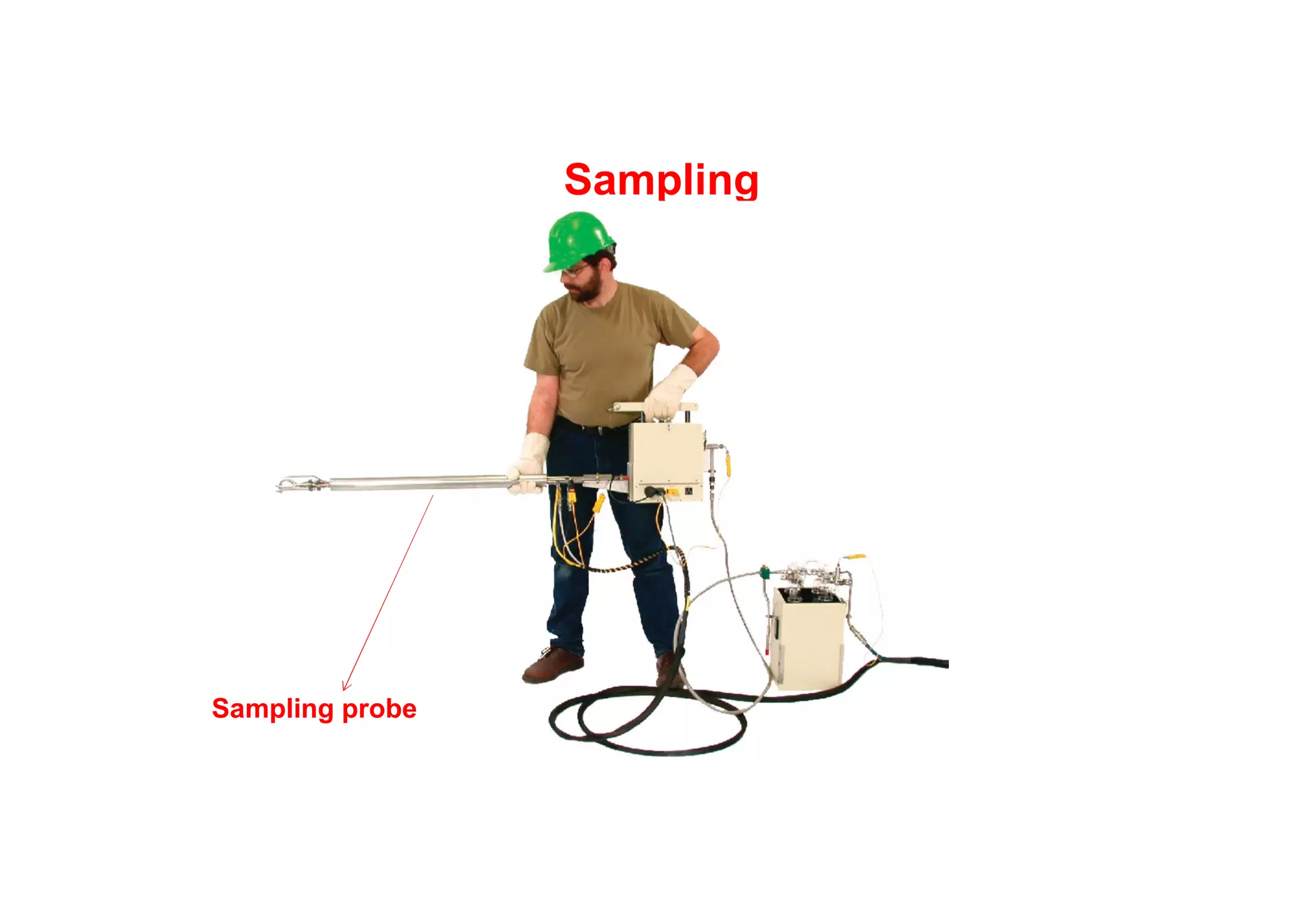
This document discusses air sampling techniques. It describes the basic considerations for air sampling such as ensuring the sample is representative and the sampling rate allows for maximum collection efficiency. It also discusses different types of air sampling setups and sample collectors that can be used depending on whether gaseous or particulate pollutants are being measured. Specific techniques covered include absorption in liquid, filtration, impingement, electrostatic precipitation, and centrifugal force. The document also classifies particulate matter by size and describes common devices for particulate collection including dust fall jars, which are suitable for larger particles settling due to gravity.