




Accounts Payable Fiscal
Year-End Close
A 10-Step Checklist
Hi, thank you for joining us! Please keep in mind:
• We want this to be an interactive webinar. Please enter
your questions in the Q&A box at any time during the
session.
• The slides, recording and checklist will be sent out after
the webinar
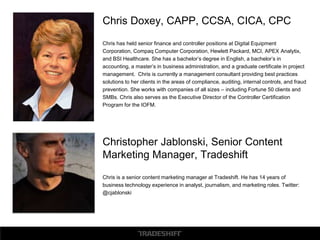
Chris Doxey, CAPP, CCSA, CICA, CPC
Chris has held senior finance and controller positions at Digital Equipment
Corporation, Compaq Computer Corporation, Hewlett Packard, MCI, APEX Analytix,
and BSI Healthcare. She has a bachelor’s degree in English, a bachelor’s in
accounting, a master’s in business administration, and a graduate certificate in project
management. Chris is currently a management consultant providing best practices
solutions to her clients in the areas of compliance, auditing, internal controls, and fraud
prevention. She works with companies of all sizes – including Fortune 50 clients and
SMBs. Chris also serves as the Executive Director of the Controller Certification
Program for the IOFM.
Christopher Jablonski, Senior Content
Marketing Manager, Tradeshift
Chris is a senior content marketing manager at Tradeshift. He has 14 years of
business technology experience in analyst, journalism, and marketing roles. Twitter:
@cjablonski
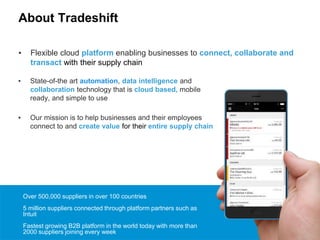
▪ Flexible cloud platform enabling businesses to connect, collaborate and
transact with their supply chain
Over 500,000 suppliers in over 100 countries
5 million suppliers connected through platform partners such as
Intuit
Fastest growing B2B platform in the world today with more than
2000 suppliers joining every week
About Tradeshift
▪ State-of-the art automation, data intelligence and
collaboration technology that is cloud based, mobile
ready, and simple to use
▪ Our mission is to help businesses and their employees
connect to and create value for their entire supply chain
Agenda
• Introduction
• Your 10-Step Checklist
1. Policies and Procedures
2. Accrued Expenses
3. Properly Recognizing Expenses
4. Roles and Responsibilities During the Fiscal Close
5. The Review Process
6. Internal Controls
7. Reconciling Accounts
8. Reporting Variances
9. Journal Entries
10. Financial Close Metrics
• Closing Thoughts and Recommendations
• Q&A
Fiscal Year-End Close Tools
Fiscal year-end close checklist
1. Financial Close Sample Schedule
2. AP Roles and Responsibilities
3. Corporate Journal Entries
4. Corporate Consolidation
5. Year-End Financial Close
Policies and Procedures
1. Policies and Procedures
Implement standard policies and procedures for:
• Accounting
• Coordination
• Communication
• Checklists
Key Point:
Communication!
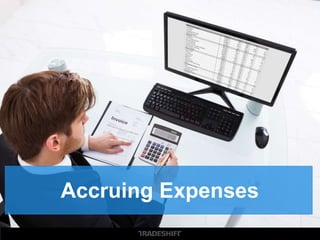
Accruing Expenses
2. Accruing Expenses
At the close of each month, quarter, and fiscal year,
accrual procedures are needed to ensure that all
expenses related to that month are properly included in
the company’s financial statements.
Key Point:
Estimate accruals where possible!
Properly Recognizing Expenses
3. Properly Recognizing Expenses
Record expenses in the period in which the goods or
services are received or used.
Record expenses as the corresponding revenues are
recorded.
Key Point:
Expenses follow the money!
Roles and Responsibilities
During the Fiscal Close
4. Roles and Responsibilities During the Fiscal
Close
Define and communicate roles and responsibilities
during each fiscal close.
Key Point:
Be aware of organizational, process,
and system changes.
The Review Process
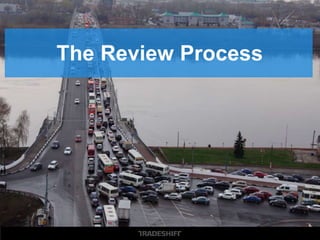
5. The Review Process
Too many levels of review during the fiscal close can
slow down the process by creating “bottlenecks.”
Internal Controls
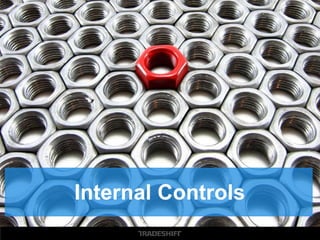
6. Internal Controls
To ensure proper valuation of the company’s balance sheet at
fiscal year end, charge invoices in the fiscal year in which the
goods are received and services are performed.
Internal controls can help validate the accuracy of general ledger
accounts by performing ratio and trend analysis of account
balances.
Key Point:
Look for Anomalies!
Reconciling Accounts
7. Reconciling Accounts
Research and explain significant balance fluctuations.
Ensure account reconciliations are appropriately
approved.
Key Point:
Don’t wait until the end of the fiscal year to
reconcile your Accounts Payable Clearing
Accounts and Debit Balances!
Reporting Variances
8. Reporting Variances
• Variances should be aged and explained.
• Develop an action plan to address all variances.
• Ensure account reconciliations are appropriately approved.
Key Point:
Don’t wait until the end of the fiscal year to
reconcile your Accounts Payable Clearing
Accounts and Debit Balances!
Journal Entries
9. Journal Entries
Make greater use of importing tools to upload
information into the accounting package.
Minimize the risk of duplicate and erroneous manual
entries.
Key Point:
Automate the journal entry process!
Financial Close Metrics
10. Financial Close Metrics
1. Gross number of adjusting entries: Correct transaction errors -
their correction delays the closing process.
2. Review errors: Use the information to track down and correct
underlying problems that can be prevented during future
closing processes.
3. Completion times and ending balances:
• Cycle time to complete final accounts payable disbursement run
• Cycle time to complete accrual process
• Ending Clearing Account Balance
• Outstanding Debit Account Balance
Closing Thoughts and Recommendations
• Coordination
• Communication
• Checklists
• Focus on the basics
• Be accountable and focus on improving the fiscal close
throughout the year!
Chris Doxey, CAPP, CCSA, CICA, CPC
Subject Matter Expert and Management Consultant
chris@chrisdoxey.com
Christopher Jablonski
Senior Content Marketing Manager, Tradeshift
cja@tradeshift.com
Questions?
Let us know!
Accounts Payable Fiscal
Year-End Close
A 10-Step Checklist
Hi, thank you for joining us! Please keep in mind:
• If we didn’t get to your question in time, we will make sure
to follow up
• The slides, recording and checklist will be sent out shortly
• For more content, check out tradeshift.com/resources
AP Fiscal Year-End Close: A 10-Step Checklist

AP Fiscal Year-End Close: A 10-Step Checklist

  • 1.
    Accounts Payable Fiscal Year-EndClose A 10-Step Checklist Hi, thank you for joining us! Please keep in mind: • We want this to be an interactive webinar. Please enter your questions in the Q&A box at any time during the session. • The slides, recording and checklist will be sent out after the webinar
  • 2.
    Chris Doxey, CAPP,CCSA, CICA, CPC Chris has held senior finance and controller positions at Digital Equipment Corporation, Compaq Computer Corporation, Hewlett Packard, MCI, APEX Analytix, and BSI Healthcare. She has a bachelor’s degree in English, a bachelor’s in accounting, a master’s in business administration, and a graduate certificate in project management. Chris is currently a management consultant providing best practices solutions to her clients in the areas of compliance, auditing, internal controls, and fraud prevention. She works with companies of all sizes – including Fortune 50 clients and SMBs. Chris also serves as the Executive Director of the Controller Certification Program for the IOFM. Christopher Jablonski, Senior Content Marketing Manager, Tradeshift Chris is a senior content marketing manager at Tradeshift. He has 14 years of business technology experience in analyst, journalism, and marketing roles. Twitter: @cjablonski
  • 3.
    ▪ Flexible cloudplatform enabling businesses to connect, collaborate and transact with their supply chain Over 500,000 suppliers in over 100 countries 5 million suppliers connected through platform partners such as Intuit Fastest growing B2B platform in the world today with more than 2000 suppliers joining every week About Tradeshift ▪ State-of-the art automation, data intelligence and collaboration technology that is cloud based, mobile ready, and simple to use ▪ Our mission is to help businesses and their employees connect to and create value for their entire supply chain
  • 4.
    Agenda • Introduction • Your10-Step Checklist 1. Policies and Procedures 2. Accrued Expenses 3. Properly Recognizing Expenses 4. Roles and Responsibilities During the Fiscal Close 5. The Review Process 6. Internal Controls 7. Reconciling Accounts 8. Reporting Variances 9. Journal Entries 10. Financial Close Metrics • Closing Thoughts and Recommendations • Q&A
  • 5.
  • 6.
    Fiscal Year-End CloseTools Fiscal year-end close checklist 1. Financial Close Sample Schedule 2. AP Roles and Responsibilities 3. Corporate Journal Entries 4. Corporate Consolidation 5. Year-End Financial Close
  • 7.
  • 8.
    1. Policies andProcedures Implement standard policies and procedures for: • Accounting • Coordination • Communication • Checklists Key Point: Communication!
  • 9.
  • 10.
    2. Accruing Expenses Atthe close of each month, quarter, and fiscal year, accrual procedures are needed to ensure that all expenses related to that month are properly included in the company’s financial statements. Key Point: Estimate accruals where possible!
  • 11.
  • 12.
    3. Properly RecognizingExpenses Record expenses in the period in which the goods or services are received or used. Record expenses as the corresponding revenues are recorded. Key Point: Expenses follow the money!
  • 13.
  • 14.
    4. Roles andResponsibilities During the Fiscal Close Define and communicate roles and responsibilities during each fiscal close. Key Point: Be aware of organizational, process, and system changes.
  • 15.
  • 16.
    5. The ReviewProcess Too many levels of review during the fiscal close can slow down the process by creating “bottlenecks.”
  • 17.
  • 18.
    6. Internal Controls Toensure proper valuation of the company’s balance sheet at fiscal year end, charge invoices in the fiscal year in which the goods are received and services are performed. Internal controls can help validate the accuracy of general ledger accounts by performing ratio and trend analysis of account balances. Key Point: Look for Anomalies!
  • 19.
  • 20.
    7. Reconciling Accounts Researchand explain significant balance fluctuations. Ensure account reconciliations are appropriately approved. Key Point: Don’t wait until the end of the fiscal year to reconcile your Accounts Payable Clearing Accounts and Debit Balances!
  • 21.
  • 22.
    8. Reporting Variances •Variances should be aged and explained. • Develop an action plan to address all variances. • Ensure account reconciliations are appropriately approved. Key Point: Don’t wait until the end of the fiscal year to reconcile your Accounts Payable Clearing Accounts and Debit Balances!
  • 23.
  • 24.
    9. Journal Entries Makegreater use of importing tools to upload information into the accounting package. Minimize the risk of duplicate and erroneous manual entries. Key Point: Automate the journal entry process!
  • 25.
  • 26.
    10. Financial CloseMetrics 1. Gross number of adjusting entries: Correct transaction errors - their correction delays the closing process. 2. Review errors: Use the information to track down and correct underlying problems that can be prevented during future closing processes. 3. Completion times and ending balances: • Cycle time to complete final accounts payable disbursement run • Cycle time to complete accrual process • Ending Clearing Account Balance • Outstanding Debit Account Balance
  • 27.
    Closing Thoughts andRecommendations • Coordination • Communication • Checklists • Focus on the basics • Be accountable and focus on improving the fiscal close throughout the year!
  • 28.
    Chris Doxey, CAPP,CCSA, CICA, CPC Subject Matter Expert and Management Consultant chris@chrisdoxey.com Christopher Jablonski Senior Content Marketing Manager, Tradeshift cja@tradeshift.com Questions? Let us know!
  • 29.
    Accounts Payable Fiscal Year-EndClose A 10-Step Checklist Hi, thank you for joining us! Please keep in mind: • If we didn’t get to your question in time, we will make sure to follow up • The slides, recording and checklist will be sent out shortly • For more content, check out tradeshift.com/resources