AP EnvironmentalScience
Quick Review
Unit 1: The Living World
Hosted byBy: Name
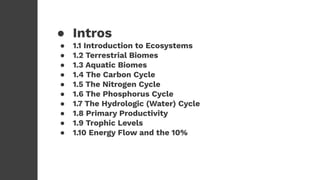
● Intros
● 1.1 Introduction to Ecosystems
● 1.2 Terrestrial Biomes
● 1.3 Aquatic Biomes
● 1.4 The Carbon Cycle
● 1.5 The Nitrogen Cycle
● 1.6 The Phosphorus Cycle
● 1.7 The Hydrologic (Water) Cycle
● 1.8 Primary Productivity
● 1.9 Trophic Levels
● 1.10 Energy Flow and the 10%
Introduction to Ecosystems
Available resources (water, nutrients, light and space) in any given area
will dictate how plants and animals complete.
● Predator- Consuming another organism
● Prey - Eaten by a predator
● Symbiosis- Long term interaction between two species
○ Mutualism: 😀-😀
○ Commensalism: 😀-😐
○ Parasitism: 😀-😟
● Competition - for space, food, water or mate.
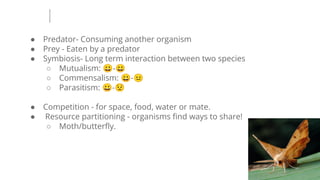
● Resource partitioning - organisms find ways to share!
○ Moth/butterfly.
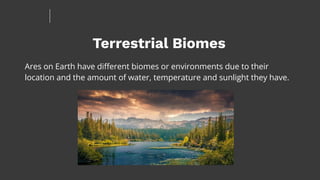
Terrestrial Biomes
Ares on Earth have different biomes or environments due to their
location and the amount of water, temperature and sunlight they have.
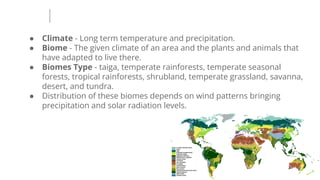
● Climate - Long term temperature and precipitation.
● Biome - The given climate of an area and the plants and animals that
have adapted to live there.
● Biomes Type - taiga, temperate rainforests, temperate seasonal
forests, tropical rainforests, shrubland, temperate grassland, savanna,
desert, and tundra.
● Distribution of these biomes depends on wind patterns bringing
precipitation and solar radiation levels.
Aquatic Biomes
Aquatic biomes are characterized by the conditions and location of water.
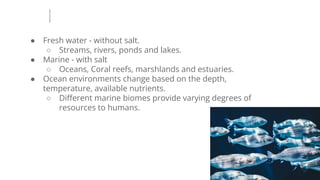
● Fresh water - without salt.
○ Streams, rivers, ponds and lakes.
● Marine - with salt
○ Oceans, Coral reefs, marshlands and estuaries.
● Ocean environments change based on the depth,
temperature, available nutrients.
○ Different marine biomes provide varying degrees of
resources to humans.
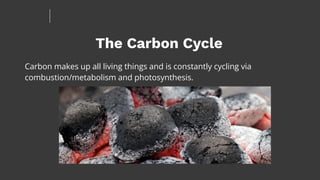
The Carbon Cycle
Carbon makes up all living things and is constantly cycling via
combustion/metabolism and photosynthesis.
● Carbon is stored in organisms beginning with the process of
photosynthesis.
● Carbon is released into air via combustion or metabolism
(cellular respiration).
● Carbon can be stored for millions of years in ‘sinks’ as dead
organisms are buried in the Earth.
○ These sinks become fossil fuels like oil, methane and coal.
○ When fossil fuels are burned the carbon is released back
into the air.
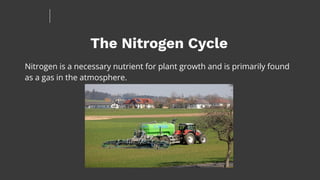
The Nitrogen Cycle
Nitrogen is a necessary nutrient for plant growth and is primarily found
as a gas in the atmosphere.
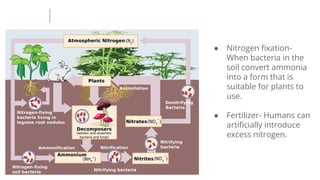
● Nitrogen fixation-
When bacteria in the
soil convert ammonia
into a form that is
suitable for plants to
use.
● Fertilizer- Humans can
artificially introduce
excess nitrogen.
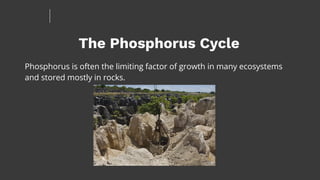
The Phosphorus Cycle
Phosphorus is often the limiting factor of growth in many ecosystems
and stored mostly in rocks.
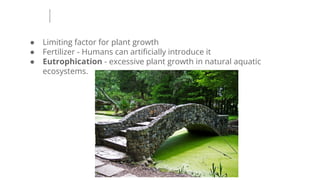
● Limiting factor for plant growth
● Fertilizer - Humans can artificially introduce it
● Eutrophication - excessive plant growth in natural aquatic
ecosystems.
The Hydrologic (Water) Cycle
Water move around Earth in solid, liquid and gas forms.
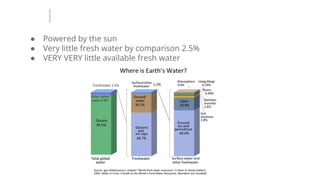
● Powered by the sun
● Very little fresh water by comparison 2.5%
● VERY VERY little available fresh water
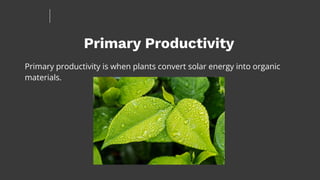
Primary Productivity
Primary productivity is when plants convert solar energy into organic
materials.
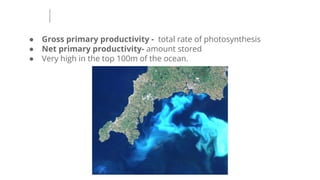
● Gross primary productivity - total rate of photosynthesis
● Net primary productivity- amount stored
● Very high in the top 100m of the ocean.
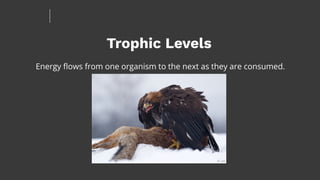
Trophic Levels
Energy flows from one organism to the next as they are consumed.
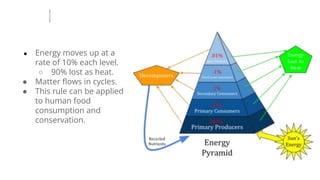
● Energy moves up at a
rate of 10% each level.
○ 90% lost as heat.
● Matter flows in cycles.
● This rule can be applied
to human food
consumption and
conservation.

AP Environmental Science Quick Review Unit 1.pdf

  • 1.
    AP EnvironmentalScience Quick Review Unit1: The Living World Hosted byBy: Name
  • 2.
    ● Intros ● 1.1Introduction to Ecosystems ● 1.2 Terrestrial Biomes ● 1.3 Aquatic Biomes ● 1.4 The Carbon Cycle ● 1.5 The Nitrogen Cycle ● 1.6 The Phosphorus Cycle ● 1.7 The Hydrologic (Water) Cycle ● 1.8 Primary Productivity ● 1.9 Trophic Levels ● 1.10 Energy Flow and the 10%
  • 3.
    Introduction to Ecosystems Availableresources (water, nutrients, light and space) in any given area will dictate how plants and animals complete.
  • 4.
    ● Predator- Consuminganother organism ● Prey - Eaten by a predator ● Symbiosis- Long term interaction between two species ○ Mutualism: 😀-😀 ○ Commensalism: 😀-😐 ○ Parasitism: 😀-😟 ● Competition - for space, food, water or mate. ● Resource partitioning - organisms find ways to share! ○ Moth/butterfly.
  • 5.
    Terrestrial Biomes Ares onEarth have different biomes or environments due to their location and the amount of water, temperature and sunlight they have.
  • 6.
    ● Climate -Long term temperature and precipitation. ● Biome - The given climate of an area and the plants and animals that have adapted to live there. ● Biomes Type - taiga, temperate rainforests, temperate seasonal forests, tropical rainforests, shrubland, temperate grassland, savanna, desert, and tundra. ● Distribution of these biomes depends on wind patterns bringing precipitation and solar radiation levels.
  • 7.
    Aquatic Biomes Aquatic biomesare characterized by the conditions and location of water.
  • 8.
    ● Fresh water- without salt. ○ Streams, rivers, ponds and lakes. ● Marine - with salt ○ Oceans, Coral reefs, marshlands and estuaries. ● Ocean environments change based on the depth, temperature, available nutrients. ○ Different marine biomes provide varying degrees of resources to humans.
  • 9.
    The Carbon Cycle Carbonmakes up all living things and is constantly cycling via combustion/metabolism and photosynthesis.
  • 10.
    ● Carbon isstored in organisms beginning with the process of photosynthesis. ● Carbon is released into air via combustion or metabolism (cellular respiration). ● Carbon can be stored for millions of years in ‘sinks’ as dead organisms are buried in the Earth. ○ These sinks become fossil fuels like oil, methane and coal. ○ When fossil fuels are burned the carbon is released back into the air.
  • 11.
    The Nitrogen Cycle Nitrogenis a necessary nutrient for plant growth and is primarily found as a gas in the atmosphere.
  • 12.
    ● Nitrogen fixation- Whenbacteria in the soil convert ammonia into a form that is suitable for plants to use. ● Fertilizer- Humans can artificially introduce excess nitrogen.
  • 13.
    The Phosphorus Cycle Phosphorusis often the limiting factor of growth in many ecosystems and stored mostly in rocks.
  • 14.
    ● Limiting factorfor plant growth ● Fertilizer - Humans can artificially introduce it ● Eutrophication - excessive plant growth in natural aquatic ecosystems.
  • 15.
    The Hydrologic (Water)Cycle Water move around Earth in solid, liquid and gas forms.
  • 16.
    ● Powered bythe sun ● Very little fresh water by comparison 2.5% ● VERY VERY little available fresh water
  • 17.
    Primary Productivity Primary productivityis when plants convert solar energy into organic materials.
  • 18.
    ● Gross primaryproductivity - total rate of photosynthesis ● Net primary productivity- amount stored ● Very high in the top 100m of the ocean.
  • 19.
    Trophic Levels Energy flowsfrom one organism to the next as they are consumed.
  • 20.
    ● Energy movesup at a rate of 10% each level. ○ 90% lost as heat. ● Matter flows in cycles. ● This rule can be applied to human food consumption and conservation.