“Weird Science”
Genetic Engineering, cloning, and stem cells
Genetic Engineering
• Genetic engineering is the manipulation
(changing or altering) of DNA of one cell or
organism by inserting desired genes for a
particular outcome.
• There are many uses for genetic
engineering, including for therapeutic
reasons, reproductive cloning, creating
recombinant DNA – used to make insulin
and HGH, as well as DNA analysis in
crime labs (called DNA fingerprinting).
Types of cloning
• DNA cloning
• Reproductive
cloning
• Therapeutic
cloning
DNA Cloning
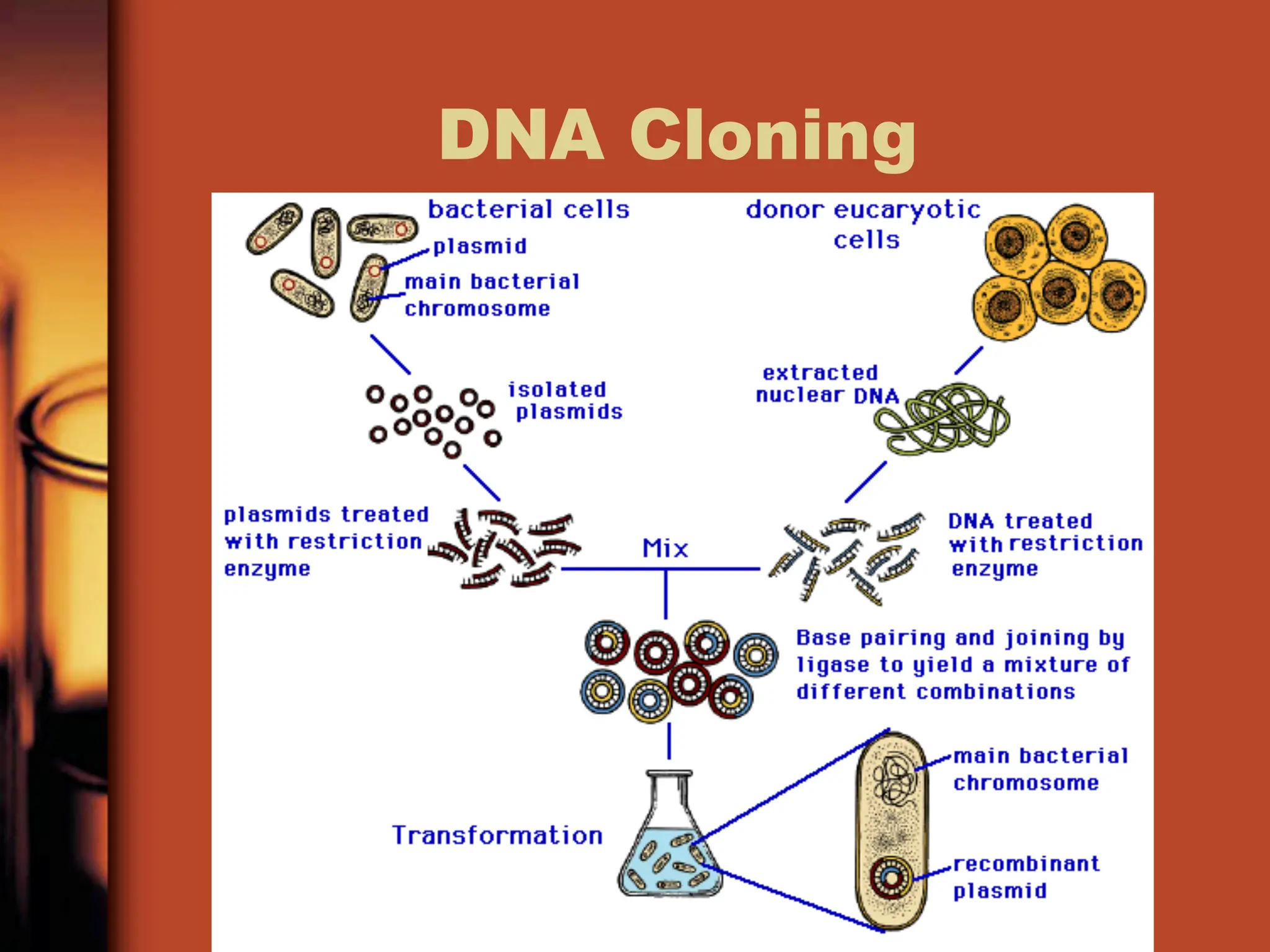
• Usually involves bacterial cells because
of special circular DNA they posses,
called plasmids
• Scientists insert the gene from human
(desired gene) and mix with bacterial
plasmids.
• With new gene, bacteria cells can now
produce substance that gene can make.
• Allow bacteria to reproduce many times
(they reproduce asexually = cloning)
DNA Cloning
Reproductive Cloning
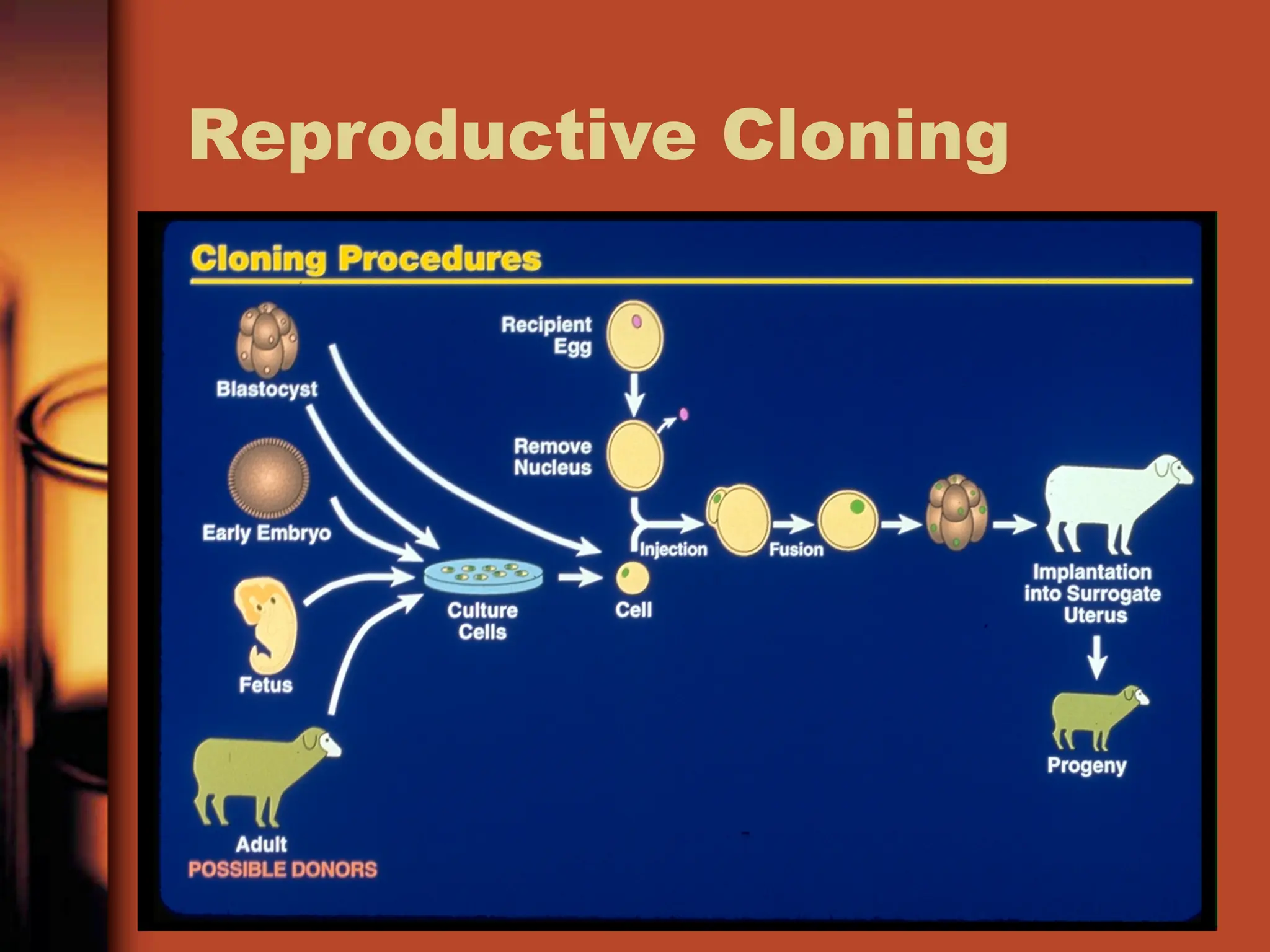
• Remove the nucleus from adult egg
cell
• Transfer DNA from somatic (non
gamete) cell into egg
• Stimulate division (usually with
electricity)
• Transfer to uterus and allow to grow
Reproductive Cloning
Therapeutic cloning
• Collect stem cells and allow them to
reproduce (usually from embryos
after a few days of division)
• When these stem cells are injected
into areas that need healing, they
can grow into new tissue/cells
• This technology could be used to
grow replacement parts and organs
Therapeutic cloning
Therapeutic cloning
What are stem cells?
• Stem cells are undifferentiated (not-
specialized) cells
• When appropriate, they can become
specialized into many different types
of cells (muscle, skin, bone, nervous,
etc.)
• They can divide without specializing
– unique and helpful for lab growth
Types of stem cells
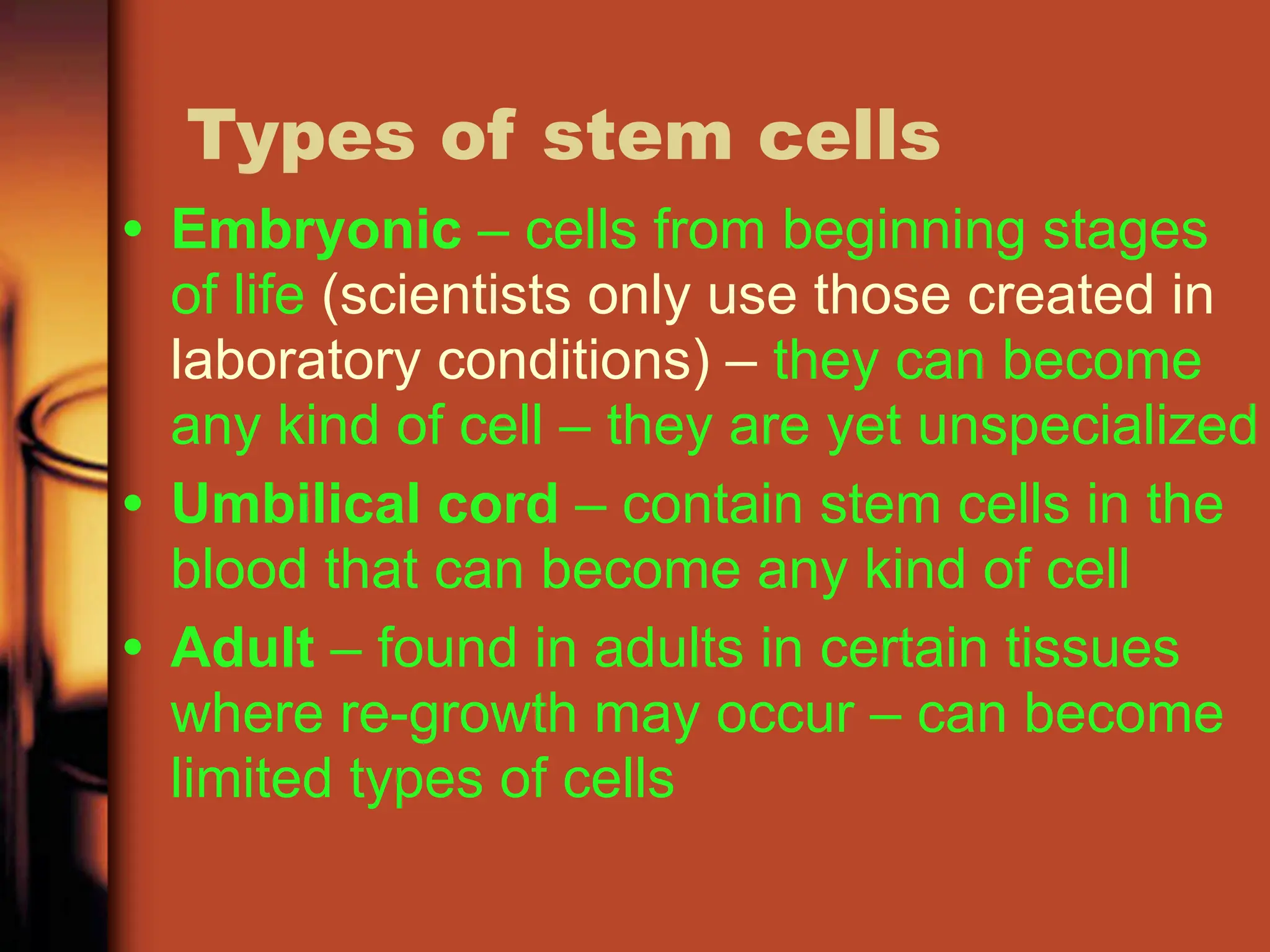
• Embryonic – cells from beginning stages
of life (scientists only use those created in
laboratory conditions) – they can become
any kind of cell – they are yet unspecialized
• Umbilical cord – contain stem cells in the
blood that can become any kind of cell
• Adult – found in adults in certain tissues
where re-growth may occur – can become
limited types of cells
Abilities of stem cells
• Totipotent – cells that can become any
cell – even a new embryo – from newly
fertilized egg
• Pluripotent – cells that can become
almost any cells (all types except new
embryo)
• Multipotent – cells that can become many
different types of cells – come from adult
stem cells
Types of Stem cells
Where do those embryonic stem cells
come from?
What can those stem cells do?
Important to note:
• Embryonic stem cells cannot make a
new organism unless they are
combined with “normal” embryonic
cells
• Stem cells are not embryos!
How can this technology be
helpful to people?
Induced Pluripotent Stem Cells (iPSC)
• In 2007, human somatic cells were transformed
into iPSC’s for the first time.
• iPSC’s might have huge potential for the future b/
c they would be genetically identical to the patient
and could be used to cure diseases/solve
problems for donor.
• Problems that exist now include “turning on” the
correct genes to make the cells become what
scientists want and preventing them from
becoming cancerous.
How can these different technologies
be beneficial to people?
• Can make organs that won’t have
immune response incompatibilities for
transplants
• Can treat diseases such as Parkinson's
and Alzheimer's diseases, spinal cord
injury, strokes, burns, heart disease,
diabetes, osteoarthritis and rheumatoid
arthritis.
Science problems that must be
overcome:
• How to make cells become
specialized in the way scientists want
them to (make stem cells become
brain cells, for instance)
• How to make an organ – make cells
in laboratory conditions combine and
create an organ that could be
transplanted into a health patient
Other bioengineering techniques: PCR
• Great way to use small sample of
DNA collected and amplify it enough
that it can be tested further as
needed
Other DNA technology: PCR
Gene Therapy
• The most common form of gene therapy involves
using DNA that encodes a functional, therapeutic gene
in order to replace a mutated gene.
• Other forms involve directly correcting a mutation, or
using DNA that encodes a therapeutic protein drug
(rather than a natural human gene) to provide
treatment.
• In gene therapy, DNA that encodes a therapeutic
protein is packaged within a "vector", which is used to
get the DNA inside cells within the body.
• Once inside, the DNA becomes expressed by the cell
machinery, resulting in the production of therapeutic
protein, which in turn treats the patient's disease.
Gene
therapy
RFLP’s
• RFLP analysis, the DNA sample is
broken into pieces (digested)
by restriction enzymes and the
resulting restriction fragments are
separated according to their lengths
by gel electrophoresis.
• Today there are improved techniques that
work even better/quicker.
Restriction fragment analysis
DNA fingerprints from a murder case
HS Biology - Biotechnology (gen. engineering, cloning, stem cells)

HS Biology - Biotechnology (gen. engineering, cloning, stem cells)

  • 1.
  • 2.
    Genetic Engineering • Geneticengineering is the manipulation (changing or altering) of DNA of one cell or organism by inserting desired genes for a particular outcome. • There are many uses for genetic engineering, including for therapeutic reasons, reproductive cloning, creating recombinant DNA – used to make insulin and HGH, as well as DNA analysis in crime labs (called DNA fingerprinting).
  • 3.
    Types of cloning •DNA cloning • Reproductive cloning • Therapeutic cloning
  • 4.
    DNA Cloning • Usuallyinvolves bacterial cells because of special circular DNA they posses, called plasmids • Scientists insert the gene from human (desired gene) and mix with bacterial plasmids. • With new gene, bacteria cells can now produce substance that gene can make. • Allow bacteria to reproduce many times (they reproduce asexually = cloning)
  • 5.
  • 7.
    Reproductive Cloning • Removethe nucleus from adult egg cell • Transfer DNA from somatic (non gamete) cell into egg • Stimulate division (usually with electricity) • Transfer to uterus and allow to grow
  • 8.
  • 9.
    Therapeutic cloning • Collectstem cells and allow them to reproduce (usually from embryos after a few days of division) • When these stem cells are injected into areas that need healing, they can grow into new tissue/cells • This technology could be used to grow replacement parts and organs
  • 10.
  • 11.
  • 12.
    What are stemcells? • Stem cells are undifferentiated (not- specialized) cells • When appropriate, they can become specialized into many different types of cells (muscle, skin, bone, nervous, etc.) • They can divide without specializing – unique and helpful for lab growth
  • 13.
    Types of stemcells • Embryonic – cells from beginning stages of life (scientists only use those created in laboratory conditions) – they can become any kind of cell – they are yet unspecialized • Umbilical cord – contain stem cells in the blood that can become any kind of cell • Adult – found in adults in certain tissues where re-growth may occur – can become limited types of cells
  • 14.
    Abilities of stemcells • Totipotent – cells that can become any cell – even a new embryo – from newly fertilized egg • Pluripotent – cells that can become almost any cells (all types except new embryo) • Multipotent – cells that can become many different types of cells – come from adult stem cells
  • 15.
  • 16.
    Where do thoseembryonic stem cells come from?
  • 17.
    What can thosestem cells do?
  • 18.
    Important to note: •Embryonic stem cells cannot make a new organism unless they are combined with “normal” embryonic cells • Stem cells are not embryos!
  • 19.
    How can thistechnology be helpful to people?
  • 20.
    Induced Pluripotent StemCells (iPSC) • In 2007, human somatic cells were transformed into iPSC’s for the first time. • iPSC’s might have huge potential for the future b/ c they would be genetically identical to the patient and could be used to cure diseases/solve problems for donor. • Problems that exist now include “turning on” the correct genes to make the cells become what scientists want and preventing them from becoming cancerous.
  • 22.
    How can thesedifferent technologies be beneficial to people? • Can make organs that won’t have immune response incompatibilities for transplants • Can treat diseases such as Parkinson's and Alzheimer's diseases, spinal cord injury, strokes, burns, heart disease, diabetes, osteoarthritis and rheumatoid arthritis.
  • 23.
    Science problems thatmust be overcome: • How to make cells become specialized in the way scientists want them to (make stem cells become brain cells, for instance) • How to make an organ – make cells in laboratory conditions combine and create an organ that could be transplanted into a health patient
  • 24.
    Other bioengineering techniques:PCR • Great way to use small sample of DNA collected and amplify it enough that it can be tested further as needed
  • 25.
  • 26.
    Gene Therapy • Themost common form of gene therapy involves using DNA that encodes a functional, therapeutic gene in order to replace a mutated gene. • Other forms involve directly correcting a mutation, or using DNA that encodes a therapeutic protein drug (rather than a natural human gene) to provide treatment. • In gene therapy, DNA that encodes a therapeutic protein is packaged within a "vector", which is used to get the DNA inside cells within the body. • Once inside, the DNA becomes expressed by the cell machinery, resulting in the production of therapeutic protein, which in turn treats the patient's disease.
  • 27.
  • 28.
    RFLP’s • RFLP analysis,the DNA sample is broken into pieces (digested) by restriction enzymes and the resulting restriction fragments are separated according to their lengths by gel electrophoresis. • Today there are improved techniques that work even better/quicker.
  • 29.
  • 30.
    DNA fingerprints froma murder case