Ecology and conservation
1. Fundamental Ecology
2. Vegetation Ecology
3. Restoration Ecology
4. Conservation of Ecosystem
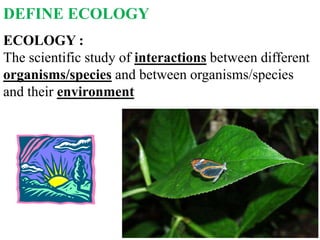
ECOLOGY :
The scientific study of interactions between different
organisms/species and between organisms/species
and their environment
DEFINE ECOLOGY
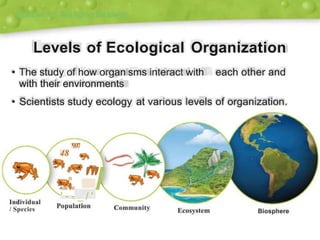
Levels of Ecological Organization
• The study of how organisms interact with
with their environments
each other and
• Scientists study ecology at various levels of organization.
'997
48
..·."'I
?
' - - _ / '
Individual
/ Species Population Community Ecosystem Biosphere
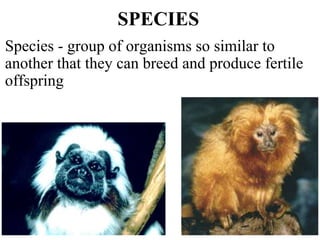
SPECIES
Species - group of organisms so similar to
another that they can breed and produce fertile
offspring
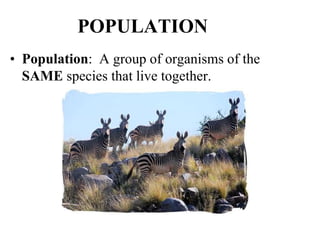
POPULATION
• Population: A group of organisms of the
SAME species that live together.
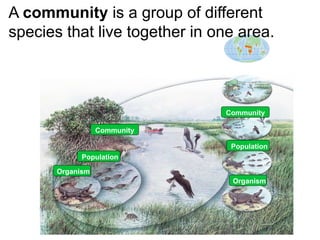
Organism
Organism
Population
Population
Community
Community
A community is a group of different
species that live together in one area.
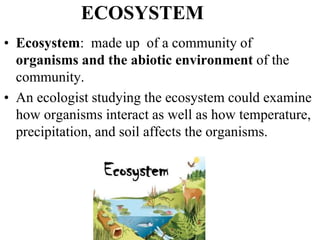
ECOSYSTEM
• Ecosystem: made up of a community of
organisms and the abiotic environment of the
community.
• An ecologist studying the ecosystem could examine
how organisms interact as well as how temperature,
precipitation, and soil affects the organisms.
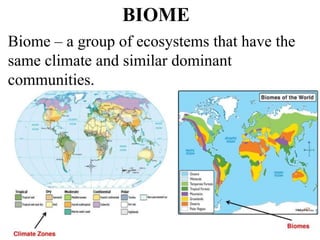
Biome – a group of ecosystems that have the
same climate and similar dominant
communities.
BIOME
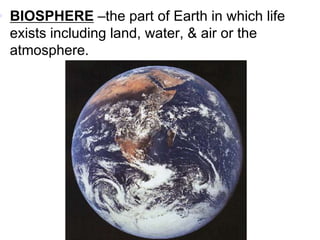
• BIOSPHERE –the part of Earth in which life
exists including land, water, & air or the
atmosphere.
WHAT IS ECOLOGY?
• Root word eco- derived from Latin oeco-
meaning home. In this case, the Earth is our
home.
• Ecology is the study of how living organisms
interact with each other and with their
environment.
• Ecology studies the interactions between biotic
(living) factors and abiotic (nonliving) factors.
BIOTIC FACTORS
• All the living things or their
materials that directly or
indirectly affect an organism in its
environment (bio = life)
• Biotic Factors include:
Organisms
Their parts
Their wastes
Their presence
Their
interactions
ABIOTIC FACTORS
• All the non-living physical and
chemical factors which affect the
ability of organisms to survive and
reproduce (a in abiotic = not, non)
• Abiotic Factors include:
Temperature
Sunlight
Air
Water
Wind
Soil
Living Things Need Energy
 All living things need energy to survive.
 Organisms can be divided into 3 groups
based on how they obtain energy:
1. Producers – organisms that use sunlight
directly to make food
2. Consumers – organisms that eat
producers or other organisms
3. Decomposers – organisms that get
energy by breaking down dead or
decaying organisms
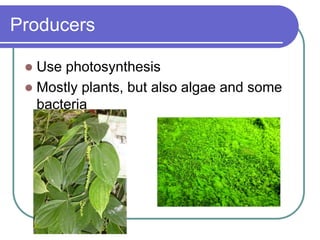
Producers
 Use photosynthesis
 Mostly plants, but also algae and some
bacteria
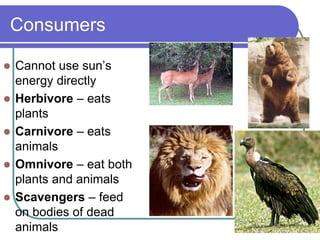
Consumers
 Cannot use sun’s
energy directly
 Herbivore – eats
plants
 Carnivore – eats
animals
 Omnivore – eat both
plants and animals
 Scavengers – feed
on bodies of dead
animals
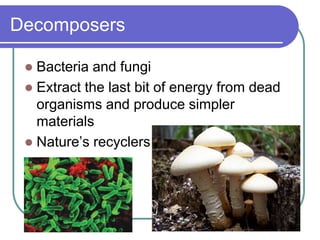
Decomposers
 Bacteria and fungi
 Extract the last bit of energy from dead
organisms and produce simpler
materials
 Nature’s recyclers
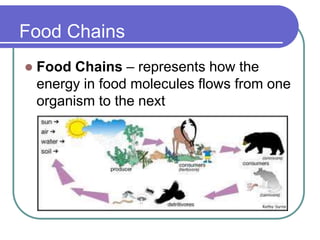
Food Chains
 Food Chains – represents how the
energy in food molecules flows from one
organism to the next
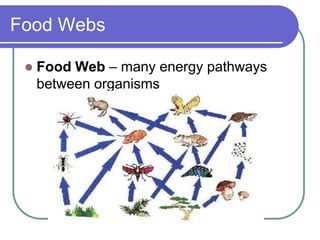
Food Webs
 Food Web – many energy pathways
between organisms
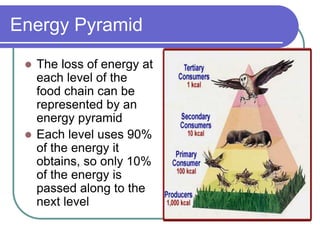
Energy Pyramid
 The loss of energy at
each level of the
food chain can be
represented by an
energy pyramid
 Each level uses 90%
of the energy it
obtains, so only 10%
of the energy is
passed along to the
next level
Habitat and Niche
 Habitat – the environment in which an
organism lives
 Niche – an organism’s way of life within
an ecosystem
 Includes its habitat, food, predators,
organisms with which it competes, how the
organism affects and is affected by abiotic
factors in its environment
Interactions with the
Environment
 An organism interacts with biotic or abiotic
factors in its environment that can control
the size of its population
 Limiting Factors – factors that influence
how large a population can grow to
 Ex: food, water, living space, other natural
resources
 Carrying Capacity – the largest population
that a given environment can support over
a long period of time
Interactions Among Organisms
 4 main ways that species and individuals
affect each other:
1. Competition
2. Predators and Prey
3. Symbiotic relationships
4. Coevolution
Competition
 When 2 or more individuals or
populations try to use the same limited
resource (ex: food, water, shelter, space,
sunlight, etc.)
 Can occur among individuals within a
population
 Can occur between populations of
different species
Predators and Prey
 Prey – organism that is
eaten
 Predator – organism
that eats the prey
 Predator Adaptations –
Canines
Claws
Camouflage
Speed
 Prey Adaptations –
Chemical combat
Camouflage
Speed
Trickery: false features
and mimicry
Symbiosis
 Close, long-term association between
two or more species
 3 Main Groups
1. Mutualism
2. Commensalism
3. Parasitism
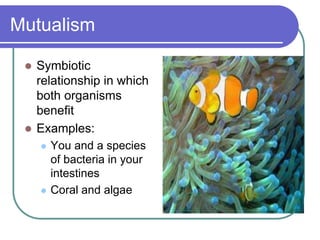
Mutualism
 Symbiotic
relationship in which
both organisms
benefit
 Examples:
 You and a species
of bacteria in your
intestines
 Coral and algae
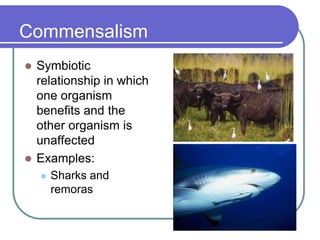
Commensalism
 Symbiotic
relationship in which
one organism
benefits and the
other organism is
unaffected
 Examples:
 Sharks and
remoras
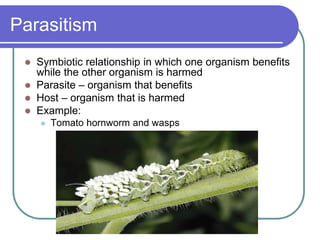
Parasitism
 Symbiotic relationship in which one organism benefits
while the other organism is harmed
 Parasite – organism that benefits
 Host – organism that is harmed
 Example:
 Tomato hornworm and wasps
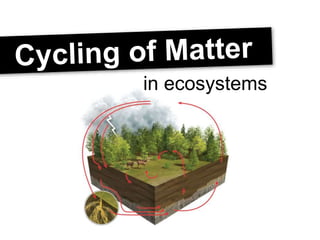
in ecosystems
Recall: The particles that make up matter
cannot be created or destroyed.
This means that all water and nutrients
must be produced or obtained from
chemicals that already exist in the
environment.
This happens in a series of cycles in
which chemicals are continuously
consumed, rearranged, stored and used.
Because these cycles involve living (bio)
organisms and occur on Earth (geo), they
are called biogeochemical cycles.
Every particle in every organism is part
of a biogeochemical cycle!
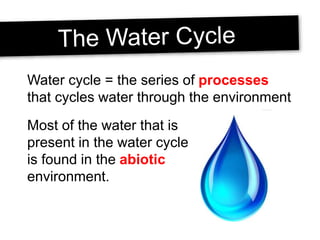
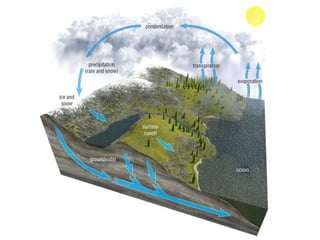
Water cycle = the series of processes
that cycles water through the environment
Most of the water that is
present in the water cycle
is found in the abiotic
environment.
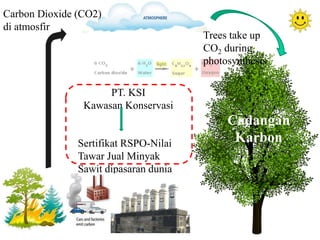
Carbon moves between the abiotic and
biotic parts of an ecosystem in the
carbon cycle.
Most of this exchange occurs between
carbon dioxide (either in the atmosphere
or dissolved in water) and
photosynthesizing plants
and micro organisms.
Carbon Dioxide (CO2)
di atmosfir
Cadangan
Karbon
Trees take up
CO2 during
photosynthesis
PT. KSI
Kawasan Konservasi
Sertifikat RSPO-Nilai
Tawar Jual Minyak
Sawit dipasaran dunia
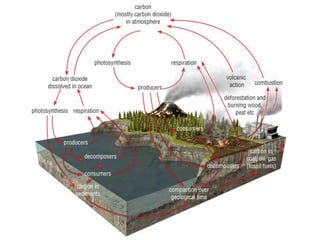
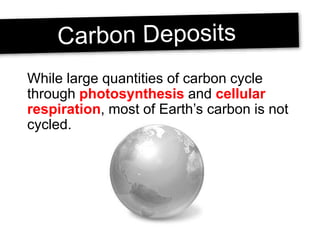
While large quantities of carbon cycle
through photosynthesis and cellular
respiration, most of Earth’s carbon is not
cycled.
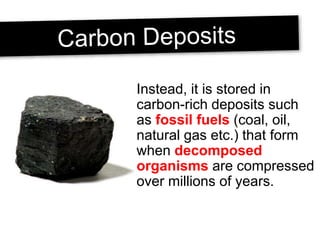
Instead, it is stored in
carbon-rich deposits such
as fossil fuels (coal, oil,
natural gas etc.) that form
when decomposed
organisms are compressed
over millions of years.
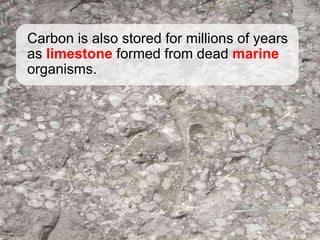
Carbon is also stored for millions of years
as limestone formed from dead marine
organisms.
Large quantities of carbon are also contained
in plant tissue and as dissolved carbon
dioxide in the world’s oceans.
These locations are
referred to as carbon
sinks because carbon
can enter or leave them
over relatively short
periods of time.
Human activities have a dramatic impact on
the carbon cycle.
By burning fossil fuels, humans release the
stored carbon into the atmosphere, which is
contributing to global climate change.
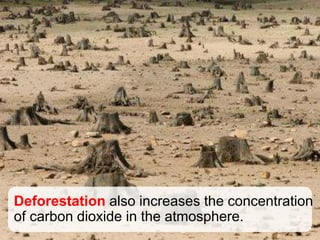
Deforestation also increases the concentration
of carbon dioxide in the atmosphere.
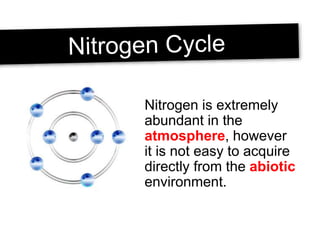
Nitrogen is extremely
abundant in the
atmosphere, however
it is not easy to acquire
directly from the abiotic
environment.
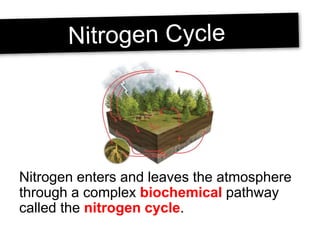
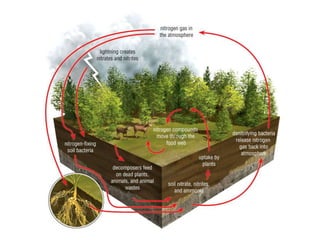
Nitrogen enters and leaves the atmosphere
through a complex biochemical pathway
called the nitrogen cycle.
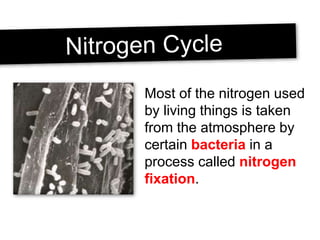
Most of the nitrogen used
by living things is taken
from the atmosphere by
certain bacteria in a
process called nitrogen
fixation.
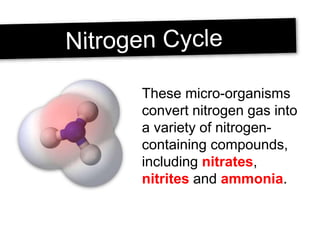
These micro-organisms
convert nitrogen gas into
a variety of nitrogen-
containing compounds,
including nitrates,
nitrites and ammonia.
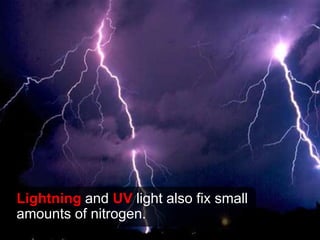
Lightning and UV light also fix small
amounts of nitrogen.
In addition, humans add nitrogen to the
soil as fertilizer.
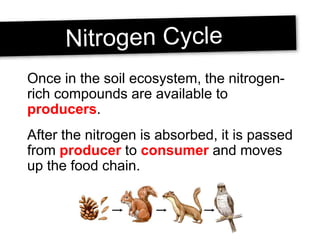
Once in the soil ecosystem, the nitrogen-
rich compounds are available to
producers.
After the nitrogen is absorbed, it is passed
from producer to consumer and moves
up the food chain.
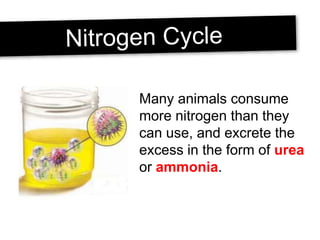
Many animals consume
more nitrogen than they
can use, and excrete the
excess in the form of urea
or ammonia.
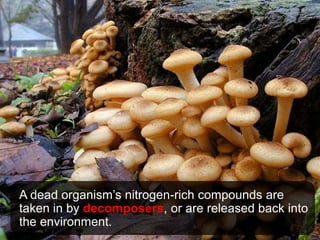
A dead organism’s nitrogen-rich compounds are
taken in by decomposers, or are released back into
the environment.
These compounds are either recycled
again by soil micro-organisms, or they are
converted by denitrifying bacteria back
into nitrogen gas which then re-enters
the atmosphere.
Ecology-INTRODUCTION.ppt

Ecology-INTRODUCTION.ppt

  • 1.
    Ecology and conservation 1.Fundamental Ecology 2. Vegetation Ecology 3. Restoration Ecology 4. Conservation of Ecosystem
  • 2.
    ECOLOGY : The scientificstudy of interactions between different organisms/species and between organisms/species and their environment DEFINE ECOLOGY
  • 3.
    Levels of EcologicalOrganization • The study of how organisms interact with with their environments each other and • Scientists study ecology at various levels of organization. '997 48 ..·."'I ? ' - - _ / ' Individual / Species Population Community Ecosystem Biosphere
  • 4.
    SPECIES Species - groupof organisms so similar to another that they can breed and produce fertile offspring
  • 5.
    POPULATION • Population: Agroup of organisms of the SAME species that live together.
  • 6.
    Organism Organism Population Population Community Community A community isa group of different species that live together in one area.
  • 7.
    ECOSYSTEM • Ecosystem: madeup of a community of organisms and the abiotic environment of the community. • An ecologist studying the ecosystem could examine how organisms interact as well as how temperature, precipitation, and soil affects the organisms.
  • 8.
    Biome – agroup of ecosystems that have the same climate and similar dominant communities. BIOME
  • 9.
    • BIOSPHERE –thepart of Earth in which life exists including land, water, & air or the atmosphere.
  • 10.
    WHAT IS ECOLOGY? •Root word eco- derived from Latin oeco- meaning home. In this case, the Earth is our home. • Ecology is the study of how living organisms interact with each other and with their environment. • Ecology studies the interactions between biotic (living) factors and abiotic (nonliving) factors.
  • 11.
    BIOTIC FACTORS • Allthe living things or their materials that directly or indirectly affect an organism in its environment (bio = life) • Biotic Factors include: Organisms Their parts Their wastes Their presence Their interactions
  • 12.
    ABIOTIC FACTORS • Allthe non-living physical and chemical factors which affect the ability of organisms to survive and reproduce (a in abiotic = not, non) • Abiotic Factors include: Temperature Sunlight Air Water Wind Soil
  • 13.
    Living Things NeedEnergy  All living things need energy to survive.  Organisms can be divided into 3 groups based on how they obtain energy: 1. Producers – organisms that use sunlight directly to make food 2. Consumers – organisms that eat producers or other organisms 3. Decomposers – organisms that get energy by breaking down dead or decaying organisms
  • 14.
    Producers  Use photosynthesis Mostly plants, but also algae and some bacteria
  • 15.
    Consumers  Cannot usesun’s energy directly  Herbivore – eats plants  Carnivore – eats animals  Omnivore – eat both plants and animals  Scavengers – feed on bodies of dead animals
  • 16.
    Decomposers  Bacteria andfungi  Extract the last bit of energy from dead organisms and produce simpler materials  Nature’s recyclers
  • 17.
    Food Chains  FoodChains – represents how the energy in food molecules flows from one organism to the next
  • 18.
    Food Webs  FoodWeb – many energy pathways between organisms
  • 19.
    Energy Pyramid  Theloss of energy at each level of the food chain can be represented by an energy pyramid  Each level uses 90% of the energy it obtains, so only 10% of the energy is passed along to the next level
  • 20.
    Habitat and Niche Habitat – the environment in which an organism lives  Niche – an organism’s way of life within an ecosystem  Includes its habitat, food, predators, organisms with which it competes, how the organism affects and is affected by abiotic factors in its environment
  • 21.
    Interactions with the Environment An organism interacts with biotic or abiotic factors in its environment that can control the size of its population  Limiting Factors – factors that influence how large a population can grow to  Ex: food, water, living space, other natural resources  Carrying Capacity – the largest population that a given environment can support over a long period of time
  • 22.
    Interactions Among Organisms 4 main ways that species and individuals affect each other: 1. Competition 2. Predators and Prey 3. Symbiotic relationships 4. Coevolution
  • 23.
    Competition  When 2or more individuals or populations try to use the same limited resource (ex: food, water, shelter, space, sunlight, etc.)  Can occur among individuals within a population  Can occur between populations of different species
  • 24.
    Predators and Prey Prey – organism that is eaten  Predator – organism that eats the prey  Predator Adaptations – Canines Claws Camouflage Speed  Prey Adaptations – Chemical combat Camouflage Speed Trickery: false features and mimicry
  • 25.
    Symbiosis  Close, long-termassociation between two or more species  3 Main Groups 1. Mutualism 2. Commensalism 3. Parasitism
  • 26.
    Mutualism  Symbiotic relationship inwhich both organisms benefit  Examples:  You and a species of bacteria in your intestines  Coral and algae
  • 27.
    Commensalism  Symbiotic relationship inwhich one organism benefits and the other organism is unaffected  Examples:  Sharks and remoras
  • 28.
    Parasitism  Symbiotic relationshipin which one organism benefits while the other organism is harmed  Parasite – organism that benefits  Host – organism that is harmed  Example:  Tomato hornworm and wasps
  • 29.
  • 30.
    Recall: The particlesthat make up matter cannot be created or destroyed. This means that all water and nutrients must be produced or obtained from chemicals that already exist in the environment.
  • 31.
    This happens ina series of cycles in which chemicals are continuously consumed, rearranged, stored and used. Because these cycles involve living (bio) organisms and occur on Earth (geo), they are called biogeochemical cycles.
  • 32.
    Every particle inevery organism is part of a biogeochemical cycle!
  • 33.
    Water cycle =the series of processes that cycles water through the environment Most of the water that is present in the water cycle is found in the abiotic environment.
  • 35.
    Carbon moves betweenthe abiotic and biotic parts of an ecosystem in the carbon cycle. Most of this exchange occurs between carbon dioxide (either in the atmosphere or dissolved in water) and photosynthesizing plants and micro organisms.
  • 37.
    Carbon Dioxide (CO2) diatmosfir Cadangan Karbon Trees take up CO2 during photosynthesis PT. KSI Kawasan Konservasi Sertifikat RSPO-Nilai Tawar Jual Minyak Sawit dipasaran dunia
  • 38.
    While large quantitiesof carbon cycle through photosynthesis and cellular respiration, most of Earth’s carbon is not cycled.
  • 39.
    Instead, it isstored in carbon-rich deposits such as fossil fuels (coal, oil, natural gas etc.) that form when decomposed organisms are compressed over millions of years.
  • 40.
    Carbon is alsostored for millions of years as limestone formed from dead marine organisms.
  • 41.
    Large quantities ofcarbon are also contained in plant tissue and as dissolved carbon dioxide in the world’s oceans.
  • 42.
    These locations are referredto as carbon sinks because carbon can enter or leave them over relatively short periods of time.
  • 43.
    Human activities havea dramatic impact on the carbon cycle. By burning fossil fuels, humans release the stored carbon into the atmosphere, which is contributing to global climate change.
  • 44.
    Deforestation also increasesthe concentration of carbon dioxide in the atmosphere.
  • 45.
    Nitrogen is extremely abundantin the atmosphere, however it is not easy to acquire directly from the abiotic environment.
  • 46.
    Nitrogen enters andleaves the atmosphere through a complex biochemical pathway called the nitrogen cycle.
  • 47.
    Most of thenitrogen used by living things is taken from the atmosphere by certain bacteria in a process called nitrogen fixation.
  • 48.
    These micro-organisms convert nitrogengas into a variety of nitrogen- containing compounds, including nitrates, nitrites and ammonia.
  • 49.
    Lightning and UVlight also fix small amounts of nitrogen.
  • 50.
    In addition, humansadd nitrogen to the soil as fertilizer.
  • 51.
    Once in thesoil ecosystem, the nitrogen- rich compounds are available to producers. After the nitrogen is absorbed, it is passed from producer to consumer and moves up the food chain.
  • 52.
    Many animals consume morenitrogen than they can use, and excrete the excess in the form of urea or ammonia.
  • 53.
    A dead organism’snitrogen-rich compounds are taken in by decomposers, or are released back into the environment.
  • 54.
    These compounds areeither recycled again by soil micro-organisms, or they are converted by denitrifying bacteria back into nitrogen gas which then re-enters the atmosphere.