AnyID
AnyID : Security Point of View
Narudom Roongsiriwong, CISSPNarudom Roongsiriwong, CISSP
AnyID
WhoAmIWhoAmI
 Lazy Blogger
– Japan, Security, FOSS, Politics, Christian
– http://narudomr.blogspot.com
 Food Lover
– Steak, Yakiniku, BBQ
– Sushi (especially Otoro)
– All Kinds of Noodle (Spaghetti, Ramen, Kanomjean)
 Head of IT Security, Kiatnakin Bank PLC (KKP)
 Working Team for Adviser to the Finance
Ministry's National e-Payment project
AnyID
DisclaimerDisclaimer
 This presentation primarily expresses from
Ministry of Finance requirement.
 Final project may be different from this
presentation.
 Words in this presentation are simplified for non-
financial audience.
 Whenever you see a phrase like {this} between
curly bracket, it means my opinion.
AnyID
National E-Payment InitiativeNational E-Payment Initiative
5 Strategic Projects5 Strategic Projects
 Payment Infrastructure “AnyID”
 Expansion of Card Acceptance (via EDC)
 Electronics Taxation Document
 Government e-Payment
 Public Education and Awareness on Electronics
Transactions
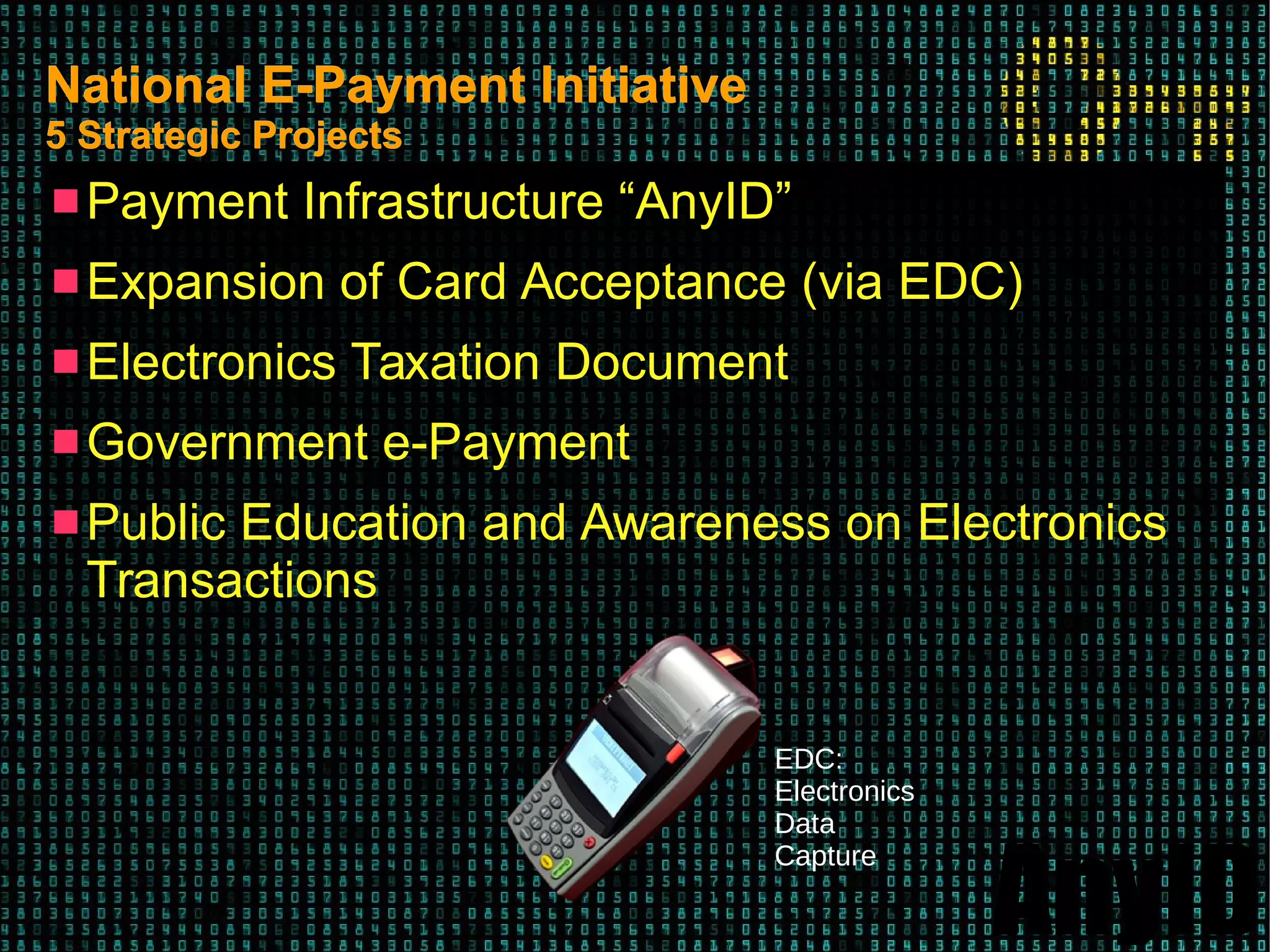
EDC:
Electronics
Data
Capture
AnyID
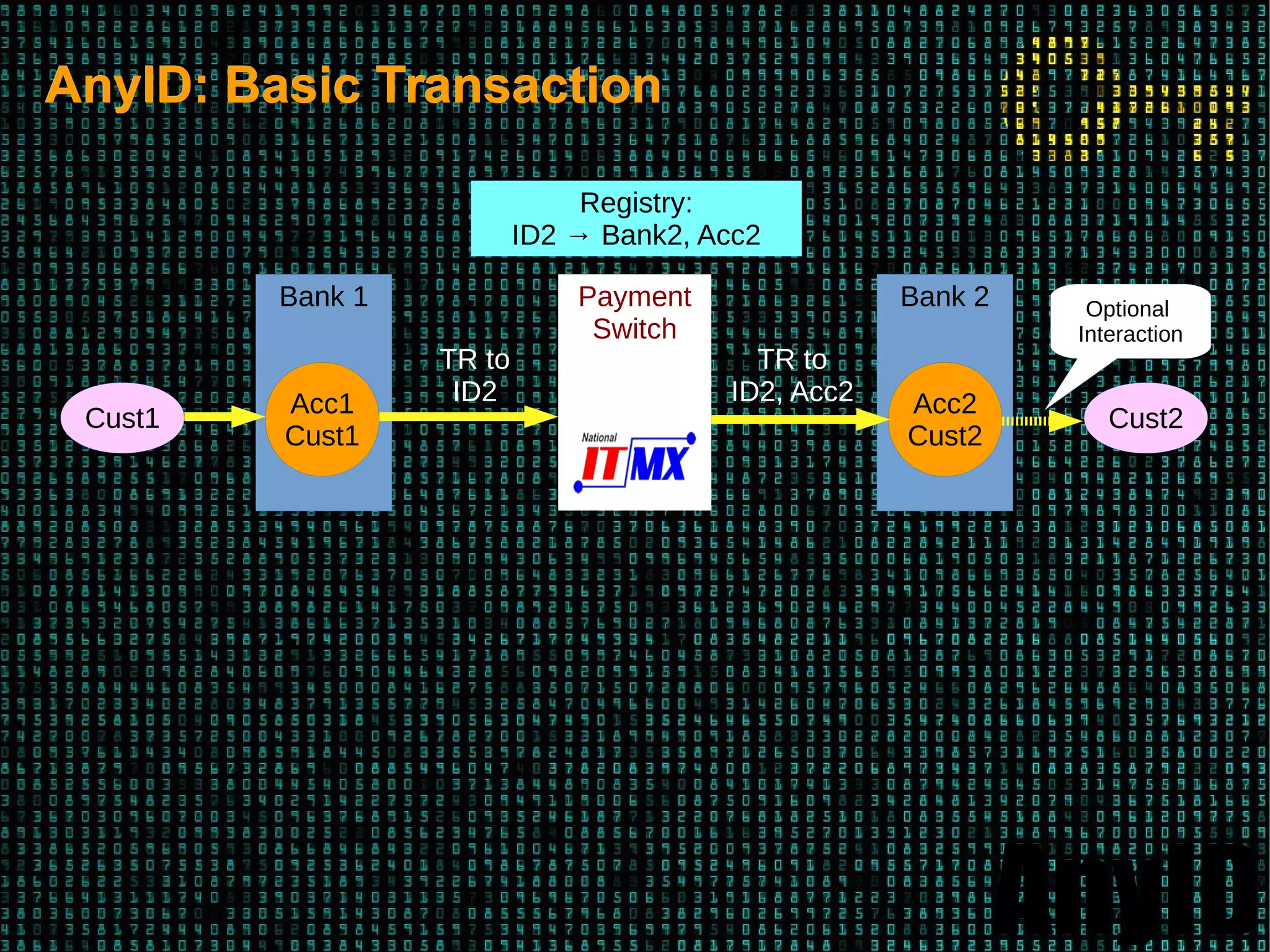
AnyID: Basic TransactionAnyID: Basic Transaction
Payment
Switch
Bank 1
Acc1
Cust1
Bank 2
Acc2
Cust2
Cust1
Registry:
ID2 → Bank2, Acc2
TR to
ID2
TR to
ID2, Acc2
Cust2
Optional
Interaction
AnyID
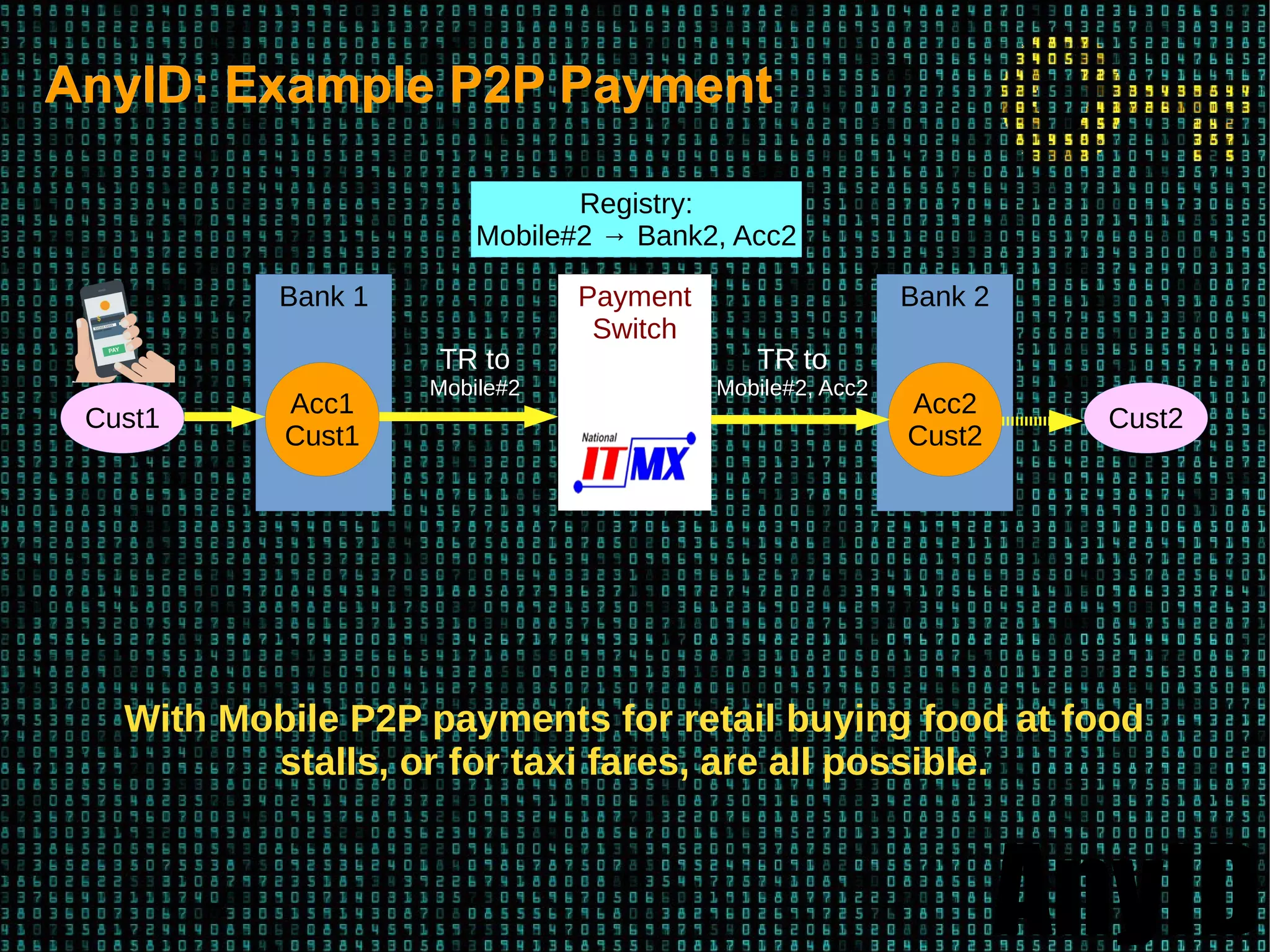
AnyID: Example P2P PaymentAnyID: Example P2P Payment
Payment
Switch
Bank 1
Acc1
Cust1
Bank 2
Acc2
Cust2
Cust1
Registry:
Mobile#2 → Bank2, Acc2
TR to
Mobile#2
TR to
Mobile#2, Acc2
Cust2
With Mobile P2P payments for retail buying food at food
stalls, or for taxi fares, are all possible.
AnyID
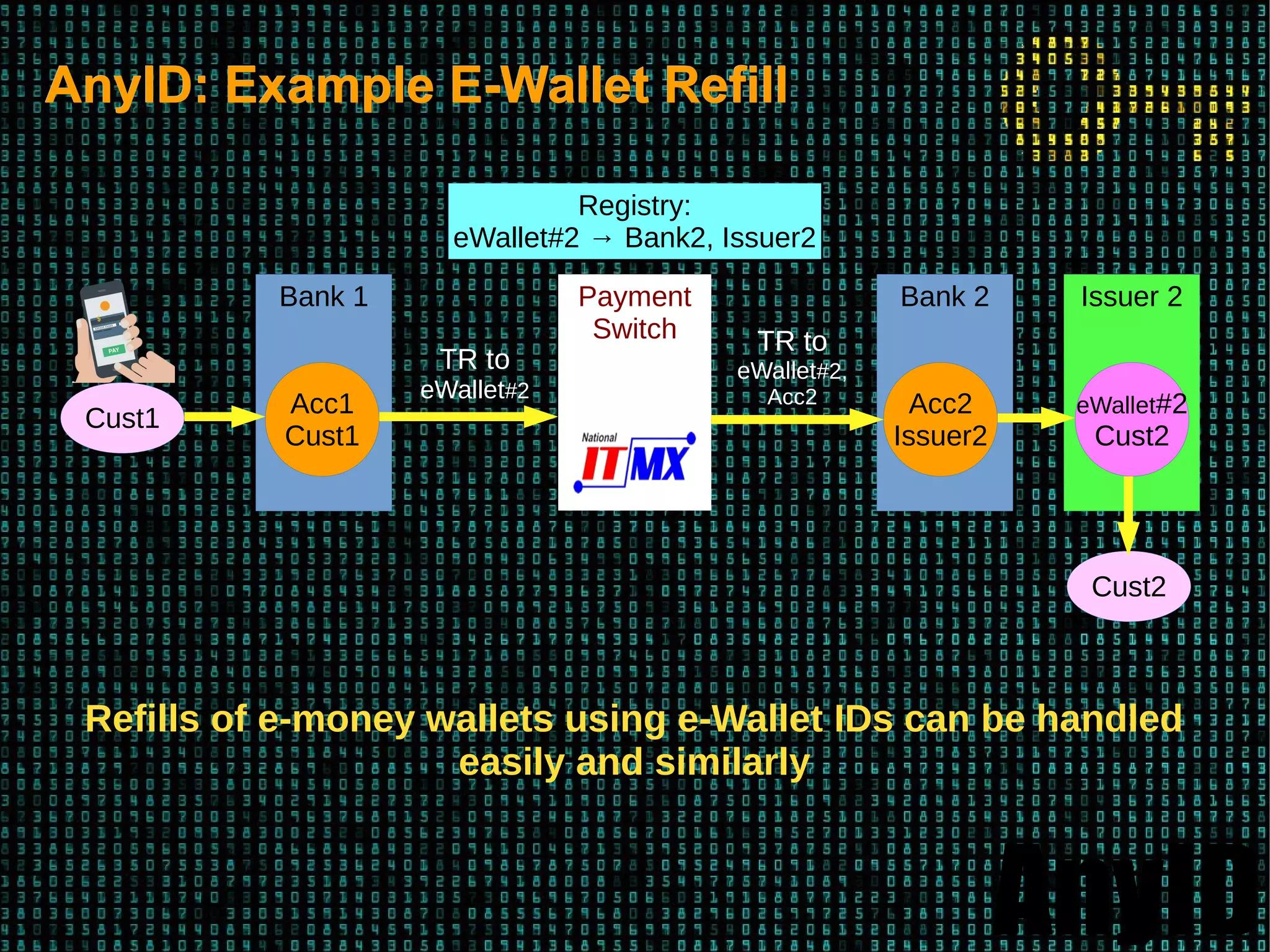
AnyID: Example E-Wallet RefillAnyID: Example E-Wallet Refill
Payment
Switch
Bank 1
Acc1
Cust1
Bank 2
Acc2
Issuer2
Cust1
Registry:
eWallet#2 → Bank2, Issuer2
TR to
eWallet#2
TR to
eWallet#2,
Acc2
Cust2
Refills of e-money wallets using e-Wallet IDs can be handled
easily and similarly
Issuer 2
eWallet#2
Cust2
AnyID
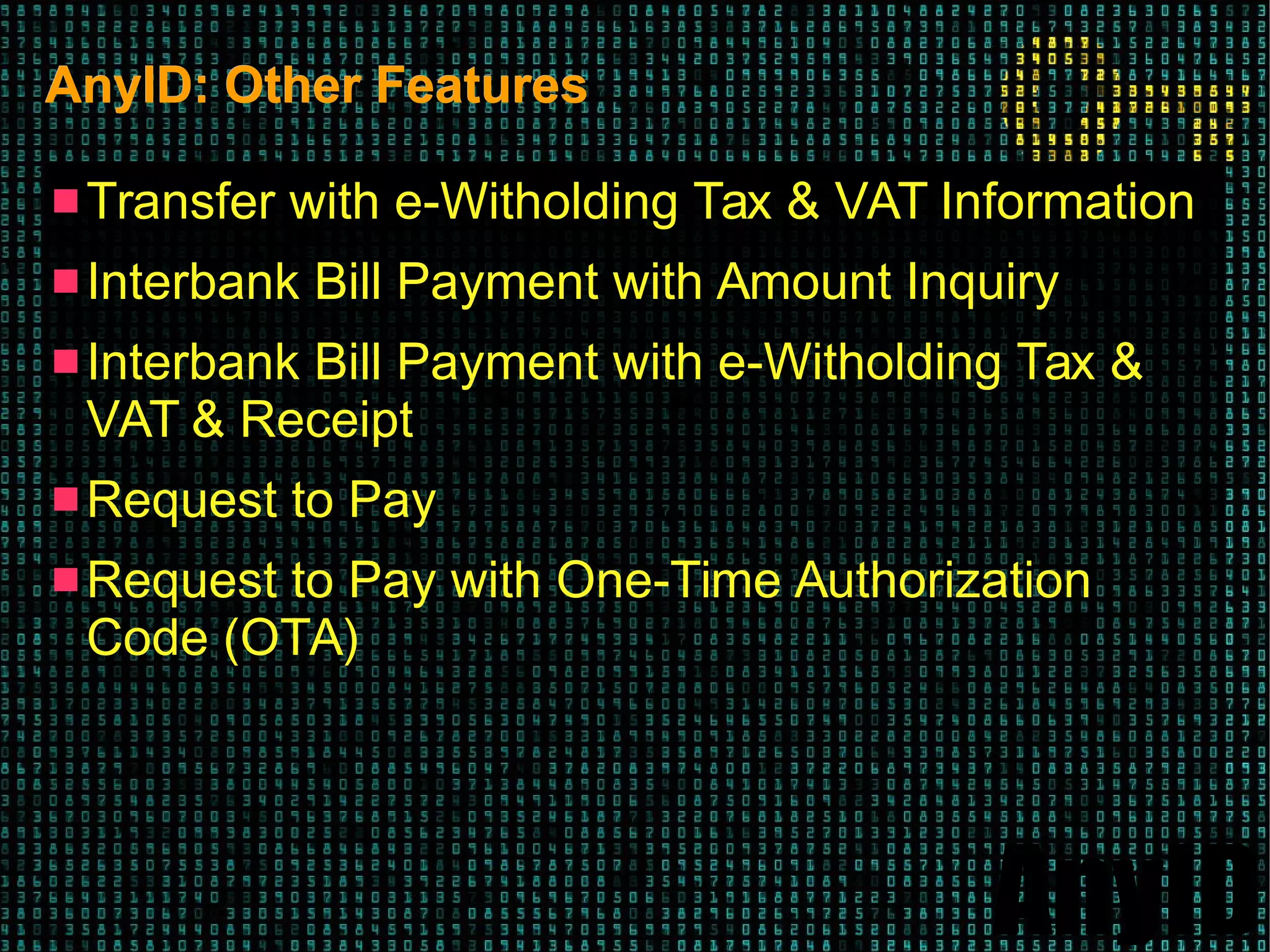
AnyID: Other FeaturesAnyID: Other Features
 Transfer with e-Witholding Tax & VAT Information
 Interbank Bill Payment with Amount Inquiry
 Interbank Bill Payment with e-Witholding Tax &
VAT & Receipt
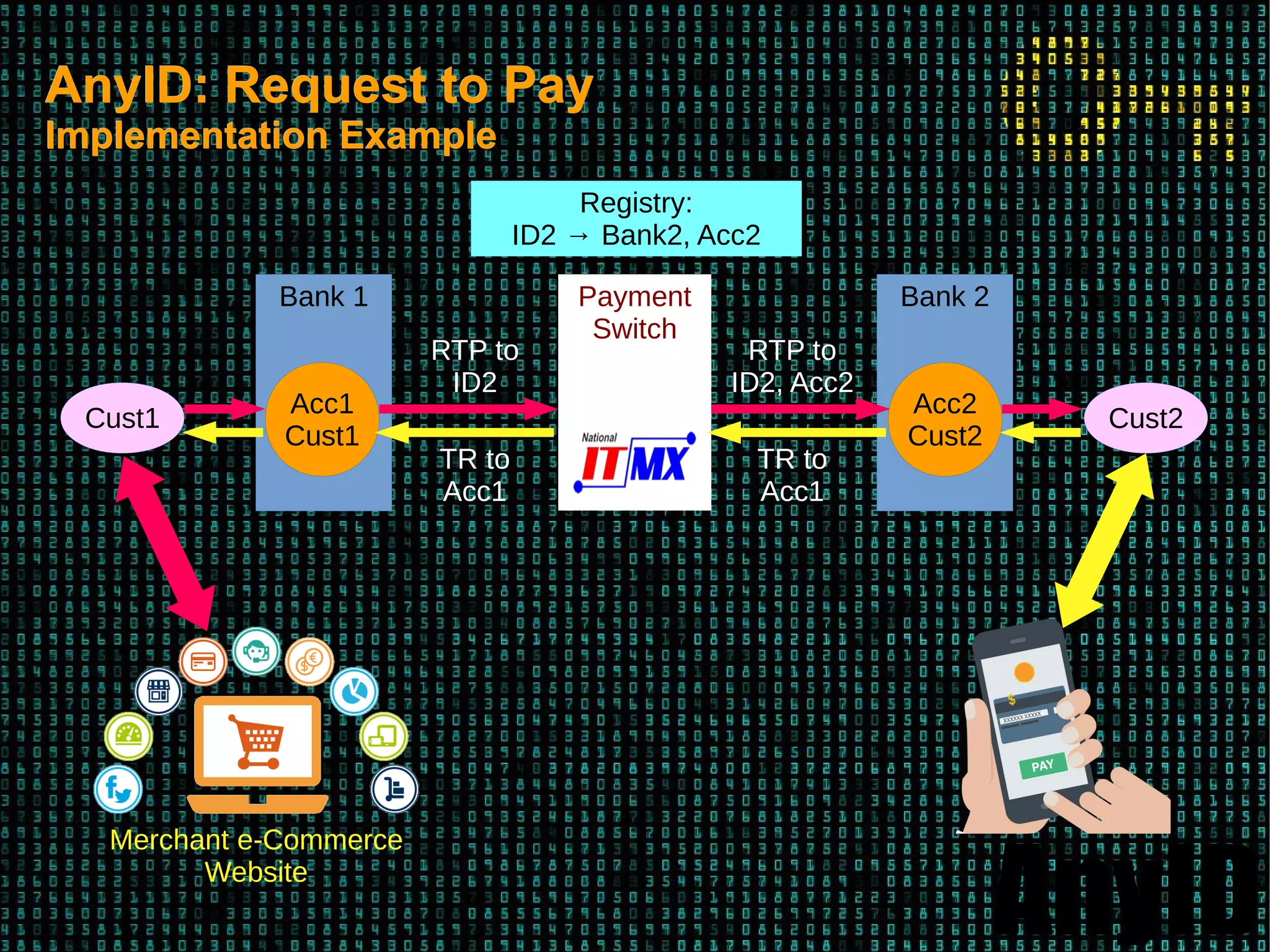
 Request to Pay
 Request to Pay with One-Time Authorization
Code (OTA)
AnyID
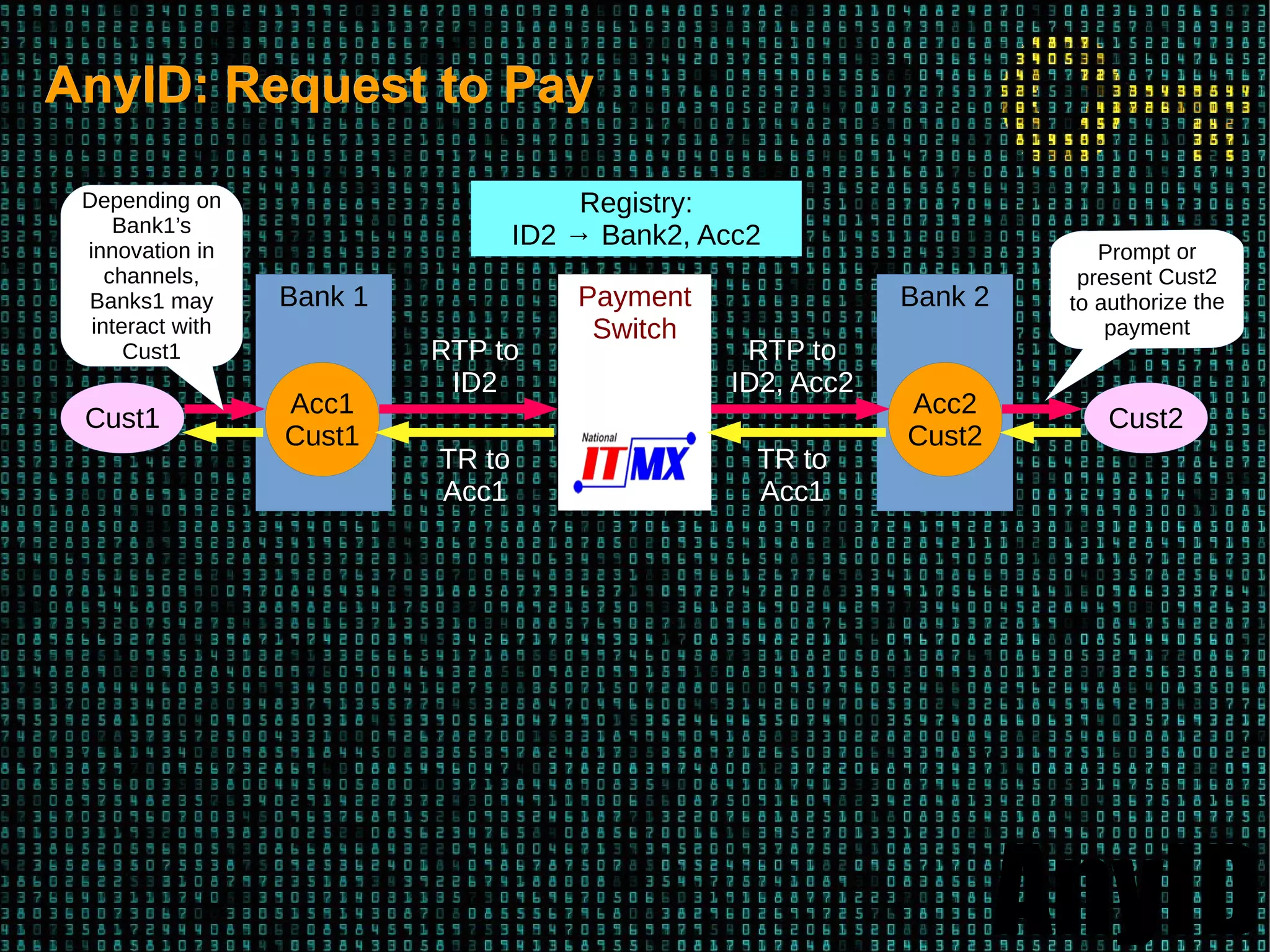
AnyID: Request to PayAnyID: Request to Pay
Payment
Switch
Bank 1
Acc1
Cust1
Bank 2
Acc2
Cust2
Cust1
Registry:
ID2 → Bank2, Acc2
RTP to
ID2
RTP to
ID2, Acc2
Cust2
TR to
Acc1
TR to
Acc1
Depending on
Bank1’s
innovation in
channels,
Banks1 may
interact with
Cust1
AnyID
AnyID: Request to PayAnyID: Request to Pay
Implementation ExampleImplementation Example
Payment
Switch
Bank 1
Acc1
Cust1
Bank 2
Acc2
Cust2
Cust1
Registry:
ID2 → Bank2, Acc2
RTP to
ID2
RTP to
ID2, Acc2
Cust2
TR to
Acc1
TR to
Acc1
Merchant e-Commerce
Website
AnyID
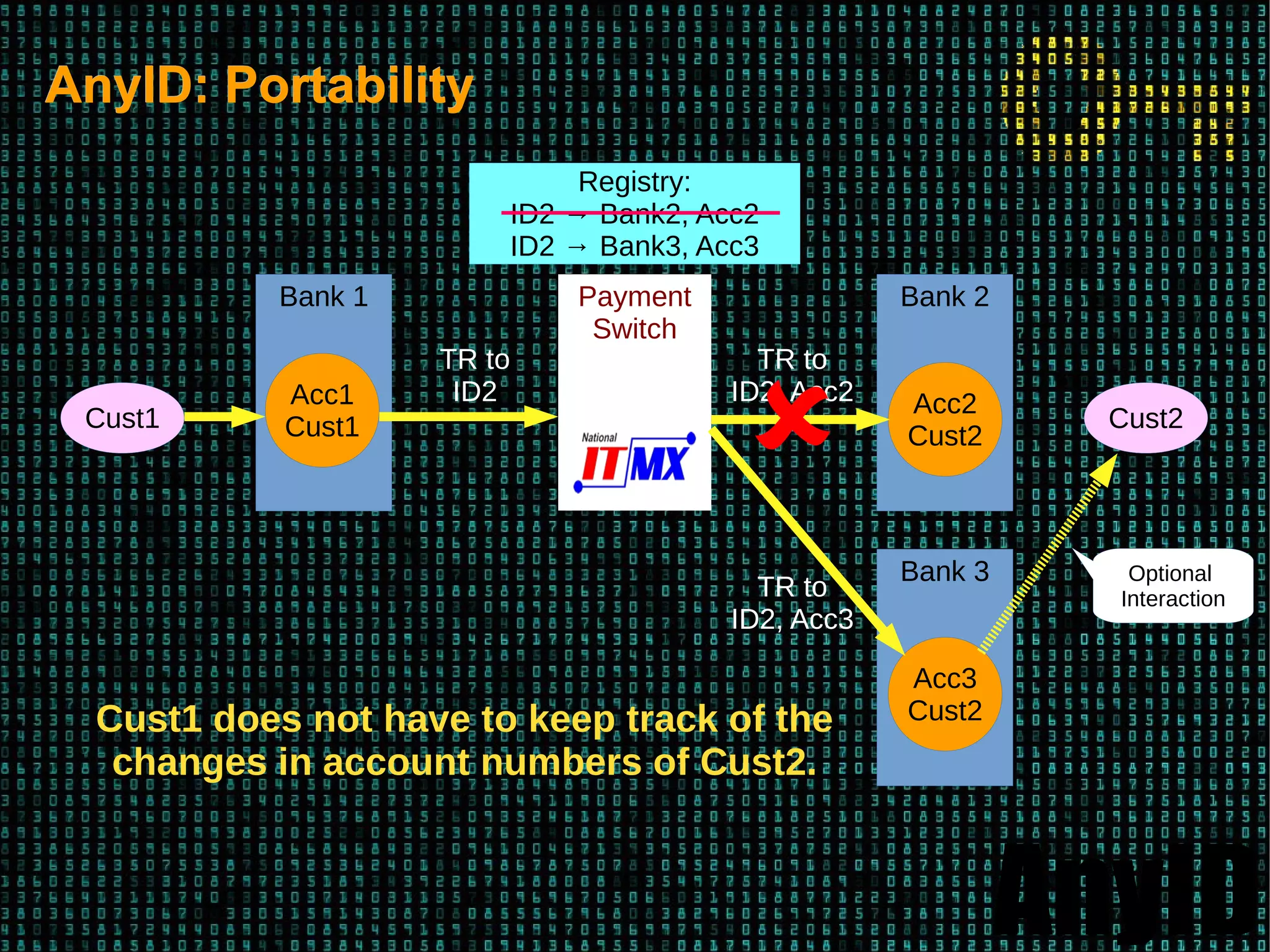
AnyID: PortabilityAnyID: Portability
Payment
Switch
Bank 1
Acc1
Cust1
Bank 2
Acc2
Cust2
Cust1
Registry:
ID2 → Bank2, Acc2
ID2 → Bank3, Acc3
TR to
ID2
TR to
ID2, Acc2
Cust2
Optional
Interaction
Bank 3
Acc3
Cust2

TR to
ID2, Acc3
Cust1 does not have to keep track of the
changes in account numbers of Cust2.
AnyID
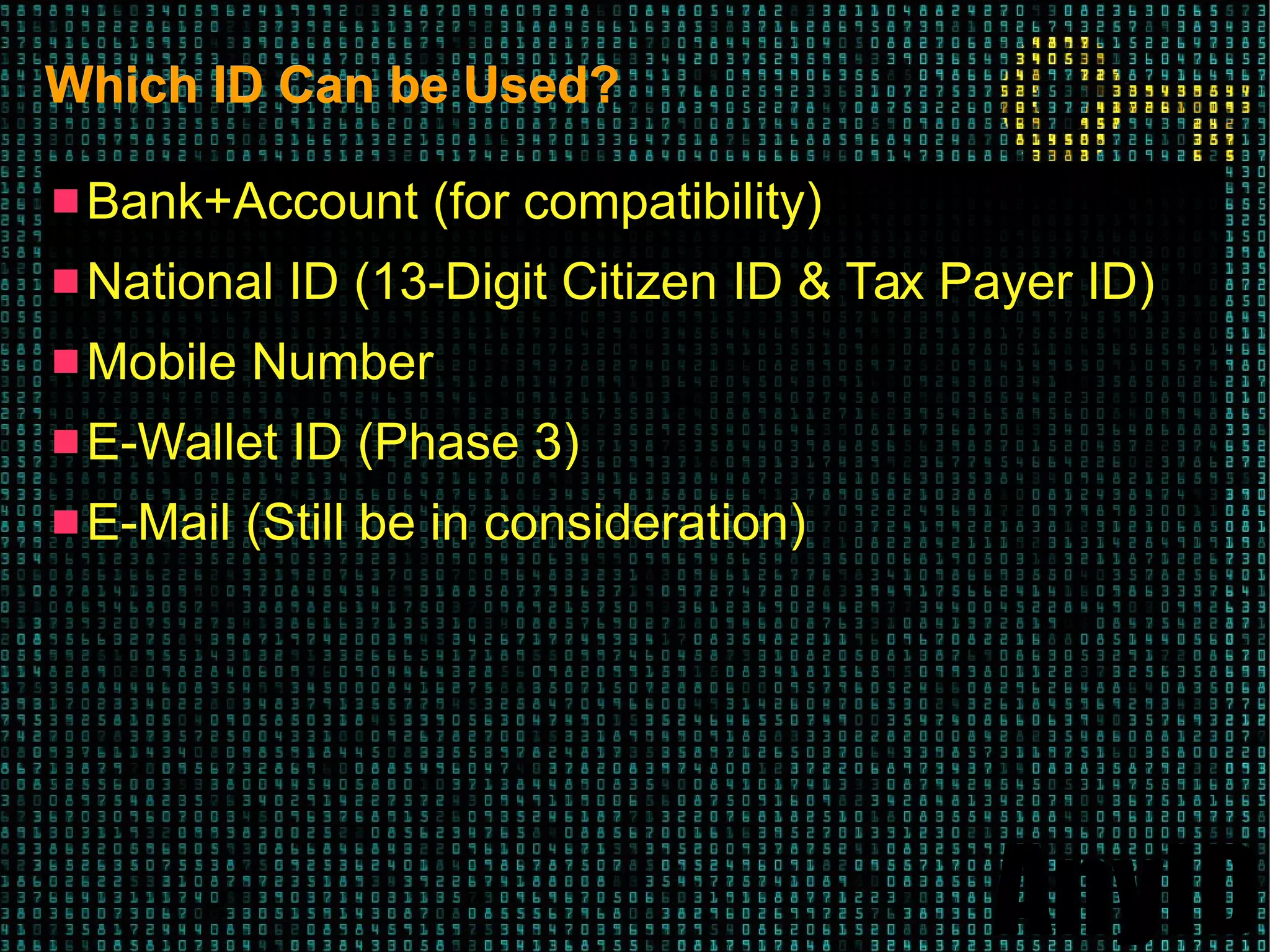
Which ID Can be Used?Which ID Can be Used?
 Bank+Account (for compatibility)
 National ID (13-Digit Citizen ID & Tax Payer ID)
 Mobile Number
 E-Wallet ID (Phase 3)
 E-Mail (Still be in consideration)
AnyID
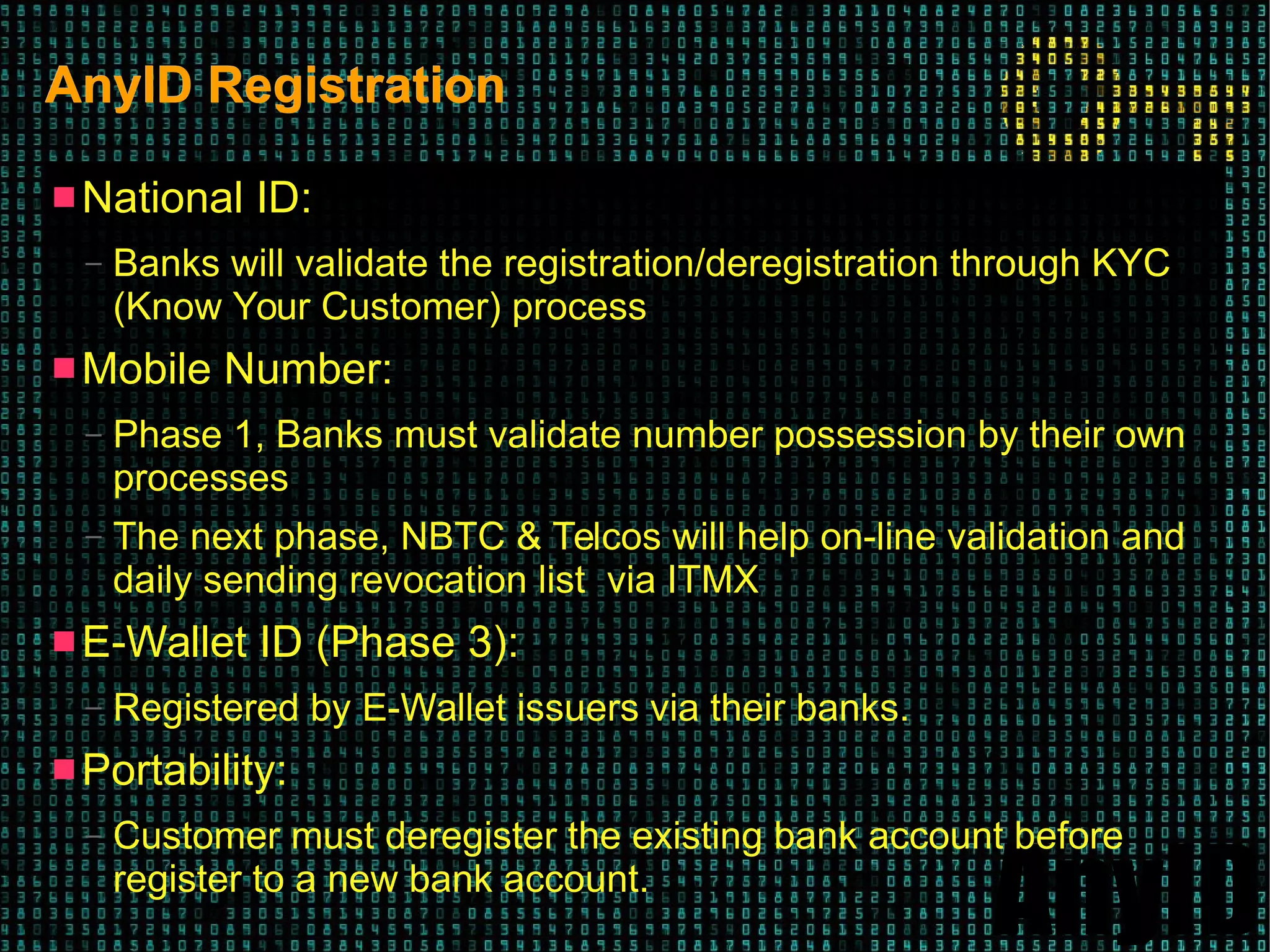
AnyID RegistrationAnyID Registration
 National ID:
– Banks will validate the registration/deregistration through KYC
(Know Your Customer) process
 Mobile Number:
– Phase 1, Banks must validate number possession by their own
processes
– The next phase, NBTC & Telcos will help on-line validation and
daily sending revocation list via ITMX
 E-Wallet ID (Phase 3):
– Registered by E-Wallet issuers via their banks.
 Portability:
– Customer must deregister the existing bank account before
register to a new bank account.
AnyID
Security Design & Implementation
AnyID
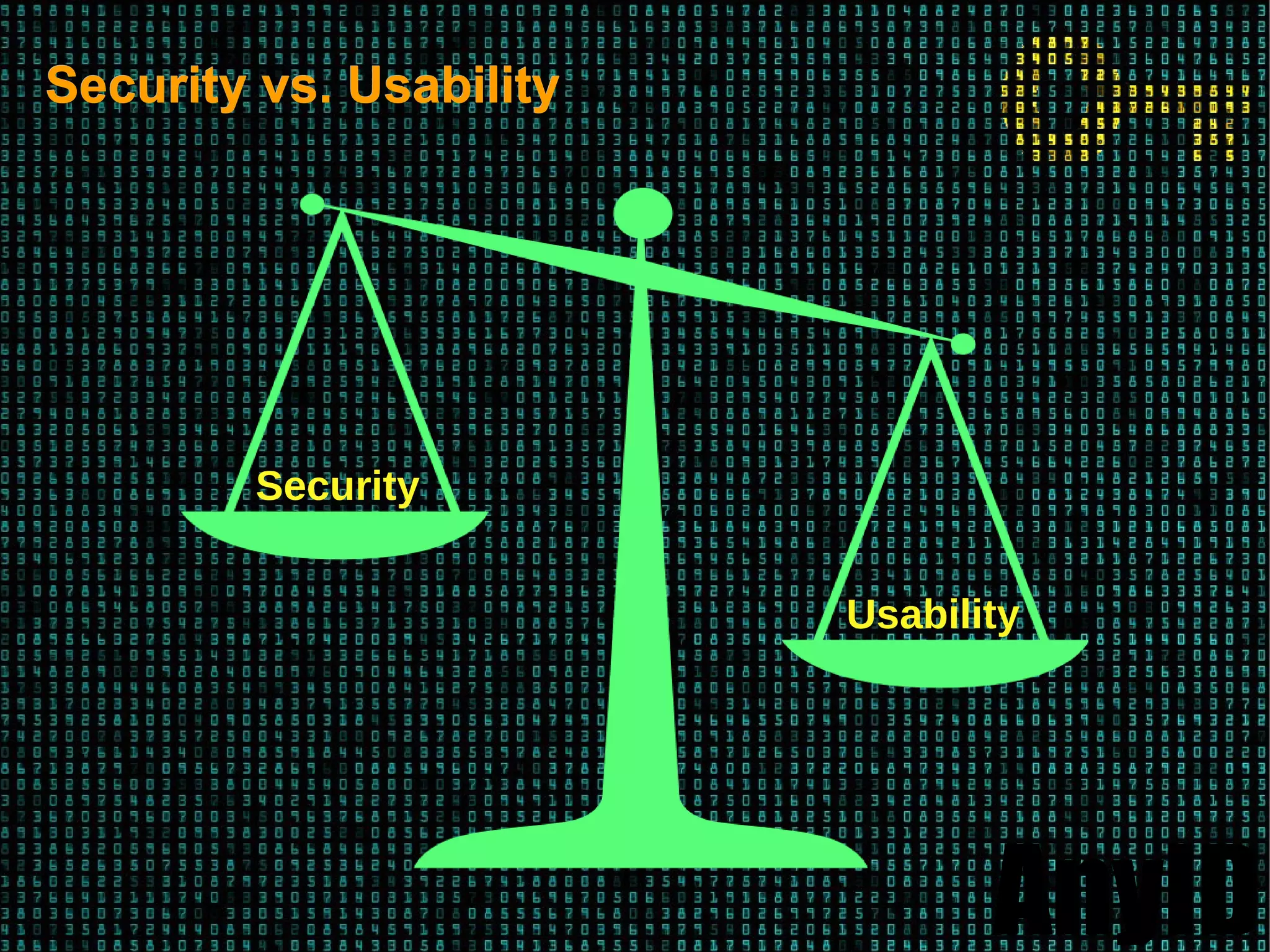
Security vs. UsabilitySecurity vs. Usability
Security
Usability
AnyID
IT Security ArchitectureIT Security Architecture
ITMX ImplementationITMX Implementation
 Only Member Bank can sent/receive data with ITMX.
 Member bank connect to ITMX with existing Extranet (via MPLS)
 Member bank access to ITMX Extranet DMZ Zone only.
 ITMX separate Zone for DMZ Zone, Application Zone , Database
Zone and other critical zone.
 All Zone are protected by Firewall and IPS.
 ITMX data center , all devices are protected as PCI/DSS
standard requirement (Physical Security, Network access
control, Data security, VA, patching, Logging and Monitoring,
BCP).
 All process to access to server complied with ISO27001
standard and BOT best practice.
 Important data will be encrypted in transit and store.
AnyID
Network Security & CryptographyNetwork Security & Cryptography
ITMX ImplementationITMX Implementation
 Single Registration: REST/HTTP TLS 1.2 with
Message Signing (PKCS#7 & SHA-1)
 Bulk Registration: SFTP with Hardware Token
 Financial Transaction: Protocol ISO8583 over TLS
1.2
– PIN Block encryption using 3DES or DES
– Message in PIN Block could be OTA (One-Time
Authorization Code), Any ID or Destination Account, type
of message defined in field 48.13
– {Even DES algorithm is easily breakable, but data are not
significant and in TLS 1.2 tunnel}
 All keys and certificates kept on HSM
AnyID
Registration Security & PrivacyRegistration Security & Privacy
ITMX ImplementationITMX Implementation
 ID Validation
– National ID: Use existing KYC process
– Mobile Number:
● Phase 1: Validate by banks' processes
● Next: Validate with NBTC & Telcos via ITMX
 Only registered ID and bank account will be kept at
ITMX, no other information
 Banks can use a dummy account register to ITMX
 Destination bank will send the name of the account
that mapped to ID per request for verification
AnyID
Error PreventionError Prevention
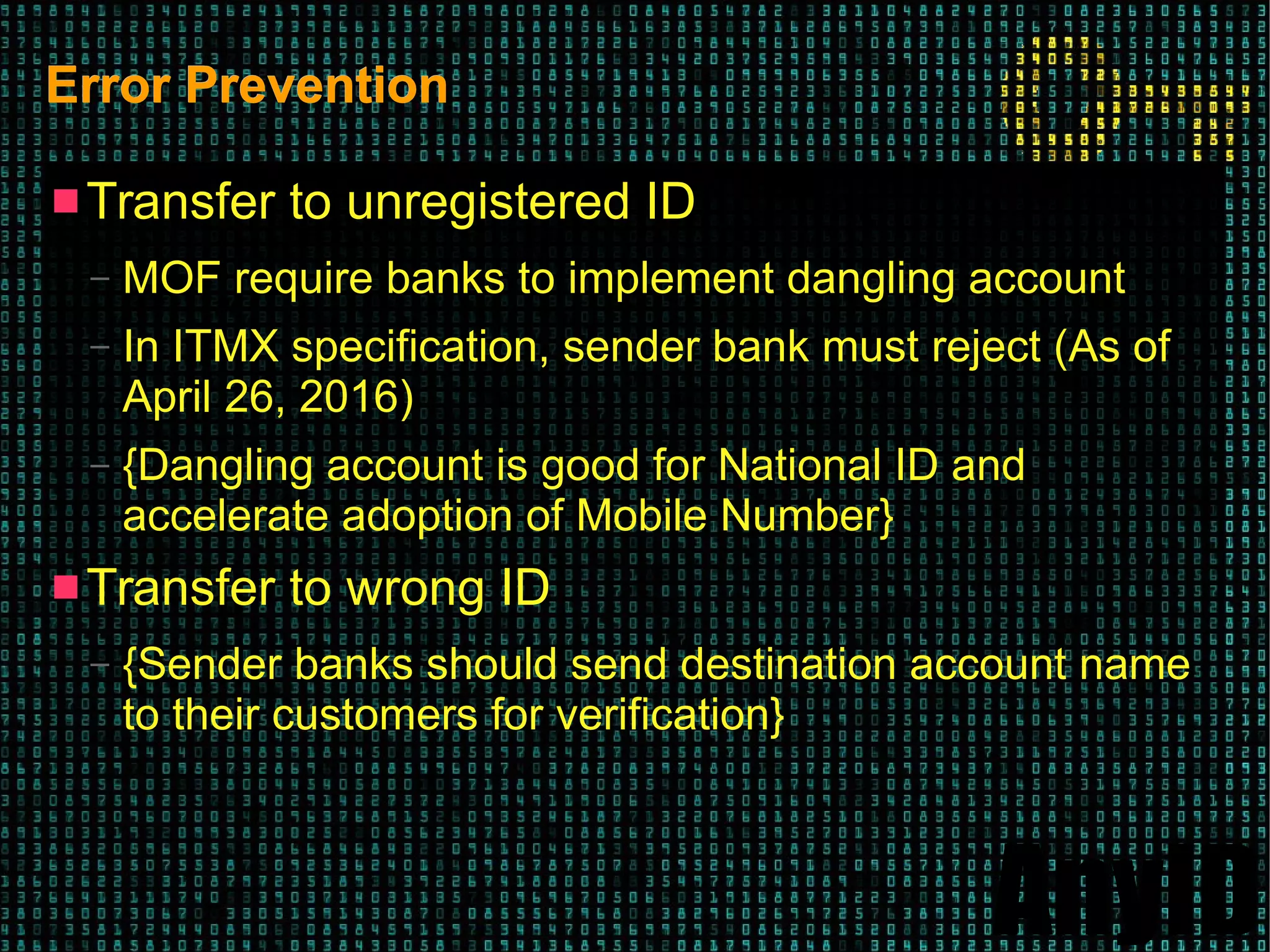
 Transfer to unregistered ID
– MOF require banks to implement dangling account
– In ITMX specification, sender bank must reject (As of
April 26, 2016)
– {Dangling account is good for National ID and
accelerate adoption of Mobile Number}
 Transfer to wrong ID
– {Sender banks should send destination account name
to their customers for verification}
AnyID
Dangling AccountDangling Account
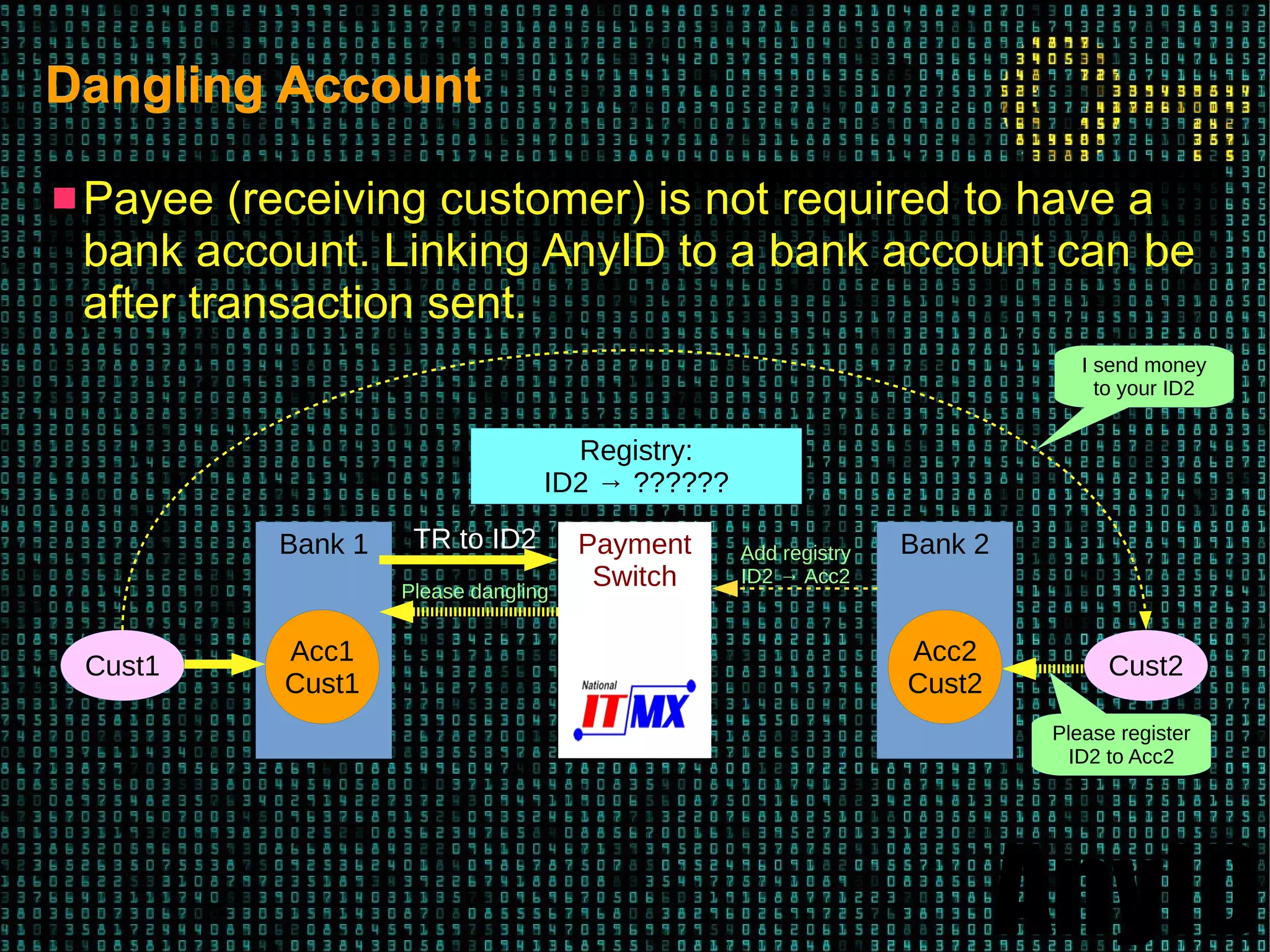
 Payee (receiving customer) is not required to have a
bank account. Linking AnyID to a bank account can be
after transaction sent.
Payment
Switch
Bank 1
Acc1
Cust1
Bank 2
Acc2
Cust2
Cust1
Registry:
ID2 → ??????
TR to ID2
Cust2
Please dangling
Please register
ID2 to Acc2
I send money
to your ID2
Add registry
ID2 → Acc2
AnyID
Dangling AccountDangling Account
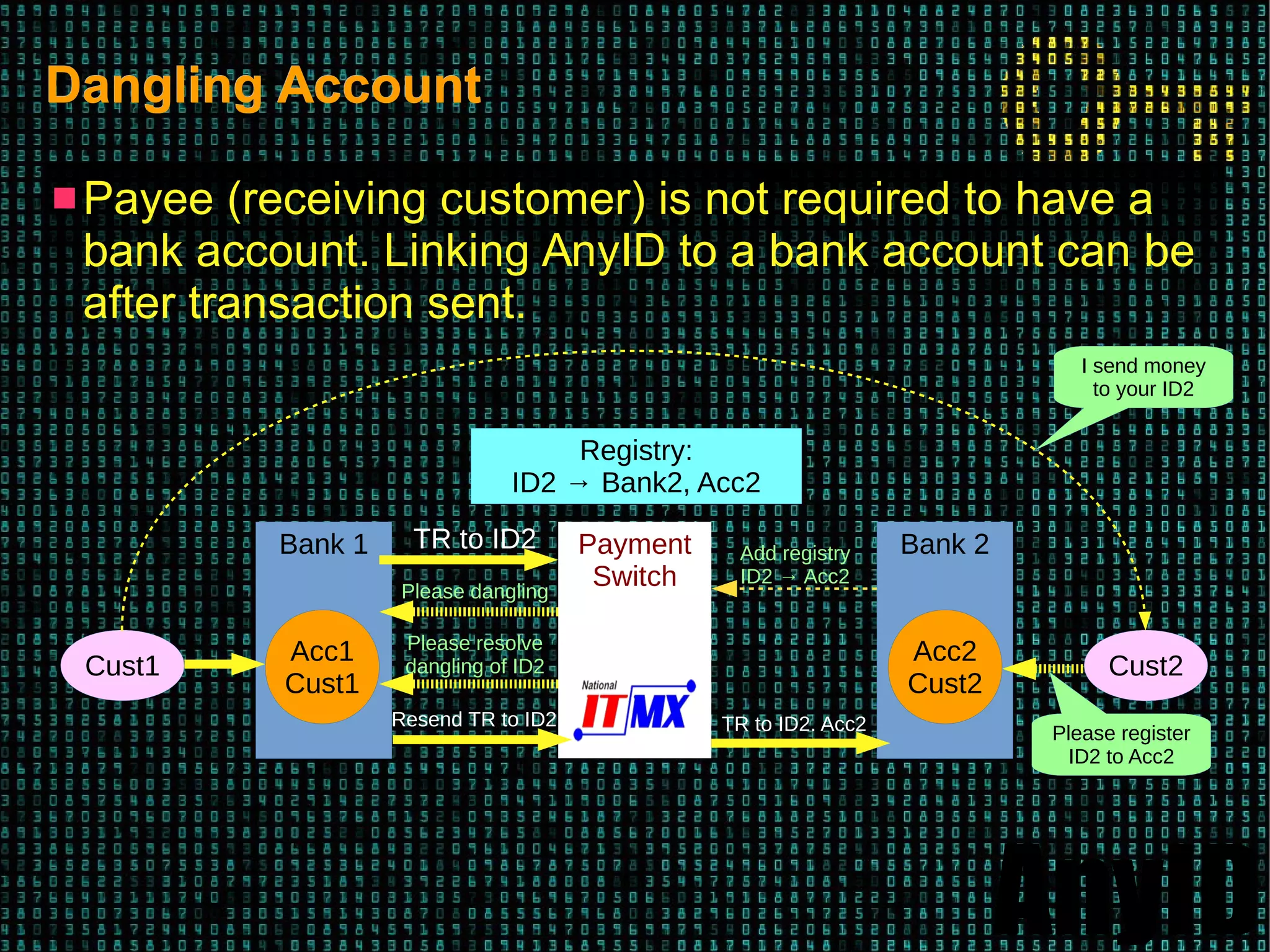
 Payee (receiving customer) is not required to have a
bank account. Linking AnyID to a bank account can be
after transaction sent.
Payment
Switch
Bank 1
Acc1
Cust1
Bank 2
Acc2
Cust2
Cust1
Registry:
ID2 → Bank2, Acc2
TR to ID2
Cust2
Please dangling
Please register
ID2 to Acc2
Add registry
ID2 → Acc2
Please resolve
dangling of ID2
Resend TR to ID2 TR to ID2. Acc2
I send money
to your ID2
AnyID
About FraudAbout Fraud
 AnyID does not intend to reduce the existing
electronics fund transfer frauds but some flows
will reduce frauds by design.
– Example: Request to pay flow.
 New innovation always introduces new frauds.
AnyID

AnyID: Security Point of View

  • 1.
    AnyID AnyID : SecurityPoint of View Narudom Roongsiriwong, CISSPNarudom Roongsiriwong, CISSP
  • 2.
    AnyID WhoAmIWhoAmI  Lazy Blogger –Japan, Security, FOSS, Politics, Christian – http://narudomr.blogspot.com  Food Lover – Steak, Yakiniku, BBQ – Sushi (especially Otoro) – All Kinds of Noodle (Spaghetti, Ramen, Kanomjean)  Head of IT Security, Kiatnakin Bank PLC (KKP)  Working Team for Adviser to the Finance Ministry's National e-Payment project
  • 3.
    AnyID DisclaimerDisclaimer  This presentationprimarily expresses from Ministry of Finance requirement.  Final project may be different from this presentation.  Words in this presentation are simplified for non- financial audience.  Whenever you see a phrase like {this} between curly bracket, it means my opinion.
  • 4.
    AnyID National E-Payment InitiativeNationalE-Payment Initiative 5 Strategic Projects5 Strategic Projects  Payment Infrastructure “AnyID”  Expansion of Card Acceptance (via EDC)  Electronics Taxation Document  Government e-Payment  Public Education and Awareness on Electronics Transactions EDC: Electronics Data Capture
  • 5.
    AnyID AnyID: Basic TransactionAnyID:Basic Transaction Payment Switch Bank 1 Acc1 Cust1 Bank 2 Acc2 Cust2 Cust1 Registry: ID2 → Bank2, Acc2 TR to ID2 TR to ID2, Acc2 Cust2 Optional Interaction
  • 6.
    AnyID AnyID: Example P2PPaymentAnyID: Example P2P Payment Payment Switch Bank 1 Acc1 Cust1 Bank 2 Acc2 Cust2 Cust1 Registry: Mobile#2 → Bank2, Acc2 TR to Mobile#2 TR to Mobile#2, Acc2 Cust2 With Mobile P2P payments for retail buying food at food stalls, or for taxi fares, are all possible.
  • 7.
    AnyID AnyID: Example E-WalletRefillAnyID: Example E-Wallet Refill Payment Switch Bank 1 Acc1 Cust1 Bank 2 Acc2 Issuer2 Cust1 Registry: eWallet#2 → Bank2, Issuer2 TR to eWallet#2 TR to eWallet#2, Acc2 Cust2 Refills of e-money wallets using e-Wallet IDs can be handled easily and similarly Issuer 2 eWallet#2 Cust2
  • 8.
    AnyID AnyID: Other FeaturesAnyID:Other Features  Transfer with e-Witholding Tax & VAT Information  Interbank Bill Payment with Amount Inquiry  Interbank Bill Payment with e-Witholding Tax & VAT & Receipt  Request to Pay  Request to Pay with One-Time Authorization Code (OTA)
  • 9.
    AnyID AnyID: Request toPayAnyID: Request to Pay Payment Switch Bank 1 Acc1 Cust1 Bank 2 Acc2 Cust2 Cust1 Registry: ID2 → Bank2, Acc2 RTP to ID2 RTP to ID2, Acc2 Cust2 TR to Acc1 TR to Acc1 Depending on Bank1’s innovation in channels, Banks1 may interact with Cust1
  • 10.
    AnyID AnyID: Request toPayAnyID: Request to Pay Implementation ExampleImplementation Example Payment Switch Bank 1 Acc1 Cust1 Bank 2 Acc2 Cust2 Cust1 Registry: ID2 → Bank2, Acc2 RTP to ID2 RTP to ID2, Acc2 Cust2 TR to Acc1 TR to Acc1 Merchant e-Commerce Website
  • 11.
    AnyID AnyID: PortabilityAnyID: Portability Payment Switch Bank1 Acc1 Cust1 Bank 2 Acc2 Cust2 Cust1 Registry: ID2 → Bank2, Acc2 ID2 → Bank3, Acc3 TR to ID2 TR to ID2, Acc2 Cust2 Optional Interaction Bank 3 Acc3 Cust2  TR to ID2, Acc3 Cust1 does not have to keep track of the changes in account numbers of Cust2.
  • 12.
    AnyID Which ID Canbe Used?Which ID Can be Used?  Bank+Account (for compatibility)  National ID (13-Digit Citizen ID & Tax Payer ID)  Mobile Number  E-Wallet ID (Phase 3)  E-Mail (Still be in consideration)
  • 13.
    AnyID AnyID RegistrationAnyID Registration National ID: – Banks will validate the registration/deregistration through KYC (Know Your Customer) process  Mobile Number: – Phase 1, Banks must validate number possession by their own processes – The next phase, NBTC & Telcos will help on-line validation and daily sending revocation list via ITMX  E-Wallet ID (Phase 3): – Registered by E-Wallet issuers via their banks.  Portability: – Customer must deregister the existing bank account before register to a new bank account.
  • 14.
  • 15.
    AnyID Security vs. UsabilitySecurityvs. Usability Security Usability
  • 16.
    AnyID IT Security ArchitectureITSecurity Architecture ITMX ImplementationITMX Implementation  Only Member Bank can sent/receive data with ITMX.  Member bank connect to ITMX with existing Extranet (via MPLS)  Member bank access to ITMX Extranet DMZ Zone only.  ITMX separate Zone for DMZ Zone, Application Zone , Database Zone and other critical zone.  All Zone are protected by Firewall and IPS.  ITMX data center , all devices are protected as PCI/DSS standard requirement (Physical Security, Network access control, Data security, VA, patching, Logging and Monitoring, BCP).  All process to access to server complied with ISO27001 standard and BOT best practice.  Important data will be encrypted in transit and store.
  • 17.
    AnyID Network Security &CryptographyNetwork Security & Cryptography ITMX ImplementationITMX Implementation  Single Registration: REST/HTTP TLS 1.2 with Message Signing (PKCS#7 & SHA-1)  Bulk Registration: SFTP with Hardware Token  Financial Transaction: Protocol ISO8583 over TLS 1.2 – PIN Block encryption using 3DES or DES – Message in PIN Block could be OTA (One-Time Authorization Code), Any ID or Destination Account, type of message defined in field 48.13 – {Even DES algorithm is easily breakable, but data are not significant and in TLS 1.2 tunnel}  All keys and certificates kept on HSM
  • 18.
    AnyID Registration Security &PrivacyRegistration Security & Privacy ITMX ImplementationITMX Implementation  ID Validation – National ID: Use existing KYC process – Mobile Number: ● Phase 1: Validate by banks' processes ● Next: Validate with NBTC & Telcos via ITMX  Only registered ID and bank account will be kept at ITMX, no other information  Banks can use a dummy account register to ITMX  Destination bank will send the name of the account that mapped to ID per request for verification
  • 19.
    AnyID Error PreventionError Prevention Transfer to unregistered ID – MOF require banks to implement dangling account – In ITMX specification, sender bank must reject (As of April 26, 2016) – {Dangling account is good for National ID and accelerate adoption of Mobile Number}  Transfer to wrong ID – {Sender banks should send destination account name to their customers for verification}
  • 20.
    AnyID Dangling AccountDangling Account Payee (receiving customer) is not required to have a bank account. Linking AnyID to a bank account can be after transaction sent. Payment Switch Bank 1 Acc1 Cust1 Bank 2 Acc2 Cust2 Cust1 Registry: ID2 → ?????? TR to ID2 Cust2 Please dangling Please register ID2 to Acc2 I send money to your ID2 Add registry ID2 → Acc2
  • 21.
    AnyID Dangling AccountDangling Account Payee (receiving customer) is not required to have a bank account. Linking AnyID to a bank account can be after transaction sent. Payment Switch Bank 1 Acc1 Cust1 Bank 2 Acc2 Cust2 Cust1 Registry: ID2 → Bank2, Acc2 TR to ID2 Cust2 Please dangling Please register ID2 to Acc2 Add registry ID2 → Acc2 Please resolve dangling of ID2 Resend TR to ID2 TR to ID2. Acc2 I send money to your ID2
  • 22.
    AnyID About FraudAbout Fraud AnyID does not intend to reduce the existing electronics fund transfer frauds but some flows will reduce frauds by design. – Example: Request to pay flow.  New innovation always introduces new frauds.
  • 23.