ANTISEPSIS
ANTISEPSIS
- control of infection in the wound;
- a system of measures aimed at the
elimination of microorganisms from the wound,
the pathological focus, organs and tissues, as
well as from the patient body, using mechanical
and physical methods, active chemicals and
biological factors.
TYPES OF ANTISEPSIS
mechanical;
physical;
chemical;
biological.
MECHANICAL ANTISEPSIS:
 wound cleansing: removal of purulent exudate
and blood clots, wound and skin cleaning;
 initial (primary) surgical d-bridement of the
wound;
 delayed (secondary) surgical d-bridement of the
wound;
 other surgeries: cutting of abscess, phlegmon;
puncture of abscess etc.
PRIMARY SURGICAL D-BRIDEMENT OF
THE WOUND:
 Dissection;
 Wound revision;
 Excision of wound adges, walls and floor;
 Hemostasis;
 Repair of injured organs and structures;
 Suturing if possible.
PRIMARY SURGICAL D-BRIDEMENT OF
THE WOUND
PHYSICAL ANTISEPSIS
 hygroscopic wound textile (gauze, cotton);
 hypertonic solutions (5-10% sodium chloride)
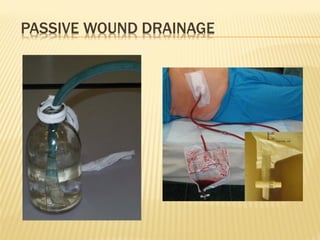
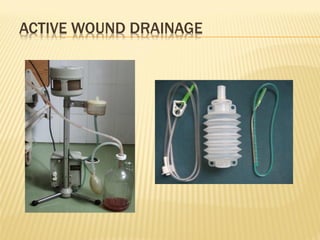
 wound drainage;
 sorbents (carbon-bearing substances);
 factors of environment;
 physical factors (ultrasound, laser, ultraviolet
rays, X-ray radiation).
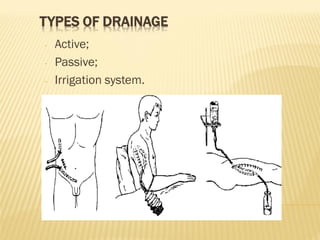
TYPES OF DRAINAGE
- Active;
- Passive;
- Irrigation system.
PASSIVE WOUND DRAINAGE
ACTIVE WOUND DRAINAGE
IRRIGATION SYSTEM
LASER RADIATION OF BLOOD
ULTRASONIC CAVITATION OF THE WOUND
CHEMICAL ANTISEPSIS
Control of infection in the
wound, pathological focus and the
patient body with help of different
chemicals.
CLASSIFICATION OF ANTISEPTICS
ACCORDING TO THE PURPOSE AND
APPLICATION METHOD
 disinfectants (we use them in asepsis);
 antiseptics for external use (for skin, hands,
wounds);
 chemotherapeutic agents (for internal use).
BASIC GROUPS OF CHEMICALS:
1) Galloids (compounds of chlorine or
iodine); 2) Salts of heavy metals;
3) Alcohols; 4)Aldehydes; 5) Dyes;
6) Acids; 7) Alkalis (bases); 8) Oxidants;
9) Detergents; 10) Nitrofuran derivatives;
11) 8-hydroxyquinoline derivatives;
12) Quinoxaline derivatives;
13) Nitroimidazole derivatives;
14) Sulphonamides;
and so on.
BIOLOGICAL ANTISEPSIS
 Direct biological antisepsis (use of biological
agents that directly affect microorganisms) –
antibiotics, proteolytic enzymes, bacteriophages
and other drugs for specific passive immunization;
 Indirect biological antisepsis (use of agents and
methods of various origin that stimulate the ability
of a body to control infection) – interleukins,
interferons, laser and ultraviolet blood irradiation,
vitamins and so on.

Antisepsis.pdf

  • 1.
  • 2.
    ANTISEPSIS - control ofinfection in the wound; - a system of measures aimed at the elimination of microorganisms from the wound, the pathological focus, organs and tissues, as well as from the patient body, using mechanical and physical methods, active chemicals and biological factors.
  • 3.
  • 4.
    MECHANICAL ANTISEPSIS:  woundcleansing: removal of purulent exudate and blood clots, wound and skin cleaning;  initial (primary) surgical d-bridement of the wound;  delayed (secondary) surgical d-bridement of the wound;  other surgeries: cutting of abscess, phlegmon; puncture of abscess etc.
  • 5.
    PRIMARY SURGICAL D-BRIDEMENTOF THE WOUND:  Dissection;  Wound revision;  Excision of wound adges, walls and floor;  Hemostasis;  Repair of injured organs and structures;  Suturing if possible.
  • 6.
  • 7.
    PHYSICAL ANTISEPSIS  hygroscopicwound textile (gauze, cotton);  hypertonic solutions (5-10% sodium chloride)  wound drainage;  sorbents (carbon-bearing substances);  factors of environment;  physical factors (ultrasound, laser, ultraviolet rays, X-ray radiation).
  • 8.
    TYPES OF DRAINAGE -Active; - Passive; - Irrigation system.
  • 9.
  • 10.
  • 11.
  • 12.
  • 13.
  • 14.
    CHEMICAL ANTISEPSIS Control ofinfection in the wound, pathological focus and the patient body with help of different chemicals.
  • 15.
    CLASSIFICATION OF ANTISEPTICS ACCORDINGTO THE PURPOSE AND APPLICATION METHOD  disinfectants (we use them in asepsis);  antiseptics for external use (for skin, hands, wounds);  chemotherapeutic agents (for internal use).
  • 16.
    BASIC GROUPS OFCHEMICALS: 1) Galloids (compounds of chlorine or iodine); 2) Salts of heavy metals; 3) Alcohols; 4)Aldehydes; 5) Dyes; 6) Acids; 7) Alkalis (bases); 8) Oxidants; 9) Detergents; 10) Nitrofuran derivatives; 11) 8-hydroxyquinoline derivatives; 12) Quinoxaline derivatives; 13) Nitroimidazole derivatives; 14) Sulphonamides; and so on.
  • 17.
    BIOLOGICAL ANTISEPSIS  Directbiological antisepsis (use of biological agents that directly affect microorganisms) – antibiotics, proteolytic enzymes, bacteriophages and other drugs for specific passive immunization;  Indirect biological antisepsis (use of agents and methods of various origin that stimulate the ability of a body to control infection) – interleukins, interferons, laser and ultraviolet blood irradiation, vitamins and so on.