GENERAL AND CLINICAL PHARMACOLOGY DEPARTMENT
ASSOC. PROFESSOR KOROVYAKOVA E.A.
psychotropic drugs
SEDATIVE- HYPNOTICS
ANXIOLYTICS
antiepileptics
psychotropic drugs
 this is a group of drugs that have a specific therapeutic or preventive effect in mental
illness
WHO classification is based on the clinical focus of the class
action
1. Neuroleptics (antipsychotics)
2. Anxiolytics (Tranquilizers)
3. Antidepressants
4. Normotimics (antimanic agents)
5. Hypnotics
6. Neurometabolics: Nootrops
7. Psychostimulants
8. Psychodisleptics
MENTAL DISORDERS CLASSIFICATION
● internal tension, general arousal, autism, anxiety, fear, depression-
can be combined and considered as symptoms of various syndromes and
mental illnesses, such as schizophrenia, or neurotic disorder,
however, some dominant symptoms identify the specificity of a mental
disorder, for example, a mood disorder symptom indicates an affective
disorder and will not necessarily be present in a neurotic disorder or with
an anxiety disorder.
sedation is a condition that is expressed in general calm, the
disappearance of internal tension, the weakening of anxiety and fear (but
not in the disappearance of these symptoms), sedation helps to reduce the
risk of exacerbation of epileptic disease, neurosis, anxiety disorders,
insomnia, algesia, vegetative disturbances like act Sedative drugs
SEDATIVE CLASSIFICATION
● plant der. - motherwort herb, valerian, lemon balm;
● complex drugs – corvalol, valocardine, sedalgine;
sedatives nonspecifically and not strongly depress the cerebral cortex and slightly reduce the
functional efficiency of brain cells, do not cause physiological sleep phases
Therapeutic use:
❖Reduce arousal, internal tension
❖to relief anxiety, phobia
❖promote falling asleep
SEDATIVE/HYPNOTICS/ANXIOLYTICS CLASSIFICATION
Sedative- hypnotics:
● 1-st generation: Barbiturates
● 2-d generation: Benzodiazepines
● 3- d generation: Nonbenzodiazepines
 others:
● aliphatic compounds- Chloral hydrate
● antihistaminics – diphenhydramine, promethazine, Doxylamine*.
● drugs used in the distortion of biorhythms (change time zones) - melatonin (melaxen), ralmeteon.
● antidepressants - amitriptyline, mianserin, agomelatine, etc.
SEDATIVE/HYPNOTICS/ANXIOLYTICS CLASSIFICATION
Sedative- hypnotics:
Hypnotics have different mechanisms of action and differ in the strength of
the hypnotic effect and tolerability. Classes of drugs that cause physiological sleep
phases are the most effective, however, the optimal ones are those that are better
tolerated and have pharmacodynamic advantages
● 1-st generation: Barbiturates –not used at our days
ACTUAL
● 2-d generation: Benzodiazepines : NIGHT -short acting - triazolam*, midazolam*; moderate
acting- flunitrazepam*, аlprazolam*; long acting - nitrazepam*, fenazepam*;
● 3- d generation: Nonbenzodiazepines – zopiclone (imovan, zylop), zolpidem (ivadal), zaleplone;
Barbiturates- history
❖ barbituric acid was synthesized as the first barbiturate In 1864 von Baeyer
❖ diethylbarbituric acid, was synthesized by Fischer and Mering in 1903 as
hypnotic agent
❖ Others were developed and tested, but all had too slow onset and too
long duration of action.
❖ In 1932 Weese and Schapff synthesized hexobarbital -the first rapid onset,
short duration barbiturate, but agent caused undesirable excitatory side
effects.
❖ In1934 Thiopental was first administered by Waters (Wisconsin) and Lundy
(Mayo Clinic), it didn’t cause excitatory side effects. When hexobarbital
and thiopental were used to anesthetize the wounded at Pearl Harbor in
1941, there were so many deaths that intravenous anesthesia with these
agents was later described as "an ideal method of euthanasia."
Barbiturates:
➢ LONG acting: phenobarbital* , pentobarbital, mephobarbital, secobarbital ,
amobarbital, cyclobarbital, aprobarbital
➢ SHORT acting: thiopental, hexobarbital - i/v anesthetics
➢they are old TRUE hypnotic class
❖ cause a dose-dependent effect: sedative, hypnotic, general anesth, esia
❖now aren’t used for the correction of sleep and narcosis because of high risk of
adverse depressive CNS effects development
❖in ½-1/4 of therapeutic dose produce sedative action –use in complex
drugs to potentiate analgesia, decrease BP
❖Pentobarbital is used to relieve the epileptic status in epileptic disease !!!
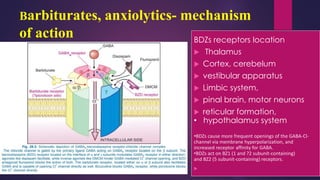
Barbiturates- mechanism of action
❖ Barbiturates enhance and mimic the action of GABA at
the GABAA receptor complex.
❖ activation leads to increased chloride conductance
Barbiturate binding to BrBs receptor decreases the rate of GABA dissociation and increases
the duration of GABA-activated chloride channel opening causing
hyperpolarization, hence inhibition or decreased excitability of the postsynaptic
neuron.
❖ hypnotic, muscle relaxant, anxiolytic, antiphobic, antiepileptic
effects
❖ At slightly higher concentrations, barbiturates directly activate
chloride channel opening even in the absence of GABA, leading
to "barbiturate anesthesia."
Barbiturates- Pharmacokinetics
❖ oral administration: Rapid absorption and onset of cetral action, slow and great distribution.
 metabolized in liver, without active metabolites. Phenobarbital is excreted unchanged.
Its excretion can be increased by alkalinization of the urine.
 Phenobarbital and meprobamate induce liver enzymes, reducing their blood
concentration, and this is one of the theory tolerance development.
 In the elderly and in those with decreased hepatic function, dosage should be reduced.
❖ An intravenous barbiturate bolus distributes first into a "central blood pool“ and to brain.
(Despite high affinity, adipose tissue takes up drug slowly due to relatively low perfusion.)
❖ Elimination clearance contributes almost nothing to termination of induction effect. Drug
effect is terminated in large part by uptake into lean tissues such as muscle.
❖ First-pass pulmonary uptake of thiopental is about 14%.
❖ After large or multiple doses or a continuous infusion of barbiturate, termination of drug
activity depends increasingly on adipose tissue uptake and ClE. After about 3 days of
thiopental administration for cerebral resuscitation, recovery took almost 4 days!
Barbiturates- Induction of General Anesthesia
❖ induce general anesthesia rapidly and pleasantly (painlessly).
❖ maximum effect in about 1 minute and duration about 5-8
minutes.
❖ Usual, recommended induction doses of thiopental:
- adults 2.5-4.5 mg/kg
- children 5-6 mg/kg
- infants 7-8 mg/kg
Since, some individuals seem "particularly sensitive" to thiopental, a
conservative technic might be to inject 1/4 of the calculated
(above) dose and observe patient response.
Barbiturates- side effects -Injection Complications
❖ urticarial rash: upper chest, neck, face; fades in a few minutes
 anaphylactoid reactions are occasionally seen: hives, facial edema, bronchospasm, shock
 absence of reaction to oral barbiturates does NOT ensure lack of sensitivity to IV barbiturates
▪ pain on intravenous injection - uncommon: thiopental 1-2% and methohexital <5% when
injected into small veins
▪ intra-arterial injection or subcutaneous extravasation:
pain edema, erythema -> sequelae ranging from slight soreness to extensive tissue
necrosis depending on concentration and total amount injected
 thiopental intra-arterial cause intense arterial spasm with possibly severe pain at and distal to the
injection site which may persist for hours and be associated with anesthesia or hyperesthesia of the
distal extremity, edema or motor weakness sequelae range from mild discomfort to gangrene and
loss of distal tissue
Barbiturates- side effects
CNS Effects- DEPRESSED associated symptoms
Barbiturates may be hyperalgesic in subanesthetic doses.
❖ Thiopental decreases CBF and ICP. CPP is maintained because ICP decreases more than
arterial pressure.
 Intraocular Pressure decreases -40%
Respiratory Effects
 central respiratory depression: both rate and depth of breathing are decreased (DEATH)
 respiration apparently returns toward normal in a few minutes, but responses to hypercapnia
and hypoxia remain depressed for a longer time
 low incidence of hypersalivation
 rare bronchospasm, mucociliary clearance depressed
Cardiovascular Effects
 venodilation (decreases 21% in patients with preload-independent artificial hearts and
constant cardiac output), thiopental also dilates pulmonary vessels, tacyarrhythmias occur
(unless hypercarbia or hypoxia occur), decreased sympathetic output from the CNS
Anxiolytics-effects
 from lat. Tranquillo - to make calm, serene
 small tranquilizers, ataractics (cause equanimity, peace of mind)
1. Anxiolytic (anti-anxiety)
2. Sedative (cause general sedation)
3. Antiphobic (elimination of fear)
4. Hypnotic (induce sleep)-night BDZs
5. Anticonvulsive
6. Vegetotropic (correction of vegetative n.s.)
7. Muscle relaxant (relax skeletal muscles)
8.Stimulating (do not cause drowsiness and sleep)- day BDZs
General effects
effects of night
BDZs
ANXIOLYTICS (TRANQUILLIZERS) CLASSIFICATION:
 Benzodiazepines (BZDs) :
 night: alprazolam*( xanax, alprax),
chlordiazepoxide*(librium, elenium),
diazepam*(valium, relanium), nitrazepam*(radedorm),
lorazepam (ativan), phenazepam*, oxazepam,
flurazepam, temazepam, estazolam
 day: medazepam *( rudotel), tophizopam (grandaxine ),
clobazam* ( frisium); don’t cause sleep
Benzodiazepine antagonist – flumazenil
cause
sleep
ANXIOLYTICS (TRANQUILLIZERS) CLASSIFICATION
Nonbenzodiazepines (NBZD)- miscellaneous:
 azapirones – buspirone (buspin, anxipar)*, gepirone, ipsapirone Haven’t
hypnotic action
 propandiols – meprobamate has hypnotic action- rare uses
 diphenylmethanes–benacthyzine (аmizyl) central CHOLINOBLOCKER
 trimethoxybenzoic acid der. – trioxazine,
hydroxyzine (atarax) has H1, M –blocking action+ sedative-hypnotic
action, its active metabolite - ceterizine-T1/2 7-20 hrs
 cyclopyrrolones – zopiclone (imovan, zylop),
➢ imidazopyredines – zolpidem (ivadal), zaleplone;
used for the treatment of
insomnia only
Barbiturates, anxiolytics- mechanism
of action BDZs receptors location
 Thalamus
 Cortex, cerebelum
 vestibular apparatus
 Limbic system,
 pinal brain, motor neurons
 reticular formation,
• hypothalamus system
•BDZs cause more frequent openings of the GABA-Cl-
channel via membrane hyperpolarization, and
increased receptor affinity for GABA.
•BDZs act on BZ1 (1 and ?2 subunit-containing)
and BZ2 (5 subunit-containing) receptors.

ANXIOLYTICS (TRANQUILLIZERS)
MECHANISM OF ACTION:
 Anxiolytic, antifobic effect - inhibition of the serotonergic
system
Sedative, hypnotic effect - inhibition of the nor- and
adrenergic system
Muorelaxation- inhibition of transmission of nervous
excitation in the spinal cord and reticular formation
Antiepileptic effect - inhibition of interneuronal transmission
of excitation in the brain
ANXIOLYTICS
Therapeutic use:
1. to stop anxiety, phobia, neurotic disturbances, hysteria (anxiolytics)
2. induce sleep in psychoemotion trauma(hypnotics), treatment of insomnia.
➢ Generalized Anxiety Disorder (anxious, nervous, edgy, restlessness and agitatation, tachycardia,
increased sweating, weeping and often gastrointestinal
disorders, motor activity).
 Phobic Disorders (fear of dolls, clauns, animals, claustrophobia, agoraphobia, etc.)- BDZs,
Antidepressants and MAOIs
 Social phobia (everyday interactions cause over anxiety, self-consciousness and
embarrassment because you fear being scrutinized or judged negatively by others, fear of
unreasonable unreal events (earthquakes, tsunamis).: BDZs, TCAs and MAOIs
 Panic Disorders ( sudden acute attacks of strong fear) : TCAs and MAOIs, alprazolam
 Obsessive-Compulsive Behavior (Compulsions are behaviors done in response to an obsessive
thought. A person with OCD may repeat these behaviors over and over again, possibly for
hours on end, in order to try and relieve anxiety) : clomipramine, SSRIs
 Posttraumatic Stress Disorder: antidepressants, Buspirone
Pharmacokinetic properties of ANXIOLYTICS
•
Pharmacokinetics of Benzodiazepines
❖ highly protein bound (60-95%)
❖Hepatic metabolism: BDZs undergo
microsomal oxidation (N-dealkylation and
aliphatic hydroxilation) and conjugation (to
glucoronides). Drugs have active metabolites
with half-lives greater than first substance.
Exp.: diazepam (Valium), which has
active metabolites (desmethyldiazepam and
oxazepam) and is long acting (t½ 20-80 hr).
✓BDZs cross the placental barrier. Detectable
in milk. Should be avoided during pregnancy and
lactation.
✓BDZs can induce microsomal enzyme activity.
❖Excreted in urine.
•
•SHORT ACTING -Up to 10 hours –
triazolam*, midazolam*,
Tophizopam
• moderate acting- Up to 24
hours - flunitrazepam*, lorazepam ,
аlprazolam*, temazepam, clobazam;
•long acting – more then 24
hours - nitrazepam*, fenazepam*,
clonazepam, chlordiazepoxide;
•BDZs have a wider margin of safety
then BARBs if used for short
periods.
BDZs side effects
▪ Prolonged use causes tolerance and dependance (1month and more long uses).
▪ Serious withdrawal syndrome can include convulsions and death.
▪ CNS depression:
drowsiness, excess sedation, impaired coordination, nausea, vomiting, confusion and
memory loss, RC and VMC, Unsteadiness of gait, nystagmus, tremor, speech and
swallowing disorders
•BDZs have less inhibitory effect on respiratory or cardio-vascular function compared
to BARBS and general anesthetics
▪Seizures and cardiac arrhythmias may occur following flumazenil administration if
BDZ were taken with TCAs.
▪
BDZs side effects
▪ Drug-Drug Interactions:
✓ BDZ's potentiate effects of other CNS depressants : alcohol ,
BARBs, Antidepressants, Narcotic analgesics, Drugs for anesthesia,
Sleeping Pills, Muscle Relaxants, Neuroleptics, Cardiac glycosides,
Antiparkinson agents
✓ BDZs reduce the effect of antiepileptic drugs, Indirect anticoagulants,
oral contraceptives
✓ The combination is contraindicated with irreversible irreversal MAO
inhibitors.
✓ Combination of anxiolytic drugs should be avoided.
Zolpidem
 Structurally unrelated but as effective as BDZs.
 Binds selectively to BZ1 receptors, Facilitates GABA-mediated
neuronal inhibition
 HYPNOTIC ACTION- 8 hrs.
 Minimal muscle relaxing and anticonvulsant
effect.
 Rapidly metabolized by liver enzymes into
inactive metabolites.
 Dosage should be reduced in patients with hepatic
dysfunction, the elderly and patients taking
cimetidine.
USES of BDZs
❑ Neurotic disorders
❑ Neurotic -like states
❑ Sleep disorders
❑ Premedication
❑ Epilepsy
❑ Hypertonicity of muscles (tetanus)
❑ Withdrawal syndrome
❑ Obsessive-phobic disturbances
❑ General anxiety disorders
BUSPIRONE - Most selective modern
anxiolytic.
❑ Blocks 5-HT release from presynaptic
membrane due to partial stimulation of 5-
HT1A rec. presynapticly
❑Buspirone does not have sedative effects
and does not potentiate CNS depressants.
❑ The anxiolytic effect of this drug takes
several weeks to develop gt used for GAD.
❑ Are well tolerated, no drug dependance.
❑ No rebound anxiety or signs of withdrawal
when discontinued.
❑ Highly effective for the treatment of
anxiety –phobic disorders
❑Not effective in panic disorders.
Properties of BUSPIRONE
•Side effects
•Tachycardia, palpitations,
nervousness, GI
distress and paresthesias may
occur.
•Causes a dose-dependent
pupillary constriction.
Pharmacokinetics
•Rapidly absorbed orally.
•Undergoes extensive hepatic
metabolism
(hydroxylation and dealkylation) to form
several active metabolites (e.g. 1-(2-
pyrimidyl-piperazine, 1-PP)
•Well tolerated by elderly, but may have
slow
clearance.
•Analogs: Ipsapirone, gepirone,
tandospirone.
Pharmacotherapy of Epilepsy and Convulsive
states.
 Chronic neuropsychiatric brain
disease characterized by repeated
seizures that occur as a result of
excessive neural activity and are
accompanied by various clinical and
paraclinical manifestations. (EEG
changes)
This group, in addition to generalized
seizures, includes myoclonic attacks of
puberty, generalized nocturnal seizures,
as well as some forms of epilepsy with
myoclonic-astatic focal seizures.
 Many great people (Socrates, Plato, Julius
Caesar, Caligula, Petrarch, Emperor Charles
V) suffered from epilepsy, which led to the
spread of the theory that epileptics are
people of great intelligence.
CAUSES of Epilepsy and Convulsive states.
 Spontaneous (genetic) epilepsy – idiopathic (there is no primary brain disease).
 Cerebral trauma (5-10% of cases )
 Perinatal hypoxia
 Infections
 Degenerative diseases of the nervous system
 Alcohol abuse
 Stroke (only 4-5% of patients develop chronic seizures). Post-stroke attacks usually respond well to treatment.
 Brain tumors (15%)
 Psychostimulants , cocaine
 stopping the use of barbiturates, benzodiazepines (valium, librium, dalman), alcohol ,
 with strong neuroleptics (aminazine), tricyclic antidepressants (amitriptyline) and monoamine oxidase inhibitors
(nialamide, etc.), drugs of the penicillin group.
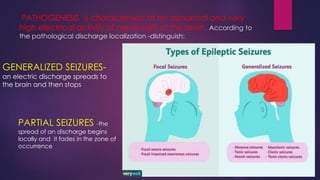
PATHOGENESIS is characterised of an abnormal and very
high electrical activity of nerve cells of the brain. According to
the pathological discharge localization -distinguish:
GENERALIZED SEIZURES-
an electric discharge spreads to
the brain and then stops
PARTIAL SEIZURES -the
spread of an discharge begins
locally and it fades in the zone of
occurrence
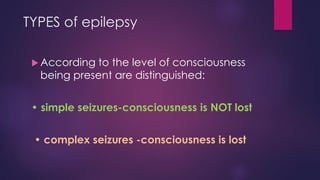
TYPES of epilepsy
 According to the level of consciousness
being present are distinguished:
• simple seizures-consciousness is NOT lost
• complex seizures -consciousness is lost
classification of epilepsy PARTIAL (FOCAL)
SEIZURES
 The symptoms strictly depend on the brain region(s) involved
 It is typically confined to single brain hemisphere
 Simple partial:
• The consciousness is preserved • Duration: 0,5-3 min
• Motor functions: jerking, spasms or rigidity of the particular muscle groups . Jacksonian epilepsy: repetitive jerking of a particular
muscle group, which spreads and may involve much of the body within 2 minutes before dying out
• Perception: bizarre or strange sensory experience (visual, taste or olfactory) • Mood and behavioral: fear, „deja-vu“, flare of anger,
emotional outbursts
• Complex partial(psychomotor epilepsy, temporal lobe epilepsy) : Lost of consciousness
• Often preceded with „aura“ : Stereotype behavior (often bizarre) - dressing, walking, crumpling, smacking, hair combing
-After few minutes the patients recovers, however, without recollection of the event
- may Secondarily generalised
GENERALIZED SEIZURES-the whole brain is involved
• Immediate loss of consciousness
• Tonic-clonic seizures (grand mal) - Duration 1-3 min
• TONIC PHASE (up to 1 min): an initial strong contraction of the whole musculature, causing a rigid extensor
spasm and fall. Respiration stops and defecation, micturation and salivation often occur.
• CLONIC PHASE (2-4 min): a series of violent, synchronous jerks.
• The patient gradually recovers, felling tired and confused. Total amnesia is present. Injury may occur during the
convulsive episode
• Absence seizures (petit mal) • are much less dramatic • may occur with high frequency • The patients
abruptly ceases whatever he or she was doing, sometimes stopping speaking in mid-sentence and stares
vacantly for a few sec (blinking), with little or no motor disturbance.
The patient is unaware of his or her surroundings and recovers abruptly with no after-effects • Typically in children
– impaired learning capabilities
❖ Myoclonic seizures (isolated- shock-like jerks)
❖ Tonic seizures (muscle rigidity)
❖ Atonic seizures
Status epilepticus
• Most of epileptic seizures are terminated spontaneously
• Status epilepticus is clinical status, characterised by the abnormally prolonged seizures
or when one seizure skips to another one (repeatedly) without patient becoming conscious
• The most dangerous form is generalised convulsive form (GCSE) –leads to
significant morbidity and mortality (5-15%)
• There is a negative energy balance in the brain
• In addition to: respiratory insufficiency and hypoxia
• Hyperthermia and rhabdomyolysis
• High secretion of catecholamines induce hypertension, tachycardia, cardiac arrhythmias,
and hyperglycemia
• Diff. Diagnostics: intoxications, withdrawal syndrome (e.g., BZD).
➢ prevention or significantly reduce the frequency and severity of seizures by
➢ Monotherapy is the preferable. Consider demands on safety and
tolerability, inc. teratogenicity
➢ The drug is first started with a small dose, with a gradual increase until
therapeutic efficacy is achieved or the first signs of side effects appear. It is
necessary to use AEP in adequate age dosages.
➢ If seizures are resistant to the maximum dose of one drug, a replacement is
made or a second drug is added in accordance with the dominant type of
seizures. Before the combination of antiepileptics drug is responsibly
started, monotherapy with several (2-3) drugs should be tested
➢ When combination treatment is needed: prefer to add drugs free of
significant PK or PD interactions (to keep the treatment manageable)
➢ We do NOT treat acute seizure (except for status epilepticus) approach •
➢ elimination of factors (situations or substances) that provoke seizures;
PHARMACOTHERAPY is typically long-lasting
(even life-long)
PHARMACOTHERAPY
 The main action of AEP are associated with exposure to ion channels, neurotransmitter
receptors and neurotransmitter metabolites.
Classification of antiepileptic drugs
 Voltage gated Na+ channel Inhibition:
phenytoin (diphenine), carbamazepine, valproic acid and its salts,
lamotrigine, topiramate, Zonisamide?
 T-type Calcium Channel Blockers: Ethosuximide, trimethine, Valproates, gabapentin
 Blockers of the glutamatergic system:
-inhibits the release of glutamate- lamotrigine
-blocks NMDA receptors- topiramate
➢ Activators of the GABA - ergic system:
• GABA-A receptor activators: Diazepam, lorazepam, clonazepam, phenobarbital
• Stimulants of GABA synthesis: valproates
• Reduce GABA inactivation: vigabatrin
• Blocks the neuronal re-uptake of GABA: thiagabine
• Levetiracetam -an analogue to nootropic drug piracetam • Antiepileptic mechanism
of action is unknown (it is not the common one) • Free of serious PK interactions •
Relatively well tolerable
• Current antiepileptic drugs are effective in controlling
seizures in about 75% of patients
• In 50% of patients we obtain nearly complete eliminations
of seizure occurrence
• In 25% of patients significantly reduce the frequency and
severity of seizures was achived
• The choice of drugs is based on type of seizures, tolerability
of a drug and response to therapy (empiric part)
• The therapy is often started with the lower dose and the
dose is „titrated“ gradually thereafter
• The use ofantiepileptics is often limited by their adverse
effects
Therapy of epilepsy
❖ used antiepileptics with broad indication spectrum (with
exception of absences): • Carbamazepine, valproate,
lamotrigine, phenytoin
❖ Partial seizures • Carbamazepine, valproate, lamotrigine
phenytoin, -Alternatives: gabapentin, topiramate, tiagabine
❖ Tonic-clonic (grand mal) • phenytoin, carbamazepine, valproate
• Alternatives: lamotrigine, topiramate, phenobarbital (primidone)
❖ Absence (petit mal) • Ethosuximide • Valproate – especially in the
case that tonic-clonic seizures are also present • Alternatives:
lamotrigine , Levetiracetam
❖ Myoclonic • clonazepam, valproate • Alternatives: lamotrigine
Therapy of epilepsy
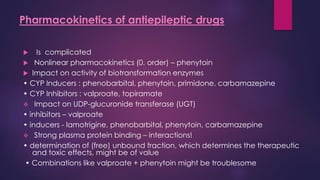
 Is complicated
 Nonlinear pharmacokinetics (0. order) – phenytoin
 Impact on activity of biotransformation enzymes
• CYP Inducers : phenobarbital, phenytoin, primidone, carbamazepine
• CYP Inhibitors : valproate, topiramate
❖ Impact on UDP-glucuronide transferase (UGT)
• inhibitors – valproate
• inducers - lamotrigine, phenobarbital, phenytoin, carbamazepine
❖ Strong plasma protein binding – interactions!
• determination of (free) unbound fraction, which determines the therapeutic
and toxic effects, might be of value
• Combinations like valproate + phenytoin might be troublesome
Pharmacokinetics of antiepileptic drugs
 Benzodiazepines
• Clonazepam is among drugs of choice in myoclonic seizures
▪ May be an alternative in some other seizures • Is an alternative to diazepam
(i.v.) in status epilepticus treatment
▪ Disadvantage – the tolerance develops on the effects, sedation (dose
dependent), paradox excitation might sometimes occur
▪ •Diazepam - i.v. in status epilepticus treatment(rapid onset of action,
redistribution may cause quite rapid decrease of effectiveness)
▪ Lorazepam (i.v., an alternative to diazepam in SE treatment, slower onset but
longer duration of action)
 Clobazam
Therapy of epilepsy
 Phenytoin • A derivative of hydantoin • originally derived from barbiturates • but there is a different mech.
of action to barbiturates and there is also no sedative/hypnotic action • PK: 0. order with high inter- and
intraindividual variability
• Good absorption from GIT (almost complete) • More than 90% is plasma protein bound – interaction e.g.,
with valproate • Biotransformation – CYP 2C (saturable) inactive metabolites • unpredictably high
change in plasma concentrations (toxicity)! • Induction of CYP a UGT– decreased plasma concentrations
and clinical effects of drugs administered concomitantly • Attention should be paid e.g., inbhormonal
contraception or warfarin • Be careful about generic prescription ! • Rather avoid in combination regimens !
Phenytoin Adverse effects -Type A (dose-related) • vertigo, ataxia(lower Cpl) , • confusion with intellectual
deterioration (higher Cpl) • gums hyperplasia (gradual development, disfiguring) • hirsutism (gradual
development, androgen secretion) • megaloblastic anemia (in deficiency of folic acid) Minor effect on
cognition and vigility (virtually no sedation!) Adverse effects Type B (not dose-related) quite common -
allergy: rashes (quite common) - idiosyncrasy: hepatitis (rather rare) Adverse effects Type D -
TERATOGENICITY the increased incidence of fetal malformations in children born to epileptic mothers
“fetal hydantoin syndrom“, particularly the occurrence of cleft palate (epoxide metabolite?)

Therapy of epilepsy
 Carbamazepine • Derived from TCA (imunostilben structure)
 Widely used in clinical practice (also in neuropathic pain and bi-polar disorder!)
 PK : well absorbed • a powerful inducer of hepatic CYP450 • Autoinduction
 plasma half-life is becoming shorter
 • Heteroinduction- accelerates biotransformation of many other drugs (phenytoin,
warfarin)
 DRUG INTERACTIONS! -the combination with other antiepileptic drugs should be
rather avoided
 ADVERSE EFFECTS: Relatively well tolerable
1. Adverse effects Type A (dose-related) • low incidence: drowsiness, dizziness, ataxia • more severe mental and motor
disturbances, water retention • to avoid it: treatment is usually started with a low dose
2. Adverse effects Type B (not dose-related) severe bone-marrow depression (very rare) • Risk of teretogenicity is significant
Therapy of epilepsy
 Valproate • was discovered by chance
 VERY broad spectrum drug (esp. in children)
 The only drug effective in both grand and petit mal!
 Besides antiepileptic effects, it might be also used in psychiatry as a „mood
stabilizer“ (with advantage where epilepsy is present as comorbidity)
 Of relatively low toxicity (low frequency of adverse reactions) • Mechanism
of action: complex
 PK: high degree of plasma protein binding, CYP450inhibition, it is excreted
in urine as a metabolite
Therapy of epilepsy
Valproate Adverse reactions
 minimal sedative action,
 reversible alopecia,
 weight gain,
 increased probability of bleeding,
 severe hepatotoxicity is very rare.
 Teratogenicity!!!! Defect of neural tube (spina bifida).
 Might be better to consider an alternative in females in reproductive
age.
 Might be combined with ethosuximide in absences
 Ethosuximide
• Drug of choice in absences (inactive in other seizures)
• Mechanism of action: T-typeCa2+ channel inhibition
• PK: good oral absorption, biotransformation in the liver to
inactive metabolites
• Adverse reactions:(well tolerable in optimal dosage)
• Dose dependent: CNS - drowsiness, headache, fatigue, GIT –
nausea, vomiting (inup to 40% of patients)
• Dose independent : idiosyncratic reactions – „lupus like“,
hematopoietic disturbances
Therapy of epilepsy
 – Na+ channel inhibition
 Broad spectrum in epilepsy treatment • Good response in monotherapy (may
be drug of choice or often an „alternative of choice“)
❖ good for combinations (dose adaptation in drugs affecting biotransformation
may be necessary – phenytoin x valproate) • Well tolerable • Without PK
abnormalities = relatively well predictable effect. •
❖ Adverse reactions: Dose dependent: CNS – ataxia, headache, diplopia;
idiosyncratic skin reaction; aggressivity provocation
❖ • Vigabatrin – irreversible GABA-transaminase inhibition • Response might be
obtained even in some types of epilepsy refractory to other treatment •
WITHOUT PK interactions • Relatively well tolerable, • Rare induction of
acute psychotic reactions was observed (reversible) • Visual disturbances (esp.
disturbances of the perimeter – visual field), monitoring by ophthalmologist is
recommended
Newer antiepileptics (3rd
Generation) Lamotrigin
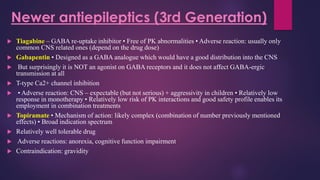
 Tiagabine – GABA re-uptake inhibitor • Free of PK abnormalities • Adverse reaction: usually only
common CNS related ones (depend on the drug dose)
 Gabapentin • Designed as a GABA analogue which would have a good distribution into the CNS
 But surprisingly it is NOT an agonist on GABA receptors and it does not affect GABA-ergic
transmission at all
 T-type Ca2+ channel inhibition
 • Adverse reaction: CNS – expectable (but not serious) + aggressivity in children • Relatively low
response in monotherapy • Relatively low risk of PK interactions and good safety profile enables its
employment in combination treatments
 Topiramate • Mechanism of action: likely complex (combination of number previously mentioned
effects) • Broad indication spectrum
 Relatively well tolerable drug
 Adverse reactions: anorexia, cognitive function impairment
 Contraindication: gravidity
Newer antiepileptics (3rd Generation)

SEDATIVE-hypnotics-epilepsy 1 3.pdf pharma

  • 1.
    GENERAL AND CLINICALPHARMACOLOGY DEPARTMENT ASSOC. PROFESSOR KOROVYAKOVA E.A. psychotropic drugs SEDATIVE- HYPNOTICS ANXIOLYTICS antiepileptics
  • 2.
    psychotropic drugs  thisis a group of drugs that have a specific therapeutic or preventive effect in mental illness WHO classification is based on the clinical focus of the class action 1. Neuroleptics (antipsychotics) 2. Anxiolytics (Tranquilizers) 3. Antidepressants 4. Normotimics (antimanic agents) 5. Hypnotics 6. Neurometabolics: Nootrops 7. Psychostimulants 8. Psychodisleptics
  • 3.
    MENTAL DISORDERS CLASSIFICATION ●internal tension, general arousal, autism, anxiety, fear, depression- can be combined and considered as symptoms of various syndromes and mental illnesses, such as schizophrenia, or neurotic disorder, however, some dominant symptoms identify the specificity of a mental disorder, for example, a mood disorder symptom indicates an affective disorder and will not necessarily be present in a neurotic disorder or with an anxiety disorder. sedation is a condition that is expressed in general calm, the disappearance of internal tension, the weakening of anxiety and fear (but not in the disappearance of these symptoms), sedation helps to reduce the risk of exacerbation of epileptic disease, neurosis, anxiety disorders, insomnia, algesia, vegetative disturbances like act Sedative drugs
  • 4.
    SEDATIVE CLASSIFICATION ● plantder. - motherwort herb, valerian, lemon balm; ● complex drugs – corvalol, valocardine, sedalgine; sedatives nonspecifically and not strongly depress the cerebral cortex and slightly reduce the functional efficiency of brain cells, do not cause physiological sleep phases Therapeutic use: ❖Reduce arousal, internal tension ❖to relief anxiety, phobia ❖promote falling asleep
  • 5.
    SEDATIVE/HYPNOTICS/ANXIOLYTICS CLASSIFICATION Sedative- hypnotics: ●1-st generation: Barbiturates ● 2-d generation: Benzodiazepines ● 3- d generation: Nonbenzodiazepines  others: ● aliphatic compounds- Chloral hydrate ● antihistaminics – diphenhydramine, promethazine, Doxylamine*. ● drugs used in the distortion of biorhythms (change time zones) - melatonin (melaxen), ralmeteon. ● antidepressants - amitriptyline, mianserin, agomelatine, etc.
  • 6.
    SEDATIVE/HYPNOTICS/ANXIOLYTICS CLASSIFICATION Sedative- hypnotics: Hypnoticshave different mechanisms of action and differ in the strength of the hypnotic effect and tolerability. Classes of drugs that cause physiological sleep phases are the most effective, however, the optimal ones are those that are better tolerated and have pharmacodynamic advantages ● 1-st generation: Barbiturates –not used at our days ACTUAL ● 2-d generation: Benzodiazepines : NIGHT -short acting - triazolam*, midazolam*; moderate acting- flunitrazepam*, аlprazolam*; long acting - nitrazepam*, fenazepam*; ● 3- d generation: Nonbenzodiazepines – zopiclone (imovan, zylop), zolpidem (ivadal), zaleplone;
  • 7.
    Barbiturates- history ❖ barbituricacid was synthesized as the first barbiturate In 1864 von Baeyer ❖ diethylbarbituric acid, was synthesized by Fischer and Mering in 1903 as hypnotic agent ❖ Others were developed and tested, but all had too slow onset and too long duration of action. ❖ In 1932 Weese and Schapff synthesized hexobarbital -the first rapid onset, short duration barbiturate, but agent caused undesirable excitatory side effects. ❖ In1934 Thiopental was first administered by Waters (Wisconsin) and Lundy (Mayo Clinic), it didn’t cause excitatory side effects. When hexobarbital and thiopental were used to anesthetize the wounded at Pearl Harbor in 1941, there were so many deaths that intravenous anesthesia with these agents was later described as "an ideal method of euthanasia."
  • 8.
    Barbiturates: ➢ LONG acting:phenobarbital* , pentobarbital, mephobarbital, secobarbital , amobarbital, cyclobarbital, aprobarbital ➢ SHORT acting: thiopental, hexobarbital - i/v anesthetics ➢they are old TRUE hypnotic class ❖ cause a dose-dependent effect: sedative, hypnotic, general anesth, esia ❖now aren’t used for the correction of sleep and narcosis because of high risk of adverse depressive CNS effects development ❖in ½-1/4 of therapeutic dose produce sedative action –use in complex drugs to potentiate analgesia, decrease BP ❖Pentobarbital is used to relieve the epileptic status in epileptic disease !!!
  • 9.
    Barbiturates- mechanism ofaction ❖ Barbiturates enhance and mimic the action of GABA at the GABAA receptor complex. ❖ activation leads to increased chloride conductance Barbiturate binding to BrBs receptor decreases the rate of GABA dissociation and increases the duration of GABA-activated chloride channel opening causing hyperpolarization, hence inhibition or decreased excitability of the postsynaptic neuron. ❖ hypnotic, muscle relaxant, anxiolytic, antiphobic, antiepileptic effects ❖ At slightly higher concentrations, barbiturates directly activate chloride channel opening even in the absence of GABA, leading to "barbiturate anesthesia."
  • 10.
    Barbiturates- Pharmacokinetics ❖ oraladministration: Rapid absorption and onset of cetral action, slow and great distribution.  metabolized in liver, without active metabolites. Phenobarbital is excreted unchanged. Its excretion can be increased by alkalinization of the urine.  Phenobarbital and meprobamate induce liver enzymes, reducing their blood concentration, and this is one of the theory tolerance development.  In the elderly and in those with decreased hepatic function, dosage should be reduced. ❖ An intravenous barbiturate bolus distributes first into a "central blood pool“ and to brain. (Despite high affinity, adipose tissue takes up drug slowly due to relatively low perfusion.) ❖ Elimination clearance contributes almost nothing to termination of induction effect. Drug effect is terminated in large part by uptake into lean tissues such as muscle. ❖ First-pass pulmonary uptake of thiopental is about 14%. ❖ After large or multiple doses or a continuous infusion of barbiturate, termination of drug activity depends increasingly on adipose tissue uptake and ClE. After about 3 days of thiopental administration for cerebral resuscitation, recovery took almost 4 days!
  • 11.
    Barbiturates- Induction ofGeneral Anesthesia ❖ induce general anesthesia rapidly and pleasantly (painlessly). ❖ maximum effect in about 1 minute and duration about 5-8 minutes. ❖ Usual, recommended induction doses of thiopental: - adults 2.5-4.5 mg/kg - children 5-6 mg/kg - infants 7-8 mg/kg Since, some individuals seem "particularly sensitive" to thiopental, a conservative technic might be to inject 1/4 of the calculated (above) dose and observe patient response.
  • 12.
    Barbiturates- side effects-Injection Complications ❖ urticarial rash: upper chest, neck, face; fades in a few minutes  anaphylactoid reactions are occasionally seen: hives, facial edema, bronchospasm, shock  absence of reaction to oral barbiturates does NOT ensure lack of sensitivity to IV barbiturates ▪ pain on intravenous injection - uncommon: thiopental 1-2% and methohexital <5% when injected into small veins ▪ intra-arterial injection or subcutaneous extravasation: pain edema, erythema -> sequelae ranging from slight soreness to extensive tissue necrosis depending on concentration and total amount injected  thiopental intra-arterial cause intense arterial spasm with possibly severe pain at and distal to the injection site which may persist for hours and be associated with anesthesia or hyperesthesia of the distal extremity, edema or motor weakness sequelae range from mild discomfort to gangrene and loss of distal tissue
  • 13.
    Barbiturates- side effects CNSEffects- DEPRESSED associated symptoms Barbiturates may be hyperalgesic in subanesthetic doses. ❖ Thiopental decreases CBF and ICP. CPP is maintained because ICP decreases more than arterial pressure.  Intraocular Pressure decreases -40% Respiratory Effects  central respiratory depression: both rate and depth of breathing are decreased (DEATH)  respiration apparently returns toward normal in a few minutes, but responses to hypercapnia and hypoxia remain depressed for a longer time  low incidence of hypersalivation  rare bronchospasm, mucociliary clearance depressed Cardiovascular Effects  venodilation (decreases 21% in patients with preload-independent artificial hearts and constant cardiac output), thiopental also dilates pulmonary vessels, tacyarrhythmias occur (unless hypercarbia or hypoxia occur), decreased sympathetic output from the CNS
  • 14.
    Anxiolytics-effects  from lat.Tranquillo - to make calm, serene  small tranquilizers, ataractics (cause equanimity, peace of mind) 1. Anxiolytic (anti-anxiety) 2. Sedative (cause general sedation) 3. Antiphobic (elimination of fear) 4. Hypnotic (induce sleep)-night BDZs 5. Anticonvulsive 6. Vegetotropic (correction of vegetative n.s.) 7. Muscle relaxant (relax skeletal muscles) 8.Stimulating (do not cause drowsiness and sleep)- day BDZs General effects effects of night BDZs
  • 15.
    ANXIOLYTICS (TRANQUILLIZERS) CLASSIFICATION: Benzodiazepines (BZDs) :  night: alprazolam*( xanax, alprax), chlordiazepoxide*(librium, elenium), diazepam*(valium, relanium), nitrazepam*(radedorm), lorazepam (ativan), phenazepam*, oxazepam, flurazepam, temazepam, estazolam  day: medazepam *( rudotel), tophizopam (grandaxine ), clobazam* ( frisium); don’t cause sleep Benzodiazepine antagonist – flumazenil cause sleep
  • 16.
    ANXIOLYTICS (TRANQUILLIZERS) CLASSIFICATION Nonbenzodiazepines(NBZD)- miscellaneous:  azapirones – buspirone (buspin, anxipar)*, gepirone, ipsapirone Haven’t hypnotic action  propandiols – meprobamate has hypnotic action- rare uses  diphenylmethanes–benacthyzine (аmizyl) central CHOLINOBLOCKER  trimethoxybenzoic acid der. – trioxazine, hydroxyzine (atarax) has H1, M –blocking action+ sedative-hypnotic action, its active metabolite - ceterizine-T1/2 7-20 hrs  cyclopyrrolones – zopiclone (imovan, zylop), ➢ imidazopyredines – zolpidem (ivadal), zaleplone; used for the treatment of insomnia only
  • 17.
    Barbiturates, anxiolytics- mechanism ofaction BDZs receptors location  Thalamus  Cortex, cerebelum  vestibular apparatus  Limbic system,  pinal brain, motor neurons  reticular formation, • hypothalamus system •BDZs cause more frequent openings of the GABA-Cl- channel via membrane hyperpolarization, and increased receptor affinity for GABA. •BDZs act on BZ1 (1 and ?2 subunit-containing) and BZ2 (5 subunit-containing) receptors. 
  • 18.
    ANXIOLYTICS (TRANQUILLIZERS) MECHANISM OFACTION:  Anxiolytic, antifobic effect - inhibition of the serotonergic system Sedative, hypnotic effect - inhibition of the nor- and adrenergic system Muorelaxation- inhibition of transmission of nervous excitation in the spinal cord and reticular formation Antiepileptic effect - inhibition of interneuronal transmission of excitation in the brain
  • 19.
    ANXIOLYTICS Therapeutic use: 1. tostop anxiety, phobia, neurotic disturbances, hysteria (anxiolytics) 2. induce sleep in psychoemotion trauma(hypnotics), treatment of insomnia. ➢ Generalized Anxiety Disorder (anxious, nervous, edgy, restlessness and agitatation, tachycardia, increased sweating, weeping and often gastrointestinal disorders, motor activity).  Phobic Disorders (fear of dolls, clauns, animals, claustrophobia, agoraphobia, etc.)- BDZs, Antidepressants and MAOIs  Social phobia (everyday interactions cause over anxiety, self-consciousness and embarrassment because you fear being scrutinized or judged negatively by others, fear of unreasonable unreal events (earthquakes, tsunamis).: BDZs, TCAs and MAOIs  Panic Disorders ( sudden acute attacks of strong fear) : TCAs and MAOIs, alprazolam  Obsessive-Compulsive Behavior (Compulsions are behaviors done in response to an obsessive thought. A person with OCD may repeat these behaviors over and over again, possibly for hours on end, in order to try and relieve anxiety) : clomipramine, SSRIs  Posttraumatic Stress Disorder: antidepressants, Buspirone
  • 20.
    Pharmacokinetic properties ofANXIOLYTICS • Pharmacokinetics of Benzodiazepines ❖ highly protein bound (60-95%) ❖Hepatic metabolism: BDZs undergo microsomal oxidation (N-dealkylation and aliphatic hydroxilation) and conjugation (to glucoronides). Drugs have active metabolites with half-lives greater than first substance. Exp.: diazepam (Valium), which has active metabolites (desmethyldiazepam and oxazepam) and is long acting (t½ 20-80 hr). ✓BDZs cross the placental barrier. Detectable in milk. Should be avoided during pregnancy and lactation. ✓BDZs can induce microsomal enzyme activity. ❖Excreted in urine. • •SHORT ACTING -Up to 10 hours – triazolam*, midazolam*, Tophizopam • moderate acting- Up to 24 hours - flunitrazepam*, lorazepam , аlprazolam*, temazepam, clobazam; •long acting – more then 24 hours - nitrazepam*, fenazepam*, clonazepam, chlordiazepoxide; •BDZs have a wider margin of safety then BARBs if used for short periods.
  • 21.
    BDZs side effects ▪Prolonged use causes tolerance and dependance (1month and more long uses). ▪ Serious withdrawal syndrome can include convulsions and death. ▪ CNS depression: drowsiness, excess sedation, impaired coordination, nausea, vomiting, confusion and memory loss, RC and VMC, Unsteadiness of gait, nystagmus, tremor, speech and swallowing disorders •BDZs have less inhibitory effect on respiratory or cardio-vascular function compared to BARBS and general anesthetics ▪Seizures and cardiac arrhythmias may occur following flumazenil administration if BDZ were taken with TCAs. ▪
  • 22.
    BDZs side effects ▪Drug-Drug Interactions: ✓ BDZ's potentiate effects of other CNS depressants : alcohol , BARBs, Antidepressants, Narcotic analgesics, Drugs for anesthesia, Sleeping Pills, Muscle Relaxants, Neuroleptics, Cardiac glycosides, Antiparkinson agents ✓ BDZs reduce the effect of antiepileptic drugs, Indirect anticoagulants, oral contraceptives ✓ The combination is contraindicated with irreversible irreversal MAO inhibitors. ✓ Combination of anxiolytic drugs should be avoided.
  • 23.
    Zolpidem  Structurally unrelatedbut as effective as BDZs.  Binds selectively to BZ1 receptors, Facilitates GABA-mediated neuronal inhibition  HYPNOTIC ACTION- 8 hrs.  Minimal muscle relaxing and anticonvulsant effect.  Rapidly metabolized by liver enzymes into inactive metabolites.  Dosage should be reduced in patients with hepatic dysfunction, the elderly and patients taking cimetidine.
  • 24.
    USES of BDZs ❑Neurotic disorders ❑ Neurotic -like states ❑ Sleep disorders ❑ Premedication ❑ Epilepsy ❑ Hypertonicity of muscles (tetanus) ❑ Withdrawal syndrome ❑ Obsessive-phobic disturbances ❑ General anxiety disorders BUSPIRONE - Most selective modern anxiolytic. ❑ Blocks 5-HT release from presynaptic membrane due to partial stimulation of 5- HT1A rec. presynapticly ❑Buspirone does not have sedative effects and does not potentiate CNS depressants. ❑ The anxiolytic effect of this drug takes several weeks to develop gt used for GAD. ❑ Are well tolerated, no drug dependance. ❑ No rebound anxiety or signs of withdrawal when discontinued. ❑ Highly effective for the treatment of anxiety –phobic disorders ❑Not effective in panic disorders.
  • 25.
    Properties of BUSPIRONE •Sideeffects •Tachycardia, palpitations, nervousness, GI distress and paresthesias may occur. •Causes a dose-dependent pupillary constriction. Pharmacokinetics •Rapidly absorbed orally. •Undergoes extensive hepatic metabolism (hydroxylation and dealkylation) to form several active metabolites (e.g. 1-(2- pyrimidyl-piperazine, 1-PP) •Well tolerated by elderly, but may have slow clearance. •Analogs: Ipsapirone, gepirone, tandospirone.
  • 26.
    Pharmacotherapy of Epilepsyand Convulsive states.  Chronic neuropsychiatric brain disease characterized by repeated seizures that occur as a result of excessive neural activity and are accompanied by various clinical and paraclinical manifestations. (EEG changes) This group, in addition to generalized seizures, includes myoclonic attacks of puberty, generalized nocturnal seizures, as well as some forms of epilepsy with myoclonic-astatic focal seizures.  Many great people (Socrates, Plato, Julius Caesar, Caligula, Petrarch, Emperor Charles V) suffered from epilepsy, which led to the spread of the theory that epileptics are people of great intelligence.
  • 27.
    CAUSES of Epilepsyand Convulsive states.  Spontaneous (genetic) epilepsy – idiopathic (there is no primary brain disease).  Cerebral trauma (5-10% of cases )  Perinatal hypoxia  Infections  Degenerative diseases of the nervous system  Alcohol abuse  Stroke (only 4-5% of patients develop chronic seizures). Post-stroke attacks usually respond well to treatment.  Brain tumors (15%)  Psychostimulants , cocaine  stopping the use of barbiturates, benzodiazepines (valium, librium, dalman), alcohol ,  with strong neuroleptics (aminazine), tricyclic antidepressants (amitriptyline) and monoamine oxidase inhibitors (nialamide, etc.), drugs of the penicillin group.
  • 28.
    PATHOGENESIS is characterisedof an abnormal and very high electrical activity of nerve cells of the brain. According to the pathological discharge localization -distinguish: GENERALIZED SEIZURES- an electric discharge spreads to the brain and then stops PARTIAL SEIZURES -the spread of an discharge begins locally and it fades in the zone of occurrence
  • 29.
    TYPES of epilepsy According to the level of consciousness being present are distinguished: • simple seizures-consciousness is NOT lost • complex seizures -consciousness is lost
  • 30.
    classification of epilepsyPARTIAL (FOCAL) SEIZURES  The symptoms strictly depend on the brain region(s) involved  It is typically confined to single brain hemisphere  Simple partial: • The consciousness is preserved • Duration: 0,5-3 min • Motor functions: jerking, spasms or rigidity of the particular muscle groups . Jacksonian epilepsy: repetitive jerking of a particular muscle group, which spreads and may involve much of the body within 2 minutes before dying out • Perception: bizarre or strange sensory experience (visual, taste or olfactory) • Mood and behavioral: fear, „deja-vu“, flare of anger, emotional outbursts • Complex partial(psychomotor epilepsy, temporal lobe epilepsy) : Lost of consciousness • Often preceded with „aura“ : Stereotype behavior (often bizarre) - dressing, walking, crumpling, smacking, hair combing -After few minutes the patients recovers, however, without recollection of the event - may Secondarily generalised
  • 31.
    GENERALIZED SEIZURES-the wholebrain is involved • Immediate loss of consciousness • Tonic-clonic seizures (grand mal) - Duration 1-3 min • TONIC PHASE (up to 1 min): an initial strong contraction of the whole musculature, causing a rigid extensor spasm and fall. Respiration stops and defecation, micturation and salivation often occur. • CLONIC PHASE (2-4 min): a series of violent, synchronous jerks. • The patient gradually recovers, felling tired and confused. Total amnesia is present. Injury may occur during the convulsive episode • Absence seizures (petit mal) • are much less dramatic • may occur with high frequency • The patients abruptly ceases whatever he or she was doing, sometimes stopping speaking in mid-sentence and stares vacantly for a few sec (blinking), with little or no motor disturbance. The patient is unaware of his or her surroundings and recovers abruptly with no after-effects • Typically in children – impaired learning capabilities ❖ Myoclonic seizures (isolated- shock-like jerks) ❖ Tonic seizures (muscle rigidity) ❖ Atonic seizures
  • 32.
    Status epilepticus • Mostof epileptic seizures are terminated spontaneously • Status epilepticus is clinical status, characterised by the abnormally prolonged seizures or when one seizure skips to another one (repeatedly) without patient becoming conscious • The most dangerous form is generalised convulsive form (GCSE) –leads to significant morbidity and mortality (5-15%) • There is a negative energy balance in the brain • In addition to: respiratory insufficiency and hypoxia • Hyperthermia and rhabdomyolysis • High secretion of catecholamines induce hypertension, tachycardia, cardiac arrhythmias, and hyperglycemia • Diff. Diagnostics: intoxications, withdrawal syndrome (e.g., BZD).
  • 33.
    ➢ prevention orsignificantly reduce the frequency and severity of seizures by ➢ Monotherapy is the preferable. Consider demands on safety and tolerability, inc. teratogenicity ➢ The drug is first started with a small dose, with a gradual increase until therapeutic efficacy is achieved or the first signs of side effects appear. It is necessary to use AEP in adequate age dosages. ➢ If seizures are resistant to the maximum dose of one drug, a replacement is made or a second drug is added in accordance with the dominant type of seizures. Before the combination of antiepileptics drug is responsibly started, monotherapy with several (2-3) drugs should be tested ➢ When combination treatment is needed: prefer to add drugs free of significant PK or PD interactions (to keep the treatment manageable) ➢ We do NOT treat acute seizure (except for status epilepticus) approach • ➢ elimination of factors (situations or substances) that provoke seizures; PHARMACOTHERAPY is typically long-lasting (even life-long)
  • 34.
    PHARMACOTHERAPY  The mainaction of AEP are associated with exposure to ion channels, neurotransmitter receptors and neurotransmitter metabolites. Classification of antiepileptic drugs  Voltage gated Na+ channel Inhibition: phenytoin (diphenine), carbamazepine, valproic acid and its salts, lamotrigine, topiramate, Zonisamide?  T-type Calcium Channel Blockers: Ethosuximide, trimethine, Valproates, gabapentin  Blockers of the glutamatergic system: -inhibits the release of glutamate- lamotrigine -blocks NMDA receptors- topiramate ➢ Activators of the GABA - ergic system: • GABA-A receptor activators: Diazepam, lorazepam, clonazepam, phenobarbital • Stimulants of GABA synthesis: valproates • Reduce GABA inactivation: vigabatrin • Blocks the neuronal re-uptake of GABA: thiagabine • Levetiracetam -an analogue to nootropic drug piracetam • Antiepileptic mechanism of action is unknown (it is not the common one) • Free of serious PK interactions • Relatively well tolerable
  • 35.
    • Current antiepilepticdrugs are effective in controlling seizures in about 75% of patients • In 50% of patients we obtain nearly complete eliminations of seizure occurrence • In 25% of patients significantly reduce the frequency and severity of seizures was achived • The choice of drugs is based on type of seizures, tolerability of a drug and response to therapy (empiric part) • The therapy is often started with the lower dose and the dose is „titrated“ gradually thereafter • The use ofantiepileptics is often limited by their adverse effects Therapy of epilepsy
  • 36.
    ❖ used antiepilepticswith broad indication spectrum (with exception of absences): • Carbamazepine, valproate, lamotrigine, phenytoin ❖ Partial seizures • Carbamazepine, valproate, lamotrigine phenytoin, -Alternatives: gabapentin, topiramate, tiagabine ❖ Tonic-clonic (grand mal) • phenytoin, carbamazepine, valproate • Alternatives: lamotrigine, topiramate, phenobarbital (primidone) ❖ Absence (petit mal) • Ethosuximide • Valproate – especially in the case that tonic-clonic seizures are also present • Alternatives: lamotrigine , Levetiracetam ❖ Myoclonic • clonazepam, valproate • Alternatives: lamotrigine Therapy of epilepsy
  • 37.
     Is complicated Nonlinear pharmacokinetics (0. order) – phenytoin  Impact on activity of biotransformation enzymes • CYP Inducers : phenobarbital, phenytoin, primidone, carbamazepine • CYP Inhibitors : valproate, topiramate ❖ Impact on UDP-glucuronide transferase (UGT) • inhibitors – valproate • inducers - lamotrigine, phenobarbital, phenytoin, carbamazepine ❖ Strong plasma protein binding – interactions! • determination of (free) unbound fraction, which determines the therapeutic and toxic effects, might be of value • Combinations like valproate + phenytoin might be troublesome Pharmacokinetics of antiepileptic drugs
  • 38.
     Benzodiazepines • Clonazepamis among drugs of choice in myoclonic seizures ▪ May be an alternative in some other seizures • Is an alternative to diazepam (i.v.) in status epilepticus treatment ▪ Disadvantage – the tolerance develops on the effects, sedation (dose dependent), paradox excitation might sometimes occur ▪ •Diazepam - i.v. in status epilepticus treatment(rapid onset of action, redistribution may cause quite rapid decrease of effectiveness) ▪ Lorazepam (i.v., an alternative to diazepam in SE treatment, slower onset but longer duration of action)  Clobazam Therapy of epilepsy
  • 39.
     Phenytoin •A derivative of hydantoin • originally derived from barbiturates • but there is a different mech. of action to barbiturates and there is also no sedative/hypnotic action • PK: 0. order with high inter- and intraindividual variability • Good absorption from GIT (almost complete) • More than 90% is plasma protein bound – interaction e.g., with valproate • Biotransformation – CYP 2C (saturable) inactive metabolites • unpredictably high change in plasma concentrations (toxicity)! • Induction of CYP a UGT– decreased plasma concentrations and clinical effects of drugs administered concomitantly • Attention should be paid e.g., inbhormonal contraception or warfarin • Be careful about generic prescription ! • Rather avoid in combination regimens ! Phenytoin Adverse effects -Type A (dose-related) • vertigo, ataxia(lower Cpl) , • confusion with intellectual deterioration (higher Cpl) • gums hyperplasia (gradual development, disfiguring) • hirsutism (gradual development, androgen secretion) • megaloblastic anemia (in deficiency of folic acid) Minor effect on cognition and vigility (virtually no sedation!) Adverse effects Type B (not dose-related) quite common - allergy: rashes (quite common) - idiosyncrasy: hepatitis (rather rare) Adverse effects Type D - TERATOGENICITY the increased incidence of fetal malformations in children born to epileptic mothers “fetal hydantoin syndrom“, particularly the occurrence of cleft palate (epoxide metabolite?)  Therapy of epilepsy
  • 40.
     Carbamazepine •Derived from TCA (imunostilben structure)  Widely used in clinical practice (also in neuropathic pain and bi-polar disorder!)  PK : well absorbed • a powerful inducer of hepatic CYP450 • Autoinduction  plasma half-life is becoming shorter  • Heteroinduction- accelerates biotransformation of many other drugs (phenytoin, warfarin)  DRUG INTERACTIONS! -the combination with other antiepileptic drugs should be rather avoided  ADVERSE EFFECTS: Relatively well tolerable 1. Adverse effects Type A (dose-related) • low incidence: drowsiness, dizziness, ataxia • more severe mental and motor disturbances, water retention • to avoid it: treatment is usually started with a low dose 2. Adverse effects Type B (not dose-related) severe bone-marrow depression (very rare) • Risk of teretogenicity is significant Therapy of epilepsy
  • 41.
     Valproate •was discovered by chance  VERY broad spectrum drug (esp. in children)  The only drug effective in both grand and petit mal!  Besides antiepileptic effects, it might be also used in psychiatry as a „mood stabilizer“ (with advantage where epilepsy is present as comorbidity)  Of relatively low toxicity (low frequency of adverse reactions) • Mechanism of action: complex  PK: high degree of plasma protein binding, CYP450inhibition, it is excreted in urine as a metabolite Therapy of epilepsy
  • 42.
    Valproate Adverse reactions minimal sedative action,  reversible alopecia,  weight gain,  increased probability of bleeding,  severe hepatotoxicity is very rare.  Teratogenicity!!!! Defect of neural tube (spina bifida).  Might be better to consider an alternative in females in reproductive age.  Might be combined with ethosuximide in absences
  • 43.
     Ethosuximide • Drugof choice in absences (inactive in other seizures) • Mechanism of action: T-typeCa2+ channel inhibition • PK: good oral absorption, biotransformation in the liver to inactive metabolites • Adverse reactions:(well tolerable in optimal dosage) • Dose dependent: CNS - drowsiness, headache, fatigue, GIT – nausea, vomiting (inup to 40% of patients) • Dose independent : idiosyncratic reactions – „lupus like“, hematopoietic disturbances Therapy of epilepsy
  • 44.
     – Na+channel inhibition  Broad spectrum in epilepsy treatment • Good response in monotherapy (may be drug of choice or often an „alternative of choice“) ❖ good for combinations (dose adaptation in drugs affecting biotransformation may be necessary – phenytoin x valproate) • Well tolerable • Without PK abnormalities = relatively well predictable effect. • ❖ Adverse reactions: Dose dependent: CNS – ataxia, headache, diplopia; idiosyncratic skin reaction; aggressivity provocation ❖ • Vigabatrin – irreversible GABA-transaminase inhibition • Response might be obtained even in some types of epilepsy refractory to other treatment • WITHOUT PK interactions • Relatively well tolerable, • Rare induction of acute psychotic reactions was observed (reversible) • Visual disturbances (esp. disturbances of the perimeter – visual field), monitoring by ophthalmologist is recommended Newer antiepileptics (3rd Generation) Lamotrigin
  • 45.
     Tiagabine –GABA re-uptake inhibitor • Free of PK abnormalities • Adverse reaction: usually only common CNS related ones (depend on the drug dose)  Gabapentin • Designed as a GABA analogue which would have a good distribution into the CNS  But surprisingly it is NOT an agonist on GABA receptors and it does not affect GABA-ergic transmission at all  T-type Ca2+ channel inhibition  • Adverse reaction: CNS – expectable (but not serious) + aggressivity in children • Relatively low response in monotherapy • Relatively low risk of PK interactions and good safety profile enables its employment in combination treatments  Topiramate • Mechanism of action: likely complex (combination of number previously mentioned effects) • Broad indication spectrum  Relatively well tolerable drug  Adverse reactions: anorexia, cognitive function impairment  Contraindication: gravidity Newer antiepileptics (3rd Generation)