HERBS ANTIFILARIAL AGENTS
priyanka.p.nayak
MPharm Pharmacology
Ist year
Filariasis:
• Filariasis is an infection caused by
parasitic filarial roundworms(nematodes).
• The infection is spread by mosquitoes and
other blood sucking insects (arthropods-
black flies).
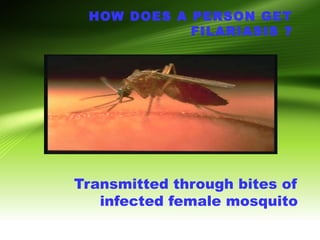
HOW DOES A PERSON GET
FILARIASIS ?
Transmitted through bites of
infected female mosquito
There are 8 filarial nematodes which use human
as host.
• Wucheria bancrofti
• Brugia malayi
• Brugia trimor
• Loa loa
• Onchocerca volvulus
• Mansonella perstans
This are divided into 3 groups according to niche
within the body they occupy.
1.Lymphatic Filariasis
2.Subcutaneous Filariasis
3.Serous Cavity Filariasis
LYMPHATIC FILARIASIS:
• It is caused by wuchereria bancrofti,Brugia
malayi and Brugia trimori worms.
• These worms occupy lymphatic system
but in chronic cases lymph nodes.
• They leads to disease elephantiasis.
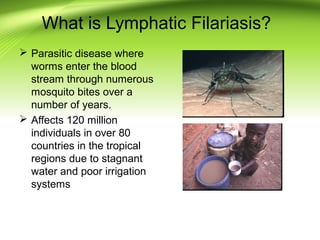
What is Lymphatic Filariasis?
 Parasitic disease where
worms enter the blood
stream through numerous
mosquito bites over a
number of years.
 Affects 120 million
individuals in over 80
countries in the tropical
regions due to stagnant
water and poor irrigation
systems
SUBCUTANEOUS FILARIASIS:
• It is caused by Loa loa(eye worm) causes
filariasis disease and Onchocerca volvulus
worm causes river blindness.
• These worms occupy subcutaneous layer
of the skin in the fat layer.
SEROUS CAVITY FILARIASIS:
• It is caused by Mansonella perstans
occupies serous cavity of abdomen.
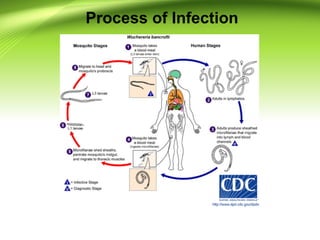
Process of Infection
SIGNS AND SYMPTOMS:
 Two Types
Acute Disease
Chronic Disease
Acute Disease:
 Episodes of fever with pain,swelling of lymph
nodes & lymphatic vessels,allergy -hives,rashes.
Chronic Disease:
 Episodic nighttime coughing /wheezing, rapid
increase in size of the organs
-elephantiasis(edema with thickening of the skin
&underlying tissues
• Microfilaria can migrate through eye
causing inflammation & chronic scaring of
cornea,retina&optical nerve leads to vision
impairment &loss of sight.
• Inflammation,constant itching scaring
leads to depigmentation of skin(leopard
skin).
• Loss of elasticity results in skin hardening.
ANTIFILARIAL DRUGS:
1. Diethylcarbamazine citrate
2. Ivermectin
3. Vitex negundo
4. Butea monsperma
5. Aegele marmelos
6. Ricinus Communls
7. Tribulus terrestris
8. Zingiber officinalis
9. Melia azidirachta
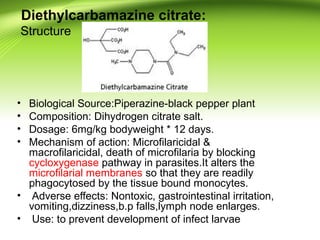
Diethylcarbamazine citrate:
Structure
• Biological Source:Piperazine-black pepper plant
• Composition: Dihydrogen citrate salt.
• Dosage: 6mg/kg bodyweight * 12 days.
• Mechanism of action: Microfilaricidal &
macrofilaricidal, death of microfilaria by blocking
cycloxygenase pathway in parasites.It alters the
microfilarial membranes so that they are readily
phagocytosed by the tissue bound monocytes.
• Adverse effects: Nontoxic, gastrointestinal irritation,
vomiting,dizziness,b.p falls,lymph node enlarges.
• Use: to prevent development of infect larvae
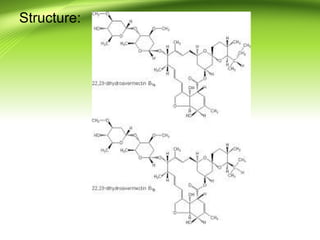
Ivermectin:
• Biological Source:Streptomyces avermitilis
• Composition: Macrolide
• Dosage: 200ug-400ug/kg body wt single
dose
• Therapeutic use: Kill infective larvae
• Mechanism of action: Parasite inactivates
binds to glutamate gated cl- channels
promotes increased membrane
permeability cause hyperpolarization of
nerve results paralysis &
death.potentiation of GABA nergic
Structure:
• Biological Source: Tribulus terrestris
• Family:Zygophyllaceae
• Part used:Fruits
• Chemical
Constituents:Diosgenin,chlorogenin
• Use:In Gabon stem sap used as eye
drops to control filariasis
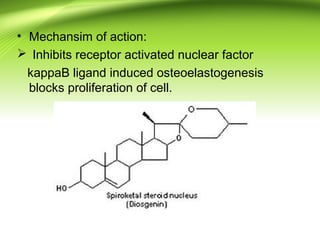
• Mechansim of action:
 Inhibits receptor activated nuclear factor
kappaB ligand induced osteoelastogenesis
blocks proliferation of cell.
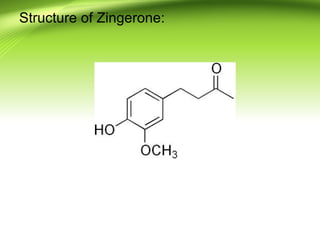
• Biological Source:Zingiber officinale
• Family:Zingiberaceae
• Parts used:fresh rhizome
• Chemical Cnstituents:Zingerone,zingiberol
• Uses:possessing efficacy to control the
parasite infection
• Mechanism of action:Induced oxidative
stress has decreased oxygen levels leads to
inhibition of mitochondrial depolarisation
Structure of Zingerone:
• Biological Source:Melia azidirachta
• Family:Meliaceae
• Part used:bark
• Chemical
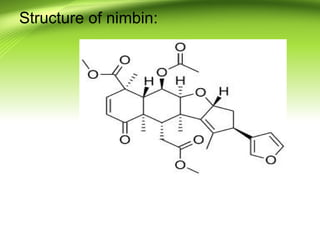
Constituents:Nimbin,nimbidin,azadirachtin
• Mechanism of action:Inactivates virus
preventing replication.It stimulates cellular
mediated immunity and lymphote
proliferation.
Structure of nimbin:
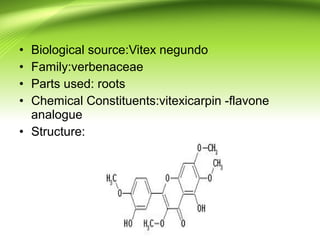
• Biological source:Vitex negundo
• Family:verbenaceae
• Parts used: roots
• Chemical Constituents:vitexicarpin -flavone
analogue
• Structure:
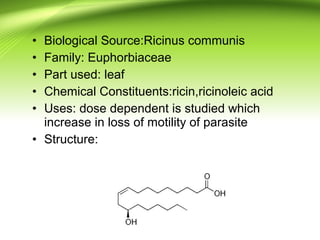
• Biological Source:Ricinus communis
• Family: Euphorbiaceae
• Part used: leaf
• Chemical Constituents:ricin,ricinoleic acid
• Uses: dose dependent is studied which
increase in loss of motility of parasite
• Structure:
DIAGNOSIS:
• Immuno chromatographic Test -antigen is
detected by ELISA as gold standard in infection
with wuchereria bancrofti worm.
• Ultrasonography- X rays are diagnosed.
• Filarial antibody Test.
• IgE - IgA antibodiesTest.
• Demonstration of microfilarae in the peripheral
blood:
 thick blood smear:2-3 drops of free flowing
blood by finger prick method
membrane filtration method ;intravenous blood
filtered by pore size membrane filter
DECprovocation test
TREATMENT:
• Antifilarial Drugs are given in early 6-12days.
• Microfilaria eliminates from blood but adult is not
killed to increase effectiveness repeatedly at
various intervals drugs are given.
• Fever illness muscle/joint pain caused due to
rapid kill off of microfilaria then treated by
corticosteroids/antihistamine drugs.
• Bed rest, chemotherapy for infections bandages
antibiotics antiseptic soaps ointments are used
to reduce pain&swelling.
ADVERSE EFFECTS:
LOCALISED:
• Due to death of adult filarial worms.
• Begin in 2-4 days after single dose of
DEC.
• Localized pain,inflammation.
SYSTEMIC:
• Due to death of microfilaria.
• Begin few to48 hrs after taking DEC.
• Fever,headache malasia.
REFERENCES:
• www.medical.dictionary/antifilarial
• www.hindawi.com/journals
Thank You...,Thank You...,

Antifilariasis

  • 1.
  • 2.
    Filariasis: • Filariasis isan infection caused by parasitic filarial roundworms(nematodes). • The infection is spread by mosquitoes and other blood sucking insects (arthropods- black flies).
  • 3.
    HOW DOES APERSON GET FILARIASIS ? Transmitted through bites of infected female mosquito
  • 4.
    There are 8filarial nematodes which use human as host. • Wucheria bancrofti • Brugia malayi • Brugia trimor • Loa loa • Onchocerca volvulus • Mansonella perstans This are divided into 3 groups according to niche within the body they occupy. 1.Lymphatic Filariasis 2.Subcutaneous Filariasis 3.Serous Cavity Filariasis
  • 5.
    LYMPHATIC FILARIASIS: • Itis caused by wuchereria bancrofti,Brugia malayi and Brugia trimori worms. • These worms occupy lymphatic system but in chronic cases lymph nodes. • They leads to disease elephantiasis.
  • 6.
    What is LymphaticFilariasis?  Parasitic disease where worms enter the blood stream through numerous mosquito bites over a number of years.  Affects 120 million individuals in over 80 countries in the tropical regions due to stagnant water and poor irrigation systems
  • 7.
    SUBCUTANEOUS FILARIASIS: • Itis caused by Loa loa(eye worm) causes filariasis disease and Onchocerca volvulus worm causes river blindness. • These worms occupy subcutaneous layer of the skin in the fat layer. SEROUS CAVITY FILARIASIS: • It is caused by Mansonella perstans occupies serous cavity of abdomen.
  • 8.
  • 9.
    SIGNS AND SYMPTOMS: Two Types Acute Disease Chronic Disease Acute Disease:  Episodes of fever with pain,swelling of lymph nodes & lymphatic vessels,allergy -hives,rashes. Chronic Disease:  Episodic nighttime coughing /wheezing, rapid increase in size of the organs -elephantiasis(edema with thickening of the skin &underlying tissues
  • 10.
    • Microfilaria canmigrate through eye causing inflammation & chronic scaring of cornea,retina&optical nerve leads to vision impairment &loss of sight. • Inflammation,constant itching scaring leads to depigmentation of skin(leopard skin). • Loss of elasticity results in skin hardening.
  • 11.
    ANTIFILARIAL DRUGS: 1. Diethylcarbamazinecitrate 2. Ivermectin 3. Vitex negundo 4. Butea monsperma 5. Aegele marmelos 6. Ricinus Communls 7. Tribulus terrestris 8. Zingiber officinalis 9. Melia azidirachta
  • 12.
    Diethylcarbamazine citrate: Structure • BiologicalSource:Piperazine-black pepper plant • Composition: Dihydrogen citrate salt. • Dosage: 6mg/kg bodyweight * 12 days. • Mechanism of action: Microfilaricidal & macrofilaricidal, death of microfilaria by blocking cycloxygenase pathway in parasites.It alters the microfilarial membranes so that they are readily phagocytosed by the tissue bound monocytes. • Adverse effects: Nontoxic, gastrointestinal irritation, vomiting,dizziness,b.p falls,lymph node enlarges. • Use: to prevent development of infect larvae
  • 13.
    Ivermectin: • Biological Source:Streptomycesavermitilis • Composition: Macrolide • Dosage: 200ug-400ug/kg body wt single dose • Therapeutic use: Kill infective larvae • Mechanism of action: Parasite inactivates binds to glutamate gated cl- channels promotes increased membrane permeability cause hyperpolarization of nerve results paralysis & death.potentiation of GABA nergic
  • 14.
  • 15.
    • Biological Source:Tribulus terrestris • Family:Zygophyllaceae • Part used:Fruits • Chemical Constituents:Diosgenin,chlorogenin • Use:In Gabon stem sap used as eye drops to control filariasis
  • 16.
    • Mechansim ofaction:  Inhibits receptor activated nuclear factor kappaB ligand induced osteoelastogenesis blocks proliferation of cell.
  • 17.
    • Biological Source:Zingiberofficinale • Family:Zingiberaceae • Parts used:fresh rhizome • Chemical Cnstituents:Zingerone,zingiberol • Uses:possessing efficacy to control the parasite infection • Mechanism of action:Induced oxidative stress has decreased oxygen levels leads to inhibition of mitochondrial depolarisation
  • 18.
  • 19.
    • Biological Source:Meliaazidirachta • Family:Meliaceae • Part used:bark • Chemical Constituents:Nimbin,nimbidin,azadirachtin • Mechanism of action:Inactivates virus preventing replication.It stimulates cellular mediated immunity and lymphote proliferation.
  • 20.
  • 21.
    • Biological source:Vitexnegundo • Family:verbenaceae • Parts used: roots • Chemical Constituents:vitexicarpin -flavone analogue • Structure:
  • 22.
    • Biological Source:Ricinuscommunis • Family: Euphorbiaceae • Part used: leaf • Chemical Constituents:ricin,ricinoleic acid • Uses: dose dependent is studied which increase in loss of motility of parasite • Structure:
  • 23.
    DIAGNOSIS: • Immuno chromatographicTest -antigen is detected by ELISA as gold standard in infection with wuchereria bancrofti worm. • Ultrasonography- X rays are diagnosed. • Filarial antibody Test. • IgE - IgA antibodiesTest. • Demonstration of microfilarae in the peripheral blood:  thick blood smear:2-3 drops of free flowing blood by finger prick method membrane filtration method ;intravenous blood filtered by pore size membrane filter DECprovocation test
  • 24.
    TREATMENT: • Antifilarial Drugsare given in early 6-12days. • Microfilaria eliminates from blood but adult is not killed to increase effectiveness repeatedly at various intervals drugs are given. • Fever illness muscle/joint pain caused due to rapid kill off of microfilaria then treated by corticosteroids/antihistamine drugs. • Bed rest, chemotherapy for infections bandages antibiotics antiseptic soaps ointments are used to reduce pain&swelling.
  • 25.
    ADVERSE EFFECTS: LOCALISED: • Dueto death of adult filarial worms. • Begin in 2-4 days after single dose of DEC. • Localized pain,inflammation. SYSTEMIC: • Due to death of microfilaria. • Begin few to48 hrs after taking DEC. • Fever,headache malasia.
  • 26.
  • 27.

Editor's Notes

  • #4 Transmitted through bites of infected female mosquito