Coagulation Modifier Drugs
Pharmacology – Summer 2013
Prof. Andrea Brooks
Lone Star College – CyFair
Abedukola Adelekan, Derek Shelton,
Staci Solorzano & Michael Dunbar
Chapter 26
Introduction – A&P Review
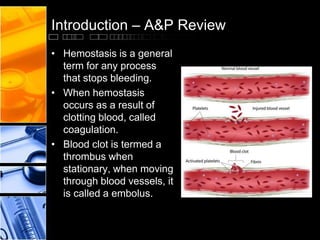
• Hemostasis is a general
term for any process
that stops bleeding.
• When hemostasis
occurs as a result of
clotting blood, called
coagulation.
• Blood clot is termed a
thrombus when
stationary, when moving
through blood vessels, it
is called a embolus.
Coagulation
• Substances that promote coagulation:
– Platelets
– von Willebrand factor
– Activated clotting factors
– Tissue thromboplastin
• Substances that inhibit coagulation:
– Prostacyclin
– Antithrombin III
– Proteins C and S
• Coagulation system is called a cascade, each
activated clotting factor serves as a catalyst that
amplifies the next reaction.
Coagulation Modifier Drugs
• Drugs that affect coagulation by
preventing/promoting clot formation, lysing a
preformed clot, and/or reversing the action of
anticoagulants.
– Anticoagulants – Inhibit the action or formation of
clotting factors.
– Antiplatelet Drugs – Inhibit platelet aggregation, prevent
platelet plugs.
– Thrombolytic Drugs – Lyse existing clots
– Hemostatic or Antifibrinolytic Drugs – Promote blood
coagulation.
Anticoagulants
• Drugs that reduce the ability of the blood to clot.
– Necessary if the blood clots too much as mobile clots
(embolus) can block blood vessels and lead to stroke or
myocardial infarction.
• Have no direct effect on blood clots already formed.
Anticoagulants - Indications
• There are a variety of conditions that require usage
of anticoagulants; they are most commonly
prescribed to prevent clot formations in patients
with a medical condition that places them at risk for:
– Deep Vein Thrombosis (DVT)
– Myocardial Infarction
– Pulmonary Embolism
– Atrial Fibrillation
– High-risk of stroke
Anticoagulants – Mechanism of Action
• Vary, depending on the drug and work on different
aspects of clotting physiology.
• Does not lyse existing clots.
– Heparin – Binds to antithrombin III and turns off
activating factors that develop clots.
– Warfarin – Inhibits vitamin K synthesis, inhibiting clotting
factors.
– Arixtra – Inhibits thrombosis by a specific action against
clotting factor Xa.
– Xarelto – Factor Xa inhibitor.
Anticoagulants – Dosages, Half-Life &
Interactions
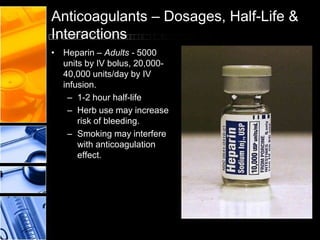
• Heparin – Adults - 5000
units by IV bolus, 20,000-
40,000 units/day by IV
infusion.
– 1-2 hour half-life
– Herb use may increase
risk of bleeding.
– Smoking may interfere
with anticoagulation
effect.
Anticoagulants – Dosages, Half-Life &
Interactions
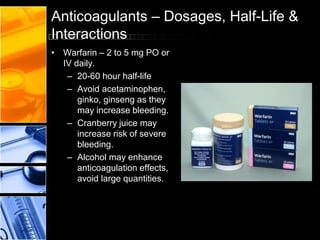
• Warfarin – 2 to 5 mg PO or
IV daily.
– 20-60 hour half-life
– Avoid acetaminophen,
ginko, ginseng as they
may increase bleeding.
– Cranberry juice may
increase risk of severe
bleeding.
– Alcohol may enhance
anticoagulation effects,
avoid large quantities.
Anticoagulants – Dosages, Half-Life &
Interactions
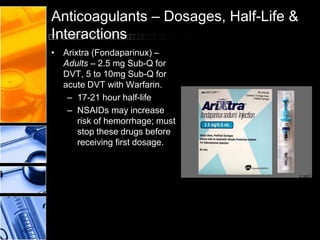
• Arixtra (Fondaparinux) –
Adults – 2.5 mg Sub-Q for
DVT, 5 to 10mg Sub-Q for
acute DVT with Warfarin.
– 17-21 hour half-life
– NSAIDs may increase
risk of hemorrhage; must
stop these drugs before
receiving first dosage.
Anticoagulants – Dosages, Half-Life &
Interactions
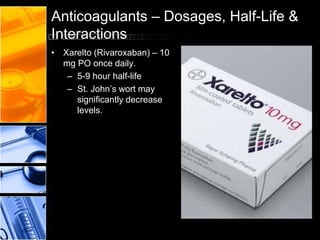
• Xarelto (Rivaroxaban) – 10
mg PO once daily.
– 5-9 hour half-life
– St. John’s wort may
significantly decrease
levels.
Anticoagulants – Adverse Effects
• Bleeding is primary complication of anticoagulation
therapy.
– Bleeding can be localize or systemic.
– Severe liver disease can occur.
• Additional Side Effects include:
– Nausea
– Vomiting
– Cramping
– Disorientation
– Muscle Weakness/Reduced Motor Skills
Anticoagulants – Toxicity/Overdose
• Toxic effects are hemorrhagic in nature.
• Diagnosed symptoms may include:
– Hematuria (Blood in urine)
– Melena (Blood in stool)
– Petechiae (Skin spotting caused by bleeding)
– Ecchymoses (Discoloration of skin)
– Gum/Mucous membrane bleeding.
• Discontinue drug immediately
• Remain with patient & monitor vitals.
• Notify prescribing physician.
Antiplatelet Drugs
• Antiplatelet drugs work to prevent platelet adhesion
at the site of blood vessel injury, which occurs
before the clotting cascade.
• Many antiplatelet drugs prevent platelet adhesion
by affecting enzymatic pathways found within
platelets and on blood vessel walls.
• Common antiplatelet drugs broken down by
pharmacologic class include:
– Salicylate antiplatelet drugs
– ADP Inhibitors
– Glycoprotein IIb and IIIa inhibitors
Salicylate Antiplatelet (Aspirin)
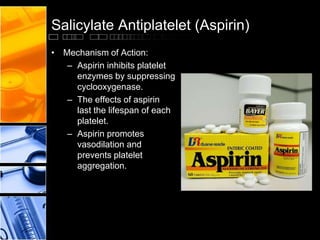
• Mechanism of Action:
– Aspirin inhibits platelet
enzymes by suppressing
cyclooxygenase.
– The effects of aspirin
last the lifespan of each
platelet.
– Aspirin promotes
vasodilation and
prevents platelet
aggregation.
Salicylate Antiplatelet (Aspirin)
• Therapeutic Effects & Uses:
– Aspirin is widely used for its analgesic, antiinflammatory, and
antipyretic (antifever) properties, but it also has antiplatelet effects.
Aspirin has many therapeutic effects, but many of them vary
depending on the dosage. Aspirin is officially recommended for
stroke prevention by the American Stroke Society in daily doses of
50 to 325 mg.
• Adverse Effects:
– Central Nervous System- Drowsiness, dizziness, confusion, flushing
– Gastrointestinal- Nausea, vomiting, gastrointestinal bleeding,
diarrhea
– Hematologic-Thrombocytopenia, agranulocytosis, leukopenia,
neutropenia, hemolytic anemia, bleeding
Salicylate Antiplatelet (Aspirin)
• Contraindications:
– Include, but not limited to: Hypersensitivity to the actual drug itself,
sensitivity to other NSAID’s, patients with aspirin triad (aspirin
sensitivity, nasal polyps, asthma); acute bronchospasm, chronic
rhinitis, GI ulcer, vitamin k deficiency, recent stroke, hemophilia,
bleeding, traumatic injury, and third trimester pregnancy
• Cautious Use:
– The potential adverse effects of the various antiplatelet drugs can be
serious, and they all pose a risk for inducing a serious bleeding
episode. The use of aspirin with other coagulation modifier drugs
and other non-steroidal anti-inflammatory drugs (NSAIDs) produces
additive antiplatelet activity and increased bleeding potential. The
combined use of steroids or nonaspirin NSAIDs with aspirin can
increase the ulcerogenic effects of aspirin.
• Usual Dosage Range:
– Adult- PO: 40-325 mg once daily (max: 4 g/day)
– Child: PO: 10-15 mg/kg in 4-6 h (max: 3.6 g/day)
– Note- Can be administered rectally and dosage can be adjusted as
prescribed
ADP Inhibitors
• These drugs inhibit platelet
aggregation by preventing the
binding of adenosine
diphosphate (ADP) to its
platelet receptor.
• Like aspirin, these drugs
irreversibly inhibit platelet
aggregation.
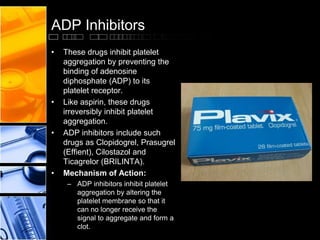
• ADP inhibitors include such
drugs as Clopidogrel, Prasugrel
(Effient), Cilostazol and
Ticagrelor (BRILINTA).
• Mechanism of Action:
– ADP inhibitors inhibit platelet
aggregation by altering the
platelet membrane so that it
can no longer receive the
signal to aggregate and form a
clot.
ADP Inhibitors
• Therapeutic Effects & Uses:
– Clopidogrel prolongs bleeding time, thereby reducing atherosclerotic
events in high risk patients. Clopidogrel is given to reduce the risk
for thrombotic stroke and is used for prophylaxis against transient
ischemic attacks as well as for post-MI prevention of thrombosis.
• Adverse Effects:
– Cardiovascular- Chest pain, edema
– Central Nervous System- Flulike symptoms, headache, dizziness,
fatigue
– Gastrointestinal- Abdominal pain, diarrhea, nausea
– Miscellaneous- Rash, itching, epistaxis
ADP Inhibitors
• Contraindications:
– Hypersensitivity to the actual drug itself, Intracranial hemorrhage,
peptic ulcer, or any other pathologic bleeding
• Cautious Use:
– Discontinue use 7 days before surgery and during lactation, hepatic
impairment, renal impairment. Safety and efficacy not established in
children.
• Usual Dosage Range:
– Adult- PO: 75 mg once daily; 300 mg may be given as a one-time
loading dose after coronary stent implantation
Glycoprotein IIb/IIIa Inhibitors
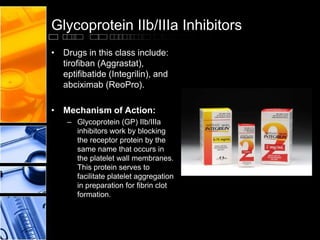
• Drugs in this class include:
tirofiban (Aggrastat),
eptifibatide (Integrilin), and
abciximab (ReoPro).
• Mechanism of Action:
– Glycoprotein (GP) IIb/IIIa
inhibitors work by blocking
the receptor protein by the
same name that occurs in
the platelet wall membranes.
This protein serves to
facilitate platelet aggregation
in preparation for fibrin clot
formation.
Glycoprotein IIb/IIIa Inhibitors
• Therapeutic Effects & Uses:
– Acute coronary syndromes (unstable angina, myocardial infarction,
angioplasty) and acute percutaneous coronary interventions.
– Their purpose is to prevent the formation of thrombi, which is
preferred over the method of lysing a formed thrombus.
• Adverse Effects:
– Cardiovascular- Bradycardia, hypotension, edema
– Central Nervous System- Dizziness
– Hematologic- Bleeding, thrombocytopenia
Glycoprotein IIb/IIIa Inhibitors
• Contraindications:
– Hypersensitivity to the actual drug itself, bleeding, thrombocytopenia,
recent stroke, surgery or trauma within 3 days, severe hypertension,
lactation
• Cautious Use:
– Severe renal insufficiency, safety and efficacy in children younger
than 18 is unknown
• Usual Dosage Range:
– Adult- IV: Single bolus followed by continuous infusion; specific
doses are based on patient weight from 37 to more than 121 kg
Thrombolytic Drugs
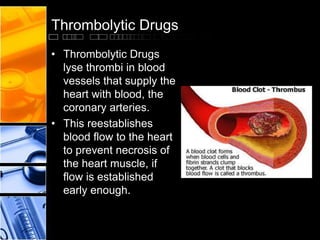
• Thrombolytic Drugs
lyse thrombi in blood
vessels that supply the
heart with blood, the
coronary arteries.
• This reestablishes
blood flow to the heart
to prevent necrosis of
the heart muscle, if
flow is established
early enough.
Thrombolytic Drugs – Mechanism of
Action
• Natural fibrinolytic system does not act fast enough
to lyse a thrombi in the coronary arteries.
Thrombolytics activate the fibrinolytic system to act
quickly.
• They convert plasminogen to plasmin (which break
down fibrin that builds the clot)
• Thrombolytic drugs mimic the body’s natural own
ability of clot destruction. The tissue’s plasminogen
is not sufficient enough to dissolve a coronary
thrombus.
Thrombolytic Drugs
• Indications:
– Used to activate conversion of plasminogen to plasmin
(enzyme that breaks down a thrombus). Indicated for
the presence of a thrombus that significantly interferes
with blood flow on either venous or arterial side of
circulation.
– Acute Myocardial Infarction, arterial thrombosis, Deep
Venous Thrombosis, occlusion of shunt or catheter,
pulmonary embolism, acute ischemic stroke.
• Contraindications:
– Known drug allergies, concurrent use of other drugs to
alter clotting
Thrombolytic Drugs
• Adverse effects:
– Internal intracranial and superficial bleeding,
hypersensitivity, anaphalactic reactions, nausea,
vomiting, hypotension, and could induce cardiac
dysrhythmia
• Toxicity and Management of Overdose
– Usually an extension of adverse effects. Treatment is
symptomatic and supportive. Short half life
Thrombolytic Drugs
• Interactions:
– High bleeding tendency resulting from concurrent use
with anticoagulants, antiplatelets, and other drugs that
effect platelet function.
• Current Thrombolytic Drugs:
– Activase (alteplase), Eminase (anistreplase), Retavase
(reteplase), and TNKase (tenecteplase)
• Thrombolytic Drugs are infused via IV only and
onset of action is approximately 30 minutes.
Dosages range from 100mg over 90min duration as
a 15mg bolus, then 35mg over 60min.
Antifibrinolytic Drugs
• Advate
• Alphanine SD
• Amicar
• Benefix
• Crosseal Fibrin Sealant (Human)
• Cyklokapron
• DDAVP
• Evithrom
• Helixate FS
• Hemofil-M
• Hyate
• Kogenate FS
• Novoseven
• NovoSeven RT
• Recothrom
• Thrombin-JMI
• Trasylol
• Dosage Forms:
– Tablet
– Syrup
– Solution
Antifibrinolytic Drugs - Indications
• Antifibrinolytic agents are used to treat serious
bleeding, especially when the bleeding occurs after
surgery (particularly in patients with hemophilia) or
certain other kinds of surgery. These medicines are
also sometimes given before an operation to
prevent serious bleeding in patients with medical
problems that increase the chance of serious
bleeding.
• Antifibrinolytic agents may also be used for other
conditions as determined by your doctor.
• This medicine is available only with your doctor's
prescription
Antifibrinolytic Drugs – Mechanism of
Action
• Antifibrinolytics, such as aminocaproic acid (ε-
aminocaproic acid) and tranexamic acid are used
as inhibitors of fibrinolysis.
• These lysine-like drugs interfere with the formation
of the fibrinolytic enzyme plasmin from its precursor
plasminogen by plasminogen activators (primarily t-
PA and u-PA) which takes place mainly in lysine
rich areas on the surface of fibrin.
• These drugs block the binding sites of the enzymes
or plasminogen respectively and thus stop plasmin
formation.
Antifibrinolytic Drugs – Dosage
• The amount of medicine that you take depends on
the strength of the medicine.
• Also, the number of doses you take each day, the
time allowed between doses, and the length of time
you take the medicine depend on the medical
problem for which you are using the medicine.
Antifibrinolytic Drugs – Oral Dosage
• Adults - For the first hour, the dose is 5 grams.
Then the dose is 1 or 1.25 grams per hour for eight
hours.
• Children - Dose is based on body weight or size
and must be determined by your doctor. For the first
hour, the dose is usually 100 milligrams (mg) per
kilogram (kg) (45.4 mg per pound) of body weight.
Then the dose is 33.3 mg per kg (15.1 mg per
pound) of body weight per hour.
Antifibrinolytic Drugs – Injection
Dosage
• Adults - At first, the dose is 4 to 5 grams injected
into a vein, over a period of one hour. Then the
dose is 1 gram per hour, injected into a vein over a
period of eight hours.
• Children - Dose is based on body weight or size
and must be determined by your doctor. At first, the
dose is usually 100 mg per kg (45.4 mg per pound)
of body weight, injected into a vein over a period of
one hour. Then the dose is 33.3 mg per kg (15.1
mg per pound) of body weight per hour, injected
into a vein.
Antifibrinolytic Drugs – Side Effects
• Dizziness
• Headache
• Muscle pain or weakness
• (Severe and continuing) ringing or buzzing in ears
• Skin rash
• Slow or irregular heartbeat—with the injection only
• Stomach cramps or pain
• Stuffy nose
• Sudden decrease in amount of urine
• Swelling of face, feet, or lower legs
• Unusual tiredness or weakness
• Weight gain (rapid)
Conclusion
• Coagulation modifiers have a variety of uses:
1. Prevention or elimination of clotting in peripherally
inserted catheter
2. Maintenance of patency (without clotting) of central
venous catheters
3. Clot prevention in coronary artery bypass grafting
4. Prevention of clotting after major vessel injury
5. Treatment of thrombophlebitis to prevent
thromboembolism
6. Prevention of clotting with use of prosthetics (heart
valves)
Conclusion – Nursing Implications
• Access:
– Perform thorough patient assessment to identify risks
• Patient history
• Medication history
• Allergies
– Contraindications
– Baseline vital signs, laboratory values
– Potential drug interactions – MANY!
– History of abnormal bleeding conditions
• Follow guidelines for preparation and administration
• Six Rights.
• Routinely monitor vital signs, heart sounds,
peripheral pulses, neurological status.
Works Cited
• Anticoagulant medicines. (n.d.). Retrieved from http://www.nhs.uk/Conditions/Anticoagulant-
medicines/Pages/Introduction.aspx
• Barclay, E. (2013, March 15). Is your medicine vegan? probably not. Retrieved from
http://www.npr.org/blogs/health/2013/03/13/174205188/is-your-medicine-vegan-probably-not
• Ishibashi, A. (2013, June 07). Additional genetic variant in african-americans for predicting optimal
warfarin dose identified. Retrieved from http://bionews-tx.com/news/2013/06/07/additional-genetic-
variant-in-african-americans-for-predicting-optimal-warfarin-dosedentified/
• File:Plavix 2007-04-19.jpg - Wikimedia Commons. (2007, April 25). Wikimedia Commons. Retrieved
July 9, 2013, from http://commons.wikimedia.org/wiki/File:Plavix_2007-04-19.jpg
• Integrilin - patient information, description, dosage and directions.. (n.d.). Prescription Drug Information,
Side Effects, Interactions. Retrieved July 9, 2013, from http://drugline.org/drug/medicament/12145/
• Lilley, L. L., & Collins, S. R. (2014). Pharmacology and the nursing process (7th ed.). St. Louis, Mo.:
Elsevier/Mosby.
• Order paxil, order cheap generic paxil, order cheap generic paxil online from world-drugs.net. (n.d.).
Order Generic Drugs Online Generic Medication Buy Generic Drugs Meds. Retrieved July 9, 2013, from
http://www.world-drugs.net/generic_plavix_clopidogrel.php
• Ruckersville Animal Hospital - Veterinarian In Ruckersville, VA USA :: Aspirin. (n.d.). Ruckersville
Animal Hospital - Veterinarian In Ruckersville, VA USA :: Home. Retrieved July 9, 2013, from
http://ruckersvillevet.com/custom_content/c_241653_aspirin.html
• Wilson, B. A. (2013). Pearson nurse's drug guide 2013. Upper Saddle River, N.J.: Pearson Education.
• BIOL 2201 (2004). Treatments for Circulatory System Disorders. Retrieved July 8, 2013, from
http://dev.cdli.ca/bio2201-04/unit03/section02/lesson07/3-lesson-a.htm - See more at:
http://reffor.us/index.php#sthash.rbWWWBnU.dpuf
• WomensFitness.net. (n.d.). Understanding drugs. Retrieved from
http://www.womenfitness.net/understanding_drugs.htm

Anticoagulants Presentation

  • 1.
    Coagulation Modifier Drugs Pharmacology– Summer 2013 Prof. Andrea Brooks Lone Star College – CyFair Abedukola Adelekan, Derek Shelton, Staci Solorzano & Michael Dunbar Chapter 26
  • 2.
    Introduction – A&PReview • Hemostasis is a general term for any process that stops bleeding. • When hemostasis occurs as a result of clotting blood, called coagulation. • Blood clot is termed a thrombus when stationary, when moving through blood vessels, it is called a embolus.
  • 3.
    Coagulation • Substances thatpromote coagulation: – Platelets – von Willebrand factor – Activated clotting factors – Tissue thromboplastin • Substances that inhibit coagulation: – Prostacyclin – Antithrombin III – Proteins C and S • Coagulation system is called a cascade, each activated clotting factor serves as a catalyst that amplifies the next reaction.
  • 4.
    Coagulation Modifier Drugs •Drugs that affect coagulation by preventing/promoting clot formation, lysing a preformed clot, and/or reversing the action of anticoagulants. – Anticoagulants – Inhibit the action or formation of clotting factors. – Antiplatelet Drugs – Inhibit platelet aggregation, prevent platelet plugs. – Thrombolytic Drugs – Lyse existing clots – Hemostatic or Antifibrinolytic Drugs – Promote blood coagulation.
  • 5.
    Anticoagulants • Drugs thatreduce the ability of the blood to clot. – Necessary if the blood clots too much as mobile clots (embolus) can block blood vessels and lead to stroke or myocardial infarction. • Have no direct effect on blood clots already formed.
  • 6.
    Anticoagulants - Indications •There are a variety of conditions that require usage of anticoagulants; they are most commonly prescribed to prevent clot formations in patients with a medical condition that places them at risk for: – Deep Vein Thrombosis (DVT) – Myocardial Infarction – Pulmonary Embolism – Atrial Fibrillation – High-risk of stroke
  • 7.
    Anticoagulants – Mechanismof Action • Vary, depending on the drug and work on different aspects of clotting physiology. • Does not lyse existing clots. – Heparin – Binds to antithrombin III and turns off activating factors that develop clots. – Warfarin – Inhibits vitamin K synthesis, inhibiting clotting factors. – Arixtra – Inhibits thrombosis by a specific action against clotting factor Xa. – Xarelto – Factor Xa inhibitor.
  • 8.
    Anticoagulants – Dosages,Half-Life & Interactions • Heparin – Adults - 5000 units by IV bolus, 20,000- 40,000 units/day by IV infusion. – 1-2 hour half-life – Herb use may increase risk of bleeding. – Smoking may interfere with anticoagulation effect.
  • 9.
    Anticoagulants – Dosages,Half-Life & Interactions • Warfarin – 2 to 5 mg PO or IV daily. – 20-60 hour half-life – Avoid acetaminophen, ginko, ginseng as they may increase bleeding. – Cranberry juice may increase risk of severe bleeding. – Alcohol may enhance anticoagulation effects, avoid large quantities.
  • 10.
    Anticoagulants – Dosages,Half-Life & Interactions • Arixtra (Fondaparinux) – Adults – 2.5 mg Sub-Q for DVT, 5 to 10mg Sub-Q for acute DVT with Warfarin. – 17-21 hour half-life – NSAIDs may increase risk of hemorrhage; must stop these drugs before receiving first dosage.
  • 11.
    Anticoagulants – Dosages,Half-Life & Interactions • Xarelto (Rivaroxaban) – 10 mg PO once daily. – 5-9 hour half-life – St. John’s wort may significantly decrease levels.
  • 12.
    Anticoagulants – AdverseEffects • Bleeding is primary complication of anticoagulation therapy. – Bleeding can be localize or systemic. – Severe liver disease can occur. • Additional Side Effects include: – Nausea – Vomiting – Cramping – Disorientation – Muscle Weakness/Reduced Motor Skills
  • 13.
    Anticoagulants – Toxicity/Overdose •Toxic effects are hemorrhagic in nature. • Diagnosed symptoms may include: – Hematuria (Blood in urine) – Melena (Blood in stool) – Petechiae (Skin spotting caused by bleeding) – Ecchymoses (Discoloration of skin) – Gum/Mucous membrane bleeding. • Discontinue drug immediately • Remain with patient & monitor vitals. • Notify prescribing physician.
  • 14.
    Antiplatelet Drugs • Antiplateletdrugs work to prevent platelet adhesion at the site of blood vessel injury, which occurs before the clotting cascade. • Many antiplatelet drugs prevent platelet adhesion by affecting enzymatic pathways found within platelets and on blood vessel walls. • Common antiplatelet drugs broken down by pharmacologic class include: – Salicylate antiplatelet drugs – ADP Inhibitors – Glycoprotein IIb and IIIa inhibitors
  • 15.
    Salicylate Antiplatelet (Aspirin) •Mechanism of Action: – Aspirin inhibits platelet enzymes by suppressing cyclooxygenase. – The effects of aspirin last the lifespan of each platelet. – Aspirin promotes vasodilation and prevents platelet aggregation.
  • 16.
    Salicylate Antiplatelet (Aspirin) •Therapeutic Effects & Uses: – Aspirin is widely used for its analgesic, antiinflammatory, and antipyretic (antifever) properties, but it also has antiplatelet effects. Aspirin has many therapeutic effects, but many of them vary depending on the dosage. Aspirin is officially recommended for stroke prevention by the American Stroke Society in daily doses of 50 to 325 mg. • Adverse Effects: – Central Nervous System- Drowsiness, dizziness, confusion, flushing – Gastrointestinal- Nausea, vomiting, gastrointestinal bleeding, diarrhea – Hematologic-Thrombocytopenia, agranulocytosis, leukopenia, neutropenia, hemolytic anemia, bleeding
  • 17.
    Salicylate Antiplatelet (Aspirin) •Contraindications: – Include, but not limited to: Hypersensitivity to the actual drug itself, sensitivity to other NSAID’s, patients with aspirin triad (aspirin sensitivity, nasal polyps, asthma); acute bronchospasm, chronic rhinitis, GI ulcer, vitamin k deficiency, recent stroke, hemophilia, bleeding, traumatic injury, and third trimester pregnancy • Cautious Use: – The potential adverse effects of the various antiplatelet drugs can be serious, and they all pose a risk for inducing a serious bleeding episode. The use of aspirin with other coagulation modifier drugs and other non-steroidal anti-inflammatory drugs (NSAIDs) produces additive antiplatelet activity and increased bleeding potential. The combined use of steroids or nonaspirin NSAIDs with aspirin can increase the ulcerogenic effects of aspirin. • Usual Dosage Range: – Adult- PO: 40-325 mg once daily (max: 4 g/day) – Child: PO: 10-15 mg/kg in 4-6 h (max: 3.6 g/day) – Note- Can be administered rectally and dosage can be adjusted as prescribed
  • 18.
    ADP Inhibitors • Thesedrugs inhibit platelet aggregation by preventing the binding of adenosine diphosphate (ADP) to its platelet receptor. • Like aspirin, these drugs irreversibly inhibit platelet aggregation. • ADP inhibitors include such drugs as Clopidogrel, Prasugrel (Effient), Cilostazol and Ticagrelor (BRILINTA). • Mechanism of Action: – ADP inhibitors inhibit platelet aggregation by altering the platelet membrane so that it can no longer receive the signal to aggregate and form a clot.
  • 19.
    ADP Inhibitors • TherapeuticEffects & Uses: – Clopidogrel prolongs bleeding time, thereby reducing atherosclerotic events in high risk patients. Clopidogrel is given to reduce the risk for thrombotic stroke and is used for prophylaxis against transient ischemic attacks as well as for post-MI prevention of thrombosis. • Adverse Effects: – Cardiovascular- Chest pain, edema – Central Nervous System- Flulike symptoms, headache, dizziness, fatigue – Gastrointestinal- Abdominal pain, diarrhea, nausea – Miscellaneous- Rash, itching, epistaxis
  • 20.
    ADP Inhibitors • Contraindications: –Hypersensitivity to the actual drug itself, Intracranial hemorrhage, peptic ulcer, or any other pathologic bleeding • Cautious Use: – Discontinue use 7 days before surgery and during lactation, hepatic impairment, renal impairment. Safety and efficacy not established in children. • Usual Dosage Range: – Adult- PO: 75 mg once daily; 300 mg may be given as a one-time loading dose after coronary stent implantation
  • 21.
    Glycoprotein IIb/IIIa Inhibitors •Drugs in this class include: tirofiban (Aggrastat), eptifibatide (Integrilin), and abciximab (ReoPro). • Mechanism of Action: – Glycoprotein (GP) IIb/IIIa inhibitors work by blocking the receptor protein by the same name that occurs in the platelet wall membranes. This protein serves to facilitate platelet aggregation in preparation for fibrin clot formation.
  • 22.
    Glycoprotein IIb/IIIa Inhibitors •Therapeutic Effects & Uses: – Acute coronary syndromes (unstable angina, myocardial infarction, angioplasty) and acute percutaneous coronary interventions. – Their purpose is to prevent the formation of thrombi, which is preferred over the method of lysing a formed thrombus. • Adverse Effects: – Cardiovascular- Bradycardia, hypotension, edema – Central Nervous System- Dizziness – Hematologic- Bleeding, thrombocytopenia
  • 23.
    Glycoprotein IIb/IIIa Inhibitors •Contraindications: – Hypersensitivity to the actual drug itself, bleeding, thrombocytopenia, recent stroke, surgery or trauma within 3 days, severe hypertension, lactation • Cautious Use: – Severe renal insufficiency, safety and efficacy in children younger than 18 is unknown • Usual Dosage Range: – Adult- IV: Single bolus followed by continuous infusion; specific doses are based on patient weight from 37 to more than 121 kg
  • 24.
    Thrombolytic Drugs • ThrombolyticDrugs lyse thrombi in blood vessels that supply the heart with blood, the coronary arteries. • This reestablishes blood flow to the heart to prevent necrosis of the heart muscle, if flow is established early enough.
  • 25.
    Thrombolytic Drugs –Mechanism of Action • Natural fibrinolytic system does not act fast enough to lyse a thrombi in the coronary arteries. Thrombolytics activate the fibrinolytic system to act quickly. • They convert plasminogen to plasmin (which break down fibrin that builds the clot) • Thrombolytic drugs mimic the body’s natural own ability of clot destruction. The tissue’s plasminogen is not sufficient enough to dissolve a coronary thrombus.
  • 26.
    Thrombolytic Drugs • Indications: –Used to activate conversion of plasminogen to plasmin (enzyme that breaks down a thrombus). Indicated for the presence of a thrombus that significantly interferes with blood flow on either venous or arterial side of circulation. – Acute Myocardial Infarction, arterial thrombosis, Deep Venous Thrombosis, occlusion of shunt or catheter, pulmonary embolism, acute ischemic stroke. • Contraindications: – Known drug allergies, concurrent use of other drugs to alter clotting
  • 27.
    Thrombolytic Drugs • Adverseeffects: – Internal intracranial and superficial bleeding, hypersensitivity, anaphalactic reactions, nausea, vomiting, hypotension, and could induce cardiac dysrhythmia • Toxicity and Management of Overdose – Usually an extension of adverse effects. Treatment is symptomatic and supportive. Short half life
  • 28.
    Thrombolytic Drugs • Interactions: –High bleeding tendency resulting from concurrent use with anticoagulants, antiplatelets, and other drugs that effect platelet function. • Current Thrombolytic Drugs: – Activase (alteplase), Eminase (anistreplase), Retavase (reteplase), and TNKase (tenecteplase) • Thrombolytic Drugs are infused via IV only and onset of action is approximately 30 minutes. Dosages range from 100mg over 90min duration as a 15mg bolus, then 35mg over 60min.
  • 29.
    Antifibrinolytic Drugs • Advate •Alphanine SD • Amicar • Benefix • Crosseal Fibrin Sealant (Human) • Cyklokapron • DDAVP • Evithrom • Helixate FS • Hemofil-M • Hyate • Kogenate FS • Novoseven • NovoSeven RT • Recothrom • Thrombin-JMI • Trasylol • Dosage Forms: – Tablet – Syrup – Solution
  • 30.
    Antifibrinolytic Drugs -Indications • Antifibrinolytic agents are used to treat serious bleeding, especially when the bleeding occurs after surgery (particularly in patients with hemophilia) or certain other kinds of surgery. These medicines are also sometimes given before an operation to prevent serious bleeding in patients with medical problems that increase the chance of serious bleeding. • Antifibrinolytic agents may also be used for other conditions as determined by your doctor. • This medicine is available only with your doctor's prescription
  • 31.
    Antifibrinolytic Drugs –Mechanism of Action • Antifibrinolytics, such as aminocaproic acid (ε- aminocaproic acid) and tranexamic acid are used as inhibitors of fibrinolysis. • These lysine-like drugs interfere with the formation of the fibrinolytic enzyme plasmin from its precursor plasminogen by plasminogen activators (primarily t- PA and u-PA) which takes place mainly in lysine rich areas on the surface of fibrin. • These drugs block the binding sites of the enzymes or plasminogen respectively and thus stop plasmin formation.
  • 32.
    Antifibrinolytic Drugs –Dosage • The amount of medicine that you take depends on the strength of the medicine. • Also, the number of doses you take each day, the time allowed between doses, and the length of time you take the medicine depend on the medical problem for which you are using the medicine.
  • 33.
    Antifibrinolytic Drugs –Oral Dosage • Adults - For the first hour, the dose is 5 grams. Then the dose is 1 or 1.25 grams per hour for eight hours. • Children - Dose is based on body weight or size and must be determined by your doctor. For the first hour, the dose is usually 100 milligrams (mg) per kilogram (kg) (45.4 mg per pound) of body weight. Then the dose is 33.3 mg per kg (15.1 mg per pound) of body weight per hour.
  • 34.
    Antifibrinolytic Drugs –Injection Dosage • Adults - At first, the dose is 4 to 5 grams injected into a vein, over a period of one hour. Then the dose is 1 gram per hour, injected into a vein over a period of eight hours. • Children - Dose is based on body weight or size and must be determined by your doctor. At first, the dose is usually 100 mg per kg (45.4 mg per pound) of body weight, injected into a vein over a period of one hour. Then the dose is 33.3 mg per kg (15.1 mg per pound) of body weight per hour, injected into a vein.
  • 35.
    Antifibrinolytic Drugs –Side Effects • Dizziness • Headache • Muscle pain or weakness • (Severe and continuing) ringing or buzzing in ears • Skin rash • Slow or irregular heartbeat—with the injection only • Stomach cramps or pain • Stuffy nose • Sudden decrease in amount of urine • Swelling of face, feet, or lower legs • Unusual tiredness or weakness • Weight gain (rapid)
  • 36.
    Conclusion • Coagulation modifiershave a variety of uses: 1. Prevention or elimination of clotting in peripherally inserted catheter 2. Maintenance of patency (without clotting) of central venous catheters 3. Clot prevention in coronary artery bypass grafting 4. Prevention of clotting after major vessel injury 5. Treatment of thrombophlebitis to prevent thromboembolism 6. Prevention of clotting with use of prosthetics (heart valves)
  • 37.
    Conclusion – NursingImplications • Access: – Perform thorough patient assessment to identify risks • Patient history • Medication history • Allergies – Contraindications – Baseline vital signs, laboratory values – Potential drug interactions – MANY! – History of abnormal bleeding conditions • Follow guidelines for preparation and administration • Six Rights. • Routinely monitor vital signs, heart sounds, peripheral pulses, neurological status.
  • 38.
    Works Cited • Anticoagulantmedicines. (n.d.). Retrieved from http://www.nhs.uk/Conditions/Anticoagulant- medicines/Pages/Introduction.aspx • Barclay, E. (2013, March 15). Is your medicine vegan? probably not. Retrieved from http://www.npr.org/blogs/health/2013/03/13/174205188/is-your-medicine-vegan-probably-not • Ishibashi, A. (2013, June 07). Additional genetic variant in african-americans for predicting optimal warfarin dose identified. Retrieved from http://bionews-tx.com/news/2013/06/07/additional-genetic- variant-in-african-americans-for-predicting-optimal-warfarin-dosedentified/ • File:Plavix 2007-04-19.jpg - Wikimedia Commons. (2007, April 25). Wikimedia Commons. Retrieved July 9, 2013, from http://commons.wikimedia.org/wiki/File:Plavix_2007-04-19.jpg • Integrilin - patient information, description, dosage and directions.. (n.d.). Prescription Drug Information, Side Effects, Interactions. Retrieved July 9, 2013, from http://drugline.org/drug/medicament/12145/ • Lilley, L. L., & Collins, S. R. (2014). Pharmacology and the nursing process (7th ed.). St. Louis, Mo.: Elsevier/Mosby. • Order paxil, order cheap generic paxil, order cheap generic paxil online from world-drugs.net. (n.d.). Order Generic Drugs Online Generic Medication Buy Generic Drugs Meds. Retrieved July 9, 2013, from http://www.world-drugs.net/generic_plavix_clopidogrel.php • Ruckersville Animal Hospital - Veterinarian In Ruckersville, VA USA :: Aspirin. (n.d.). Ruckersville Animal Hospital - Veterinarian In Ruckersville, VA USA :: Home. Retrieved July 9, 2013, from http://ruckersvillevet.com/custom_content/c_241653_aspirin.html • Wilson, B. A. (2013). Pearson nurse's drug guide 2013. Upper Saddle River, N.J.: Pearson Education. • BIOL 2201 (2004). Treatments for Circulatory System Disorders. Retrieved July 8, 2013, from http://dev.cdli.ca/bio2201-04/unit03/section02/lesson07/3-lesson-a.htm - See more at: http://reffor.us/index.php#sthash.rbWWWBnU.dpuf • WomensFitness.net. (n.d.). Understanding drugs. Retrieved from http://www.womenfitness.net/understanding_drugs.htm