Antibiotics
Wala Hassan Mustafa
M.SC microbiology
U of G
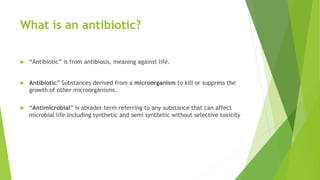
What is an antibiotic?
 “Antibiotic” is from antibiosis, meaning against life.
 Antibiotic” Substances derived from a microorganism to kill or suppress the
growth of other microorganisms.
 “Antimicrobial” is abrader term referring to any substance that can affect
microbial life including synthetic and semi synthetic without selective toxicity
Terminologies
 Selective toxicity :
A drug that kills harmful microbes without damaging the host
 Antibacterial spectrum :
Range of activity of an antibiotic
 Minimum bactericidal concentration (MBC) :
The lowest concentration that kills 99.9% of the bacterial population
 Minimum inhibitory concentration (MIC) :
The lowest concentration that inhibits the growth of bacterial population
 Antibiotic resistance
is the phenomenon that susceptibility of pathogenic microorganisms to
antibiotic becomes lower or even loses after the microorganisms contact with
antibiotic
 Cross antibiotic resistance
When the bacteria show resistance to one antibiotic, they are also resistant
to some other antibiotics .
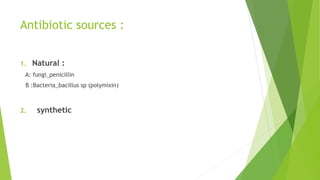
Antibiotic sources :
1. Natural :
A: fungi_penicillin
B :Bacteria_bacillus sp (polymixin)
2. synthetic
Classification of Antibiotics
 Antibiotics are classified by several ways:
1. On the basis of mechanism of action
2. On the basis of spectrum of activity
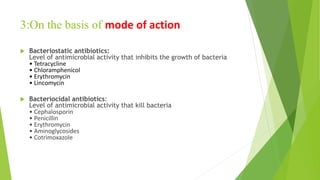
3. On the basis of mode of action
1 :On the basis of mechanism of action
1. Inhibition of cell wall synthesis:
• Penicillins, Cephalosporins, Bacitracin and Vancomycin .
2. Inhibition of functions of cellular membrane:
• Polymyxins
3. Inhibition of protein synthesis:
• Chloramphenicol, Macrolides and Clindamycin
• Tetracyclines and Aminoglycosides
4. Inhibition of nucleic acid synthesis:
• Quinolones
• Rifampin
5. Inhibition of folic acid synthesis:
• Sulfonamides & trimethoprim
2: On the basis of spectrum of activity
 A: narrow spectrum :
Antibiotic that is active only against a limited number of bacteria e.g.
penicillin G, 1 -2nd generation cephalosporins, oxazolidone
 B :broad spectrum :
Antibiotic that can inhibit wide range of bacteria ( G- positive and Gnegative
bacteria e.g. Carbapenems, 3-4th generation cephalosporins, quinolones)
3:On the basis of mode of action
 Bacteriostatic antibiotics:
Level of antimicrobial activity that inhibits the growth of bacteria
• Tetracycline
• Chloramphenicol
• Erythromycin
• Lincomycin
 Bacteriocidal antibiotics:
Level of antimicrobial activity that kill bacteria
• Cephalosporin
• Penicillin
• Erythromycin
• Aminoglycosides
• Cotrimoxazole
Measuring Antimicrobial
Sensitivity
E Test
• MIC: Minimal
inhibitory concentration
Ideal Antimicrobial Agent
1. Have highly selective toxicity to the pathogenic microorganisms in host body
2. Have no or less toxicity to the host
3. Low propensity for development of resistance
4. Not induce hypersensitive reactions in the host
5. Have rapid and extensive tissue distribution
6. Be free of interactions with other drugs
7. Be relatively inexpensive
Selection of Antimicrobial Agent
• Empiric therapy - prior to identification of Organism
- critically ill patients
• Organism’s susceptibility to the antibiotic
• Patient factors - immune system, renal/hepatic function
• Effect of site of infection on therapy - eg CAN CROSS blood brain barrier
• Safety of the agent
• Cost of therapy
Effects of Combinations of Drugs
 Synergism occurs when the effect of two drugs together is greater than the
effect of either alone.
 Antagonism occurs when the effect of two drugs together is less than the
effect of either alone.
 Additive (indifferent) effect: the activity of two drugs in combination is
equal to the sum (or a partial sum) of either alone.
USE OF ANTIBIOTIC COMBINATIONS
1. To treat serious infections .
2. To achieve a synergistic inhibitory effect against certain organisms.
3. To prevent the emergence of resistant organisms.
Classes of Antibiotics
 The main classes of antibiotics are:
1) Beta-Lactams
Penicillins
Cephalosporins
Carbapenems
Monobactams
2) Macrolides and Ketolides
3) • Aminoglycosides
4) • Fluoroquinolones
5) • Tetracyclines, Amphenicols
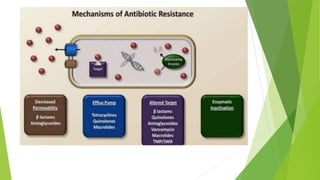
ANTIBIOTIC RESISTANCE
PRINCIPLES:
There are four major mechanisms that mediate bacterial resistance to drugs:
(1) Bacteria produce enzymes that inactivate the drug
(2) Bacteria synthesize modified targets against which the drug has a reduced effect
(3) Bacteria reduce permeability to the drug such that an effective intracellular
concentration of the drug is not achieved
(4) Bacteriaactively export drugs using a “multidrug resistance pump”
The end

Antibiotics.pptx

  • 1.
  • 2.
    What is anantibiotic?  “Antibiotic” is from antibiosis, meaning against life.  Antibiotic” Substances derived from a microorganism to kill or suppress the growth of other microorganisms.  “Antimicrobial” is abrader term referring to any substance that can affect microbial life including synthetic and semi synthetic without selective toxicity
  • 3.
    Terminologies  Selective toxicity: A drug that kills harmful microbes without damaging the host  Antibacterial spectrum : Range of activity of an antibiotic  Minimum bactericidal concentration (MBC) : The lowest concentration that kills 99.9% of the bacterial population  Minimum inhibitory concentration (MIC) : The lowest concentration that inhibits the growth of bacterial population
  • 4.
     Antibiotic resistance isthe phenomenon that susceptibility of pathogenic microorganisms to antibiotic becomes lower or even loses after the microorganisms contact with antibiotic  Cross antibiotic resistance When the bacteria show resistance to one antibiotic, they are also resistant to some other antibiotics .
  • 5.
    Antibiotic sources : 1.Natural : A: fungi_penicillin B :Bacteria_bacillus sp (polymixin) 2. synthetic
  • 6.
    Classification of Antibiotics Antibiotics are classified by several ways: 1. On the basis of mechanism of action 2. On the basis of spectrum of activity 3. On the basis of mode of action
  • 7.
    1 :On thebasis of mechanism of action 1. Inhibition of cell wall synthesis: • Penicillins, Cephalosporins, Bacitracin and Vancomycin . 2. Inhibition of functions of cellular membrane: • Polymyxins 3. Inhibition of protein synthesis: • Chloramphenicol, Macrolides and Clindamycin • Tetracyclines and Aminoglycosides 4. Inhibition of nucleic acid synthesis: • Quinolones • Rifampin 5. Inhibition of folic acid synthesis: • Sulfonamides & trimethoprim
  • 9.
    2: On thebasis of spectrum of activity  A: narrow spectrum : Antibiotic that is active only against a limited number of bacteria e.g. penicillin G, 1 -2nd generation cephalosporins, oxazolidone  B :broad spectrum : Antibiotic that can inhibit wide range of bacteria ( G- positive and Gnegative bacteria e.g. Carbapenems, 3-4th generation cephalosporins, quinolones)
  • 11.
    3:On the basisof mode of action  Bacteriostatic antibiotics: Level of antimicrobial activity that inhibits the growth of bacteria • Tetracycline • Chloramphenicol • Erythromycin • Lincomycin  Bacteriocidal antibiotics: Level of antimicrobial activity that kill bacteria • Cephalosporin • Penicillin • Erythromycin • Aminoglycosides • Cotrimoxazole
  • 12.
    Measuring Antimicrobial Sensitivity E Test •MIC: Minimal inhibitory concentration
  • 13.
    Ideal Antimicrobial Agent 1.Have highly selective toxicity to the pathogenic microorganisms in host body 2. Have no or less toxicity to the host 3. Low propensity for development of resistance 4. Not induce hypersensitive reactions in the host 5. Have rapid and extensive tissue distribution 6. Be free of interactions with other drugs 7. Be relatively inexpensive
  • 14.
    Selection of AntimicrobialAgent • Empiric therapy - prior to identification of Organism - critically ill patients • Organism’s susceptibility to the antibiotic • Patient factors - immune system, renal/hepatic function • Effect of site of infection on therapy - eg CAN CROSS blood brain barrier • Safety of the agent • Cost of therapy
  • 15.
    Effects of Combinationsof Drugs  Synergism occurs when the effect of two drugs together is greater than the effect of either alone.  Antagonism occurs when the effect of two drugs together is less than the effect of either alone.  Additive (indifferent) effect: the activity of two drugs in combination is equal to the sum (or a partial sum) of either alone.
  • 16.
    USE OF ANTIBIOTICCOMBINATIONS 1. To treat serious infections . 2. To achieve a synergistic inhibitory effect against certain organisms. 3. To prevent the emergence of resistant organisms.
  • 17.
    Classes of Antibiotics The main classes of antibiotics are: 1) Beta-Lactams Penicillins Cephalosporins Carbapenems Monobactams 2) Macrolides and Ketolides 3) • Aminoglycosides 4) • Fluoroquinolones 5) • Tetracyclines, Amphenicols
  • 18.
    ANTIBIOTIC RESISTANCE PRINCIPLES: There arefour major mechanisms that mediate bacterial resistance to drugs: (1) Bacteria produce enzymes that inactivate the drug (2) Bacteria synthesize modified targets against which the drug has a reduced effect (3) Bacteria reduce permeability to the drug such that an effective intracellular concentration of the drug is not achieved (4) Bacteriaactively export drugs using a “multidrug resistance pump”
  • 20.