Combating Drug Resistance
Harendra Bisht
M. Pharmacy
( Pharmaceutical Chemistry)
Department of Pharmaceutical Science,
Bhimtal (Nanital)
Mail: hsb.bisht40@gmail.com
Contact: 8171232896
Discussion Today:
 Cause of Drug Resistance
 Strategies to combat drug resistance in antibiotic
and anticancer therapy
 Genetic principle of drug resistance
Cause of Drug Resistance
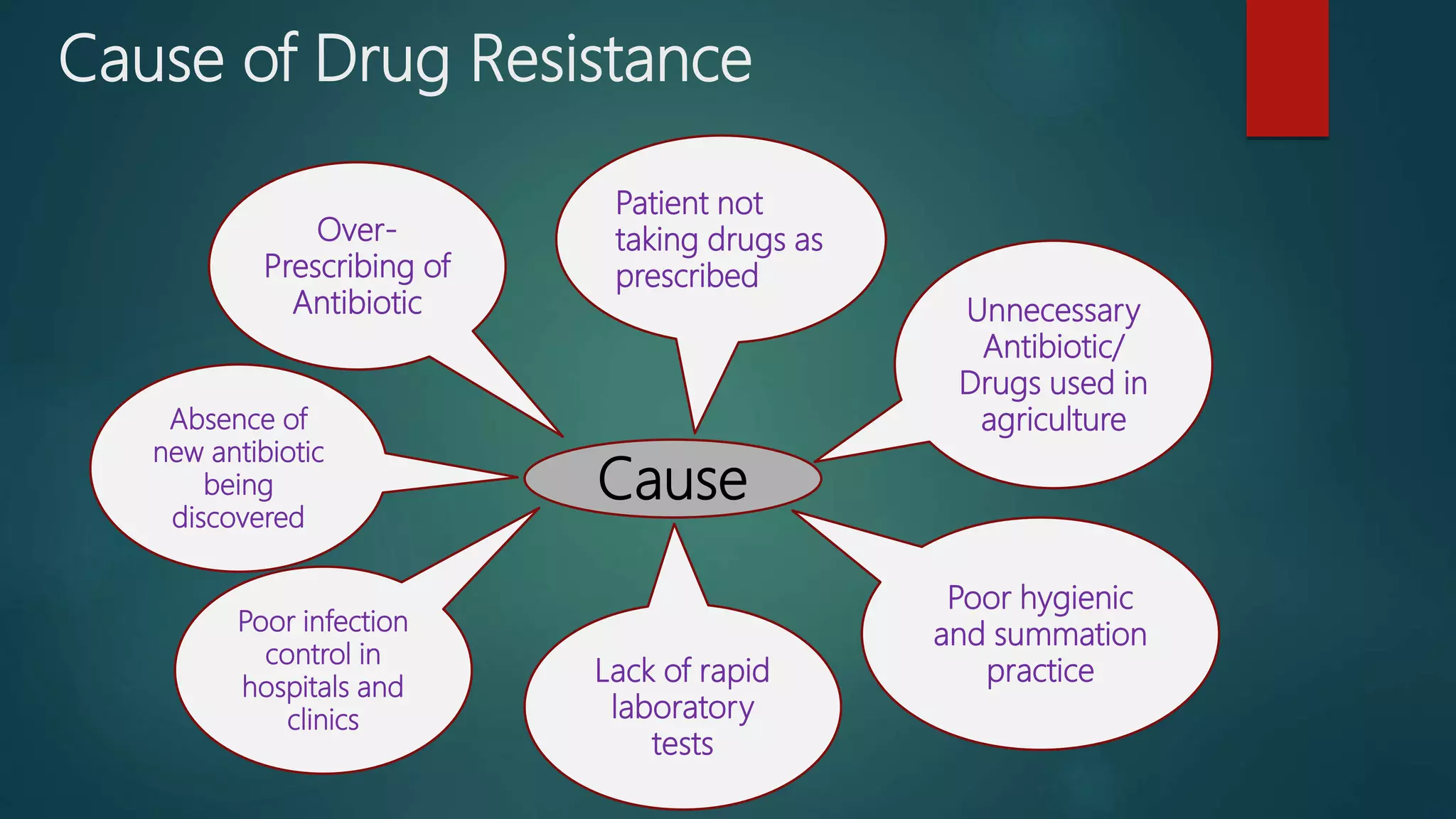
Cause
Unnecessary
Antibiotic/
Drugs used in
agriculture
Poor hygienic
and summation
practice
Patient not
taking drugs as
prescribed
Poor infection
control in
hospitals and
clinics
Lack of rapid
laboratory
tests
Over-
Prescribing of
Antibiotic
Absence of
new antibiotic
being
discovered
Other causes:
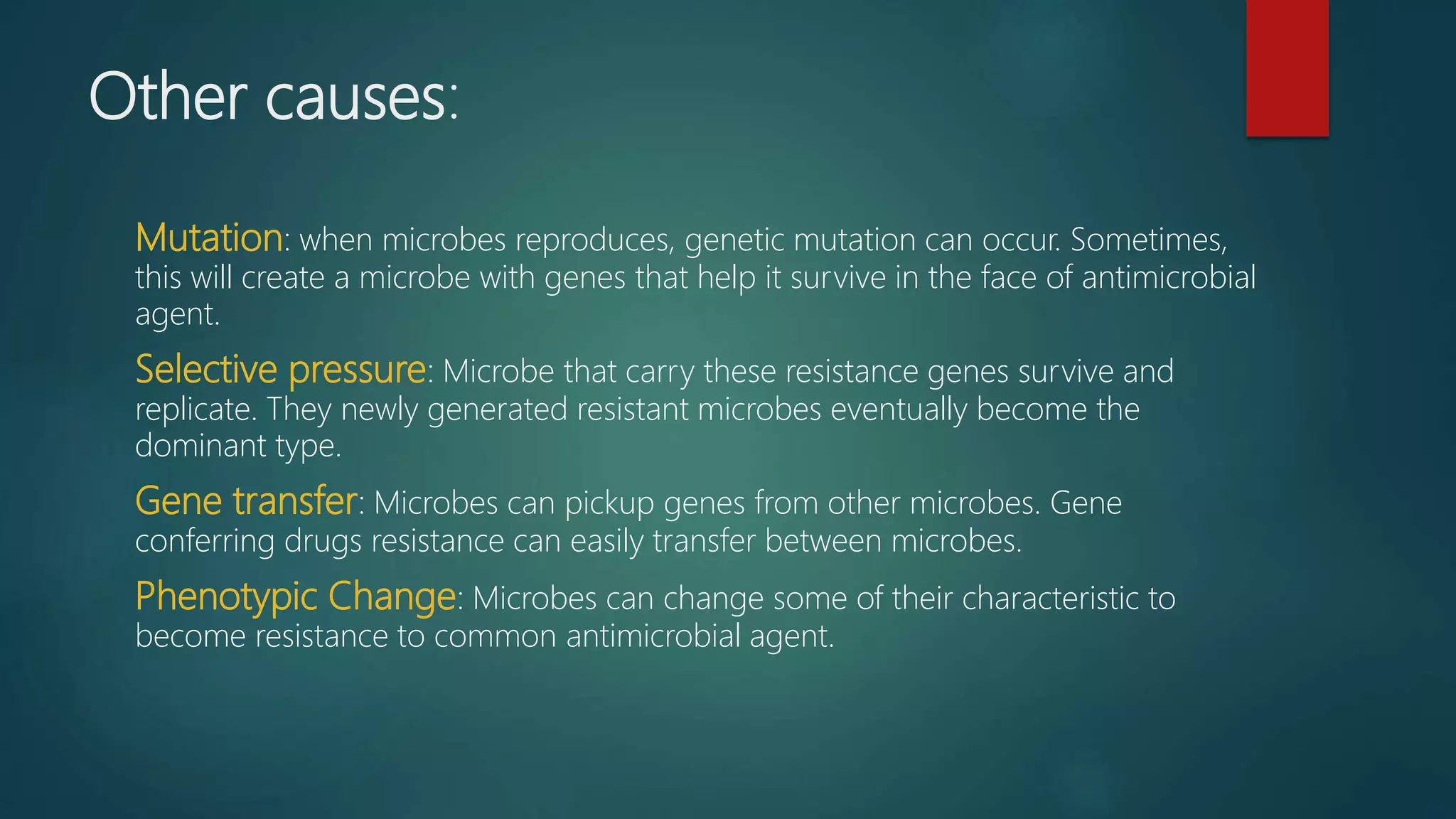
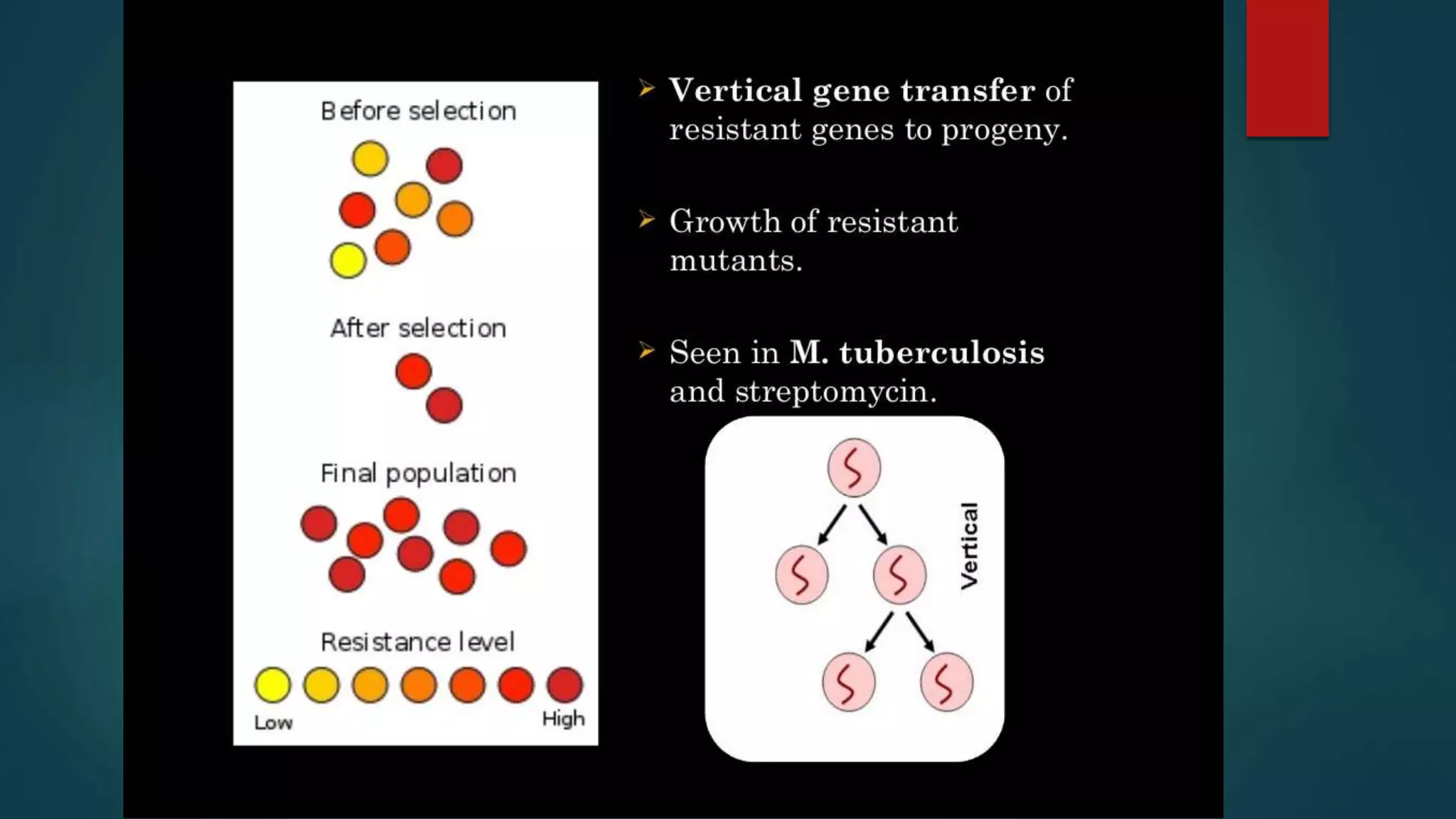
Mutation: when microbes reproduces, genetic mutation can occur. Sometimes,
this will create a microbe with genes that help it survive in the face of antimicrobial
agent.
Selective pressure: Microbe that carry these resistance genes survive and
replicate. They newly generated resistant microbes eventually become the
dominant type.
Gene transfer: Microbes can pickup genes from other microbes. Gene
conferring drugs resistance can easily transfer between microbes.
Phenotypic Change: Microbes can change some of their characteristic to
become resistance to common antimicrobial agent.
Inadequate Diagnosis: More often, health care providers must use incomplete or
imperfect information to diagnose an infection and thus prescribe an antimicrobial
in-case or prescribe a broad spectrum antimicrobial when a specific antibiotic might
better. These situation contribute to selective pressure and accelerate antimicrobial
resistance.
Inappropriate Use: If a person does not complete a course of antimicrobial drugs.
Some microbes may survive and develop resistance to the drugs. Resistance can also
develop if people use drugs for conditions that they cannot treat. Example: People
sometimes take an antibiotic for a viral infections.
Agricultural use: Using antibiotic in farm animals can promote drug resistance
scientists have found drug resistance bacteria in meat and food crops that have
exposure to fertilizers or contaminated water, in this way disease that affects animals
can pass to humans.
Hospital use: People who are critically ill often receive high dose of microbials. This
encourage the spread of AMR microbes, particularly in an environment where various
disease are present.
Strategies to combat drug resistance in
antibiotics:
International Measures: Some of the WHO recommended
approaches are:
1. Increased collaboration between governments, non-governmental
organizations, professional groups and international agencies.
2. New networks that undertake surveillance of antimicrobials use of AMR.
3. International approach for control of counterfeit antimicrobials.
4. Incentive for the research and development of new drugs and vaccines.
5. Forming new and reinforcing existing programmes to certain AMR.
National strategies: like
1. WHO recommends that such committee would formulate AMR policy.
2. Provide guidance on standards, regulations, training and awareness on
antibiotic use and AMR.
3. Establishing and implementing national standard treatment guideline,
having essential drug list (EDL), enhancing coverage of immunization are
other essential strategies desired at national level.
4. National Antimicrobial Resistance Policy, India: To understand
emergence, spreads and factors influencing AMR, to setup antimicrobial
program.
5. To rationalize the use of antimicrobials and to encourage the innovation
of newer effective antimicrobials.
Action at Community level:
1. Rational use of antibiotics: The patients are treated in accordance with
standard treatment guideline. This mandates public and professional
education towards rational use of antibiotics.
2. Over-the-counter (OTC) antibiotics: Measure the preserve efficacy of
antimicrobials are mainly directed towards the hospital and drug providers
are missing antibiotic use without prescription.
3. Standards of hygiene: Use of alcohol-based hand rubs or washing hands has
proven efficacy in prevention of infection. This factor can restrict the spread
of infection and thereby the AMR. Willingness to put up with high standards
of hygiene is need of an hour.
4. Other Approaches:
 Establishing an infection prevention and control committee (IPC).
 Good hand hygiene practices.
 Effective diagnosis and treatment of infection.
 Surveillance of antibiotic resistance and antibiotic use.
 Improving the antimicrobial quality and supply chain.
 Good Microbiology Practices.
Other Measures:
 Improve and strengthen surveillance and laboratory capacity and
facilities.
 Make sure uninterrupted wide access to essential medicines of assured
quality.
 Regulate and encourage rational use of medicines, even in animal
husbandry, and ensure proper patient care.
 Improvise on infection prevention and control.
 Promote and pursue innovations and research and development for new
tools.
 Dedicate to a comprehensive, financed national plan with accountability
of each one involved and engagement of civil societies.
Genetic principle of
drug resistance
Thank you…

Combating Drug resistance

  • 1.
    Combating Drug Resistance HarendraBisht M. Pharmacy ( Pharmaceutical Chemistry) Department of Pharmaceutical Science, Bhimtal (Nanital) Mail: hsb.bisht40@gmail.com Contact: 8171232896
  • 2.
    Discussion Today:  Causeof Drug Resistance  Strategies to combat drug resistance in antibiotic and anticancer therapy  Genetic principle of drug resistance
  • 6.
    Cause of DrugResistance Cause Unnecessary Antibiotic/ Drugs used in agriculture Poor hygienic and summation practice Patient not taking drugs as prescribed Poor infection control in hospitals and clinics Lack of rapid laboratory tests Over- Prescribing of Antibiotic Absence of new antibiotic being discovered
  • 7.
    Other causes: Mutation: whenmicrobes reproduces, genetic mutation can occur. Sometimes, this will create a microbe with genes that help it survive in the face of antimicrobial agent. Selective pressure: Microbe that carry these resistance genes survive and replicate. They newly generated resistant microbes eventually become the dominant type. Gene transfer: Microbes can pickup genes from other microbes. Gene conferring drugs resistance can easily transfer between microbes. Phenotypic Change: Microbes can change some of their characteristic to become resistance to common antimicrobial agent.
  • 8.
    Inadequate Diagnosis: Moreoften, health care providers must use incomplete or imperfect information to diagnose an infection and thus prescribe an antimicrobial in-case or prescribe a broad spectrum antimicrobial when a specific antibiotic might better. These situation contribute to selective pressure and accelerate antimicrobial resistance. Inappropriate Use: If a person does not complete a course of antimicrobial drugs. Some microbes may survive and develop resistance to the drugs. Resistance can also develop if people use drugs for conditions that they cannot treat. Example: People sometimes take an antibiotic for a viral infections. Agricultural use: Using antibiotic in farm animals can promote drug resistance scientists have found drug resistance bacteria in meat and food crops that have exposure to fertilizers or contaminated water, in this way disease that affects animals can pass to humans. Hospital use: People who are critically ill often receive high dose of microbials. This encourage the spread of AMR microbes, particularly in an environment where various disease are present.
  • 9.
    Strategies to combatdrug resistance in antibiotics: International Measures: Some of the WHO recommended approaches are: 1. Increased collaboration between governments, non-governmental organizations, professional groups and international agencies. 2. New networks that undertake surveillance of antimicrobials use of AMR. 3. International approach for control of counterfeit antimicrobials. 4. Incentive for the research and development of new drugs and vaccines. 5. Forming new and reinforcing existing programmes to certain AMR.
  • 10.
    National strategies: like 1.WHO recommends that such committee would formulate AMR policy. 2. Provide guidance on standards, regulations, training and awareness on antibiotic use and AMR. 3. Establishing and implementing national standard treatment guideline, having essential drug list (EDL), enhancing coverage of immunization are other essential strategies desired at national level. 4. National Antimicrobial Resistance Policy, India: To understand emergence, spreads and factors influencing AMR, to setup antimicrobial program. 5. To rationalize the use of antimicrobials and to encourage the innovation of newer effective antimicrobials.
  • 11.
    Action at Communitylevel: 1. Rational use of antibiotics: The patients are treated in accordance with standard treatment guideline. This mandates public and professional education towards rational use of antibiotics. 2. Over-the-counter (OTC) antibiotics: Measure the preserve efficacy of antimicrobials are mainly directed towards the hospital and drug providers are missing antibiotic use without prescription. 3. Standards of hygiene: Use of alcohol-based hand rubs or washing hands has proven efficacy in prevention of infection. This factor can restrict the spread of infection and thereby the AMR. Willingness to put up with high standards of hygiene is need of an hour. 4. Other Approaches:  Establishing an infection prevention and control committee (IPC).  Good hand hygiene practices.  Effective diagnosis and treatment of infection.  Surveillance of antibiotic resistance and antibiotic use.  Improving the antimicrobial quality and supply chain.  Good Microbiology Practices.
  • 12.
    Other Measures:  Improveand strengthen surveillance and laboratory capacity and facilities.  Make sure uninterrupted wide access to essential medicines of assured quality.  Regulate and encourage rational use of medicines, even in animal husbandry, and ensure proper patient care.  Improvise on infection prevention and control.  Promote and pursue innovations and research and development for new tools.  Dedicate to a comprehensive, financed national plan with accountability of each one involved and engagement of civil societies.
  • 13.
  • 24.