Applied
Forensic
Research
Sciences
Anthropology In
Body Measurements
Presentation By
Aditi More
Volunteer of AFRS
SYNOPSIS
• Introduction
• Types of
Anthropometry
Measurement
• Instruments
• Forensic Signifinance
• Q & A
• It consists of two words namely
‘Anthropos’ which means human and
‘Metron’ which means measurement.
• Anthropometry being a branch of
physical anthropology indicates the
measurements of human body, which
provides scientific methods and
techniques for various measurements
and observations on the living human
body and the skeleton.
INTRODUCTION
Anthropometry is categorized into
three groups for convenience.
• Somatometry:- measurement on
living human body.
• Osteometry:- measurement on
skeletal long and short bones.
• Craniometry:- measurement on
the skull.
TYPES OF
ANTHROPOMETRY
MEASUREMENT
INSTRUMENTS
• Well-acquaintance with the instruments is
required for getting accurate measurements.
Most of the instruments are found to be
manufactured in Switzerland. Some are also
manufactured in Germany and U.S.A.
• The reputed companies are Abawerk, G.m.b.H
(Germany), Swan Tool and Machine Company
and Gilliland Instrument Company (U.S.A.). At
present, India is also making these
anthropological instruments. Una and
Company of New Delhi deserves mention.
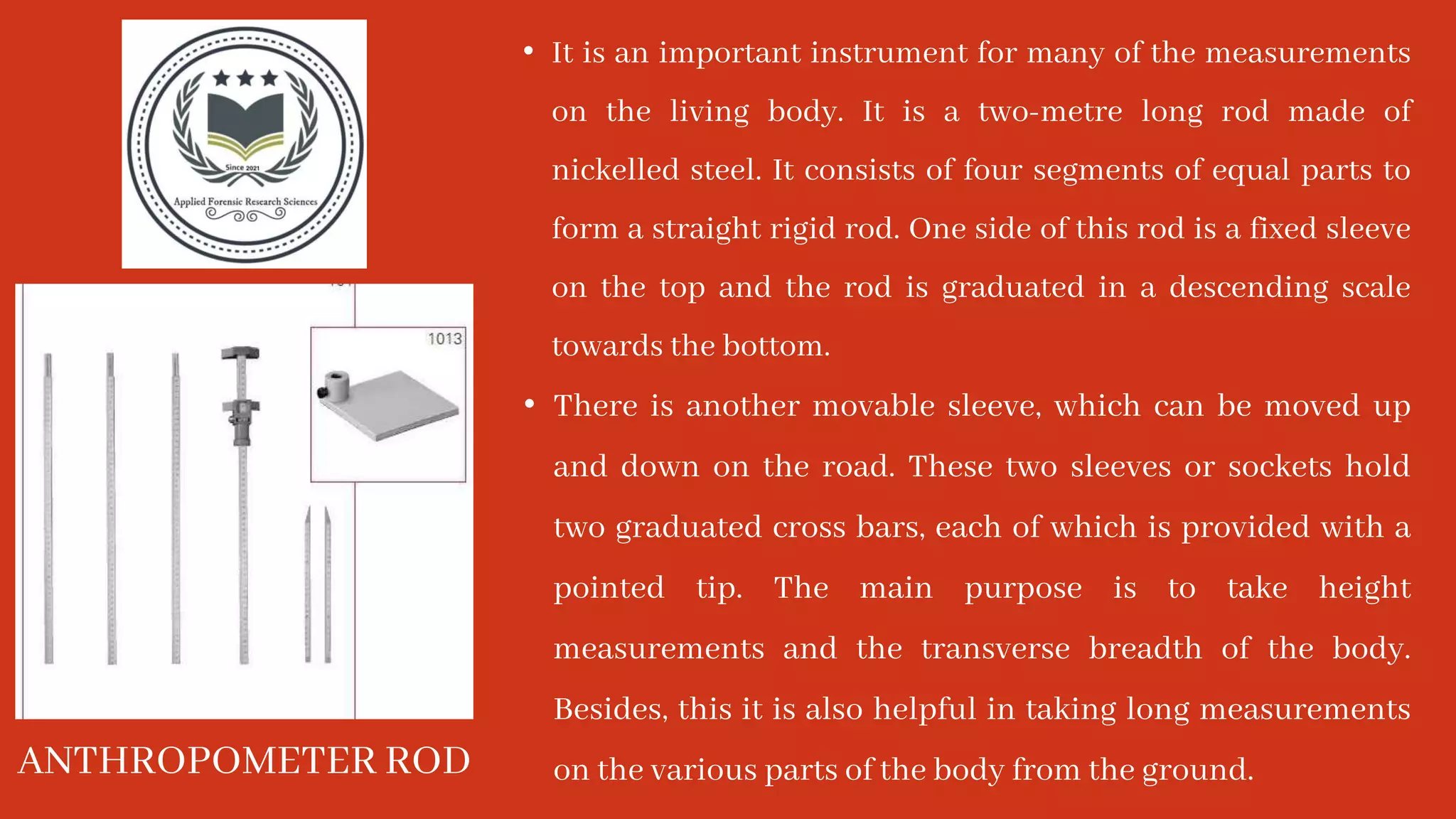
ANTHROPOMETER ROD
• It is an important instrument for many of the measurements
on the living body. It is a two-metre long rod made of
nickelled steel. It consists of four segments of equal parts to
form a straight rigid rod. One side of this rod is a fixed sleeve
on the top and the rod is graduated in a descending scale
towards the bottom.
• There is another movable sleeve, which can be moved up
and down on the road. These two sleeves or sockets hold
two graduated cross bars, each of which is provided with a
pointed tip. The main purpose is to take height
measurements and the transverse breadth of the body.
Besides, this it is also helpful in taking long measurements
on the various parts of the body from the ground.
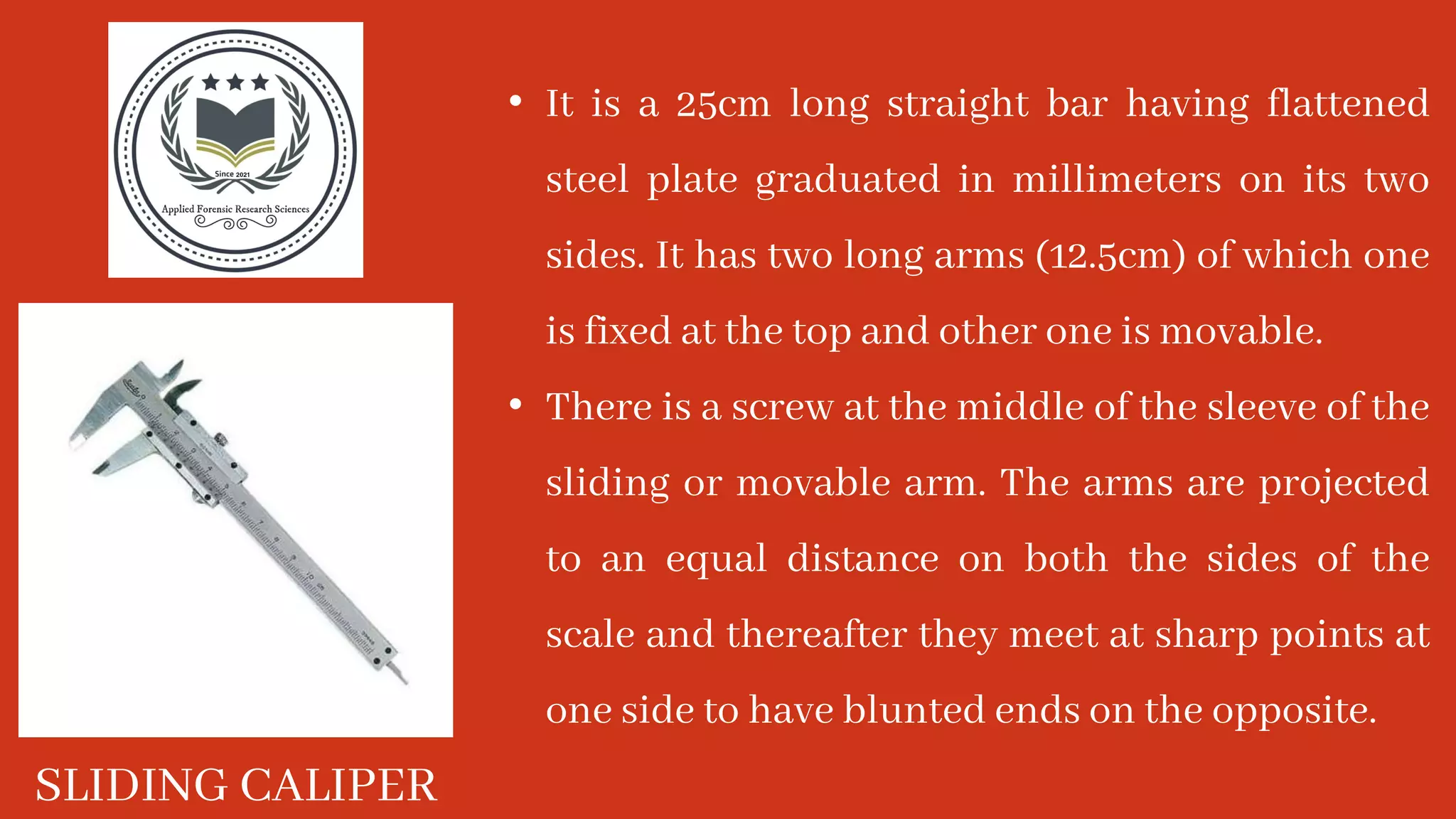
SLIDING CALIPER
• It is a 25cm long straight bar having flattened
steel plate graduated in millimeters on its two
sides. It has two long arms (12.5cm) of which one
is fixed at the top and other one is movable.
• There is a screw at the middle of the sleeve of the
sliding or movable arm. The arms are projected
to an equal distance on both the sides of the
scale and thereafter they meet at sharp points at
one side to have blunted ends on the opposite.
CONTINUE OF SLIDING CALIPER
• These are used in taking the measurements on skeletal parts. Again, some instruments
are specially designed with rounded and blunt ends to facilitate the measurements on
living body. A straight scale graduated in millimeters is found to be fixed at one of the
arms (in the middle of the left curved arm) and the meter scale passes through a flexible
socket on the other arm of right hand side. Spreading calipers are available in two sizes,
one is of 25cm for taking smaller measurements and another one is of 60cm for taking
larger measurements especially on pelvis region. The latter is also known as Pelvimeter.
TAPE
• It is useful for measuring the girths
of various parts of the body and
skeleton. It is made of thin steel,
which is graduated in millimeters.
Width of the tape is usually about 10
millimeters.
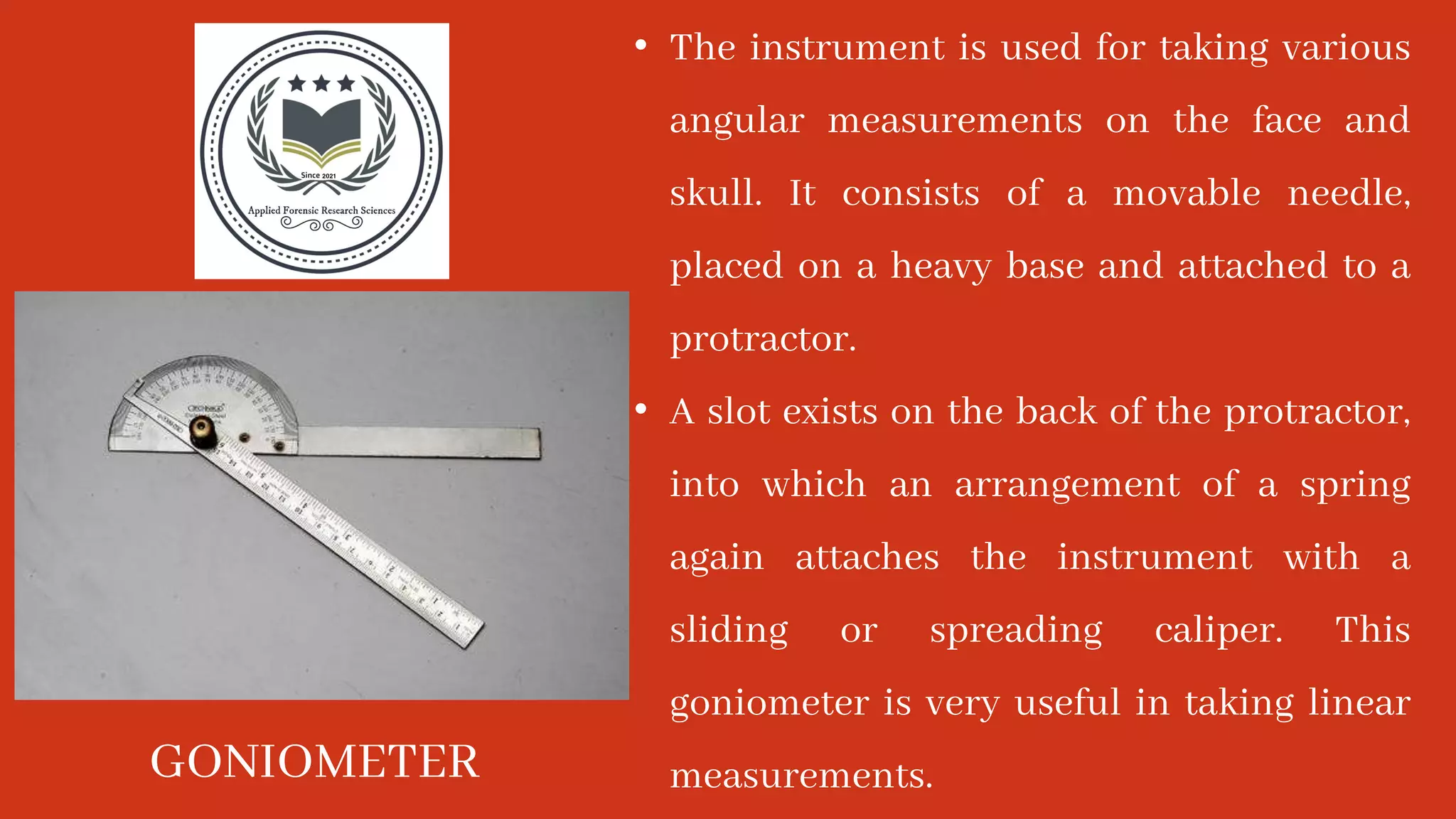
GONIOMETER
• The instrument is used for taking various
angular measurements on the face and
skull. It consists of a movable needle,
placed on a heavy base and attached to a
protractor.
• A slot exists on the back of the protractor,
into which an arrangement of a spring
again attaches the instrument with a
sliding or spreading caliper. This
goniometer is very useful in taking linear
measurements.
CUBIC CRANIOPHORE
• Craniophore is used to orient the skull on a
horizontal plane for taking angular
measurements. But this cubic craniophore is
used for drawing craniograms by means of
diagraph.
• It is composed of a metallic cube where the
length of each side is 30cm approximately. A
jaw is fixed in the centre of the cube. There is
an extended arm on one side of it which can
hold a skull tightly at the centre of the cube.
Metal dish is used in case of fragile skull.
OSTEOMETRIC BOARD
• Some bones, such as the humerus
or femur, are simply too long to
measure with calipers.
• Equipped with a slider and a 60cm
scale is ideal for any forensic
science lab. Constructed of
lightweight styrene for durability.
With instructions 70 x 13.11cm.
FORENSIC SIGNIFINANCE
• Forensic science is a study that requires anthropometric measurements to
conduct research. This relates to corpse research which usually requires
anthropometric data to analyze the shape and physical size of someone who died.
• This measurement can be done through pieces of the human body. In other words,
this measurement is used to identify a person or someone’s biological profile to be
examined. Also, forensic science is closely related to anthropometry and
anthropology.
Q & A
What are the body measurements called?
A. Somatometry
B. Craniometry
C. Anthropometry
D. All of the above
Anthropology in Body Measurement.pptx

Anthropology in Body Measurement.pptx

  • 1.
  • 2.
    Anthropology In Body Measurements PresentationBy Aditi More Volunteer of AFRS
  • 3.
    SYNOPSIS • Introduction • Typesof Anthropometry Measurement • Instruments • Forensic Signifinance • Q & A
  • 4.
    • It consistsof two words namely ‘Anthropos’ which means human and ‘Metron’ which means measurement. • Anthropometry being a branch of physical anthropology indicates the measurements of human body, which provides scientific methods and techniques for various measurements and observations on the living human body and the skeleton. INTRODUCTION
  • 5.
    Anthropometry is categorizedinto three groups for convenience. • Somatometry:- measurement on living human body. • Osteometry:- measurement on skeletal long and short bones. • Craniometry:- measurement on the skull. TYPES OF ANTHROPOMETRY MEASUREMENT
  • 6.
    INSTRUMENTS • Well-acquaintance withthe instruments is required for getting accurate measurements. Most of the instruments are found to be manufactured in Switzerland. Some are also manufactured in Germany and U.S.A. • The reputed companies are Abawerk, G.m.b.H (Germany), Swan Tool and Machine Company and Gilliland Instrument Company (U.S.A.). At present, India is also making these anthropological instruments. Una and Company of New Delhi deserves mention.
  • 7.
    ANTHROPOMETER ROD • Itis an important instrument for many of the measurements on the living body. It is a two-metre long rod made of nickelled steel. It consists of four segments of equal parts to form a straight rigid rod. One side of this rod is a fixed sleeve on the top and the rod is graduated in a descending scale towards the bottom. • There is another movable sleeve, which can be moved up and down on the road. These two sleeves or sockets hold two graduated cross bars, each of which is provided with a pointed tip. The main purpose is to take height measurements and the transverse breadth of the body. Besides, this it is also helpful in taking long measurements on the various parts of the body from the ground.
  • 8.
    SLIDING CALIPER • Itis a 25cm long straight bar having flattened steel plate graduated in millimeters on its two sides. It has two long arms (12.5cm) of which one is fixed at the top and other one is movable. • There is a screw at the middle of the sleeve of the sliding or movable arm. The arms are projected to an equal distance on both the sides of the scale and thereafter they meet at sharp points at one side to have blunted ends on the opposite.
  • 9.
    CONTINUE OF SLIDINGCALIPER • These are used in taking the measurements on skeletal parts. Again, some instruments are specially designed with rounded and blunt ends to facilitate the measurements on living body. A straight scale graduated in millimeters is found to be fixed at one of the arms (in the middle of the left curved arm) and the meter scale passes through a flexible socket on the other arm of right hand side. Spreading calipers are available in two sizes, one is of 25cm for taking smaller measurements and another one is of 60cm for taking larger measurements especially on pelvis region. The latter is also known as Pelvimeter.
  • 10.
    TAPE • It isuseful for measuring the girths of various parts of the body and skeleton. It is made of thin steel, which is graduated in millimeters. Width of the tape is usually about 10 millimeters.
  • 11.
    GONIOMETER • The instrumentis used for taking various angular measurements on the face and skull. It consists of a movable needle, placed on a heavy base and attached to a protractor. • A slot exists on the back of the protractor, into which an arrangement of a spring again attaches the instrument with a sliding or spreading caliper. This goniometer is very useful in taking linear measurements.
  • 12.
    CUBIC CRANIOPHORE • Craniophoreis used to orient the skull on a horizontal plane for taking angular measurements. But this cubic craniophore is used for drawing craniograms by means of diagraph. • It is composed of a metallic cube where the length of each side is 30cm approximately. A jaw is fixed in the centre of the cube. There is an extended arm on one side of it which can hold a skull tightly at the centre of the cube. Metal dish is used in case of fragile skull.
  • 13.
    OSTEOMETRIC BOARD • Somebones, such as the humerus or femur, are simply too long to measure with calipers. • Equipped with a slider and a 60cm scale is ideal for any forensic science lab. Constructed of lightweight styrene for durability. With instructions 70 x 13.11cm.
  • 14.
    FORENSIC SIGNIFINANCE • Forensicscience is a study that requires anthropometric measurements to conduct research. This relates to corpse research which usually requires anthropometric data to analyze the shape and physical size of someone who died. • This measurement can be done through pieces of the human body. In other words, this measurement is used to identify a person or someone’s biological profile to be examined. Also, forensic science is closely related to anthropometry and anthropology.
  • 15.
    Q & A Whatare the body measurements called? A. Somatometry B. Craniometry C. Anthropometry D. All of the above