5
UNIT 1 DIAGNOSIS OF PREGNANCY AND
ANTENATAL CARE
Structure
1.0 Objectives
1.1 Introduction
1.2 Antenatal Care
1.3 Initial Comprehensive Evaluation
1.3.1 Diagnosis of Pregnancy
1.3.2 History
1.3.3 Physical Examination
1.3.4 Assessment of Gestational Age
1.3.5 Instructions
1.4 Health Education
1.5 Follow-up of Antenatal Care
1.6 Drug Prescription during Pregnancy
1.6.1 Teratogenesis
1.6.2 Guidelines for Drug Administration for Common Conditions
1.7 Let Us Sum Up
1.8 Key Words
1.9 Answers to Check Your Progress
1.10 Further Readings
1.0 OBJECTIVES
At the end of this unit, you will be able to:
l describe the need for antenatal care;
l enumerate the objectives of antenatal care;
l diagnose normal pregnancy;
l provide antenatal care; and
l recognise the deviation from the normal and refer such cases for specialised
investigation.
1.1 INTRODUCTION
Antenatal care is systematic medical supervision including examination and advice to a
pregnant woman with the aim to ensure that every wanted pregnancy culminates in the
delivery of a healthy baby without impairing the health of the mother. Ideally this care
should begin soon after conception and continue throughout the pregnancy.
1.2 ANTENATAL CARE
Antenatal care (ANC) began as a social service in Paris in 1788 for women who were both
pregnant and destitute. They were housed in Hotel Dieu and Hospital Salpetrione till they
delivered. However, you must appreciate that in 1901, Ballentyne expressed concern for
malformed babies and still births. He was of the opinion that such mishaps could be
prevented by instituting good antenatal care. He was a great visionary and his point has
been proved beyond doubt with the development of ‘Fetal medicine’. Thus began the
medical and scientific interest in antenatal care leading subsequently to organised antenatal
care in Europe and USA by the first decade of this century. In India, antenatal clinics were
instituted in the 1940’s. The Ministry of Health and Family Welfare has recommended
Care During Pregnancy
6
minimal antenatal care i.e. 3 visits of which 2 should be in the last trimester, third being
within last 4 weeks before term. It is hoped that such care will reduce considerably both
maternal and perinatal mortality.
In 1986 the Department of Health and Human Services (USA) convened an expert panel to
review the contents of antenatal care. The panel concluded that medical conditions e.g.
diabetes; personal behaviour (e.g. alcohol abuse) etc. are associated with bad pregnancy
outcome and hence, pre-conceptional care would be an integral part of antenatal care. In our
country, preconceptional is not yet an integral part of antenatal care.
Need for Antenatal Care
It is extremely important to be aware that in India over 95%, of maternal deaths occur among
women who have never had ANC. Inspite of all efforts, 12% in the rural areas receive ANC.
The maternal mortality in our country ranges from 100/1,00,000 in Kerala to 1200 to 1500/
1,00,000 in the Northern States with an average of 400/1,00,000. About 30% of the babies are
of low birth weight and perinatal mortality is in the range of 70-80/1,000. Unfortunately the
leading causes of this grim outcome continue to be infections, haemorrhage, anaemia and
pre-eclampsia which as you will appreciate can be prevented if we institute ‘Intelligent
antenatal care’.
Objectives of Antenatal Care
You are aware that obstetrics is a branch of medicine that deals with parturition, its
antecedents and sequelae. Many of our women come to the hospital only when they are in
labour; good intranatal care no doubt prevents maternal and neonatal mortality and
morbidity to some extent, but care during pregnancy (ANC) can help us to detect/anticipate
complications which if taken care, can further improve both maternal and fetal outcome.
Therefore, the objectives of antenatal care are to:
1) confirm pregnancy and Expected Date of Delivery (EDD)
2) monitor maternal health
3) monitor fetal health
4) identify high risk pregnancies
5) detect associated medical, surgical and gynaecological disorders
6) recognise the deviation from the normal and refer such cases for specialised
investigations
7) screen for infections
8) select cases for domiciliary/hospital delivery
9) immunise the pregnant mother against tetanus and other diseases
10) educate the mother regarding nutrition and drugs
11) educate the mother regarding child care and counsel her about contraception
12) screen for cancer of breast and genital tract.
1.3 INITIAL COMPREHENSIVE EVALUATION
At the onset, we should be clear that pregnancy is a normal physiological state. But then,
why is that we are so worried and look at ANC so pessimistically? That is because, the
complexity of the anatomical and physiological changes that accompany pregnancy make
some people think of normal pregnancy as a disease. For example, excess of fluid retention
manifests as oedema; oedema around the ankles which disappears after rest is normal, but in
case oedema is generalised, it is abnormal. It is essential for you to be familiar with
physiological changes as well as the pathological changes that may develop during
7
Diagnosis of
Pregnancy and
Antenatal Care
pregnancy. This knowledge will help you to impart better antenatal care and also prompt you
to be watchful enough to detect any deviation from the normal. As a physician responsible
for antenatal care, it is best for you to adopt a scientific approach, which involves collecting
information by way of history, physical examination, laboratory investigations and
interpreting the data correctly in addition to diagnosis of existing chronic medical and
surgical problems.
1.3.1 Diagnosis of Pregnancy
As you go through this section, you will find that an attempt has been made to delineate
essentials of good antenatal care. Remember that bad antenatal care may be worse than
none. At the first visit, the pregnant mother is evaluated with the following objectives:
1) To define the health status of the mother
2) To determine the gestational age and health of the fetus
3) To initiate a plan for further obstetrical care
Pregnancy is a physiological state, but we must appreciate the need to make a correct
diagnosis, and this cannot be over-emphasised as it has emotional and social implications.
For any doctor concerned with medical/surgical management of women in the reproductive
age, the knowledge of existence of pregnancy is crucial to the proper diagnosis and
treatment of all diseases. To give you an example, a woman of reproductive age suffering
from pulmonary tuberculosis will need an X-ray and antitubercular drugs as mode of
treatment. In such a case if she happens to be pregnant, the fetus could be exposed to the
teratogenic effects of the drugs and radiation. Abdomen may be shielded to reduce exposure
to radiation.
Right from the history, we should suspect pregnancy. The presumptive symptoms of
pregnancy are:
— Cessation of menstruation ( In all women in the reproductive age with history of
amenorrhoea, pregnancy should be suspected.)
— Nausea with or without vomiting
— Disturbance in micturition
— Fatigue
— Perception of fetal movements
The presumptive signs are anatomical changes in the breasts, skin, discolouration of
vaginal mucosa. Probable evidence lies in the enlargement of abdomen, softening of the
cervix and uterus, uterine enlargement at 6-8 weeks, compressibility of the cervix known as
Palmer’s sign, internal and external ballotment, ability to discern fetal parts and fetal heart
sounds.
Confirmation of pregnancy in the early period lies in the detection of Human Chorionic
Gonadotropin (HCG) in urine and detection of fetus and placenta on ultrasonographic
examination.
Presence of HCG is detected by using kits which contain:
a) Suspension of latex particles coated with HCG
b) Solution of HCG Antibody
Most tests become positive at the time of missed menses and they are sensitive enough to
detect 50 mIU of HCG/ml. However, it will be better to wait for 10 days after the date of missed
menses to get better accuracy.
However, once the presumptive and probable features suggest pregnancy, it is mandatory
that we should confirm pregnancy and hence look out for positive signs. These signs are:
Care During Pregnancy
8
— Detection of fetal heart sound by auscultation at 20 weeks of gestation.
— Perception of fetal movements by the examiner.
— Recognition of embryo and fetus at any time in pregnancy using sonographic
techniques. Gestational sac is seen by 5 to 6 weeks with an abdominal transducer,
embryonic echoes can be demonstrated by 7 weeks and heart action by 8 weeks. If a
vaginal transducer is used, the above signs can be detected a week earlier.
1.3.2 History
You must appreciate that as in any other branch of medicine, the essentials of history taking
are the same. A good rapport should be established with the pregnant woman and
information should be gathered and care should be taken to record the data accurately. We
should realise that a pregnant woman can suffer from the same diseases that a non-pregnant
woman suffers i.e. Rheumatic heart disease, Diabetes mellitus etc. These diseases can
influence both the maternal and foetal outcome adversely. An obstetrical mishap in the past
signals a warning for the current pregnancy. Presence of hypertension, diabetes mellitus,
occurrence of multiple pregnancy or congenital fetal malformations in the family certainly
has implications.
The menstrual history is of very great importance. In a woman who menstruates regularly,
every 28 days, the expected date of delivery (EDD) is calculated accurately by Naegle’s
method i.e. by adding 7 days to nine months from the 1st day of the last menstrual period
(L.M.P.). The facts underlying this calculation are that firstly a woman with a 28 days cycle is
most likely to ovulate at mid cycle and secondly the normal period of gestation is 280 days.
In the absence of regular, predictable, cyclic, spontaneous menses dating of pregnancy
becomes difficult. Such situations are likely when a woman has been on steroidal
contraception, she conceives during lactational amenorrhoea or her menstrual cycles are
irregular.
In the current pregnancy, some important facts should be noted i.e. history of eruptive
fevers, ovulation induction, exposure to drugs/radiation, vaginal bleeding in the first
trimester. In the second and 3rd trimesters features of PIH/Preeclampsia and vaginal bleeding
are to be enquired. You will be immensely benefited if the pregnant woman has already had
ANC; you must look into the records.
You must also take care to enquire about her nutrition, addiction to drugs, alcohol and tobacco.
A note should be made regarding previous surgery and blood transfusion and any major
illnesses.
1.3.3 Physical Examination
General physical examination including height and weight; examination of the abdomen,
cardiovascular, respiratory and nervous systems are absolutely essential in order to assess
the health status of the pregnant mother. Particular attention should be paid to the recording
of weight and blood pressure. Obstetrical examination is performed with a view to confirm
pregnancy and assess the period of pregnancy.
After inspecting the external genitalia, the cervix is visualised employing a speculum. You
must be aware that cervical cancer is the commonest cancer among women and occurs at a
fairly young age in India. Wherever possible, a sample for cytological study is collected
from the lower half of the endocervix and the ectocervix using and Ayre’s spatula. Smears
are made on slides and immediately fixed in ether alcohol. The character of vaginal
secretions is noted. A greenish yellow frothy discharge is suggestive of infection with
Trichomonas vaginalis; a curdy white discharge is consistent with monilial infection. A wet
smear on microscopic examination confirms the diagnosis.
A bluish discolouration of the cervix is characteristic, but not diagnostic of pregnancy. If the
cervix is dilated, membranes can be seen. On bimanual examination, cervix will be found to be
soft, uterus will be soft and enlarged. In very early pregnancy, compressibility at the level of
isthmus is suggestive of pregnancy and has been noted in the literature as Hegar’s sign; at
this period the dating of pregnancy is accurate. Later on fetal parts may be felt. It is essential
9
Diagnosis of
Pregnancy and
Antenatal Care
for you to remember that the uterus becomes palpable per abdomen (just above symphysis
pubis) by the 14th week of pregnancy. Between 20th and 30th weeks of gestation, there is a
good correlation between the gestational age of the fetus and the distance in centimetres
measured from the symphysis pubis to the fundus of the uterus.
1.3.4 Assessment of Gestational Age
Having collected the required data, you proceed to assess the period of gestation as
accurately as possible. This will be extremely useful when we have to make a decision
regarding the timing of delivery. We have already discussed that the period of gestation in
the human beings is 40 weeks. Term pregnancyis from the completion of 37 weeks to
completion of 42 weeks. Preterm pregnancy is from 28 completed weeks till completion of 37
weeks. Post term pregnancy is from completion of 42 weeks and beyond. We have to evince
special concern in case of both preterm and post term infants. According to Arias (1993) the
reliability of the expected date of delivery as calculated from the period of gestation can be
assessed both by clinical data and findings of ultrasonography examination. Depending
upon the accuracy of EDD, it could be categorised as excellant, good or poor.
Excellent Dates
a) Women with adequate clinical information having known. L.M. P.; 28-30 days cycle; no
recent use of Oral Contraceptives Pills; uterine size in agreement with the dates and the
ultrasound examination between 16 to 24 weeks indicating that the fetal measurements
are in agreement with the gestational age.
b) Patients with inadequate or incomplete clinical information but with two ultrasound
examination between 16-24 weeks showing linear fetal growth and similar EDD.
Good Dates
a) Patients with adequate clinical information (as defined above) and one confirmatory
ultrasound examination after 24 weeks of gestation.
b) Patients with inadequate or incomplete clinical information and two or more ultrasound
examination showing adequate growth and similar EDD.
Poor Dates
Any clinical information different from those listed above.
1.3.5 Instructions
After history and physical examination, estimation of haemoglobin, urine analysis, blood
grouping and Rh typing should be performed for all the pregnant women. Iron-folic acid
prophylaxis is advocated as 90% of pregnant women in India are anaemic; iron deficiency
anaemia per se and along with other causes is responsible for 30-40% of maternal deaths.
The pregnant woman should be instructed to attend antenatal clinic in every 4 weeks till 28
weeks; in every 2 weeks between 28 to 36 weeks and then in every week till delivery.
As discussed already, Ministry of Health and Family Welfare of India has recommended a
minimum of 3 antenatal visits of which two should be in the last trimester. First visit should
be before 20 weeks, 2nd visit between 28 to 32 weeks for early detection of pregnancy
complications, and the 3rd visit between the 36th and 40th weeks to detect the abnormal lie
and abnormal presentation of foetus. You will see the necessity of two visits in the last
trimester where you can detect abnormal lies and presentations and cephalopelvic
disproportion so as to prevent obstructed labour and its complications. Hence, the third visit
should be done between 36-40 weeks. In primigravida, we should particularly look for
preeclampsia which if uncontrolled often ends in eclampsia —a convulsive disorder
accounting for a large number of both the maternal and fetal deaths. Therefore, we have to
explain to the pregnant woman and her family the need for regular antenatal care. At the
same time, she should be instructed to report immediately if she notices any of the following
danger signals:
Care During Pregnancy
1 0
l Vaginal bleeding
l Swelling of face, fingers and persistent oedema around the ankles
l Severe/continuous headache
l Dimness/blurring of vision
l Abdominal pain
l Persistent vomiting
l Chills or fever
l Oliguria
l Escape of fluid from the vagina
l Excessive/markedly diminished fetal movements
Check Your Progress 1
1) List three leading causes of maternal mortality.
.........................................................................................................................................................
.........................................................................................................................................................
.........................................................................................................................................................
2) What is the minimal antenatal care recommended by Ministry of Health and Family
Welfare?
.........................................................................................................................................................
.........................................................................................................................................................
.........................................................................................................................................................
3) Enumerate three situations where it may be difficult to calculate EDD.
.........................................................................................................................................................
.........................................................................................................................................................
.........................................................................................................................................................
1.4 HEALTH EDUCATION
Every pregnant woman should be advised regarding nutrition, rest, drugs, alcohol, smoking,
exercise, recreation, sexual activity and about child craft.
Nutrition
By now, you have seen the extent of anatomical and physiological changes in the pregnant
woman. This demands a special consideration for her diet. Throughout this century diets of
pregnant women have been discussed endlessly. However, a consensus was reached and
Research Council (1989) has recommended daily allowance for women both before and after
pregnancy. You will study ‘Nutrition’ in detail in Unit 2 of this block. Suffice to mention that a
pregnant woman from the onset of 2nd trimester requires 2500 kilocalories, 1200 mg of
calcium, 100 mg of iron and 0.5 mg of folic acid and 60 gms of proteins. It is worthwhile
noting that excessive supplementation of certain nutrients i.e. Vitamin A and D can lead to
toxicities.
1 1
Diagnosis of
Pregnancy and
Antenatal Care
Exercise
A pregnant woman can continue her routine work. She may also be permitted to continue
‘Keep fit’ exercises. We should advise her not to undertake heavy exercise in the last few
weeks. She needs sleep for 8 hours at night. Women who do physical work must rest for
another two hours in the afternoon. Coitus should be prohibited only if you have recorded
pregnancy complications i.e. preterm labour, major degree placenta praevia etc.
Addictions
We should make special efforts to elicit if a pregnant woman is addicted to tobacco, alcohol
and hard drugs she will benefit immensely if you could take time to counsel her. Ill effects
of these substances are well documented e.g. cigarette smoking has been found to be a
common cause of lUGR.
Medications
You are aware that a number of drugs cross the placenta and produce undesirable effects
on the fetus such as congenital malformation. And hence you have to warn the pregnant
woman not to take any drug without consulting the physician. For all practical purposes,
any drug should be avoided in the first 8 weeks of pregnancy, unless the mother’s
condition warrants their use. More about drugs used in pregnancy will be discussed later
in this unit.
Immunization
As an obstetrician you are dealing with two patients, the mother and her fetus. Some of the
immunisations though beneficial to the mother may be harmful to fetus. The safety of
immunisation against certain diseases has been questioned. In our country, universalisation
of immunisation against tetanus has almost eradicated its occurrence in the mother and her
new born. Two intramuscular doses of 0.5 ml each are given 4 to 6 weeks apart during ANC.
The last dose is to be given before 36 weeks to be effective.
Immunisation against measles, mumps, and rubella are contraindicated as these are ‘live
virus vaccine’. Inactive vaccines like rabies, hepatitis B, cholera, plague should be given
when exposed to the risk. Post exposure prophylaxis with immunoglobulins can be given
for Hepatitis B, Rabies, Tetanus and Varicella.
1.5 FOLLOW-UP OF ANTENATAL CARE
A thorough initial and comprehensive evaluation sets the stage for subsequent antenatal
care. Hence forth you will monitor maternal and fetal health. It is necessary for you to find
out from the pregnant woman if she has any new symptoms; if she has, the symptoms must
be assessed thoroughly. In the earlier section, we have seen that the pregnant woman
should come for check up every four weeks till 28 weeks, then every 2 weeks till 36 weeks
and weekly thereafter. The following should be recorded at every visit:
I) Weight Gain
2) Blood Pressure
3) Obstetrical Examination
4) Common Complaints
1) Weight Gain
Overall weight gain of a woman during normal pregnancy is 9 to 11 kg. Progressive weight
gain indirectly reflects fetal growth. Excessive weight gain indicates fluid retention and it is
generally believed to be the earliest sign of preeclampsia. Therefore, it is mandatory that we
watch the weight very critically. During the second and third trimester, a pregnant woman
Care During Pregnancy
1 2
should gain 0.3 to 0.5 kg per week. If you recall, primigravidae are more prone to develop
preeclampsia. In fact 80% of cases of preeclampsia occur in primis. Therefore, any weight
gain more than 0.5 kg per week is a warning signal and you should monitor such mothers
very closely. Presence of oedema should be looked for around the ankles and if present you
should find out if it disappears after rest. Appearance of oedema of face and hands is
certainly omnious and needs to be investigated. Lack of adequate weight gain may result in
low birth weight (LBW) baby.
2) Blood Pressure
Blood pressure should be recorded at every visit. It should be taken with the patient in the
recumbent position with a 30o
tilt towards left side so that the arm is placed at the level of
the heart. This procedure should be practised as a routine. Because, in the supine position,
pressure of the uterus on large pelvic veins and inferior vena cava decreases the venous
return to the heart causing supine hypotension syndrome.
A recording of diastolic blood pressure of 90 mm of Hg or more or an increase of 15 mm of
Hg above Basal level and/or a systolic blood pressure record of 140 mm of Hg or more or a
rise of 30 mm of Hg above basal level are accepted criterias for the diagnosis of Pregnancy
Induced Hypertension (PIH)/Preeclampsia if the rise to blood pressure is observed at least
on two occasions 6 hours apart. If rise of blood pressure is associated with albuminuria (300
mg or more per litre in 24 hours), the condition is defined as preeclampsia.
Hypertension is also diagnosed if Mean Arterial Pressure (MAP) is increased to 105 mm of
Hg. Mean arterial pressure is obtained by adding one-third pulse pressure (Pulse Pressure is
the difference between Systolic and Diastolic Pressure) to the diastolic pressure. MAP can
also be calculated by the following fornlula:
S + 2D Where, S = Systolic Blood Pressure
MAP =
3 D = Diastolic Blood Pressure
3) Obstetrical Examination
You will remember that at the first visit, we assessed the size of the uterus in order to
determine the gestational age. On return visits the size of the uterus, in terms of fundal
height is assessed. The fundal height you will find was traditionally recorded in relation to
the symphysis pubis, the umbilicus and the xiphisternum. As this method is not based on
objective criterias, it could not be compared to an established standard of growth. Westin et
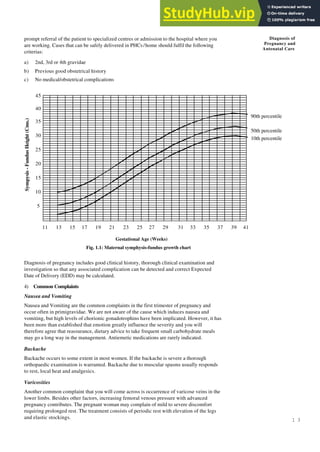
al. in 1977 introduced “gravidogram”. The Symphysis Fundal Height (SFH) measured in
centimetres is plotted against the period of gestation. A nomogram can be obtained for a
given population. Values close to 10th percentile curve suggest Intra Uterine Growth
Retardation (IUGR) or intrauterine death and values close to 90th percentile curve are
indicative of multiple pregnancy or a big baby. An example of maternal SFH growth chart is
shown in Fig. 1.1. You must remember that IUGR accounts for almost 25% of babies and
therefore gravidogram can be effectively used as a screening tool for IUGR in a country like
ours. The screened cases can be referred to centres for further investigations like
ultrasonogram. In the 3rd trimester especially at the end of 3rd trimester, you would like to
examine to determine the :
a) Period of gestation
b) Lie of the fetus
c) Presentation of the fetus
d) Position
e) Fetal Heart Sound
f) Cephalopelvic disproportion
g) Contracted pelvis
The examination to determine the above points are given in practical manuals. Presence of
any risk factors mentioned above and associated obstetrical and medical complications will
1 3
Diagnosis of
Pregnancy and
Antenatal Care
prompt referral of the patient to specialized centres or admission to the hospital where you
are working. Cases that can be safely delivered in PHCs/home should fulfil the following
criterias:
a) 2nd, 3rd or 4th gravidae
b) Previous good obstetrical history
c) No medical/obstetrical complications
Fig. 1.1: Maternal symphysis-fundus growth chart
Gestational Age (Weeks)
Sympysis
-
Fundus
Height
(Cms.)
Diagnosis of pregnancy includes good clinical history, thorough clinical examination and
investigation so that any associated complication can be detected and correct Expected
Date of Delivery (EDD) may be calculated.
4) Common Complaints
Nausea and Vomiting
Nausea and Vomiting are the common complaints in the first trimester of pregnancy and
occur often in primigravidae. We are not aware of the cause which induces nausea and
vomiting, but high levels of chorionic gonadotrophins have been implicated. However, it has
been more than established that emotion greatly influence the severity and you will
therefore agree that reassurance, dietary advice to take frequent small carbohydrate meals
may go a long way in the management. Antiemetic medications are rarely indicated.
Backache
Backache occurs to some extent in most women. If the backache is severe a thorough
orthopaedic examination is warranted. Backache due to muscular spasms usually responds
to rest, local heat and analgesics.
Varicosities
Another common complaint that you will come across is occurrence of varicose veins in the
lower limbs. Besides other factors, increasing femoral venous pressure with advanced
pregnancy contributes. The pregnant woman may complain of mild to severe discomfort
requiring prolonged rest. The treatment consists of periodic rest with elevation of the legs
and elastic stockings.
45
40
35
30
25
20
15
10
5
11 13 15 17 19 21 23 25 27 29 31 33 35 37 39 41
90th percentile
50th percentile
10th percentile
Care During Pregnancy
1 4
Haemorrhoids
You may recall that varicosities of the rectal veins appear for the first time during pregnancy.
But more often pregnancy aggravates previously existing haemorrhoids. Bleeding from
haemorrhoids may be responsible for iron deficiency anaemia. If bleeding is persistent
haemorrhoidectomy may be required.
Heart Burn
As pregnancy advances it causes a upward displacement and compression of stomach by
the uterus, which along with increased gastrointestinal motility leads to reflux of gastric
content into the lower esophagus. In most pregnant women symptoms of heart burn can be
easily relieved by regimen of small frequent meals, avoidance of lying flat on bed and
antacid preparations provide considerable relief.
Headache
This is a frequent complaint in the early pregnancy and disappears by mid-pregnancy. In the
vast majority, no cause can be demonstrated and treatment is largely symptomatic. However,
you must never forget that headache after 20 weeks of pregnancy could be due to
pregnancy induced hypertension.
Leucorrhoea
Excessive vaginal discharge may be normal due to increased vascularity. However, abnormal
vaginal discharge should be looked for and investigated. If it is the result of infection
caused by trichomonos vaginalis or candida specific treatment should be instituted. The
possibility of teratogenicity due to metronidazole has been ruled out. Several large studies
found no increase in frequency of birth defects in over 1000 women treated with
metronidazole during pregnancy.
5) Prognosis
The pregnant woman and her relatives will be anxious to know about how the pregnancy is
progressing, the place of delivery, the type of delivery especially if she has already had
mishaps in her previous pregnancies. In spite of pregnancy being a normal physiological
state, the complex anatomical and physiological changes render pregnant woman prone to
certain complications. Hence the recent evolution of the concept is that every pregnancy is
associated with some risk.
By considering all the data gathered and the high risk factors, prognosis could be
determined. However, you must remember that those selected for home/PHC delivery having
no risk in the antenatal period could develop certain complications during labour. Hence,
arrangements should be made for prompt referral of such cases.
Check Your Progress 2
1) What is the daily calorie requirement of a woman in second trimester ?
........................................................................................................................................................
........................................................................................................................................................
2) Describe the dose and schedules for immunization against tetanus during pregnancy?
........................................................................................................................................................
........................................................................................................................................................
3) What is the permissible weight gain per week during 2nd and 3rd trimester of
pregnancy?
........................................................................................................................................................
........................................................................................................................................................
1 5
Diagnosis of
Pregnancy and
Antenatal Care
1.6 DRUG PRESCRIPTION DURING PREGNANCY
You have already read that drugs may be responsible for congenital malformations of the
fetus. Therefore you will appreciate the fact that a lot of precautions are required before
administering a drug to a pregnant woman.
1.6.1 Teratogenesis
Period of Teratogensis
A teratogen is any agent or factor to which embryo fetal exposure produces a permanent
alteration in form or function of the offspring (Shephard, 1986). Of prime importance is the
time period in pregnancy during which there was fetal exposure. For this purpose gestation
is divided into three periods. They are:
l Fertilization to implantation
l Embroynic period
l Fetal period (9th week till term)
The embroynic period is the most crucial with regard to malformations because it
encompasses organogenesis.
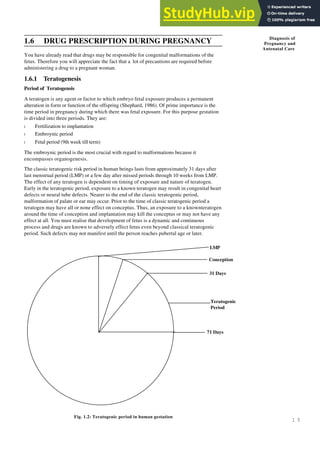
The classic teratogenic risk period in human beings lasts from approximately 31 days after
last menstrual period (LMP) or a few day after missed periods through 10 weeks from LMP.
The effect of any teratogen is dependent on timing of exposure and nature of teratogen.
Early in the teratogenic period, exposure to a known teratogen may result in congenital heart
defects or neural tube defects. Nearer to the end of the classic teratogenic period,
malformation of palate or ear may occur. Prior to the time of classic teratogenic period a
teratogen may have all or none effect on conceptus. Thus, an exposure to a knownteratogen
around the time of conception and implantation may kill the conceptus or may not have any
effect at all. You must realise that development of fetus is a dynamic and continuous
process and drugs are known to adversely effect fetus even beyond classical teratogenic
period. Such defects may not manifest until the person reaches pubertal age or later.
Fig. 1.2: Teratogenic period in human gestation
LMP
Conception
31 Days
Teratogenic
Period
71 Days
Care During Pregnancy
1 6
Causes of Congenital Malformations
Congenital malformations in human fetus could be due to genetic, environmental or
interaction between the two. Historically till 1940s, these defects were attributed to genetic
factors. With the sensational discovery by Gregg (1941) that exposure to German measles
caused abnormalities in the embryo, it became evident that infective agents act as aetiologic
factors for congenital anomaly of fetus. The role of drugs as aetiologic factor for congenital
anomalies of the fetus was highlighted with the thalidomide tragedy (1962). Thalidomide an
antinauseant and ‘sleeping pill’ which was extensively used in pregnancy in 1960s was
associated with sudden increase in incidence of limb defects. The aetiologic factors for
congenital anomalies of the fetus can be classified as follows:
l Chromosomal and genetic factors (20-25%)
l Fetal infection (3-5%)
l Maternal disease (4%)
l Nutritional deficiencies
l Drugs (1%)
l Multifactorial (65- 75%)
1.6.2 Guidelines for Drug Administration for Common Conditions
Now you are aware of the potential fetal risks involved in drug therapy in pregnancy. Let us
now know some of the common drugs that are used in pregnancy with regard to their risk
versus benefits. Idealy a woman who is likely to need drug therapy in pregnancy (e.g.
epileptic, diabetic) should be counselled prenatally about the potential risk, the optional
usage dose and need for careful evaluation of pregnancy well before attempting pregnancy.
But as you may be aware it is common in clinical practice to see pregnant women present to
us with history of drug intake, quite often during the crucial period of organogenesis.
Nausea and Vomiting of Pregnancy
This is a common problem in early pregnancy. Most of the patients do respond to rest,
reassurance, frequent small carbohydrate meals and emotional support. In cases of
excessive nausea and vomiting of pregnancy (hyperemesis gravidarum) hospitalization,
correction of fluid and electrolyte imbalance are the mainstay in the treatment and
antiemetics take a secondary role. There are large number of antiemetics which are used in
this condition which are extensively used world wide and there is no evidence that any of
the antiemetics are associated with increased risk of congenital malformation after exposure
during the period of organogenesis especially, meclizine, cyclizine, promethazine. A
combination of doxylamine and pyridoxine are not associated with increased risk of
congenital malformations when used in first trimester of pregnancy (Farkas and Farkas,
1971; Heimonen and colleagues, 1977). Majority of the drugs in this group fall in category B
or C of FDA classification.
Analgesics and Anti-inflammatory Drugs
Almost half the pregnant women use salicylates and acetaminophen during pregnancy.
Most investigators have found no association between maternal salicylate injection and
fetal anomalies (Heimonen, 1977; Turner, 1975). Aspirin is a potent prostaglandin synthetase
inhibitor and it has been reported to be associated with oligohydramnios, premature closure
of ductus arteriosus and pulmonary hypertension (Levin and associates, 1978; Sibai and
Arnan, 1988). Acetaminophen was not found to be associated with increased risk of fetal
anomalies in over 500 offsprings from two reports (Aselton and colleagues, 1985; Heimonen
and associates, 1977). It has not been associated with duct closure, pulmonary hypertension
or oligohydramnios; however liver toxicity and fetal demise may result from overdosage
(Haibach and colleagues, 1984). Nonsteroidal anti-inflammatory drugs like ibuprofen and
naproxe are most commonly used in this group of drugs and are considered non-
teratogenic. But of concern is the report of possible closure of fetal ductus arteriosus with
subsequent pulmonary hypertension and oligohydramnios. Hence these drugs are generally
avoided beyond 34 weeks of pregnancy.
1 7
Diagnosis of
Pregnancy and
Antenatal Care
Antimicrobials
You must note the fact that almost all the antimicrobials cross the placenta freely. A large
number of antimicrobials have been used in pregnancy with apparently no adverse
embryofetal effects. But there have been very few studies regarding their efficacy and safety
during pregnancy.
Antibacterial Drugs
Pencillins are probably the safest antimicrobial drug in pregnancy (Category B, FDA). Broad
spectrum pencillins (e.g. pipercillin) and those with combination of β-lactamase inhibitors
are included in this group. Erythromycin is equally safe and only a small fraction of the drug
reaches embryofetus. Cephalosporins are commonly prescribed during pregnancy and
limited data available suggests no embryofetal adverse effects (Category B, FDA).
Tetracyclines should be avoided during pregnancy (Category D, FDA) as they cause
yellowish discolorisation of deciduous teeth and are deposited in fetal bones although this
does not appear to inhibit the growth. Perhaps the only indication to use tetracycline in
pregnancy is pencillin allergic patients where desensitization is impractical.
Aminoglycosides readily cross the placenta and streptomycin has been reported to be
associated with fetal 8th nerve damage when given to mother over protracted periods. The
risk of ototoxicity with use of aminloglycoside in pregnancy appears to be about 1-2%.
Hence aminoglycosides are reserved for only serious maternal infections.
Chloramphenicol use in pregnancy does not increase the risk of teratogenesis (Heinomen,
1977) but when given to preterm neonate in large doses may result in the classical ‘grey
baby syndrome’. But it seems unlikely that fetal levels from maternal administration of
chloramphenicol would result in grey baby syndrome. Sulfonamides are another group of
commonly used antibacterial drugs and there have been no studies exploring the
association of sulfa drugs with congenital malformation of the fetus. The sulfadrugs
compete for bilirubing binding sides and may cause hyperbilirubinmia in newborns if given
near delivery, specially in preterm babies. Trimethoprim is all antifolate (Category C, FDA)
and caution is necessary in its use during pregnancy. In studies of infants exposed to
trimethoprim-sulfalnethaxazole combination during early pregnancy the congenital
anomalies were not increased (Brumfilt and Pursell, 1973). Nitrofurantoin is used in
uncomplicated urinary tract infection during pregnancy and in a prospective study of 100
women treated with this drug, congenital anomalies were not increased over control group.
Fluroquinolenes are relatively new group of antibacterial drugs (Ciprofloxacin, Norfoxacin)
and there have been no controlled trials but according to manufacturers study, this group of
drugs are associated with irreversible arthropathy in dogs. Hence fluroquinolones should
not be used in pregnancy except in cases of resistant maternal infection.
You will surely appreciate the need to know the adverse effects of antitubercular drug
therapy in pregnancy. All the drugs in this group freely cross placenta. INH is the drug of
choice and it has not shown to be teratogenic in humans. Most of the studies showed no
adverse maternal or fetal effects when INH was used during pregnancy. Infants exposed to
INH in utero are not at increased risk for childhood cancer. Pyridoxine supplementation
during INH therapy is needed to prevent neurotoxicity in both the mother and the fetus.
Ethambutol is the next safest antitubercular drug during pregnancy as no teratogenic effect
or any other adverse effect has been reported with its use during pregnancy. Rifampicin is
known to be teratogenic in mice but not been reported to be associated with any fetal
adverse effects in human beings. Hence Rifampicin when needed can be used during
pregnancy as a 3rd drug following INH and Ethambutol. Streptomycin is reserved for only
extensive disease because of its ototoxicity and vestibulo toxicity. The other antitubercular
drugs like ethionamide, cytocerme are reported to be teratogenic and should be avoided
during pregnancy. No controlled trials are available regarding the safety of pyrazinamide
during pregnancy.
Antiparasitic Drugs
Among antiparasitic drugs metronidazole is commonly used and found to be carcinogenic in
rodents and mutagenic in certain bacteria. Hence metronidazole use is not recommended
Care During Pregnancy
1 8
during early pregnancy (Hammill 1989). However in a study of over 1000 infants born to
women who had metronidazole during first trimester there was no increase in the congenital
anomalies (Rosa et al., 1987). Moreover drug has not been shown to be teratogenic in
animals when given in five times the usual human doze (Hammill. 1989). Mebendazole is
teratogenic in animals when given in several times the usual human adult dose; however no
reports of teratogenesis has been reported in human beings. There are no adequate studies
to recommend the use of broad spectrum antihelmenthics like thiabendazole, pyrantel
palmoate.
Anticonvulsants
You are already aware that pregnant women with epilepsy who are on antiepileptic
medications have a 2-3 fold increased risk of malformed fetus, but it is not clear whether it is
associated with antiepileptic medications alone or due to some other factors. Phenytoin is
most commonly prescribed anticonvulsant. In 1975, Hansen and Smith described fetal
hydantoin syndrome which is characterised by craniofacial and limb malformations and
mental deficiency. In a review of studies that included 460 women taking anticonvulsant
Kelly (1986) reported that as many as 30% of fetuses exposed to phenytoin had minor
craniofacial and digital anamolies. Carbamazepine, another commonly prescribed
anticonvulsant was till recently considered safe during pregnancy. But Jones et al. (1989)
reported findings that suggested that carbamazepine may be teratogenic and cause
significant facial and digital defects. Valproic acid is associated with increased frequency of
spinabifida and the risk is about 1-2% in those who take valproic acid in first trimester.
Valproic acid has been reported to be associated with facial and limb defects. Phenobarbital
is frequently used during pregnancy and Collaborative Perinatal Project data suggested that
frequency of either major or minor defects in the fetus was not increased with Phenobarbital
use during pregnancy compared to controls. There are no human studies related to the use
of drugs Ethusuximide and Methsuximide.
Antidiabetic Drugs
Insulin is the drug of choice for diabetes complicated pregnancy. Oral hypoglycemic agents
like tolbutamide are avoided because of possibility of fetal teratogenesis and prolonged
neonatal hypoglycemia. Piacqedio and co-workers (1991) analysed 20 women who had taken
oral hypoglycemic agents in first trimester and found that there was increase ill the incidence
of major congenital malformations of the fetus.
Antihypertensives
Hypertension is the common medical complication of pregnancy. Methyldopa is widely used
during pregnancy for the treatment of chronic hypertension. Although there are no
epidemiological studies of Methyldopa used in the 1st trimester, many years of its use
attests to its safety. Hydralazine is commonly utilised in later half of the pregnancy for
hypertension without any apparent fetal adverse effects. β-adrenergic blocking agents like
labetalol, atenolol have been used without any apparant side affects, but very little
information is available regarding their use in pregnancy. Calcium channel blocking agents
like Nifedepine are quite safe in pregnancy. Angiotensin converting enzyme inhibitor agents
like captopril are considered strongly teratogenic causing renal anomalies and hence their
use in pregnancy is contraindicated.
Antocoagulants
Heparin is anticoagulant of choice during pregnancy as it does not cross the placenta.
Heparin can be given throughout pregnancy and are withheld just before delivery. In
contrast oral anticoagulants like warfarin freely cross the placenta and causes fetal warfarin
syndrome which occurs in about 15 to 25% of the fetuses when exposed during the 1st
trimester. Fetal warfarin syndrome is characterised by nasal hypoplasia and stippled femoral
epiphysis. Hence oral anticoagulants are contraindicated during pregnancy particularly in
1st trimester.
1 9
Diagnosis of
Pregnancy and
Antenatal Care
Check Your Progress 3
1) Enlist the factors that determine the teratogenicity of a drug.
..........................................................................................................................................................
..........................................................................................................................................................
..........................................................................................................................................................
..........................................................................................................................................................
2) What is FDA categorisation of drugs?
..........................................................................................................................................................
..........................................................................................................................................................
..........................................................................................................................................................
..........................................................................................................................................................
3) Which of the following are the safest antibiotic in pregnancy?
a) Penicillins
b) Aminoglycosides
c) Sulphonomides
d) Quinolones
1.7 LET US SUM UP
In this unit you have learnt the diagnosis of pregnancy and antenatal care. Aim of antenatal
care is to deliver a healthy baby without imparing health of mother and to detect high risk
cases as early as possible so that they can be referred to specialized centre. Antenatal
monitoring of patient is done regularly. She is called minimum for three check ups according
to RCH programme. At her first visit, pregnancy is diagnosed and complications are excluded
by careful history taking, examination and investigations. At subsequent visit, appearance of
any new complication is excluded. During these visits she is given advice for diet, rest,
prophylactic iron and folic acid and immunization. In our country, tetanus immunization is a
routine and essential procedure in antenatal period. Judicious selection of drugs for
pregnancy complications has been described.
1.8 KEY WORDS
Bad Obstetric History : Bad obstetric history indicates the history
of previous disasters which are likely to
modify the obstetrical future.
Intra Uterine Growth Retardation : Intra uterine growth retardation is the
term used when the weight of the fetus is
below the tenth percentile value.
Lie : Lie is the relation of longitudinal axis of the
foetus to the longitudinal axis of uterus.
Maternal Death : Maternal death is defined as the death of
a woman while pregnant or within 42 days
of termination of pregnancy irrespective
of the duration and site of the pregnancy,
from any cause related to or aggravated
by the pregnancy or its management, but
not from accidental or incidental causes.
Care During Pregnancy
2 0
Presentation : Presentation of the foetus is the part of
the fetus, which will enter the pelvic brim
first.
Quickening : Quickening is the first perception of the
fetal movement by the mother.
1.9 ANSWERS TO CHECK YOUR PROGRESS
Check Your Progress 1
1) Haemorrhage, Infection, Anaemia
2) Minimum three ANC visits out of which two should be in the last trimester.
3) Conceiving during lactational amenorrhoea.
Irregular menstural cycle.
Conception during oral contraceptive use.
Check Your Progress 2
1) 2500 Cal.
2) Two doses of 0.5 ml each intramuscularly at 4-6 weeks apart; the last dose being before
36 weeks.
3) 500 grams per week.
Check Your Progress 3
1) Dose and route of administration, bioavailability, placental transfer, drug metabolism,
species specificity.
2) The American FDA has categorised drugs into 5 categories with regard to possible
adverse fetal effects when drugs are used during preganacy i.e. A, B, C, D & E. The
safest category is A and E carries the highest risk.
3) a) Penicillins.
1.10 FURTHER READINGS
Arias, Fernand, Practical Guide to High Risk Pregnancy and Delivery, 2nd edn.; Mosby
Year Book, inc, St. Louis, Missouri, 1993.
Holland & Brews, Manual of Obstetrics, 15th edn., B.I. Churchil Living Stone Pvt. Ltd., New
Delhi, 1991.

ANTENATAL CARE

  • 1.
    5 UNIT 1 DIAGNOSISOF PREGNANCY AND ANTENATAL CARE Structure 1.0 Objectives 1.1 Introduction 1.2 Antenatal Care 1.3 Initial Comprehensive Evaluation 1.3.1 Diagnosis of Pregnancy 1.3.2 History 1.3.3 Physical Examination 1.3.4 Assessment of Gestational Age 1.3.5 Instructions 1.4 Health Education 1.5 Follow-up of Antenatal Care 1.6 Drug Prescription during Pregnancy 1.6.1 Teratogenesis 1.6.2 Guidelines for Drug Administration for Common Conditions 1.7 Let Us Sum Up 1.8 Key Words 1.9 Answers to Check Your Progress 1.10 Further Readings 1.0 OBJECTIVES At the end of this unit, you will be able to: l describe the need for antenatal care; l enumerate the objectives of antenatal care; l diagnose normal pregnancy; l provide antenatal care; and l recognise the deviation from the normal and refer such cases for specialised investigation. 1.1 INTRODUCTION Antenatal care is systematic medical supervision including examination and advice to a pregnant woman with the aim to ensure that every wanted pregnancy culminates in the delivery of a healthy baby without impairing the health of the mother. Ideally this care should begin soon after conception and continue throughout the pregnancy. 1.2 ANTENATAL CARE Antenatal care (ANC) began as a social service in Paris in 1788 for women who were both pregnant and destitute. They were housed in Hotel Dieu and Hospital Salpetrione till they delivered. However, you must appreciate that in 1901, Ballentyne expressed concern for malformed babies and still births. He was of the opinion that such mishaps could be prevented by instituting good antenatal care. He was a great visionary and his point has been proved beyond doubt with the development of ‘Fetal medicine’. Thus began the medical and scientific interest in antenatal care leading subsequently to organised antenatal care in Europe and USA by the first decade of this century. In India, antenatal clinics were instituted in the 1940’s. The Ministry of Health and Family Welfare has recommended
  • 2.
    Care During Pregnancy 6 minimalantenatal care i.e. 3 visits of which 2 should be in the last trimester, third being within last 4 weeks before term. It is hoped that such care will reduce considerably both maternal and perinatal mortality. In 1986 the Department of Health and Human Services (USA) convened an expert panel to review the contents of antenatal care. The panel concluded that medical conditions e.g. diabetes; personal behaviour (e.g. alcohol abuse) etc. are associated with bad pregnancy outcome and hence, pre-conceptional care would be an integral part of antenatal care. In our country, preconceptional is not yet an integral part of antenatal care. Need for Antenatal Care It is extremely important to be aware that in India over 95%, of maternal deaths occur among women who have never had ANC. Inspite of all efforts, 12% in the rural areas receive ANC. The maternal mortality in our country ranges from 100/1,00,000 in Kerala to 1200 to 1500/ 1,00,000 in the Northern States with an average of 400/1,00,000. About 30% of the babies are of low birth weight and perinatal mortality is in the range of 70-80/1,000. Unfortunately the leading causes of this grim outcome continue to be infections, haemorrhage, anaemia and pre-eclampsia which as you will appreciate can be prevented if we institute ‘Intelligent antenatal care’. Objectives of Antenatal Care You are aware that obstetrics is a branch of medicine that deals with parturition, its antecedents and sequelae. Many of our women come to the hospital only when they are in labour; good intranatal care no doubt prevents maternal and neonatal mortality and morbidity to some extent, but care during pregnancy (ANC) can help us to detect/anticipate complications which if taken care, can further improve both maternal and fetal outcome. Therefore, the objectives of antenatal care are to: 1) confirm pregnancy and Expected Date of Delivery (EDD) 2) monitor maternal health 3) monitor fetal health 4) identify high risk pregnancies 5) detect associated medical, surgical and gynaecological disorders 6) recognise the deviation from the normal and refer such cases for specialised investigations 7) screen for infections 8) select cases for domiciliary/hospital delivery 9) immunise the pregnant mother against tetanus and other diseases 10) educate the mother regarding nutrition and drugs 11) educate the mother regarding child care and counsel her about contraception 12) screen for cancer of breast and genital tract. 1.3 INITIAL COMPREHENSIVE EVALUATION At the onset, we should be clear that pregnancy is a normal physiological state. But then, why is that we are so worried and look at ANC so pessimistically? That is because, the complexity of the anatomical and physiological changes that accompany pregnancy make some people think of normal pregnancy as a disease. For example, excess of fluid retention manifests as oedema; oedema around the ankles which disappears after rest is normal, but in case oedema is generalised, it is abnormal. It is essential for you to be familiar with physiological changes as well as the pathological changes that may develop during
  • 3.
    7 Diagnosis of Pregnancy and AntenatalCare pregnancy. This knowledge will help you to impart better antenatal care and also prompt you to be watchful enough to detect any deviation from the normal. As a physician responsible for antenatal care, it is best for you to adopt a scientific approach, which involves collecting information by way of history, physical examination, laboratory investigations and interpreting the data correctly in addition to diagnosis of existing chronic medical and surgical problems. 1.3.1 Diagnosis of Pregnancy As you go through this section, you will find that an attempt has been made to delineate essentials of good antenatal care. Remember that bad antenatal care may be worse than none. At the first visit, the pregnant mother is evaluated with the following objectives: 1) To define the health status of the mother 2) To determine the gestational age and health of the fetus 3) To initiate a plan for further obstetrical care Pregnancy is a physiological state, but we must appreciate the need to make a correct diagnosis, and this cannot be over-emphasised as it has emotional and social implications. For any doctor concerned with medical/surgical management of women in the reproductive age, the knowledge of existence of pregnancy is crucial to the proper diagnosis and treatment of all diseases. To give you an example, a woman of reproductive age suffering from pulmonary tuberculosis will need an X-ray and antitubercular drugs as mode of treatment. In such a case if she happens to be pregnant, the fetus could be exposed to the teratogenic effects of the drugs and radiation. Abdomen may be shielded to reduce exposure to radiation. Right from the history, we should suspect pregnancy. The presumptive symptoms of pregnancy are: — Cessation of menstruation ( In all women in the reproductive age with history of amenorrhoea, pregnancy should be suspected.) — Nausea with or without vomiting — Disturbance in micturition — Fatigue — Perception of fetal movements The presumptive signs are anatomical changes in the breasts, skin, discolouration of vaginal mucosa. Probable evidence lies in the enlargement of abdomen, softening of the cervix and uterus, uterine enlargement at 6-8 weeks, compressibility of the cervix known as Palmer’s sign, internal and external ballotment, ability to discern fetal parts and fetal heart sounds. Confirmation of pregnancy in the early period lies in the detection of Human Chorionic Gonadotropin (HCG) in urine and detection of fetus and placenta on ultrasonographic examination. Presence of HCG is detected by using kits which contain: a) Suspension of latex particles coated with HCG b) Solution of HCG Antibody Most tests become positive at the time of missed menses and they are sensitive enough to detect 50 mIU of HCG/ml. However, it will be better to wait for 10 days after the date of missed menses to get better accuracy. However, once the presumptive and probable features suggest pregnancy, it is mandatory that we should confirm pregnancy and hence look out for positive signs. These signs are:
  • 4.
    Care During Pregnancy 8 —Detection of fetal heart sound by auscultation at 20 weeks of gestation. — Perception of fetal movements by the examiner. — Recognition of embryo and fetus at any time in pregnancy using sonographic techniques. Gestational sac is seen by 5 to 6 weeks with an abdominal transducer, embryonic echoes can be demonstrated by 7 weeks and heart action by 8 weeks. If a vaginal transducer is used, the above signs can be detected a week earlier. 1.3.2 History You must appreciate that as in any other branch of medicine, the essentials of history taking are the same. A good rapport should be established with the pregnant woman and information should be gathered and care should be taken to record the data accurately. We should realise that a pregnant woman can suffer from the same diseases that a non-pregnant woman suffers i.e. Rheumatic heart disease, Diabetes mellitus etc. These diseases can influence both the maternal and foetal outcome adversely. An obstetrical mishap in the past signals a warning for the current pregnancy. Presence of hypertension, diabetes mellitus, occurrence of multiple pregnancy or congenital fetal malformations in the family certainly has implications. The menstrual history is of very great importance. In a woman who menstruates regularly, every 28 days, the expected date of delivery (EDD) is calculated accurately by Naegle’s method i.e. by adding 7 days to nine months from the 1st day of the last menstrual period (L.M.P.). The facts underlying this calculation are that firstly a woman with a 28 days cycle is most likely to ovulate at mid cycle and secondly the normal period of gestation is 280 days. In the absence of regular, predictable, cyclic, spontaneous menses dating of pregnancy becomes difficult. Such situations are likely when a woman has been on steroidal contraception, she conceives during lactational amenorrhoea or her menstrual cycles are irregular. In the current pregnancy, some important facts should be noted i.e. history of eruptive fevers, ovulation induction, exposure to drugs/radiation, vaginal bleeding in the first trimester. In the second and 3rd trimesters features of PIH/Preeclampsia and vaginal bleeding are to be enquired. You will be immensely benefited if the pregnant woman has already had ANC; you must look into the records. You must also take care to enquire about her nutrition, addiction to drugs, alcohol and tobacco. A note should be made regarding previous surgery and blood transfusion and any major illnesses. 1.3.3 Physical Examination General physical examination including height and weight; examination of the abdomen, cardiovascular, respiratory and nervous systems are absolutely essential in order to assess the health status of the pregnant mother. Particular attention should be paid to the recording of weight and blood pressure. Obstetrical examination is performed with a view to confirm pregnancy and assess the period of pregnancy. After inspecting the external genitalia, the cervix is visualised employing a speculum. You must be aware that cervical cancer is the commonest cancer among women and occurs at a fairly young age in India. Wherever possible, a sample for cytological study is collected from the lower half of the endocervix and the ectocervix using and Ayre’s spatula. Smears are made on slides and immediately fixed in ether alcohol. The character of vaginal secretions is noted. A greenish yellow frothy discharge is suggestive of infection with Trichomonas vaginalis; a curdy white discharge is consistent with monilial infection. A wet smear on microscopic examination confirms the diagnosis. A bluish discolouration of the cervix is characteristic, but not diagnostic of pregnancy. If the cervix is dilated, membranes can be seen. On bimanual examination, cervix will be found to be soft, uterus will be soft and enlarged. In very early pregnancy, compressibility at the level of isthmus is suggestive of pregnancy and has been noted in the literature as Hegar’s sign; at this period the dating of pregnancy is accurate. Later on fetal parts may be felt. It is essential
  • 5.
    9 Diagnosis of Pregnancy and AntenatalCare for you to remember that the uterus becomes palpable per abdomen (just above symphysis pubis) by the 14th week of pregnancy. Between 20th and 30th weeks of gestation, there is a good correlation between the gestational age of the fetus and the distance in centimetres measured from the symphysis pubis to the fundus of the uterus. 1.3.4 Assessment of Gestational Age Having collected the required data, you proceed to assess the period of gestation as accurately as possible. This will be extremely useful when we have to make a decision regarding the timing of delivery. We have already discussed that the period of gestation in the human beings is 40 weeks. Term pregnancyis from the completion of 37 weeks to completion of 42 weeks. Preterm pregnancy is from 28 completed weeks till completion of 37 weeks. Post term pregnancy is from completion of 42 weeks and beyond. We have to evince special concern in case of both preterm and post term infants. According to Arias (1993) the reliability of the expected date of delivery as calculated from the period of gestation can be assessed both by clinical data and findings of ultrasonography examination. Depending upon the accuracy of EDD, it could be categorised as excellant, good or poor. Excellent Dates a) Women with adequate clinical information having known. L.M. P.; 28-30 days cycle; no recent use of Oral Contraceptives Pills; uterine size in agreement with the dates and the ultrasound examination between 16 to 24 weeks indicating that the fetal measurements are in agreement with the gestational age. b) Patients with inadequate or incomplete clinical information but with two ultrasound examination between 16-24 weeks showing linear fetal growth and similar EDD. Good Dates a) Patients with adequate clinical information (as defined above) and one confirmatory ultrasound examination after 24 weeks of gestation. b) Patients with inadequate or incomplete clinical information and two or more ultrasound examination showing adequate growth and similar EDD. Poor Dates Any clinical information different from those listed above. 1.3.5 Instructions After history and physical examination, estimation of haemoglobin, urine analysis, blood grouping and Rh typing should be performed for all the pregnant women. Iron-folic acid prophylaxis is advocated as 90% of pregnant women in India are anaemic; iron deficiency anaemia per se and along with other causes is responsible for 30-40% of maternal deaths. The pregnant woman should be instructed to attend antenatal clinic in every 4 weeks till 28 weeks; in every 2 weeks between 28 to 36 weeks and then in every week till delivery. As discussed already, Ministry of Health and Family Welfare of India has recommended a minimum of 3 antenatal visits of which two should be in the last trimester. First visit should be before 20 weeks, 2nd visit between 28 to 32 weeks for early detection of pregnancy complications, and the 3rd visit between the 36th and 40th weeks to detect the abnormal lie and abnormal presentation of foetus. You will see the necessity of two visits in the last trimester where you can detect abnormal lies and presentations and cephalopelvic disproportion so as to prevent obstructed labour and its complications. Hence, the third visit should be done between 36-40 weeks. In primigravida, we should particularly look for preeclampsia which if uncontrolled often ends in eclampsia —a convulsive disorder accounting for a large number of both the maternal and fetal deaths. Therefore, we have to explain to the pregnant woman and her family the need for regular antenatal care. At the same time, she should be instructed to report immediately if she notices any of the following danger signals:
  • 6.
    Care During Pregnancy 10 l Vaginal bleeding l Swelling of face, fingers and persistent oedema around the ankles l Severe/continuous headache l Dimness/blurring of vision l Abdominal pain l Persistent vomiting l Chills or fever l Oliguria l Escape of fluid from the vagina l Excessive/markedly diminished fetal movements Check Your Progress 1 1) List three leading causes of maternal mortality. ......................................................................................................................................................... ......................................................................................................................................................... ......................................................................................................................................................... 2) What is the minimal antenatal care recommended by Ministry of Health and Family Welfare? ......................................................................................................................................................... ......................................................................................................................................................... ......................................................................................................................................................... 3) Enumerate three situations where it may be difficult to calculate EDD. ......................................................................................................................................................... ......................................................................................................................................................... ......................................................................................................................................................... 1.4 HEALTH EDUCATION Every pregnant woman should be advised regarding nutrition, rest, drugs, alcohol, smoking, exercise, recreation, sexual activity and about child craft. Nutrition By now, you have seen the extent of anatomical and physiological changes in the pregnant woman. This demands a special consideration for her diet. Throughout this century diets of pregnant women have been discussed endlessly. However, a consensus was reached and Research Council (1989) has recommended daily allowance for women both before and after pregnancy. You will study ‘Nutrition’ in detail in Unit 2 of this block. Suffice to mention that a pregnant woman from the onset of 2nd trimester requires 2500 kilocalories, 1200 mg of calcium, 100 mg of iron and 0.5 mg of folic acid and 60 gms of proteins. It is worthwhile noting that excessive supplementation of certain nutrients i.e. Vitamin A and D can lead to toxicities.
  • 7.
    1 1 Diagnosis of Pregnancyand Antenatal Care Exercise A pregnant woman can continue her routine work. She may also be permitted to continue ‘Keep fit’ exercises. We should advise her not to undertake heavy exercise in the last few weeks. She needs sleep for 8 hours at night. Women who do physical work must rest for another two hours in the afternoon. Coitus should be prohibited only if you have recorded pregnancy complications i.e. preterm labour, major degree placenta praevia etc. Addictions We should make special efforts to elicit if a pregnant woman is addicted to tobacco, alcohol and hard drugs she will benefit immensely if you could take time to counsel her. Ill effects of these substances are well documented e.g. cigarette smoking has been found to be a common cause of lUGR. Medications You are aware that a number of drugs cross the placenta and produce undesirable effects on the fetus such as congenital malformation. And hence you have to warn the pregnant woman not to take any drug without consulting the physician. For all practical purposes, any drug should be avoided in the first 8 weeks of pregnancy, unless the mother’s condition warrants their use. More about drugs used in pregnancy will be discussed later in this unit. Immunization As an obstetrician you are dealing with two patients, the mother and her fetus. Some of the immunisations though beneficial to the mother may be harmful to fetus. The safety of immunisation against certain diseases has been questioned. In our country, universalisation of immunisation against tetanus has almost eradicated its occurrence in the mother and her new born. Two intramuscular doses of 0.5 ml each are given 4 to 6 weeks apart during ANC. The last dose is to be given before 36 weeks to be effective. Immunisation against measles, mumps, and rubella are contraindicated as these are ‘live virus vaccine’. Inactive vaccines like rabies, hepatitis B, cholera, plague should be given when exposed to the risk. Post exposure prophylaxis with immunoglobulins can be given for Hepatitis B, Rabies, Tetanus and Varicella. 1.5 FOLLOW-UP OF ANTENATAL CARE A thorough initial and comprehensive evaluation sets the stage for subsequent antenatal care. Hence forth you will monitor maternal and fetal health. It is necessary for you to find out from the pregnant woman if she has any new symptoms; if she has, the symptoms must be assessed thoroughly. In the earlier section, we have seen that the pregnant woman should come for check up every four weeks till 28 weeks, then every 2 weeks till 36 weeks and weekly thereafter. The following should be recorded at every visit: I) Weight Gain 2) Blood Pressure 3) Obstetrical Examination 4) Common Complaints 1) Weight Gain Overall weight gain of a woman during normal pregnancy is 9 to 11 kg. Progressive weight gain indirectly reflects fetal growth. Excessive weight gain indicates fluid retention and it is generally believed to be the earliest sign of preeclampsia. Therefore, it is mandatory that we watch the weight very critically. During the second and third trimester, a pregnant woman
  • 8.
    Care During Pregnancy 12 should gain 0.3 to 0.5 kg per week. If you recall, primigravidae are more prone to develop preeclampsia. In fact 80% of cases of preeclampsia occur in primis. Therefore, any weight gain more than 0.5 kg per week is a warning signal and you should monitor such mothers very closely. Presence of oedema should be looked for around the ankles and if present you should find out if it disappears after rest. Appearance of oedema of face and hands is certainly omnious and needs to be investigated. Lack of adequate weight gain may result in low birth weight (LBW) baby. 2) Blood Pressure Blood pressure should be recorded at every visit. It should be taken with the patient in the recumbent position with a 30o tilt towards left side so that the arm is placed at the level of the heart. This procedure should be practised as a routine. Because, in the supine position, pressure of the uterus on large pelvic veins and inferior vena cava decreases the venous return to the heart causing supine hypotension syndrome. A recording of diastolic blood pressure of 90 mm of Hg or more or an increase of 15 mm of Hg above Basal level and/or a systolic blood pressure record of 140 mm of Hg or more or a rise of 30 mm of Hg above basal level are accepted criterias for the diagnosis of Pregnancy Induced Hypertension (PIH)/Preeclampsia if the rise to blood pressure is observed at least on two occasions 6 hours apart. If rise of blood pressure is associated with albuminuria (300 mg or more per litre in 24 hours), the condition is defined as preeclampsia. Hypertension is also diagnosed if Mean Arterial Pressure (MAP) is increased to 105 mm of Hg. Mean arterial pressure is obtained by adding one-third pulse pressure (Pulse Pressure is the difference between Systolic and Diastolic Pressure) to the diastolic pressure. MAP can also be calculated by the following fornlula: S + 2D Where, S = Systolic Blood Pressure MAP = 3 D = Diastolic Blood Pressure 3) Obstetrical Examination You will remember that at the first visit, we assessed the size of the uterus in order to determine the gestational age. On return visits the size of the uterus, in terms of fundal height is assessed. The fundal height you will find was traditionally recorded in relation to the symphysis pubis, the umbilicus and the xiphisternum. As this method is not based on objective criterias, it could not be compared to an established standard of growth. Westin et al. in 1977 introduced “gravidogram”. The Symphysis Fundal Height (SFH) measured in centimetres is plotted against the period of gestation. A nomogram can be obtained for a given population. Values close to 10th percentile curve suggest Intra Uterine Growth Retardation (IUGR) or intrauterine death and values close to 90th percentile curve are indicative of multiple pregnancy or a big baby. An example of maternal SFH growth chart is shown in Fig. 1.1. You must remember that IUGR accounts for almost 25% of babies and therefore gravidogram can be effectively used as a screening tool for IUGR in a country like ours. The screened cases can be referred to centres for further investigations like ultrasonogram. In the 3rd trimester especially at the end of 3rd trimester, you would like to examine to determine the : a) Period of gestation b) Lie of the fetus c) Presentation of the fetus d) Position e) Fetal Heart Sound f) Cephalopelvic disproportion g) Contracted pelvis The examination to determine the above points are given in practical manuals. Presence of any risk factors mentioned above and associated obstetrical and medical complications will
  • 9.
    1 3 Diagnosis of Pregnancyand Antenatal Care prompt referral of the patient to specialized centres or admission to the hospital where you are working. Cases that can be safely delivered in PHCs/home should fulfil the following criterias: a) 2nd, 3rd or 4th gravidae b) Previous good obstetrical history c) No medical/obstetrical complications Fig. 1.1: Maternal symphysis-fundus growth chart Gestational Age (Weeks) Sympysis - Fundus Height (Cms.) Diagnosis of pregnancy includes good clinical history, thorough clinical examination and investigation so that any associated complication can be detected and correct Expected Date of Delivery (EDD) may be calculated. 4) Common Complaints Nausea and Vomiting Nausea and Vomiting are the common complaints in the first trimester of pregnancy and occur often in primigravidae. We are not aware of the cause which induces nausea and vomiting, but high levels of chorionic gonadotrophins have been implicated. However, it has been more than established that emotion greatly influence the severity and you will therefore agree that reassurance, dietary advice to take frequent small carbohydrate meals may go a long way in the management. Antiemetic medications are rarely indicated. Backache Backache occurs to some extent in most women. If the backache is severe a thorough orthopaedic examination is warranted. Backache due to muscular spasms usually responds to rest, local heat and analgesics. Varicosities Another common complaint that you will come across is occurrence of varicose veins in the lower limbs. Besides other factors, increasing femoral venous pressure with advanced pregnancy contributes. The pregnant woman may complain of mild to severe discomfort requiring prolonged rest. The treatment consists of periodic rest with elevation of the legs and elastic stockings. 45 40 35 30 25 20 15 10 5 11 13 15 17 19 21 23 25 27 29 31 33 35 37 39 41 90th percentile 50th percentile 10th percentile
  • 10.
    Care During Pregnancy 14 Haemorrhoids You may recall that varicosities of the rectal veins appear for the first time during pregnancy. But more often pregnancy aggravates previously existing haemorrhoids. Bleeding from haemorrhoids may be responsible for iron deficiency anaemia. If bleeding is persistent haemorrhoidectomy may be required. Heart Burn As pregnancy advances it causes a upward displacement and compression of stomach by the uterus, which along with increased gastrointestinal motility leads to reflux of gastric content into the lower esophagus. In most pregnant women symptoms of heart burn can be easily relieved by regimen of small frequent meals, avoidance of lying flat on bed and antacid preparations provide considerable relief. Headache This is a frequent complaint in the early pregnancy and disappears by mid-pregnancy. In the vast majority, no cause can be demonstrated and treatment is largely symptomatic. However, you must never forget that headache after 20 weeks of pregnancy could be due to pregnancy induced hypertension. Leucorrhoea Excessive vaginal discharge may be normal due to increased vascularity. However, abnormal vaginal discharge should be looked for and investigated. If it is the result of infection caused by trichomonos vaginalis or candida specific treatment should be instituted. The possibility of teratogenicity due to metronidazole has been ruled out. Several large studies found no increase in frequency of birth defects in over 1000 women treated with metronidazole during pregnancy. 5) Prognosis The pregnant woman and her relatives will be anxious to know about how the pregnancy is progressing, the place of delivery, the type of delivery especially if she has already had mishaps in her previous pregnancies. In spite of pregnancy being a normal physiological state, the complex anatomical and physiological changes render pregnant woman prone to certain complications. Hence the recent evolution of the concept is that every pregnancy is associated with some risk. By considering all the data gathered and the high risk factors, prognosis could be determined. However, you must remember that those selected for home/PHC delivery having no risk in the antenatal period could develop certain complications during labour. Hence, arrangements should be made for prompt referral of such cases. Check Your Progress 2 1) What is the daily calorie requirement of a woman in second trimester ? ........................................................................................................................................................ ........................................................................................................................................................ 2) Describe the dose and schedules for immunization against tetanus during pregnancy? ........................................................................................................................................................ ........................................................................................................................................................ 3) What is the permissible weight gain per week during 2nd and 3rd trimester of pregnancy? ........................................................................................................................................................ ........................................................................................................................................................
  • 11.
    1 5 Diagnosis of Pregnancyand Antenatal Care 1.6 DRUG PRESCRIPTION DURING PREGNANCY You have already read that drugs may be responsible for congenital malformations of the fetus. Therefore you will appreciate the fact that a lot of precautions are required before administering a drug to a pregnant woman. 1.6.1 Teratogenesis Period of Teratogensis A teratogen is any agent or factor to which embryo fetal exposure produces a permanent alteration in form or function of the offspring (Shephard, 1986). Of prime importance is the time period in pregnancy during which there was fetal exposure. For this purpose gestation is divided into three periods. They are: l Fertilization to implantation l Embroynic period l Fetal period (9th week till term) The embroynic period is the most crucial with regard to malformations because it encompasses organogenesis. The classic teratogenic risk period in human beings lasts from approximately 31 days after last menstrual period (LMP) or a few day after missed periods through 10 weeks from LMP. The effect of any teratogen is dependent on timing of exposure and nature of teratogen. Early in the teratogenic period, exposure to a known teratogen may result in congenital heart defects or neural tube defects. Nearer to the end of the classic teratogenic period, malformation of palate or ear may occur. Prior to the time of classic teratogenic period a teratogen may have all or none effect on conceptus. Thus, an exposure to a knownteratogen around the time of conception and implantation may kill the conceptus or may not have any effect at all. You must realise that development of fetus is a dynamic and continuous process and drugs are known to adversely effect fetus even beyond classical teratogenic period. Such defects may not manifest until the person reaches pubertal age or later. Fig. 1.2: Teratogenic period in human gestation LMP Conception 31 Days Teratogenic Period 71 Days
  • 12.
    Care During Pregnancy 16 Causes of Congenital Malformations Congenital malformations in human fetus could be due to genetic, environmental or interaction between the two. Historically till 1940s, these defects were attributed to genetic factors. With the sensational discovery by Gregg (1941) that exposure to German measles caused abnormalities in the embryo, it became evident that infective agents act as aetiologic factors for congenital anomaly of fetus. The role of drugs as aetiologic factor for congenital anomalies of the fetus was highlighted with the thalidomide tragedy (1962). Thalidomide an antinauseant and ‘sleeping pill’ which was extensively used in pregnancy in 1960s was associated with sudden increase in incidence of limb defects. The aetiologic factors for congenital anomalies of the fetus can be classified as follows: l Chromosomal and genetic factors (20-25%) l Fetal infection (3-5%) l Maternal disease (4%) l Nutritional deficiencies l Drugs (1%) l Multifactorial (65- 75%) 1.6.2 Guidelines for Drug Administration for Common Conditions Now you are aware of the potential fetal risks involved in drug therapy in pregnancy. Let us now know some of the common drugs that are used in pregnancy with regard to their risk versus benefits. Idealy a woman who is likely to need drug therapy in pregnancy (e.g. epileptic, diabetic) should be counselled prenatally about the potential risk, the optional usage dose and need for careful evaluation of pregnancy well before attempting pregnancy. But as you may be aware it is common in clinical practice to see pregnant women present to us with history of drug intake, quite often during the crucial period of organogenesis. Nausea and Vomiting of Pregnancy This is a common problem in early pregnancy. Most of the patients do respond to rest, reassurance, frequent small carbohydrate meals and emotional support. In cases of excessive nausea and vomiting of pregnancy (hyperemesis gravidarum) hospitalization, correction of fluid and electrolyte imbalance are the mainstay in the treatment and antiemetics take a secondary role. There are large number of antiemetics which are used in this condition which are extensively used world wide and there is no evidence that any of the antiemetics are associated with increased risk of congenital malformation after exposure during the period of organogenesis especially, meclizine, cyclizine, promethazine. A combination of doxylamine and pyridoxine are not associated with increased risk of congenital malformations when used in first trimester of pregnancy (Farkas and Farkas, 1971; Heimonen and colleagues, 1977). Majority of the drugs in this group fall in category B or C of FDA classification. Analgesics and Anti-inflammatory Drugs Almost half the pregnant women use salicylates and acetaminophen during pregnancy. Most investigators have found no association between maternal salicylate injection and fetal anomalies (Heimonen, 1977; Turner, 1975). Aspirin is a potent prostaglandin synthetase inhibitor and it has been reported to be associated with oligohydramnios, premature closure of ductus arteriosus and pulmonary hypertension (Levin and associates, 1978; Sibai and Arnan, 1988). Acetaminophen was not found to be associated with increased risk of fetal anomalies in over 500 offsprings from two reports (Aselton and colleagues, 1985; Heimonen and associates, 1977). It has not been associated with duct closure, pulmonary hypertension or oligohydramnios; however liver toxicity and fetal demise may result from overdosage (Haibach and colleagues, 1984). Nonsteroidal anti-inflammatory drugs like ibuprofen and naproxe are most commonly used in this group of drugs and are considered non- teratogenic. But of concern is the report of possible closure of fetal ductus arteriosus with subsequent pulmonary hypertension and oligohydramnios. Hence these drugs are generally avoided beyond 34 weeks of pregnancy.
  • 13.
    1 7 Diagnosis of Pregnancyand Antenatal Care Antimicrobials You must note the fact that almost all the antimicrobials cross the placenta freely. A large number of antimicrobials have been used in pregnancy with apparently no adverse embryofetal effects. But there have been very few studies regarding their efficacy and safety during pregnancy. Antibacterial Drugs Pencillins are probably the safest antimicrobial drug in pregnancy (Category B, FDA). Broad spectrum pencillins (e.g. pipercillin) and those with combination of β-lactamase inhibitors are included in this group. Erythromycin is equally safe and only a small fraction of the drug reaches embryofetus. Cephalosporins are commonly prescribed during pregnancy and limited data available suggests no embryofetal adverse effects (Category B, FDA). Tetracyclines should be avoided during pregnancy (Category D, FDA) as they cause yellowish discolorisation of deciduous teeth and are deposited in fetal bones although this does not appear to inhibit the growth. Perhaps the only indication to use tetracycline in pregnancy is pencillin allergic patients where desensitization is impractical. Aminoglycosides readily cross the placenta and streptomycin has been reported to be associated with fetal 8th nerve damage when given to mother over protracted periods. The risk of ototoxicity with use of aminloglycoside in pregnancy appears to be about 1-2%. Hence aminoglycosides are reserved for only serious maternal infections. Chloramphenicol use in pregnancy does not increase the risk of teratogenesis (Heinomen, 1977) but when given to preterm neonate in large doses may result in the classical ‘grey baby syndrome’. But it seems unlikely that fetal levels from maternal administration of chloramphenicol would result in grey baby syndrome. Sulfonamides are another group of commonly used antibacterial drugs and there have been no studies exploring the association of sulfa drugs with congenital malformation of the fetus. The sulfadrugs compete for bilirubing binding sides and may cause hyperbilirubinmia in newborns if given near delivery, specially in preterm babies. Trimethoprim is all antifolate (Category C, FDA) and caution is necessary in its use during pregnancy. In studies of infants exposed to trimethoprim-sulfalnethaxazole combination during early pregnancy the congenital anomalies were not increased (Brumfilt and Pursell, 1973). Nitrofurantoin is used in uncomplicated urinary tract infection during pregnancy and in a prospective study of 100 women treated with this drug, congenital anomalies were not increased over control group. Fluroquinolenes are relatively new group of antibacterial drugs (Ciprofloxacin, Norfoxacin) and there have been no controlled trials but according to manufacturers study, this group of drugs are associated with irreversible arthropathy in dogs. Hence fluroquinolones should not be used in pregnancy except in cases of resistant maternal infection. You will surely appreciate the need to know the adverse effects of antitubercular drug therapy in pregnancy. All the drugs in this group freely cross placenta. INH is the drug of choice and it has not shown to be teratogenic in humans. Most of the studies showed no adverse maternal or fetal effects when INH was used during pregnancy. Infants exposed to INH in utero are not at increased risk for childhood cancer. Pyridoxine supplementation during INH therapy is needed to prevent neurotoxicity in both the mother and the fetus. Ethambutol is the next safest antitubercular drug during pregnancy as no teratogenic effect or any other adverse effect has been reported with its use during pregnancy. Rifampicin is known to be teratogenic in mice but not been reported to be associated with any fetal adverse effects in human beings. Hence Rifampicin when needed can be used during pregnancy as a 3rd drug following INH and Ethambutol. Streptomycin is reserved for only extensive disease because of its ototoxicity and vestibulo toxicity. The other antitubercular drugs like ethionamide, cytocerme are reported to be teratogenic and should be avoided during pregnancy. No controlled trials are available regarding the safety of pyrazinamide during pregnancy. Antiparasitic Drugs Among antiparasitic drugs metronidazole is commonly used and found to be carcinogenic in rodents and mutagenic in certain bacteria. Hence metronidazole use is not recommended
  • 14.
    Care During Pregnancy 18 during early pregnancy (Hammill 1989). However in a study of over 1000 infants born to women who had metronidazole during first trimester there was no increase in the congenital anomalies (Rosa et al., 1987). Moreover drug has not been shown to be teratogenic in animals when given in five times the usual human doze (Hammill. 1989). Mebendazole is teratogenic in animals when given in several times the usual human adult dose; however no reports of teratogenesis has been reported in human beings. There are no adequate studies to recommend the use of broad spectrum antihelmenthics like thiabendazole, pyrantel palmoate. Anticonvulsants You are already aware that pregnant women with epilepsy who are on antiepileptic medications have a 2-3 fold increased risk of malformed fetus, but it is not clear whether it is associated with antiepileptic medications alone or due to some other factors. Phenytoin is most commonly prescribed anticonvulsant. In 1975, Hansen and Smith described fetal hydantoin syndrome which is characterised by craniofacial and limb malformations and mental deficiency. In a review of studies that included 460 women taking anticonvulsant Kelly (1986) reported that as many as 30% of fetuses exposed to phenytoin had minor craniofacial and digital anamolies. Carbamazepine, another commonly prescribed anticonvulsant was till recently considered safe during pregnancy. But Jones et al. (1989) reported findings that suggested that carbamazepine may be teratogenic and cause significant facial and digital defects. Valproic acid is associated with increased frequency of spinabifida and the risk is about 1-2% in those who take valproic acid in first trimester. Valproic acid has been reported to be associated with facial and limb defects. Phenobarbital is frequently used during pregnancy and Collaborative Perinatal Project data suggested that frequency of either major or minor defects in the fetus was not increased with Phenobarbital use during pregnancy compared to controls. There are no human studies related to the use of drugs Ethusuximide and Methsuximide. Antidiabetic Drugs Insulin is the drug of choice for diabetes complicated pregnancy. Oral hypoglycemic agents like tolbutamide are avoided because of possibility of fetal teratogenesis and prolonged neonatal hypoglycemia. Piacqedio and co-workers (1991) analysed 20 women who had taken oral hypoglycemic agents in first trimester and found that there was increase ill the incidence of major congenital malformations of the fetus. Antihypertensives Hypertension is the common medical complication of pregnancy. Methyldopa is widely used during pregnancy for the treatment of chronic hypertension. Although there are no epidemiological studies of Methyldopa used in the 1st trimester, many years of its use attests to its safety. Hydralazine is commonly utilised in later half of the pregnancy for hypertension without any apparent fetal adverse effects. β-adrenergic blocking agents like labetalol, atenolol have been used without any apparant side affects, but very little information is available regarding their use in pregnancy. Calcium channel blocking agents like Nifedepine are quite safe in pregnancy. Angiotensin converting enzyme inhibitor agents like captopril are considered strongly teratogenic causing renal anomalies and hence their use in pregnancy is contraindicated. Antocoagulants Heparin is anticoagulant of choice during pregnancy as it does not cross the placenta. Heparin can be given throughout pregnancy and are withheld just before delivery. In contrast oral anticoagulants like warfarin freely cross the placenta and causes fetal warfarin syndrome which occurs in about 15 to 25% of the fetuses when exposed during the 1st trimester. Fetal warfarin syndrome is characterised by nasal hypoplasia and stippled femoral epiphysis. Hence oral anticoagulants are contraindicated during pregnancy particularly in 1st trimester.
  • 15.
    1 9 Diagnosis of Pregnancyand Antenatal Care Check Your Progress 3 1) Enlist the factors that determine the teratogenicity of a drug. .......................................................................................................................................................... .......................................................................................................................................................... .......................................................................................................................................................... .......................................................................................................................................................... 2) What is FDA categorisation of drugs? .......................................................................................................................................................... .......................................................................................................................................................... .......................................................................................................................................................... .......................................................................................................................................................... 3) Which of the following are the safest antibiotic in pregnancy? a) Penicillins b) Aminoglycosides c) Sulphonomides d) Quinolones 1.7 LET US SUM UP In this unit you have learnt the diagnosis of pregnancy and antenatal care. Aim of antenatal care is to deliver a healthy baby without imparing health of mother and to detect high risk cases as early as possible so that they can be referred to specialized centre. Antenatal monitoring of patient is done regularly. She is called minimum for three check ups according to RCH programme. At her first visit, pregnancy is diagnosed and complications are excluded by careful history taking, examination and investigations. At subsequent visit, appearance of any new complication is excluded. During these visits she is given advice for diet, rest, prophylactic iron and folic acid and immunization. In our country, tetanus immunization is a routine and essential procedure in antenatal period. Judicious selection of drugs for pregnancy complications has been described. 1.8 KEY WORDS Bad Obstetric History : Bad obstetric history indicates the history of previous disasters which are likely to modify the obstetrical future. Intra Uterine Growth Retardation : Intra uterine growth retardation is the term used when the weight of the fetus is below the tenth percentile value. Lie : Lie is the relation of longitudinal axis of the foetus to the longitudinal axis of uterus. Maternal Death : Maternal death is defined as the death of a woman while pregnant or within 42 days of termination of pregnancy irrespective of the duration and site of the pregnancy, from any cause related to or aggravated by the pregnancy or its management, but not from accidental or incidental causes.
  • 16.
    Care During Pregnancy 20 Presentation : Presentation of the foetus is the part of the fetus, which will enter the pelvic brim first. Quickening : Quickening is the first perception of the fetal movement by the mother. 1.9 ANSWERS TO CHECK YOUR PROGRESS Check Your Progress 1 1) Haemorrhage, Infection, Anaemia 2) Minimum three ANC visits out of which two should be in the last trimester. 3) Conceiving during lactational amenorrhoea. Irregular menstural cycle. Conception during oral contraceptive use. Check Your Progress 2 1) 2500 Cal. 2) Two doses of 0.5 ml each intramuscularly at 4-6 weeks apart; the last dose being before 36 weeks. 3) 500 grams per week. Check Your Progress 3 1) Dose and route of administration, bioavailability, placental transfer, drug metabolism, species specificity. 2) The American FDA has categorised drugs into 5 categories with regard to possible adverse fetal effects when drugs are used during preganacy i.e. A, B, C, D & E. The safest category is A and E carries the highest risk. 3) a) Penicillins. 1.10 FURTHER READINGS Arias, Fernand, Practical Guide to High Risk Pregnancy and Delivery, 2nd edn.; Mosby Year Book, inc, St. Louis, Missouri, 1993. Holland & Brews, Manual of Obstetrics, 15th edn., B.I. Churchil Living Stone Pvt. Ltd., New Delhi, 1991.