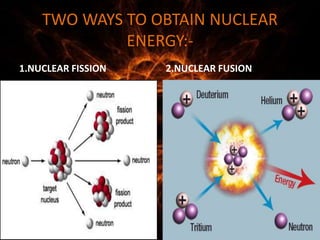
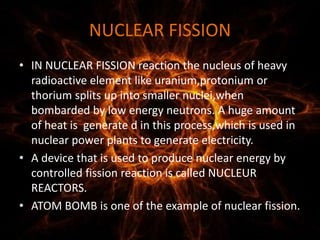
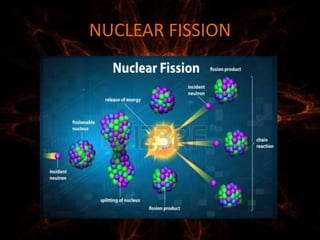
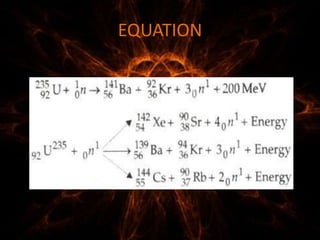
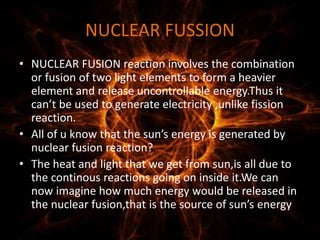
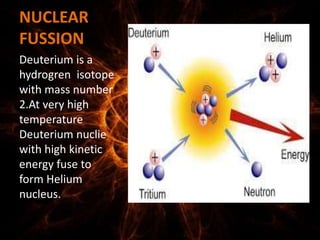
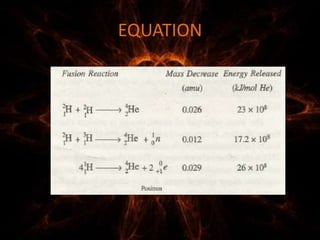
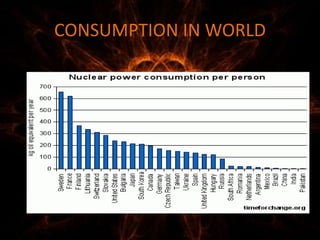
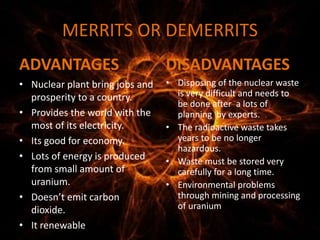
Nuclear energy comes from nuclear reactions that release energy. It can be generated via two processes: nuclear fission and nuclear fusion. Nuclear fission involves splitting heavy radioactive elements like uranium and produces huge amounts of heat, which is used in nuclear reactors to generate electricity. Nuclear fusion combines light elements to form heavier elements and release energy, but is very difficult to control and cannot currently be used to generate electricity. Nuclear power provides about 5.7% of the world's energy through fission reactions in nuclear reactors. While it has advantages like producing large amounts of energy with low carbon emissions, it also has disadvantages like producing long-lasting radioactive waste that is difficult to dispose of safely.