Nuclear Energy
Submitted by:
ID No.:
Submitted to:
Table of Contents:
 Introduction
 Nuclear Energy
 Two Sources of Nuclear Energy
 Types of Nuclear Fusion
 Advantage of Nuclear Energy
 Disadvantage of Nuclear Energy
 World Electricity Consumption by Region Graph
 Conclusion
 References
Introduction:
Around the world, nuclear energy is being used in more than 30
countries as a source of electricity. Sustaining nuclear energy have lead
many people from individual or groups and even the government to debate if
having nuclear energy will bring advantage or disadvantage to people,
environment and country. This research will help us understand how does
nuclear energy works and if the world can sustain this kind of method.
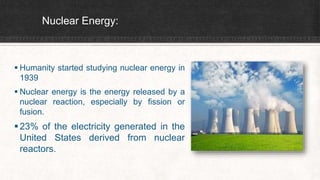
Nuclear Energy:
 Humanity started studying nuclear energy in
1939
 Nuclear energy is the energy released by a
nuclear reaction, especially by fission or
fusion.
23% of the electricity generated in the
United States derived from nuclear
reactors.
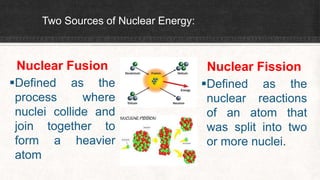
Two Sources of Nuclear Energy:
Nuclear Fusion
Defined as the
process where
nuclei collide and
join together to
form a heavier
atom
Nuclear Fission
Defined as the
nuclear reactions
of an atom that
was split into two
or more nuclei.
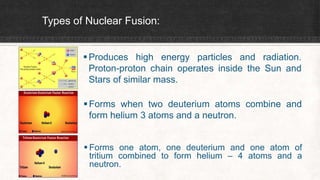
Types of Nuclear Fusion:
Produces high energy particles and radiation.
Proton-proton chain operates inside the Sun and
Stars of similar mass.
Forms when two deuterium atoms combine and
form helium 3 atoms and a neutron.
 Forms one atom, one deuterium and one atom of
tritium combined to form helium – 4 atoms and a
neutron.
Advantage of Nuclear Energy:
Nuclear energy are not releasing poisonous gases like carbon
dioxide and sulfur oxide.
An efficient method compared to coal based nuclear power
process.
Nuclear waste is not like the chemical waste which does not
decompose and emits poisonous gases
The nuclear energy is the reliable source and safe source of
power.
Disadvantage of Nuclear Energy:
New technologies creates more radioactive waste became the
reason for the increasing problem of pollution.
Leakage of radiation or what we called plant meltdown can be
the cause of serious accident.
Nuclear plants have to be shut down every 18 to 24 months,
to remove its spent uranium fuel.
Maintenance and facilities of nuclear plants are very
expensive.
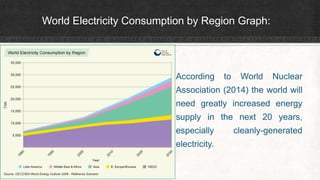
World Electricity Consumption by Region Graph:
According to World Nuclear
Association (2014) the world will
need greatly increased energy
supply in the next 20 years,
especially cleanly-generated
electricity.
Conclusion:
I therefore conclude that nuclear energy is very useful way of
producing energy but most of the countries are not able to sustain
this kind of method. Although it is less dangerous to our
environment, the expense and maintenance of nuclear plants
makes it an affordable to many developing countries.
References:
Columbia Encyclopedia. (2013). Types of Energy: Nuclear Energy.
Retrieved from: http://www.answers.com/topic/energy-sources-of
Emirates Nuclear Energy Corporation. (2011). What is Nuclear
Energy?. Retrieved from: http://www.enec.gov.ae/learn-about-
nuclear-energy/what-is-nuclear-energy/
Freudenrich, C. (2005). How stuff works?: How Nuclear Fusion
Reactors Work. Retrieved from:
http://science.howstuffworks.com/fusion-reactor1.htm
Nuclear mohammed

Nuclear mohammed

  • 1.
  • 2.
    Table of Contents: Introduction  Nuclear Energy  Two Sources of Nuclear Energy  Types of Nuclear Fusion  Advantage of Nuclear Energy  Disadvantage of Nuclear Energy  World Electricity Consumption by Region Graph  Conclusion  References
  • 3.
    Introduction: Around the world,nuclear energy is being used in more than 30 countries as a source of electricity. Sustaining nuclear energy have lead many people from individual or groups and even the government to debate if having nuclear energy will bring advantage or disadvantage to people, environment and country. This research will help us understand how does nuclear energy works and if the world can sustain this kind of method.
  • 4.
    Nuclear Energy:  Humanitystarted studying nuclear energy in 1939  Nuclear energy is the energy released by a nuclear reaction, especially by fission or fusion. 23% of the electricity generated in the United States derived from nuclear reactors.
  • 5.
    Two Sources ofNuclear Energy: Nuclear Fusion Defined as the process where nuclei collide and join together to form a heavier atom Nuclear Fission Defined as the nuclear reactions of an atom that was split into two or more nuclei.
  • 6.
    Types of NuclearFusion: Produces high energy particles and radiation. Proton-proton chain operates inside the Sun and Stars of similar mass. Forms when two deuterium atoms combine and form helium 3 atoms and a neutron.  Forms one atom, one deuterium and one atom of tritium combined to form helium – 4 atoms and a neutron.
  • 7.
    Advantage of NuclearEnergy: Nuclear energy are not releasing poisonous gases like carbon dioxide and sulfur oxide. An efficient method compared to coal based nuclear power process. Nuclear waste is not like the chemical waste which does not decompose and emits poisonous gases The nuclear energy is the reliable source and safe source of power.
  • 8.
    Disadvantage of NuclearEnergy: New technologies creates more radioactive waste became the reason for the increasing problem of pollution. Leakage of radiation or what we called plant meltdown can be the cause of serious accident. Nuclear plants have to be shut down every 18 to 24 months, to remove its spent uranium fuel. Maintenance and facilities of nuclear plants are very expensive.
  • 9.
    World Electricity Consumptionby Region Graph: According to World Nuclear Association (2014) the world will need greatly increased energy supply in the next 20 years, especially cleanly-generated electricity.
  • 10.
    Conclusion: I therefore concludethat nuclear energy is very useful way of producing energy but most of the countries are not able to sustain this kind of method. Although it is less dangerous to our environment, the expense and maintenance of nuclear plants makes it an affordable to many developing countries.
  • 11.
    References: Columbia Encyclopedia. (2013).Types of Energy: Nuclear Energy. Retrieved from: http://www.answers.com/topic/energy-sources-of Emirates Nuclear Energy Corporation. (2011). What is Nuclear Energy?. Retrieved from: http://www.enec.gov.ae/learn-about- nuclear-energy/what-is-nuclear-energy/ Freudenrich, C. (2005). How stuff works?: How Nuclear Fusion Reactors Work. Retrieved from: http://science.howstuffworks.com/fusion-reactor1.htm