Talal Majeed Ahmad
Restraining:
Physical restraint of animal. Human and safe physical restraint is the
use of manual or mechanical means to limit some or all of animal's
normal voluntary movement for the purpose of examination, collection
of samples, drug administration, therapy or manipulation.
Advantages of Restraining Animals
• Good animal handling skills prevent staff from being injured
• Animal take the medicine easily
• Doctor reduce the stress
• Good Doctor adopt best method of restraining
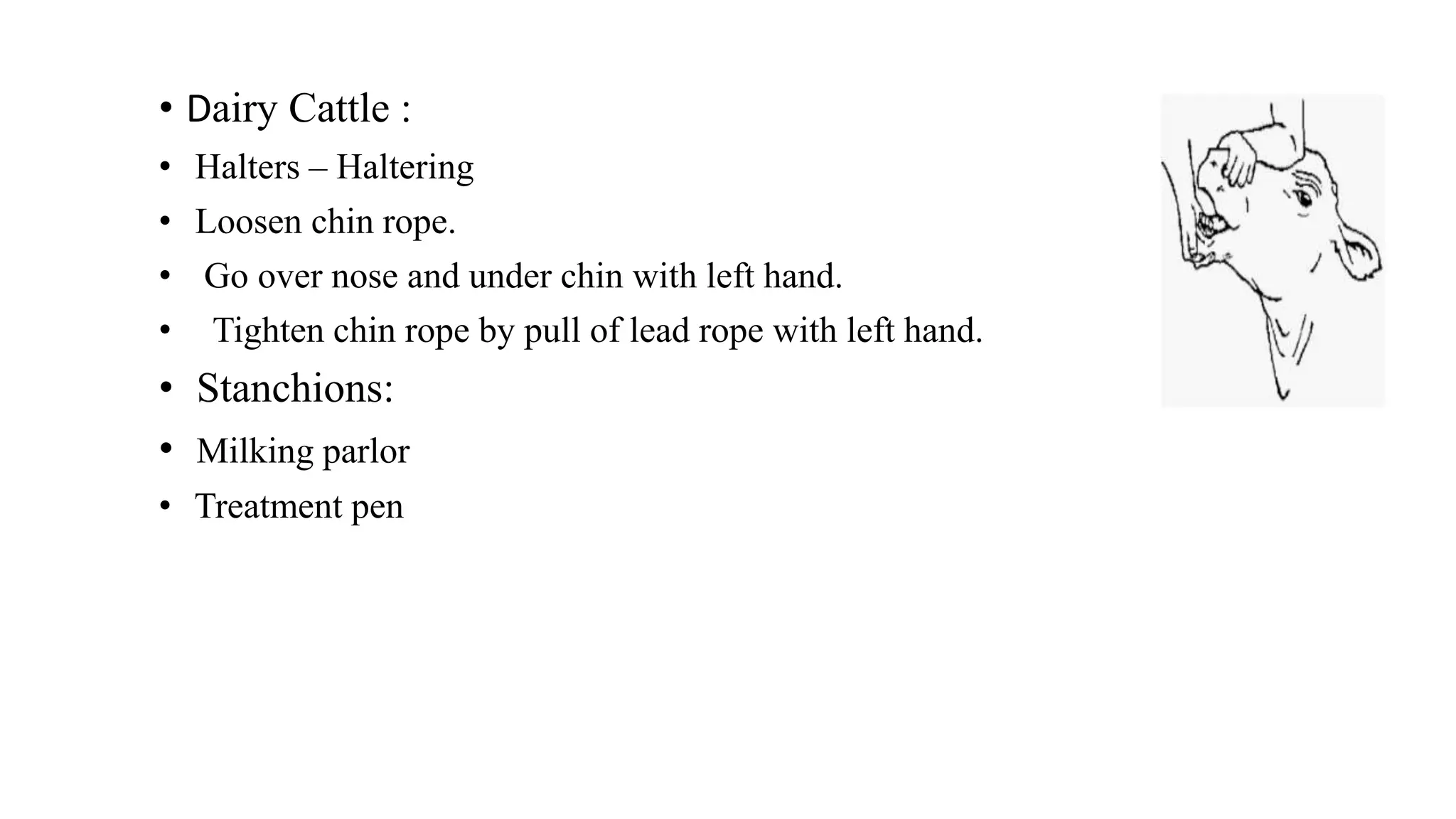
• Dairy Cattle :
• Halters – Haltering
• Loosen chin rope.
• Go over nose and under chin with left hand.
• Tighten chin rope by pull of lead rope with left hand.
• Stanchions:
• Milking parlor
• Treatment pen
Beef Cattle:
Squeeze chutes.
Close head gate.
Close tail gate.
Close sides.
Apply nose bar or nose tong to work head.
Drop bottom side plank to work feet
Lane Chute:
Crowd multiple cattle.
Chock single animal with pole in front and rear.
• Twitches:
• Place nose twitch.
• Place nose clamp on upper lip.
• Place skin twitch by hand grasp and roll of skin on neck or shoulder.
• Cast ropes – Casting:
• Place on halter
• Pull opposite side rope end around rump to assist fall.
• Flanking (Calves)
• Reach over calf.
• Lift and slides calf to ground.
• Kneel on neck and thigh.
• Lift bottom foreleg from ground.
• Horses:
• Excessive restraint frightens.
• Halters – Haltering
• Stocks
• Place on halter and lead in stock.
• Tie rope to stock in front and rear of horse.
• Double clove hitch ties.
• Kick gate
• Hobbles- Hobbling
• To prevent kicking
• Pass rope over the neck
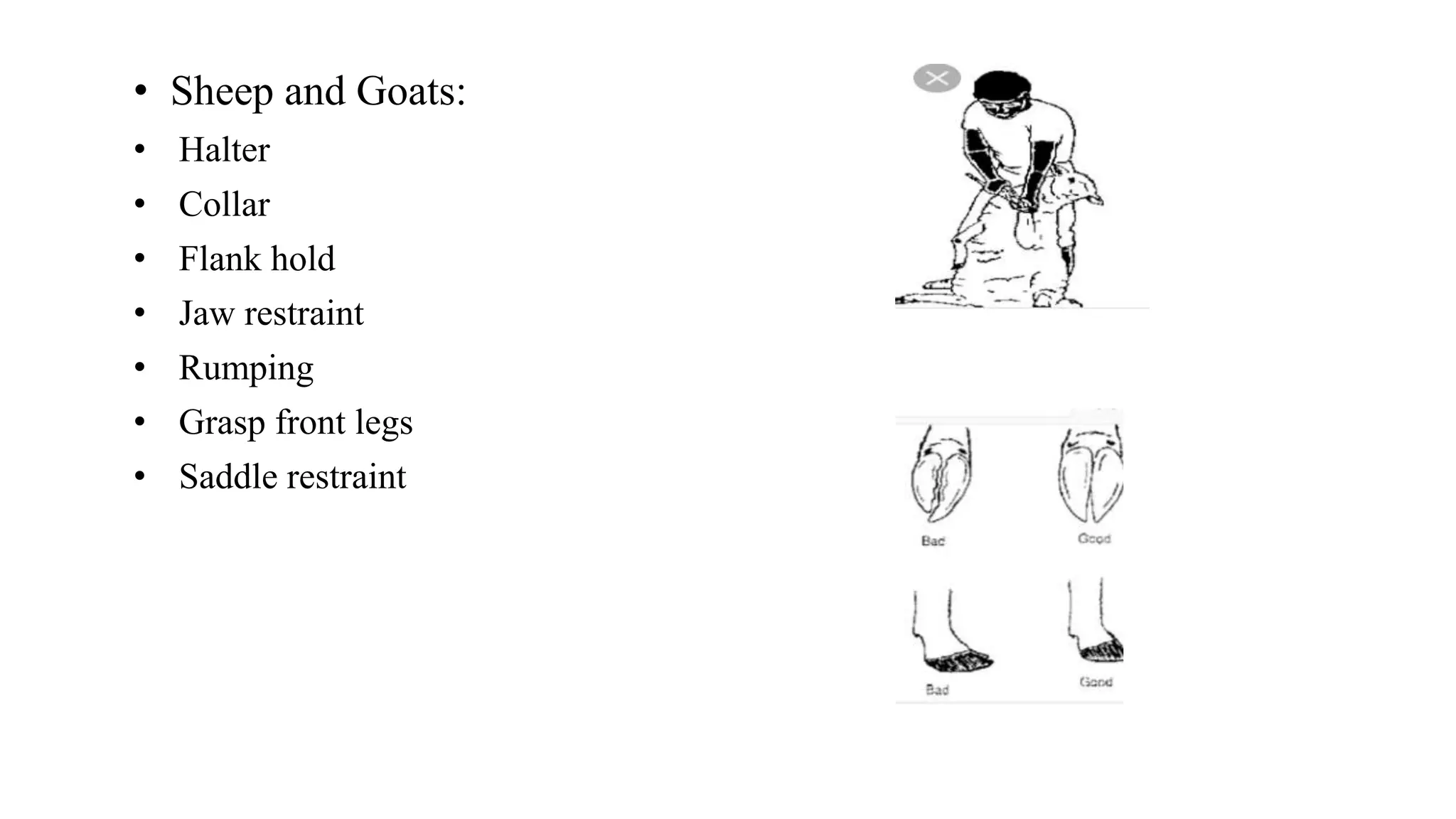
• Sheep and Goats:
• Halter
• Collar
• Flank hold
• Jaw restraint
• Rumping
• Grasp front legs
• Saddle restraint
• Swine:
• Cable or rope loop
• Rope – board cast :
• Cast with verticals board.
• Rope cast :
• Pull rope end from rear to fall hog.
• Hurdle board
• Headgate crate
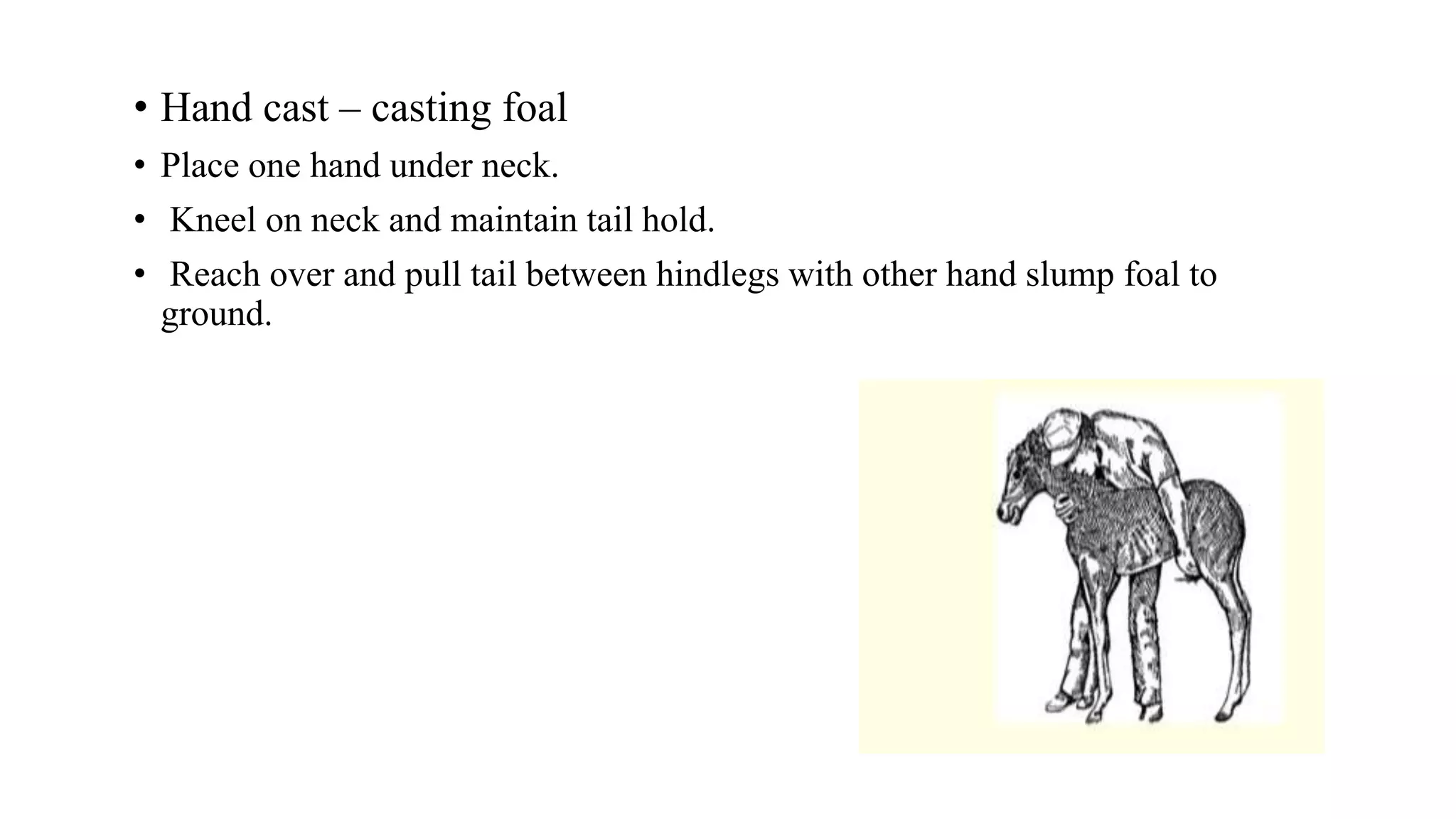
• Hand cast – casting foal
• Place one hand under neck.
• Kneel on neck and maintain tail hold.
• Reach over and pull tail between hindlegs with other hand slump foal to
ground.
THANKS

Restraining and casting animal

  • 2.
  • 3.
    Restraining: Physical restraint ofanimal. Human and safe physical restraint is the use of manual or mechanical means to limit some or all of animal's normal voluntary movement for the purpose of examination, collection of samples, drug administration, therapy or manipulation.
  • 4.
    Advantages of RestrainingAnimals • Good animal handling skills prevent staff from being injured • Animal take the medicine easily • Doctor reduce the stress • Good Doctor adopt best method of restraining
  • 5.
    • Dairy Cattle: • Halters – Haltering • Loosen chin rope. • Go over nose and under chin with left hand. • Tighten chin rope by pull of lead rope with left hand. • Stanchions: • Milking parlor • Treatment pen
  • 6.
    Beef Cattle: Squeeze chutes. Closehead gate. Close tail gate. Close sides. Apply nose bar or nose tong to work head. Drop bottom side plank to work feet Lane Chute: Crowd multiple cattle. Chock single animal with pole in front and rear.
  • 7.
    • Twitches: • Placenose twitch. • Place nose clamp on upper lip. • Place skin twitch by hand grasp and roll of skin on neck or shoulder. • Cast ropes – Casting: • Place on halter • Pull opposite side rope end around rump to assist fall.
  • 8.
    • Flanking (Calves) •Reach over calf. • Lift and slides calf to ground. • Kneel on neck and thigh. • Lift bottom foreleg from ground.
  • 9.
    • Horses: • Excessiverestraint frightens. • Halters – Haltering • Stocks • Place on halter and lead in stock. • Tie rope to stock in front and rear of horse. • Double clove hitch ties. • Kick gate • Hobbles- Hobbling • To prevent kicking • Pass rope over the neck
  • 10.
    • Sheep andGoats: • Halter • Collar • Flank hold • Jaw restraint • Rumping • Grasp front legs • Saddle restraint
  • 11.
    • Swine: • Cableor rope loop • Rope – board cast : • Cast with verticals board. • Rope cast : • Pull rope end from rear to fall hog. • Hurdle board • Headgate crate
  • 12.
    • Hand cast– casting foal • Place one hand under neck. • Kneel on neck and maintain tail hold. • Reach over and pull tail between hindlegs with other hand slump foal to ground.
  • 13.