Where's the evidence?
The role of usage statistics in collection
             management

             Angela Conyers
   Evidence Base, Research & Evaluation
        Birmingham City University
Collecting usage statistics


• What are we doing it for?

• Who are we doing it for?

• What does it all mean?
What are we doing it for?

Usage statistics provide essential evidence:
• to show how e-resources are being used
• to look at trends over time
• to inform renewal/cancellation decisions
• to demonstrate value for money
Who are we doing it for?

Different audiences:

• Library directors

• Academic staff

• Subject librarians
What does it all mean?


• What can the usage statistics tell us?


• What other evidence do we need?
What do libraries want from
usage data?
• Be sure it is right
• How well titles in a deal are being used:
  – High use, nil and low use
• Usage by subject area
• Analyse trends over time
• Ready access for reporting
• Evidence of value for money
• Benchmarking
Collecting the evidence

COUNTER codes of practice:
• Journals and databases
• E-books

Dealing with publishers who are not COUNTER
 compliant
Making it as easy as
possible

• KPI templates


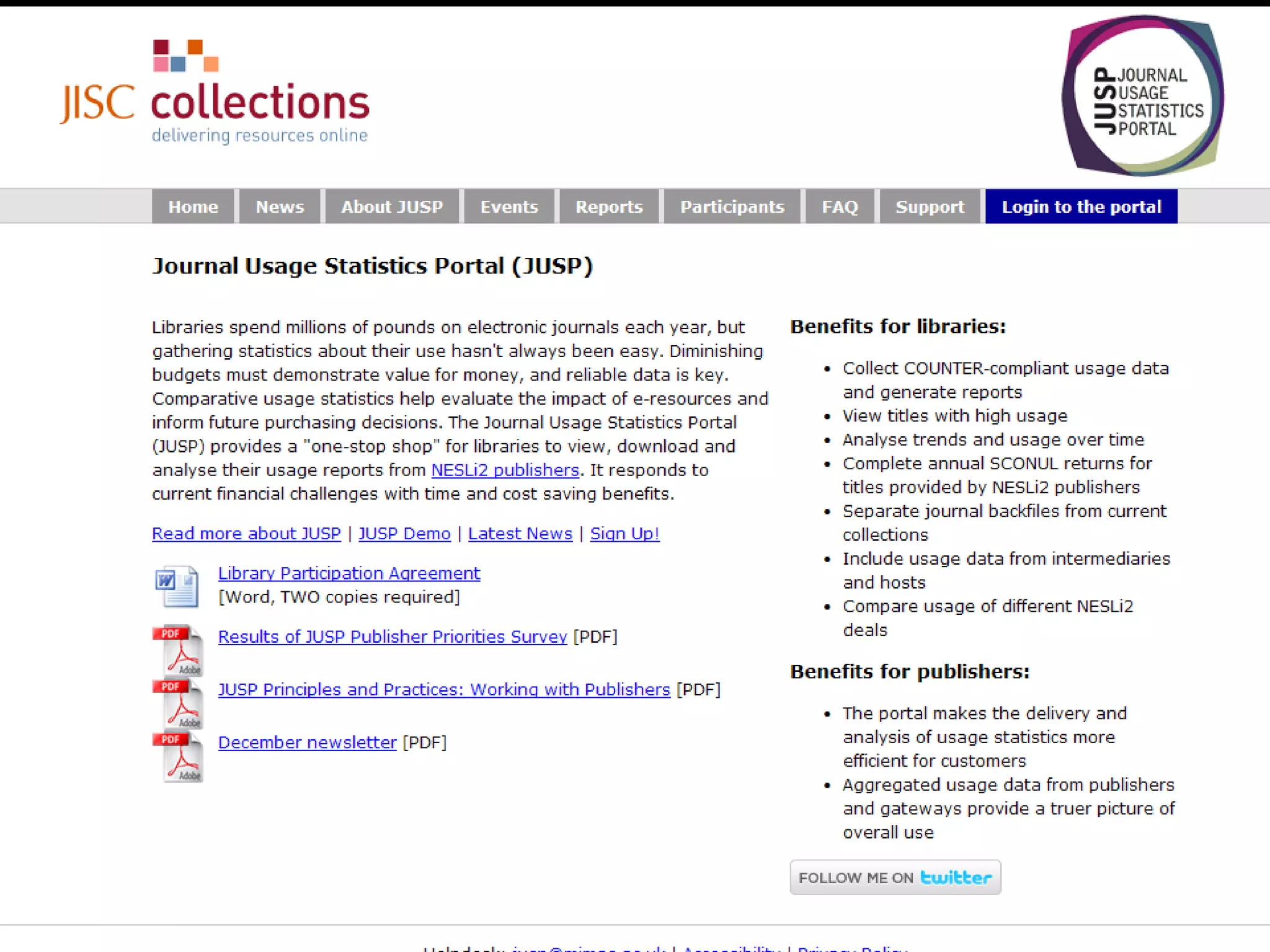
• JUSP – the Journal Usage Statistics Portal
           www.jusp.mimas.ac.uk
National initiative for licensing online journals on behalf
of the higher and further education and research
communities in the UK


SHEDL aims through collaboration and combined
purchasing power to achieve a shared digital library in
Scotland


              WHELF's mission is to promote library
              and information services co-operation
              and to encourage the exchange of ideas
              among University and Higher Education
              libraries in Wales
138 UK higher
education and
research council
libraries are in JUSP


              http://www.flickr.com/photos/ellf/3910635234/
18 publishers                        Nature Publishing Group
  American Association for the       Oxford University Press
  Advancement of Science             Project MUSE
  American Institute of Physics      Royal Society of Chemistry
  Annual Reviews                     SAGE
  BioOne                             Springer
  British Medical Journal            Taylor & Francis
  Publishing Group                   Wiley-Blackwell
  Edinburgh University Press      3 intermediaries
  Elsevier
                                     Ebsco EJS
  Emerald
                                     Publishing Technology
  Future Medicine                    (ingentaconnect)
  Institute of Physics               Swets
JUSP Purpose and benefits
 • Single point of access to
   usage data from multiple
   publishers

 • No need to visit separate
   publisher sites to
   download usage statistics

 • Usage comparison across
   publishers and years

 • Establishing value for
   money


                               http://www.flickr.com/photos/wallyg/418328695/
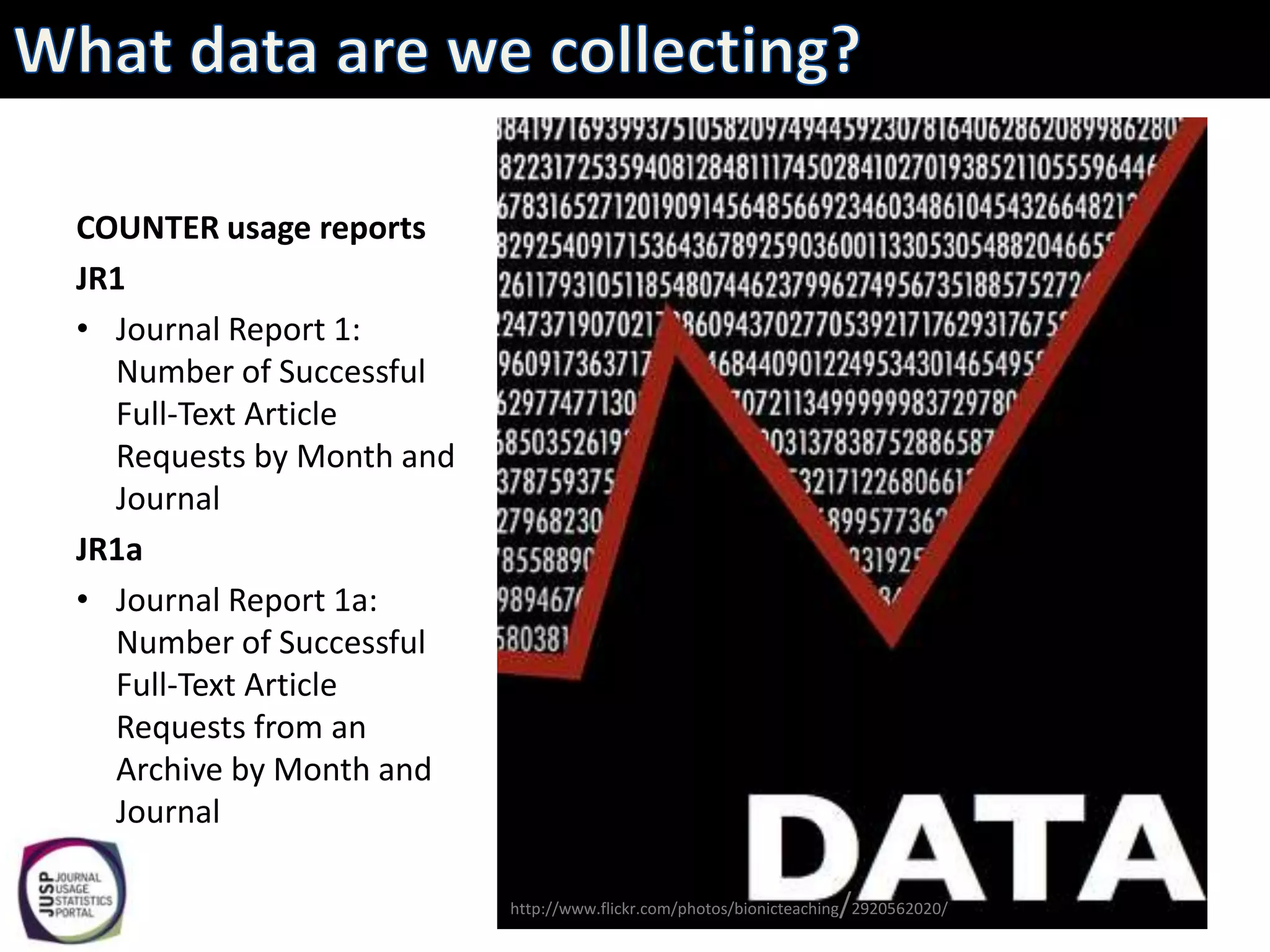
COUNTER usage reports
JR1
• Journal Report 1:
  Number of Successful
  Full-Text Article
  Requests by Month and
  Journal
JR1a
• Journal Report 1a:
  Number of Successful
  Full-Text Article
  Requests from an
  Archive by Month and
  Journal

                                                                   /
                          http://www.flickr.com/photos/bionicteaching 2920562020/
• Standardized Usage
  Statistics Harvesting
  Initiative (SUSHI)

• M2M way of gathering
  statistics

• Replaces the user-
  mediated collection of
  usage reports

• 12 JUSP SUSHI clients
  available

• SUSHI server to gather
  data from JUSP


                           http://www.flickr.com/photos/ragingwire/3395161474/
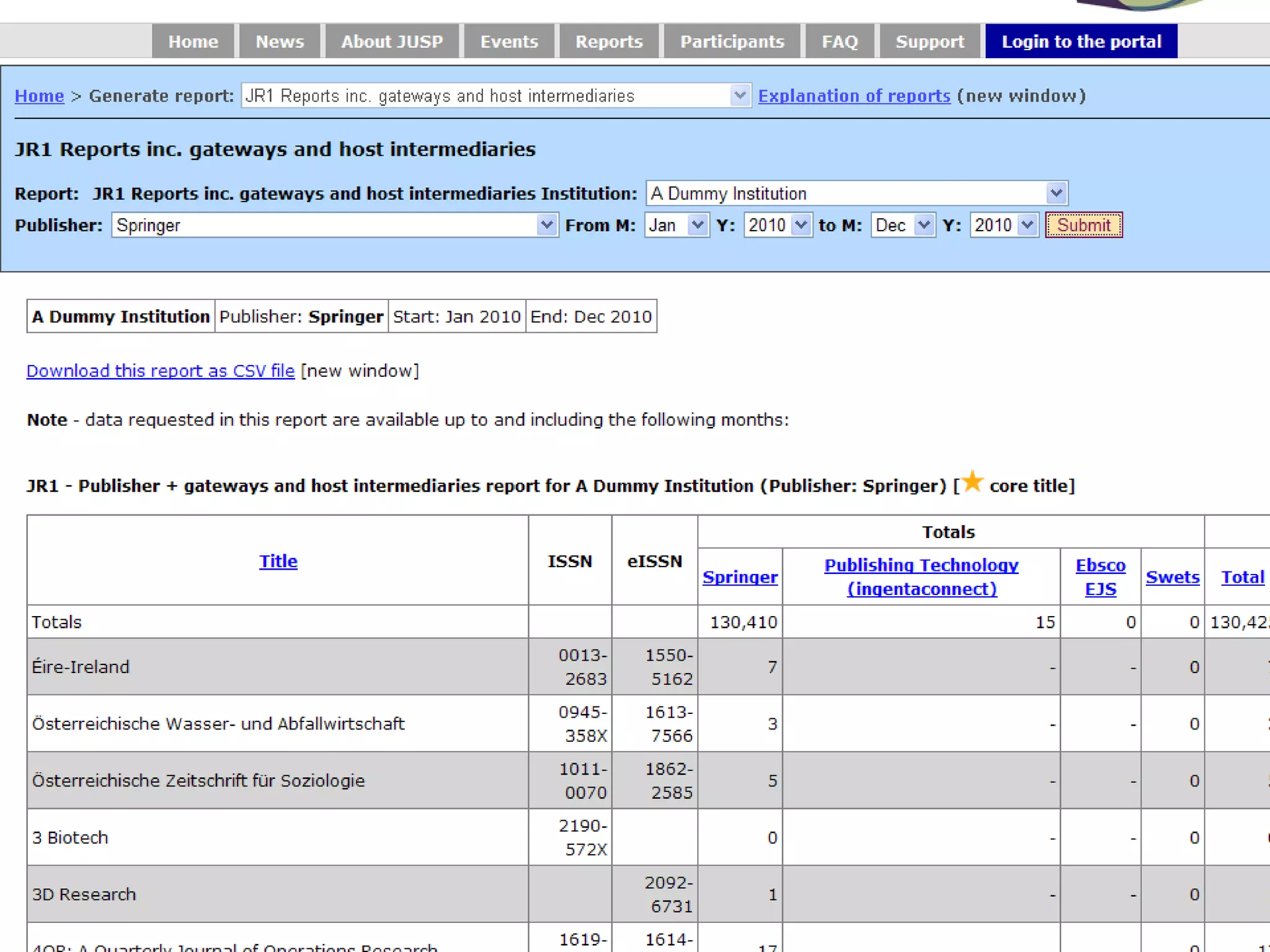
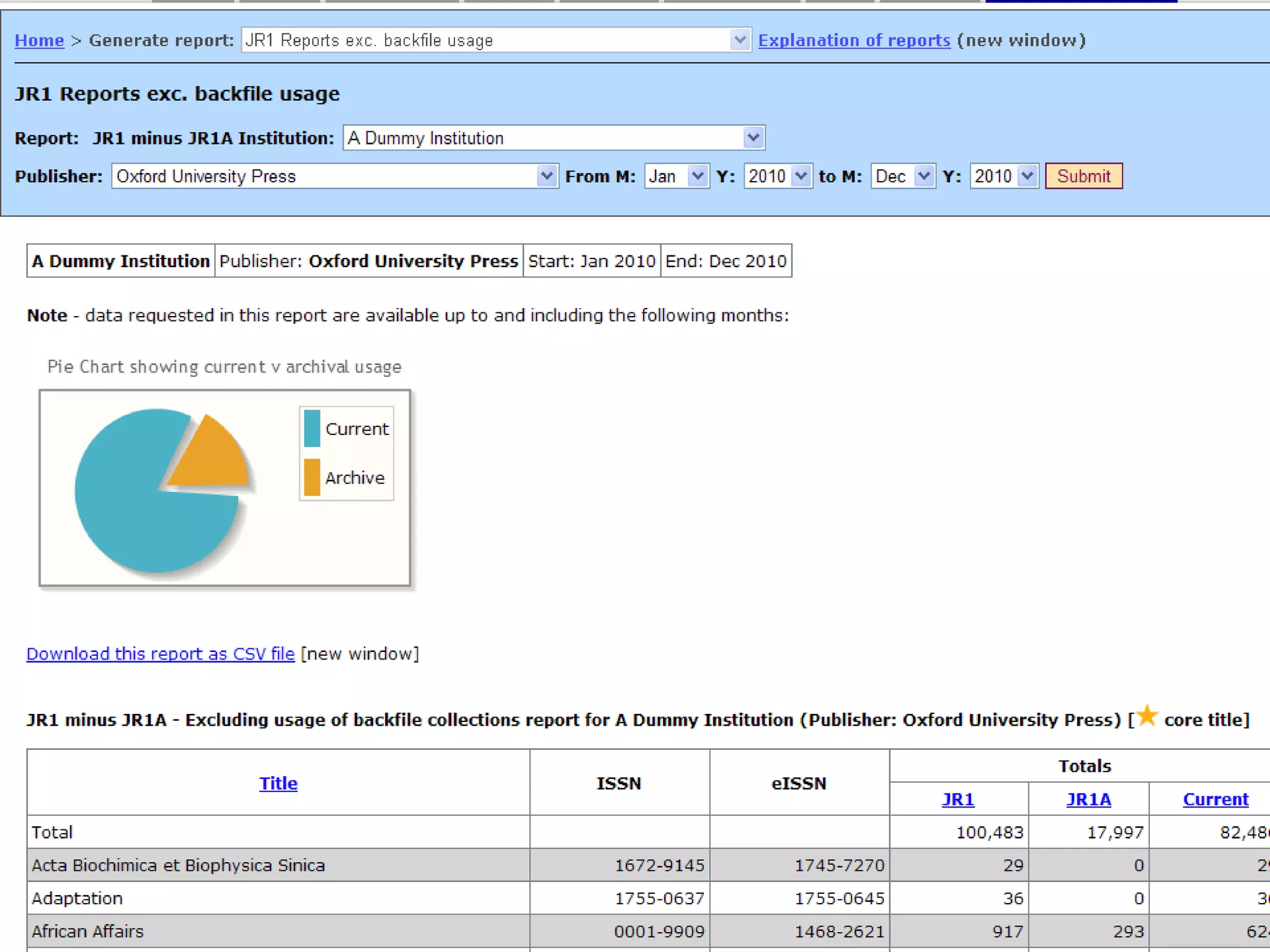
Using the JR1 and JR1a reports
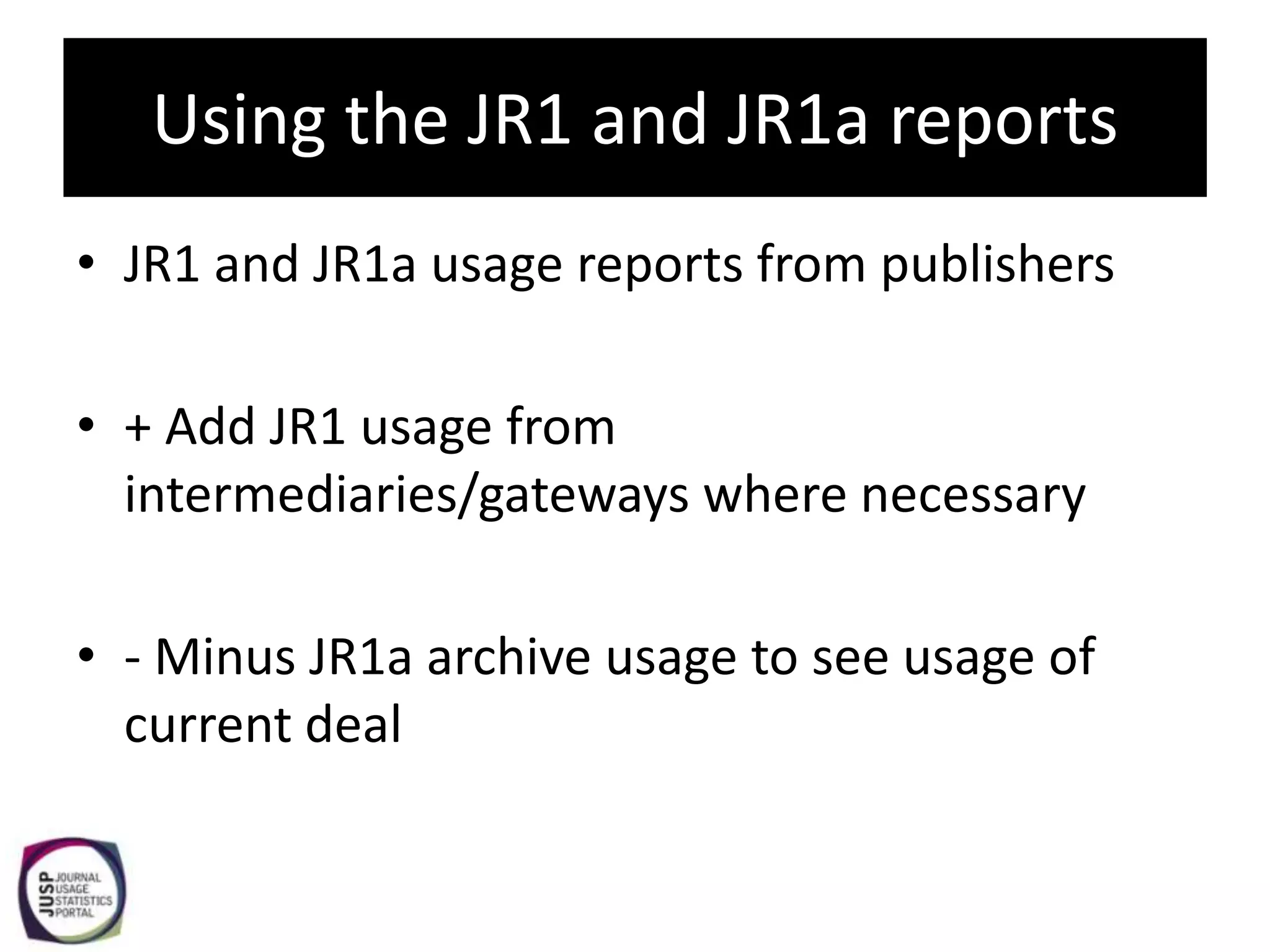
• JR1 and JR1a usage reports from publishers

• + Add JR1 usage from
  intermediaries/gateways where necessary

• - Minus JR1a archive usage to see usage of
  current deal
Some other JUSP reports


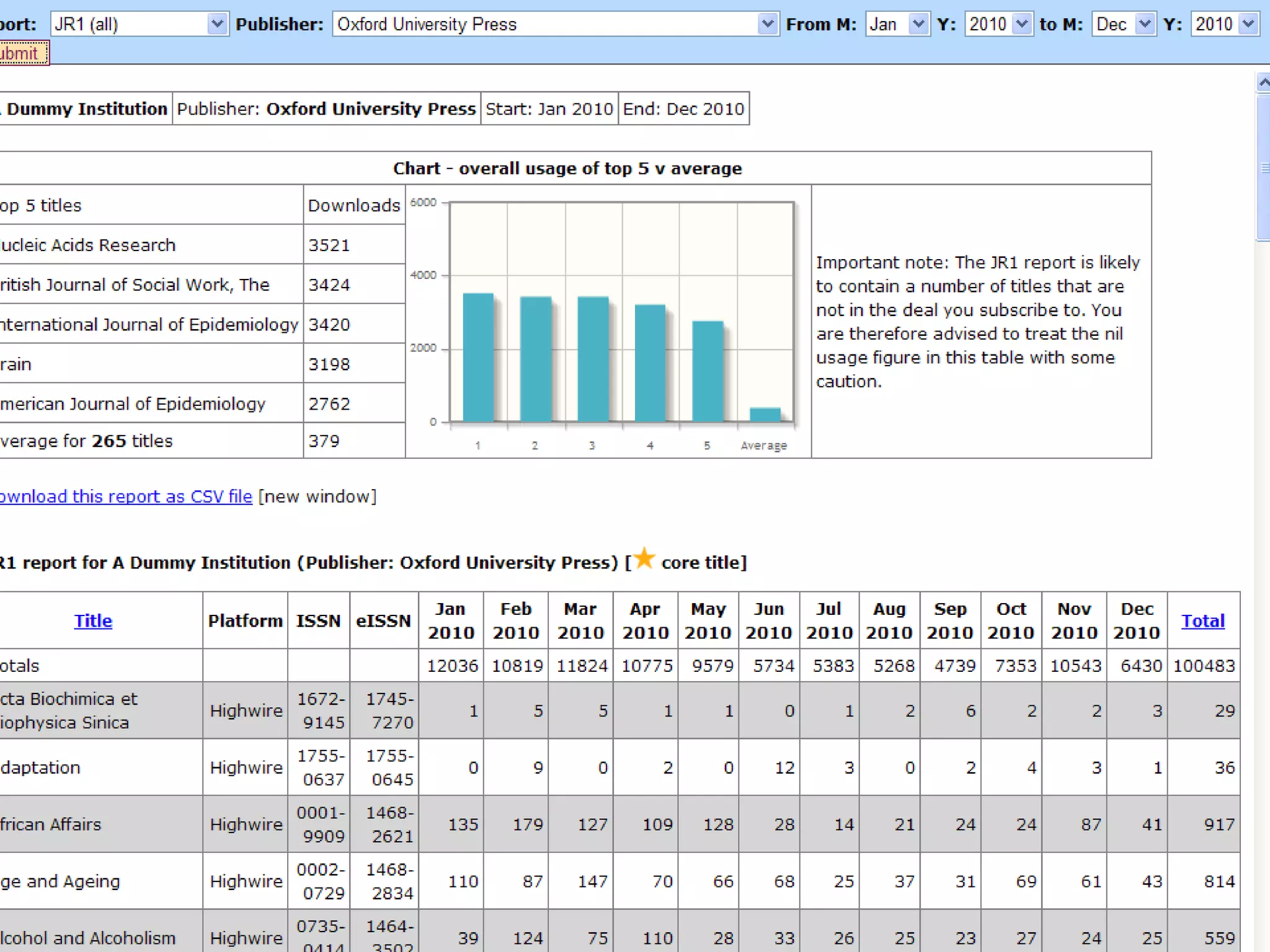
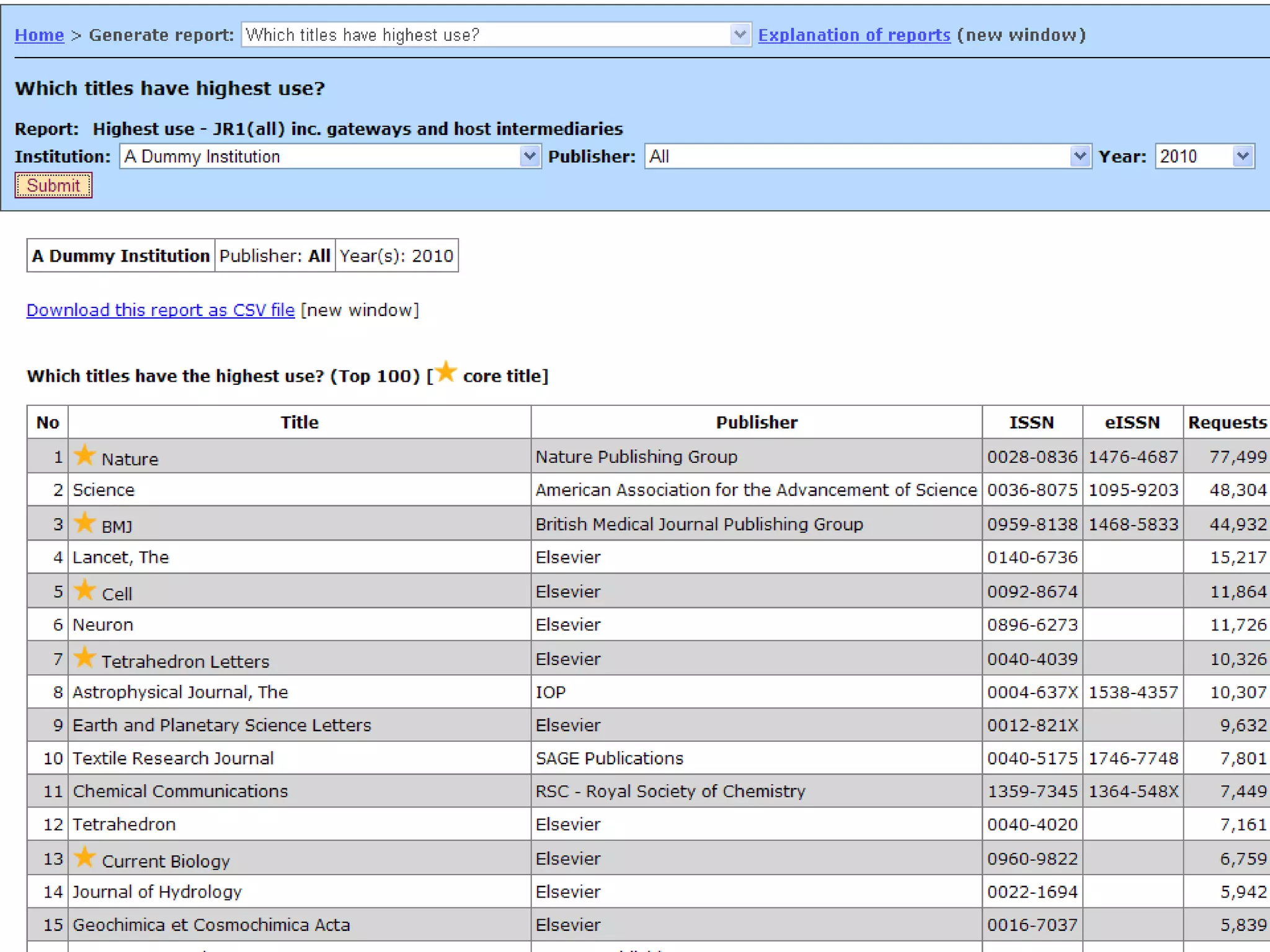
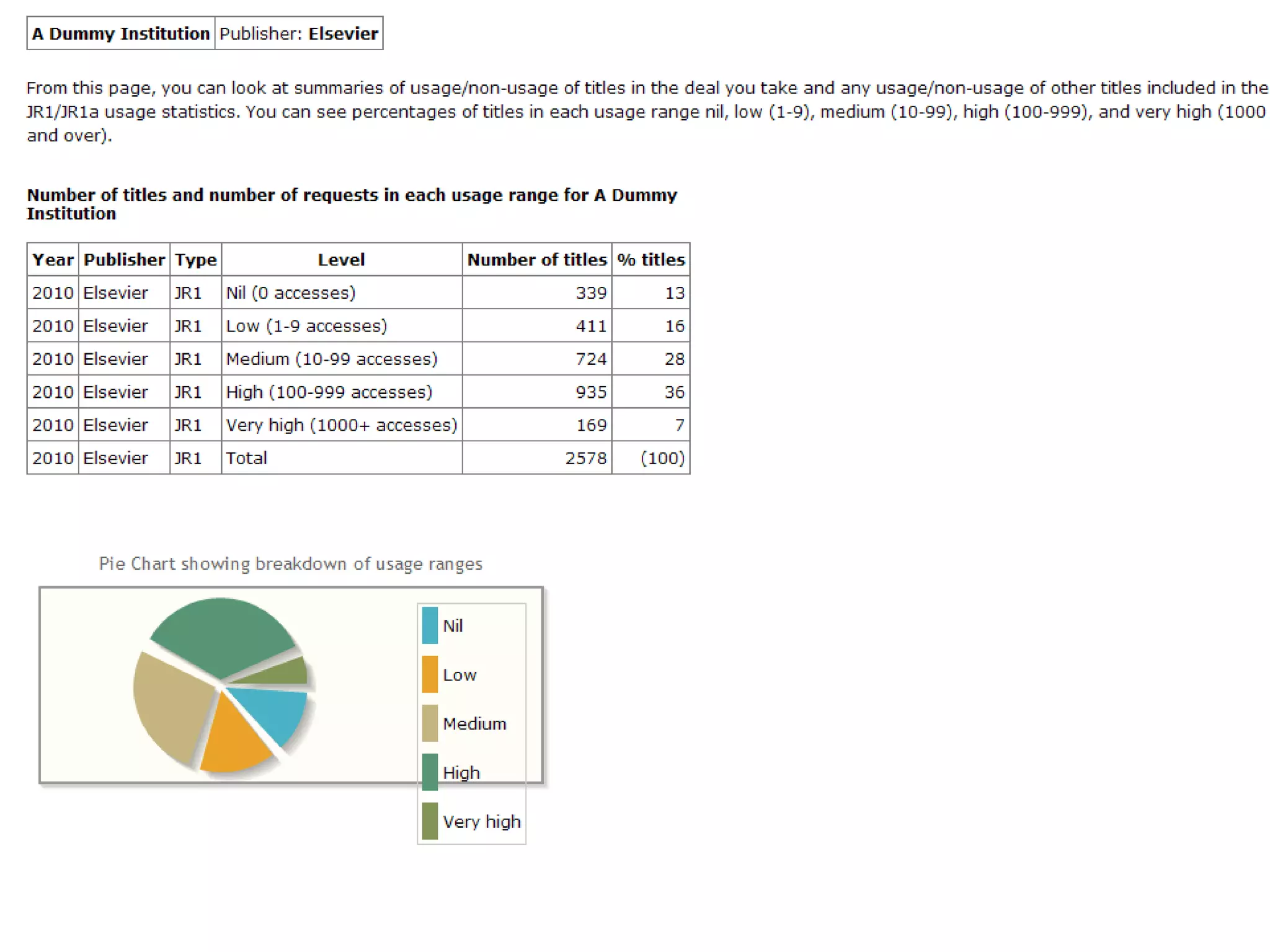
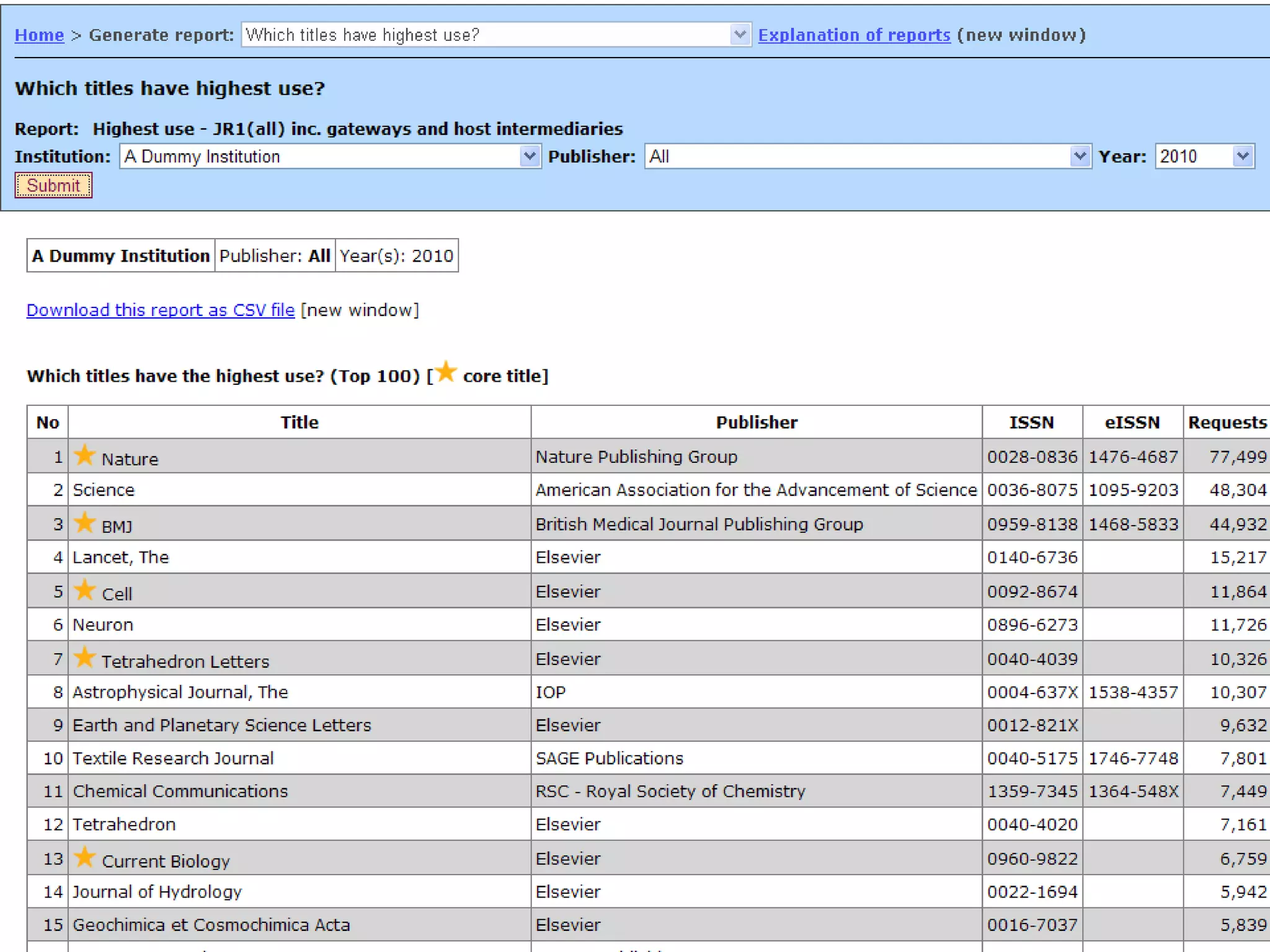
• Titles with the highest use from one publisher
  or all publishers in JUSP
• Titles in various usage ranges, from nil and low
  to very high
• Search facility – title or ISSN or keyword
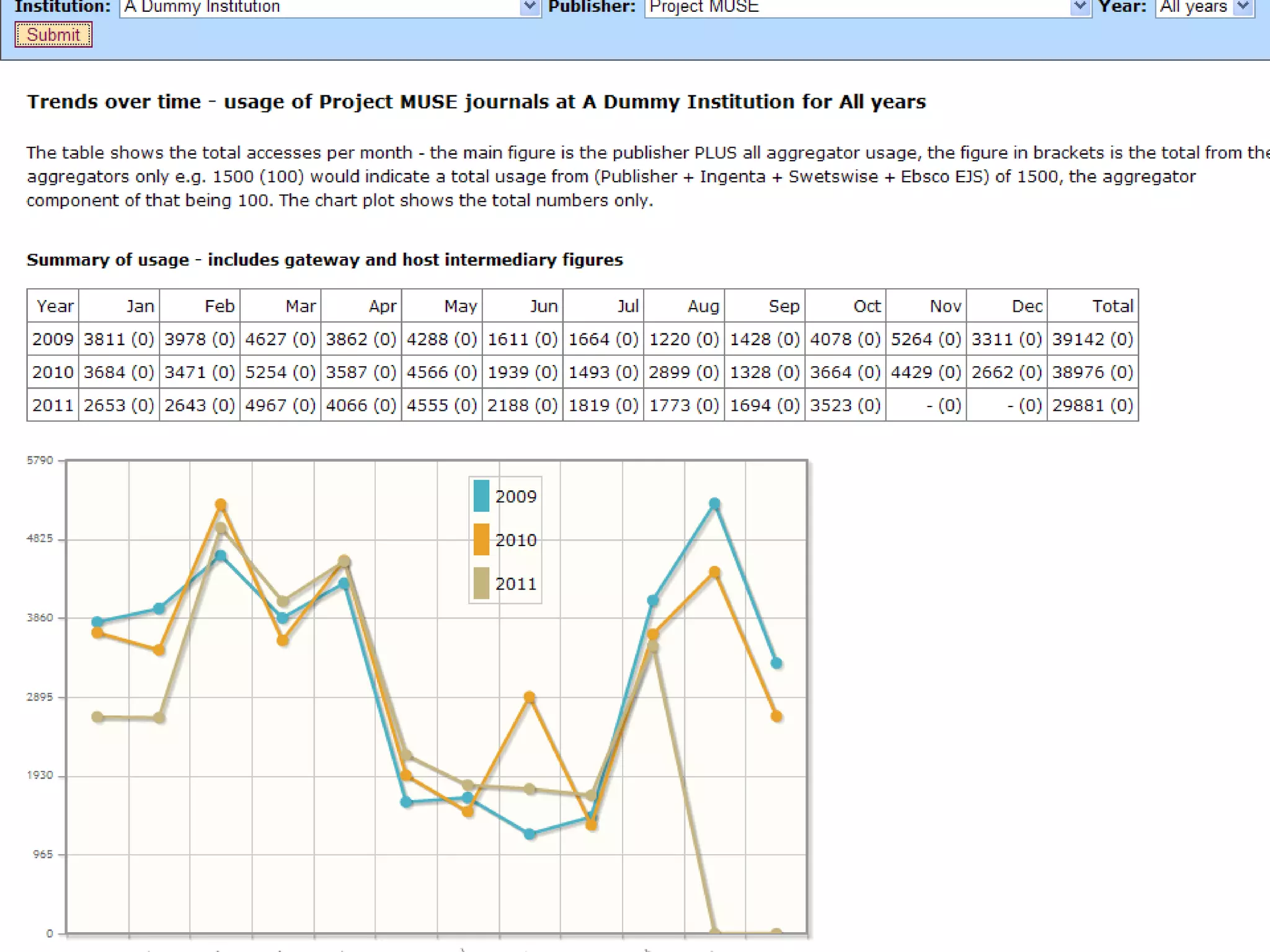
• Trends over time (2009- )
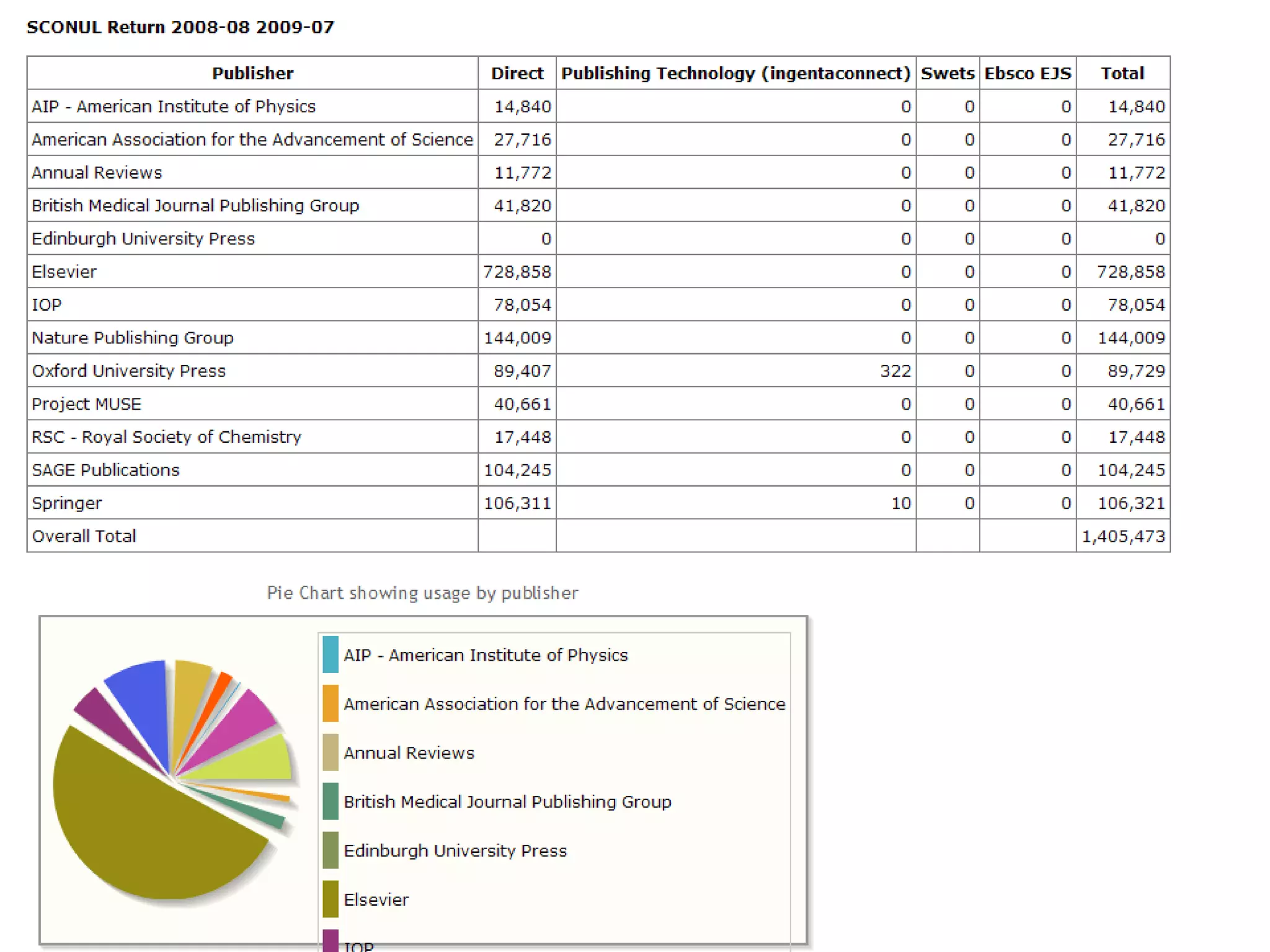
• SCONUL return
Adding value to usage reports
      Adding value to JUSP
JUSP enhancements

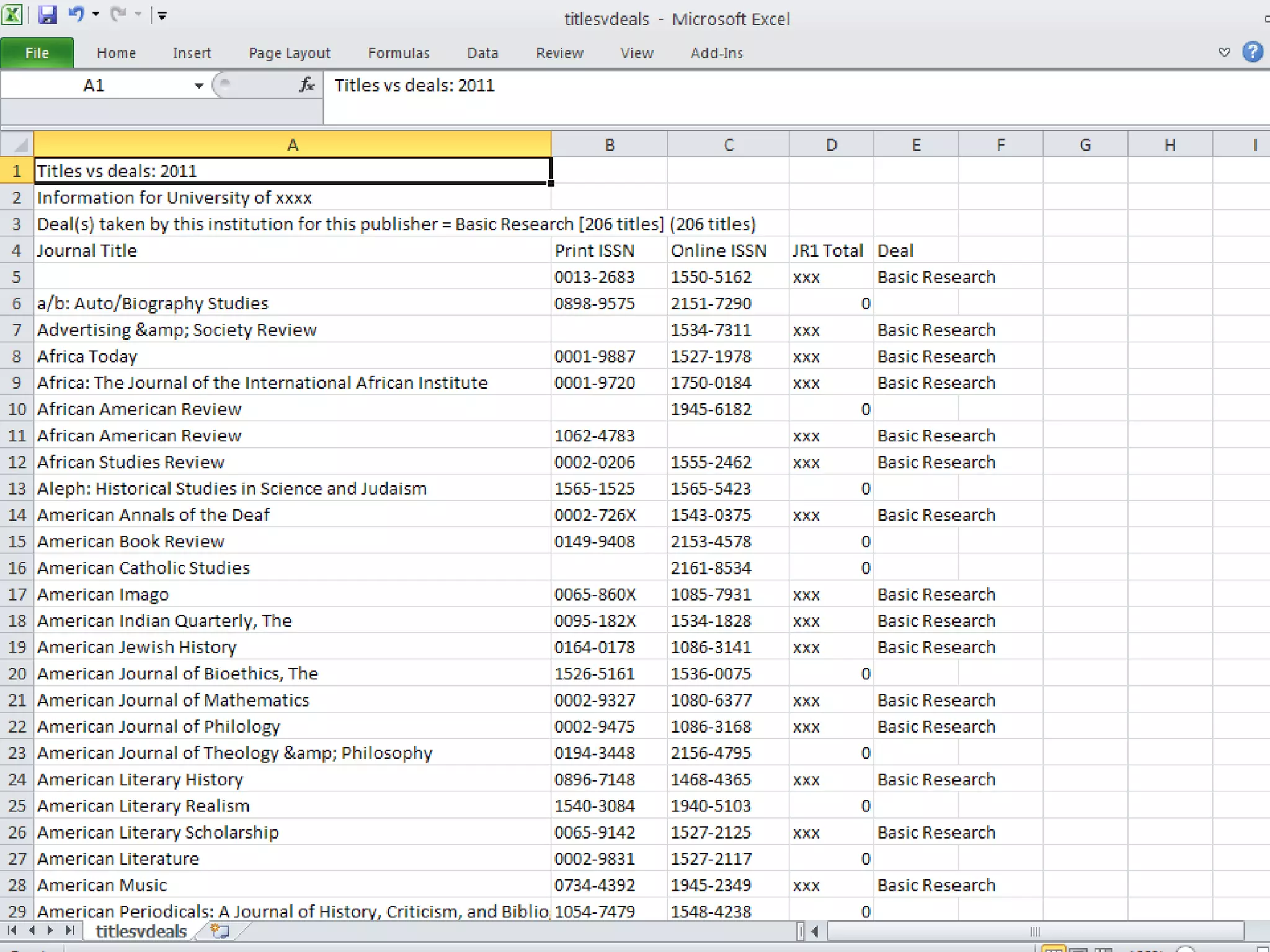
   • Adding subscribed or core titles

   • What titles are in the deal?
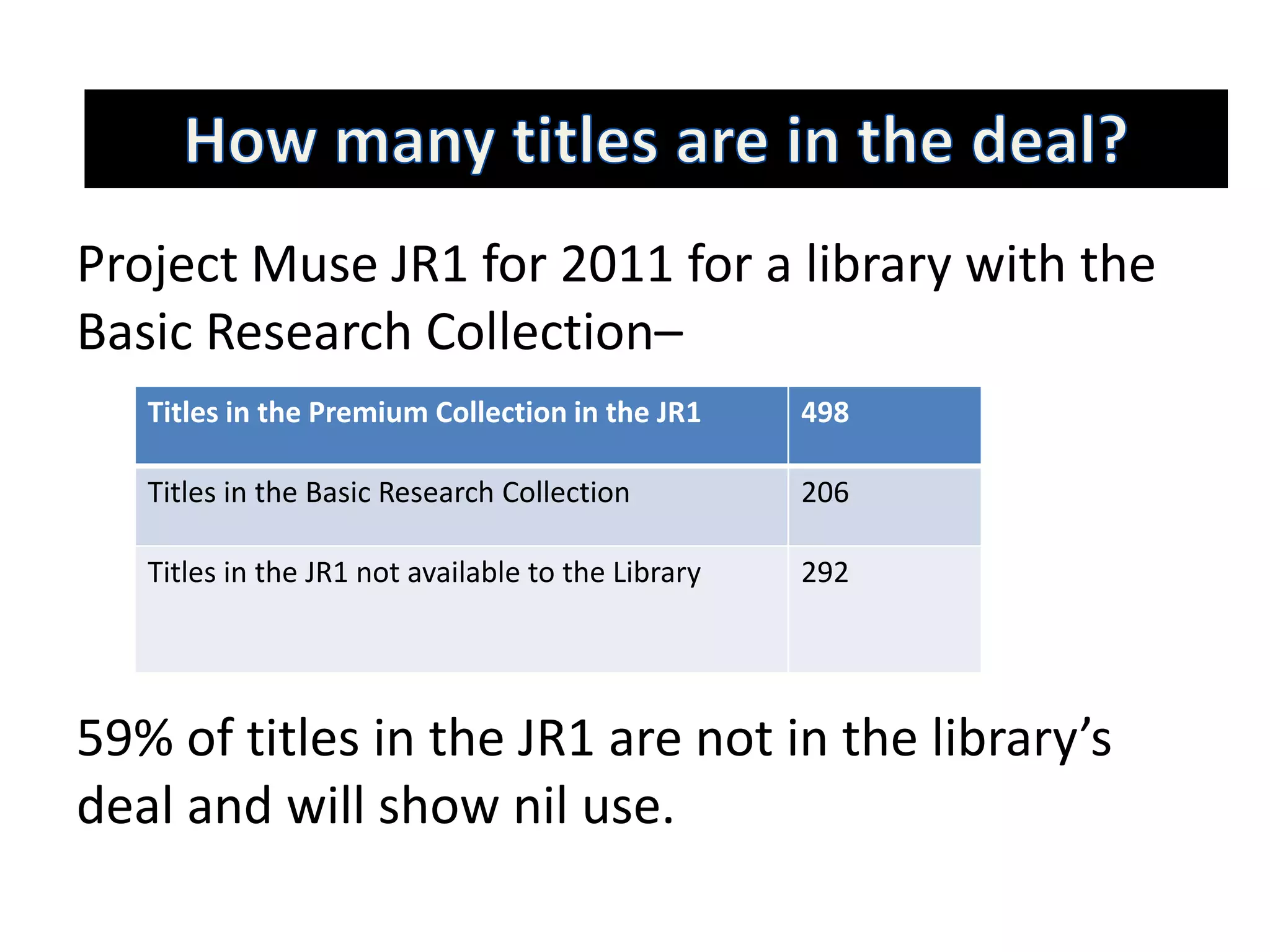
How many titles are in the deal?
Project Muse JR1 for 2011 for a library with the
Basic Research Collection–
   Titles in the Premium Collection in the JR1      498

   Titles in the Basic Research Collection          206

   Titles in the JR1 not available to the Library   292


59% of titles in the JR1 are not in the library’s
deal and will show nil use.
JUSP enhancements


• Usage patterns of subscribed or core titles

• Identification of titles in the deal or collection
  within the JR1 report

• Adding more publishers
Adding more value

• Costs

• FTE numbers

• Benchmarking
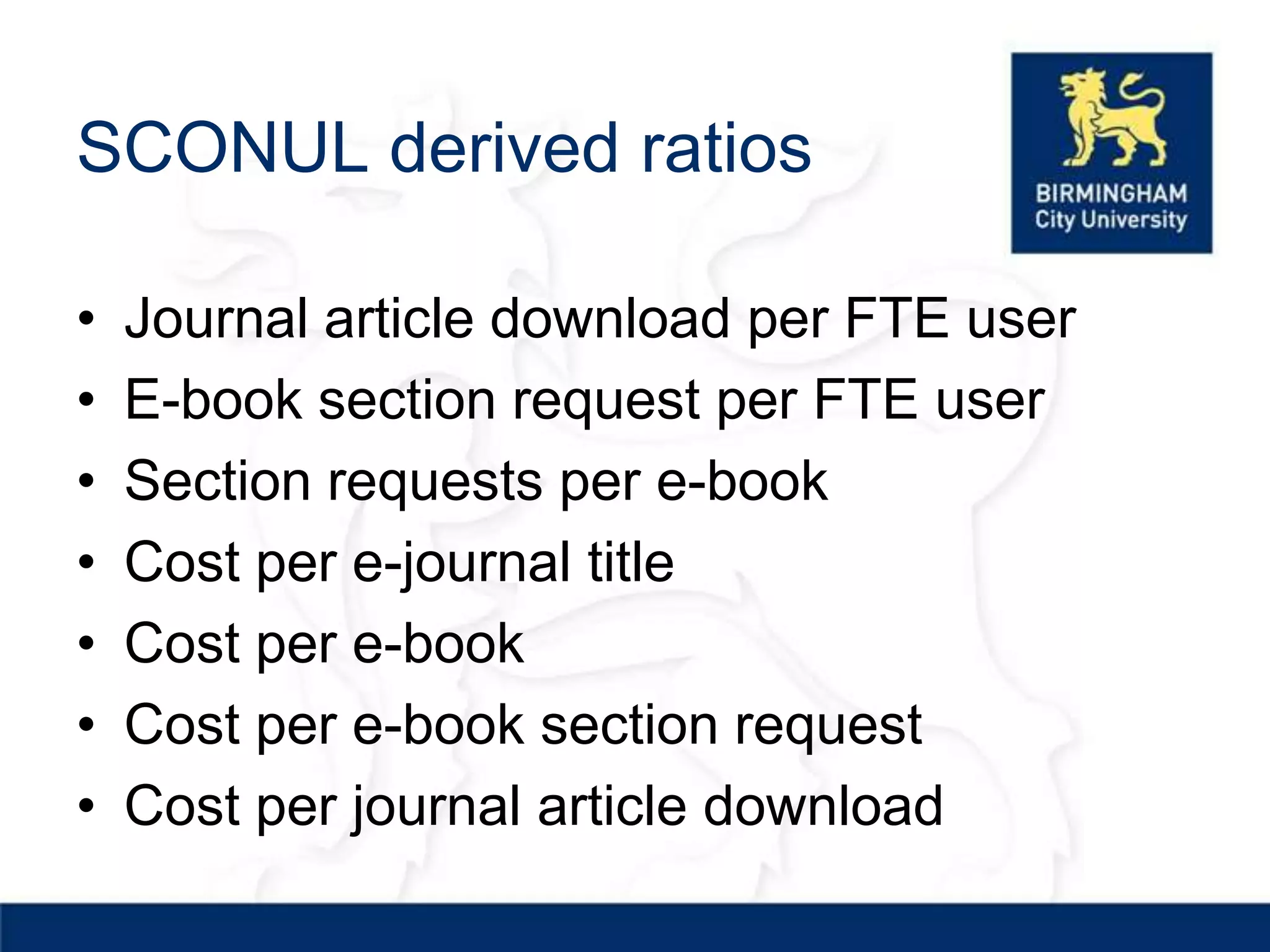
SCONUL derived ratios

•   Journal article download per FTE user
•   E-book section request per FTE user
•   Section requests per e-book
•   Cost per e-journal title
•   Cost per e-book
•   Cost per e-book section request
•   Cost per journal article download
Where’s the evidence?


• What are we doing it for?

• Who are we doing it for?

• What does it all mean?
Where’s the evidence?

           Thank you!


      angela.conyers@bcu.ac.uk
        www.jusp.mimas.ac.uk

Where's the evidence? The role of usage statistics in collection management

  • 1.
    Where's the evidence? Therole of usage statistics in collection management Angela Conyers Evidence Base, Research & Evaluation Birmingham City University
  • 2.
    Collecting usage statistics •What are we doing it for? • Who are we doing it for? • What does it all mean?
  • 3.
    What are wedoing it for? Usage statistics provide essential evidence: • to show how e-resources are being used • to look at trends over time • to inform renewal/cancellation decisions • to demonstrate value for money
  • 4.
    Who are wedoing it for? Different audiences: • Library directors • Academic staff • Subject librarians
  • 5.
    What does itall mean? • What can the usage statistics tell us? • What other evidence do we need?
  • 6.
    What do librarieswant from usage data? • Be sure it is right • How well titles in a deal are being used: – High use, nil and low use • Usage by subject area • Analyse trends over time • Ready access for reporting • Evidence of value for money • Benchmarking
  • 7.
    Collecting the evidence COUNTERcodes of practice: • Journals and databases • E-books Dealing with publishers who are not COUNTER compliant
  • 8.
    Making it aseasy as possible • KPI templates • JUSP – the Journal Usage Statistics Portal www.jusp.mimas.ac.uk
  • 10.
    National initiative forlicensing online journals on behalf of the higher and further education and research communities in the UK SHEDL aims through collaboration and combined purchasing power to achieve a shared digital library in Scotland WHELF's mission is to promote library and information services co-operation and to encourage the exchange of ideas among University and Higher Education libraries in Wales
  • 11.
    138 UK higher educationand research council libraries are in JUSP http://www.flickr.com/photos/ellf/3910635234/
  • 12.
    18 publishers Nature Publishing Group American Association for the Oxford University Press Advancement of Science Project MUSE American Institute of Physics Royal Society of Chemistry Annual Reviews SAGE BioOne Springer British Medical Journal Taylor & Francis Publishing Group Wiley-Blackwell Edinburgh University Press 3 intermediaries Elsevier Ebsco EJS Emerald Publishing Technology Future Medicine (ingentaconnect) Institute of Physics Swets
  • 13.
    JUSP Purpose andbenefits • Single point of access to usage data from multiple publishers • No need to visit separate publisher sites to download usage statistics • Usage comparison across publishers and years • Establishing value for money http://www.flickr.com/photos/wallyg/418328695/
  • 14.
    COUNTER usage reports JR1 •Journal Report 1: Number of Successful Full-Text Article Requests by Month and Journal JR1a • Journal Report 1a: Number of Successful Full-Text Article Requests from an Archive by Month and Journal / http://www.flickr.com/photos/bionicteaching 2920562020/
  • 15.
    • Standardized Usage Statistics Harvesting Initiative (SUSHI) • M2M way of gathering statistics • Replaces the user- mediated collection of usage reports • 12 JUSP SUSHI clients available • SUSHI server to gather data from JUSP http://www.flickr.com/photos/ragingwire/3395161474/
  • 16.
    Using the JR1and JR1a reports • JR1 and JR1a usage reports from publishers • + Add JR1 usage from intermediaries/gateways where necessary • - Minus JR1a archive usage to see usage of current deal
  • 20.
    Some other JUSPreports • Titles with the highest use from one publisher or all publishers in JUSP • Titles in various usage ranges, from nil and low to very high • Search facility – title or ISSN or keyword • Trends over time (2009- ) • SCONUL return
  • 25.
    Adding value tousage reports Adding value to JUSP JUSP enhancements • Adding subscribed or core titles • What titles are in the deal?
  • 27.
    How many titlesare in the deal? Project Muse JR1 for 2011 for a library with the Basic Research Collection– Titles in the Premium Collection in the JR1 498 Titles in the Basic Research Collection 206 Titles in the JR1 not available to the Library 292 59% of titles in the JR1 are not in the library’s deal and will show nil use.
  • 28.
    JUSP enhancements • Usagepatterns of subscribed or core titles • Identification of titles in the deal or collection within the JR1 report • Adding more publishers
  • 29.
    Adding more value •Costs • FTE numbers • Benchmarking
  • 30.
    SCONUL derived ratios • Journal article download per FTE user • E-book section request per FTE user • Section requests per e-book • Cost per e-journal title • Cost per e-book • Cost per e-book section request • Cost per journal article download
  • 31.
    Where’s the evidence? •What are we doing it for? • Who are we doing it for? • What does it all mean?
  • 32.
    Where’s the evidence? Thank you! angela.conyers@bcu.ac.uk www.jusp.mimas.ac.uk

Editor's Notes

  • #15 Slide 2Without COUNTER of course none of this would be possible because for the portal to succeed it must offer reliable data. All our reports are based on the main COUNTER reports the JR1 and the JR1a.