Anemias and RBC Dyscrasias
Kay Case PA-C
NSU Nova SWF PA Program
Fall 2010
1
Objectives
1. Understand the regulation of the bone
marrow in a steady state. What are the
triggers, the stimulators of each cell line, and
which stem cell progenitors produce each
cell line.
2. Understand hypocellular and aplastic states
of the bone marrow and their causes.
3. Understand the trigger for formation of
erythropoetin by the kidney.
2
Objectives
4. Identify causes of increased production of
red blood cells by the bone marrow as
indicated by an increased reticulocyte count
– Acute blood loss
– Chronic blood loss
– Hemolytic anemia
– Secondary polycythemia
– Hemochromatosis
3
Objectives
5. Understand how the CBC is essential for the
detection of RBC dyscrasias
6. Be able to utilize the CBC to determine the
cause of the RBC dyscrasias
7. Understand the RBC Indices and their use.
8. Know what additional tests are needed
based on patient symptoms and CBC
results to help in the determination and
confirmation of RBC dyscrasias.
4
Objectives
.
5
9. Describe etiologies and mechanisms of the
following anemias associated with decreased
production of red blood cells (hypoproliferative
anemias):
Iron deficiency anemia; anemia of chronic
disease; thalassemias; anemia of renal failure;
aplastic anemia; anemia due to replacement of
bone marrow; megaloblastic anemias ( Vitamin
B12 and Folate deficiency), non-megaloblastic (Liver
disorders etc), sideroblastic anemia.
10. Describe the laboratory findings associated with
the hypoproliferative anemias described above.
Objectives
6
11. Know the pathophysiology of hemolytic anemias.
12. List laboratory findings associated with hemolytic
anemias
13. Diagnose hemolytic anemias utilizing clinical
history and CBC data interpretation:
–sickle cell anemia; disseminated intravascular
coagulation ( DIC); prosthetic heart valves; immune
mediated hemolytic anemia (associated with drugs and
autoimmune disease ); thalassemias; G-6-PD.
14. What are the mechanisms and when do hemolytic
crises occur?
Objectives
7
15. Describe how iron studies ( serum iron;
serum ferritin; total iron binding capacity;
transferrin saturation) can be used to help
diagnose and differentiate the
microcytic/normocytic anemias ( iron deficiency
anemia; anemia of chronic disease; thalassemia
minor)
16. Describe studies for evaluation and
confirmation of megaloblastic anemias (ie. B12
and folate deficiency)
Overview
8
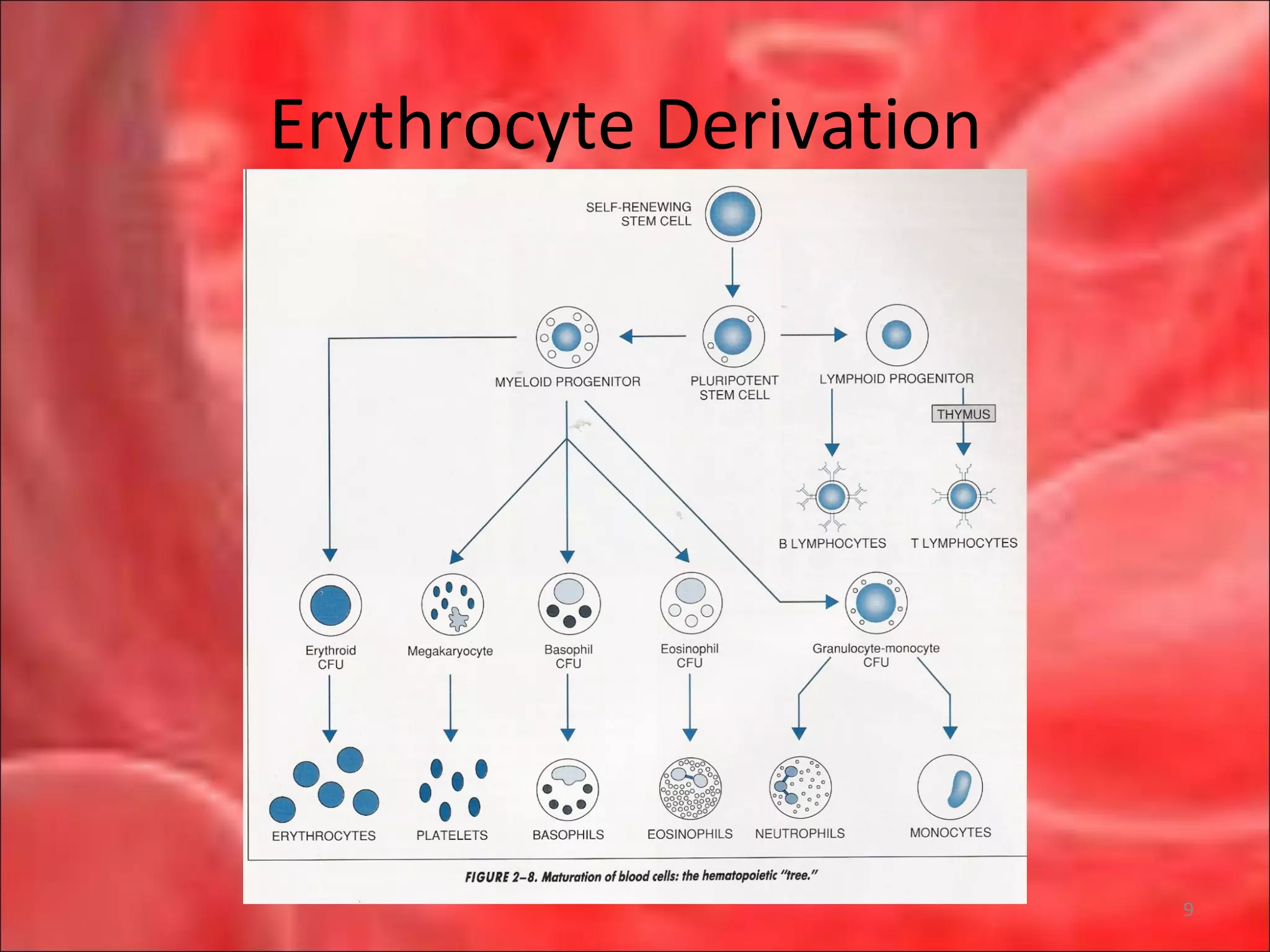
Erythrocyte Derivation
9
RBC PRODUCTION
• Red blood cells (RBC):
– Made in the bone marrow (embryo in liver)
• 2 million /sec made; formation from a stem cell to a
rbc is 5-6 days.
• RBC purpose is to transport oxygen to the body’s
tissues in exchange for CO2, which is then carried
back and eliminated in the lung.
• Structure is biconcave for more surface area for
this exchange and for flexibility to pass through
small capillaries single file.
10
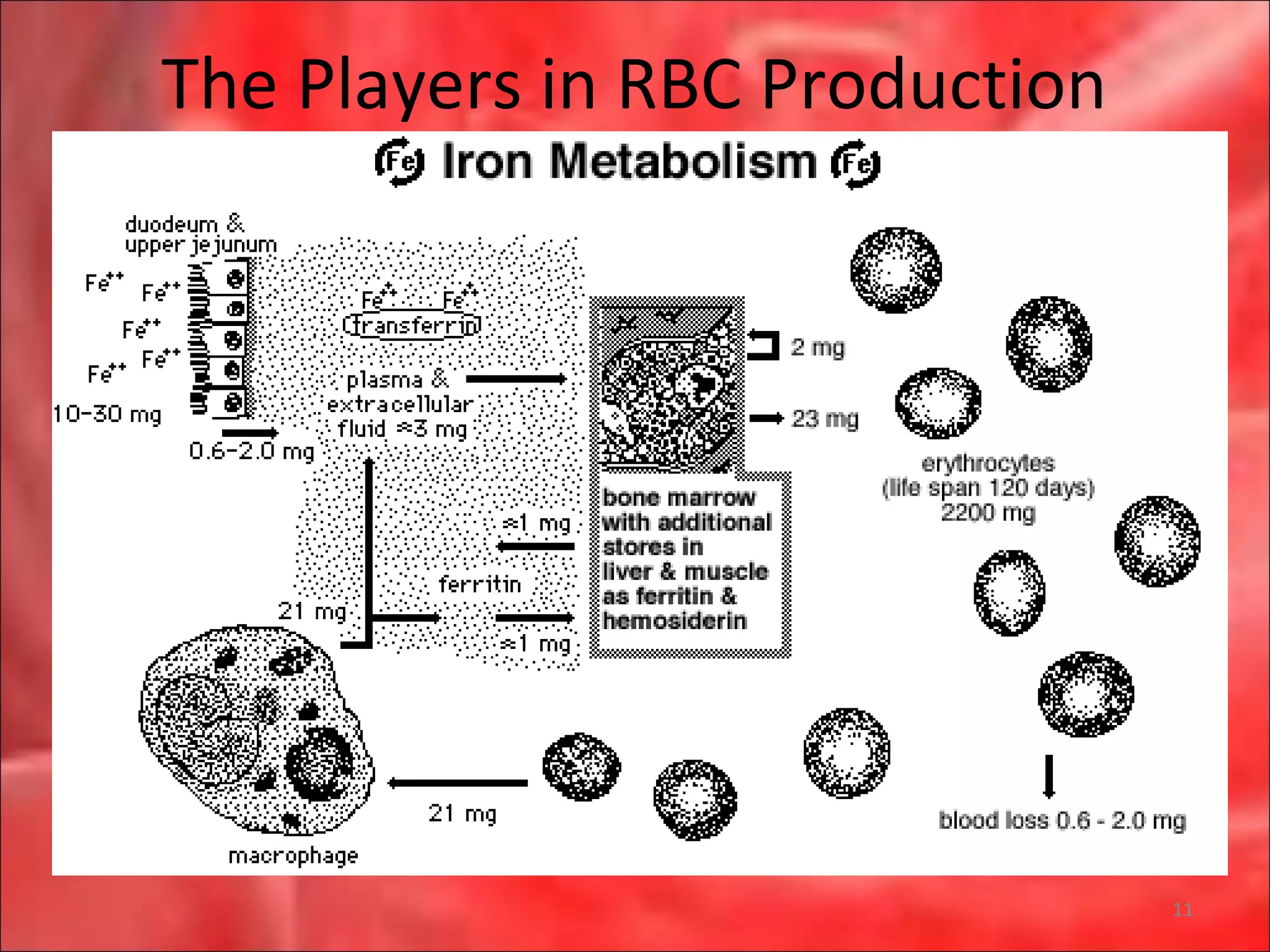
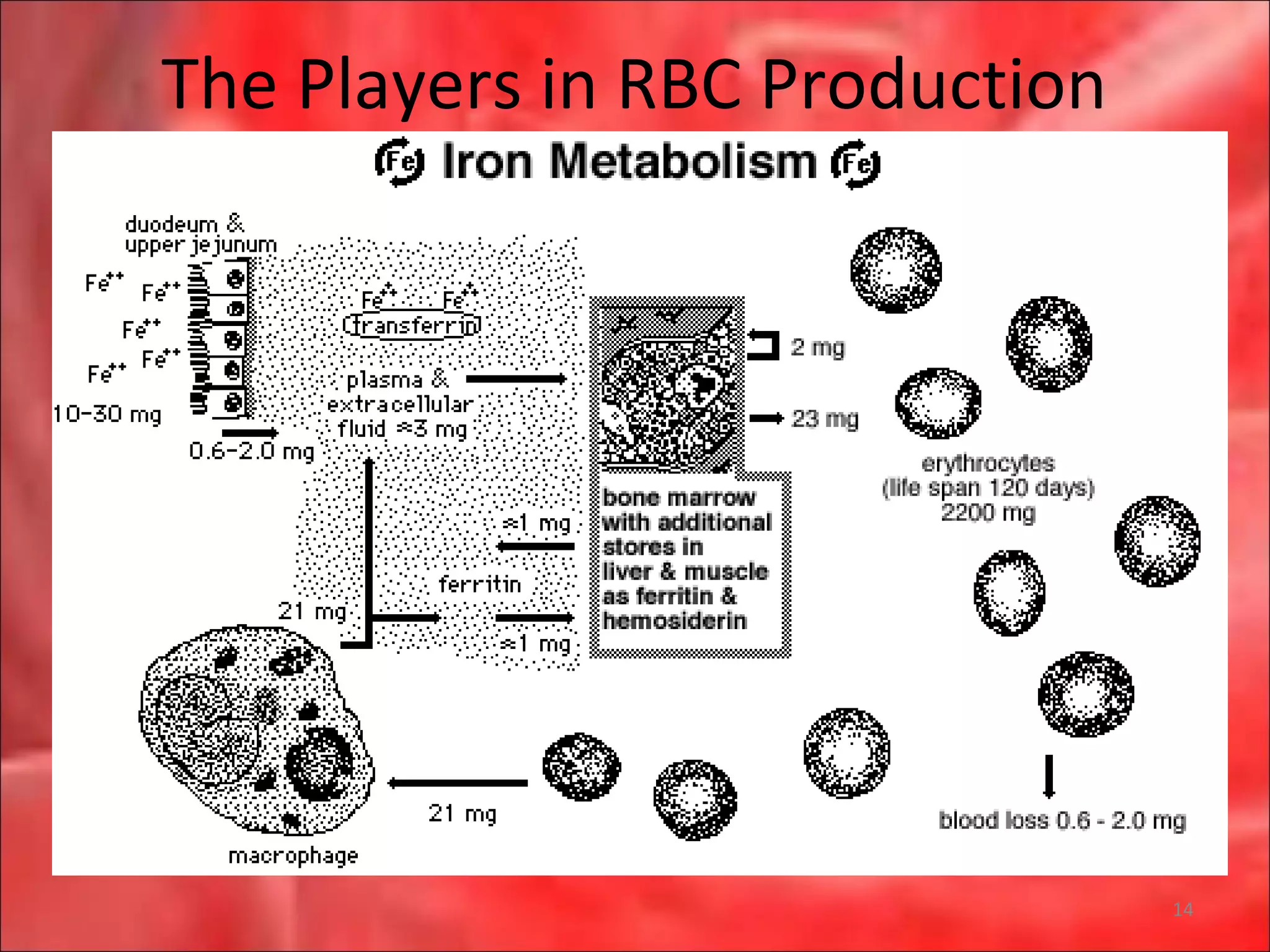
The Players in RBC Production
11
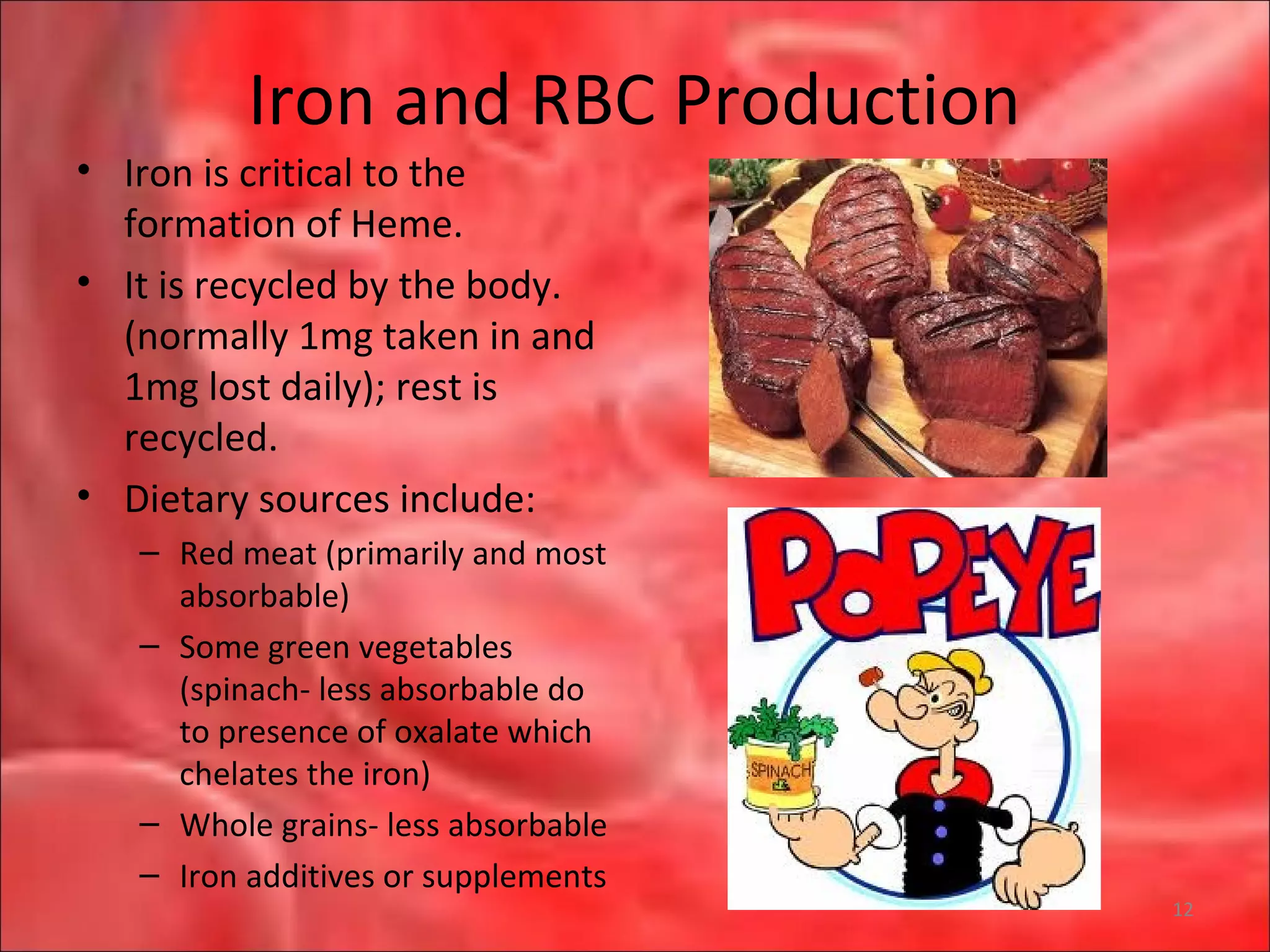
Iron and RBC Production
• Iron is critical to the
formation of Heme.
• It is recycled by the body.
(normally 1mg taken in and
1mg lost daily); rest is
recycled.
• Dietary sources include:
– Red meat (primarily and most
absorbable)
– Some green vegetables
(spinach- less absorbable do
to presence of oxalate which
chelates the iron)
– Whole grains- less absorbable
– Iron additives or supplements
12
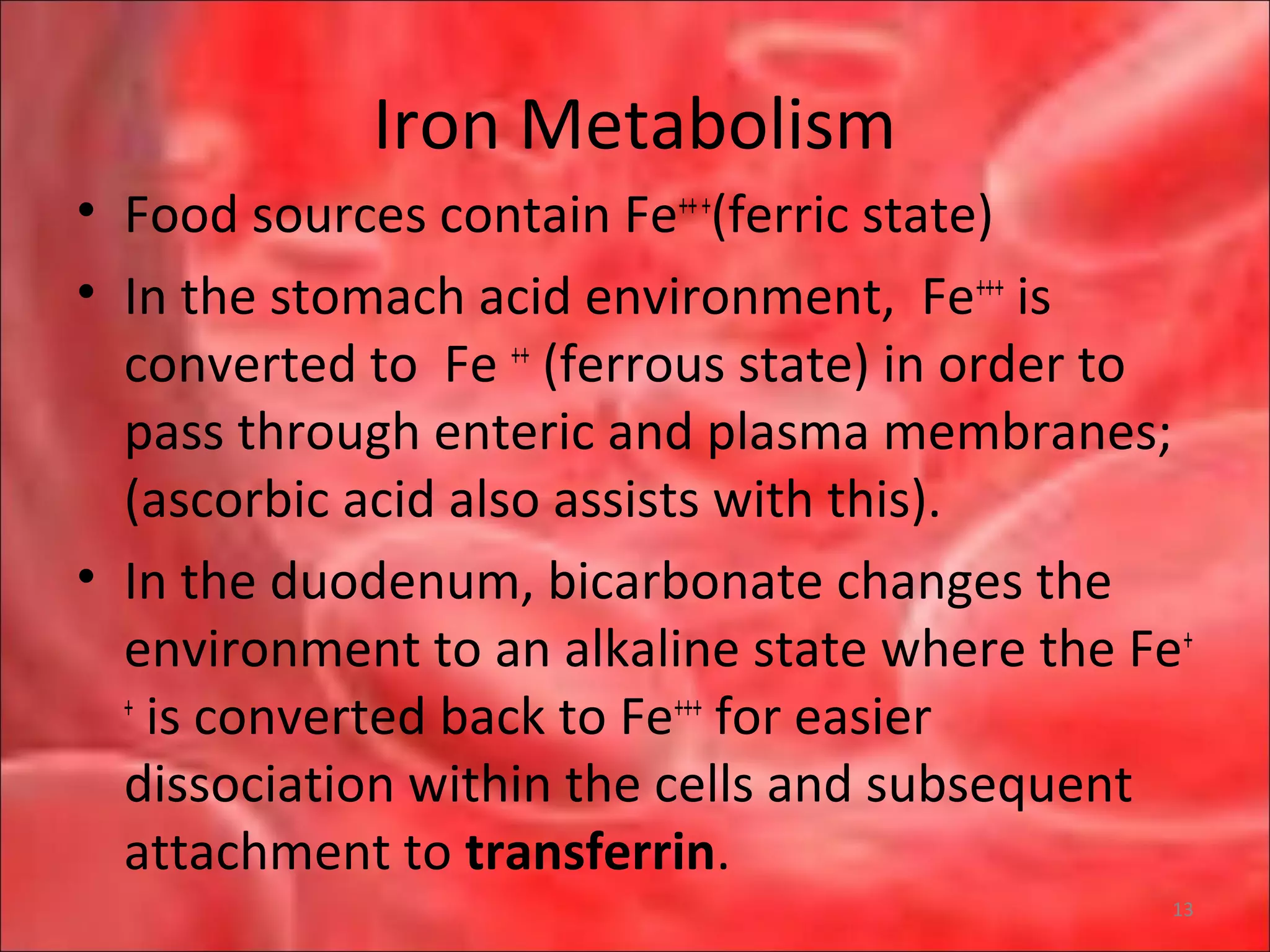
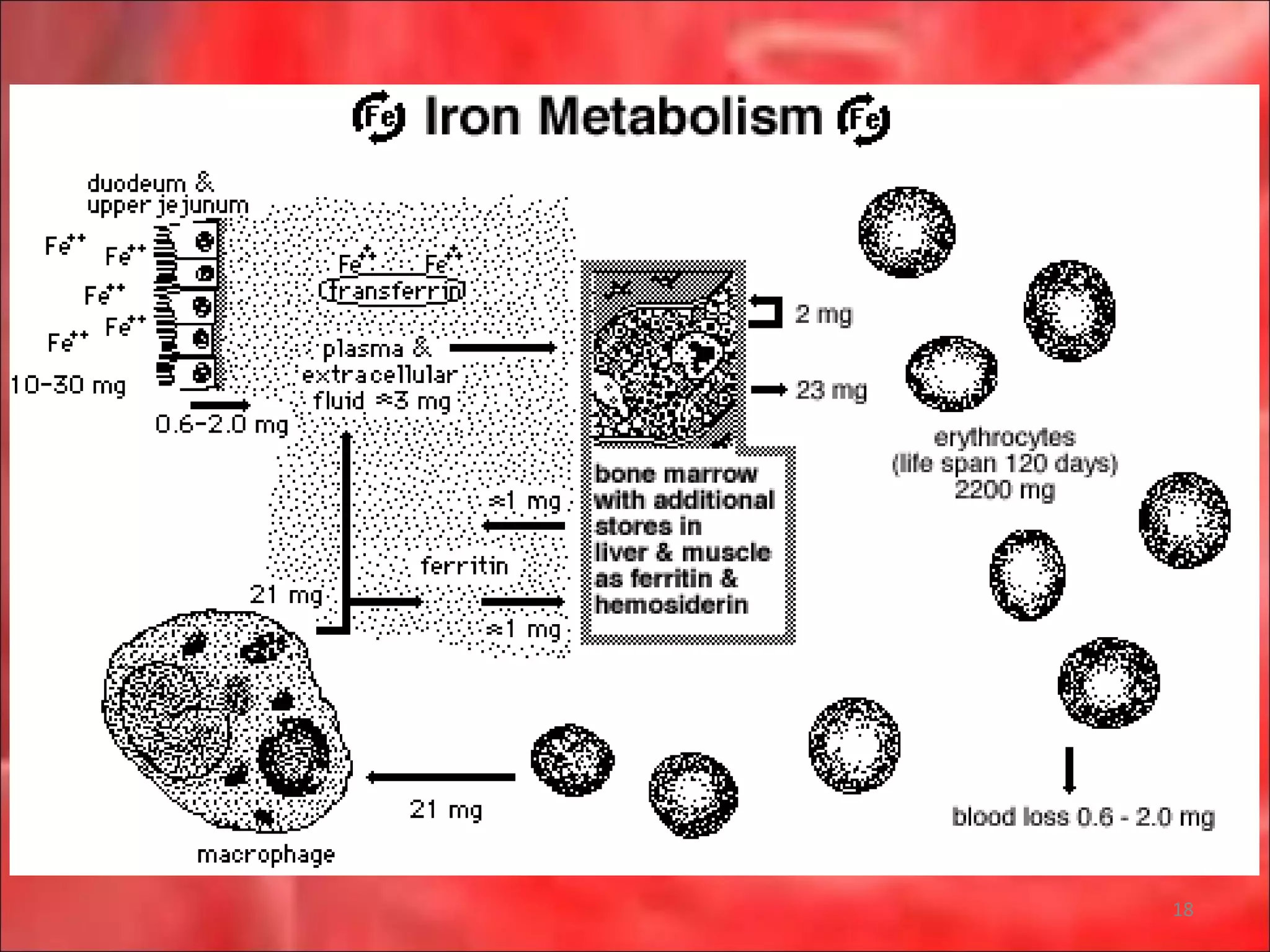
Iron Metabolism
• Food sources contain Fe+++
(ferric state)
• In the stomach acid environment, Fe+++
is
converted to Fe ++
(ferrous state) in order to
pass through enteric and plasma membranes;
(ascorbic acid also assists with this).
• In the duodenum, bicarbonate changes the
environment to an alkaline state where the Fe+
+
is converted back to Fe+++
for easier
dissociation within the cells and subsequent
attachment to transferrin.
13
The Players in RBC Production
14
Iron Metabolism (con’t)
• Transferrin:
– There is an excess amount of Transferrin available to
attach to any Fe+++ around. That way there is no
unbound iron circulating which would be toxic to
the body.
– Transferrin is normally only 1/3 saturated with iron
and therefore an unexpected influx of iron can be
handled easily.
– Transferrin is not measured directly and is therefore
the test used is called Transferrin Saturation.
15
Transferrin Saturation (%)
• Transferrin Saturation = serum iron/TIBC X 100
• Total Iron Binding Capacity (TIBC) is the
maximum amount of iron that can be bound.
• Therefore TIBC is a measurement of how much
protein is available. Since Transferrin makes up
most of this protein, the Transferrin Saturation
value would be low in the case of low iron but
high in the case of liver failure (not as much
protein made).
16
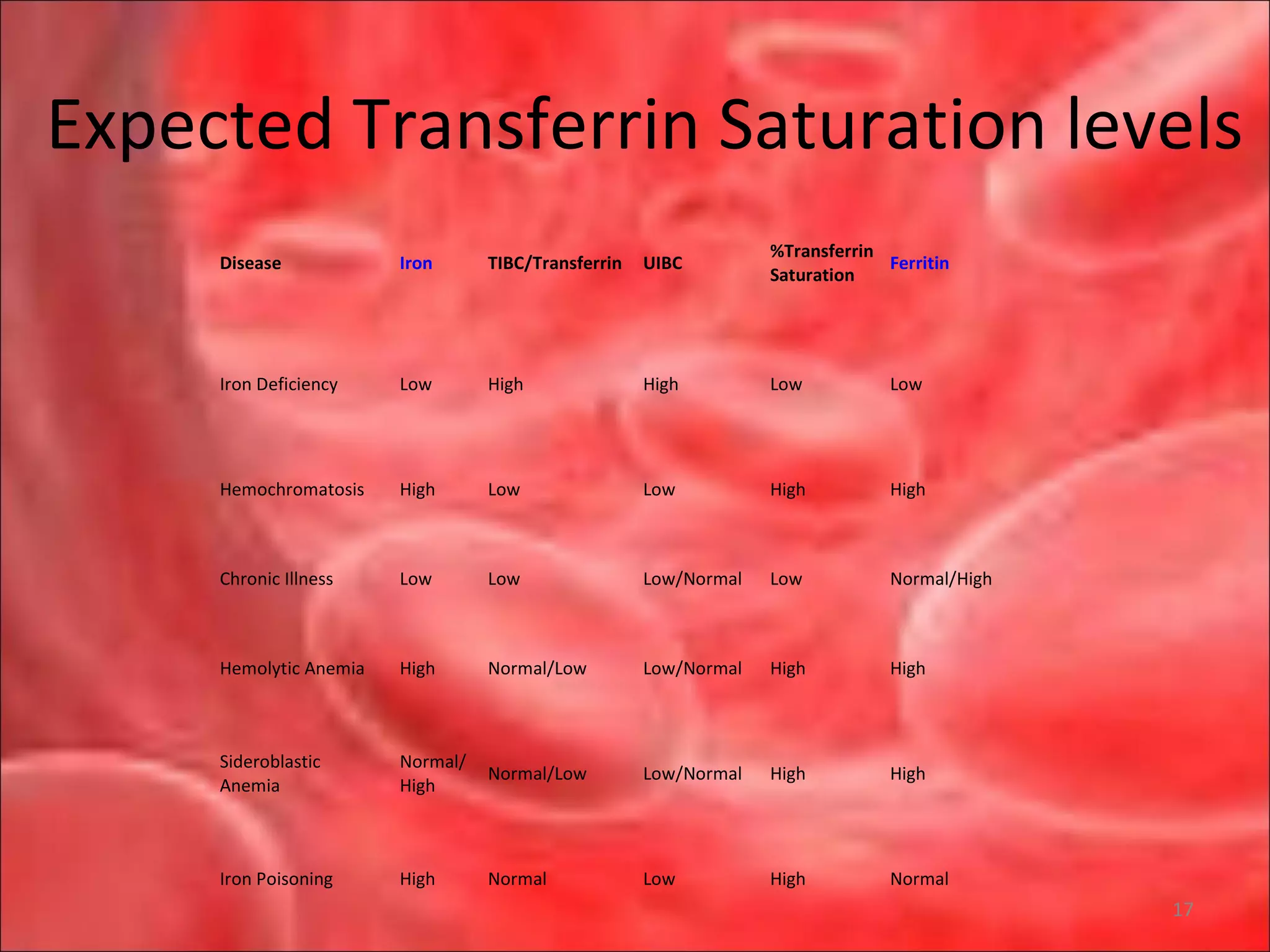
Expected Transferrin Saturation levels
17
Disease Iron TIBC/Transferrin UIBC
%Transferrin
Saturation
Ferritin
Iron Deficiency Low High High Low Low
Hemochromatosis High Low Low High High
Chronic Illness Low Low Low/Normal Low Normal/High
Hemolytic Anemia High Normal/Low Low/Normal High High
Sideroblastic
Anemia
Normal/
High
Normal/Low Low/Normal High High
Iron Poisoning High Normal Low High Normal
18
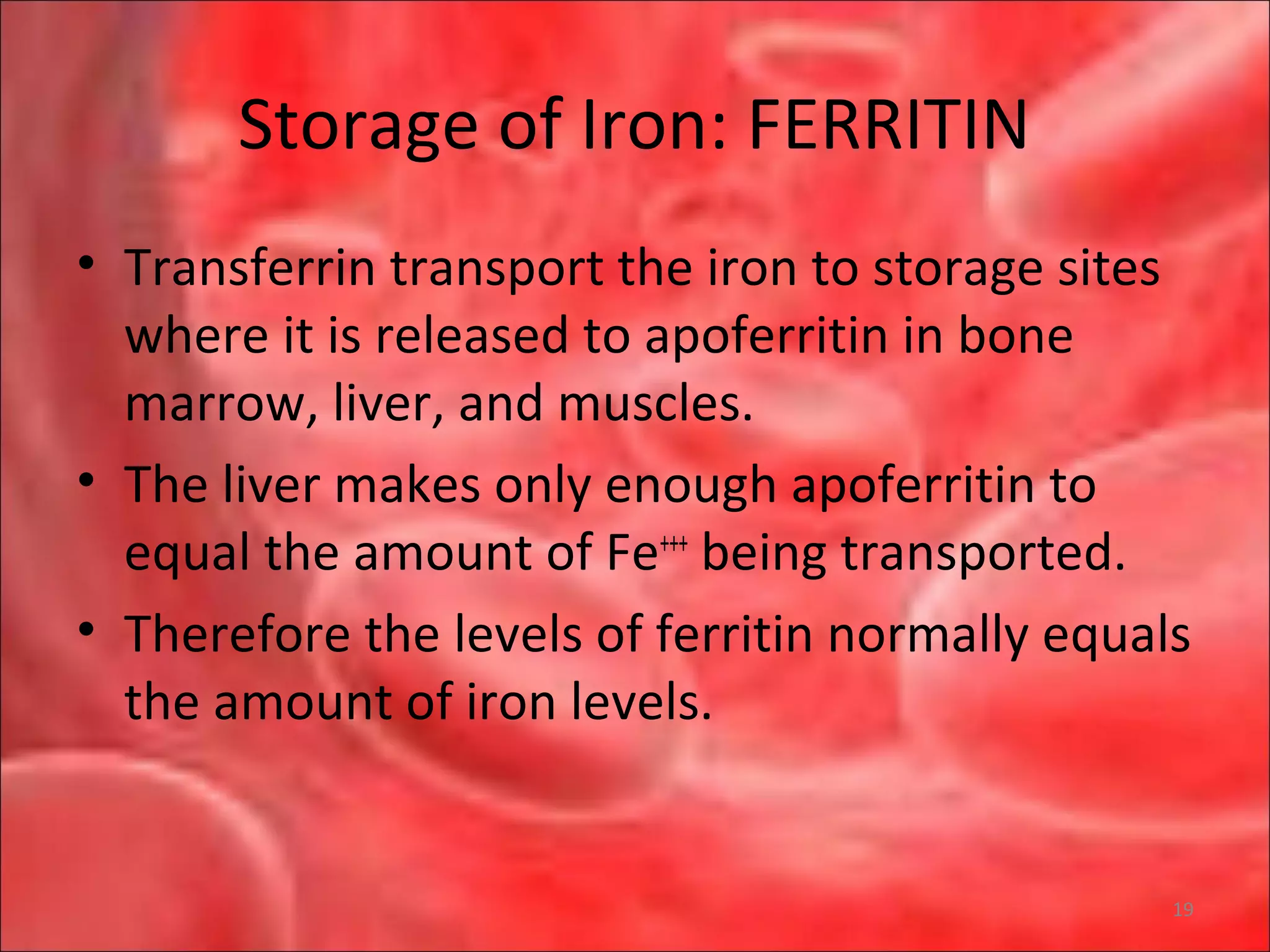
Storage of Iron: FERRITIN
• Transferrin transport the iron to storage sites
where it is released to apoferritin in bone
marrow, liver, and muscles.
• The liver makes only enough apoferritin to
equal the amount of Fe+++
being transported.
• Therefore the levels of ferritin normally equals
the amount of iron levels.
19
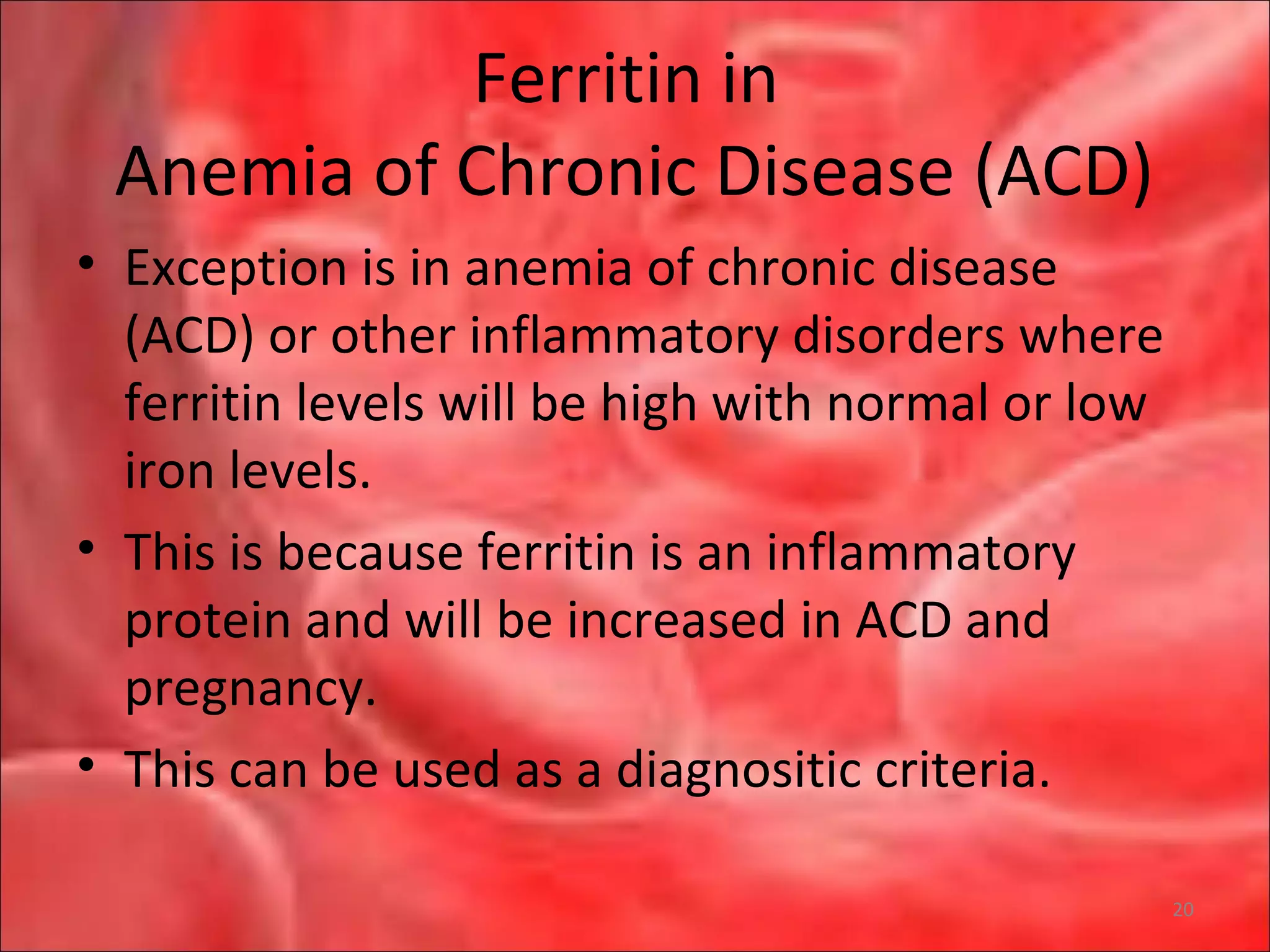
Ferritin in
Anemia of Chronic Disease (ACD)
• Exception is in anemia of chronic disease
(ACD) or other inflammatory disorders where
ferritin levels will be high with normal or low
iron levels.
• This is because ferritin is an inflammatory
protein and will be increased in ACD and
pregnancy.
• This can be used as a diagnositic criteria.
20
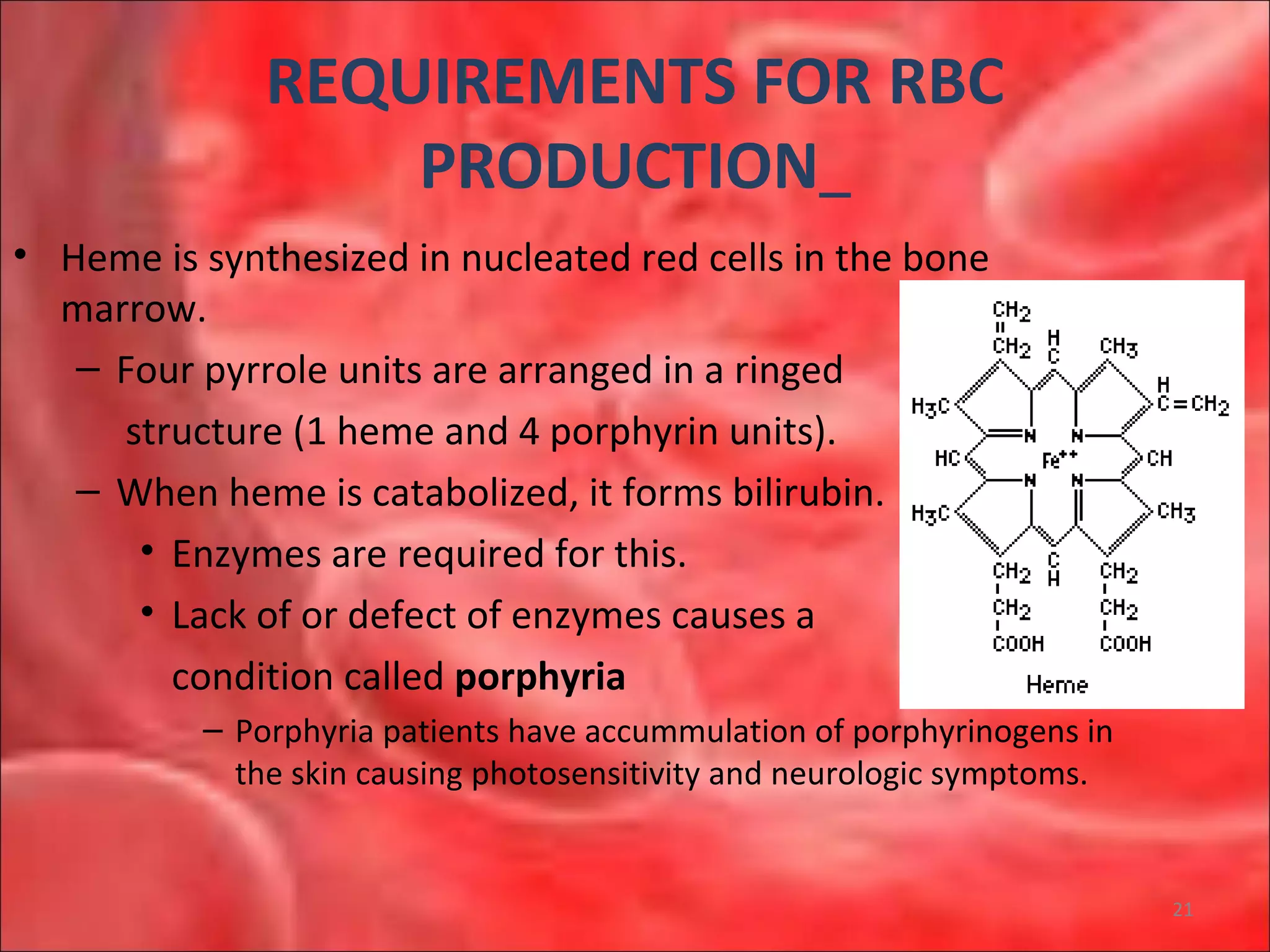
REQUIREMENTS FOR RBC
PRODUCTION
• Heme is synthesized in nucleated red cells in the bone
marrow.
– Four pyrrole units are arranged in a ringed
structure (1 heme and 4 porphyrin units).
– When heme is catabolized, it forms bilirubin.
• Enzymes are required for this.
• Lack of or defect of enzymes causes a
condition called porphyria
– Porphyria patients have accummulation of porphyrinogens in
the skin causing photosensitivity and neurologic symptoms.
21
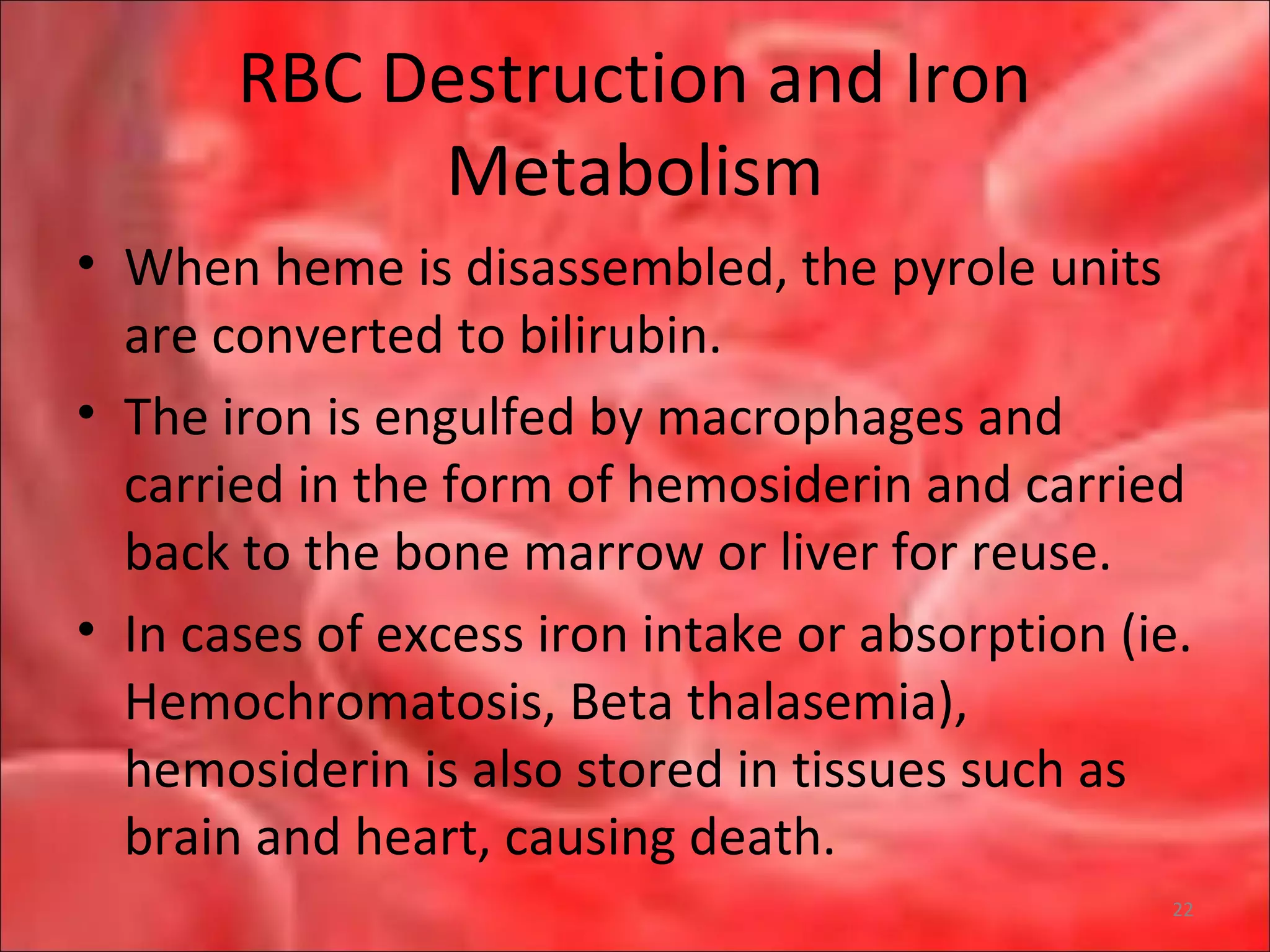
RBC Destruction and Iron
Metabolism
• When heme is disassembled, the pyrole units
are converted to bilirubin.
• The iron is engulfed by macrophages and
carried in the form of hemosiderin and carried
back to the bone marrow or liver for reuse.
• In cases of excess iron intake or absorption (ie.
Hemochromatosis, Beta thalasemia),
hemosiderin is also stored in tissues such as
brain and heart, causing death.
22
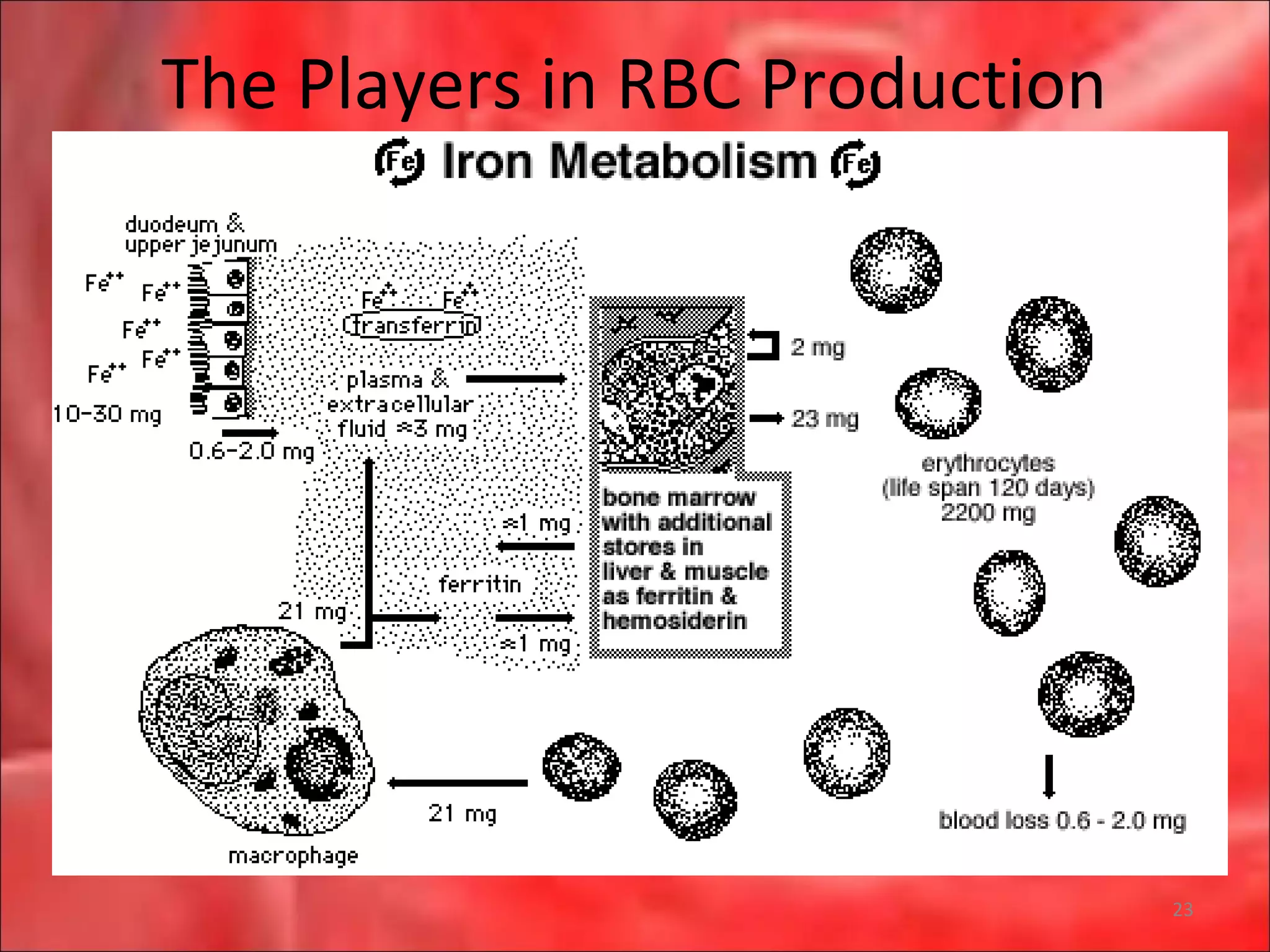
The Players in RBC Production
23
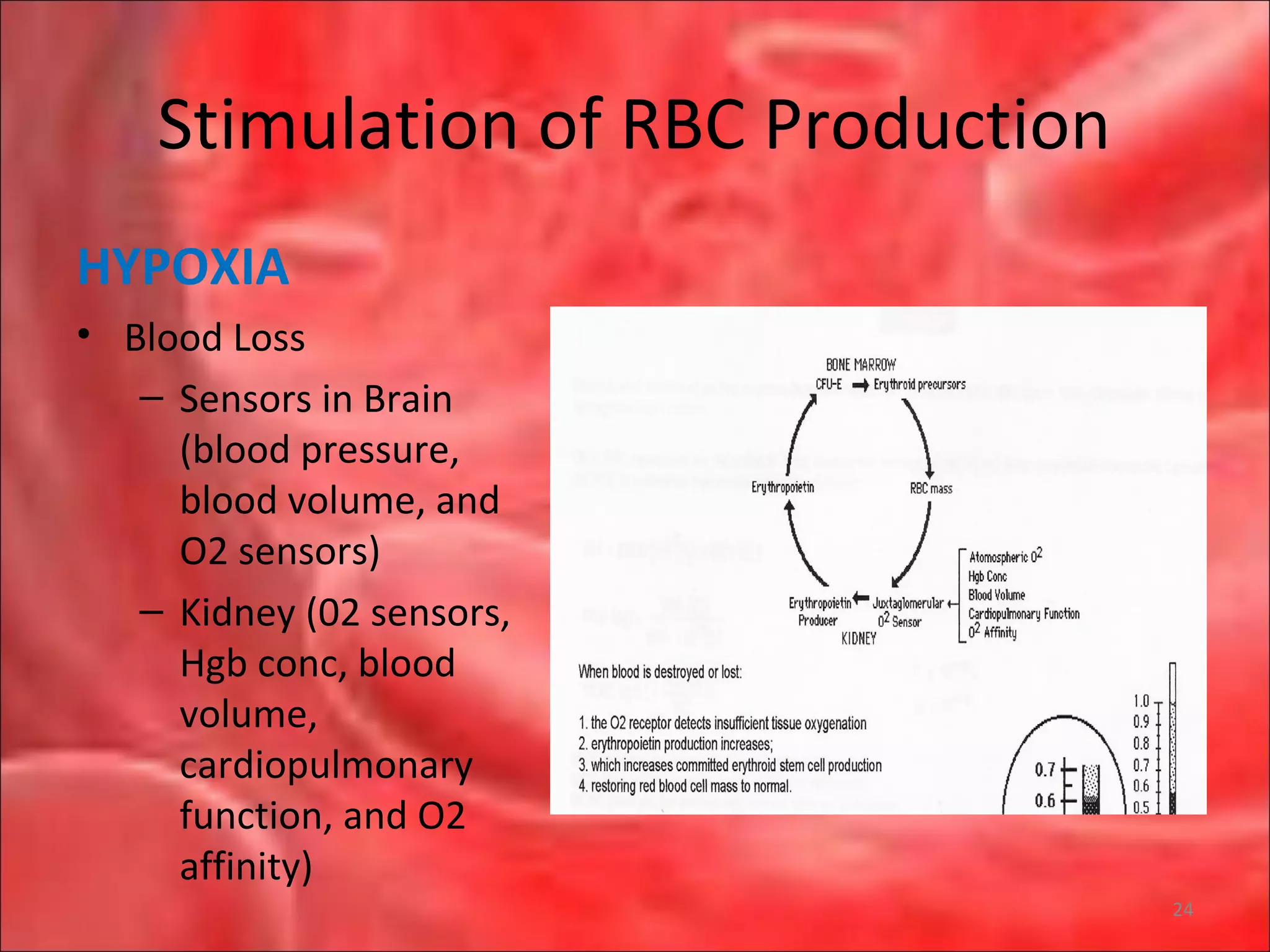
Stimulation of RBC Production
HYPOXIA
• Blood Loss
– Sensors in Brain
(blood pressure,
blood volume, and
O2 sensors)
– Kidney (02 sensors,
Hgb conc, blood
volume,
cardiopulmonary
function, and O2
affinity)
24
Erythropoietin
Erythropoietin is a hormone that stimulates the
bone marrow stem cells to shift to erythroid
progenitor cell production.
During fetal life, erythropoietin is produced in
the liver.
After birth, it is formed in the renal peritubular by
fibroblasts and interstitial cells.
Regulation is by Oxygen Feedback Mechanism. It
is mainly made in response to low OXYGEN
levels, low blood flow, poor oxygen exchange,
and impaired oxygen release from hemoglobin.
25
Erythropoietin Function
• Accelerates RBC production by:
– Increase rate of cell division
– Speeds up incorporation of iron into the
developing cells
– Shortens the time of cell maturation
– Hastens entry of immature red cells into the
circulation.
– The reticulocyte level is an indication of the
erythropoietin level.
26
Erythropoietin Levels
• Enzyme-linked assay: method of choice
• Useful in distinquishing primary polycythemia
(uncontrolled bone marrow production of
RBCs) from secondary polycythemia.
– Erythropoietin levels are low/normal in Primary
polycythemia (Polycythemia Vera).
– Erythropoietin levels are high in secondary
polycythemia in which tissue hypoxia is driving the
increased production of RBCs.
27
Hemoglobin
• Heme portion consists of a porphyrin ring with Fe+
suspended within the middle. Synthesized in
mitochondria of the cytoplasm.
• Globin portion is composed of 2 amino acid chains
(alpha and either gamma, beta, or delta)
• Most (97%) adult hemoglobin consists of 2 alpha and
2 beta chains and 4 heme molecules (Type A)
• One hemoglobin molecule can bind 4 molecules of
oxygen.
• 2,3 DPG (diphosphoglycerate) binds to the two beta
chains to stabilize the molecule and shift oxygen out
to tissues. (enhances oxygen displacement) 28
2,3 DPG MOLECULE
HEMOGLOBIN A MOLECULE WITH 2,3 DPG FOR STABILIZATION after
oxygen displacement
29
HEMOGLOBIN FORMS
• Hemoglobin Type A – 2 alpha and 2 beta (97%)
• Hemoglobin Type A2 - 2 alpha and 2 delta (<2.5%)
– Note that beta and delta are derived from the
same gene, chromosome 11; alpha is from
chromosome 16
• Hemoglobin Type F (fetal) – 2 alpha and 2 gamma
(1%) (Normally, after 4-6 months of age, most of the
gamma production shifts to beta (or delta); (1% may
normally remain as gamma).
30
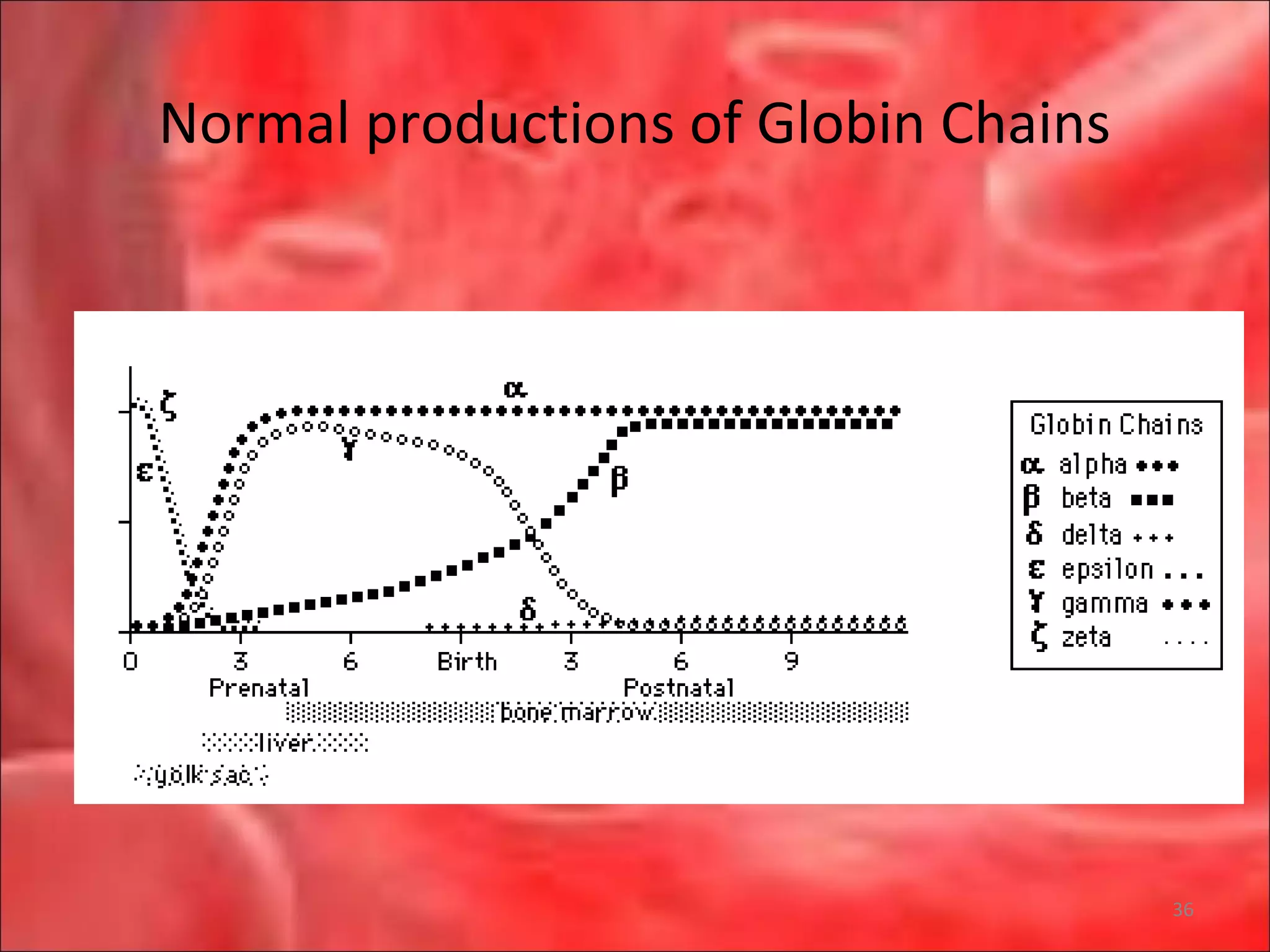
Normal Globin synthesis
31
Globin Synthesis
• Occurs mainly in the early or basophilic
erythroblast. Small amount can occur in the
reticulocyte (especially if rbc maturation is
accelerated).
• Genes for globin synthesis is location on
chromosome 11 (gamma, delta, beta) and on
Chromosome 16 for alpha.
Anemias can occur if there is some problem
at the DNA level; defects in interpreting the
RNA template or nonsense messenger RNA
occurs. 32
RBC MATURATION
33
Polychromatophilic normablast
34
Hemoglobin Disorders
• Switch from Fetal hemoglobin to Type A
occurs 3-6 months of age. Mechanism is not
known.
• Defects in chromosomes 11 and 16 can cause
abnormal globin synthesis and therefore
oxygen carrying capacity is decreased.
• 2,3 DPG also has less affinity to Fetal hgb
35
Normal productions of Globin Chains
36
Bone Marrow Function
1. Production of erythrocytes capable of
transporting oxygen to tissues.
2.Concentration of RBC needs to be maintained.
3.Red cell membranes must allow deformability
to transport through microcirculation.
4.An elevated reticulocyte count indicates an
increase in bone marrow activity.
37
Reticulocytes
• After the nucleus is extruded from the
nucleated red cell, residual cytoplasmic
ribosomal RNA, fragments of mitochondria
and organelles remain for several days.
• These cells are slightly larger and appear as
polychromatic (slightly blue) and basophilic
stippling.
• Most of the maturation occurs in the bone
marrow, however 0.5-2.5% are in the
peripheral blood normally.
38
DEFINITION OF ANEMIA
• Decrease in the concentration of
hemoglobin.
–Maintenance of several factors keep
this concentration within normal
limits.
• Also known as decreased red cell mass:
–Occurs with decrease in production,
increased loss, or increase in
destruction
39
Classification of Anemias
• Increased red cell destruction or loss
– Excess loss (hemorrhagic anemia)
– Hemolytic anemias (hereditary and extrinsic)
• Impaired production of red cells
– Deficiency states
– Bone marrow failure (hypoproliferative states)
– Refractory anemias (ineffective erythropoiesis)
40
Anemias of Impaired Production
• Fe Deficiency
• Sideroblastic
• Megaloblastic (B12, folate)
• Aplastic
Unknown cause
• Anemia of Chronic Disease
41
Impaired Production
Decreased Hgb Synthesis
• Microcytic and hypochromia implies
decreased Hgb synthesis.
– Iron Deficiency
– Thalassemia
– Siderblastic anemia
– Anemia of Chronic Disease ???
• Generally the Reticulocyte count will be
normal or low.
42
Anemias of Increased Destruction
• Hemolytic Anemias
–Mechanical
–Autoimmune (Direct Coombs +)
• Generally the Reticulocyte count will be
elevated.
43
Reticulocyte Count
Corrected retic count = observed retic count X Hct
45 Mean normal Hct
44
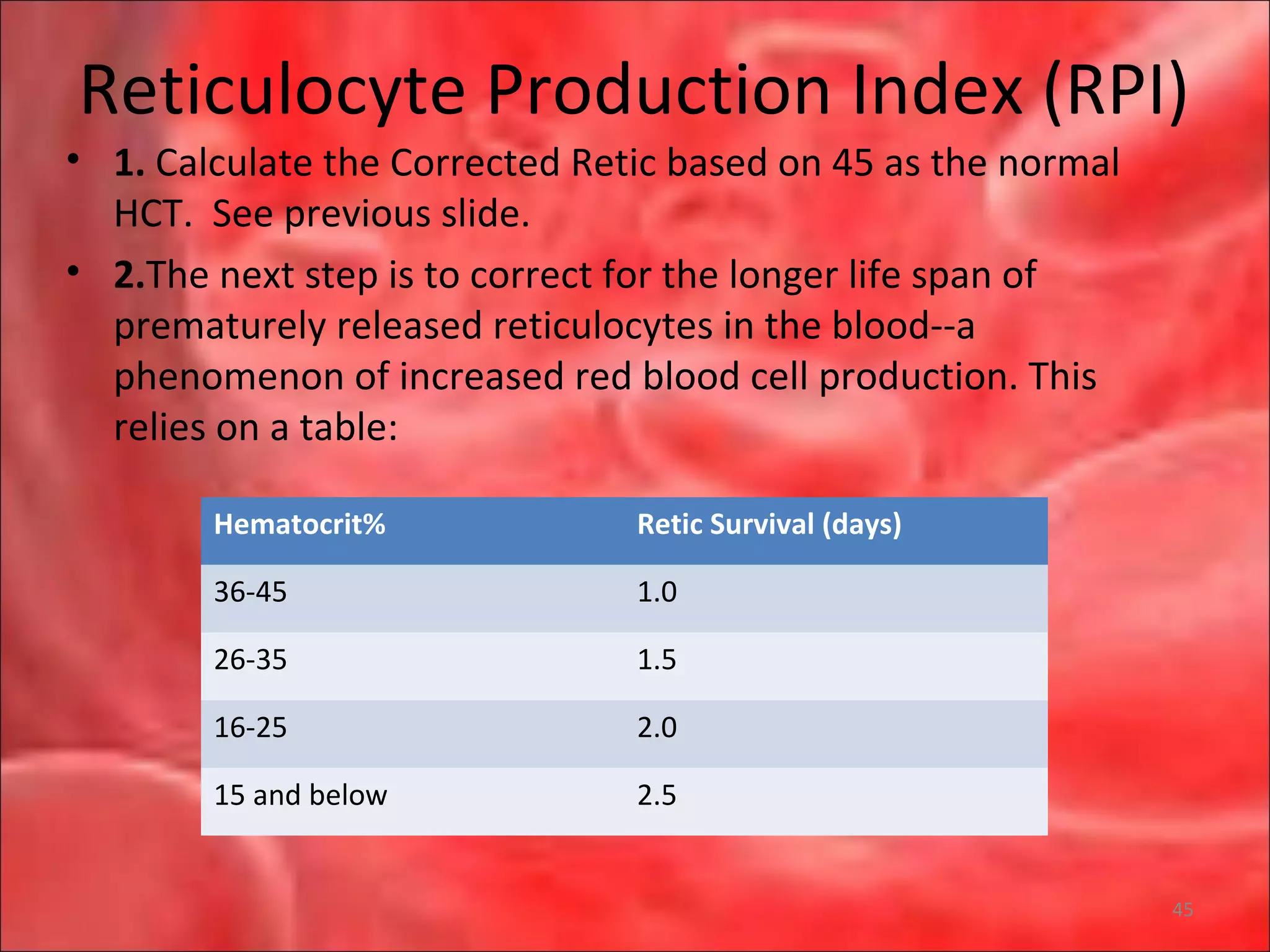
Reticulocyte Production Index (RPI)
• 1. Calculate the Corrected Retic based on 45 as the normal
HCT. See previous slide.
• 2.The next step is to correct for the longer life span of
prematurely released reticulocytes in the blood--a
phenomenon of increased red blood cell production. This
relies on a table:
Hematocrit% Retic Survival (days)
36-45 1.0
26-35 1.5
16-25 2.0
15 and below 2.5
45
RPI Calculation and Interpretation
• So, in a person whose uncorrected reticulocyte count is 5%,
hemoglobin 7.5 g/dL, hematocrit 25%, the RPI would be:
• [Corrrected retic]/[maturation correction] = [5 x (25/45)] /2 =
1.4
• Interpretation
• The reticulocyte index (RI) should be between 1.0 and 2.0 for
a healthy individual.
• RI < 2 with anemia indicates decreased production of
reticulocytes and therefore red blood cells.
• RI > 2 with anemia indicates loss of red blood cells
(destruction, bleeding, etc) leading to increased
compensatory production of reticulocytes to replace the lost
red blood cells. 46
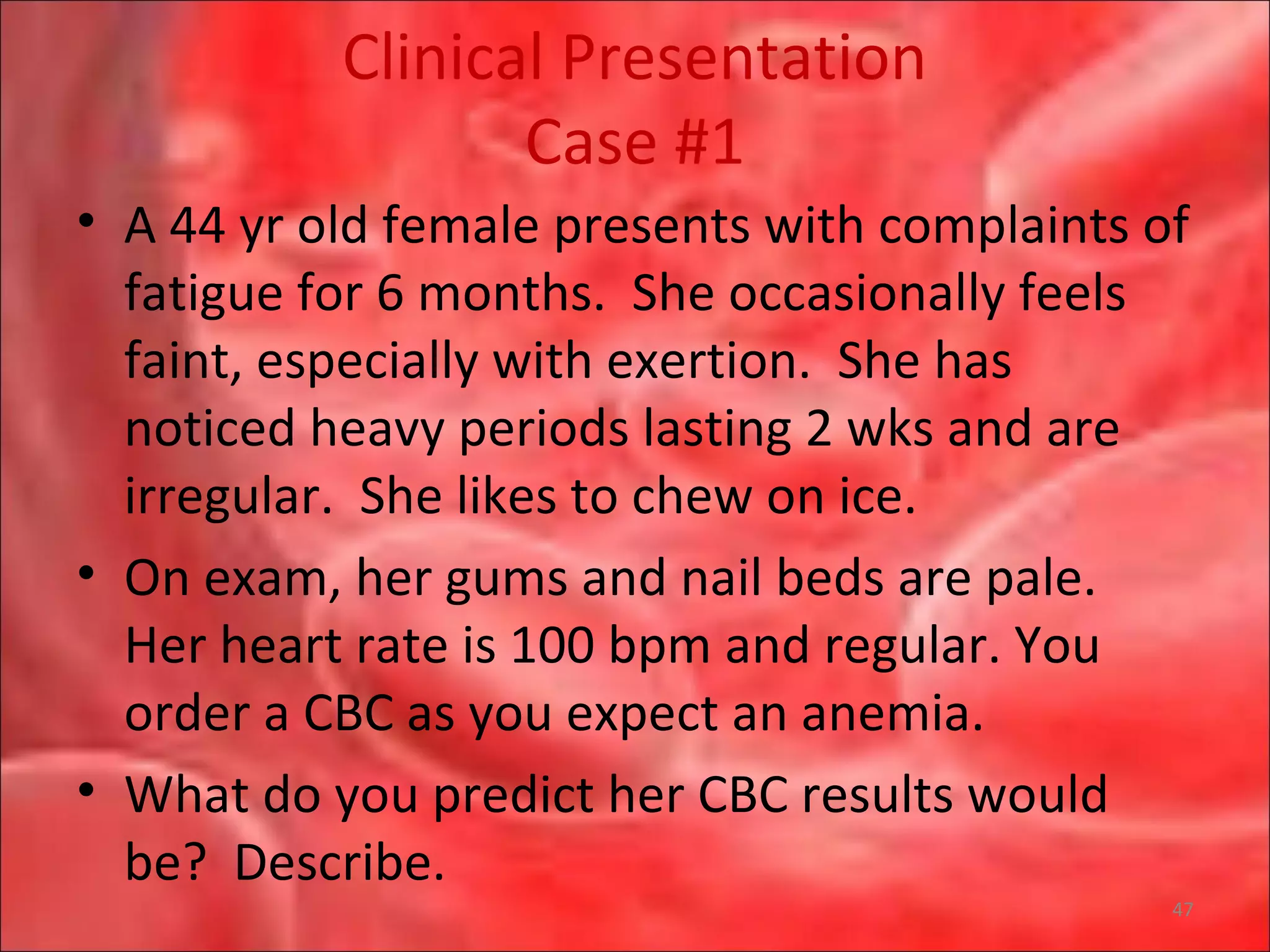
Clinical Presentation
Case #1
• A 44 yr old female presents with complaints of
fatigue for 6 months. She occasionally feels
faint, especially with exertion. She has
noticed heavy periods lasting 2 wks and are
irregular. She likes to chew on ice.
• On exam, her gums and nail beds are pale.
Her heart rate is 100 bpm and regular. You
order a CBC as you expect an anemia.
• What do you predict her CBC results would
be? Describe.
47
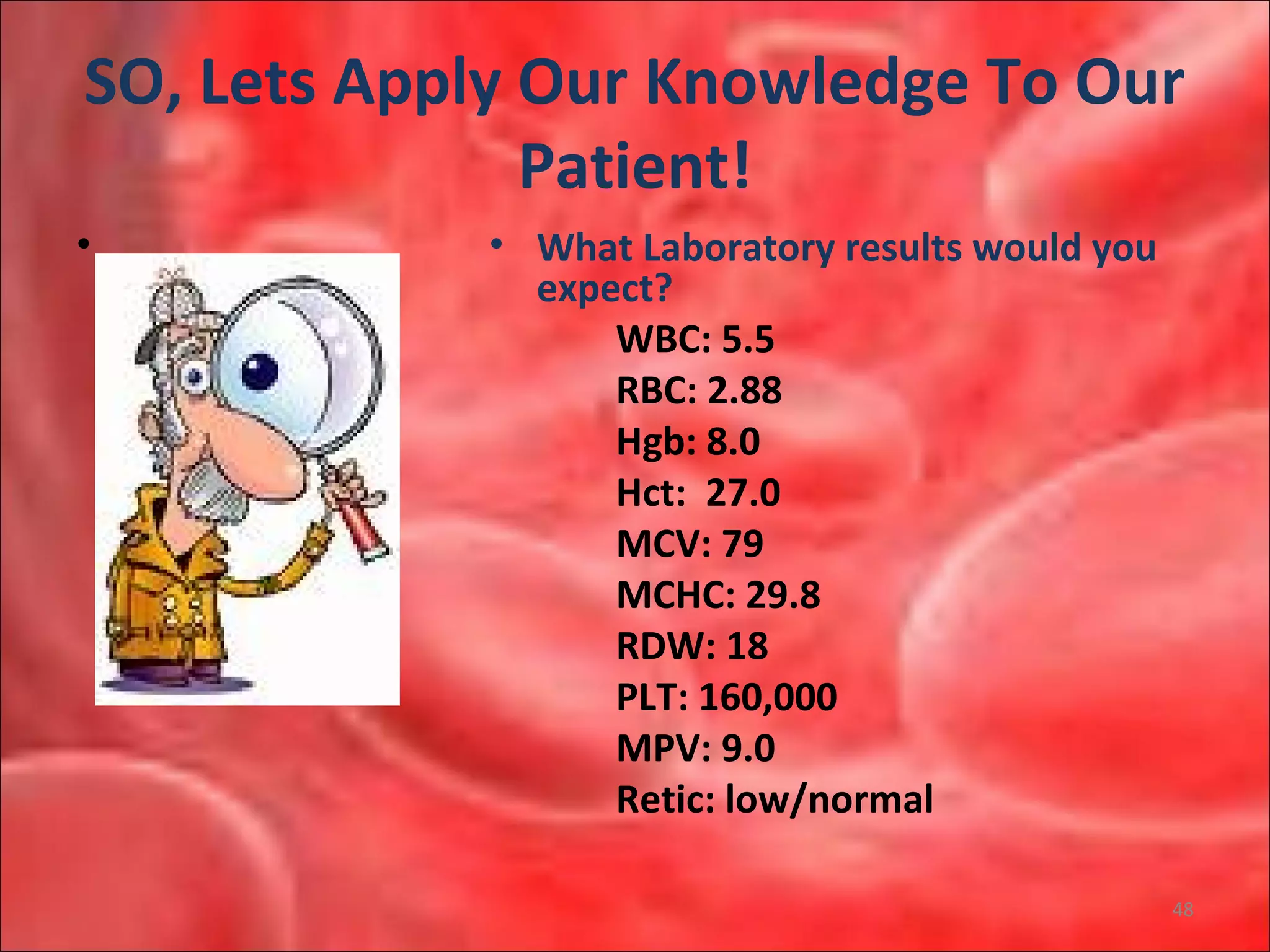
SO, Lets Apply Our Knowledge To Our
Patient!
• . • What Laboratory results would you
expect?
WBC: 5.5
RBC: 2.88
Hgb: 8.0
Hct: 27.0
MCV: 79
MCHC: 29.8
RDW: 18
PLT: 160,000
MPV: 9.0
Retic: low/normal
48
How would you classify these results?
WBC: 5.5
RBC: 2.88
Hgb: 8.0
Hct: 27.0
MCV: 79
MCHC: 29.8
RDW: 18
PLT: 160,000
MPV: 9.0
Retic: low/normal
49
What would you expect her RBCs to
look like?
• Hypochromic,
• Microcytic
50
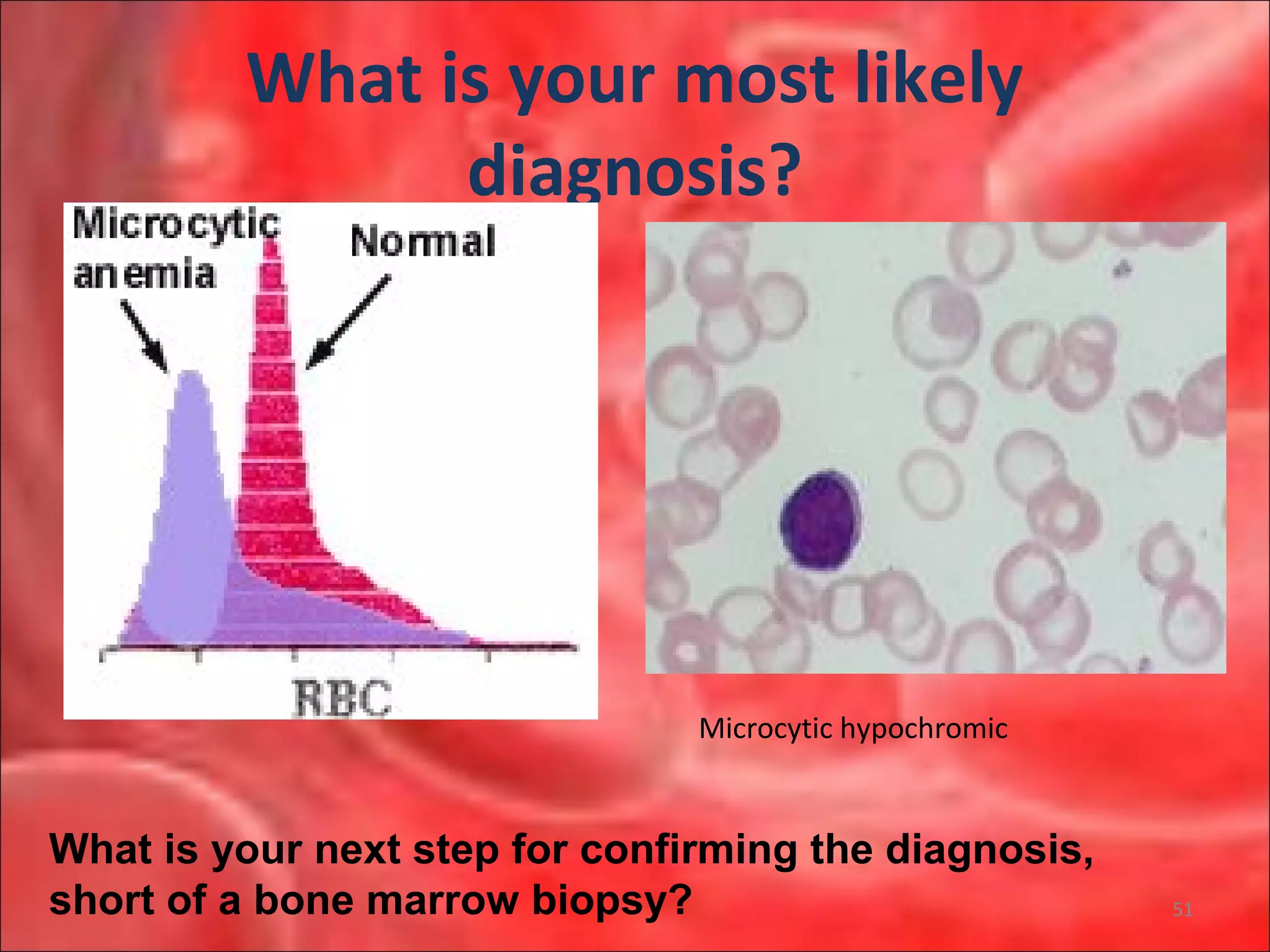
What is your most likely
diagnosis?
Microcytic hypochromic
What is your next step for confirming the diagnosis,
short of a bone marrow biopsy? 51
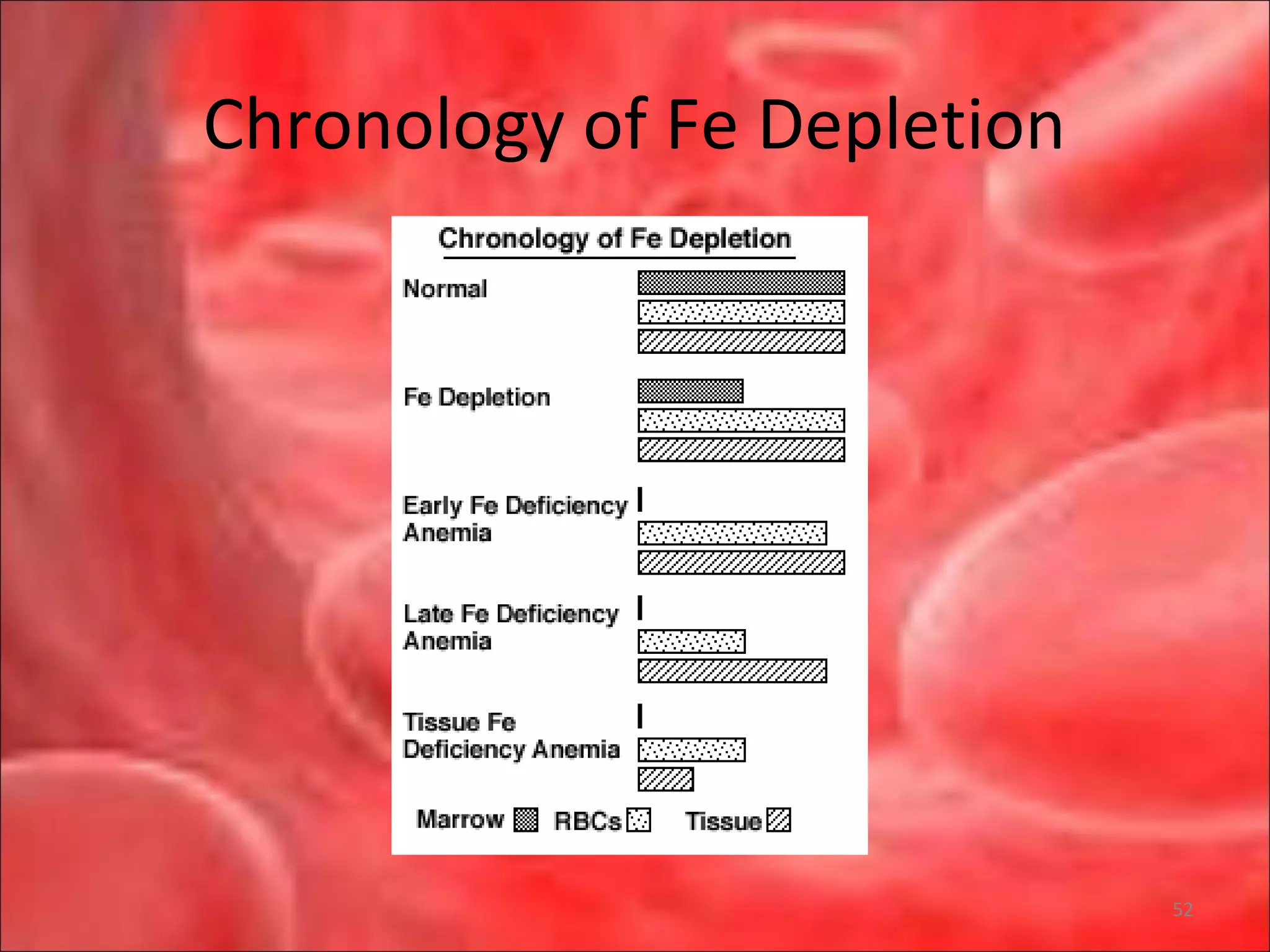
Chronology of Fe Depletion
52
IRON Studies Review
• Ferritin is a ferric oxide surrounded by a hollow sphere of
apoferritin (half-life is 5-10 minutes and is water soluble).
Ferritin is an iron buffer as free Fe+ is toxic to the tissues.
• Transferrin transports Fe+ to the cells. It also functions to
bind up any free Fe+.
• Total Iron Binding Capacity (TIBC) is the maxium capacity for
iron binding.
• Total serum Fe+ concentration or 60-150 ug/dL largely
reflects iron bound to transferrin.
• The percent of transferrin saturated with ferric iron is the
best indicator of storage iron as serum iron is nonspecific.
Serum iron/TIBC X 100 = transferrin saturation.
53
Iron Studies to CONFIRM
Diagnosis
• Fe Deficiency anemia from
chronic blood loss
• Fe+ level decr; TIBC incr;
Ferritin decr
54
Severe Fe loss
• RBC 2.17
• Hgb 3.9
• Hct 14.4
• MCV 66.6
• MCH 18.1
• MCHC 27.1
• RDW 17
55
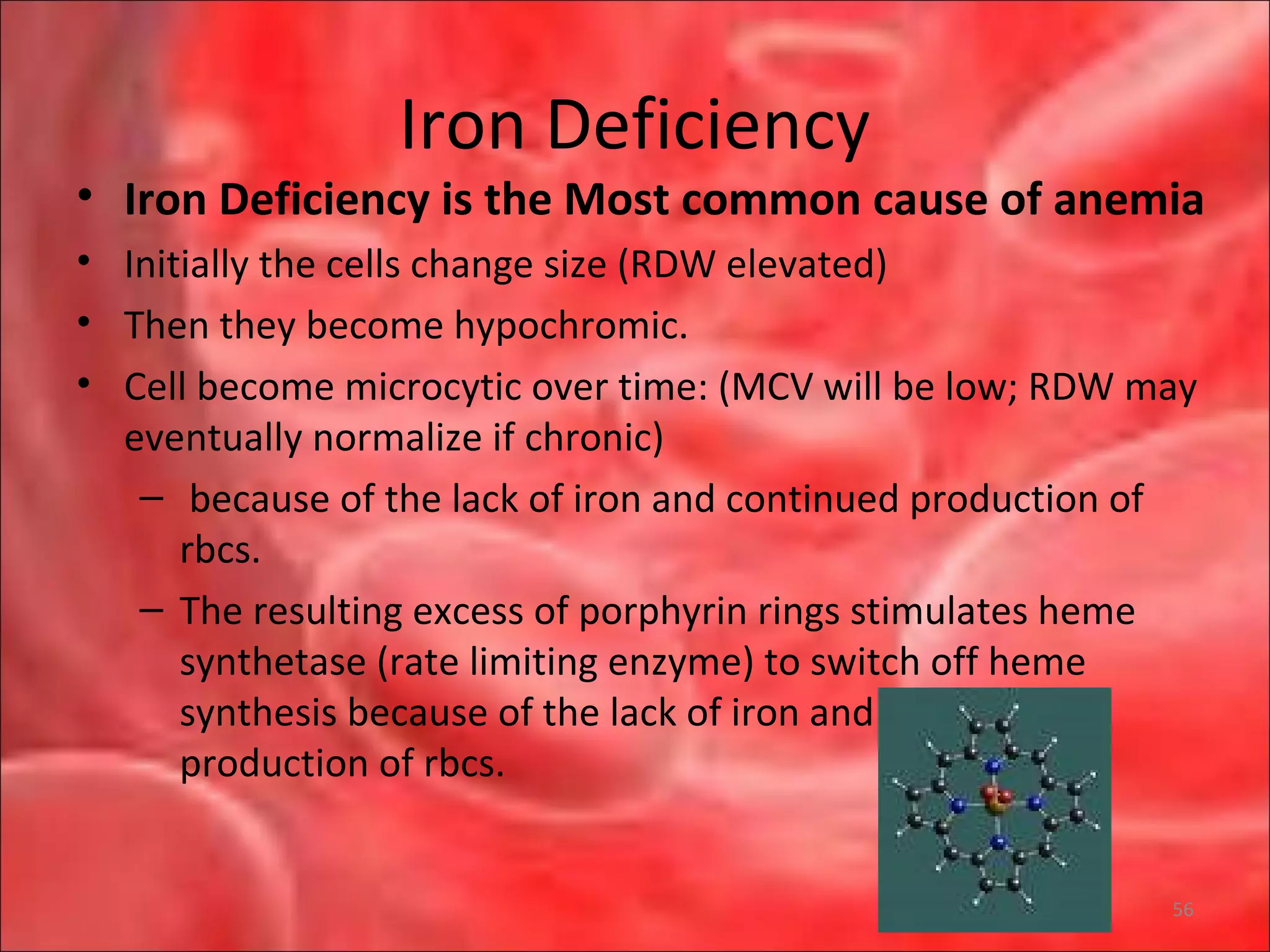
Iron Deficiency
• Iron Deficiency is the Most common cause of anemia
• Initially the cells change size (RDW elevated)
• Then they become hypochromic.
• Cell become microcytic over time: (MCV will be low; RDW may
eventually normalize if chronic)
– because of the lack of iron and continued production of
rbcs.
– The resulting excess of porphyrin rings stimulates heme
synthetase (rate limiting enzyme) to switch off heme
synthesis because of the lack of iron and continued
production of rbcs.
56
Iron requirements
• Normal levels of iron are usually maintained
through intake of diet and recycling of iron.
• In normal menstrating women with 60 ml of
blood loss (30 mg of iron), an extra mg of iron
per day is required to maintain a steady state.
• Pregnancy depletes 600-700 mg of iron.
• The body stores 500-1500 mg of iron; so one
pregnancy can deplete these stores.
57
Causes of Microcytic Anemia
– T: Thalassemia syndromes (genetic defect in
Hgb)
– I: Iron Deficiency
– C: Anemia of Chronic inflammation
– Slow blood loss (may also be normocytic)
– Long standing infections
– Lupus, RA etc.
– S: Sideroblastic anemias
– Lead Poisoning
– Anti-tuberculosis medications
58
Anemia of Chronic Disease (ACD)
• In ACD, you usually are unable to determine the etiology of
the anemia.
– It is the most common reason for anemia in hospitalized patients.
– What follow-up test is most commonly ordered?
• Most get a colonoscopy.
• Primary mechanism for pathogenesis of ACD is decreased RBC
production. Reason is unclear but infections and some
inflammation release factors ( IL, tumor necrosis factor) that
suppress erythropoiesis.
59
ACD (Con’t)
• In most cases, treatment of underlying
disease corrects the anemia.
• Usually slow loss and is
normocytic/normochromic because the body
has adjusted to it but may be microcytic if also
Fe deficient.
• Hallmark: Ferritin is usually high or normal
unless accompanied by Fe def.
60
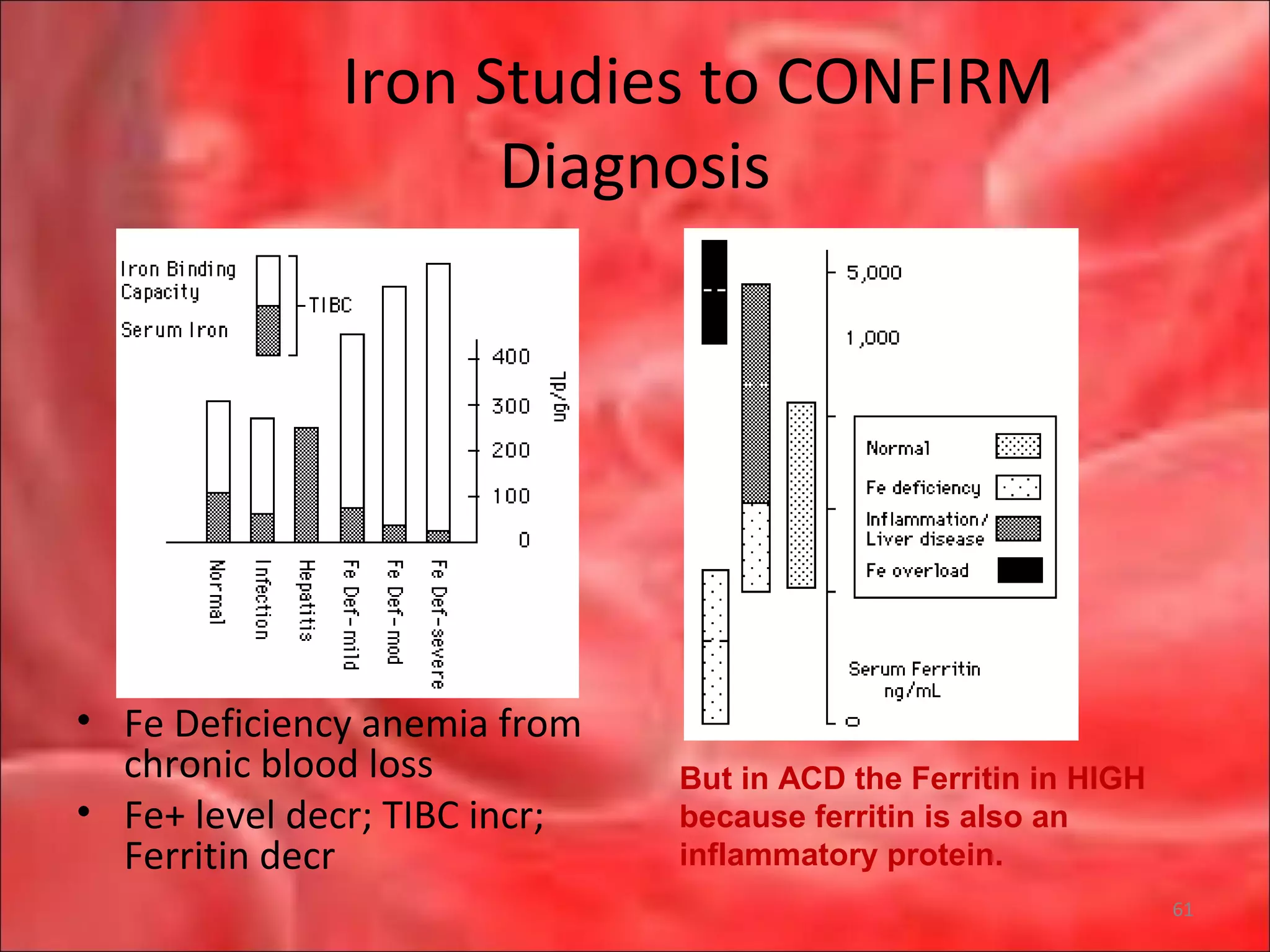
Iron Studies to CONFIRM
Diagnosis
• Fe Deficiency anemia from
chronic blood loss
• Fe+ level decr; TIBC incr;
Ferritin decr
But in ACD the Ferritin in HIGH
because ferritin is also an
inflammatory protein.
61
CASE #2
• 11 yr old male with fatigue and not able to
participate in sports. Mom states he has
always been pale and short of breath.
• He has not been seen by a physician since
early childhood. Lives in a poor
neighborhood.
• What else do you want to know?
62
???? CASE #2
• Hgb 9.0
• Hct 30.6%
• MCV 79
• MCHC 29
• RDW high
• LOW RETIC Ct.
• Serum Fe/Ferritin increased
• TIBC Normal to decr; TRANSFERRIN saturation
normal to incr
63
Case # 2
• BASOPHILIC STIPPLING • BONE MARROW CELL
(ERYTHROBLAST) WITH Prussion Blue
FE+ STAINING
64
Case # 2
Differential Diagnosis
• Sideroblastic Anemia
Three etiologies:
– Hereditary – X-linked recessive
– Acquired – exposure to toxins (alcohol,lead)
– Idiopathic myelodysplastic syndrome (aplastic
bone marrow)
65
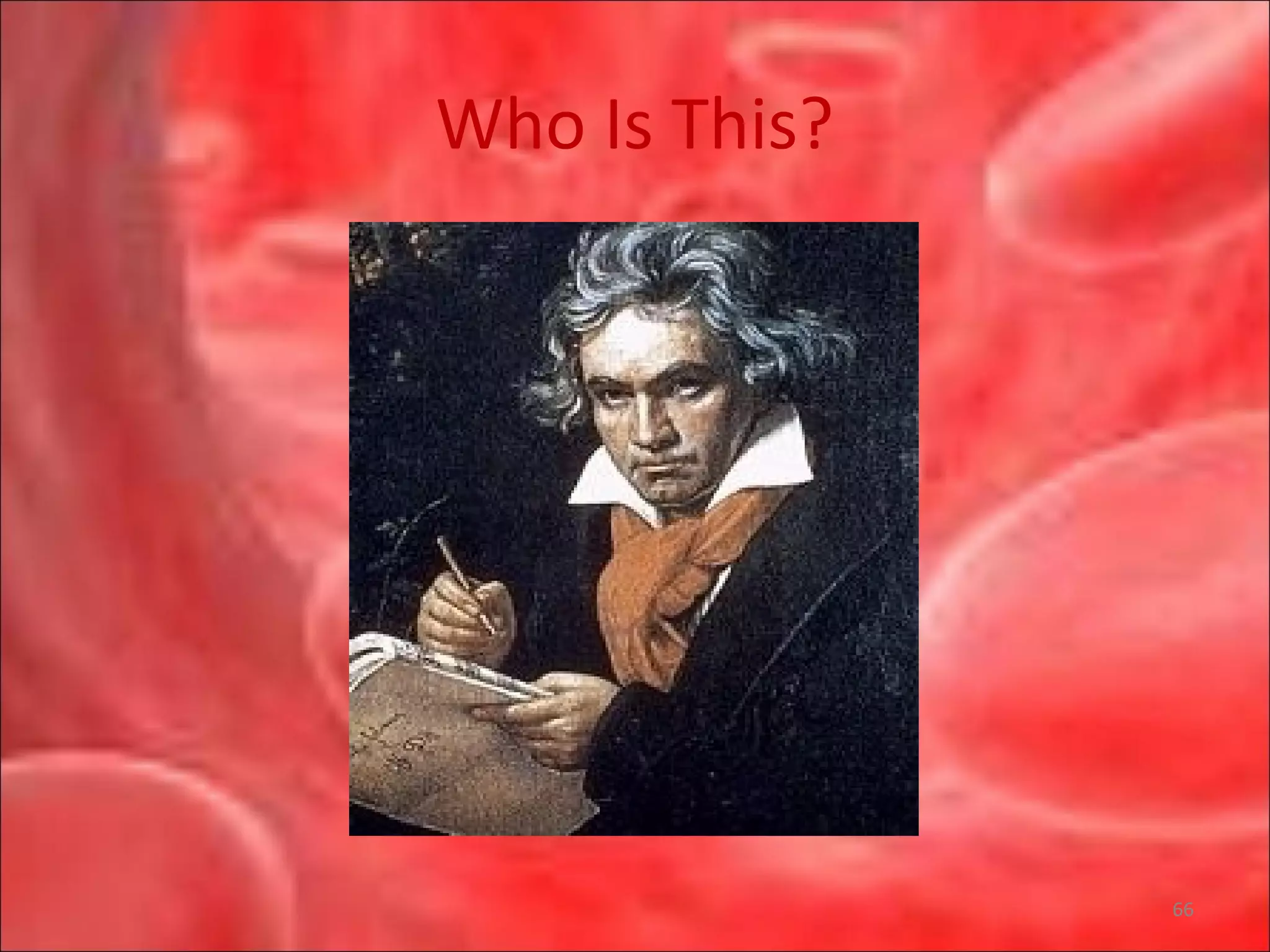
Who Is This?
66
Beethoven
• Tests on the hair and skull fragments of
Ludwig van Beethoven show the legendary
19th century German composer died from
lead poisoning, scientists say.
67
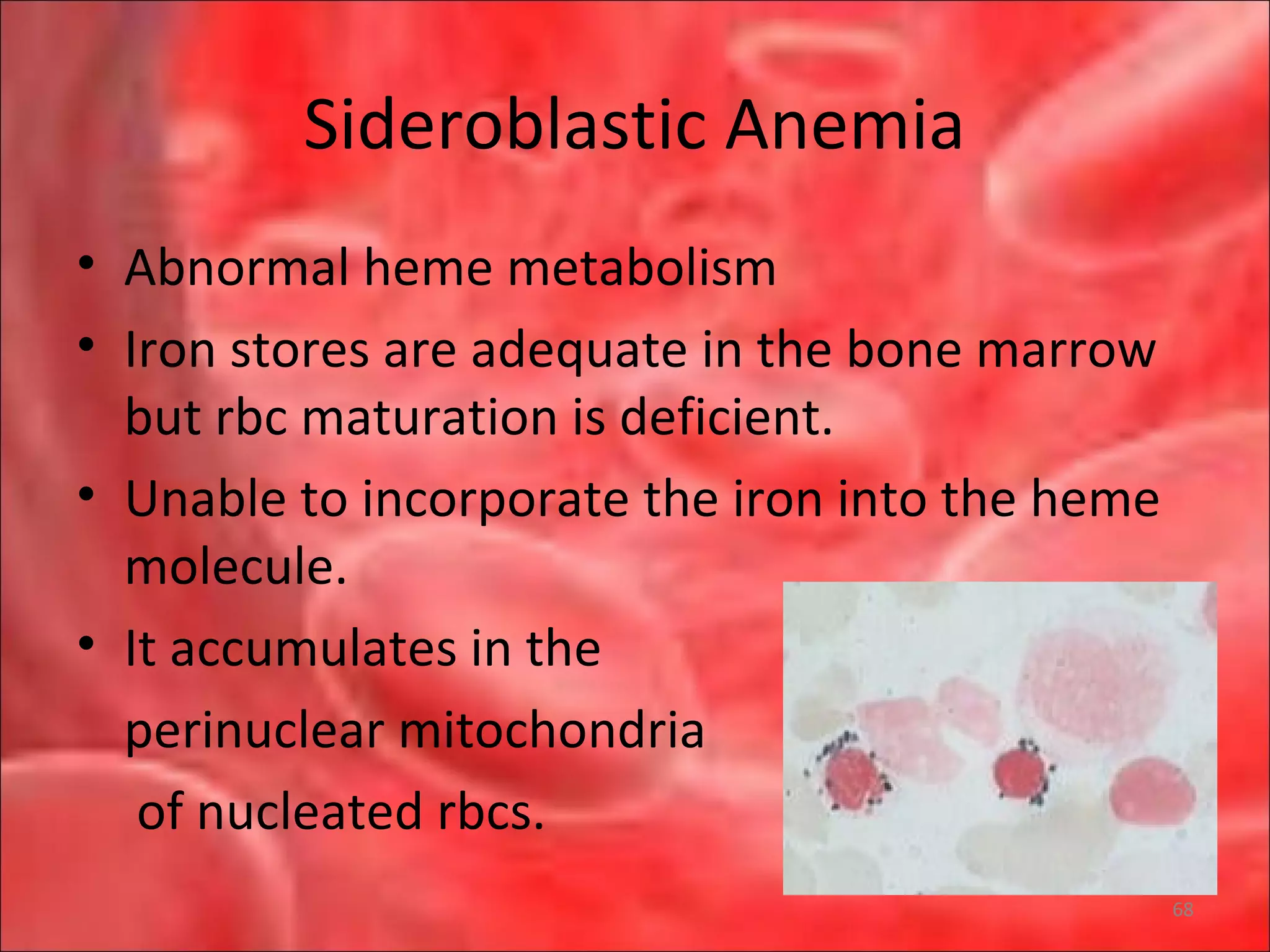
Sideroblastic Anemia
• Abnormal heme metabolism
• Iron stores are adequate in the bone marrow
but rbc maturation is deficient.
• Unable to incorporate the iron into the heme
molecule.
• It accumulates in the
perinuclear mitochondria
of nucleated rbcs.
68
Case #3
• A 35 yr old male patient presents with
fatigue, shortness of breath with exercise,
and weakness. Some numbness and tingling
in his hands and feet. He has noticed a beefy
red tongue which is tender. He is a strict
vegetarian but drinks alcohol.
69
SO, Lets Apply Our Knowledge To Our
Patient! (Case #3)
• What Laboratory results would you
expect?
WBC: 5.5
RBC: 3.40
Hgb: 10.8
Hct: 32.4
MCV: 103
MCHC: 29
RDW: 16.0
PLT: 260,000
MPV: 9.0
Retic: Low
70
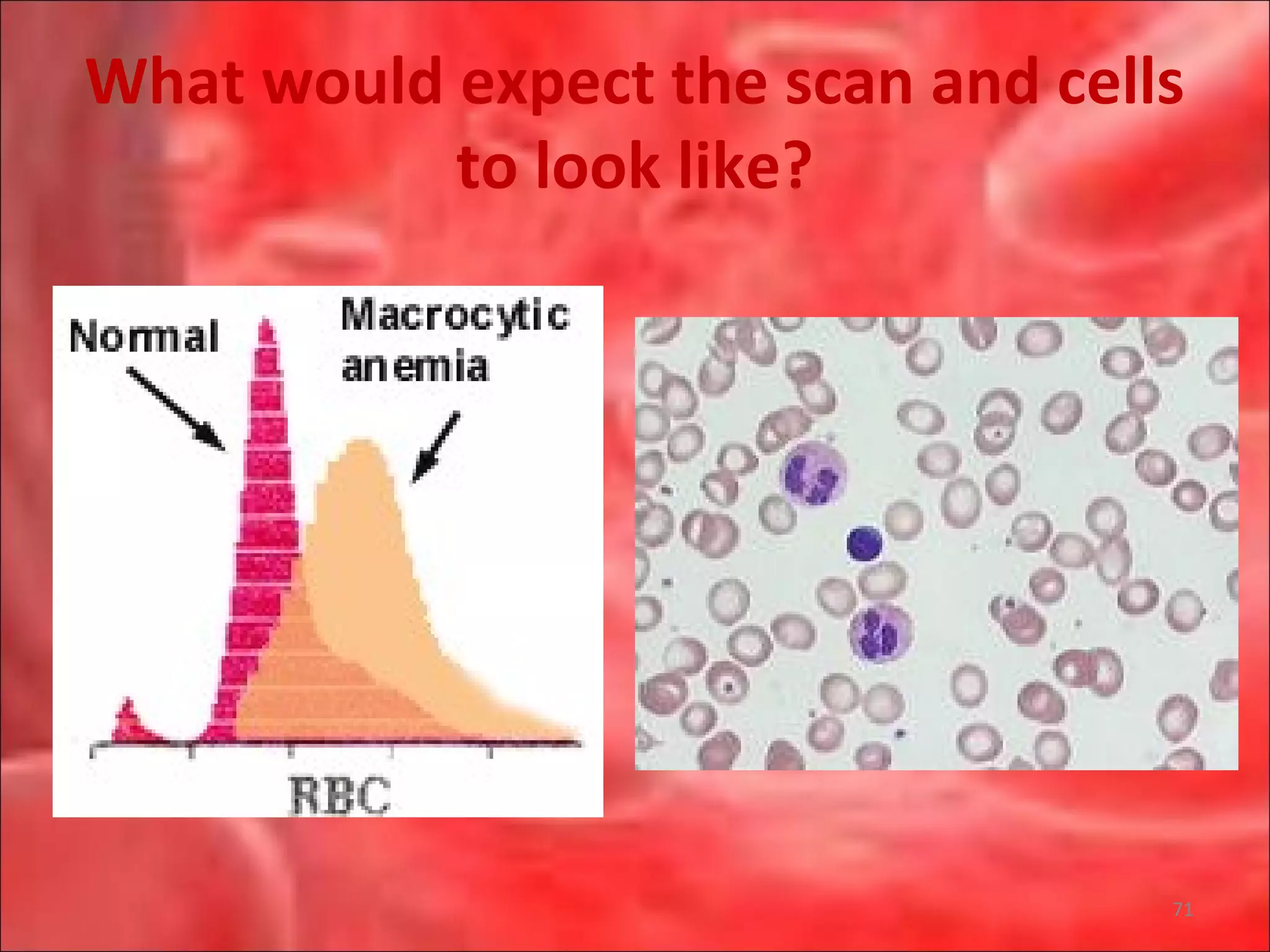
What would expect the scan and cells
to look like?
71
And your diagnosis based on
CLINICAL Evaluation and confirmed by Lab results
is? (Case #3)
• Macrocytic Anemia
– Most likely B-12 deficiency based on his diet.
• Confirmation can be made by a B-12 level
Other causes:
Folic Acid deficiency (usually dietary)
Pernicious Anemia: Immune disorder of Parietal cells
(Lack Intrinsic factor)
Gastric Cancer
History of Small bowel resection (ileum)
Blind loop syndrome (bacterial overgrowth)
Parasites (tapeworm)
72
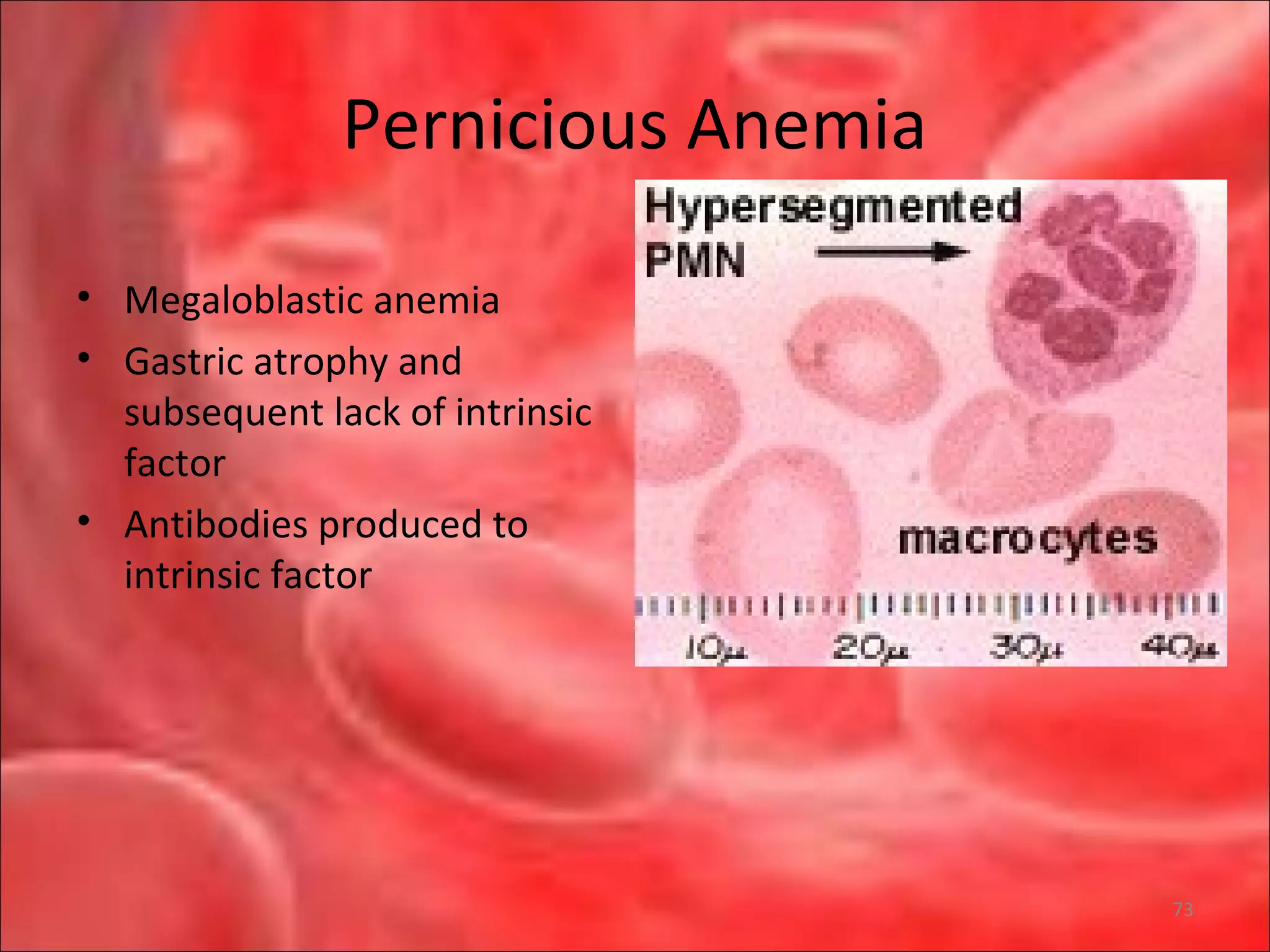
Pernicious Anemia
• Megaloblastic anemia
• Gastric atrophy and
subsequent lack of intrinsic
factor
• Antibodies produced to
intrinsic factor
73
Pernicious Anemia
• Seven P’s of Pernicious anemia
– Pancytopenia
– Peripheral neuropathy
– Papillary (tongue) atrophy
– Psychosis (megaloblastic madness)
– Posterior spinal column neuropathy
– Pyramidal tract signs
– pH elevation of gastric fluid
74
Pernicious Anemia
• B12 deficiency occurs due to lack of intrinsic
factor which is normally produced by parietal
cells of the stomach. Immune antibodies are
formed against intrinsic factor.
• Intrinsic factor is essential for presentation
and absorption of B12 across the intestinal
muscosa.
• Unable to differentiate in bone marrow
between causes of anemia due to deficiency
of B12, folic acid, or that of pernicious
anemia. 75
A Word about B12 deficiency
symptoms
• Weakness
• Fatigue
• Dyspnea
• Paresthesias
• Mental clouding
• Edema, pallor, jaundice, smooth tongue, decreased
vibratory and position sense, peripheral neuropathy
This can sometimes be
mistaken for a PA student on
exam day
76
LABORATORY TESTS FOR B-12 Deficiency
• Macrocytic anemia exhibiting hypersegmented neutrophils.
• Hemolysis occurs when these sluggish cells try to traverse the
sinuses of the spleen causing a chronic anemia.
• May present itself with signs of dementia or other neurologic
defects without macrocytic anemia. This is especially true if
Fe Deficiency is also present.
• Most clinicians do not rely on the CBC to confirm B-12
deficiency. Ordering a direct B-12 level is more accurate but
not sensitive in early disease, where homocystiene and
methylmalonic acid levels are beneficial.
• B12 def: high homocystiene and methylmalonic acid
• Folic acid def: high homocystiene and low methylmalonic acid
• True differentiation for pernicious anemia is anti-parietal cell
test or more specific anti-intrinsic factor test.
77
B-12 Deficiency
Associated with B-12 deficiency acquired in 3 ways:
– Autoimmune: Lack of Intrinsic factor in the parietal cells of the
stomach. Autoantibodies against parietal cells destroys production of
intrinsic factor which is required for B-12 absorptionin the terminal
ileum. This is Pernicious Anemia.
– Removal of the Terminal small intestine, where most B-12 absorption
occurs.
– Dietary deficiency of B-12. Red meat , dairy, or supplements are the
only source of B-12. Elderly and alchoholics are at risk. Strict vegans
are also at risk.
– B-12 deficiency produces hyperhomocysteinemia, which is an
independent risk factor for artherosclerotic disease and increased
methylmalonic acid. These are good tests to detect early B-12
deficiency in the presence of normal B-12 levels and lack of anemia.
78
FOLIC ACID DEFICIENCY
• Also causes macrocytic anemia.
• Has high levels of homocysteine also and is
commonly given to alzheimer’s patients and their
family members as prevention. Prevention of
arthrosclerosis is also an indication.
• Methymalonic acid levels are not elevated.
• Check both B-12 and folic acid levels before treating
with folic acid, as giving folic acid will mask a B-12
deficiency.
79
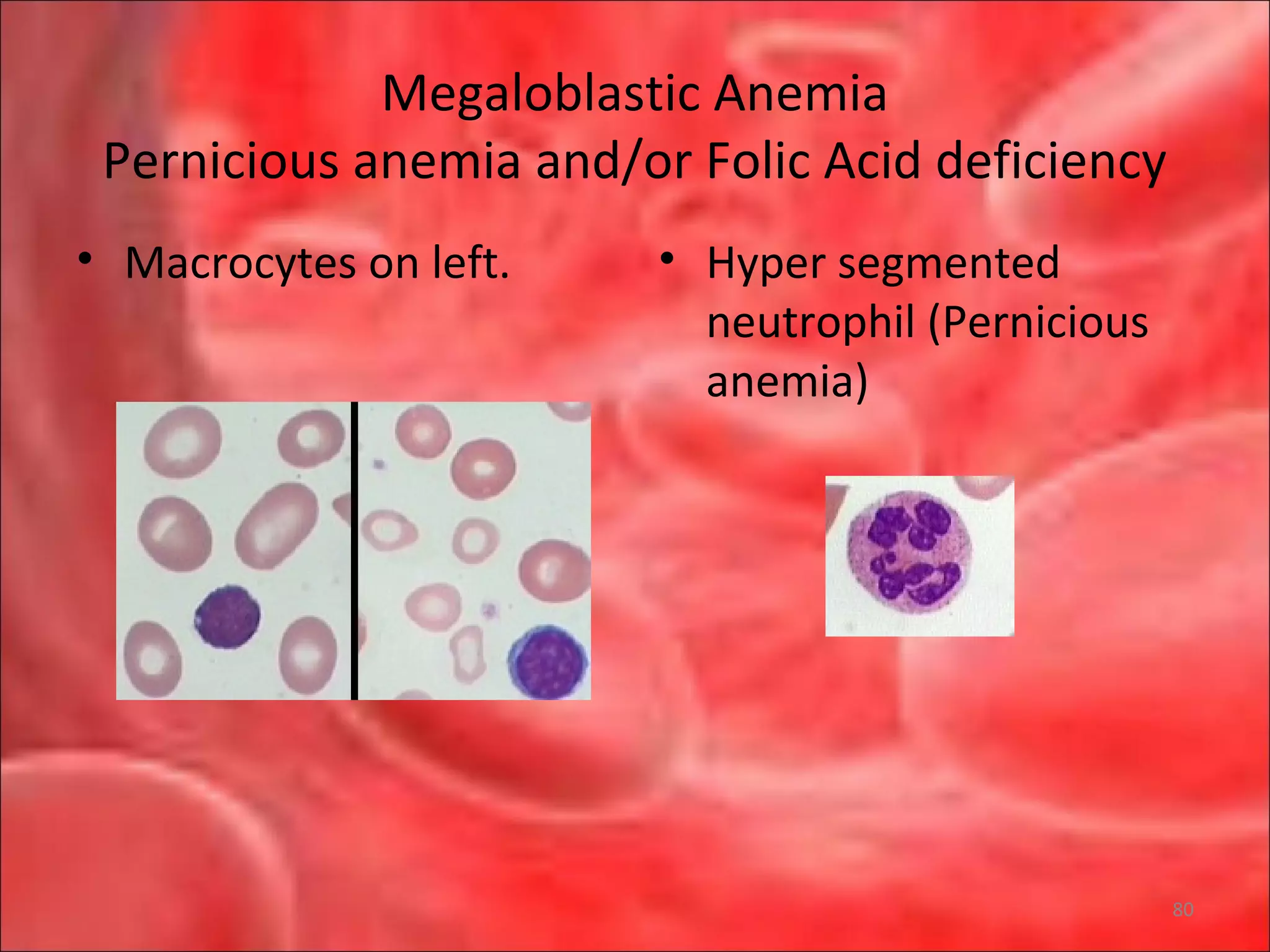
Megaloblastic Anemia
Pernicious anemia and/or Folic Acid deficiency
• Macrocytes on left. • Hyper segmented
neutrophil (Pernicious
anemia)
80
81
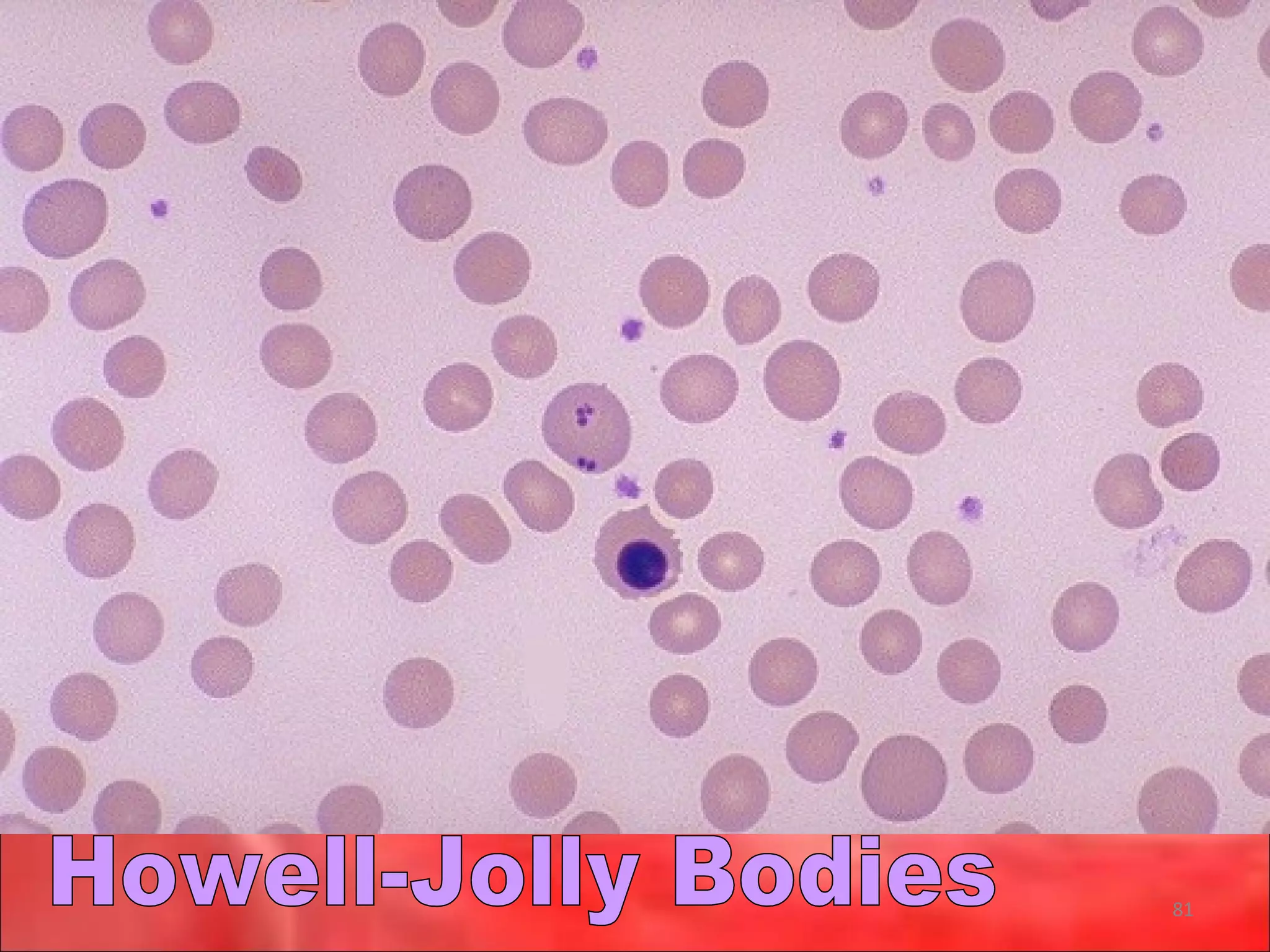
Howell-Jolly Bodies
• RBC Inclusion bodies
• Remanents of Immature RBC nucleus; indicates
high RBC turnover.
– RBC Inclusion bodies
– Hemolytic anemia
– Megaloblastic anemia
– Splenectomy (could be incidental here)
82
Macrocytic Anemia
Differential Diagnosis
BIG FAT RED CELLS
B: B12 deficiency
I: inherited disorders
G: GI disease or surgery (nontropical
sprue,enteritis,ileal resection, fish tapeworm)
F: folic acid deficiency
A: alcoholism
T: thiamine-responsive anemia
83
BIG FAT RED CELLS, cont
R: reticulocytes in lg. #s may inflate the MCV
E: endocrine disturbances (hypothyroidism)
D: dietary deficiencies (folate, B12, protein, lipids)
C: chemotherapeutic drugs
E: erythroleukemia
L: liver disease (chronic hepatitis, cirrhosis…)
L: Lesch-Nyhan syndrome
S: splenectomy
84
Normocytic Anemias
• SI: systemic inflammation
• Z: zero production ;aplastic anemia usually
presents with pancytopenia (Deficiency of all
cell elements of the blood)
• E: endocrine disorders (hypothyroidism,
hyperthyroidism, adrenal insufficiency,
hypogonadism)
85
Hemolytic Anemias
• Hemolytic anemias are a result of premature
destruction of RBCs.
• Anemia is the end result when the bone marrow
cannot keep up with production to match the
destruction
• Causes are genetic or acquired
• On a peripheral smear, the cells appear injured and
are called shistocytes or helmet cells. Genetic forms
may appear as sickle cells, or crystalized bars within a
red cell (Hgb C).
• Reticulocyte count is elevated.
86
Hemolysis
87
Classification of Hemolytic
Anemias
• Intrinsic defects:
– Hereditary defects
• Abnormalities of the red cell membrane
– Hereditary spherocytosis
– Hereditary elliptocytosis
– Hereditary pyropoikilocytosis
– Hereditary stomatocytosis
– Hereditary xerocytosis
• Enzyme deficiency disorders
– G-6 –phosphate dehydrogenase (G-6-PD)
– Pyruvate kinase deficiency (PK)
88
Anemia of increase destruction
Extrinsic Hemolytic
anemia
• Non-immune
– Mechanical destruction
(heart valves)
– Microangiopathic (DIC)
– Burns, toxic chemical
exposure
• Immune
– Primary (ABO
incompatibility)
– Secondary to leukemias or
lymphomas
– Drug induced or infectious 89
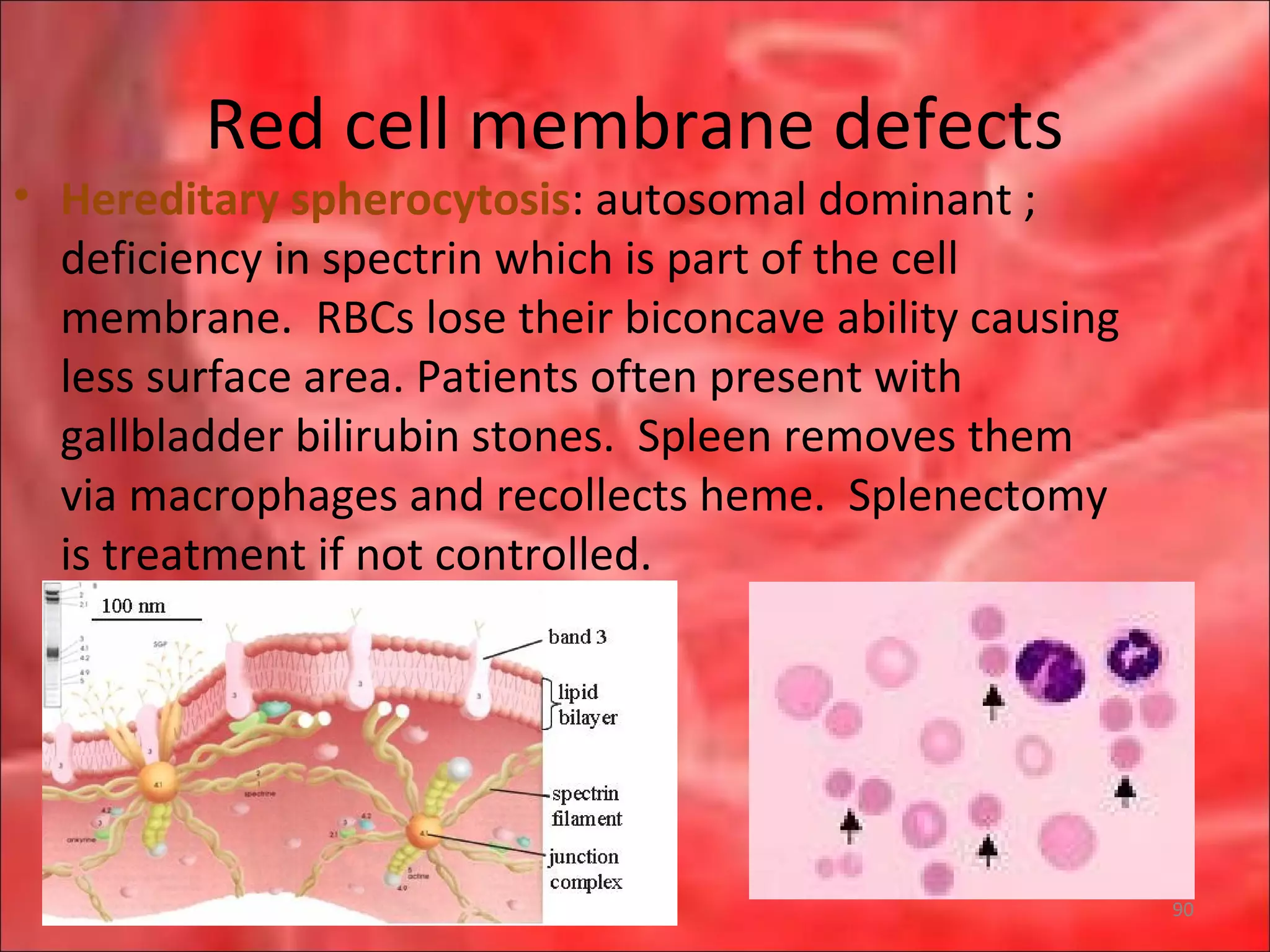
Red cell membrane defects
• Hereditary spherocytosis: autosomal dominant ;
deficiency in spectrin which is part of the cell
membrane. RBCs lose their biconcave ability causing
less surface area. Patients often present with
gallbladder bilirubin stones. Spleen removes them
via macrophages and recollects heme. Splenectomy
is treatment if not controlled.
90
Hereditary Spherocytosis
• CBC shows normal to abnormal Hgb. MCV
may be sl lowered or normal and MCHC is
elevated. Why? Retic is elevated. Bili elevated
• Osmotic fragility test: cells subjected to
hypotonic saline. Hereditary Spherocytes will
not hold up to the shearing forces of the
hypotonicity.
• Hypersplenomegaly common and a useful
indicator to predict a crisis.
91
Abnormal Heme Synthesis and
Hemolytic sydrome
• Thalassemia syndromes
– Thalassa (sea) emia (blood) = Mediterranean
anemia
– Abnormal globin synthesis leads to decreased
production of heme molecules.
– Alpha thalassemia is a decrease production of
alpha chains leaving excess beta chains
– Beta thalassemia is a decrease production of beta
chains leaving excess alpha chains.
92
Thalassemia
microcytic/hypochromic with
basophilic stippling.
Normal heme globin structure: In
thalassemias, the production of alpha
and/or beta chains are out of wack. 93
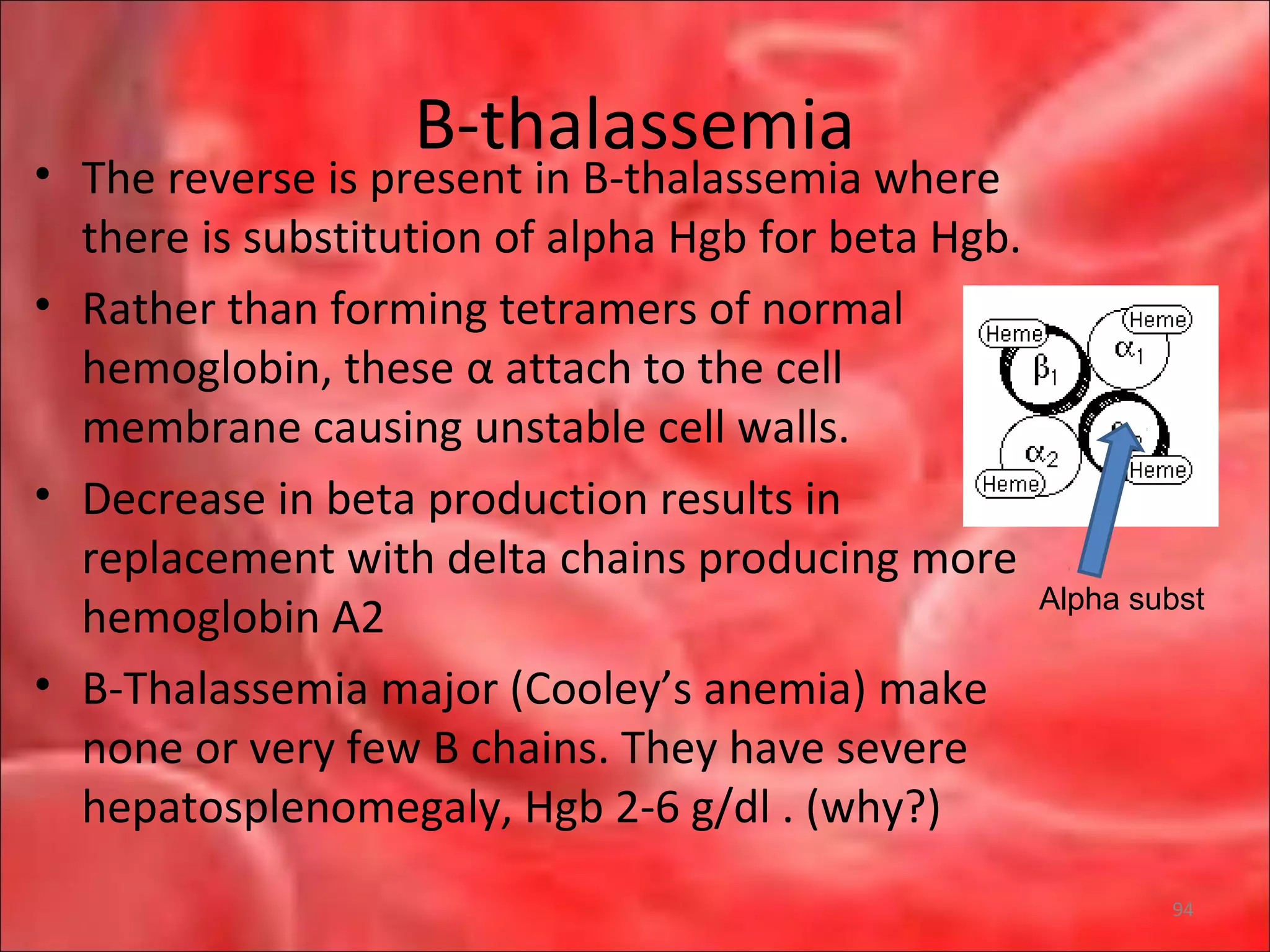
B-thalassemia
• The reverse is present in B-thalassemia where
there is substitution of alpha Hgb for beta Hgb.
• Rather than forming tetramers of normal
hemoglobin, these α attach to the cell
membrane causing unstable cell walls.
• Decrease in beta production results in
replacement with delta chains producing more
hemoglobin A2
• B-Thalassemia major (Cooley’s anemia) make
none or very few B chains. They have severe
hepatosplenomegaly, Hgb 2-6 g/dl . (why?)
Alpha subst
94
Thalassemias
• Divided into α-thalassemia and B-thalassemia.
• Both the α and B chains are structurally normal. It is
the combination frequency that is off. If excess
chains of one type are over produced, the
combination of the chains to form hemoglobin is
defective.
• α-thalassemias are common in Southeast Asia.
• B-thalassemias are most common in Mediterranean
region.
• In both, increased destruction causes inadequate
production of hgb to keep up with the loss. This
causes microcytic/hypochromic RBCs. What is the
RDW? 95
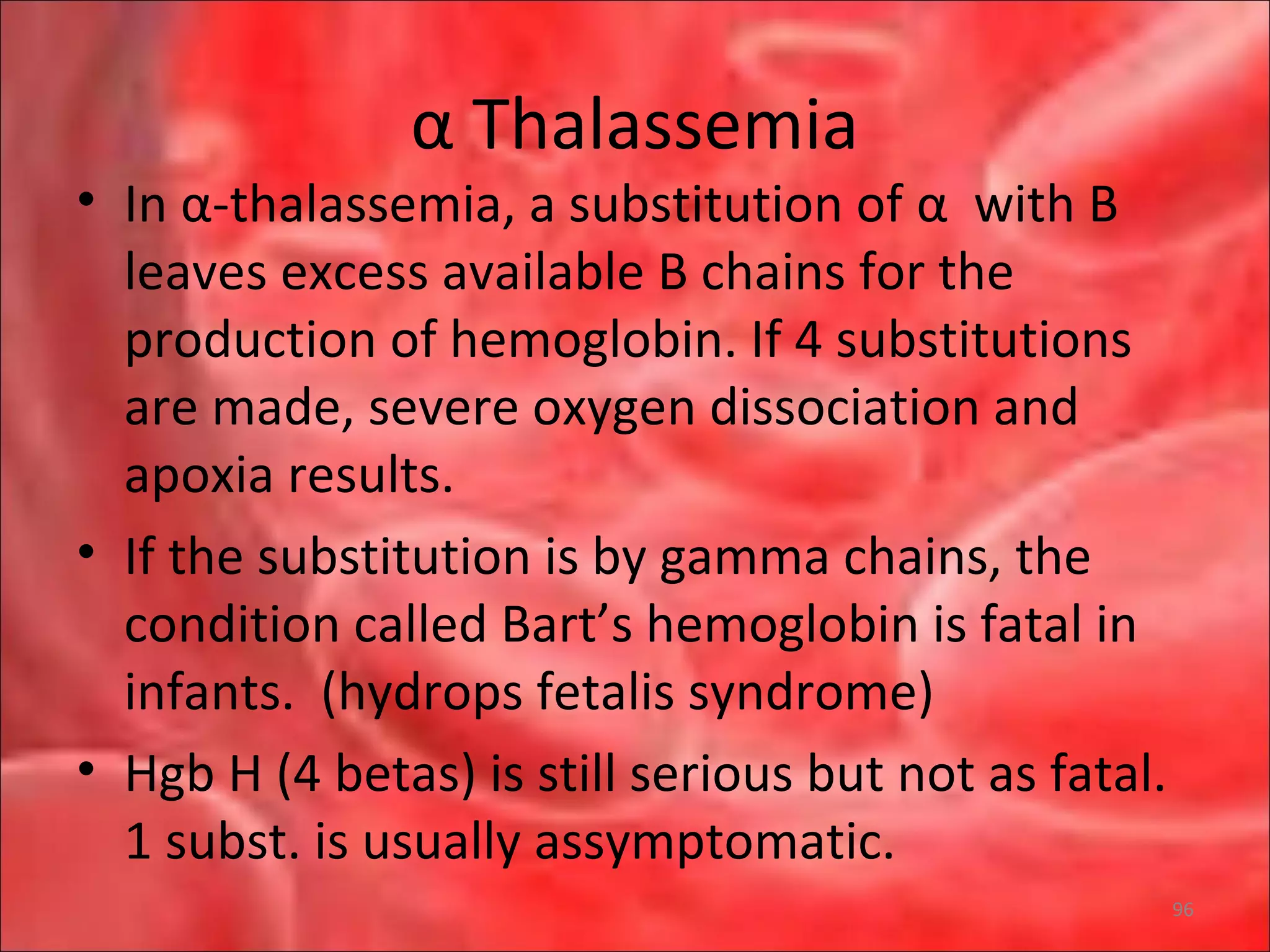
α Thalassemia
• In α-thalassemia, a substitution of α with B
leaves excess available B chains for the
production of hemoglobin. If 4 substitutions
are made, severe oxygen dissociation and
apoxia results.
• If the substitution is by gamma chains, the
condition called Bart’s hemoglobin is fatal in
infants. (hydrops fetalis syndrome)
• Hgb H (4 betas) is still serious but not as fatal.
1 subst. is usually assymptomatic.
96
Thalassemia
Homozygous: Heterozygous
Hgb 2-6 g/dl 9-11 g/dl
RBC morph: microcytic hypochromic
poik, baso stip,
target cells, nrbcs
Heinz bodies
Retic: > 15% normal
Bone marrow: erythroid hyperplasia
Marked mild-mod
Storage iron: increased normal/sl incr 97
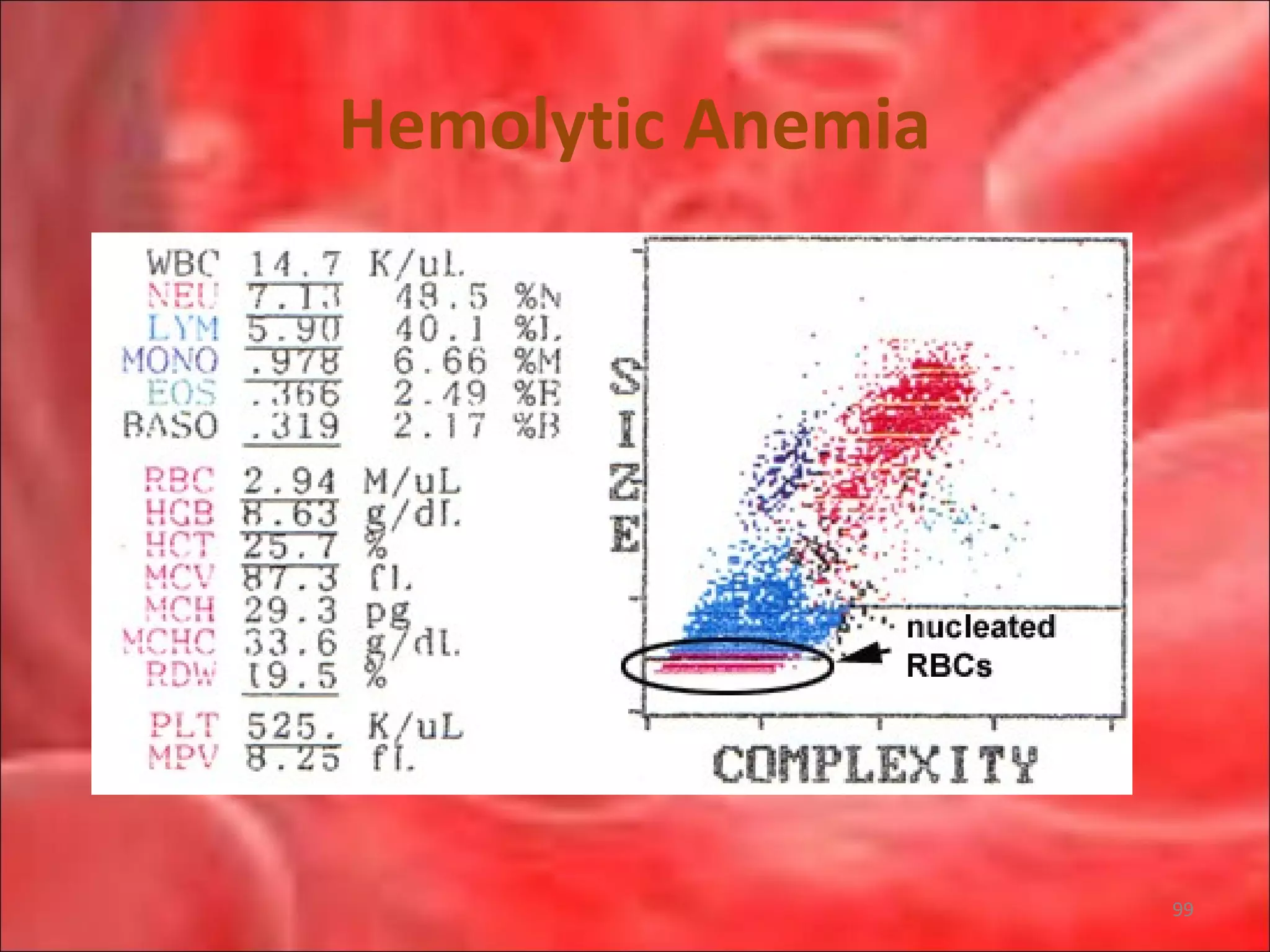
Case #
• A 3 year old male patient presents to the ER
with symptoms of SOB, intermittent fever,
pain in his extremetries and abdomen.
• CBC reveals the following:
98
Hemolytic Anemia
99
100
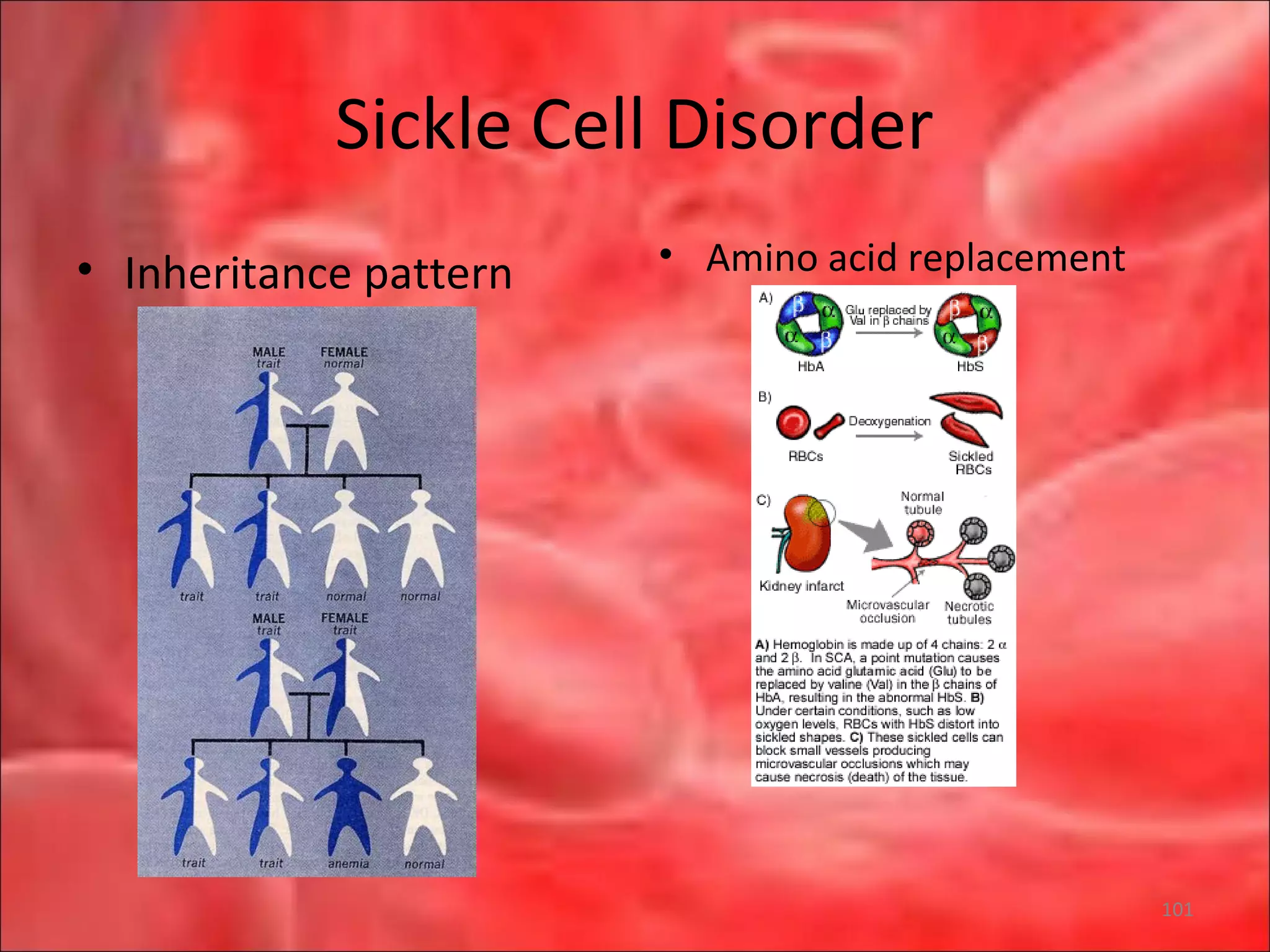
Sickle Cell Disorder
• Inheritance pattern • Amino acid replacement
101
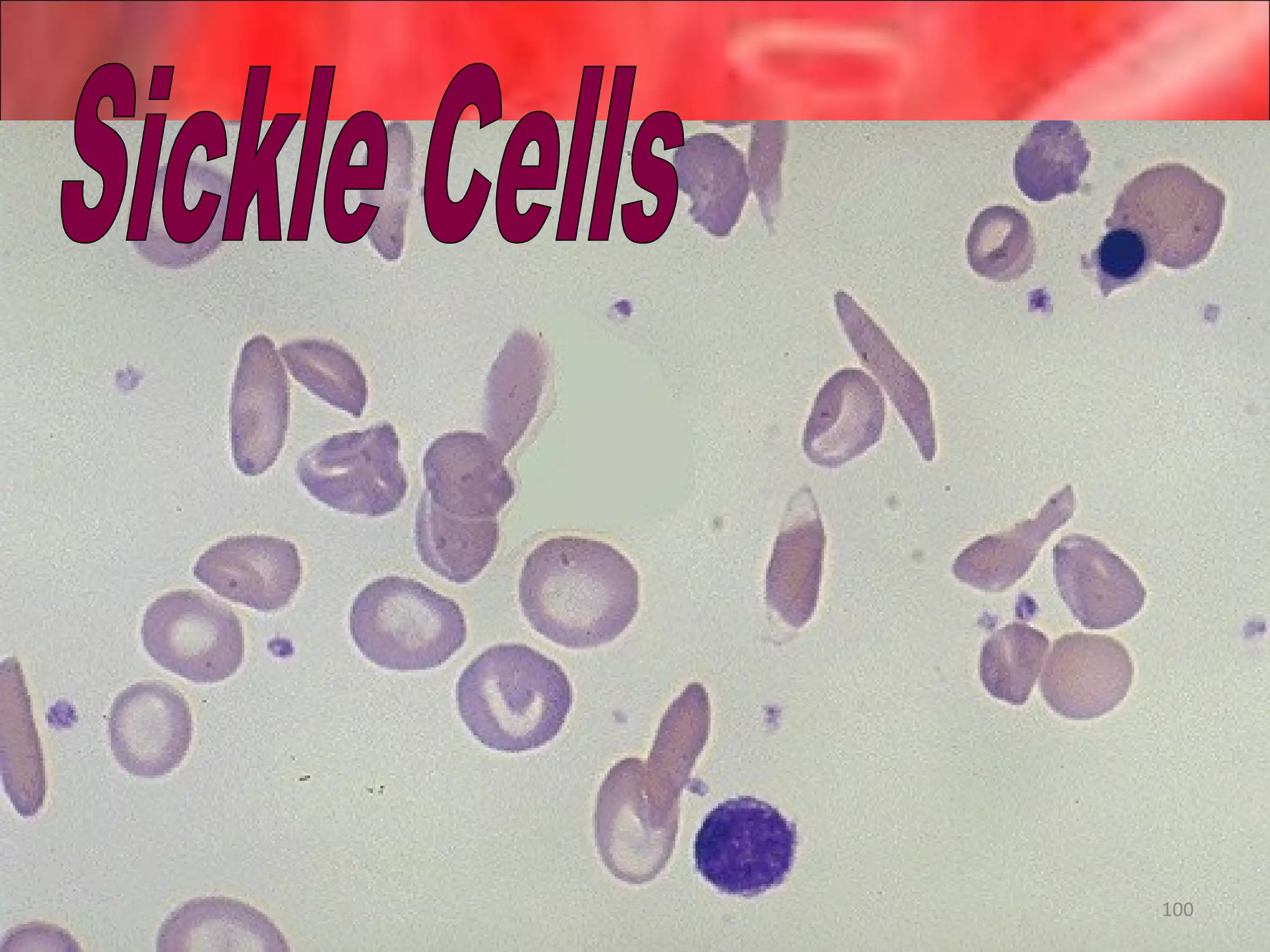
Sickle Cell Anemia
• Occurs 1 in 500 African Americans and 1 in 1000-
1400 Hispanic Americans (mainly South American)
and Mediteranean descent.
• Autosomal recessive pattern where 2 copies of the
B-hemoglobin is altered by a simple replacement of
substitution of Glu with Valine (HbSS). This is caused
by a mutation in the HBB gene which is located on
Chromosome 11.
• HgSC is also common and cause the same severity of
disease.
102
Sickle Cell
• Sickle cells die prematurely as they are inflexible and get
stuck in small vessels. Fe is lost in the vascular system and
out into the urine causing an anemia. In addition, painful
episodes can occur depriving oxygen to the affected tissues.
• Sx usually start at early age. Anemia is the cause of most sx.
They are often jaundiced from the breakdown of the Rbcs.
• Organ damage to lungs, kidneys, spleen, and brain can be
serious and life threatening. Pulmonary HTN occurs in 1/3 of
adults and can lead to heart failure.
• Many have no sx, however, the actual sickling of the cells
depends on degree of oxygenation of the Hgb in the cell, and
concentration of the HgbS by dehydration.
103
Sickle cell
• Avoid high altitudes, keep hydrated,
• PCN prophalaxis at 2 months until age 6 to
protect from pneumococus.
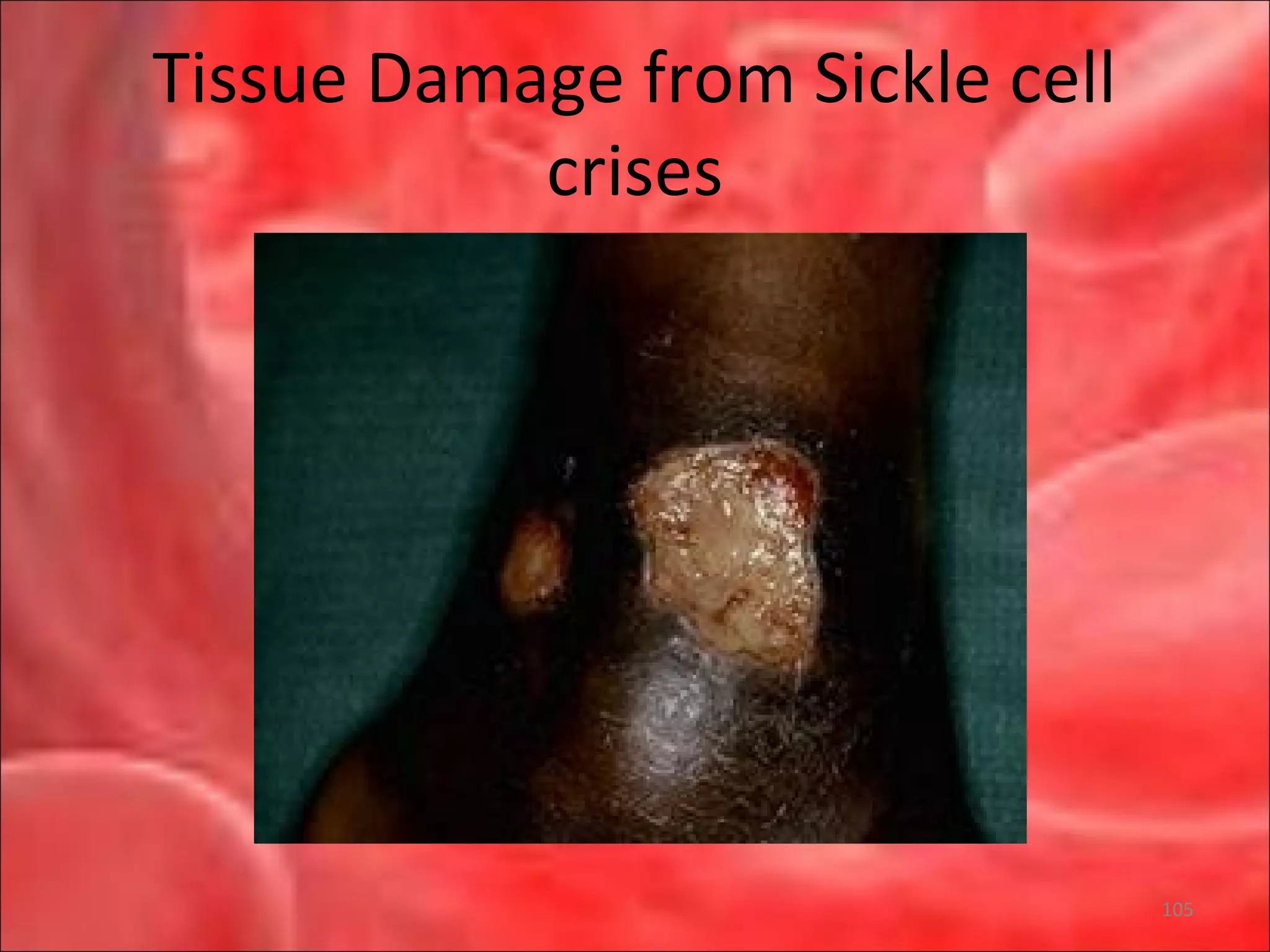
• Leg ulcers should be treated aggressively.
• Strokes in children due to cerebral vascular
injury by sickled cells.
• If three sickle crises/yr, median death is at age
35 because of organ damage.
• Most states now screen newborns with risks.104
Tissue Damage from Sickle cell
crises
105
Solubility Test for Sickle Cells
A drop of blood is put in a chemical medium; normal cells will hemolyze.
Sickle cells with crystalized hemoglobin stay insoluble and therefore is
cloudy. (Not accurate in newborns; subjective read; false positives are
common in polycythemic states.) 106
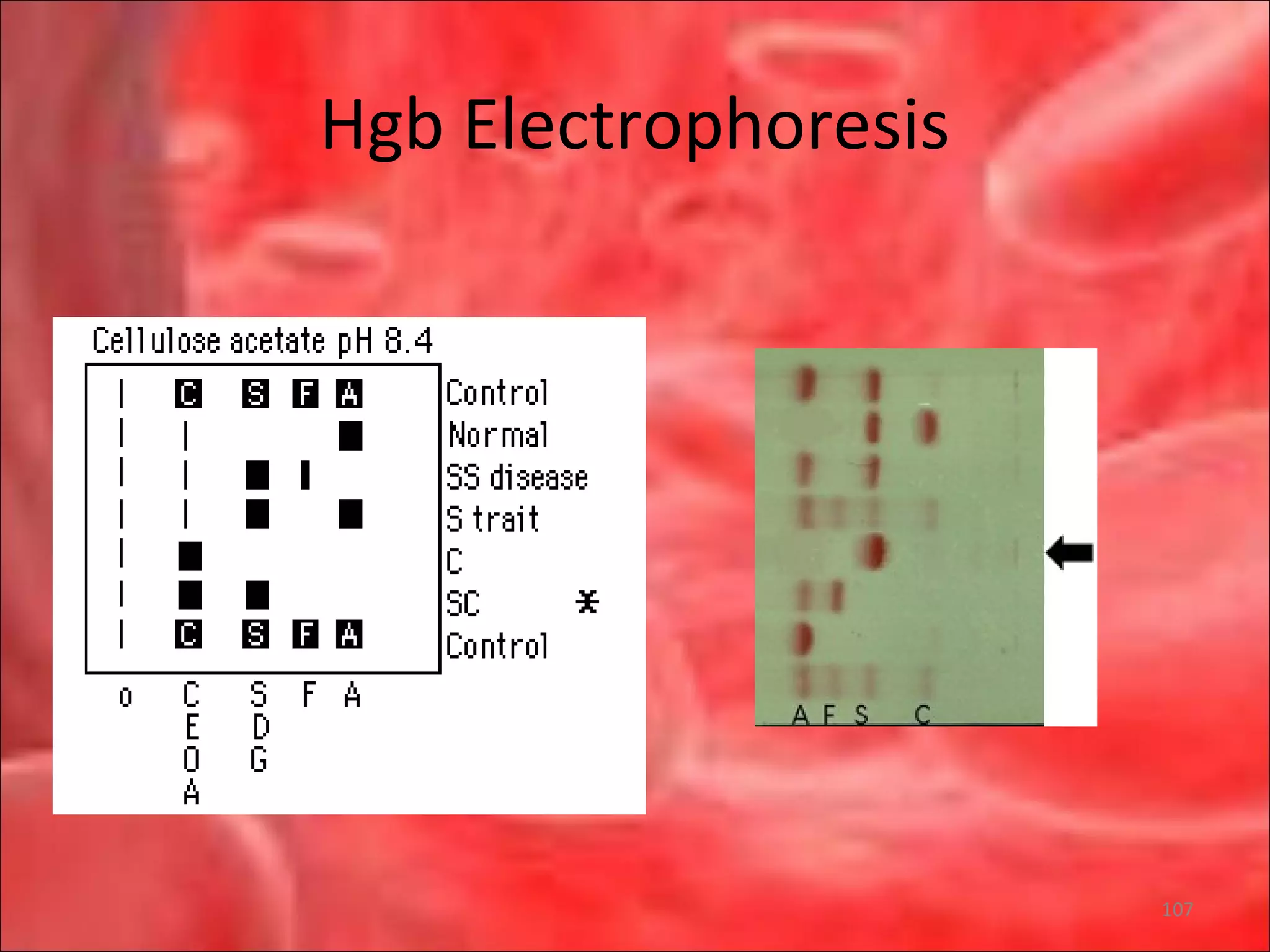
Hgb Electrophoresis
107
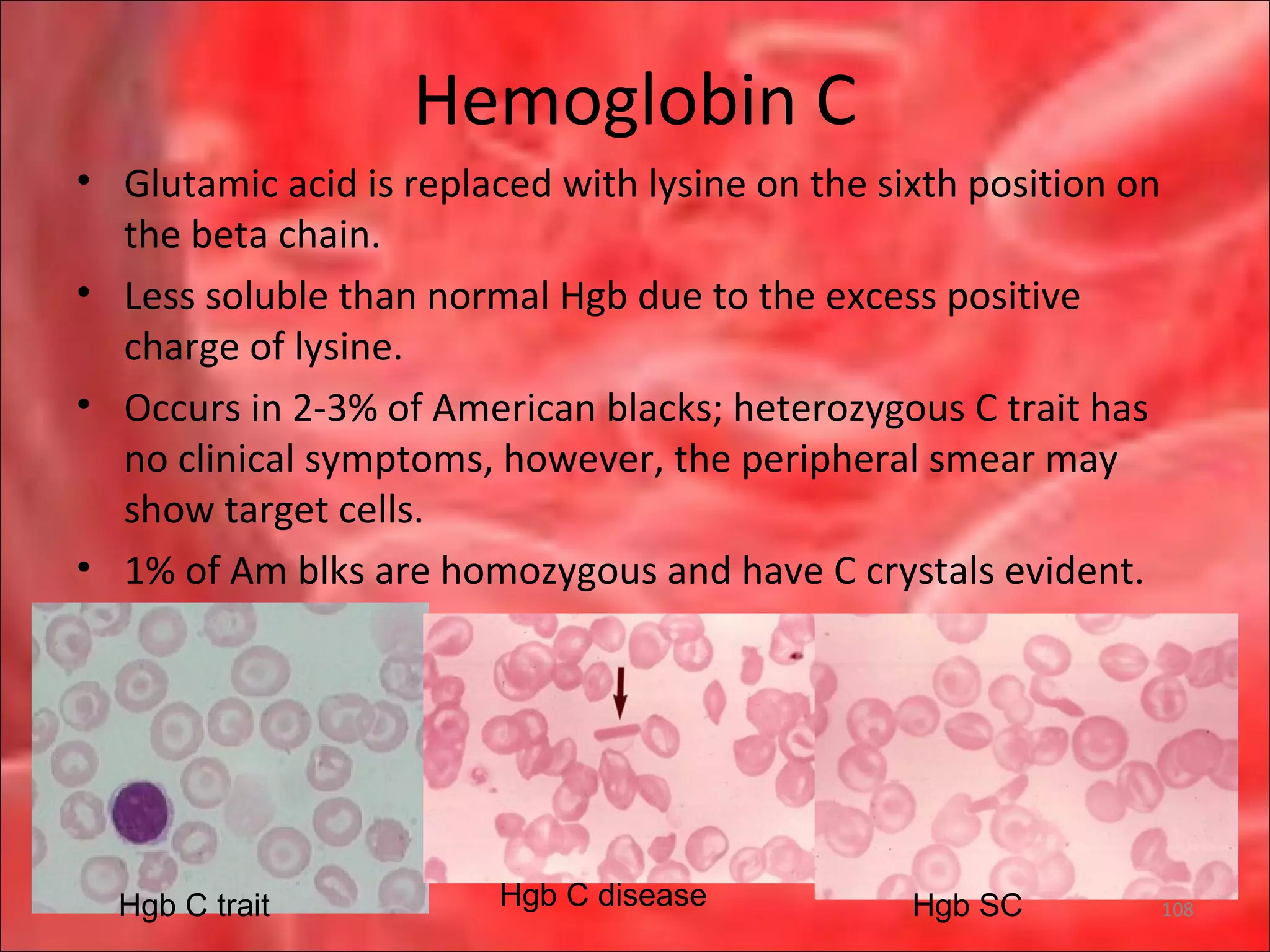
Hemoglobin C
• Glutamic acid is replaced with lysine on the sixth position on
the beta chain.
• Less soluble than normal Hgb due to the excess positive
charge of lysine.
• Occurs in 2-3% of American blacks; heterozygous C trait has
no clinical symptoms, however, the peripheral smear may
show target cells.
• 1% of Am blks are homozygous and have C crystals evident.
Hgb C trait Hgb C disease Hgb SC 108
Glucose-6-Phosphate Dehydrogenase Deficiency
(G-6-PD)
• Inherited deficiency of erythrocyte enzyme
G-6-PD. (X chromosome) Males inherit it; females
unaffected.
G-6-PD is required for conversion of g-6-
phosphate to ultimately NADPH. This is required
to reduce oxidative stress on the rbc.
Deficiency of G-6-PD causes the inability to
neutralize oxidative stress leading to fragile rbcs
and subsequent hemolysis.
109
Variants A and B
• There are 2 variants: A and B
– 99% of white population has B variant;
20% black females have heterozygous A variant; one
amino acid subst.
There is a relationship to those with A and resistence to
malaria in the black population.
Heinz bodies are denatured hemoglobin that adhere and
weaken the RBC membrane.
110
Clinical symptoms of G-6-PD
Most common clinical patterns are:
• neonatal jaundice
• congenital hemolytic anemia
• drug-induced hemolysis
• favism: severe hemolysis after exposure to the
fava bean (Mediterranean type)
Bite cells from Heinz body removal by
macrophages in spleen 111
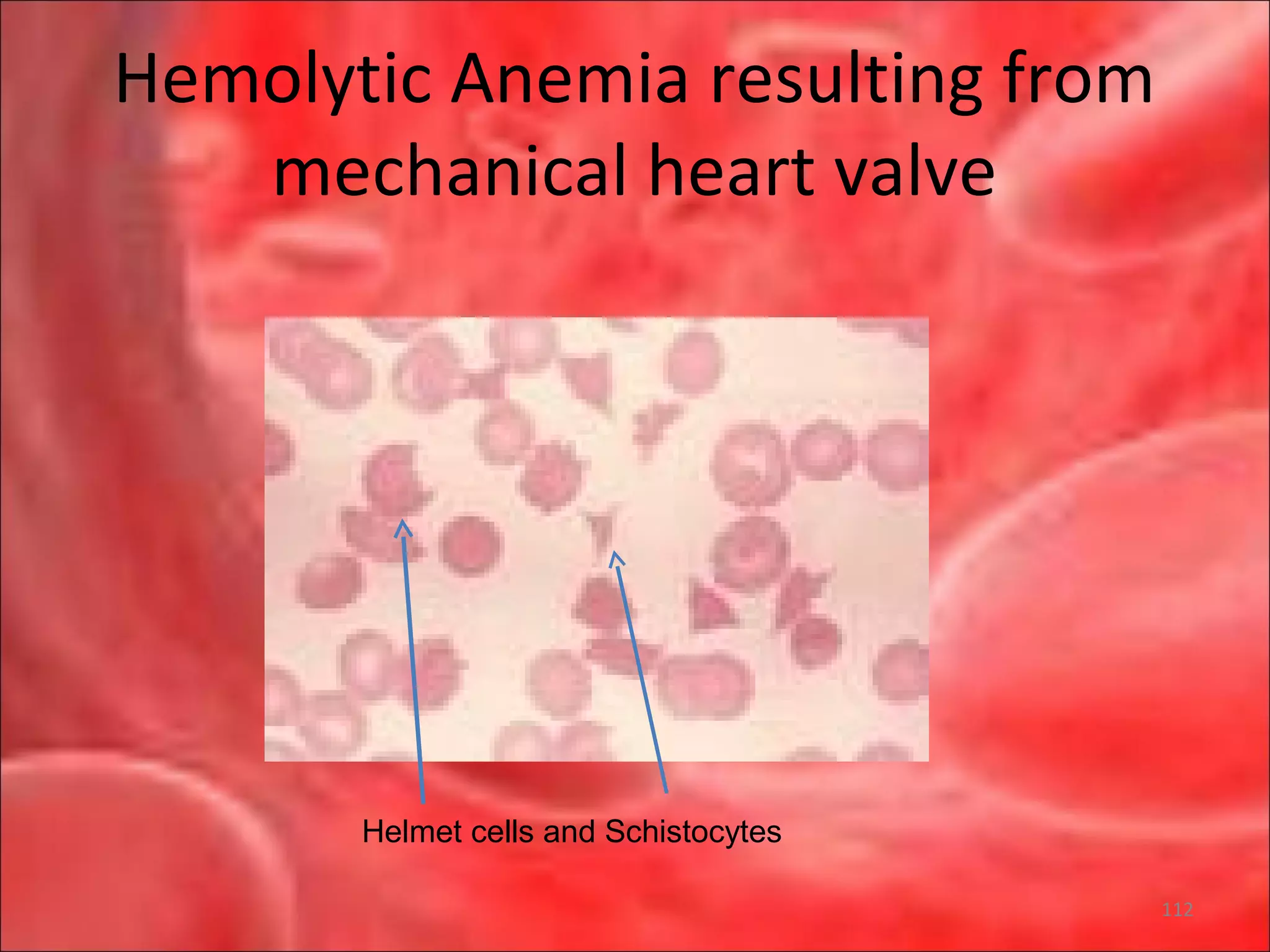
Hemolytic Anemia resulting from
mechanical heart valve
Helmet cells and Schistocytes
112
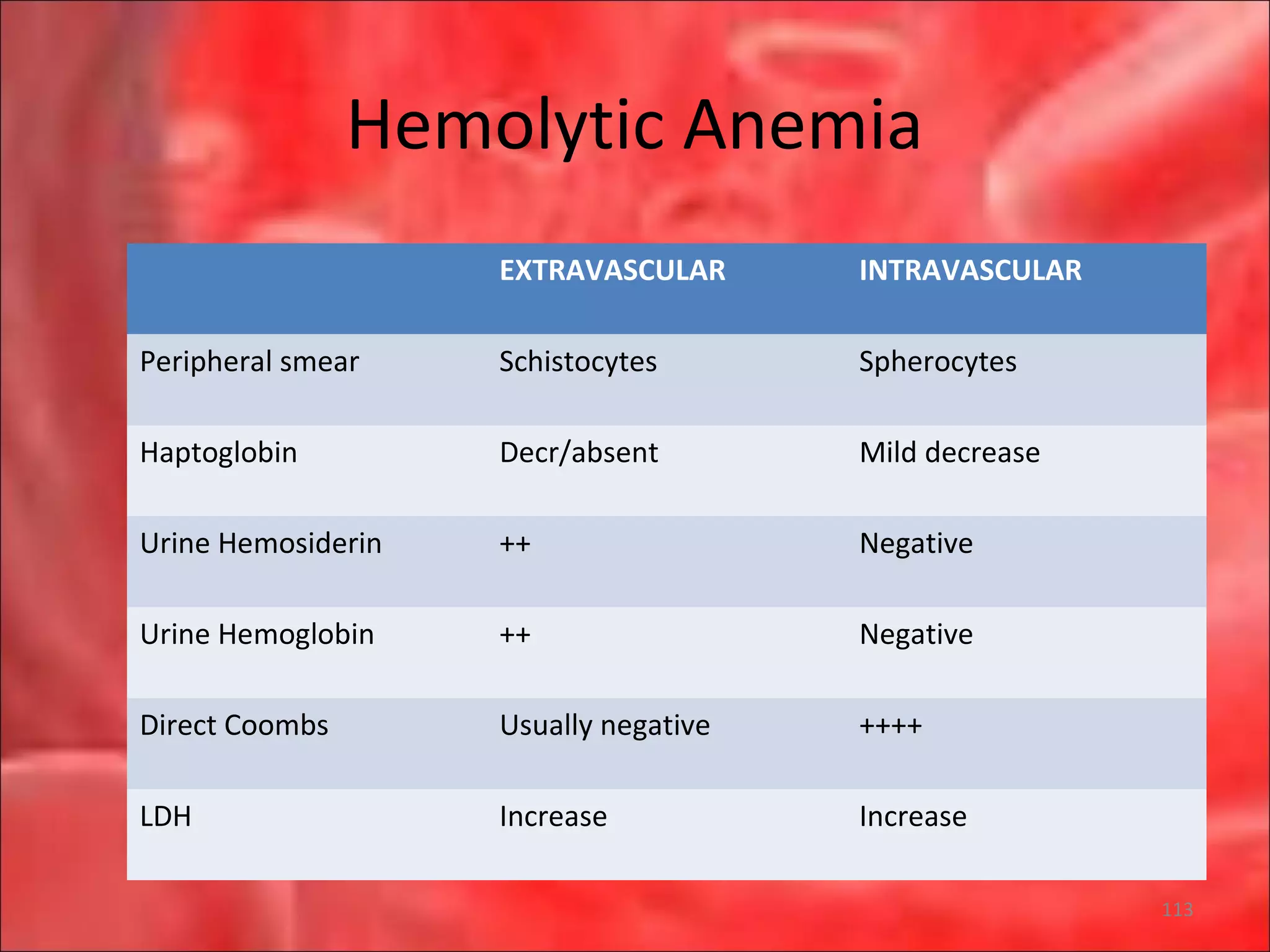
Hemolytic Anemia
EXTRAVASCULAR INTRAVASCULAR
Peripheral smear Schistocytes Spherocytes
Haptoglobin Decr/absent Mild decrease
Urine Hemosiderin ++ Negative
Urine Hemoglobin ++ Negative
Direct Coombs Usually negative ++++
LDH Increase Increase
113
CAUSES OF Hemolytic Anemias
HEMATOLOGIST
H: hemaglobinopathies (sickle cell most common)
E: enzyme deficiency
M: medications (sulfonamides, quinine)
A: antibodies (autoimmune)
T: trauma to RBCs
O: ovalocytosis
L: liver disease
114
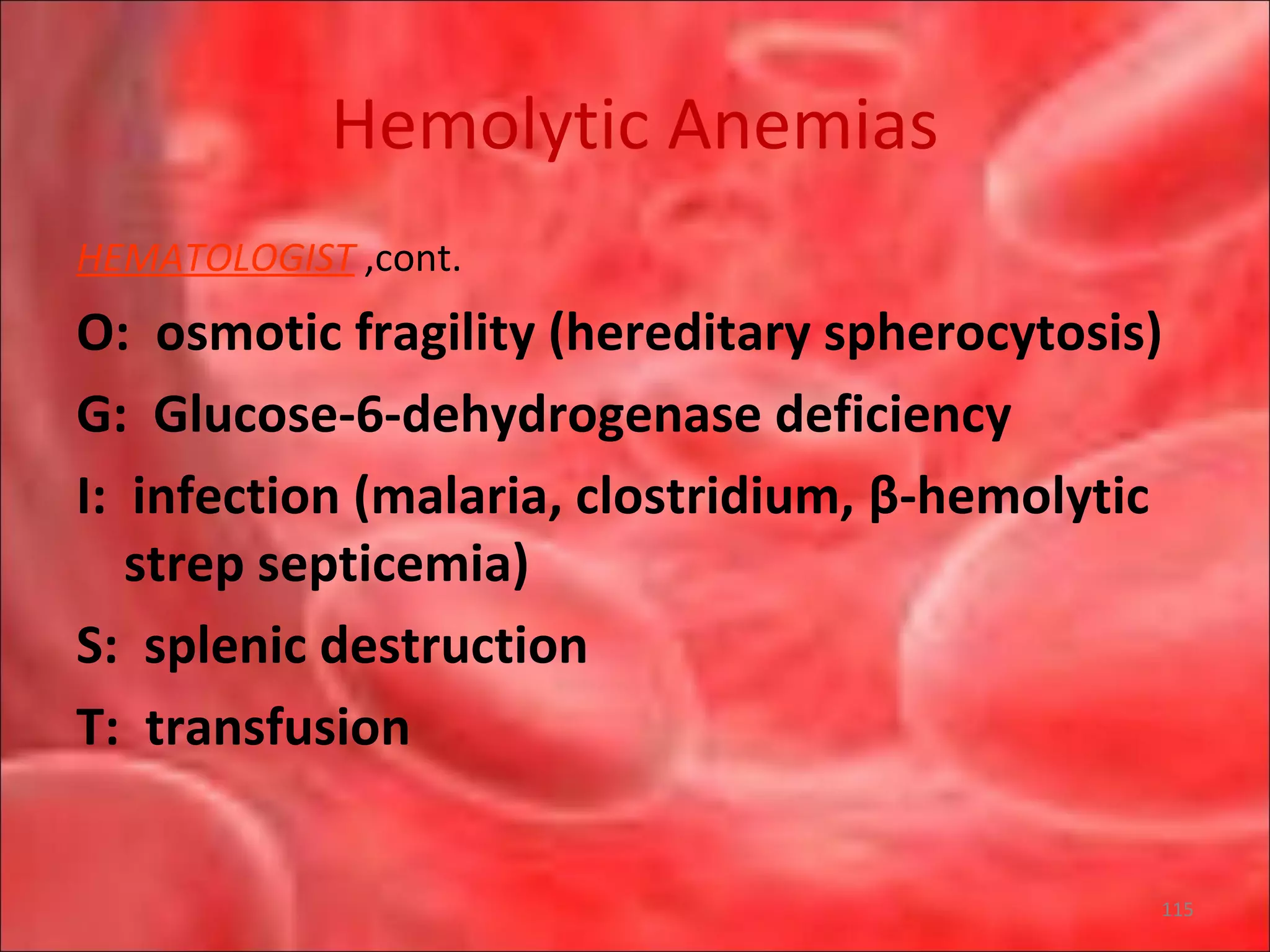
Hemolytic Anemias
HEMATOLOGIST ,cont.
O: osmotic fragility (hereditary spherocytosis)
G: Glucose-6-dehydrogenase deficiency
I: infection (malaria, clostridium, β-hemolytic
strep septicemia)
S: splenic destruction
T: transfusion
115
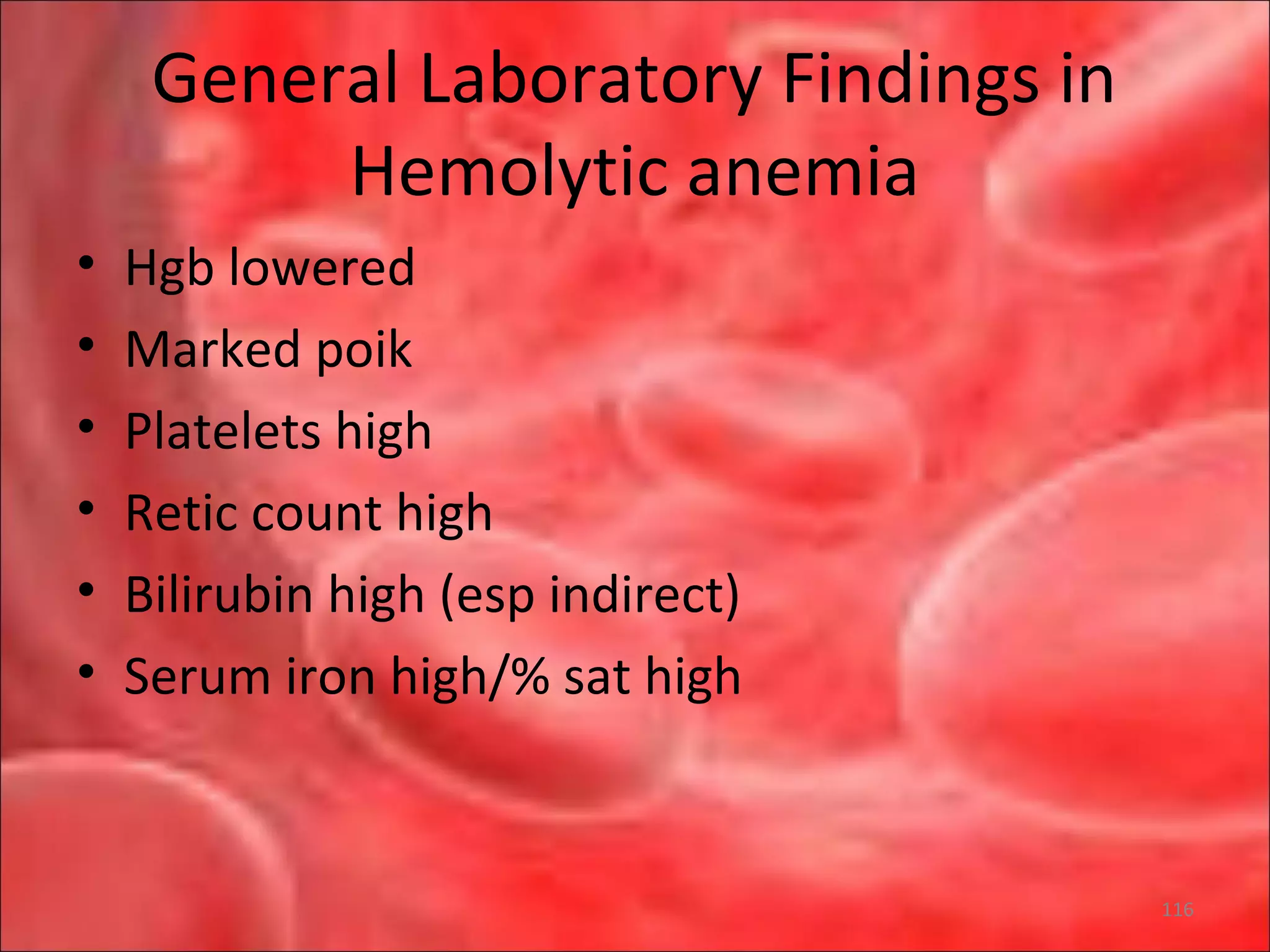
General Laboratory Findings in
Hemolytic anemia
• Hgb lowered
• Marked poik
• Platelets high
• Retic count high
• Bilirubin high (esp indirect)
• Serum iron high/% sat high
116
APLASTIC ANEMIA
• Caused by drugs (chloramphenicol), chemicals,
infection (esp viral), irradiation, idiopathic,
hypoproliferative (immune).
• Pancytopenia on CBC with reticulopenia; ;WBC 500; plt
< 20,000; RBC ct depressed.
• Bone marrow biopsy MUST be done to diagnose this
condition. Shows hypocellularity of all cellular lines.
• Persistant anemia: 50% mortality rate within 6
months.
• Treatment: bone marrow transplant
117
Question
What tests would you consider if you saw this
blood smear? What diagnosis are you
considering?
118
Answer?
A vital stain for Heinz bodies; Bite cells suggest G-6-PD deficiency.
119
References
• Laboratory Medicine, Laposta, Michael.
• Platt et al, Diagnosing Anemias, Clinician
Reviews Journal Vol. 16, number 12, December
2006.
• http://medsci.indiana.edu/c602web/602/C602
web/cbc/docs/introa.html
• www.labtestsonline.org/understanding/analyte
s/cbc/test/html
• Images from www.google.com/images
• Special Thanks to Kyrus Patch for Anemia links.
120

Anemias interpretation of cbc 2010rev

  • 1.
    Anemias and RBCDyscrasias Kay Case PA-C NSU Nova SWF PA Program Fall 2010 1
  • 2.
    Objectives 1. Understand theregulation of the bone marrow in a steady state. What are the triggers, the stimulators of each cell line, and which stem cell progenitors produce each cell line. 2. Understand hypocellular and aplastic states of the bone marrow and their causes. 3. Understand the trigger for formation of erythropoetin by the kidney. 2
  • 3.
    Objectives 4. Identify causesof increased production of red blood cells by the bone marrow as indicated by an increased reticulocyte count – Acute blood loss – Chronic blood loss – Hemolytic anemia – Secondary polycythemia – Hemochromatosis 3
  • 4.
    Objectives 5. Understand howthe CBC is essential for the detection of RBC dyscrasias 6. Be able to utilize the CBC to determine the cause of the RBC dyscrasias 7. Understand the RBC Indices and their use. 8. Know what additional tests are needed based on patient symptoms and CBC results to help in the determination and confirmation of RBC dyscrasias. 4
  • 5.
    Objectives . 5 9. Describe etiologiesand mechanisms of the following anemias associated with decreased production of red blood cells (hypoproliferative anemias): Iron deficiency anemia; anemia of chronic disease; thalassemias; anemia of renal failure; aplastic anemia; anemia due to replacement of bone marrow; megaloblastic anemias ( Vitamin B12 and Folate deficiency), non-megaloblastic (Liver disorders etc), sideroblastic anemia. 10. Describe the laboratory findings associated with the hypoproliferative anemias described above.
  • 6.
    Objectives 6 11. Know thepathophysiology of hemolytic anemias. 12. List laboratory findings associated with hemolytic anemias 13. Diagnose hemolytic anemias utilizing clinical history and CBC data interpretation: –sickle cell anemia; disseminated intravascular coagulation ( DIC); prosthetic heart valves; immune mediated hemolytic anemia (associated with drugs and autoimmune disease ); thalassemias; G-6-PD. 14. What are the mechanisms and when do hemolytic crises occur?
  • 7.
    Objectives 7 15. Describe howiron studies ( serum iron; serum ferritin; total iron binding capacity; transferrin saturation) can be used to help diagnose and differentiate the microcytic/normocytic anemias ( iron deficiency anemia; anemia of chronic disease; thalassemia minor) 16. Describe studies for evaluation and confirmation of megaloblastic anemias (ie. B12 and folate deficiency)
  • 8.
  • 9.
  • 10.
    RBC PRODUCTION • Redblood cells (RBC): – Made in the bone marrow (embryo in liver) • 2 million /sec made; formation from a stem cell to a rbc is 5-6 days. • RBC purpose is to transport oxygen to the body’s tissues in exchange for CO2, which is then carried back and eliminated in the lung. • Structure is biconcave for more surface area for this exchange and for flexibility to pass through small capillaries single file. 10
  • 11.
    The Players inRBC Production 11
  • 12.
    Iron and RBCProduction • Iron is critical to the formation of Heme. • It is recycled by the body. (normally 1mg taken in and 1mg lost daily); rest is recycled. • Dietary sources include: – Red meat (primarily and most absorbable) – Some green vegetables (spinach- less absorbable do to presence of oxalate which chelates the iron) – Whole grains- less absorbable – Iron additives or supplements 12
  • 13.
    Iron Metabolism • Foodsources contain Fe+++ (ferric state) • In the stomach acid environment, Fe+++ is converted to Fe ++ (ferrous state) in order to pass through enteric and plasma membranes; (ascorbic acid also assists with this). • In the duodenum, bicarbonate changes the environment to an alkaline state where the Fe+ + is converted back to Fe+++ for easier dissociation within the cells and subsequent attachment to transferrin. 13
  • 14.
    The Players inRBC Production 14
  • 15.
    Iron Metabolism (con’t) •Transferrin: – There is an excess amount of Transferrin available to attach to any Fe+++ around. That way there is no unbound iron circulating which would be toxic to the body. – Transferrin is normally only 1/3 saturated with iron and therefore an unexpected influx of iron can be handled easily. – Transferrin is not measured directly and is therefore the test used is called Transferrin Saturation. 15
  • 16.
    Transferrin Saturation (%) •Transferrin Saturation = serum iron/TIBC X 100 • Total Iron Binding Capacity (TIBC) is the maximum amount of iron that can be bound. • Therefore TIBC is a measurement of how much protein is available. Since Transferrin makes up most of this protein, the Transferrin Saturation value would be low in the case of low iron but high in the case of liver failure (not as much protein made). 16
  • 17.
    Expected Transferrin Saturationlevels 17 Disease Iron TIBC/Transferrin UIBC %Transferrin Saturation Ferritin Iron Deficiency Low High High Low Low Hemochromatosis High Low Low High High Chronic Illness Low Low Low/Normal Low Normal/High Hemolytic Anemia High Normal/Low Low/Normal High High Sideroblastic Anemia Normal/ High Normal/Low Low/Normal High High Iron Poisoning High Normal Low High Normal
  • 18.
  • 19.
    Storage of Iron:FERRITIN • Transferrin transport the iron to storage sites where it is released to apoferritin in bone marrow, liver, and muscles. • The liver makes only enough apoferritin to equal the amount of Fe+++ being transported. • Therefore the levels of ferritin normally equals the amount of iron levels. 19
  • 20.
    Ferritin in Anemia ofChronic Disease (ACD) • Exception is in anemia of chronic disease (ACD) or other inflammatory disorders where ferritin levels will be high with normal or low iron levels. • This is because ferritin is an inflammatory protein and will be increased in ACD and pregnancy. • This can be used as a diagnositic criteria. 20
  • 21.
    REQUIREMENTS FOR RBC PRODUCTION •Heme is synthesized in nucleated red cells in the bone marrow. – Four pyrrole units are arranged in a ringed structure (1 heme and 4 porphyrin units). – When heme is catabolized, it forms bilirubin. • Enzymes are required for this. • Lack of or defect of enzymes causes a condition called porphyria – Porphyria patients have accummulation of porphyrinogens in the skin causing photosensitivity and neurologic symptoms. 21
  • 22.
    RBC Destruction andIron Metabolism • When heme is disassembled, the pyrole units are converted to bilirubin. • The iron is engulfed by macrophages and carried in the form of hemosiderin and carried back to the bone marrow or liver for reuse. • In cases of excess iron intake or absorption (ie. Hemochromatosis, Beta thalasemia), hemosiderin is also stored in tissues such as brain and heart, causing death. 22
  • 23.
    The Players inRBC Production 23
  • 24.
    Stimulation of RBCProduction HYPOXIA • Blood Loss – Sensors in Brain (blood pressure, blood volume, and O2 sensors) – Kidney (02 sensors, Hgb conc, blood volume, cardiopulmonary function, and O2 affinity) 24
  • 25.
    Erythropoietin Erythropoietin is ahormone that stimulates the bone marrow stem cells to shift to erythroid progenitor cell production. During fetal life, erythropoietin is produced in the liver. After birth, it is formed in the renal peritubular by fibroblasts and interstitial cells. Regulation is by Oxygen Feedback Mechanism. It is mainly made in response to low OXYGEN levels, low blood flow, poor oxygen exchange, and impaired oxygen release from hemoglobin. 25
  • 26.
    Erythropoietin Function • AcceleratesRBC production by: – Increase rate of cell division – Speeds up incorporation of iron into the developing cells – Shortens the time of cell maturation – Hastens entry of immature red cells into the circulation. – The reticulocyte level is an indication of the erythropoietin level. 26
  • 27.
    Erythropoietin Levels • Enzyme-linkedassay: method of choice • Useful in distinquishing primary polycythemia (uncontrolled bone marrow production of RBCs) from secondary polycythemia. – Erythropoietin levels are low/normal in Primary polycythemia (Polycythemia Vera). – Erythropoietin levels are high in secondary polycythemia in which tissue hypoxia is driving the increased production of RBCs. 27
  • 28.
    Hemoglobin • Heme portionconsists of a porphyrin ring with Fe+ suspended within the middle. Synthesized in mitochondria of the cytoplasm. • Globin portion is composed of 2 amino acid chains (alpha and either gamma, beta, or delta) • Most (97%) adult hemoglobin consists of 2 alpha and 2 beta chains and 4 heme molecules (Type A) • One hemoglobin molecule can bind 4 molecules of oxygen. • 2,3 DPG (diphosphoglycerate) binds to the two beta chains to stabilize the molecule and shift oxygen out to tissues. (enhances oxygen displacement) 28
  • 29.
    2,3 DPG MOLECULE HEMOGLOBINA MOLECULE WITH 2,3 DPG FOR STABILIZATION after oxygen displacement 29
  • 30.
    HEMOGLOBIN FORMS • HemoglobinType A – 2 alpha and 2 beta (97%) • Hemoglobin Type A2 - 2 alpha and 2 delta (<2.5%) – Note that beta and delta are derived from the same gene, chromosome 11; alpha is from chromosome 16 • Hemoglobin Type F (fetal) – 2 alpha and 2 gamma (1%) (Normally, after 4-6 months of age, most of the gamma production shifts to beta (or delta); (1% may normally remain as gamma). 30
  • 31.
  • 32.
    Globin Synthesis • Occursmainly in the early or basophilic erythroblast. Small amount can occur in the reticulocyte (especially if rbc maturation is accelerated). • Genes for globin synthesis is location on chromosome 11 (gamma, delta, beta) and on Chromosome 16 for alpha. Anemias can occur if there is some problem at the DNA level; defects in interpreting the RNA template or nonsense messenger RNA occurs. 32
  • 33.
  • 34.
  • 35.
    Hemoglobin Disorders • Switchfrom Fetal hemoglobin to Type A occurs 3-6 months of age. Mechanism is not known. • Defects in chromosomes 11 and 16 can cause abnormal globin synthesis and therefore oxygen carrying capacity is decreased. • 2,3 DPG also has less affinity to Fetal hgb 35
  • 36.
    Normal productions ofGlobin Chains 36
  • 37.
    Bone Marrow Function 1.Production of erythrocytes capable of transporting oxygen to tissues. 2.Concentration of RBC needs to be maintained. 3.Red cell membranes must allow deformability to transport through microcirculation. 4.An elevated reticulocyte count indicates an increase in bone marrow activity. 37
  • 38.
    Reticulocytes • After thenucleus is extruded from the nucleated red cell, residual cytoplasmic ribosomal RNA, fragments of mitochondria and organelles remain for several days. • These cells are slightly larger and appear as polychromatic (slightly blue) and basophilic stippling. • Most of the maturation occurs in the bone marrow, however 0.5-2.5% are in the peripheral blood normally. 38
  • 39.
    DEFINITION OF ANEMIA •Decrease in the concentration of hemoglobin. –Maintenance of several factors keep this concentration within normal limits. • Also known as decreased red cell mass: –Occurs with decrease in production, increased loss, or increase in destruction 39
  • 40.
    Classification of Anemias •Increased red cell destruction or loss – Excess loss (hemorrhagic anemia) – Hemolytic anemias (hereditary and extrinsic) • Impaired production of red cells – Deficiency states – Bone marrow failure (hypoproliferative states) – Refractory anemias (ineffective erythropoiesis) 40
  • 41.
    Anemias of ImpairedProduction • Fe Deficiency • Sideroblastic • Megaloblastic (B12, folate) • Aplastic Unknown cause • Anemia of Chronic Disease 41
  • 42.
    Impaired Production Decreased HgbSynthesis • Microcytic and hypochromia implies decreased Hgb synthesis. – Iron Deficiency – Thalassemia – Siderblastic anemia – Anemia of Chronic Disease ??? • Generally the Reticulocyte count will be normal or low. 42
  • 43.
    Anemias of IncreasedDestruction • Hemolytic Anemias –Mechanical –Autoimmune (Direct Coombs +) • Generally the Reticulocyte count will be elevated. 43
  • 44.
    Reticulocyte Count Corrected reticcount = observed retic count X Hct 45 Mean normal Hct 44
  • 45.
    Reticulocyte Production Index(RPI) • 1. Calculate the Corrected Retic based on 45 as the normal HCT. See previous slide. • 2.The next step is to correct for the longer life span of prematurely released reticulocytes in the blood--a phenomenon of increased red blood cell production. This relies on a table: Hematocrit% Retic Survival (days) 36-45 1.0 26-35 1.5 16-25 2.0 15 and below 2.5 45
  • 46.
    RPI Calculation andInterpretation • So, in a person whose uncorrected reticulocyte count is 5%, hemoglobin 7.5 g/dL, hematocrit 25%, the RPI would be: • [Corrrected retic]/[maturation correction] = [5 x (25/45)] /2 = 1.4 • Interpretation • The reticulocyte index (RI) should be between 1.0 and 2.0 for a healthy individual. • RI < 2 with anemia indicates decreased production of reticulocytes and therefore red blood cells. • RI > 2 with anemia indicates loss of red blood cells (destruction, bleeding, etc) leading to increased compensatory production of reticulocytes to replace the lost red blood cells. 46
  • 47.
    Clinical Presentation Case #1 •A 44 yr old female presents with complaints of fatigue for 6 months. She occasionally feels faint, especially with exertion. She has noticed heavy periods lasting 2 wks and are irregular. She likes to chew on ice. • On exam, her gums and nail beds are pale. Her heart rate is 100 bpm and regular. You order a CBC as you expect an anemia. • What do you predict her CBC results would be? Describe. 47
  • 48.
    SO, Lets ApplyOur Knowledge To Our Patient! • . • What Laboratory results would you expect? WBC: 5.5 RBC: 2.88 Hgb: 8.0 Hct: 27.0 MCV: 79 MCHC: 29.8 RDW: 18 PLT: 160,000 MPV: 9.0 Retic: low/normal 48
  • 49.
    How would youclassify these results? WBC: 5.5 RBC: 2.88 Hgb: 8.0 Hct: 27.0 MCV: 79 MCHC: 29.8 RDW: 18 PLT: 160,000 MPV: 9.0 Retic: low/normal 49
  • 50.
    What would youexpect her RBCs to look like? • Hypochromic, • Microcytic 50
  • 51.
    What is yourmost likely diagnosis? Microcytic hypochromic What is your next step for confirming the diagnosis, short of a bone marrow biopsy? 51
  • 52.
    Chronology of FeDepletion 52
  • 53.
    IRON Studies Review •Ferritin is a ferric oxide surrounded by a hollow sphere of apoferritin (half-life is 5-10 minutes and is water soluble). Ferritin is an iron buffer as free Fe+ is toxic to the tissues. • Transferrin transports Fe+ to the cells. It also functions to bind up any free Fe+. • Total Iron Binding Capacity (TIBC) is the maxium capacity for iron binding. • Total serum Fe+ concentration or 60-150 ug/dL largely reflects iron bound to transferrin. • The percent of transferrin saturated with ferric iron is the best indicator of storage iron as serum iron is nonspecific. Serum iron/TIBC X 100 = transferrin saturation. 53
  • 54.
    Iron Studies toCONFIRM Diagnosis • Fe Deficiency anemia from chronic blood loss • Fe+ level decr; TIBC incr; Ferritin decr 54
  • 55.
    Severe Fe loss •RBC 2.17 • Hgb 3.9 • Hct 14.4 • MCV 66.6 • MCH 18.1 • MCHC 27.1 • RDW 17 55
  • 56.
    Iron Deficiency • IronDeficiency is the Most common cause of anemia • Initially the cells change size (RDW elevated) • Then they become hypochromic. • Cell become microcytic over time: (MCV will be low; RDW may eventually normalize if chronic) – because of the lack of iron and continued production of rbcs. – The resulting excess of porphyrin rings stimulates heme synthetase (rate limiting enzyme) to switch off heme synthesis because of the lack of iron and continued production of rbcs. 56
  • 57.
    Iron requirements • Normallevels of iron are usually maintained through intake of diet and recycling of iron. • In normal menstrating women with 60 ml of blood loss (30 mg of iron), an extra mg of iron per day is required to maintain a steady state. • Pregnancy depletes 600-700 mg of iron. • The body stores 500-1500 mg of iron; so one pregnancy can deplete these stores. 57
  • 58.
    Causes of MicrocyticAnemia – T: Thalassemia syndromes (genetic defect in Hgb) – I: Iron Deficiency – C: Anemia of Chronic inflammation – Slow blood loss (may also be normocytic) – Long standing infections – Lupus, RA etc. – S: Sideroblastic anemias – Lead Poisoning – Anti-tuberculosis medications 58
  • 59.
    Anemia of ChronicDisease (ACD) • In ACD, you usually are unable to determine the etiology of the anemia. – It is the most common reason for anemia in hospitalized patients. – What follow-up test is most commonly ordered? • Most get a colonoscopy. • Primary mechanism for pathogenesis of ACD is decreased RBC production. Reason is unclear but infections and some inflammation release factors ( IL, tumor necrosis factor) that suppress erythropoiesis. 59
  • 60.
    ACD (Con’t) • Inmost cases, treatment of underlying disease corrects the anemia. • Usually slow loss and is normocytic/normochromic because the body has adjusted to it but may be microcytic if also Fe deficient. • Hallmark: Ferritin is usually high or normal unless accompanied by Fe def. 60
  • 61.
    Iron Studies toCONFIRM Diagnosis • Fe Deficiency anemia from chronic blood loss • Fe+ level decr; TIBC incr; Ferritin decr But in ACD the Ferritin in HIGH because ferritin is also an inflammatory protein. 61
  • 62.
    CASE #2 • 11yr old male with fatigue and not able to participate in sports. Mom states he has always been pale and short of breath. • He has not been seen by a physician since early childhood. Lives in a poor neighborhood. • What else do you want to know? 62
  • 63.
    ???? CASE #2 •Hgb 9.0 • Hct 30.6% • MCV 79 • MCHC 29 • RDW high • LOW RETIC Ct. • Serum Fe/Ferritin increased • TIBC Normal to decr; TRANSFERRIN saturation normal to incr 63
  • 64.
    Case # 2 •BASOPHILIC STIPPLING • BONE MARROW CELL (ERYTHROBLAST) WITH Prussion Blue FE+ STAINING 64
  • 65.
    Case # 2 DifferentialDiagnosis • Sideroblastic Anemia Three etiologies: – Hereditary – X-linked recessive – Acquired – exposure to toxins (alcohol,lead) – Idiopathic myelodysplastic syndrome (aplastic bone marrow) 65
  • 66.
  • 67.
    Beethoven • Tests onthe hair and skull fragments of Ludwig van Beethoven show the legendary 19th century German composer died from lead poisoning, scientists say. 67
  • 68.
    Sideroblastic Anemia • Abnormalheme metabolism • Iron stores are adequate in the bone marrow but rbc maturation is deficient. • Unable to incorporate the iron into the heme molecule. • It accumulates in the perinuclear mitochondria of nucleated rbcs. 68
  • 69.
    Case #3 • A35 yr old male patient presents with fatigue, shortness of breath with exercise, and weakness. Some numbness and tingling in his hands and feet. He has noticed a beefy red tongue which is tender. He is a strict vegetarian but drinks alcohol. 69
  • 70.
    SO, Lets ApplyOur Knowledge To Our Patient! (Case #3) • What Laboratory results would you expect? WBC: 5.5 RBC: 3.40 Hgb: 10.8 Hct: 32.4 MCV: 103 MCHC: 29 RDW: 16.0 PLT: 260,000 MPV: 9.0 Retic: Low 70
  • 71.
    What would expectthe scan and cells to look like? 71
  • 72.
    And your diagnosisbased on CLINICAL Evaluation and confirmed by Lab results is? (Case #3) • Macrocytic Anemia – Most likely B-12 deficiency based on his diet. • Confirmation can be made by a B-12 level Other causes: Folic Acid deficiency (usually dietary) Pernicious Anemia: Immune disorder of Parietal cells (Lack Intrinsic factor) Gastric Cancer History of Small bowel resection (ileum) Blind loop syndrome (bacterial overgrowth) Parasites (tapeworm) 72
  • 73.
    Pernicious Anemia • Megaloblasticanemia • Gastric atrophy and subsequent lack of intrinsic factor • Antibodies produced to intrinsic factor 73
  • 74.
    Pernicious Anemia • SevenP’s of Pernicious anemia – Pancytopenia – Peripheral neuropathy – Papillary (tongue) atrophy – Psychosis (megaloblastic madness) – Posterior spinal column neuropathy – Pyramidal tract signs – pH elevation of gastric fluid 74
  • 75.
    Pernicious Anemia • B12deficiency occurs due to lack of intrinsic factor which is normally produced by parietal cells of the stomach. Immune antibodies are formed against intrinsic factor. • Intrinsic factor is essential for presentation and absorption of B12 across the intestinal muscosa. • Unable to differentiate in bone marrow between causes of anemia due to deficiency of B12, folic acid, or that of pernicious anemia. 75
  • 76.
    A Word aboutB12 deficiency symptoms • Weakness • Fatigue • Dyspnea • Paresthesias • Mental clouding • Edema, pallor, jaundice, smooth tongue, decreased vibratory and position sense, peripheral neuropathy This can sometimes be mistaken for a PA student on exam day 76
  • 77.
    LABORATORY TESTS FORB-12 Deficiency • Macrocytic anemia exhibiting hypersegmented neutrophils. • Hemolysis occurs when these sluggish cells try to traverse the sinuses of the spleen causing a chronic anemia. • May present itself with signs of dementia or other neurologic defects without macrocytic anemia. This is especially true if Fe Deficiency is also present. • Most clinicians do not rely on the CBC to confirm B-12 deficiency. Ordering a direct B-12 level is more accurate but not sensitive in early disease, where homocystiene and methylmalonic acid levels are beneficial. • B12 def: high homocystiene and methylmalonic acid • Folic acid def: high homocystiene and low methylmalonic acid • True differentiation for pernicious anemia is anti-parietal cell test or more specific anti-intrinsic factor test. 77
  • 78.
    B-12 Deficiency Associated withB-12 deficiency acquired in 3 ways: – Autoimmune: Lack of Intrinsic factor in the parietal cells of the stomach. Autoantibodies against parietal cells destroys production of intrinsic factor which is required for B-12 absorptionin the terminal ileum. This is Pernicious Anemia. – Removal of the Terminal small intestine, where most B-12 absorption occurs. – Dietary deficiency of B-12. Red meat , dairy, or supplements are the only source of B-12. Elderly and alchoholics are at risk. Strict vegans are also at risk. – B-12 deficiency produces hyperhomocysteinemia, which is an independent risk factor for artherosclerotic disease and increased methylmalonic acid. These are good tests to detect early B-12 deficiency in the presence of normal B-12 levels and lack of anemia. 78
  • 79.
    FOLIC ACID DEFICIENCY •Also causes macrocytic anemia. • Has high levels of homocysteine also and is commonly given to alzheimer’s patients and their family members as prevention. Prevention of arthrosclerosis is also an indication. • Methymalonic acid levels are not elevated. • Check both B-12 and folic acid levels before treating with folic acid, as giving folic acid will mask a B-12 deficiency. 79
  • 80.
    Megaloblastic Anemia Pernicious anemiaand/or Folic Acid deficiency • Macrocytes on left. • Hyper segmented neutrophil (Pernicious anemia) 80
  • 81.
  • 82.
    Howell-Jolly Bodies • RBCInclusion bodies • Remanents of Immature RBC nucleus; indicates high RBC turnover. – RBC Inclusion bodies – Hemolytic anemia – Megaloblastic anemia – Splenectomy (could be incidental here) 82
  • 83.
    Macrocytic Anemia Differential Diagnosis BIGFAT RED CELLS B: B12 deficiency I: inherited disorders G: GI disease or surgery (nontropical sprue,enteritis,ileal resection, fish tapeworm) F: folic acid deficiency A: alcoholism T: thiamine-responsive anemia 83
  • 84.
    BIG FAT REDCELLS, cont R: reticulocytes in lg. #s may inflate the MCV E: endocrine disturbances (hypothyroidism) D: dietary deficiencies (folate, B12, protein, lipids) C: chemotherapeutic drugs E: erythroleukemia L: liver disease (chronic hepatitis, cirrhosis…) L: Lesch-Nyhan syndrome S: splenectomy 84
  • 85.
    Normocytic Anemias • SI:systemic inflammation • Z: zero production ;aplastic anemia usually presents with pancytopenia (Deficiency of all cell elements of the blood) • E: endocrine disorders (hypothyroidism, hyperthyroidism, adrenal insufficiency, hypogonadism) 85
  • 86.
    Hemolytic Anemias • Hemolyticanemias are a result of premature destruction of RBCs. • Anemia is the end result when the bone marrow cannot keep up with production to match the destruction • Causes are genetic or acquired • On a peripheral smear, the cells appear injured and are called shistocytes or helmet cells. Genetic forms may appear as sickle cells, or crystalized bars within a red cell (Hgb C). • Reticulocyte count is elevated. 86
  • 87.
  • 88.
    Classification of Hemolytic Anemias •Intrinsic defects: – Hereditary defects • Abnormalities of the red cell membrane – Hereditary spherocytosis – Hereditary elliptocytosis – Hereditary pyropoikilocytosis – Hereditary stomatocytosis – Hereditary xerocytosis • Enzyme deficiency disorders – G-6 –phosphate dehydrogenase (G-6-PD) – Pyruvate kinase deficiency (PK) 88
  • 89.
    Anemia of increasedestruction Extrinsic Hemolytic anemia • Non-immune – Mechanical destruction (heart valves) – Microangiopathic (DIC) – Burns, toxic chemical exposure • Immune – Primary (ABO incompatibility) – Secondary to leukemias or lymphomas – Drug induced or infectious 89
  • 90.
    Red cell membranedefects • Hereditary spherocytosis: autosomal dominant ; deficiency in spectrin which is part of the cell membrane. RBCs lose their biconcave ability causing less surface area. Patients often present with gallbladder bilirubin stones. Spleen removes them via macrophages and recollects heme. Splenectomy is treatment if not controlled. 90
  • 91.
    Hereditary Spherocytosis • CBCshows normal to abnormal Hgb. MCV may be sl lowered or normal and MCHC is elevated. Why? Retic is elevated. Bili elevated • Osmotic fragility test: cells subjected to hypotonic saline. Hereditary Spherocytes will not hold up to the shearing forces of the hypotonicity. • Hypersplenomegaly common and a useful indicator to predict a crisis. 91
  • 92.
    Abnormal Heme Synthesisand Hemolytic sydrome • Thalassemia syndromes – Thalassa (sea) emia (blood) = Mediterranean anemia – Abnormal globin synthesis leads to decreased production of heme molecules. – Alpha thalassemia is a decrease production of alpha chains leaving excess beta chains – Beta thalassemia is a decrease production of beta chains leaving excess alpha chains. 92
  • 93.
    Thalassemia microcytic/hypochromic with basophilic stippling. Normalheme globin structure: In thalassemias, the production of alpha and/or beta chains are out of wack. 93
  • 94.
    B-thalassemia • The reverseis present in B-thalassemia where there is substitution of alpha Hgb for beta Hgb. • Rather than forming tetramers of normal hemoglobin, these α attach to the cell membrane causing unstable cell walls. • Decrease in beta production results in replacement with delta chains producing more hemoglobin A2 • B-Thalassemia major (Cooley’s anemia) make none or very few B chains. They have severe hepatosplenomegaly, Hgb 2-6 g/dl . (why?) Alpha subst 94
  • 95.
    Thalassemias • Divided intoα-thalassemia and B-thalassemia. • Both the α and B chains are structurally normal. It is the combination frequency that is off. If excess chains of one type are over produced, the combination of the chains to form hemoglobin is defective. • α-thalassemias are common in Southeast Asia. • B-thalassemias are most common in Mediterranean region. • In both, increased destruction causes inadequate production of hgb to keep up with the loss. This causes microcytic/hypochromic RBCs. What is the RDW? 95
  • 96.
    α Thalassemia • Inα-thalassemia, a substitution of α with B leaves excess available B chains for the production of hemoglobin. If 4 substitutions are made, severe oxygen dissociation and apoxia results. • If the substitution is by gamma chains, the condition called Bart’s hemoglobin is fatal in infants. (hydrops fetalis syndrome) • Hgb H (4 betas) is still serious but not as fatal. 1 subst. is usually assymptomatic. 96
  • 97.
    Thalassemia Homozygous: Heterozygous Hgb 2-6g/dl 9-11 g/dl RBC morph: microcytic hypochromic poik, baso stip, target cells, nrbcs Heinz bodies Retic: > 15% normal Bone marrow: erythroid hyperplasia Marked mild-mod Storage iron: increased normal/sl incr 97
  • 98.
    Case # • A3 year old male patient presents to the ER with symptoms of SOB, intermittent fever, pain in his extremetries and abdomen. • CBC reveals the following: 98
  • 99.
  • 100.
  • 101.
    Sickle Cell Disorder •Inheritance pattern • Amino acid replacement 101
  • 102.
    Sickle Cell Anemia •Occurs 1 in 500 African Americans and 1 in 1000- 1400 Hispanic Americans (mainly South American) and Mediteranean descent. • Autosomal recessive pattern where 2 copies of the B-hemoglobin is altered by a simple replacement of substitution of Glu with Valine (HbSS). This is caused by a mutation in the HBB gene which is located on Chromosome 11. • HgSC is also common and cause the same severity of disease. 102
  • 103.
    Sickle Cell • Sicklecells die prematurely as they are inflexible and get stuck in small vessels. Fe is lost in the vascular system and out into the urine causing an anemia. In addition, painful episodes can occur depriving oxygen to the affected tissues. • Sx usually start at early age. Anemia is the cause of most sx. They are often jaundiced from the breakdown of the Rbcs. • Organ damage to lungs, kidneys, spleen, and brain can be serious and life threatening. Pulmonary HTN occurs in 1/3 of adults and can lead to heart failure. • Many have no sx, however, the actual sickling of the cells depends on degree of oxygenation of the Hgb in the cell, and concentration of the HgbS by dehydration. 103
  • 104.
    Sickle cell • Avoidhigh altitudes, keep hydrated, • PCN prophalaxis at 2 months until age 6 to protect from pneumococus. • Leg ulcers should be treated aggressively. • Strokes in children due to cerebral vascular injury by sickled cells. • If three sickle crises/yr, median death is at age 35 because of organ damage. • Most states now screen newborns with risks.104
  • 105.
    Tissue Damage fromSickle cell crises 105
  • 106.
    Solubility Test forSickle Cells A drop of blood is put in a chemical medium; normal cells will hemolyze. Sickle cells with crystalized hemoglobin stay insoluble and therefore is cloudy. (Not accurate in newborns; subjective read; false positives are common in polycythemic states.) 106
  • 107.
  • 108.
    Hemoglobin C • Glutamicacid is replaced with lysine on the sixth position on the beta chain. • Less soluble than normal Hgb due to the excess positive charge of lysine. • Occurs in 2-3% of American blacks; heterozygous C trait has no clinical symptoms, however, the peripheral smear may show target cells. • 1% of Am blks are homozygous and have C crystals evident. Hgb C trait Hgb C disease Hgb SC 108
  • 109.
    Glucose-6-Phosphate Dehydrogenase Deficiency (G-6-PD) •Inherited deficiency of erythrocyte enzyme G-6-PD. (X chromosome) Males inherit it; females unaffected. G-6-PD is required for conversion of g-6- phosphate to ultimately NADPH. This is required to reduce oxidative stress on the rbc. Deficiency of G-6-PD causes the inability to neutralize oxidative stress leading to fragile rbcs and subsequent hemolysis. 109
  • 110.
    Variants A andB • There are 2 variants: A and B – 99% of white population has B variant; 20% black females have heterozygous A variant; one amino acid subst. There is a relationship to those with A and resistence to malaria in the black population. Heinz bodies are denatured hemoglobin that adhere and weaken the RBC membrane. 110
  • 111.
    Clinical symptoms ofG-6-PD Most common clinical patterns are: • neonatal jaundice • congenital hemolytic anemia • drug-induced hemolysis • favism: severe hemolysis after exposure to the fava bean (Mediterranean type) Bite cells from Heinz body removal by macrophages in spleen 111
  • 112.
    Hemolytic Anemia resultingfrom mechanical heart valve Helmet cells and Schistocytes 112
  • 113.
    Hemolytic Anemia EXTRAVASCULAR INTRAVASCULAR Peripheralsmear Schistocytes Spherocytes Haptoglobin Decr/absent Mild decrease Urine Hemosiderin ++ Negative Urine Hemoglobin ++ Negative Direct Coombs Usually negative ++++ LDH Increase Increase 113
  • 114.
    CAUSES OF HemolyticAnemias HEMATOLOGIST H: hemaglobinopathies (sickle cell most common) E: enzyme deficiency M: medications (sulfonamides, quinine) A: antibodies (autoimmune) T: trauma to RBCs O: ovalocytosis L: liver disease 114
  • 115.
    Hemolytic Anemias HEMATOLOGIST ,cont. O:osmotic fragility (hereditary spherocytosis) G: Glucose-6-dehydrogenase deficiency I: infection (malaria, clostridium, β-hemolytic strep septicemia) S: splenic destruction T: transfusion 115
  • 116.
    General Laboratory Findingsin Hemolytic anemia • Hgb lowered • Marked poik • Platelets high • Retic count high • Bilirubin high (esp indirect) • Serum iron high/% sat high 116
  • 117.
    APLASTIC ANEMIA • Causedby drugs (chloramphenicol), chemicals, infection (esp viral), irradiation, idiopathic, hypoproliferative (immune). • Pancytopenia on CBC with reticulopenia; ;WBC 500; plt < 20,000; RBC ct depressed. • Bone marrow biopsy MUST be done to diagnose this condition. Shows hypocellularity of all cellular lines. • Persistant anemia: 50% mortality rate within 6 months. • Treatment: bone marrow transplant 117
  • 118.
    Question What tests wouldyou consider if you saw this blood smear? What diagnosis are you considering? 118
  • 119.
    Answer? A vital stainfor Heinz bodies; Bite cells suggest G-6-PD deficiency. 119
  • 120.
    References • Laboratory Medicine,Laposta, Michael. • Platt et al, Diagnosing Anemias, Clinician Reviews Journal Vol. 16, number 12, December 2006. • http://medsci.indiana.edu/c602web/602/C602 web/cbc/docs/introa.html • www.labtestsonline.org/understanding/analyte s/cbc/test/html • Images from www.google.com/images • Special Thanks to Kyrus Patch for Anemia links. 120

Editor's Notes

  • #13 Ferritin consists of crystalline hydrous ferric oxide (FeOOH) surrounded by a hollow sphere of apoferritin. Ferritin is water soluble and is in essence an iron buffer, taking up excess iron or releasing iron as needed. Only small amounts of ferritin, derived from iron stores, circulates in the plasma. The intravascular half-life of ferritin is of the order of 5-10 minutes; however, the amount of serum ferritin closely reflects iron stores, thus providing a good assessment of body iron storage, short of bone marrow biopsy. Three exceptions must be noted: 1) ferritin increases in chronic inflammation, 2) ferritin is increased in hepatocellular disease, and 3) ferritin may be increased in some neoplasias.
  • #42 Results from defective Stem Cell (Aplastic) or lack of necessary structural components (iron) or lack of an enzyme for DNA synthesis (Vit.B12), or enzyme abnormality (Pb inhibition of 5’pyrimidine nucleotidase). Unknown causes (ACD)
  • #45 The Reticulocyte production index (RPI, also called a corrected reticulocyte count) is a calculated value used in the diagnosis of anemia. This calculation is necessary because the raw reticulocyte count is misleading in anemic patients. The problem arises because the reticulocyte count is not really a count but rather a percentage: it reports the number of reticulocytes as a percentage of the number of red blood cells. In anemia, the patient&amp;apos;s red blood cells are depleted, creating an erroneously elevated reticulocyte count. The idea of the RPI is to assess whether the bone marrow is producing an appropriate response to an anemic state. Reticulocyte production should increase in response to any loss of red blood cells. It should increase within 2-3 days of a major acute hemorrhage, for instance, and reach its peak in 6-10 days.[2] If reticulocyte production is not raised in response to anemia, then the anemia may be due to an acute cause with insufficient time to compensate, or there is a defect with red blood cell production in the bone marrow. Marrow defects include nutritional deficiencies (i.e. iron, folate, or B12) or insufficient erythropoietin, the stimulus for red blood cell production.
  • #46 The idea of the RPI is to assess whether the bone marrow is producing an appropriate response to an anemic state. Reticulocyte production should increase in response to any loss of red blood cells. It should increase within 2-3 days of a major acute hemorrhage, for instance, and reach its peak in 6-10 days.[2] If reticulocyte production is not raised in response to anemia, then the anemia may be due to an acute cause with insufficient time to compensate, or there is a defect with red blood cell production in the bone marrow. Marrow defects include nutritional deficiencies (i.e. iron, folate, or B12) or insufficient erythropoietin, the stimulus for red blood cell production.
  • #49 Normals: WBC 4.5-11.0, RBC 4.00-6.00, Hgb 12-16 F, 13.5-18 M, HCT 38-47 F, 40-54 M, MCV 80-99, MCH 26-32, MCHC 32-36, RDW &amp;lt;15, PLT 150-450,000 MPV
  • #50 Normals: WBC 4.5-11.0, RBC 4.00-6.00, Hgb 12-16 F, 13.5-18 M, HCT 38-47 F, 40-54 M, MCV 80-99, MCH 26-32, MCHC 32-36, RDW &amp;lt;15, PLT 150-450,000 MPV
  • #55 Ferritin is a ferric oxide surrounded by a hollow sphere of apoferritin (half-life is 5-10 minutes and is water soluble). Ferritin is an iron buffer as free Fe+ is toxic to the tissues. Only enough ferritin (which reflects iron stores) is made to bind any free Fe and therefore reflects the Fe level. Only problem is that it is also an inflammatory protein found in liver disease, neoplasms and ACD. The good thing about this is that it helps to differentiate between Fe def anemia and anemia of chronic disease (ACD). Transferrin transports Fe+ to the cells. It also functions to bind up any free Fe+. Total Iron Binding Capacity (TIBC) is the maxium capacity for iron binding. The serum Fe+ concentration or 60-150 ug/dL largely reflects iron bound to transferrin. The percent of transferrin saturated with ferric iron is the best indicator of storage iron as serum iron is nonspecific. Serum iron/TIBC X 100 = X transferrin saturation.
  • #56 Normals: WBC 4.5-11.0, RBC 4.00-6.00, Hgb 12-16 F, 13.5-18 M, HCT 38-47 F, 40-54 M, MCV 80-99, MCH 26-32, MCHC 32-36, RDW &amp;lt;15, PLT 150-450,000 MPV 7-11 Spoon nails and angular stomatitis Bone Marrow aspirate or biopsy material stained with Prussian blue provides a sensitve estimate of iron stored in marrow macrophages. This storage iron or hemosiderin is idenified as bright blue granules in the cytoplasm of macrophages. You may also note that about 40% of normoblasts have small scattered blue staining granules. These cells are known as sideroblasts or if the nucleus has been expelled, siderocytes.
  • #64 Why is serum Ferritin increased? Normals: WBC 4.5-11.0, RBC 4.00-6.00, Hgb 12-16 F, 13.5-18 M, HCT 38-47 F, 40-54 M, MCV 80-99, MCH 26-32, MCHC 32-36, RDW &amp;lt;15, PLT 150-450,000 MPV
  • #71 Normals: WBC 4.5-11.0, RBC 4.00-6.00, Hgb 12-16 F, 13.5-18 M, HCT 38-47 F, 40-54 M, MCV 80-99, MCH 26-32, MCHC 32-36, RDW &amp;lt;15, PLT 150-450,000 MPV
  • #90 DIC: desemminated intravascular clotting – fibrin strands cleave the cells leaving schistocytes
  • #92 MCHC is elevated because the Hgb content is normal but the surface area is decreased.
  • #96 RDW is most likely normal as the abnormality is globin synthesis which is constant among all cells. Once destruction is increased and the marrow is not able to keep up, the bone marrow uses folate at a higher level and RDW is elevated.
  • #98 Red cell inclusion: Heinz bodies: Are caused by either of the following: Excess B or Alpha subunits form tetramers that precipitate out of solution creating Heinz bodies as in Thalassemia OR from denatured hemoglobin under oxidative stress as in G-6-PD deficiency (when given anti-malarial drugs).
  • #100 Normals: WBC 4.5-11.0, RBC 4.00-6.00, Hgb 12-16 F, 13.5-18 M, HCT 38-47 F, 40-54 M, MCV 80-99, MCH 26-32, MCHC 32-36, RDW &amp;lt;15, PLT 150-450,000 MPV 8-9
  • #107 SickleDex test