The Nile Valley 
Egypt’s Old Kingdom 
The Egyptian Empire 
The Civilization of Kush
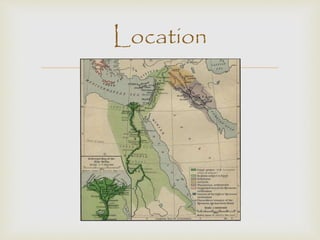
Location 

The Nile River Valley 
 
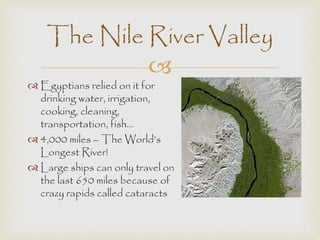
 Egyptians relied on it for 
drinking water, irrigation, 
cooking, cleaning, 
transportation, fish… 
 4,000 miles – The World’s 
Longest River! 
 Large ships can only travel on 
the last 650 miles because of 
crazy rapids called cataracts
Geography 
 
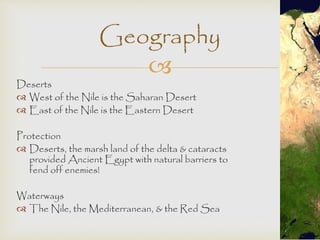
Deserts 
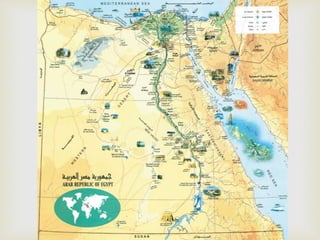
 West of the Nile is the Saharan Desert 
 East of the Nile is the Eastern Desert 
Protection 
 Deserts, the marsh land of the delta & cataracts 
provided Ancient Egypt with natural barriers to 
fend off enemies! 
Waterways 
 The Nile, the Mediterranean, & the Red Sea
The River People 
 
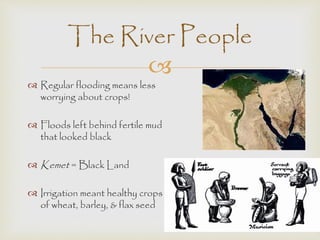
 Regular flooding means less 
worrying about crops! 
 Floods left behind fertile mud 
that looked black 
 Kemet = Black Land 
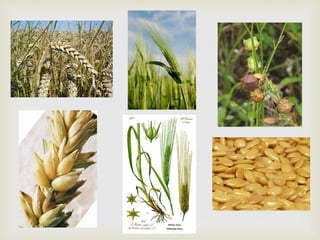
 Irrigation meant healthy crops 
of wheat, barley, & flax seed
Papyrus 
 
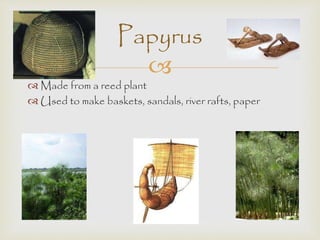
 Made from a reed plant 
 Used to make baskets, sandals, river rafts, paper
Hieroglyphics 
 
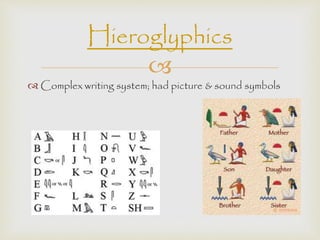
 Complex writing system; had picture & sound symbols
Cartouche Project 
 
 Cartouche Project: Print out the blank cartouche and make a 
copy for each student. 
 Have the students take the cartouche home and make the 
paper look old. They could do this several ways (the best is 
to place the cartouche paper in a deep pan, pour coffee or 
dark tea over it, then bake it in the oven for a few minutes). 
 Have the students bring the cartouche back to class and 
then they can write their name on it in hieroglyphics. 
 They can also add some Egyptian pictures and color it with 
earth tones.
Monday, September 19, 2011 
 
Today, I will learn about 
when Egypt united under one 
ruler. I will learn about 
dynasties, the social class 
structure of Ancient Egypt, 
and Egyptian life.
Upper & Lower Egypt 
 
 Villages grew into kingdoms 
 Strong kingdoms took over weak kingdoms. 
 Eventually, there were 2 large kingdoms: 
Lower Egypt – the Nile delta 
Upper Egypt – upriver; to the south 
Their names may seem backwards…but it’s called “Upper” 
and “Lower” because of their elevation…not because they 
are North or South.
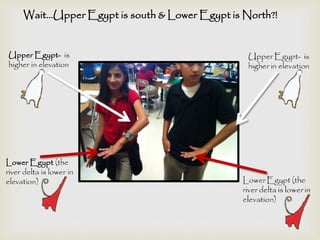
Wait…Upper Egypt is south & Lower Egypt is North?! 
Upper Egypt- is 
higher in elevation 
Lower Egypt (the 
river delta is lower in 
elevation)
A United Egypt 
 
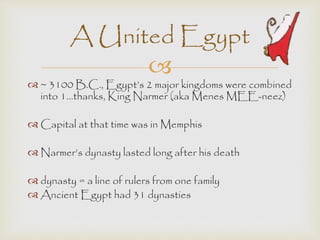
 ~ 3100 B.C., Egypt’s 2 major kingdoms were combined 
into 1…thanks, King Narmer (aka Menes MEE-neez) 
 Capital at that time was in Memphis 
 Narmer’s dynasty lasted long after his death 
 dynasty = a line of rulers from one family 
 Ancient Egypt had 31 dynasties

Assignment 
Section 1 Review: 
 
On a piece of headed paper: 
Complete # 1-7 on page 46. Do 
your BEST work!
Wednesday, September 21, 2011 
 
Today, I will learn that Egypt was ruled 
by all-powerful pharaohs, that the 
Egyptians believed in many gods and 
goddesses & in life after death for the 
pharaohs. The Egyptians of the Old 
Kingdom built huge stone pyramids as 
tombs for their pharaohs.
Section 1 Review Answers 
 
1. It is a reed plant that was used to make baskets, sandals, river 
rafts, and paper. 
2. Women could own and pass on property, buy & sell goods, make 
wills, obtain divorces, and take part in religious ceremonies. 
3. Farming, Crafts, Trade led to the growth of government in 
Ancient Egypt. 
4. The Nile River valley had natural barriers for protection, enriched 
soil for farming, & the river and seas for trade. 
5. Picture symbols (hieroglyphics) stood for objects, ideas & sounds. 
6. It symbolized the unity of Upper & Lower Egypt. 
7. Answers will vary.
Quiz 2-1 The Nile Valley 
 
Write the word and the definition for: hieroglyphics, dynasty, papyrus, 
cataract, delta 
1. The Nile River – the longest river in the world – is 
____________ miles long. 
2. The Egyptians took advantage of the Nile’s yearly spring 
flooding by becoming successful ___________. 
3. After 3100 B.C, Egypt’s government was a __________. 
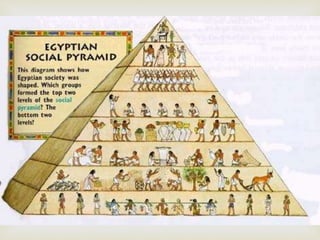
4. A diagram of Egypt’s social classes looks like a _________. 
5. Two ways Mesopotamia & Egypt are the same are: 
_____________ & _______________.
Friday, September 23, 2011 
 
Today, I will continue to learn about 
Egypt’s Old Kingdom. I will review what 
we learned on Wednesday about 
pharaohs & their religion. I will then take 
notes & read about their beliefs in life 
after death, the pyramids, and the Great 
Pyramid in particular.
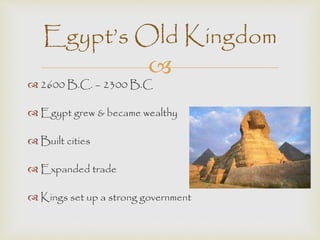
Egypt’s Old Kingdom 
 
 2600 B.C. – 2300 B.C 
 Egypt grew & became wealthy 
 Built cities 
 Expanded trade 
 Kings set up a strong government
Pharaohs 
 
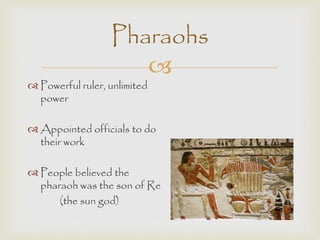
 Powerful ruler, unlimited 
power 
 Appointed officials to do 
their work 
 People believed the 
pharaoh was the son of Re 
(the sun god)
Egypt’s Religion 
 
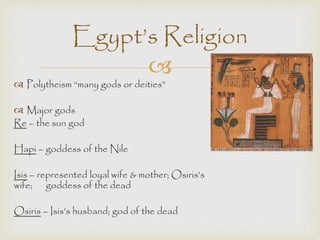
 Polytheism “many gods or deities” 
 Major gods 
Re – the sun god 
Hapi – goddess of the Nile 
Isis – represented loyal wife & mother; Osiris’s 
wife; goddess of the dead 
Osiris – Isis’s husband; god of the dead
Life after Death 
 
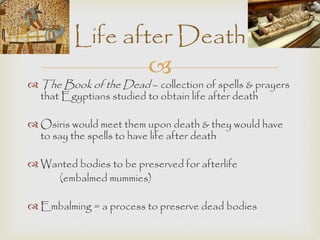
The Book of the Dead – collection of spells & prayers 
that Egyptians studied to obtain life after death 
 Osiris would meet them upon death & they would have 
to say the spells to have life after death 
 Wanted bodies to be preserved for afterlife 
(embalmed mummies) 
 Embalming = a process to preserve dead bodies
The Pyramids 
 
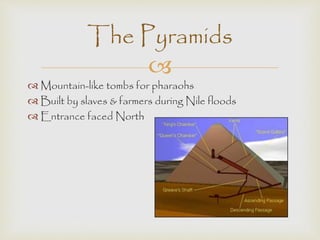
 Mountain-like tombs for pharaohs 
 Built by slaves & farmers during Nile floods 
 Entrance faced North
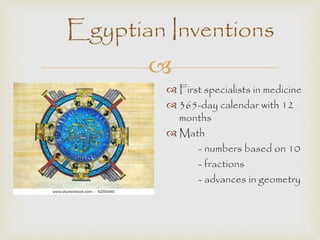
Egyptian Inventions 
 
 First specialists in medicine 
 365-day calendar with 12 
months 
 Math 
- numbers based on 10 
- fractions 
- advances in geometry
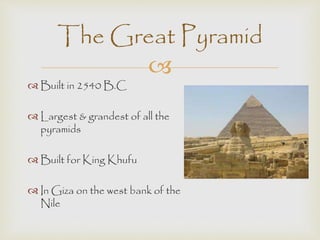
The Great Pyramid 
 
 Built in 2540 B.C 
 Largest & grandest of all the 
pyramids 
 Built for King Khufu 
 In Giza on the west bank of the 
Nile
Tuesday, September 27, 2011 
 
 Turn in your green folder. 
Make sure you have all your stuff! 
Sharpen your pencil (the 
sharpener is back in action)! 
Sit quietly and wait for WCMS.
Tuesday, September 27, 2011 
 
 Today, I will read about and discuss 
Ancient Egypt’s Middle & New 
Kingdom. I will learn about important 
Egyptian people like Queen 
Hatshepsut, Akhenaton, 
Tutankhamen, and Ramses II.
Jigsaw Reading 
 
 Each person will read a section. You will have 
15minutes. 
 You will have 20 minutes to discuss as a group & take 
notes on what you all think are the most important things 
to know about this section. 
 Red – The Middle Kingdom p. 60 
 Green – The New Kingdom p. 61 
 Yellow – The Legacies of 2 Pharaohs p.64 
 Blue – The End of the New Kingdom p.65

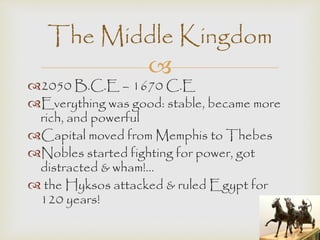
The Middle Kingdom 
 
2050 B.C.E – 1670 C.E 
Everything was good: stable, became more 
rich, and powerful 
Capital moved from Memphis to Thebes 
Nobles started fighting for power, got 
distracted & wham!... 
 the Hyksos attacked & ruled Egypt for 
120 years!
The New Kingdom 
 
 Lasted from 1550 B.C.E – 1080 C.E 
 Height of Egypt’s glory 
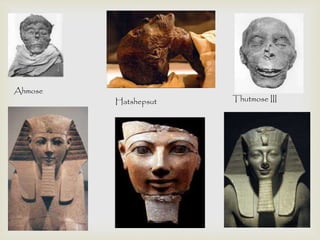
 Ahmose (Egyptian Prince…how dreamy!) drove out the 
Hyksos 
 Queen Hatshepsut - 1st Woman Pharaoh…sweet! 
interested in trade (economy), not war (conquests). 
 ruled for 21 years & it was peaceful. 
 Thutmose III – put the focus back on conquest
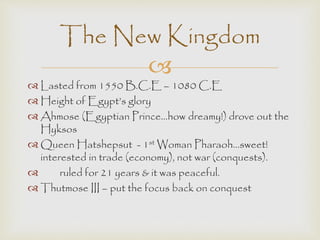
Ahmose 
Hatshepsut Thutmose III
The Legacies of 2 Pharaohs 
 
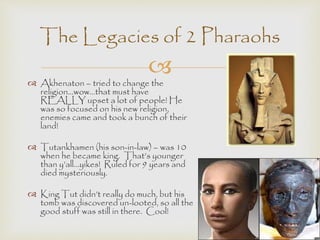
 Akhenaton – tried to change the 
religion…wow…that must have 
REALLY upset a lot of people! He 
was so focused on his new religion, 
enemies came and took a bunch of their 
land! 
 Tutankhamen (his son-in-law) – was 10 
when he became king. That’s younger 
than y’all…yikes! Ruled for 9 years and 
died mysteriously. 
 King Tut didn’t really do much, but his 
tomb was discovered un-looted, so all the 
good stuff was still in there. Cool!
The End of the New Kingdom 
 
 Pharaohs tried to get Egypt back on its feet. 
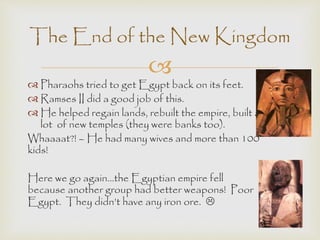
 Ramses II did a good job of this. 
 He helped regain lands, rebuilt the empire, built a 
lot of new temples (they were banks too). 
Whaaaat?! – He had many wives and more than 100 
kids! 
Here we go again…the Egyptian empire fell 
because another group had better weapons! Poor 
Egypt. They didn’t have any iron ore. 
Ohhhh, yeaaah!... 
 
 Remember how the Assyrians were the 1st empire & 
they had iron weapons that they had learned to make 
from the Hittites? You gotta have good weapons to 
have an empire. 
 Remember how when people start fighting for power, 
they get so distracted that another group is waiting on 
the sidelines ready to attack while no one is looking? 
This happens a lot in history…

ancient-egypt

  • 1.
    The Nile Valley Egypt’s Old Kingdom The Egyptian Empire The Civilization of Kush
  • 2.
  • 3.
    The Nile RiverValley   Egyptians relied on it for drinking water, irrigation, cooking, cleaning, transportation, fish…  4,000 miles – The World’s Longest River!  Large ships can only travel on the last 650 miles because of crazy rapids called cataracts
  • 4.
    Geography  Deserts  West of the Nile is the Saharan Desert  East of the Nile is the Eastern Desert Protection  Deserts, the marsh land of the delta & cataracts provided Ancient Egypt with natural barriers to fend off enemies! Waterways  The Nile, the Mediterranean, & the Red Sea
  • 5.
    The River People   Regular flooding means less worrying about crops!  Floods left behind fertile mud that looked black  Kemet = Black Land  Irrigation meant healthy crops of wheat, barley, & flax seed
  • 7.
    Papyrus  Made from a reed plant  Used to make baskets, sandals, river rafts, paper
  • 8.
    Hieroglyphics  Complex writing system; had picture & sound symbols
  • 9.
    Cartouche Project   Cartouche Project: Print out the blank cartouche and make a copy for each student.  Have the students take the cartouche home and make the paper look old. They could do this several ways (the best is to place the cartouche paper in a deep pan, pour coffee or dark tea over it, then bake it in the oven for a few minutes).  Have the students bring the cartouche back to class and then they can write their name on it in hieroglyphics.  They can also add some Egyptian pictures and color it with earth tones.
  • 10.
    Monday, September 19,2011  Today, I will learn about when Egypt united under one ruler. I will learn about dynasties, the social class structure of Ancient Egypt, and Egyptian life.
  • 11.
    Upper & LowerEgypt   Villages grew into kingdoms  Strong kingdoms took over weak kingdoms.  Eventually, there were 2 large kingdoms: Lower Egypt – the Nile delta Upper Egypt – upriver; to the south Their names may seem backwards…but it’s called “Upper” and “Lower” because of their elevation…not because they are North or South.
  • 12.
    Wait…Upper Egypt issouth & Lower Egypt is North?! Upper Egypt- is higher in elevation Lower Egypt (the river delta is lower in elevation)
  • 13.
    A United Egypt   ~ 3100 B.C., Egypt’s 2 major kingdoms were combined into 1…thanks, King Narmer (aka Menes MEE-neez)  Capital at that time was in Memphis  Narmer’s dynasty lasted long after his death  dynasty = a line of rulers from one family  Ancient Egypt had 31 dynasties
  • 14.
  • 15.
    Assignment Section 1Review:  On a piece of headed paper: Complete # 1-7 on page 46. Do your BEST work!
  • 16.
    Wednesday, September 21,2011  Today, I will learn that Egypt was ruled by all-powerful pharaohs, that the Egyptians believed in many gods and goddesses & in life after death for the pharaohs. The Egyptians of the Old Kingdom built huge stone pyramids as tombs for their pharaohs.
  • 17.
    Section 1 ReviewAnswers  1. It is a reed plant that was used to make baskets, sandals, river rafts, and paper. 2. Women could own and pass on property, buy & sell goods, make wills, obtain divorces, and take part in religious ceremonies. 3. Farming, Crafts, Trade led to the growth of government in Ancient Egypt. 4. The Nile River valley had natural barriers for protection, enriched soil for farming, & the river and seas for trade. 5. Picture symbols (hieroglyphics) stood for objects, ideas & sounds. 6. It symbolized the unity of Upper & Lower Egypt. 7. Answers will vary.
  • 18.
    Quiz 2-1 TheNile Valley  Write the word and the definition for: hieroglyphics, dynasty, papyrus, cataract, delta 1. The Nile River – the longest river in the world – is ____________ miles long. 2. The Egyptians took advantage of the Nile’s yearly spring flooding by becoming successful ___________. 3. After 3100 B.C, Egypt’s government was a __________. 4. A diagram of Egypt’s social classes looks like a _________. 5. Two ways Mesopotamia & Egypt are the same are: _____________ & _______________.
  • 19.
    Friday, September 23,2011  Today, I will continue to learn about Egypt’s Old Kingdom. I will review what we learned on Wednesday about pharaohs & their religion. I will then take notes & read about their beliefs in life after death, the pyramids, and the Great Pyramid in particular.
  • 20.
    Egypt’s Old Kingdom   2600 B.C. – 2300 B.C  Egypt grew & became wealthy  Built cities  Expanded trade  Kings set up a strong government
  • 21.
    Pharaohs  Powerful ruler, unlimited power  Appointed officials to do their work  People believed the pharaoh was the son of Re (the sun god)
  • 22.
    Egypt’s Religion   Polytheism “many gods or deities”  Major gods Re – the sun god Hapi – goddess of the Nile Isis – represented loyal wife & mother; Osiris’s wife; goddess of the dead Osiris – Isis’s husband; god of the dead
  • 23.
    Life after Death  The Book of the Dead – collection of spells & prayers that Egyptians studied to obtain life after death  Osiris would meet them upon death & they would have to say the spells to have life after death  Wanted bodies to be preserved for afterlife (embalmed mummies)  Embalming = a process to preserve dead bodies
  • 24.
    The Pyramids   Mountain-like tombs for pharaohs  Built by slaves & farmers during Nile floods  Entrance faced North
  • 25.
    Egyptian Inventions   First specialists in medicine  365-day calendar with 12 months  Math - numbers based on 10 - fractions - advances in geometry
  • 26.
    The Great Pyramid   Built in 2540 B.C  Largest & grandest of all the pyramids  Built for King Khufu  In Giza on the west bank of the Nile
  • 27.
    Tuesday, September 27,2011   Turn in your green folder. Make sure you have all your stuff! Sharpen your pencil (the sharpener is back in action)! Sit quietly and wait for WCMS.
  • 28.
    Tuesday, September 27,2011   Today, I will read about and discuss Ancient Egypt’s Middle & New Kingdom. I will learn about important Egyptian people like Queen Hatshepsut, Akhenaton, Tutankhamen, and Ramses II.
  • 29.
    Jigsaw Reading   Each person will read a section. You will have 15minutes.  You will have 20 minutes to discuss as a group & take notes on what you all think are the most important things to know about this section.  Red – The Middle Kingdom p. 60  Green – The New Kingdom p. 61  Yellow – The Legacies of 2 Pharaohs p.64  Blue – The End of the New Kingdom p.65
  • 30.
  • 31.
    The Middle Kingdom  2050 B.C.E – 1670 C.E Everything was good: stable, became more rich, and powerful Capital moved from Memphis to Thebes Nobles started fighting for power, got distracted & wham!...  the Hyksos attacked & ruled Egypt for 120 years!
  • 32.
    The New Kingdom   Lasted from 1550 B.C.E – 1080 C.E  Height of Egypt’s glory  Ahmose (Egyptian Prince…how dreamy!) drove out the Hyksos  Queen Hatshepsut - 1st Woman Pharaoh…sweet! interested in trade (economy), not war (conquests).  ruled for 21 years & it was peaceful.  Thutmose III – put the focus back on conquest
  • 33.
  • 34.
    The Legacies of2 Pharaohs   Akhenaton – tried to change the religion…wow…that must have REALLY upset a lot of people! He was so focused on his new religion, enemies came and took a bunch of their land!  Tutankhamen (his son-in-law) – was 10 when he became king. That’s younger than y’all…yikes! Ruled for 9 years and died mysteriously.  King Tut didn’t really do much, but his tomb was discovered un-looted, so all the good stuff was still in there. Cool!
  • 35.
    The End ofthe New Kingdom   Pharaohs tried to get Egypt back on its feet.  Ramses II did a good job of this.  He helped regain lands, rebuilt the empire, built a lot of new temples (they were banks too). Whaaaat?! – He had many wives and more than 100 kids! Here we go again…the Egyptian empire fell because another group had better weapons! Poor Egypt. They didn’t have any iron ore. 
  • 36.
    Ohhhh, yeaaah!...   Remember how the Assyrians were the 1st empire & they had iron weapons that they had learned to make from the Hittites? You gotta have good weapons to have an empire.  Remember how when people start fighting for power, they get so distracted that another group is waiting on the sidelines ready to attack while no one is looking? This happens a lot in history…