




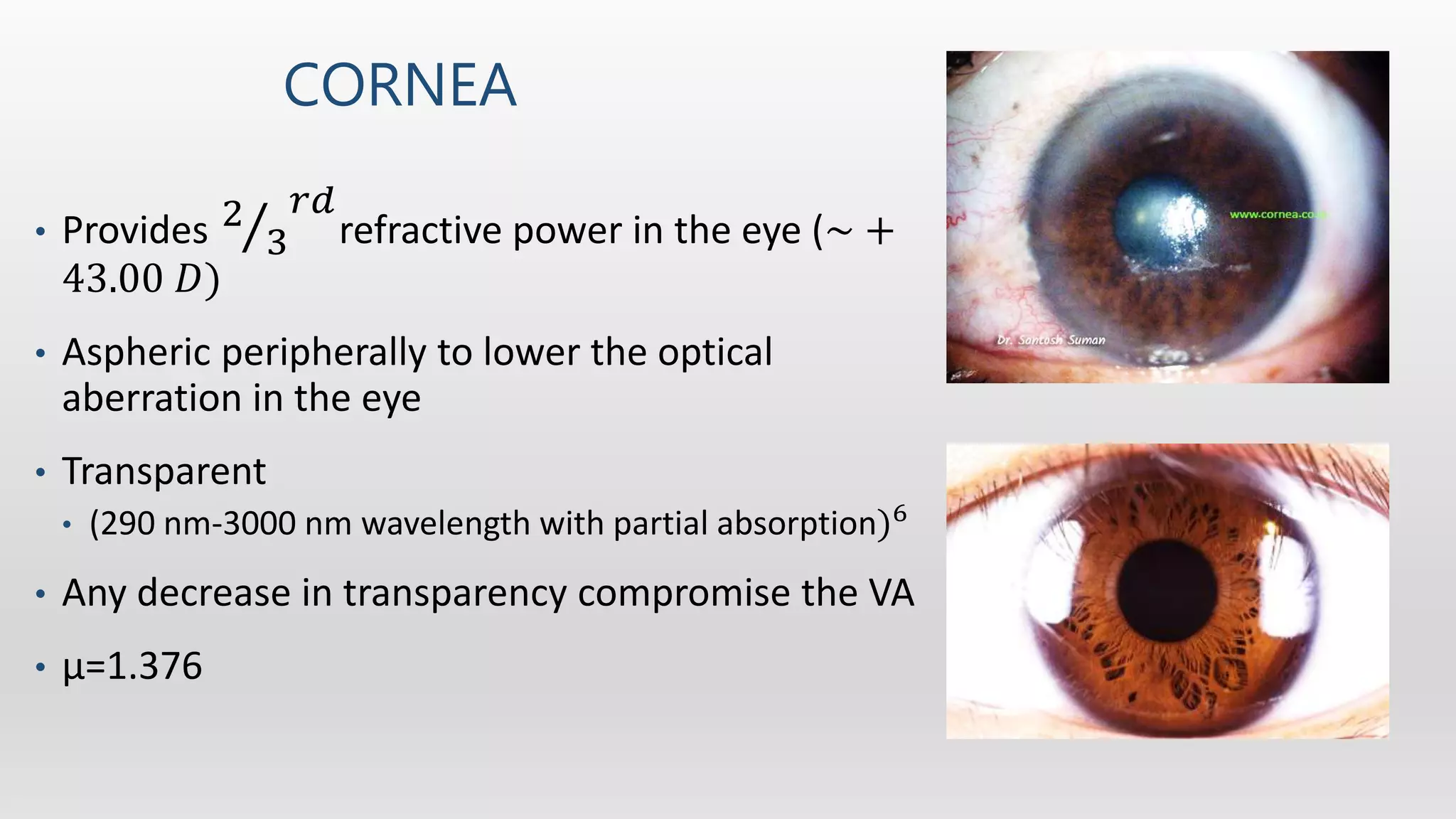









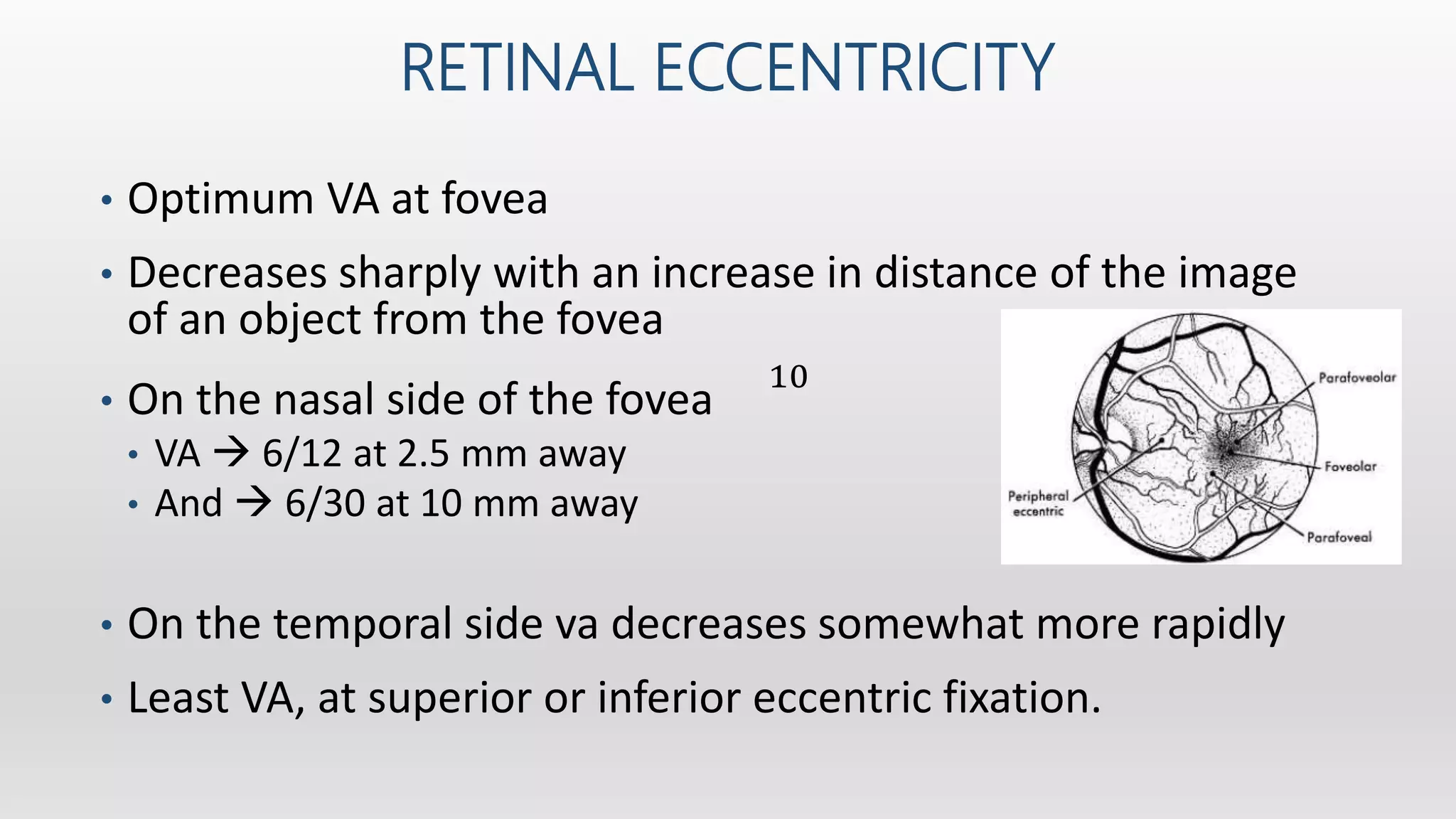
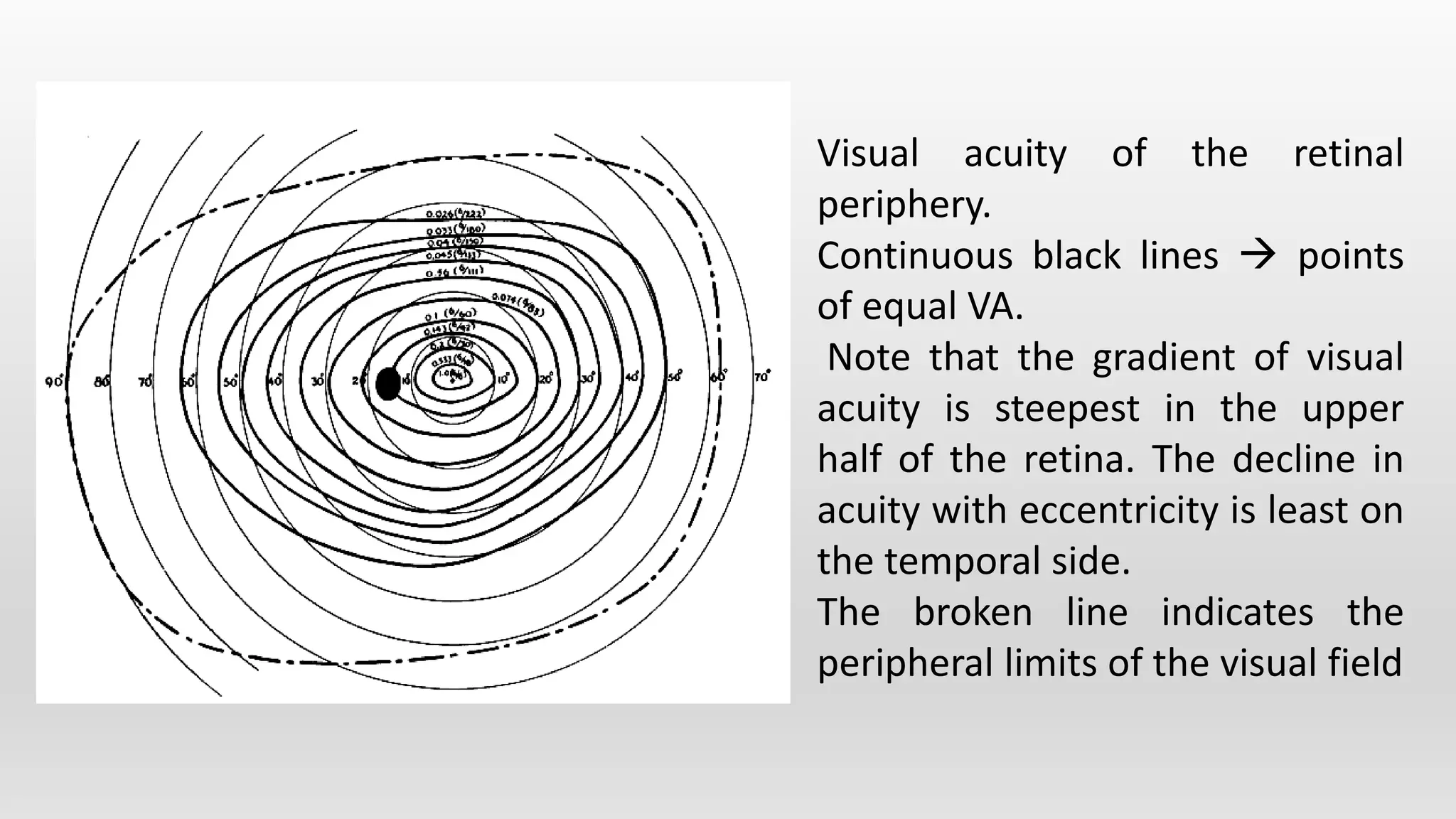


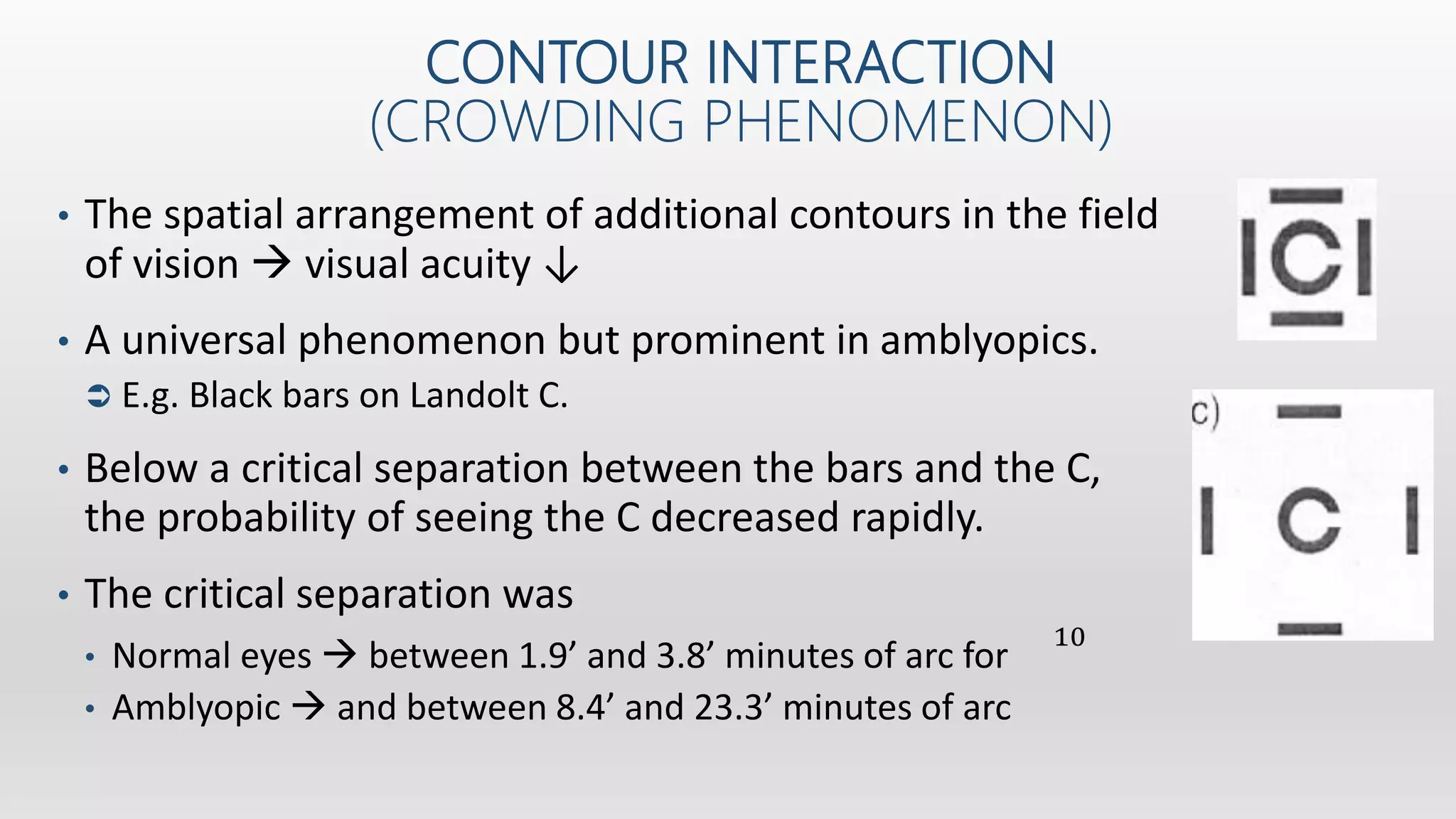



This document discusses the anatomical and physiological basis of visual acuity. It begins by defining visual acuity and describing its components and types. Anatomically, structures that contribute to visual acuity include the tear film, cornea, aqueous humor, pupil, lens, vitreous, retina, and fovea. Physiologically, factors such as the Stiles-Crawford effect, miniature eye movements, retinal eccentricity, luminance, contrast, contour interaction, optical quality of the eye, visibility duration, and age influence visual acuity. The density of photoreceptors in the fovea allows for the highest visual acuity.


