





Interaction Design
Welcome to
Ekta Rohra Jafri for Anant National University
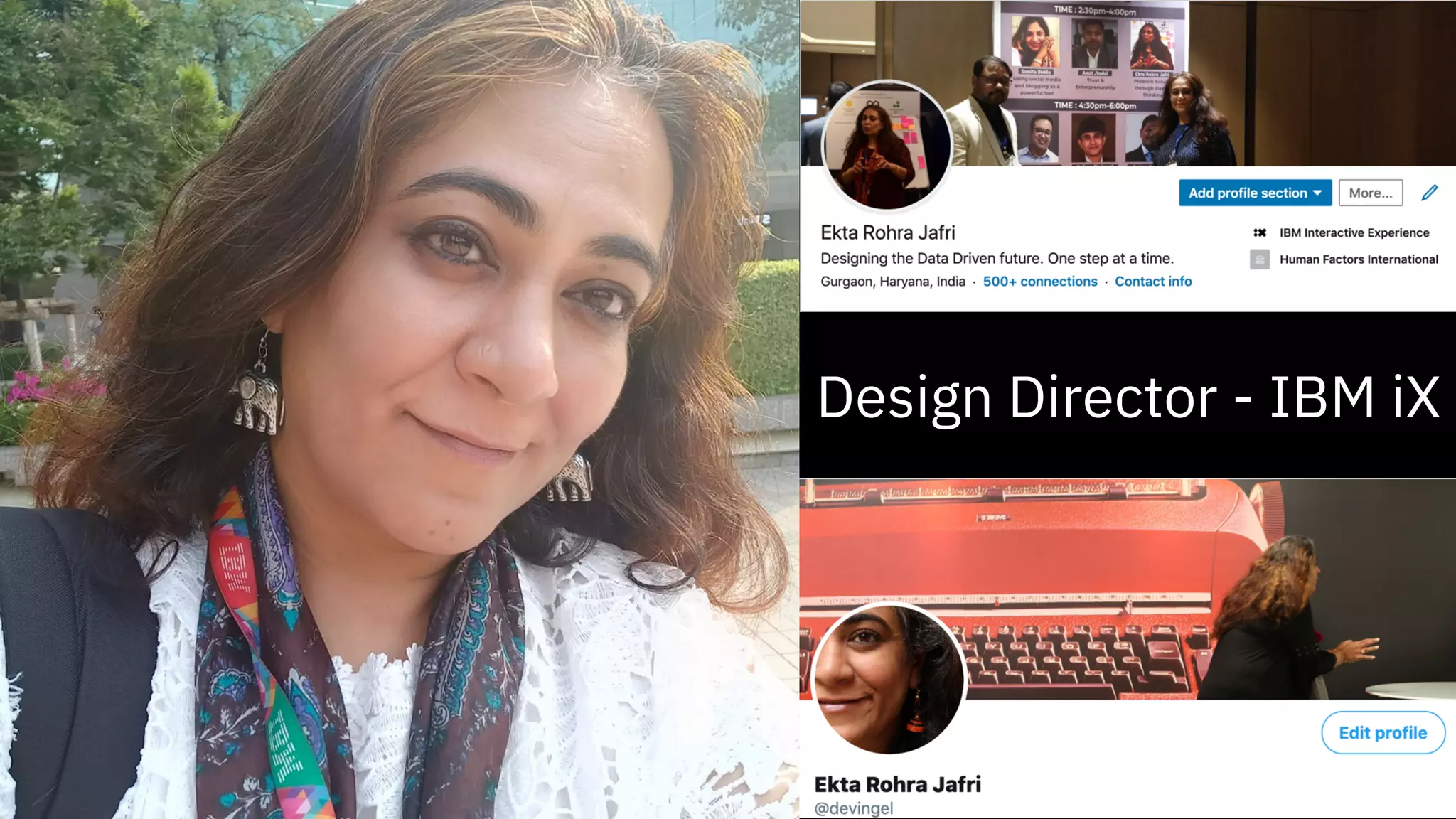
Design Director - IBM iX
Mother
Explorer
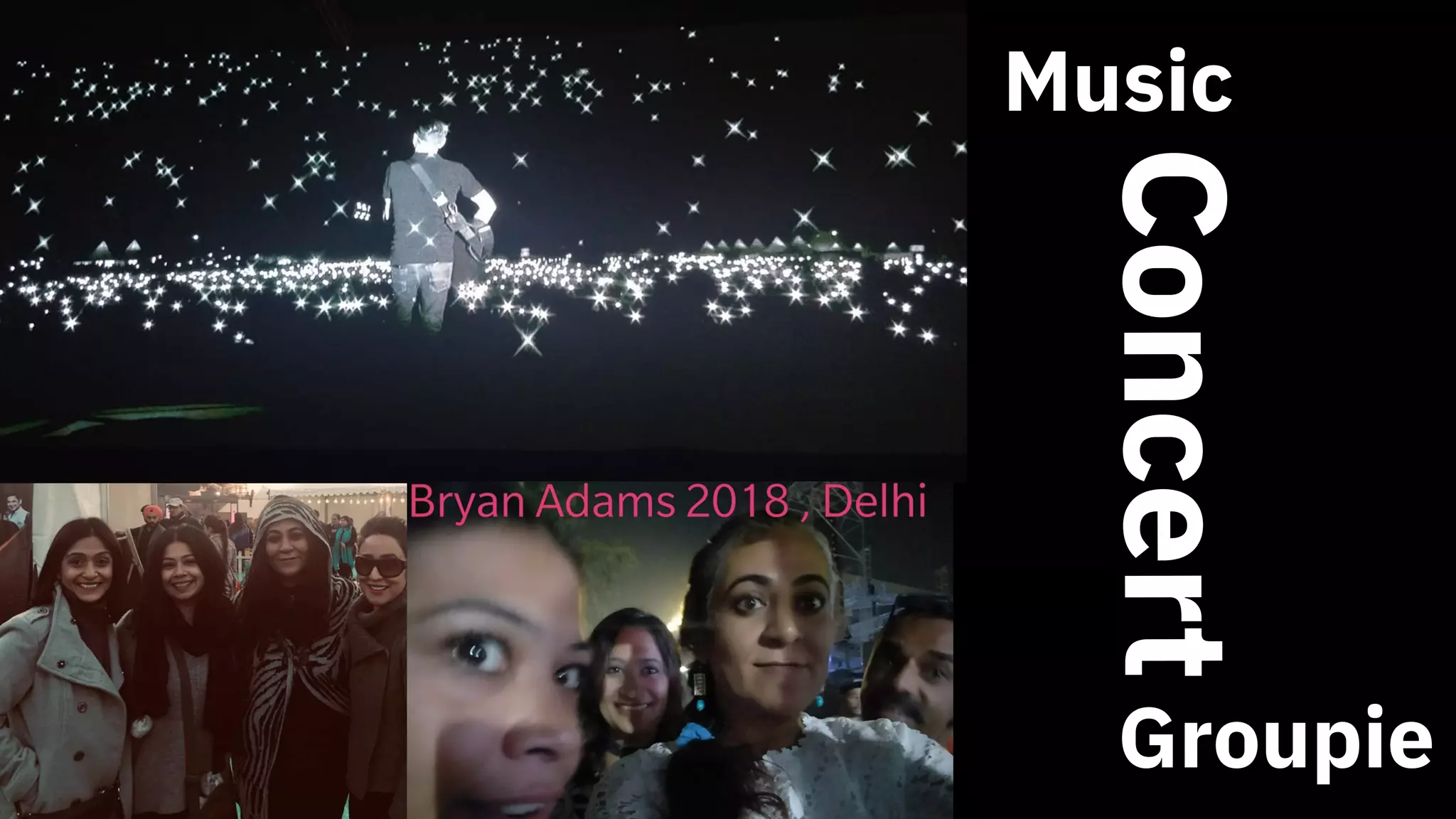
Music
Concert
Groupie
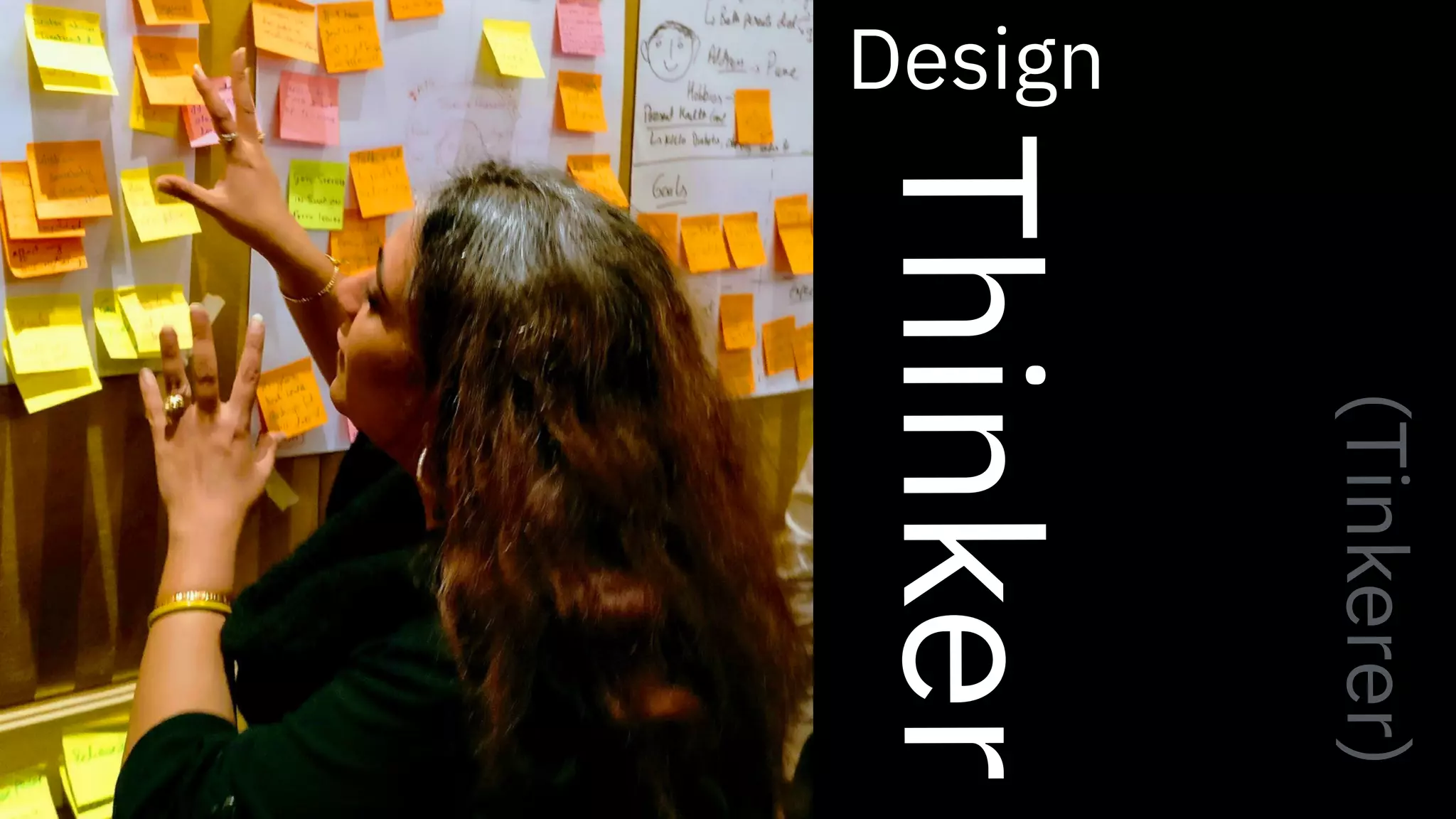
Design
Thinker
(Tinkerer)
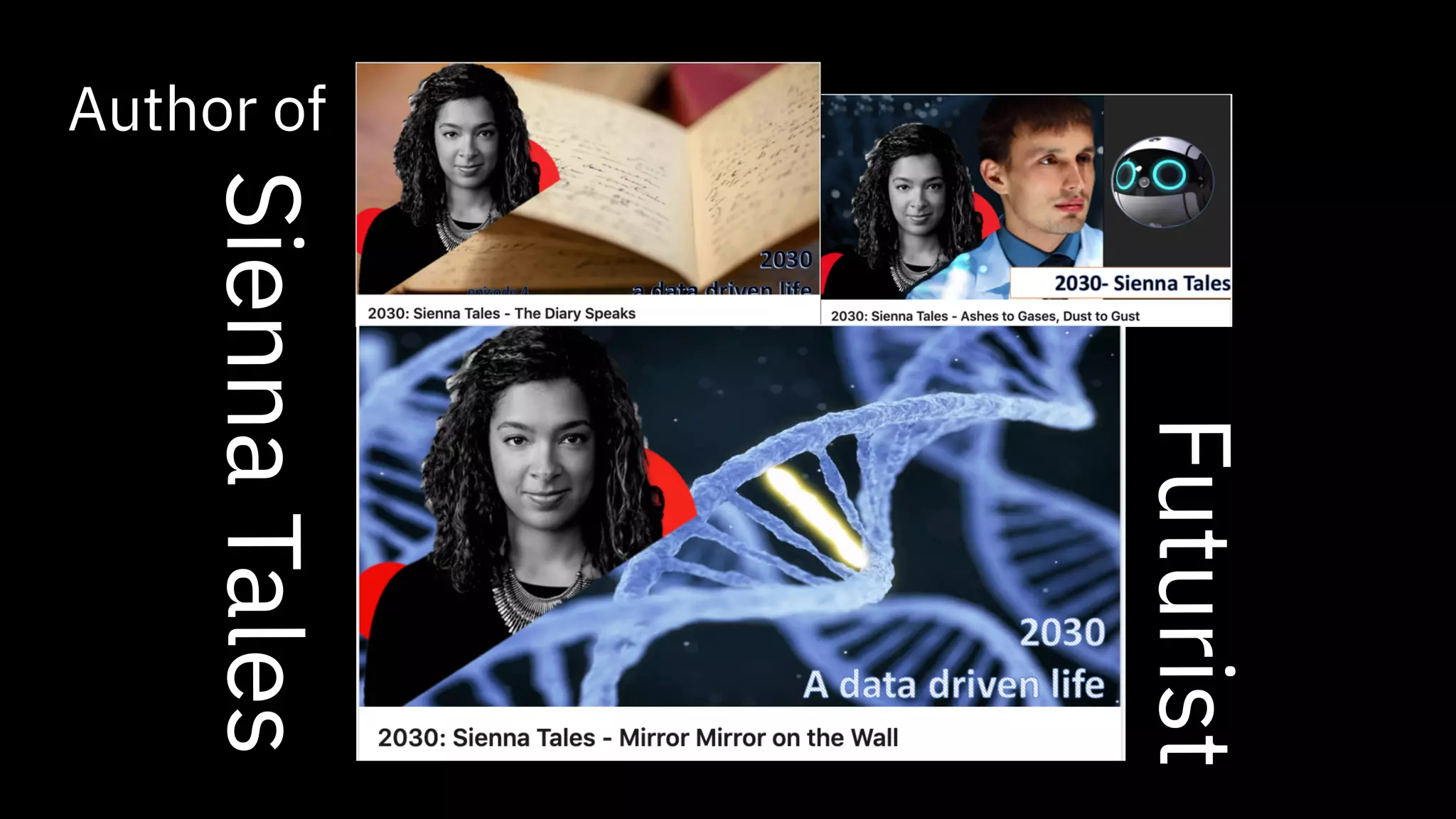
Futurist
Author of
SiennaTales
Activist
Data
Privacy & Monetization
D3
Data
http://uxtrategy.net
Driven
Design
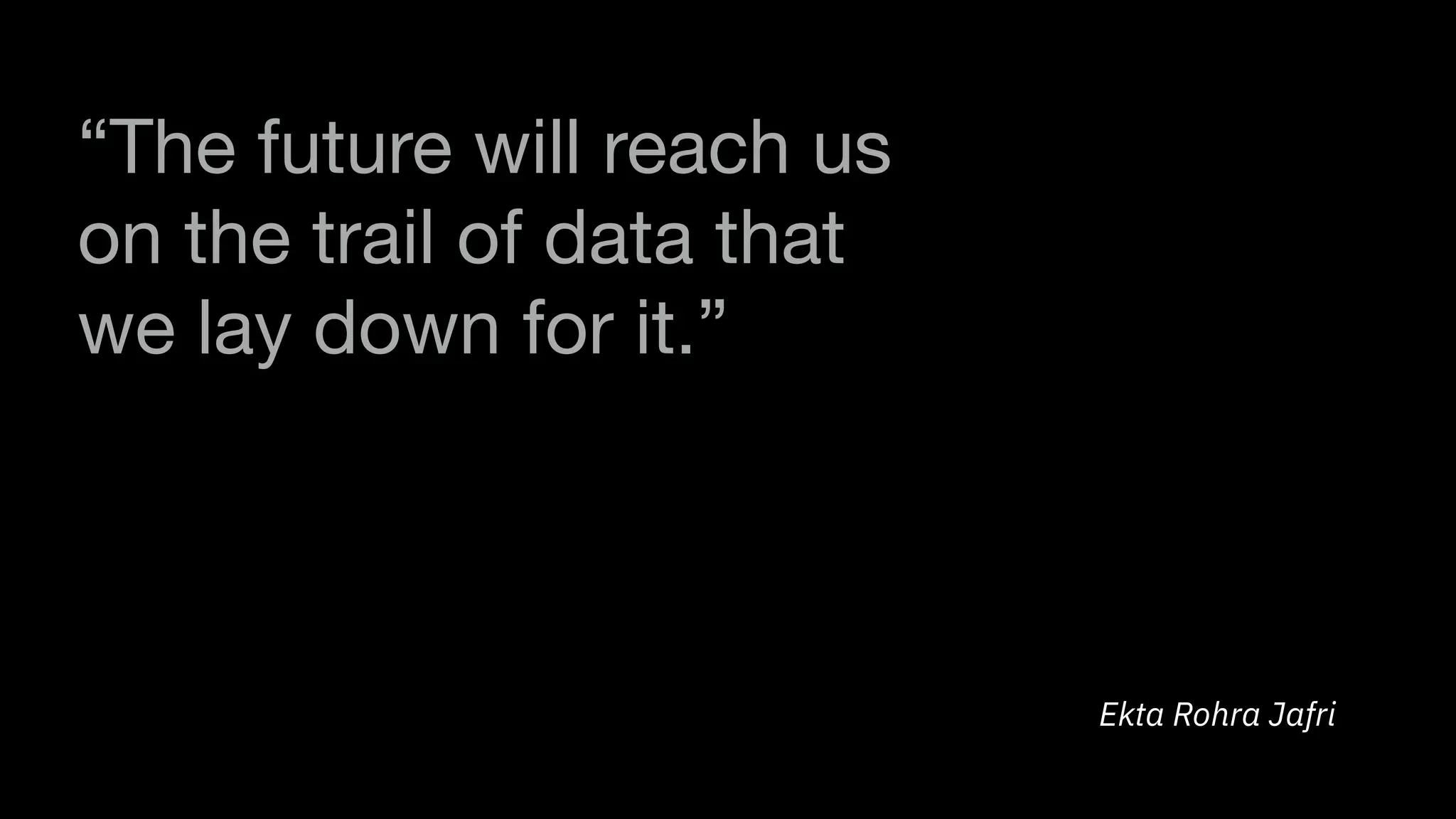
“The future will reach us
on the trail of data that
we lay down for it.”
Ekta Rohra Jafri
Please introduce yourself and tell us why you want to be a designer - max 30 seconds
lets get to know each other
Interaction Design
Welcome to
Ekta Rohra Jafri for Anant National University
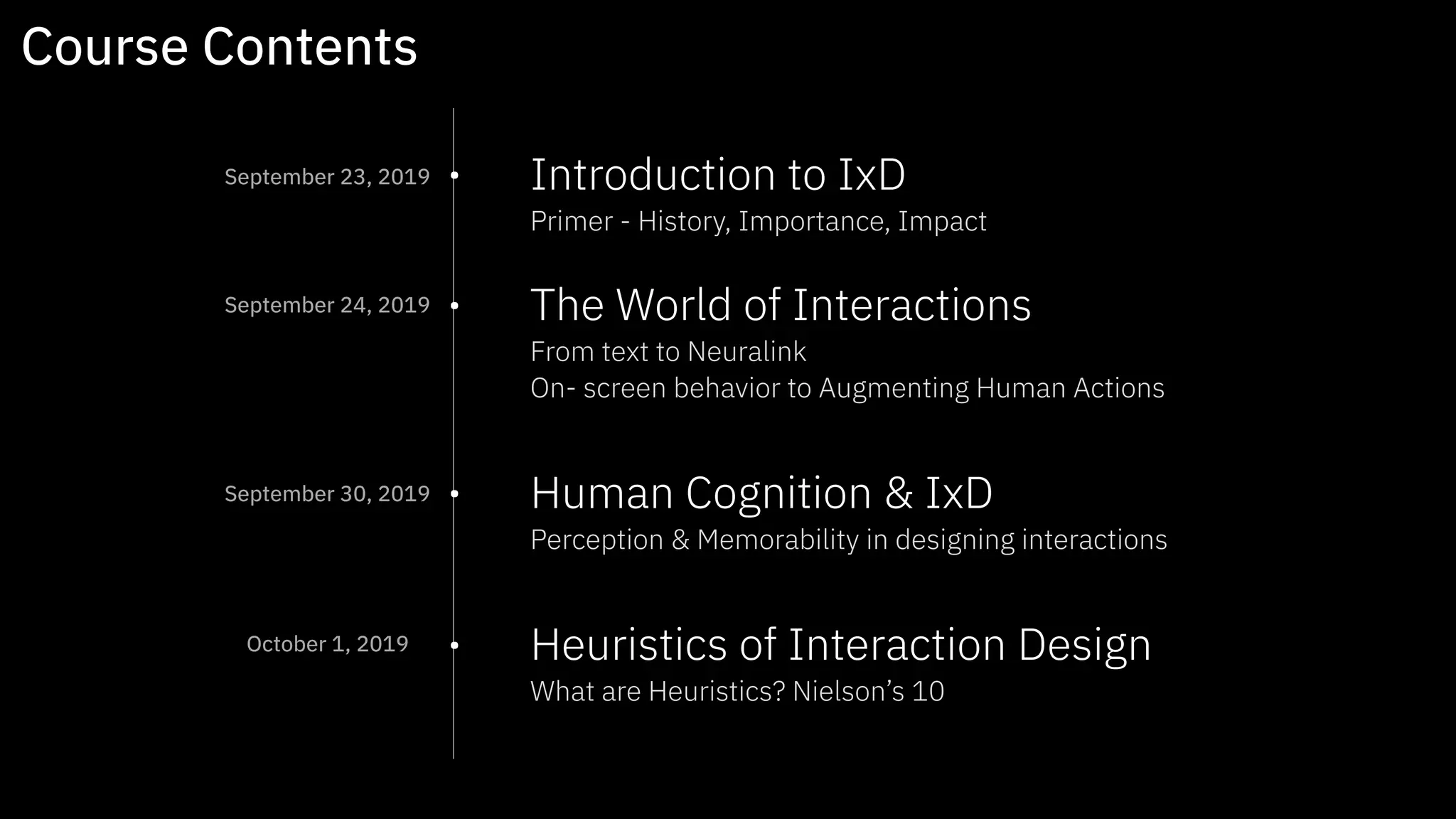
• Introduction to IxD

Primer - History, Importance, Impact 

• The World of Interactions 

From text to Neuralink

On- screen behavior to Augmenting Human Actions 

• Human Cognition & IxD

Perception & Memorability in designing interactions

• Heuristics of Interaction Design 

What are Heuristics? Nielson’s 10
Course Contents
September 23, 2019
September 24, 2019
September 30, 2019
October 1, 2019
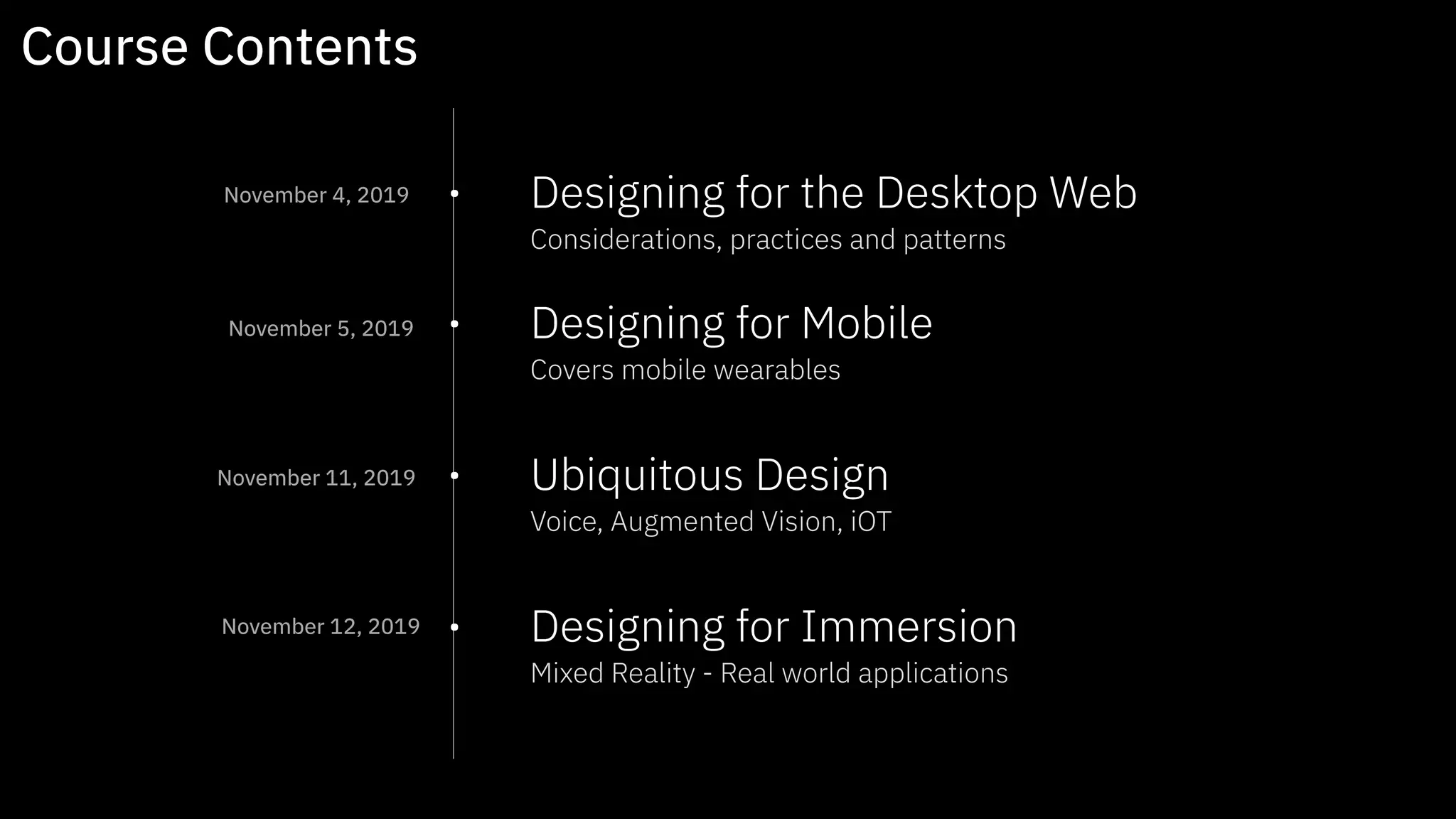
• Designing for the Desktop Web

Considerations, practices and patterns 

• Designing for Mobile

Covers mobile wearables

• Ubiquitous Design

Voice, Augmented Vision, iOT

• Designing for Immersion

Mixed Reality - Real world applications
Course Contents
November 4, 2019
November 5, 2019
November 11, 2019
November 12, 2019
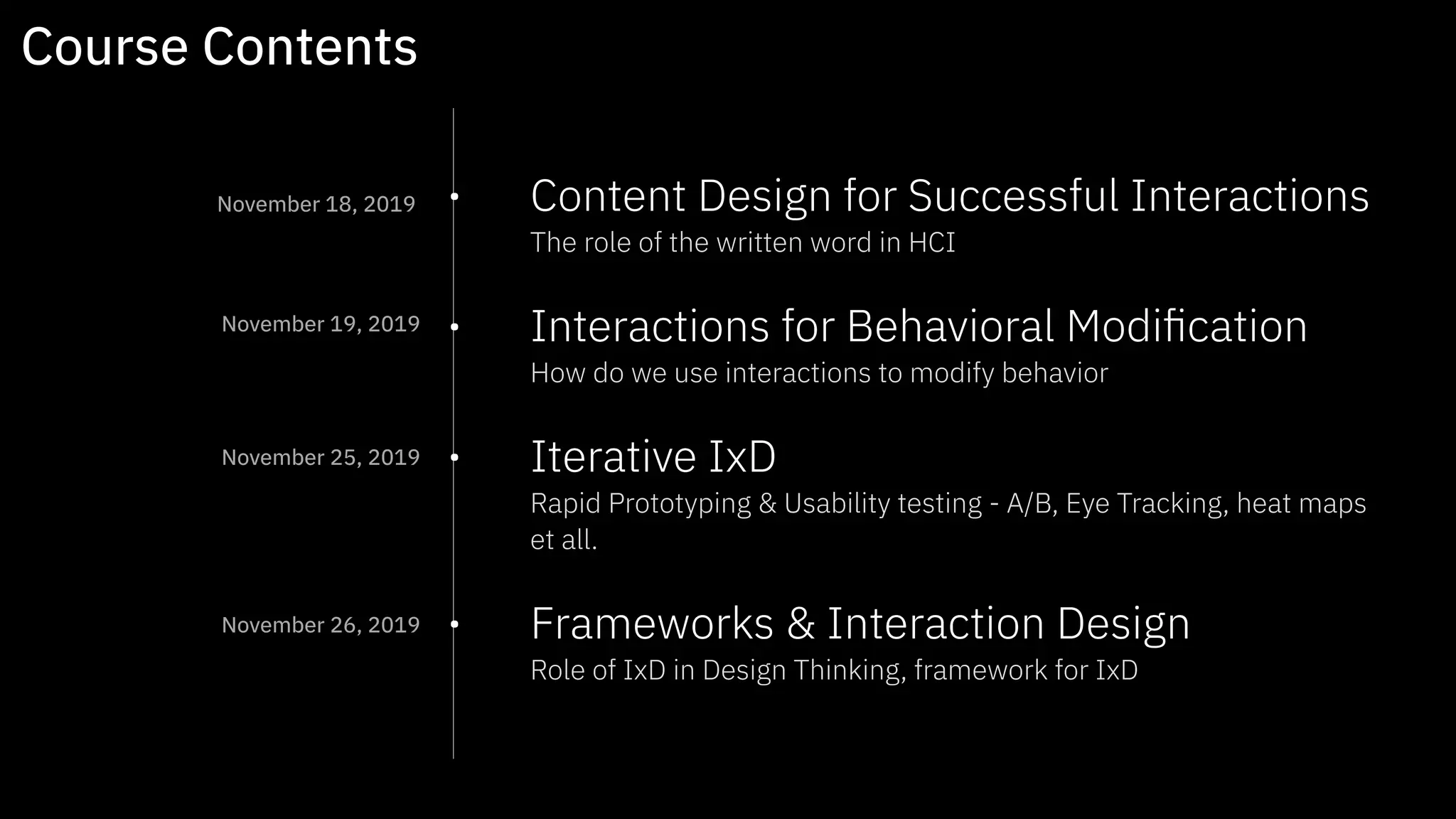
• Content Design for Successful Interactions

The role of the written word in HCI

• Interactions for Behavioral Modification 

How do we use interactions to modify behavior

• Iterative IxD

Rapid Prototyping & Usability testing - A/B, Eye Tracking, heat maps
et all.

• Frameworks & Interaction Design

Role of IxD in Design Thinking, framework for IxD
Course Contents
November 18, 2019
November 19, 2019
November 25, 2019
November 26, 2019
• Jury Panel

Evaluation of Students?
Course Contents
December 2, 2019
Lets begin…
IxD Primer
What is Interaction Design?
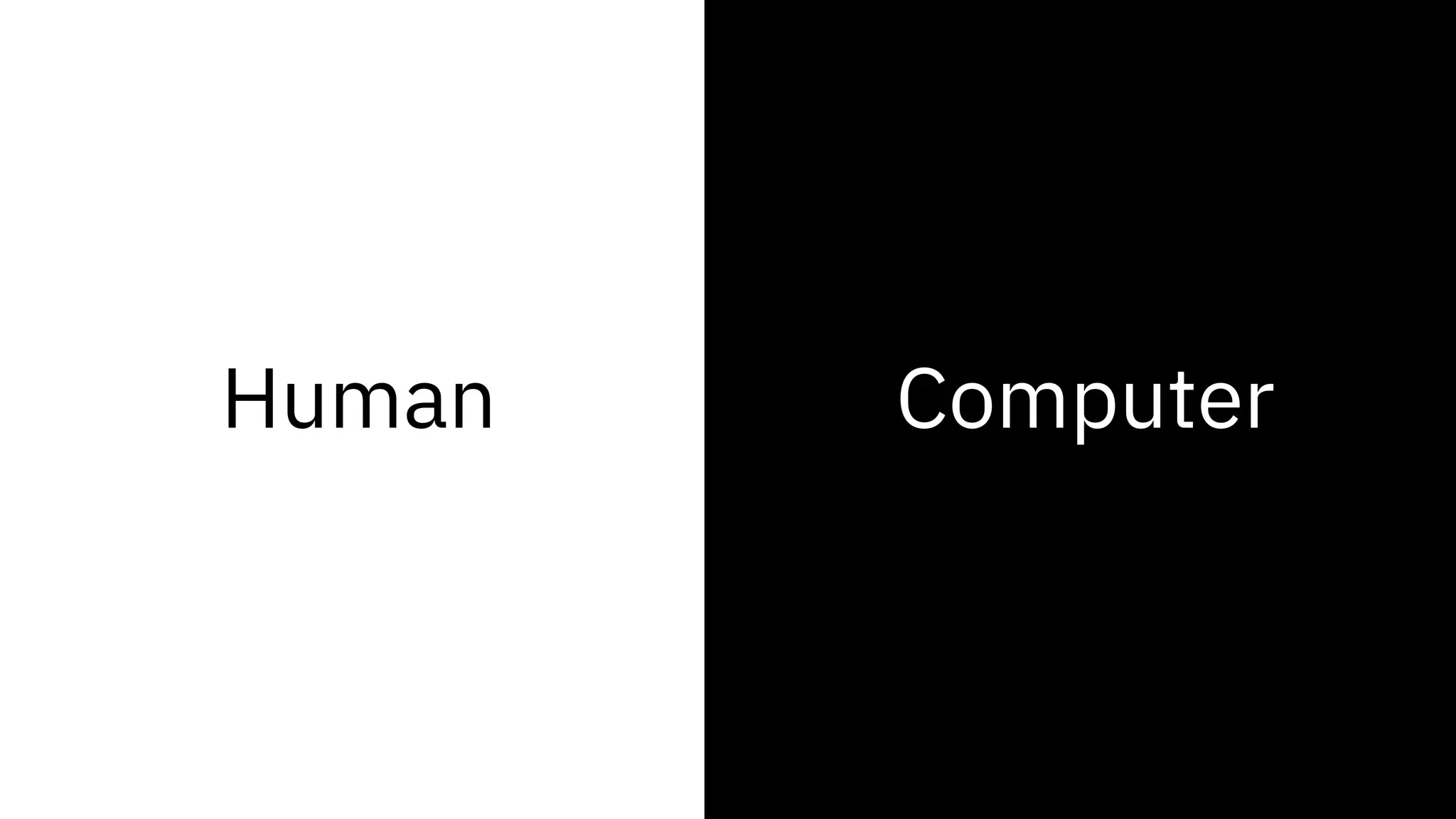
Human Computer
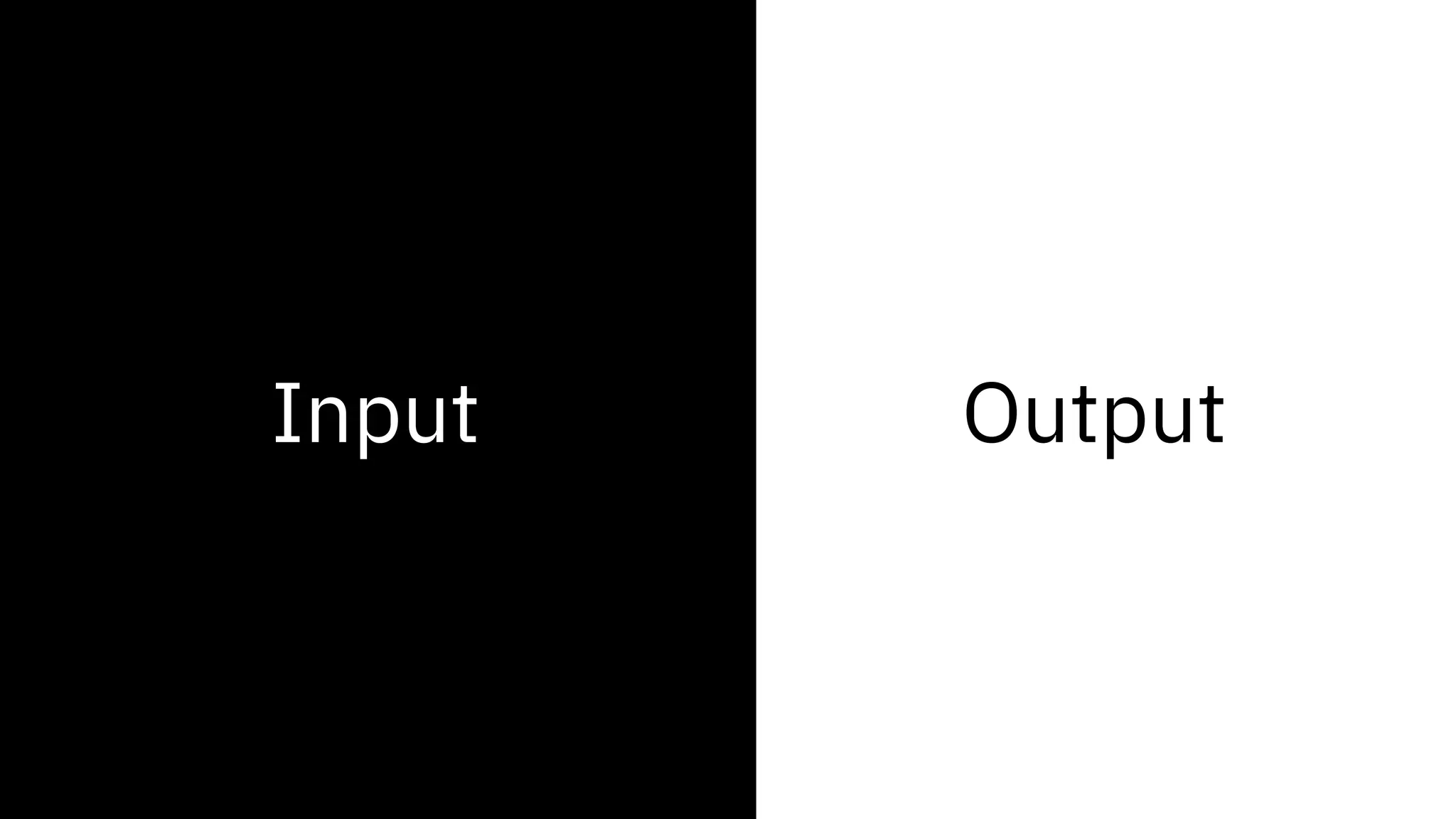
OutputInput
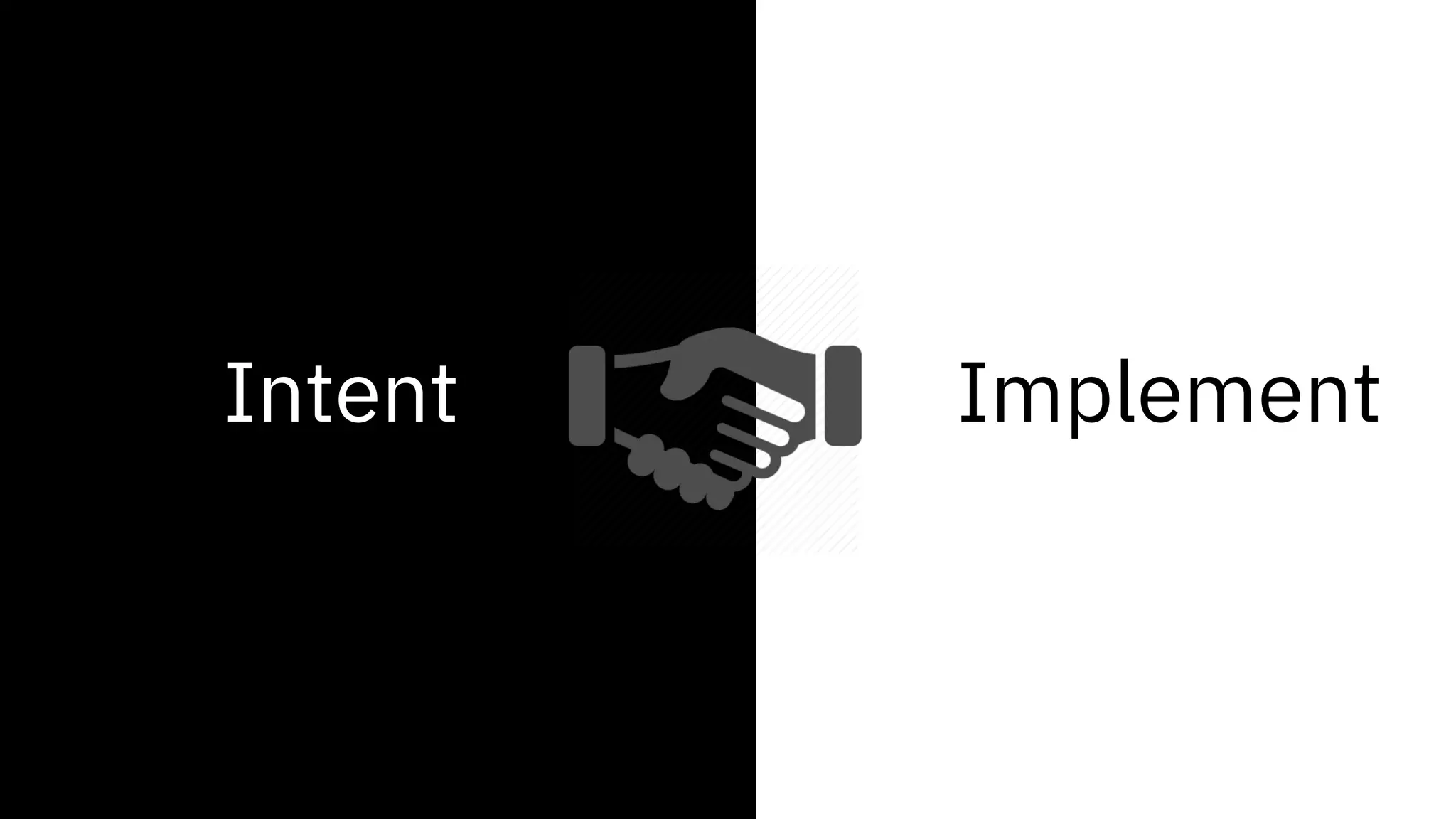
ImplementIntent
— The Interaction Design Association (IxDA)
“Interaction Design (IxD) defines
the structure and behavior of
interactive systems. Interaction
designers strive to create
meaningful relationships between
people and the products and
services that they use, from
computers to mobile devices to
appliances and beyond. Our
practices are evolving with the
world.”
How old is IxD?
How far have we come in the science?
1955
Henry Dreyfuss and the art of
designing for people
“When the point of contact
between the product and the
people becomes a point of friction,
then the [designer] has failed. On
the other hand, if people are made
safer, more comfortable, more
eager to purchase, more efficient—
or just plain happier—by contact
with the product, then the designer
has succeeded.”
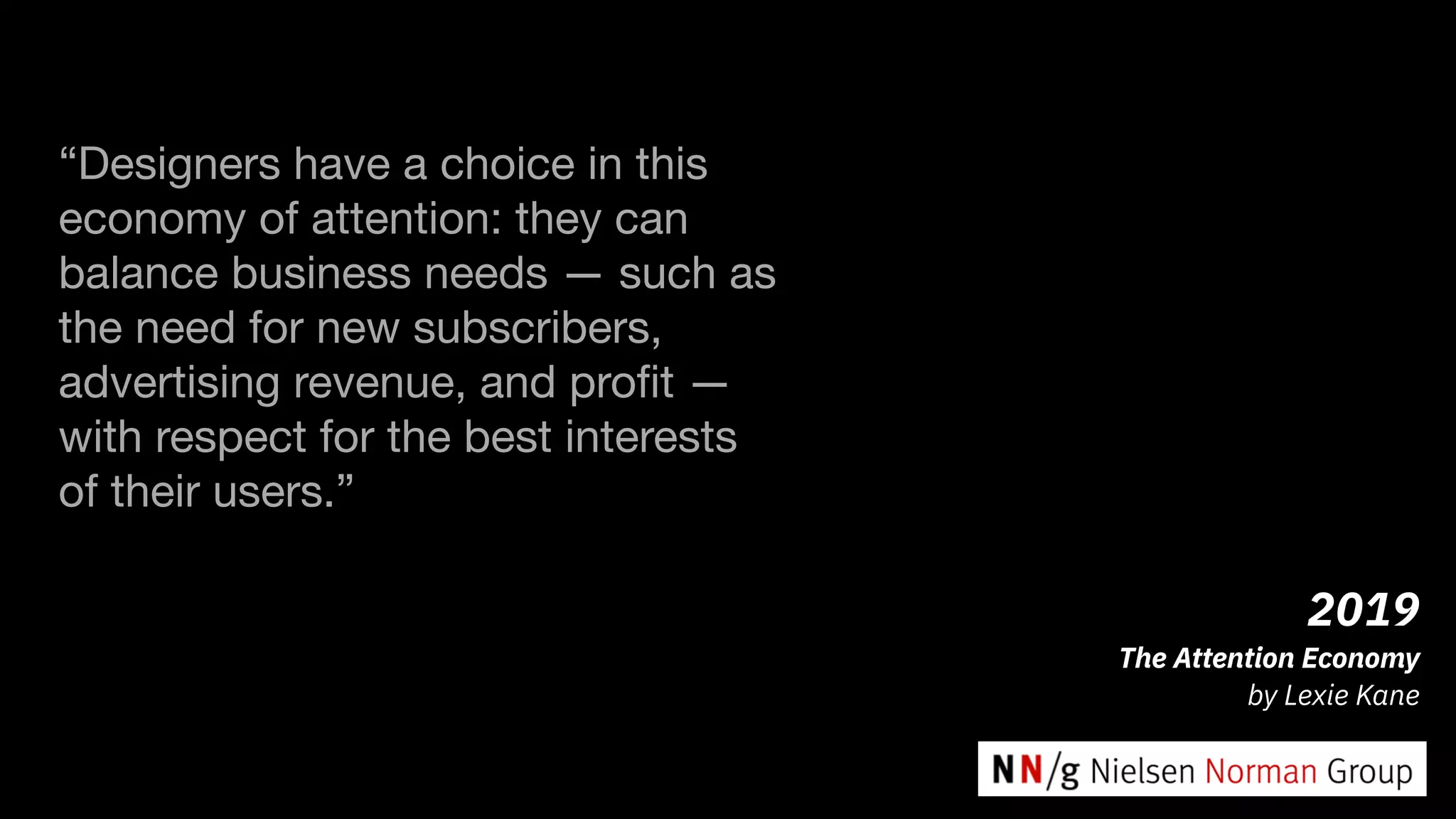
2019
The Attention Economy
by Lexie Kane
“Designers have a choice in this
economy of attention: they can
balance business needs — such as
the need for new subscribers,
advertising revenue, and profit —
with respect for the best interests
of their users.”
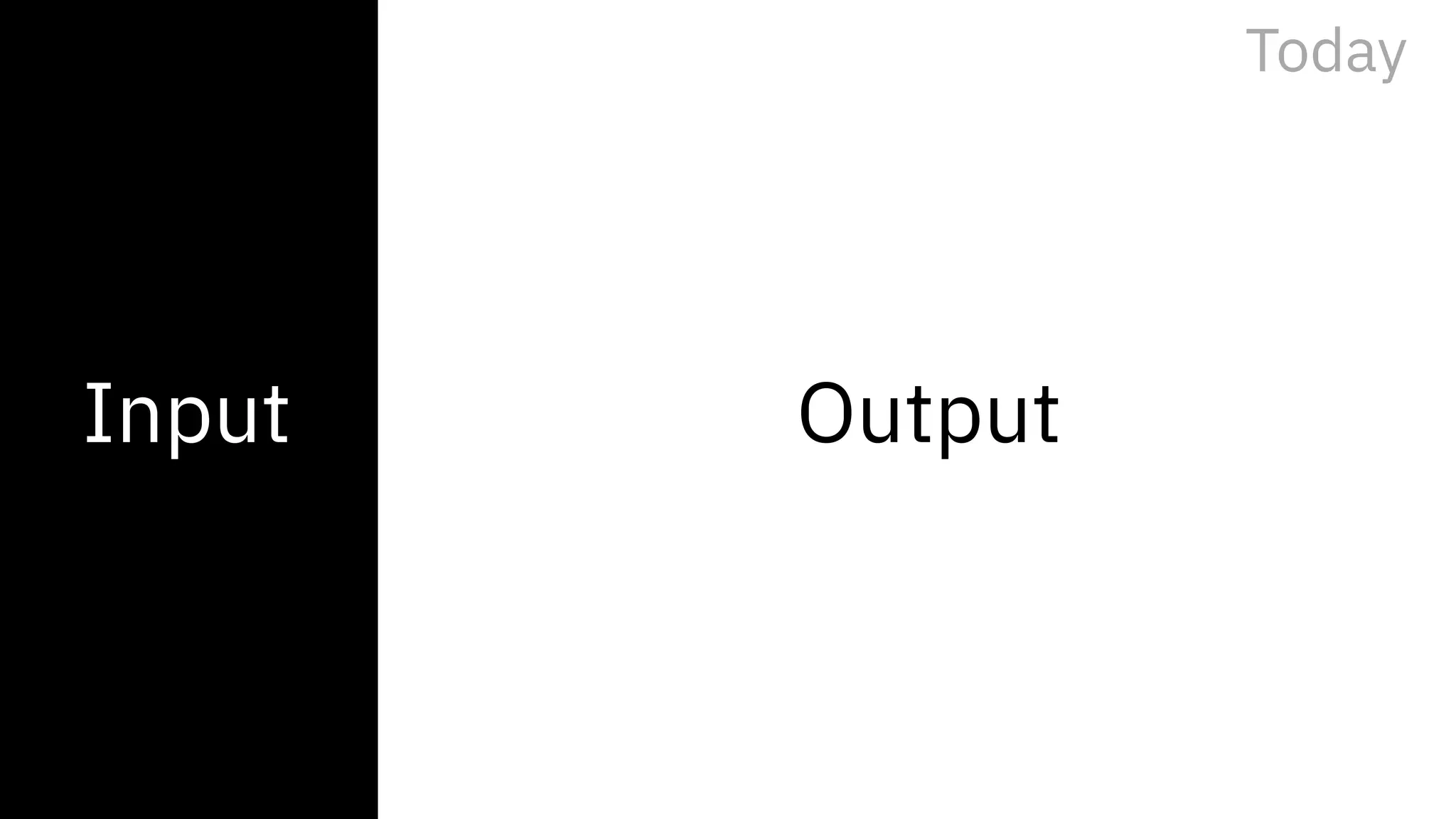
OutputInput
Today
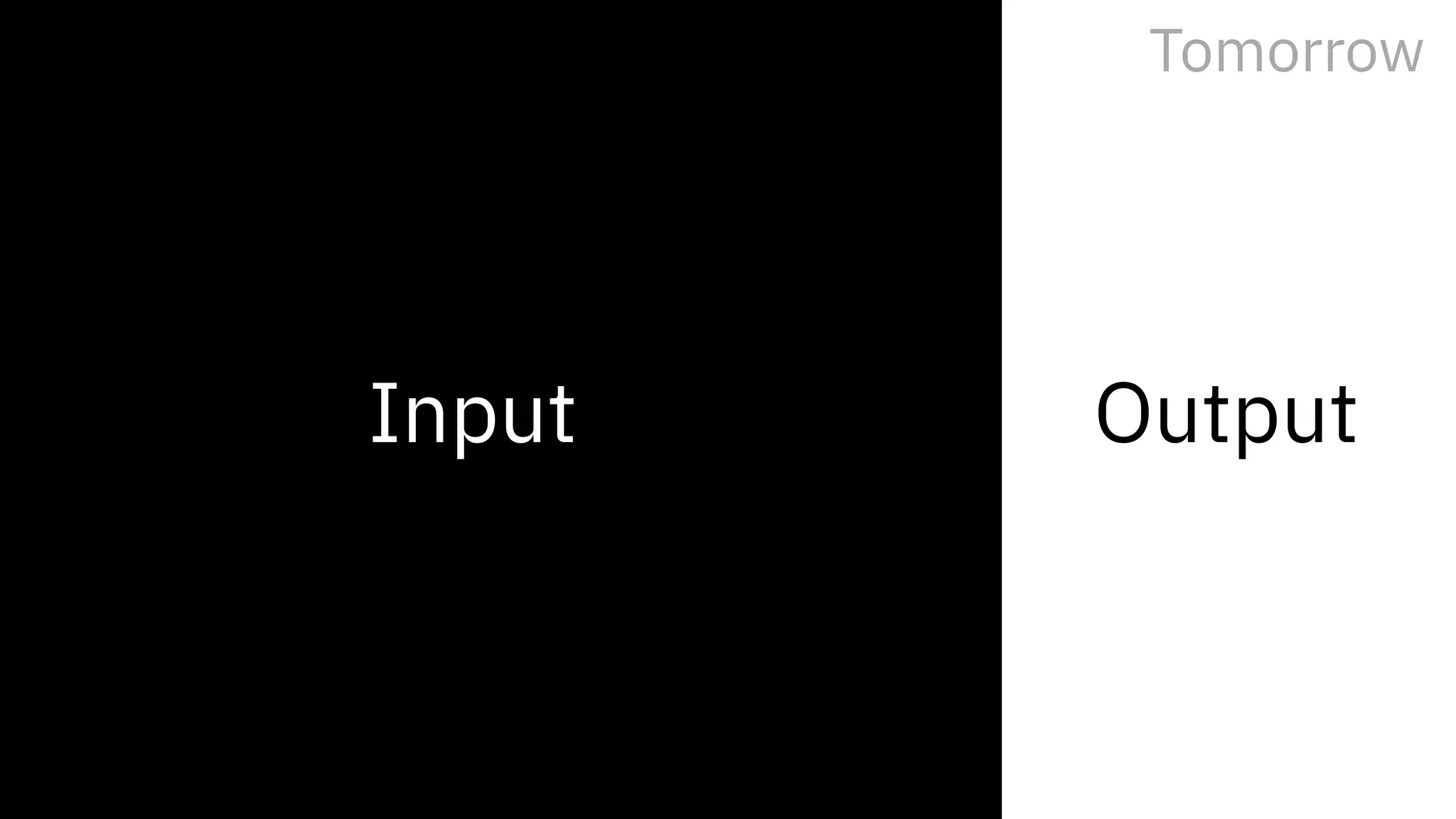
OutputInput
Tomorrow
What is the impact of IxD?
Conversion
all decisions are emotional
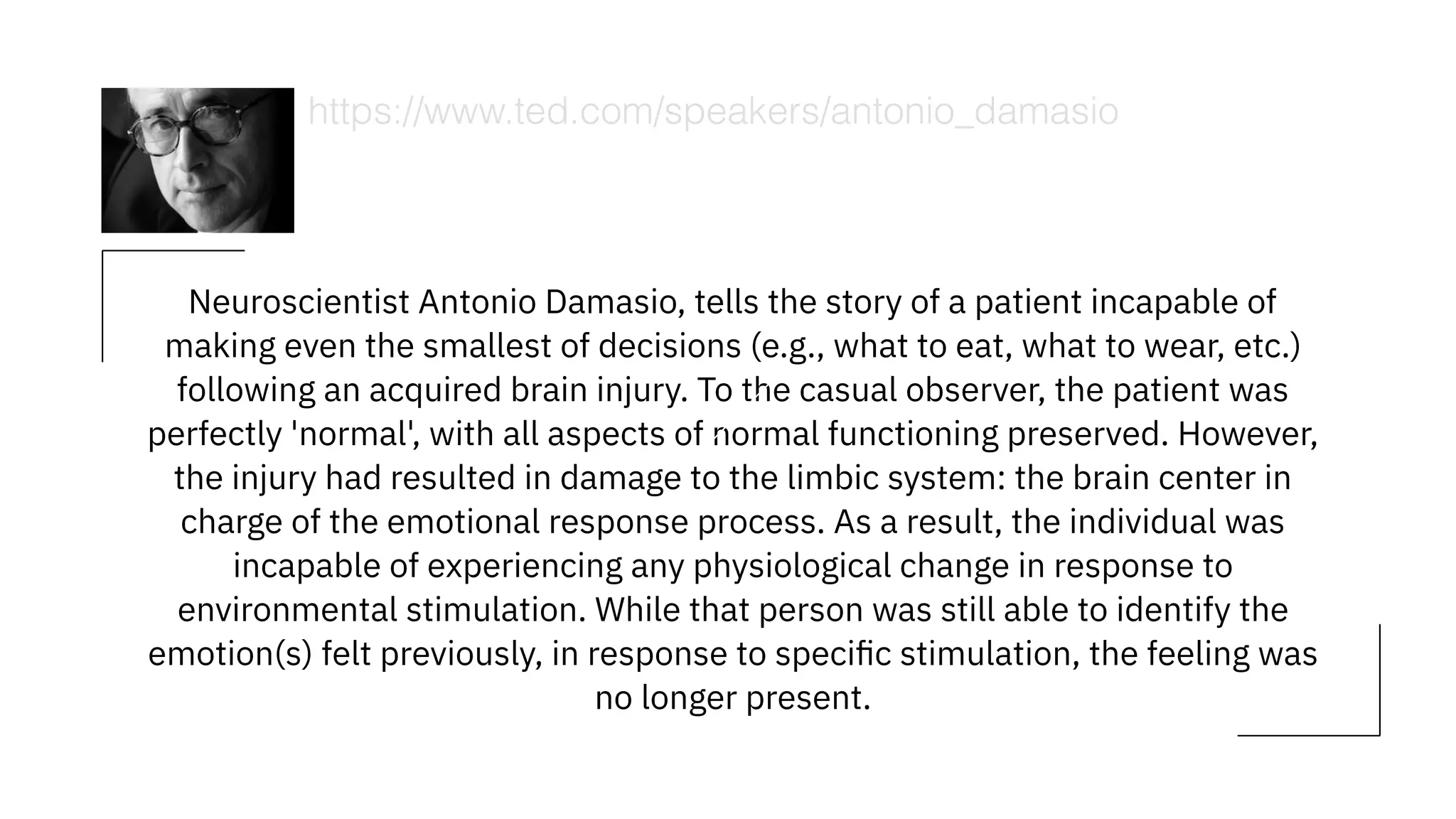
Neuroscientist Antonio Damasio, tells the story of a patient incapable of
making even the smallest of decisions (e.g., what to eat, what to wear, etc.)
following an acquired brain injury. To the casual observer, the patient was
perfectly 'normal', with all aspects of normal functioning preserved. However,
the injury had resulted in damage to the limbic system: the brain center in
charge of the emotional response process. As a result, the individual was
incapable of experiencing any physiological change in response to
environmental stimulation. While that person was still able to identify the
emotion(s) felt previously, in response to specific stimulation, the feeling was
no longer present.
https://www.ted.com/speakers/antonio_damasio
all design is visceral
Visual Sound Feel
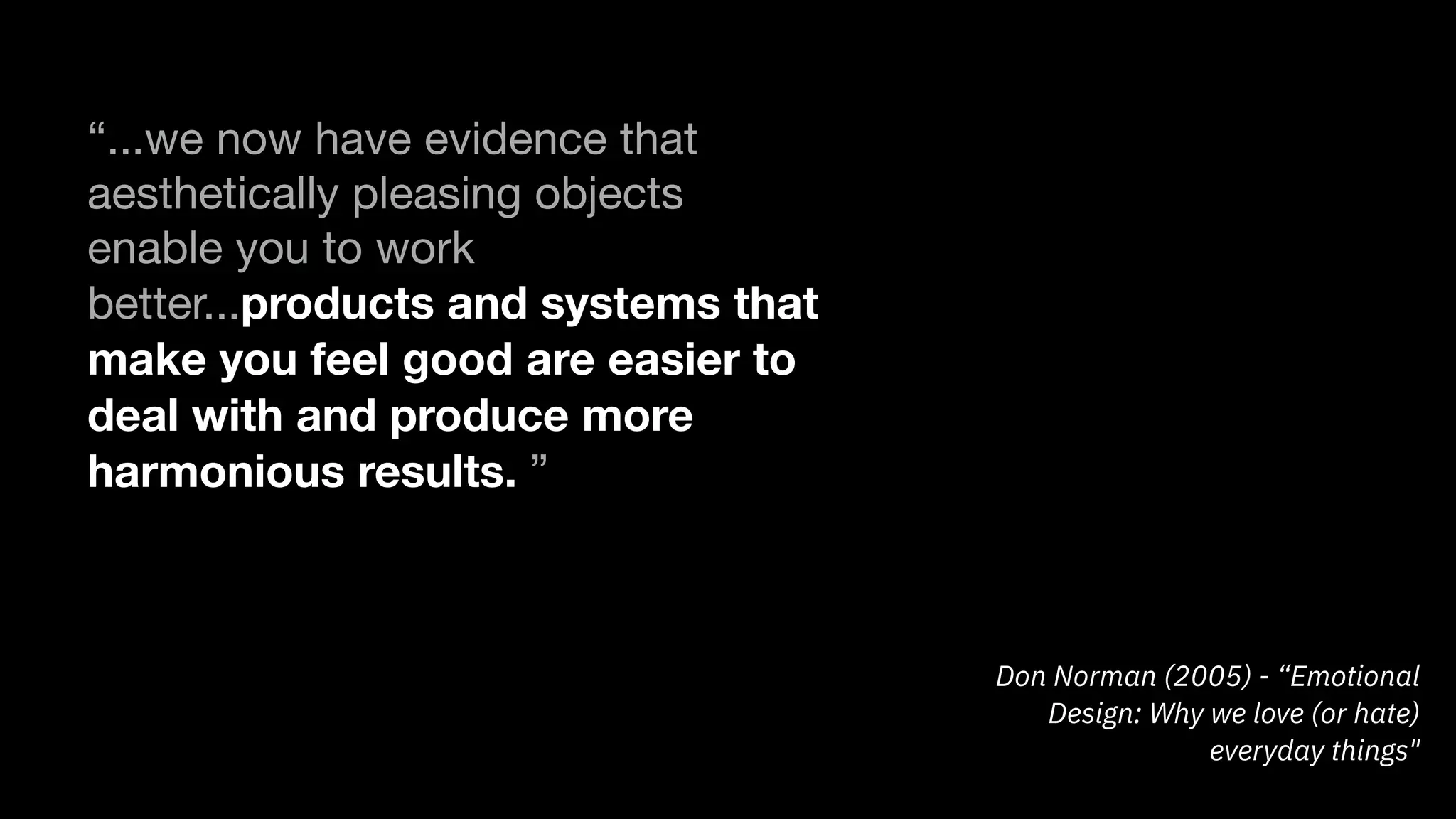
Don Norman (2005) - “Emotional
Design: Why we love (or hate)
everyday things"
“...we now have evidence that
aesthetically pleasing objects
enable you to work
better...products and systems that
make you feel good are easier to
deal with and produce more
harmonious results. ”
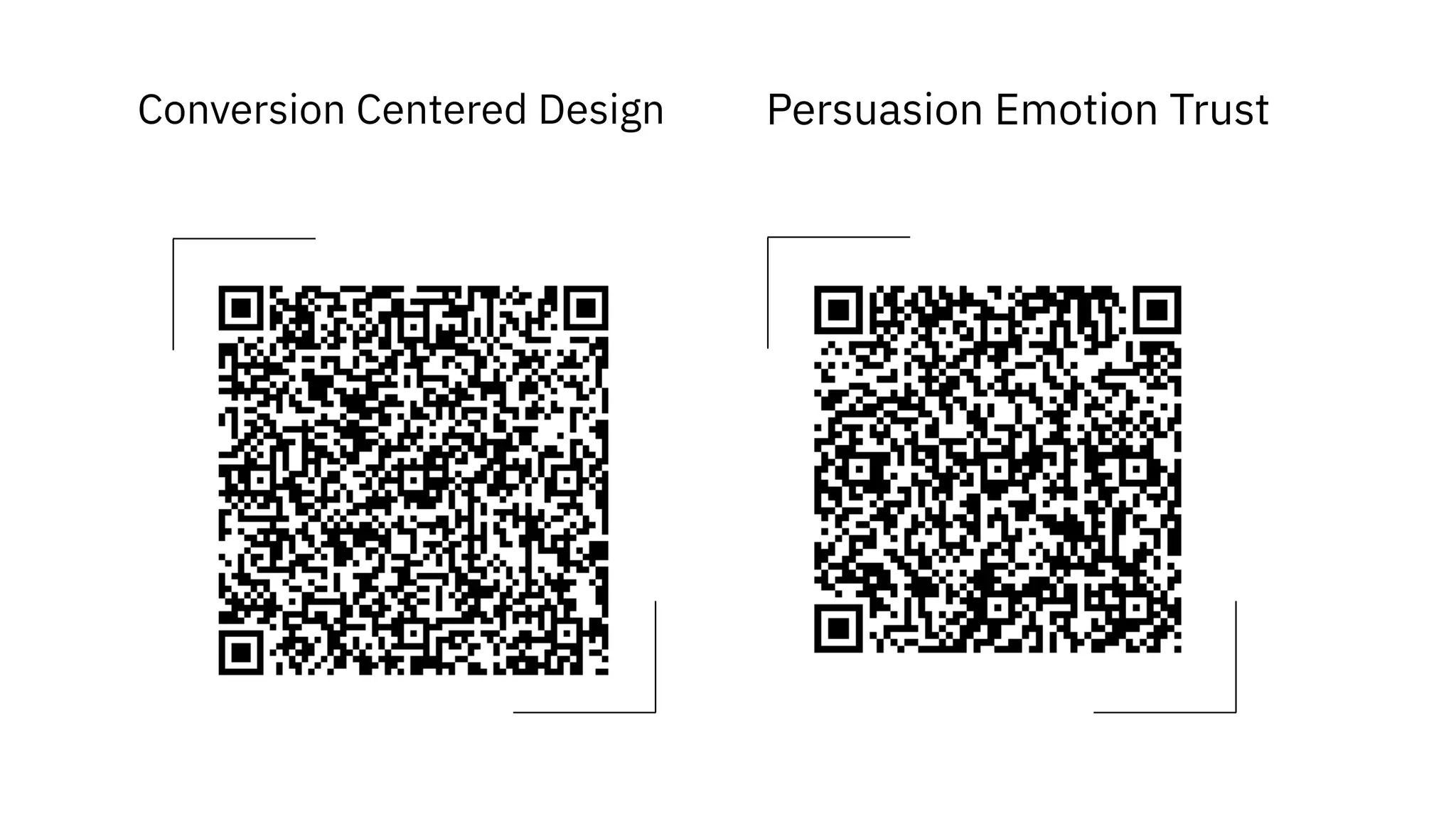
Conversion Centered Design Persuasion Emotion Trust
Branding
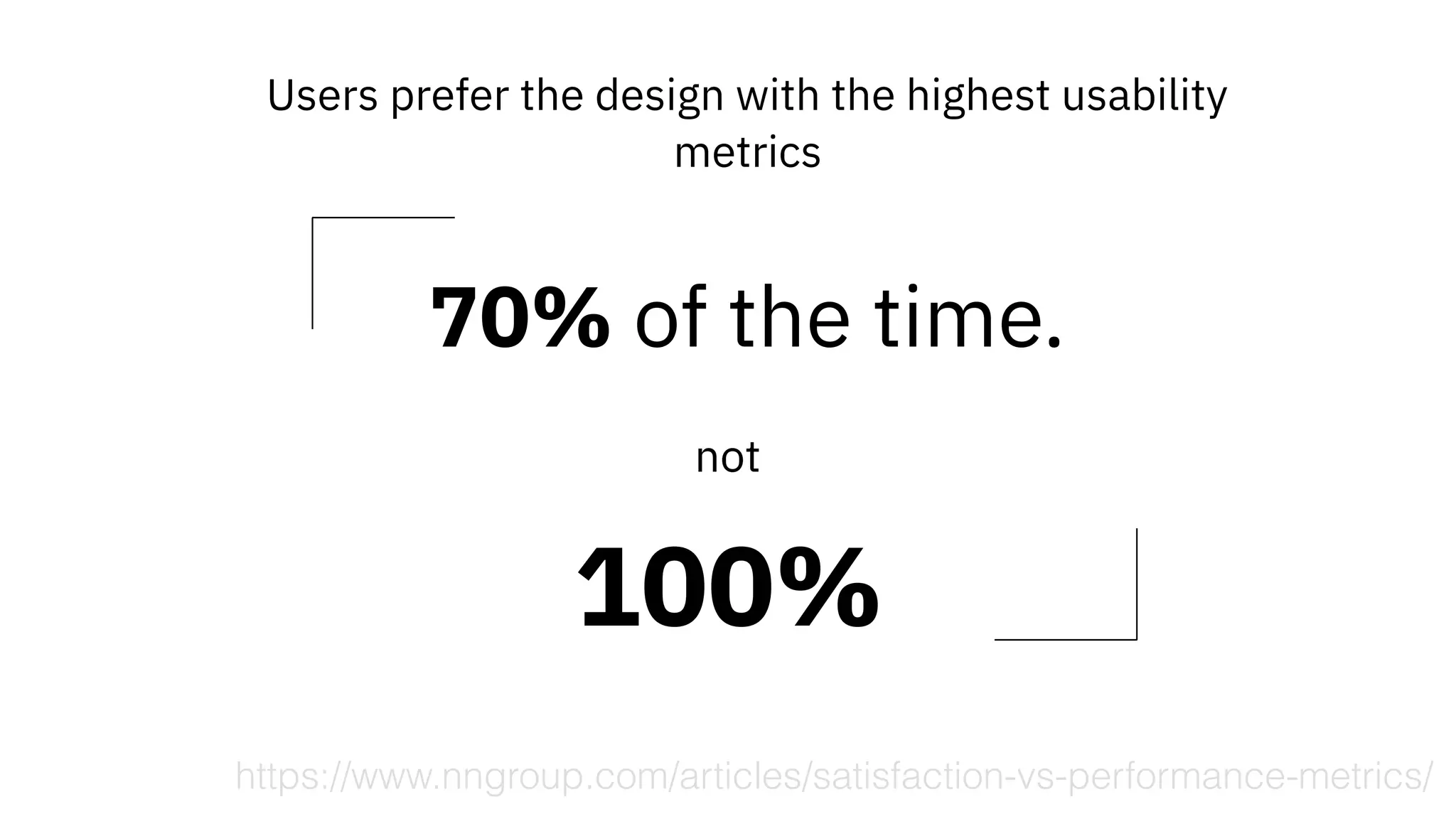
Users prefer the design with the highest usability
metrics
70% of the time.
not
100%
https://www.nngroup.com/articles/satisfaction-vs-performance-metrics/
interactivity attributes
responsiveness
direct or indirect manipulation
precision
pliability
continuous or discrete behavior
clear labels or no labels
expected or unexpected behavior
consistent or inconsistent behavior
brand attributes
emotions
the bottom line
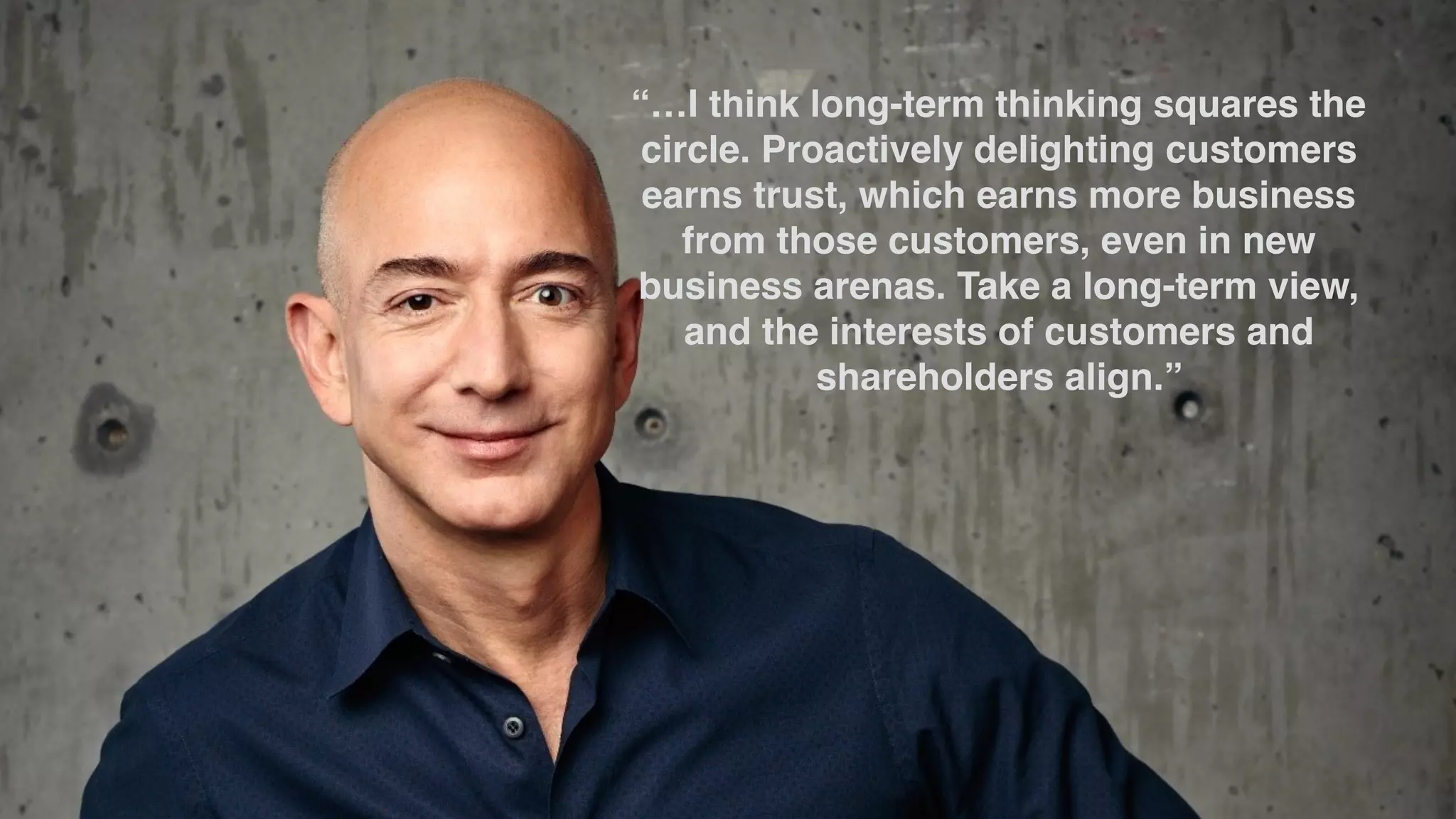
“…I think long-term thinking squares the
circle. Proactively delighting customers
earns trust, which earns more business
from those customers, even in new
business arenas. Take a long-term view,
and the interests of customers and
shareholders align.”
“…I think long-term thinking squares the
circle. Proactively delighting customers
earns trust, which earns more business
from those customers, even in new
business arenas. Take a long-term view,
and the interests of customers and
shareholders align.”
What are Interactions based on?
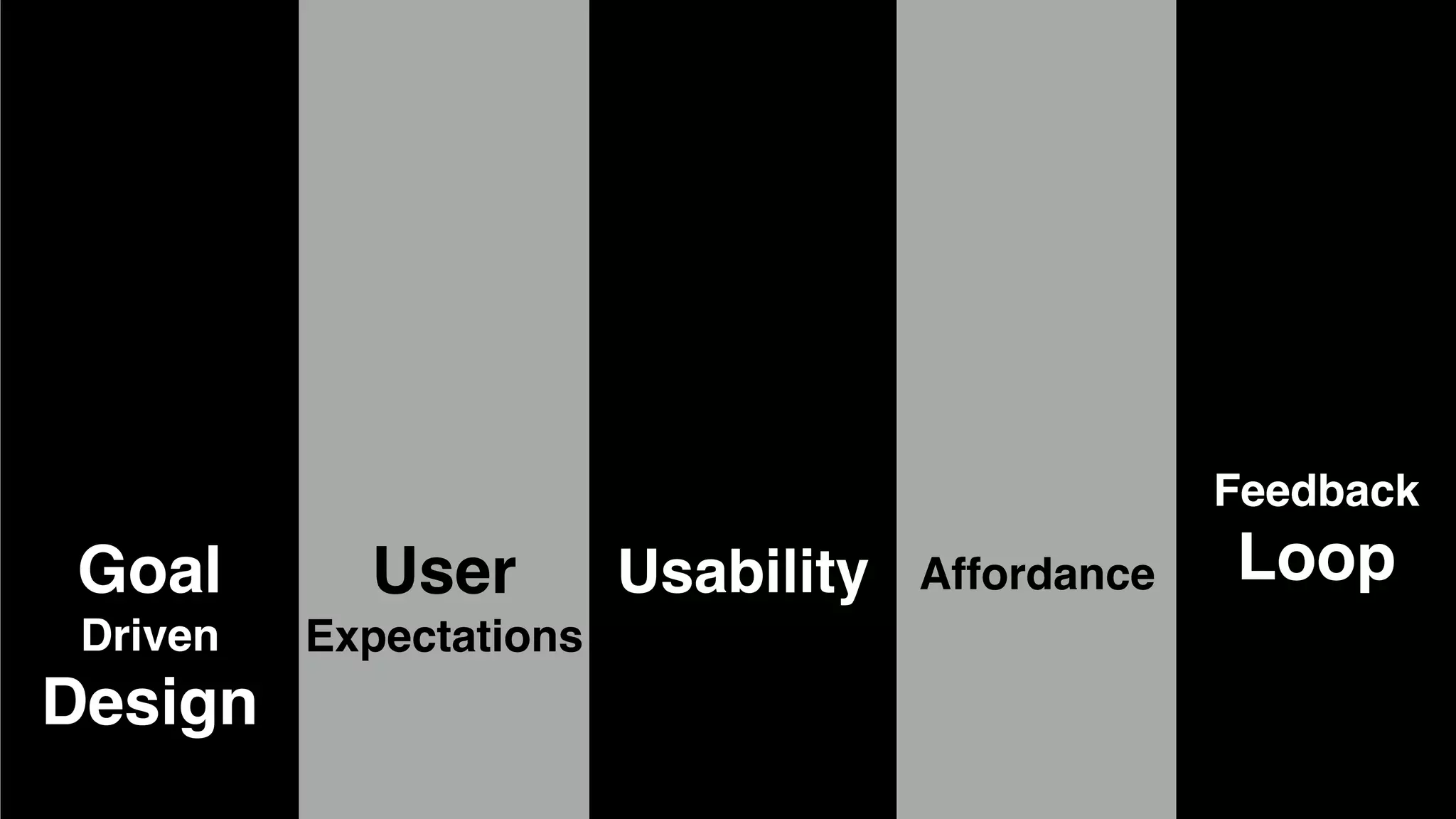
Goal
Driven
Design
User
Expectations
Usability
 Affordance
Feedback
Loop
Goal
Driven
Design
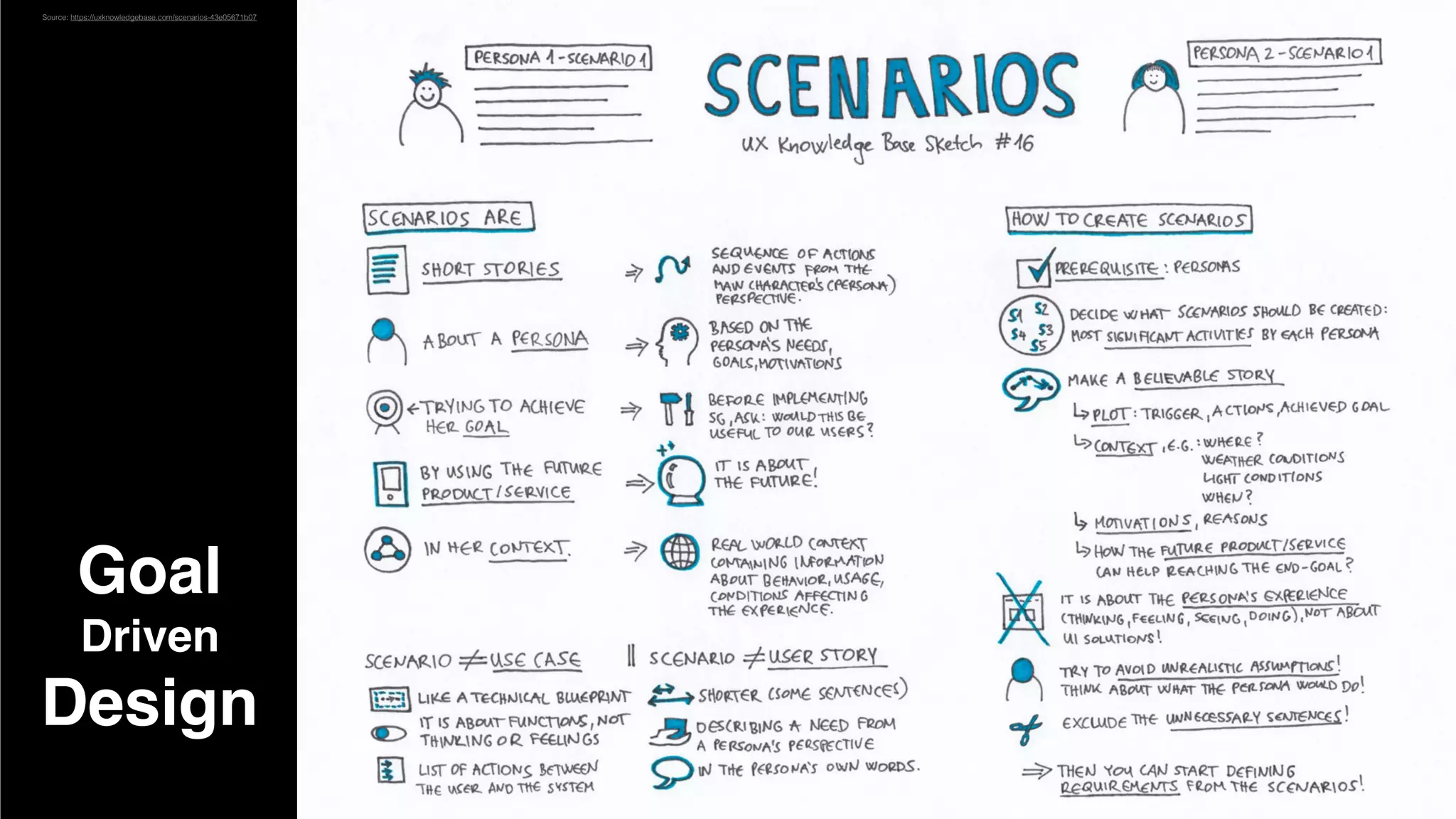
Source: https://uxknowledgebase.com/scenarios-43e05671b07
Who are the users you are designing for?
Personas
Where, when & how
will the user be accessing it?
User Scenarios - Devices & Context
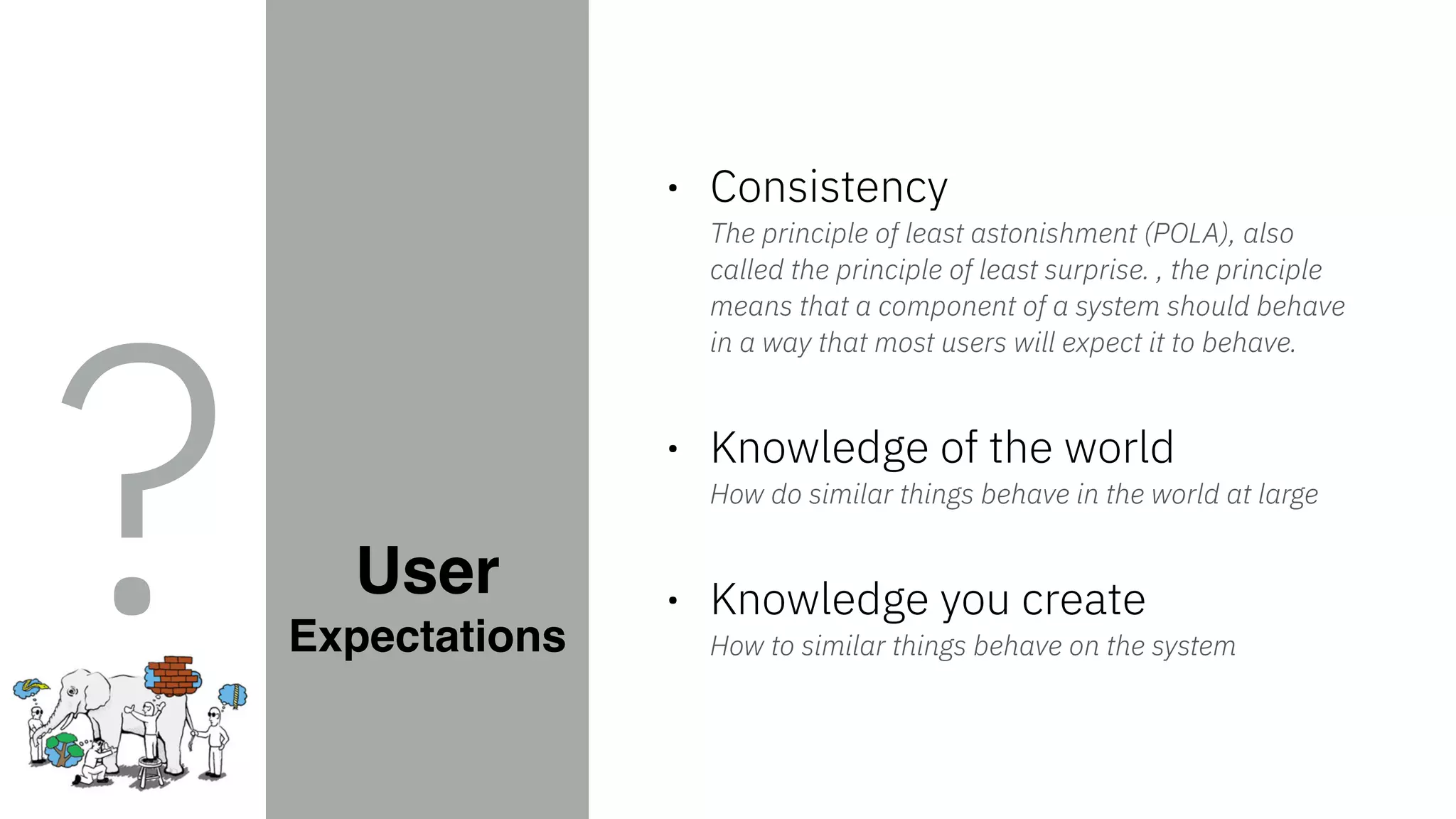
User
Expectations
• Consistency

The principle of least astonishment (POLA), also
called the principle of least surprise. , the principle
means that a component of a system should behave
in a way that most users will expect it to behave.

• Knowledge of the world

How do similar things behave in the world at large

• Knowledge you create

How to similar things behave on the system
?
What will the user be trying to accomplish?
Tasks
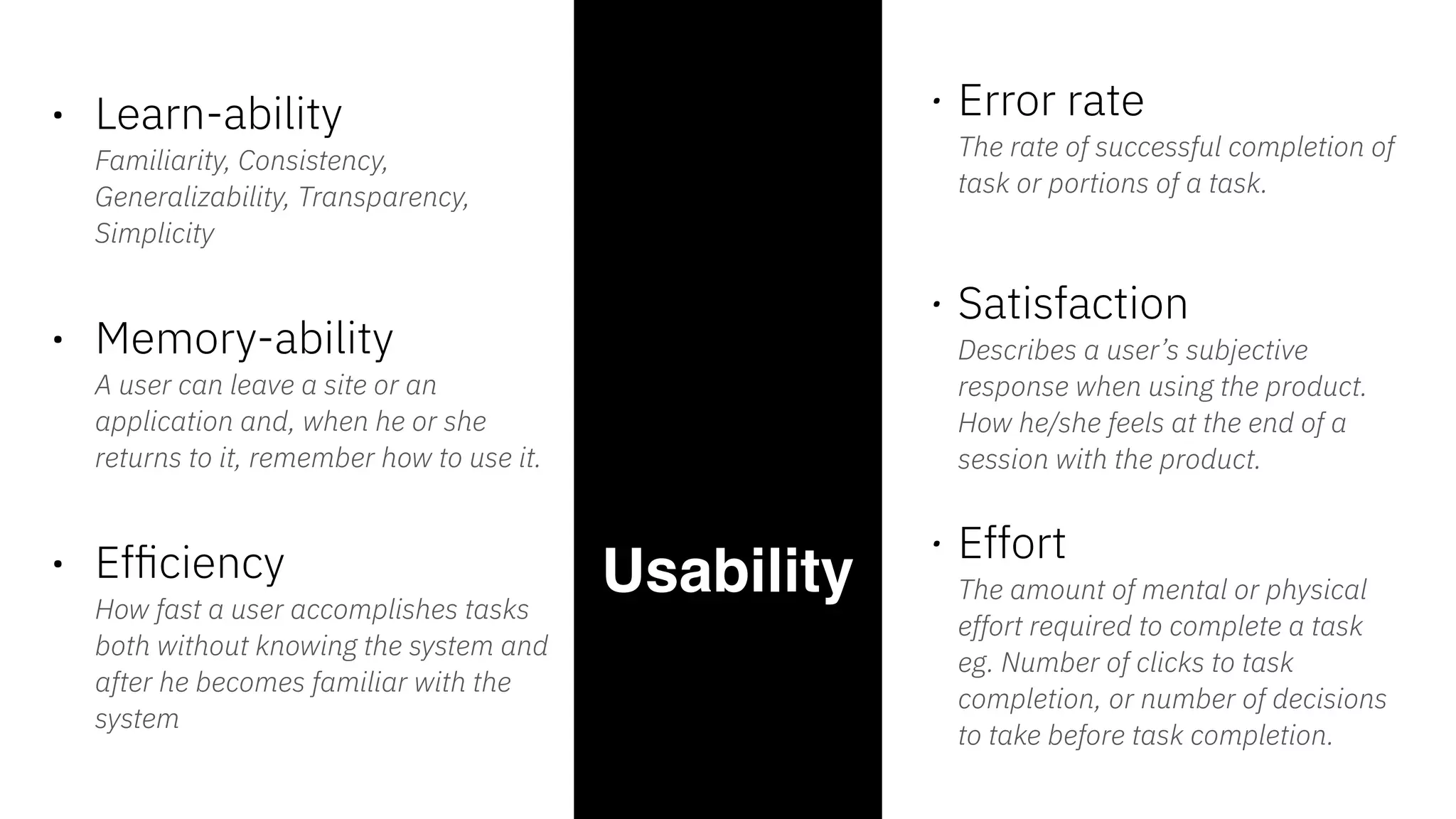
Usability

• Learn-ability 

Familiarity, Consistency,
Generalizability, Transparency,
Simplicity 

• Memory-ability

A user can leave a site or an
application and, when he or she
returns to it, remember how to use it.
• Efficiency

How fast a user accomplishes tasks
both without knowing the system and
after he becomes familiar with the
system
• Error rate 

The rate of successful completion of
task or portions of a task.


• Satisfaction

Describes a user’s subjective
response when using the product.
How he/she feels at the end of a
session with the product.
• Effort

The amount of mental or physical
effort required to complete a task
eg. Number of clicks to task
completion, or number of decisions
to take before task completion.
How does he feel after accomplishing the
task?
User Satisfaction
How easily can the task be completed?
Task flow
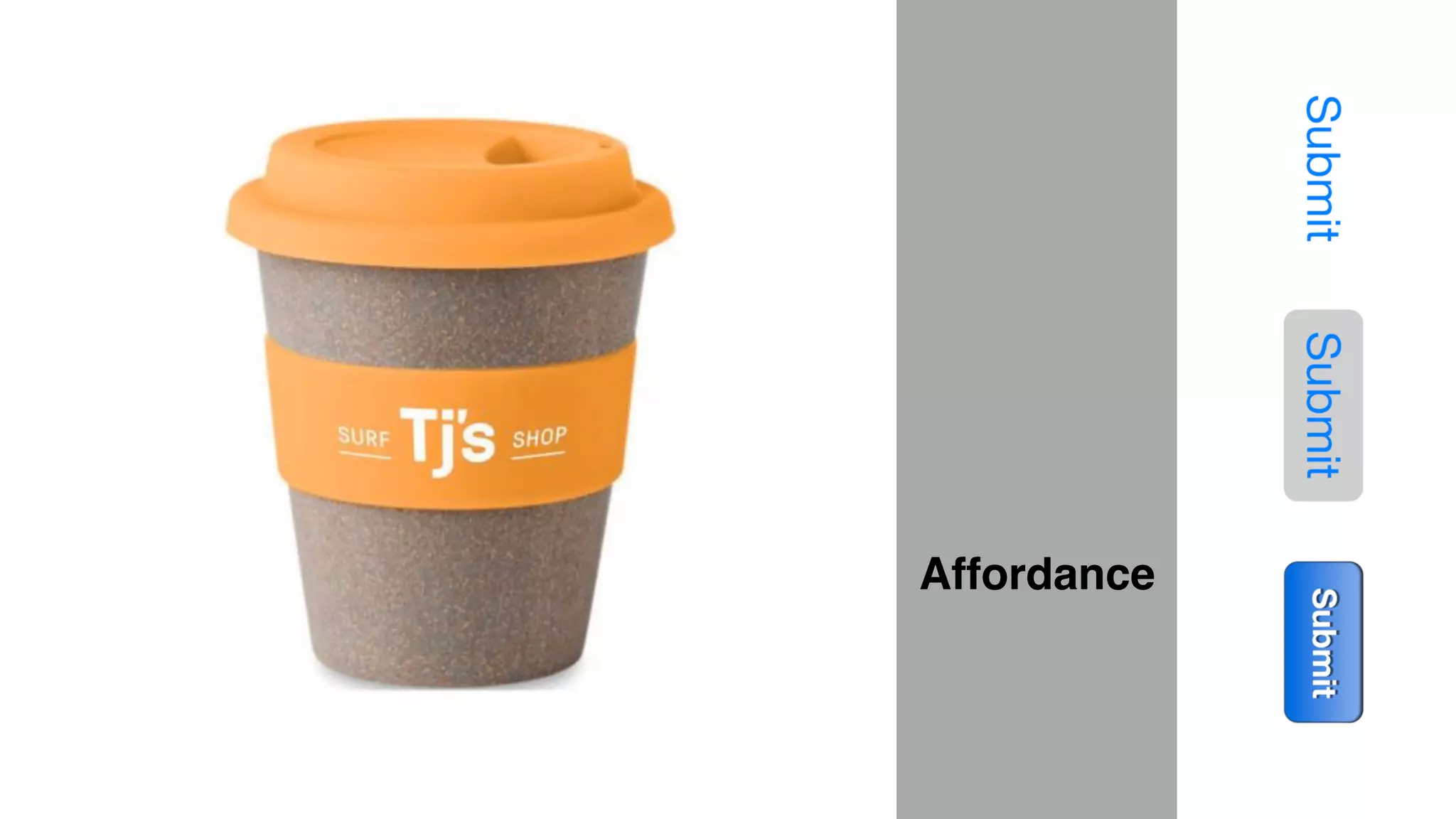
Affordance
Signifiers
Signifiers also work as symbols for meaning,
because people need to know why they
would interact with something, not just that
they can.
What does it look like I can do here?
Mental Models
Feedback
Loop
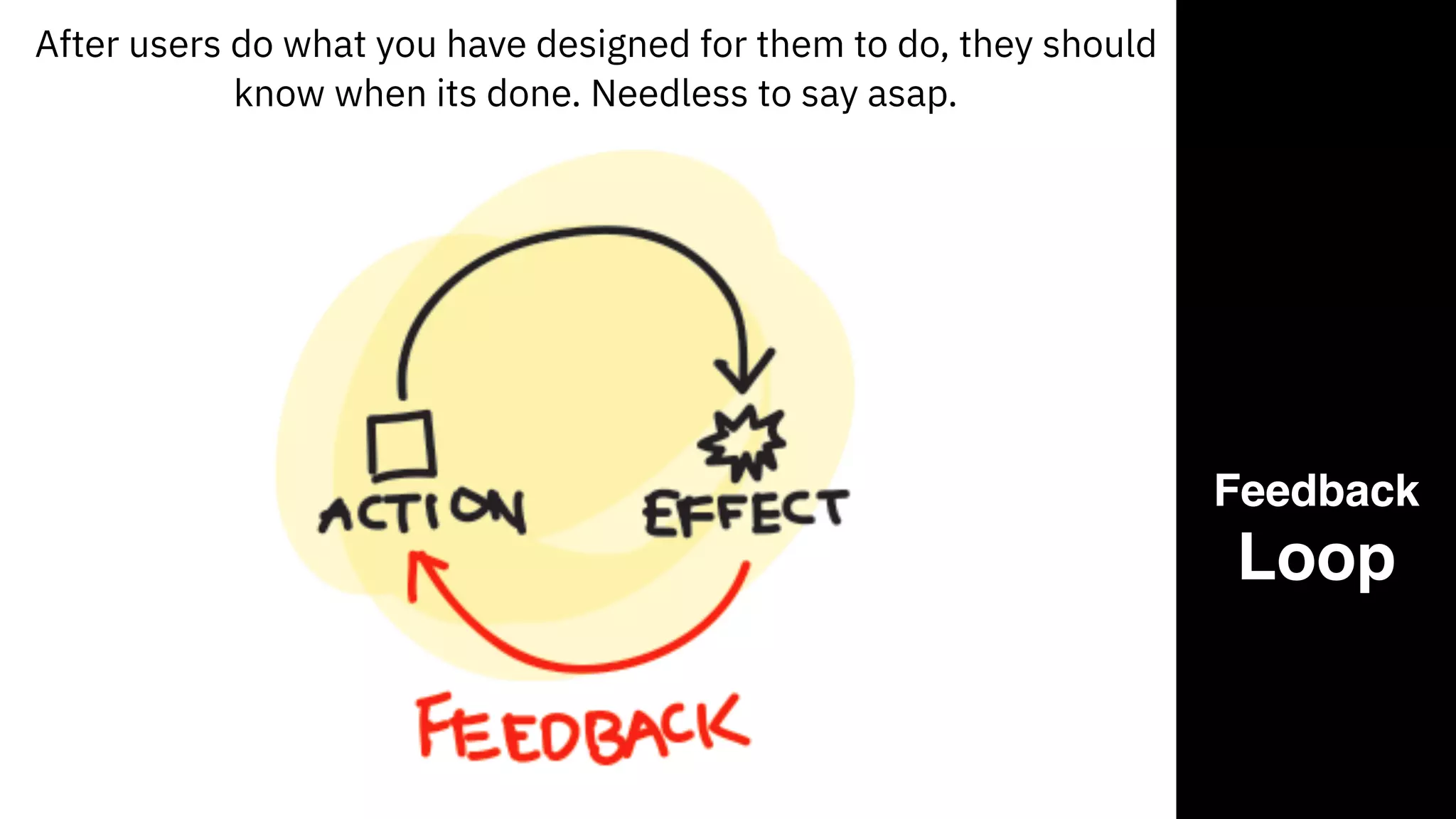
After users do what you have designed for them to do, they should
know when its done. Needless to say asap.
Feedback
Loop
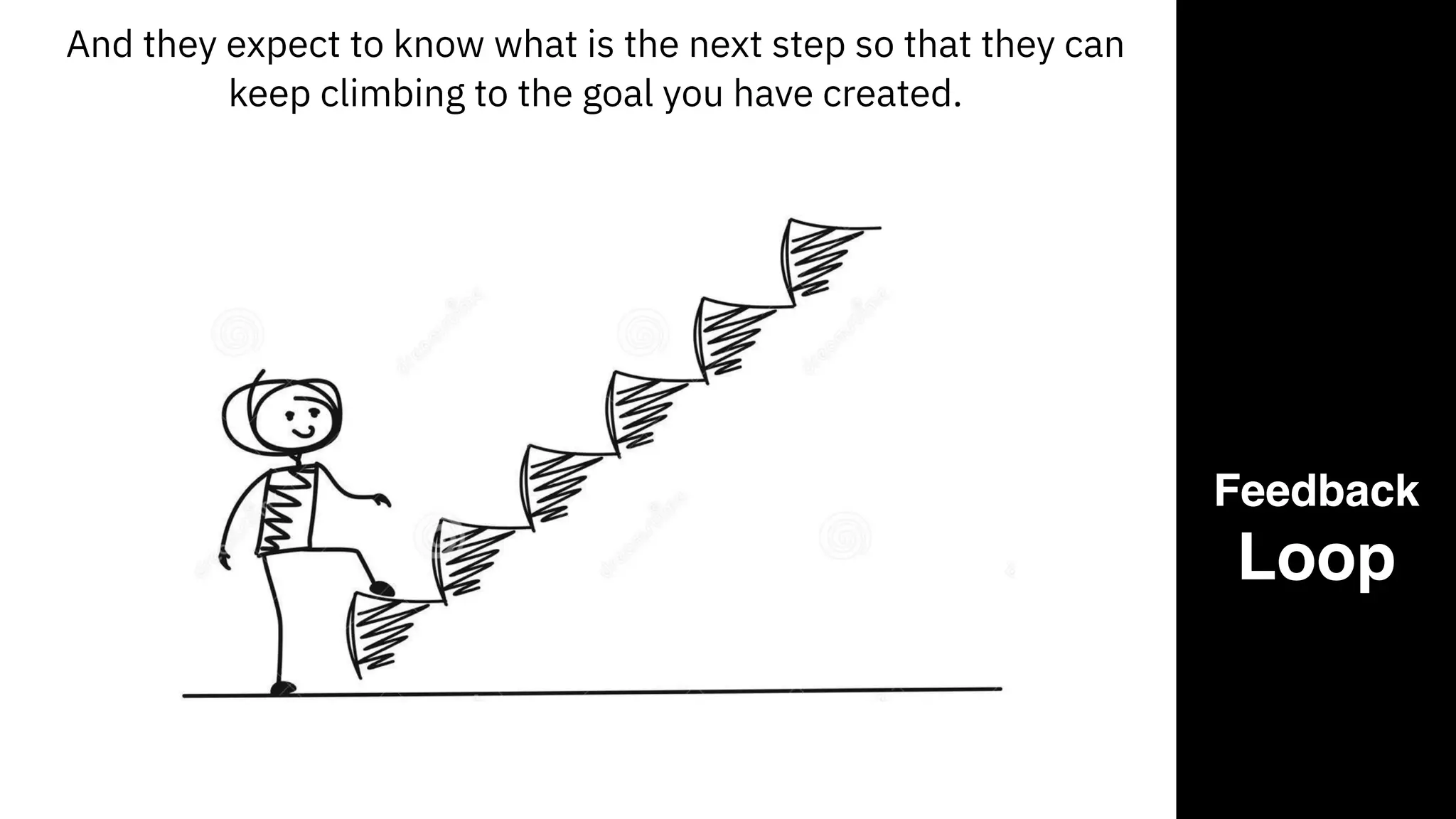
And they expect to know what is the next step so that they can
keep climbing to the goal you have created.
What happened? What next?
Task flow
What is Design responsibility?
Some stories from the road…
“She got thrown away from her parents house, ostracized
and excluded from her neighborhood. She had set her
privacy settings to her individual choice. But how did that
get overridden? One single notification had changed the
life of a woman who joined a queer choir group online."
Design is life changing
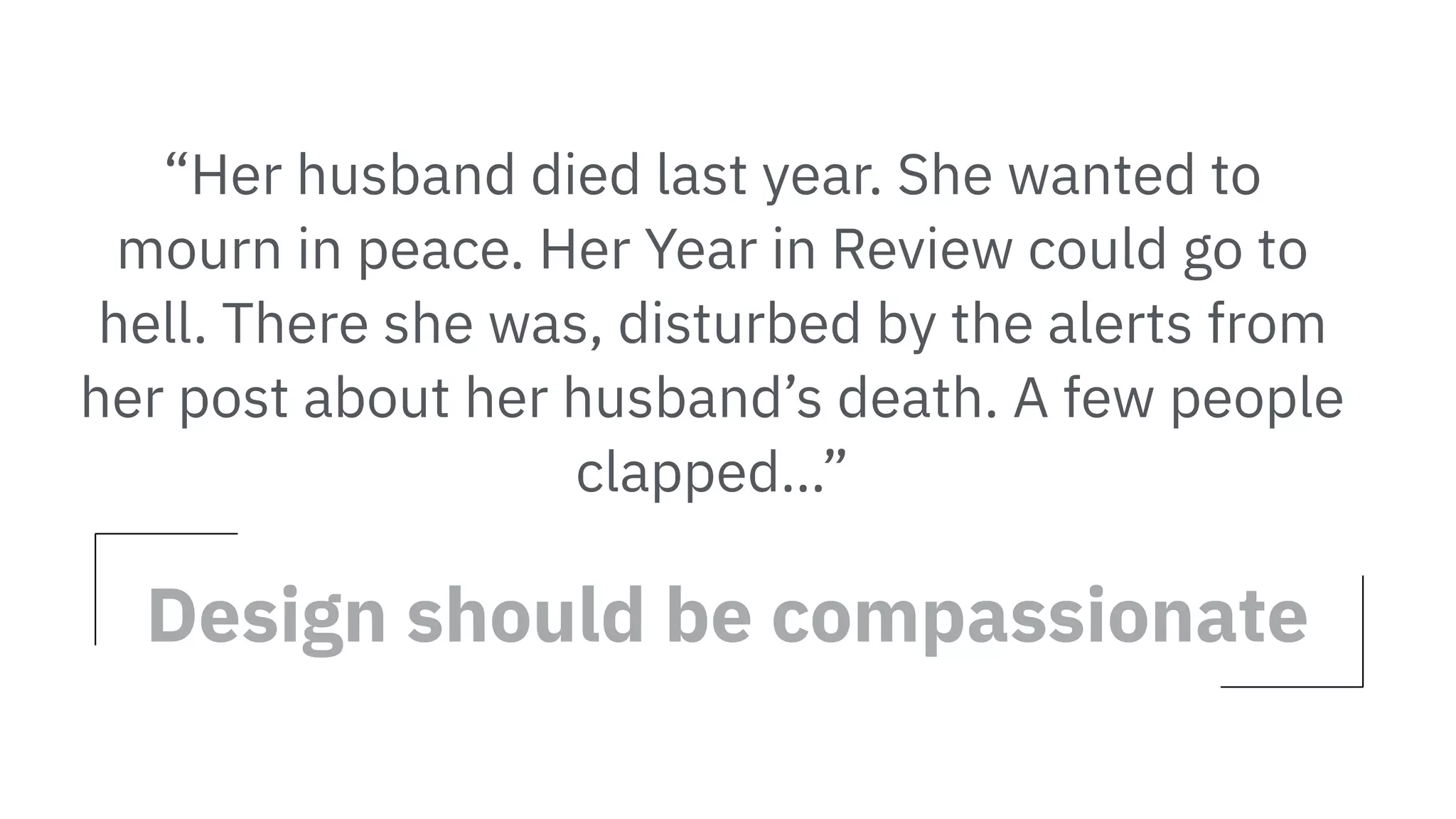
“Her husband died last year. She wanted to
mourn in peace. Her Year in Review could go to
hell. There she was, disturbed by the alerts from
her post about her husband’s death. A few people
clapped…”
Design should be compassionate
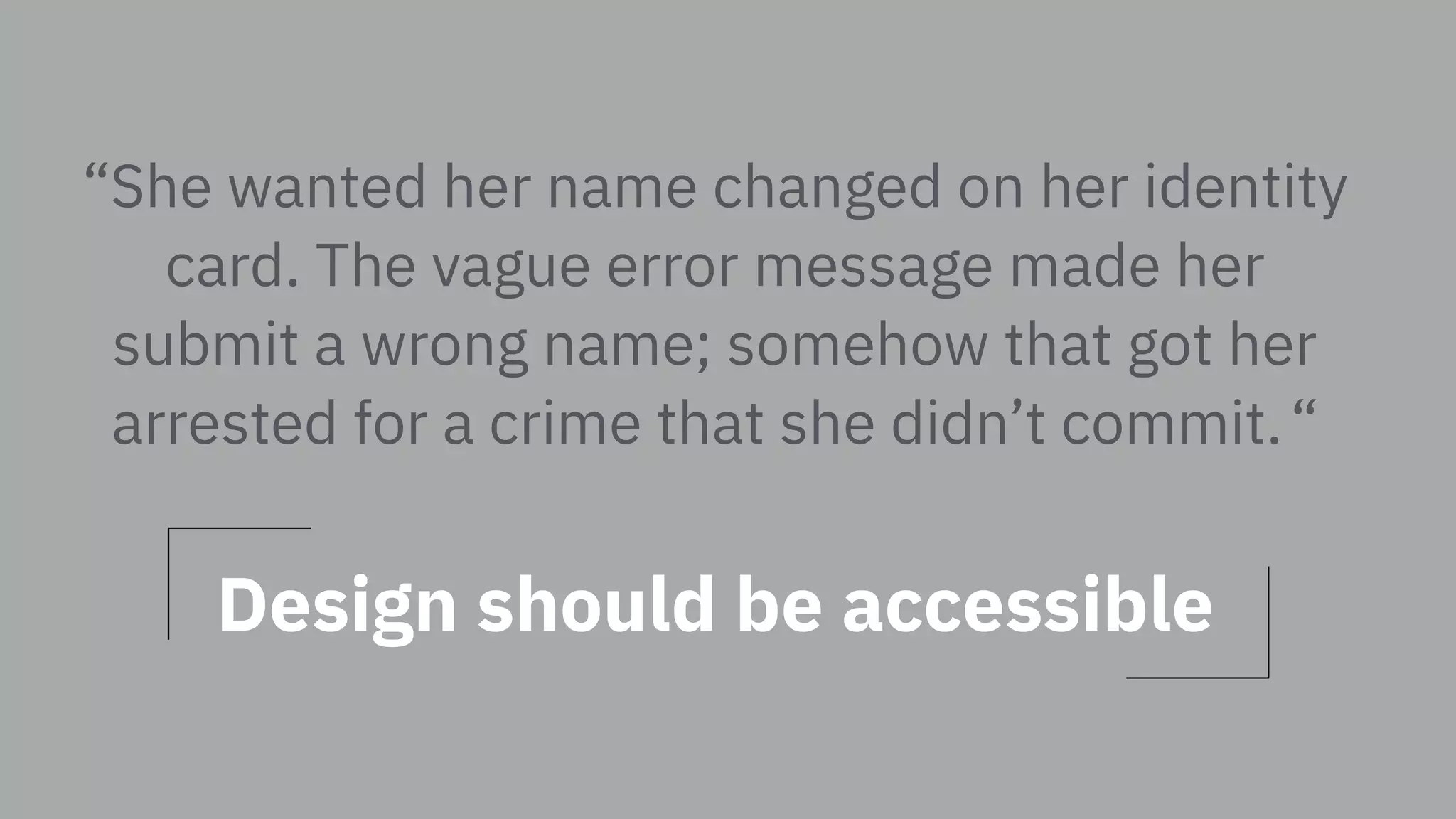
“She wanted her name changed on her identity
card. The vague error message made her
submit a wrong name; somehow that got her
arrested for a crime that she didn’t commit. “
Design should be accessible
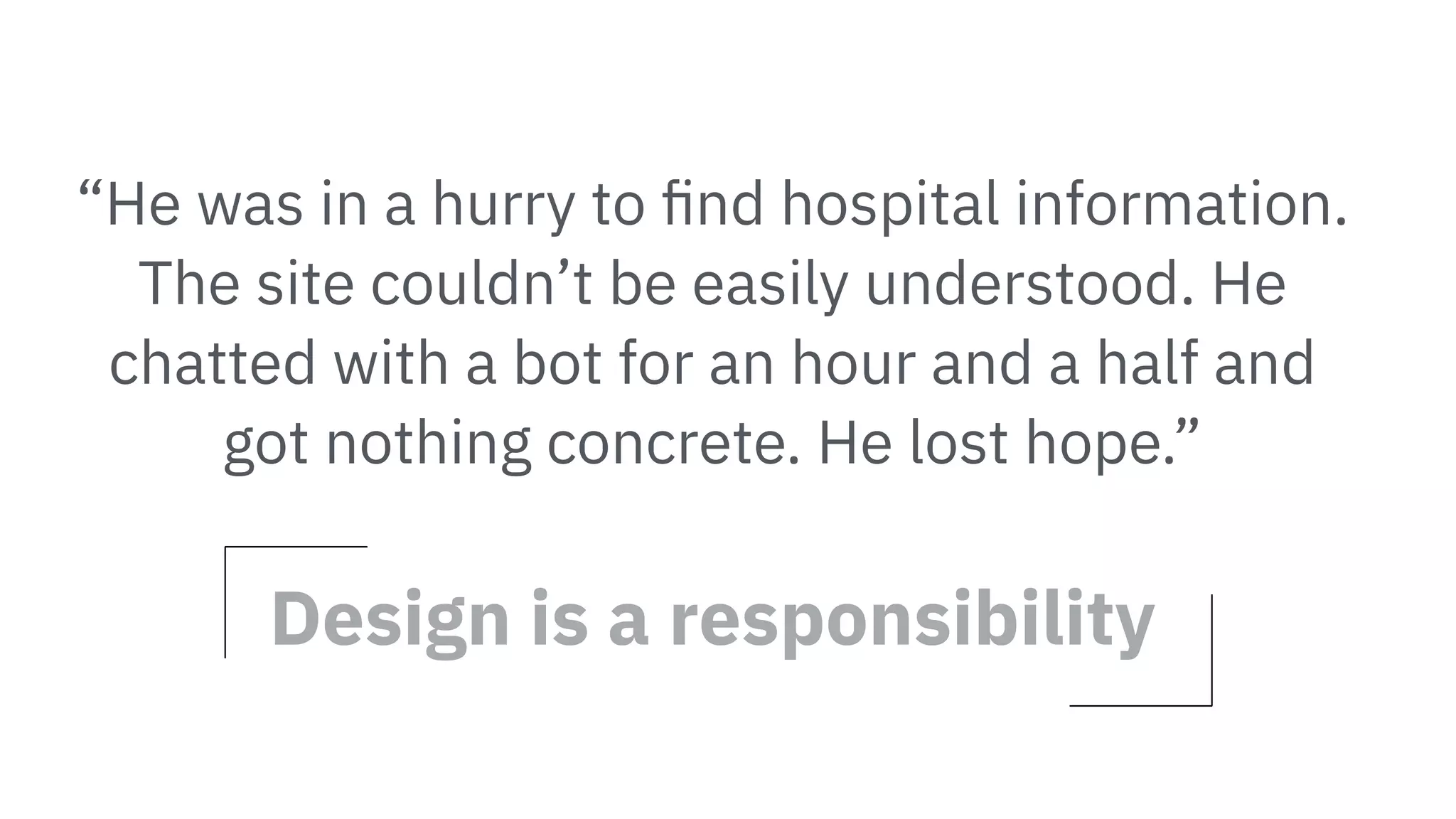
“He was in a hurry to find hospital information.
The site couldn’t be easily understood. He
chatted with a bot for an hour and a half and
got nothing concrete. He lost hope.”
Design is a responsibility
What IS Design responsibility?
ethical
sustainable
safe
acceptable
think about it.
Q&A

Anant National University - Interaction design - lesson 1

  • 1.
    Interaction Design Welcome to EktaRohra Jafri for Anant National University
  • 2.
  • 3.
  • 4.
  • 5.
  • 6.
  • 7.
  • 8.
  • 9.
  • 10.
  • 11.
    “The future willreach us on the trail of data that we lay down for it.” Ekta Rohra Jafri
  • 12.
    Please introduce yourselfand tell us why you want to be a designer - max 30 seconds lets get to know each other
  • 13.
    Interaction Design Welcome to EktaRohra Jafri for Anant National University
  • 14.
    • Introduction toIxD
 Primer - History, Importance, Impact 
 • The World of Interactions 
 From text to Neuralink
 On- screen behavior to Augmenting Human Actions 
 • Human Cognition & IxD
 Perception & Memorability in designing interactions
 • Heuristics of Interaction Design 
 What are Heuristics? Nielson’s 10 Course Contents September 23, 2019 September 24, 2019 September 30, 2019 October 1, 2019
  • 15.
    • Designing forthe Desktop Web
 Considerations, practices and patterns 
 • Designing for Mobile
 Covers mobile wearables
 • Ubiquitous Design
 Voice, Augmented Vision, iOT
 • Designing for Immersion
 Mixed Reality - Real world applications Course Contents November 4, 2019 November 5, 2019 November 11, 2019 November 12, 2019
  • 16.
    • Content Designfor Successful Interactions
 The role of the written word in HCI
 • Interactions for Behavioral Modification 
 How do we use interactions to modify behavior
 • Iterative IxD
 Rapid Prototyping & Usability testing - A/B, Eye Tracking, heat maps et all.
 • Frameworks & Interaction Design
 Role of IxD in Design Thinking, framework for IxD Course Contents November 18, 2019 November 19, 2019 November 25, 2019 November 26, 2019
  • 17.
    • Jury Panel
 Evaluationof Students? Course Contents December 2, 2019
  • 18.
  • 19.
  • 20.
  • 21.
  • 22.
  • 23.
  • 24.
    — The InteractionDesign Association (IxDA) “Interaction Design (IxD) defines the structure and behavior of interactive systems. Interaction designers strive to create meaningful relationships between people and the products and services that they use, from computers to mobile devices to appliances and beyond. Our practices are evolving with the world.”
  • 28.
    How old isIxD? How far have we come in the science?
  • 29.
    1955 Henry Dreyfuss andthe art of designing for people “When the point of contact between the product and the people becomes a point of friction, then the [designer] has failed. On the other hand, if people are made safer, more comfortable, more eager to purchase, more efficient— or just plain happier—by contact with the product, then the designer has succeeded.”
  • 31.
    2019 The Attention Economy byLexie Kane “Designers have a choice in this economy of attention: they can balance business needs — such as the need for new subscribers, advertising revenue, and profit — with respect for the best interests of their users.”
  • 32.
  • 33.
  • 35.
    What is theimpact of IxD?
  • 36.
  • 37.
  • 38.
    Neuroscientist Antonio Damasio,tells the story of a patient incapable of making even the smallest of decisions (e.g., what to eat, what to wear, etc.) following an acquired brain injury. To the casual observer, the patient was perfectly 'normal', with all aspects of normal functioning preserved. However, the injury had resulted in damage to the limbic system: the brain center in charge of the emotional response process. As a result, the individual was incapable of experiencing any physiological change in response to environmental stimulation. While that person was still able to identify the emotion(s) felt previously, in response to specific stimulation, the feeling was no longer present. https://www.ted.com/speakers/antonio_damasio
  • 39.
    all design isvisceral Visual Sound Feel
  • 40.
    Don Norman (2005)- “Emotional Design: Why we love (or hate) everyday things" “...we now have evidence that aesthetically pleasing objects enable you to work better...products and systems that make you feel good are easier to deal with and produce more harmonious results. ”
  • 41.
    Conversion Centered DesignPersuasion Emotion Trust
  • 42.
  • 43.
    Users prefer thedesign with the highest usability metrics 70% of the time. not 100% https://www.nngroup.com/articles/satisfaction-vs-performance-metrics/
  • 44.
  • 45.
  • 46.
    direct or indirectmanipulation
  • 47.
  • 48.
  • 49.
  • 50.
    clear labels orno labels
  • 51.
  • 52.
  • 53.
  • 54.
  • 55.
    “…I think long-termthinking squares the circle. Proactively delighting customers earns trust, which earns more business from those customers, even in new business arenas. Take a long-term view, and the interests of customers and shareholders align.”
  • 56.
    “…I think long-termthinking squares the circle. Proactively delighting customers earns trust, which earns more business from those customers, even in new business arenas. Take a long-term view, and the interests of customers and shareholders align.”
  • 57.
  • 58.
  • 59.
  • 60.
    Who are theusers you are designing for? Personas
  • 61.
    Where, when &how will the user be accessing it? User Scenarios - Devices & Context
  • 62.
    User Expectations • Consistency
 The principleof least astonishment (POLA), also called the principle of least surprise. , the principle means that a component of a system should behave in a way that most users will expect it to behave.
 • Knowledge of the world
 How do similar things behave in the world at large
 • Knowledge you create
 How to similar things behave on the system ?
  • 63.
    What will theuser be trying to accomplish? Tasks
  • 64.
    Usability
 • Learn-ability 
 Familiarity,Consistency, Generalizability, Transparency, Simplicity 
 • Memory-ability
 A user can leave a site or an application and, when he or she returns to it, remember how to use it. • Efficiency
 How fast a user accomplishes tasks both without knowing the system and after he becomes familiar with the system • Error rate 
 The rate of successful completion of task or portions of a task.
 
 • Satisfaction
 Describes a user’s subjective response when using the product. How he/she feels at the end of a session with the product. • Effort
 The amount of mental or physical effort required to complete a task eg. Number of clicks to task completion, or number of decisions to take before task completion.
  • 65.
    How does hefeel after accomplishing the task? User Satisfaction
  • 66.
    How easily canthe task be completed? Task flow
  • 67.
  • 68.
    Signifiers Signifiers also workas symbols for meaning, because people need to know why they would interact with something, not just that they can.
  • 69.
    What does itlook like I can do here? Mental Models
  • 70.
    Feedback Loop After users dowhat you have designed for them to do, they should know when its done. Needless to say asap.
  • 71.
    Feedback Loop And they expectto know what is the next step so that they can keep climbing to the goal you have created.
  • 72.
    What happened? Whatnext? Task flow
  • 74.
    What is Designresponsibility?
  • 75.
    Some stories fromthe road…
  • 76.
    “She got thrownaway from her parents house, ostracized and excluded from her neighborhood. She had set her privacy settings to her individual choice. But how did that get overridden? One single notification had changed the life of a woman who joined a queer choir group online." Design is life changing
  • 77.
    “Her husband diedlast year. She wanted to mourn in peace. Her Year in Review could go to hell. There she was, disturbed by the alerts from her post about her husband’s death. A few people clapped…” Design should be compassionate
  • 78.
    “She wanted hername changed on her identity card. The vague error message made her submit a wrong name; somehow that got her arrested for a crime that she didn’t commit. “ Design should be accessible
  • 79.
    “He was ina hurry to find hospital information. The site couldn’t be easily understood. He chatted with a bot for an hour and a half and got nothing concrete. He lost hope.” Design is a responsibility
  • 80.
    What IS Designresponsibility?
  • 81.
  • 82.
  • 83.
  • 84.
  • 85.
  • 86.