Analysis of Disasters in India
Presented By –
Ch. Shanmukha Priya
CB.SW.P2MSW16027
INTRODUCTION
• Despite the fact that humans have made tremendous
progress in various aspects in terms of technological
growths, yet there is one area where they have not been
able to surpass and that is the supremacy of Nature.
• Nature has always proved much more powerful than the
human race, even though there have been lot of
technological and scientific advancements and
achievements.
• In spite of development in weather forecast techniques,
disasters at many times cannot be prevented.
• In today’s age, the natural calamities in the form of floods,
tsunamis, famines, cyclones, earthquakes are mainly due
to global warming.
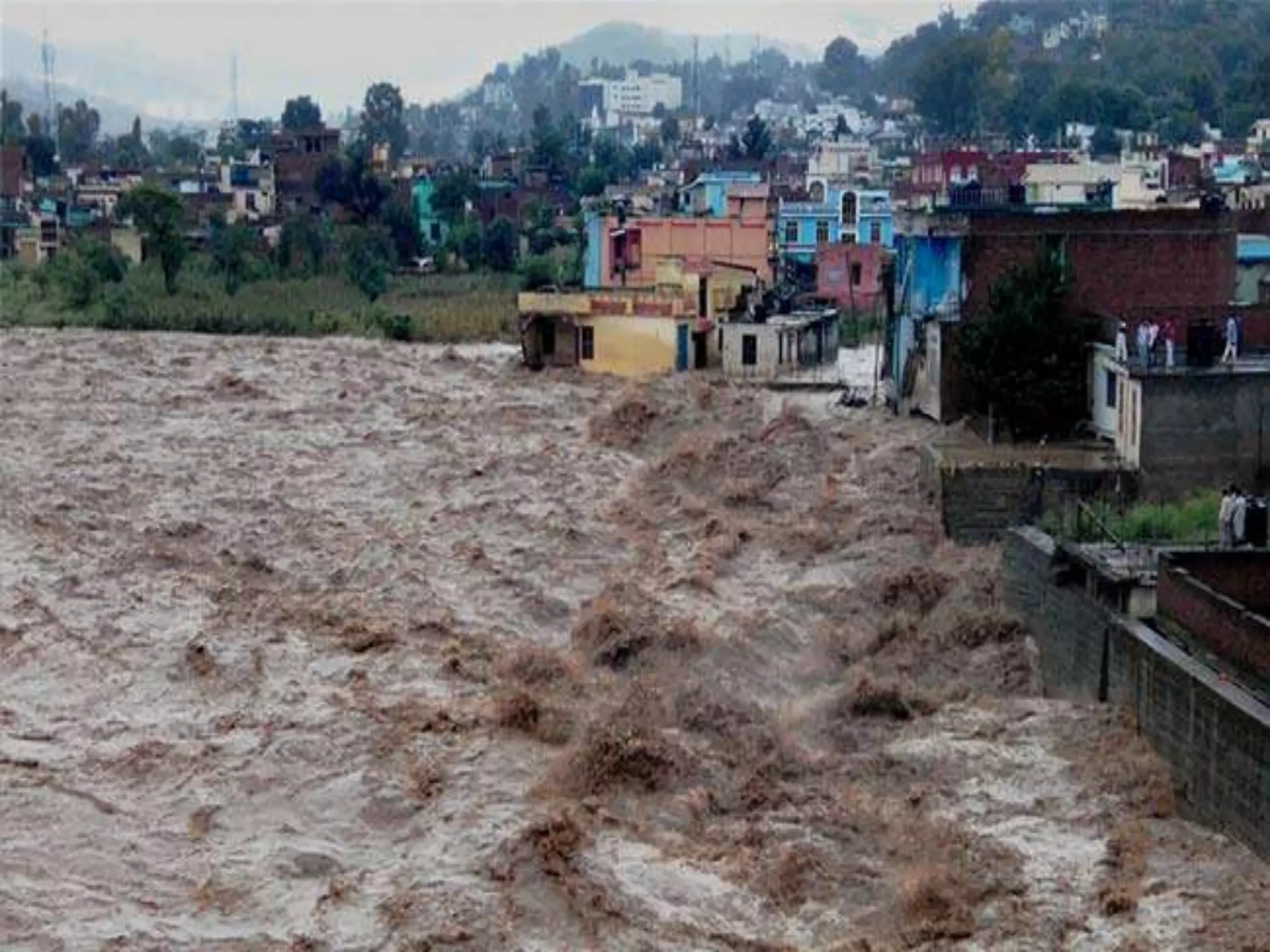
1. KASHMIR FLOODS
Year: 2014
Areas affected: Srinagar, Bandipur, Rajouri etc.
Death toll: 500 plus
• Caused by continuous torrential rainfall, the Kashmir region in
September 2014 suffered from massive floods, leading to the
death of around 500 people.
• Hundreds of people were trapped in their homes for days,
without food and water.
• According to reports, around 2600 villages were affected in
Jammu and Kashmir.
• In Kashmir itself, 390 villages were completely submerged in
water.
• Many parts of Srinagar were also submerged by the floods.
• Around 50 bridges were damaged across the state, and the
damage of properties was estimated between Rs. 5000 cr and
6000 cr.
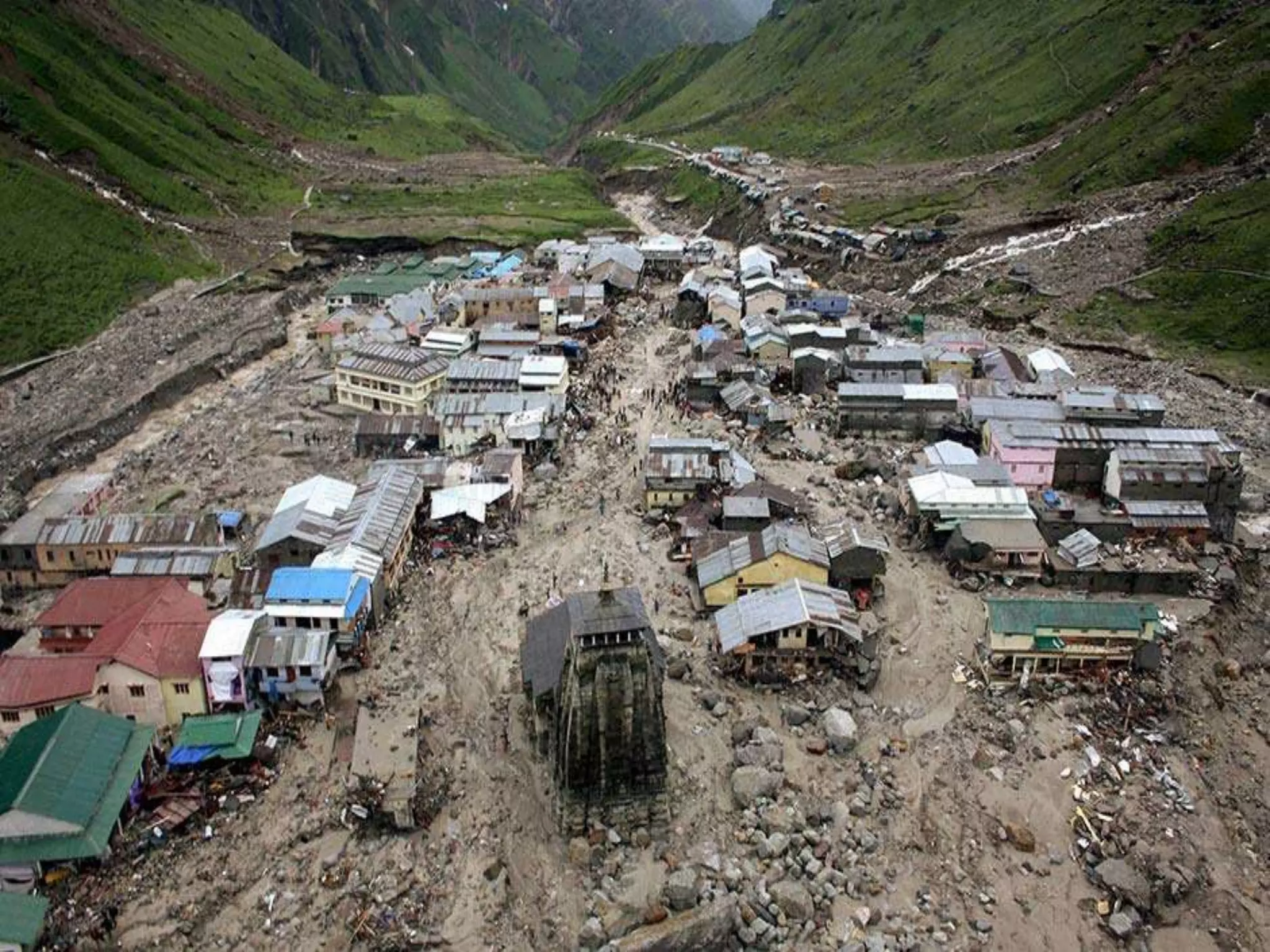
2. UTTARAKHAND FLASH FLOODS
Year: 2013
Areas affected: Gobindghat, Kedar Dome, Rudraprayag district, Uttarakhand,
Himachal Pradesh, Western Nepal
Death Toll: 5000 plus
• In the year 2013, Uttarakhand suffered from a major
catastrophic natural disaster in the form of huge and deadly
cloudbursts, causing flash floods in River Ganga.
• Sudden, heavy rains caused dangerous landslides in Uttrakhand,
which killed thousands of people and thousands were reported
missing.
• The death toll was estimated to be 5,700.
• The flash floods and landslides continued for 4 days from 14 to
17 June, 2013.
• More than 1,00,000 pilgrims were trapped in the valleys that
led to the Kedarnath shrine. Today, Uttarakhand Flash Floods
are considered the most disastrous floods in the history of
India.
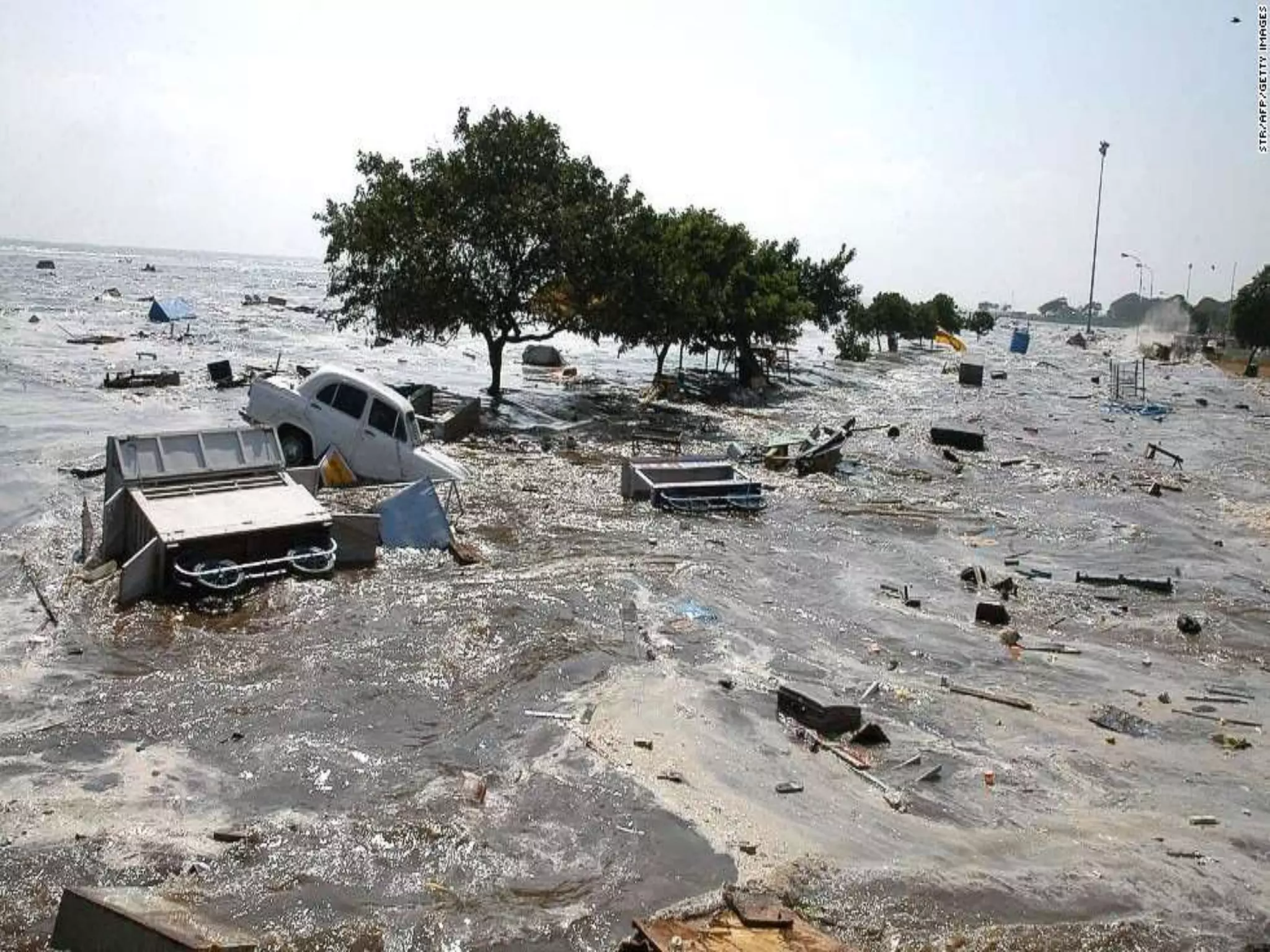
3. THE INDIAN OCEAN TSUNAMI
Year: 2004
Areas affected: Parts of southern India and Andaman Nicobar Islands, Sri
Lanka, Indonesia etc.
Death toll: 2 lakh plus
• Following a major earthquake in 2004, there was a huge
tsunami in the Indian Ocean, causing immense loss of life and
property in India and the neighbouring countries – Sri Lanka
and Indonesia.
• The earthquake had its epicentre in the ocean bed which led to
this destructive tsunami.
• The magnitude was measured between 9.1 and 9.3 and it lasted
for almost 10 minutes.
• According to reports, it was the third largest earthquake in the
world ever recorded.
• The impact was equivalent to the energy of 23,000 Hiroshima-
type atomic bombs. More than 2 lakh people were killed.
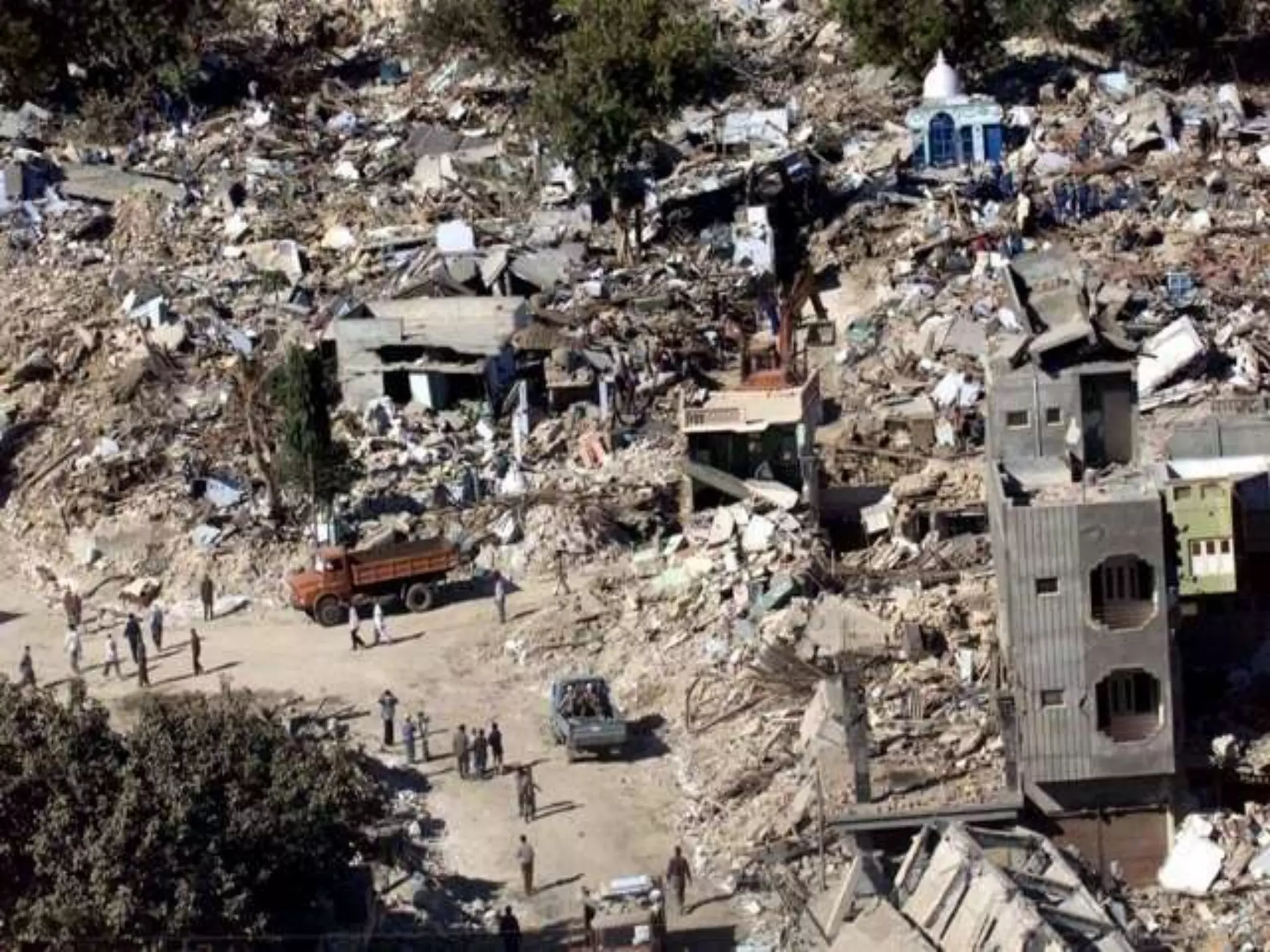
4. GUJARATH EARTH QUAKE
Year 2001
Areas affected: Bhuj, Ahmedabad, Gandhinagar, Kutch, Surat,
Surendranagar district, Rajkot district, Jamnagar and Jodia
Death toll: 20,000 plus
• Gujarat was affected by a massive earthquake on the
morning of 26 January, 2001, the day on which India was
celebrating its 51st Republic Day.
• The earthquake’s intensity was in the range of 7.6 to 7.9 on
the Richter Scale and lasted for 2 minutes.
• The impact was so great that almost 20,000 people lost
their lives. It is estimated that around 167,000 were
injured and nearly 400,000 were left homeless in this
natural disaster.
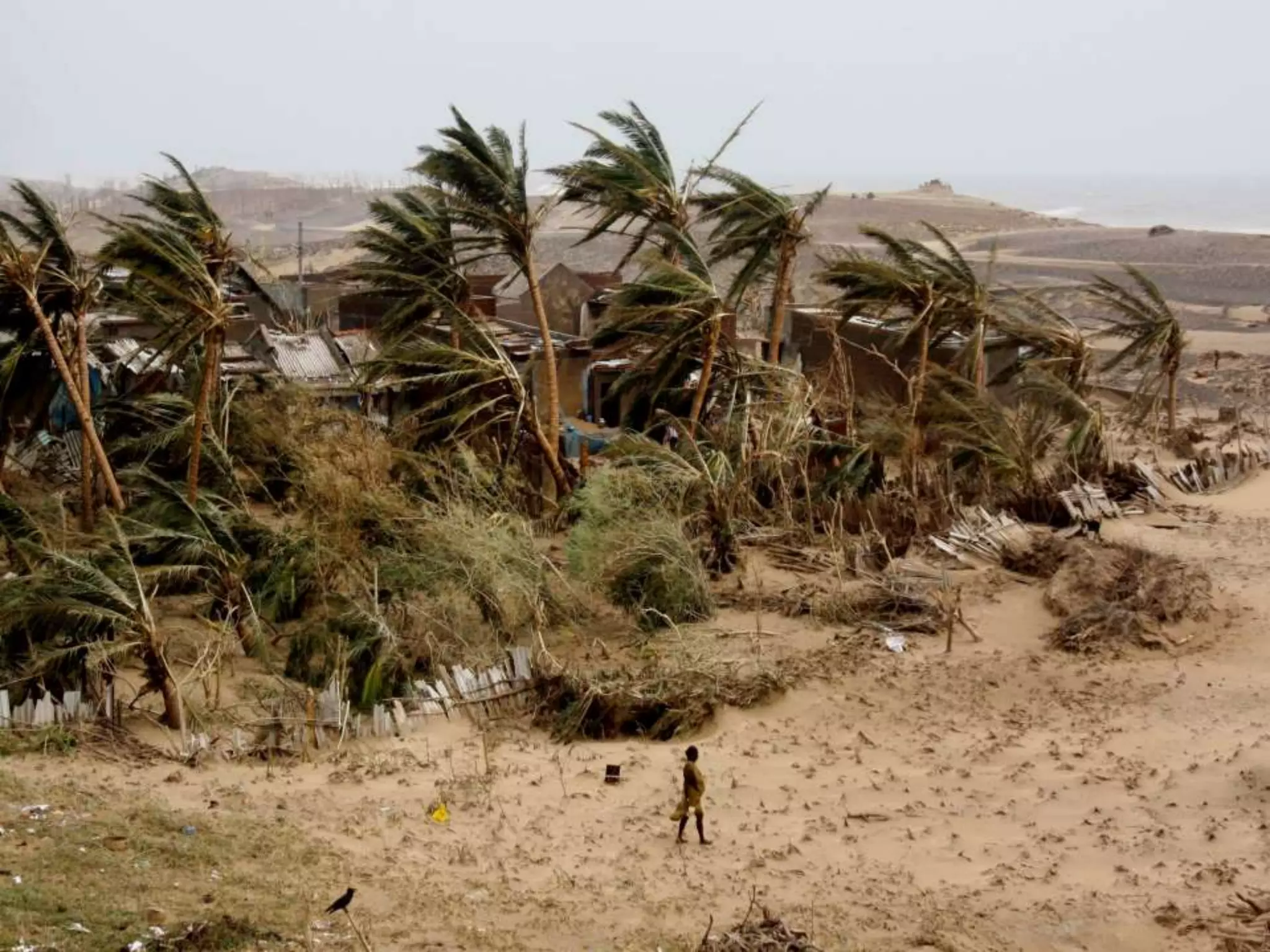
5. Odisha Super Cyclone
Year 1999
Areas affected: The coastal districts of Bhadrak, Kendrapara, Balasore,
Jagatsinghpur, Puri, Ganjam etc.
Death toll: 10,000 plus
• This is one of the deadliest storms that affected the state
of Odhisa in 1999.
• Also known as the Paradip cyclone or super cyclone 05B,
this cyclone caused deaths of more than 10,000 people in
the state.
• More than 275,000 houses were destroyed. Around 1.67
million people were left homeless.
• When the cyclone reached its peak intensity of 912 mb, it
became the strongest tropical cyclone of the North Indian
basin.
6. Latur Earthquake
Year: 1993
Areas affected: Districts of Latur and Osmanabad
Death toll: 20,000 plus
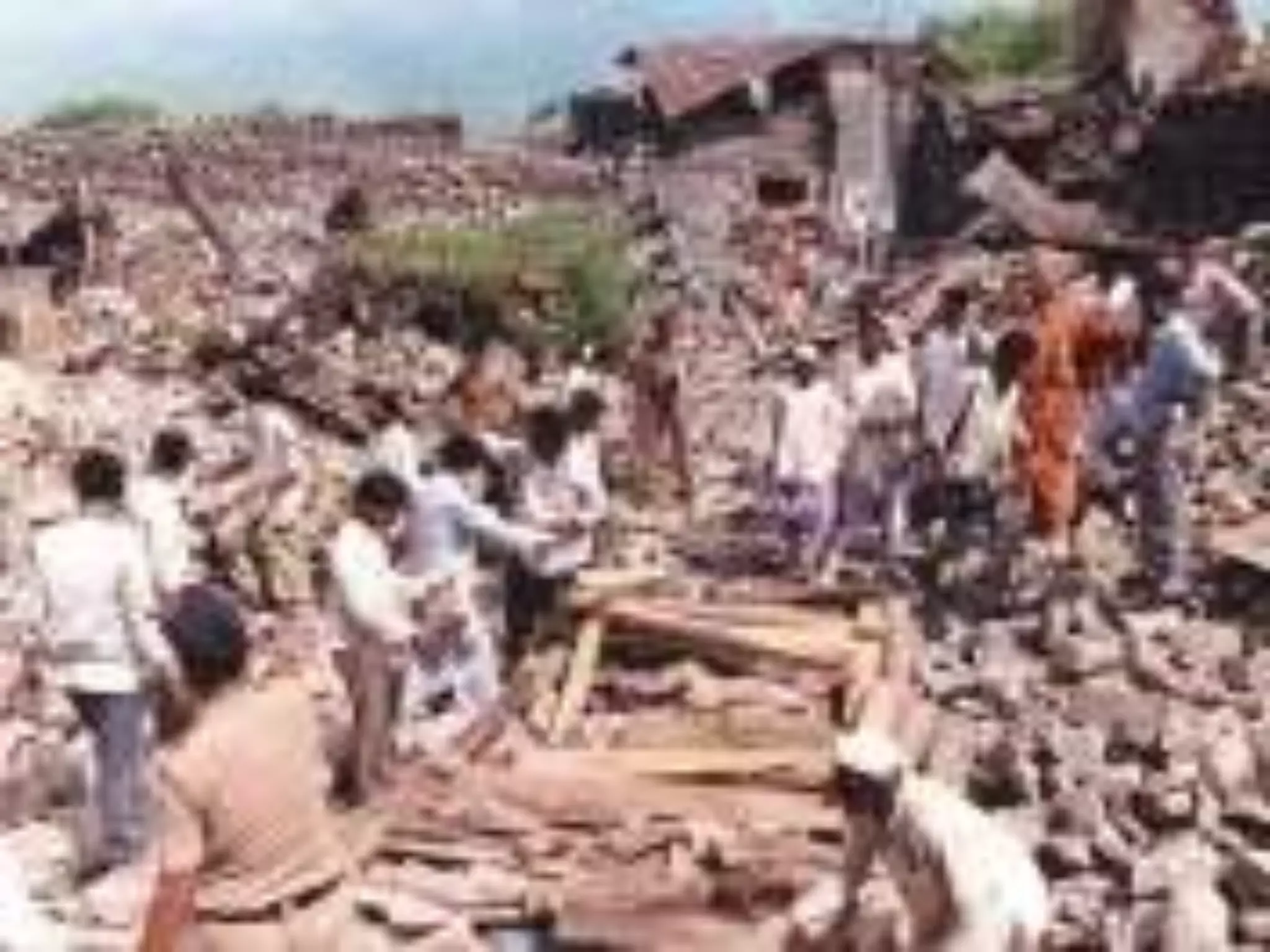
• This was one of the deadliest earthquakes, which hit Latur
in Maharashtra.
• The year was 1993. Almost 20,000 people died and around
30,000 were injured.
• The earthquake’s intensity was measured 6.4 on the
Richter scale.
• There was huge loss to property. Thousands of buildings
were turned into rubble and more than 50 villages were
destroyed.
7. The Great Famine
Year: 1876-1878
Areas affected: Madras, Mysore, Hyderabad, and Bombay
Death toll: 3 crore
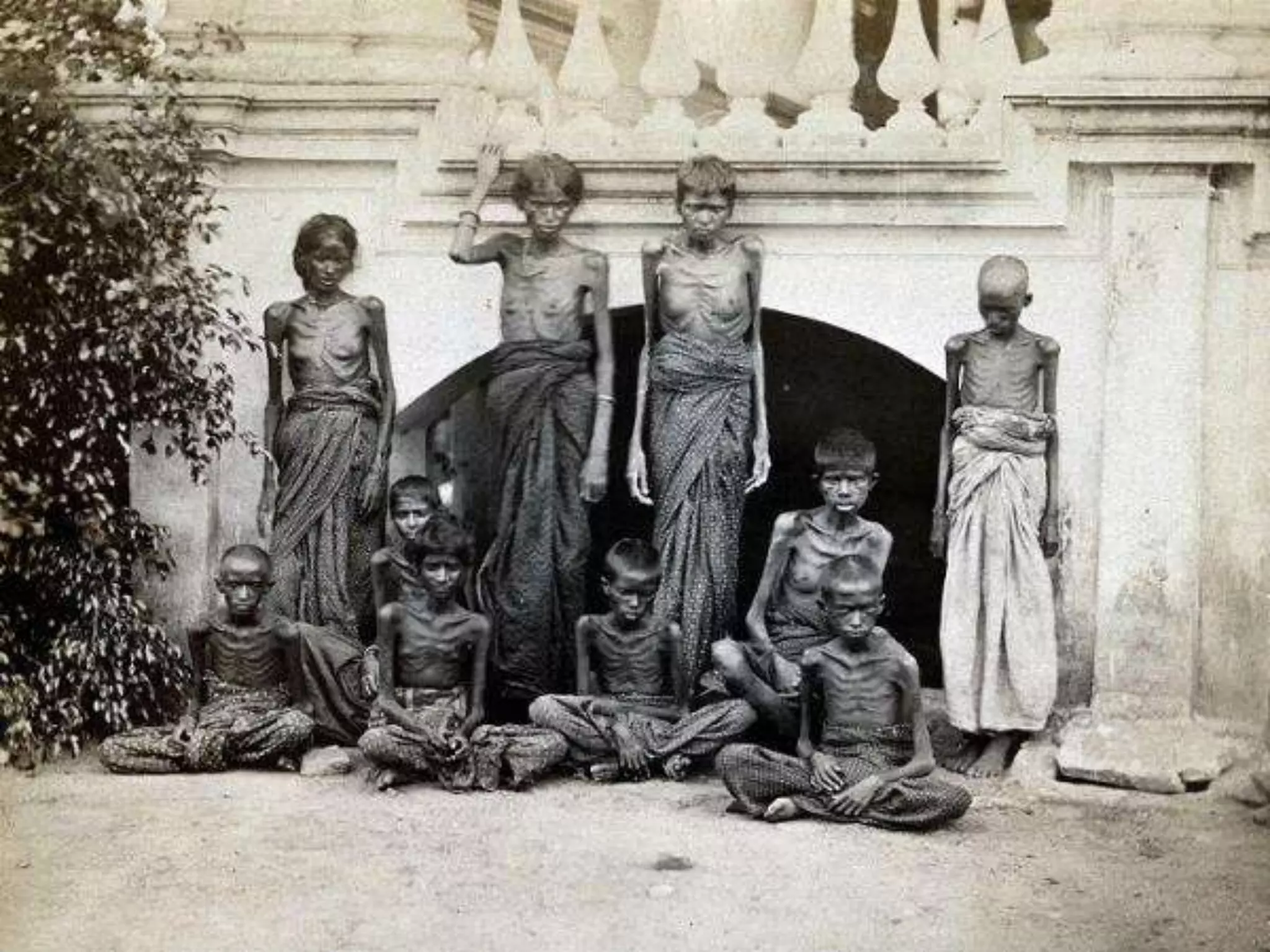
• Southern and southwestern parts of the country were affected
by a major famine in 1876-78, which killed nearly 3 crore
people.
• The famine, which first started in China, spread over to India
and affected millions of people in the period between 1876
and 1878.
• Even today, it is considered as one of the worst natural
calamities in India of all time.
8. Coringa Cyclone
Year: 1839
Areas affected: Coringa district
Death toll: 3.2 lakh people
• India was affected by the Coringa Cyclone, in the harbour
city of Coringa in Andhra Pradesh.
• It killed almost 3.2 lakh people. More than 25000 vessels
were ruined by this huge cyclone.
• One of the worst natural disasters in the history of India,
the cyclone struck the tiny city Coringa in Godavari
district in Andhra Pradesh.
• It destroyed the entire city. It was indeed one of the
biggest disasters that shook India.
9. Calcutta Cyclone
Year: 1737
Areas affected: Low-lying areas of Calcutta
Death toll: 3 lakh plus
• The Hooghly River Cyclone was one of the most dangerous
natural disasters of India, which affected Calcutta in 1737.
• Many people were killed. A large number of ships, almost
20,000, docked on the harbour were damaged.
• Also referred as the Calcutta Cyclone, the low-lying areas in
the Calcutta region were badly affected.
• This cyclone killed 300,000 to 350,000 people of the region
and hence considered to be as the worst calamity that
time.
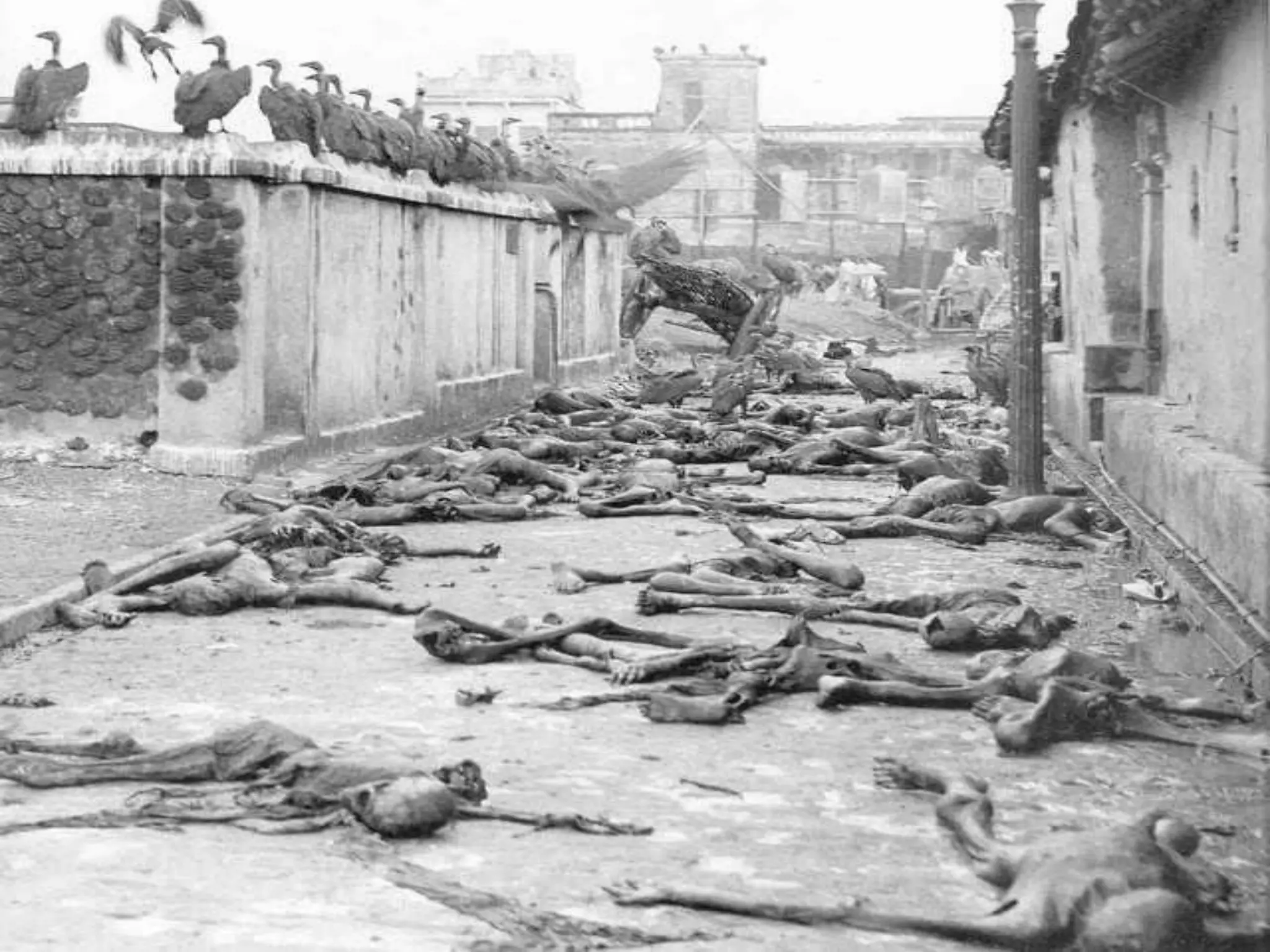
10. The Bengal Famine
Year 1770, 1943
Areas affected: Bengal, Odhisa, Bihar
Death toll: 1 crore
• A massive famine affected the pre-independence state of
Bengal and some parts of Odisha and Bihar.
• The year was 1770 and extended for almost 3 years till 1773.
• One of the greatest natural disasters to have hit India ever,
the famine led to the deaths of 1 crore people due to hunger,
thirst and disease, reducing the population to 30 million in
Bengal.
• The Bengal province of pre-partition British India was
affected by another famine in 1943 in which around 4 million
people died due to starvation, malnutrition and disease.
• More than half of the population of the region died from
diseases as an after effect of the famine.
Analysis of Disasters in India

Analysis of Disasters in India

  • 1.
    Analysis of Disastersin India Presented By – Ch. Shanmukha Priya CB.SW.P2MSW16027
  • 2.
    INTRODUCTION • Despite thefact that humans have made tremendous progress in various aspects in terms of technological growths, yet there is one area where they have not been able to surpass and that is the supremacy of Nature. • Nature has always proved much more powerful than the human race, even though there have been lot of technological and scientific advancements and achievements. • In spite of development in weather forecast techniques, disasters at many times cannot be prevented. • In today’s age, the natural calamities in the form of floods, tsunamis, famines, cyclones, earthquakes are mainly due to global warming.
  • 3.
    1. KASHMIR FLOODS Year:2014 Areas affected: Srinagar, Bandipur, Rajouri etc. Death toll: 500 plus • Caused by continuous torrential rainfall, the Kashmir region in September 2014 suffered from massive floods, leading to the death of around 500 people. • Hundreds of people were trapped in their homes for days, without food and water. • According to reports, around 2600 villages were affected in Jammu and Kashmir. • In Kashmir itself, 390 villages were completely submerged in water. • Many parts of Srinagar were also submerged by the floods. • Around 50 bridges were damaged across the state, and the damage of properties was estimated between Rs. 5000 cr and 6000 cr.
  • 5.
    2. UTTARAKHAND FLASHFLOODS Year: 2013 Areas affected: Gobindghat, Kedar Dome, Rudraprayag district, Uttarakhand, Himachal Pradesh, Western Nepal Death Toll: 5000 plus • In the year 2013, Uttarakhand suffered from a major catastrophic natural disaster in the form of huge and deadly cloudbursts, causing flash floods in River Ganga. • Sudden, heavy rains caused dangerous landslides in Uttrakhand, which killed thousands of people and thousands were reported missing. • The death toll was estimated to be 5,700. • The flash floods and landslides continued for 4 days from 14 to 17 June, 2013. • More than 1,00,000 pilgrims were trapped in the valleys that led to the Kedarnath shrine. Today, Uttarakhand Flash Floods are considered the most disastrous floods in the history of India.
  • 7.
    3. THE INDIANOCEAN TSUNAMI Year: 2004 Areas affected: Parts of southern India and Andaman Nicobar Islands, Sri Lanka, Indonesia etc. Death toll: 2 lakh plus • Following a major earthquake in 2004, there was a huge tsunami in the Indian Ocean, causing immense loss of life and property in India and the neighbouring countries – Sri Lanka and Indonesia. • The earthquake had its epicentre in the ocean bed which led to this destructive tsunami. • The magnitude was measured between 9.1 and 9.3 and it lasted for almost 10 minutes. • According to reports, it was the third largest earthquake in the world ever recorded. • The impact was equivalent to the energy of 23,000 Hiroshima- type atomic bombs. More than 2 lakh people were killed.
  • 9.
    4. GUJARATH EARTHQUAKE Year 2001 Areas affected: Bhuj, Ahmedabad, Gandhinagar, Kutch, Surat, Surendranagar district, Rajkot district, Jamnagar and Jodia Death toll: 20,000 plus • Gujarat was affected by a massive earthquake on the morning of 26 January, 2001, the day on which India was celebrating its 51st Republic Day. • The earthquake’s intensity was in the range of 7.6 to 7.9 on the Richter Scale and lasted for 2 minutes. • The impact was so great that almost 20,000 people lost their lives. It is estimated that around 167,000 were injured and nearly 400,000 were left homeless in this natural disaster.
  • 11.
    5. Odisha SuperCyclone Year 1999 Areas affected: The coastal districts of Bhadrak, Kendrapara, Balasore, Jagatsinghpur, Puri, Ganjam etc. Death toll: 10,000 plus • This is one of the deadliest storms that affected the state of Odhisa in 1999. • Also known as the Paradip cyclone or super cyclone 05B, this cyclone caused deaths of more than 10,000 people in the state. • More than 275,000 houses were destroyed. Around 1.67 million people were left homeless. • When the cyclone reached its peak intensity of 912 mb, it became the strongest tropical cyclone of the North Indian basin.
  • 13.
    6. Latur Earthquake Year:1993 Areas affected: Districts of Latur and Osmanabad Death toll: 20,000 plus • This was one of the deadliest earthquakes, which hit Latur in Maharashtra. • The year was 1993. Almost 20,000 people died and around 30,000 were injured. • The earthquake’s intensity was measured 6.4 on the Richter scale. • There was huge loss to property. Thousands of buildings were turned into rubble and more than 50 villages were destroyed.
  • 15.
    7. The GreatFamine Year: 1876-1878 Areas affected: Madras, Mysore, Hyderabad, and Bombay Death toll: 3 crore • Southern and southwestern parts of the country were affected by a major famine in 1876-78, which killed nearly 3 crore people. • The famine, which first started in China, spread over to India and affected millions of people in the period between 1876 and 1878. • Even today, it is considered as one of the worst natural calamities in India of all time.
  • 17.
    8. Coringa Cyclone Year:1839 Areas affected: Coringa district Death toll: 3.2 lakh people • India was affected by the Coringa Cyclone, in the harbour city of Coringa in Andhra Pradesh. • It killed almost 3.2 lakh people. More than 25000 vessels were ruined by this huge cyclone. • One of the worst natural disasters in the history of India, the cyclone struck the tiny city Coringa in Godavari district in Andhra Pradesh. • It destroyed the entire city. It was indeed one of the biggest disasters that shook India.
  • 19.
    9. Calcutta Cyclone Year:1737 Areas affected: Low-lying areas of Calcutta Death toll: 3 lakh plus • The Hooghly River Cyclone was one of the most dangerous natural disasters of India, which affected Calcutta in 1737. • Many people were killed. A large number of ships, almost 20,000, docked on the harbour were damaged. • Also referred as the Calcutta Cyclone, the low-lying areas in the Calcutta region were badly affected. • This cyclone killed 300,000 to 350,000 people of the region and hence considered to be as the worst calamity that time.
  • 21.
    10. The BengalFamine Year 1770, 1943 Areas affected: Bengal, Odhisa, Bihar Death toll: 1 crore • A massive famine affected the pre-independence state of Bengal and some parts of Odisha and Bihar. • The year was 1770 and extended for almost 3 years till 1773. • One of the greatest natural disasters to have hit India ever, the famine led to the deaths of 1 crore people due to hunger, thirst and disease, reducing the population to 30 million in Bengal. • The Bengal province of pre-partition British India was affected by another famine in 1943 in which around 4 million people died due to starvation, malnutrition and disease. • More than half of the population of the region died from diseases as an after effect of the famine.