The Tribe Model
Kendis
A framework that is implemented by Spotify, which is
agile and focuses on constantly experimenting and
building a culture that doesn't see failure as the end,
rather a brilliant opportunity to learn and improve.
Continuous innovation, experimentation,
improvement and creating a culture where learning
from mistakes is promoted, are the pillars of the Tribe
framework.
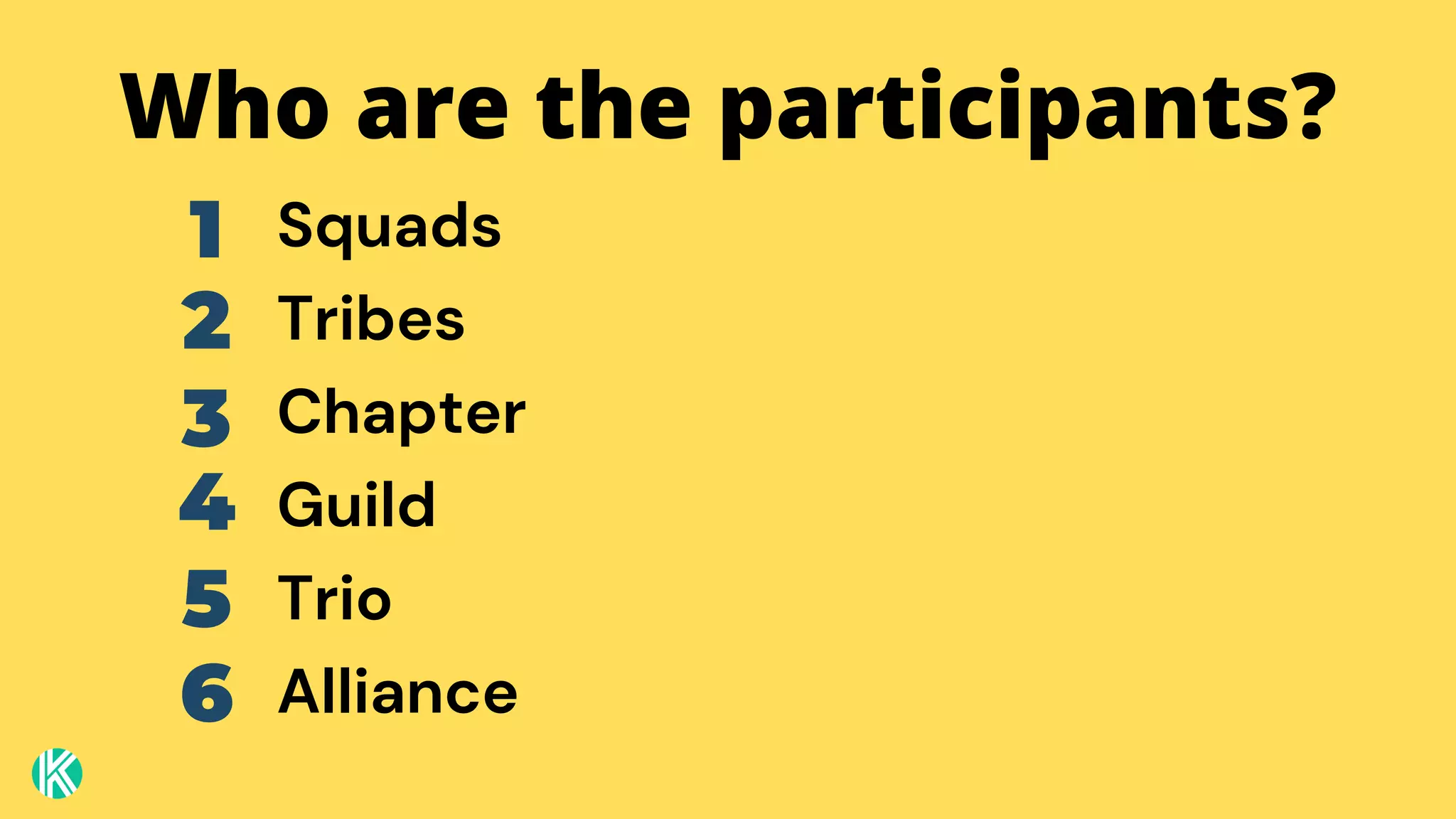
Who are the participants?
Squads
Tribes
Chapter
Guild
Trio
Alliance
2
3
1
4
5
6
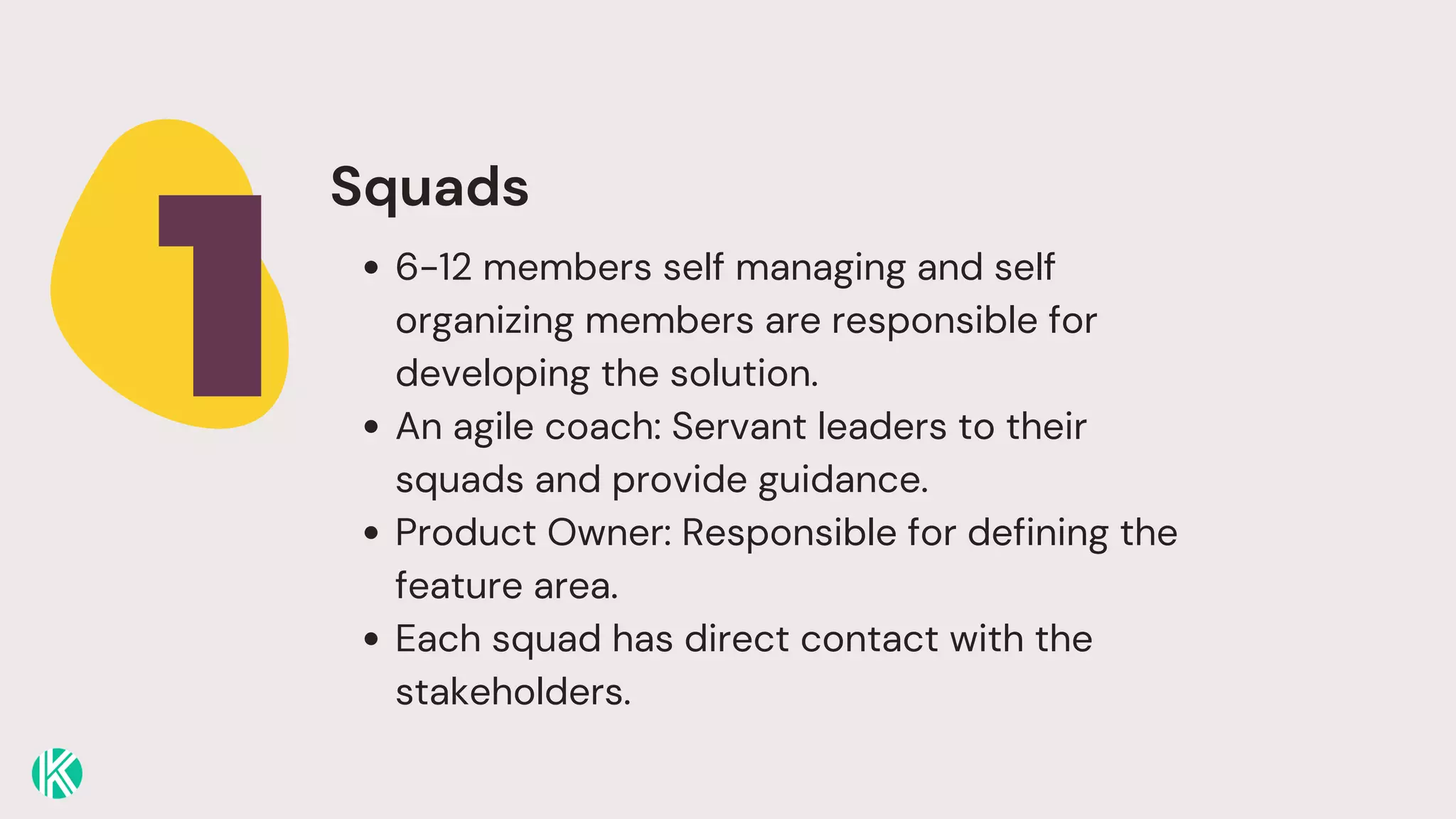
1
Squads
6-12 members self managing and self
organizing members are responsible for
developing the solution.
An agile coach: Servant leaders to their
squads and provide guidance.
Product Owner: Responsible for defining the
feature area.
Each squad has direct contact with the
stakeholders.
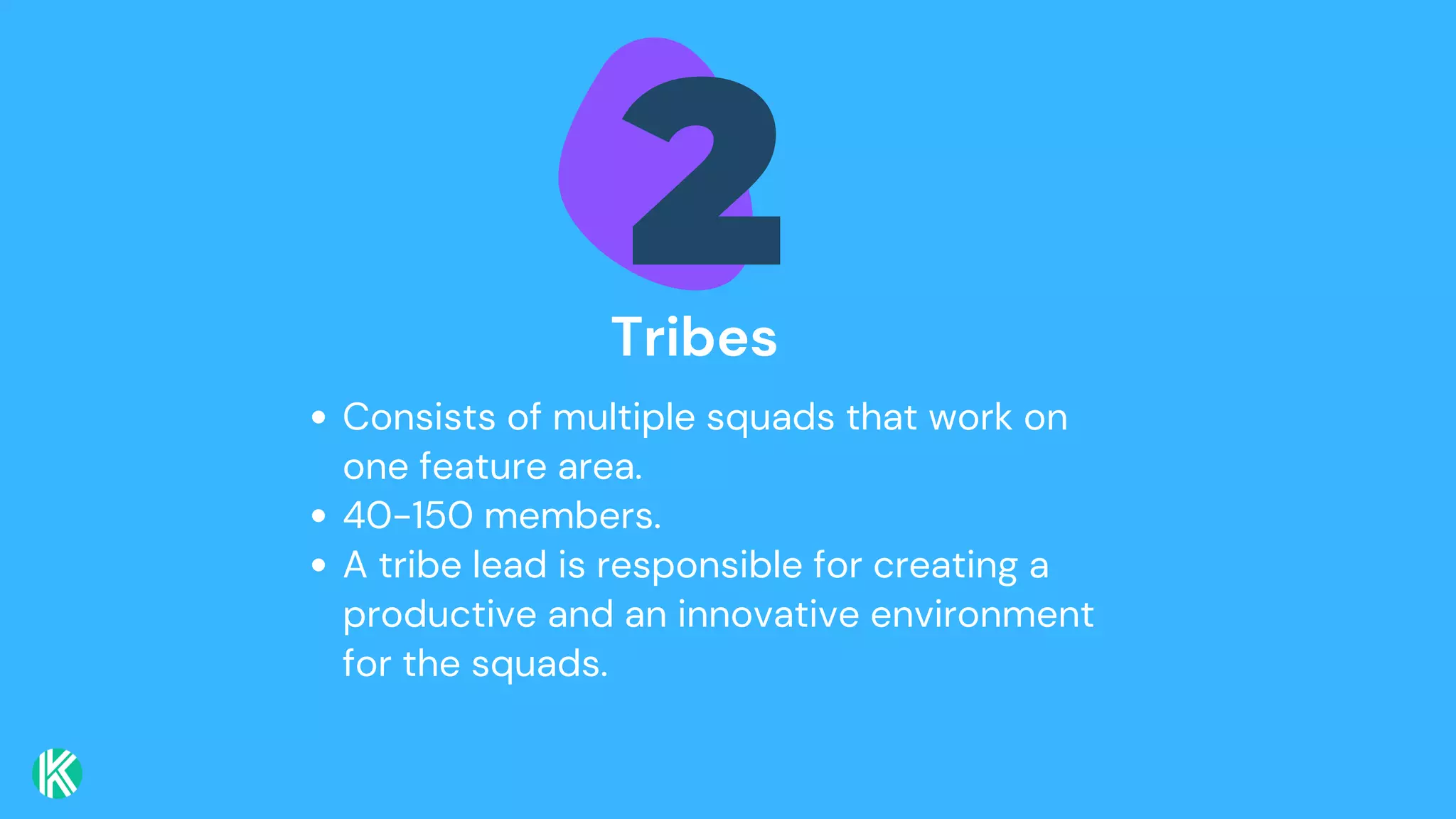
2
Tribes
Consists of multiple squads that work on
one feature area.
40-150 members.
A tribe lead is responsible for creating a
productive and an innovative environment
for the squads.
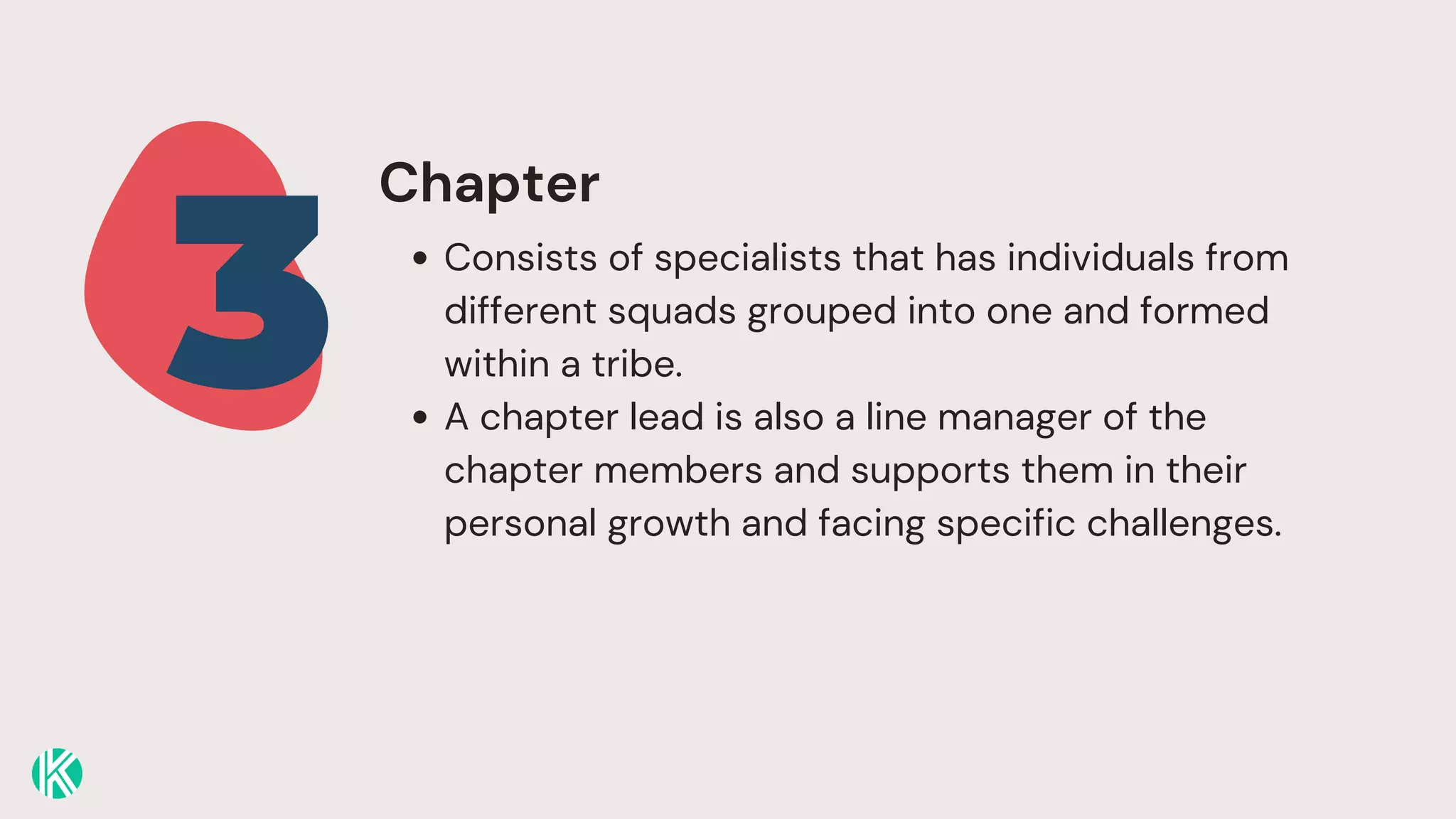
Consists of specialists that has individuals from
different squads grouped into one and formed
within a tribe.
A chapter lead is also a line manager of the
chapter members and supports them in their
personal growth and facing specific challenges.
3
Chapter
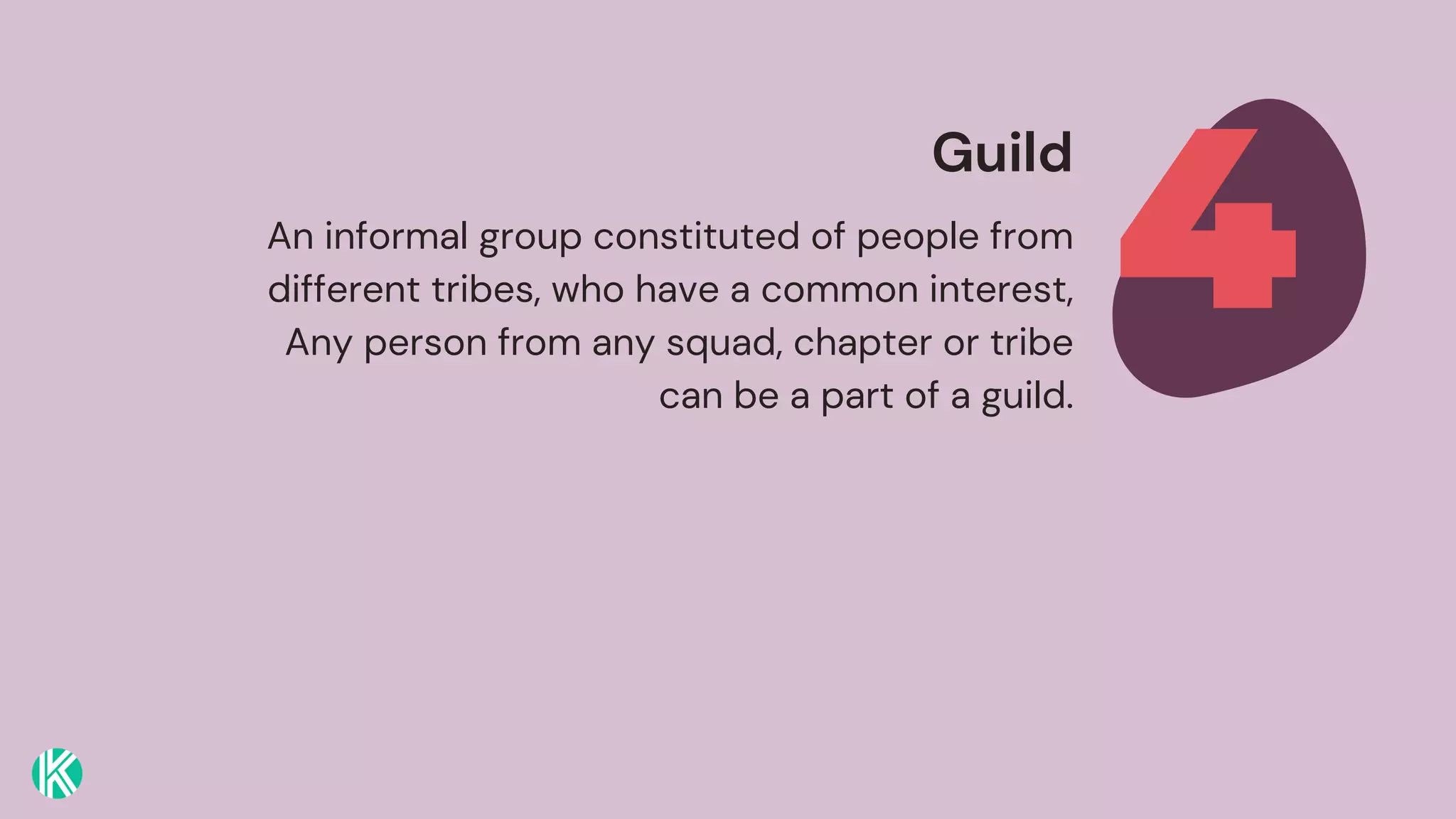
An informal group constituted of people from
different tribes, who have a common interest,
Any person from any squad, chapter or tribe
can be a part of a guild.
4
Guild
5
Trio
Formed when for every tribe there is a
design, product area and a tribe lead.
A combination of three trios makes an alliance
which is led by a product, design and a tribe
lead.
6
Alliance
How is Planning done?
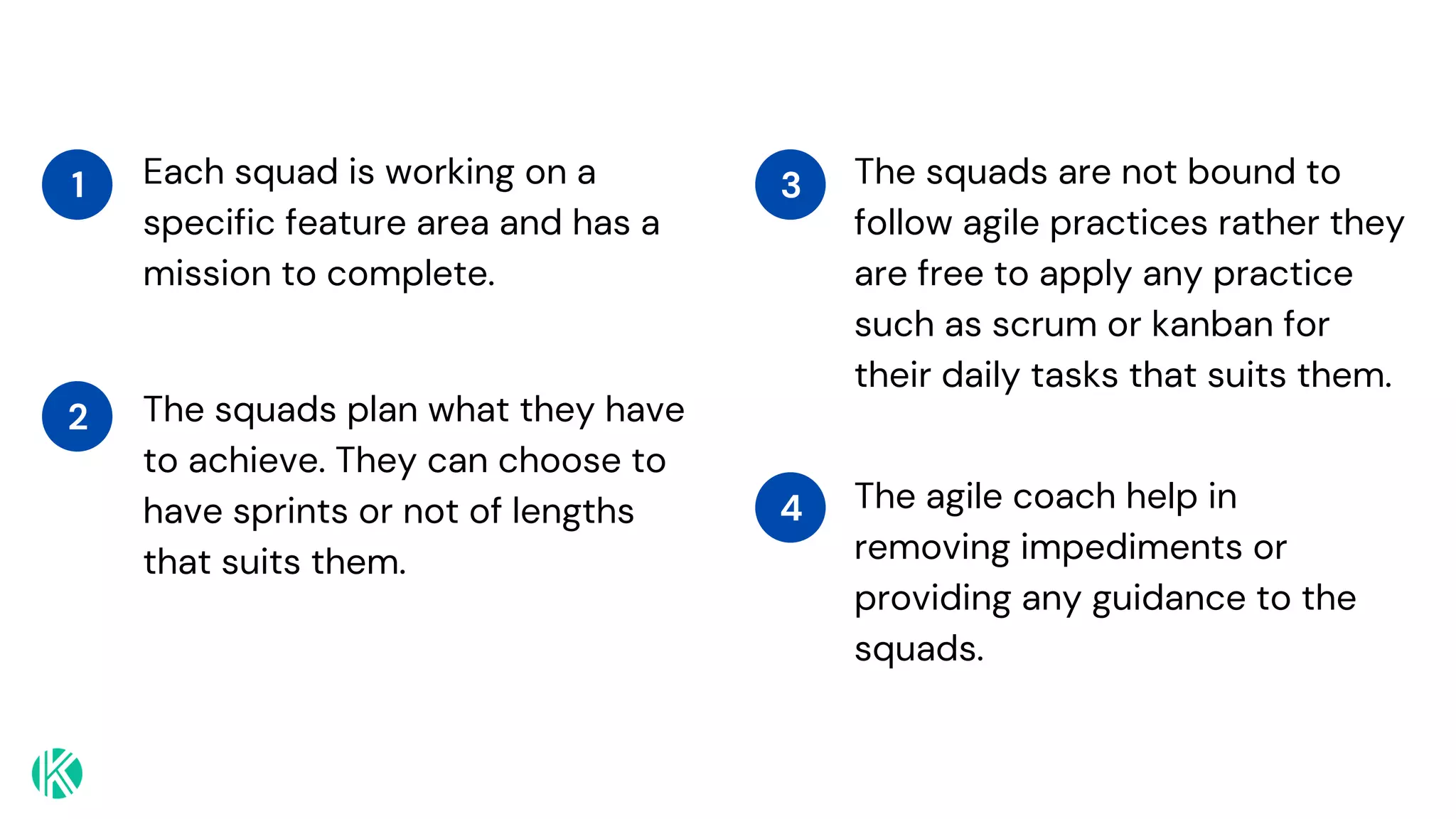
Each squad is working on a
specific feature area and has a
mission to complete.
1
The squads plan what they have
to achieve. They can choose to
have sprints or not of lengths
that suits them.
2
The squads are not bound to
follow agile practices rather they
are free to apply any practice
such as scrum or kanban for
their daily tasks that suits them.
3
The agile coach help in
removing impediments or
providing any guidance to the
squads.
4
How are
Solutions
Delivered?
Small releases done
frequently. When a new
feature has to be deployed, it
is first made available to a
small percentage of users. The
progress is closely monitored
using AB Testing and various
metrics and any necessary
tweaks are made which
eventually leads to rolling out
to all users.
1
Retrospective
Activities
All squads have daily stand up
meetings and weekly
retrospectives and demos.
Communication is very
important as the team members
discuss and talk about ideas, the
challenges being faced,
brainstorm and finding solutions
to problems being faced.
1
2
How is
Integration of
Work done?
Dev and ops work in such a
way that the operations do not
interfere with the work of the
developers. The operations
pave the way for the
developers by creating an
environment such as building
an infrastructure that supports
them and enables them to
release.
1
"Innovation is the ability to
see change as an opportunity
- not a threat."
Steve Jobs
For more information
Contact us at: team@kendis.io
Or visit us: www.kendis.io

An Introduction to the Tribe Model

  • 1.
  • 2.
    A framework thatis implemented by Spotify, which is agile and focuses on constantly experimenting and building a culture that doesn't see failure as the end, rather a brilliant opportunity to learn and improve.
  • 3.
    Continuous innovation, experimentation, improvementand creating a culture where learning from mistakes is promoted, are the pillars of the Tribe framework.
  • 4.
    Who are theparticipants? Squads Tribes Chapter Guild Trio Alliance 2 3 1 4 5 6
  • 5.
    1 Squads 6-12 members selfmanaging and self organizing members are responsible for developing the solution. An agile coach: Servant leaders to their squads and provide guidance. Product Owner: Responsible for defining the feature area. Each squad has direct contact with the stakeholders.
  • 6.
    2 Tribes Consists of multiplesquads that work on one feature area. 40-150 members. A tribe lead is responsible for creating a productive and an innovative environment for the squads.
  • 7.
    Consists of specialiststhat has individuals from different squads grouped into one and formed within a tribe. A chapter lead is also a line manager of the chapter members and supports them in their personal growth and facing specific challenges. 3 Chapter
  • 8.
    An informal groupconstituted of people from different tribes, who have a common interest, Any person from any squad, chapter or tribe can be a part of a guild. 4 Guild
  • 9.
    5 Trio Formed when forevery tribe there is a design, product area and a tribe lead.
  • 10.
    A combination ofthree trios makes an alliance which is led by a product, design and a tribe lead. 6 Alliance
  • 11.
  • 12.
    Each squad isworking on a specific feature area and has a mission to complete. 1 The squads plan what they have to achieve. They can choose to have sprints or not of lengths that suits them. 2 The squads are not bound to follow agile practices rather they are free to apply any practice such as scrum or kanban for their daily tasks that suits them. 3 The agile coach help in removing impediments or providing any guidance to the squads. 4
  • 13.
    How are Solutions Delivered? Small releasesdone frequently. When a new feature has to be deployed, it is first made available to a small percentage of users. The progress is closely monitored using AB Testing and various metrics and any necessary tweaks are made which eventually leads to rolling out to all users. 1
  • 14.
    Retrospective Activities All squads havedaily stand up meetings and weekly retrospectives and demos. Communication is very important as the team members discuss and talk about ideas, the challenges being faced, brainstorm and finding solutions to problems being faced. 1 2
  • 15.
    How is Integration of Workdone? Dev and ops work in such a way that the operations do not interfere with the work of the developers. The operations pave the way for the developers by creating an environment such as building an infrastructure that supports them and enables them to release. 1
  • 16.
    "Innovation is theability to see change as an opportunity - not a threat." Steve Jobs
  • 17.
    For more information Contactus at: team@kendis.io Or visit us: www.kendis.io