An Introduction 
to Deductive Qualitative Analysis 
Jane F. Gilgun, Ph.D., LICSW 
Professor, School of Social Work 
University of Minnesota, Twin Cities, USA 
Social Work Day 
International Congress on Qualitative Inquiry 
24 May 2014
Topics 
 DQA Defined 
 Advantages of DQA to Graduate Students 
 Crafting a Preliminary Focus 
 Components of the Conceptual Framework 
 Methods for Testing Hypotheses 
 Data Collection & Analysis 
 Ethical Issues 
 Dissemination 
 References
Definition 
of Deductive Qualitative Analysis 
 A way of using theory from the beginning of 
research projects 
– As hypotheses to test and/or 
– Sensitizing concepts 
Theory-guided research 
 Increasing numbers of researcher use theory 
upfront in qualitative research but there is no 
name for this
Definition 
of Deductive Qualitative Analysis 
As Theory Testing 
Theory is developed and tested 
systematically so as to include a wide variety of 
cases that show patterns & not one dominant 
theme 
Product is a pattern theory that has been 
tested and revised multiple times
Definition 
of Deductive Qualitative Analysis 
As Theory-Guided Research 
Existing research and theory gives focus to a study 
– Researchers start with a focus that sensitizing concepts 
give 
Sensitizing concepts help researchers see what they 
might not otherwise have noticed 
Researchers seek to add dimensions to sensitizing 
concepts or, if evidence warrants, discard them in favor 
of new concepts that fit the emerging analysis
Source of the Theory to be Tested 
 Previous research & theory 
 Professional experience 
 Personal experience 
 Knowledge of persons and situations that are 
the focus of theory 
 Values and ethics 
 Sensitizing concepts from same sources
General Procedures 
of Deductive Qualitative Analysis 
 Begin with preliminary theories and/or 
concepts only 
 Test 
– the theories 
– The viability of concepts 
 Revise 
– the theories 
– Dimensions of the concepts; may discard in favor 
of others
Advantages 
 Efficient way to do qualitative research 
– Great for disserations 
 Your professors want to know what you 
intend to do 
 Funders do, too 
 Writes-up facilitated
Preliminary Focus 
 A topic that interests you 
 Write out your own ideas 
 Preliminary interviews 
 Read related research and theory
Write a Reflexivity Statement 
Topic: your preliminary ideas about it 
Write whatever comes to mind 
Cover the following areas 
– Your personal experience with the topic 
– Your professional experience with the 
topic
Write a Reflexivity Statement Cont’d 
– Why the topic interests you 
– Who would you interview or observe 
– What issues arise when you chose to do research 
on these particular persons and settings 
How do you see informants 
How do informants see you? 
– Your sense of cultural beliefs and practices 
– Whatever else fits 
– What you want to use the research for
Principles of Data Collection 
and Analysis 
 Sources of Codes 
– From conceptual framework/sensitizing concepts 
– From the act of coding transcripts/documents 
 Coding-- 
– Open 
– Axial 
– Selective 
– Or other 
 Importance of Multiple Coders/Points of View
Negative Case Analysis 
 Recommended: First select similar cases 
 Then seek cases that differ from those 
already research to maximize variations 
– Purpose is 
to describe patterns 
For some researchers, also to interpret and make 
theoretical statements about the patterns
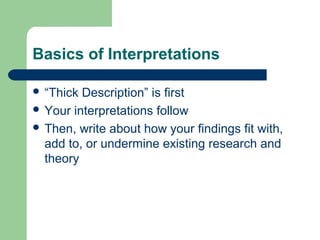
Basics of Interpretations 
 “Thick Description” is first 
 Your interpretations follow 
 Then, write about how your findings fit with, 
add to, or undermine existing research and 
theory
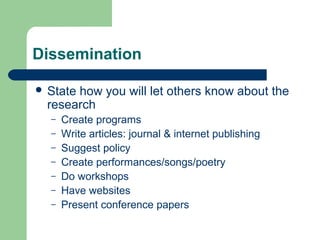
Dissemination 
 State how you will let others know about the 
research 
– Create programs 
– Write articles: journal & internet publishing 
– Suggest policy 
– Create performances/songs/poetry 
– Do workshops 
– Have websites 
– Present conference papers
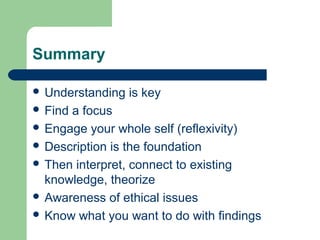
Summary 
 Understanding is key 
 Find a focus 
 Engage your whole self (reflexivity) 
 Description is the foundation 
 Then interpret, connect to existing 
knowledge, theorize 
 Awareness of ethical issues 
 Know what you want to do with findings
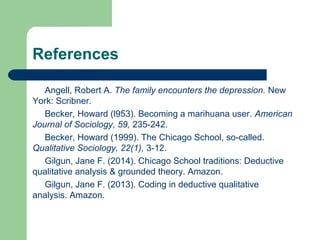
References 
Angell, Robert A. The family encounters the depression. New 
York: Scribner. 
Becker, Howard (l953). Becoming a marihuana user. American 
Journal of Sociology, 59, 235-242. 
Becker, Howard (1999). The Chicago School, so-called. 
Qualitative Sociology, 22(1), 3-12. 
Gilgun, Jane F. (2014). Chicago School traditions: Deductive 
qualitative analysis & grounded theory. Amazon. 
Gilgun, Jane F. (2013). Coding in deductive qualitative 
analysis. Amazon.
References 
Gilgun, Jane F. (2012). Enduring themes in qualitative family 
research. Journal of Family Theory and Review, 4, 80-95. 
Gilgun, Jane F. (2005). Qualitative research and family 
psychology. Journal of Family Psychology,19(1), 40-50. 
Gilgun, Jane F. (2014). Writing up qualitative research. In 
Patricia Leavy (Ed.). The Oxford handbook of qualitative research 
methods. New York: Oxford University Press. 
Gilgun, Jane F. (in press). Social work-specific research and 
theory building. In William Nichols (Ed.), Encyclopedia of Social 
and Behavioral Sciences (2nd ed). New York: Elselvier.

An Introduction to Deductive Qualitative Analysis

  • 1.
    An Introduction toDeductive Qualitative Analysis Jane F. Gilgun, Ph.D., LICSW Professor, School of Social Work University of Minnesota, Twin Cities, USA Social Work Day International Congress on Qualitative Inquiry 24 May 2014
  • 2.
    Topics  DQADefined  Advantages of DQA to Graduate Students  Crafting a Preliminary Focus  Components of the Conceptual Framework  Methods for Testing Hypotheses  Data Collection & Analysis  Ethical Issues  Dissemination  References
  • 3.
    Definition of DeductiveQualitative Analysis  A way of using theory from the beginning of research projects – As hypotheses to test and/or – Sensitizing concepts Theory-guided research  Increasing numbers of researcher use theory upfront in qualitative research but there is no name for this
  • 4.
    Definition of DeductiveQualitative Analysis As Theory Testing Theory is developed and tested systematically so as to include a wide variety of cases that show patterns & not one dominant theme Product is a pattern theory that has been tested and revised multiple times
  • 5.
    Definition of DeductiveQualitative Analysis As Theory-Guided Research Existing research and theory gives focus to a study – Researchers start with a focus that sensitizing concepts give Sensitizing concepts help researchers see what they might not otherwise have noticed Researchers seek to add dimensions to sensitizing concepts or, if evidence warrants, discard them in favor of new concepts that fit the emerging analysis
  • 6.
    Source of theTheory to be Tested  Previous research & theory  Professional experience  Personal experience  Knowledge of persons and situations that are the focus of theory  Values and ethics  Sensitizing concepts from same sources
  • 7.
    General Procedures ofDeductive Qualitative Analysis  Begin with preliminary theories and/or concepts only  Test – the theories – The viability of concepts  Revise – the theories – Dimensions of the concepts; may discard in favor of others
  • 8.
    Advantages  Efficientway to do qualitative research – Great for disserations  Your professors want to know what you intend to do  Funders do, too  Writes-up facilitated
  • 9.
    Preliminary Focus A topic that interests you  Write out your own ideas  Preliminary interviews  Read related research and theory
  • 10.
    Write a ReflexivityStatement Topic: your preliminary ideas about it Write whatever comes to mind Cover the following areas – Your personal experience with the topic – Your professional experience with the topic
  • 11.
    Write a ReflexivityStatement Cont’d – Why the topic interests you – Who would you interview or observe – What issues arise when you chose to do research on these particular persons and settings How do you see informants How do informants see you? – Your sense of cultural beliefs and practices – Whatever else fits – What you want to use the research for
  • 12.
    Principles of DataCollection and Analysis  Sources of Codes – From conceptual framework/sensitizing concepts – From the act of coding transcripts/documents  Coding-- – Open – Axial – Selective – Or other  Importance of Multiple Coders/Points of View
  • 13.
    Negative Case Analysis  Recommended: First select similar cases  Then seek cases that differ from those already research to maximize variations – Purpose is to describe patterns For some researchers, also to interpret and make theoretical statements about the patterns
  • 14.
    Basics of Interpretations  “Thick Description” is first  Your interpretations follow  Then, write about how your findings fit with, add to, or undermine existing research and theory
  • 15.
    Dissemination  Statehow you will let others know about the research – Create programs – Write articles: journal & internet publishing – Suggest policy – Create performances/songs/poetry – Do workshops – Have websites – Present conference papers
  • 16.
    Summary  Understandingis key  Find a focus  Engage your whole self (reflexivity)  Description is the foundation  Then interpret, connect to existing knowledge, theorize  Awareness of ethical issues  Know what you want to do with findings
  • 17.
    References Angell, RobertA. The family encounters the depression. New York: Scribner. Becker, Howard (l953). Becoming a marihuana user. American Journal of Sociology, 59, 235-242. Becker, Howard (1999). The Chicago School, so-called. Qualitative Sociology, 22(1), 3-12. Gilgun, Jane F. (2014). Chicago School traditions: Deductive qualitative analysis & grounded theory. Amazon. Gilgun, Jane F. (2013). Coding in deductive qualitative analysis. Amazon.
  • 18.
    References Gilgun, JaneF. (2012). Enduring themes in qualitative family research. Journal of Family Theory and Review, 4, 80-95. Gilgun, Jane F. (2005). Qualitative research and family psychology. Journal of Family Psychology,19(1), 40-50. Gilgun, Jane F. (2014). Writing up qualitative research. In Patricia Leavy (Ed.). The Oxford handbook of qualitative research methods. New York: Oxford University Press. Gilgun, Jane F. (in press). Social work-specific research and theory building. In William Nichols (Ed.), Encyclopedia of Social and Behavioral Sciences (2nd ed). New York: Elselvier.