Amprolium - Ethopabate
Product Information
Composition
› Each 100 gm contains:
1. Amprolium 25gm
2. Ethopabate 1.6gm
Pharmacodynamic Properties
Amprolium
› It is an anti-protozoal drug
› It’s chemical structure is an analogue to thiamine (vitamin B1).
› The anticoccidial effect of Amprolium is achieved by inhibiting thiamine uptake by the
Eimeria spp. leading to starvation of the parasite due to thiamine deficiency.
› Thiamine requirement for Eimeria spp. is relatively high compared to animals,
therefore Amprolium will cause As this way is unique,
› Amprolium does not show cross-resistance with other anticoccidial preparations.
Cont. …
Thiamine importance to coccidia
› This vitamin (thiamine pyrophosphate) is a cofactor of several decarboxylase
enzymes which play role in cofactor synthesis.
› Amprolium is thiamine antagonist and due to its close structural similarity it blocks
the thiamine receptors.
› This blockage of receptors prevents coccidia from utilizing thiamine and as a result
thiamine is unavailable to coccidian.
Cont. …
› Amprolium is effective against 1st generation of trophozoites and schizonts and
shows peak activity early in day 3 of cycle.
› Amprolium also suppresses the sexual stages, gametogony and sporulation of
oocyst.
Cont. …
Ethopabate
› It is often used in combination with amprolium to improve the spectrum of efficacy.
› It is a folate antagonist and blocks a step in the synthesis of PABA and prevents the
formation of nuclei acids and the construction of vitamins.
› Ethopabate affects the 2nd generation of schizonts and is most active against E.
maxima and E. brunetti.
Elimination
› Amprolium is rapidly eliminated (within few hours) from the body via kidneys.
Toxicity
› Chicken LD50 is 5.1 g/kg (single oral dose)
› Wide margin of safety.
Residues
› Amprolium may be found in eggs up to 10 days after withdrawal from the feed.
› No withdrawal time has been assigned for eggs (No MRL), so it is not
recommended for layers producing eggs for human consumption.
Resistance
› Continuous use of Amprolium is resulting into the development of drug resistance
which is a major problem and limiting its use.
Indications
› Treatment of coccidia caused by eimeria infections in poultry, especially E. Tenella,
E. Necatrix, E. Acervulina and E. Praecox.
› It is effective against other protozoal infections like;
1. Histomoniasis (blackhead) in turkeys and poultry.
2. Coccidiosis in calves, sheep and goats.
3. Amaebiasis in various Species.
Contra-indications
› Do not use in layers producing eggs for human consumption.
› It is only agent which can be used in laying birds both for prevention and treatment of
outbreaks.
› At higher doses, thiamine deficiency can occur in host but it can be prevented by
addition of thiamine.
Side effects
› Long-term treatment of high doses may result in delayed growth or poly-neuritis
(caused by reversible thiamine deficiency).
› The development of natural immunity may be delayed.
Incompatibility with other drugs
› Do not combine with other medicines like antibiotics and feed additives.
Drug Combinations
› Combination of amprolium with ethopabate, sulphaquinoxaline or even
pyrimethamine extended and strengthened the spectrum of activity.
› Amprolium is compatible with vitamins, antibiotics, minerals and other ingredients
commonly used in poultry ration but it should not be mixed in concentrates
containing high levels of choline because of tendency for it to break down into picric
acid.
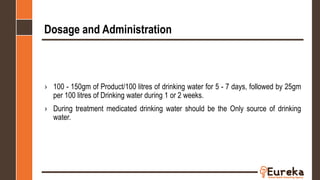
Dosage and Administration
› 100 - 150gm of Product/100 litres of drinking water for 5 - 7 days, followed by 25gm
per 100 litres of Drinking water during 1 or 2 weeks.
› During treatment medicated drinking water should be the Only source of drinking
water.
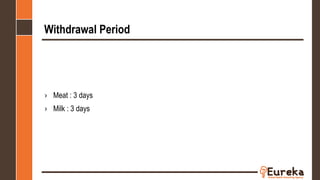
Withdrawal Period
› Meat : 3 days
› Milk : 3 days
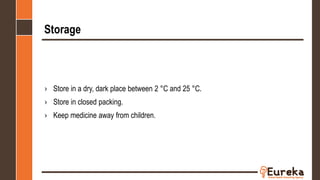
Storage
› Store in a dry, dark place between 2 °C and 25 °C.
› Store in closed packing.
› Keep medicine away from children.
Presentation
› Pack contains 500gm
Contact us on;
ossama.motawae@eurekaeg.com
+201023985680

Amprolium ethopabate product information

  • 1.
  • 2.
    Composition › Each 100gm contains: 1. Amprolium 25gm 2. Ethopabate 1.6gm
  • 3.
    Pharmacodynamic Properties Amprolium › Itis an anti-protozoal drug › It’s chemical structure is an analogue to thiamine (vitamin B1). › The anticoccidial effect of Amprolium is achieved by inhibiting thiamine uptake by the Eimeria spp. leading to starvation of the parasite due to thiamine deficiency. › Thiamine requirement for Eimeria spp. is relatively high compared to animals, therefore Amprolium will cause As this way is unique, › Amprolium does not show cross-resistance with other anticoccidial preparations.
  • 4.
    Cont. … Thiamine importanceto coccidia › This vitamin (thiamine pyrophosphate) is a cofactor of several decarboxylase enzymes which play role in cofactor synthesis. › Amprolium is thiamine antagonist and due to its close structural similarity it blocks the thiamine receptors. › This blockage of receptors prevents coccidia from utilizing thiamine and as a result thiamine is unavailable to coccidian.
  • 5.
    Cont. … › Amproliumis effective against 1st generation of trophozoites and schizonts and shows peak activity early in day 3 of cycle. › Amprolium also suppresses the sexual stages, gametogony and sporulation of oocyst.
  • 6.
    Cont. … Ethopabate › Itis often used in combination with amprolium to improve the spectrum of efficacy. › It is a folate antagonist and blocks a step in the synthesis of PABA and prevents the formation of nuclei acids and the construction of vitamins. › Ethopabate affects the 2nd generation of schizonts and is most active against E. maxima and E. brunetti.
  • 7.
    Elimination › Amprolium israpidly eliminated (within few hours) from the body via kidneys.
  • 8.
    Toxicity › Chicken LD50is 5.1 g/kg (single oral dose) › Wide margin of safety.
  • 9.
    Residues › Amprolium maybe found in eggs up to 10 days after withdrawal from the feed. › No withdrawal time has been assigned for eggs (No MRL), so it is not recommended for layers producing eggs for human consumption.
  • 10.
    Resistance › Continuous useof Amprolium is resulting into the development of drug resistance which is a major problem and limiting its use.
  • 11.
    Indications › Treatment ofcoccidia caused by eimeria infections in poultry, especially E. Tenella, E. Necatrix, E. Acervulina and E. Praecox. › It is effective against other protozoal infections like; 1. Histomoniasis (blackhead) in turkeys and poultry. 2. Coccidiosis in calves, sheep and goats. 3. Amaebiasis in various Species.
  • 12.
    Contra-indications › Do notuse in layers producing eggs for human consumption. › It is only agent which can be used in laying birds both for prevention and treatment of outbreaks. › At higher doses, thiamine deficiency can occur in host but it can be prevented by addition of thiamine.
  • 13.
    Side effects › Long-termtreatment of high doses may result in delayed growth or poly-neuritis (caused by reversible thiamine deficiency). › The development of natural immunity may be delayed.
  • 14.
    Incompatibility with otherdrugs › Do not combine with other medicines like antibiotics and feed additives.
  • 15.
    Drug Combinations › Combinationof amprolium with ethopabate, sulphaquinoxaline or even pyrimethamine extended and strengthened the spectrum of activity. › Amprolium is compatible with vitamins, antibiotics, minerals and other ingredients commonly used in poultry ration but it should not be mixed in concentrates containing high levels of choline because of tendency for it to break down into picric acid.
  • 16.
    Dosage and Administration ›100 - 150gm of Product/100 litres of drinking water for 5 - 7 days, followed by 25gm per 100 litres of Drinking water during 1 or 2 weeks. › During treatment medicated drinking water should be the Only source of drinking water.
  • 17.
    Withdrawal Period › Meat: 3 days › Milk : 3 days
  • 18.
    Storage › Store ina dry, dark place between 2 °C and 25 °C. › Store in closed packing. › Keep medicine away from children.
  • 19.
  • 20.