MANAGEMENT OF ACUTE MYELOID LEUKEMIA
1
DR. ABHISHEK SONI
 CLINICAL ONCOLOGIST
 MD, DNB, CMD, FAGE
2
3
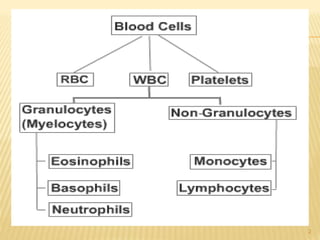
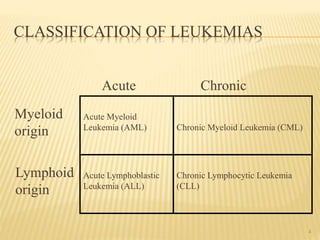
CLASSIFICATION OF LEUKEMIAS
Acute Chronic
Myeloid
origin
Lymphoid
origin
Acute Myeloid
Leukemia (AML)
Acute Lymphoblastic
Leukemia (ALL)
Chronic Myeloid Leukemia (CML)
Chronic Lymphocytic Leukemia
(CLL)
4
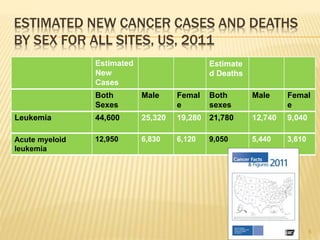
ESTIMATED NEW CANCER CASES AND DEATHS
BY SEX FOR ALL SITES, US, 2011
Estimated
New
Cases
Estimate
d Deaths
Both
Sexes
Male Femal
e
Both
sexes
Male Femal
e
Leukemia 44,600 25,320 19,280 21,780 12,740 9,040
Acute myeloid
leukemia
12,950 6,830 6,120 9,050 5,440 3,610
5
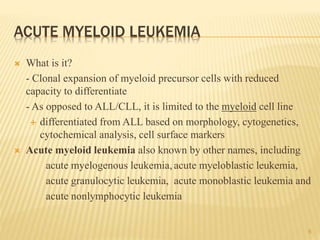
ACUTE MYELOID LEUKEMIA
 What is it?
- Clonal expansion of myeloid precursor cells with reduced
capacity to differentiate
- As opposed to ALL/CLL, it is limited to the myeloid cell line
 differentiated from ALL based on morphology, cytogenetics,
cytochemical analysis, cell surface markers
 Acute myeloid leukemia also known by other names, including
acute myelogenous leukemia, acute myeloblastic leukemia,
acute granulocytic leukemia, acute monoblastic leukemia and
acute nonlymphocytic leukemia
6
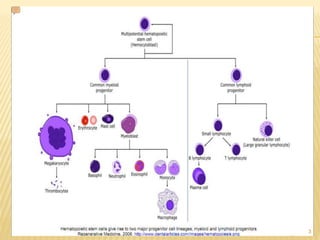
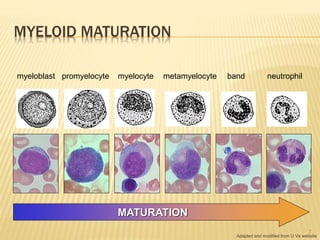
MYELOID MATURATION
myeloblast promyelocyte myelocyte metamyelocyte band neutrophil
MATURATION
Adapted and modified from U Va website
7
INCIDENCE AND ETIOLOGY
 Incidence of AML is ≈3.7 per 100,000 persons per year
 The male-to-female ratio is approximately 1.3 : 1
 It increase with age,
it is 1.9 in individual < 65 yrs and 18.6 in those > 65 yrs
ETIOLOGY
 Hereditary
 Radiation
 Chemical and occupational exposure and
 Drugs
8
HEREDITY
 Increase rate of AML occurs with
Down syndrome, Fanconi’s anemia ,Bloom’s syndrome,
Bruton- type X-linked agamma globulinemia, hereditary
ataxia –telangiectasia, SCID, Wiskott-Aldrich syndrome,
Klinefelter’s syndrome, Shwachmann-Diamond-Oski
syndrome, and Kostmann’s syndrome
 Myelodysplastic syndromes, paroxysmal nocturnal
hemoglobinuria,aplastic anemia, and myeloproliferative
diseases are associated with ↑ed risk for developing AML –
antecedent hematologic disorders ( AHD )
9
CHEMICAL AND OTHER EXPOSURE
 Exposure to benzene, a solvent used in chemical, plastic, rubber,
and pharmaceutical industries is associated with ↑ incidence of
AML
 Smoking and exposure to petrochemicals products, paint,
embalming fluid, xylene, ethylene oxide, and herbicides also
linked to AML
 Drugs –
alkylating agents, topoisomerase-II inhibitors
chloremphenicol, phenylbutazone and less commonly
chloroquine and methoxypsoralen
10
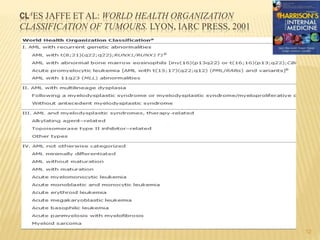
WHO CLASSIFICATION – 4 CATEGORIES
 AML with recurrent genetic abnormality
 AML with multilineage dysplasia
 AML and myelodysplastic syndromes, therapy related
 AML not otherwise categorised
11
CLAES JAFFE ET AL: WORLD HEALTH ORGANIZATION
CLASSIFICATION OF TUMOURS. LYON, IARC PRESS, 2001
12
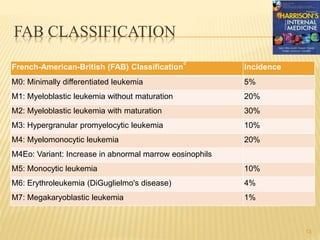
FAB CLASSIFICATION
French-American-British (FAB) Classification
c
Incidence
M0: Minimally differentiated leukemia 5%
M1: Myeloblastic leukemia without maturation 20%
M2: Myeloblastic leukemia with maturation 30%
M3: Hypergranular promyelocytic leukemia 10%
M4: Myelomonocytic leukemia 20%
M4Eo: Variant: Increase in abnormal marrow eosinophils
M5: Monocytic leukemia 10%
M6: Erythroleukemia (DiGuglielmo's disease) 4%
M7: Megakaryoblastic leukemia 1%
13
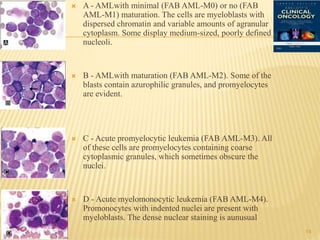
 A - AMLwith minimal (FAB AML-M0) or no (FAB
AML-M1) maturation. The cells are myeloblasts with
dispersed chromatin and variable amounts of agranular
cytoplasm. Some display medium-sized, poorly defined
nucleoli.
 B - AMLwith maturation (FAB AML-M2). Some of the
blasts contain azurophilic granules, and promyelocytes
are evident.
 C - Acute promyelocytic leukemia (FAB AML-M3). All
of these cells are promyelocytes containing coarse
cytoplasmic granules, which sometimes obscure the
nuclei.
 D - Acute myelomonocytic leukemia (FAB AML-M4).
Promonocytes with indented nuclei are present with
myeloblasts. The dense nuclear staining is aunusual
14
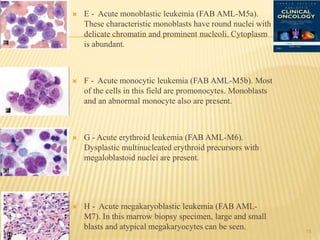
 E - Acute monoblastic leukemia (FAB AML-M5a).
These characteristic monoblasts have round nuclei with
delicate chromatin and prominent nucleoli. Cytoplasm
is abundant.
 F - Acute monocytic leukemia (FAB AML-M5b). Most
of the cells in this field are promonocytes. Monoblasts
and an abnormal monocyte also are present.
 G - Acute erythroid leukemia (FAB AML-M6).
Dysplastic multinucleated erythroid precursors with
megaloblastoid nuclei are present.
 H - Acute megakaryoblastic leukemia (FAB AML-
M7). In this marrow biopsy specimen, large and small
blasts and atypical megakaryocytes can be seen. 15
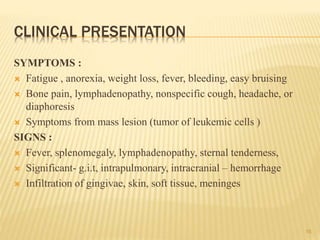
CLINICAL PRESENTATION
SYMPTOMS :
 Fatigue , anorexia, weight loss, fever, bleeding, easy bruising
 Bone pain, lymphadenopathy, nonspecific cough, headache, or
diaphoresis
 Symptoms from mass lesion (tumor of leukemic cells )
SIGNS :
 Fever, splenomegaly, lymphadenopathy, sternal tenderness,
 Significant- g.i.t, intrapulmonary, intracranial – hemorrhage
 Infiltration of gingivae, skin, soft tissue, meninges
16
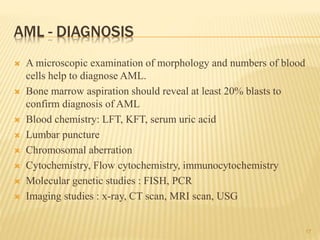
AML - DIAGNOSIS
 A microscopic examination of morphology and numbers of blood
cells help to diagnose AML.
 Bone marrow aspiration should reveal at least 20% blasts to
confirm diagnosis of AML
 Blood chemistry: LFT, KFT, serum uric acid
 Lumbar puncture
 Chromosomal aberration
 Cytochemistry, Flow cytochemistry, immunocytochemistry
 Molecular genetic studies : FISH, PCR
 Imaging studies : x-ray, CT scan, MRI scan, USG
17
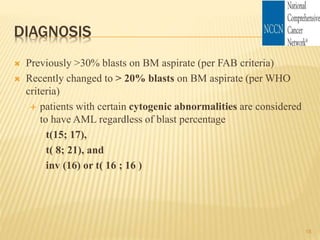
DIAGNOSIS
 Previously >30% blasts on BM aspirate (per FAB criteria)
 Recently changed to > 20% blasts on BM aspirate (per WHO
criteria)
 patients with certain cytogenic abnormalities are considered
to have AML regardless of blast percentage
t(15; 17),
t( 8; 21), and
inv (16) or t( 16 ; 16 )
18
19
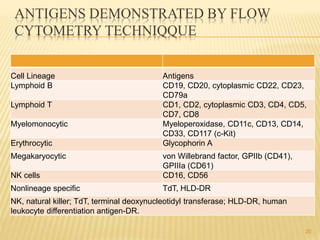
ANTIGENS DEMONSTRATED BY FLOW
CYTOMETRY TECHNIQQUE
Cell Lineage Antigens
Lymphoid B CD19, CD20, cytoplasmic CD22, CD23,
CD79a
Lymphoid T CD1, CD2, cytoplasmic CD3, CD4, CD5,
CD7, CD8
Myelomonocytic Myeloperoxidase, CD11c, CD13, CD14,
CD33, CD117 (c-Kit)
Erythrocytic Glycophorin A
Megakaryocytic von Willebrand factor, GPIIb (CD41),
GPIIIa (CD61)
NK cells CD16, CD56
Nonlineage specific TdT, HLD-DR
NK, natural killer; TdT, terminal deoxynucleotidyl transferase; HLD-DR, human
leukocyte differentiation antigen-DR.
20
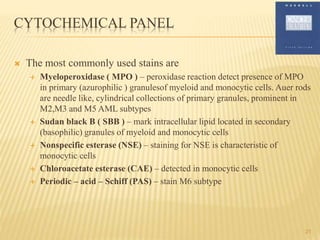
CYTOCHEMICAL PANEL
 The most commonly used stains are
 Myeloperoxidase ( MPO ) – peroxidase reaction detect presence of MPO
in primary (azurophilic ) granulesof myeloid and monocytic cells. Auer rods
are needle like, cylindrical collections of primary granules, prominent in
M2,M3 and M5 AML subtypes
 Sudan black B ( SBB ) – mark intracellular lipid located in secondary
(basophilic) granules of myeloid and monocytic cells
 Nonspecific esterase (NSE) – staining for NSE is characteristic of
monocytic cells
 Chloroacetate esterase (CAE) – detected in monocytic cells
 Periodic – acid – Schiff (PAS) – stain M6 subtype
21
Cytogenetic Abnormality in AML Incidence (%)[*]
Core binding factor translocations
t(8;21) 8
inv(16) or t(16;16) 9
Retinoic acid receptor translocations 10
t(15;17)
Mixed-lineage leukemia translocations
t(9;11) 2
t(10;11) 1
Other MLL translocations 3
Trisomies
+8 9
+21 3
Other trisomies 6
Deletions
- 5 (5q-) 6
- 7 (7q-) 8
- 9 (9q-) 3
Complex[†] 10
Other 17
None—normal 40 22
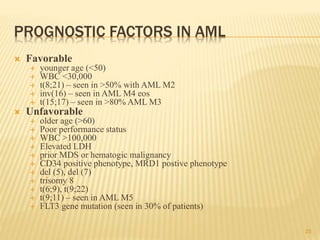
PROGNOSTIC FACTORS IN AML
 Favorable
 younger age (<50)
 WBC <30,000
 t(8;21) – seen in >50% with AML M2
 inv(16) – seen in AML M4 eos
 t(15;17) – seen in >80% AML M3
 Unfavorable
 older age (>60)
 Poor performance status
 WBC >100,000
 Elevated LDH
 prior MDS or hematogic malignancy
 CD34 positive phenotype, MRD1 postive phenotype
 del (5), del (7)
 trisomy 8
 t(6;9), t(9;22)
 t(9;11) – seen in AML M5
 FLT3 gene mutation (seen in 30% of patients)
23
24
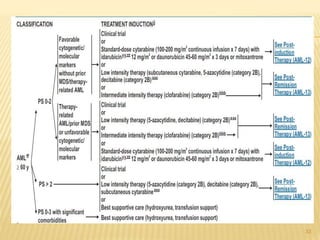
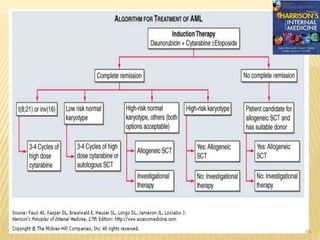
AML TREATMENT
 Two phases :
Induction phase
Post remission phase
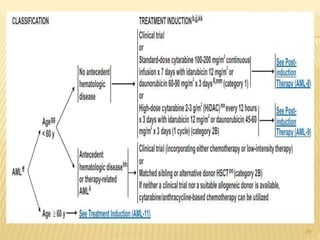
The initial induction treatment and subsequent post remission therapy are
often chosen based on the patient's age.
 Induction phase : It is initial intensive chemotherapy given in an
attempt to eradicate the leukemic clone and to induce a complete
remission (CR).
For all form of AML except acute promyelocytic leukemia (APL) standard
therapy includes – “7 + 3” regimen - a 7 day continuous infusion of
cytarabine (100–200 mg/m2 per day) and a 3-day course of daunorubicin
(45–60 mg/m2 per day) or idarubicin (12–13 mg/m2 per day) with or
without 3 days of etoposide
25
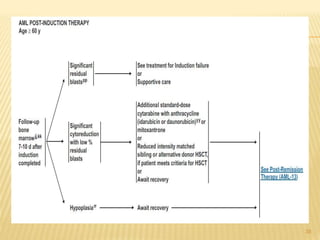
 7- 10 days after completion of induction chemotherapy -
the bone marrow is examined to determine if the leukemia
has been eliminated. If 5% blasts exist with 20% cellularity, the
patient is usually re-treated with cytarabine and an anthracycline in
doses similar to those given initially, but for 5 and 2 days,
respectively.
 Patients who fail to attain CR after two induction courses should
immediately proceed to an allogeneic stem cell transplant (SCT) if
an appropriate donor exists.
 This approach is only applied to patients under the age of 70 with
acceptable end-organ function
26
 With the 7 and 3 cytarabine / daunorubicin regimen outlined
above, 65–75% of adults with de novo AML under the age of 60
years achieve CR. Two-thirds achieve CR after a single course of
therapy, and one-third require two courses
 Higher induction treatment–related mortality and frequency of
resistant disease have been observed with increasing age and in
patients with prior hematologic disorders (MDS or
myeloproliferative syndromes) or chemotherapy treatment for
another malignancy
27
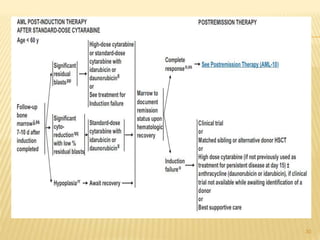
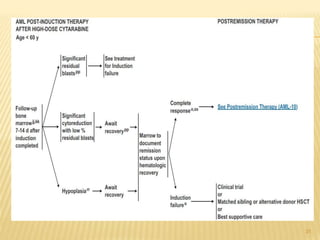
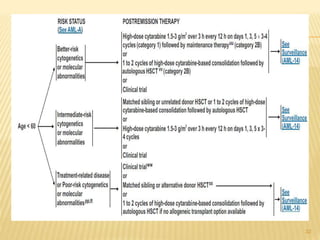
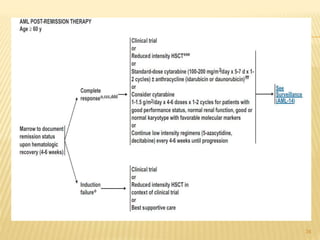
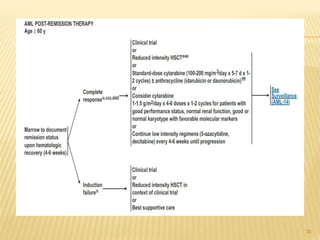
POST REMMISION THERAPY
 Postremission therapy is designed to eradicate residual leukemic
cells to prevent relapse and prolong survival.
 Postremission therapy in AML is often based on age ( < 55–65
and > 55–65). For younger patients, most studies include
intensive chemotherapy and allogeneic or autologous SCT
 High-dose cytarabine is more effective than standard-dose
cytarabine.
 High-dose cytarabine significantly prolonged CR and increased
the fraction cured in patients with favorable [t(8;21) and inv(16)]
and normal cytogenetics, but it had no significant effect on
patients with other abnormal karyotypes
28
29
30
31
32
33
34
35
36
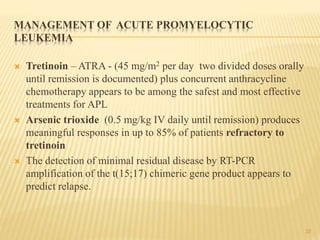
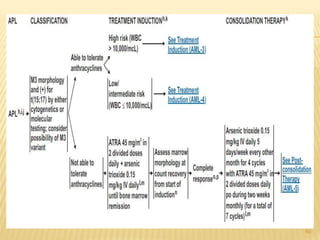
MANAGEMENT OF ACUTE PROMYELOCYTIC
LEUKEMIA
 Tretinoin – ATRA - (45 mg/m2 per day two divided doses orally
until remission is documented) plus concurrent anthracycline
chemotherapy appears to be among the safest and most effective
treatments for APL
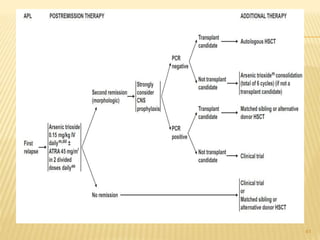
 Arsenic trioxide (0.5 mg/kg IV daily until remission) produces
meaningful responses in up to 85% of patients refractory to
tretinoin
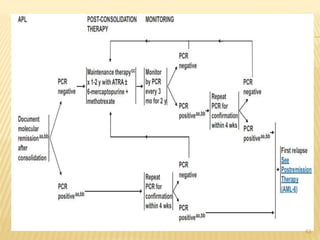
 The detection of minimal residual disease by RT-PCR
amplification of the t(15;17) chimeric gene product appears to
predict relapse.
37
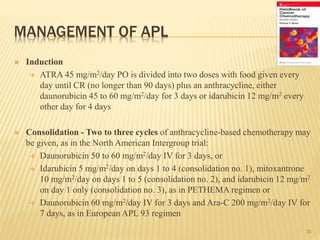
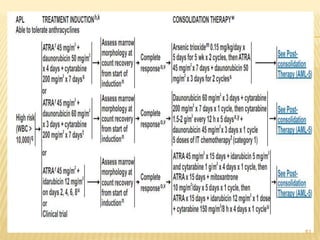
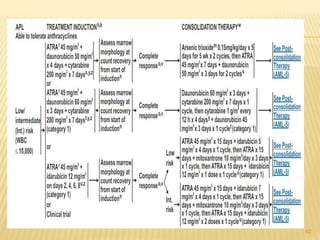
MANAGEMENT OF APL
 Induction
 ATRA 45 mg/m2/day PO is divided into two doses with food given every
day until CR (no longer than 90 days) plus an anthracycline, either
daunorubicin 45 to 60 mg/m2/day for 3 days or idarubicin 12 mg/m2 every
other day for 4 days
 Consolidation - Two to three cycles of anthracycline-based chemotherapy may
be given, as in the North American Intergroup trial:
 Daunorubicin 50 to 60 mg/m2/day IV for 3 days, or
 Idarubicin 5 mg/m2/day on days 1 to 4 (consolidation no. 1), mitoxantrone
10 mg/m2/day on days 1 to 5 (consolidation no. 2), and idarubicin 12 mg/m2
on day 1 only (consolidation no. 3), as in PETHEMA regimen or
 Daunorubicin 60 mg/m2/day IV for 3 days and Ara-C 200 mg/m2/day IV for
7 days, as in European APL 93 regimen
38
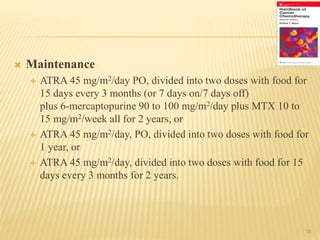
 Maintenance
 ATRA 45 mg/m2/day PO, divided into two doses with food for
15 days every 3 months (or 7 days on/7 days off)
plus 6-mercaptopurine 90 to 100 mg/m2/day plus MTX 10 to
15 mg/m2/week all for 2 years, or
 ATRA 45 mg/m2/day, PO, divided into two doses with food for
1 year, or
 ATRA 45 mg/m2/day, divided into two doses with food for 15
days every 3 months for 2 years.
39
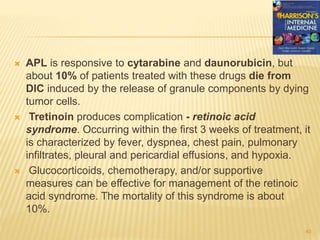
 APL is responsive to cytarabine and daunorubicin, but
about 10% of patients treated with these drugs die from
DIC induced by the release of granule components by dying
tumor cells.
 Tretinoin produces complication - retinoic acid
syndrome. Occurring within the first 3 weeks of treatment, it
is characterized by fever, dyspnea, chest pain, pulmonary
infiltrates, pleural and pericardial effusions, and hypoxia.
 Glucocorticoids, chemotherapy, and/or supportive
measures can be effective for management of the retinoic
acid syndrome. The mortality of this syndrome is about
10%.
40
41
42
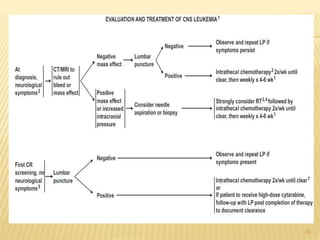
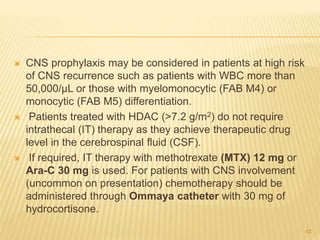
 CNS prophylaxis may be considered in patients at high risk
of CNS recurrence such as patients with WBC more than
50,000/µL or those with myelomonocytic (FAB M4) or
monocytic (FAB M5) differentiation.
 Patients treated with HDAC (>7.2 g/m2) do not require
intrathecal (IT) therapy as they achieve therapeutic drug
level in the cerebrospinal fluid (CSF).
 If required, IT therapy with methotrexate (MTX) 12 mg or
Ara-C 30 mg is used. For patients with CNS involvement
(uncommon on presentation) chemotherapy should be
administered through Ommaya catheter with 30 mg of
hydrocortisone.
43
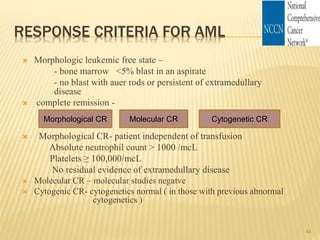
RESPONSE CRITERIA FOR AML
 Morphologic leukemic free state –
- bone marrow <5% blast in an aspirate
- no blast with auer rods or persistent of extramedullary
disease
 complete remission -
 Morphological CR- patient independent of transfusion
Absolute neutrophil count > 1000 /mcL
Platelets ≥ 100,000/mcL
No residual evidence of extramedullary disease
 Molecular CR – molecular studies negatve
 Cytogenic CR- cytogenetics normal ( in those with previous abnormal
cytogenetics )
Morphological CR Molecular CR Cytogenetic CR
44
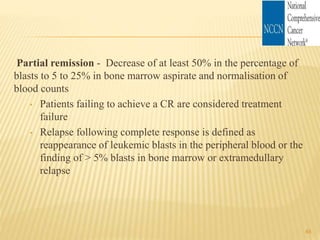
Partial remission - Decrease of at least 50% in the percentage of
blasts to 5 to 25% in bone marrow aspirate and normalisation of
blood counts
• Patients failing to achieve a CR are considered treatment
failure
• Relapse following complete response is defined as
reappearance of leukemic blasts in the peripheral blood or the
finding of > 5% blasts in bone marrow or extramedullary
relapse
45
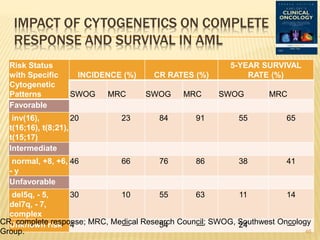
IMPACT OF CYTOGENETICS ON COMPLETE
RESPONSE AND SURVIVAL IN AML
Risk Status
with Specific
Cytogenetic
Patterns
INCIDENCE (%) CR RATES (%)
5-YEAR SURVIVAL
RATE (%)
SWOG MRC SWOG MRC SWOG MRC
Favorable
inv(16),
t(16;16), t(8;21),
t(15;17)
20 23 84 91 55 65
Intermediate
normal, +8, +6,
- y
46 66 76 86 38 41
Unfavorable
del5q, - 5,
del7q, - 7,
complex
30 10 55 63 11 14
Unknown risk 4 — 54 — 24 —CR, complete response; MRC, Medical Research Council; SWOG, Southwest Oncology
Group. 46
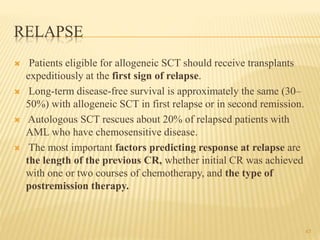
RELAPSE
 Patients eligible for allogeneic SCT should receive transplants
expeditiously at the first sign of relapse.
 Long-term disease-free survival is approximately the same (30–
50%) with allogeneic SCT in first relapse or in second remission.
 Autologous SCT rescues about 20% of relapsed patients with
AML who have chemosensitive disease.
 The most important factors predicting response at relapse are
the length of the previous CR, whether initial CR was achieved
with one or two courses of chemotherapy, and the type of
postremission therapy.
47
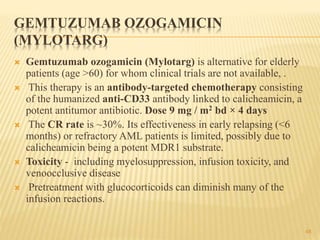
GEMTUZUMAB OZOGAMICIN
(MYLOTARG)
 Gemtuzumab ozogamicin (Mylotarg) is alternative for elderly
patients (age >60) for whom clinical trials are not available, .
 This therapy is an antibody-targeted chemotherapy consisting
of the humanized anti-CD33 antibody linked to calicheamicin, a
potent antitumor antibiotic. Dose 9 mg / m2 bd × 4 days
 The CR rate is ~30%. Its effectiveness in early relapsing (<6
months) or refractory AML patients is limited, possibly due to
calicheamicin being a potent MDR1 substrate.
 Toxicity - including myelosuppression, infusion toxicity, and
venoocclusive disease
 Pretreatment with glucocorticoids can diminish many of the
infusion reactions.
48
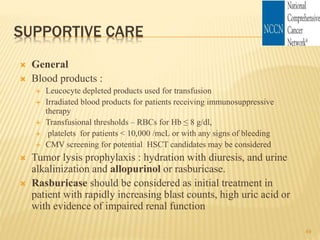
SUPPORTIVE CARE
 General
 Blood products :
 Leucocyte depleted products used for transfusion
 Irradiated blood products for patients receiving immunosuppressive
therapy
 Transfusional thresholds – RBCs for Hb ≤ 8 g/dl,
 platelets for patients < 10,000 /mcL or with any signs of bleeding
 CMV screening for potential HSCT candidates may be considered
 Tumor lysis prophylaxis : hydration with diuresis, and urine
alkalinization and allopurinol or rasburicase.
 Rasburicase should be considered as initial treatment in
patient with rapidly increasing blast counts, high uric acid or
with evidence of impaired renal function
49
SUPPORTIVE CARE…
 Patients receiving high- dose cytarabine therapy are at risk for
cerebellar toxicity. Neurologic assesment should be performed
before each dose of cytarabine (particularly in those patients ,
having impaired renal function )
 Saline or steroid eye drops to both eyes 4 times daily for all
patients undergoing high dose cytarabine therapy untill 24 h post
completion of cytarabine
 Growth factors may be considered in the elderly after
chemotherapy is complete
50
APL SUPPORTIVE CARE
.
 Clinical coagulopathy and overt bleeding
 Aggressive platelet transfusion to maintain platelets ≥ 50,000 /mcL
 Fibrinogen replacement with cryoprecipitate and FFP to maintain a level
over 150 mg/dL and PT and PTT close to normal value
 Central venous catheter should not be placed until bleeding controlled
 Leukapharesis is not recommended in routine management of
patients with a high WBC count in APL
 Myeloid growth factors should not be used
 Patients with relapsed APL or with hyperleucocytosis after ATRA
may be at ↑ risk of CNS disease. Prophylactic intrathecal therapy
is being evaluated in this group
51
APL SUPPORTIVE CARE…
 Arsenic trioxide monitoring
Prior to initiating therapy
 ECG for prolonged QTc interval assessment
 Serum electrolytes and creatinine
During therapy
 Maintain K concentrations above 4 mEq/dL
 Maintain Mg concentration above 1.8 mg/dL
 Reassess patients with absolute QTc interval > 500millisec
52
53
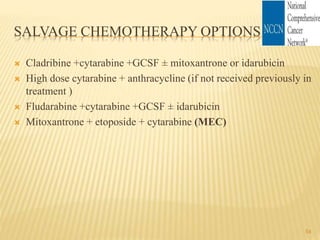
SALVAGE CHEMOTHERAPY OPTIONS
 Cladribine +cytarabine +GCSF ± mitoxantrone or idarubicin
 High dose cytarabine + anthracycline (if not received previously in
treatment )
 Fludarabine +cytarabine +GCSF ± idarubicin
 Mitoxantrone + etoposide + cytarabine (MEC)
54
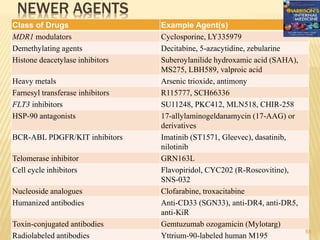
NEWER AGENTS
Class of Drugs Example Agent(s)
MDR1 modulators Cyclosporine, LY335979
Demethylating agents Decitabine, 5-azacytidine, zebularine
Histone deacetylase inhibitors Suberoylanilide hydroxamic acid (SAHA),
MS275, LBH589, valproic acid
Heavy metals Arsenic trioxide, antimony
Farnesyl transferase inhibitors R115777, SCH66336
FLT3 inhibitors SU11248, PKC412, MLN518, CHIR-258
HSP-90 antagonists 17-allylaminogeldanamycin (17-AAG) or
derivatives
BCR-ABL PDGFR/KIT inhibitors Imatinib (ST1571, Gleevec), dasatinib,
nilotinib
Telomerase inhibitor GRN163L
Cell cycle inhibitors Flavopiridol, CYC202 (R-Roscovitine),
SNS-032
Nucleoside analogues Clofarabine, troxacitabine
Humanized antibodies Anti-CD33 (SGN33), anti-DR4, anti-DR5,
anti-KiR
Toxin-conjugated antibodies Gemtuzumab ozogamicin (Mylotarg)
Radiolabeled antibodies Yttrium-90-labeled human M195
55
56
THANK-YOU
57
-DONATE BLOOD-
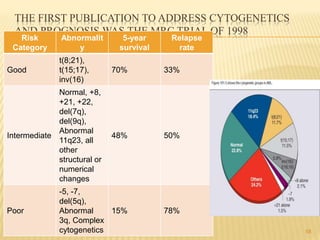
THE FIRST PUBLICATION TO ADDRESS CYTOGENETICS
AND PROGNOSIS WAS THE MRC TRIAL OF 1998
Risk
Category
Abnormalit
y
5-year
survival
Relapse
rate
Good
t(8;21),
t(15;17),
inv(16)
70% 33%
Intermediate
Normal, +8,
+21, +22,
del(7q),
del(9q),
Abnormal
11q23, all
other
structural or
numerical
changes
48% 50%
Poor
-5, -7,
del(5q),
Abnormal
3q, Complex
cytogenetics
15% 78%
58
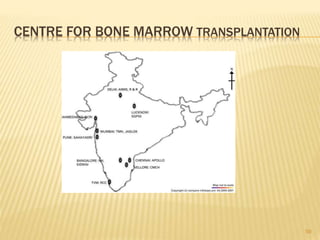
CENTRE FOR BONE MARROW TRANSPLANTATION
59
60
61
62
63

AML management

  • 1.
    MANAGEMENT OF ACUTEMYELOID LEUKEMIA 1 DR. ABHISHEK SONI  CLINICAL ONCOLOGIST  MD, DNB, CMD, FAGE
  • 2.
  • 3.
  • 4.
    CLASSIFICATION OF LEUKEMIAS AcuteChronic Myeloid origin Lymphoid origin Acute Myeloid Leukemia (AML) Acute Lymphoblastic Leukemia (ALL) Chronic Myeloid Leukemia (CML) Chronic Lymphocytic Leukemia (CLL) 4
  • 5.
    ESTIMATED NEW CANCERCASES AND DEATHS BY SEX FOR ALL SITES, US, 2011 Estimated New Cases Estimate d Deaths Both Sexes Male Femal e Both sexes Male Femal e Leukemia 44,600 25,320 19,280 21,780 12,740 9,040 Acute myeloid leukemia 12,950 6,830 6,120 9,050 5,440 3,610 5
  • 6.
    ACUTE MYELOID LEUKEMIA What is it? - Clonal expansion of myeloid precursor cells with reduced capacity to differentiate - As opposed to ALL/CLL, it is limited to the myeloid cell line  differentiated from ALL based on morphology, cytogenetics, cytochemical analysis, cell surface markers  Acute myeloid leukemia also known by other names, including acute myelogenous leukemia, acute myeloblastic leukemia, acute granulocytic leukemia, acute monoblastic leukemia and acute nonlymphocytic leukemia 6
  • 7.
    MYELOID MATURATION myeloblast promyelocytemyelocyte metamyelocyte band neutrophil MATURATION Adapted and modified from U Va website 7
  • 8.
    INCIDENCE AND ETIOLOGY Incidence of AML is ≈3.7 per 100,000 persons per year  The male-to-female ratio is approximately 1.3 : 1  It increase with age, it is 1.9 in individual < 65 yrs and 18.6 in those > 65 yrs ETIOLOGY  Hereditary  Radiation  Chemical and occupational exposure and  Drugs 8
  • 9.
    HEREDITY  Increase rateof AML occurs with Down syndrome, Fanconi’s anemia ,Bloom’s syndrome, Bruton- type X-linked agamma globulinemia, hereditary ataxia –telangiectasia, SCID, Wiskott-Aldrich syndrome, Klinefelter’s syndrome, Shwachmann-Diamond-Oski syndrome, and Kostmann’s syndrome  Myelodysplastic syndromes, paroxysmal nocturnal hemoglobinuria,aplastic anemia, and myeloproliferative diseases are associated with ↑ed risk for developing AML – antecedent hematologic disorders ( AHD ) 9
  • 10.
    CHEMICAL AND OTHEREXPOSURE  Exposure to benzene, a solvent used in chemical, plastic, rubber, and pharmaceutical industries is associated with ↑ incidence of AML  Smoking and exposure to petrochemicals products, paint, embalming fluid, xylene, ethylene oxide, and herbicides also linked to AML  Drugs – alkylating agents, topoisomerase-II inhibitors chloremphenicol, phenylbutazone and less commonly chloroquine and methoxypsoralen 10
  • 11.
    WHO CLASSIFICATION –4 CATEGORIES  AML with recurrent genetic abnormality  AML with multilineage dysplasia  AML and myelodysplastic syndromes, therapy related  AML not otherwise categorised 11
  • 12.
    CLAES JAFFE ETAL: WORLD HEALTH ORGANIZATION CLASSIFICATION OF TUMOURS. LYON, IARC PRESS, 2001 12
  • 13.
    FAB CLASSIFICATION French-American-British (FAB)Classification c Incidence M0: Minimally differentiated leukemia 5% M1: Myeloblastic leukemia without maturation 20% M2: Myeloblastic leukemia with maturation 30% M3: Hypergranular promyelocytic leukemia 10% M4: Myelomonocytic leukemia 20% M4Eo: Variant: Increase in abnormal marrow eosinophils M5: Monocytic leukemia 10% M6: Erythroleukemia (DiGuglielmo's disease) 4% M7: Megakaryoblastic leukemia 1% 13
  • 14.
     A -AMLwith minimal (FAB AML-M0) or no (FAB AML-M1) maturation. The cells are myeloblasts with dispersed chromatin and variable amounts of agranular cytoplasm. Some display medium-sized, poorly defined nucleoli.  B - AMLwith maturation (FAB AML-M2). Some of the blasts contain azurophilic granules, and promyelocytes are evident.  C - Acute promyelocytic leukemia (FAB AML-M3). All of these cells are promyelocytes containing coarse cytoplasmic granules, which sometimes obscure the nuclei.  D - Acute myelomonocytic leukemia (FAB AML-M4). Promonocytes with indented nuclei are present with myeloblasts. The dense nuclear staining is aunusual 14
  • 15.
     E -Acute monoblastic leukemia (FAB AML-M5a). These characteristic monoblasts have round nuclei with delicate chromatin and prominent nucleoli. Cytoplasm is abundant.  F - Acute monocytic leukemia (FAB AML-M5b). Most of the cells in this field are promonocytes. Monoblasts and an abnormal monocyte also are present.  G - Acute erythroid leukemia (FAB AML-M6). Dysplastic multinucleated erythroid precursors with megaloblastoid nuclei are present.  H - Acute megakaryoblastic leukemia (FAB AML- M7). In this marrow biopsy specimen, large and small blasts and atypical megakaryocytes can be seen. 15
  • 16.
    CLINICAL PRESENTATION SYMPTOMS : Fatigue , anorexia, weight loss, fever, bleeding, easy bruising  Bone pain, lymphadenopathy, nonspecific cough, headache, or diaphoresis  Symptoms from mass lesion (tumor of leukemic cells ) SIGNS :  Fever, splenomegaly, lymphadenopathy, sternal tenderness,  Significant- g.i.t, intrapulmonary, intracranial – hemorrhage  Infiltration of gingivae, skin, soft tissue, meninges 16
  • 17.
    AML - DIAGNOSIS A microscopic examination of morphology and numbers of blood cells help to diagnose AML.  Bone marrow aspiration should reveal at least 20% blasts to confirm diagnosis of AML  Blood chemistry: LFT, KFT, serum uric acid  Lumbar puncture  Chromosomal aberration  Cytochemistry, Flow cytochemistry, immunocytochemistry  Molecular genetic studies : FISH, PCR  Imaging studies : x-ray, CT scan, MRI scan, USG 17
  • 18.
    DIAGNOSIS  Previously >30%blasts on BM aspirate (per FAB criteria)  Recently changed to > 20% blasts on BM aspirate (per WHO criteria)  patients with certain cytogenic abnormalities are considered to have AML regardless of blast percentage t(15; 17), t( 8; 21), and inv (16) or t( 16 ; 16 ) 18
  • 19.
  • 20.
    ANTIGENS DEMONSTRATED BYFLOW CYTOMETRY TECHNIQQUE Cell Lineage Antigens Lymphoid B CD19, CD20, cytoplasmic CD22, CD23, CD79a Lymphoid T CD1, CD2, cytoplasmic CD3, CD4, CD5, CD7, CD8 Myelomonocytic Myeloperoxidase, CD11c, CD13, CD14, CD33, CD117 (c-Kit) Erythrocytic Glycophorin A Megakaryocytic von Willebrand factor, GPIIb (CD41), GPIIIa (CD61) NK cells CD16, CD56 Nonlineage specific TdT, HLD-DR NK, natural killer; TdT, terminal deoxynucleotidyl transferase; HLD-DR, human leukocyte differentiation antigen-DR. 20
  • 21.
    CYTOCHEMICAL PANEL  Themost commonly used stains are  Myeloperoxidase ( MPO ) – peroxidase reaction detect presence of MPO in primary (azurophilic ) granulesof myeloid and monocytic cells. Auer rods are needle like, cylindrical collections of primary granules, prominent in M2,M3 and M5 AML subtypes  Sudan black B ( SBB ) – mark intracellular lipid located in secondary (basophilic) granules of myeloid and monocytic cells  Nonspecific esterase (NSE) – staining for NSE is characteristic of monocytic cells  Chloroacetate esterase (CAE) – detected in monocytic cells  Periodic – acid – Schiff (PAS) – stain M6 subtype 21
  • 22.
    Cytogenetic Abnormality inAML Incidence (%)[*] Core binding factor translocations t(8;21) 8 inv(16) or t(16;16) 9 Retinoic acid receptor translocations 10 t(15;17) Mixed-lineage leukemia translocations t(9;11) 2 t(10;11) 1 Other MLL translocations 3 Trisomies +8 9 +21 3 Other trisomies 6 Deletions - 5 (5q-) 6 - 7 (7q-) 8 - 9 (9q-) 3 Complex[†] 10 Other 17 None—normal 40 22
  • 23.
    PROGNOSTIC FACTORS INAML  Favorable  younger age (<50)  WBC <30,000  t(8;21) – seen in >50% with AML M2  inv(16) – seen in AML M4 eos  t(15;17) – seen in >80% AML M3  Unfavorable  older age (>60)  Poor performance status  WBC >100,000  Elevated LDH  prior MDS or hematogic malignancy  CD34 positive phenotype, MRD1 postive phenotype  del (5), del (7)  trisomy 8  t(6;9), t(9;22)  t(9;11) – seen in AML M5  FLT3 gene mutation (seen in 30% of patients) 23
  • 24.
  • 25.
    AML TREATMENT  Twophases : Induction phase Post remission phase The initial induction treatment and subsequent post remission therapy are often chosen based on the patient's age.  Induction phase : It is initial intensive chemotherapy given in an attempt to eradicate the leukemic clone and to induce a complete remission (CR). For all form of AML except acute promyelocytic leukemia (APL) standard therapy includes – “7 + 3” regimen - a 7 day continuous infusion of cytarabine (100–200 mg/m2 per day) and a 3-day course of daunorubicin (45–60 mg/m2 per day) or idarubicin (12–13 mg/m2 per day) with or without 3 days of etoposide 25
  • 26.
     7- 10days after completion of induction chemotherapy - the bone marrow is examined to determine if the leukemia has been eliminated. If 5% blasts exist with 20% cellularity, the patient is usually re-treated with cytarabine and an anthracycline in doses similar to those given initially, but for 5 and 2 days, respectively.  Patients who fail to attain CR after two induction courses should immediately proceed to an allogeneic stem cell transplant (SCT) if an appropriate donor exists.  This approach is only applied to patients under the age of 70 with acceptable end-organ function 26
  • 27.
     With the7 and 3 cytarabine / daunorubicin regimen outlined above, 65–75% of adults with de novo AML under the age of 60 years achieve CR. Two-thirds achieve CR after a single course of therapy, and one-third require two courses  Higher induction treatment–related mortality and frequency of resistant disease have been observed with increasing age and in patients with prior hematologic disorders (MDS or myeloproliferative syndromes) or chemotherapy treatment for another malignancy 27
  • 28.
    POST REMMISION THERAPY Postremission therapy is designed to eradicate residual leukemic cells to prevent relapse and prolong survival.  Postremission therapy in AML is often based on age ( < 55–65 and > 55–65). For younger patients, most studies include intensive chemotherapy and allogeneic or autologous SCT  High-dose cytarabine is more effective than standard-dose cytarabine.  High-dose cytarabine significantly prolonged CR and increased the fraction cured in patients with favorable [t(8;21) and inv(16)] and normal cytogenetics, but it had no significant effect on patients with other abnormal karyotypes 28
  • 29.
  • 30.
  • 31.
  • 32.
  • 33.
  • 34.
  • 35.
  • 36.
  • 37.
    MANAGEMENT OF ACUTEPROMYELOCYTIC LEUKEMIA  Tretinoin – ATRA - (45 mg/m2 per day two divided doses orally until remission is documented) plus concurrent anthracycline chemotherapy appears to be among the safest and most effective treatments for APL  Arsenic trioxide (0.5 mg/kg IV daily until remission) produces meaningful responses in up to 85% of patients refractory to tretinoin  The detection of minimal residual disease by RT-PCR amplification of the t(15;17) chimeric gene product appears to predict relapse. 37
  • 38.
    MANAGEMENT OF APL Induction  ATRA 45 mg/m2/day PO is divided into two doses with food given every day until CR (no longer than 90 days) plus an anthracycline, either daunorubicin 45 to 60 mg/m2/day for 3 days or idarubicin 12 mg/m2 every other day for 4 days  Consolidation - Two to three cycles of anthracycline-based chemotherapy may be given, as in the North American Intergroup trial:  Daunorubicin 50 to 60 mg/m2/day IV for 3 days, or  Idarubicin 5 mg/m2/day on days 1 to 4 (consolidation no. 1), mitoxantrone 10 mg/m2/day on days 1 to 5 (consolidation no. 2), and idarubicin 12 mg/m2 on day 1 only (consolidation no. 3), as in PETHEMA regimen or  Daunorubicin 60 mg/m2/day IV for 3 days and Ara-C 200 mg/m2/day IV for 7 days, as in European APL 93 regimen 38
  • 39.
     Maintenance  ATRA45 mg/m2/day PO, divided into two doses with food for 15 days every 3 months (or 7 days on/7 days off) plus 6-mercaptopurine 90 to 100 mg/m2/day plus MTX 10 to 15 mg/m2/week all for 2 years, or  ATRA 45 mg/m2/day, PO, divided into two doses with food for 1 year, or  ATRA 45 mg/m2/day, divided into two doses with food for 15 days every 3 months for 2 years. 39
  • 40.
     APL isresponsive to cytarabine and daunorubicin, but about 10% of patients treated with these drugs die from DIC induced by the release of granule components by dying tumor cells.  Tretinoin produces complication - retinoic acid syndrome. Occurring within the first 3 weeks of treatment, it is characterized by fever, dyspnea, chest pain, pulmonary infiltrates, pleural and pericardial effusions, and hypoxia.  Glucocorticoids, chemotherapy, and/or supportive measures can be effective for management of the retinoic acid syndrome. The mortality of this syndrome is about 10%. 40
  • 41.
  • 42.
  • 43.
     CNS prophylaxismay be considered in patients at high risk of CNS recurrence such as patients with WBC more than 50,000/µL or those with myelomonocytic (FAB M4) or monocytic (FAB M5) differentiation.  Patients treated with HDAC (>7.2 g/m2) do not require intrathecal (IT) therapy as they achieve therapeutic drug level in the cerebrospinal fluid (CSF).  If required, IT therapy with methotrexate (MTX) 12 mg or Ara-C 30 mg is used. For patients with CNS involvement (uncommon on presentation) chemotherapy should be administered through Ommaya catheter with 30 mg of hydrocortisone. 43
  • 44.
    RESPONSE CRITERIA FORAML  Morphologic leukemic free state – - bone marrow <5% blast in an aspirate - no blast with auer rods or persistent of extramedullary disease  complete remission -  Morphological CR- patient independent of transfusion Absolute neutrophil count > 1000 /mcL Platelets ≥ 100,000/mcL No residual evidence of extramedullary disease  Molecular CR – molecular studies negatve  Cytogenic CR- cytogenetics normal ( in those with previous abnormal cytogenetics ) Morphological CR Molecular CR Cytogenetic CR 44
  • 45.
    Partial remission -Decrease of at least 50% in the percentage of blasts to 5 to 25% in bone marrow aspirate and normalisation of blood counts • Patients failing to achieve a CR are considered treatment failure • Relapse following complete response is defined as reappearance of leukemic blasts in the peripheral blood or the finding of > 5% blasts in bone marrow or extramedullary relapse 45
  • 46.
    IMPACT OF CYTOGENETICSON COMPLETE RESPONSE AND SURVIVAL IN AML Risk Status with Specific Cytogenetic Patterns INCIDENCE (%) CR RATES (%) 5-YEAR SURVIVAL RATE (%) SWOG MRC SWOG MRC SWOG MRC Favorable inv(16), t(16;16), t(8;21), t(15;17) 20 23 84 91 55 65 Intermediate normal, +8, +6, - y 46 66 76 86 38 41 Unfavorable del5q, - 5, del7q, - 7, complex 30 10 55 63 11 14 Unknown risk 4 — 54 — 24 —CR, complete response; MRC, Medical Research Council; SWOG, Southwest Oncology Group. 46
  • 47.
    RELAPSE  Patients eligiblefor allogeneic SCT should receive transplants expeditiously at the first sign of relapse.  Long-term disease-free survival is approximately the same (30– 50%) with allogeneic SCT in first relapse or in second remission.  Autologous SCT rescues about 20% of relapsed patients with AML who have chemosensitive disease.  The most important factors predicting response at relapse are the length of the previous CR, whether initial CR was achieved with one or two courses of chemotherapy, and the type of postremission therapy. 47
  • 48.
    GEMTUZUMAB OZOGAMICIN (MYLOTARG)  Gemtuzumabozogamicin (Mylotarg) is alternative for elderly patients (age >60) for whom clinical trials are not available, .  This therapy is an antibody-targeted chemotherapy consisting of the humanized anti-CD33 antibody linked to calicheamicin, a potent antitumor antibiotic. Dose 9 mg / m2 bd × 4 days  The CR rate is ~30%. Its effectiveness in early relapsing (<6 months) or refractory AML patients is limited, possibly due to calicheamicin being a potent MDR1 substrate.  Toxicity - including myelosuppression, infusion toxicity, and venoocclusive disease  Pretreatment with glucocorticoids can diminish many of the infusion reactions. 48
  • 49.
    SUPPORTIVE CARE  General Blood products :  Leucocyte depleted products used for transfusion  Irradiated blood products for patients receiving immunosuppressive therapy  Transfusional thresholds – RBCs for Hb ≤ 8 g/dl,  platelets for patients < 10,000 /mcL or with any signs of bleeding  CMV screening for potential HSCT candidates may be considered  Tumor lysis prophylaxis : hydration with diuresis, and urine alkalinization and allopurinol or rasburicase.  Rasburicase should be considered as initial treatment in patient with rapidly increasing blast counts, high uric acid or with evidence of impaired renal function 49
  • 50.
    SUPPORTIVE CARE…  Patientsreceiving high- dose cytarabine therapy are at risk for cerebellar toxicity. Neurologic assesment should be performed before each dose of cytarabine (particularly in those patients , having impaired renal function )  Saline or steroid eye drops to both eyes 4 times daily for all patients undergoing high dose cytarabine therapy untill 24 h post completion of cytarabine  Growth factors may be considered in the elderly after chemotherapy is complete 50
  • 51.
    APL SUPPORTIVE CARE . Clinical coagulopathy and overt bleeding  Aggressive platelet transfusion to maintain platelets ≥ 50,000 /mcL  Fibrinogen replacement with cryoprecipitate and FFP to maintain a level over 150 mg/dL and PT and PTT close to normal value  Central venous catheter should not be placed until bleeding controlled  Leukapharesis is not recommended in routine management of patients with a high WBC count in APL  Myeloid growth factors should not be used  Patients with relapsed APL or with hyperleucocytosis after ATRA may be at ↑ risk of CNS disease. Prophylactic intrathecal therapy is being evaluated in this group 51
  • 52.
    APL SUPPORTIVE CARE… Arsenic trioxide monitoring Prior to initiating therapy  ECG for prolonged QTc interval assessment  Serum electrolytes and creatinine During therapy  Maintain K concentrations above 4 mEq/dL  Maintain Mg concentration above 1.8 mg/dL  Reassess patients with absolute QTc interval > 500millisec 52
  • 53.
  • 54.
    SALVAGE CHEMOTHERAPY OPTIONS Cladribine +cytarabine +GCSF ± mitoxantrone or idarubicin  High dose cytarabine + anthracycline (if not received previously in treatment )  Fludarabine +cytarabine +GCSF ± idarubicin  Mitoxantrone + etoposide + cytarabine (MEC) 54
  • 55.
    NEWER AGENTS Class ofDrugs Example Agent(s) MDR1 modulators Cyclosporine, LY335979 Demethylating agents Decitabine, 5-azacytidine, zebularine Histone deacetylase inhibitors Suberoylanilide hydroxamic acid (SAHA), MS275, LBH589, valproic acid Heavy metals Arsenic trioxide, antimony Farnesyl transferase inhibitors R115777, SCH66336 FLT3 inhibitors SU11248, PKC412, MLN518, CHIR-258 HSP-90 antagonists 17-allylaminogeldanamycin (17-AAG) or derivatives BCR-ABL PDGFR/KIT inhibitors Imatinib (ST1571, Gleevec), dasatinib, nilotinib Telomerase inhibitor GRN163L Cell cycle inhibitors Flavopiridol, CYC202 (R-Roscovitine), SNS-032 Nucleoside analogues Clofarabine, troxacitabine Humanized antibodies Anti-CD33 (SGN33), anti-DR4, anti-DR5, anti-KiR Toxin-conjugated antibodies Gemtuzumab ozogamicin (Mylotarg) Radiolabeled antibodies Yttrium-90-labeled human M195 55
  • 56.
  • 57.
  • 58.
    THE FIRST PUBLICATIONTO ADDRESS CYTOGENETICS AND PROGNOSIS WAS THE MRC TRIAL OF 1998 Risk Category Abnormalit y 5-year survival Relapse rate Good t(8;21), t(15;17), inv(16) 70% 33% Intermediate Normal, +8, +21, +22, del(7q), del(9q), Abnormal 11q23, all other structural or numerical changes 48% 50% Poor -5, -7, del(5q), Abnormal 3q, Complex cytogenetics 15% 78% 58
  • 59.
    CENTRE FOR BONEMARROW TRANSPLANTATION 59
  • 60.
  • 61.
  • 62.
  • 63.