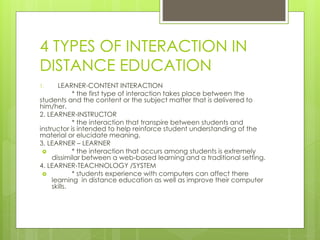
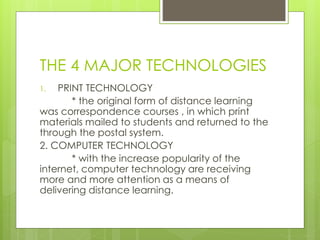
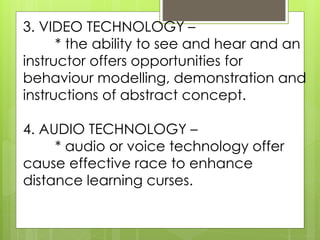
Distance education has evolved from correspondence courses in the 1700s to utilize modern technologies like the internet and audio/video. It allows students who cannot attend traditional in-person classes to learn remotely through asynchronous communication methods. Distance education programs are structured with administrators, faculty, and support staff to deliver course content to students and facilitate interaction between students, instructors, and course material through various technologies including print, computers, video and audio.