ASPHYXIA
NEONATORUM
&
MECONIUM
ASPIRATION
SYNDROME
Normal Respiration
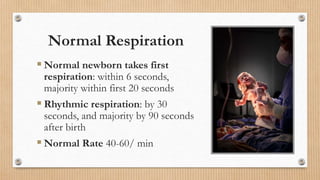
 Normal newborn takes first
respiration: within 6 seconds,
majority within first 20 seconds
 Rhythmic respiration: by 30
seconds, and majority by 90 seconds
after birth
 Normal Rate 40-60/ min
ASPHYSIA
NEONATORUM
“
”
Asphyxia neonatorum is the failure to establish
spontaneous respiration immediately after
complete delivery of the baby
Definition
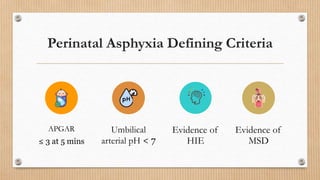
Perinatal Asphyxia Defining Criteria
APGAR
≤ 3 at 5 mins
Umbilical
arterial pH < 7
Evidence of
HIE
Evidence of
MSD
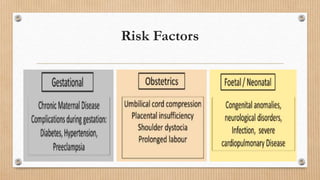
Risk Factors
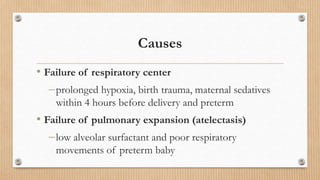
Causes
• Failure of respiratory center
prolonged hypoxia, birth trauma, maternal sedatives
within 4 hours before delivery and preterm
• Failure of pulmonary expansion (atelectasis)
low alveolar surfactant and poor respiratory
movements of preterm baby
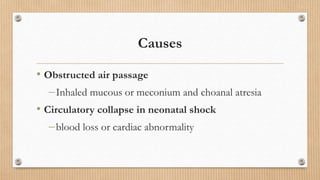
Causes
• Obstructed air passage
Inhaled mucous or meconium and choanal atresia
• Circulatory collapse in neonatal shock
blood loss or cardiac abnormality
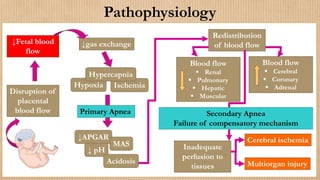
Pathophysiology
↓gas exchange
Ischemia
Hypoxia
Hypercapnia
Disruption of
placental
blood flow
↓APGAR
MAS
↓ pH
Acidosis
↓Fetal blood
flow
Primary Apnea
Redistribution
of blood flow
Blood flow
 Renal
 Pulmonary
 Hepatic
 Muscular
Blood flow
 Cerebral
 Coronary
 Adrenal
Inadequate
perfusion to
tissues
Cerebral ischemia
Multiorgan injury
Secondary Apnea
Failure of compensatory mechanism
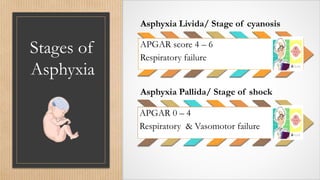
Stages of
Asphyxia
Asphyxia Livida/ Stage of cyanosis
APGAR score 4 – 6
Respiratory failure
Asphyxia Pallida/ Stage of shock
APGAR 0 – 4
Respiratory & Vasomotor failure
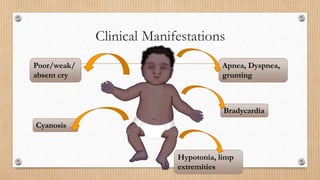
Clinical Manifestations
Poor/weak/
absent cry
Apnea, Dyspnea,
grunting
Hypotonia, limp
extremities
Cyanosis
Bradycardia
Management
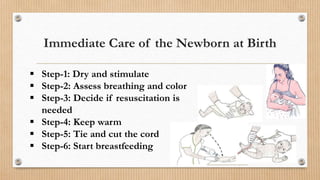
Immediate Care of the Newborn at Birth
 Step-1: Dry and stimulate
 Step-2: Assess breathing and color
 Step-3: Decide if resuscitation is
needed
 Step-4: Keep warm
 Step-5: Tie and cut the cord
 Step-6: Start breastfeeding
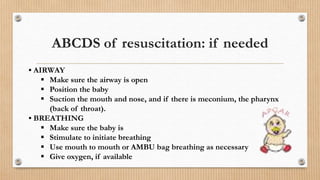
ABCDS of resuscitation: if needed
• AIRWAY
 Make sure the airway is open
 Position the baby
 Suction the mouth and nose, and if there is meconium, the pharynx
(back of throat).
• BREATHING
 Make sure the baby is
 Stimulate to initiate breathing
 Use mouth to mouth or AMBU bag breathing as necessary
 Give oxygen, if available
ABCDS of resuscitation: if needed
• CARDIAC FUNCTION
 Make sure the heart is beating
 Stimulate the baby.
 Do chest compressions when necessary.
• DRY THE BABY
 Warm the baby with a blanket, a light, or the
mother’s skin.
• SHOCK
 Make sure the baby is warm and dry.
MANAGEMENT: If resuscitation is
needed
Steps of resuscitation:
• Dry & Wrap
• Respiration/colour
• Decide for resuscitation
• Position, mouth to mouth respiration, ambu bag
• Cardiac massage
• Intubation
• Drug
Subsequent management:
• Fluid and nutrition should be maintained by IV 10% dextrose,
NG tube feeding or oral feeding.
• To control seizure: Inj. Phenobarbitone 20mg/kg IV followed
by maintenance dose of 5-6mg/kg per day.
• To control edema: Fluid restriction 20-25% Mannitol may be
used
• IV antibiotic.
MANAGEMENT: If resuscitation is
needed
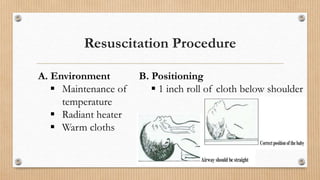
Resuscitation Procedure
A. Environment
 Maintenance of
temperature
 Radiant heater
 Warm cloths
B. Positioning
 1 inch roll of cloth below shoulder
Resuscitation Procedure
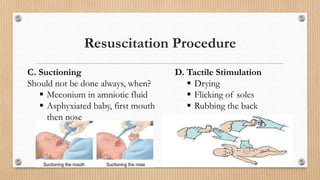
C. Suctioning
Should not be done always, when?
 Meconium in amniotic fluid
 Asphyxiated baby, first mouth
then nose
D. Tactile Stimulation
 Drying
 Flicking of soles
 Rubbing the back
Resuscitation Procedure
E. Assessment
 Colour
 Respiratory effort.
 Heart rate
 Movements or Muscular activities
Resuscitation Procedure
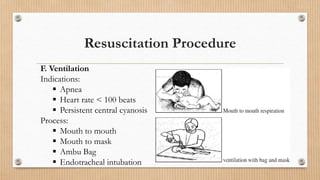
F. Ventilation
Indications:
 Apnea
 Heart rate < 100 beats
 Persistent central cyanosis
Process:
 Mouth to mouth
 Mouth to mask
 Ambu Bag
 Endotracheal intubation
Resuscitation Procedure
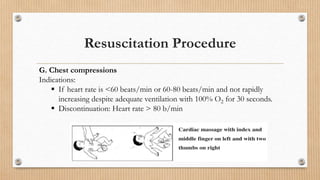
G. Chest compressions
Indications:
 If heart rate is <60 beats/min or 60-80 beats/min and not rapidly
increasing despite adequate ventilation with 100% O2 for 30 seconds.
 Discontinuation: Heart rate > 80 b/min
Resuscitation Procedure
H. Medications: when?
 Heart rate < 80 b/min despite adequate ventilation with
O2 and chest compression for 30 sec.
 Route:
─Umbilical vein
─Endotracheal tube
Resuscitation Procedure
What are the drugs used?
• Adrenaline:
 Dose: 0.5-1ml/kg of
1:10,000
• Volume Expanders:
 Dose:10ml/kg (5%
albumin-Saline or Ringers
lactate )
• Sodium Bicarbonate:
 Prolonged arrest/or
profound metabolic acidosis-
Dose: 2meq/kg of 4.2%
• Naloxone:
 Dose: 0.1mg/kg of 1mg/ml
Postasphyxial Management
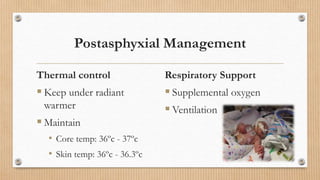
Thermal control
 Keep under radiant
warmer
 Maintain
• Core temp: 36ºc - 37ºc
• Skin temp: 36ºc - 36.3ºc
Respiratory Support
 Supplemental oxygen
 Ventilation
Postasphyxial Management
Cardiovascular support
If CVP 4-8cm: 10ml/kg of saline
If CVP >8cm: Ionotropes
• Avoid fluid bolus and ↑BP
• Dobutamine/Dopamine @ 10-20μgm/kg/min
Postasphyxial Management
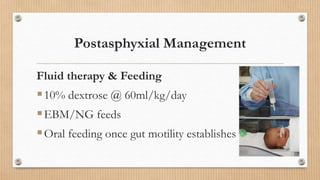
Fluid therapy & Feeding
10% dextrose @ 60ml/kg/day
EBM/NG feeds
Oral feeding once gut motility establishes
Postasphyxial Management
Seizure control
Anticonvulsant
• Loading dose: 20mg/kg
• Maintenance: 3-5mg/kg
BD
Cerebral Edema Mng
Osmotic diuretic
Corticosteroid
Hyperventilation
Head end elevation
MECONUIM
ASPIRATION
SYNDROME
“
”
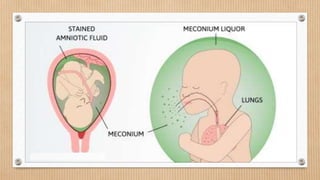
Respiratory manifestation caused by
aspiration/inhalation of meconium in
amniotic fluid into the tracheobronchial tree
Definition
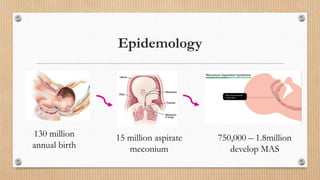
Epidemology
130 million
annual birth
15 million aspirate
meconium
750,000 – 1.8million
develop MAS
Meconium
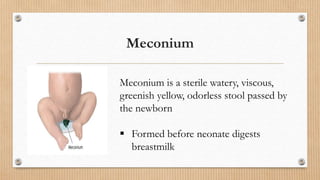
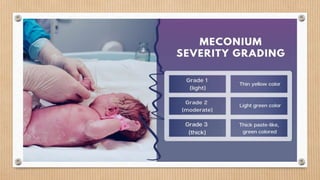
Meconium is a sterile watery, viscous,
greenish yellow, odorless stool passed by
the newborn
 Formed before neonate digests
breastmilk
Characteristics of meconium
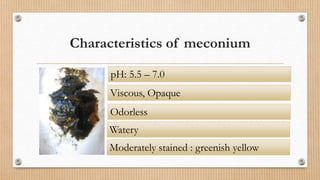
pH: 5.5 – 7.0
Watery
Moderately stained : greenish yellow
Viscous, Opaque
Odorless
Components of meconium
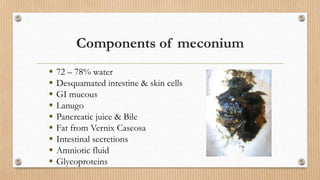
 72 – 78% water
 Desquamated intestine & skin cells
 GI mucous
 Lanugo
 Pancreatic juice & Bile
 Fat from Vernix Caseosa
 Intestinal secretions
 Amniotic fluid
 Glycoproteins
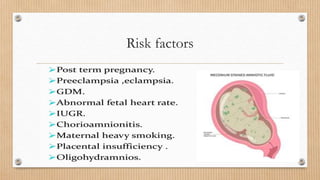
Risk factors
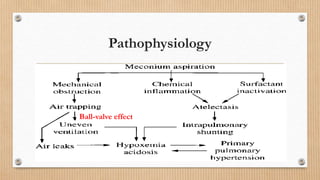
Pathophysiology
Ball-valve effect
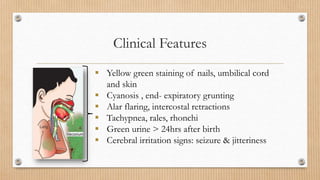
Clinical Features
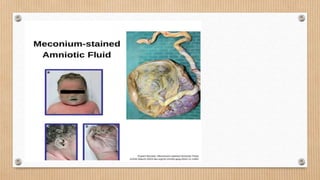
 Yellow green staining of nails, umbilical cord
and skin
 Cyanosis , end- expiratory grunting
 Alar flaring, intercostal retractions
 Tachypnea, rales, rhonchi
 Green urine > 24hrs after birth
 Cerebral irritation signs: seizure & jitteriness
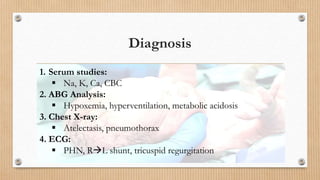
Diagnosis
1. Serum studies:
 Na, K, Ca, CBC
2. ABG Analysis:
 Hypoxemia, hyperventilation, metabolic acidosis
3. Chest X-ray:
 Atelectasis, pneumothorax
4. ECG:
 PHN, RL shunt, tricuspid regurgitation
Complications
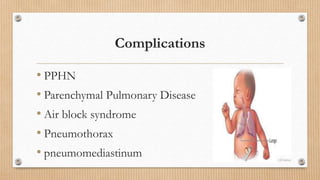
• PPHN
• Parenchymal Pulmonary Disease
• Air block syndrome
• Pneumothorax
• pneumomediastinum
Management
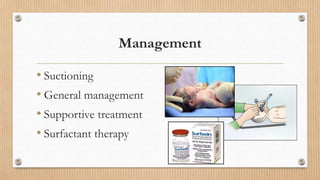
• Suctioning
• General management
• Supportive treatment
• Surfactant therapy
THANK
YOU

ASPHYXIA NEONATORUM.pptx

  • 1.
  • 2.
    Normal Respiration  Normalnewborn takes first respiration: within 6 seconds, majority within first 20 seconds  Rhythmic respiration: by 30 seconds, and majority by 90 seconds after birth  Normal Rate 40-60/ min
  • 3.
  • 4.
    “ ” Asphyxia neonatorum isthe failure to establish spontaneous respiration immediately after complete delivery of the baby Definition
  • 5.
    Perinatal Asphyxia DefiningCriteria APGAR ≤ 3 at 5 mins Umbilical arterial pH < 7 Evidence of HIE Evidence of MSD
  • 6.
  • 7.
    Causes • Failure ofrespiratory center prolonged hypoxia, birth trauma, maternal sedatives within 4 hours before delivery and preterm • Failure of pulmonary expansion (atelectasis) low alveolar surfactant and poor respiratory movements of preterm baby
  • 8.
    Causes • Obstructed airpassage Inhaled mucous or meconium and choanal atresia • Circulatory collapse in neonatal shock blood loss or cardiac abnormality
  • 9.
    Pathophysiology ↓gas exchange Ischemia Hypoxia Hypercapnia Disruption of placental bloodflow ↓APGAR MAS ↓ pH Acidosis ↓Fetal blood flow Primary Apnea Redistribution of blood flow Blood flow  Renal  Pulmonary  Hepatic  Muscular Blood flow  Cerebral  Coronary  Adrenal Inadequate perfusion to tissues Cerebral ischemia Multiorgan injury Secondary Apnea Failure of compensatory mechanism
  • 10.
    Stages of Asphyxia Asphyxia Livida/Stage of cyanosis APGAR score 4 – 6 Respiratory failure Asphyxia Pallida/ Stage of shock APGAR 0 – 4 Respiratory & Vasomotor failure
  • 11.
    Clinical Manifestations Poor/weak/ absent cry Apnea,Dyspnea, grunting Hypotonia, limp extremities Cyanosis Bradycardia
  • 12.
  • 13.
    Immediate Care ofthe Newborn at Birth  Step-1: Dry and stimulate  Step-2: Assess breathing and color  Step-3: Decide if resuscitation is needed  Step-4: Keep warm  Step-5: Tie and cut the cord  Step-6: Start breastfeeding
  • 14.
    ABCDS of resuscitation:if needed • AIRWAY  Make sure the airway is open  Position the baby  Suction the mouth and nose, and if there is meconium, the pharynx (back of throat). • BREATHING  Make sure the baby is  Stimulate to initiate breathing  Use mouth to mouth or AMBU bag breathing as necessary  Give oxygen, if available
  • 15.
    ABCDS of resuscitation:if needed • CARDIAC FUNCTION  Make sure the heart is beating  Stimulate the baby.  Do chest compressions when necessary. • DRY THE BABY  Warm the baby with a blanket, a light, or the mother’s skin. • SHOCK  Make sure the baby is warm and dry.
  • 16.
    MANAGEMENT: If resuscitationis needed Steps of resuscitation: • Dry & Wrap • Respiration/colour • Decide for resuscitation • Position, mouth to mouth respiration, ambu bag • Cardiac massage • Intubation • Drug
  • 17.
    Subsequent management: • Fluidand nutrition should be maintained by IV 10% dextrose, NG tube feeding or oral feeding. • To control seizure: Inj. Phenobarbitone 20mg/kg IV followed by maintenance dose of 5-6mg/kg per day. • To control edema: Fluid restriction 20-25% Mannitol may be used • IV antibiotic. MANAGEMENT: If resuscitation is needed
  • 18.
    Resuscitation Procedure A. Environment Maintenance of temperature  Radiant heater  Warm cloths B. Positioning  1 inch roll of cloth below shoulder
  • 19.
    Resuscitation Procedure C. Suctioning Shouldnot be done always, when?  Meconium in amniotic fluid  Asphyxiated baby, first mouth then nose D. Tactile Stimulation  Drying  Flicking of soles  Rubbing the back
  • 20.
    Resuscitation Procedure E. Assessment Colour  Respiratory effort.  Heart rate  Movements or Muscular activities
  • 21.
    Resuscitation Procedure F. Ventilation Indications: Apnea  Heart rate < 100 beats  Persistent central cyanosis Process:  Mouth to mouth  Mouth to mask  Ambu Bag  Endotracheal intubation
  • 22.
    Resuscitation Procedure G. Chestcompressions Indications:  If heart rate is <60 beats/min or 60-80 beats/min and not rapidly increasing despite adequate ventilation with 100% O2 for 30 seconds.  Discontinuation: Heart rate > 80 b/min
  • 23.
    Resuscitation Procedure H. Medications:when?  Heart rate < 80 b/min despite adequate ventilation with O2 and chest compression for 30 sec.  Route: ─Umbilical vein ─Endotracheal tube
  • 24.
    Resuscitation Procedure What arethe drugs used? • Adrenaline:  Dose: 0.5-1ml/kg of 1:10,000 • Volume Expanders:  Dose:10ml/kg (5% albumin-Saline or Ringers lactate ) • Sodium Bicarbonate:  Prolonged arrest/or profound metabolic acidosis- Dose: 2meq/kg of 4.2% • Naloxone:  Dose: 0.1mg/kg of 1mg/ml
  • 25.
    Postasphyxial Management Thermal control Keep under radiant warmer  Maintain • Core temp: 36ºc - 37ºc • Skin temp: 36ºc - 36.3ºc Respiratory Support  Supplemental oxygen  Ventilation
  • 26.
    Postasphyxial Management Cardiovascular support IfCVP 4-8cm: 10ml/kg of saline If CVP >8cm: Ionotropes • Avoid fluid bolus and ↑BP • Dobutamine/Dopamine @ 10-20μgm/kg/min
  • 27.
    Postasphyxial Management Fluid therapy& Feeding 10% dextrose @ 60ml/kg/day EBM/NG feeds Oral feeding once gut motility establishes
  • 28.
    Postasphyxial Management Seizure control Anticonvulsant •Loading dose: 20mg/kg • Maintenance: 3-5mg/kg BD Cerebral Edema Mng Osmotic diuretic Corticosteroid Hyperventilation Head end elevation
  • 29.
  • 30.
    “ ” Respiratory manifestation causedby aspiration/inhalation of meconium in amniotic fluid into the tracheobronchial tree Definition
  • 32.
    Epidemology 130 million annual birth 15million aspirate meconium 750,000 – 1.8million develop MAS
  • 33.
    Meconium Meconium is asterile watery, viscous, greenish yellow, odorless stool passed by the newborn  Formed before neonate digests breastmilk
  • 34.
    Characteristics of meconium pH:5.5 – 7.0 Watery Moderately stained : greenish yellow Viscous, Opaque Odorless
  • 35.
    Components of meconium 72 – 78% water  Desquamated intestine & skin cells  GI mucous  Lanugo  Pancreatic juice & Bile  Fat from Vernix Caseosa  Intestinal secretions  Amniotic fluid  Glycoproteins
  • 36.
  • 37.
  • 38.
    Clinical Features  Yellowgreen staining of nails, umbilical cord and skin  Cyanosis , end- expiratory grunting  Alar flaring, intercostal retractions  Tachypnea, rales, rhonchi  Green urine > 24hrs after birth  Cerebral irritation signs: seizure & jitteriness
  • 39.
    Diagnosis 1. Serum studies: Na, K, Ca, CBC 2. ABG Analysis:  Hypoxemia, hyperventilation, metabolic acidosis 3. Chest X-ray:  Atelectasis, pneumothorax 4. ECG:  PHN, RL shunt, tricuspid regurgitation
  • 42.
    Complications • PPHN • ParenchymalPulmonary Disease • Air block syndrome • Pneumothorax • pneumomediastinum
  • 43.
    Management • Suctioning • Generalmanagement • Supportive treatment • Surfactant therapy
  • 44.