Presented By: Hasnain Sarwar
Roll No. : “4128”
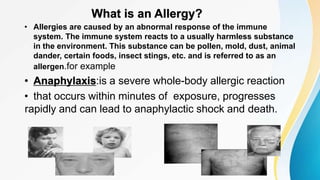
What is an Allergy?
• Allergies are caused by an abnormal response of the immune
system. The immune system reacts to a usually harmless substance
in the environment. This substance can be pollen, mold, dust, animal
dander, certain foods, insect stings, etc. and is referred to as an
allergen.for example
• Anaphylaxis:is a severe whole-body allergic reaction
• that occurs within minutes of exposure, progresses
rapidly and can lead to anaphylactic shock and death.
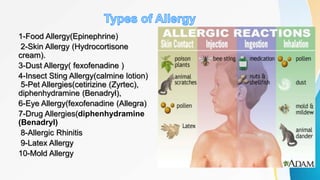
1-Food Allergy(Epinephrine)
2-Skin Allergy (Hydrocortisone
cream).
3-Dust Allergy( fexofenadine )
4-Insect Sting Allergy(calmine lotion)
5-Pet Allergies(cetirizine (Zyrtec),
diphenhydramine (Benadryl),
6-Eye Allergy(fexofenadine (Allegra)
7-Drug Allergies(diphenhydramine
(Benadryl)
8-Allergic Rhinitis
9-Latex Allergy
10-Mold Allergy
• A person is exposed to an allergen by inhaling it, swallowing it, or
getting in on their skin. After a person is exposed, there is a
sequence of events that create an allergic reaction:
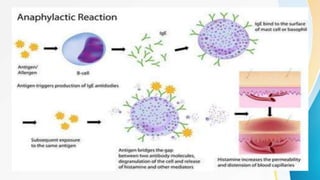
• The body produces an antibody, IgE, to bind the allergen. These
antibodies attach to a mast cell, which can be found in the airways,
intestines, and elsewhere Allergens bind to the IgE, which is
attached to the mast cell, which causes the mast cells to release a
variety of chemicals into the blood such as histmamine. Histamine
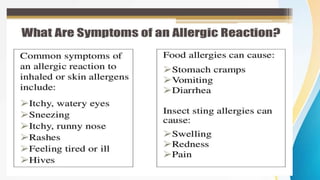
causes most of the symptoms of an allergic reaction.
Allergic Reaction
• There is skin testing, as well as allergy blood tests. Skin tests give fast
results and usually cost less than blood tests. Blood tests are helpful
because it only involves a single needle prick, however it costs more.
All test results must be interpreted with the medical history.
• There are two types of allergy treatment:
1. Medication: and are the most
common. They help to reduce a stuffy nose, runny nose,
sneezing or itching. Corticosteroids treat inflammation in the
nose.
2. Immunotherapy:A preventive treatment for allergic reactions
that involves giving gradual increase doses of the allergen.
The slow increase of the allergen allows the immune system
to become less sensitive to the allergen.
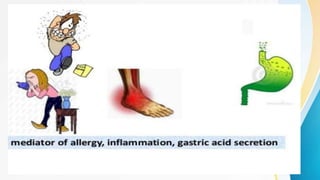
• Chemical messenger that mediates a wide range of
cellular responses, including allergic and
inflammatory reactions, gastric acid secretion, and
neurotransmission in parts of the brain.
• Plays an important role in gastric acid secretion.
• Histamine is a major mediator of allergic and
inflammatory processes.
Location of Histamine
• Histamine is a biogenic amine found in many
tissues, including mast cells, basophils,
lymphocytes, neurons, and gastric
enterochromaffin-like cells.
• High amounts found in lung, skin, and the GIT.
• Found at high concentration in mast cells or
basophils.
• Occurs as a component of venoms and in
secretions from insect stings.
Adverse effects of Histamine Release
• Itching, Urticaria.
• Flushing.
• Hypotension
• Tachycardia
• Bronchospasm
• Angioedema
• Wakefullness
• Increased acidity (Gastric acid secretion)
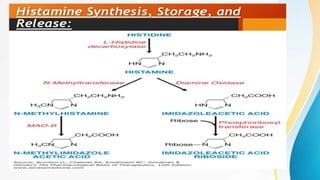
Biosynthesis of Histamine
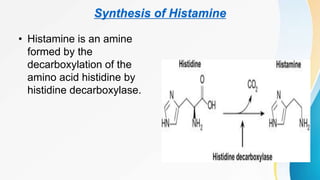
Synthesis of Histamine
• Histamine is an amine
formed by the
decarboxylation of the
amino acid histidine by
histidine decarboxylase.
• Histamine synthesis and storage can be divided into two “pools”:
1. a slowly turning over pool.
2. a rapidly turning over pool.
1-The slowly turning over pool is located in mast cells and
basophils.Histamine is stored in large granules in these
inflammatory cells, and the release of histamine involves complete
degranulation of the cells.
2-The rapidly turning over pool is located in gastric ECL cells
and in histaminergic CNS neurons.These cells synthesize and
release histamine as required for gastric acid secretion and
neurotransmission, respectively.
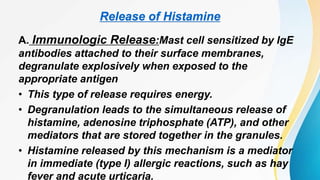
Release of Histamine
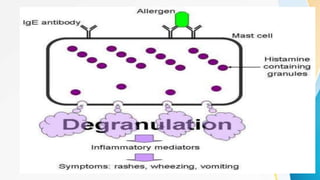
A. Immunologic Release:Mast cell sensitized by IgE
antibodies attached to their surface membranes,
degranulate explosively when exposed to the
appropriate antigen
• This type of release requires energy.
• Degranulation leads to the simultaneous release of
histamine, adenosine triphosphate (ATP), and other
mediators that are stored together in the granules.
• Histamine released by this mechanism is a mediator
in immediate (type I) allergic reactions, such as hay
fever and acute urticaria.
Chemical and Mechanical Release
• Chemical and mechanical mast cell injury causes
degranulation and histamine release.
• Drugs such as morphine and tubocurarine, can
displace histamine from its bound form within
cells.
• This type of release does not require energy and is
not associated with mast cell injury or
degranulation.
• Loss of granules from the mast cell also releases
histamine.
Allergy and histamine

Allergy and histamine

  • 1.
    Presented By: HasnainSarwar Roll No. : “4128”
  • 2.
    What is anAllergy? • Allergies are caused by an abnormal response of the immune system. The immune system reacts to a usually harmless substance in the environment. This substance can be pollen, mold, dust, animal dander, certain foods, insect stings, etc. and is referred to as an allergen.for example • Anaphylaxis:is a severe whole-body allergic reaction • that occurs within minutes of exposure, progresses rapidly and can lead to anaphylactic shock and death.
  • 3.
    1-Food Allergy(Epinephrine) 2-Skin Allergy(Hydrocortisone cream). 3-Dust Allergy( fexofenadine ) 4-Insect Sting Allergy(calmine lotion) 5-Pet Allergies(cetirizine (Zyrtec), diphenhydramine (Benadryl), 6-Eye Allergy(fexofenadine (Allegra) 7-Drug Allergies(diphenhydramine (Benadryl) 8-Allergic Rhinitis 9-Latex Allergy 10-Mold Allergy
  • 4.
    • A personis exposed to an allergen by inhaling it, swallowing it, or getting in on their skin. After a person is exposed, there is a sequence of events that create an allergic reaction: • The body produces an antibody, IgE, to bind the allergen. These antibodies attach to a mast cell, which can be found in the airways, intestines, and elsewhere Allergens bind to the IgE, which is attached to the mast cell, which causes the mast cells to release a variety of chemicals into the blood such as histmamine. Histamine causes most of the symptoms of an allergic reaction.
  • 5.
  • 7.
    • There isskin testing, as well as allergy blood tests. Skin tests give fast results and usually cost less than blood tests. Blood tests are helpful because it only involves a single needle prick, however it costs more. All test results must be interpreted with the medical history. • There are two types of allergy treatment: 1. Medication: and are the most common. They help to reduce a stuffy nose, runny nose, sneezing or itching. Corticosteroids treat inflammation in the nose. 2. Immunotherapy:A preventive treatment for allergic reactions that involves giving gradual increase doses of the allergen. The slow increase of the allergen allows the immune system to become less sensitive to the allergen.
  • 8.
    • Chemical messengerthat mediates a wide range of cellular responses, including allergic and inflammatory reactions, gastric acid secretion, and neurotransmission in parts of the brain. • Plays an important role in gastric acid secretion. • Histamine is a major mediator of allergic and inflammatory processes.
  • 9.
    Location of Histamine •Histamine is a biogenic amine found in many tissues, including mast cells, basophils, lymphocytes, neurons, and gastric enterochromaffin-like cells. • High amounts found in lung, skin, and the GIT. • Found at high concentration in mast cells or basophils. • Occurs as a component of venoms and in secretions from insect stings.
  • 10.
    Adverse effects ofHistamine Release • Itching, Urticaria. • Flushing. • Hypotension • Tachycardia • Bronchospasm • Angioedema • Wakefullness • Increased acidity (Gastric acid secretion)
  • 12.
  • 13.
    Synthesis of Histamine •Histamine is an amine formed by the decarboxylation of the amino acid histidine by histidine decarboxylase.
  • 15.
    • Histamine synthesisand storage can be divided into two “pools”: 1. a slowly turning over pool. 2. a rapidly turning over pool. 1-The slowly turning over pool is located in mast cells and basophils.Histamine is stored in large granules in these inflammatory cells, and the release of histamine involves complete degranulation of the cells. 2-The rapidly turning over pool is located in gastric ECL cells and in histaminergic CNS neurons.These cells synthesize and release histamine as required for gastric acid secretion and neurotransmission, respectively.
  • 17.
    Release of Histamine A.Immunologic Release:Mast cell sensitized by IgE antibodies attached to their surface membranes, degranulate explosively when exposed to the appropriate antigen • This type of release requires energy. • Degranulation leads to the simultaneous release of histamine, adenosine triphosphate (ATP), and other mediators that are stored together in the granules. • Histamine released by this mechanism is a mediator in immediate (type I) allergic reactions, such as hay fever and acute urticaria.
  • 19.
    Chemical and MechanicalRelease • Chemical and mechanical mast cell injury causes degranulation and histamine release. • Drugs such as morphine and tubocurarine, can displace histamine from its bound form within cells. • This type of release does not require energy and is not associated with mast cell injury or degranulation. • Loss of granules from the mast cell also releases histamine.