AllAbout
StainlessSteel
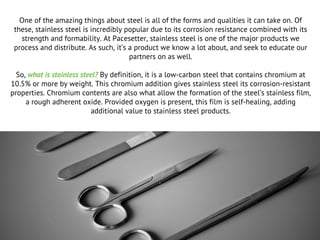
One of the amazing things about steel is all of the forms and qualities it can take on. Of
these, stainless steel is incredibly popular due to its corrosion resistance combined with its
strength and formability. At Pacesetter, stainless steel is one of the major products we
process and distribute. As such, it’s a product we know a lot about, and seek to educate our
partners on as well.
So, what is stainless steel? By definition, it is a low-carbon steel that contains chromium at
10.5% or more by weight. This chromium addition gives stainless steel its corrosion-resistant
properties. Chromium contents are also what allow the formation of the steel’s stainless film,
a rough adherent oxide. Provided oxygen is present, this film is self-healing, adding
additional value to stainless steel products.
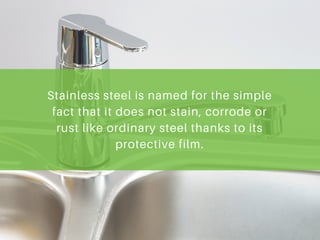
Stainless steel is named for the simple
fact that it does not stain, corrode or
rust like ordinary steel thanks to its
protective film.
Other elements including nickel and molybdenum may be
added to produce stainless steel, but chromium’s inclusion
is the defining factor. With 60 grades of stainless steel
and five major groups, the grade of stainless steel to
specify depends on the type of environment the alloy
must endure, and the inclusion and quantities of other
elements in the material.
Flat-rolled stainless steel can be finished in a variety of
ways according to our customers’ aesthetic and functional
needs, from mirror finishes to brushed, coarse, or heat-
colored finishes.
Several corrosion-resistant iron artifacts have survived
from history, indicating that similar metals were developed
as early as 400 AD. In these artifacts, however, it was not
chromium but phosphorus used to improve durability and
allow objects like the Iron Pillar of Delhi to weather the
test of time.
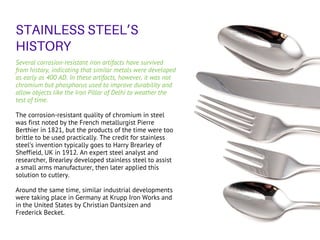
The corrosion-resistant quality of chromium in steel
was first noted by the French metallurgist Pierre
Berthier in 1821, but the products of the time were too
brittle to be used practically. The credit for stainless
steel’s invention typically goes to Harry Brearley of
Sheffield, UK in 1912. An expert steel analyst and
researcher, Brearley developed stainless steel to assist
a small arms manufacturer, then later applied this
solution to cutlery.
Around the same time, similar industrial developments
were taking place in Germany at Krupp Iron Works and
in the United States by Christian Dantsizen and
Frederick Becket.
STAINLESS STEEL’S
HISTORY
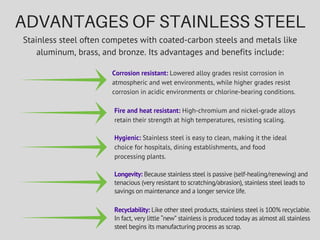
ADVANTAGES OF STAINLESS STEEL
Stainless steel often competes with coated-carbon steels and metals like
aluminum, brass, and bronze. Its advantages and benefits include:
Corrosion resistant: Lowered alloy grades resist corrosion in
atmospheric and wet environments, while higher grades resist
corrosion in acidic environments or chlorine-bearing conditions.
Fire and heat resistant: High-chromium and nickel-grade alloys
retain their strength at high temperatures, resisting scaling.
Hygienic: Stainless steel is easy to clean, making it the ideal
choice for hospitals, dining establishments, and food
processing plants.
Longevity: Because stainless steel is passive (self-healing/renewing) and
tenacious (very resistant to scratching/abrasion), stainless steel leads to
savings on maintenance and a longer service life.
Recyclability: Like other steel products, stainless steel is 100% recyclable.
In fact, very little “new” stainless is produced today as almost all stainless
steel begins its manufacturing process as scrap.
APPLICATIONS
Stainless steel is used for a wide range of
applications. In architecture, it was an art deco
staple that remains durable thanks to its stainless
properties, while today it’s popular for cladding and
reinforcement. The same goes for bridges,
monuments, and sculptures. In locomotion,
stainless steel has been used for automobiles
(mainly for exhaust systems, converters, and
structural purposes), passenger rail cars and even
airplanes (though it’s been surpassed by aluminum
for weight reasons).
In medicine, stainless steel often comprises medical
and surgical tools and implants for its hygienic
properties and easy sterilization. For similar
reasons, stainless steel is popular in the culinary
field, where it’s used to make cutlery, appliances
like sinks and refrigerators, as well as bake and
cookware. Large amounts of stainless steel are also
used for food production and storage.
There is also a market for pumping and storing
oils, acids, and gases, and for the nuclear
industry. Stainless steel is also used for jewelry
like watches, or for firearms, as its inventor
originally intended.
It’s as clear as stainless steel’s surface that this
material is a great one. At Pacesetter, we offer
quality flat-rolled stainless steel, finished to the
exact specifications of our customers’ needs, and
expect it to retain its popularity (and shine) for
quite some time.
Thankyou!For more information, please visit: 
TeamPacesetter.com

All About Stainless Steel

  • 1.
  • 2.
    One of theamazing things about steel is all of the forms and qualities it can take on. Of these, stainless steel is incredibly popular due to its corrosion resistance combined with its strength and formability. At Pacesetter, stainless steel is one of the major products we process and distribute. As such, it’s a product we know a lot about, and seek to educate our partners on as well. So, what is stainless steel? By definition, it is a low-carbon steel that contains chromium at 10.5% or more by weight. This chromium addition gives stainless steel its corrosion-resistant properties. Chromium contents are also what allow the formation of the steel’s stainless film, a rough adherent oxide. Provided oxygen is present, this film is self-healing, adding additional value to stainless steel products.
  • 3.
    Stainless steel isnamed for the simple fact that it does not stain, corrode or rust like ordinary steel thanks to its protective film.
  • 4.
    Other elements includingnickel and molybdenum may be added to produce stainless steel, but chromium’s inclusion is the defining factor. With 60 grades of stainless steel and five major groups, the grade of stainless steel to specify depends on the type of environment the alloy must endure, and the inclusion and quantities of other elements in the material. Flat-rolled stainless steel can be finished in a variety of ways according to our customers’ aesthetic and functional needs, from mirror finishes to brushed, coarse, or heat- colored finishes.
  • 5.
    Several corrosion-resistant ironartifacts have survived from history, indicating that similar metals were developed as early as 400 AD. In these artifacts, however, it was not chromium but phosphorus used to improve durability and allow objects like the Iron Pillar of Delhi to weather the test of time. The corrosion-resistant quality of chromium in steel was first noted by the French metallurgist Pierre Berthier in 1821, but the products of the time were too brittle to be used practically. The credit for stainless steel’s invention typically goes to Harry Brearley of Sheffield, UK in 1912. An expert steel analyst and researcher, Brearley developed stainless steel to assist a small arms manufacturer, then later applied this solution to cutlery. Around the same time, similar industrial developments were taking place in Germany at Krupp Iron Works and in the United States by Christian Dantsizen and Frederick Becket. STAINLESS STEEL’S HISTORY
  • 6.
    ADVANTAGES OF STAINLESSSTEEL Stainless steel often competes with coated-carbon steels and metals like aluminum, brass, and bronze. Its advantages and benefits include: Corrosion resistant: Lowered alloy grades resist corrosion in atmospheric and wet environments, while higher grades resist corrosion in acidic environments or chlorine-bearing conditions. Fire and heat resistant: High-chromium and nickel-grade alloys retain their strength at high temperatures, resisting scaling. Hygienic: Stainless steel is easy to clean, making it the ideal choice for hospitals, dining establishments, and food processing plants. Longevity: Because stainless steel is passive (self-healing/renewing) and tenacious (very resistant to scratching/abrasion), stainless steel leads to savings on maintenance and a longer service life. Recyclability: Like other steel products, stainless steel is 100% recyclable. In fact, very little “new” stainless is produced today as almost all stainless steel begins its manufacturing process as scrap.
  • 7.
    APPLICATIONS Stainless steel isused for a wide range of applications. In architecture, it was an art deco staple that remains durable thanks to its stainless properties, while today it’s popular for cladding and reinforcement. The same goes for bridges, monuments, and sculptures. In locomotion, stainless steel has been used for automobiles (mainly for exhaust systems, converters, and structural purposes), passenger rail cars and even airplanes (though it’s been surpassed by aluminum for weight reasons). In medicine, stainless steel often comprises medical and surgical tools and implants for its hygienic properties and easy sterilization. For similar reasons, stainless steel is popular in the culinary field, where it’s used to make cutlery, appliances like sinks and refrigerators, as well as bake and cookware. Large amounts of stainless steel are also used for food production and storage.
  • 8.
    There is alsoa market for pumping and storing oils, acids, and gases, and for the nuclear industry. Stainless steel is also used for jewelry like watches, or for firearms, as its inventor originally intended. It’s as clear as stainless steel’s surface that this material is a great one. At Pacesetter, we offer quality flat-rolled stainless steel, finished to the exact specifications of our customers’ needs, and expect it to retain its popularity (and shine) for quite some time.
  • 9.
    Thankyou!For more information,please visit:  TeamPacesetter.com