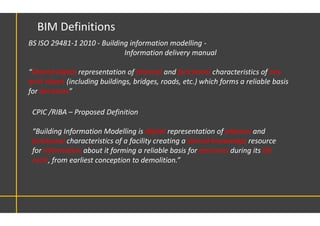
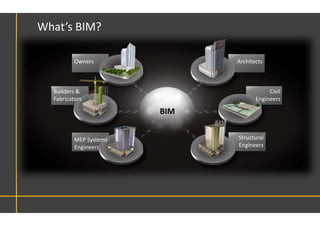
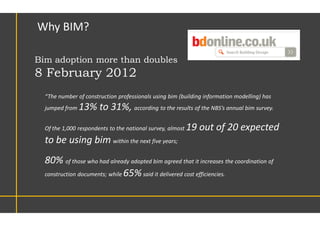
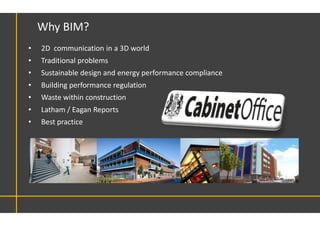
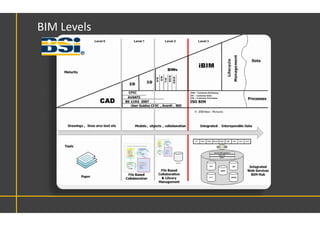
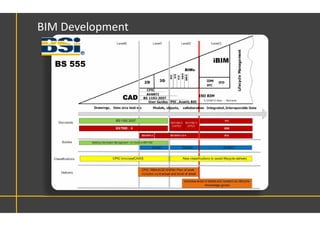
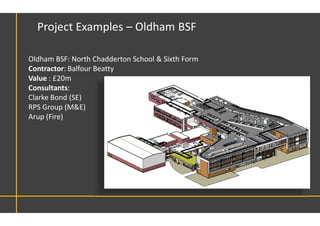
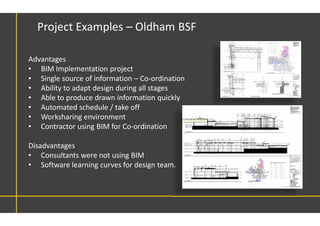
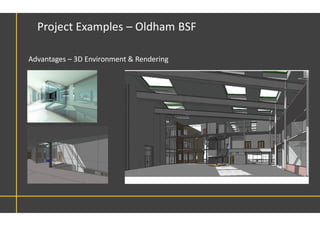
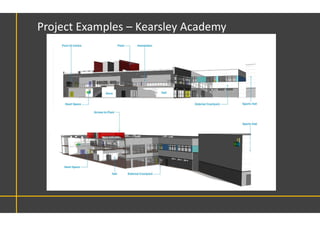
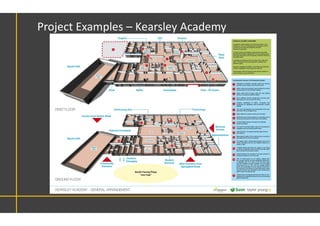
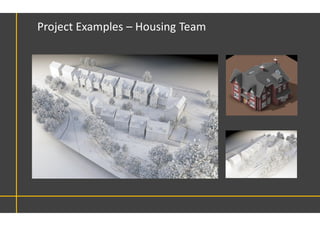
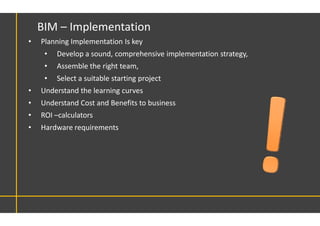
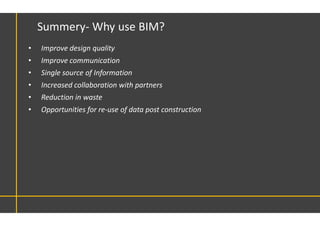
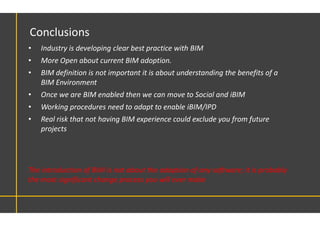
This document provides an overview of Building Information Modeling (BIM) including definitions of BIM, the benefits of BIM, examples of BIM implementation on projects, and considerations for adopting BIM. It defines BIM as a shared digital representation of a built object that forms a reliable basis for decision making. The benefits discussed include improved design coordination, reduced waste, single source of information for a projects lifecycle. Case studies on education and housing projects demonstrate BIM uses. Implementation requires developing a strategy, selecting pilot projects, understanding learning curves and costs/benefits. Widespread adoption of BIM is an important change for the construction industry.