Aldosterone
MINERELOCORTICOIDS
Effects
 Aldosterone increase the reabsorption of Na+
from the urine, sweat, saliva, and the
contents of the colon.
 retention of Na+ in the ECF.
 This expands ECF volume.
 In the kidneys, they act primarily on the
principal cells (P cells) of the collecting ducts.
 Under the influence of aldosterone, increased
amounts of Na+ are exchanged for K+ and
H+ in the renal tubules
 Secreted from the zona glomerulosa
of the adrenal cortex
 transported bound to transcortin and
smaller amounts to albumin, some are
free
 aldosterone binds to a cytoplasmic receptor.
 receptor-hormone complex moves to the
nucleus
 alters the transcription of mRNAs.
 Produce new proteins that alter the cell
function
Mechanism of Action
Rapid Effect
 act on P cells (principal cells) of
the collecting duct, increase the
insertion of epithelial sodium
channels (ENaCs) from a
cytoplasmic pool.
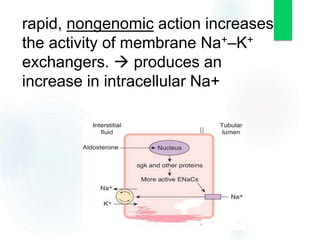
rapid, nongenomic action increases
the activity of membrane Na+–K+
exchangers.  produces an
increase in intracellular Na+
Slow Effect
 increase the synthesis of ENaCs by
increasing the mRNAs for the three
subunits that make up ENaCs.
 increases ENaC activity by activating
gene for sgk (serum- and
glucocorticoid-regulated kinase),
sgk increases ENaC activity.
 Increases Na+ reabsorption in kidneys
 in exchange for K+ and H+ secretion
 especially in the Principal cells of the distal
tubules/ collecting ducts
 Increases H+ secretion
 via a ATP-driven proton pump - in the I cells of
the cortical collecting tubules
 Increased reabsorption of Na+ from the
sweat, saliva and contents of the colon
Causes Na+ retention & expansion
of ECF volume
Actions
 ACTH
 Angiotensin 2 and Renin
 Electrolyte concentrations
 (Plasma Na+,K+)
Regulation of Aldesterone
secretion
Effect of ACTH
 Stimulates secretion of
glucocorticoids, mineralocorticoids,
adrenal androgens
 increase the secretion of
mineralocorticoid deoxycorticosterone
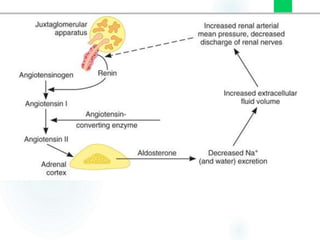
Renin
 Secreted from the juxtaglomerular cells
surrounding the renal afferent arterioles &
lacis cells.
 Main stimulus
 Intra-renal baroreceptor mechanism -drop in
ECF volume,intra-arterial vascular volume.
 increase in renal nerve discharge and
decreases renal arterial pressure
Angiotensin II
 Angiotensin II also acts directly on the
adrenal cortex to increase the secretion of
aldosterone.
 Angiotensin II does not increase the secretion
of deoxycorticosterone, which is controlled by
ACTH.
Electrolytes & other factors
Plasma K+
 Plasma K+ has direct action on synthesis of
aldosterone
 (small rise in K+ level stimulates aldosterone
synthesis)
plasma Na+
 a decrease in Na +of about 20meq/L increase
aldosterone secretion
Atrial natriuretic peptide
 Secreted from the muscle cells of the atria
 Atrial natriuretic peptide (ANP) inhibits renin
secretion and decreases the responsiveness of
the zona glomerulosa to angiotensin II
 Inhibits Na+ reabsorption
 Dilates the afferent arterioles and relxes the
mesangial cells. Increase GFR
Pathology
Aldersterone deficiency
 potassium ion concentration of the
ECF rises.
 sodium and chloride are rapidly lost
from the body.
 Total ECF volume and blood volume
become greatly reduced.
 Diarrhoea
 Decreased cardiac output  shock 
death.
 Excess production of aldosterone.
Independent of the renin-angiotensin
system
 adenoma of the zona glomerulosa,
unilateral or bilateral adrenal hyperplasia,
adrenal carcinoma
Primary hyperaldoesteronism
( Conn syndrome)
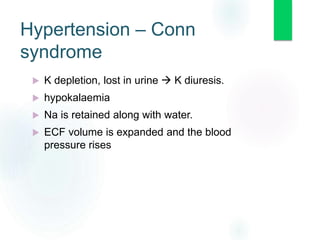
Hypertension – Conn
syndrome
 K depletion, lost in urine  K diuresis.
 hypokalaemia
 Na is retained along with water.
 ECF volume is expanded and the blood
pressure rises
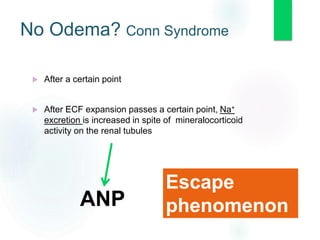
 After a certain point
 After ECF expansion passes a certain point, Na+
excretion is increased in spite of mineralocorticoid
activity on the renal tubules
ANP
Escape
phenomenon
No Odema? Conn Syndrome
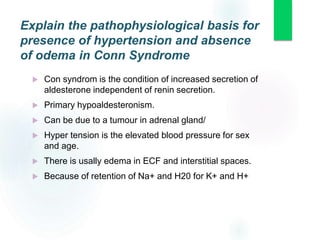
Explain the pathophysiological basis for
presence of hypertension and absence
of odema in Conn Syndrome
 Con syndrom is the condition of increased secretion of
aldesterone independent of renin secretion.
 Primary hypoaldesteronism.
 Can be due to a tumour in adrenal gland/
 Hyper tension is the elevated blood pressure for sex
and age.
 There is usally edema in ECF and interstitial spaces.
 Because of retention of Na+ and H20 for K+ and H+
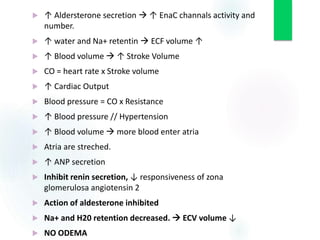
 ↑ Aldersterone secretion  ↑ EnaC channals activity and
number.
 ↑ water and Na+ retentin  ECF volume ↑
 ↑ Blood volume  ↑ Stroke Volume
 CO = heart rate x Stroke volume
 ↑ Cardiac Output
 Blood pressure = CO x Resistance
 ↑ Blood pressure // Hypertension
 ↑ Blood volume  more blood enter atria
 Atria are streched.
 ↑ ANP secretion
 Inhibit renin secretion, ↓ responsiveness of zona
glomerulosa angiotensin 2
 Action of aldesterone inhibited
 Na+ and H20 retention decreased.  ECV volume ↓
 NO ODEMA
 In patients with primary hyperaldosteronism, renin
secretion is depressed.
 K+ depletion and Na+ retention, usually without edema
but with weakness, hypertension, polyuria, and
hypokalemic alkalosis
Excess aldosterone as a result of high renin
 Heart failure
 Hepatic failure.
 Cirrhosis
 nephrotic syndrome.
Effective
circulatory
blood
volume is
reduced
Secondary
hyperaldosteroinism
Primary adrenal
insufficiency
Addison disease
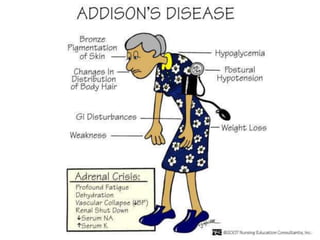
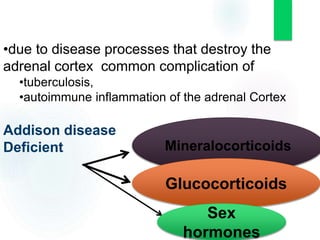
•due to disease processes that destroy the
adrenal cortex common complication of
•tuberculosis,
•autoimmune inflammation of the adrenal Cortex
Addison disease
Deficient Mineralocorticoids
Glucocorticoids
Sex
hormones
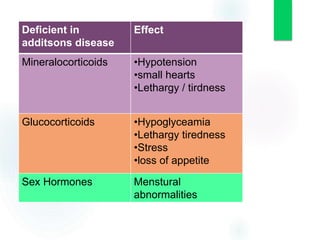
Deficient in
additsons disease
Effect
Mineralocorticoids •Hypotension
•small hearts
•Lethargy / tirdness
Glucocorticoids •Hypoglyceamia
•Lethargy tiredness
•Stress
•loss of appetite
Sex Hormones Menstural
abnormalities
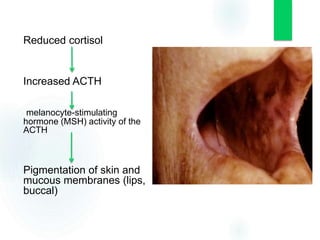
Reduced cortisol
Increased ACTH
melanocyte-stimulating
hormone (MSH) activity of the
ACTH
Pigmentation of skin and
mucous membranes (lips,
buccal)

Aldersterone

  • 1.
  • 2.
    Effects  Aldosterone increasethe reabsorption of Na+ from the urine, sweat, saliva, and the contents of the colon.  retention of Na+ in the ECF.  This expands ECF volume.  In the kidneys, they act primarily on the principal cells (P cells) of the collecting ducts.  Under the influence of aldosterone, increased amounts of Na+ are exchanged for K+ and H+ in the renal tubules
  • 3.
     Secreted fromthe zona glomerulosa of the adrenal cortex  transported bound to transcortin and smaller amounts to albumin, some are free
  • 4.
     aldosterone bindsto a cytoplasmic receptor.  receptor-hormone complex moves to the nucleus  alters the transcription of mRNAs.  Produce new proteins that alter the cell function Mechanism of Action
  • 5.
    Rapid Effect  acton P cells (principal cells) of the collecting duct, increase the insertion of epithelial sodium channels (ENaCs) from a cytoplasmic pool.
  • 6.
    rapid, nongenomic actionincreases the activity of membrane Na+–K+ exchangers.  produces an increase in intracellular Na+
  • 7.
    Slow Effect  increasethe synthesis of ENaCs by increasing the mRNAs for the three subunits that make up ENaCs.  increases ENaC activity by activating gene for sgk (serum- and glucocorticoid-regulated kinase), sgk increases ENaC activity.
  • 8.
     Increases Na+reabsorption in kidneys  in exchange for K+ and H+ secretion  especially in the Principal cells of the distal tubules/ collecting ducts  Increases H+ secretion  via a ATP-driven proton pump - in the I cells of the cortical collecting tubules  Increased reabsorption of Na+ from the sweat, saliva and contents of the colon Causes Na+ retention & expansion of ECF volume Actions
  • 9.
     ACTH  Angiotensin2 and Renin  Electrolyte concentrations  (Plasma Na+,K+) Regulation of Aldesterone secretion
  • 10.
    Effect of ACTH Stimulates secretion of glucocorticoids, mineralocorticoids, adrenal androgens  increase the secretion of mineralocorticoid deoxycorticosterone
  • 11.
    Renin  Secreted fromthe juxtaglomerular cells surrounding the renal afferent arterioles & lacis cells.  Main stimulus  Intra-renal baroreceptor mechanism -drop in ECF volume,intra-arterial vascular volume.  increase in renal nerve discharge and decreases renal arterial pressure
  • 12.
    Angiotensin II  AngiotensinII also acts directly on the adrenal cortex to increase the secretion of aldosterone.  Angiotensin II does not increase the secretion of deoxycorticosterone, which is controlled by ACTH.
  • 14.
    Electrolytes & otherfactors Plasma K+  Plasma K+ has direct action on synthesis of aldosterone  (small rise in K+ level stimulates aldosterone synthesis) plasma Na+  a decrease in Na +of about 20meq/L increase aldosterone secretion
  • 15.
    Atrial natriuretic peptide Secreted from the muscle cells of the atria  Atrial natriuretic peptide (ANP) inhibits renin secretion and decreases the responsiveness of the zona glomerulosa to angiotensin II  Inhibits Na+ reabsorption  Dilates the afferent arterioles and relxes the mesangial cells. Increase GFR
  • 16.
  • 17.
    Aldersterone deficiency  potassiumion concentration of the ECF rises.  sodium and chloride are rapidly lost from the body.  Total ECF volume and blood volume become greatly reduced.  Diarrhoea  Decreased cardiac output  shock  death.
  • 18.
     Excess productionof aldosterone. Independent of the renin-angiotensin system  adenoma of the zona glomerulosa, unilateral or bilateral adrenal hyperplasia, adrenal carcinoma Primary hyperaldoesteronism ( Conn syndrome)
  • 19.
    Hypertension – Conn syndrome K depletion, lost in urine  K diuresis.  hypokalaemia  Na is retained along with water.  ECF volume is expanded and the blood pressure rises
  • 20.
     After acertain point  After ECF expansion passes a certain point, Na+ excretion is increased in spite of mineralocorticoid activity on the renal tubules ANP Escape phenomenon No Odema? Conn Syndrome
  • 21.
    Explain the pathophysiologicalbasis for presence of hypertension and absence of odema in Conn Syndrome  Con syndrom is the condition of increased secretion of aldesterone independent of renin secretion.  Primary hypoaldesteronism.  Can be due to a tumour in adrenal gland/  Hyper tension is the elevated blood pressure for sex and age.  There is usally edema in ECF and interstitial spaces.  Because of retention of Na+ and H20 for K+ and H+
  • 22.
     ↑ Aldersteronesecretion  ↑ EnaC channals activity and number.  ↑ water and Na+ retentin  ECF volume ↑  ↑ Blood volume  ↑ Stroke Volume  CO = heart rate x Stroke volume  ↑ Cardiac Output  Blood pressure = CO x Resistance  ↑ Blood pressure // Hypertension  ↑ Blood volume  more blood enter atria  Atria are streched.  ↑ ANP secretion  Inhibit renin secretion, ↓ responsiveness of zona glomerulosa angiotensin 2  Action of aldesterone inhibited  Na+ and H20 retention decreased.  ECV volume ↓  NO ODEMA
  • 23.
     In patientswith primary hyperaldosteronism, renin secretion is depressed.  K+ depletion and Na+ retention, usually without edema but with weakness, hypertension, polyuria, and hypokalemic alkalosis
  • 24.
    Excess aldosterone asa result of high renin  Heart failure  Hepatic failure.  Cirrhosis  nephrotic syndrome. Effective circulatory blood volume is reduced Secondary hyperaldosteroinism
  • 25.
  • 27.
    •due to diseaseprocesses that destroy the adrenal cortex common complication of •tuberculosis, •autoimmune inflammation of the adrenal Cortex Addison disease Deficient Mineralocorticoids Glucocorticoids Sex hormones
  • 28.
    Deficient in additsons disease Effect Mineralocorticoids•Hypotension •small hearts •Lethargy / tirdness Glucocorticoids •Hypoglyceamia •Lethargy tiredness •Stress •loss of appetite Sex Hormones Menstural abnormalities
  • 29.
    Reduced cortisol Increased ACTH melanocyte-stimulating hormone(MSH) activity of the ACTH Pigmentation of skin and mucous membranes (lips, buccal)