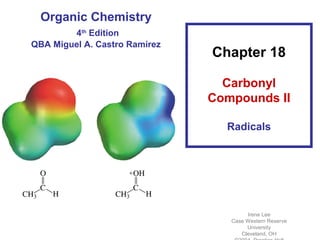
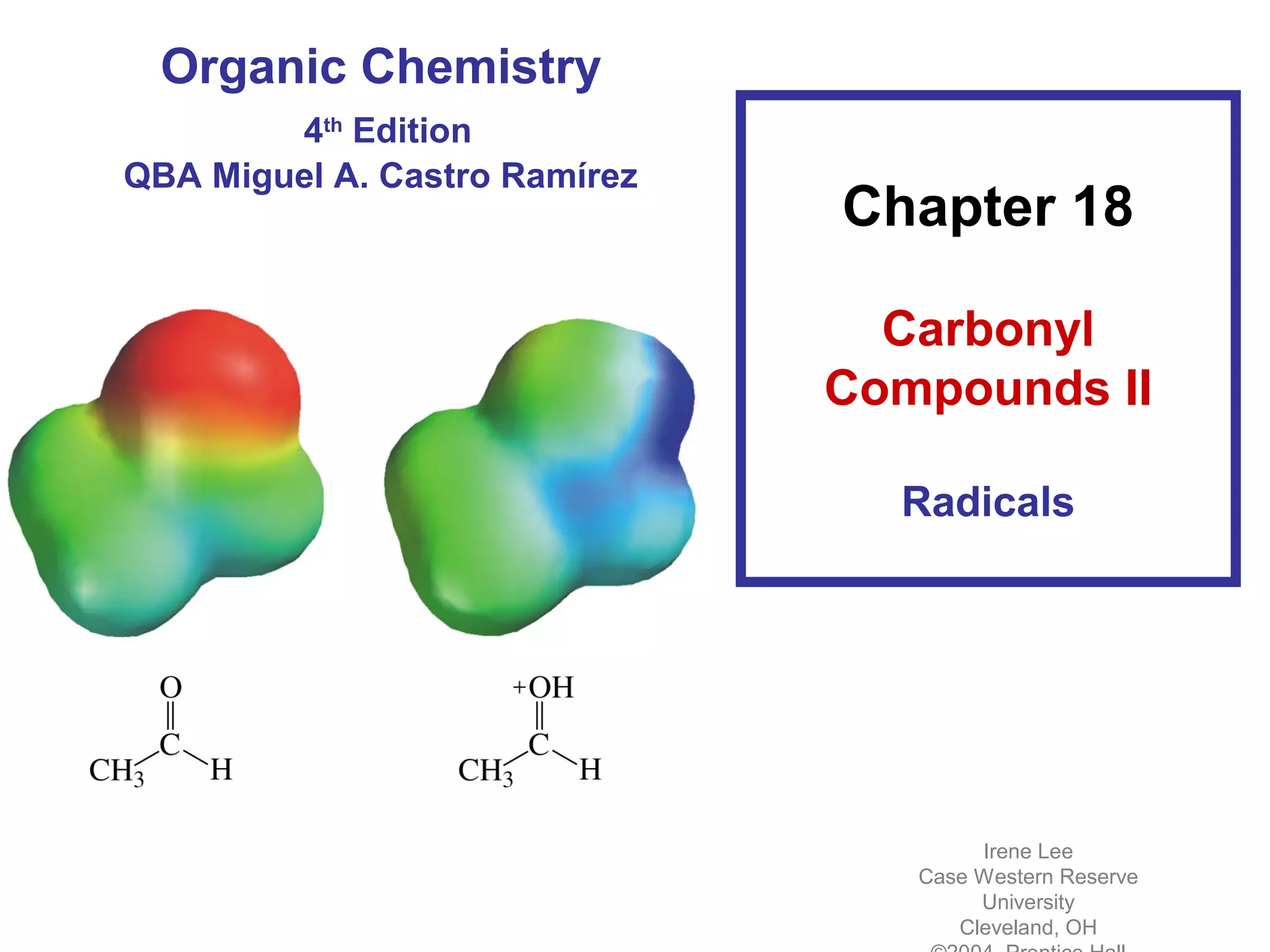
Organic Chemistry
        4th Edition
QBA Miguel A. Castro Ramírez
                               Chapter 18

                                 Carbonyl
                               Compounds II

                                 Radicals


                                       Irene Lee
                                  Case Western Reserve
                                       University
                                     Cleveland, OH
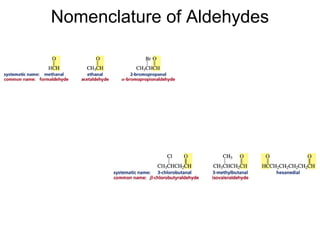
Nomenclature of Aldehydes
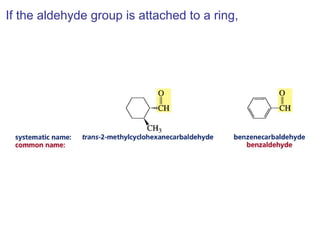
If the aldehyde group is attached to a ring,
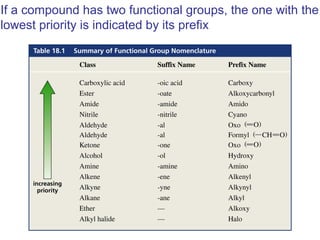
If a compound has two functional groups, the one with the
lowest priority is indicated by its prefix
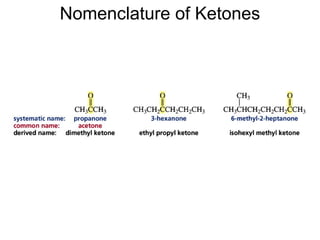
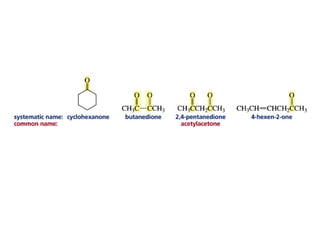
Nomenclature of Ketones
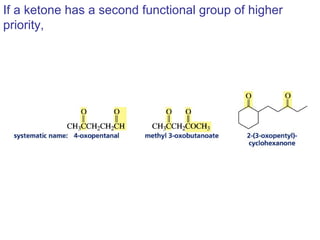
If a ketone has a second functional group of higher
priority,
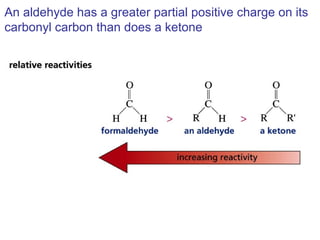
An aldehyde has a greater partial positive charge on its
carbonyl carbon than does a ketone
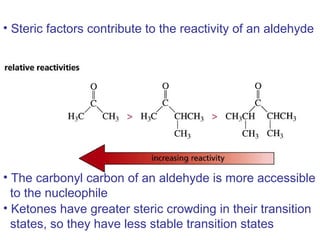
• Steric factors contribute to the reactivity of an aldehyde


• The carbonyl carbon of an aldehyde is more accessible
  to the nucleophile
• Ketones have greater steric crowding in their transition
  states, so they have less stable transition states
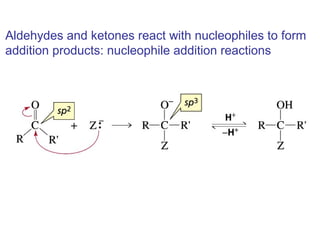
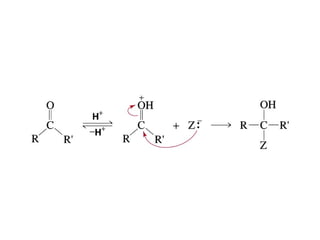
Aldehydes and ketones react with nucleophiles to form
addition products: nucleophile addition reactions
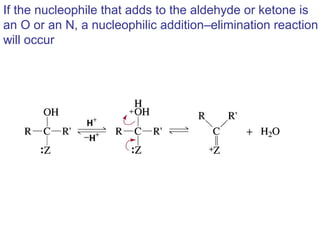
If the nucleophile that adds to the aldehyde or ketone is
an O or an N, a nucleophilic addition–elimination reaction
will occur
Formation of a New Carbon–Carbon
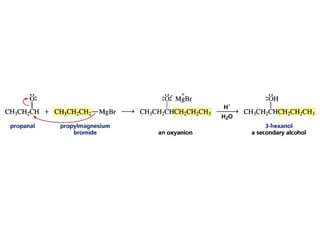
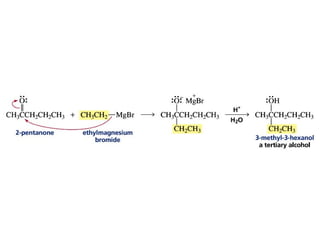
   Bond Using Grignard Reagents


Grignard reagents react with aldehydes, ketones, and
carboxylic acid derivatives
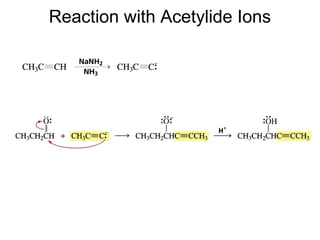
Reaction with Acetylide Ions
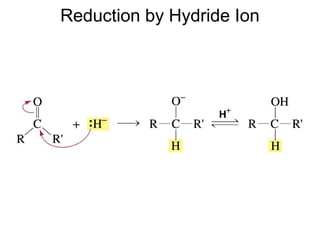
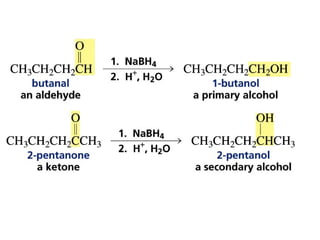
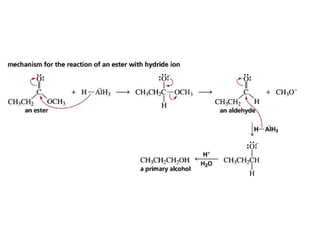
Reduction by Hydride Ion
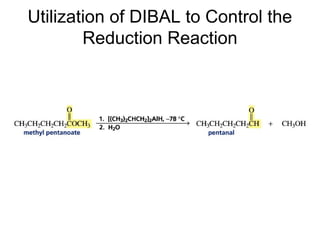
Utilization of DIBAL to Control the
        Reduction Reaction
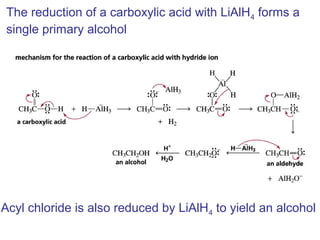
The reduction of a carboxylic acid with LiAlH4 forms a
single primary alcohol


Acyl chloride is also reduced by LiAlH4 to yield an alcohol
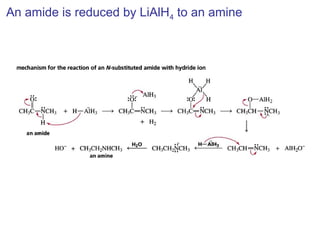
An amide is reduced by LiAlH4 to an amine
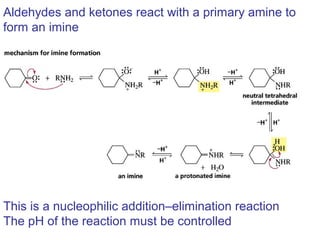
Aldehydes and ketones react with a primary amine to
form an imine


This is a nucleophilic addition–elimination reaction
The pH of the reaction must be controlled
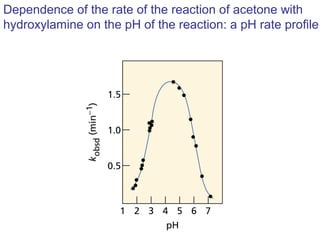
Dependence of the rate of the reaction of acetone with
hydroxylamine on the pH of the reaction: a pH rate profile
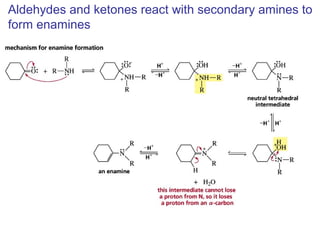
Aldehydes and ketones react with secondary amines to
form enamines
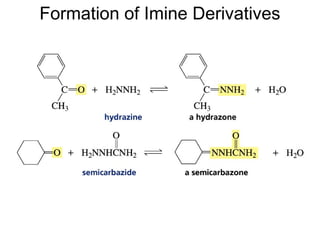
Formation of Imine Derivatives
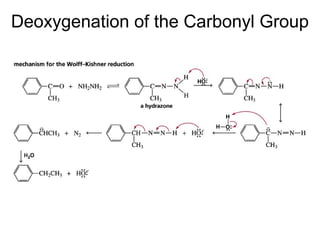
Deoxygenation of the Carbonyl Group
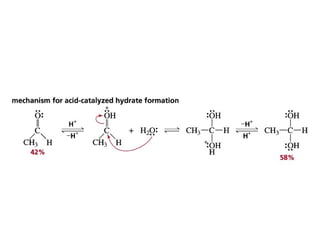
Water adds to an aldehyde or ketone to form a hydrate
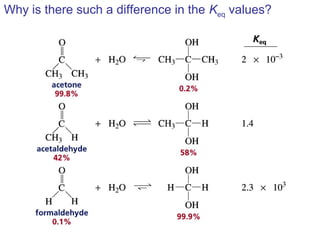
Why is there such a difference in the Keq values?
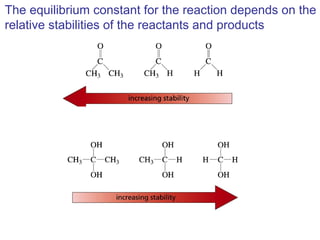
The equilibrium constant for the reaction depends on the
relative stabilities of the reactants and products
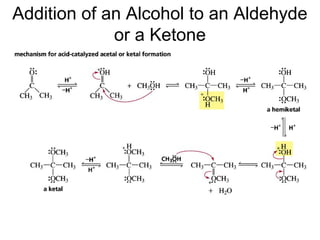
Addition of an Alcohol to an Aldehyde
             or a Ketone
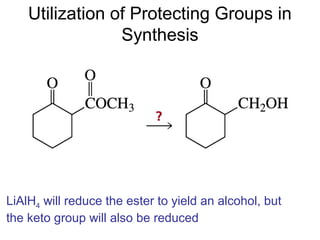
Utilization of Protecting Groups in
                 Synthesis


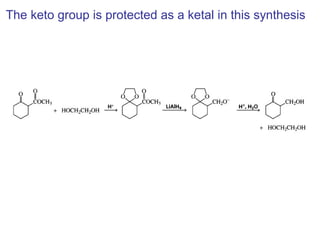
LiAlH4 will reduce the ester to yield an alcohol, but
the keto group will also be reduced
The keto group is protected as a ketal in this synthesis
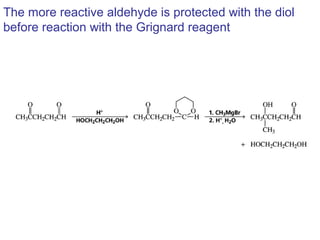
The more reactive aldehyde is protected with the diol
before reaction with the Grignard reagent
• The OH group in an alcohol can be protected as a
  trimethylsilyl ether


• The OH group in a carboxylic acid can be protected as
  an ester


• An amino group can be protected with an acetyl group
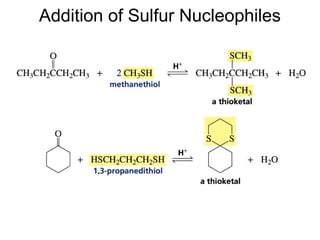
Addition of Sulfur Nucleophiles
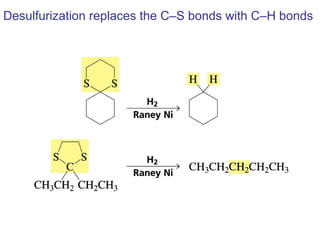
Desulfurization replaces the C–S bonds with C–H bonds
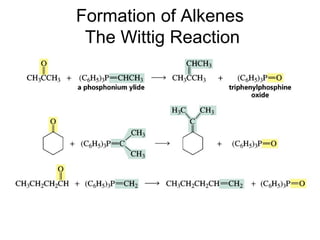
Formation of Alkenes
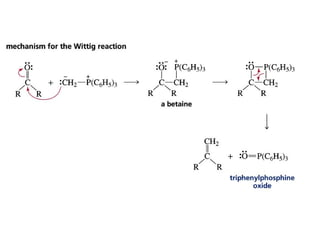
 The Wittig Reaction
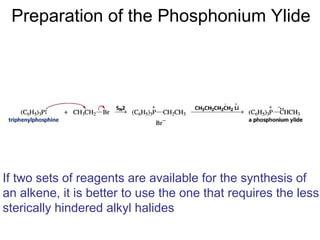
Preparation of the Phosphonium Ylide


If two sets of reagents are available for the synthesis of
an alkene, it is better to use the one that requires the less
sterically hindered alkyl halides
• The Wittig reaction is completely regioselective


• This reaction is the best way to make a terminal alkene


• Stable ylides form primarily E isomers, and unstabilized
  ylides form primarily Z isomers


• Stable ylides have a group (C=O) that can share the
  carbanion’s negative charge
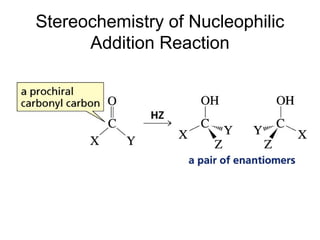
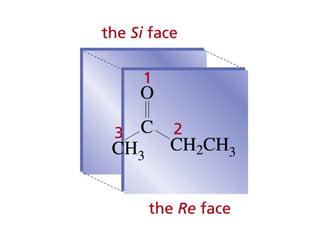
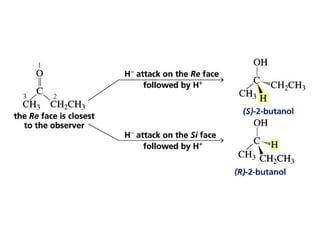
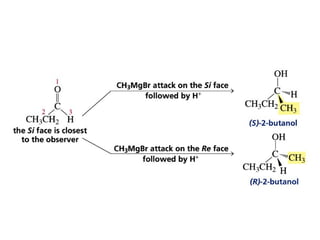
Stereochemistry of Nucleophilic
      Addition Reaction
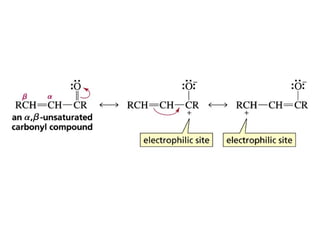
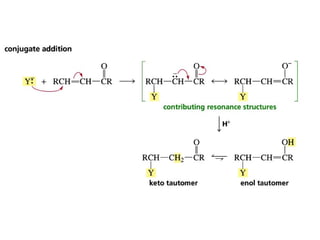
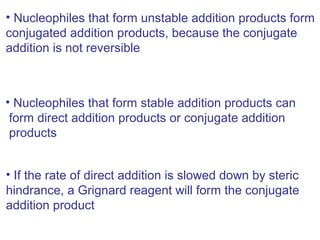
• Nucleophiles that form unstable addition products form
conjugated addition products, because the conjugate
addition is not reversible


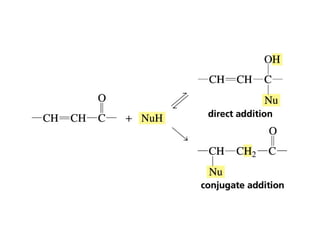
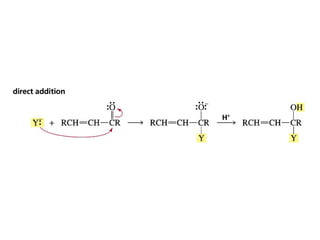
• Nucleophiles that form stable addition products can
 form direct addition products or conjugate addition
 products


• If the rate of direct addition is slowed down by steric
hindrance, a Grignard reagent will form the conjugate
addition product
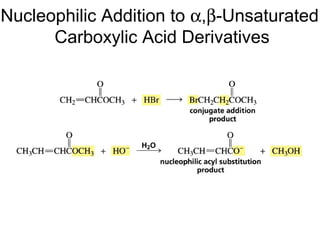
Nucleophilic Addition to α,β-Unsaturated
      Carboxylic Acid Derivatives
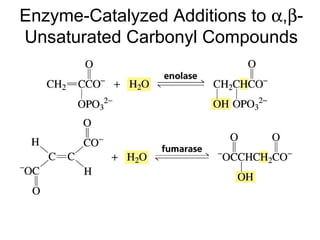
Enzyme-Catalyzed Additions to α,β-
Unsaturated Carbonyl Compounds

ALDEHYDES AND KETONES

  • 1.
    Organic Chemistry 4th Edition QBA Miguel A. Castro Ramírez Chapter 18 Carbonyl Compounds II Radicals Irene Lee Case Western Reserve University Cleveland, OH
  • 2.
  • 3.
    If the aldehydegroup is attached to a ring,
  • 4.
    If a compoundhas two functional groups, the one with the lowest priority is indicated by its prefix
  • 5.
  • 7.
    If a ketonehas a second functional group of higher priority,
  • 8.
    An aldehyde hasa greater partial positive charge on its carbonyl carbon than does a ketone
  • 9.
    • Steric factorscontribute to the reactivity of an aldehyde • The carbonyl carbon of an aldehyde is more accessible to the nucleophile • Ketones have greater steric crowding in their transition states, so they have less stable transition states
  • 10.
    Aldehydes and ketonesreact with nucleophiles to form addition products: nucleophile addition reactions
  • 12.
    If the nucleophilethat adds to the aldehyde or ketone is an O or an N, a nucleophilic addition–elimination reaction will occur
  • 13.
    Formation of aNew Carbon–Carbon Bond Using Grignard Reagents Grignard reagents react with aldehydes, ketones, and carboxylic acid derivatives
  • 16.
  • 17.
  • 20.
    Utilization of DIBALto Control the Reduction Reaction
  • 21.
    The reduction ofa carboxylic acid with LiAlH4 forms a single primary alcohol Acyl chloride is also reduced by LiAlH4 to yield an alcohol
  • 22.
    An amide isreduced by LiAlH4 to an amine
  • 23.
    Aldehydes and ketonesreact with a primary amine to form an imine This is a nucleophilic addition–elimination reaction The pH of the reaction must be controlled
  • 24.
    Dependence of therate of the reaction of acetone with hydroxylamine on the pH of the reaction: a pH rate profile
  • 25.
    Aldehydes and ketonesreact with secondary amines to form enamines
  • 26.
    Formation of ImineDerivatives
  • 27.
    Deoxygenation of theCarbonyl Group
  • 28.
    Water adds toan aldehyde or ketone to form a hydrate
  • 30.
    Why is theresuch a difference in the Keq values?
  • 31.
    The equilibrium constantfor the reaction depends on the relative stabilities of the reactants and products
  • 32.
    Addition of anAlcohol to an Aldehyde or a Ketone
  • 33.
    Utilization of ProtectingGroups in Synthesis LiAlH4 will reduce the ester to yield an alcohol, but the keto group will also be reduced
  • 34.
    The keto groupis protected as a ketal in this synthesis
  • 35.
    The more reactivealdehyde is protected with the diol before reaction with the Grignard reagent
  • 36.
    • The OHgroup in an alcohol can be protected as a trimethylsilyl ether • The OH group in a carboxylic acid can be protected as an ester • An amino group can be protected with an acetyl group
  • 37.
    Addition of SulfurNucleophiles
  • 38.
    Desulfurization replaces theC–S bonds with C–H bonds
  • 39.
    Formation of Alkenes The Wittig Reaction
  • 41.
    Preparation of thePhosphonium Ylide If two sets of reagents are available for the synthesis of an alkene, it is better to use the one that requires the less sterically hindered alkyl halides
  • 42.
    • The Wittigreaction is completely regioselective • This reaction is the best way to make a terminal alkene • Stable ylides form primarily E isomers, and unstabilized ylides form primarily Z isomers • Stable ylides have a group (C=O) that can share the carbanion’s negative charge
  • 43.
  • 51.
    • Nucleophiles thatform unstable addition products form conjugated addition products, because the conjugate addition is not reversible • Nucleophiles that form stable addition products can form direct addition products or conjugate addition products • If the rate of direct addition is slowed down by steric hindrance, a Grignard reagent will form the conjugate addition product
  • 52.
    Nucleophilic Addition toα,β-Unsaturated Carboxylic Acid Derivatives
  • 53.
    Enzyme-Catalyzed Additions toα,β- Unsaturated Carbonyl Compounds