ALCOHOLIC COUNSELLING
ALCOHOLISM
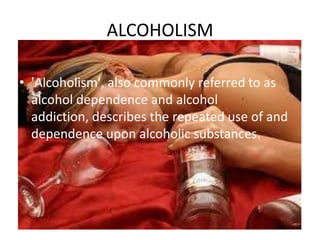
• 'Alcoholism', also commonly referred to as
alcohol dependence and alcohol
addiction, describes the repeated use of and
dependence upon alcoholic substances.
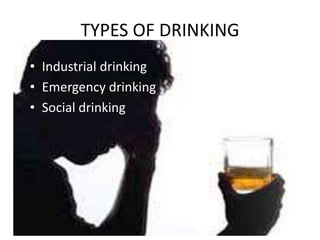
TYPES OF DRINKING
• Industrial drinking
• Emergency drinking
• Social drinking
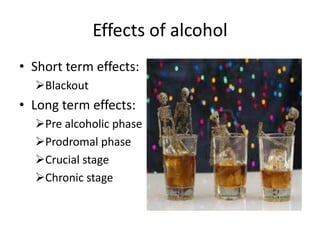
Effects of alcohol
• Short term effects:
Blackout

• Long term effects:
Pre alcoholic phase
Prodromal phase
Crucial stage
Chronic stage
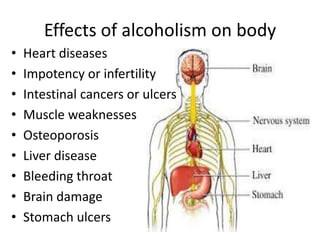
Effects of alcoholism on body
•
•
•
•
•
•
•
•
•

Heart diseases
Impotency or infertility
Intestinal cancers or ulcers
Muscle weaknesses
Osteoporosis
Liver disease
Bleeding throat
Brain damage
Stomach ulcers
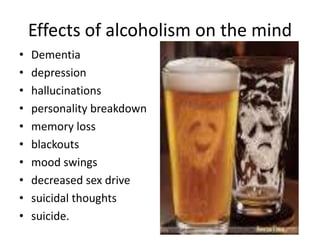
Effects of alcoholism on the mind
•
•
•
•
•
•
•
•
•
•

Dementia
depression
hallucinations
personality breakdown
memory loss
blackouts
mood swings
decreased sex drive
suicidal thoughts
suicide.
Counseling treatment
• A thorough Clinical Psychological Assessment
to fully understand your concerns will be
provided with .
• Gain your informed consent.
• After the assessment, a range of treatment
options that are all medically aligned and
evidence-based (ie scientifically proven to be
effective) will be provided.
• Treatment options will depend on your
situation
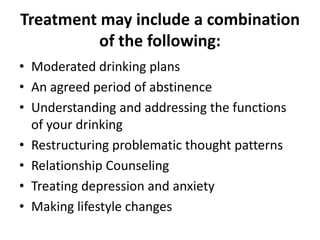
Treatment may include a combination
of the following:
• Moderated drinking plans
• An agreed period of abstinence
• Understanding and addressing the functions
of your drinking
• Restructuring problematic thought patterns
• Relationship Counseling
• Treating depression and anxiety
• Making lifestyle changes
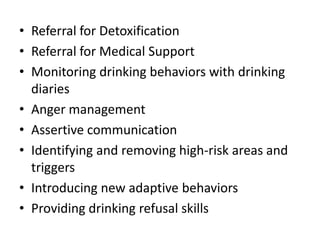
• Referral for Detoxification
• Referral for Medical Support
• Monitoring drinking behaviors with drinking
diaries
• Anger management
• Assertive communication
• Identifying and removing high-risk areas and
triggers
• Introducing new adaptive behaviors
• Providing drinking refusal skills

Alcoholism

  • 1.
  • 2.
    ALCOHOLISM • 'Alcoholism', alsocommonly referred to as alcohol dependence and alcohol addiction, describes the repeated use of and dependence upon alcoholic substances.
  • 3.
    TYPES OF DRINKING •Industrial drinking • Emergency drinking • Social drinking
  • 4.
    Effects of alcohol •Short term effects: Blackout • Long term effects: Pre alcoholic phase Prodromal phase Crucial stage Chronic stage
  • 5.
    Effects of alcoholismon body • • • • • • • • • Heart diseases Impotency or infertility Intestinal cancers or ulcers Muscle weaknesses Osteoporosis Liver disease Bleeding throat Brain damage Stomach ulcers
  • 6.
    Effects of alcoholismon the mind • • • • • • • • • • Dementia depression hallucinations personality breakdown memory loss blackouts mood swings decreased sex drive suicidal thoughts suicide.
  • 7.
    Counseling treatment • Athorough Clinical Psychological Assessment to fully understand your concerns will be provided with . • Gain your informed consent. • After the assessment, a range of treatment options that are all medically aligned and evidence-based (ie scientifically proven to be effective) will be provided. • Treatment options will depend on your situation
  • 8.
    Treatment may includea combination of the following: • Moderated drinking plans • An agreed period of abstinence • Understanding and addressing the functions of your drinking • Restructuring problematic thought patterns • Relationship Counseling • Treating depression and anxiety • Making lifestyle changes
  • 9.
    • Referral forDetoxification • Referral for Medical Support • Monitoring drinking behaviors with drinking diaries • Anger management • Assertive communication • Identifying and removing high-risk areas and triggers • Introducing new adaptive behaviors • Providing drinking refusal skills