Alaska Plate Tectonics
& Geohazards
Robert Butler
ANGLE Project
https://serc.carleton.edu/ANGLE
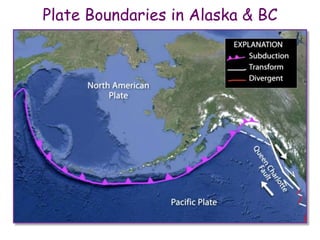
Plate Boundaries in Alaska & BC
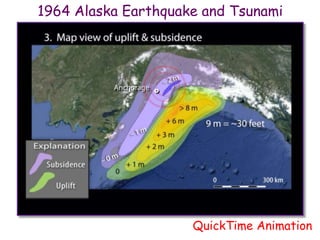
1964 Alaska Earthquake and Tsunami
QuickTime Animation
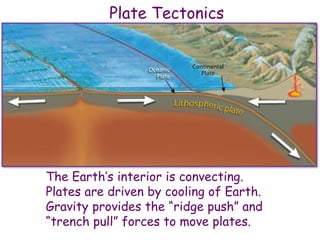
Plate Tectonics
The Earth’s interior is convecting.
Plates are driven by cooling of Earth.
Gravity provides the “ridge push” and
“trench pull” forces to move plates.
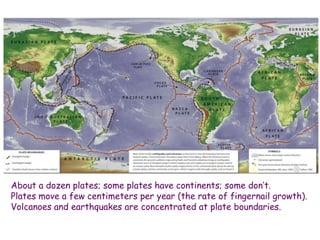
About a dozen plates; some plates have continents; some don’t.
Plates move a few centimeters per year (the rate of fingernail growth).
Volcanoes and earthquakes are concentrated at plate boundaries.
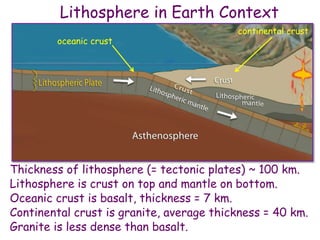
Lithosphere in Earth Context
Thickness of lithosphere (= tectonic plates) ~ 100 km.
Lithosphere is crust on top and mantle on bottom.
Oceanic crust is basalt, thickness = 7 km.
Continental crust is granite, average thickness = 40 km.
Granite is less dense than basalt.
oceanic crust
continental crust
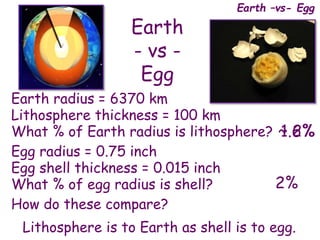
Earth
- vs -
Egg
Earth radius = 6370 km
Lithosphere thickness = 100 km
What % of Earth radius is lithosphere?
Egg radius = 0.75 inch
Egg shell thickness = 0.015 inch
What % of egg radius is shell?
How do these compare?
1.6%
2%
~ 2%
Lithosphere is to Earth as shell is to egg.
Earth –vs- Egg
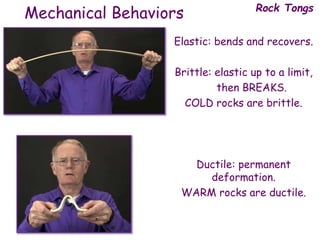
Mechanical Behaviors
Elastic: bends and recovers.
Brittle: elastic up to a limit,
then BREAKS.
COLD rocks are brittle.
Ductile: permanent
deformation.
WARM rocks are ductile.
Rock Tongs
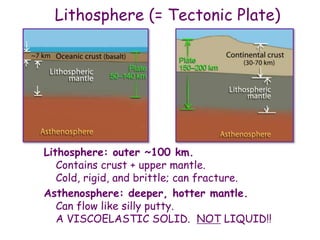
Lithosphere (= Tectonic Plate)
Lithosphere: outer ~100 km.
Contains crust + upper mantle.
Cold, rigid, and brittle; can fracture.
Asthenosphere: deeper, hotter mantle.
Can flow like silly putty.
A VISCOELASTIC SOLID. NOT LIQUID!!
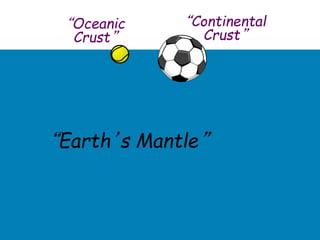
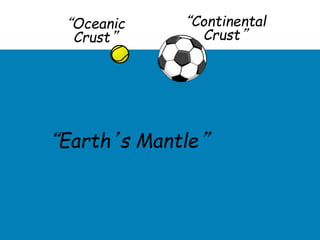
“Oceanic
Crust”
“Continental
Crust”
“Earth’s Mantle”
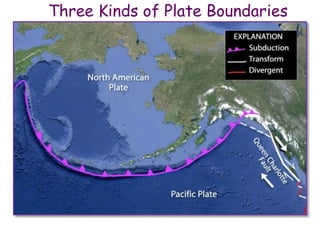
Three Kinds of Plate Boundaries
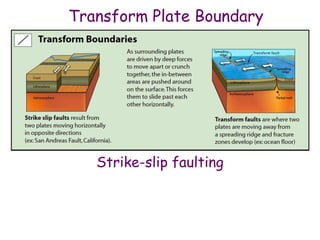
Transform Plate Boundary
Strike-slip faulting
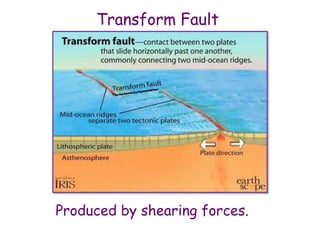
Transform Fault
Produced by shearing forces.
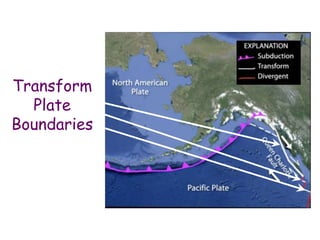
Transform
Plate
Boundaries
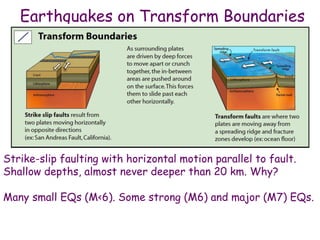
Earthquakes on Transform Boundaries
Strike-slip faulting with horizontal motion parallel to fault.
Shallow depths, almost never deeper than 20 km. Why?
Many small EQs (M<6). Some strong (M6) and major (M7) EQs.
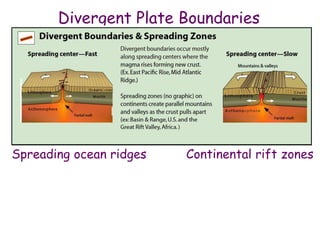
Divergent Plate Boundaries
Spreading ocean ridges Continental rift zones
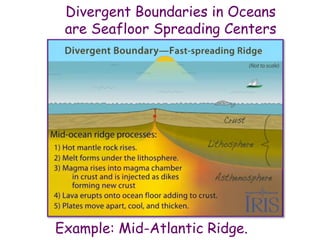
Divergent Boundaries in Oceans
are Seafloor Spreading Centers
Example: Mid-Atlantic Ridge.
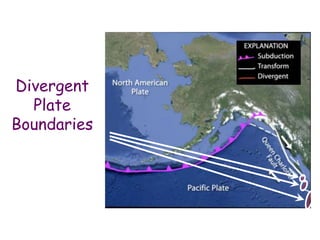
Divergent
Plate
Boundaries
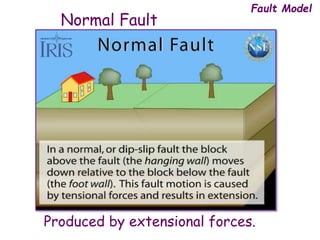
Normal Fault
Fault Model
Produced by extensional forces.
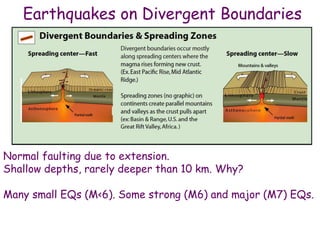
Earthquakes on Divergent Boundaries
Normal faulting due to extension.
Shallow depths, rarely deeper than 10 km. Why?
Many small EQs (M<6). Some strong (M6) and major (M7) EQs.
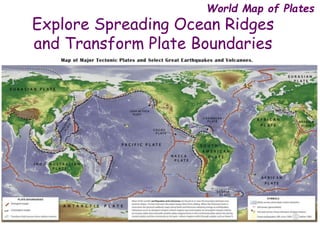
World Map of Plates
Explore Spreading Ocean Ridges
and Transform Plate Boundaries
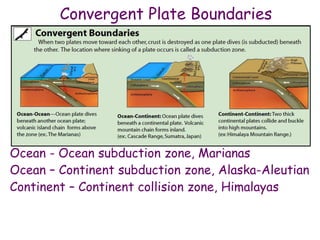
Ocean - Ocean subduction zone, Marianas
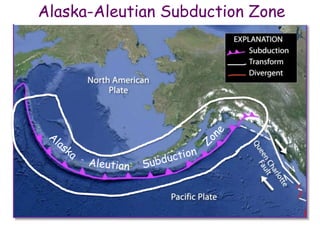
Ocean – Continent subduction zone, Alaska-Aleutian
Continent – Continent collision zone, Himalayas
Convergent Plate Boundaries
“Earth’s Mantle”
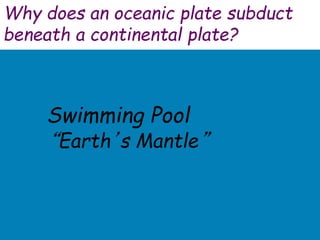
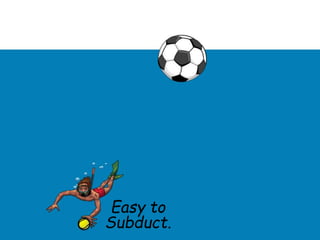
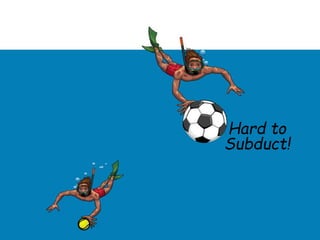
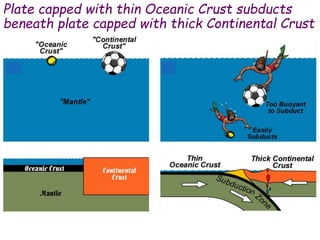
Why does an oceanic plate subduct
beneath a continental plate?
Swimming Pool
“Oceanic
Crust”
“Continental
Crust”
“Earth’s Mantle”
Easy to
Subduct.
Hard to
Subduct!
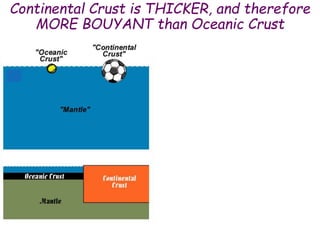
Continental Crust is THICKER, and therefore
MORE BOUYANT than Oceanic Crust
Plate capped with thin Oceanic Crust subducts
beneath plate capped with thick Continental Crust
Alaska-Aleutian Subduction Zone
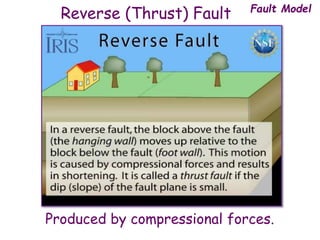
Reverse (Thrust) Fault
Produced by compressional forces.
Fault Model
Earthquakes on Convergent Boundaries
Thrust faulting due to compression.
EQs to 100 km depth on plate boundary megathrust AND
within the converging plates.
EQs to greater depths occur within subducting oceanic plate.
Wide range of magnitudes. Most M8 & M9 great EQs are
shallow megathrust events in subduction zones.
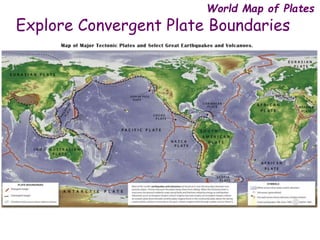
World Map of Plates
Explore Convergent Plate Boundaries

Alaska Plate Tectonics &amp; Geohazards Presentation