Welcome
 Presentation on:
Different types of filtering techniques
used to control air pollution.
Presented by:
Md. Al-Amin Masum
BSc in Textile Engineering
Southeast University
alaminmasum11@gmail.com
Air
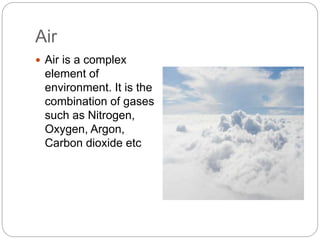
 Air is a complex
element of
environment. It is the
combination of gases
such as Nitrogen,
Oxygen, Argon,
Carbon dioxide etc
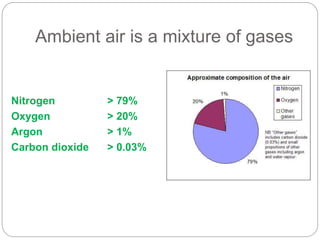
Ambient air is a mixture of gases
Nitrogen > 79%
Oxygen > 20%
Argon > 1%
Carbon dioxide > 0.03%
Air Pollution
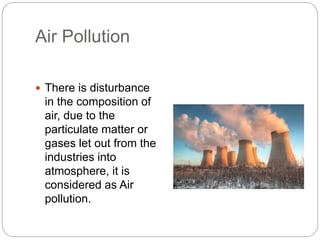
 There is disturbance
in the composition of
air, due to the
particulate matter or
gases let out from the
industries into
atmosphere, it is
considered as Air
pollution.
Air Pollution
Source of air pollution
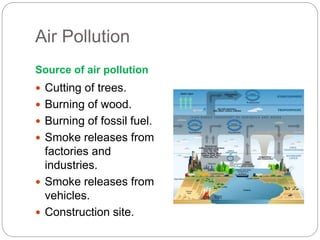
 Cutting of trees.
 Burning of wood.
 Burning of fossil fuel.
 Smoke releases from
factories and
industries.
 Smoke releases from
vehicles.
 Construction site.
Air Pollution Control
 Air pollution control,
the techniques
employed to reduce
or eliminate the
emission into the
atmosphere of
substances that can
harm the environment
or human health.
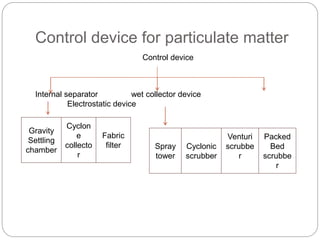
Control device for particulate matter
Control device
Internal separator wet collector device
Electrostatic device
Gravity
Settling
chamber
Cyclon
e
collecto
r
Fabric
filter Spray
tower
Cyclonic
scrubber
Packed
Bed
scrubbe
r
Venturi
scrubbe
r
Filtration
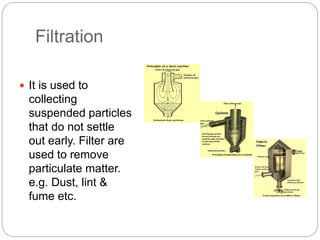
 It is used to
collecting
suspended particles
that do not settle
out early. Filter are
used to remove
particulate matter.
e.g. Dust, lint &
fume etc.
Filter Device
 Dust catcher
 Scrubbers
 Dry/Cyclonic scrubber
 Wet/Venturi scrubber
 Fabric filter
 Electrostatic precipitators
 Air Ventilation
 Bag house filter
 Flue gas desulfurization
Dust catcher
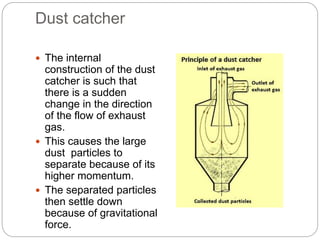
 The internal
construction of the dust
catcher is such that
there is a sudden
change in the direction
of the flow of exhaust
gas.
 This causes the large
dust particles to
separate because of its
higher momentum.
 The separated particles
then settle down
because of gravitational
force.
Scrubbers
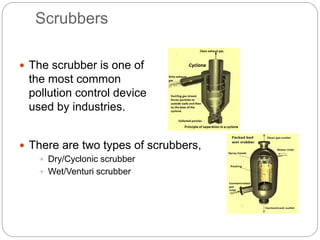
 The scrubber is one of
the most common
pollution control device
used by industries.
 There are two types of scrubbers,
 Dry/Cyclonic scrubber
 Wet/Venturi scrubber
Dry/Cyclonic scrubber
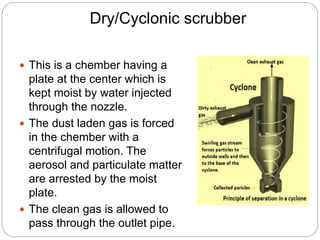
 This is a chember having a
plate at the center which is
kept moist by water injected
through the nozzle.
 The dust laden gas is forced
in the chember with a
centrifugal motion. The
aerosol and particulate matter
are arrested by the moist
plate.
 The clean gas is allowed to
pass through the outlet pipe.
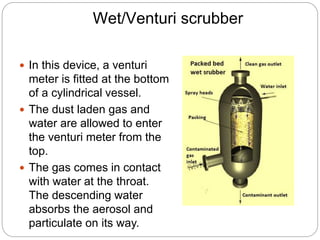
Wet/Venturi scrubber
 In this device, a venturi
meter is fitted at the bottom
of a cylindrical vessel.
 The dust laden gas and
water are allowed to enter
the venturi meter from the
top.
 The gas comes in contact
with water at the throat.
The descending water
absorbs the aerosol and
particulate on its way.
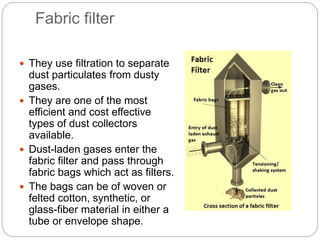
Fabric filter
 They use filtration to separate
dust particulates from dusty
gases.
 They are one of the most
efficient and cost effective
types of dust collectors
available.
 Dust-laden gases enter the
fabric filter and pass through
fabric bags which act as filters.
 The bags can be of woven or
felted cotton, synthetic, or
glass-fiber material in either a
tube or envelope shape.
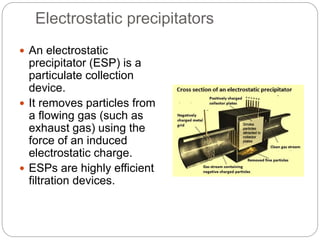
Electrostatic precipitators
 An electrostatic
precipitator (ESP) is a
particulate collection
device.
 It removes particles from
a flowing gas (such as
exhaust gas) using the
force of an induced
electrostatic charge.
 ESPs are highly efficient
filtration devices.
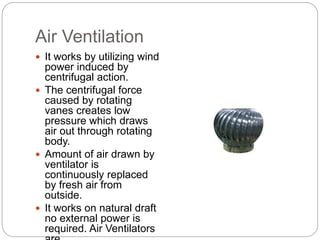
Air Ventilation
 It works by utilizing wind
power induced by
centrifugal action.
 The centrifugal force
caused by rotating
vanes creates low
pressure which draws
air out through rotating
body.
 Amount of air drawn by
ventilator is
continuously replaced
by fresh air from
outside.
 It works on natural draft
no external power is
required. Air Ventilators
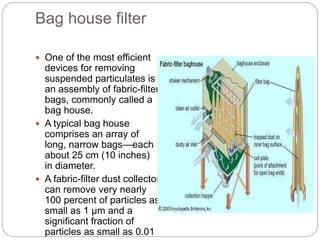
Bag house filter
 One of the most efficient
devices for removing
suspended particulates is
an assembly of fabric-filter
bags, commonly called a
bag house.
 A typical bag house
comprises an array of
long, narrow bags—each
about 25 cm (10 inches)
in diameter.
 A fabric-filter dust collector
can remove very nearly
100 percent of particles as
small as 1 μm and a
significant fraction of
particles as small as 0.01
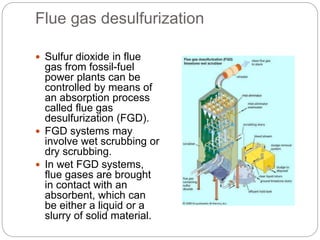
Flue gas desulfurization
 Sulfur dioxide in flue
gas from fossil-fuel
power plants can be
controlled by means of
an absorption process
called flue gas
desulfurization (FGD).
 FGD systems may
involve wet scrubbing or
dry scrubbing.
 In wet FGD systems,
flue gases are brought
in contact with an
absorbent, which can
be either a liquid or a
slurry of solid material.
Video
Thank You

Air Filter presentation

  • 1.
    Welcome  Presentation on: Differenttypes of filtering techniques used to control air pollution.
  • 2.
    Presented by: Md. Al-AminMasum BSc in Textile Engineering Southeast University alaminmasum11@gmail.com
  • 3.
    Air  Air isa complex element of environment. It is the combination of gases such as Nitrogen, Oxygen, Argon, Carbon dioxide etc
  • 4.
    Ambient air isa mixture of gases Nitrogen > 79% Oxygen > 20% Argon > 1% Carbon dioxide > 0.03%
  • 5.
    Air Pollution  Thereis disturbance in the composition of air, due to the particulate matter or gases let out from the industries into atmosphere, it is considered as Air pollution.
  • 6.
    Air Pollution Source ofair pollution  Cutting of trees.  Burning of wood.  Burning of fossil fuel.  Smoke releases from factories and industries.  Smoke releases from vehicles.  Construction site.
  • 7.
    Air Pollution Control Air pollution control, the techniques employed to reduce or eliminate the emission into the atmosphere of substances that can harm the environment or human health.
  • 8.
    Control device forparticulate matter Control device Internal separator wet collector device Electrostatic device Gravity Settling chamber Cyclon e collecto r Fabric filter Spray tower Cyclonic scrubber Packed Bed scrubbe r Venturi scrubbe r
  • 9.
    Filtration  It isused to collecting suspended particles that do not settle out early. Filter are used to remove particulate matter. e.g. Dust, lint & fume etc.
  • 10.
    Filter Device  Dustcatcher  Scrubbers  Dry/Cyclonic scrubber  Wet/Venturi scrubber  Fabric filter  Electrostatic precipitators  Air Ventilation  Bag house filter  Flue gas desulfurization
  • 11.
    Dust catcher  Theinternal construction of the dust catcher is such that there is a sudden change in the direction of the flow of exhaust gas.  This causes the large dust particles to separate because of its higher momentum.  The separated particles then settle down because of gravitational force.
  • 12.
    Scrubbers  The scrubberis one of the most common pollution control device used by industries.  There are two types of scrubbers,  Dry/Cyclonic scrubber  Wet/Venturi scrubber
  • 13.
    Dry/Cyclonic scrubber  Thisis a chember having a plate at the center which is kept moist by water injected through the nozzle.  The dust laden gas is forced in the chember with a centrifugal motion. The aerosol and particulate matter are arrested by the moist plate.  The clean gas is allowed to pass through the outlet pipe.
  • 14.
    Wet/Venturi scrubber  Inthis device, a venturi meter is fitted at the bottom of a cylindrical vessel.  The dust laden gas and water are allowed to enter the venturi meter from the top.  The gas comes in contact with water at the throat. The descending water absorbs the aerosol and particulate on its way.
  • 15.
    Fabric filter  Theyuse filtration to separate dust particulates from dusty gases.  They are one of the most efficient and cost effective types of dust collectors available.  Dust-laden gases enter the fabric filter and pass through fabric bags which act as filters.  The bags can be of woven or felted cotton, synthetic, or glass-fiber material in either a tube or envelope shape.
  • 16.
    Electrostatic precipitators  Anelectrostatic precipitator (ESP) is a particulate collection device.  It removes particles from a flowing gas (such as exhaust gas) using the force of an induced electrostatic charge.  ESPs are highly efficient filtration devices.
  • 17.
    Air Ventilation  Itworks by utilizing wind power induced by centrifugal action.  The centrifugal force caused by rotating vanes creates low pressure which draws air out through rotating body.  Amount of air drawn by ventilator is continuously replaced by fresh air from outside.  It works on natural draft no external power is required. Air Ventilators
  • 18.
    Bag house filter One of the most efficient devices for removing suspended particulates is an assembly of fabric-filter bags, commonly called a bag house.  A typical bag house comprises an array of long, narrow bags—each about 25 cm (10 inches) in diameter.  A fabric-filter dust collector can remove very nearly 100 percent of particles as small as 1 μm and a significant fraction of particles as small as 0.01
  • 19.
    Flue gas desulfurization Sulfur dioxide in flue gas from fossil-fuel power plants can be controlled by means of an absorption process called flue gas desulfurization (FGD).  FGD systems may involve wet scrubbing or dry scrubbing.  In wet FGD systems, flue gases are brought in contact with an absorbent, which can be either a liquid or a slurry of solid material.
  • 20.
  • 21.