 Separators
 Types of Dust Separator
 Cyclone Separator
working & types
 Critical Parameters
 Advantages
 Disadvantages
 Applications
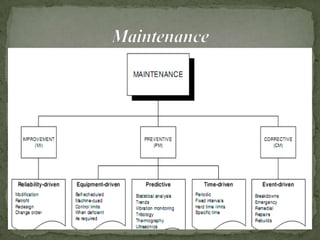
 maintenance
 PM Inspection
 Maintenance of Cyclone Separator
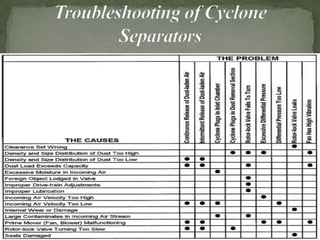
 Troubleshooting
 What is Separator ?
 What is Dust Separator?
 Types of Dust Separator
 A dust separator is an equipment which separates solid
particles from fluid mainly a gas
 Inertial or Dry Centrifugals
 Wet Collectors (scrubbers)
 Fabric Filtration
 Electrostatic Precipitators
 Cyclone
 Multi tube Cycle
 Dry Dynamic
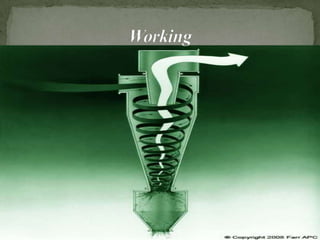
 A cyclone separator is used to separate larger, heavy
particles from smaller, lighter particles.
 The basic principle of cyclone separators is the action of
centrifugal force.
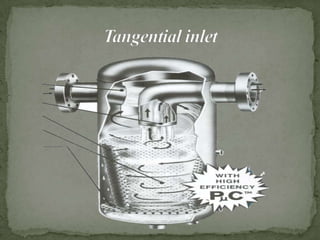
 Tangential inlet
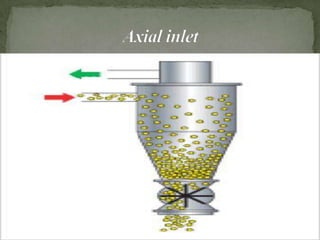
 Axial inlet
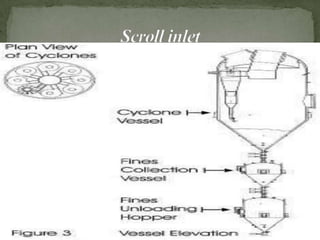
 Scroll inlet
 Gas stream velocity
 particle agglomeration characteristics (tendency to
join/stick together)
 cyclone diameter-to-length ratio
 The collected product remains dry
 Low capital investment
 Low maintenance cost
 Very compact in most applications
 Can be used under very extreme processing conditions
 No moving parts
 Constant Pressure drop
 Can be equipped with erosion or corrosion resistant
 Can be fabricated with plate metal
 Can handle sticky and tacky solids with proper liquid irrigation
 Separate liquid or solid particulates, sometime both in combination
with proper design.
 A low efficiency for particle sizes below their ‘cut sizes’
 Usually higher pressure loss than other separating types,
including bag filters, low pressure drop scrubbers , ESPs
 Subjected to erosive wear and fouling if solids being
processed are abrasive or ‘sticky’
 Oil and gas (for instance in fluidized catalytic cracking unit, FCCU
 Power generation
 Incineration plant
 Iron and steel industry/blast furnaces and non ferrous industries
 Food industry
 Chemical plants (plastics, elastomers, polymers, etc)
 Wood chip, wood mill and building material plants
 Sand plants
 Cement plants
 Cooking plants
 Coal fired boiler
There are three general rules
 Cleaning the dust-collector storage hoppers at regular,
predetermined intervals.
 Definite scheduling of inspection for preventive
maintenance.
 Repairing, replacing, and cleaning all parts where
indicated by the regular inspection.
Inspect the separator at periodic maintenance intervals
for the following conditions:
 Externally for rust, corrosion and peeling paint
 Internally for corrosion and accumulations of dirt and
oil
 Gaskets for damage
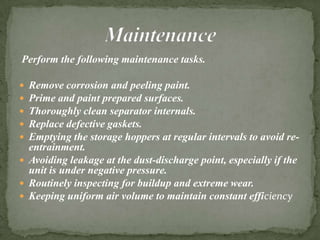
Perform the following maintenance tasks.
 Remove corrosion and peeling paint.
 Prime and paint prepared surfaces.
 Thoroughly clean separator internals.
 Replace defective gaskets.
 Emptying the storage hoppers at regular intervals to avoid re-
entrainment.
 Avoiding leakage at the dust-discharge point, especially if the
unit is under negative pressure.
 Routinely inspecting for buildup and extreme wear.
 Keeping uniform air volume to maintain constant efficiency
Cyclone separator maintenance

Cyclone separator maintenance

  • 2.
     Separators  Typesof Dust Separator  Cyclone Separator working & types  Critical Parameters  Advantages  Disadvantages  Applications  maintenance
  • 3.
     PM Inspection Maintenance of Cyclone Separator  Troubleshooting
  • 4.
     What isSeparator ?  What is Dust Separator?  Types of Dust Separator
  • 5.
     A dustseparator is an equipment which separates solid particles from fluid mainly a gas
  • 6.
     Inertial orDry Centrifugals  Wet Collectors (scrubbers)  Fabric Filtration  Electrostatic Precipitators
  • 7.
     Cyclone  Multitube Cycle  Dry Dynamic
  • 8.
     A cycloneseparator is used to separate larger, heavy particles from smaller, lighter particles.  The basic principle of cyclone separators is the action of centrifugal force.
  • 10.
     Tangential inlet Axial inlet  Scroll inlet
  • 14.
     Gas streamvelocity  particle agglomeration characteristics (tendency to join/stick together)  cyclone diameter-to-length ratio
  • 15.
     The collectedproduct remains dry  Low capital investment  Low maintenance cost  Very compact in most applications  Can be used under very extreme processing conditions  No moving parts  Constant Pressure drop  Can be equipped with erosion or corrosion resistant  Can be fabricated with plate metal  Can handle sticky and tacky solids with proper liquid irrigation  Separate liquid or solid particulates, sometime both in combination with proper design.
  • 16.
     A lowefficiency for particle sizes below their ‘cut sizes’  Usually higher pressure loss than other separating types, including bag filters, low pressure drop scrubbers , ESPs  Subjected to erosive wear and fouling if solids being processed are abrasive or ‘sticky’
  • 17.
     Oil andgas (for instance in fluidized catalytic cracking unit, FCCU  Power generation  Incineration plant  Iron and steel industry/blast furnaces and non ferrous industries  Food industry  Chemical plants (plastics, elastomers, polymers, etc)  Wood chip, wood mill and building material plants  Sand plants  Cement plants  Cooking plants  Coal fired boiler
  • 19.
    There are threegeneral rules  Cleaning the dust-collector storage hoppers at regular, predetermined intervals.  Definite scheduling of inspection for preventive maintenance.  Repairing, replacing, and cleaning all parts where indicated by the regular inspection.
  • 20.
    Inspect the separatorat periodic maintenance intervals for the following conditions:  Externally for rust, corrosion and peeling paint  Internally for corrosion and accumulations of dirt and oil  Gaskets for damage
  • 21.
    Perform the followingmaintenance tasks.  Remove corrosion and peeling paint.  Prime and paint prepared surfaces.  Thoroughly clean separator internals.  Replace defective gaskets.  Emptying the storage hoppers at regular intervals to avoid re- entrainment.  Avoiding leakage at the dust-discharge point, especially if the unit is under negative pressure.  Routinely inspecting for buildup and extreme wear.  Keeping uniform air volume to maintain constant efficiency